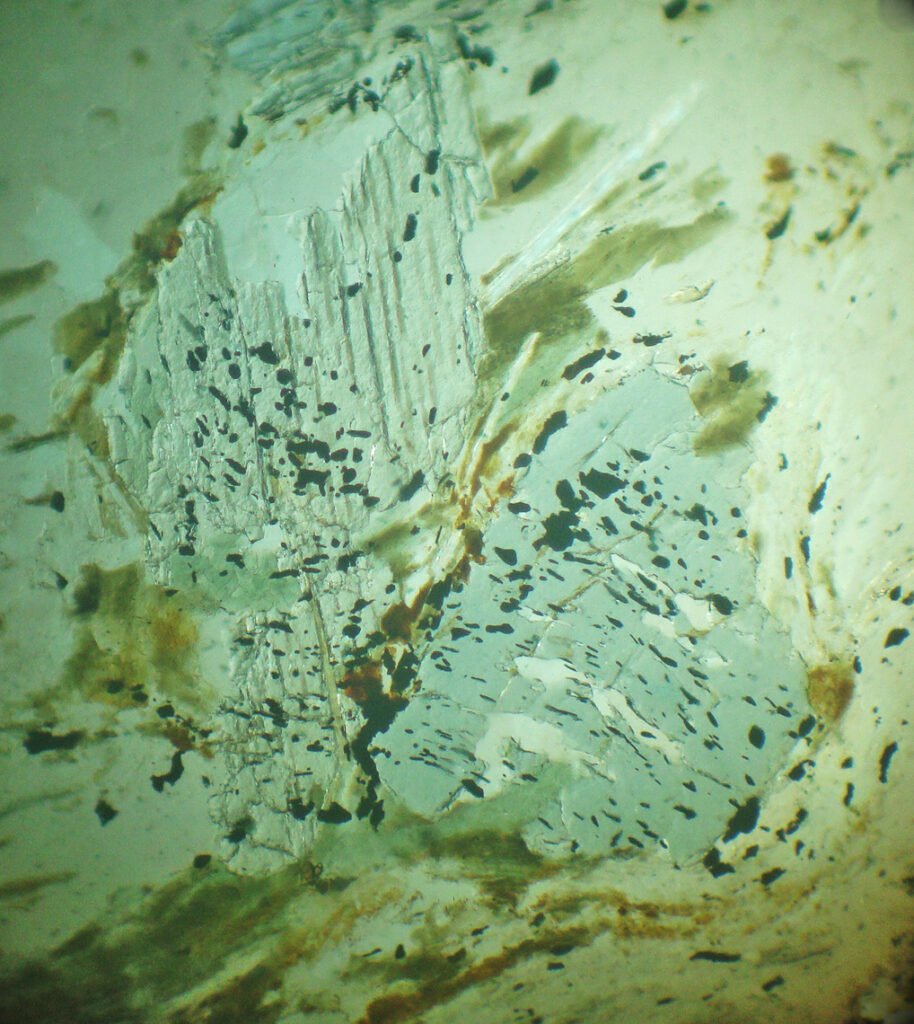
Crystal system: Triclinic pinacoidal but, through twinning, acquires monoclinic prismatic symmetry. It can form pseudo-hexagonal crystals.
Color: Dark green to gray green, can be almost black.
Habit: Tabular thin to thick, massive aggregates. Rarely pseudohexagonal.
Cleavage: {001} perfect, {110} good.
Tenacity: Brittle.
Twinning: {001} common, polysynthetic.
Fracture: Irregular.
Mohs Hardness: 6.5
Parting: On {010}.
Streak: White, grayish, slightly greenish.
Lustre: Vitreous, pearly on cleavages.
Diaphaneity: Transparent.
Density (g/cm³): 3.4 – 3.8
2. Geology and Deposits
Chloritoid typically occurs in pelitic metamorphic rocks of low to medium grade regional metamorphism, such as phyllites and schists, from greenschist facies to the lower staurolite zone.
Chloritoid can occur in quartz veins with carbonates.
Also in glaucophane schists and as an essential mineral in metabauxites (diasporites).
3. Mineral Associations
Chloritoid occurs with quartz, albite, chlorite, biotite, garnet (almandine), rutile and glaucophane.
It can occur with staurolite, kyanite, yttrocrasite(Y), pyrophyllite, tourmaline (dravite), piemontite and paragonite.
It never occurs together with stilpnomelane.
4. Transmitted Light Microscopy
Refraction indices: nα: 1.713 – 1.730 nβ: 1.719 – 1.734 nγ: 1.723 – 1.740
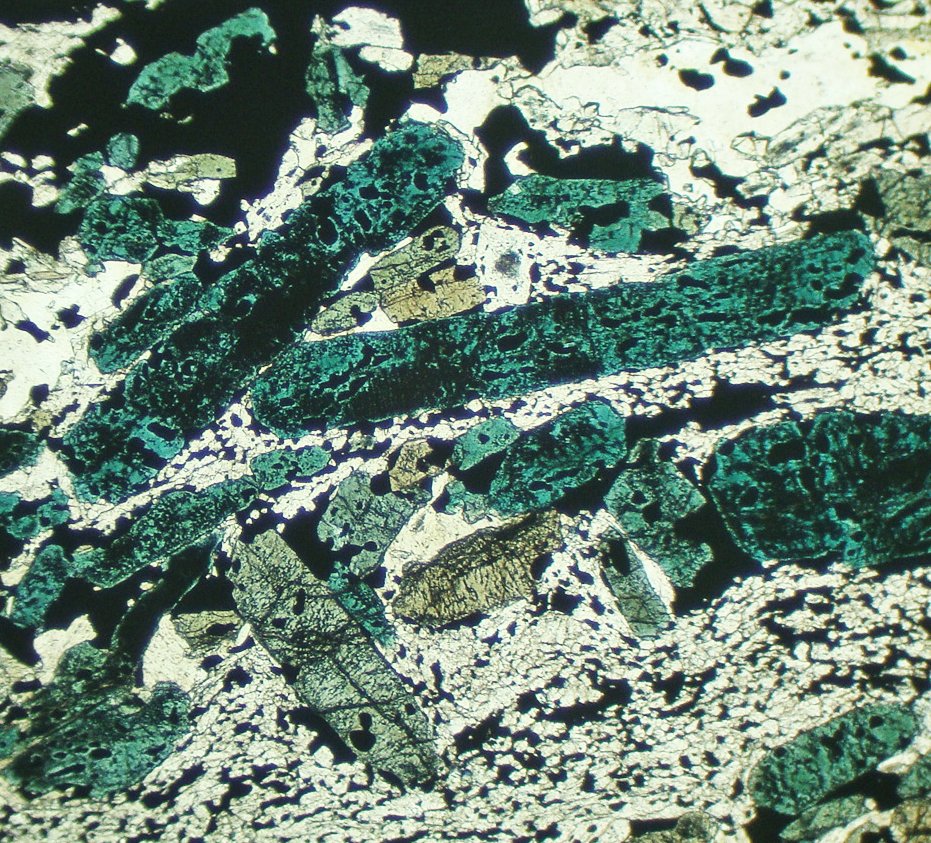
PLANE POLARIZED LIGHT – PPL
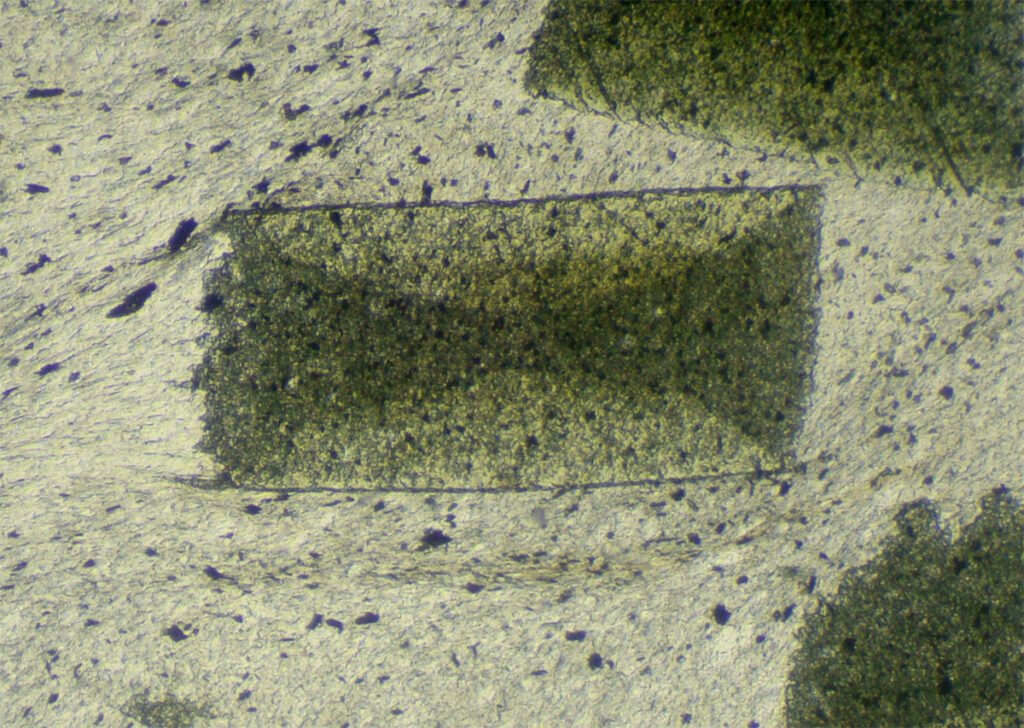
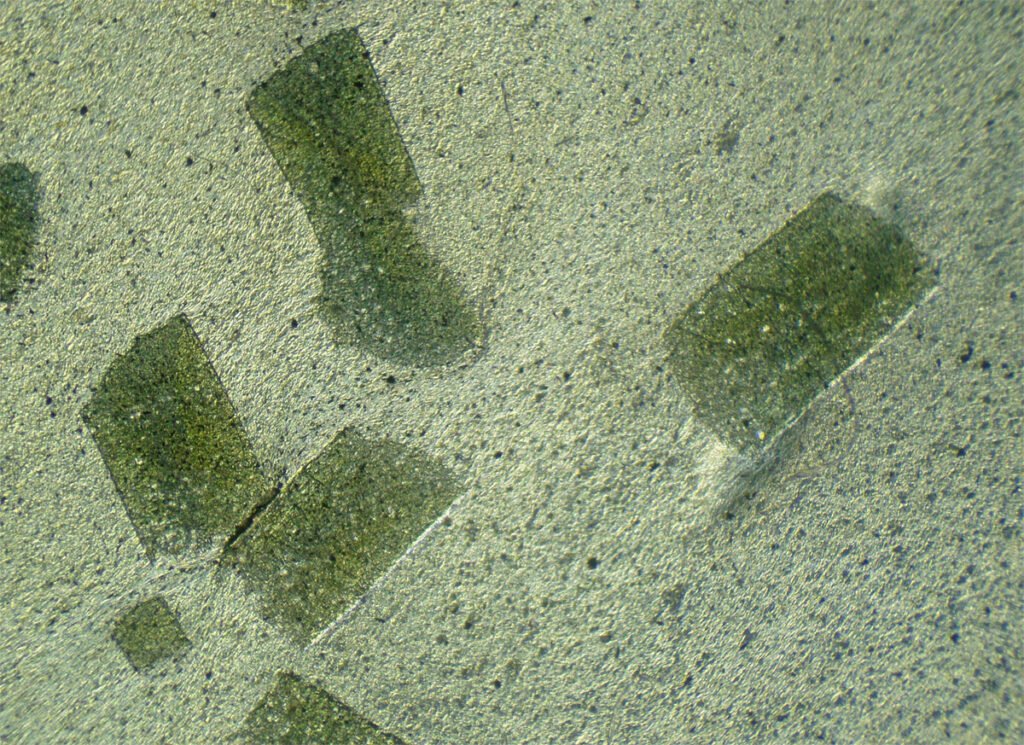
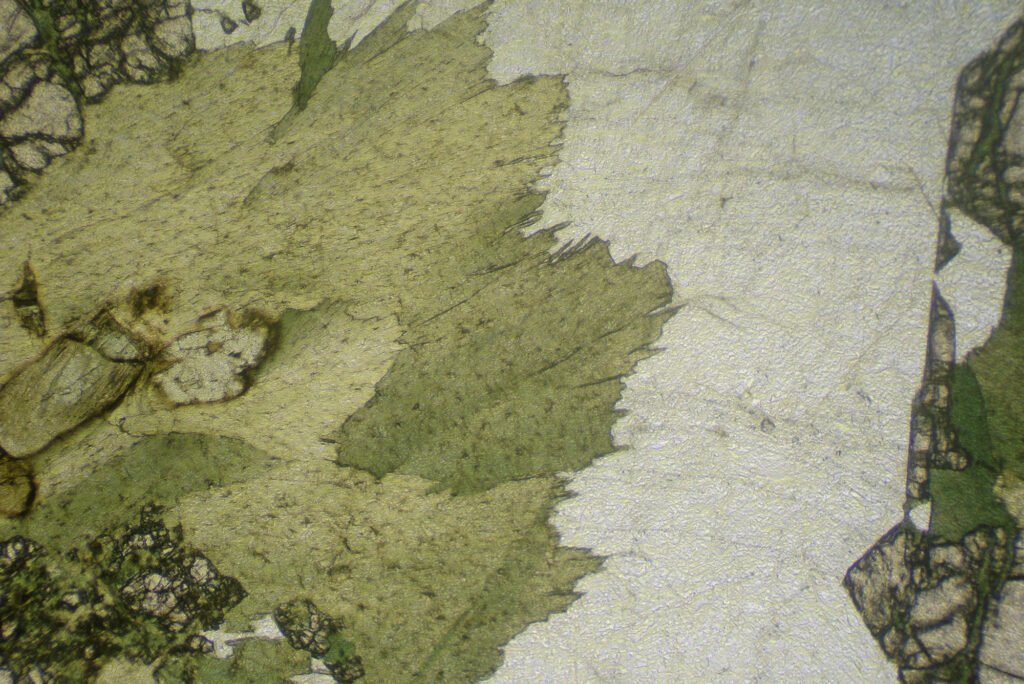
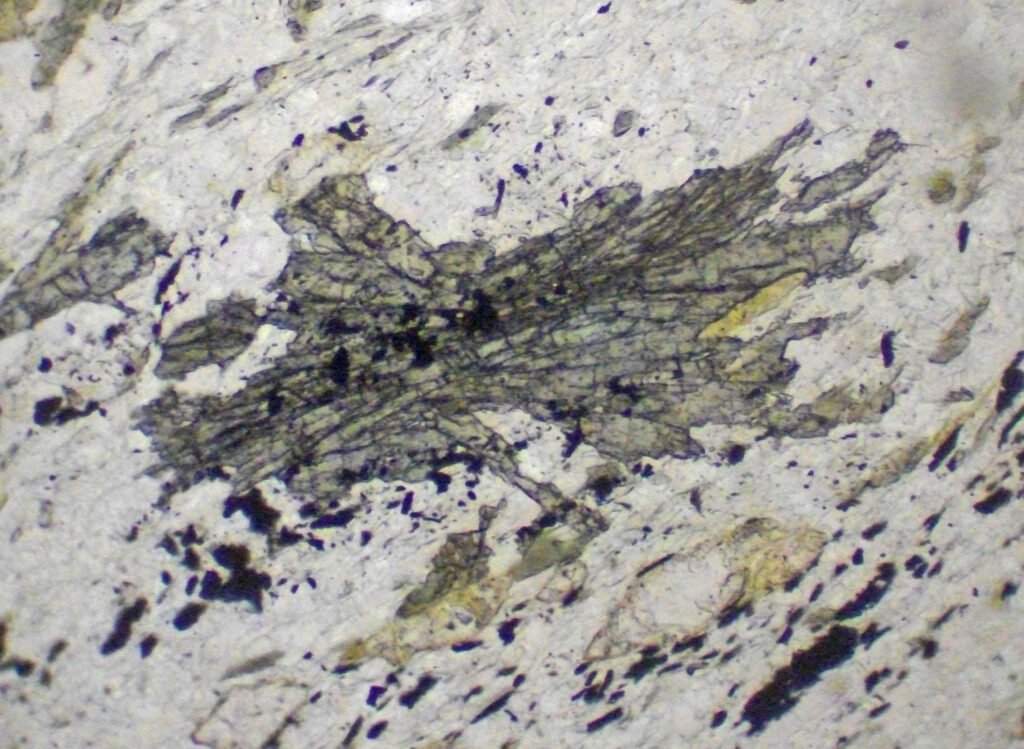
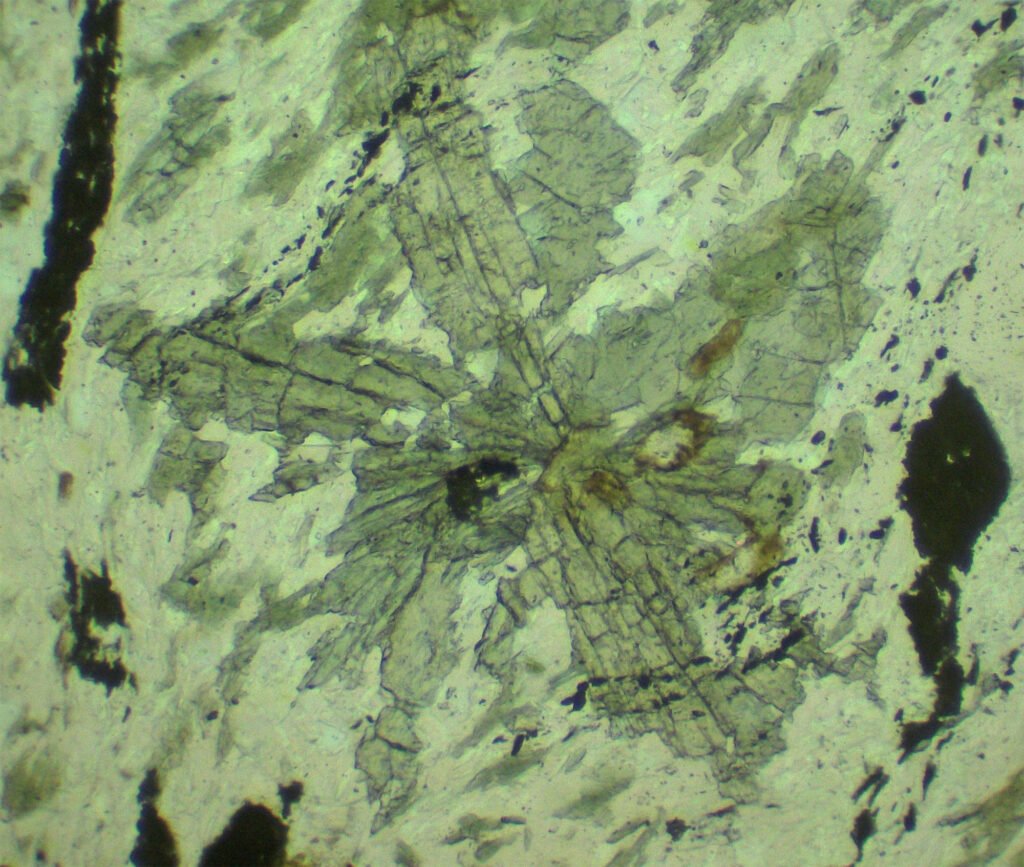
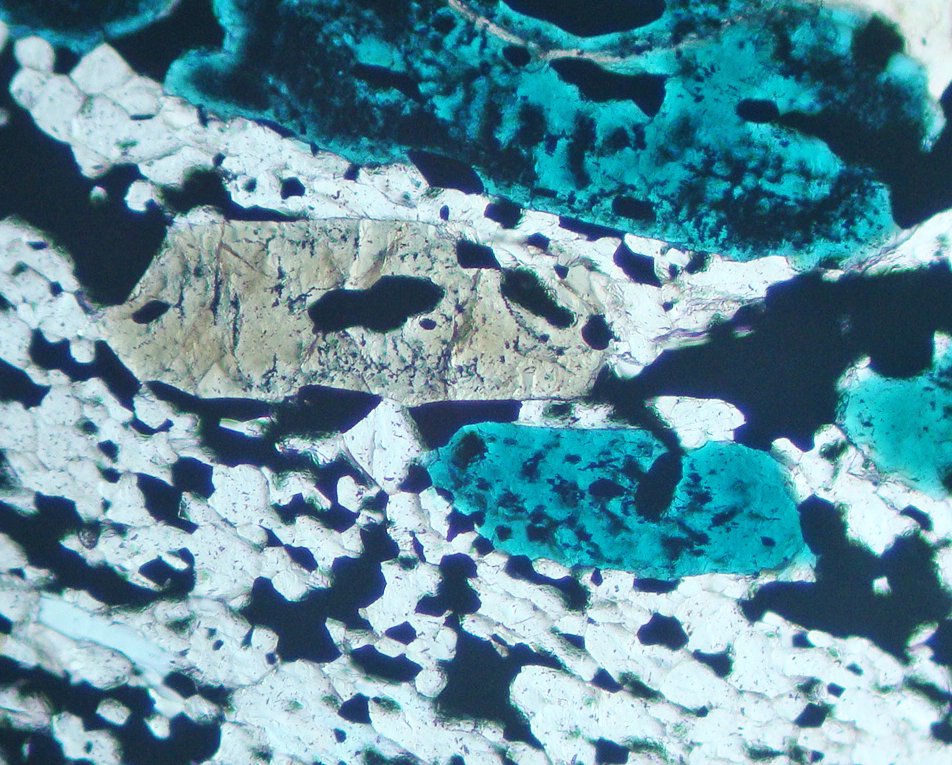
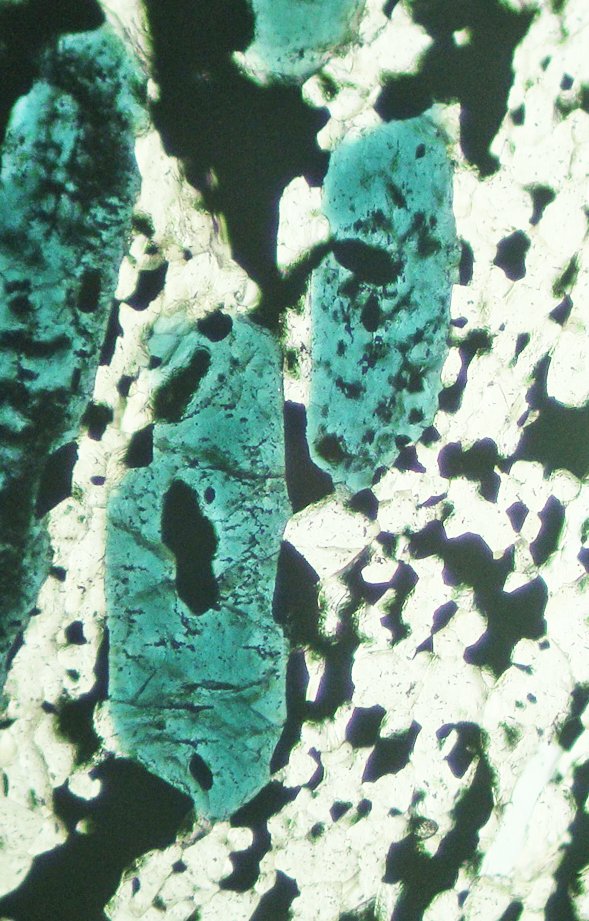
Color / Pleochroism: Rarely colorless. Usually with moderate to strong pleochroism:
X = colorless, grey-green, olive green, blue-green,
Y = blue-gray, indigo blue, blue-green and
Z = colorless to yellow-green to brown-green.
Relief: High.
Cleavage: {001} perfect and {110} good, normally not visible in thin sections.
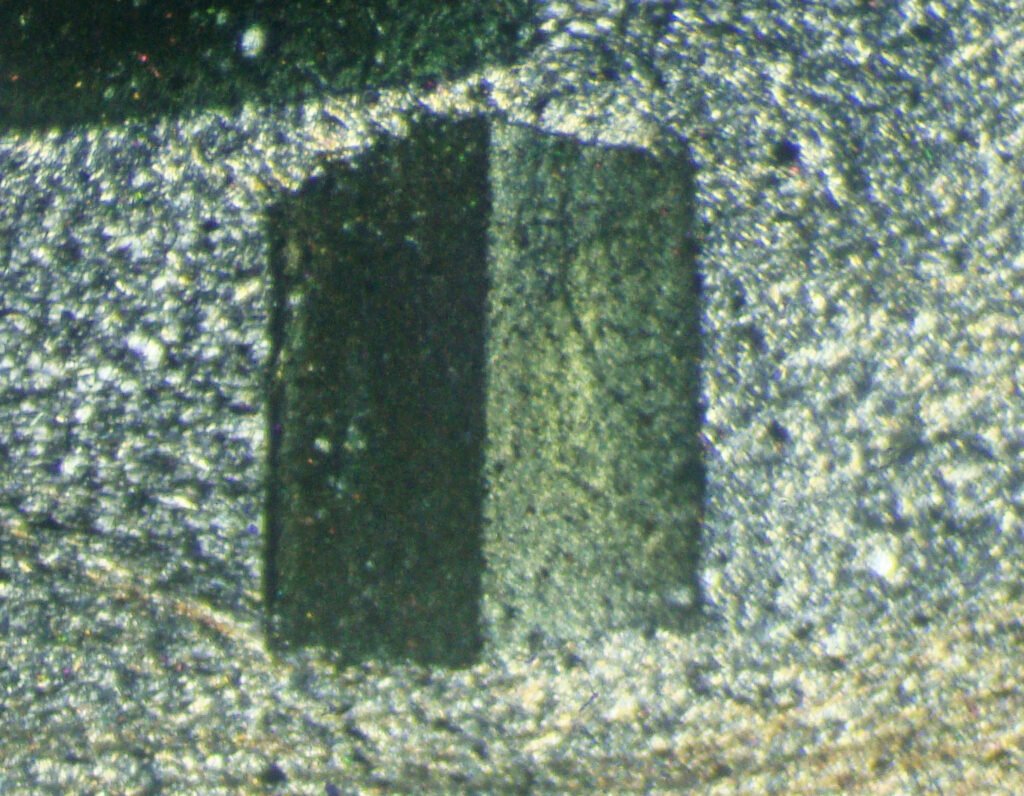
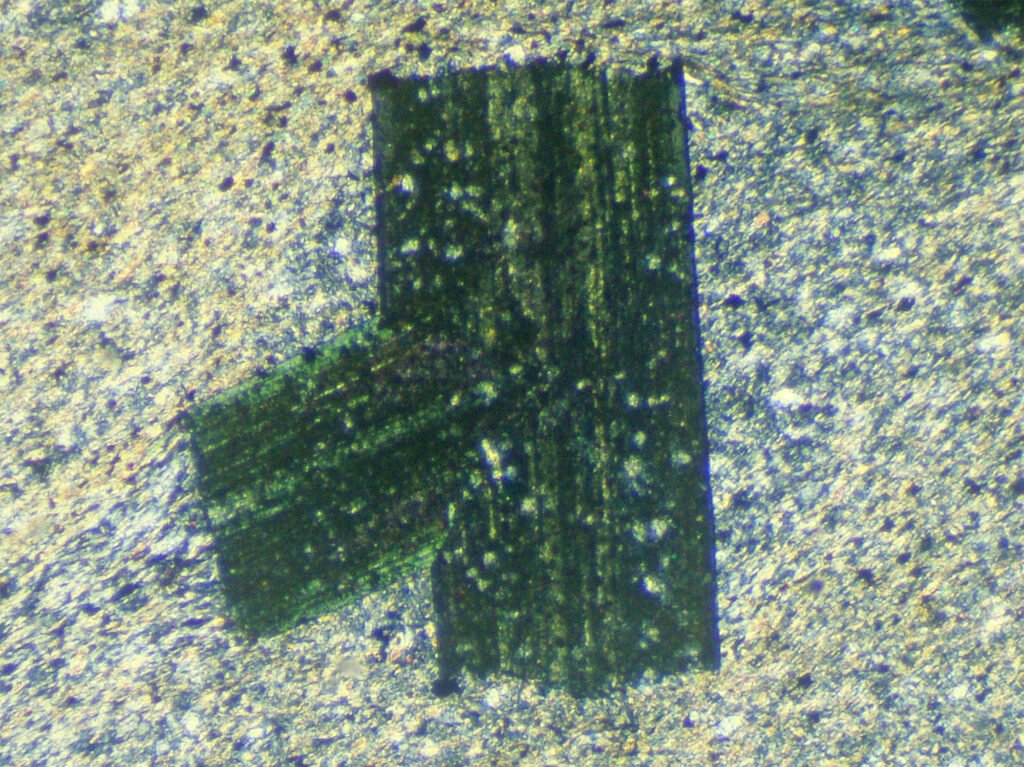
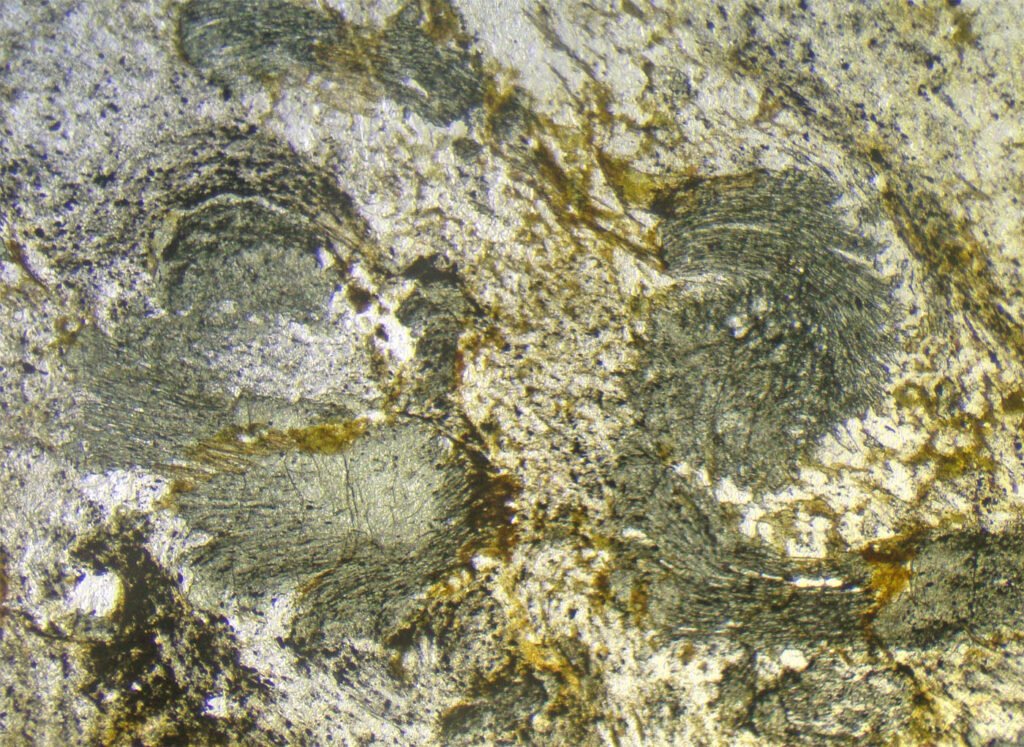
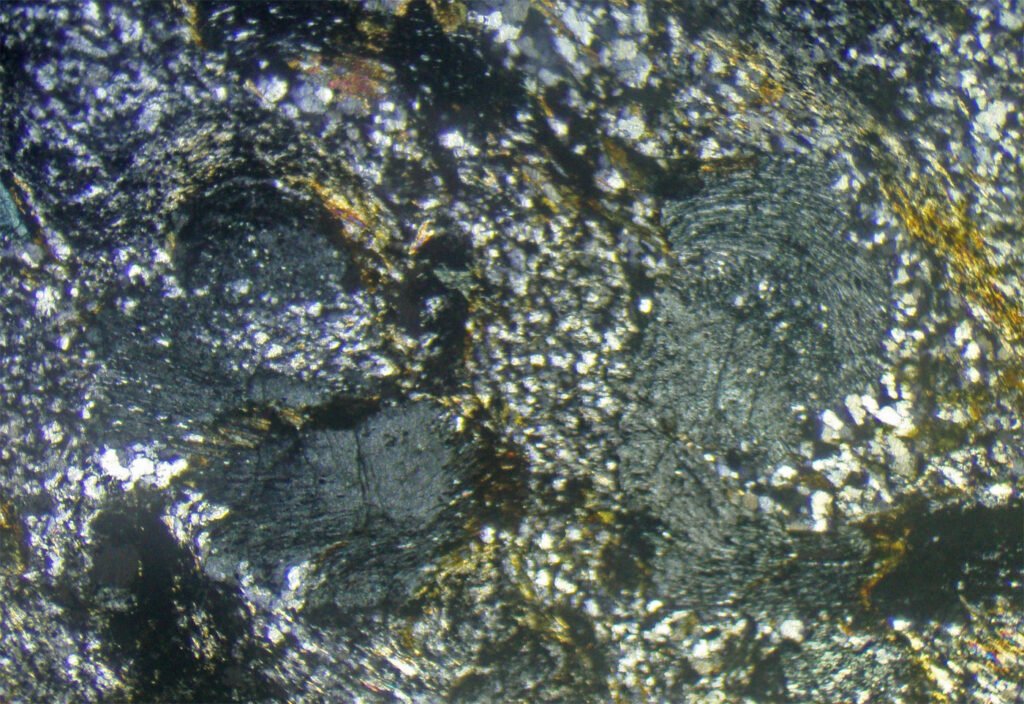
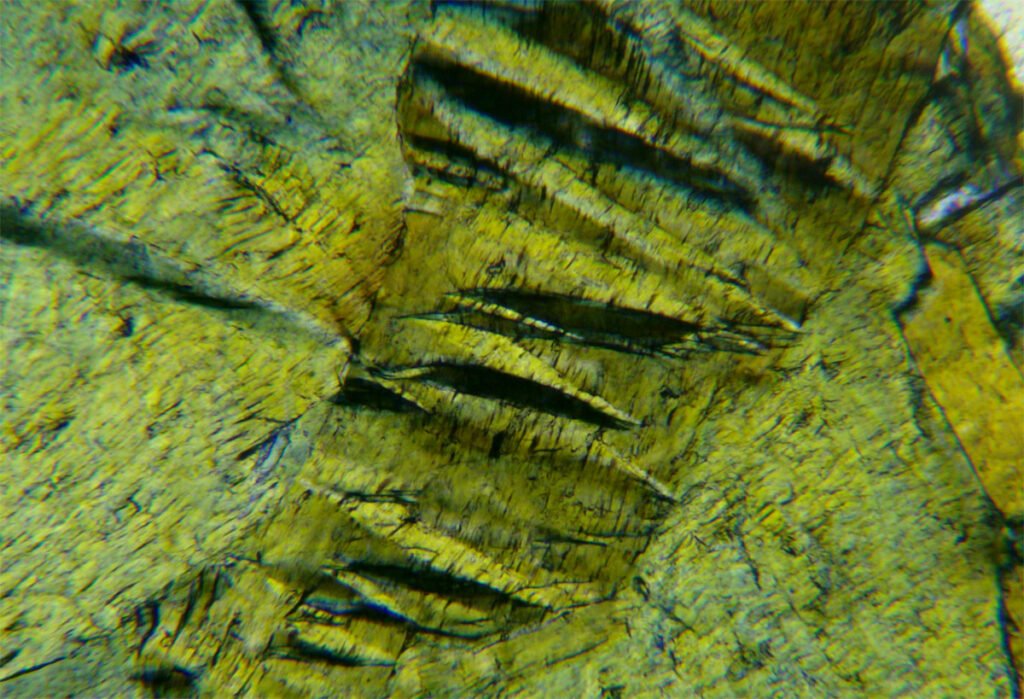
Habits: Tabular, foliate aggregates, hourglass zonation may occur, many (quartz) inclusions are typical. Euhedral, porphyroblastic, lamellar, radial, mica-like habits. Rarely pseudohexagonal crystals.
It is very like chlorite, but the relief is much higher.
May be zoned with darker cores and lighter edges.
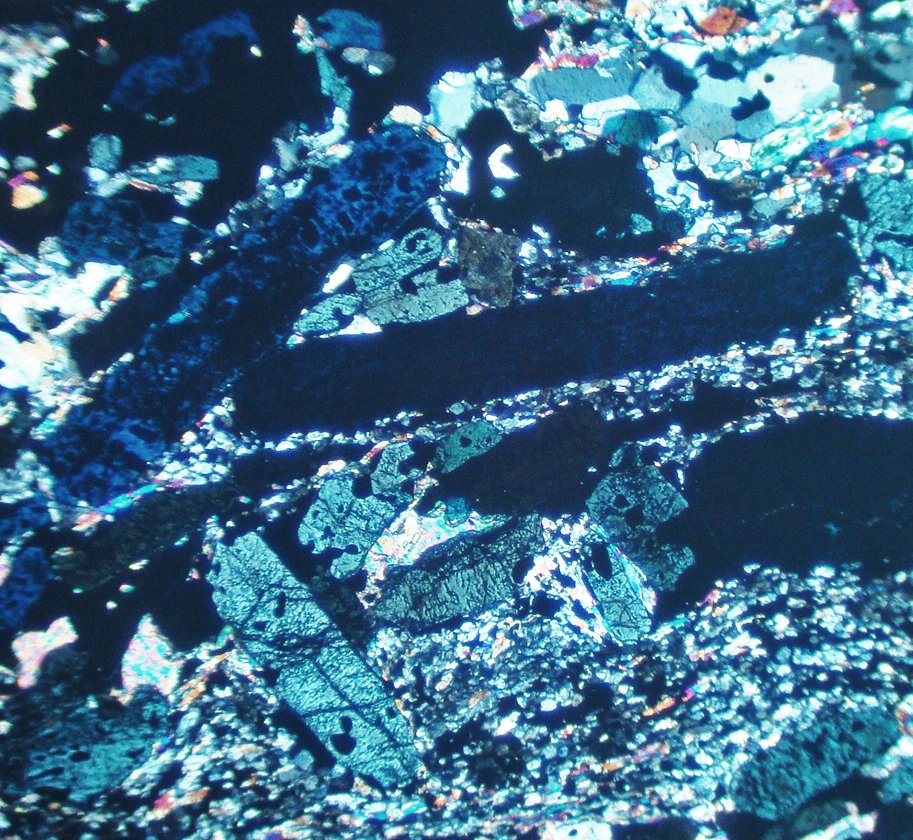
CROSSED POLARIZED LIGHT – XPL
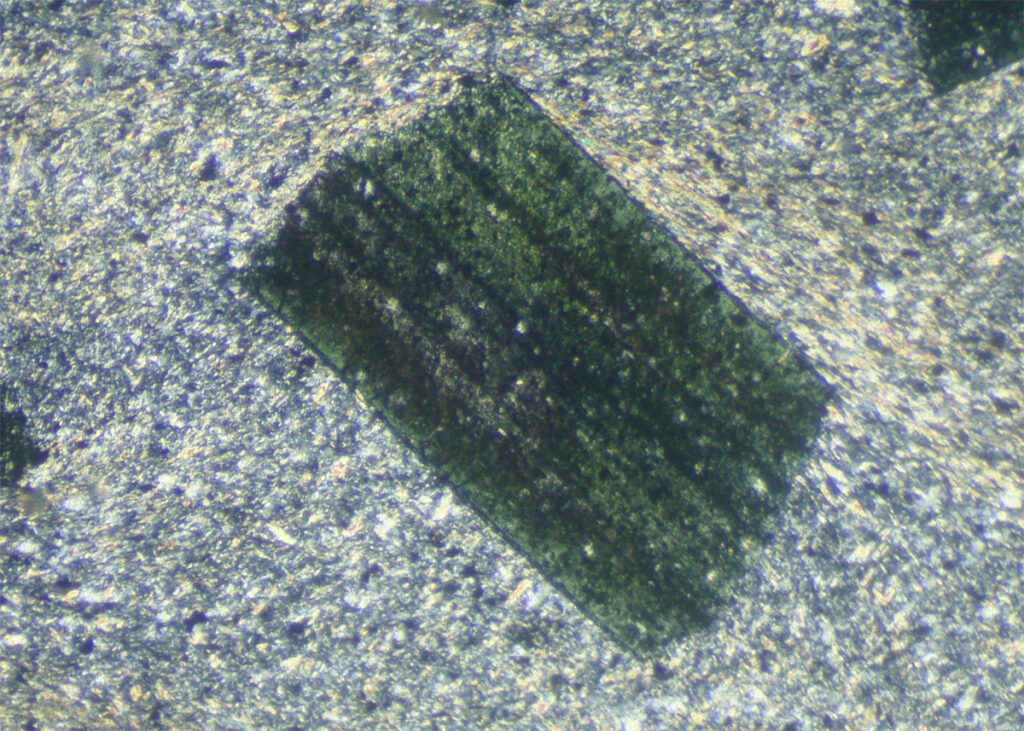
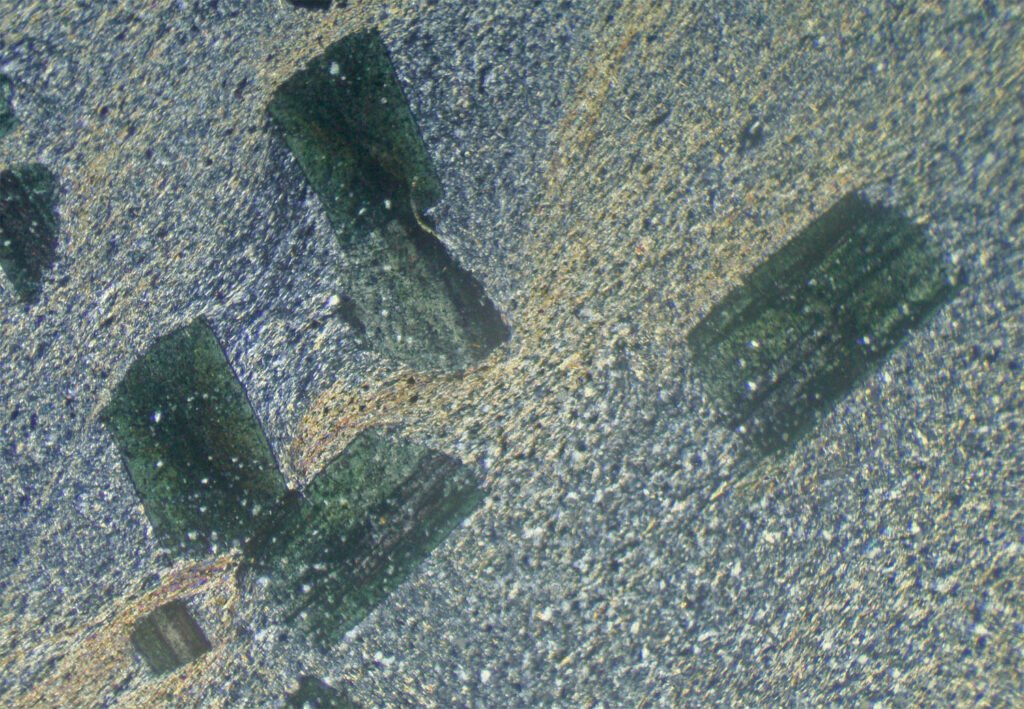
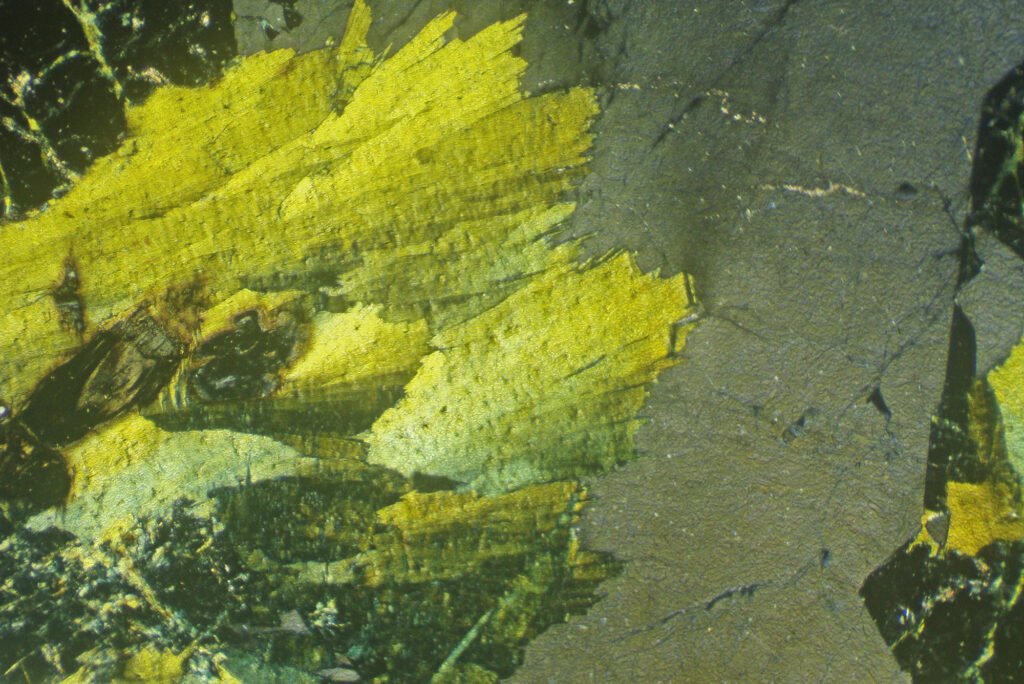
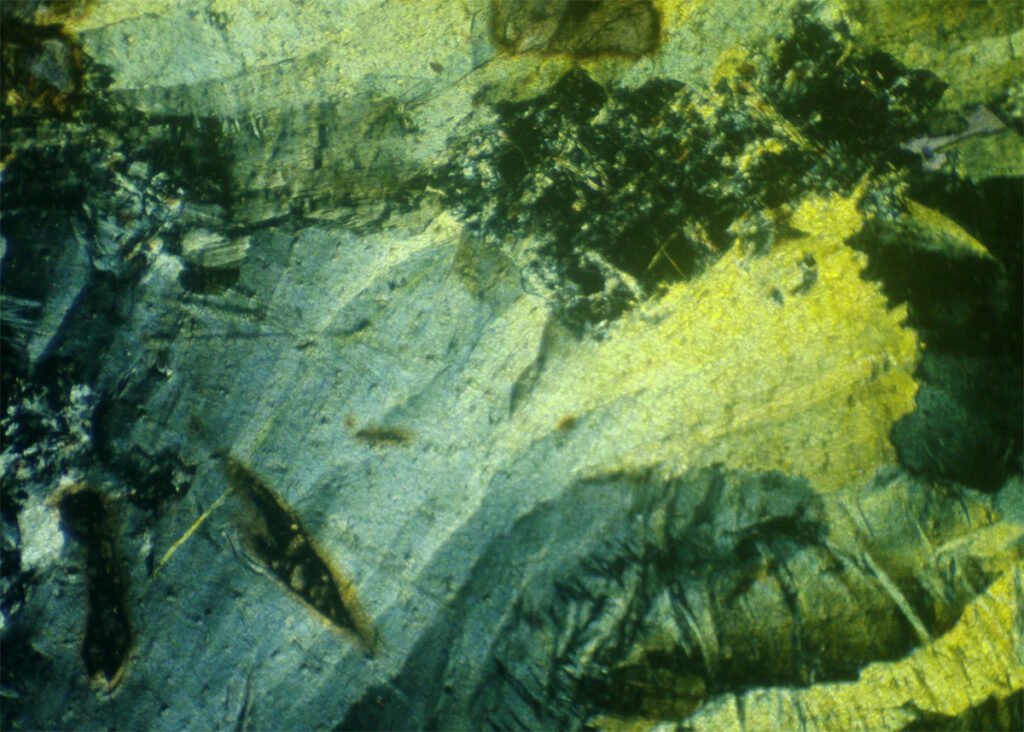
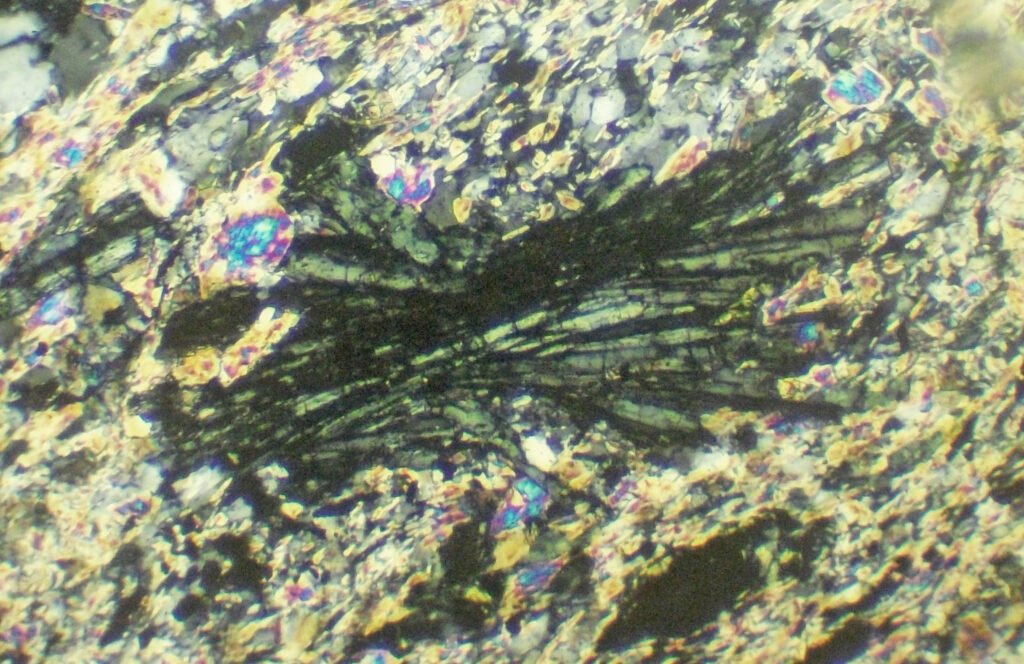
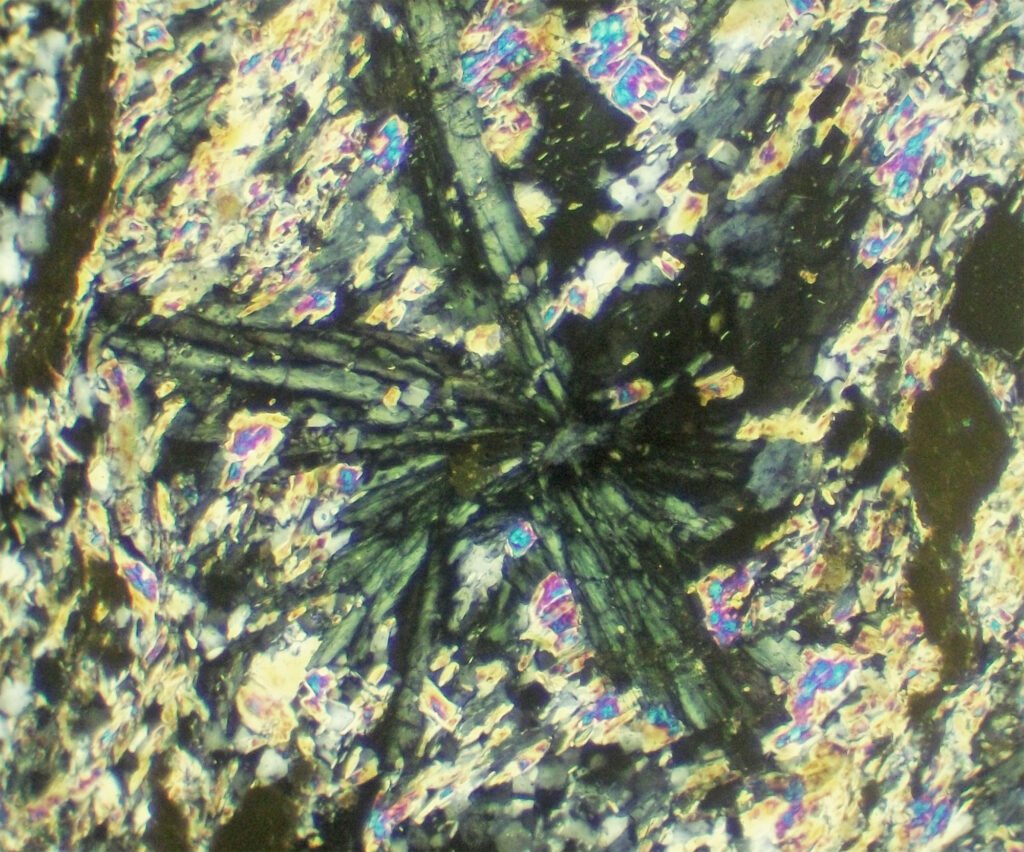
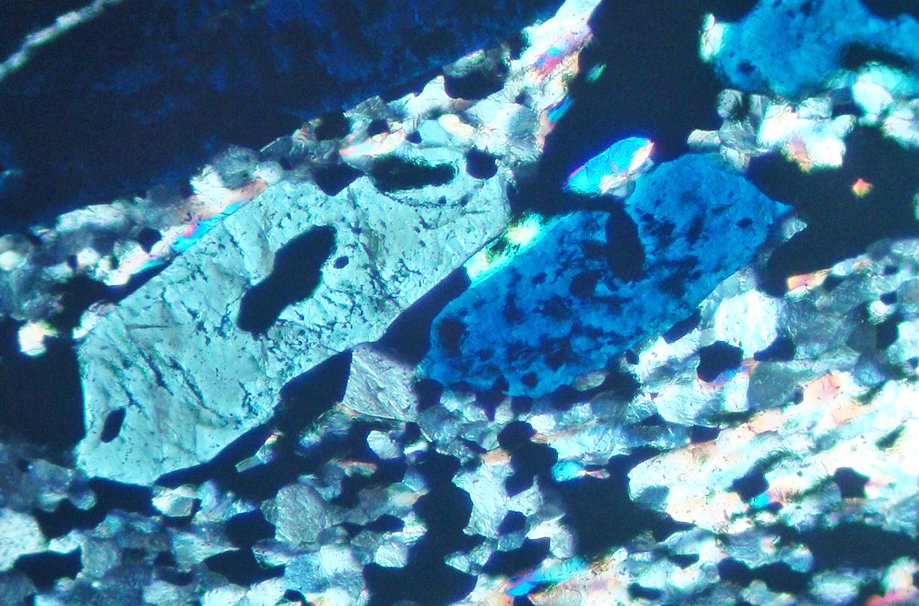
Birefringence and Interference Colors: Birefringence up to 0.010: 1st order interference colors up to a maximum of straw yellow.
Anomalous 1st order (gray) interference colors are common. Color zoning is common. Basal sections are approximately isotropic.
Extinction: Tends to oblique. In the triclinic form, oblique extinction of 20º. In the monoclinic form, parallel extinction along the b axis.
Elongation sign: ES(-).
Twins: Simple or lamellar or polysynthetic parallel to the cleavage, common according to {001}. Twins can be triples (“triplets” or “trillings”) generating a pseudohexagonal symmetry.
Zoning: Often zoned with darker colors at the core and lighter colors at the edges. May show hourglass zoning.
CONVERGENT LIGHT
Character: normally B(+), can be B(-).
2V angle: 36-70º, with some outliers.
Alterations: alters to chlorite, sericite and iron oxides and hydroxides. Under progressive regional metamorphism it is replaced by staurolite, almandine (garnet) and hercynite (spinel). May show retrograde chloritization and/or change to limonite and/or kaolinite.
May be confused with: few other minerals, as pleochroism in shades of green or in strong green and blue is very diagnostic.
Biotite and stilpnomelane have higher birefringence, an always visible perfect cleavage and parallel extinction (mottled in biotite and unmottled in stilpnomelane).
Chlorite has lower relief, lower birefringence and nearly parallel extinction.