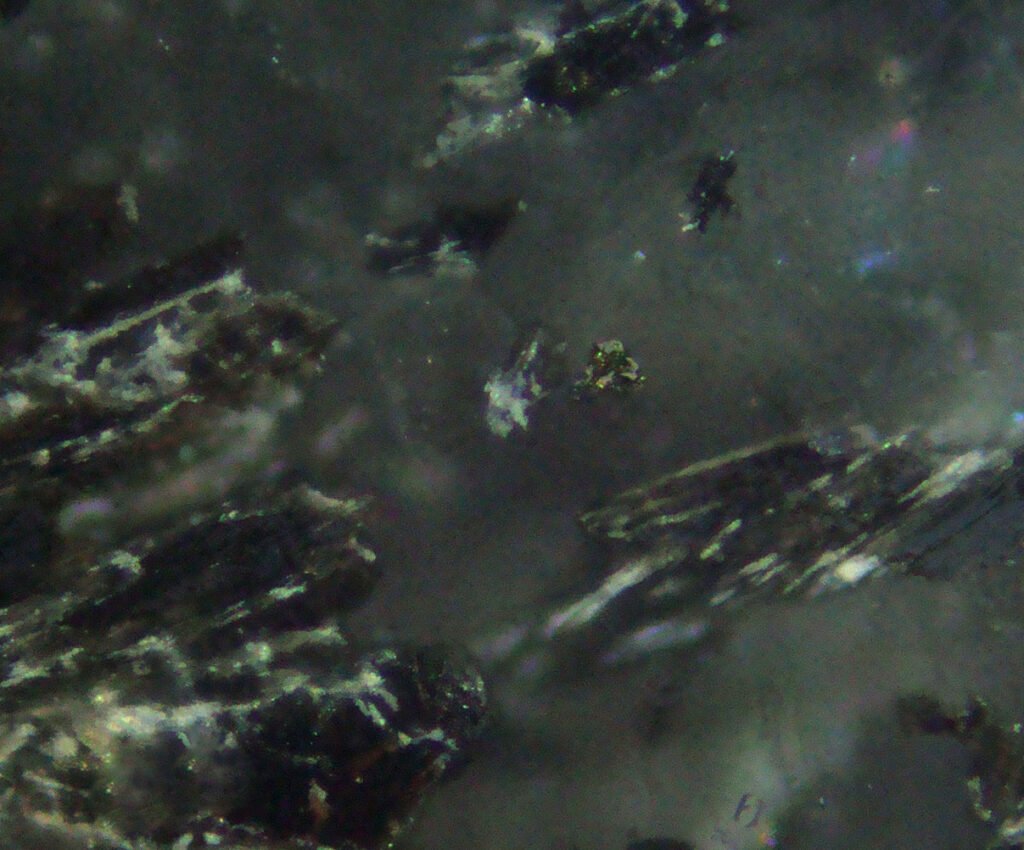
1. Characteristics
Crystal system: Monoclinic prismatic.
Color: Colorless, white, yellow, green, bronze to yellowish-bronze, may be golden.
Habit: “Micaceous” habits: reeds, lamellae, leaves. It forms pseudohexagonal plates.
Cleavage: {001} perfect, (relict from the original mica).
Tenacity: Flexible.
Twinning: No.
Fracture: Irregular.
Mohs Hardness: 1.5 – 2
Parting: No.
Streak: Colorless to yellowish.
Lustre: Dull, resinous, silky.
Diaphaneity: Transparent.
Density (g/cm³): 2.2 – 2.6
2. Geology and Deposits
Vermiculite forms as a product of alteration of biotite and phlogopite, by weathering or hydrothermalism. Vermiculite in commercial volumes occurs in basic and ultrabasic rocks, where they are formed by alteration of phlogopite/biotite, chlorite or pyroxenes. The alteration can occur by weathering, hydrothermal processes or by the percolation of groundwater. When formed by the alteration of micas, it can form perfect pseudomorphoses.
It can occur in carbonatites and marbles, and in some cases naturally expanded vermiculite occurs in volcanic rocks. It occurs in soils as one of the constituents of the clayey fraction.
3. Mineral Associations
In basic rocks, vermiculite it is associated with corundum (including the ruby variety), apatite, serpentine, chlorite and talc.
Also pargasite, chromiferous diopside, anthophyllite, anorthite and zeolites (stellerite, stilbite).
It forms interstratified minerals with chlorite and biotite.
4. Transmitted Light Microscopy
Refraction indices: nα: 1.525 – 1.564 nβ: 1.530 – 1.581 nγ: 1.530 – 1.581
PLANE POLARIZED LIGHT – PPL
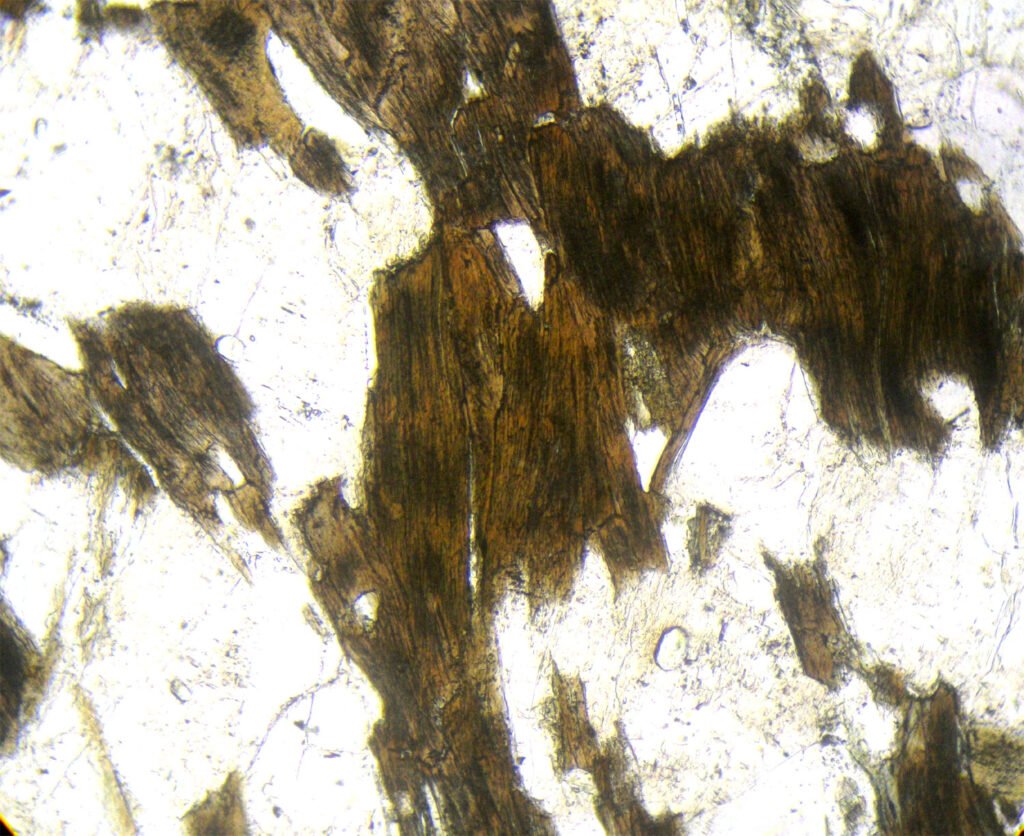
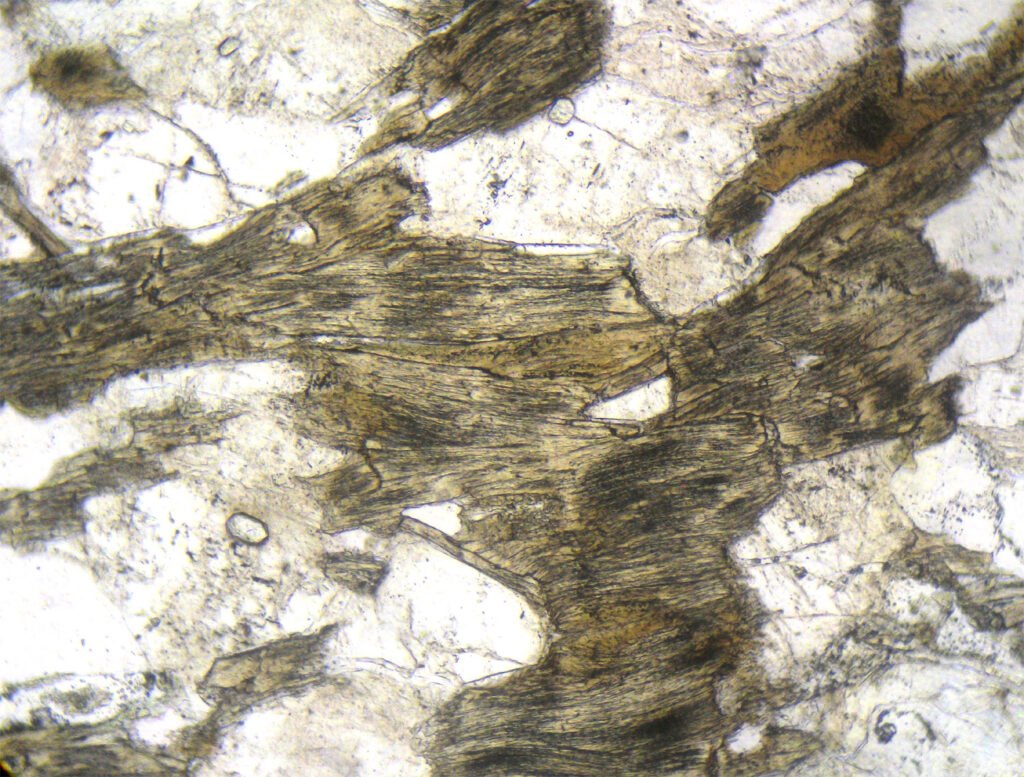
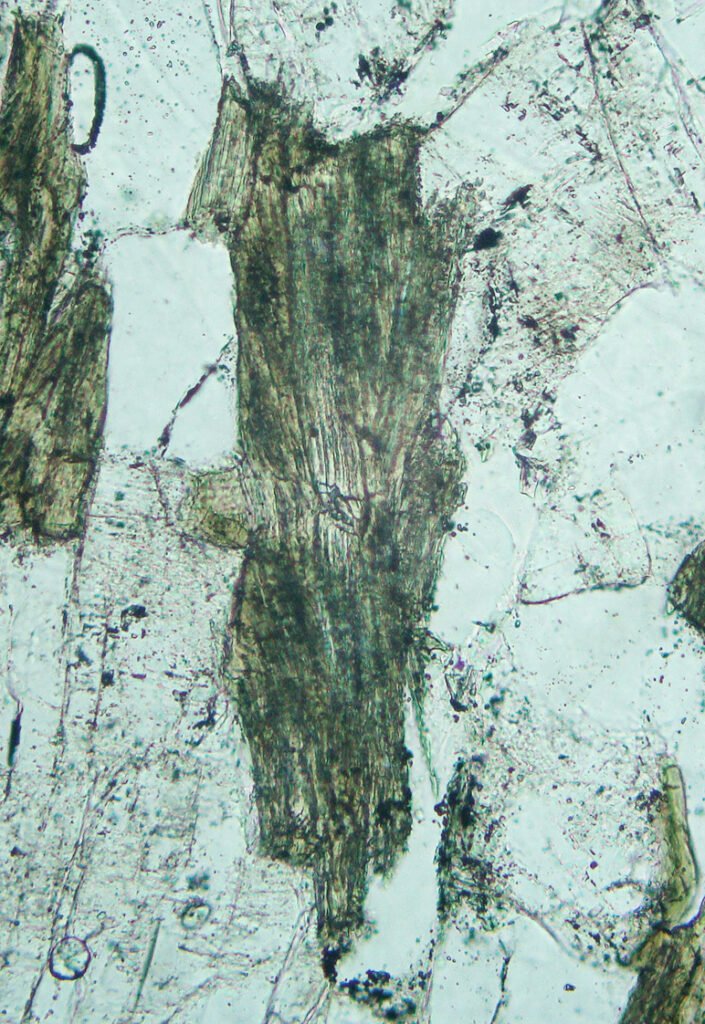
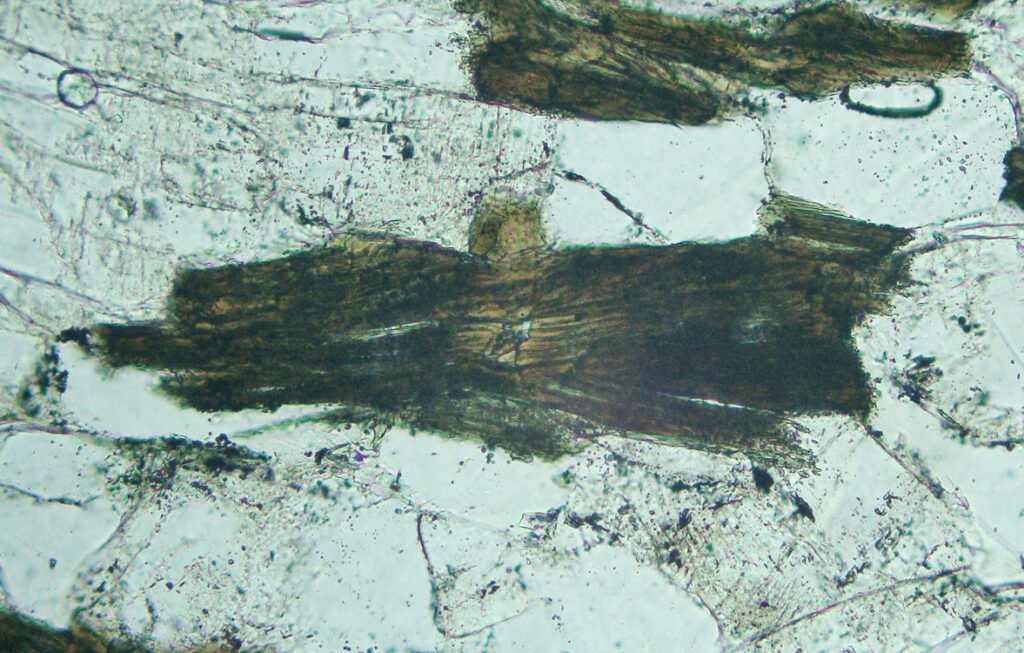
Color / Pleochroism: If the transformation of biotite/phlogopite to vermiculite was complete, the vermiculite is colorless.
If the transformation was not complete, it is pleochroic in various pale shades of brown. The color is paler in X than in Y and Z.
Vermiculite can form pseudomorphs on biotite and phlogopite.
Relief: Low to moderate.
Cleavage: {001} perfect, typically relict (inherited from biotite or phlogopite).
Habits: Occurs in sheets that may present pseudo-hexagonal shapes. It also occurs in clay-sized particles.
CROSSED POLARIZED LIGHT – XPL
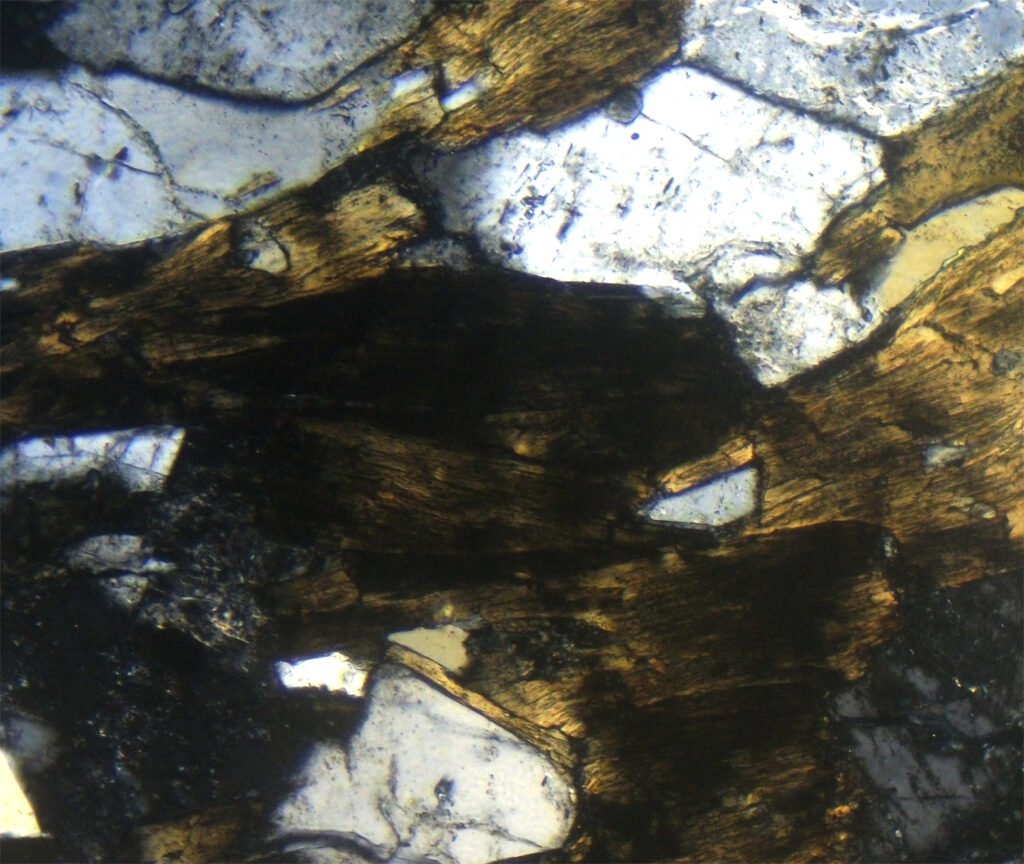
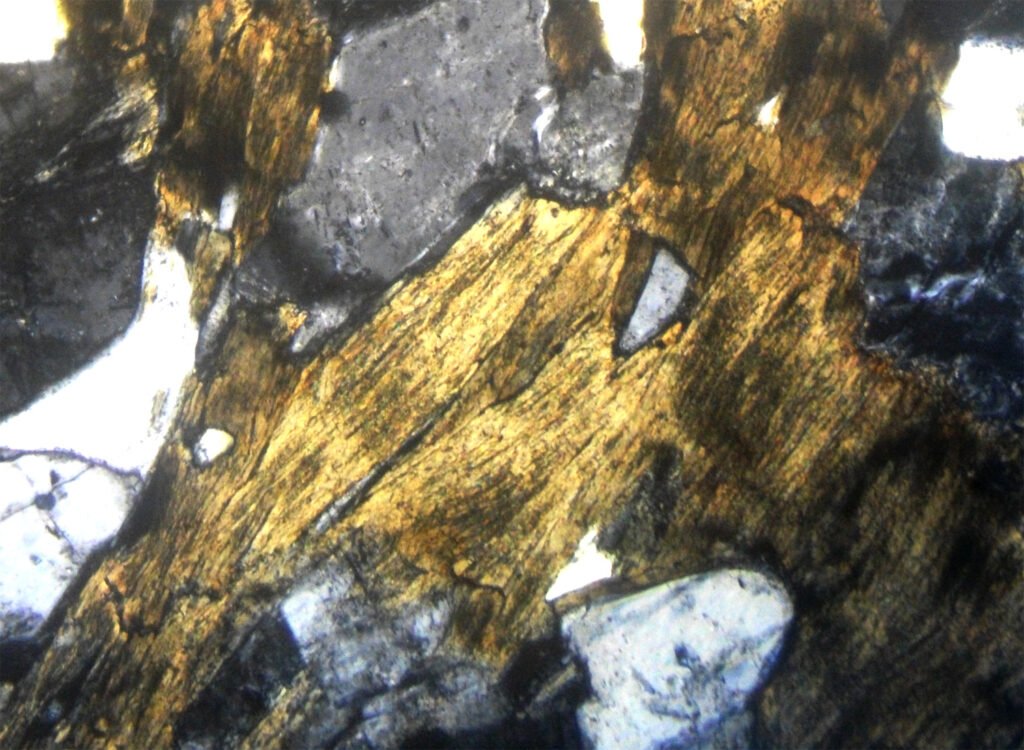
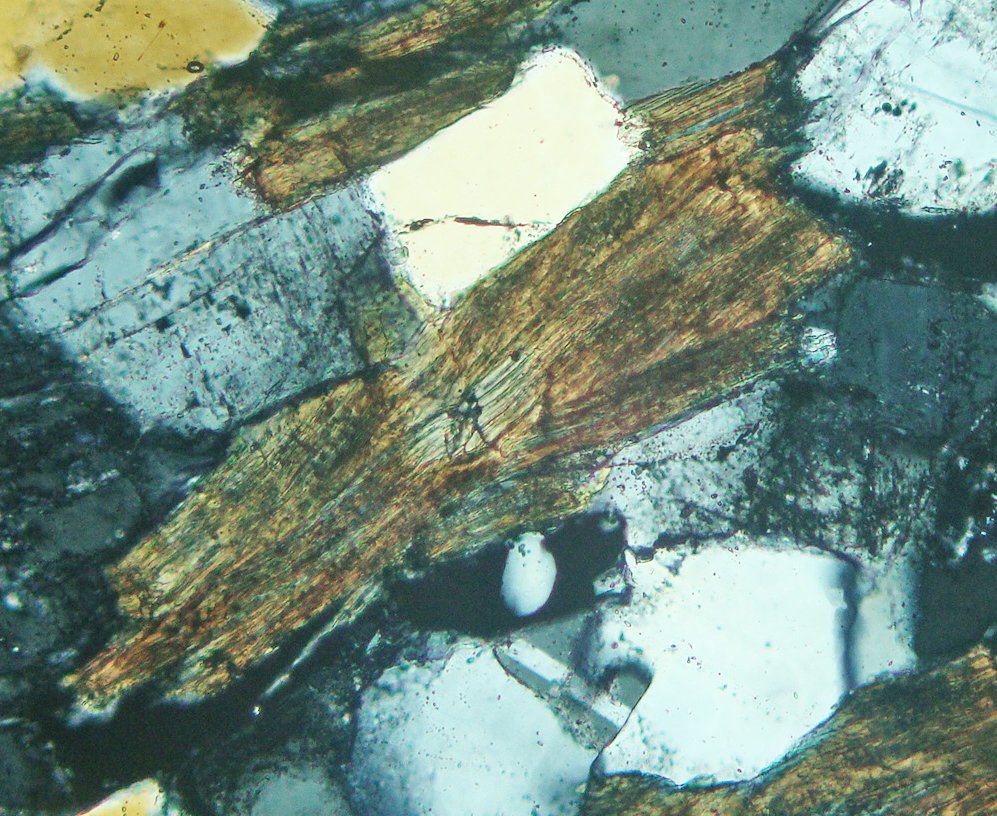
Birefringence and Interference Colors: Maximum birefringence of 0.020, which corresponds to interference colors up to the end of 1st order: gray, white, yellow/orange to bluish.
Extinction: Tends to parallel as in biotite and phlogopite, but is not mottled, which is important!
Elongation sign: ES(+), like all micas.
Twins: No.
Zoning: No.
CONVERGENT LIGHT
Character: B(-), can simulate being uniaxial.
2V angle: 0 – 15º
Alterations: does not alters, it is a product of alteration.
May be confused with: biotite and phlogopite if the alteration was not complete.
But biotite and phlogopite, when observed with a stereomicroscope or even on the thin section with the unaided eye, present black colors, while vermiculite presents a very strong, characteristic golden color. In addition, biotite and phlogopite exhibit mottled extinction, while vermiculite no longer exhibits mottled extinction. Vermiculite interference colors are fainter (weaker) than biotite and phlogopite colors.