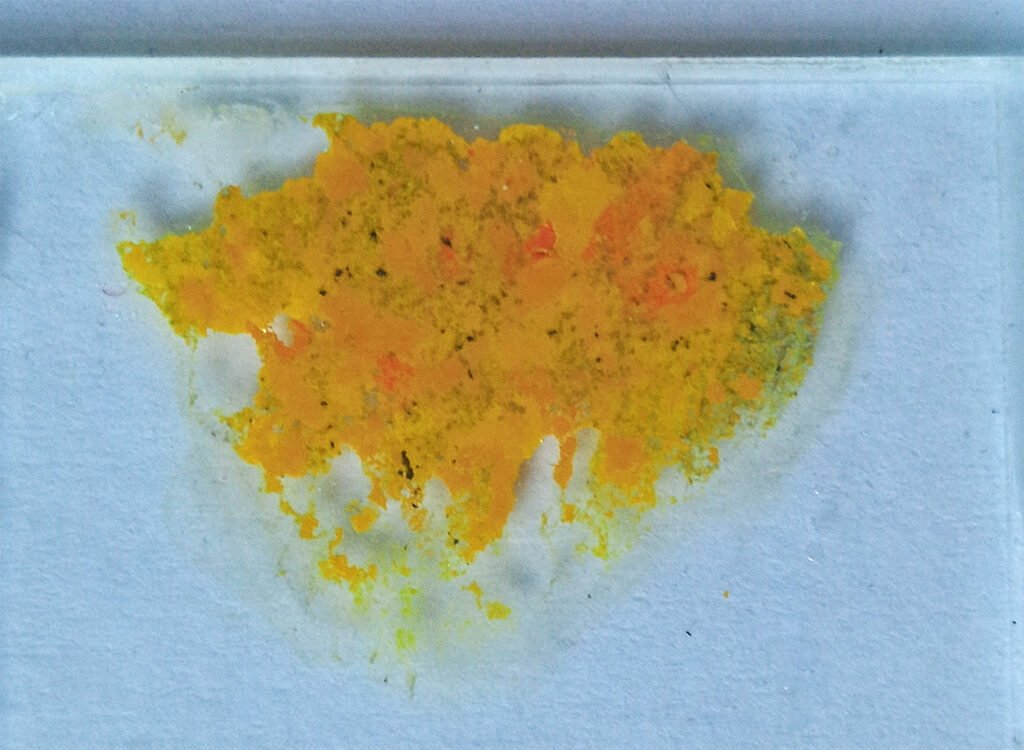
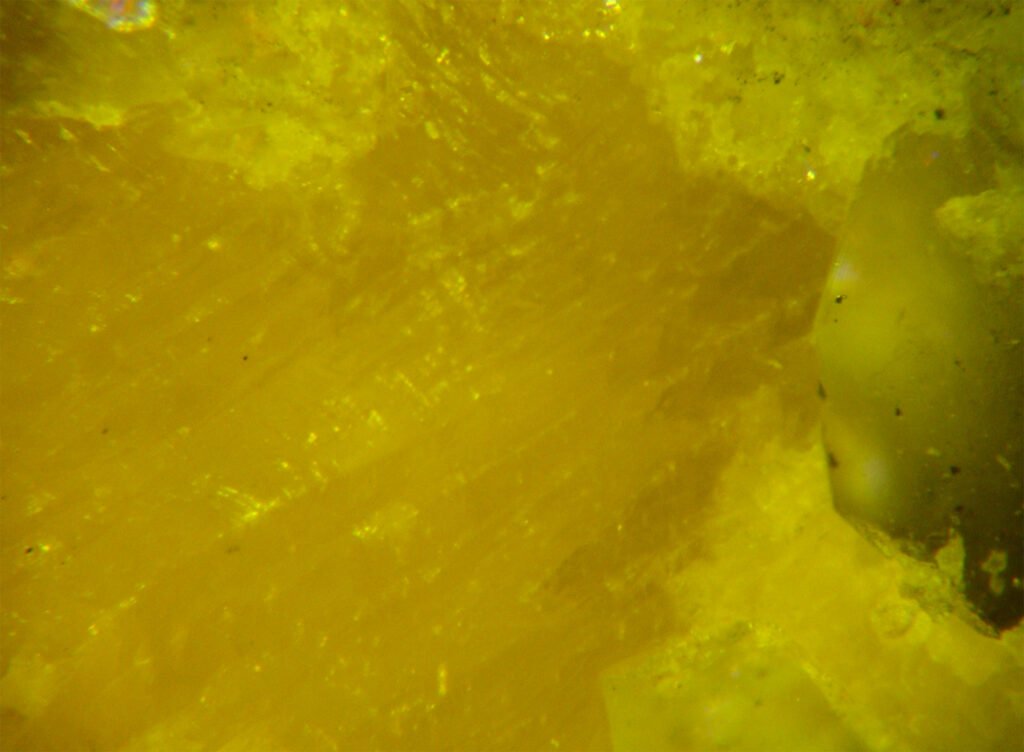
Orpiment – As2S3 – and pararealgar – As4S4 – have the same chemical composition, the same crystalline system, very similar physical properties, and they occur together in the same paragenesis.
But pararealgar was identified as a new mineral species only in 1980, so all descriptions of orpiment in the literature should be viewed with care, because it was not known that there were two different minerals of virtually the same appearance occurring together. Reminds the cases of pyrargirite & proustite and hemimorphite & smithsonite.
The information below is from the literature on orpigment. There is practically nothing about pararealgar in any book or database, not even in recent literature there is any guidance on its behavior under the microscope.
ORPIMENT
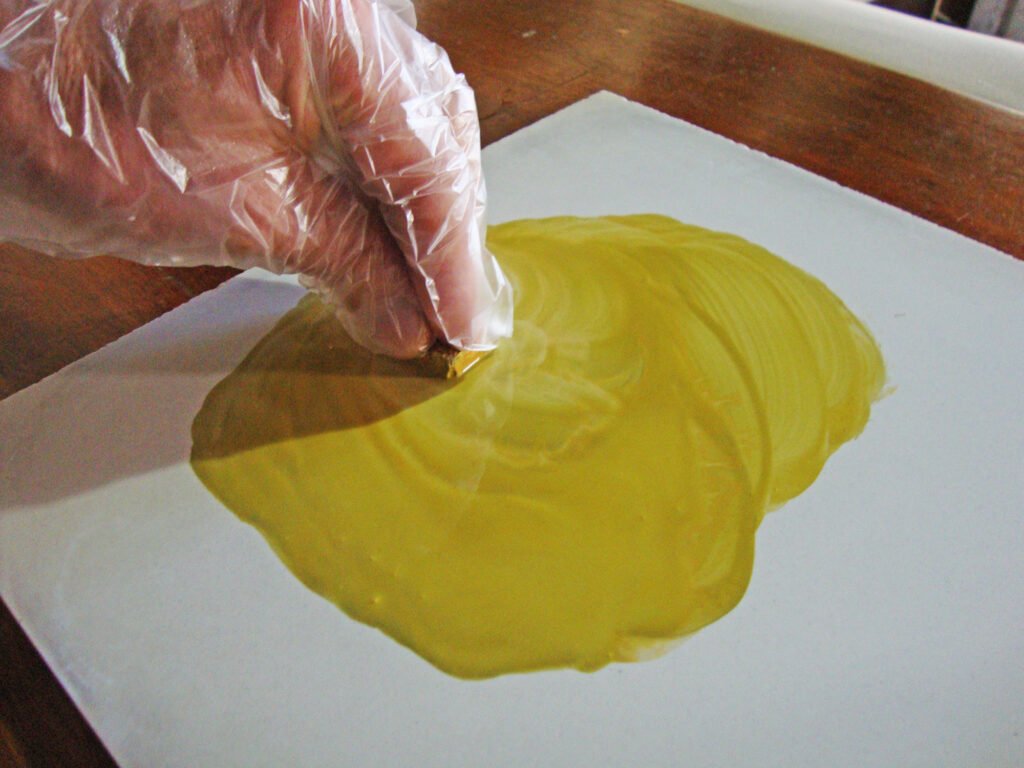
Orpiment is a rarer sulfide. Can be used as As ore; historically it was used as an important and irreplaceable yellow pigment.
It forms masses with diameters of up to 60 cm, composed of columnar or fibrous crystals. May contain Hg, Sb and Ge.
Until recently, it was thought that realgar, being photosensitive, would transform into orpiment, but recently it has been found that the yellow alteration material of realgar is pararealgar. As a result, much information on the “association of orpiment with realgar” should be reviewed.
Macroscopically, orpiment can be confused with pararealgar, uzonite and wakabayashilite.
Orpiment and its altering material contain arsenic and are toxic. It is recommended to wash your hands after handling the mineral, especially if it is powdery. Never lick or ingest. Avoid inhaling dust when handling or breaking. The characteristic odor of orpiment, something similar to the smell of garlic, comes from arsenic and is toxic.
PARAREALGAR
Pararealgar is a rarer sulfide. It was probably used as an As ore and as a yellow pigment, confused with orpiment and having the same applications.
Pararealgar forms as an alteration of realgar (red) when it is exposed to light. Primary pararealgar, however, is also known.
Macroscopically, pararealgar can be confused with orpiment, uzonite and wakabayashilite.
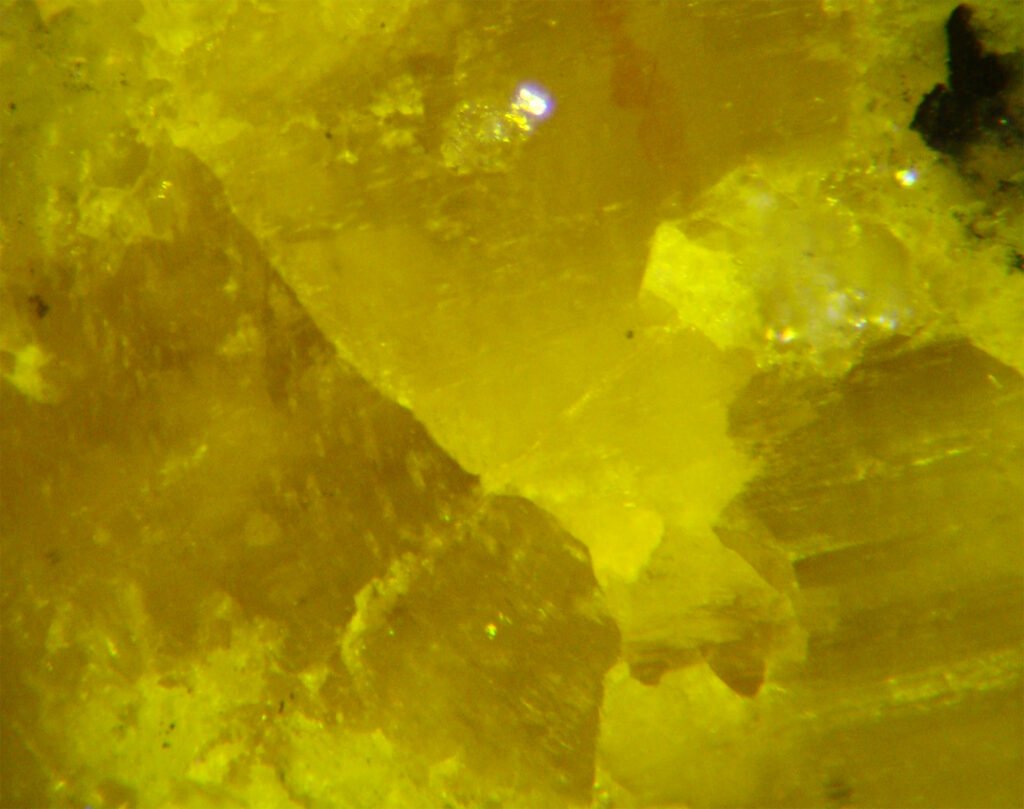
The few information about pararealgar is that it has a light yellow to orange and brown-orange color, vitreous to resinous luster, light yellow trace, hardness 1 – 1.5, density 3.52, it is brittle and has no cleavage.
Pararealgar contains arsenic and is toxic. It is recommended to wash your hands after handling the mineral, especially if it is powdery. Never lick or ingest. Avoid inhaling dust when handling or breaking. The characteristic smell of pararealgar, something similar to the smell of garlic, comes from arsenic and is toxic.
More: Bonazzi et al. (1995), American Mineralogist , 80, p.400-403, The crystal structure of pararealgar.
5. Reflected Light Microscopy
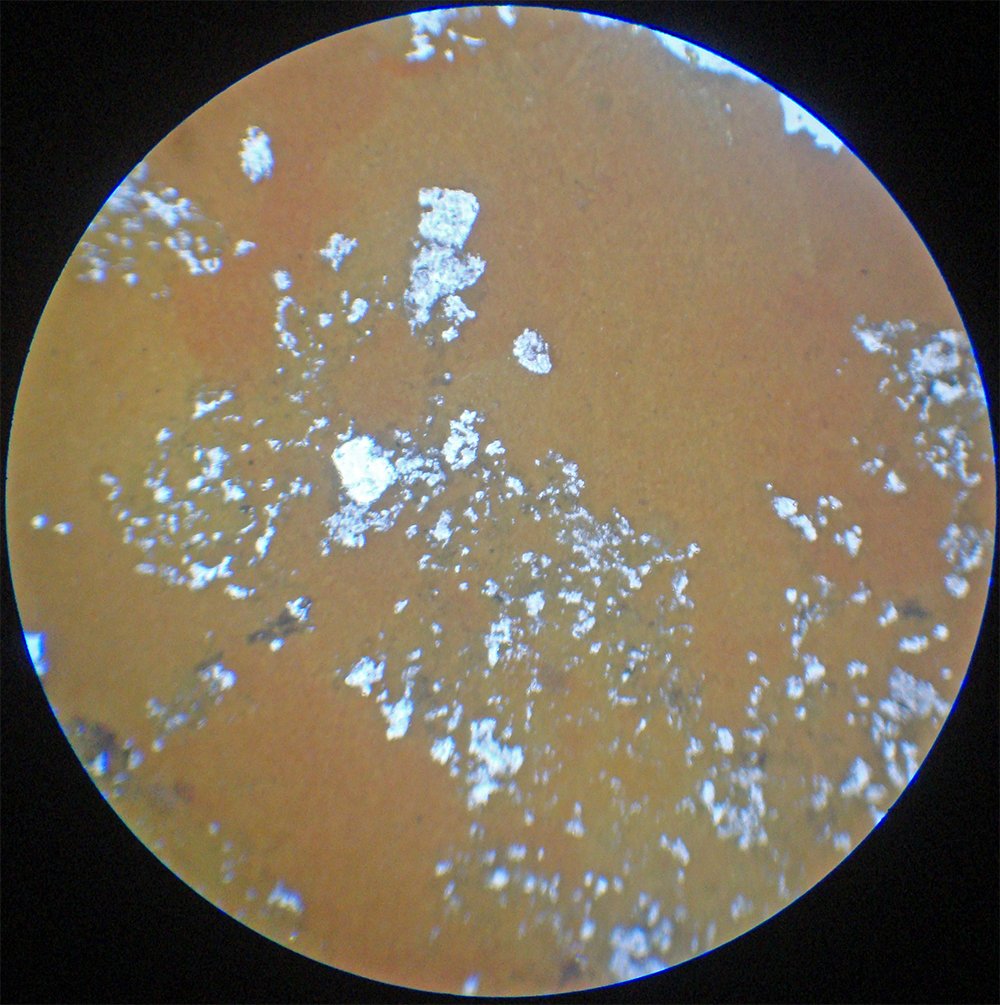
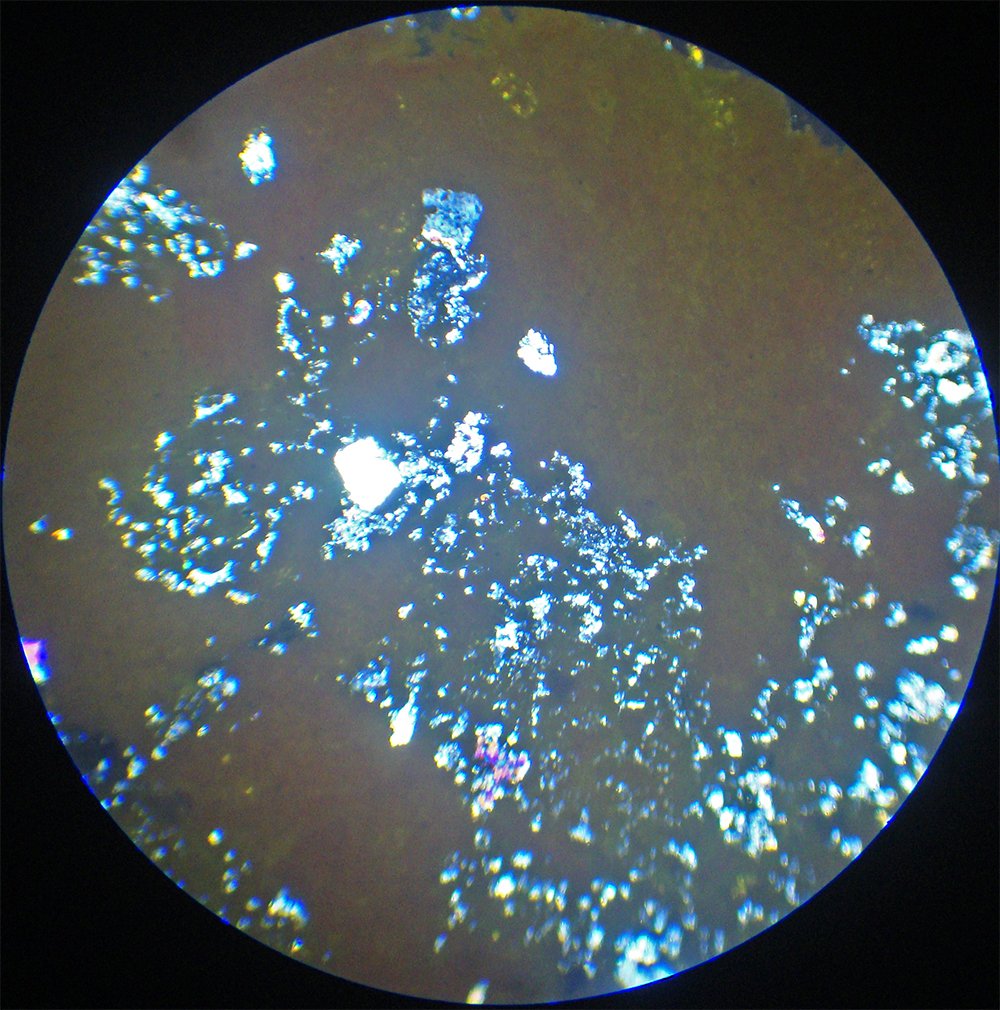
It is likely that many of the features below, taken from the classic Opaque Minerals literature, actually refer to pararealgar rather than orpiment. Even recent literature does not address the characteristics of pararealgar under the microscope, much less list the optical differences between orpiment and pararealgar.
Sample preparation: orpiment is quickly polished, dyeing the polishing cloth with an intense golden color. The polishing hardness of orpiment is greater than the hardness of realgar, less than the hardness of sphalerite and much less than the hardness of arsenopyrite and stibnite.
PLANE POLARIZED LIGHT – PPL
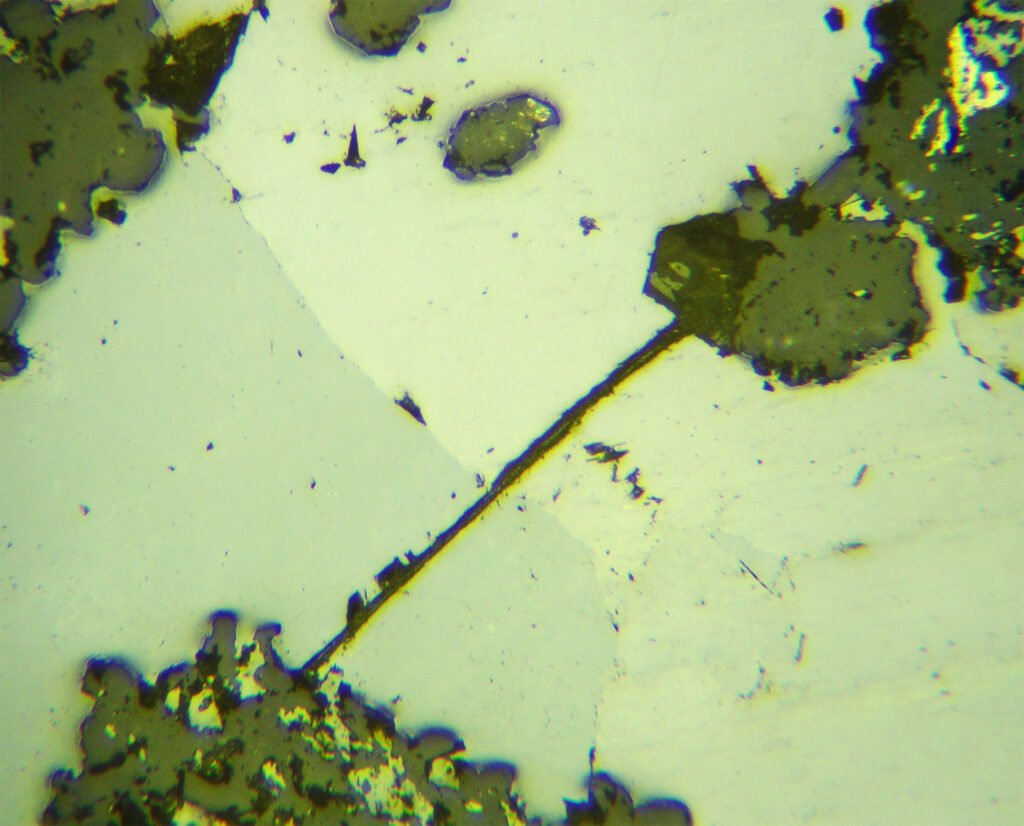
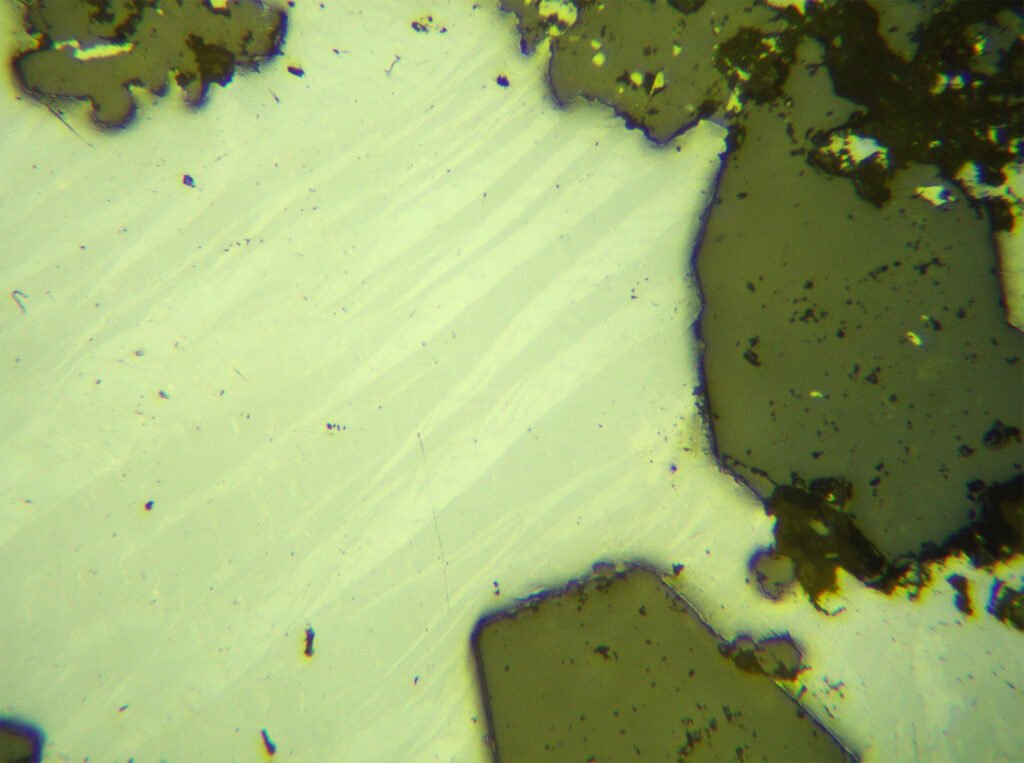
Reflection color: White-gray to medium gray.
Compared with the color of realgar, the color of orpiment is a little lighter.
Compared with the color of sphalerite, the color of goldpigment is lighter.
Pleochroism: Very strong, it resembles the pleochroism of molybdenite:
// a = intense white;
// b = faint gray with reddish tones;
// c = faint grayish white.
Reflectivity: 19,57 – 26,18%.
Bireflectance: No.
CROSSED POLARIZED LIGHT – XPL
Isotropy / Anisotropy: Strong anisotropy in gray colors, often masked by strong internal reflections.
Internal reflections: Very clear internal reflections, white, lemon yellow and orange.
Internal reflections become more intense in low quality sections.
May be confused with: few other minerals. The yellow color is very typical of orpiment, its almost constant association with realgar makes its recognition very easy.
Pararealgar is very similar.
Native sulfur has no cleavage and has a different smell.
Autunite forms in different environments, has greenish colors and is intensely radioactive.
General Characteristics:
Grain shape: orpiment occurs in masses composed of acicular or tabular crystals according to (010). It often occurs in tufts, radial masses, or spheres with a rhythmic structure.
Polishing scratches are unavoidable due to low hardness.
Negative relief will always exist due to differences in hardness in different directions.
Cleavage according to {010} is almost always visible, as are undulating deformations under [100] in this plane.
Twins do not occur.
Translations on (010) are easily observed in deformed portions.
Recrystallizations are frequently observed.
Pseudomorphs of orpiment on realgar may occur.