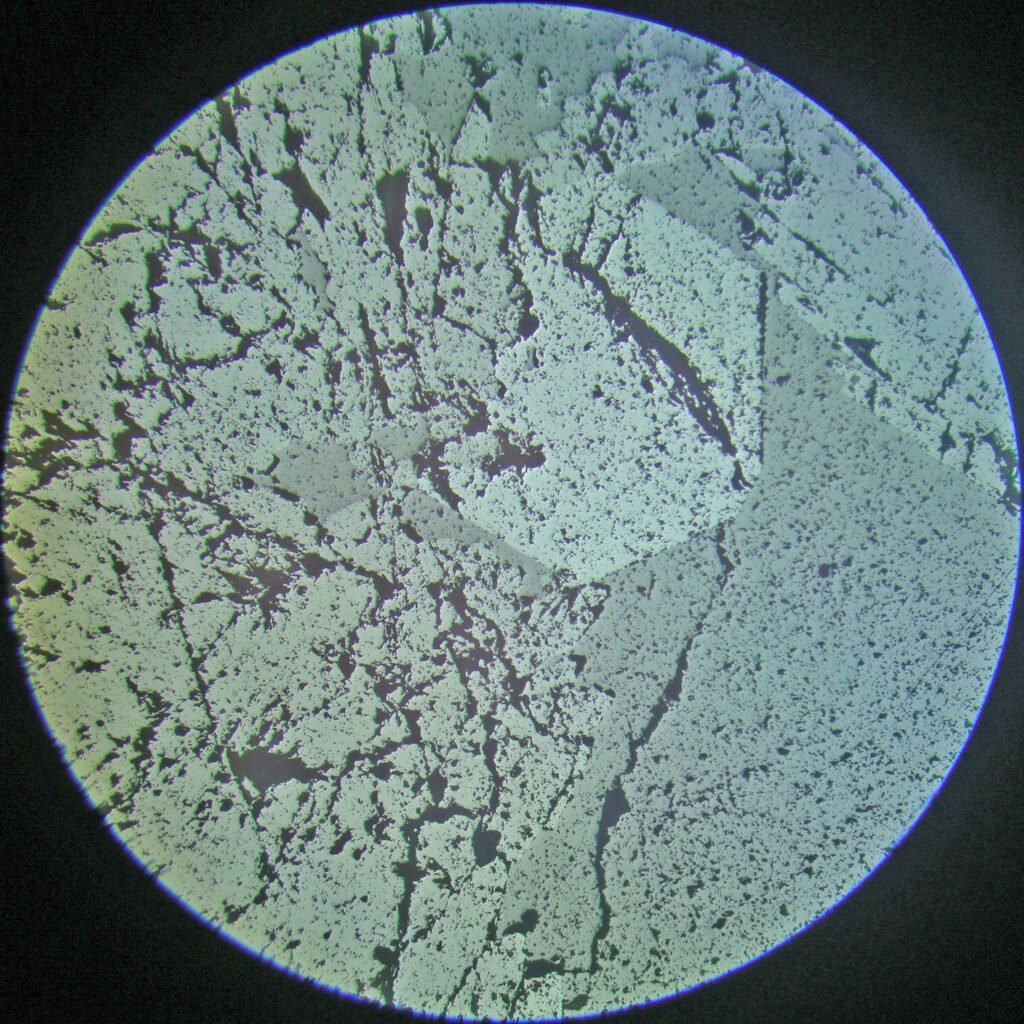
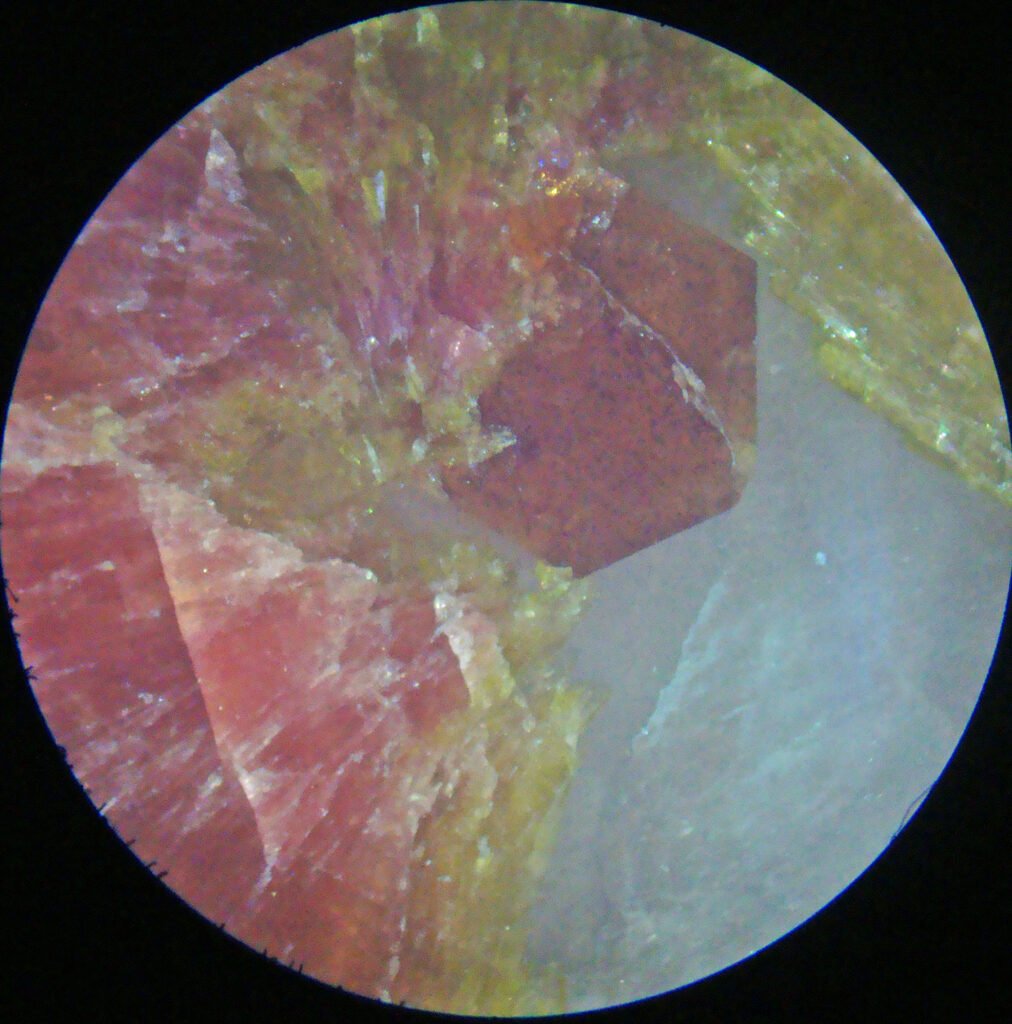
Crystal system: Monoclinic prismatic.
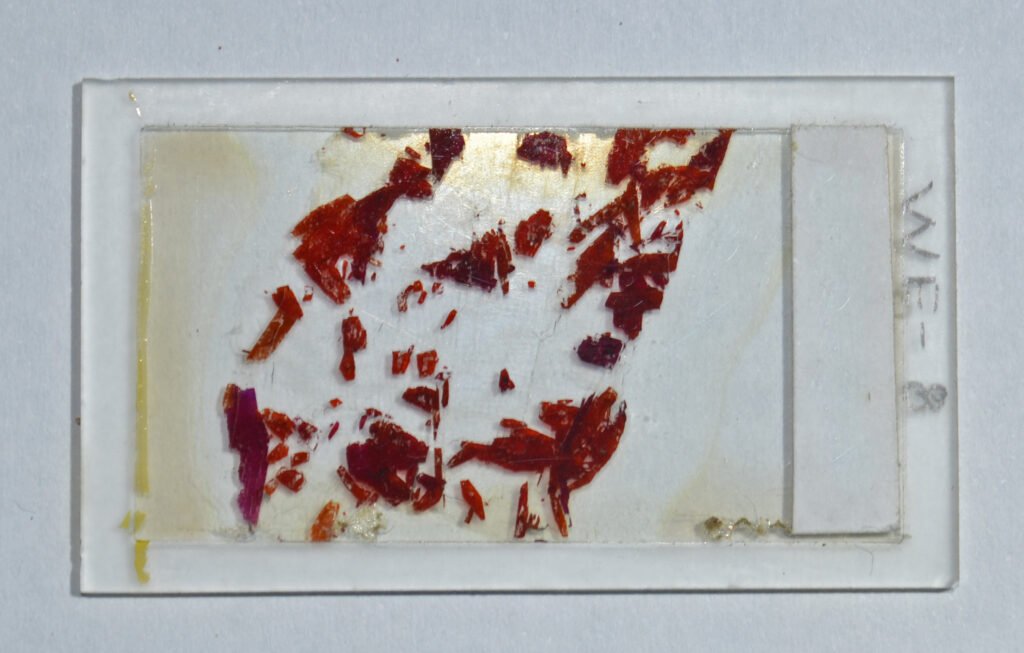
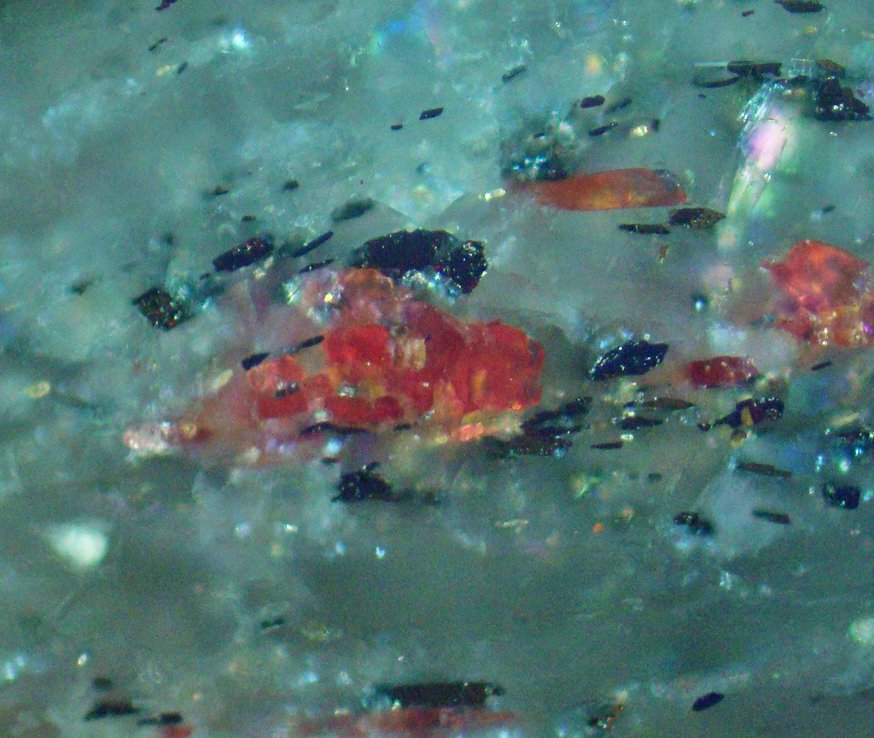
Color: Red, red–violet, brown–red to reddish black.
Habit: Prismatic, tabular, granular, acicular, may form radial aggregates.
Cleavage: {001} perfect, {100} poor.
Tenacity: Brittle.
Twinning: Lamellar on {100}, rare.
Fracture: Irregular.
Mohs Hardness: 6 – 6.5
Parting: No.
Streak: Reddish.
Lustre: Vitreous.
Diaphaneity: Transparent.
Density (g/cm³): 3.46 – 3.54
2. Geology and Deposits
Piemontite is a relatively rare mineral, forming in Mn-rich metamorphic rocks generated by low to medium grade regional metamorphism (greenschist to amphibolite facies), such as schists and gneisses.
It occurs in hydrothermal veins of felsic rocks such as rhyolites, andesites and diorites that have undergone hydrothermal alteration, as well as in metasomatic deposits (skarns) of Mn minerals.
3. Mineral Associations
Piemontite occurs with quartz, epidote, zoisite (thulite), tremolite, glaucophane, orthoclase, calcite, chloritoid, garnet (spesartine) and braunite.
Also to some rare minerals such as yttrocrasite-(Y) and lavoisierite.
4. Transmitted Light Microscopy
Refraction indices: nα: 1.725 – 1.756 nβ: 1.730 – 1.789 nγ: 1.750 – 1.832
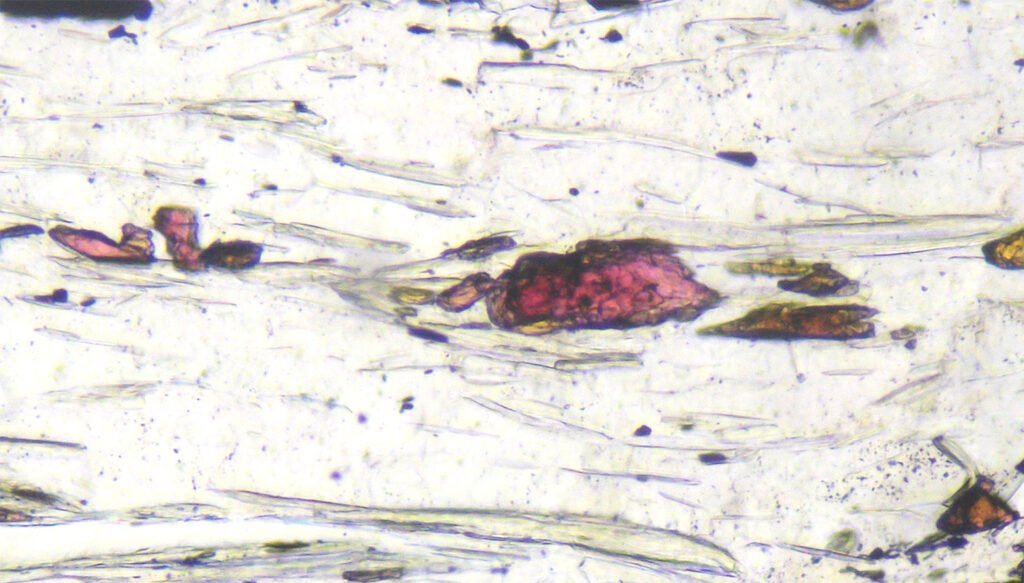
PLANE POLARIZED LIGHT – PPL
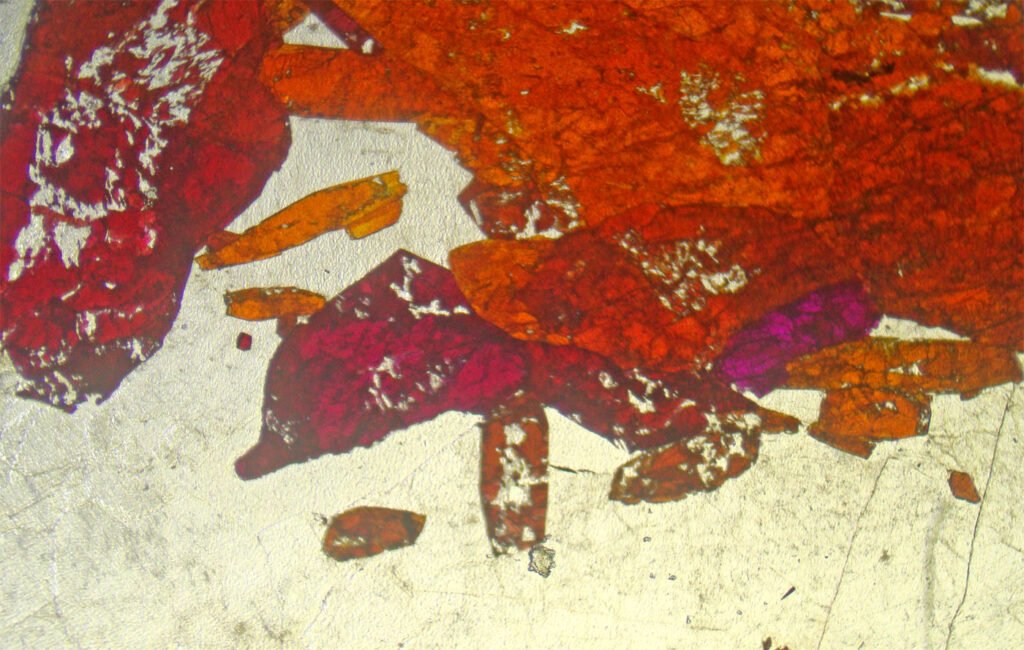
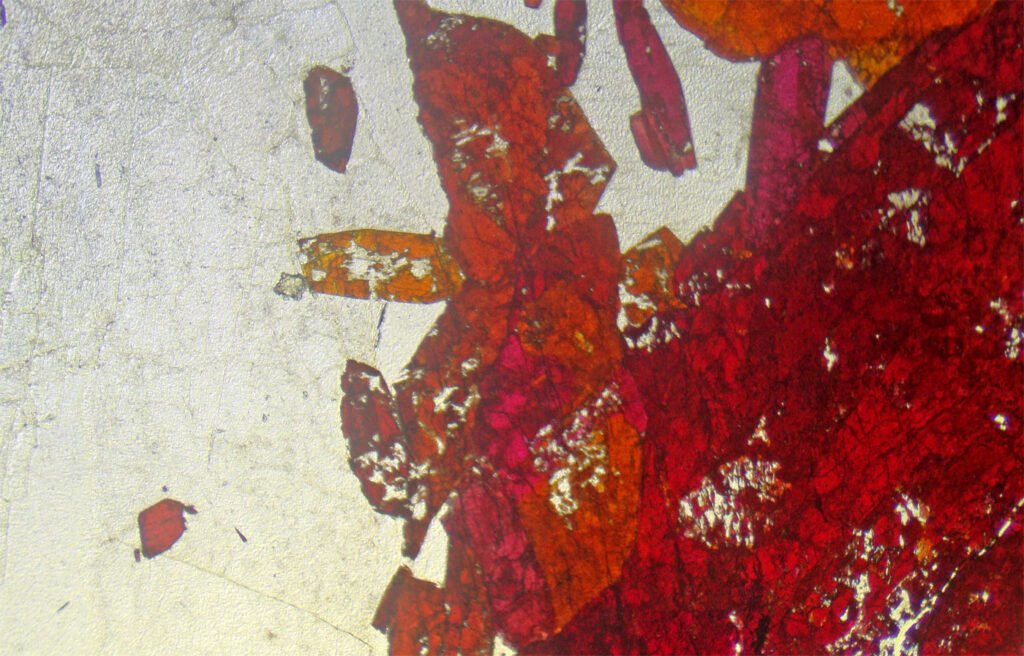
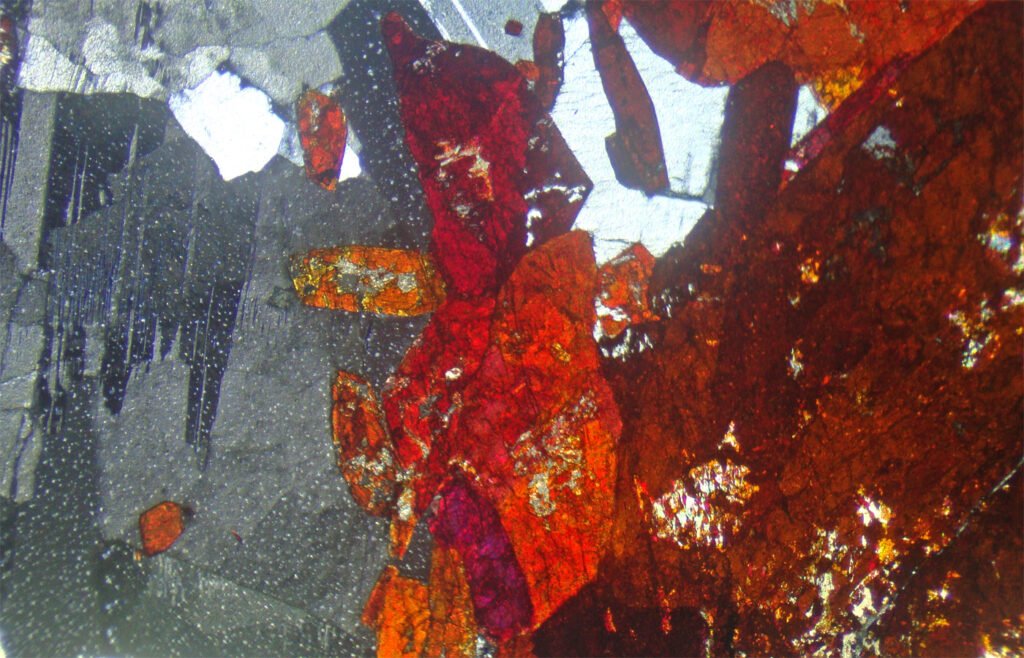
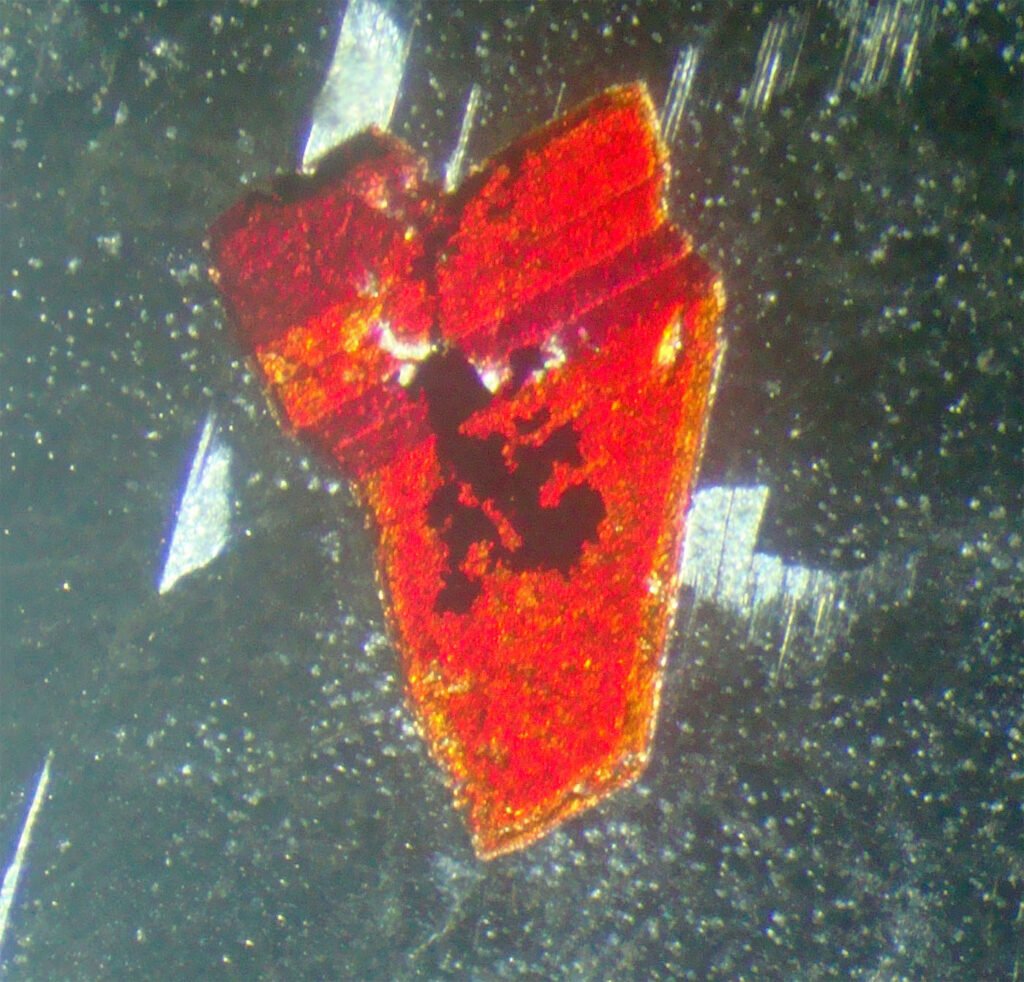
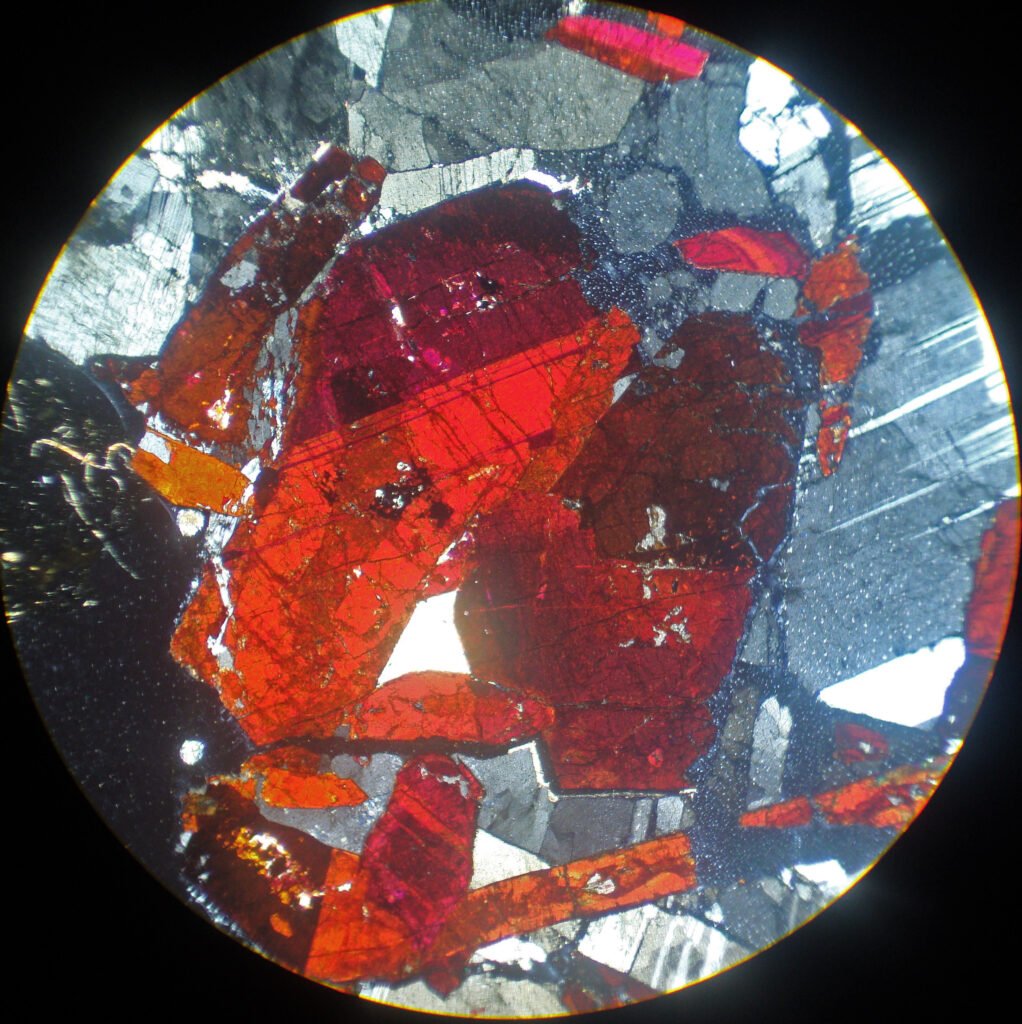
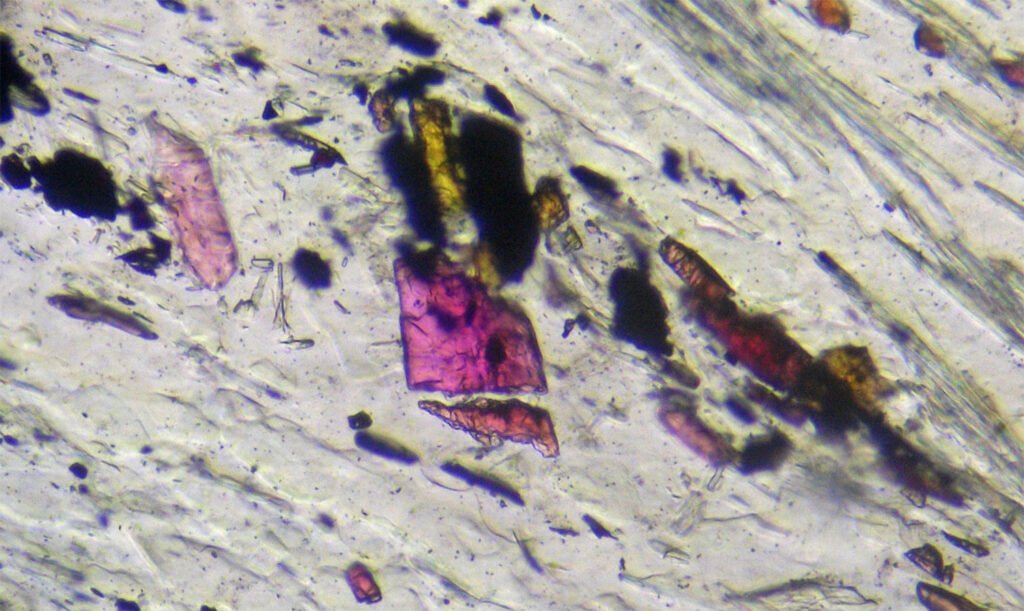
Color / Pleochroism: Strong colors: pink, yellow, orange, red and violet, with strong pleochroism: X = yellow, Y = violet-red, Z = dark red.
Relief: High to very high.
Cleavage: {001} perfect and {100} poor.
Habits: Prismatic crystals, 6-sided sections, acicular, may form radial aggregates such as epidote.
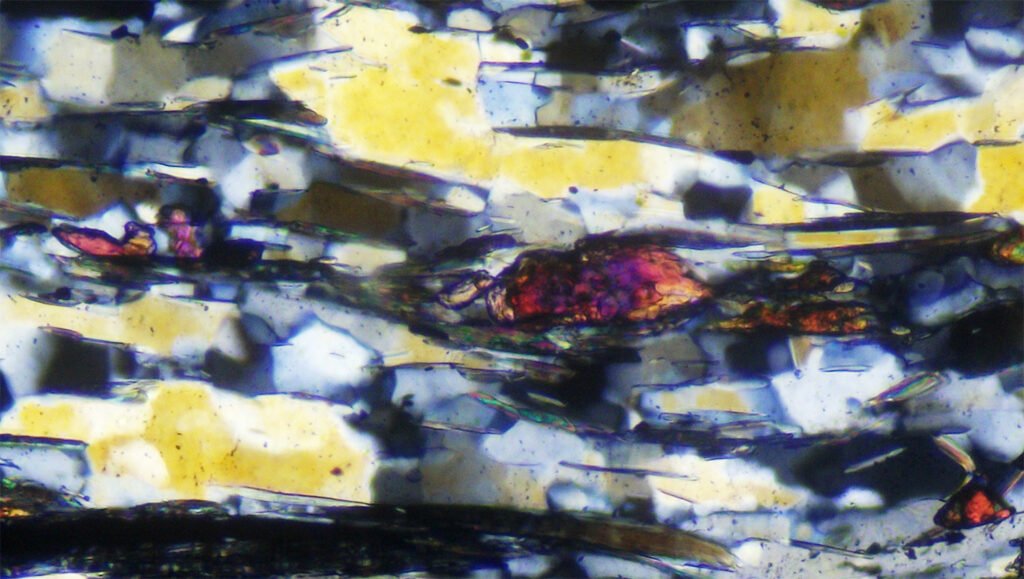
CROSSED POLARIZED LIGHT – XPL
Birefringence and Interference Colors: Birefringence from 0.025 to 0.073: intense 2nd to 4th order colors. Interference colors are usually masked by the intense colors of the mineral. Colors change little or do not change between PPL and CPL.
Extinction: Parallel or oblique, with an angle of 0 – 34º. Large sections usually show parallel extinction.
Elongation sign: ES(+) or ES(-), it is not diagnostic.
Twins: Rare, polysynthetic, lamellar, according to {100}.
Zoning: No.
CONVERGENT LIGHT
Character: B(+) or B(-)
2V angle: 64 – 106º
Alterations: it hardly alters, but it can alter to chlorite.
May be confused with: the colors and pleochroism are very characteristic and there is no other common mineral with these characteristics.
Zoisite has a red variety called “thulite”, which is very similar, but has a pleochroism between pink and yellow (it does not have the violet tones of piemontite).
Clinozoisite has a pink variety called “clinothulite”, typical of granitic pegmatites, which has anomalous interference colors in CPL and not the intense colors of piemontite.
Cuprite (CuO) at first glance may be similar, but it does not have pleochroism and the red tone is different, deeper, less pink and does not have violet tones.
Cinnabar (HgS) may be similar, but is much less transparent (darker colors) and the paragenesis is different.
Realgar (As4S4) also features red colors.