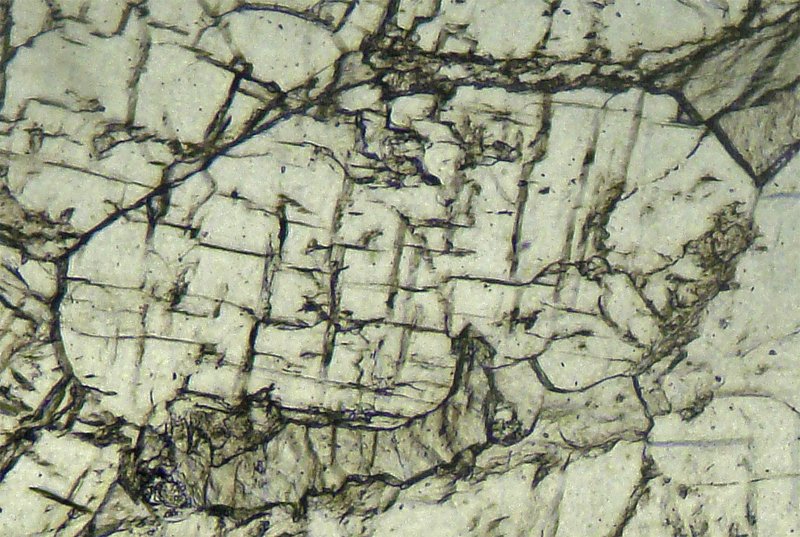
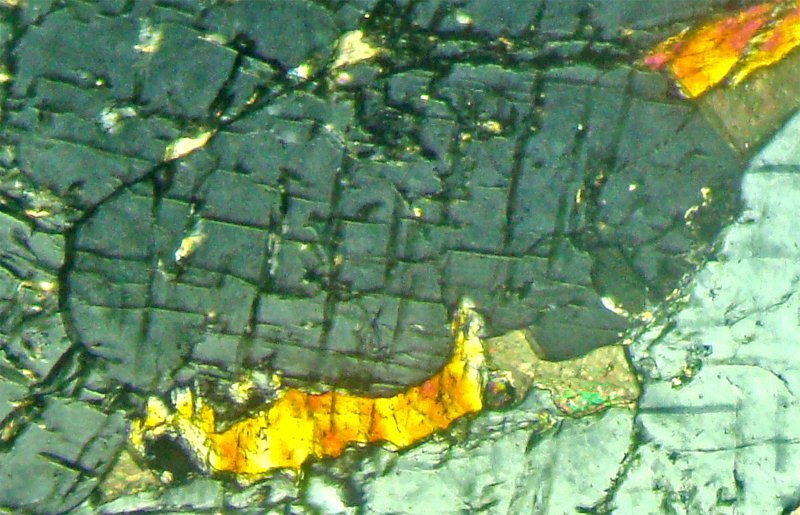
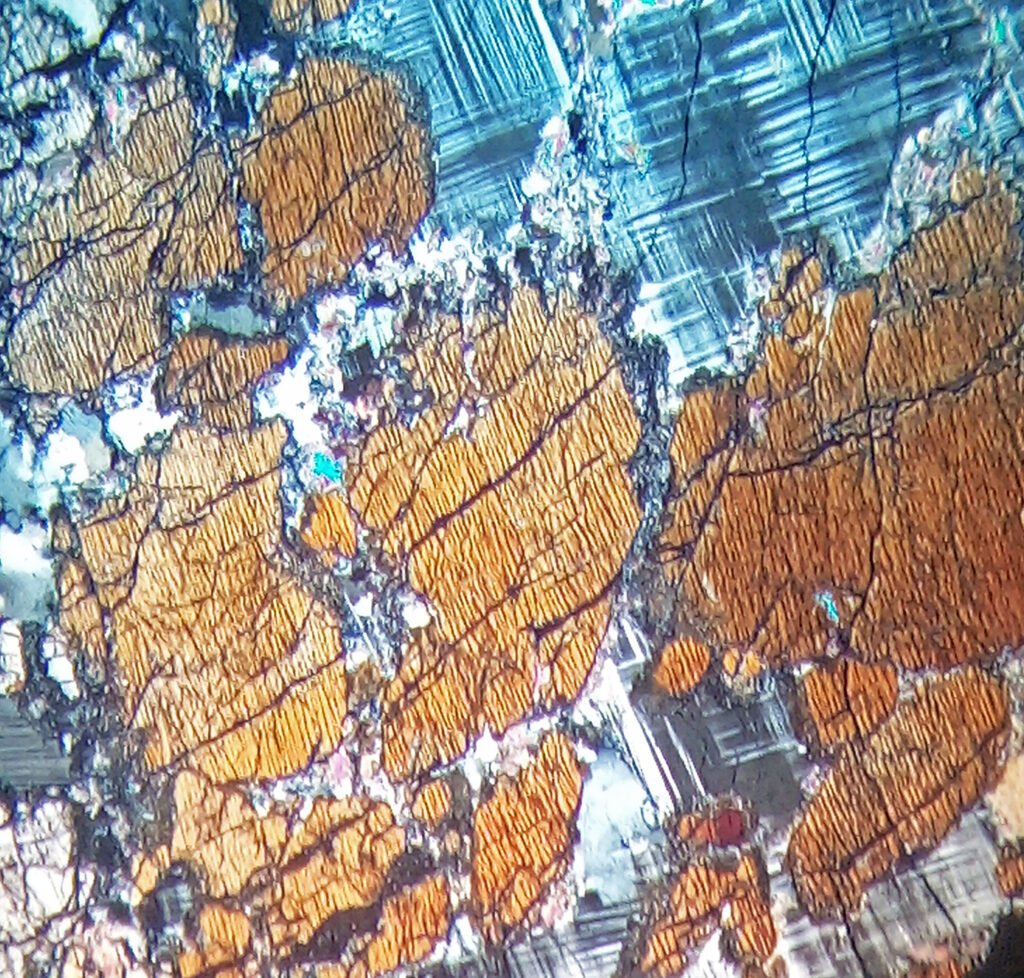
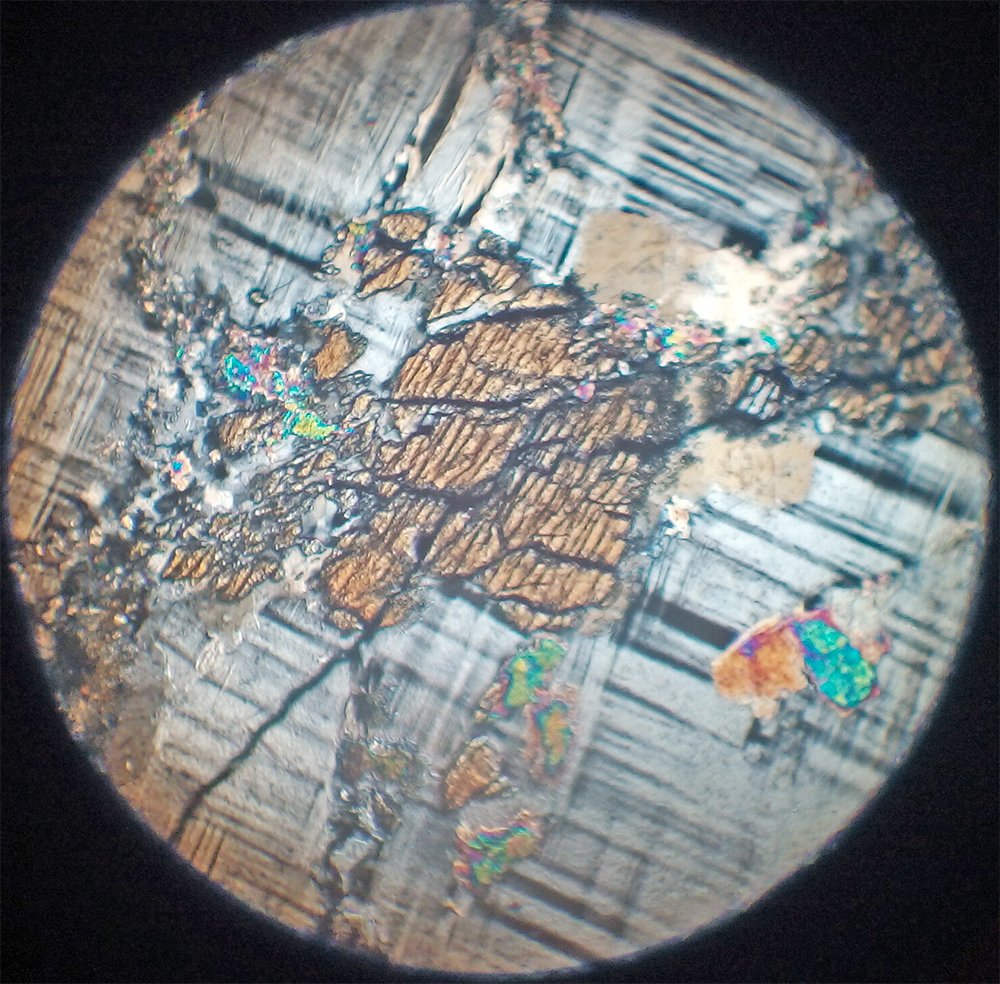
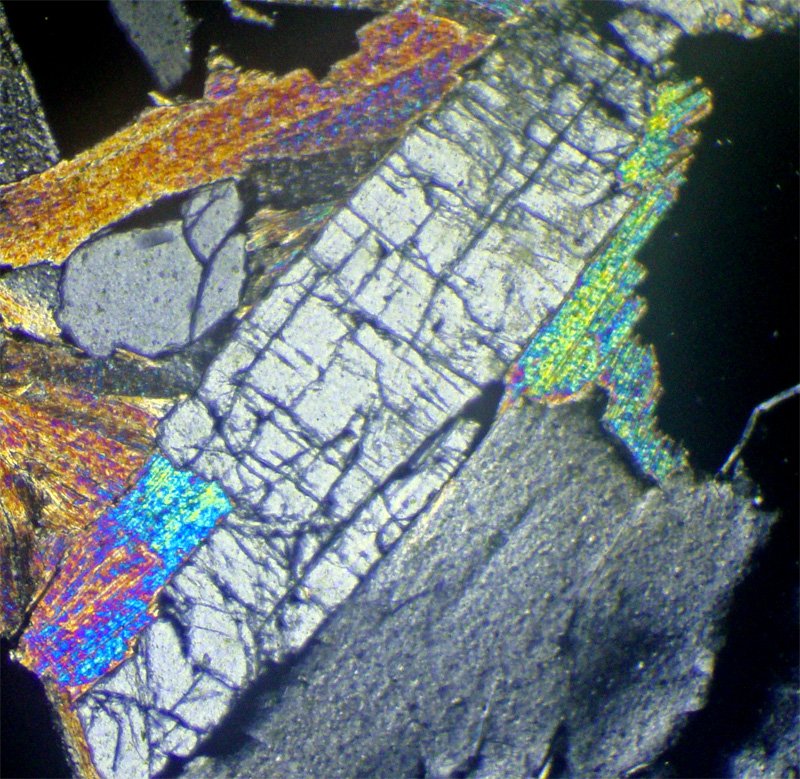
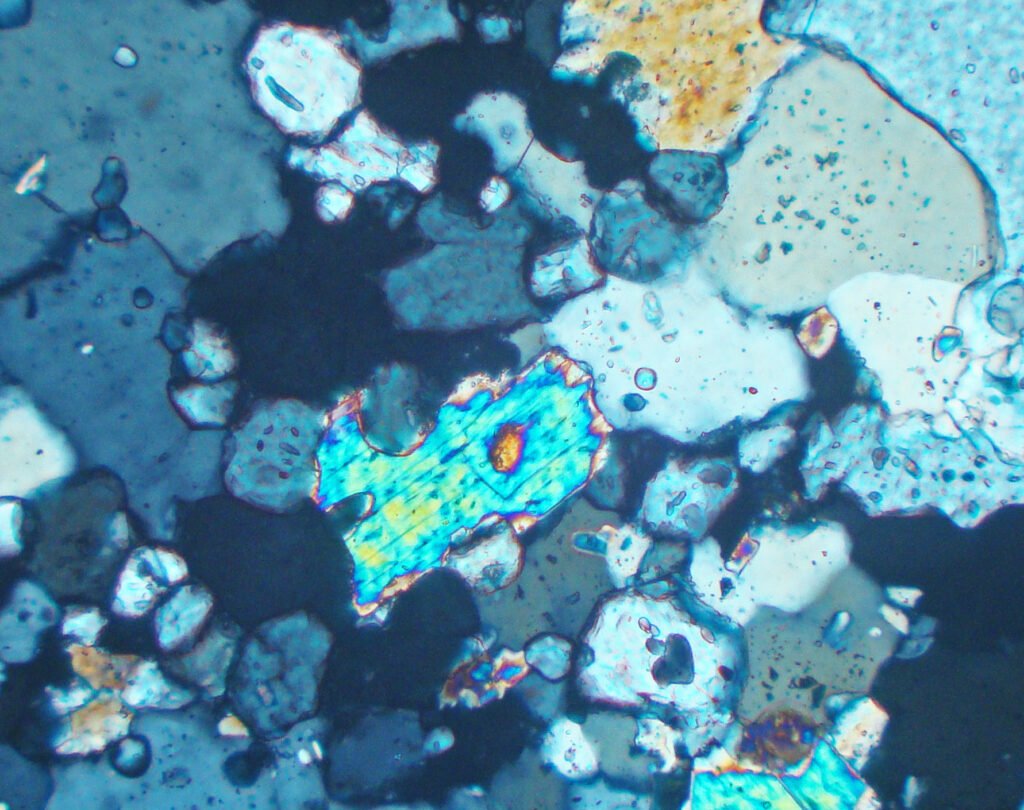
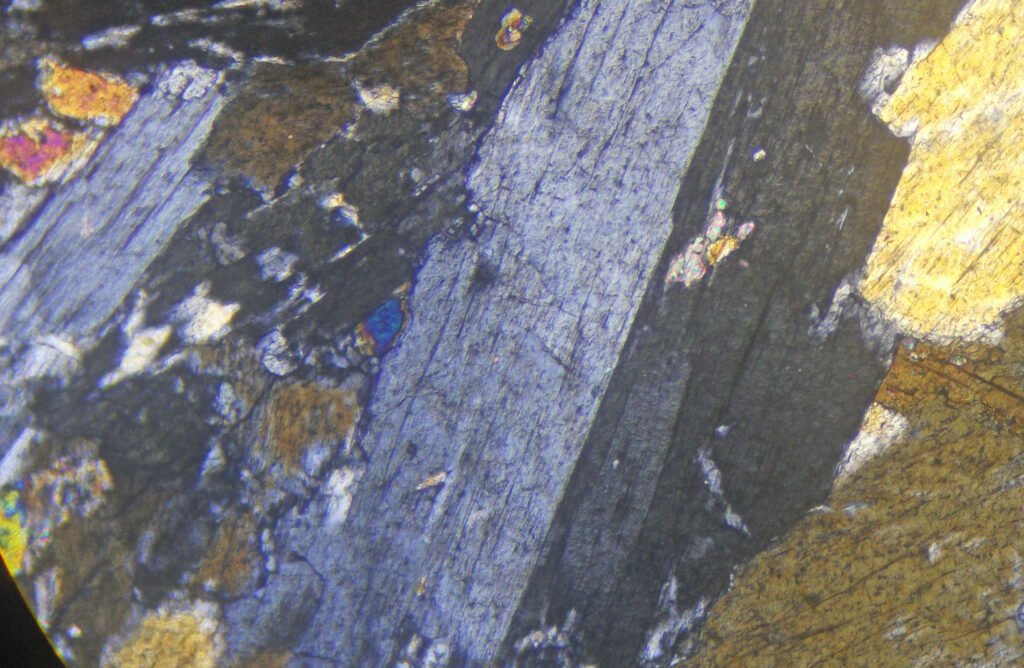
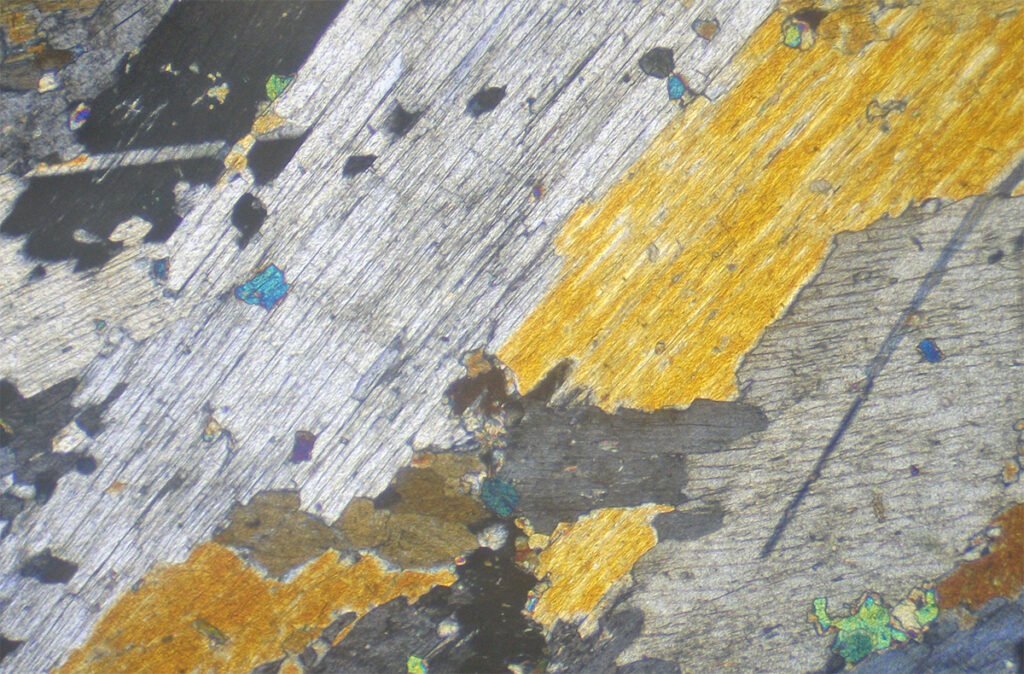
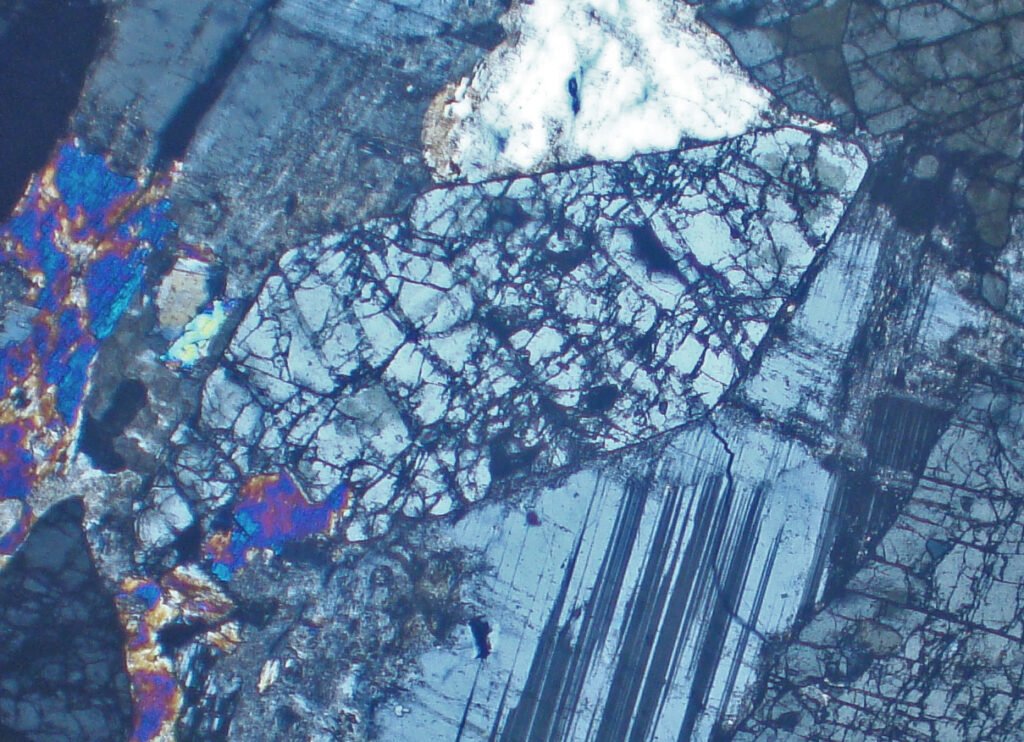
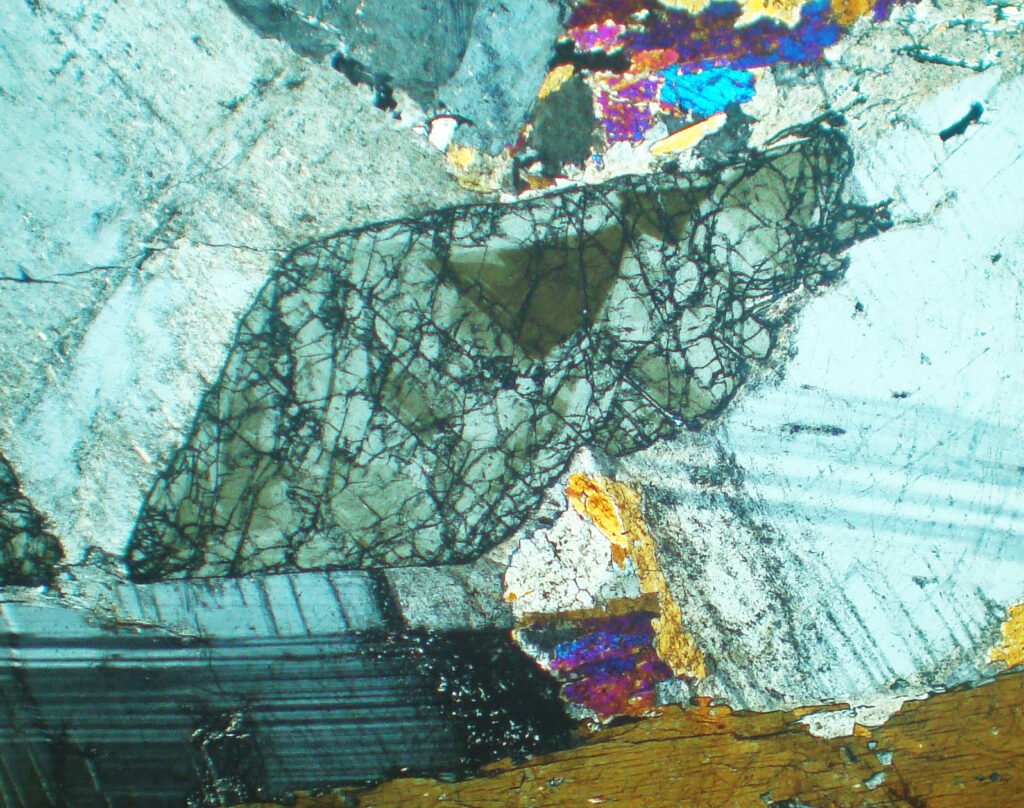
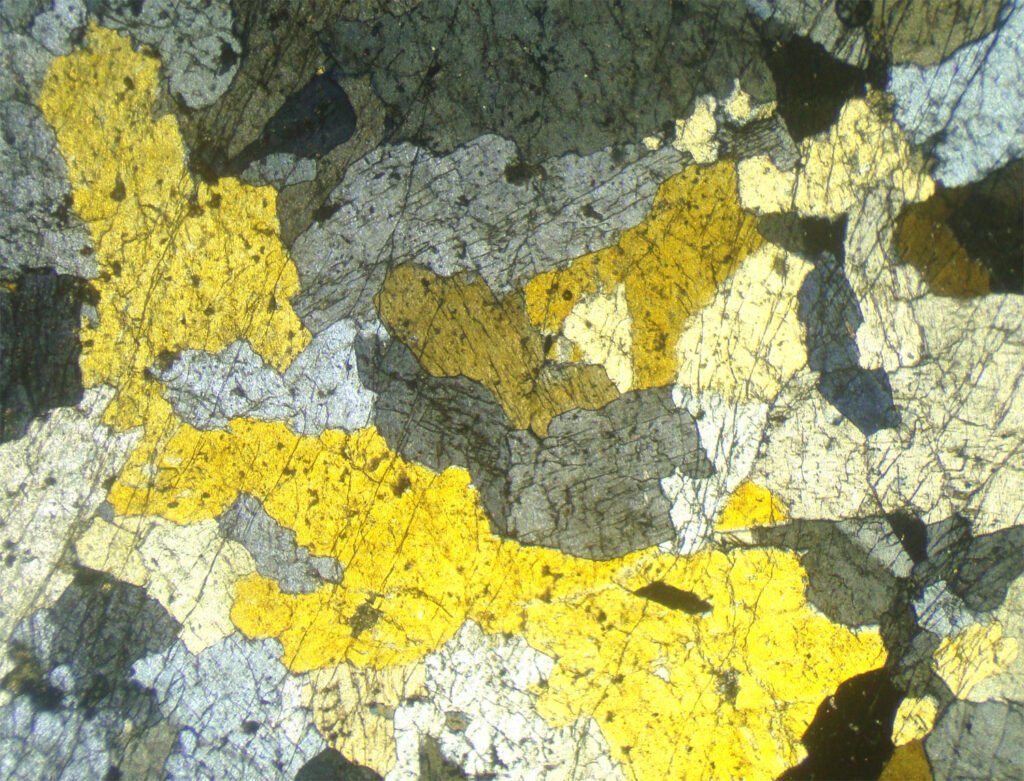
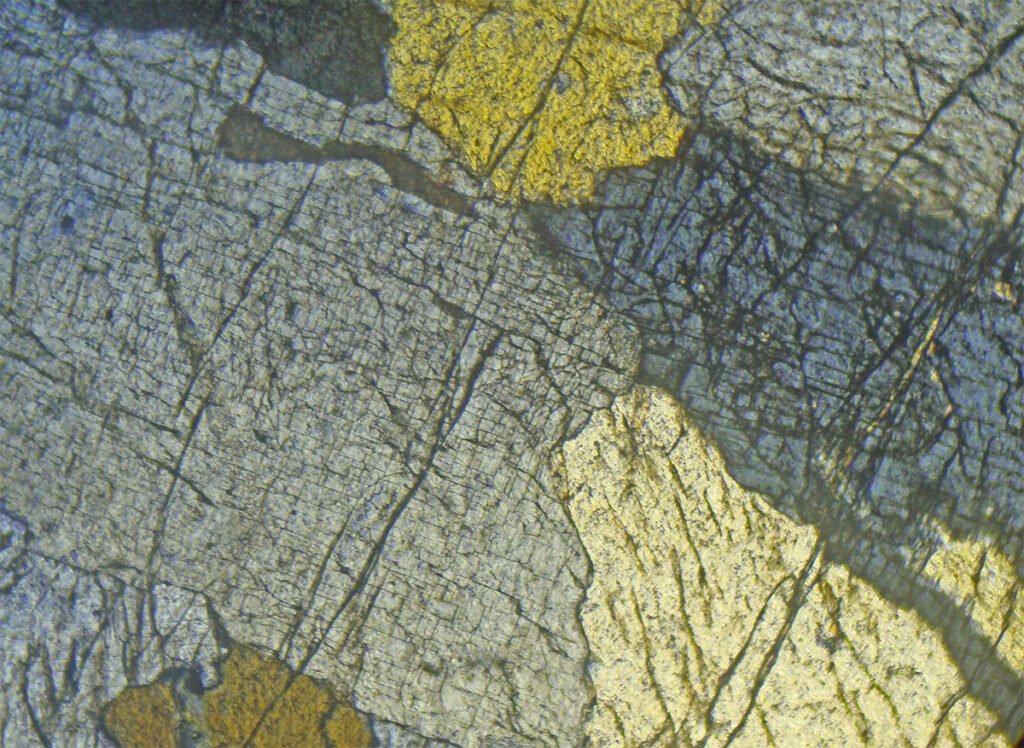
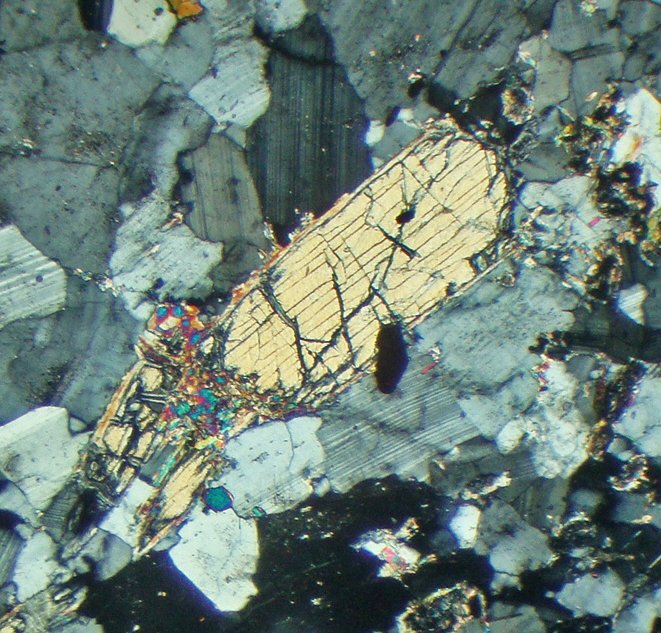
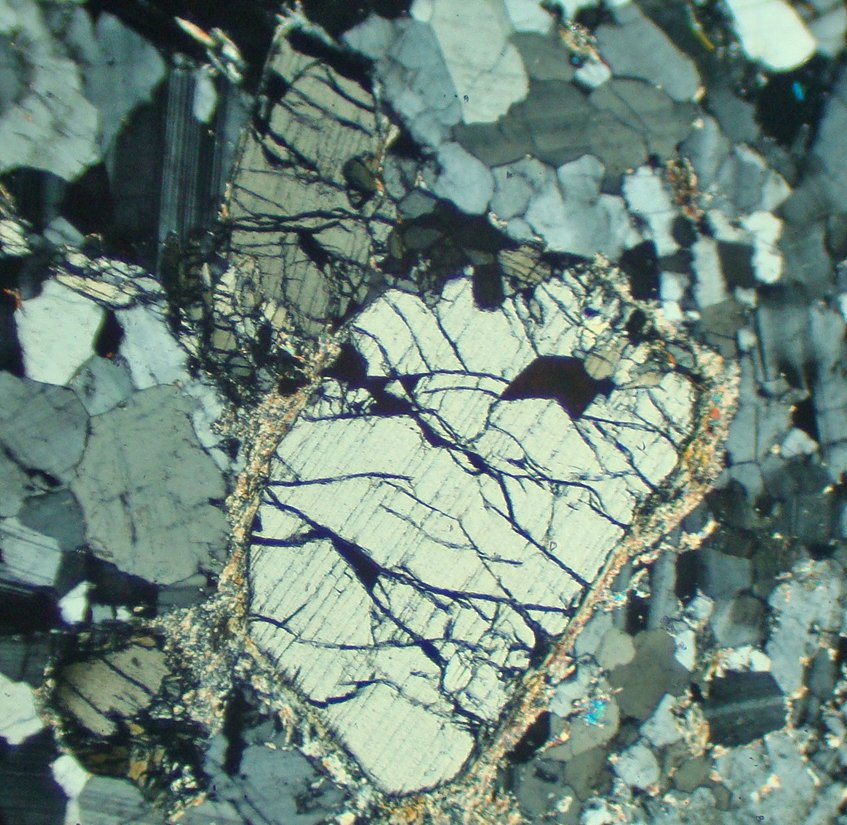
Rather rare trigonal tectosilicate, often found in skarns.
PPL: Prismatic, columnar crystals, may be granular. Two cleavages that intersect at 90º in the basal sections.
XPL: colors of up to 2nd order, can be strong. Parallel extinction, ES(-), without twins, typically with many inclusions. U(-). Feldspars are similar, but biaxial.
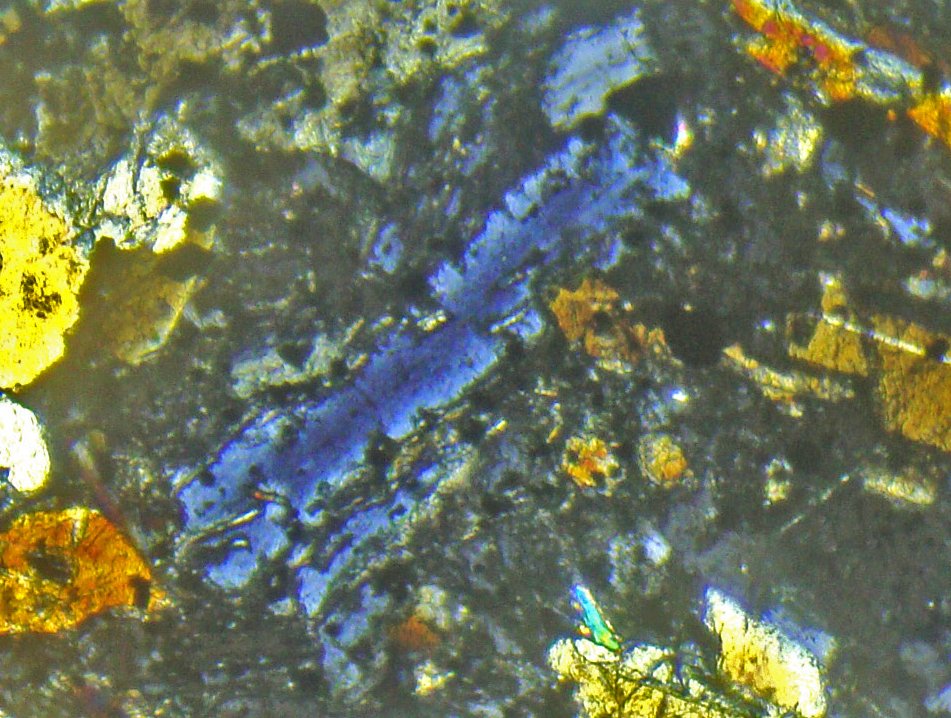
The only rock-forming phosphate, hexagonal, is present in many types of rocks.
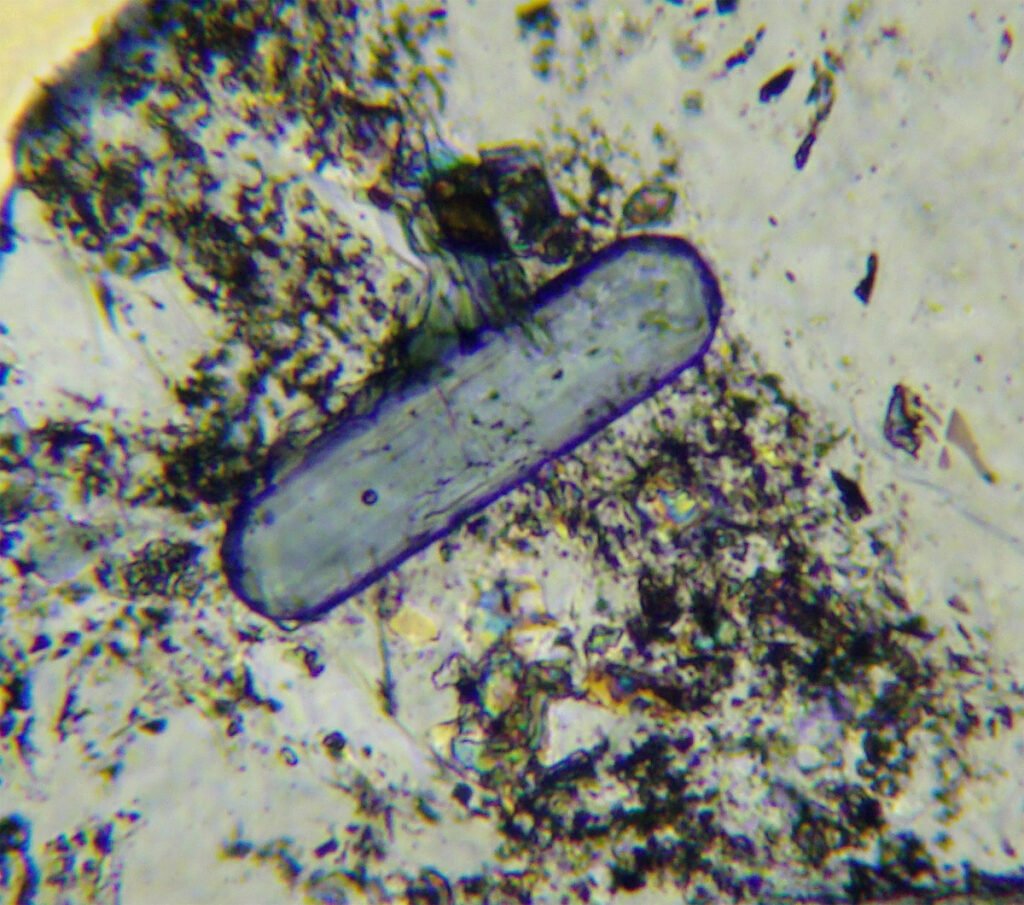
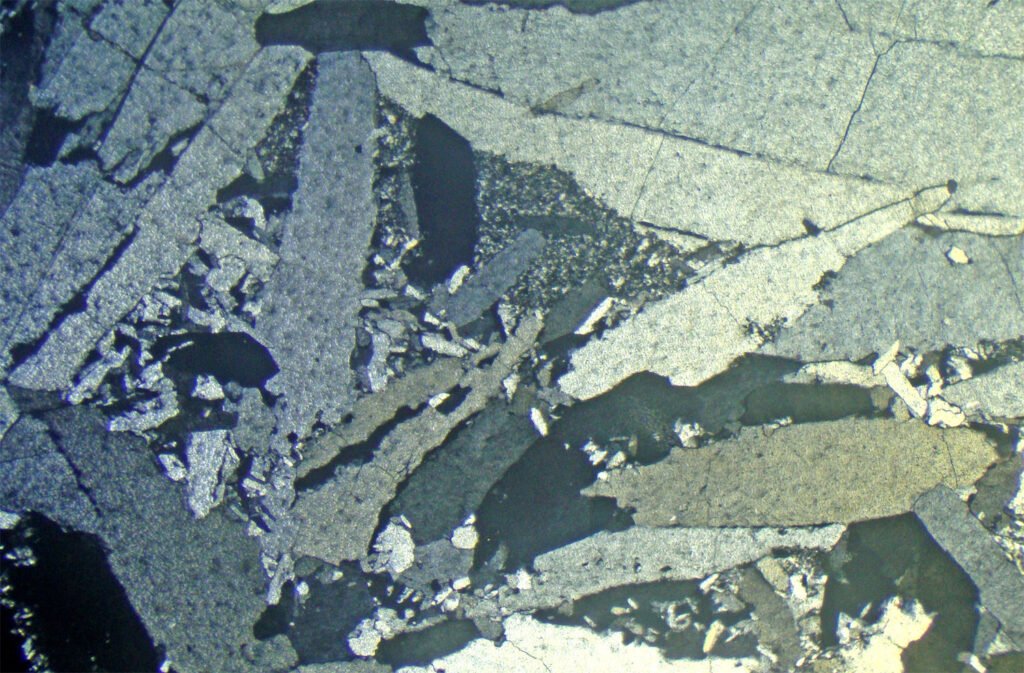
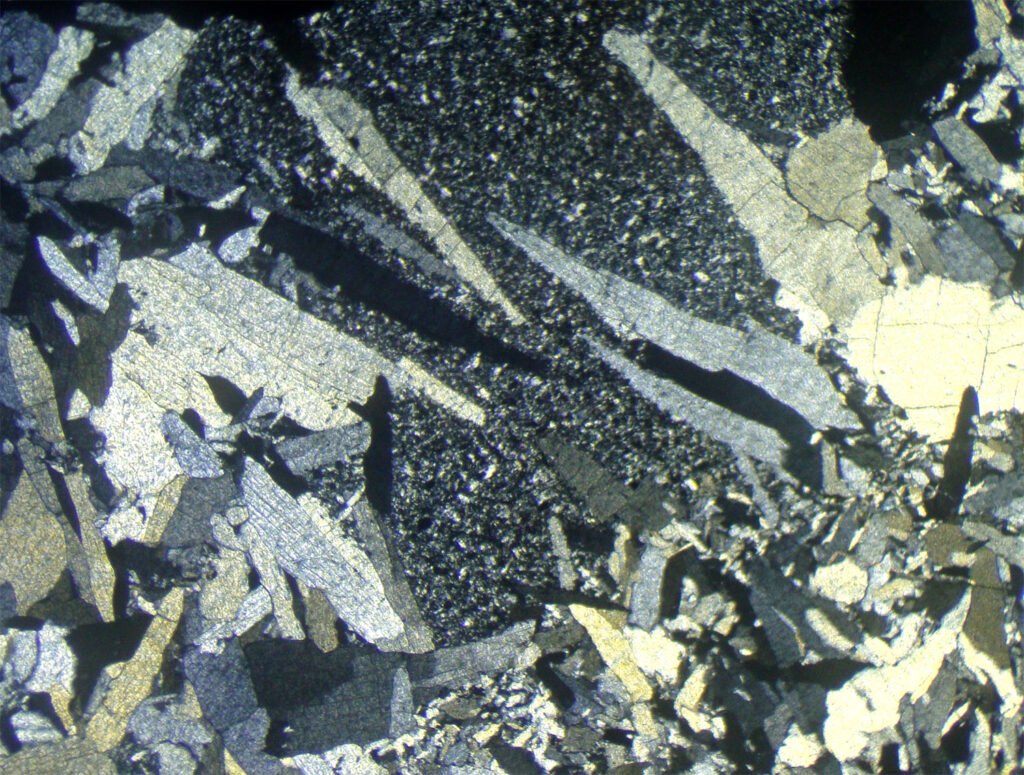
PPL: Usually forms small long-prismatic crystals with rounded ends, with parallel extinction. The basal sections tend to be six-sided and isotropic. In carbonatites it form large crystals and is biaxial (2V angle up to 20º). Cleavage absent.
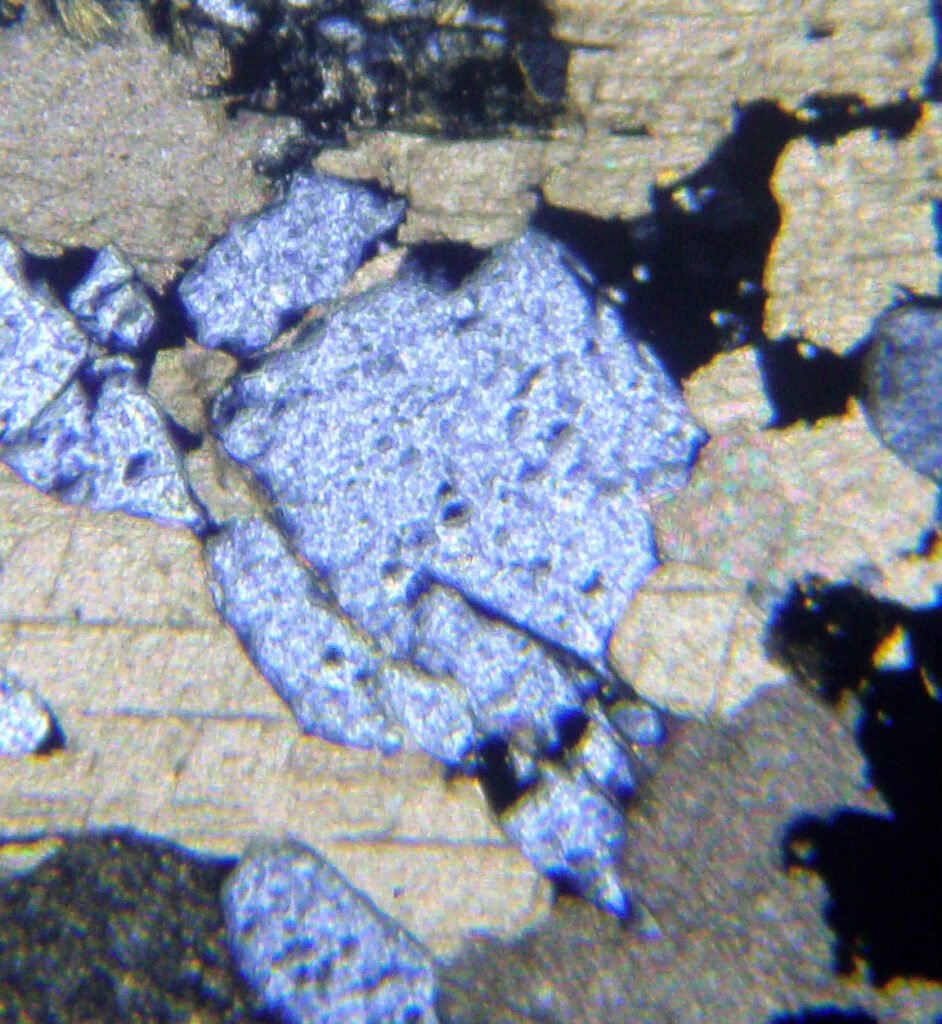
XPL: Gray colors. ES(-), twins are rare, no zonation. U(-).
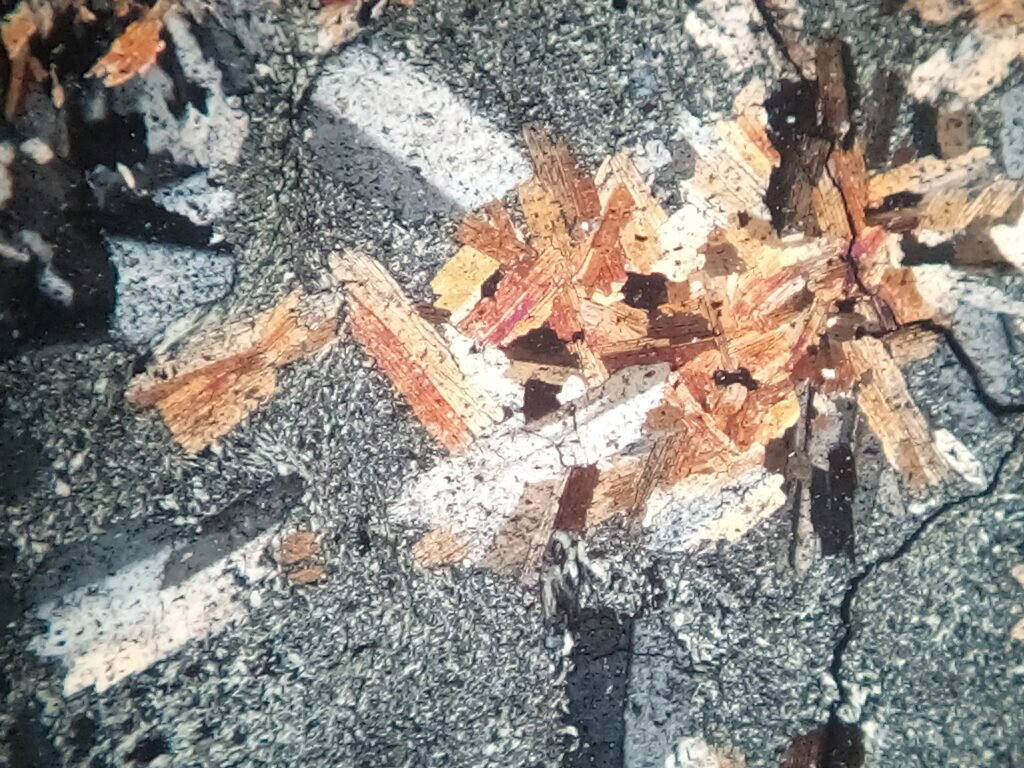
Images: Apatite in PPL, volcanic rock and in carbonatite.
Rare hexagonal cyclosilicate, found only in rhyolites and in granitic pegmatites.
PPL: Medium relief, no visible cleavage, prismatic, hexagonal basal sections.
XPL: Parallel extinction, ES(-), rare twins, no zonation. It rarely alters. Very hard (Mohs: 7.5-8), may be thick in thin section. U(-), but can have 2V up to 6º.Very similar to several common minerals.
Rather common orthorhombic sulphate, of many different geological settings.
PPL: Usually colorless, but may be weakly pleochroic in green, yellow, violet, brown, or blue. Granular or tabular habit, forms radiated aggregates. If idiomorphic, it tends to form elongated and pointed crystals, hence the name "chisel spar". Medium relief and several cleavages, may be pseudo-cubic.
XPL: Gray to straw yellow, ES(+) and parallel extinction. Twins rare, zonation absent. B(+).
Rare tetragonal sorosilicate, typical of alkaline volcanic rocks.
PPL: prismatic or tabular crystals, with square or elongated basal sections. Poor cleavages.
XPL: may have anomalous bluish interference colors. Parallel extinction, rare twins and zonation. is U(+) or U(-). Forms small crystals in the matrix of silica-poor volcanic rocks. Habits similar to plagioclases.
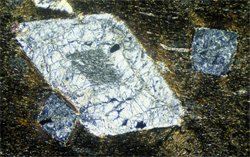
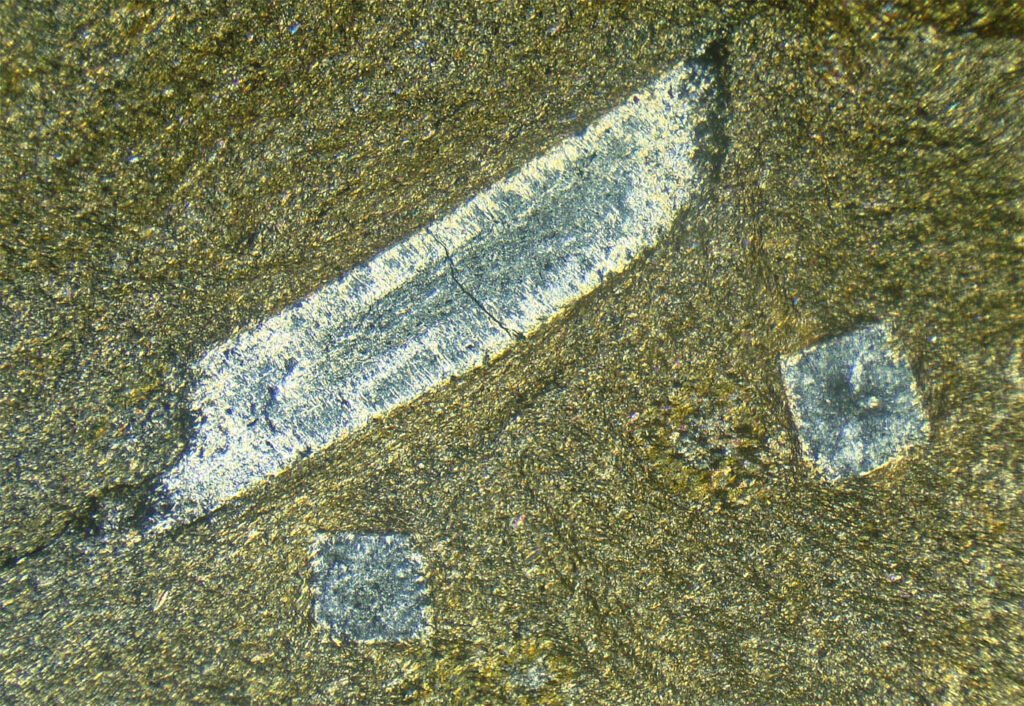
Rather common orthorhombic nesosilicate, of Al-rich metamorphic rocks.
PPL: Usually colorless, may have pale green to pink pleochroism. Short prisms of square section. Perfect {110} cleavage; basal sections with 2 cleavages at 89º.
XPL: Paralell extinction, basal sections with symmetrical extinction. ES(-). Black carbon inclusions common. B(-), 2V:71-86°.
Images: In PPL, andalusite in basal and longitudinal sections.
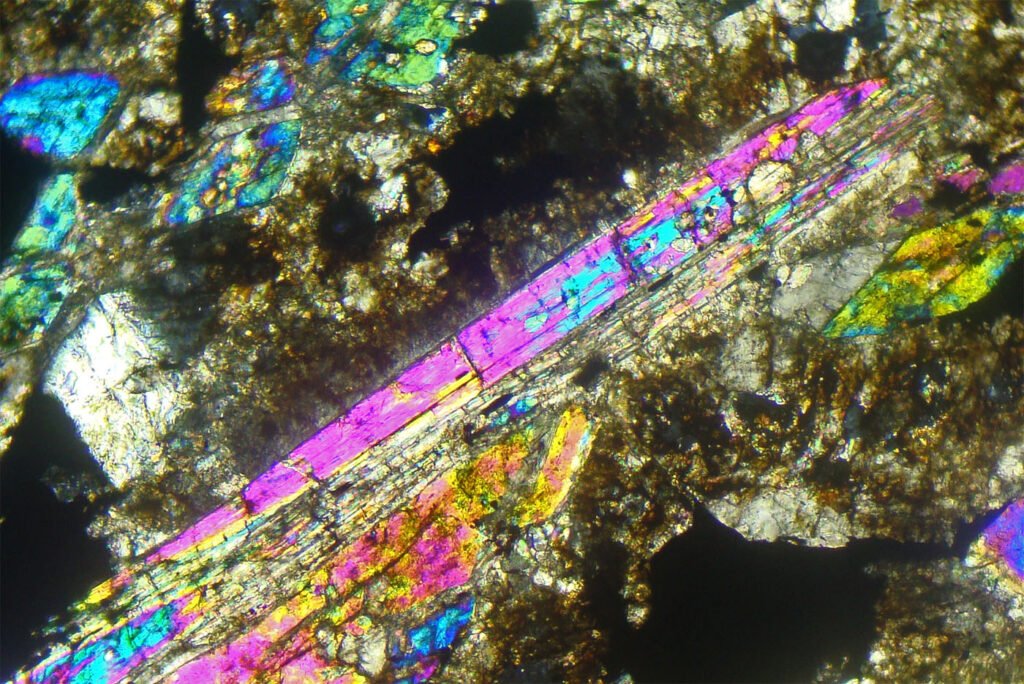
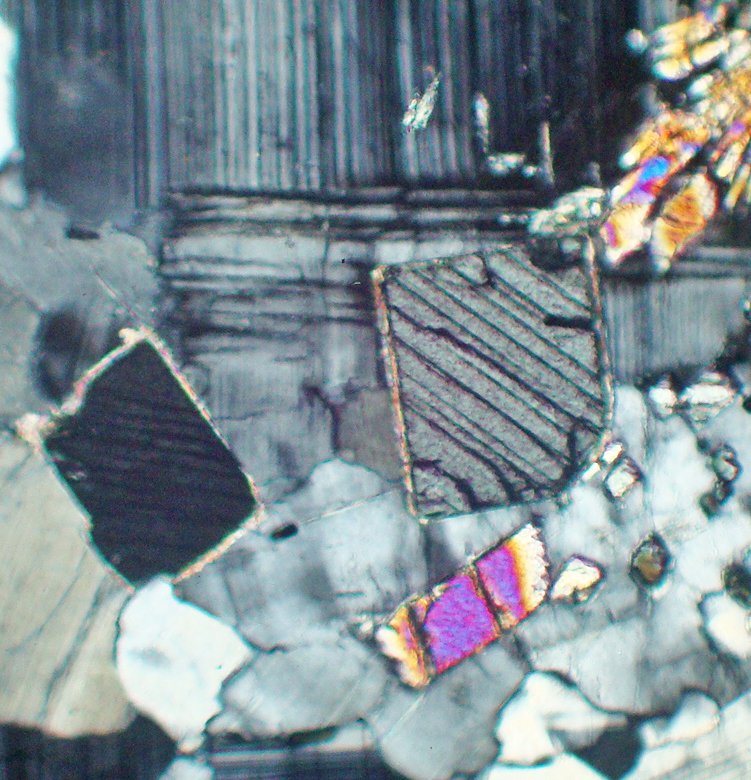
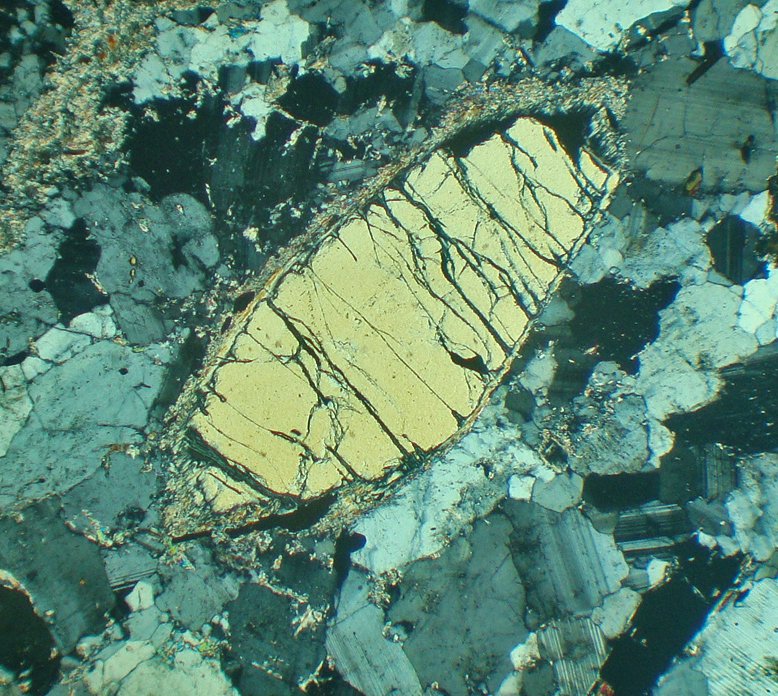
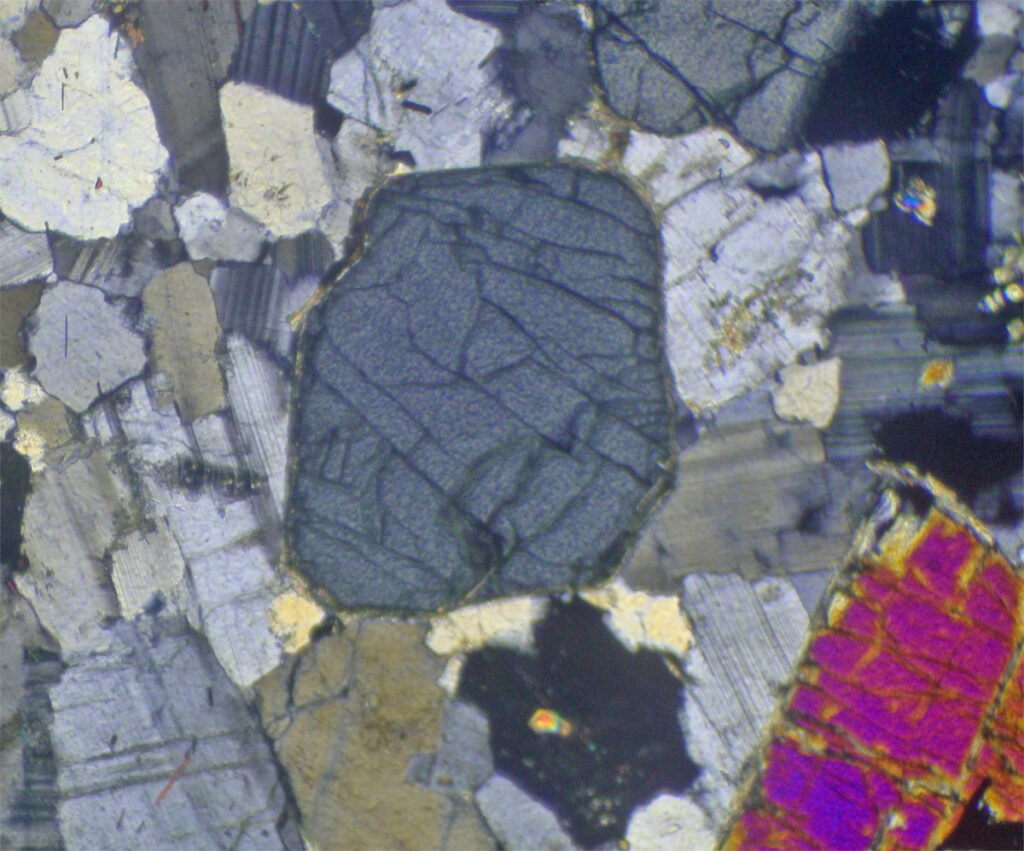
Less common orthorhombic nesosilicate of the Al2SiO5 Group, typical of high P and T pelitic metamorphic rocks.
PPL: Long prismatic crystals with fractures perpendicular to the elongation, acicular or in fibrous masses (fibrolite). Basal sections are square with diagonal cleavage.
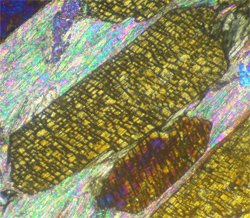
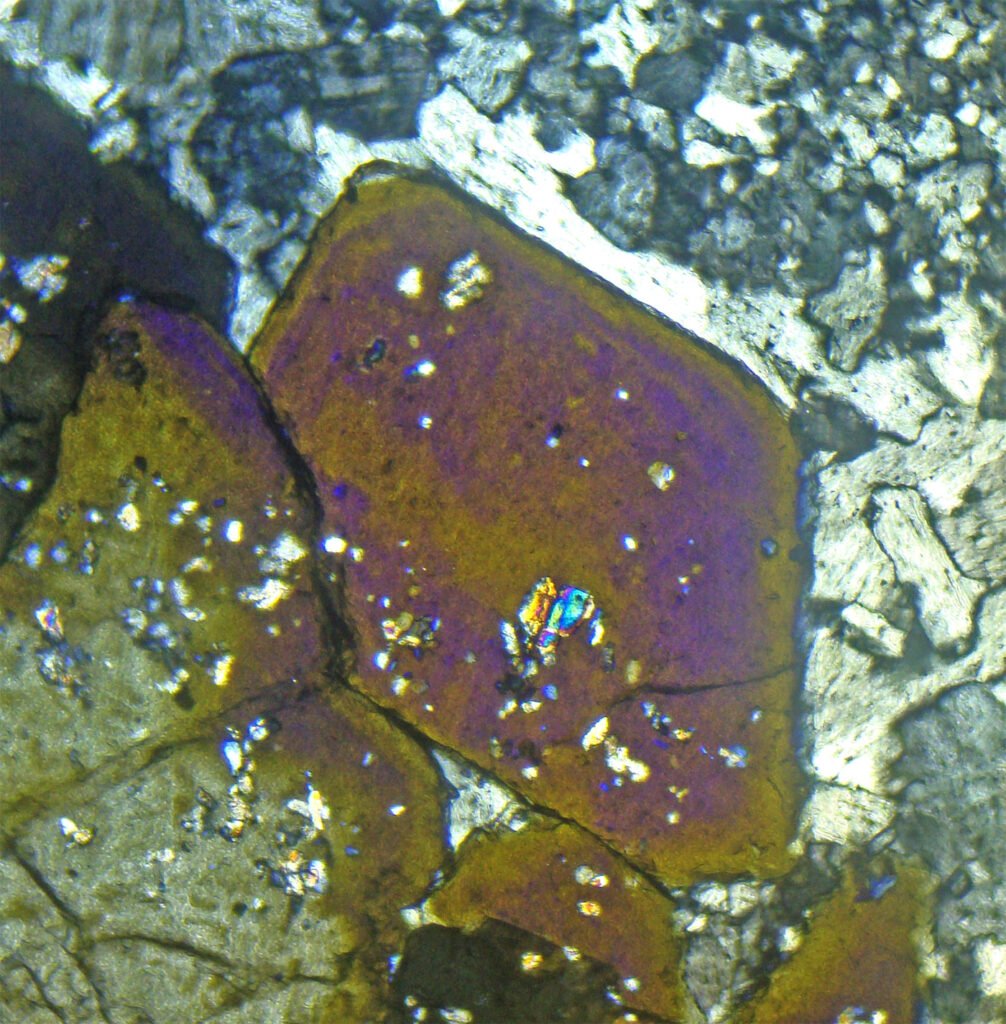
XPL: Extinction paralell (symmetrical in basal sections), ES(+), without twins or zoning. B(+), 2V from 21-30º.
Images: In XPL, longitudinal section (colorful) and basal section (gray) of sillimanite.
Less common orthorhombic sorosilicate, mainly of metamorphic rocks.
PPL: Colorless, may show soft pink color without pleochroism. Only the thulite variety, of Mn, shows moderate pink to yellow pleochroism. High relief, rhombic or hexagonal basal sections. One perfect cleavage. I
XPL: Anomalous colors (blue-gray, brown) or of lower 1st order. Parallel extinction, ES(-), B(+) with 2V 0-69º.
Rare triclinic inosilicate of the Pyroxene Group, typical of paragenesis with Mn.
PPL: Colorless, may be pinkish. High relief. Perfect (110) cleavage: longitudinal sections with only one cleavage, basal sections with two cleavages at 92.5º. Usually massive.
XPL: Colors of low 1st order, like gray/white/yellow (0.013). Oblique extinction up to 25º. B(+), 2V from 58-73°.
Rather rare tetragonal sorosilicate of contact metamorphic impure marbles.
PPL: Colorless, but may show pale colors in green, brown or yellow without pleochroism or with very weak pleochroism. High relief, bad cleavage, granular or in short prisms.
XPL: Anomalous colors (blue, brown, purple, etc.). Extinction tends to parallel, ES(-), zonation common. U(-), can be anomalous B(-) with 2V from 17-33º.
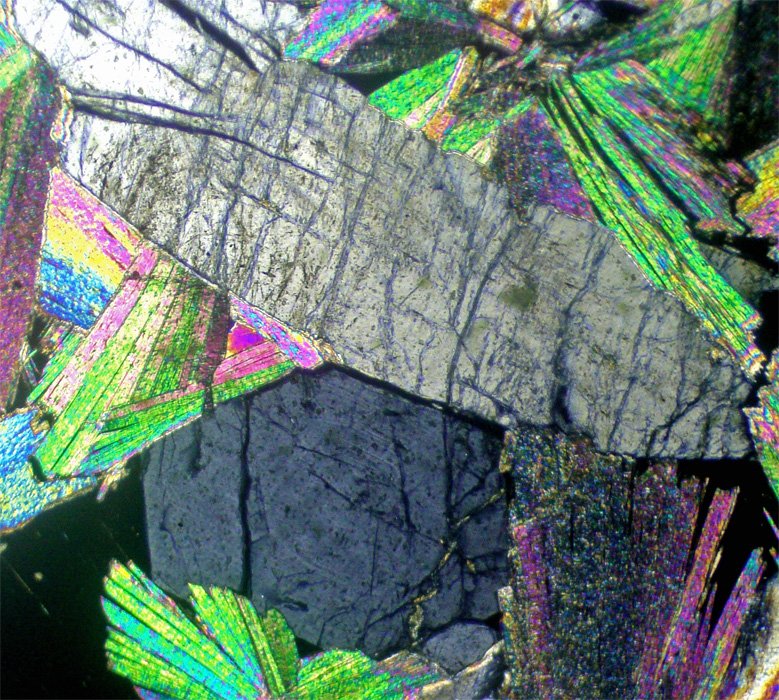
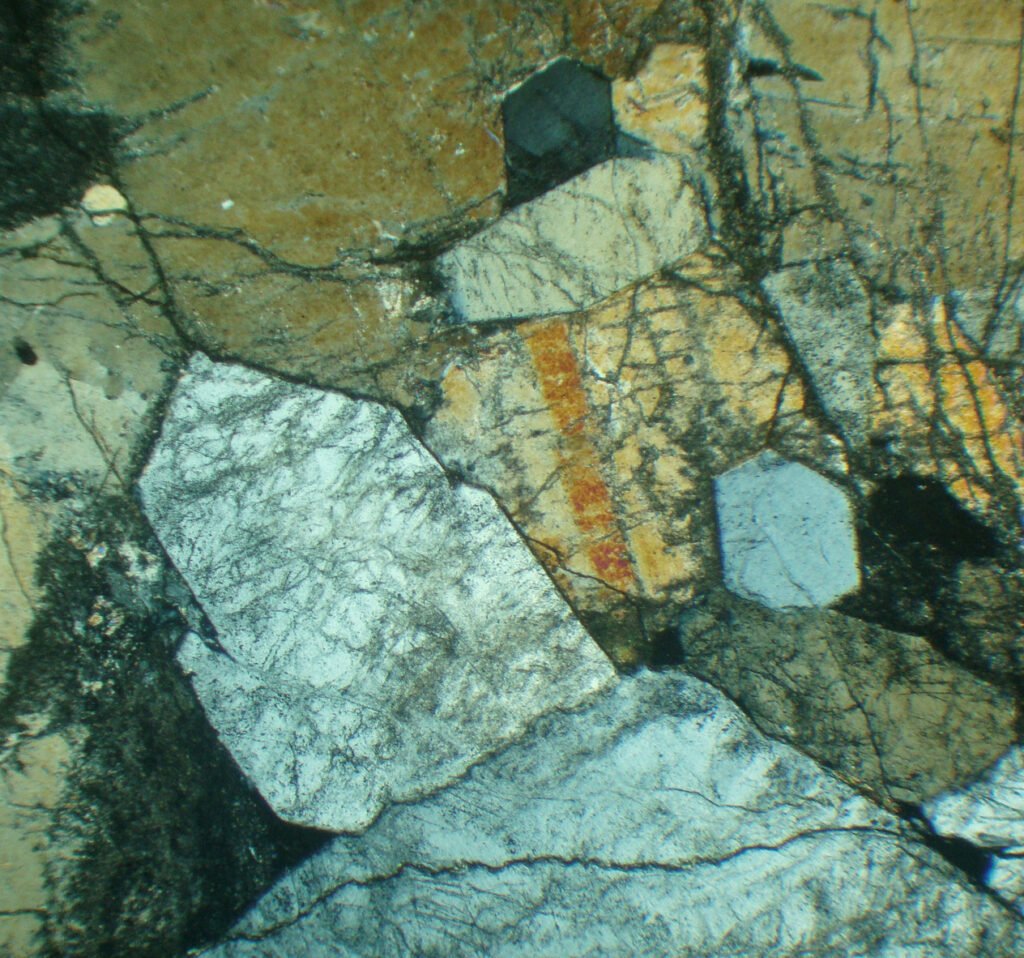
PPL: May show weak, irregular pleochroism in blue (diagnostic!) and violet tones, but usually colorless. High relief. Prismatic, tabular or barrel-shaped. No cleavage. 2 partitions at 94º.
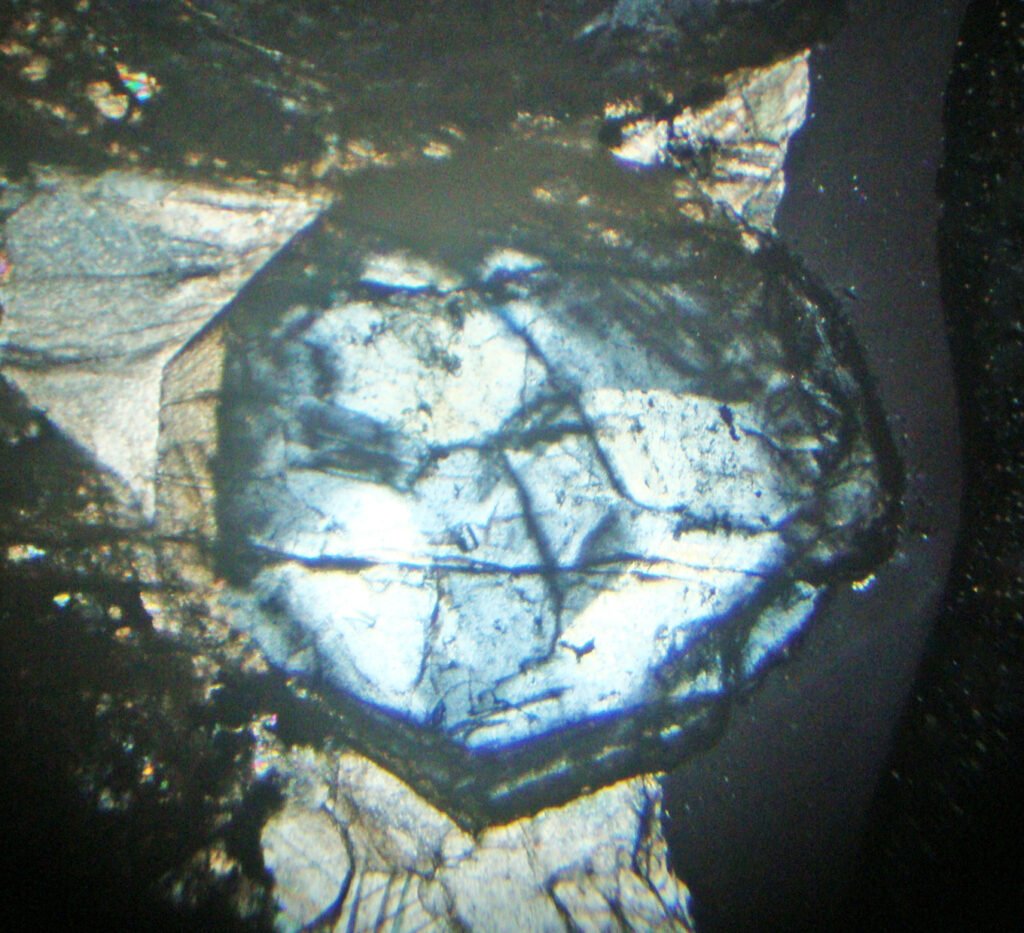
XPL: Gray colors. Extinction tends to parallel. ES(-) in prismatic crystals. Very frequent twins and zoning. U(-), 2V of 5-7º possible.
Images: In XPL, longitudinal section and basal section of corundum.