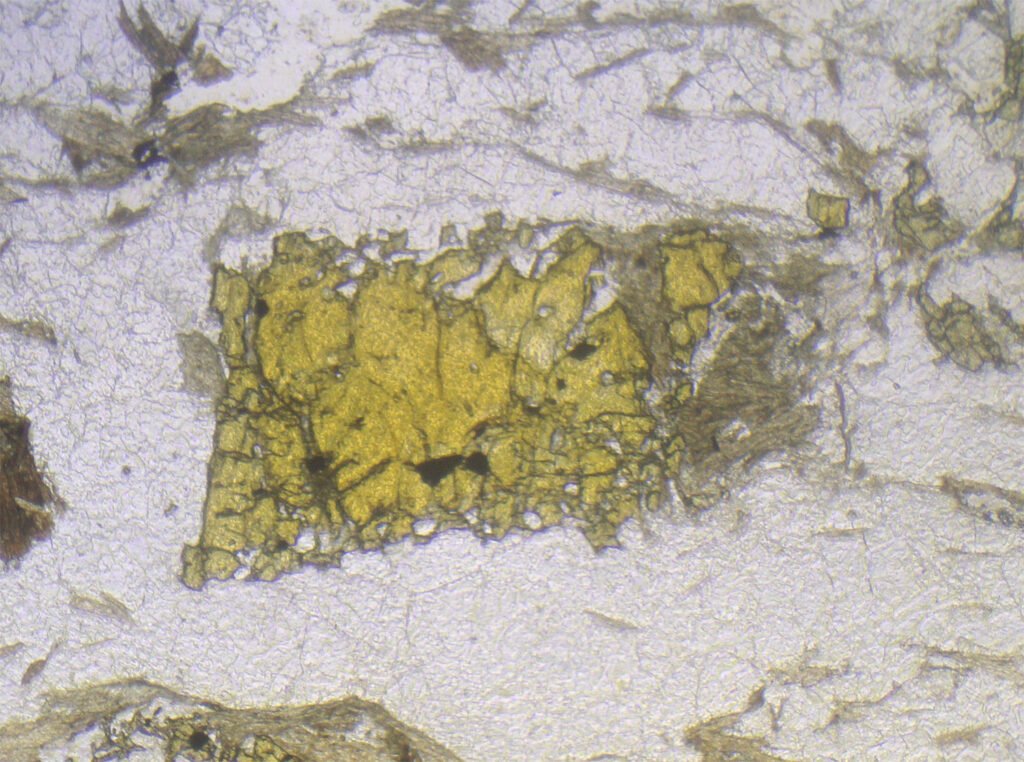
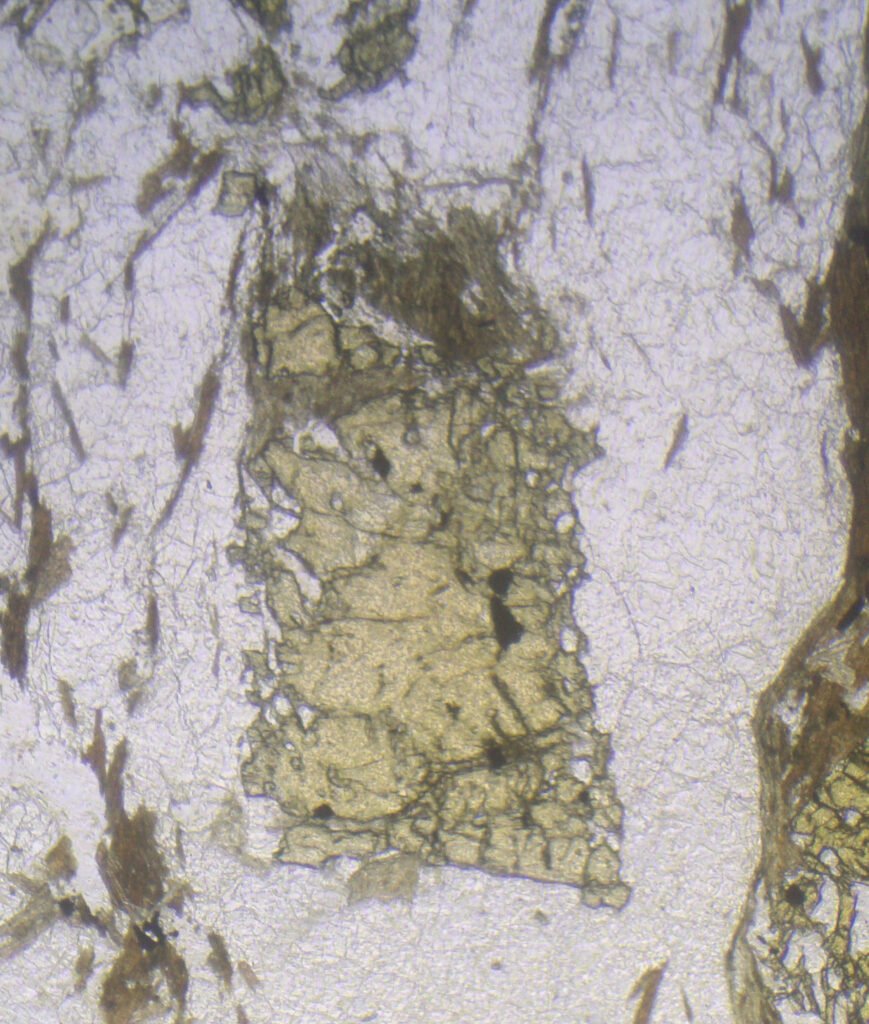
Less common pseudo-orthorhombic nesosilicate, occurs in metamorphic rocks.
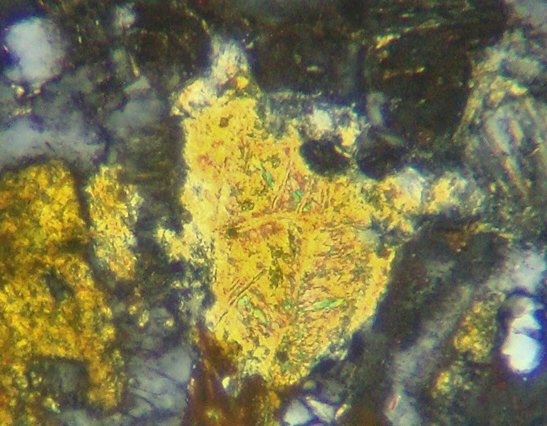
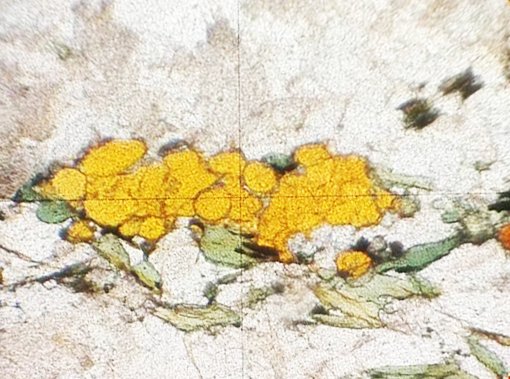
PPL: Moderate, sometimes weak, pleochroism from colorless to yellow (pale to intense) to golden. Distinct cleavage, high relief. May have many inclusions (“sieve texture”). Short prisms with pseudo-hexagonal sections.
XPL: Low interference colors (only up to 1st order orange - very diagnostic!). ES(+), B(+), 2V from 80-90º.
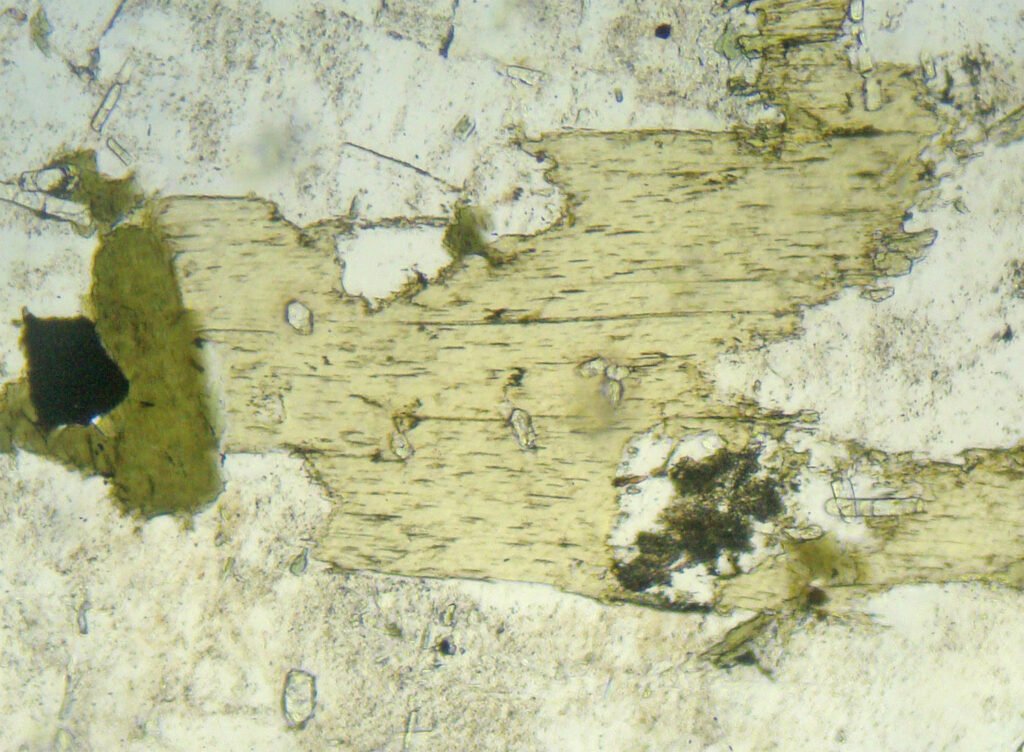
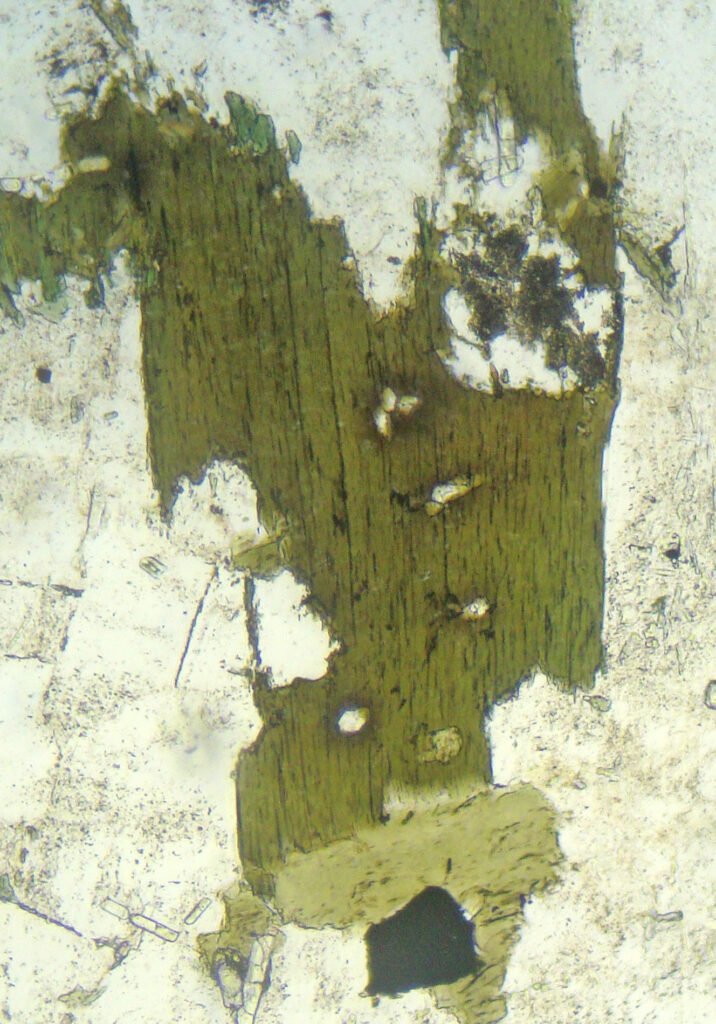
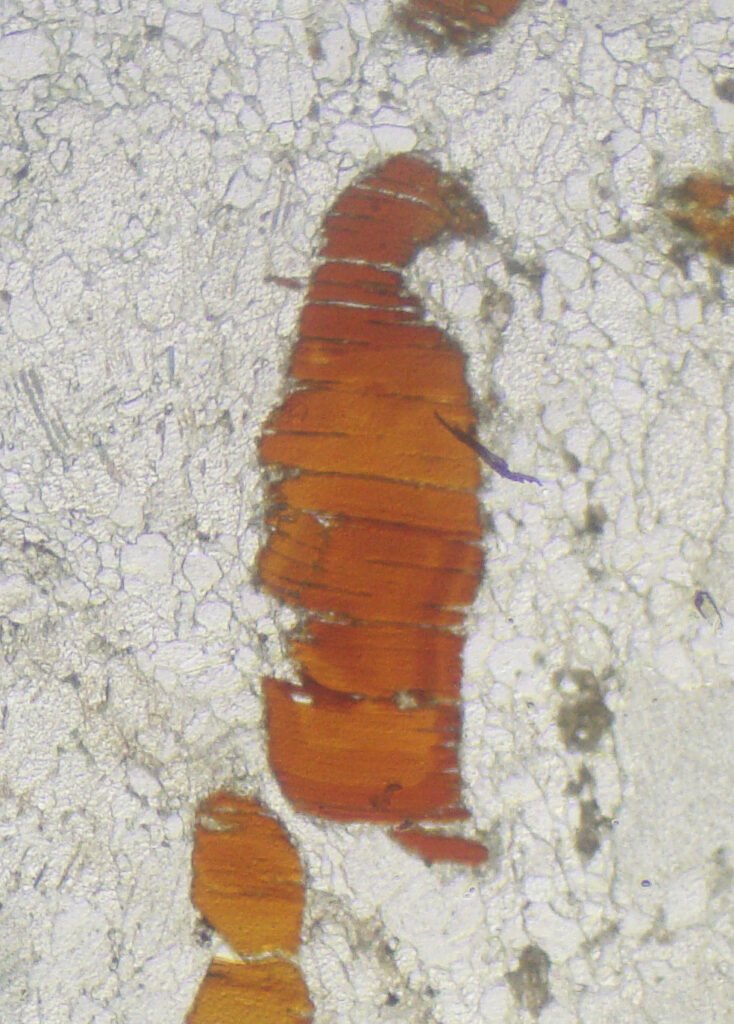
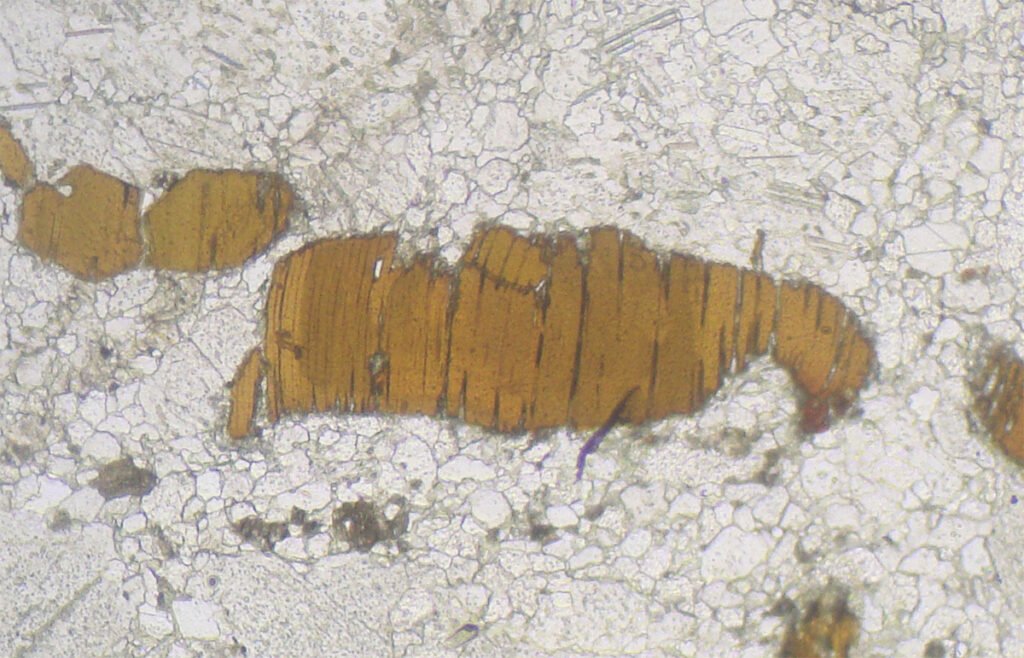
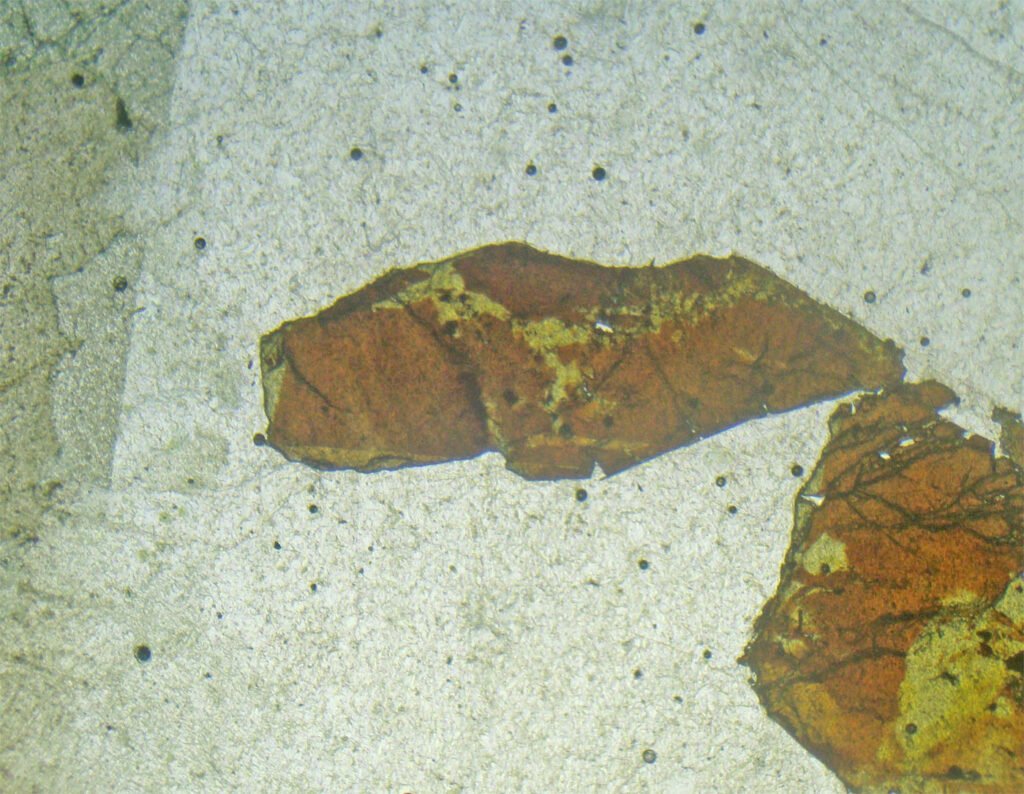
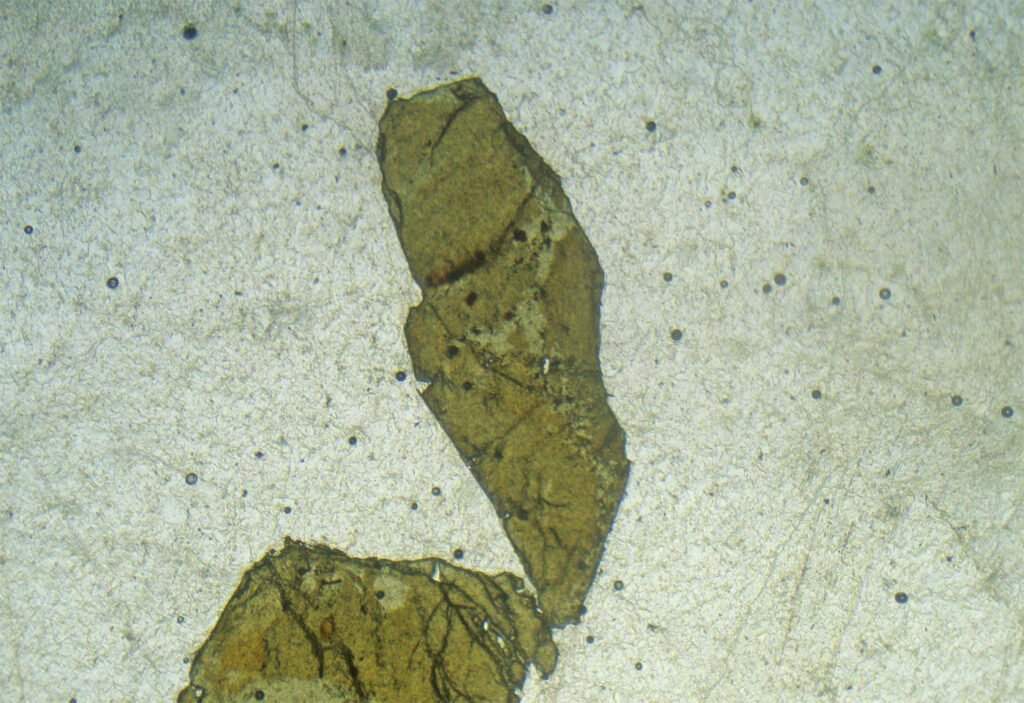
Most common mica, alters to chlorite, which is green in PPL.
PPL: One of the many pleochroism colors is yellow, the most common is brown, brownish or deep brown, may be in light to deep green colors. Medium relief. One perfect cleavage if not altered.
XPL: 3rd and 4th order colors, masked by the strong mineral color. Extinction paralell and mottled. ES(+), B(-) with 2V from 0 to 35º.
Rarer triclinic phyllosilicate of some specific metamorphic rocks.
PPL: Strong pleochroism in various shades of yellow and brown to greenish. Medium-high relief, 1 perfect cleavage. Lamellae, fibers and needles.
XPL: Intense 2nd to 4th order colors. Paralell extinction. B(-) with 2V from 0º (pseudo-uniaxial) to 30º. Looks like biotite, but has no mottled extinction!
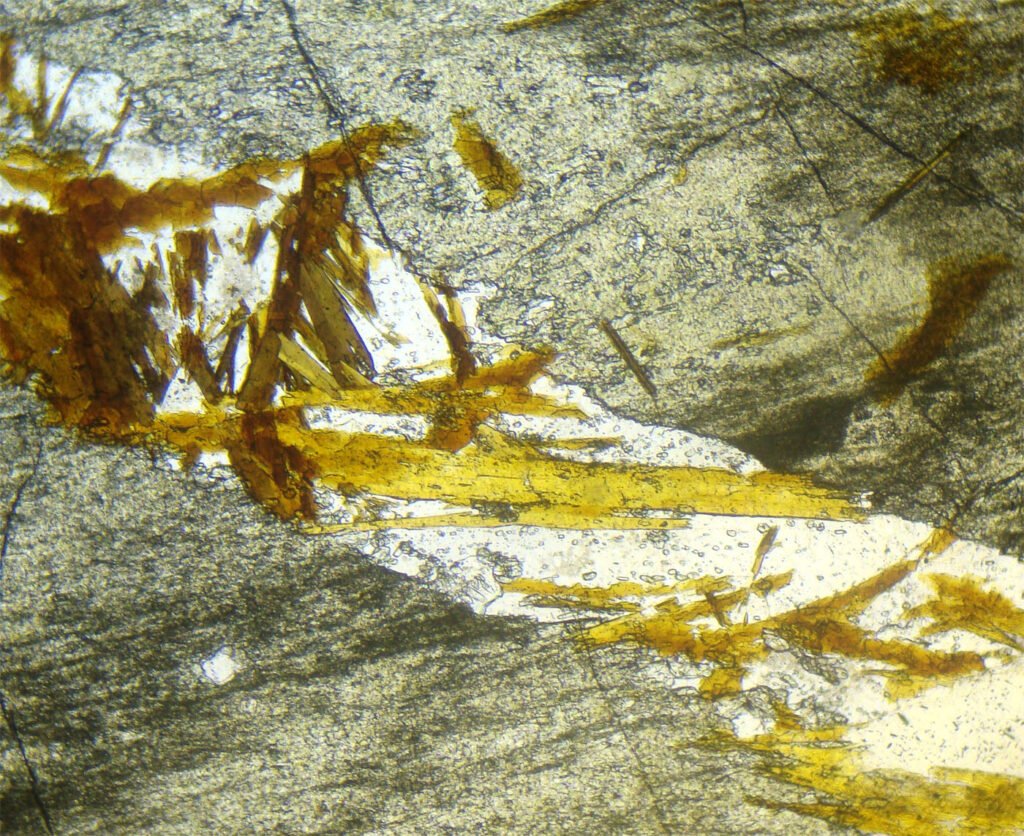
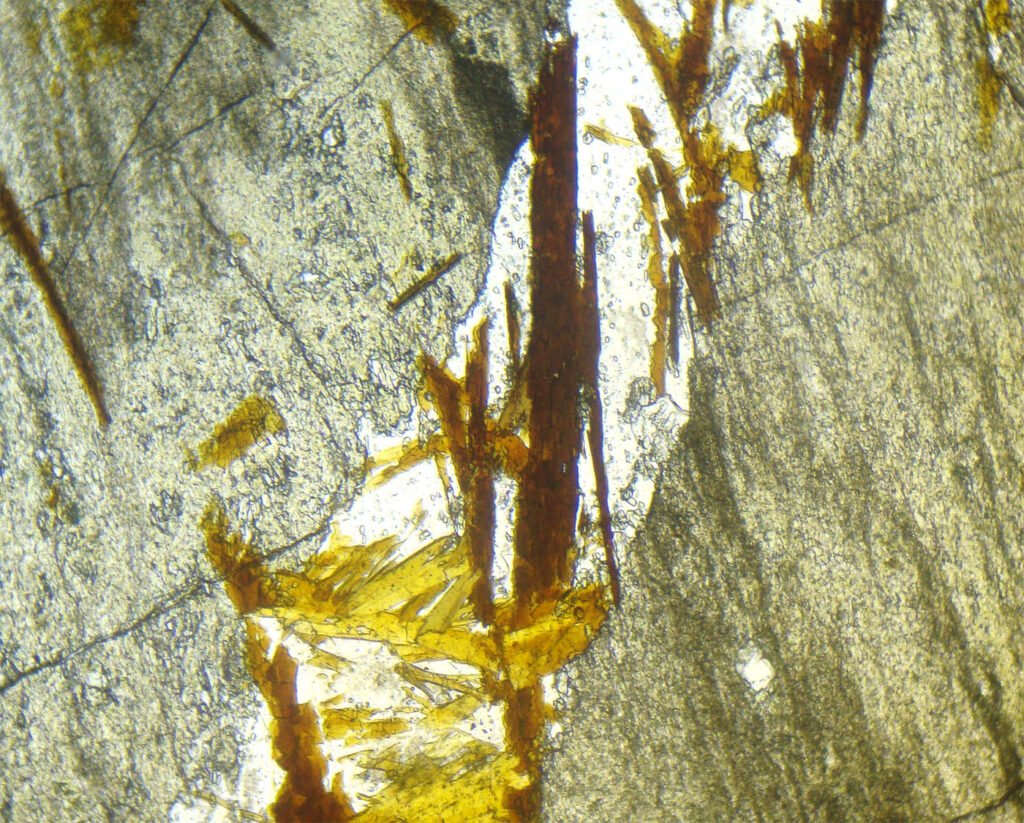
Less common trigonal cyclosilicate of the Tourmaline Group (>40 different minerals).
PPL: Strong pleochroism in yellow and/or orange (many other colors are possible, like green, blue, red, black and brown). High relief, cleavage not visible, fractures perpendicular to elongation. Basal sections (without pleochroism!) triangular or pseudo-hexagonal.
XPL: Paralell extinction, ES(-), almost always zoned. U(-), can have 2V of 5º.
Relatively rare tetragonal Sn-oxide, occurs associated with granites.
PPL: Weak to strong pleochroism in yellow, usually brownish and reddish (orange or green possible). Very high relief, cleavage not visible.
XPL: Its own color masks the very high interference colors. Extinction tends to parallel. ES(+), twins are very common. U(+), can have anomalous 2V up to 38º.
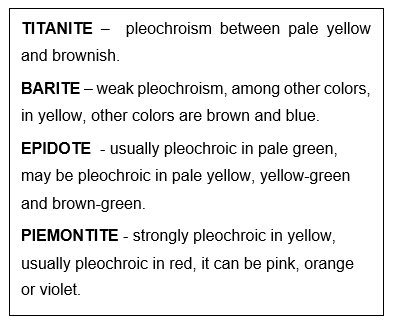
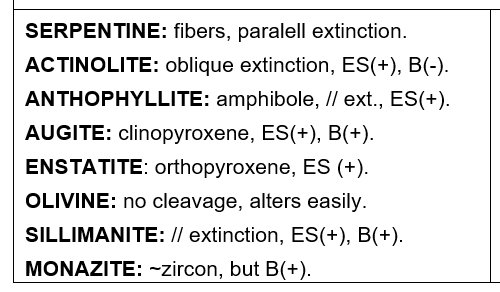
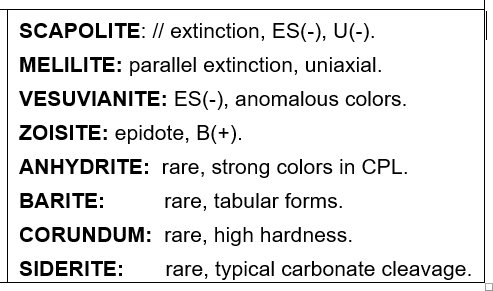
Some other minerals may, rarely, present yellow colors with generally weak pleochroism, usually associated with other colors, which are the dominant ones: