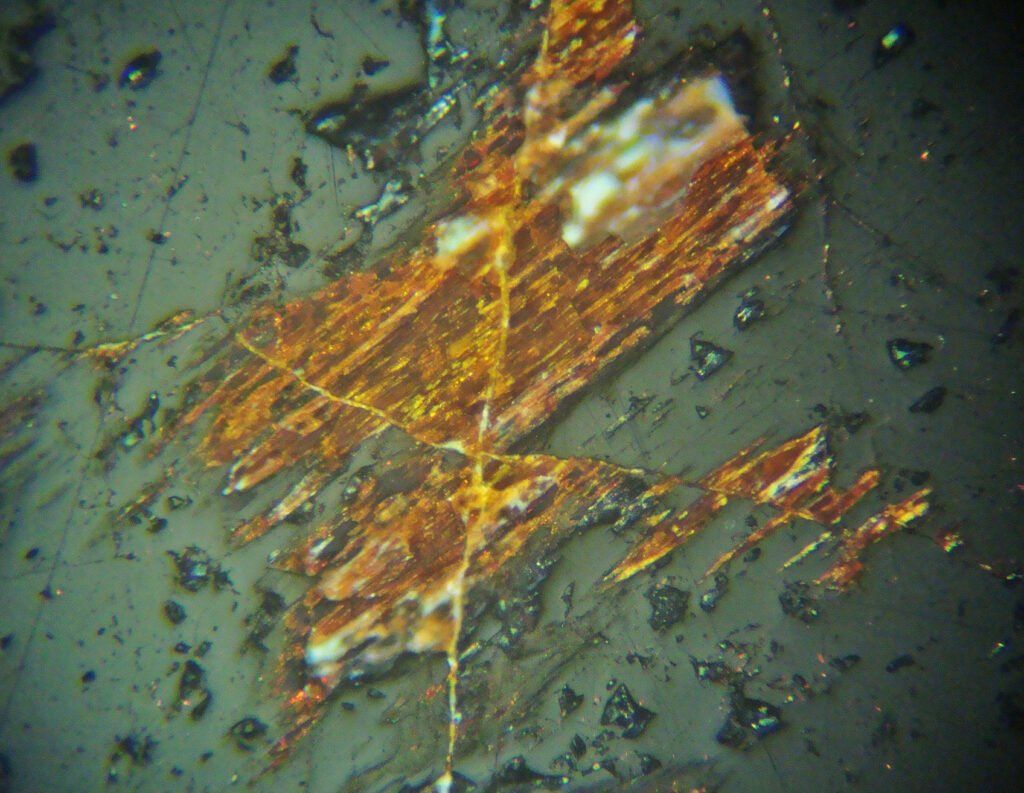
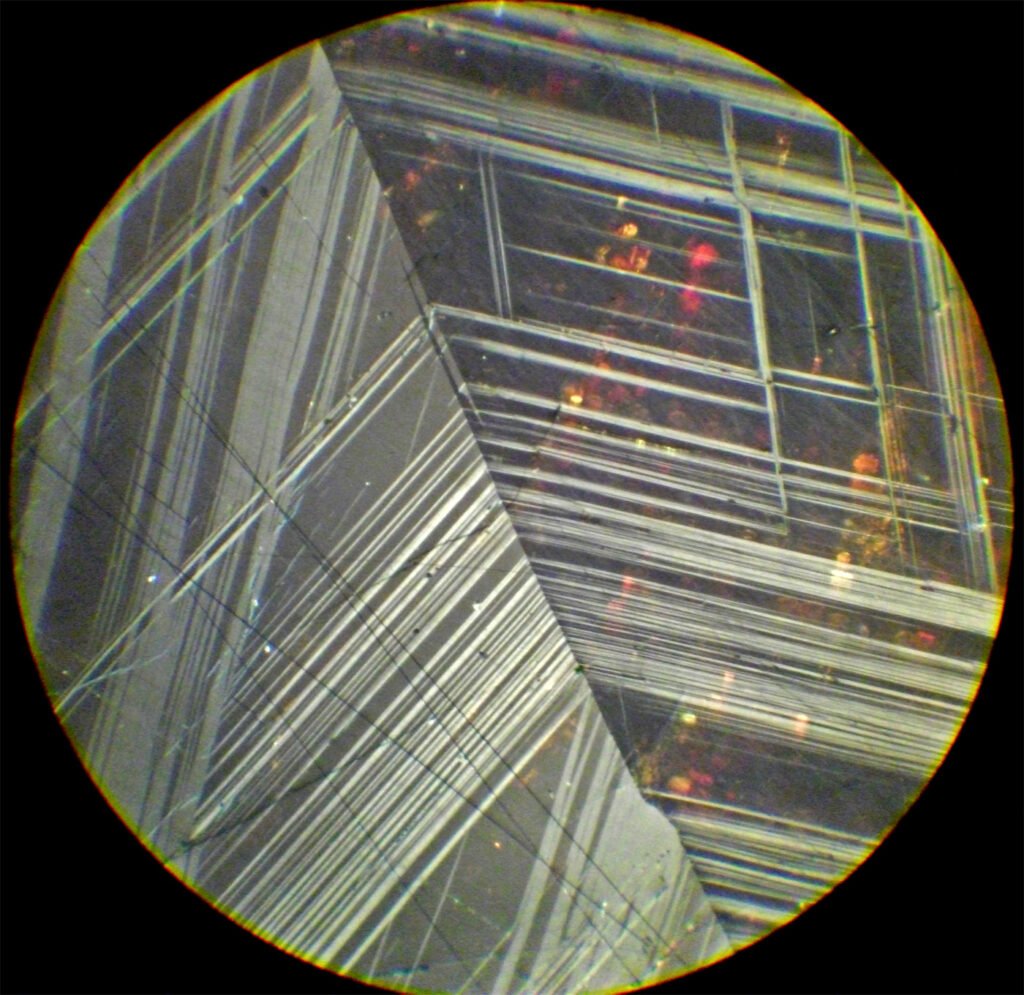
PPL: medium gray color with a blue tint, with very weak pleochroism. ~20% reflectivity, no bireflectance.
XPL: clear gray to dark anisotropy, with generalized, sometimes sparse, colorless, yellow, red to red-brown reflections. In the same section, yellow, orange and red reflections can occur.
Images: in XPL, rutile with orange reflections and twinned rutile.
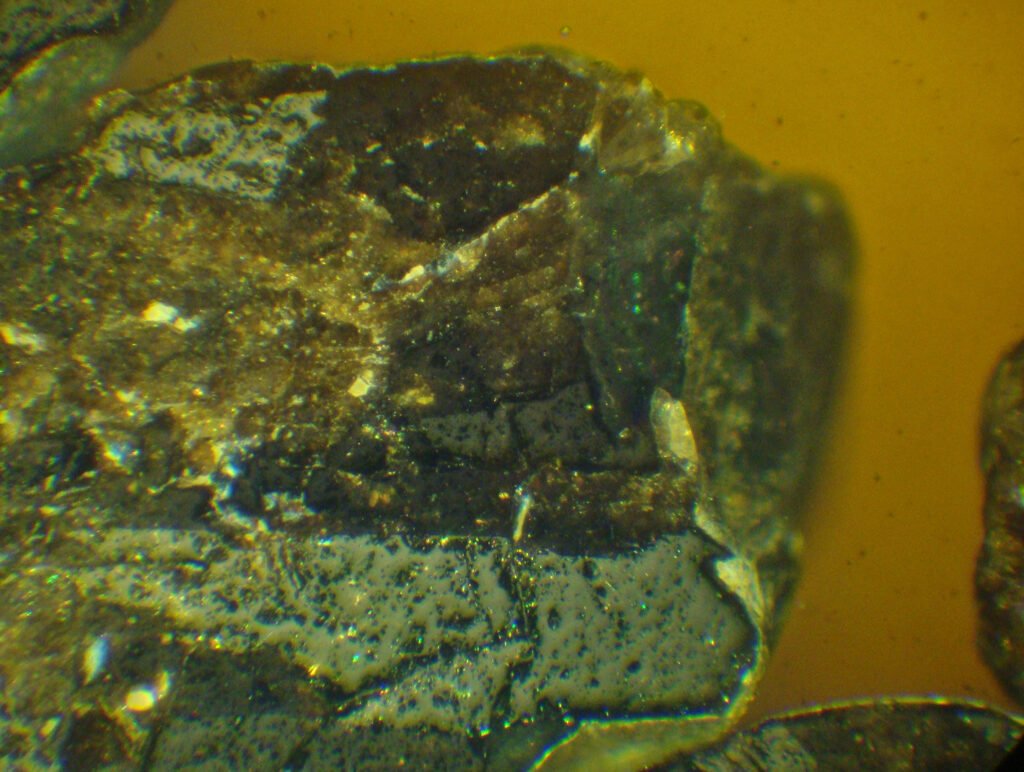
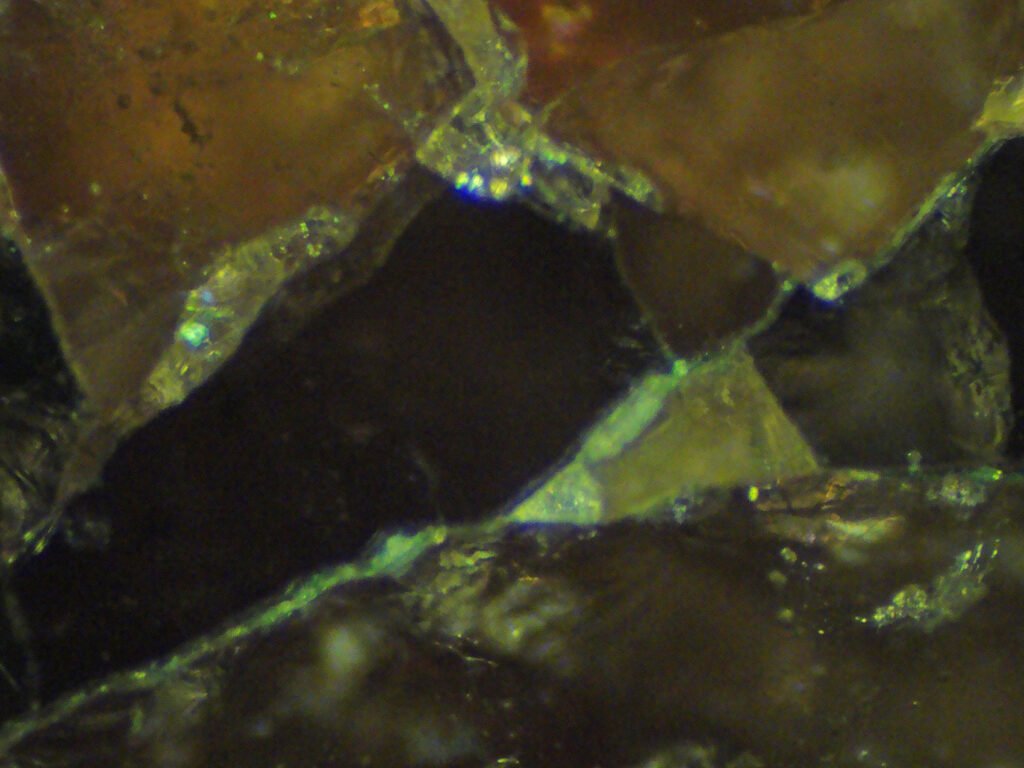
PPL: medium gray color, lighter than the gangue minerals, with very weak pleochroism. Low reflectivity (11%) with variable bireflectance, from weak to strong.
XPL: strong anisotropy, visible even with its colorless, yellow and yellow-brown strong internal reflections.
Images: in XPL, very clear reflections in cassiterite.
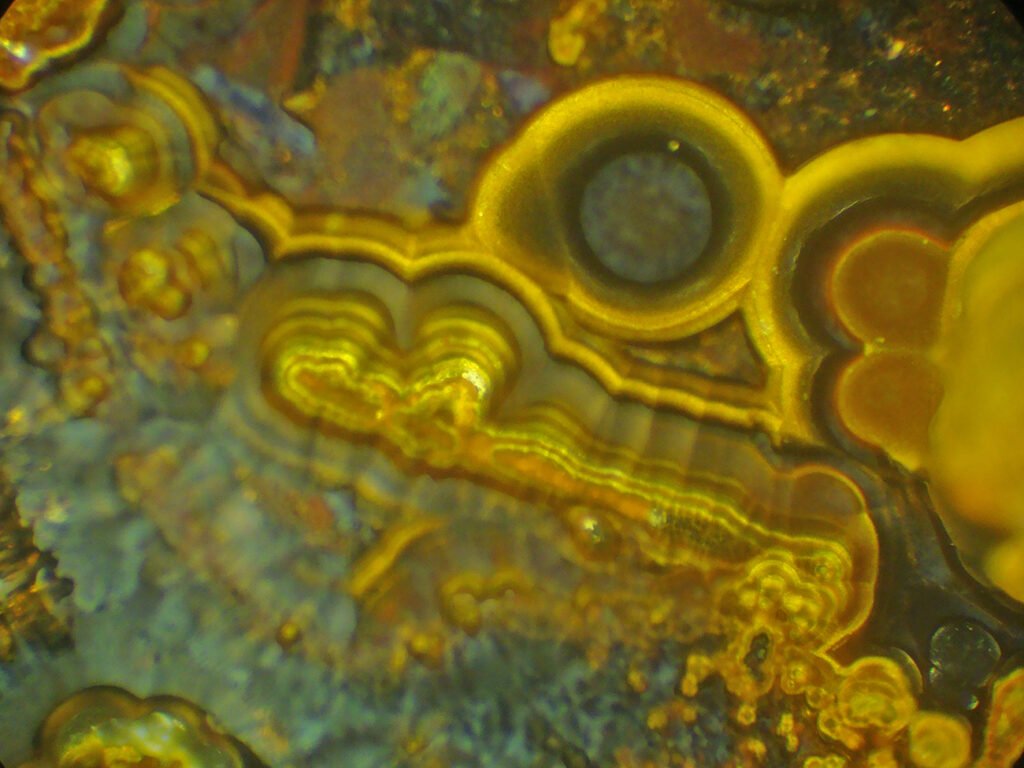
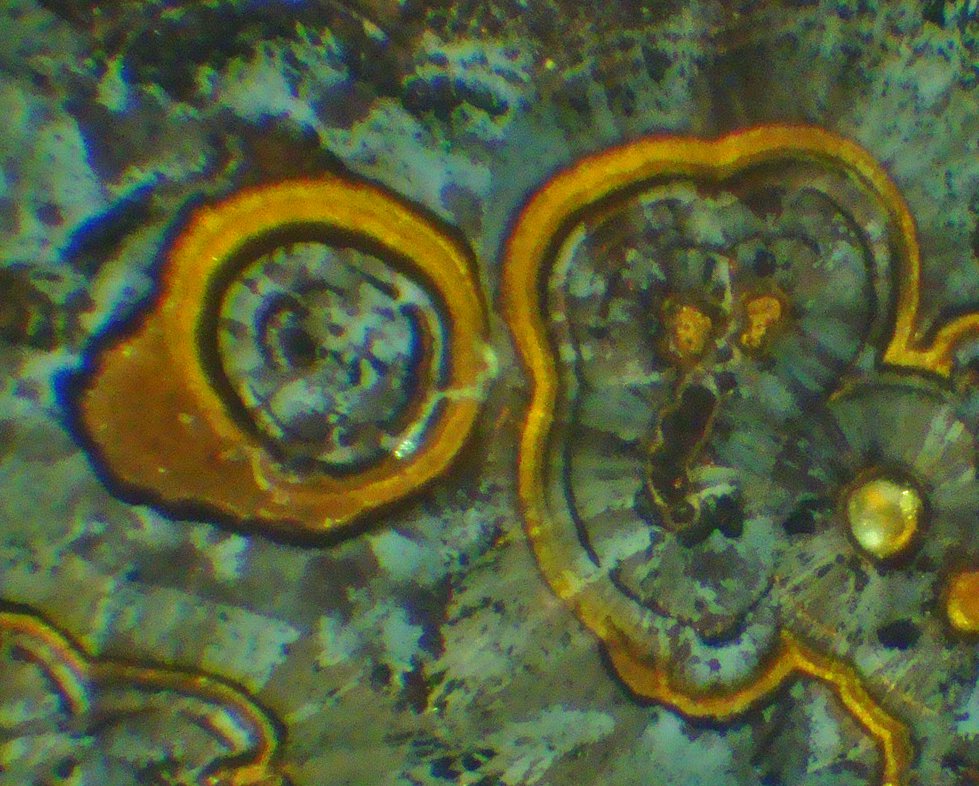
PPL: gray color with a blue cast and 12% reflectivity. Weak pleochroism, lacks bireflectance.
XPL: strong to weak anisotropy and reflections between yellow, orange and red-brown, predominantly orange. It forms radiated or banded fibrous aggregates, resembling the structures of chalcedony.
Images: in XPL, goethite with anisotropy and typical reflections.
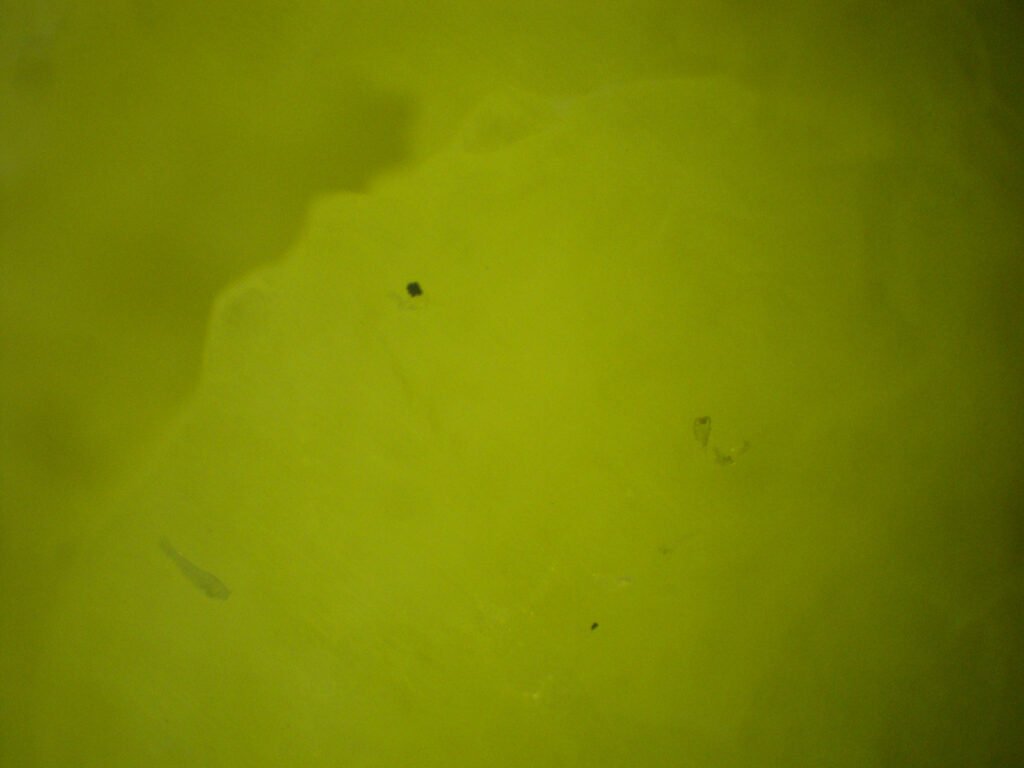
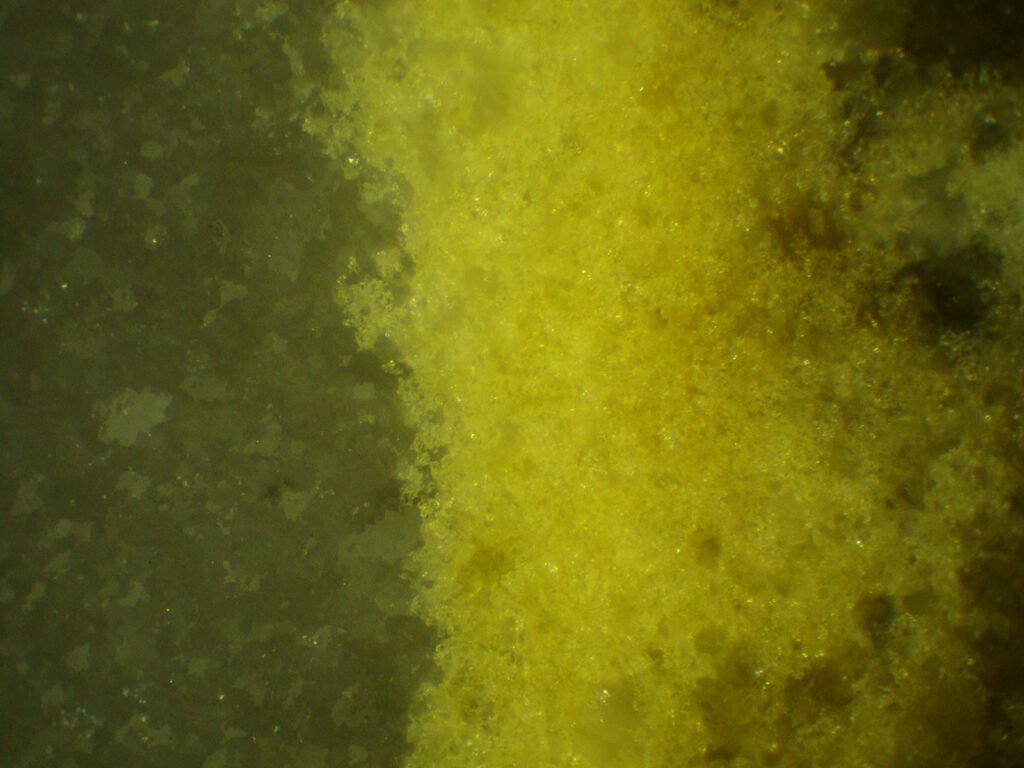
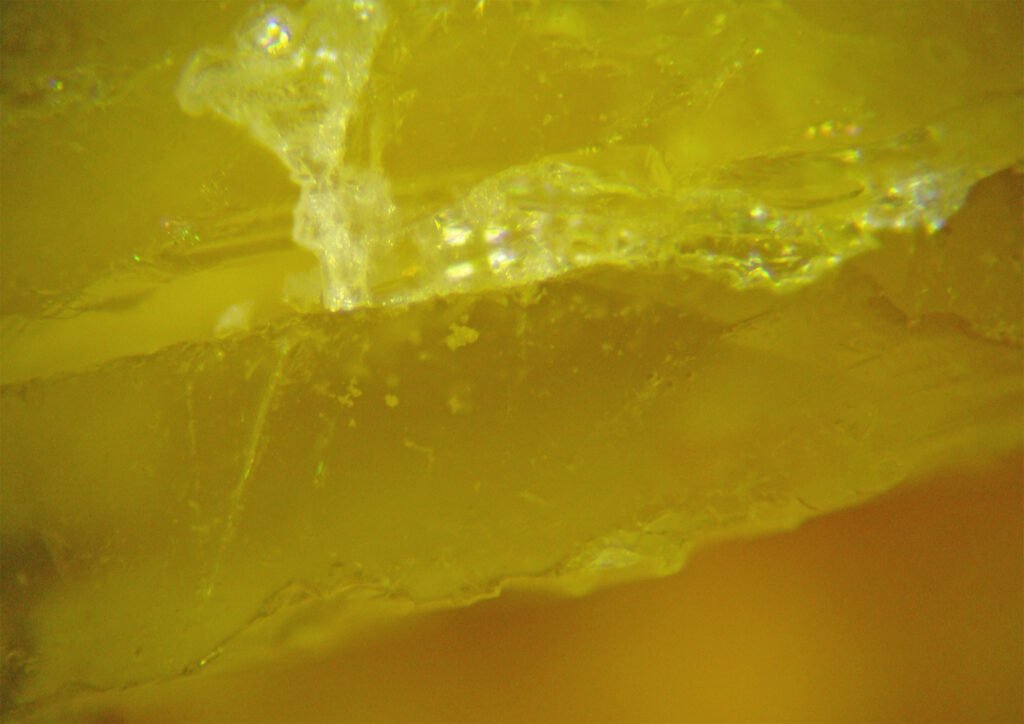
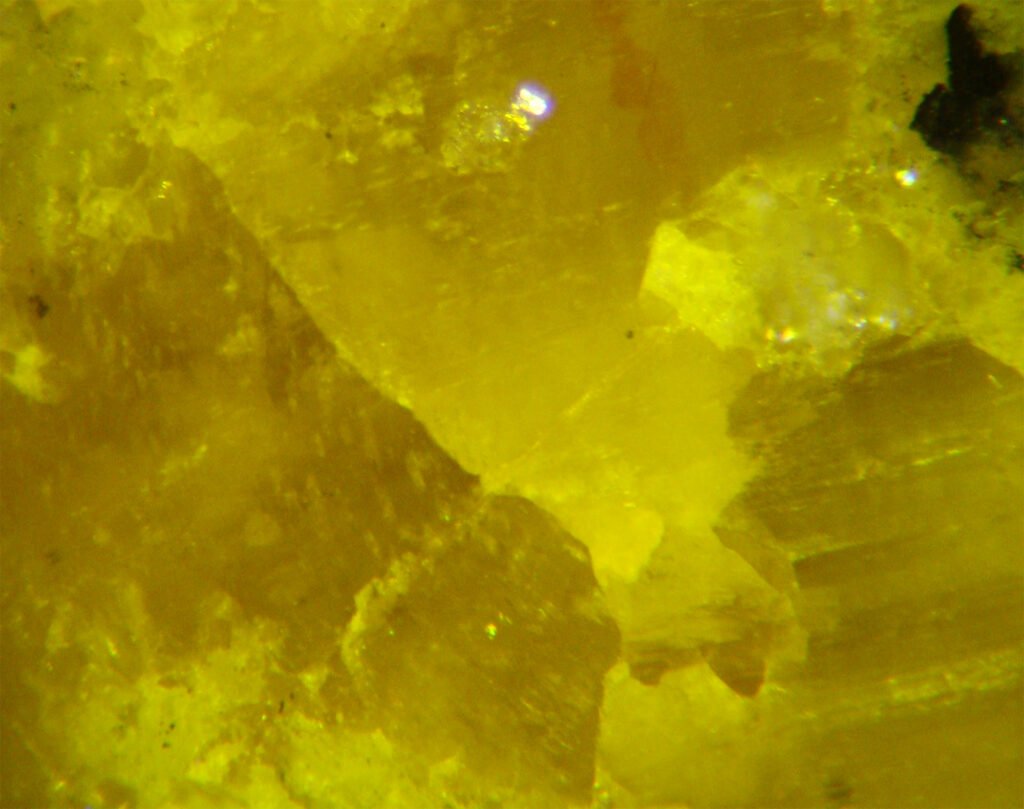
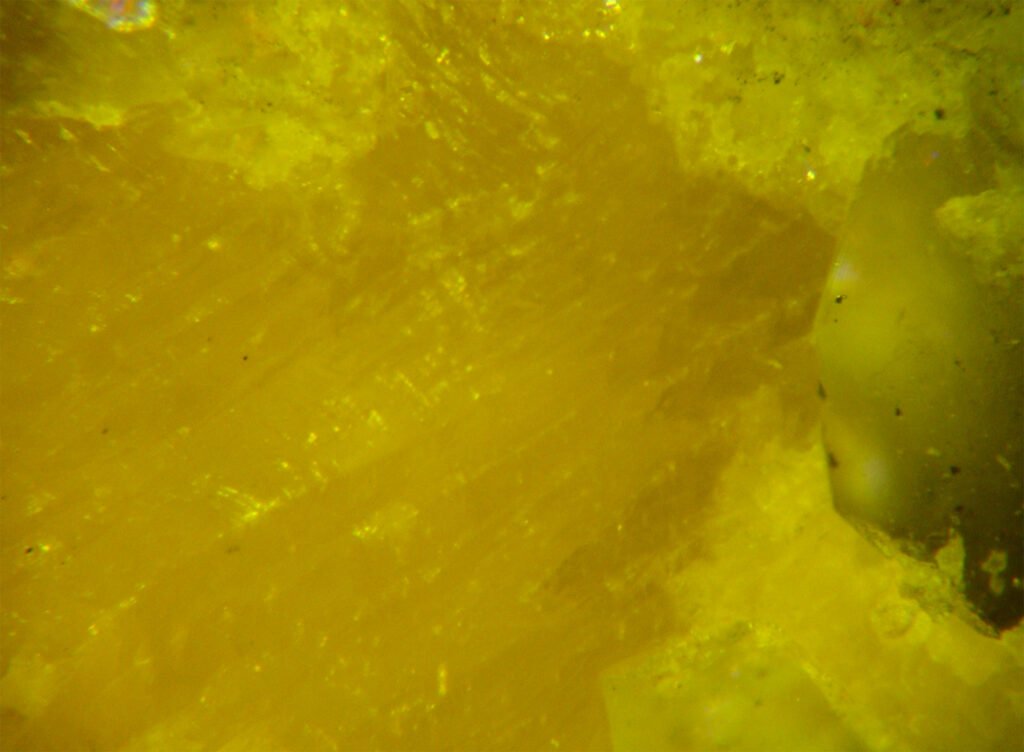
PPL: dark white gray color, with clear pleochroism. Low reflectivity (12%), no bireflectance. Lots of polishing grooves due to its low hardness (1.5 - 2.5).
XPL: clear anisotropy in XPL+2º. Generalized yellow internal reflections.
Images: in XPL, yellow reflections on native sulfur.
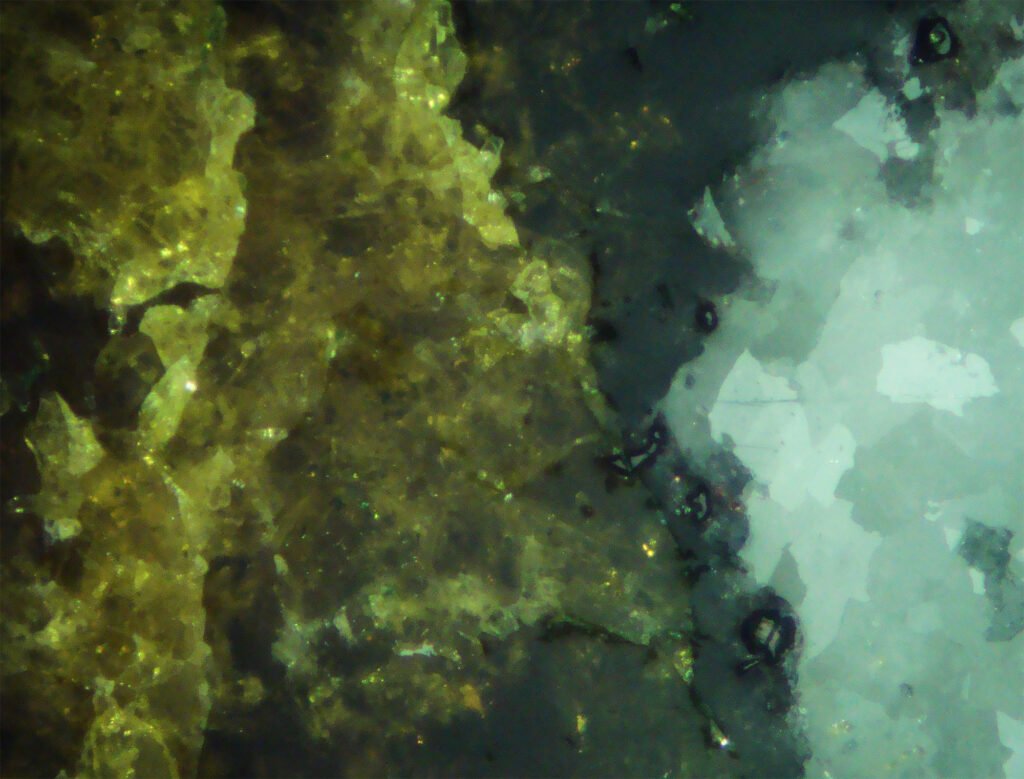
PPL: medium light gray with a slight blue tone, without pleochroism. Low reflectivity (16%), no bireflectance. Easy to confuse with others!
XPL: isotropic. Widespread internal reflections from colorless to various shades of yellow, orange, caramel, red and brown (with increasing Fe content!).
Images: in XPL, sphalerite (caramel) and quartz (white).
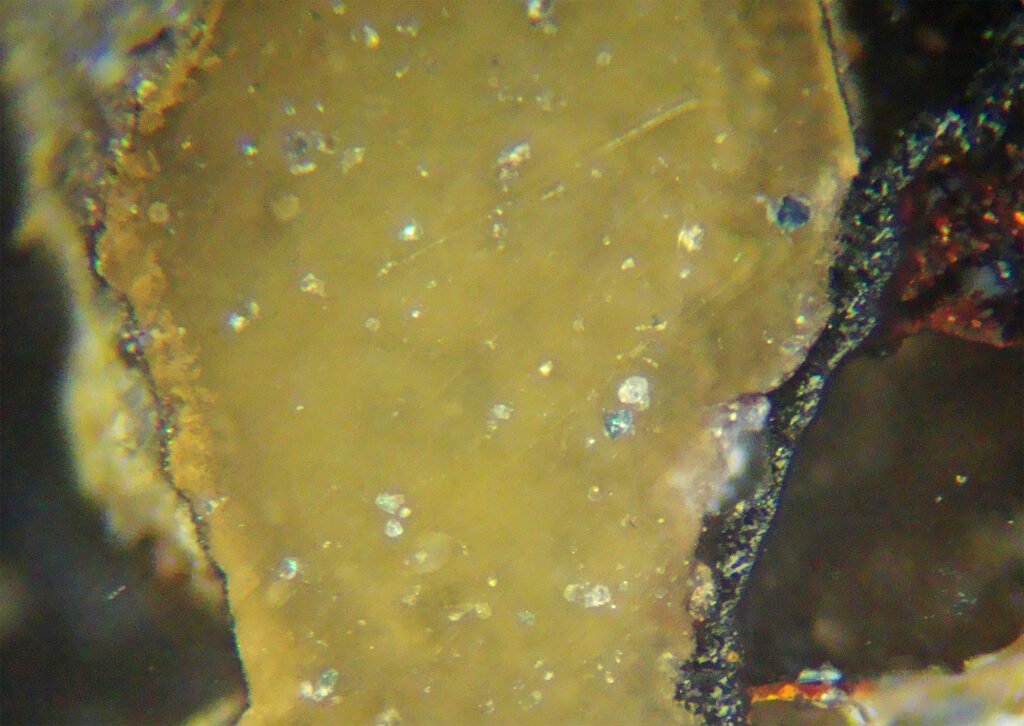
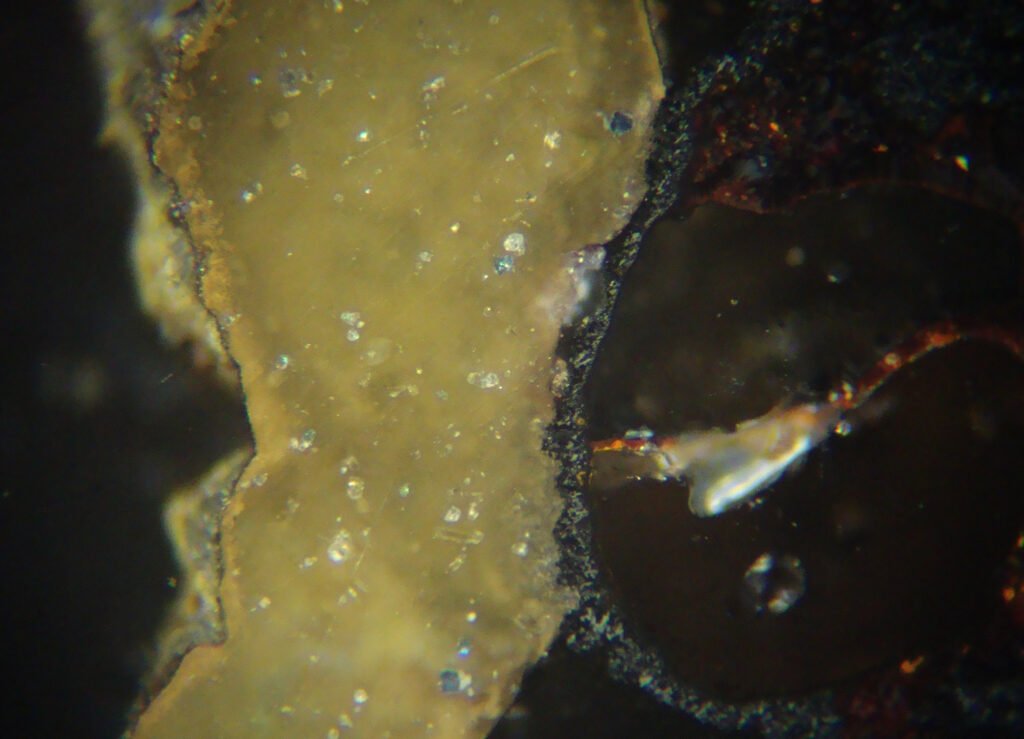
PPL: white-gray color with very strong pleochroism between white, weak gray and gray-white. Reflectivity from 19 to 26%, no bireflectance. Many polishing grooves (Mohs = 1.5-2). Toxic!
XPL: intense clear, white, lemon yellow and orange internal reflections. Also, strong anisotropy in gray colors. Almost always associated with realgar (As4S4), with red internal reflections.
Images: in XPL, orpiment with yellow internal reflections and twins.
PPL: Medium gray, with a shade of brown, without pleochroism. Low reflectivity (~20%), no bireflectance. Lots of polishing grooves (Mohs=1.5-2.5). Iodargyrite can be similar!
XPL: isotropic, but with generalized greenish-yellow internal reflections. Occurs in oxidized silver ores.
Images: in XPL, chlorargyrite (yellow) with other minerals.
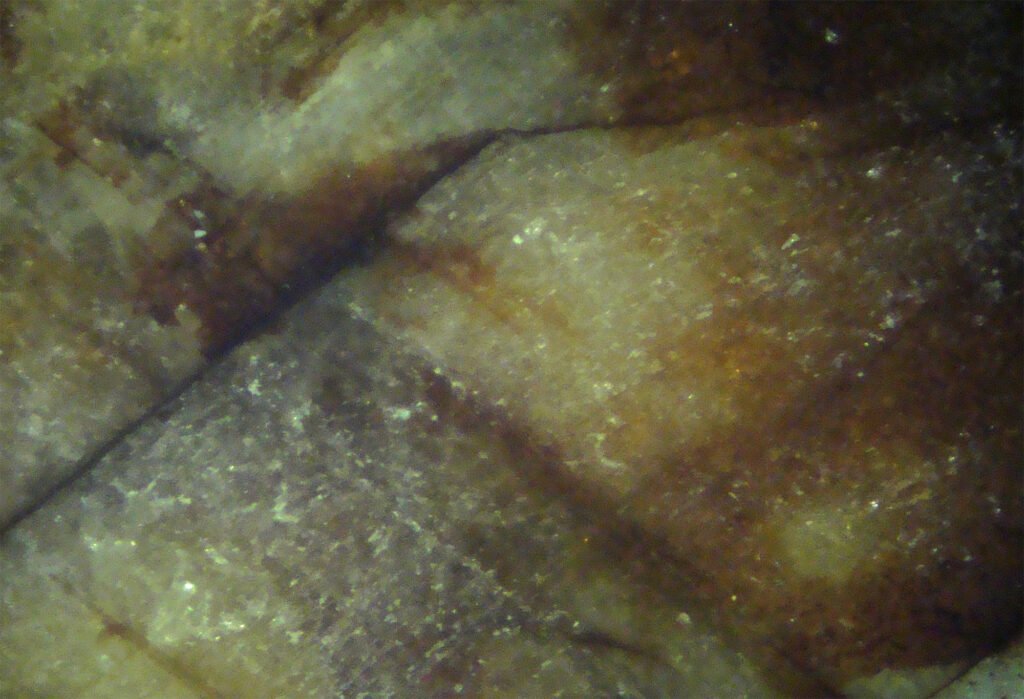
PPL: dark gray color, without pleochroism. Reflectivity < 10%, with distinct bireflectance. Rhombohedral cleavage may be visible, polishing pits are possible.
XPL: very strong anisotropy, typical of carbonate. Internal reflections in caramel, with shades of red to brown, are possible.
Images: in XPL, brown reflections along siderite cleavage.
PPL: dark gray color, slightly lighter than feldspars. No pleochroism. Low reflectivity (4%?), no bireflectance. Typically rounded shape, often many fractures, always high relief relative to other rock-forming silicates.
XPL: strong anisotropy in gray with generalized internal reflections in yellow to orange, may vary to reddish colors.
Images: in XPL, olivine (yellow-orange), plagioclase (dark).
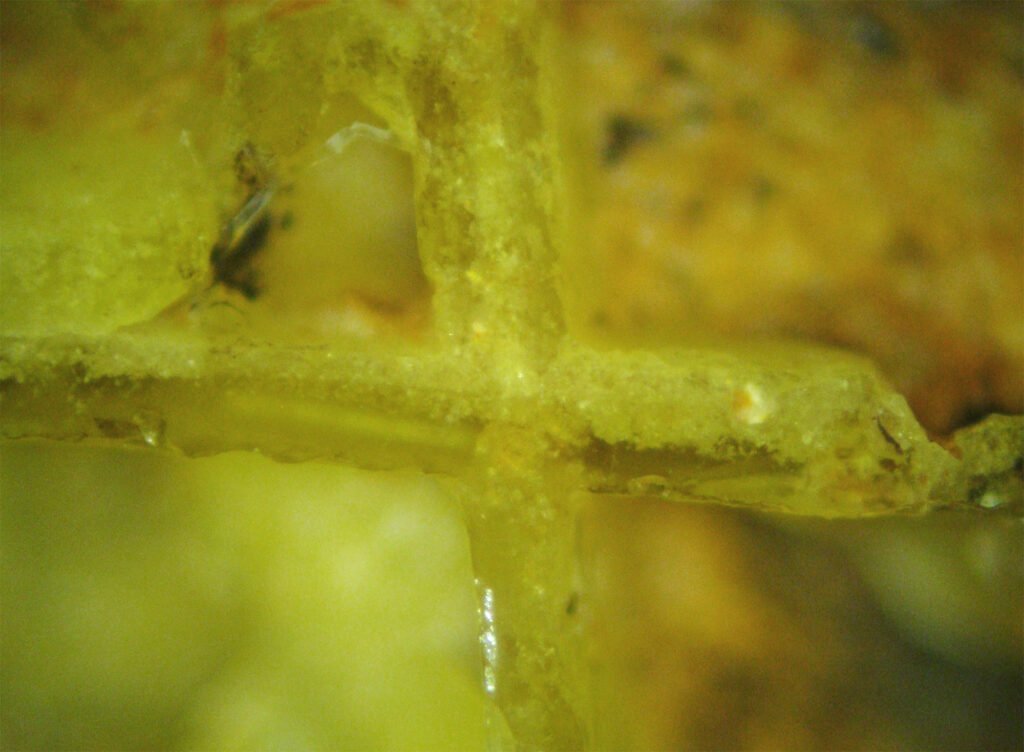
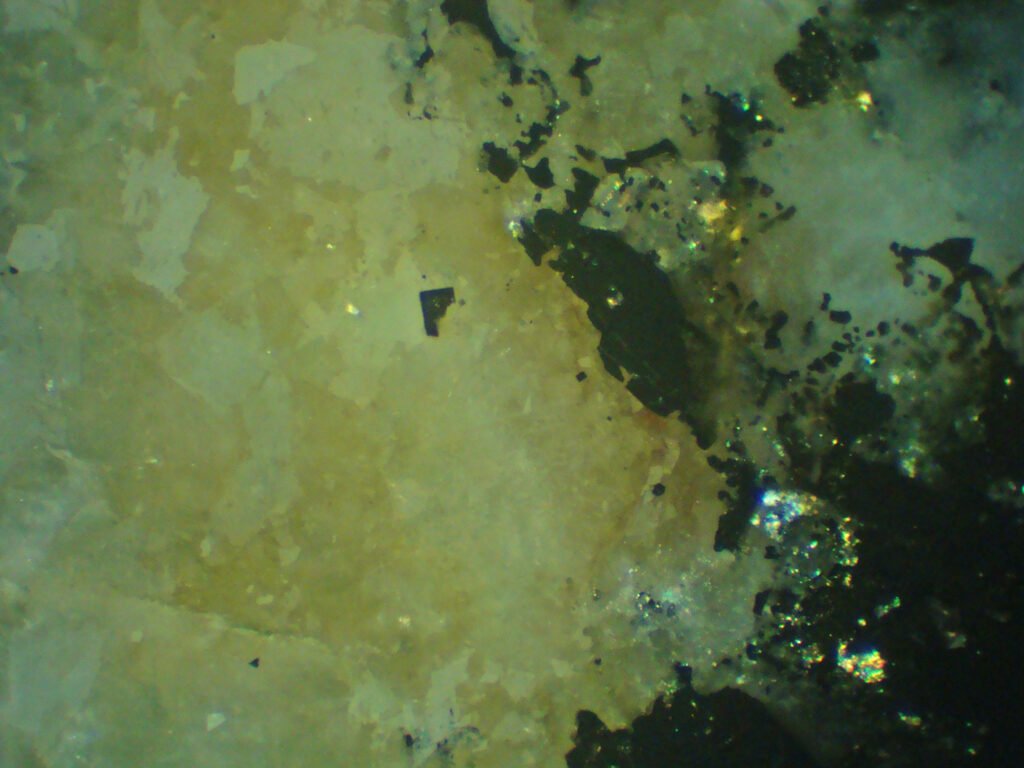
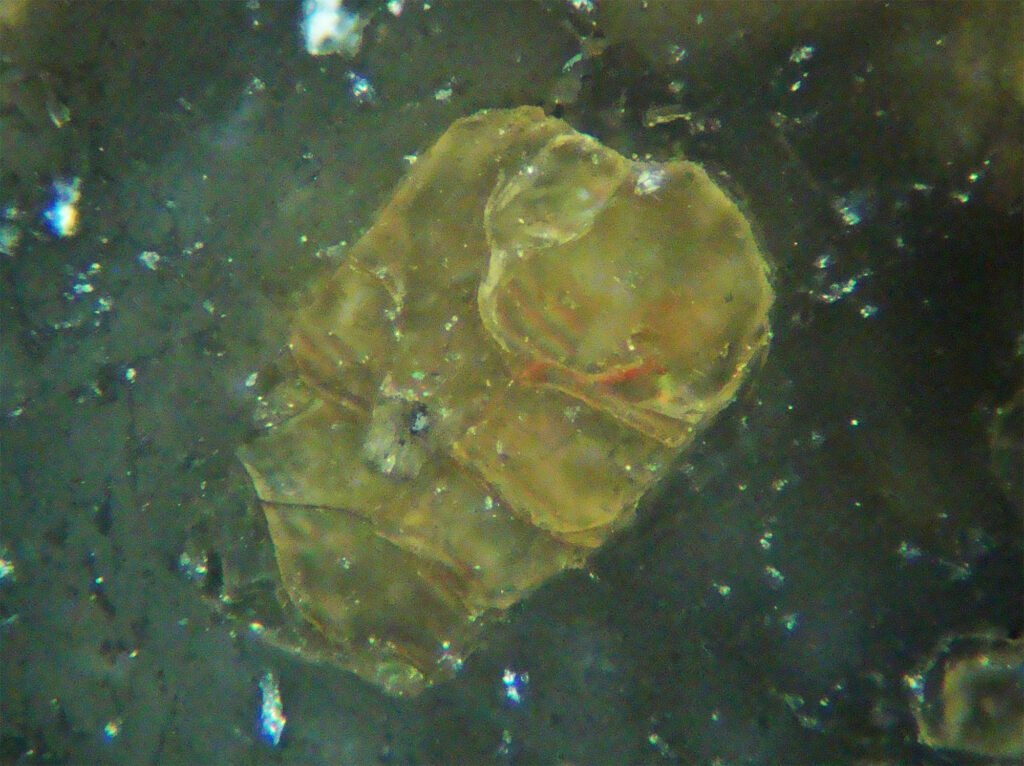
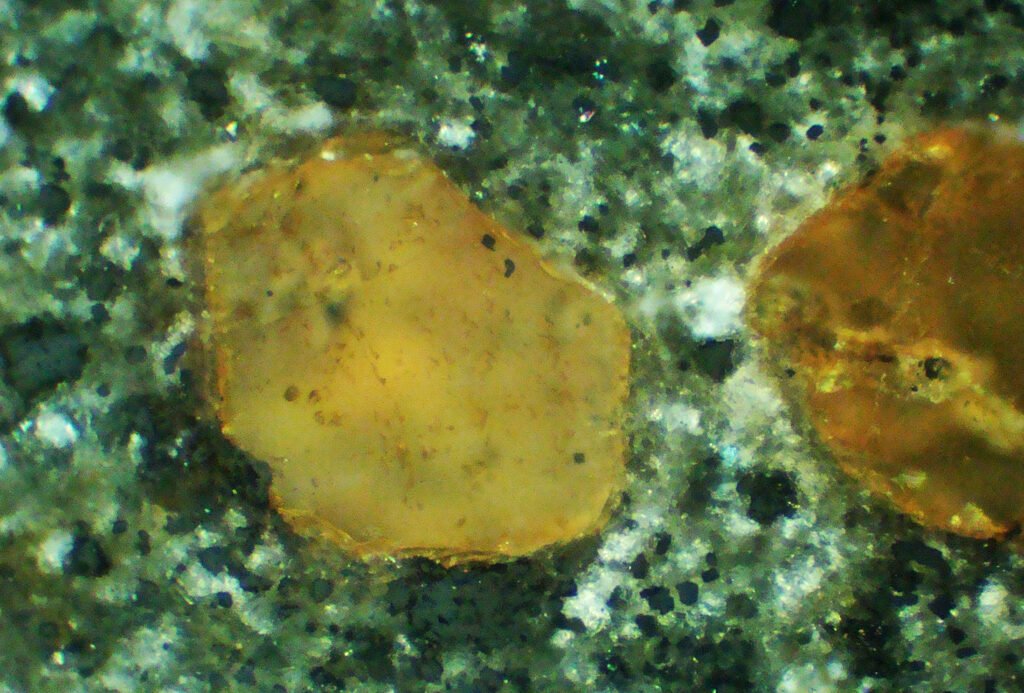
Minerals, in XPL with widespread yellow reflections, may be orange.