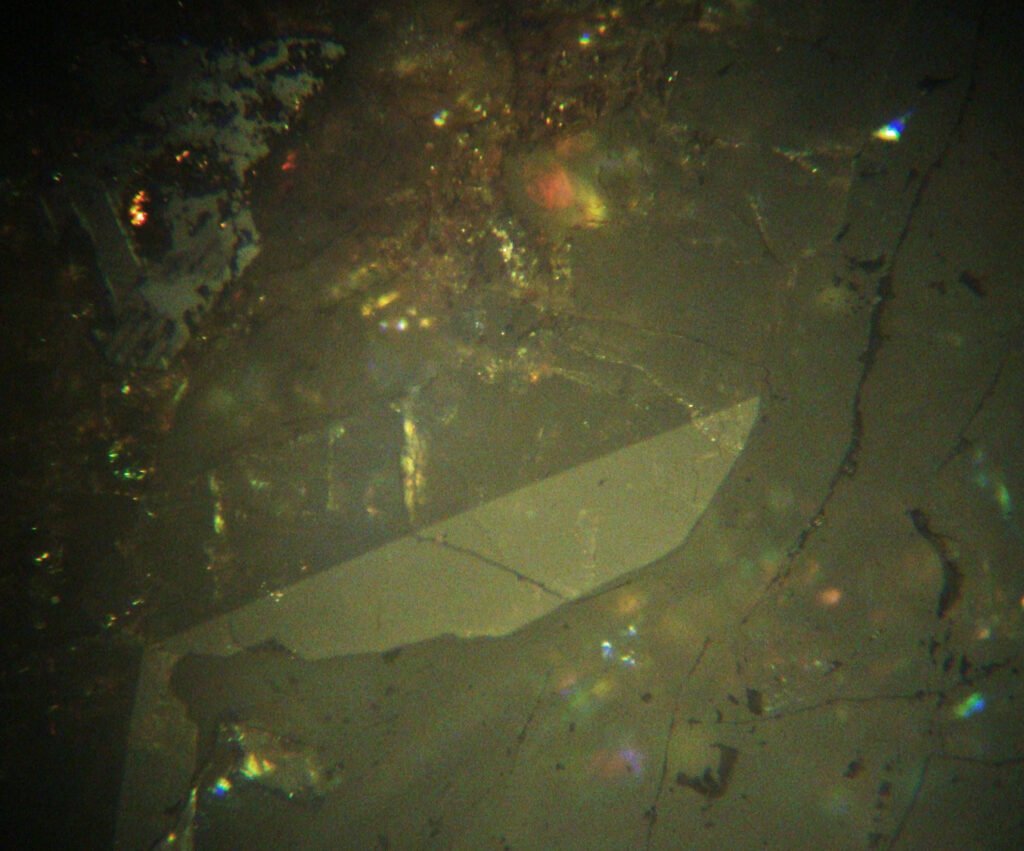
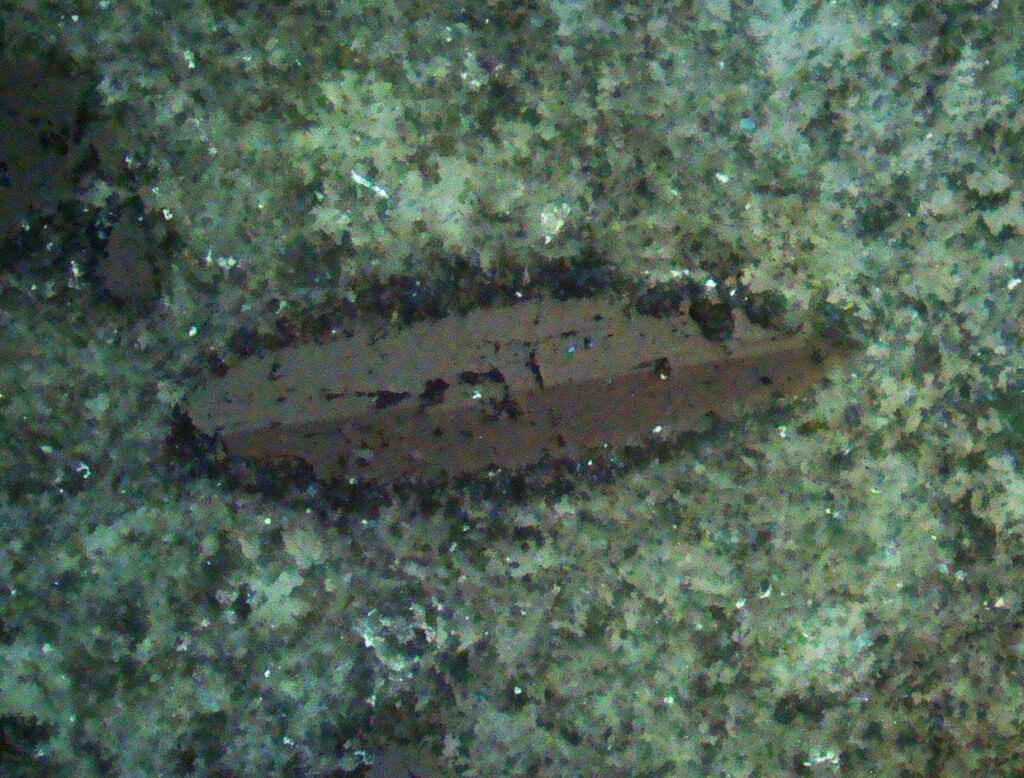
PPL: dark gray color, but lighter than quartz and feldspars. No pleochroism. Low reflectivity (6%?), with sharp bireflectance observable between adjacent grains and in twinned grains. Cleavages are not visible and there are no polishing pits.
XPL: strong anisotropy with dark caramel reflections, alternating a very dark position with a dark gray position.
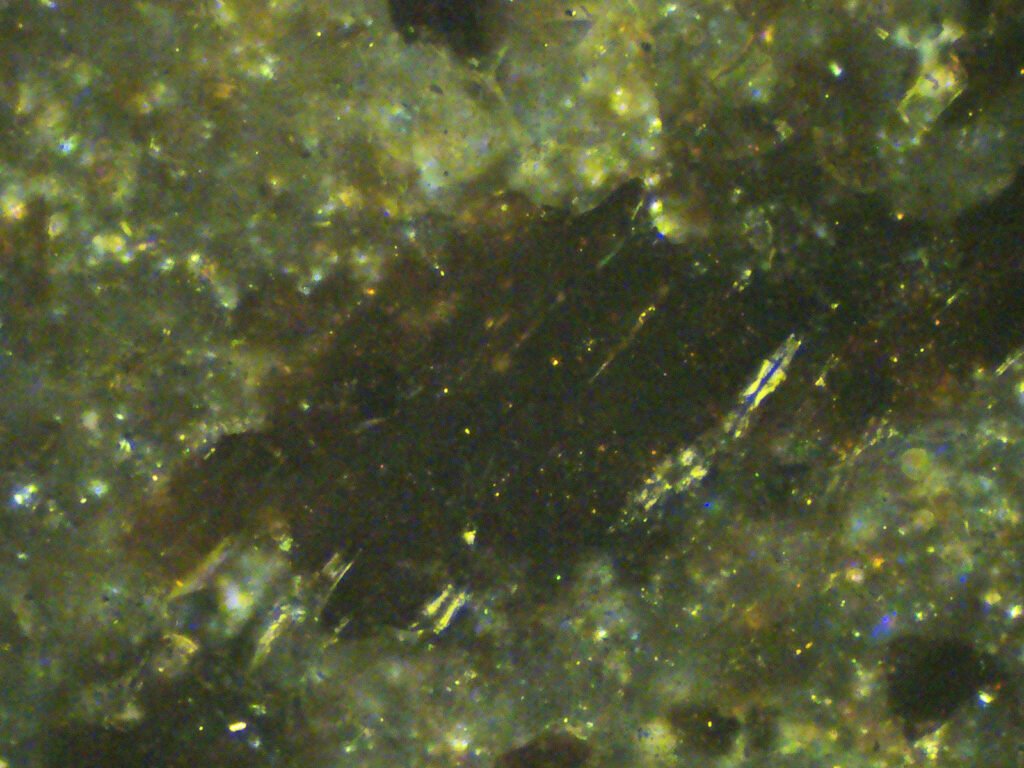
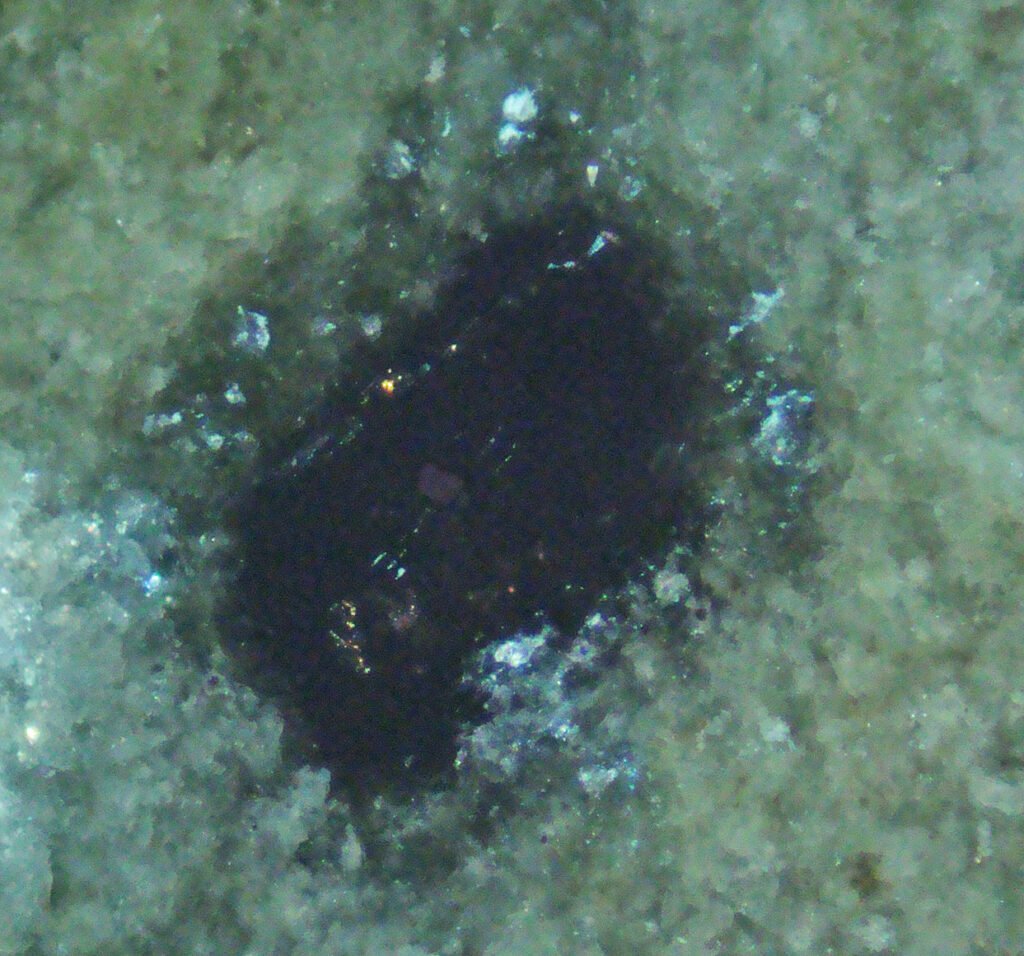
PPL: dark gray color, much darker than quartz and feldspars, with a slight shade of green. No pleochroism. Very low reflectivity (~4%), no bireflectance. Cleavage generally distinct.
XPL: greenish-black internal reflections whose hue depends on the grain thickness. The thinner, the clearer and more yellow. Distinct anisotropy whose intensity increases with decreasing grain thickness; very reminiscent of its pleochroism in Transmitted Light.
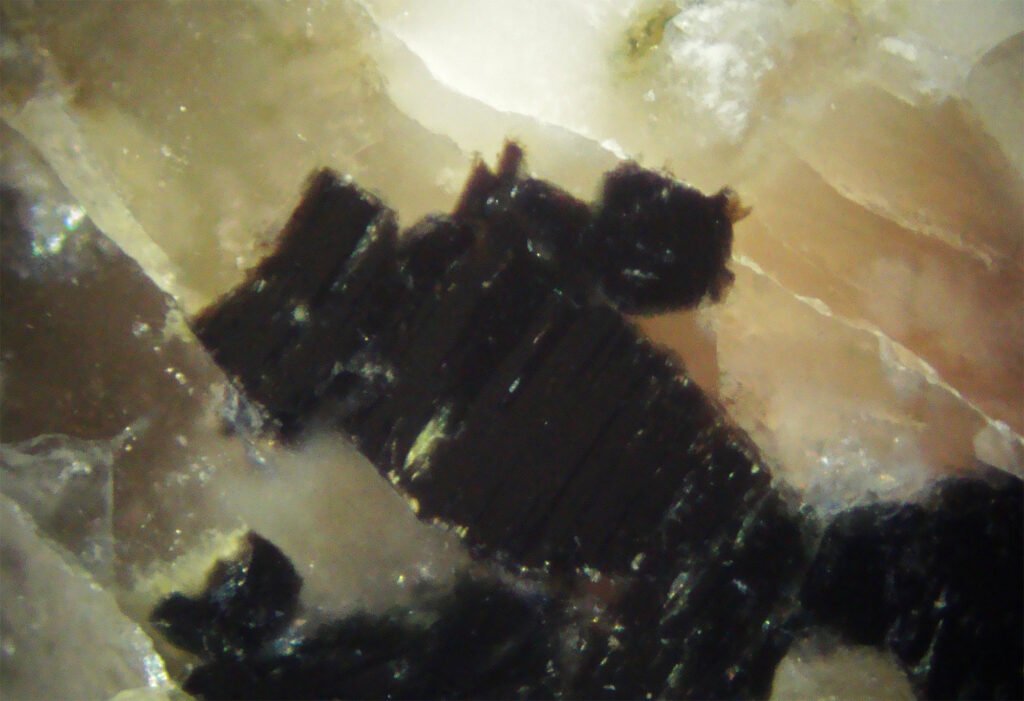
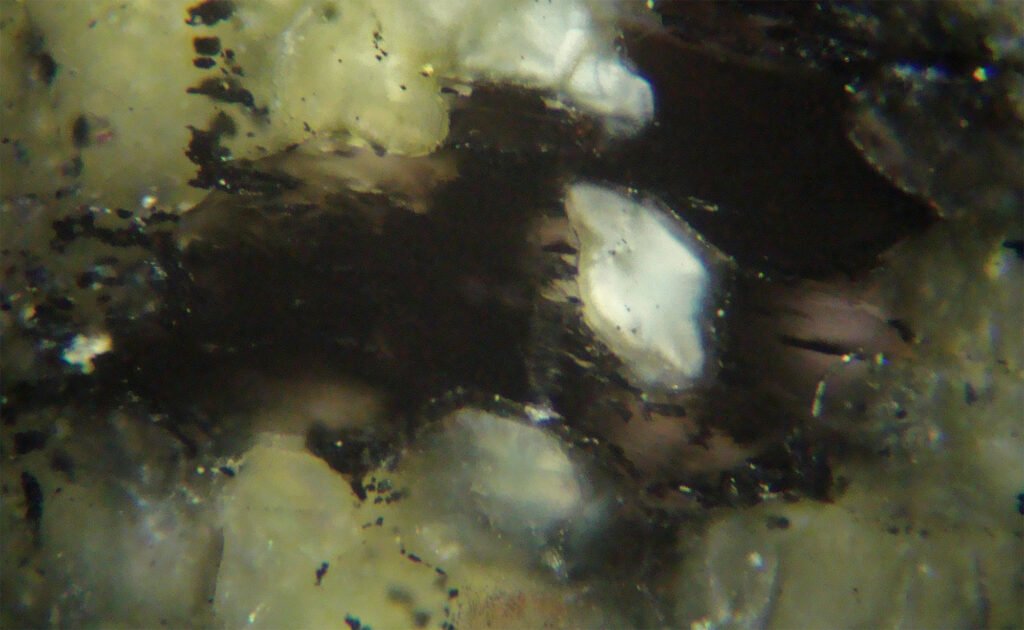
Images: in XPL, biotite (dark), orthoclase (cream), quartz (white).
PPL: dark gray color, slightly lighter than quartz and feldspars. No pleochroism. Low reflectivity (~4-5%), no bireflectance. Cleavage usually visible. Frequent polishing pits. Gets a good polish, doesn't show polishing scratches.
XPL: Dark, almost black internal reflections with a definite green tint. Clear reflections on cleavages. Distinct anisotropy.
Images: in XPL, green hornblende (dark), quartz, etc. (white).
PPL: dark gray reflection color, but much lighter than quartz and feldspars. No pleochroism. Low reflectivity, but slightly higher than quartz, no bireflectance. Cleavage may be visible.
XPL: Generalized internal reflections in very dark brown, almost black. No anisotropy. Occasionally, colored reflections appear.
Images: in XPL, brown hornblende (dark) and feldspars (light).
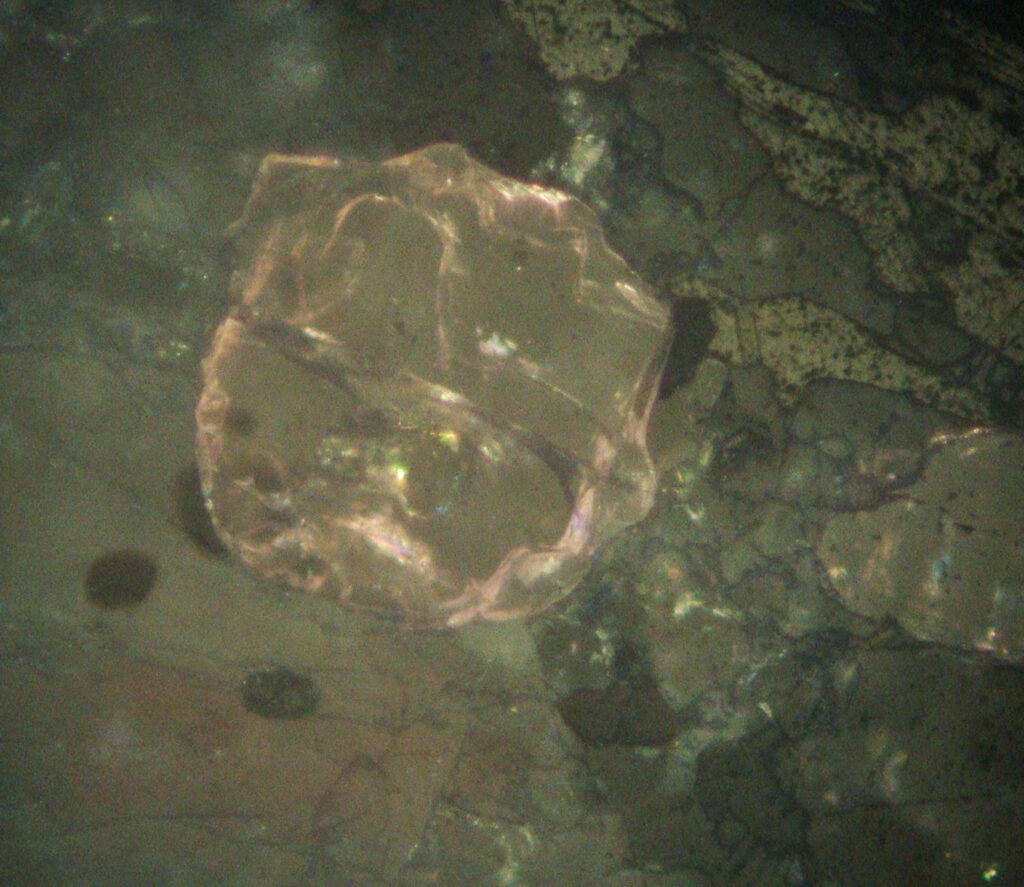
PPL: dark gray color, slightly lighter than quartz and feldspars. No pleochroism. Low reflectivity (4%?), no bireflectance. Typical rounded shape, possible high relief.
XPL: isotropic, difficult to observe due to generalized internal reflections, which are dark but more luminous than other minerals. Reflections, if the grain is large, tend to be reddish.
Images: in XPL, garnet (round) in fine-grained shist. Melanite garnet (isotropic!) in volcanic rock.
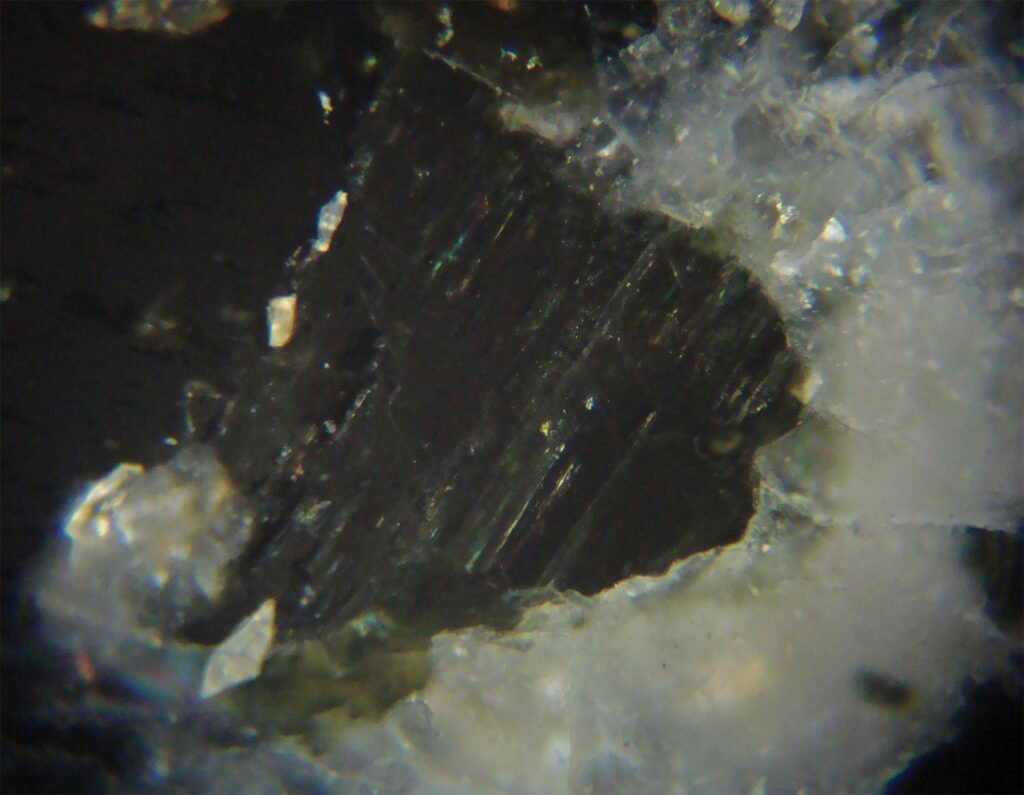
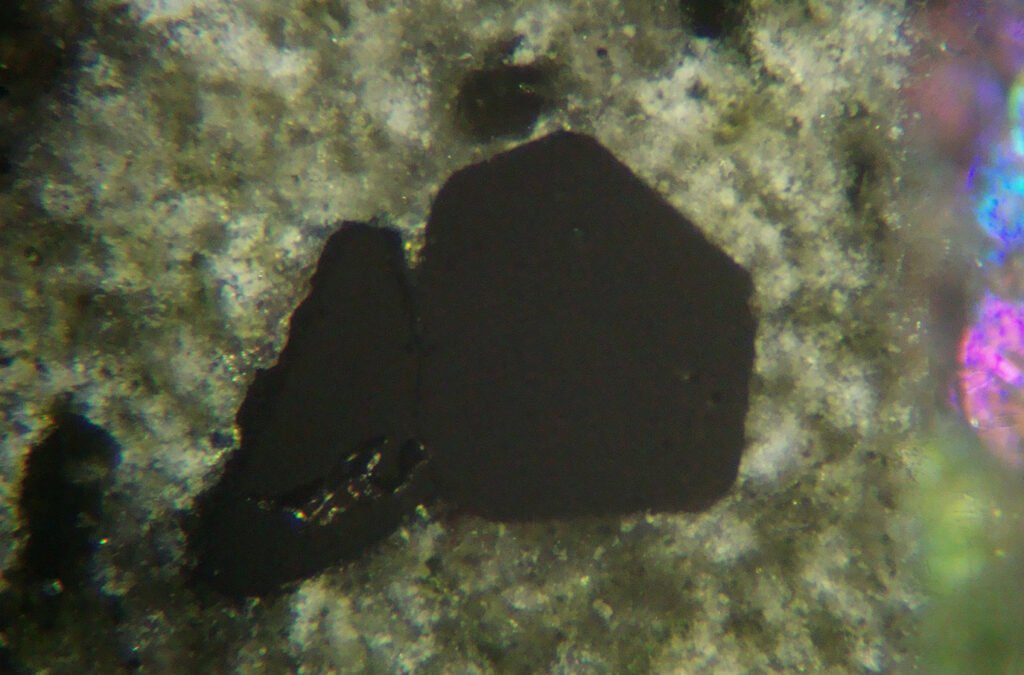
PPL: dark gray color of the same shade as quartz, without pleochroism. Low reflectivity like quartz, no bireflectance. Typical long prismatic habit, basal sections tend to be triangular or hexagonal.
XPL: in the most common variety (schorlite = black), uniform reflections, very dark, with a clear greenish tinge, the clearer, the thinner the section. Distinct anisotropy (XPL+2º).
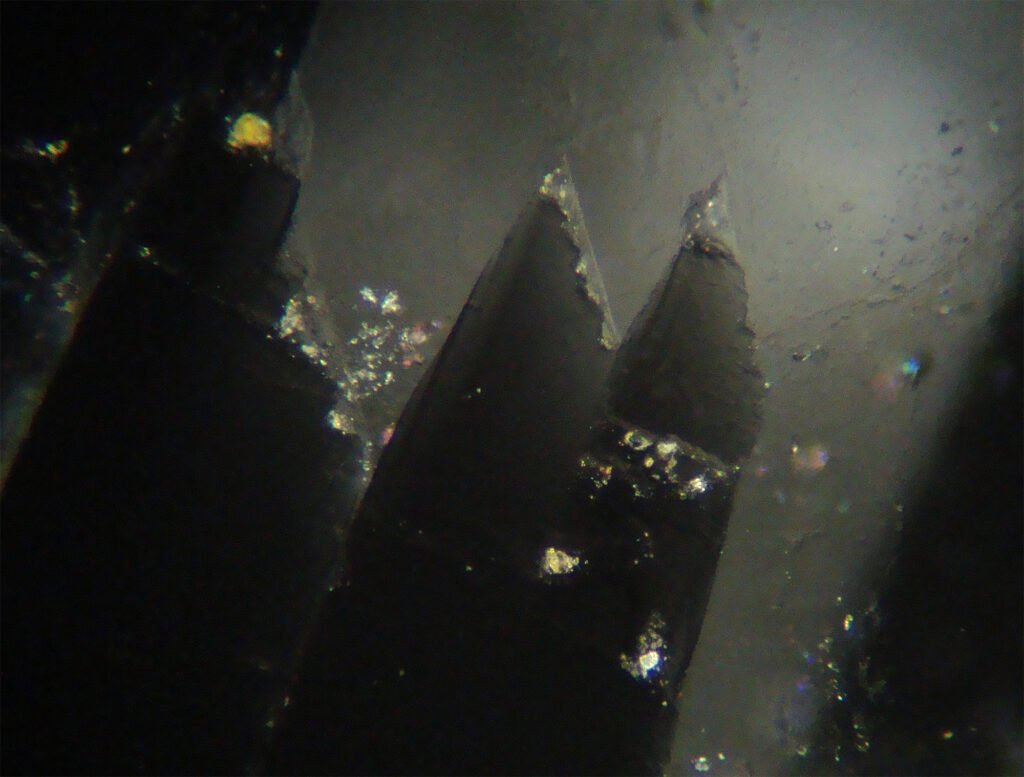
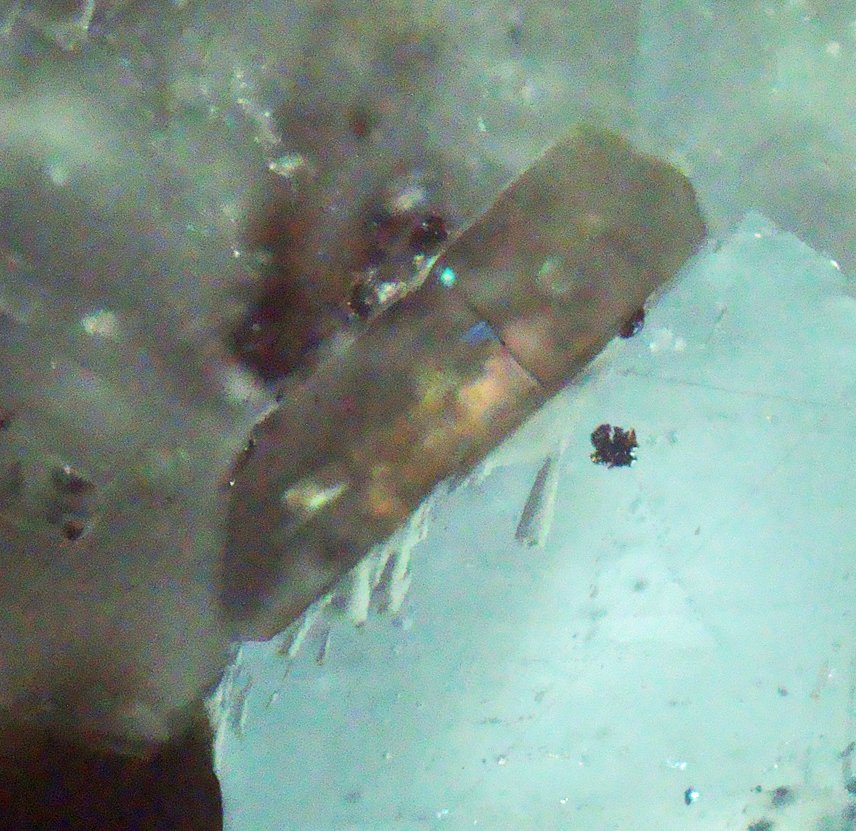
Images: in XPL, tourmaline (one black tourmaline and a caramel tourmaline) and quartz (white reflections).
PPL: dark gray color, darker than quartz and feldspars, but slightly lighter than biotite. No pleochroism. Low reflectivity, no bireflectance. Lamellar habit sometimes identifiable.
XPL: no anisotropy. Very dark internal reflections, without the variation of luminosity presented by biotite. Cleavage is not visible.
Images: in XPL, chlorite (dark), serpentine (white).
Minerals, in XPL with widespread very dark, almost black, internal reflections, with or without greenish or brownish tones.