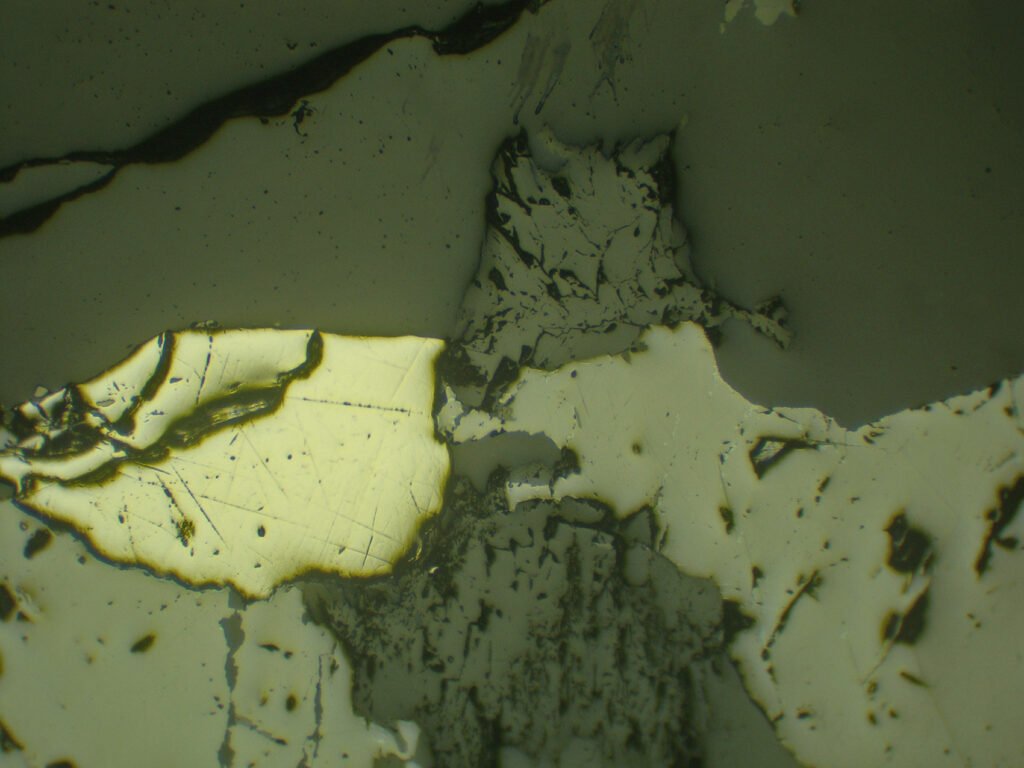
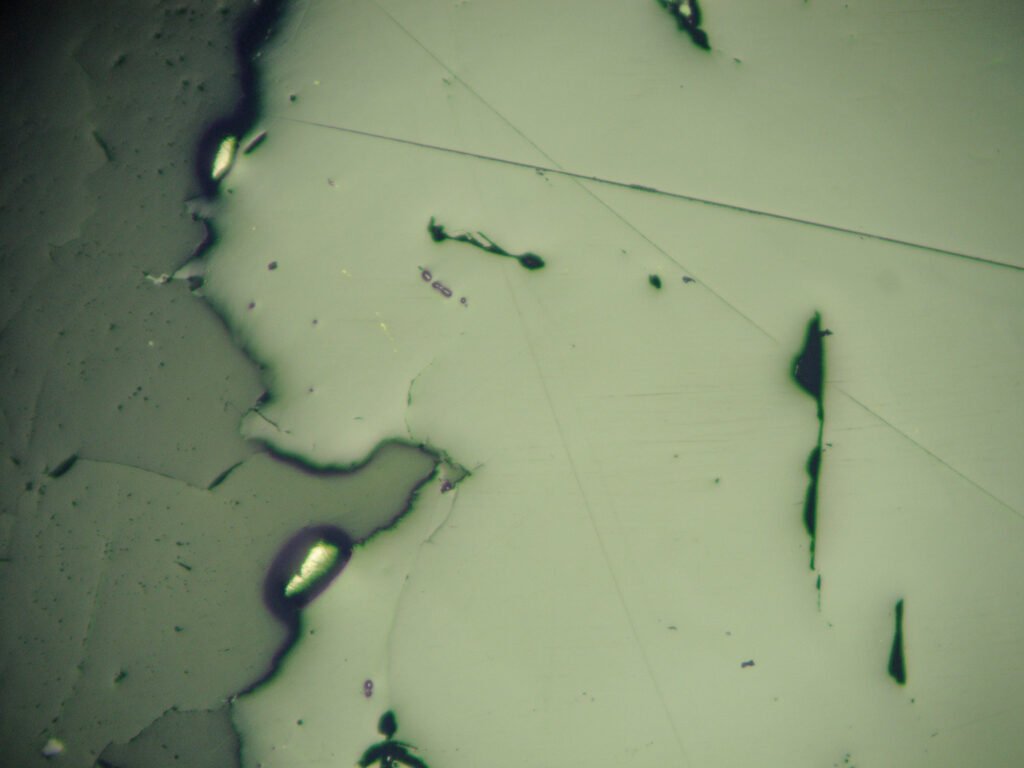
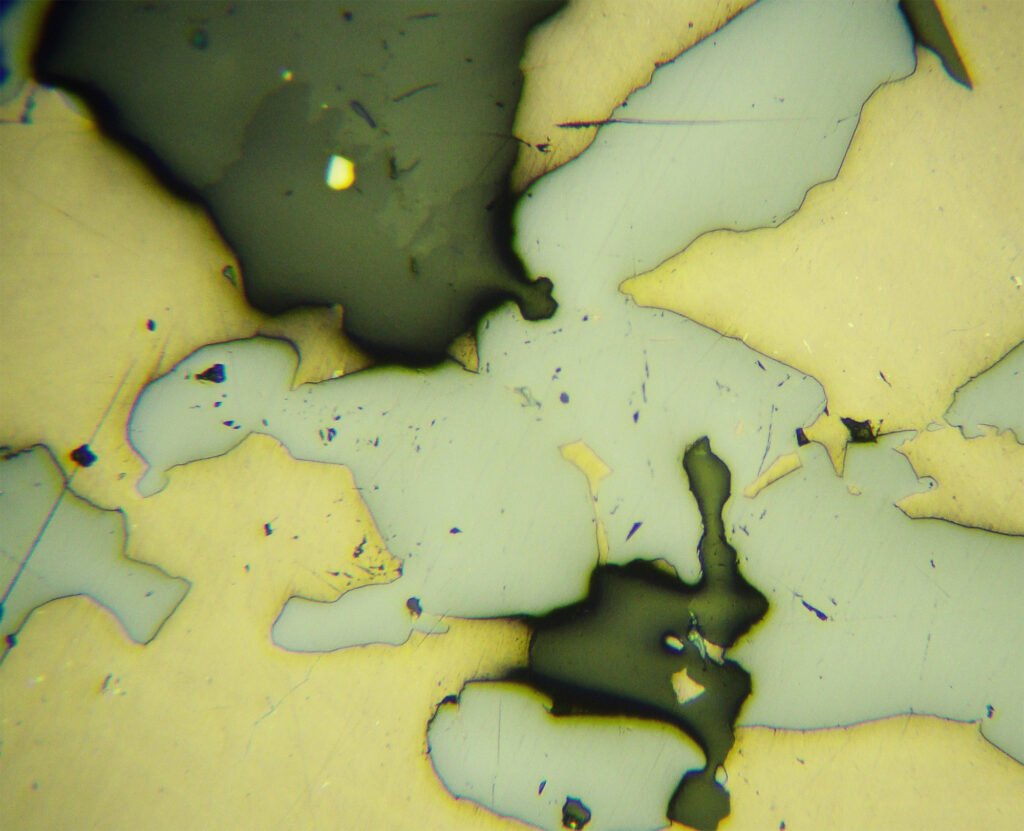
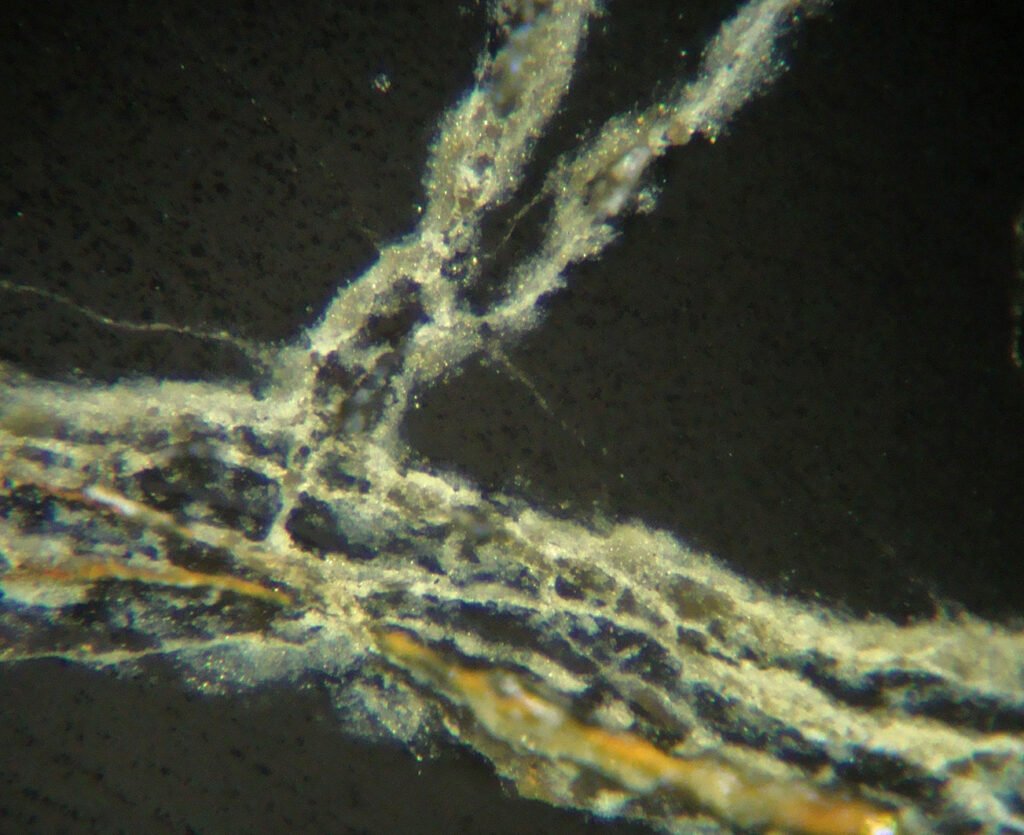
PPL: pinkish or brownish gray color, variable. Reflectivity of 21%. No pleochroism. No bireflectance. Inconspicuous mineral, but is the most common opaque in igneous and metamorphic rocks.
XPL: isotropic, may be slightly anisotropic. No reflections. Idiomorphy (octahedrons) possible. Frequent martization, generating white (in PPL) parallel lamellae of hematite. Unmixings and complex substitutions are possible. If with Ti, it can be associated with titanite.
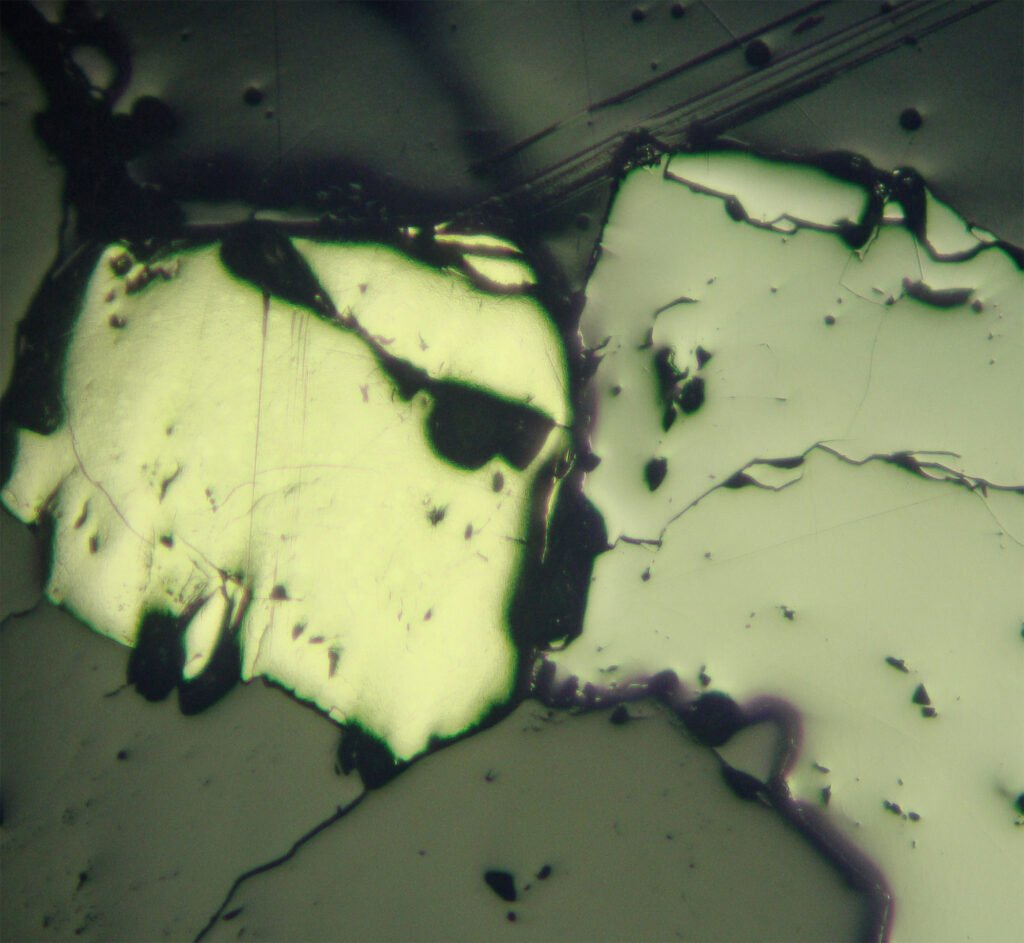
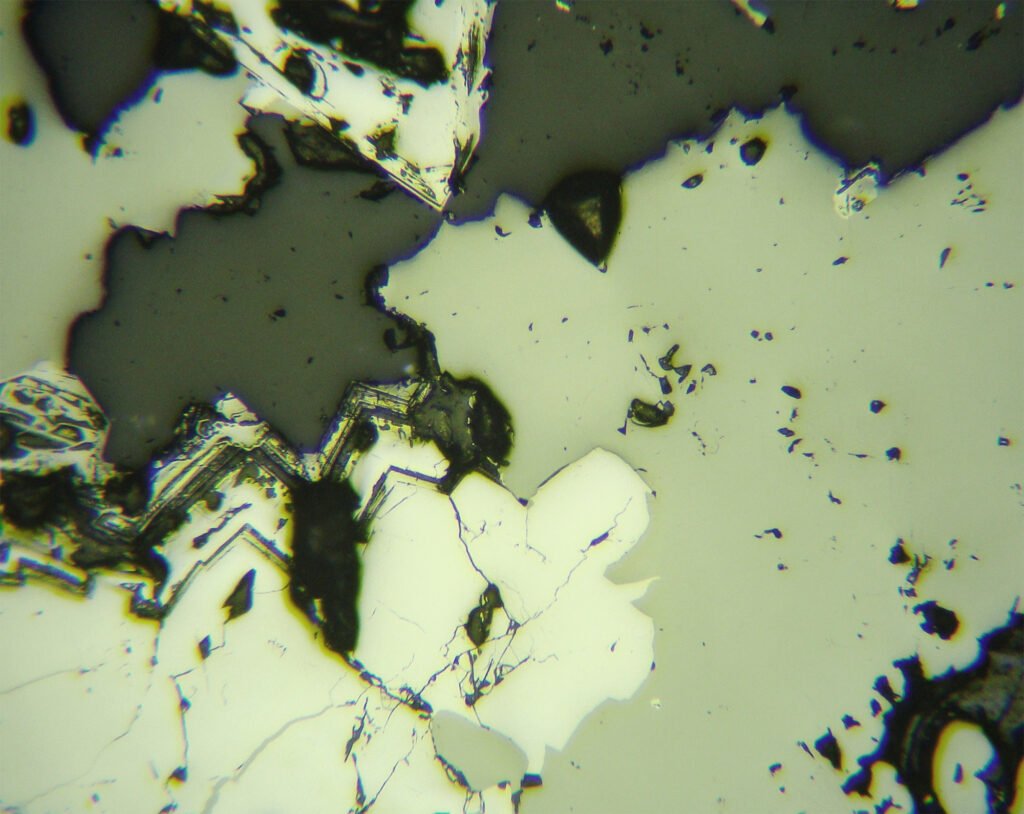
Image: in PPL, pyrite (yellow), gangue (dark) and magnetite (gray pink)
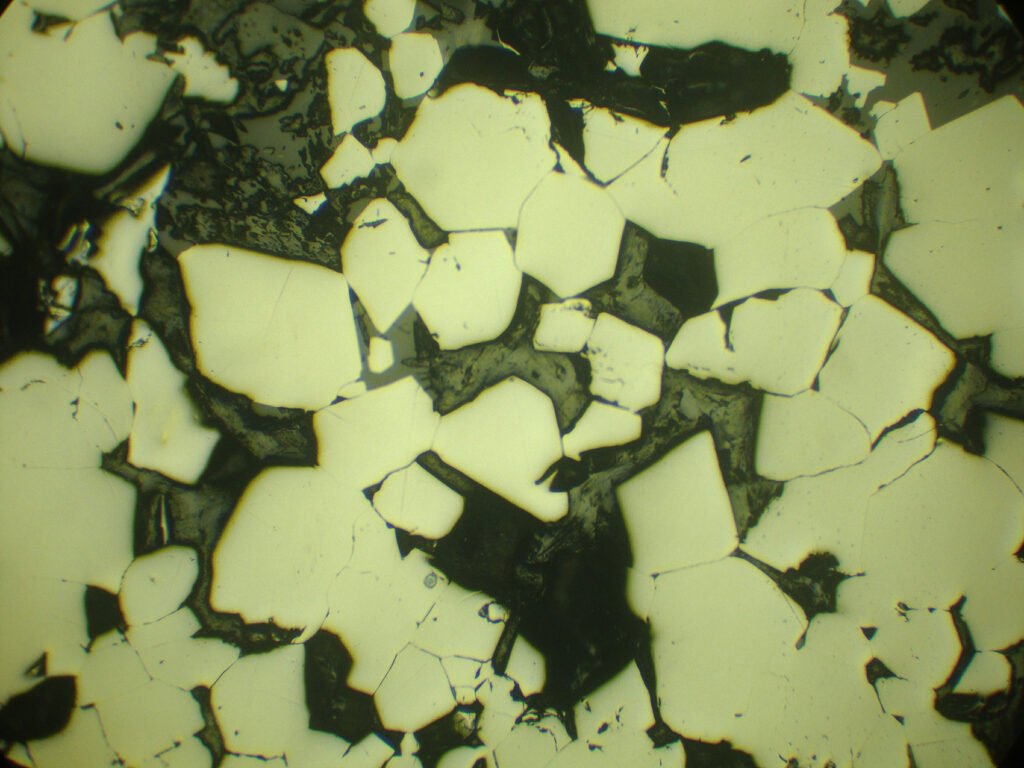
PPL: white gray color with brown tones. Low reflectivity of 12%. No pleochroism. No bireflectance. High hardness. Cataclastic in Alpine Type deposits. Idiomorphic in Stratiform Type deposits.
XPL: isotropic. If with Mg and Al, it may show red-brown internal reflections, which are rare.
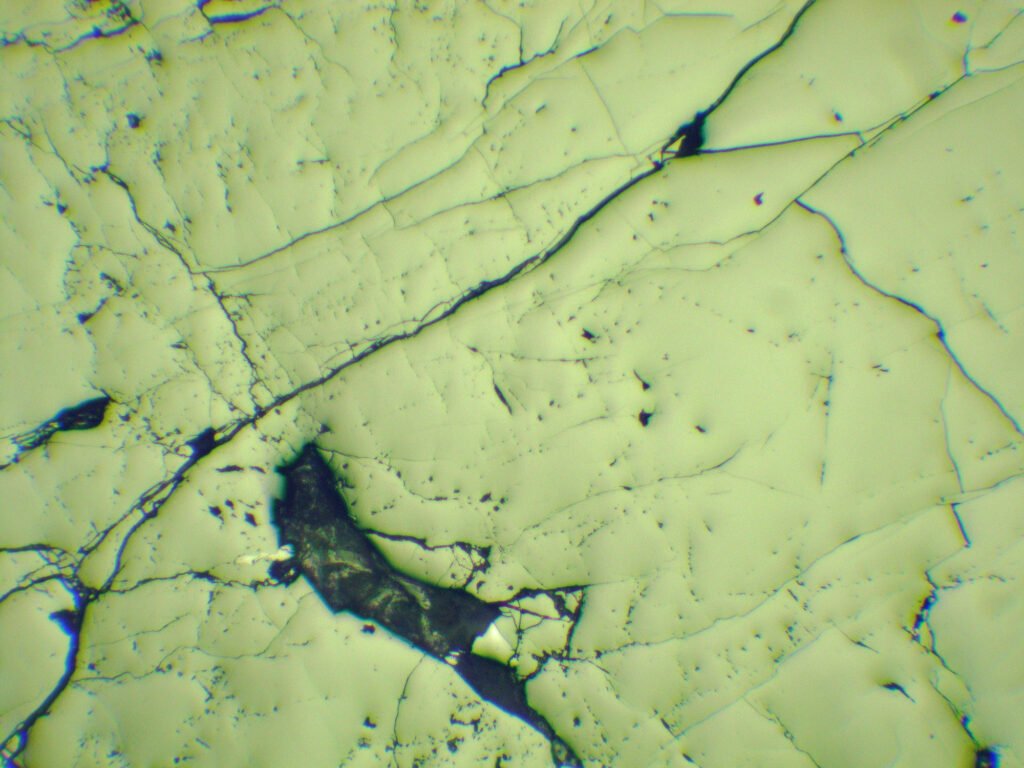
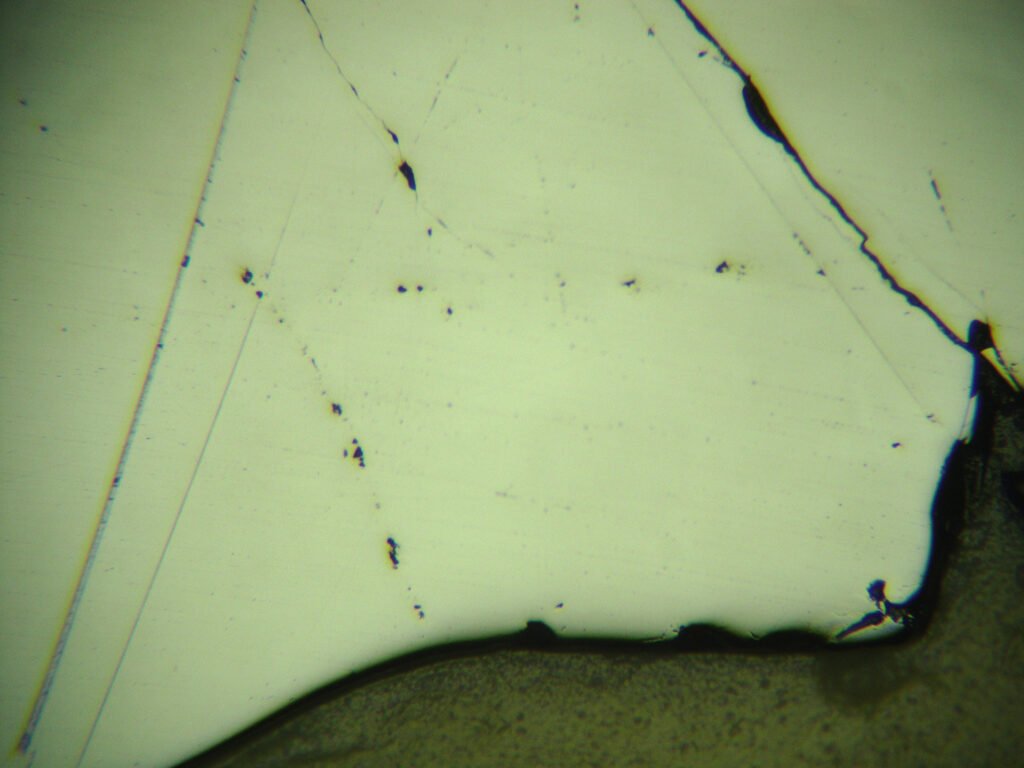
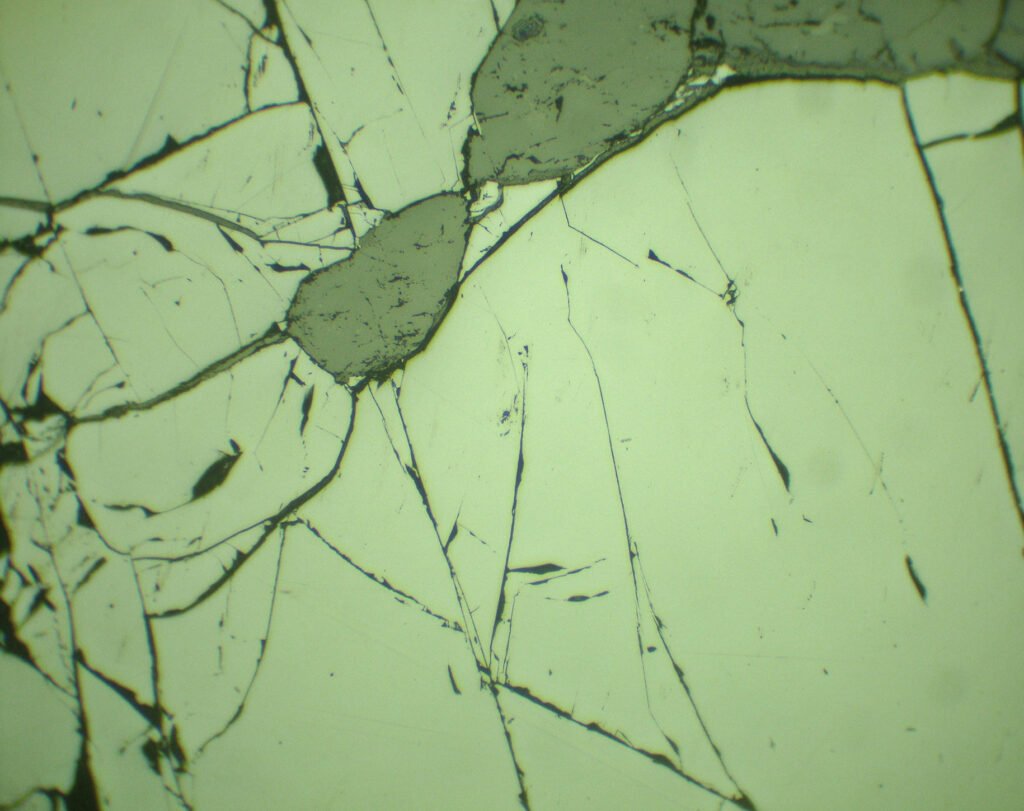
Image: in PPL, chromite (white-brown) and gangue (dark gray).
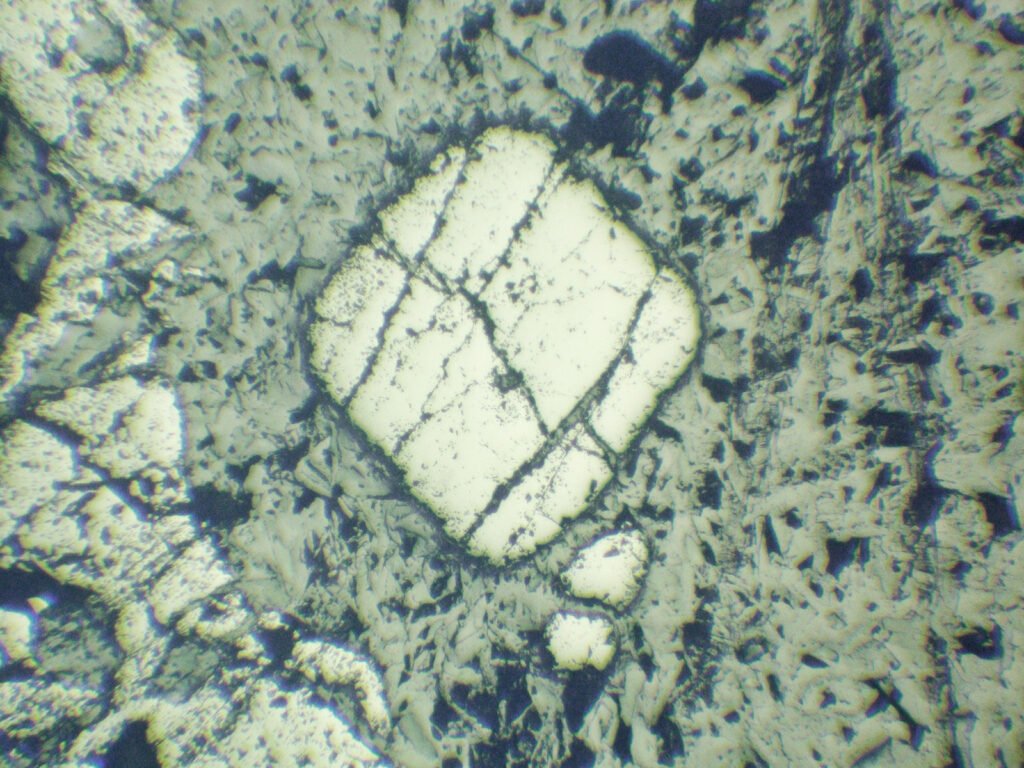
PPL: medium gray color. Reflectivity 15-16%. Weak plechroism and bireflectance, almost imperceptible. Typical tabular habit.
XPL: clear anisotropy, may go unnoticed. Rare, red to brown reflections. Oblique extinction. It occurs in pegmatites and quartz veins associated with granitic intrusives.
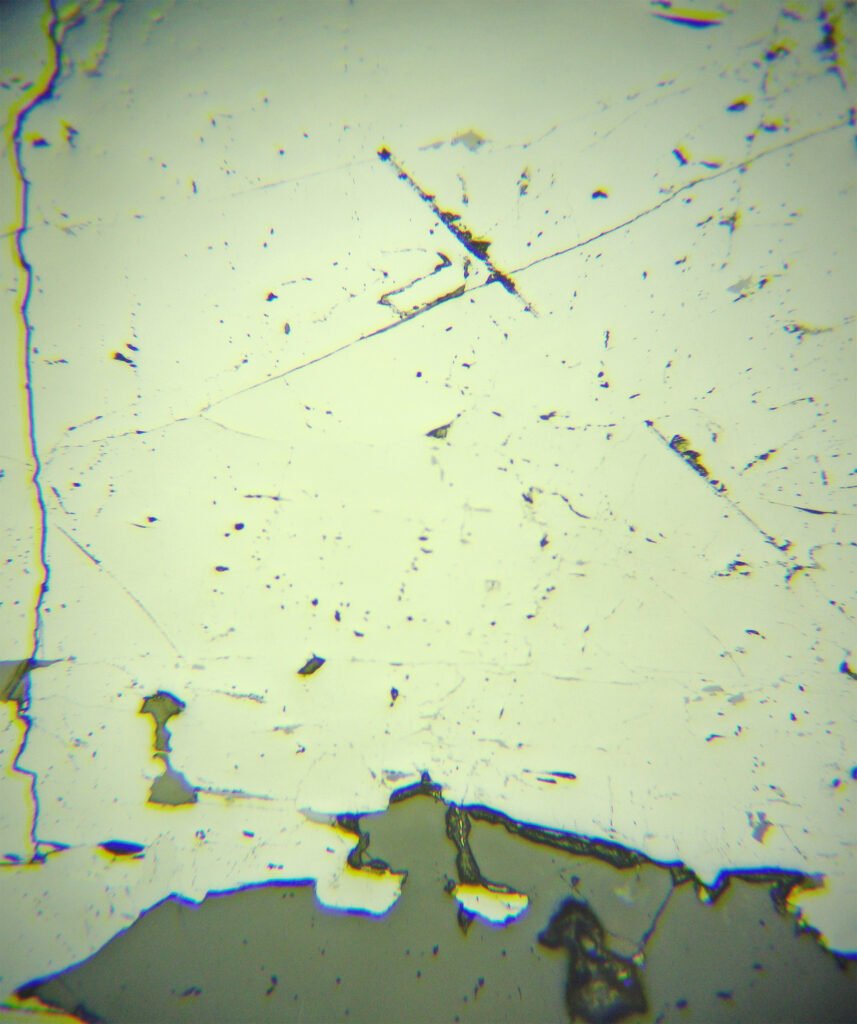
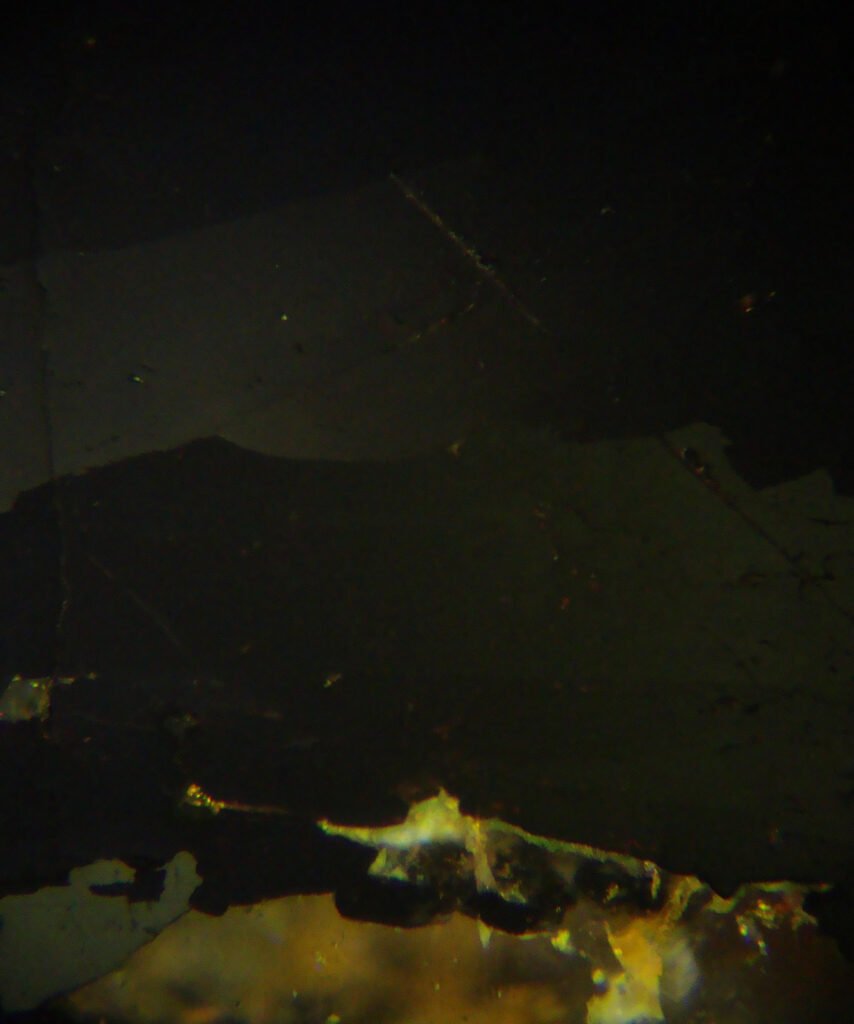
Images: in PPL and XPL(+2), wolframite (medium gray), gangue (dark gray).
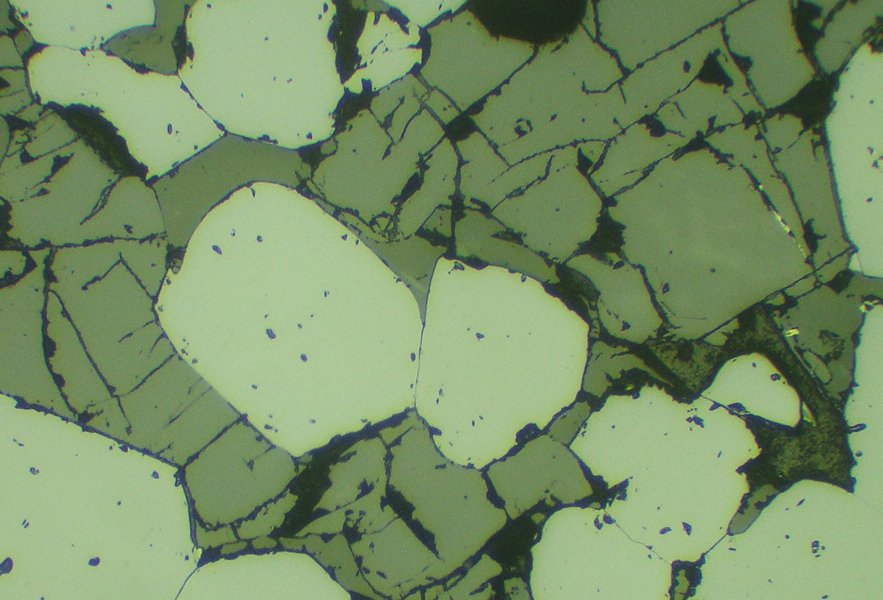
PPL: light gray color with brown tones. 17% reflectivity. No pleochroism. No bireflectance. Very rare mineral from iron and manganese deposits. Extremely similar to magnetite, even with magnetism of variable intensity!
XPL: Isotropic. Rare deep red reflections at intergranular boundaries are possible. Idiomorphy (octahedrons) possible.
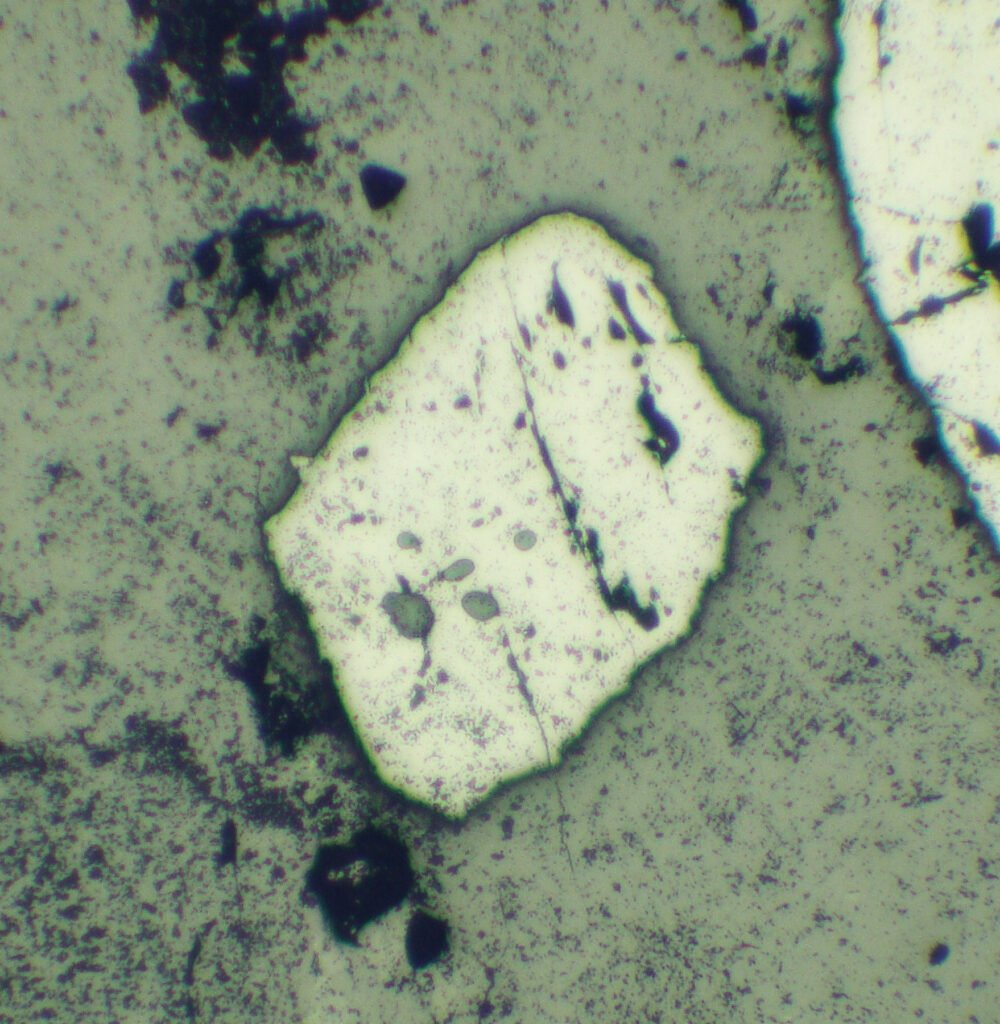
Images: in PPL, franklinite (gray-brown) and gangue (dark gray).
PPL: dark gray color, but much lighter than the gangue minerals, without pleochroism. Very low reflectivity (~4%), no bireflectance.
XPL: very weak anisotropy between dark grayish brown and almost black, appears isotropic. White, yellow, orange, brown and multicolored internal reflections. Rare mineral, difficult to identify.
Images: in XPL, baddeleyite with typical reflections along the fractures.