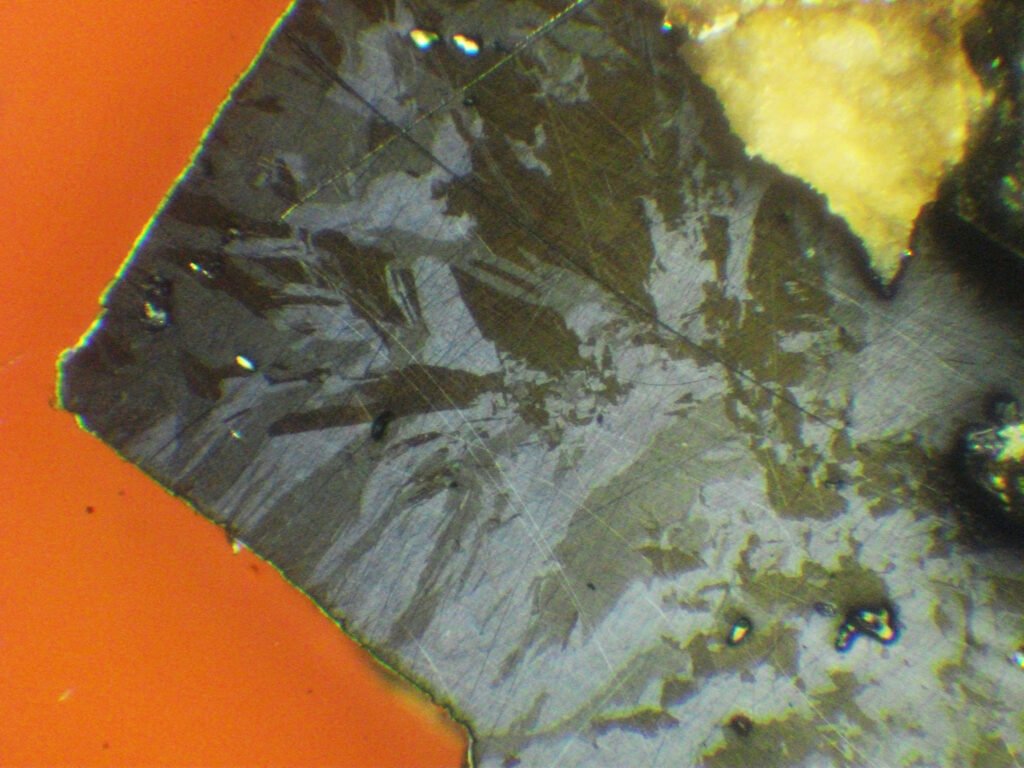
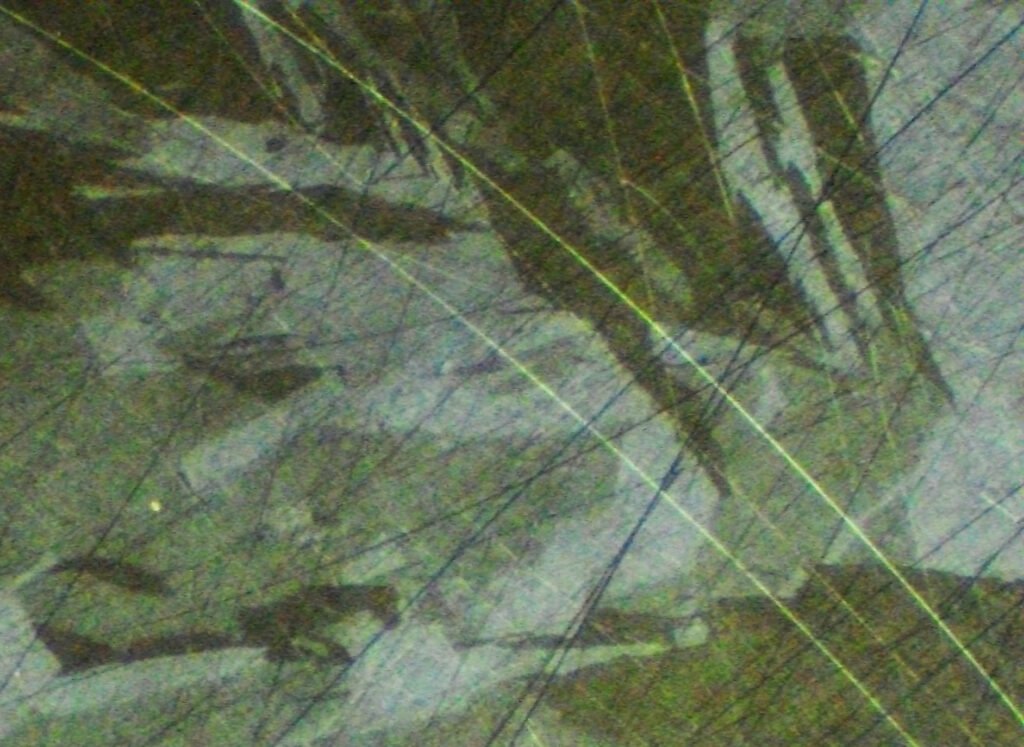
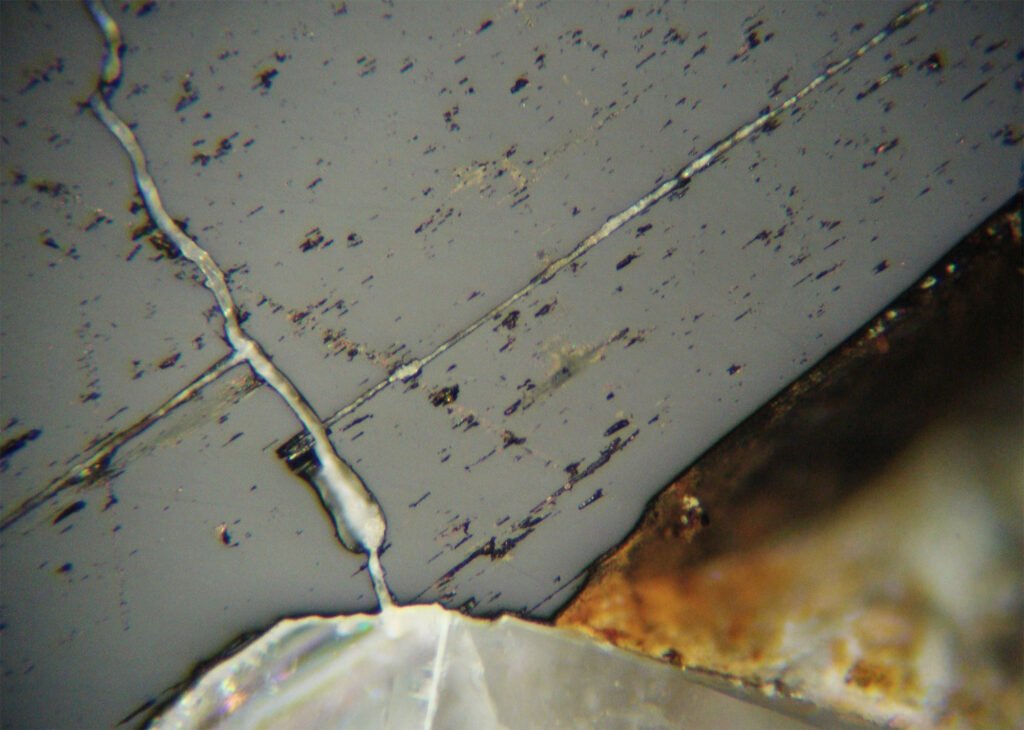
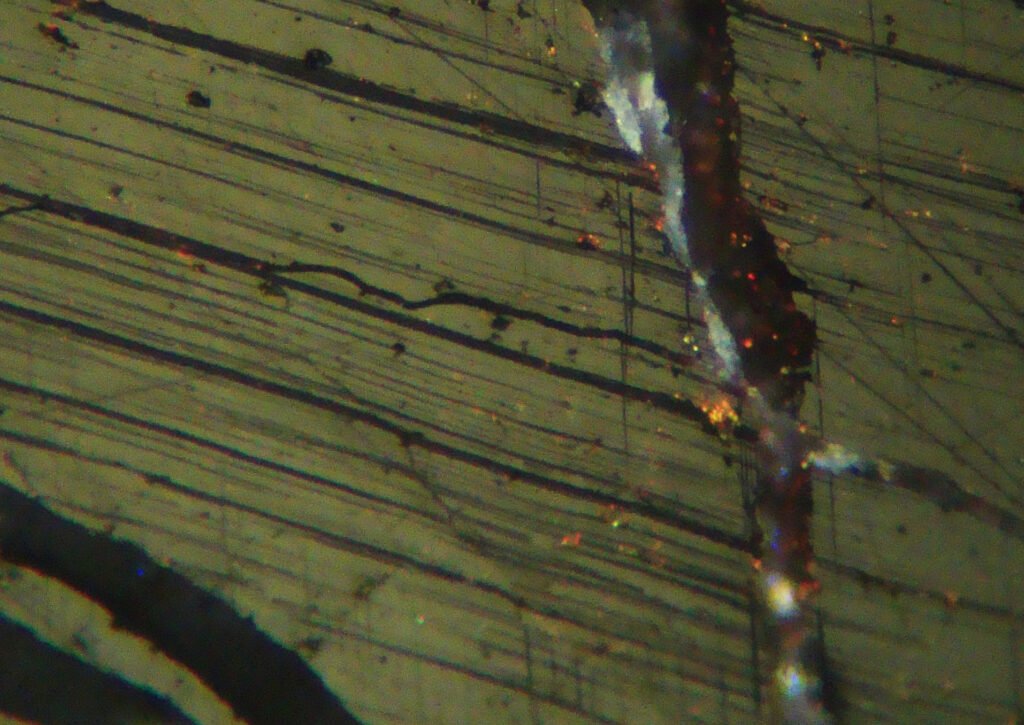
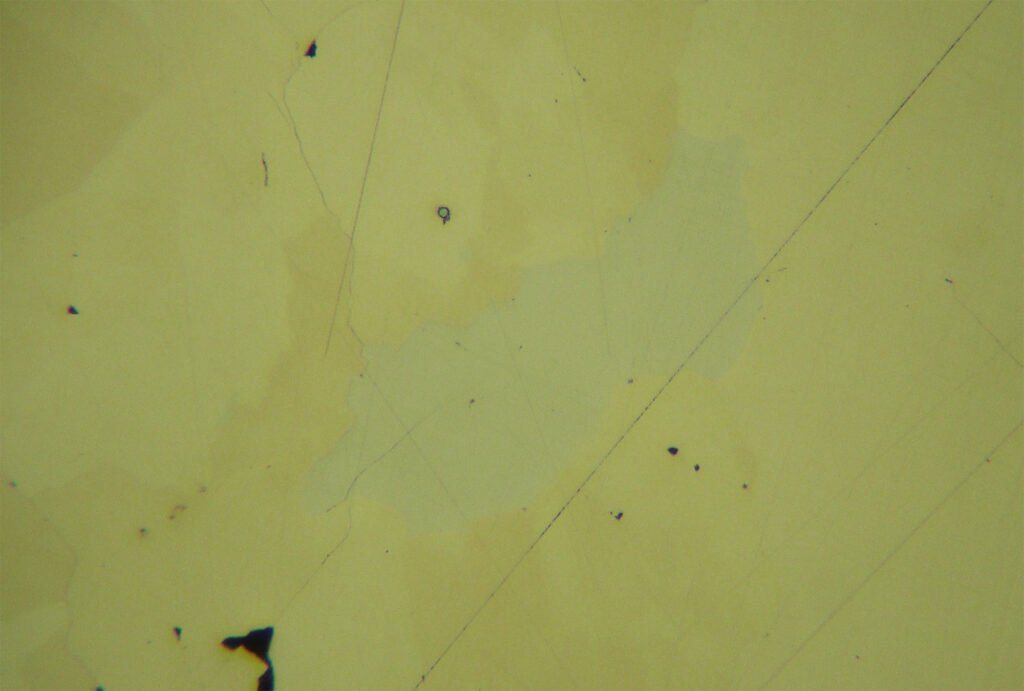
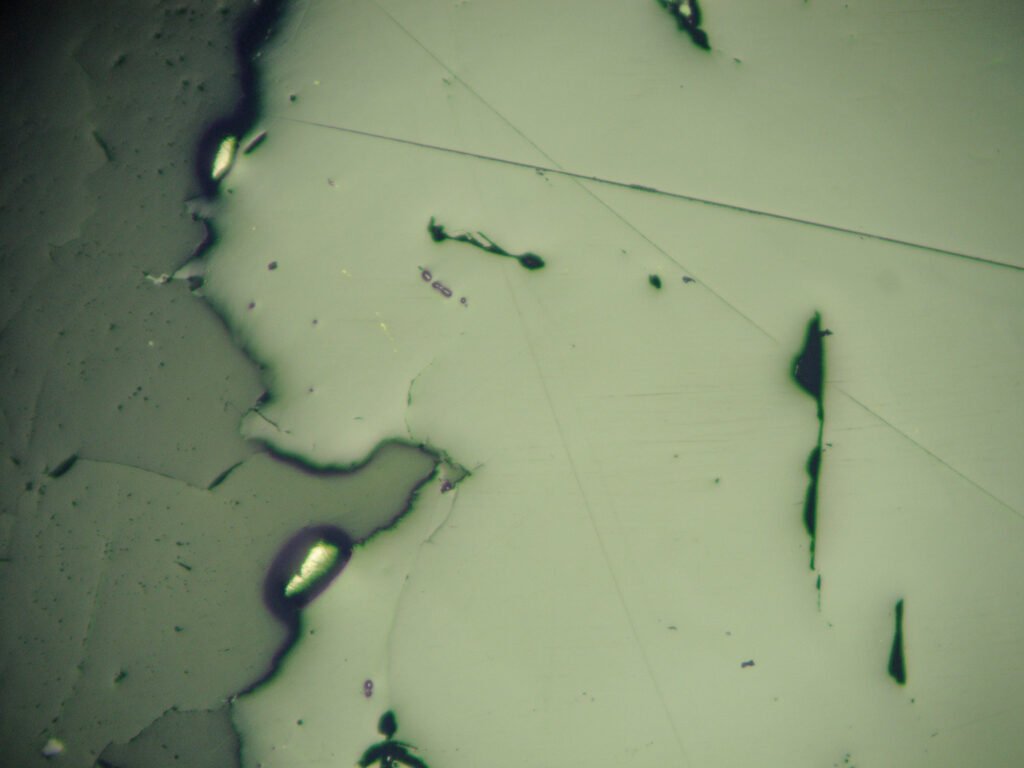
PPL: gray to gray-green color, without pleochroism. 30% reflectivity, no bireflectance. Lots of polishing scratches (Mohs: 2-2.5).
XPL: weak anisotropy, hard to see. Does not show reflections. Very fast air corrosion. Twins common. Myrmekites possible. Common mineral in silver ores (veins, oxidation and cementation zones).
Image: in XPL, acanthite with scratches and twins.
PPL: white-gray color with a brown tinge, without pleochroism. 19% reflectivity, with discreet bireflectance, hard to see.
XPL: very weak anisotropy in gray-blue tones. Rare reflections, in deep brown. Grains with a tendency to idiomorphy. It occurs in the most diverse geological situations.
Identification by microscopy is difficult to impossible.
PPL: medium gray color, without pleochroism. Reflectivity 15-20%, with weak bireflectance. It is a rare mineral.
XPL: clear to strong anisotropy in greenish-gray. Scattered blood red to reddish brown or orange reflections. Lamellar twins are common and diagnostic, they vary from grain to grain.
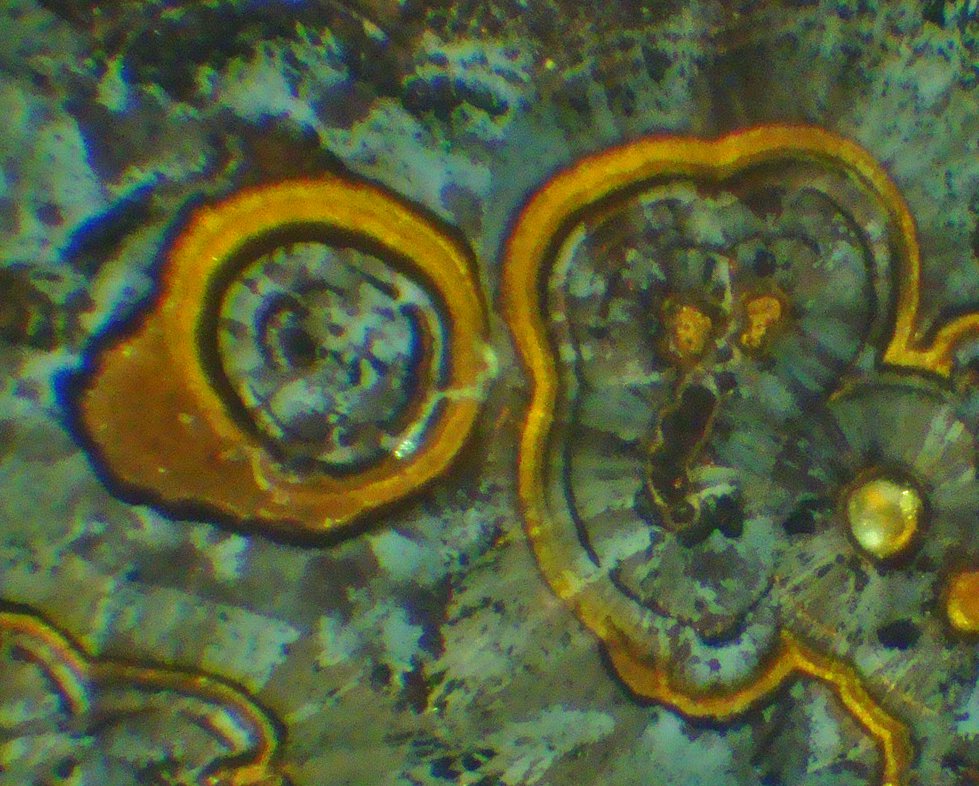
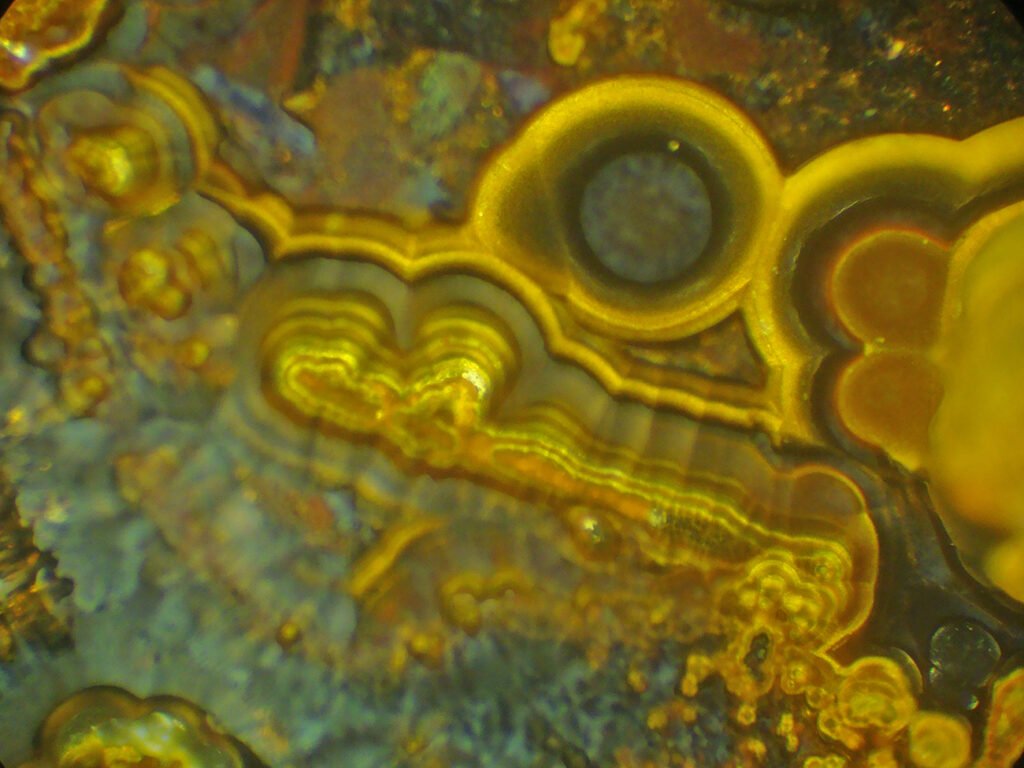
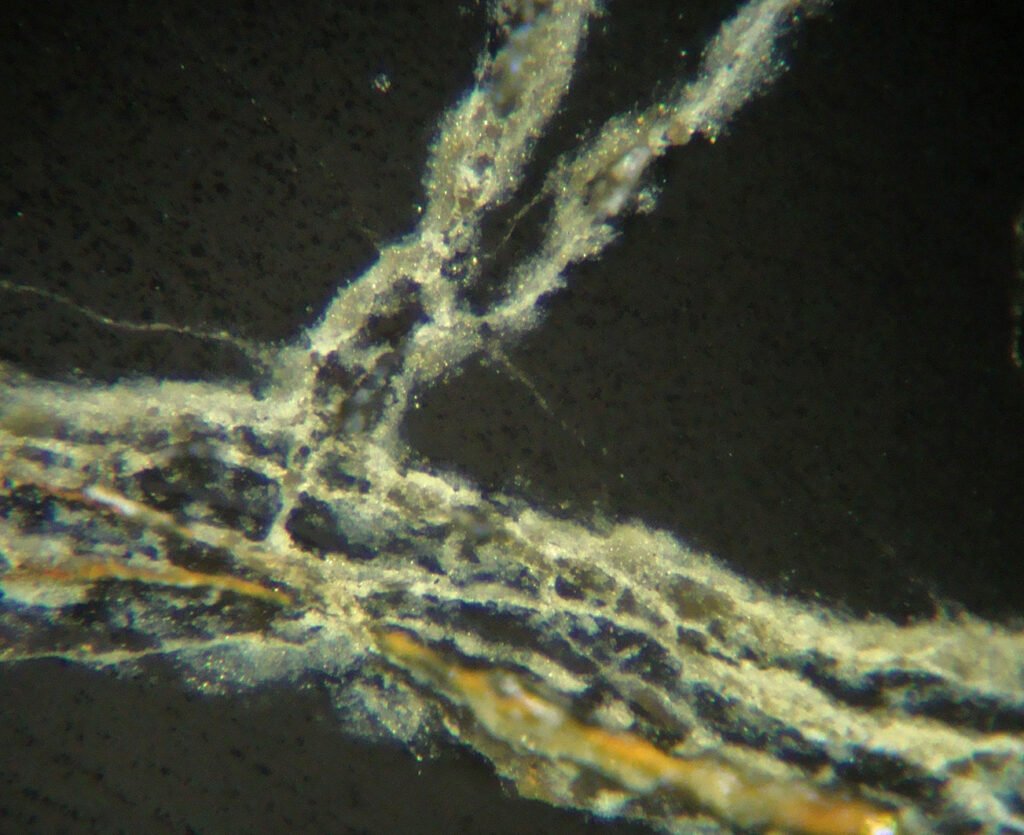
PPL: gray color with a blue tint and 12% reflectivity. Weak pleochroism, lacks bireflectance.
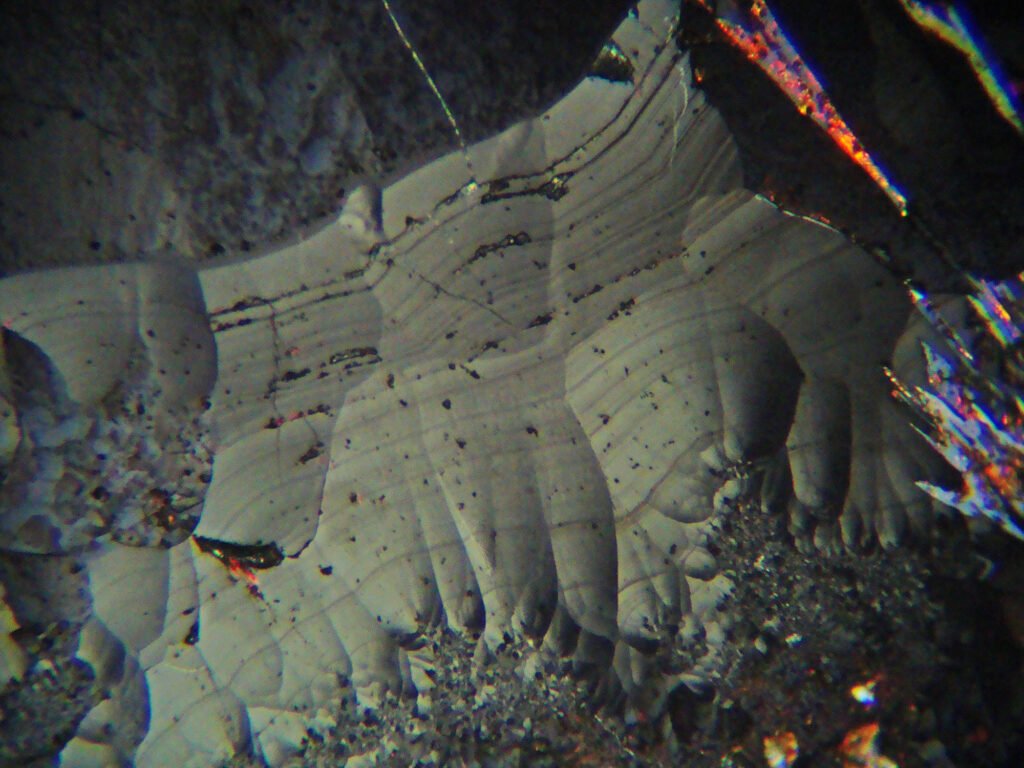
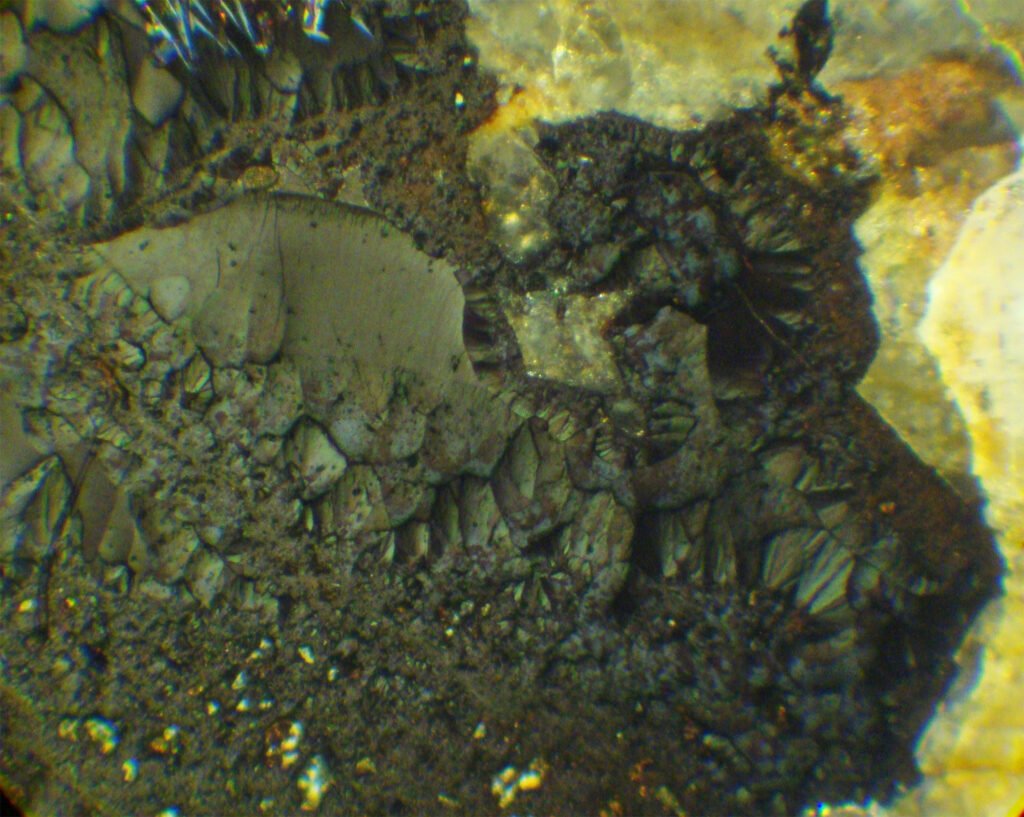
XPL: strong to weak anisotropy and reflections ranging from yellow, orange to red-brown, predominantly orange. It forms radiated or banded fibrous aggregates, resembling chalcedony.
Images: radial aggregates of goethite fibers (stalagtites).
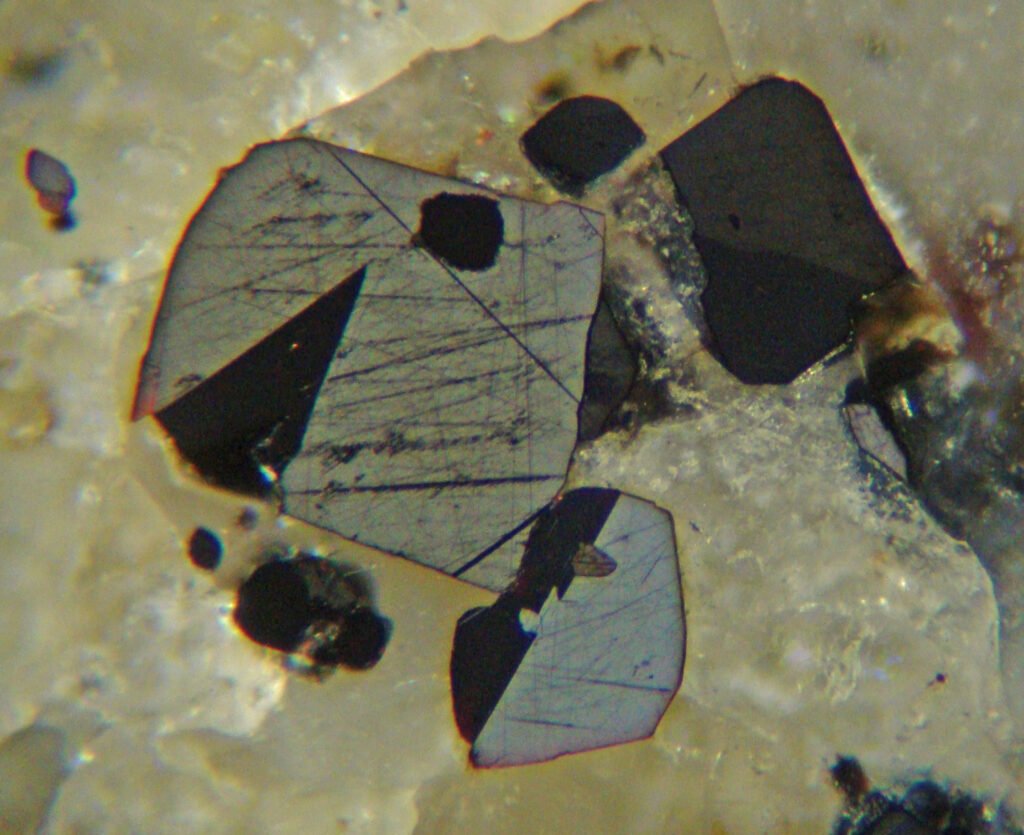
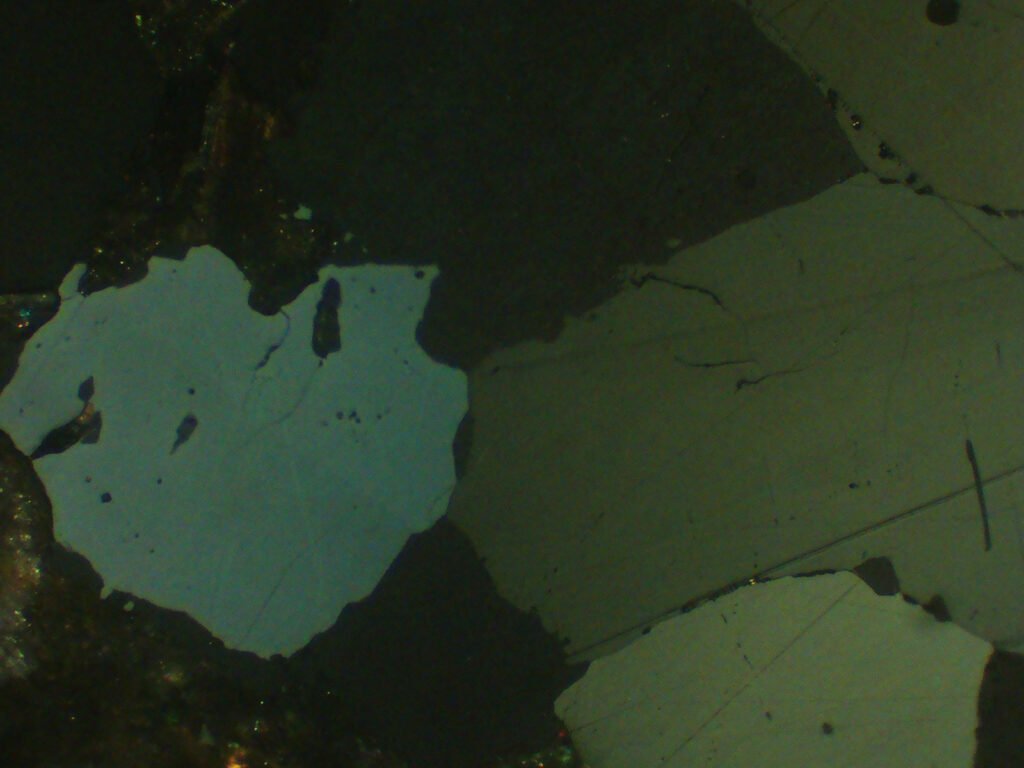
PPL: gray-brown to gray-light brown color, without pleochroism. Reflectivity of 19%, with weak bireflectance (see grain limits and twins!). It is a very common opaque in many igneous and metamorphic rocks, along with magnetite.
XPL: strong anisotropy in shades of gray, one of the colors has a well-defined bluish tone (observe with CPL+2º). Internal reflections rare.
Images: in XPL, 3 grains of ilmenite showing their typical anisotropy.
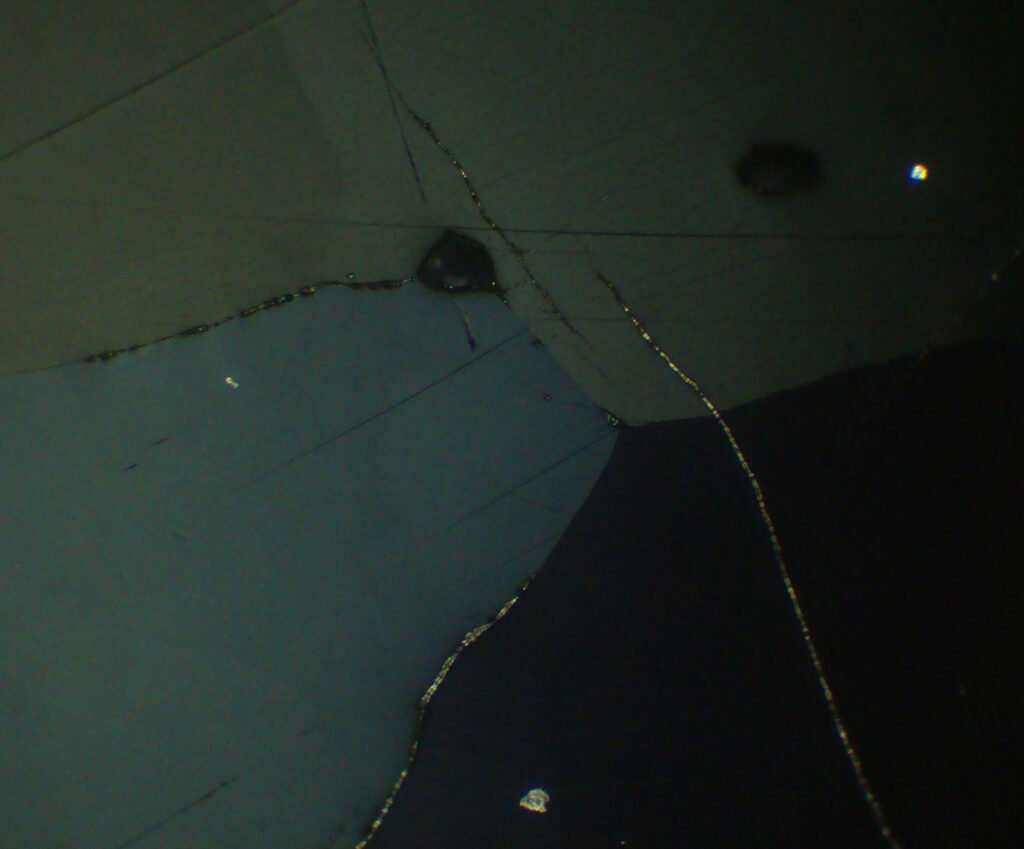
PPL: medium gray color with a brown tinge, with distinct bluish to brownish pleochroism. Much darker than pyrolusite. Reflectivity of 16-21%, with distinct bireflectance.
PL: distinct anisotropy between gray-blue and gray-yellow, in the basal sections in violet. Scattered blood-red reflections.
Images: in XPL, manganite (gray-blue), gangue (white/orange).
PPL: medium gray color, without pleochroism. Reflectivity of 11%, far above common silicates. No bireflectance.
XPL: very strong anisotropy, weaker in basal (rhombic) sections. Generalized internal reflections in red-brown, may be yellow or green. Very reminiscent of sphalerite reflections.
Images: in XPL, titanite (basal section – orange), quartz (milky).
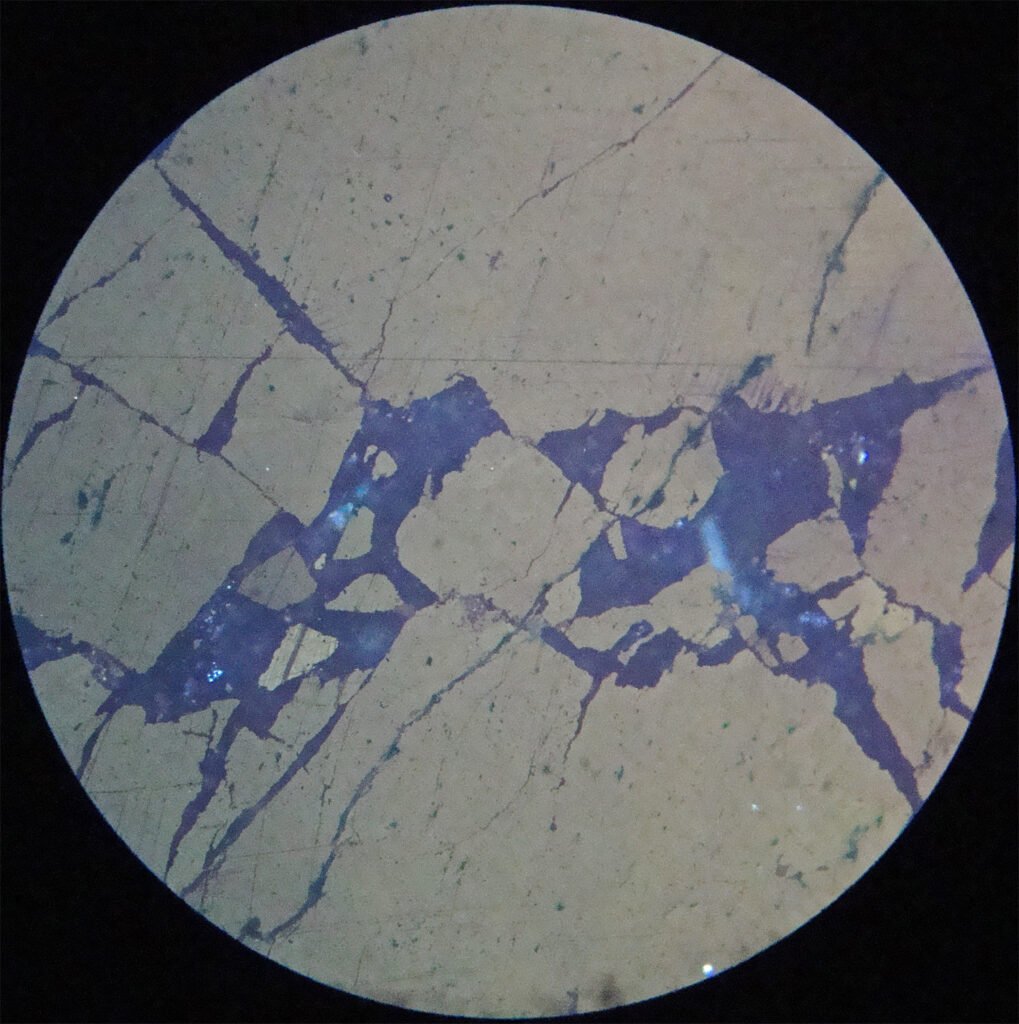
PPL: medium gray color, without pleochroism. Reflectivity 16-17%, with weak bireflectance, barely noticeable. Cataclasis is very frequent.
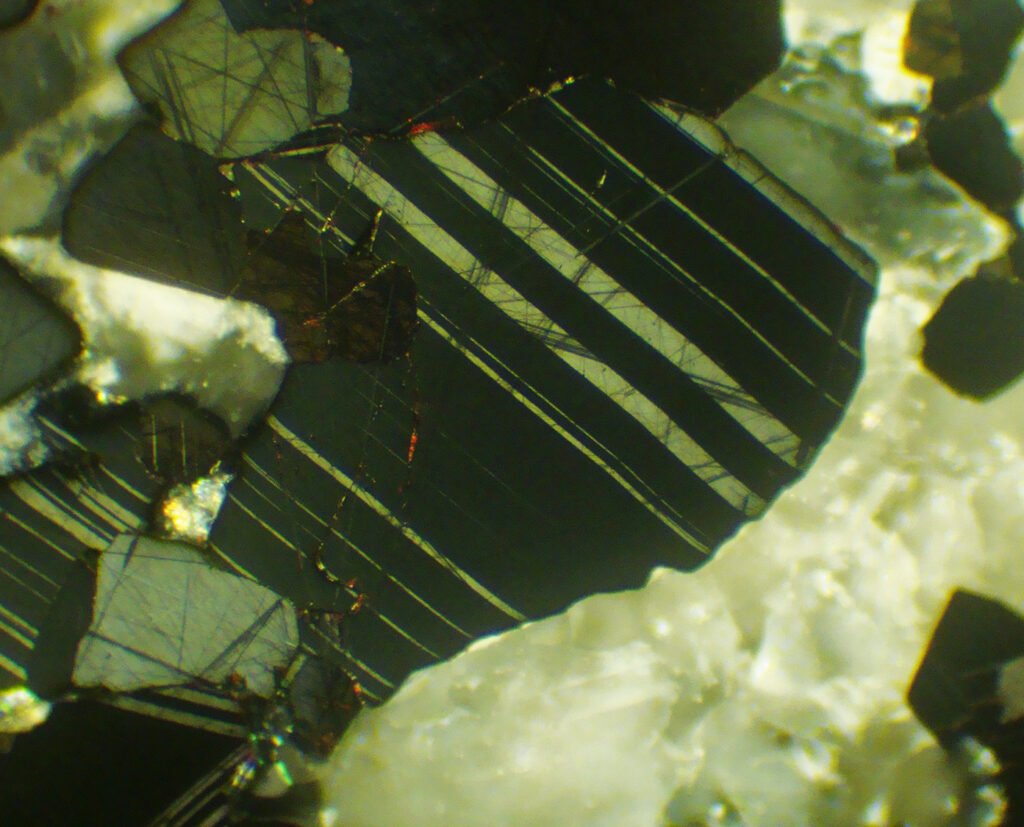
XPL: strong anisotropy between olive green and bluish black (observe with CPL+2º). There are small, scattered internal reflections in reddish brown. Localized lamellar twins are common.
Image: in XPL, tapiolite (olive green + twins), gangue (dark).
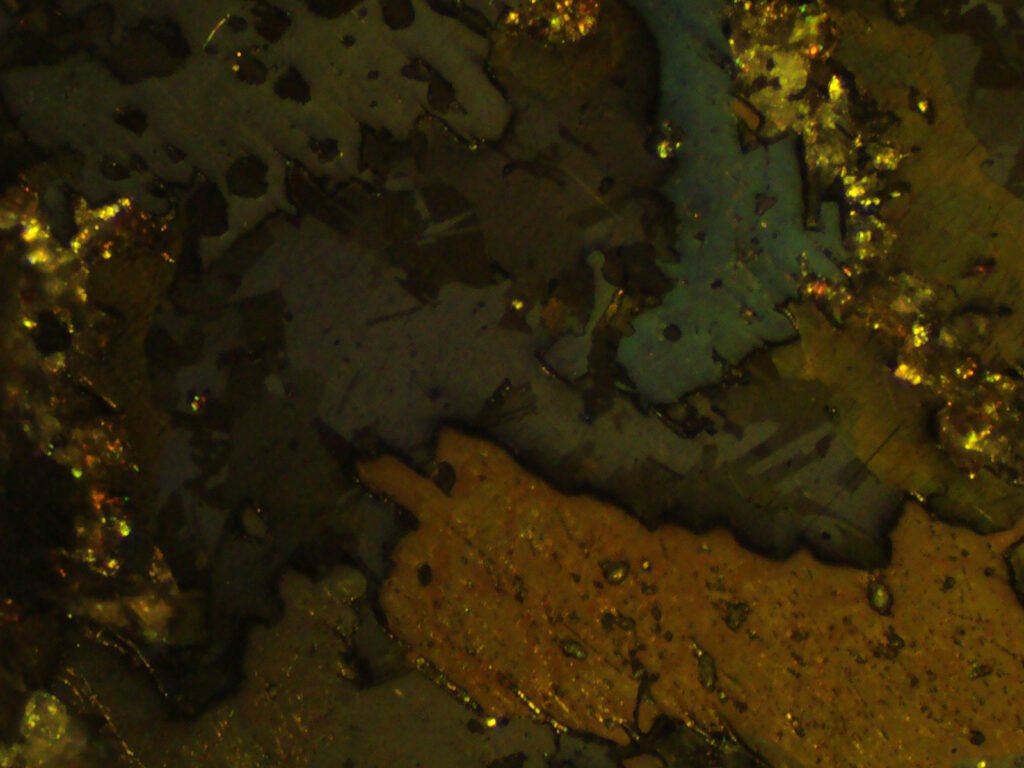
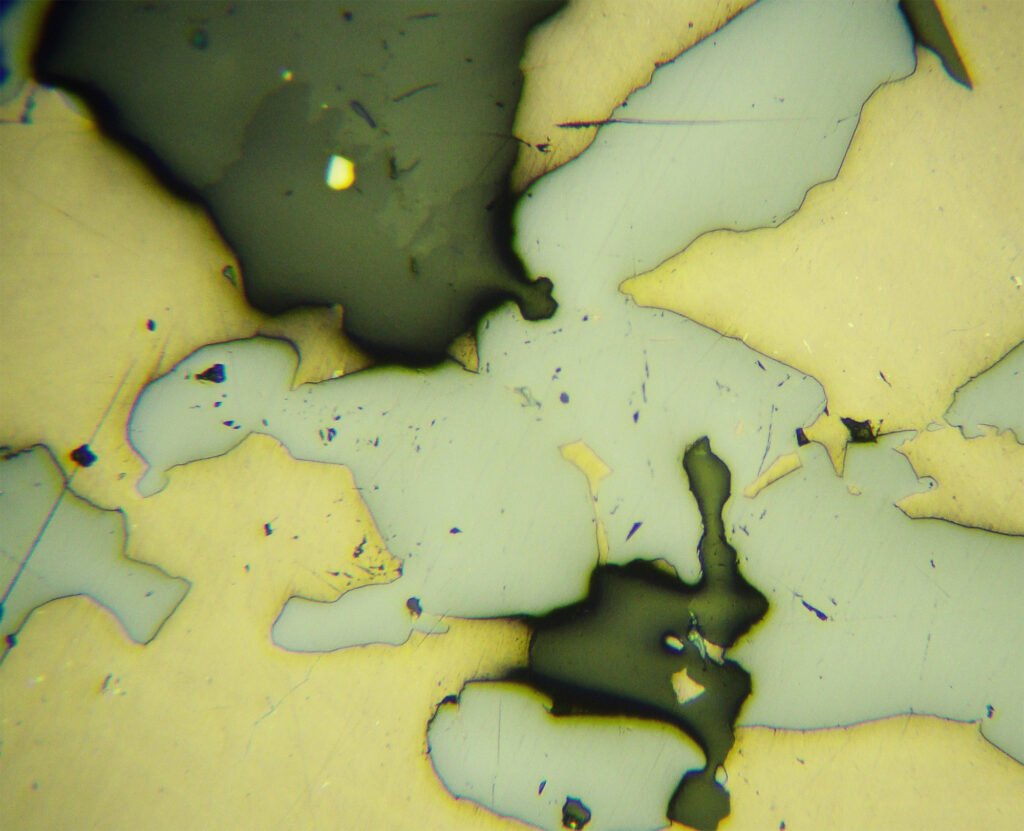
PPL: gray color with a pink tint, without pleochroism. In the presence of nickeline it appears white. Reflectivity of 50-52%, with weak bireflectance. Replaces and is replaced by nickeline.
XPL: weak anisotropy in dark olive green, brown and violet (observe with XPL+2º), without internal reflections.
Images: in PPL, maucherite (white), nickeline (orange and pink).
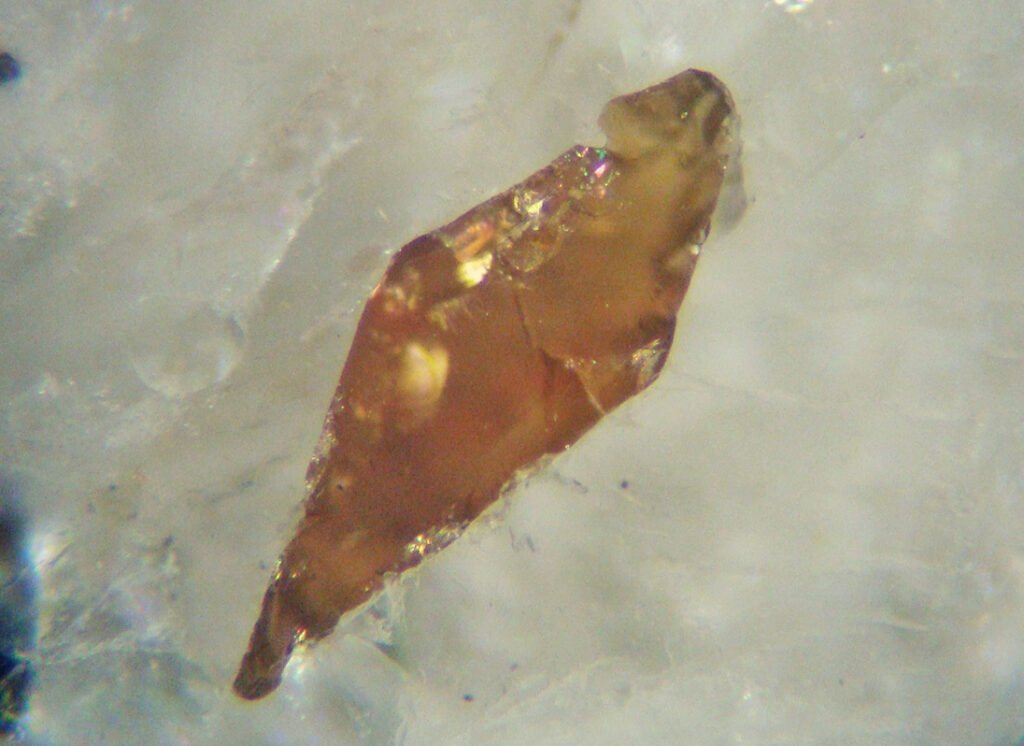
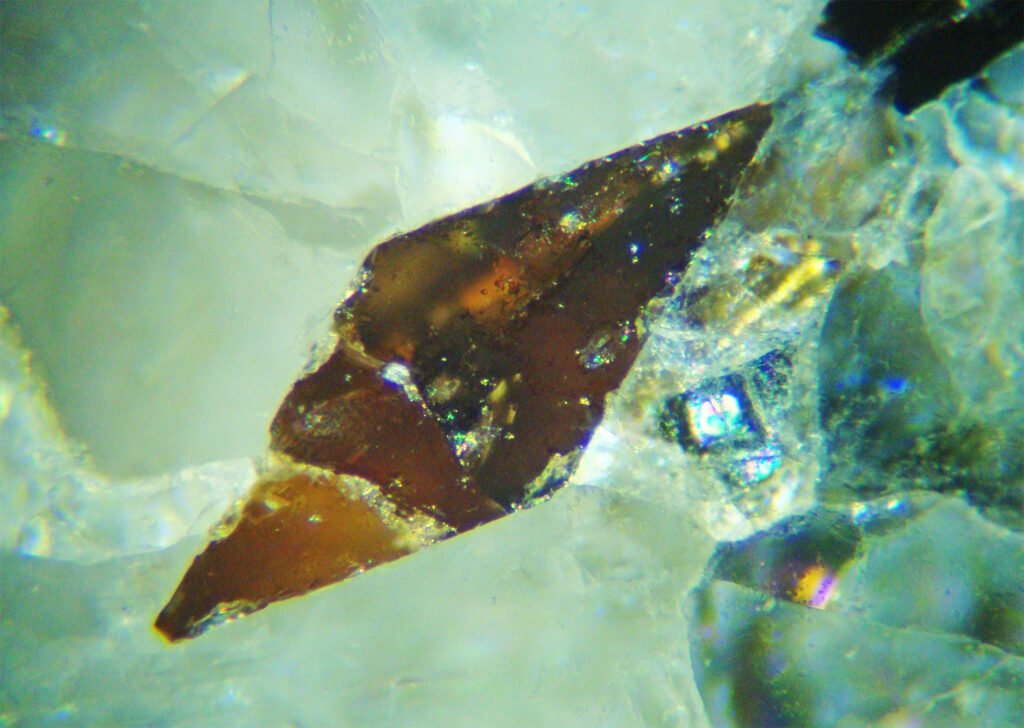
PPL: dark gray color, but much lighter than the gangue minerals, without pleochroism. Very low reflectivity (~4%), no bireflectance.
XPL: very weak anisotropy between dark grayish brown and almost black, appears isotropic. White, yellow, orange, brown and multicolored internal reflections. Rare mineral, difficult to identify.
Images: in XPL, baddeleyite with typical reflections along the fractures.
Minerals, in PPL with gray colors lighter than the gangue and, in XPL, with anisotropy in varying degrees.