Reflected Light

PPL: Blue-gray or bluish-white color, with very weak pleochroism. Reflectivity of 30%, without bireflectance. Many polishing scratches.

XPL: Very dark, with very weak anisotropy, almost imperceptible. No reflections. It looks like an isotropic mineral! It is associated with other Cu minerals such as bornite and secondary minerals (covellite).

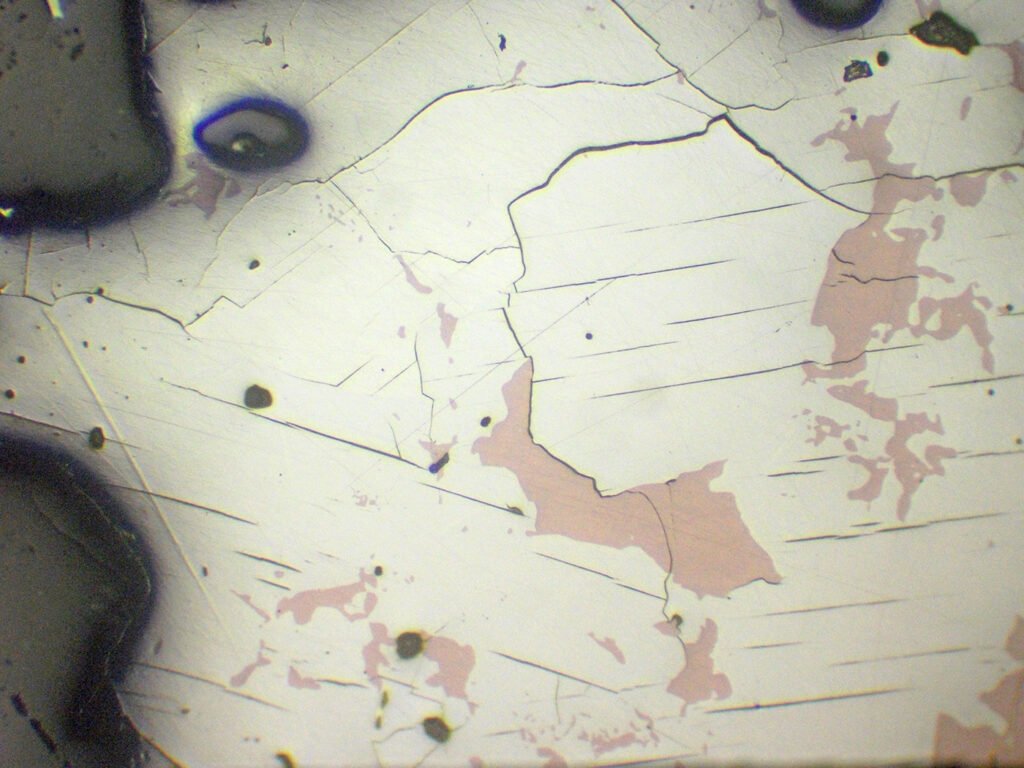
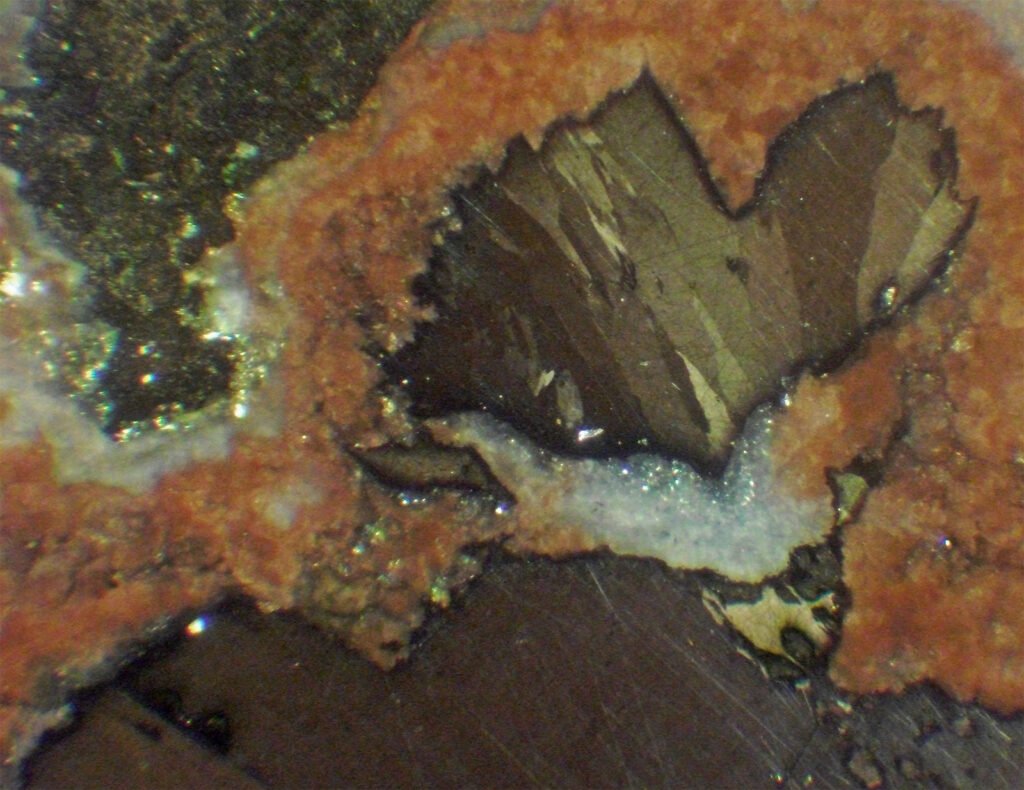
Images: in PPL, chalcocite (white), bornite (pink) and gangue (dark).

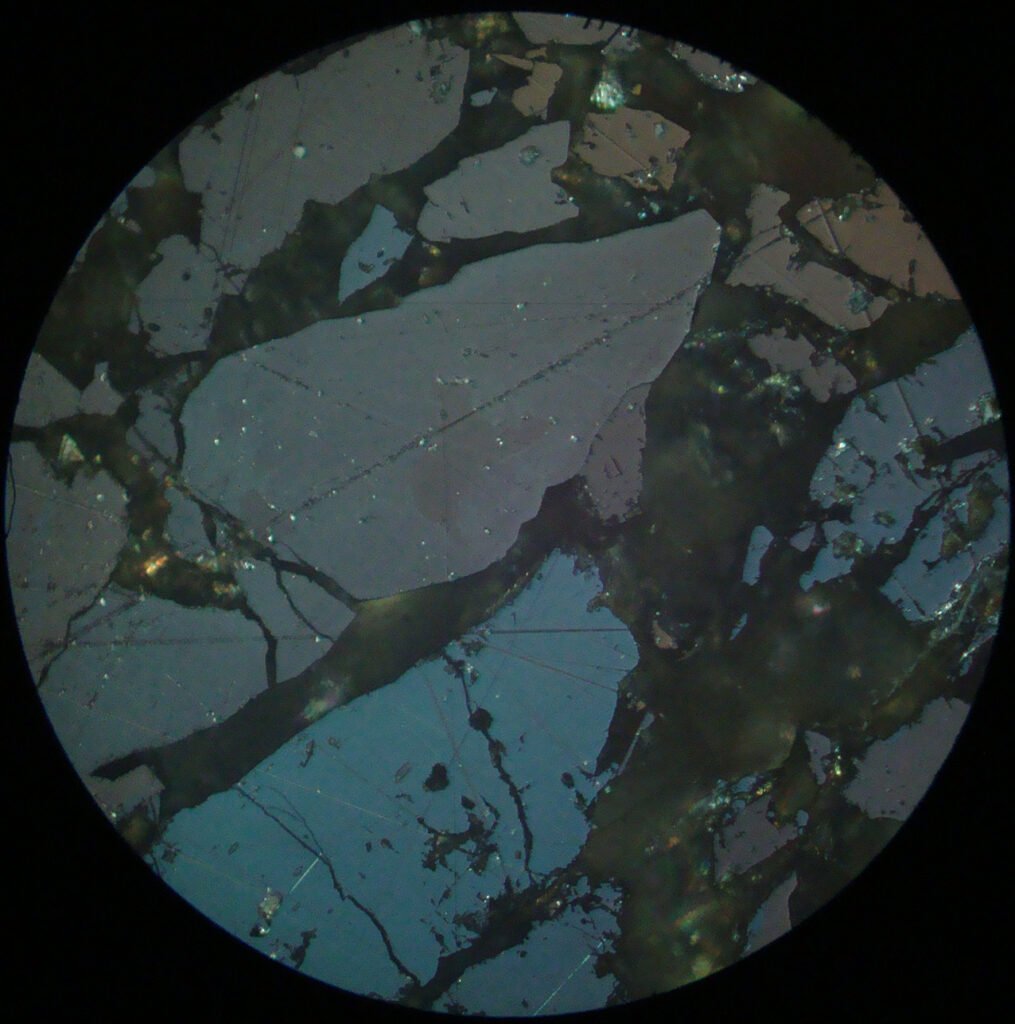
PPL: Pure white color, without pleochroism. Reflectivity of 29%, with distinct bireflectance (compare adjacent grains or twins).

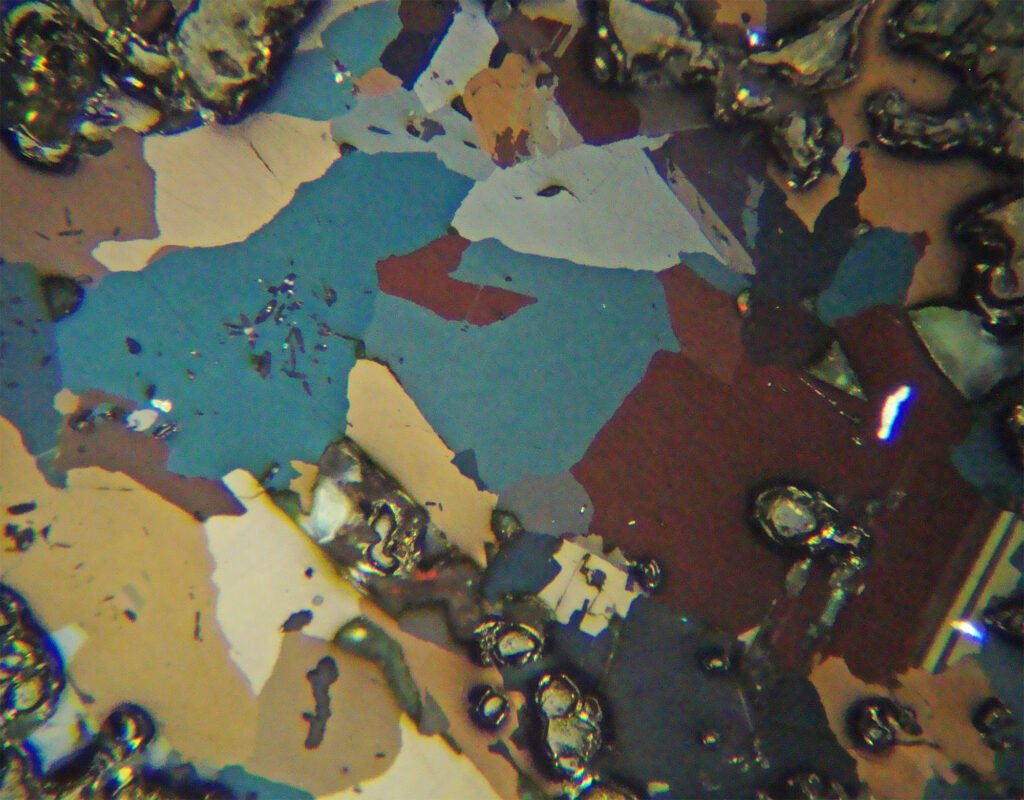
XPL: Distinct anisotropy in brownish tones. Internal reflections rare to absent, deep blood-red. Twinning possible. Common mineral. Association with magnetite very common.

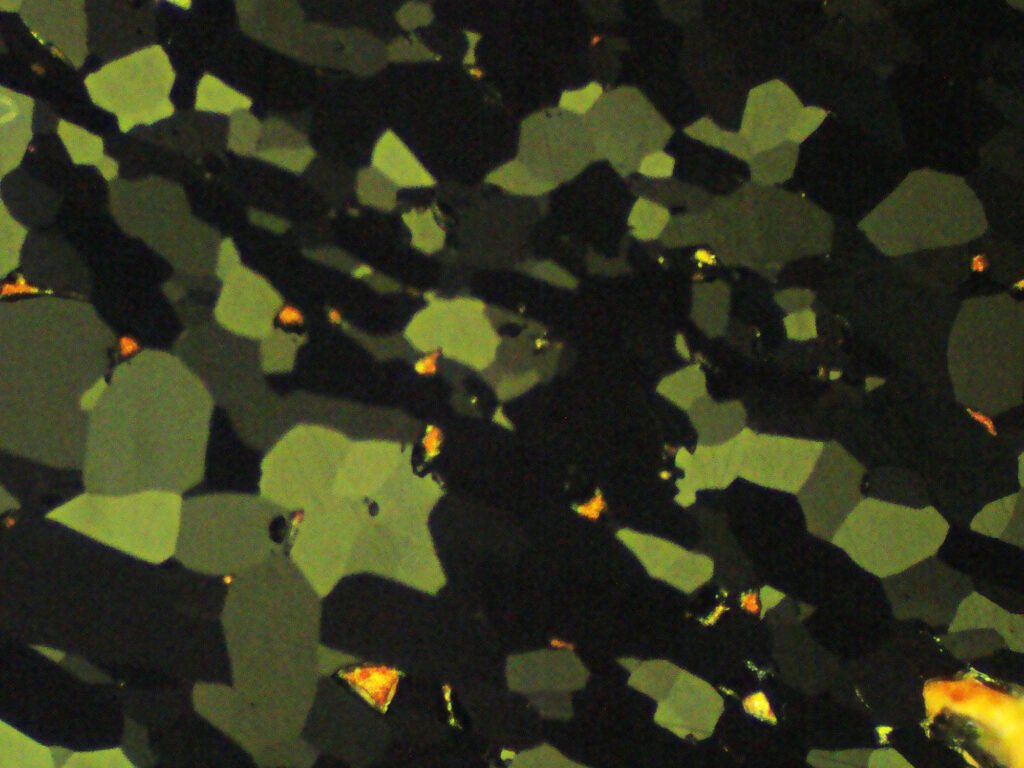
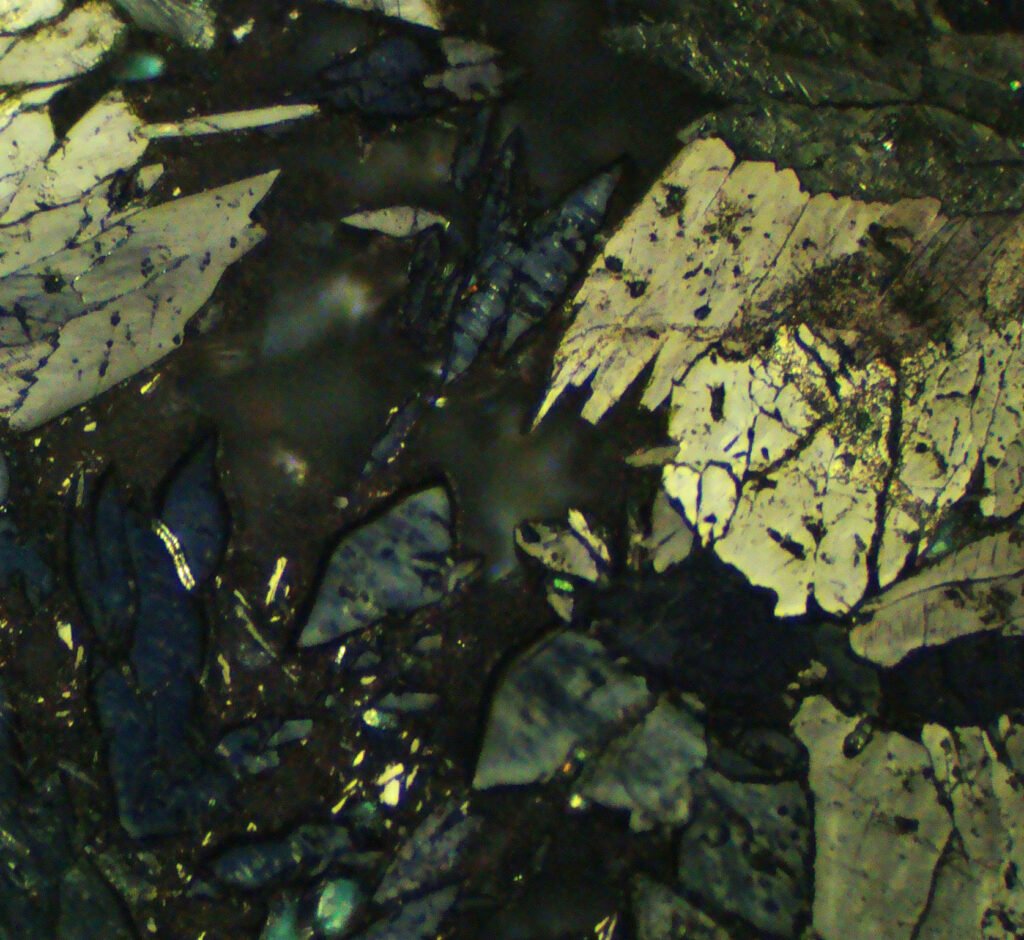
Images: in XPL, hematite (light and dark gray). Silicates (orange).

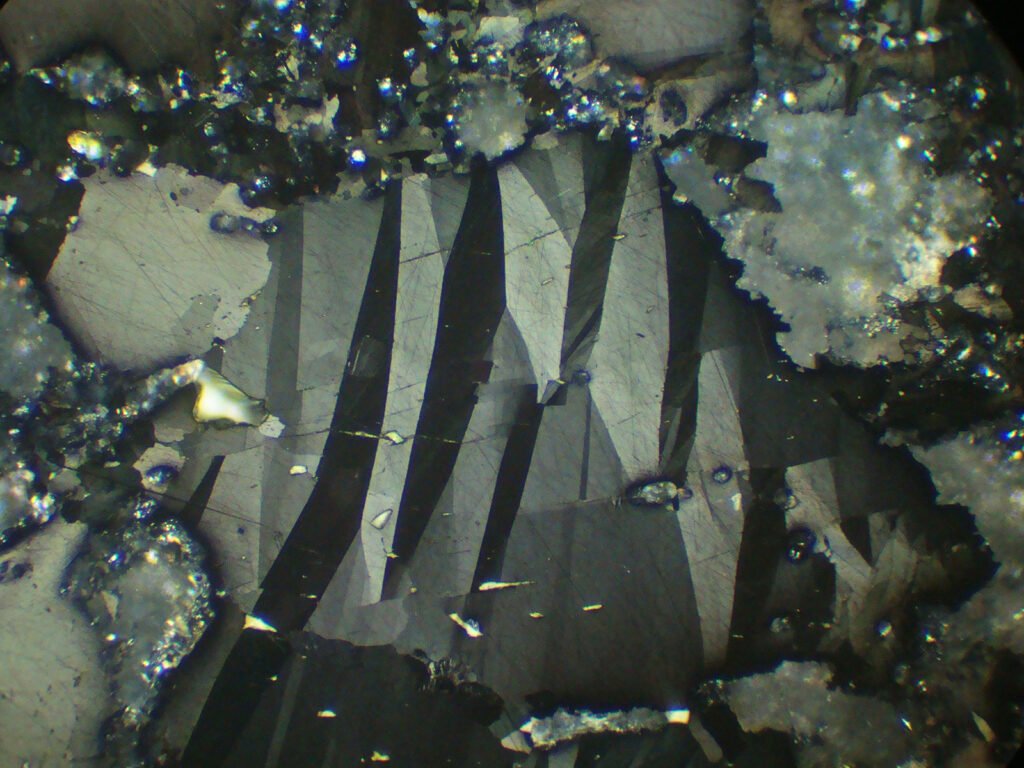
PPL: White color, ranging from grayish to greenish, with very weak pleochroism. Reflectivity of 35%, without bireflectance. Associated with galena.

XPL: Weak anisotropy between blue-green and violet (look at the grain boundaries!) Rare reflections. Very diagnostic twinning.

Images: in XPL, bournonite, galena (black) and gangue (orange).

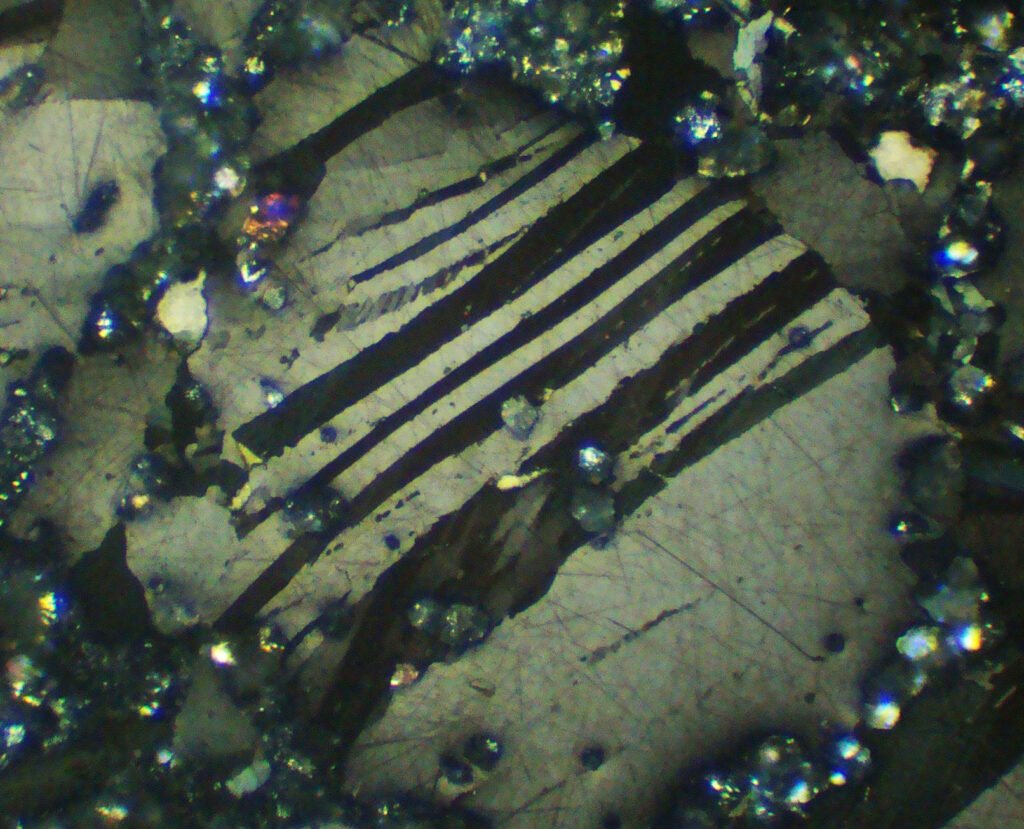
PPL: White color with a reddish-cream tint, without pleochroism. Reflectivity of 66%, without bireflectance.

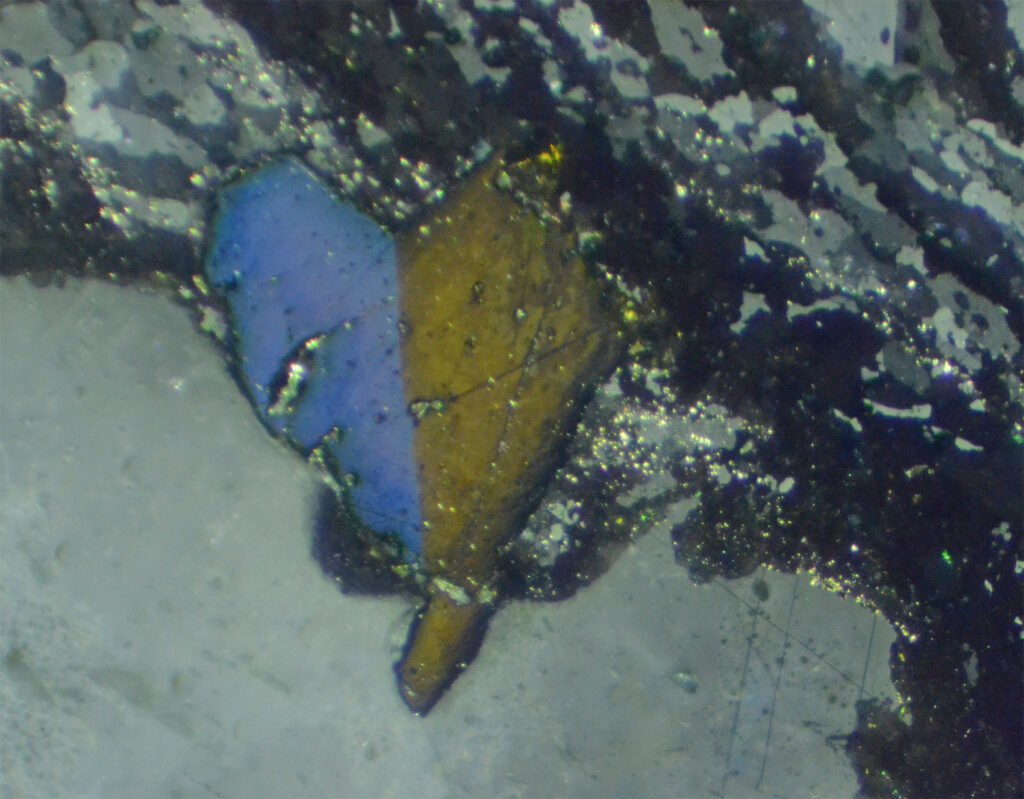
XPL: Distinct anisotropy: yellowish and blue-gray. No internal reflections. Many polishing scratches. Tarnishes rapidly to pinkish-yellow.

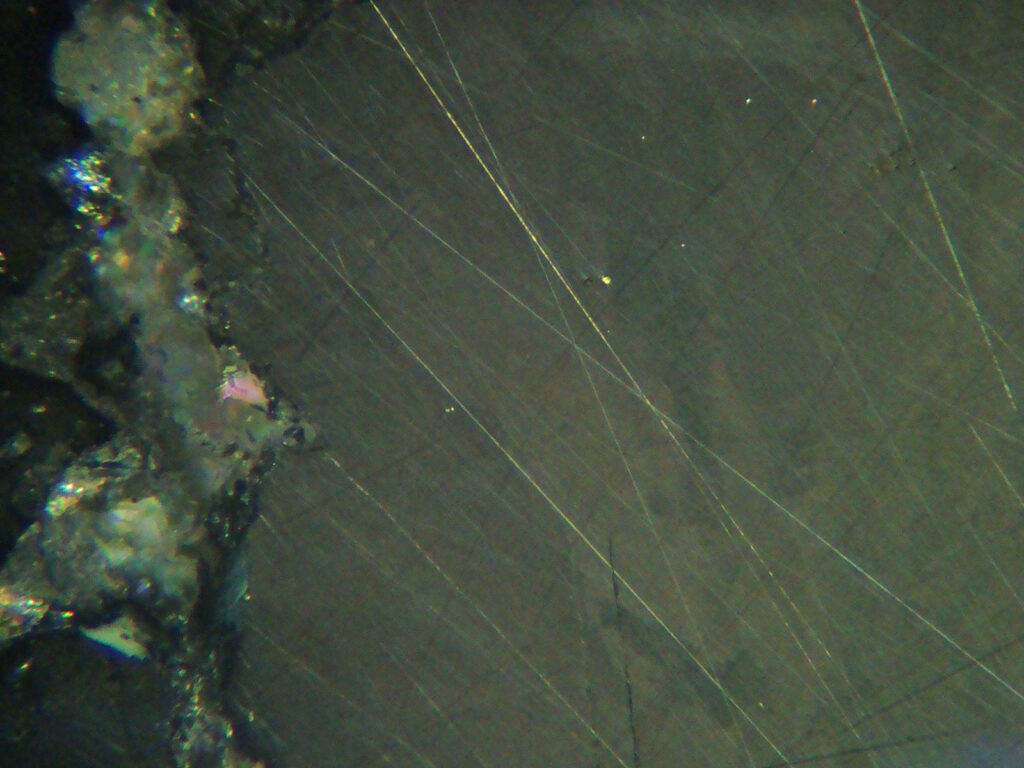
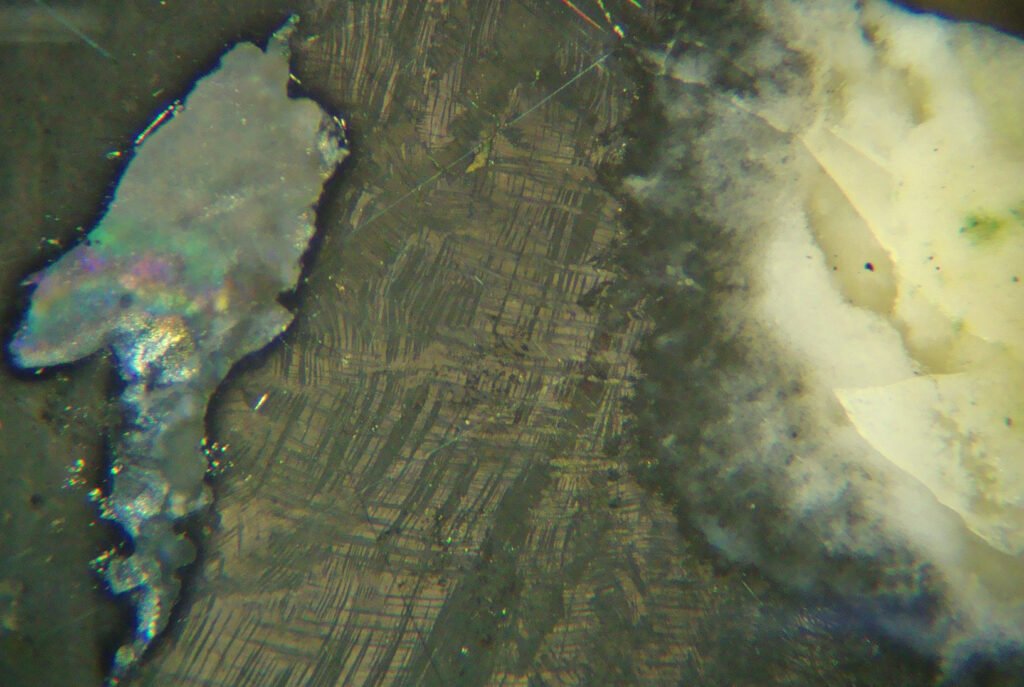
Images: in XPL, native bismuth with scratches and twinning.

PPL: White color with yellow tints, non-pleochroic. Reflectivity of ~50%; resembles arsenopyrite. Distinct bireflectance ranging from yellow to soft gray and soft blue. Parallel cracks are typical.

XPL: Very distinct anisotropy, ranging from white-pink to pinkish-brown. No internal reflections.

Images: in XPL, polianite crystals (well-crystallized pyrolusite).

PPL: Gray color with a pinkish tint; non-pleochroic. Appears white in the presence of nickeline. Reflectivity of 50–52%, with weak bireflectance. It occurs in association with nickeline, replaces it, and is replaced by it.

XPL: Weak anisotropy in dark olive green, brown, and violet (observe with XPL + 2°), without internal reflections.

Images: in PPL, maucherite (white), niccolite (orange and pink).

PPL: white to medium gray color, with distinct pleochroism between white and gray. 38% reflectivity, with minimal bireflectance.

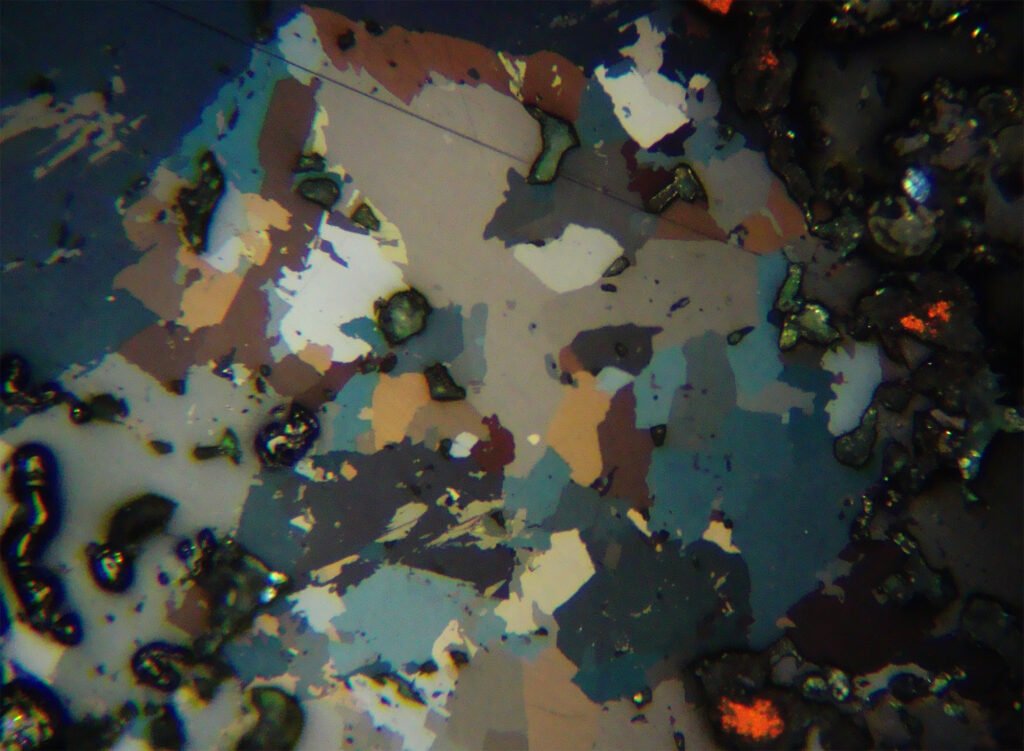
XPL: strong anisotropy in gray-green tones. No internal reflections. Common twins. Very typical and diagnostic acicular habit.

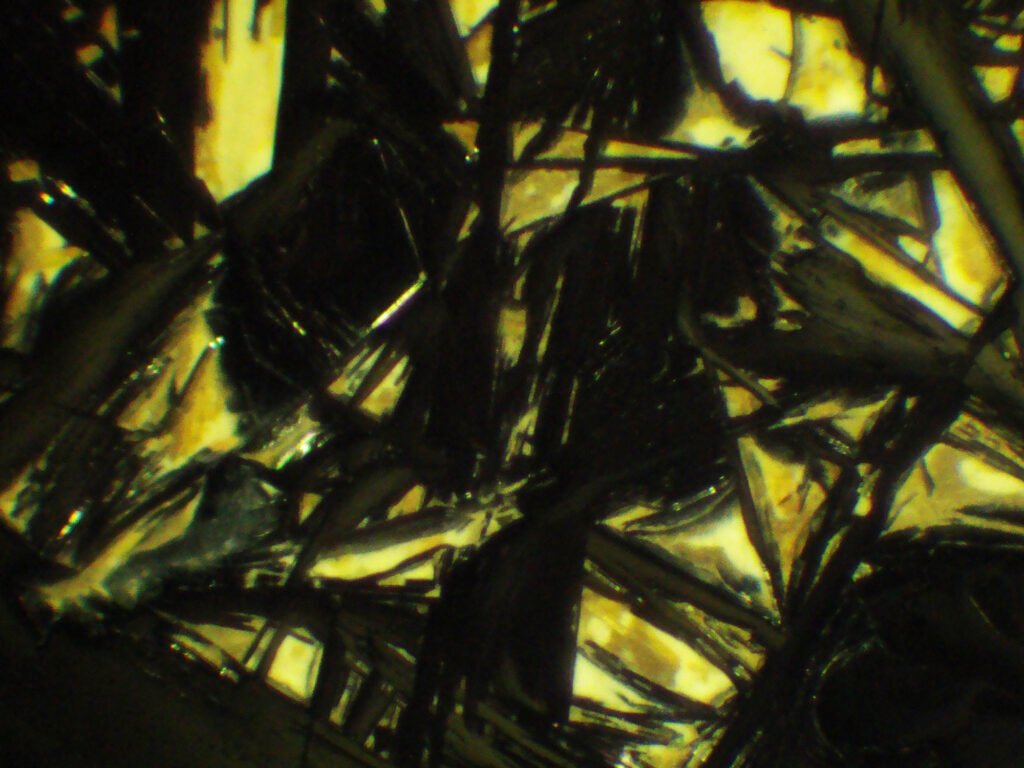
Images: in XPL, jamesonite needles in various shades of gray.

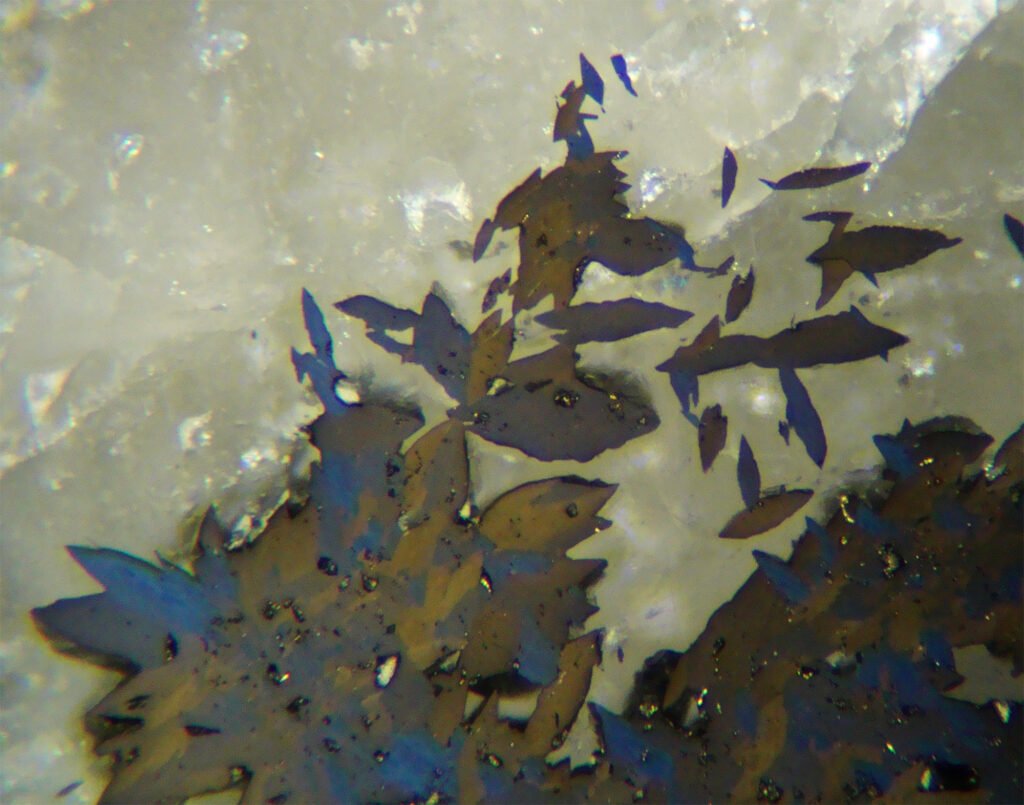
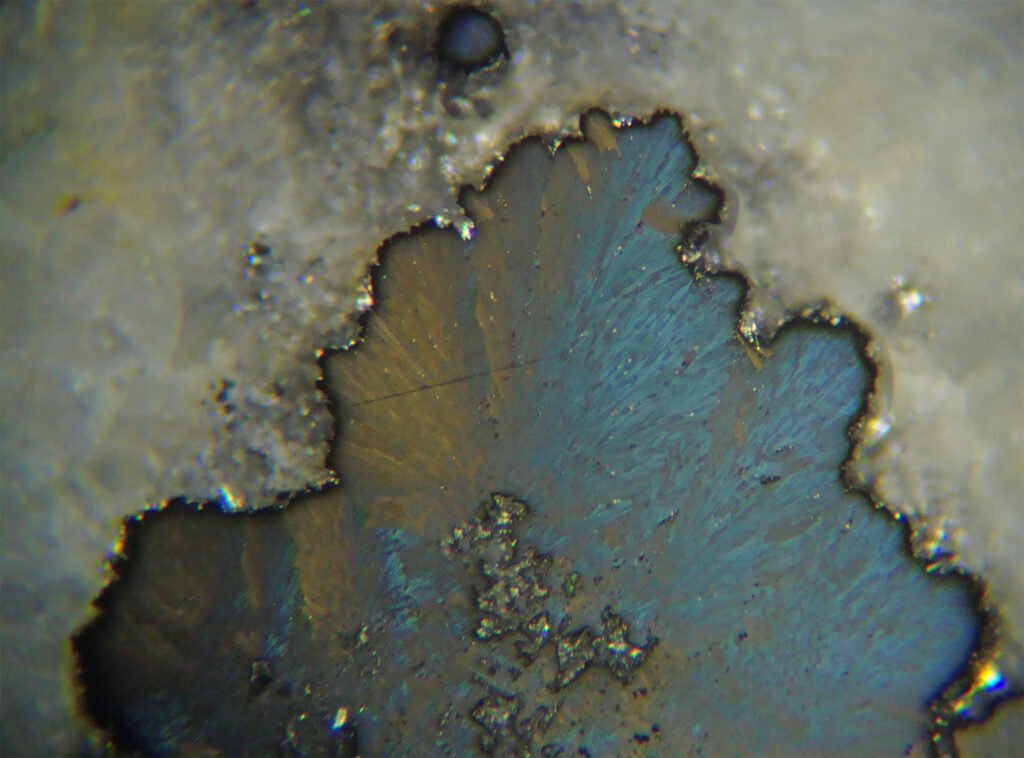
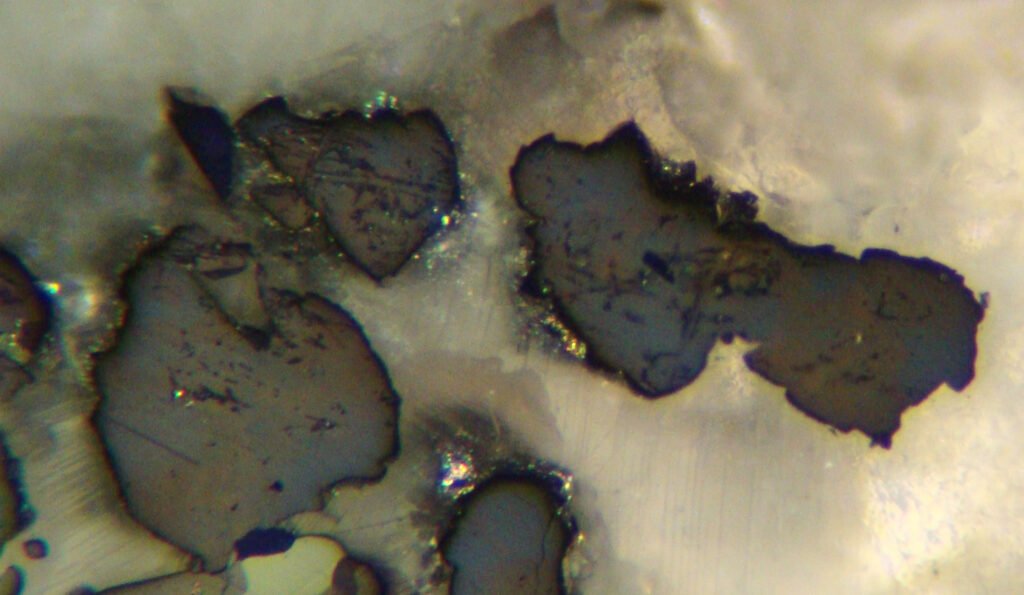
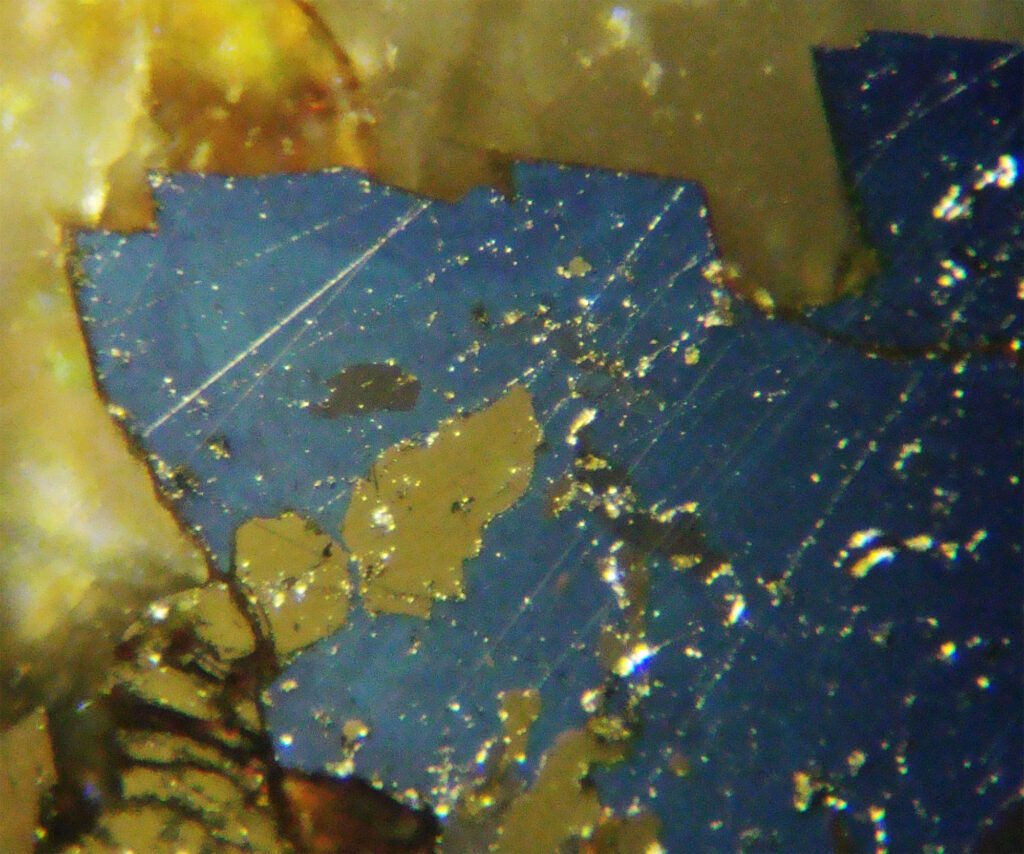
Now there is a group of seven minerals with blue/orange anisotropy colors, sometimes difficult to distinguish from each other.

Take care to avoid mistakes!

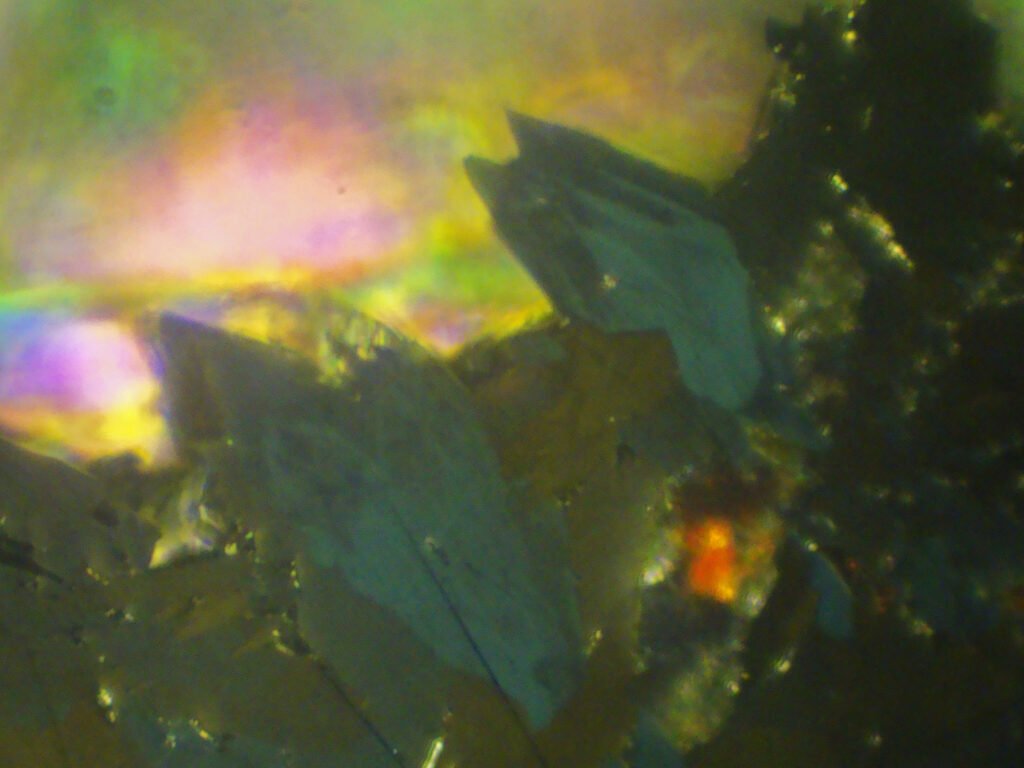
PPL: pinkish gray to light pinkish brown color, with faint violet to bluish gray pleochroism. 26% reflectivity, with light bireflectance.

XPL: Strong and colorful anisotropy, from gray-green to orange-brown or dark blue to brown. Rare reflections in deep red colors.

Images: in XPL+2º, enargite with typical anisotropy.

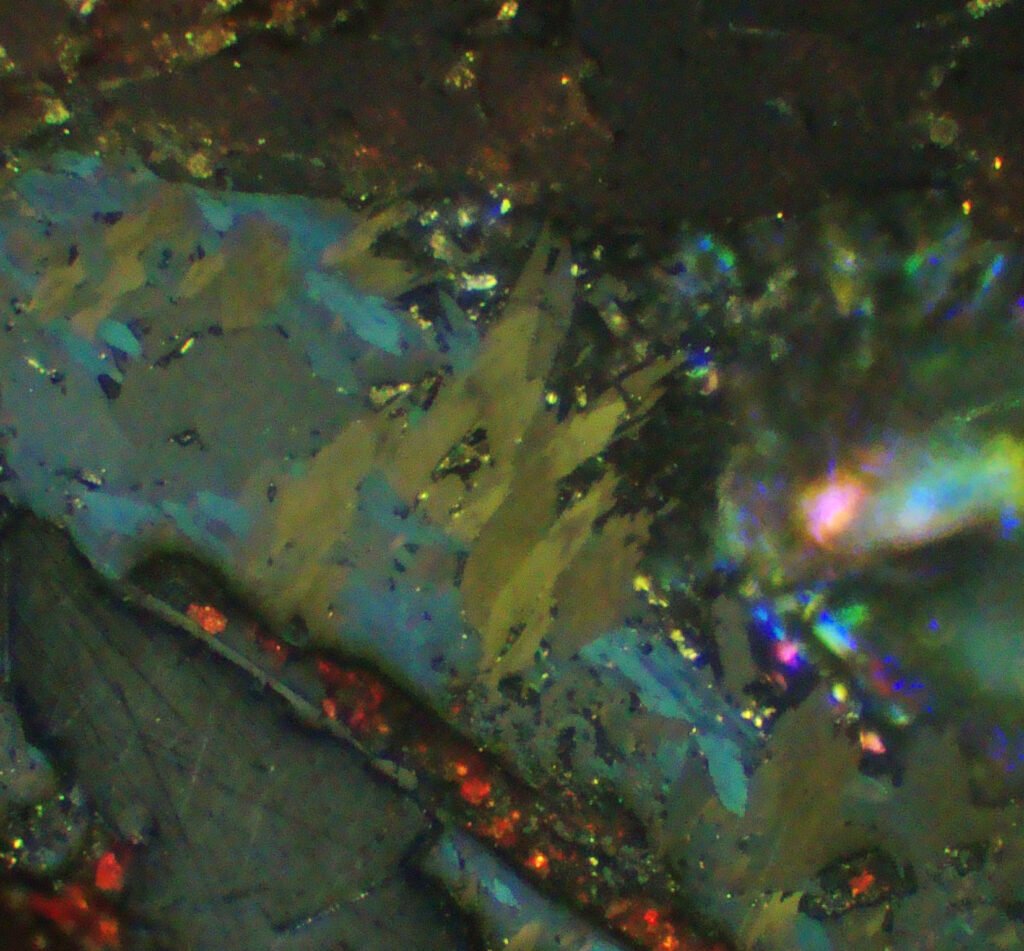
PPL: white, slightly cream, with weak pleochroism from bluish white to reddish yellow. High reflectivity of 51%. No bireflectance. Idiomorphy (rhombs, polygonal shapes, etc.) common!

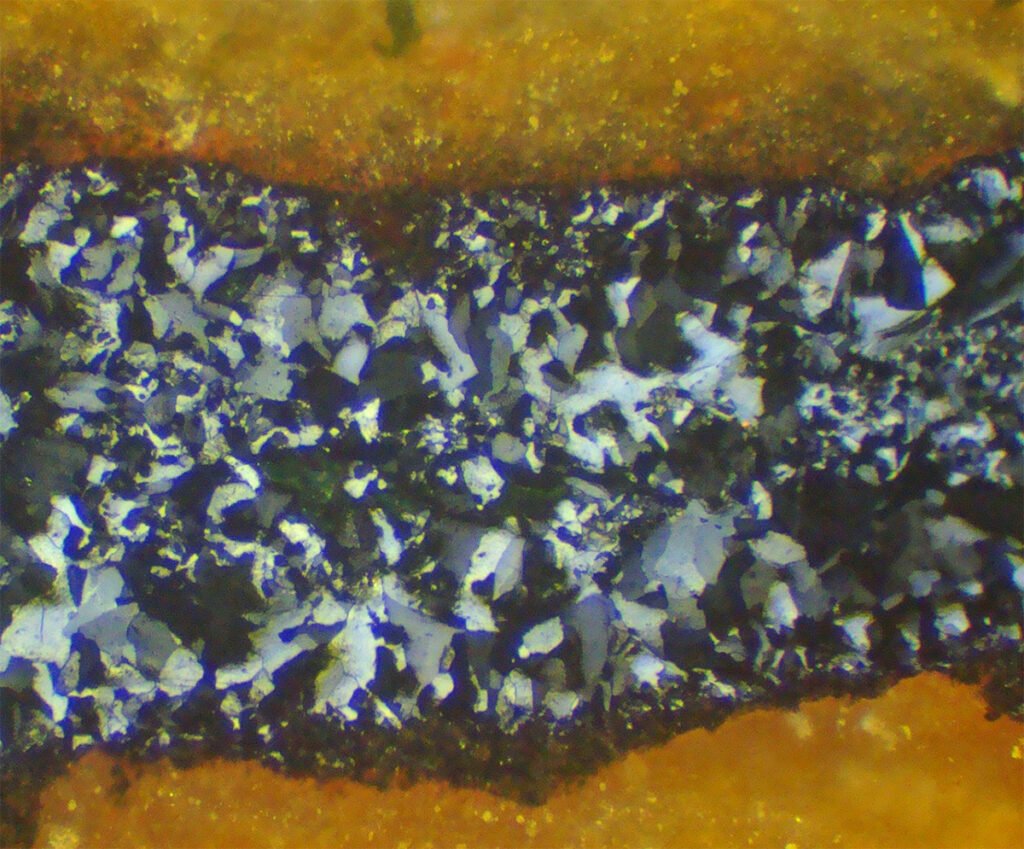
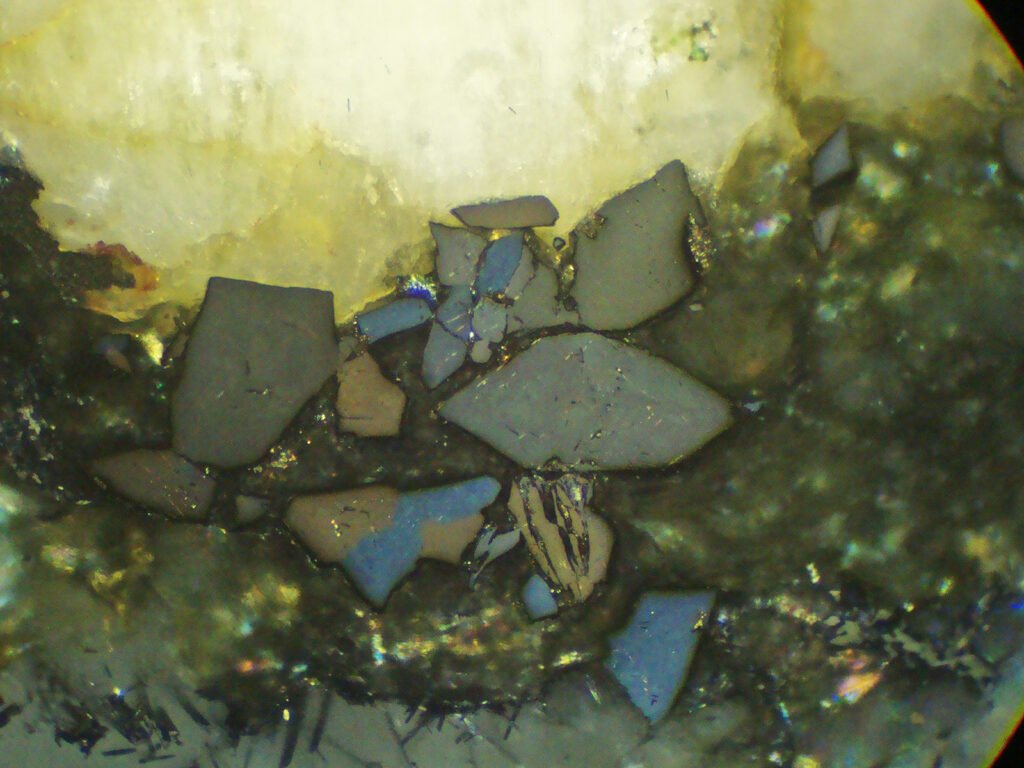
XPL: strong anisotropy from dark blue to brown. No internal reflections. Twins are common.

Images: in XPL, twinned arsenopyrite (blue/brown). Gangue (milky).

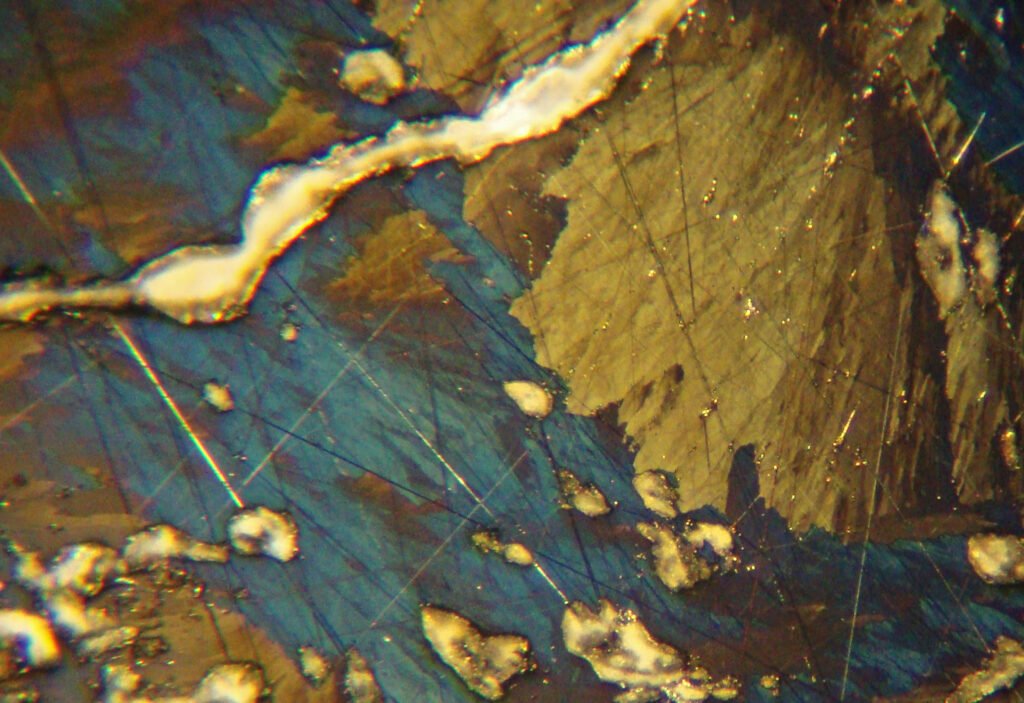
PPL: cream-white to blue-white color with very weak pleochroism. Reflectivity 51-54%, with weak bireflectance. Common twins.

XPL: very strong anisotropy between blue, brown and orange. No internal reflections. Easy to confuse with arsenopyrite!

Images: in XPL, löllingite (blue/grey/brown) and gangue (milky).

PPL: bluish-white and cream color. With distinct pleochroism between bluish white and cream to pinkish brown. Reflectivity of 54%, with distinct bireflectance. Cleavage can be sharp.

XPL: very strong anisotropy between brown, blue and turquoise colors. No internal reflections.

Images: in XPL, marcasite (blue - turquoise - brown).

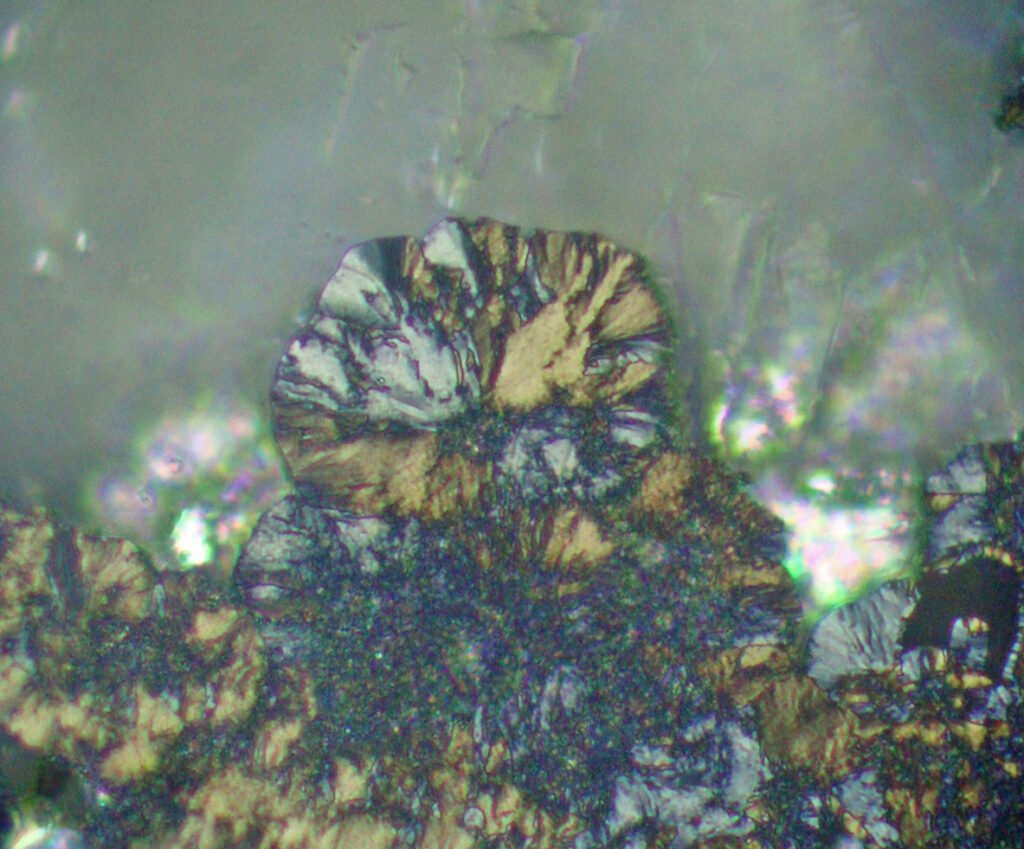
PPL: yellowish-white to bluish-white, with very weak pleochroism. Reflectivity of 52-54%, with minimal bireflectance. Crystals have a typical diamond shape, can form six-pointed star-shaped twins.

XPL: very strong anisotropy between dark brown and blue. Intensity of anisotropy can be variable. Zonation can occur.

Images: in XPL, safflorite (blue and brown), gangue (milky).
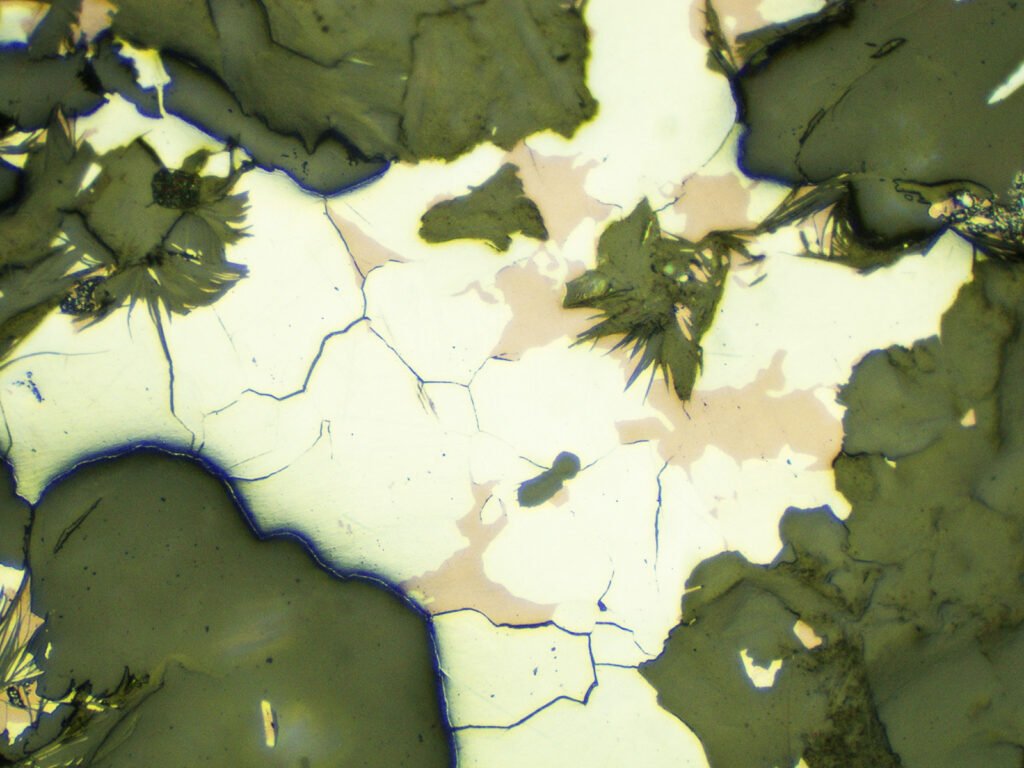
PPL: white color, with weak yellowish, pinkish or bluish pleochroism. 55% reflectivity, no bireflectance.

XPL: strong anisotropy in dark brown and blue, weaker than that of safflorite. Common and diagnostic twins.

Images: in XPL, rammelsbergite (brown/blue). Gangue (milky).

PPL: white to very light cream color. 50% reflectivity, very weak pleochroism, no bireflectance. Common polygonal outlines.

XPL: distinct anisotropy between blue and yellow, similar to that of arsenopyrite, but much weaker. Löllingite is similar.

Images: in XPL, glaucodot. Gangue (dark).

PPL: white color with strong white (gray) to olive gray pleochroism. Reflectivity of 30-45%, with distinct bireflectance.

XPL: strong anisotropy between gray, brown and blue. No internal reflections. Parallel extinction. Prismatic habit. Twins are frequent.

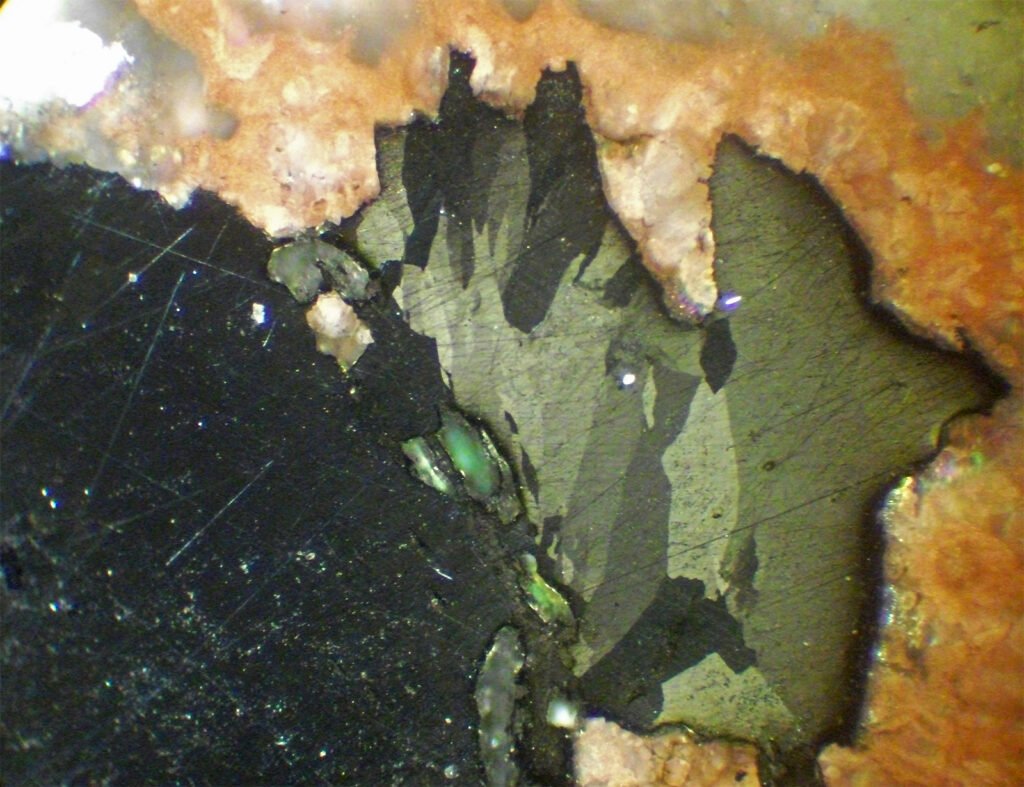
Images: in XPL, stibnite with typical colors and twins.

You can try to find it in the group with very light gray colors in PPL, much lighter than the grays of the gangue minerals, with aisotropy - RL09.

Or it can be one of the minerals with creamy white color in PPL, may be yellowish - RL13.

Minerals, in PPL white with weak to distinct pleochroism and/or bireflectance and, in XPL, with anisotropy in varying degrees.