5. Reflected Light Microscopy
Sample preparation: Its polishing hardness is relatively high, though slightly lower than that of arsenopyrite and significantly lower than that of cobaltite. Consequently, it takes an excellent polish. Its relief relative to chalcopyrite, sphalerite, and other medium-hardness ore minerals is lower than its relief compared to arsenopyrite.
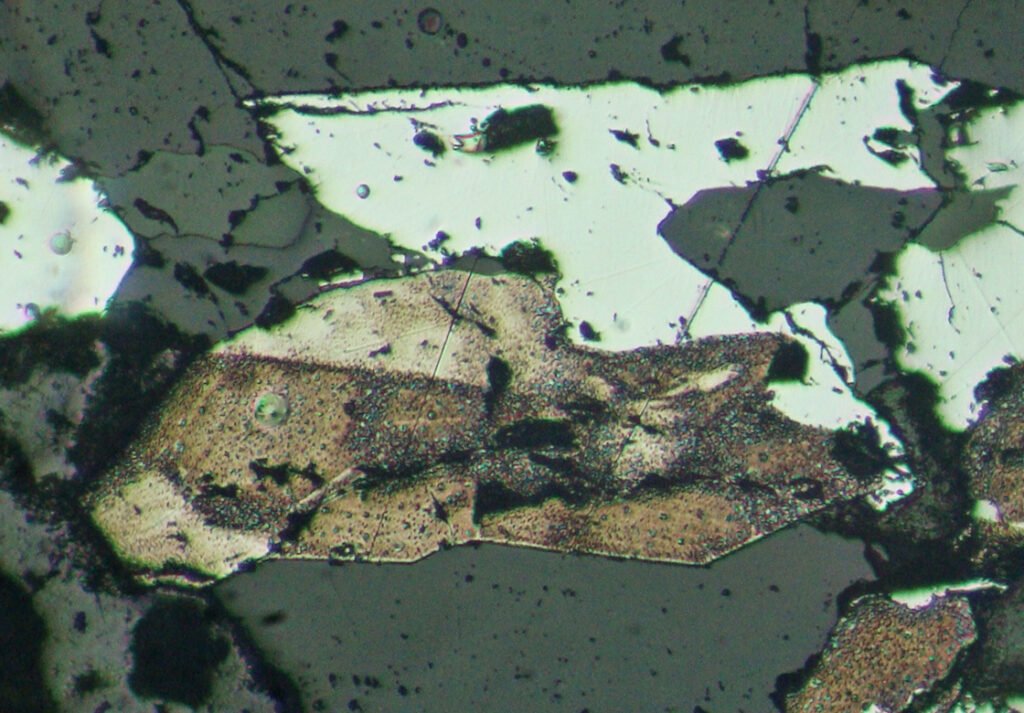
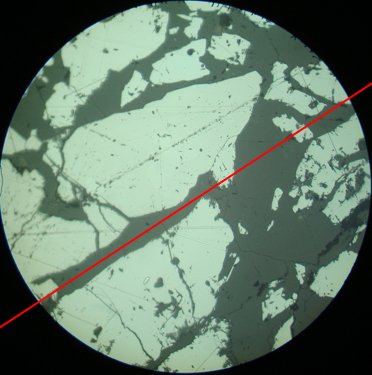
PLANE POLARIZED LIGHT – PPL
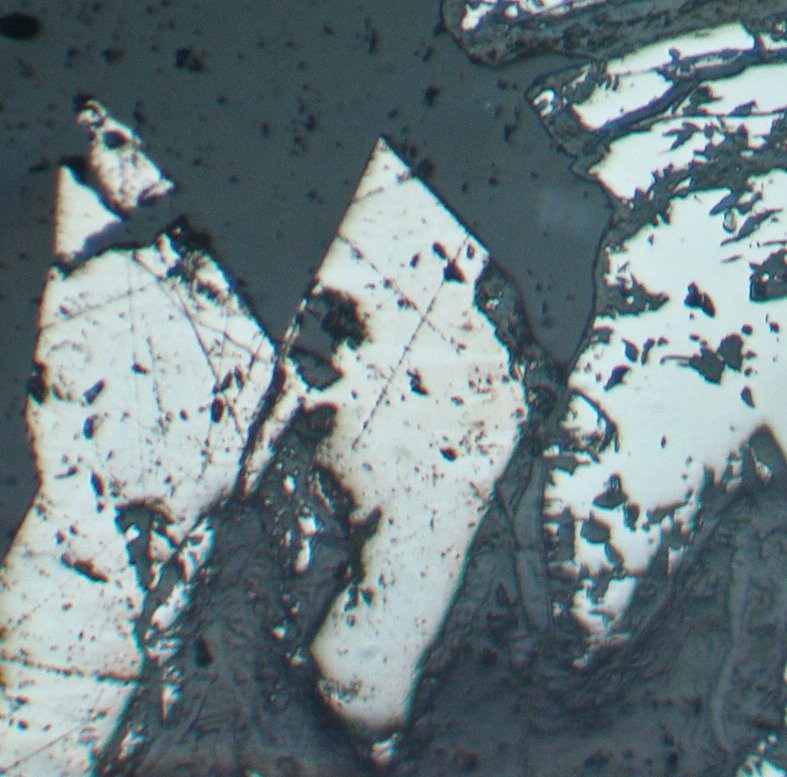
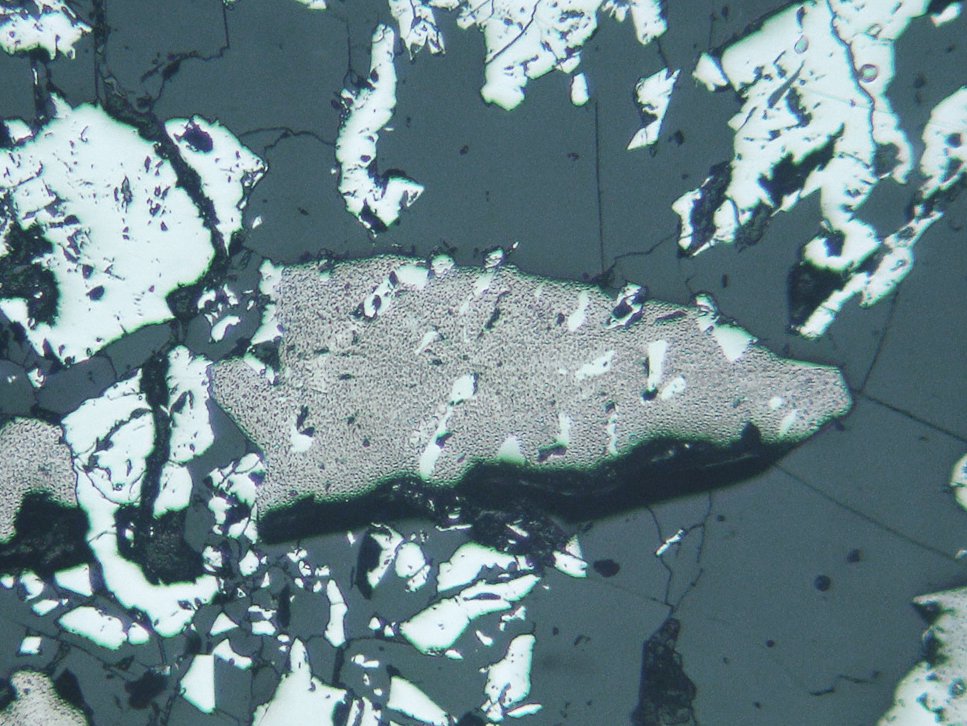
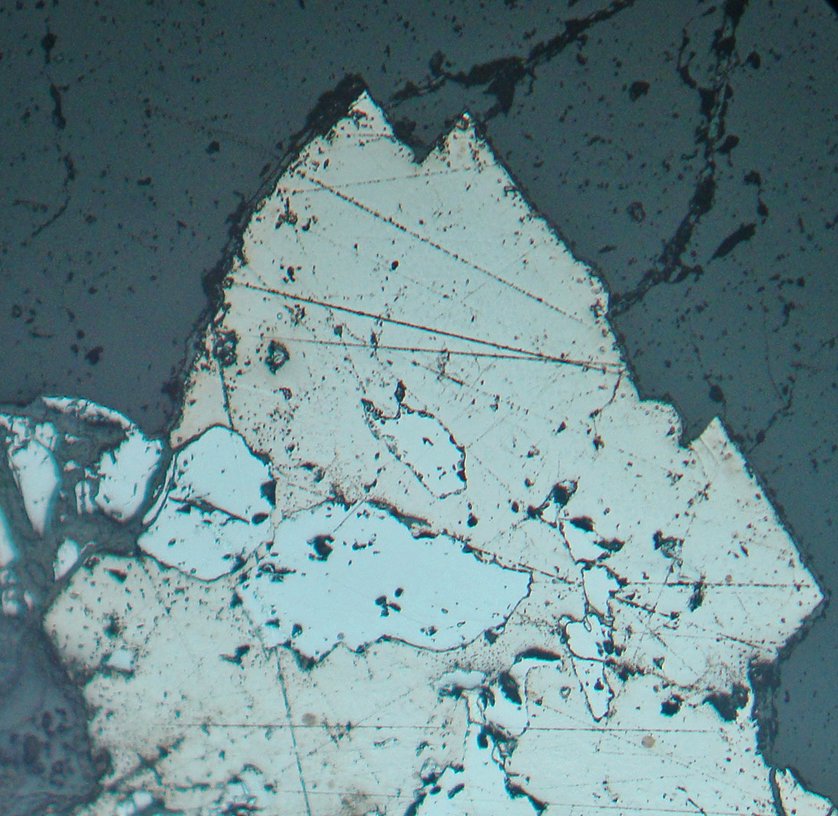
Reflection color: White to very pale cream.
Compared to the color of arsenopyrite, the color of glaucodot is more bluish-white rather than creamy-white.
Pleochroism: Weak, difficult to perceive, in yellowish tones. Weaker than arsenopyrite pleochroism.
Reflectivity: 50%
Bireflectance: No.
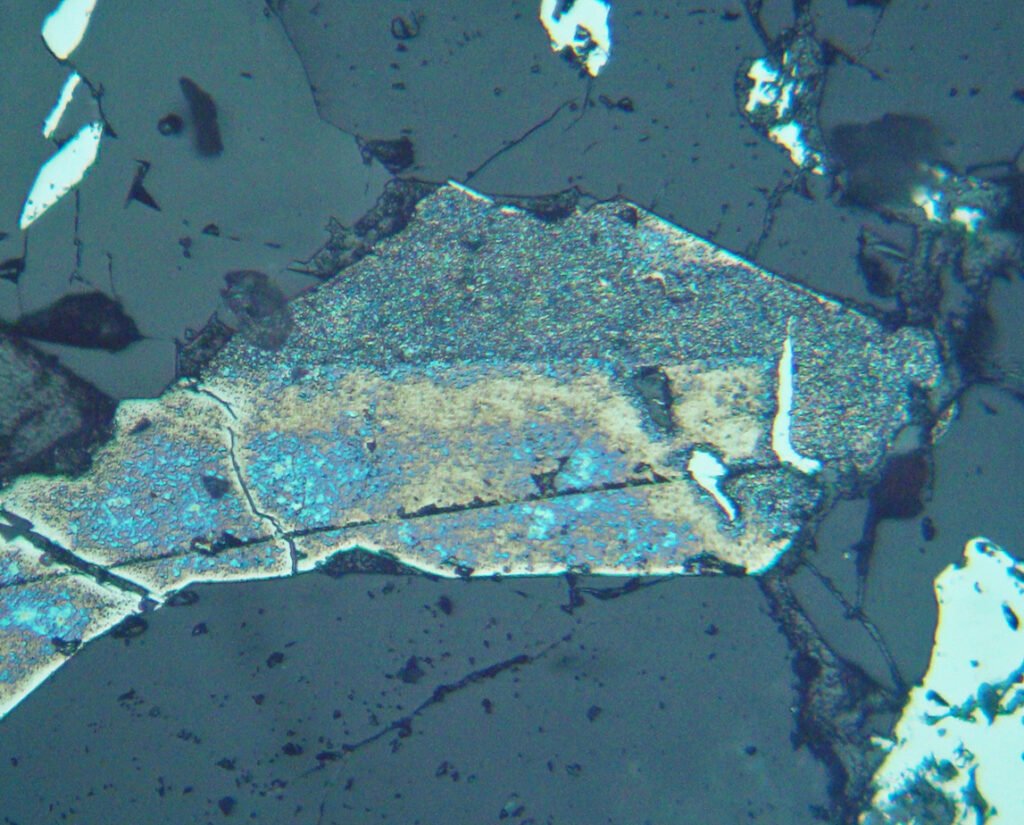
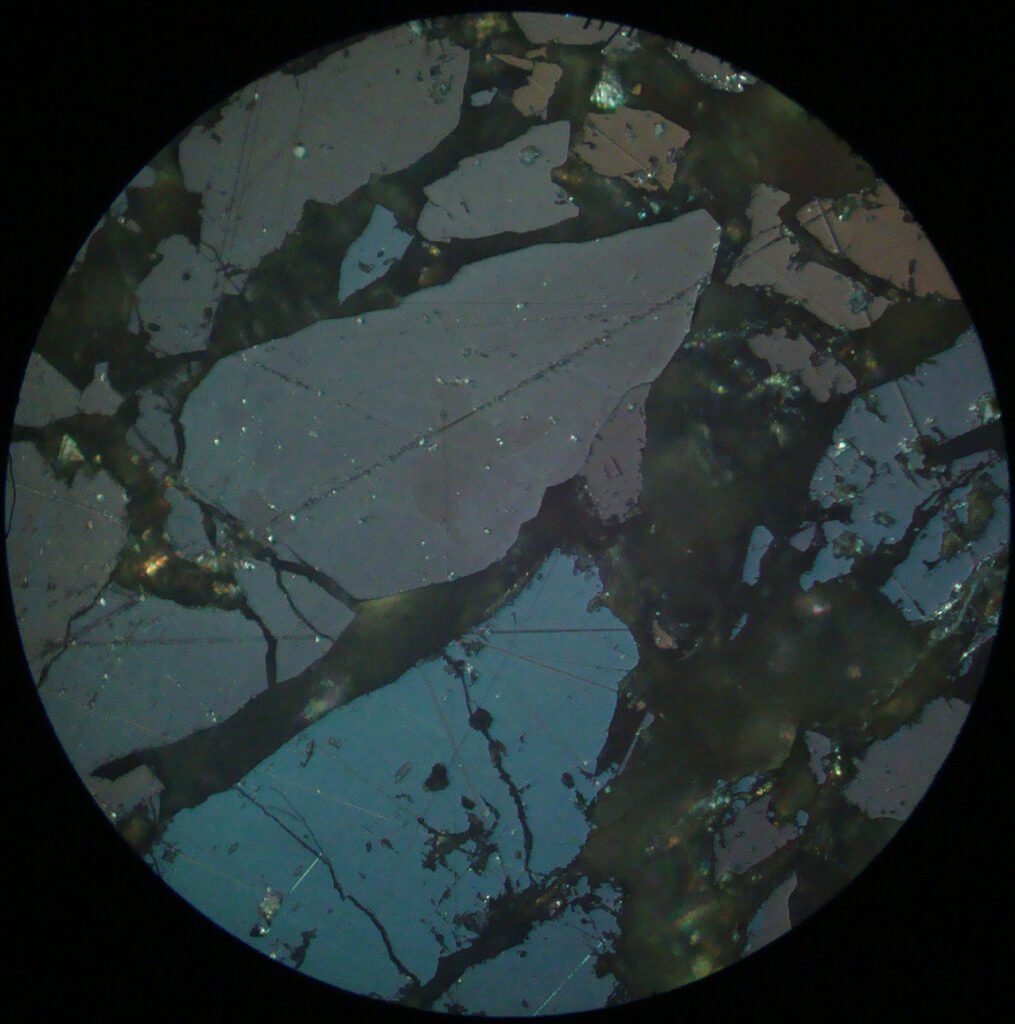
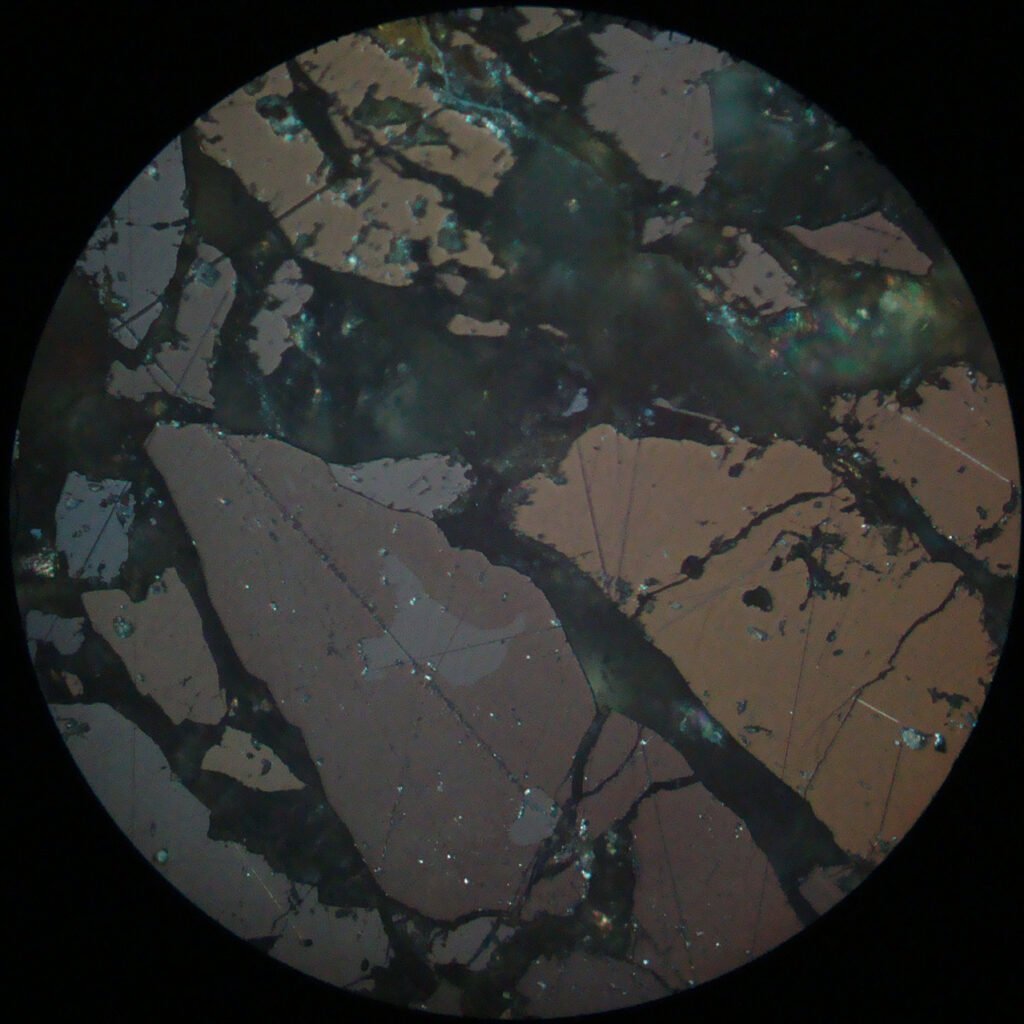
CROSSED POLARIZED LIGHT – XPL
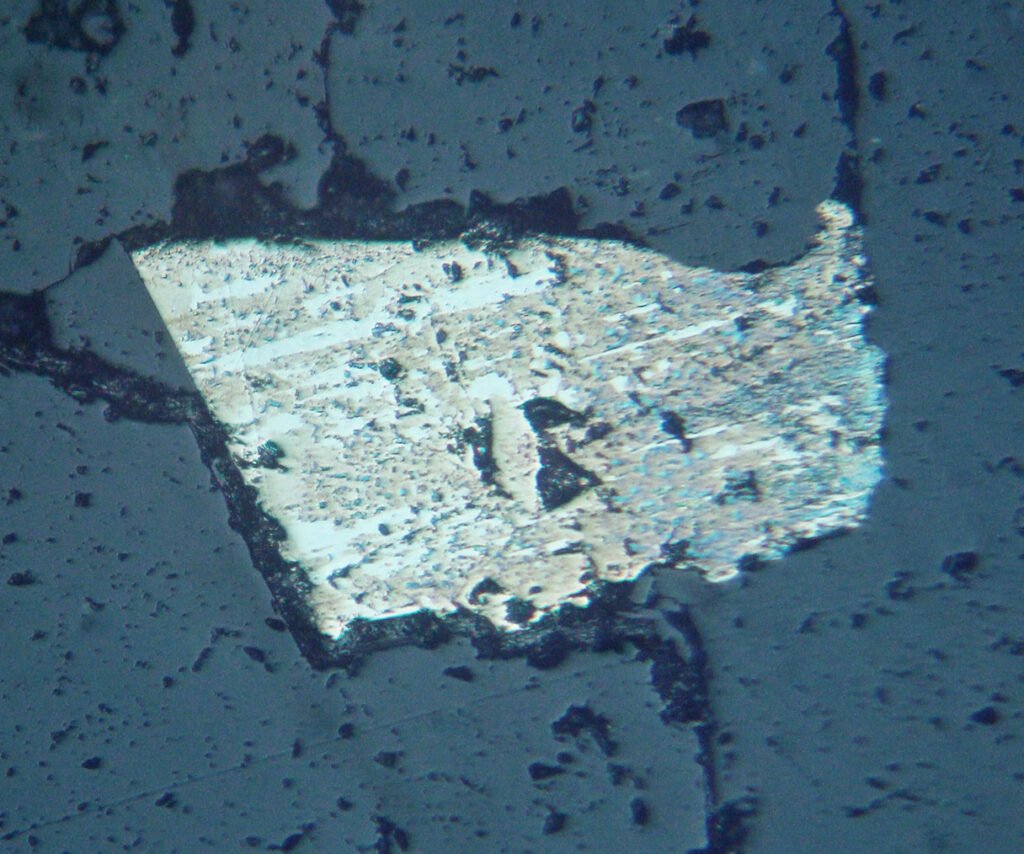
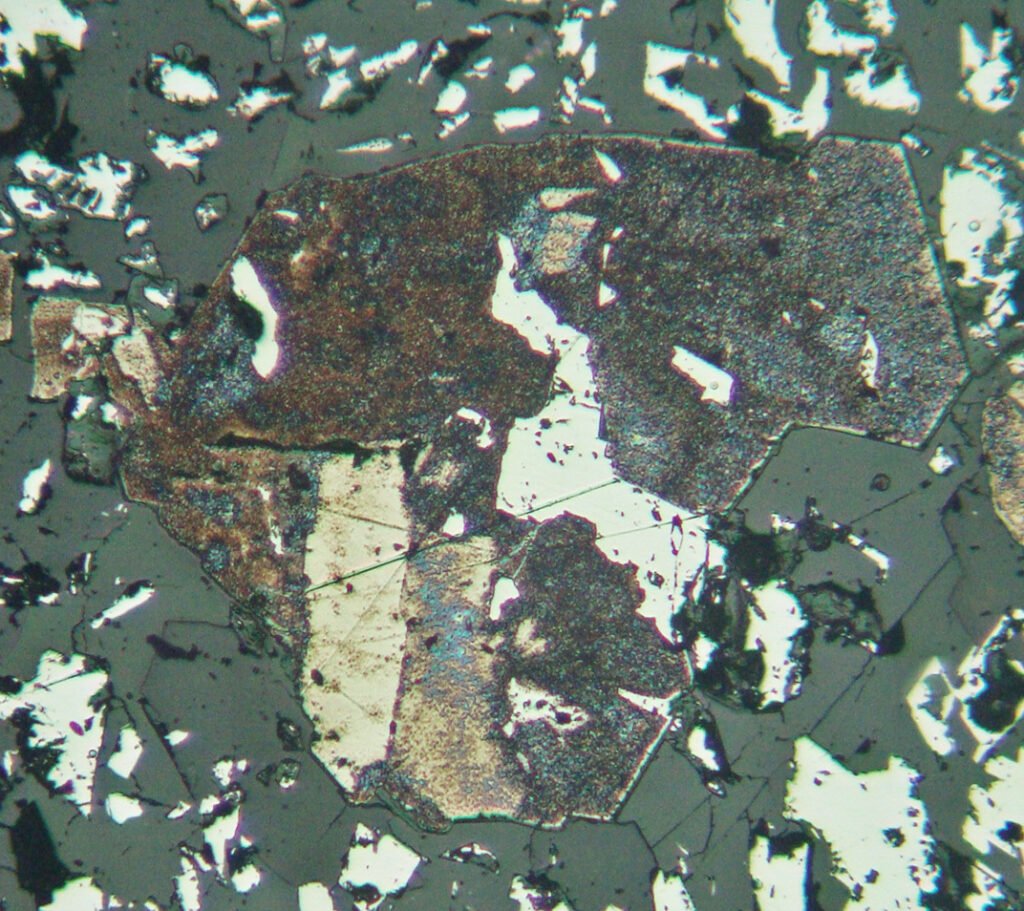
Isotropy / Anisotropy: Distinct anisotropy between blue and yellow (or brownish-gray), very similar to—but less sharp than—that of arsenopyrite.
Internal reflections: No.
May be confused with: several other minerals that are white, with absent or weak pleochroism and anisotropy ranging from blue to another color, usually yellowish or brownish:
Arsenopyrite exhibits much stronger anisotropy than glaucodot, in similar colors.
Löllingite is very similar to glaucodot, and detailed analysis is required.
Marcasite shows stronger pleochroism and anisotropy in brown hues in addition to blue.
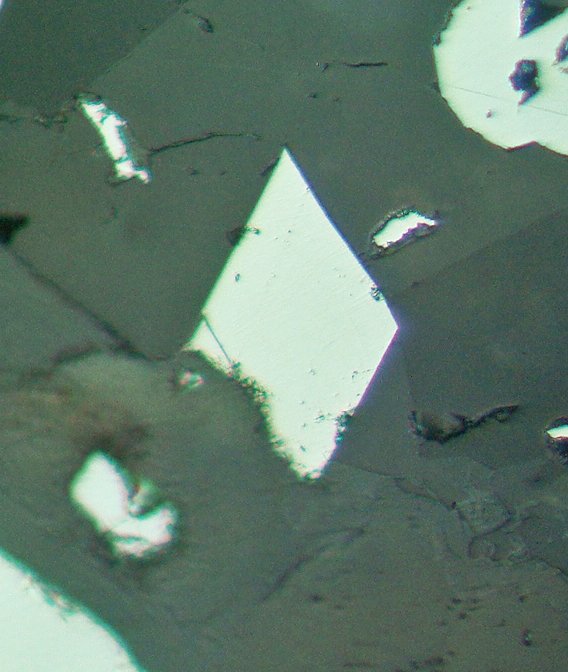
Safflorite exhibits anisotropy ranging from dark brown to blue; the crystals typically form rhombs.
Rammelsbergite shows stronger pleochroism and anisotropy ranging from dark brown to blue.
Stibnite displays much stronger pleochroism than glaucodot and less vivid colors.
General Characteristics:
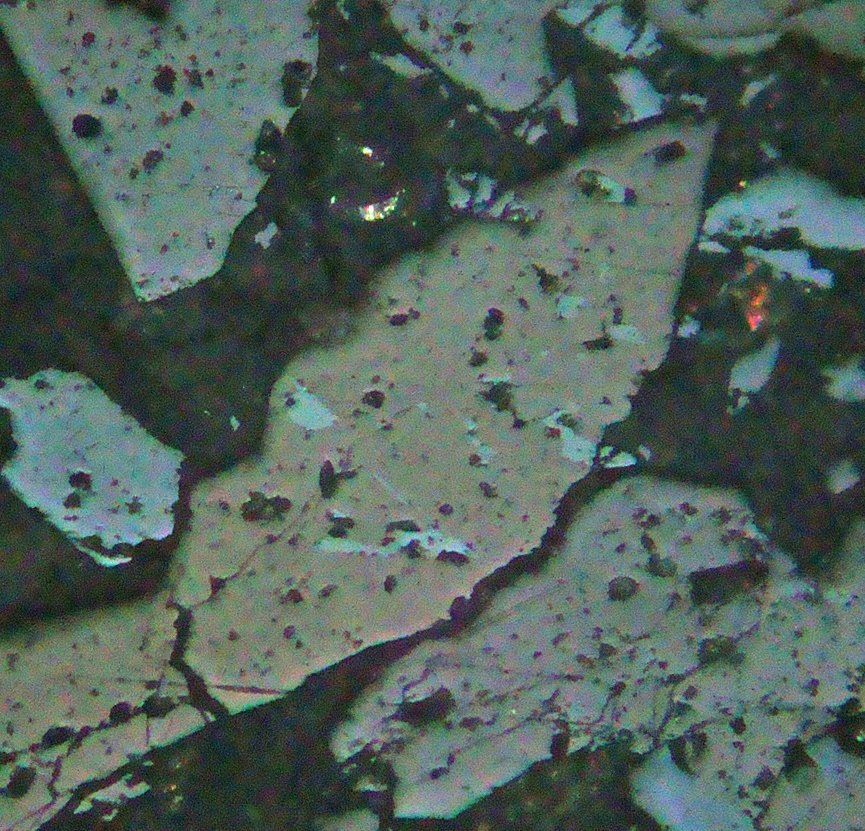
Grain shape: generally well-developed, large, idiomorphic crystals—polygonal with straight edges and sharp vertices—strongly resembling arsenopyrite.
Tarnishing may occur on glaucodot, unlike the associated arsenopyrite, which does not tarnish as readily. In this context, it is interesting to examine polished sections prior to repolishing!
Cleavage parallel to (001) and (110) may be well developed.
Inclusions IN glaucodot are frequent; they may consist of galena.
Skeletal inclusions OF glaucodot occur in cobaltite.
Glaucodot rims may form around pyrite and cobaltite.
Veinlets of cosalite and cobaltite may occur within glaucodot.
Exsolution lamellae of glaucodot may occur in Co-bearing arsenopyrite.