5. Reflected Light Microscopy
Sample preparation: Polishing löllingite takes longer, but yields excellent results. Its polishing hardness is significantly higher than that of chalcopyrite, lower than that of magnetite, and much lower than that of arsenopyrite. It is slightly harder than pyrrhotite, safflorite, and rammelsbergite. Polishing hardness varies greatly across different crystal directions and even between individual zones within the grains. When drying the sample with a hair dryer after polishing, care must be taken to avoid overheating it, as the heat causes löllingite to release toxic arsenic vapors with a strong garlic odor.
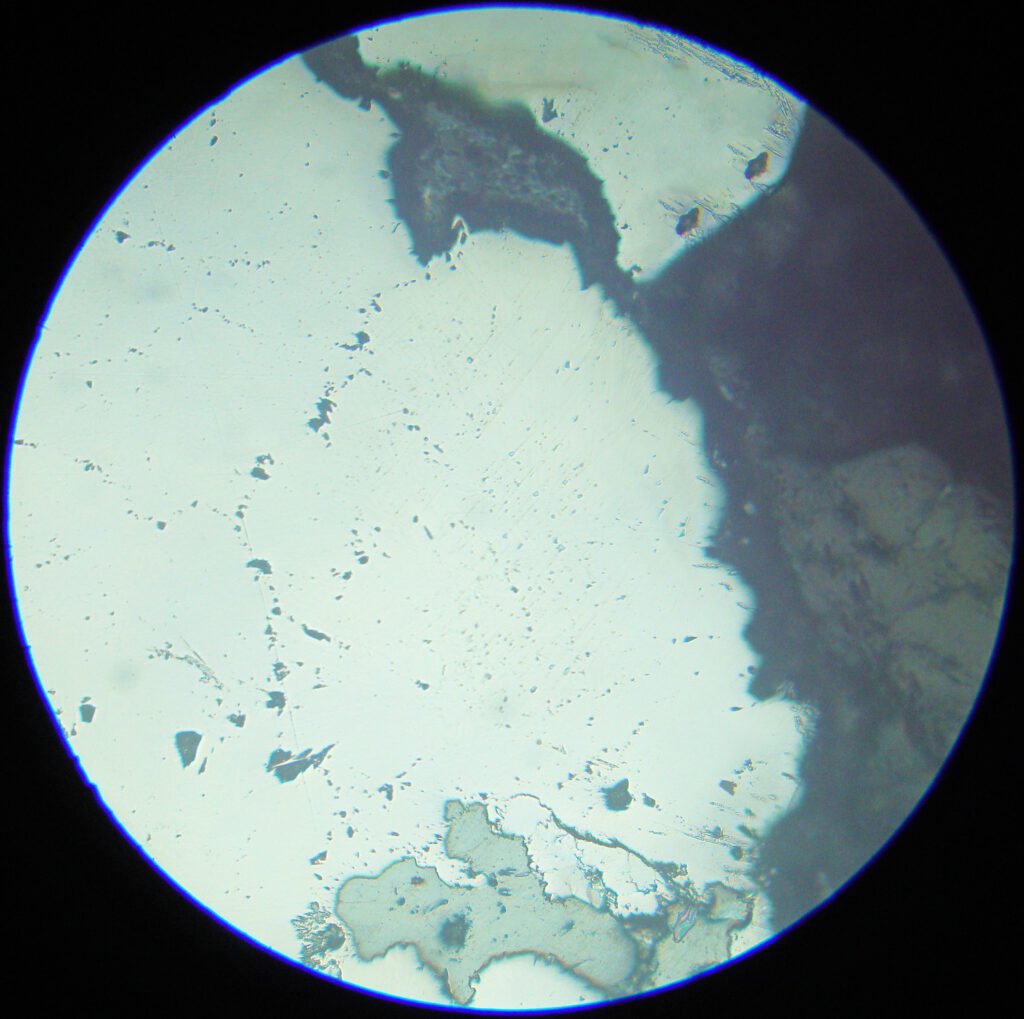
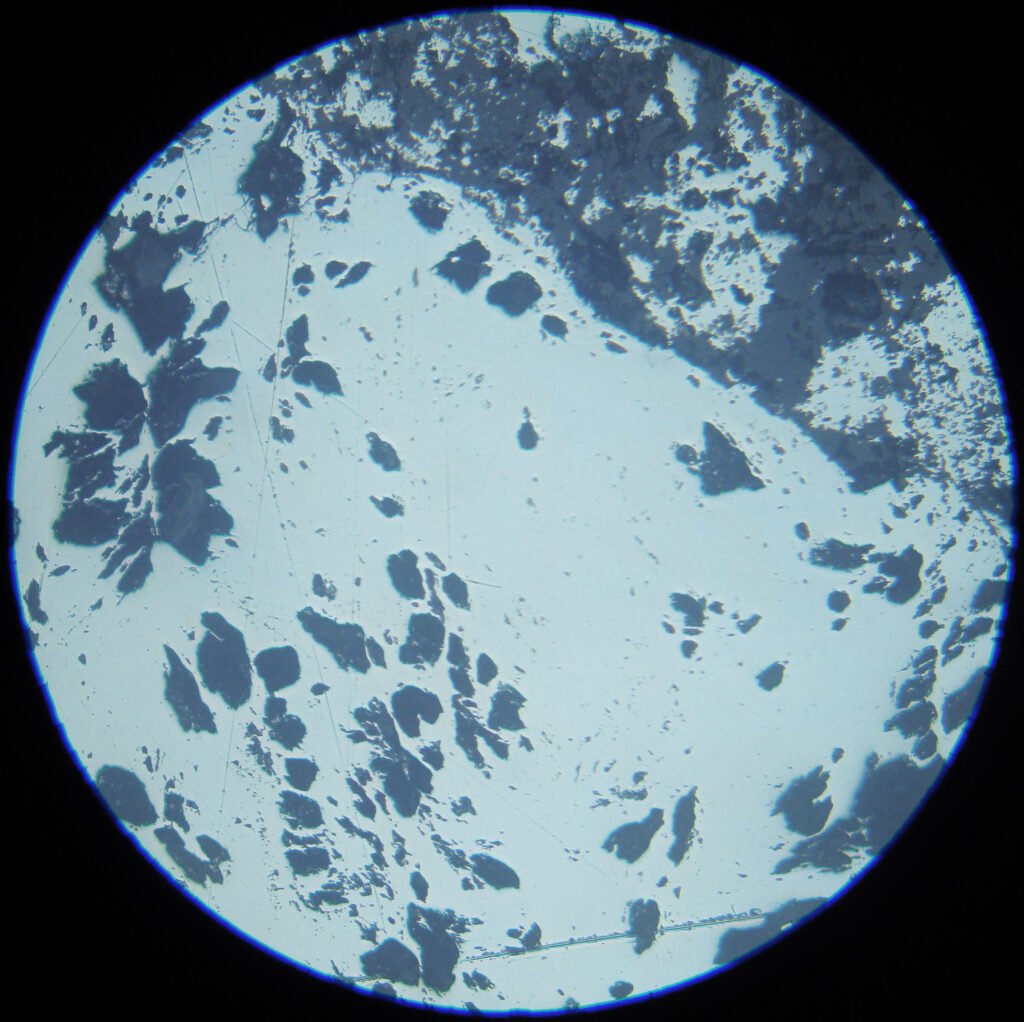
PLANE POLARIZED LIGHT – PPL
Reflection color: White, often with a faint yellowish tinge.
Pleochroism: Faint, ranging from bluish-white to yellowish-white; there are two shades of yellowish-white depending on the direction of the section.
Reflectivity: ~54%
Bireflectance: Weak.
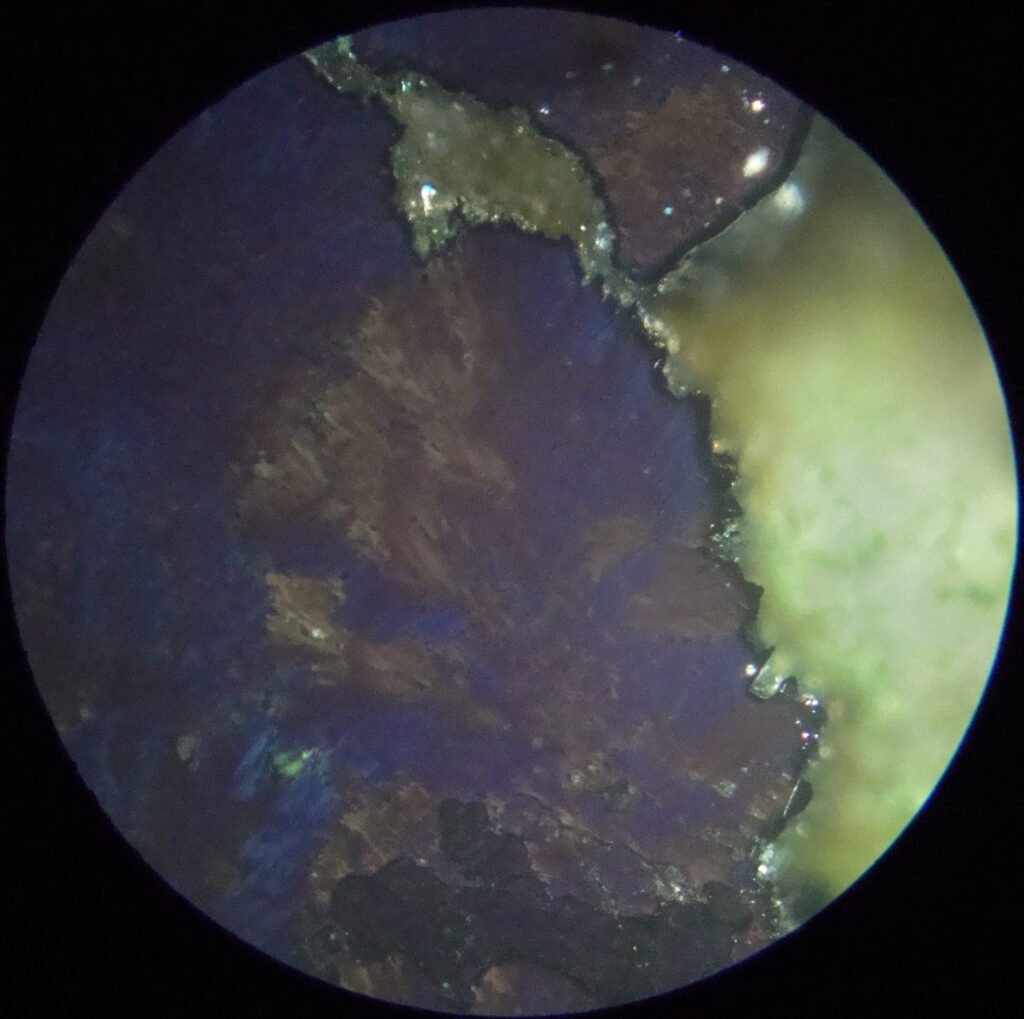
CROSSED POLARIZED LIGHT – XPL
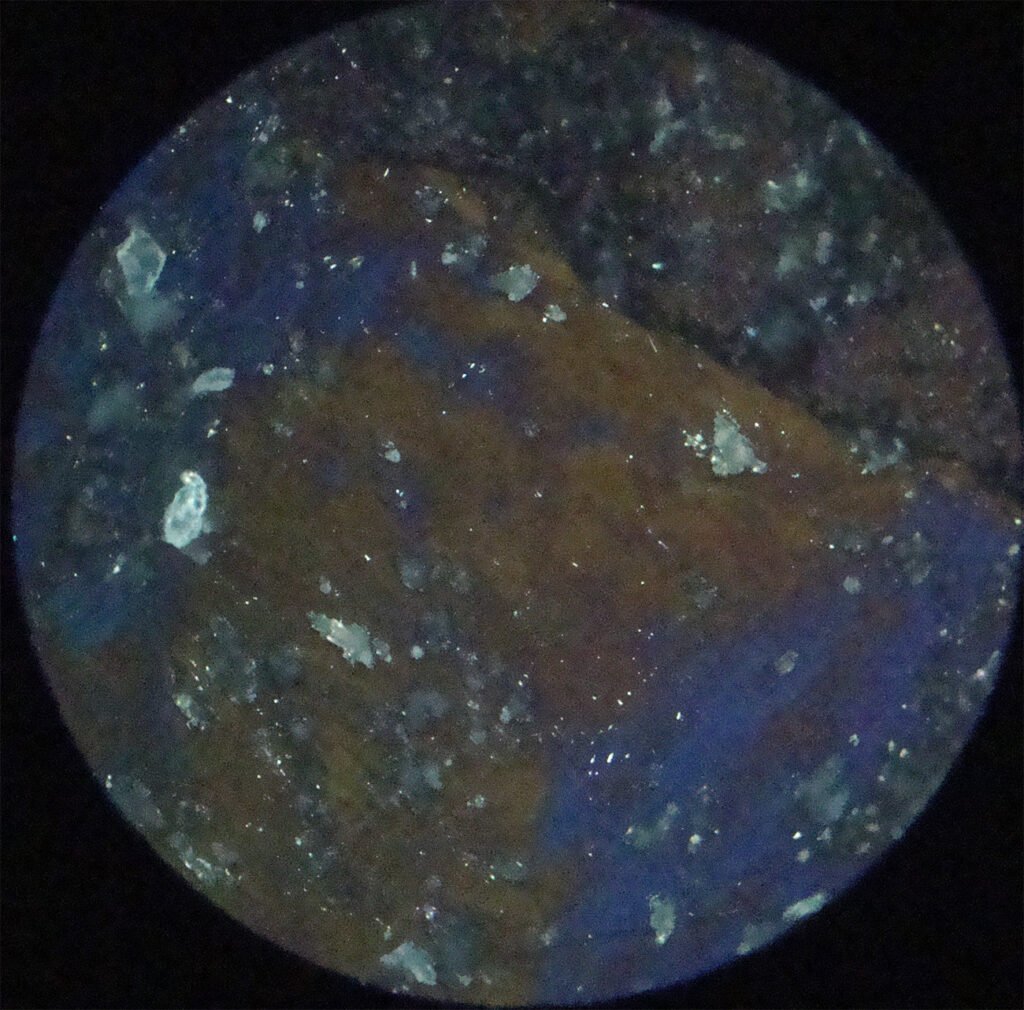
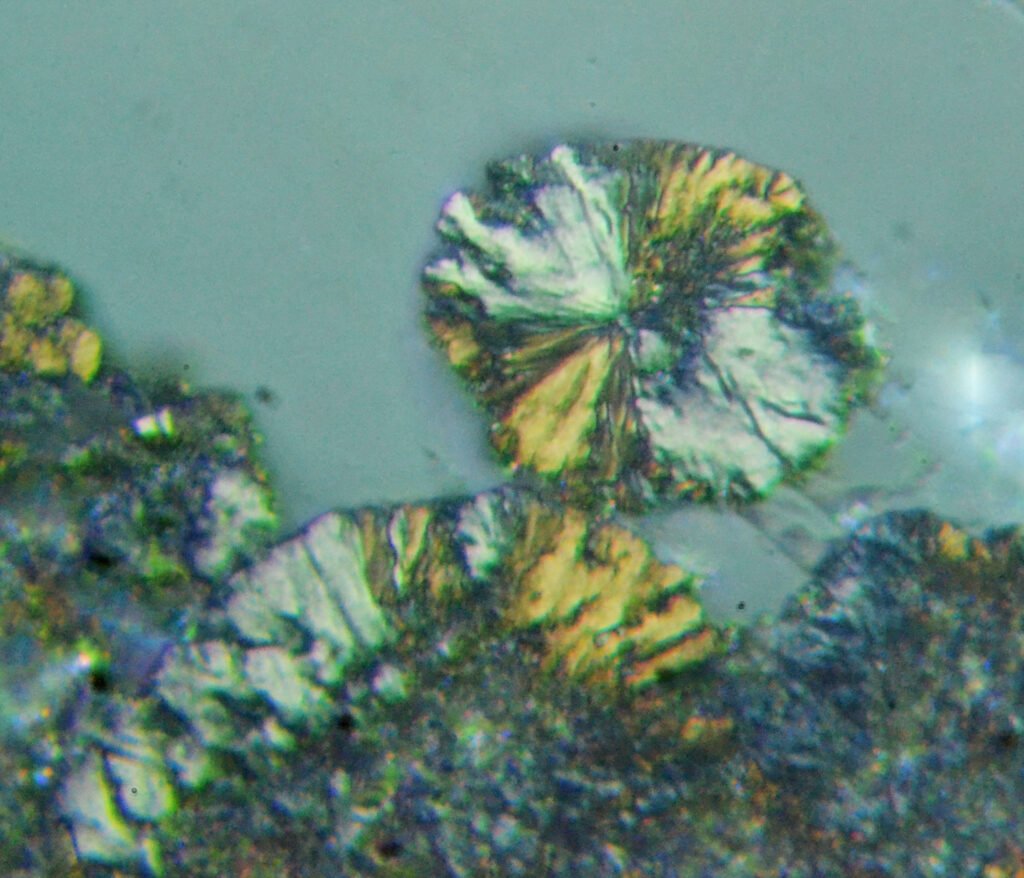
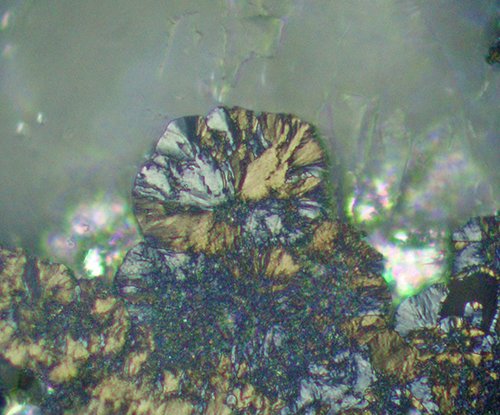
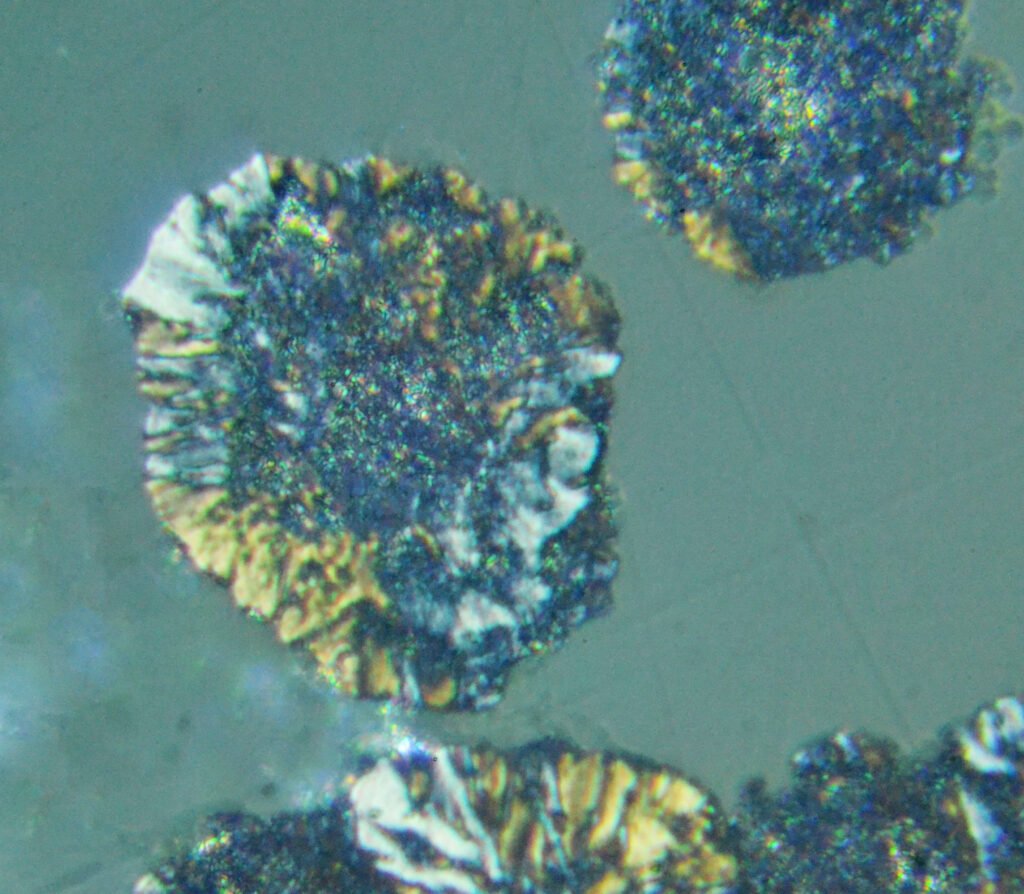
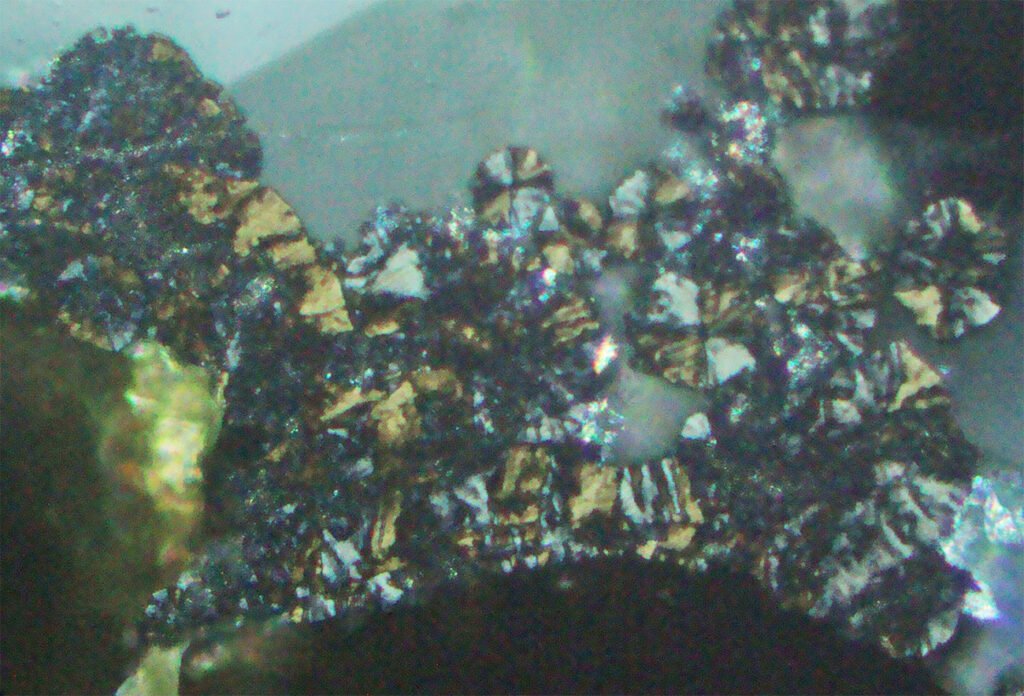
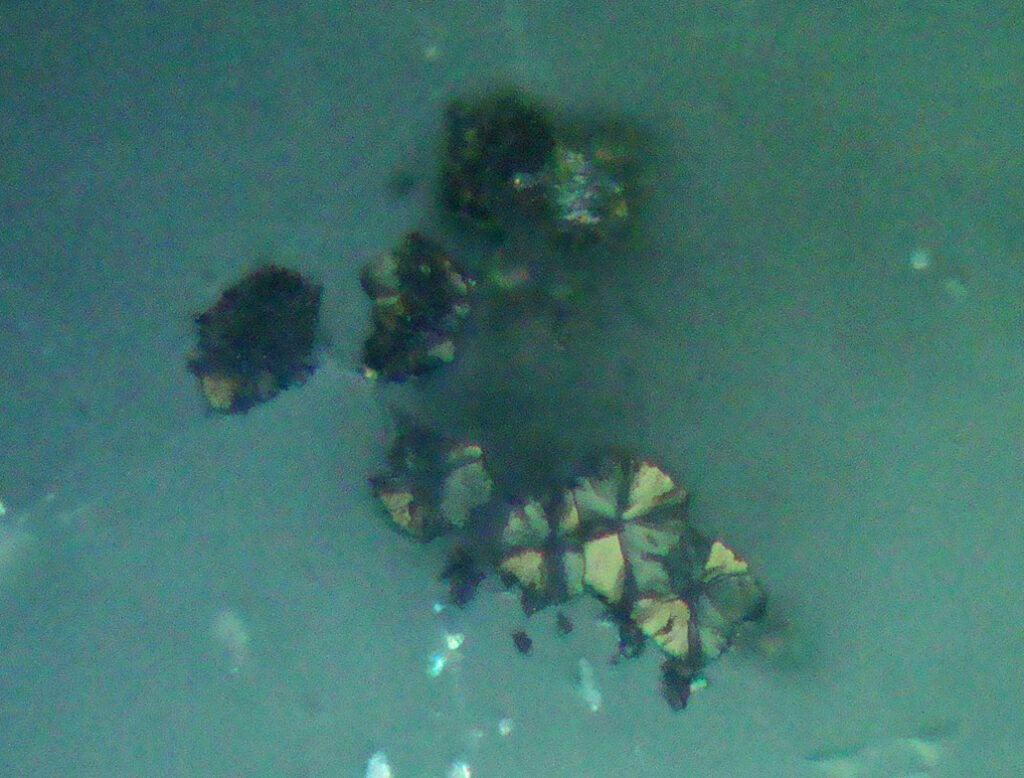
Isotropy / Anisotropy: Very strong anisotropy ranging from light yellow-orange to reddish-brown; can also appear brown, blue, pale blue, or green.
Internal reflections: No.
May be confused with:
Arsenopyrite is very similar, especially if it has a higher Co content. In a direct comparison, arsenopyrite appears whiter and has a yellowish tint.
Glaucodot exhibits similar anisotropy, though much weaker than that of löllingite.
Rammelsbergite and safflorite are very similar; their habits vary slightly, but definitive identification via microscopy may be impossible. Their parageneses differ somewhat.
Marcasite displays similar anisotropy colors, but its pleochroism is stronger, and its anisotropy colors include turquoise—a hue not found in löllingite.
Safflorite can be very similar but generally exhibits distinct habits.
General Characteristics:
Grain shape is generally idiomorphic—or idioblastic—because löllingite has a strong tendency to form idiomorphic grains. This tendency toward idiomorphism is absent only in certain high-temperature, pegmatitic-pneumatolytic deposits. Well-developed radiating aggregates or massive, very fine-grained aggregates may occur. Skeletal aggregates are occasionally found, as are thin crusts or grains intergrown with safflorite. Multiple generations of löllingite may occur in a given deposit, each with its own habit.
Crystal size is generally small—much smaller than that of arsenopyrite—though large crystals can occur, such as at the type locality (Lölling, Carinthia, Austria).
Cleavage is not observed.
Zoning may be present in large crystals but is not as well-developed as in safflorite.
Twinning is very common; twins may be simple or complex. Triplets (or trillings) similar to those found in safflorite also occur, as do polysynthetic twins with lamellae parallel to {101}.
Oriented intergrowths occur with niccolite, safflorite, rammelsbergite, and arsenopyrite.
Inclusions within löllingite may consist of dyscrasite, sphalerite, galena, chalcopyrite, and native arsenic.
Inclusions of löllingite occur in arsenopyrite (very frequent!), skutterudite, and maucherite.
Replacements 1: Löllingite can replace uraninite, sphalerite, arsenopyrite, and pitchblende.
Replacements 2: Löllingite is replaced by cobaltite, chalcopyrite, sphalerite, galena, arsenopyrite, stibarsen, and native antimony.
Veins of löllingite occur in skutterudite, rammelsbergite, and niccolite.
Crusts of löllingite crusts may envelop safflorite-rammelsbergite grains.
Cataclastic textures occur more frequently than in arsenopyrite.