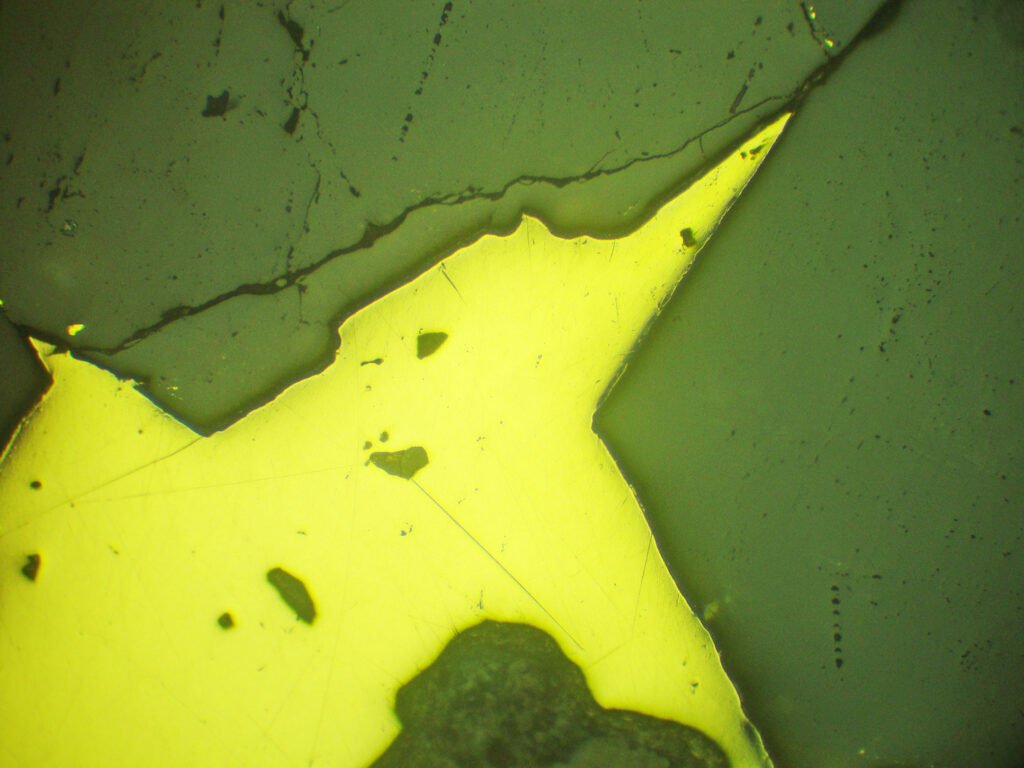
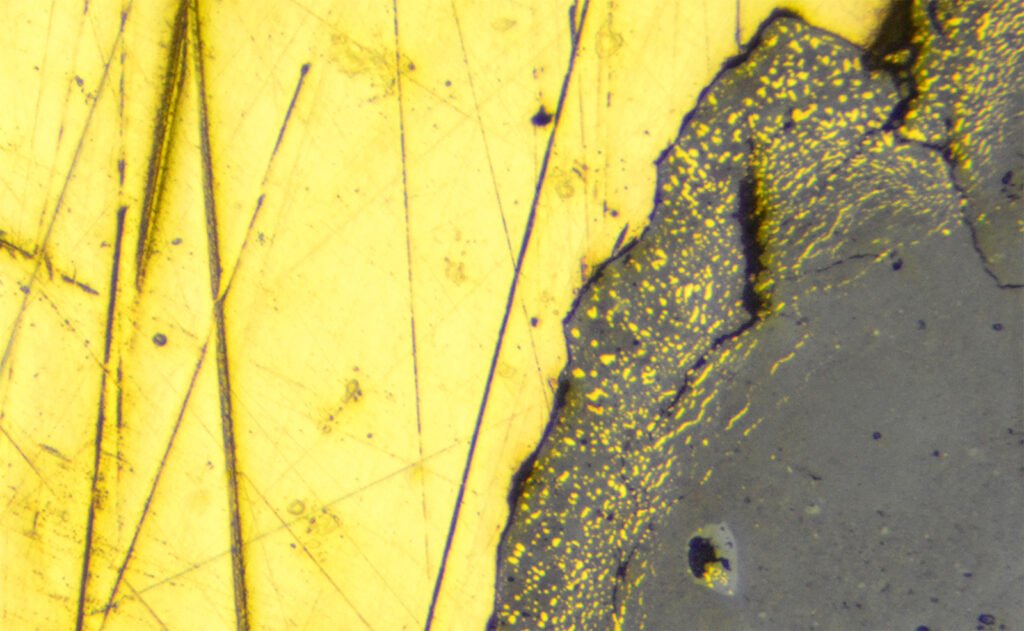
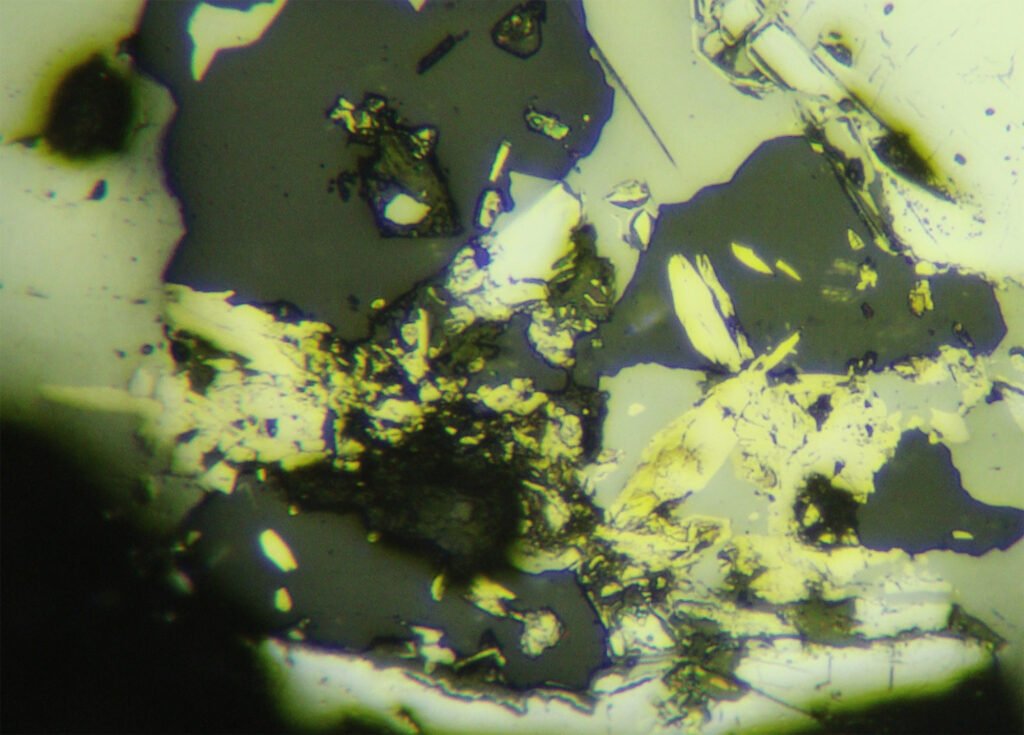
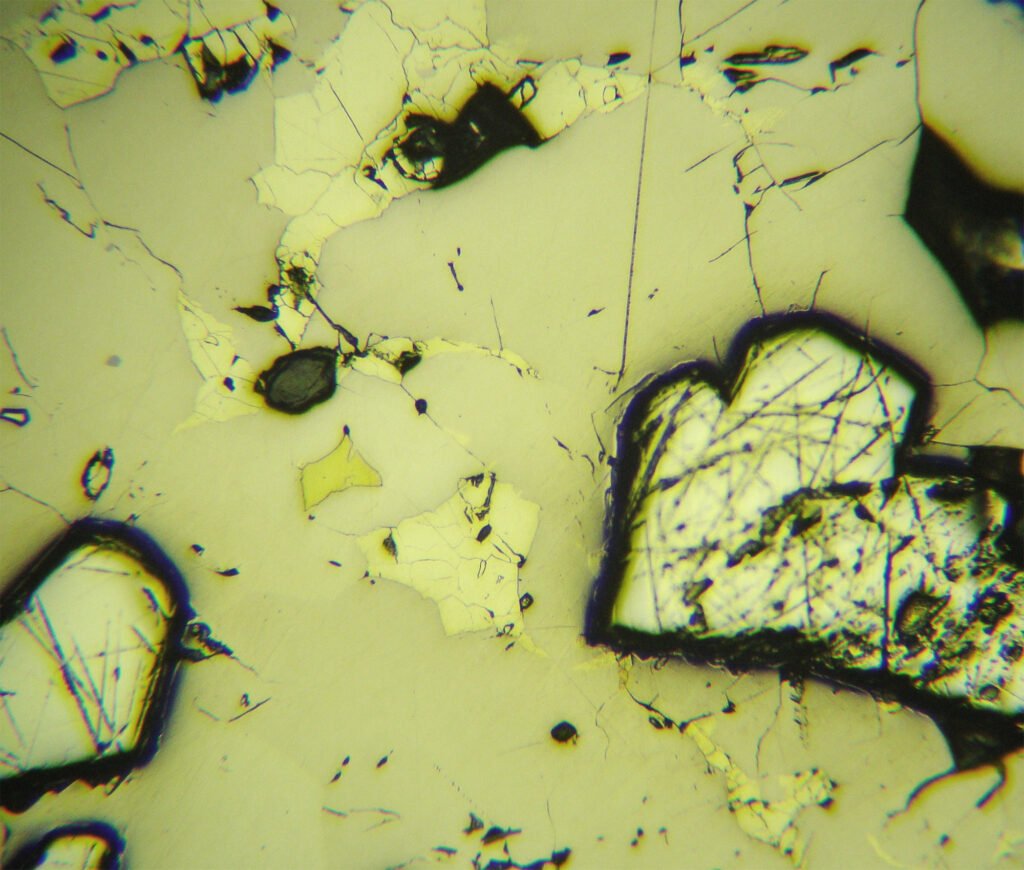
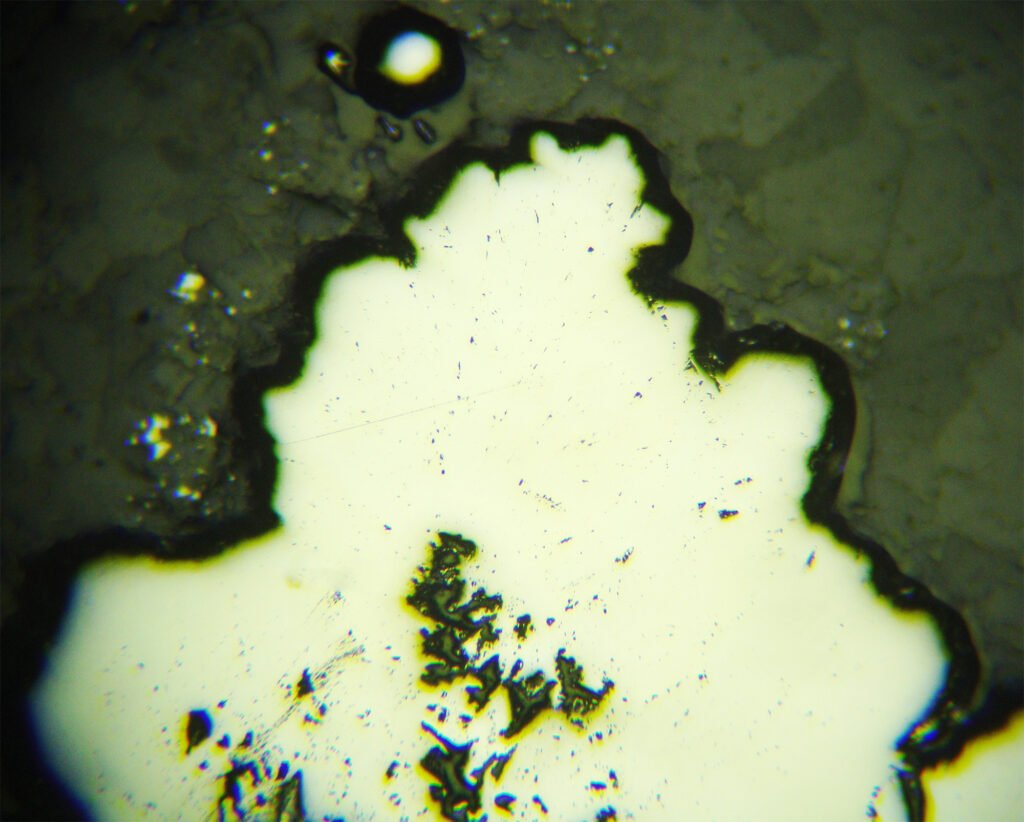
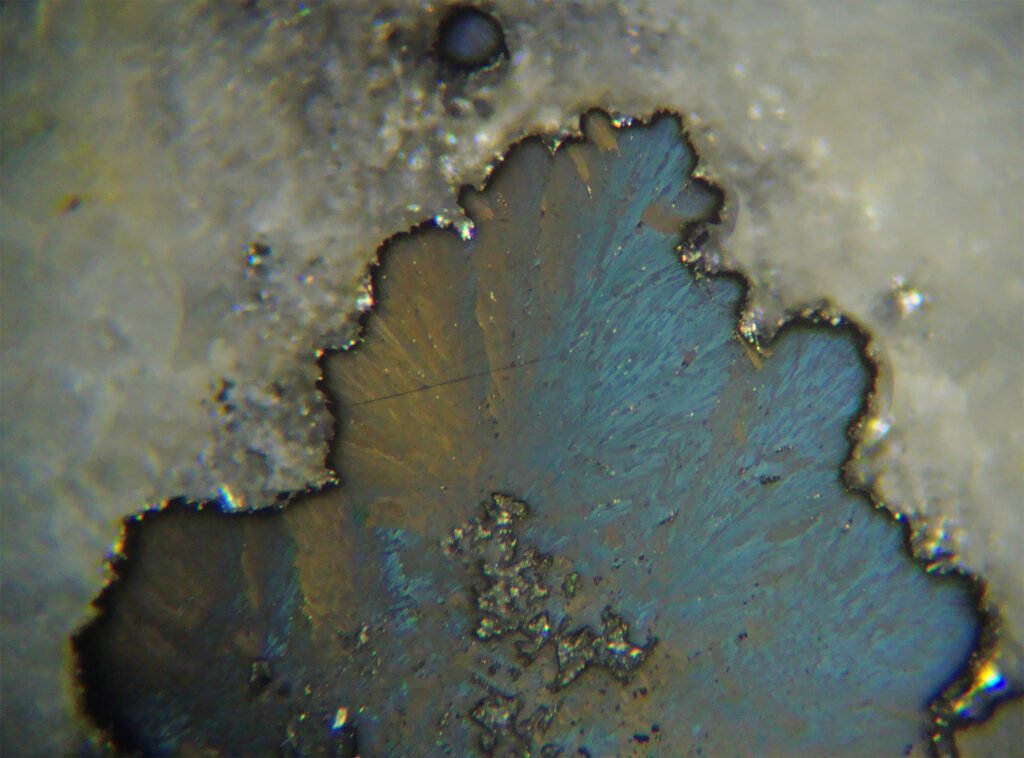
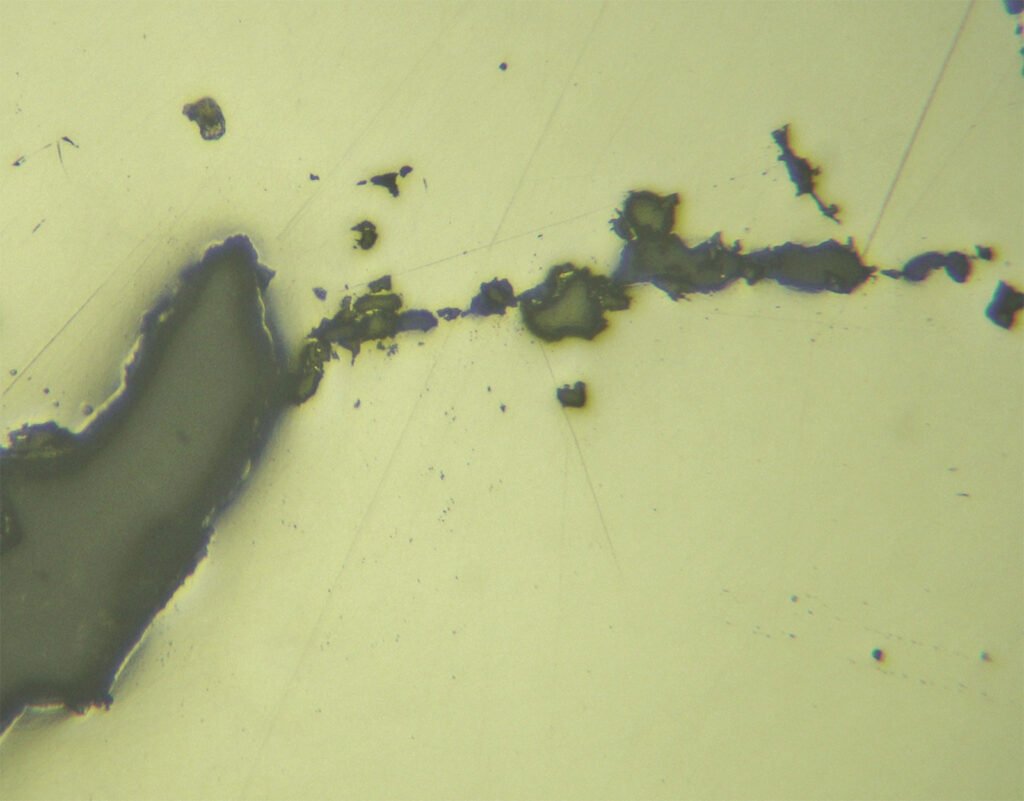
PPL: golden yellow color. If with Ag, tends to white. If with Cu, tends to red. No pleochroism. 72% reflectivity (Very high! Very diagnostic!), no bireflectance.
XPL: isotropic, but never very dark, may have a strange greenish color. Many scratches! No internal reflections. Twins are possible.
Images: in PPL, gold (golden) and gangue (dark gray).
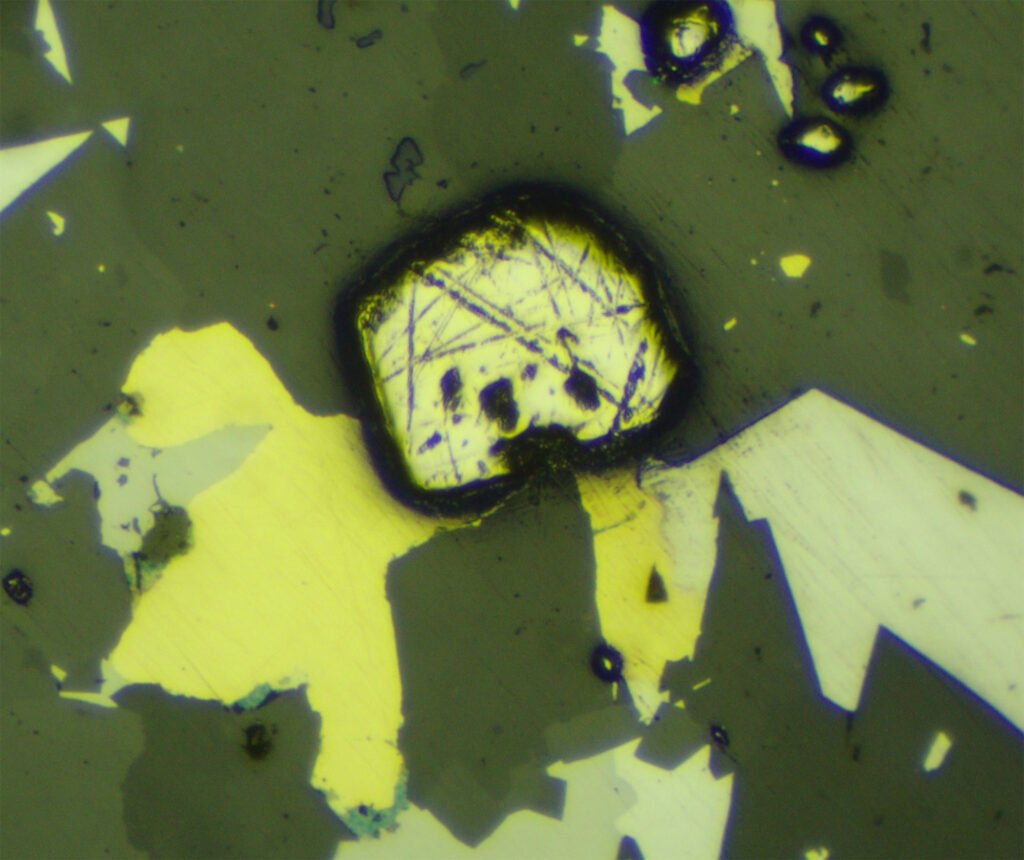
PPL: strong yellow color, may be greenish, without pleochroism. 39% reflectivity, no bireflectance. Many polishing scratches.
XPL: very dark, with weak brown to bluish anisotropy. No internal reflections. Always has coarse/irregular blue lamellar twins, but they are in most cases difficult to see. Very common sulfide!
Images: in PPL, chalcopyrite (yellow), pyrite (cream), gangue (dark).
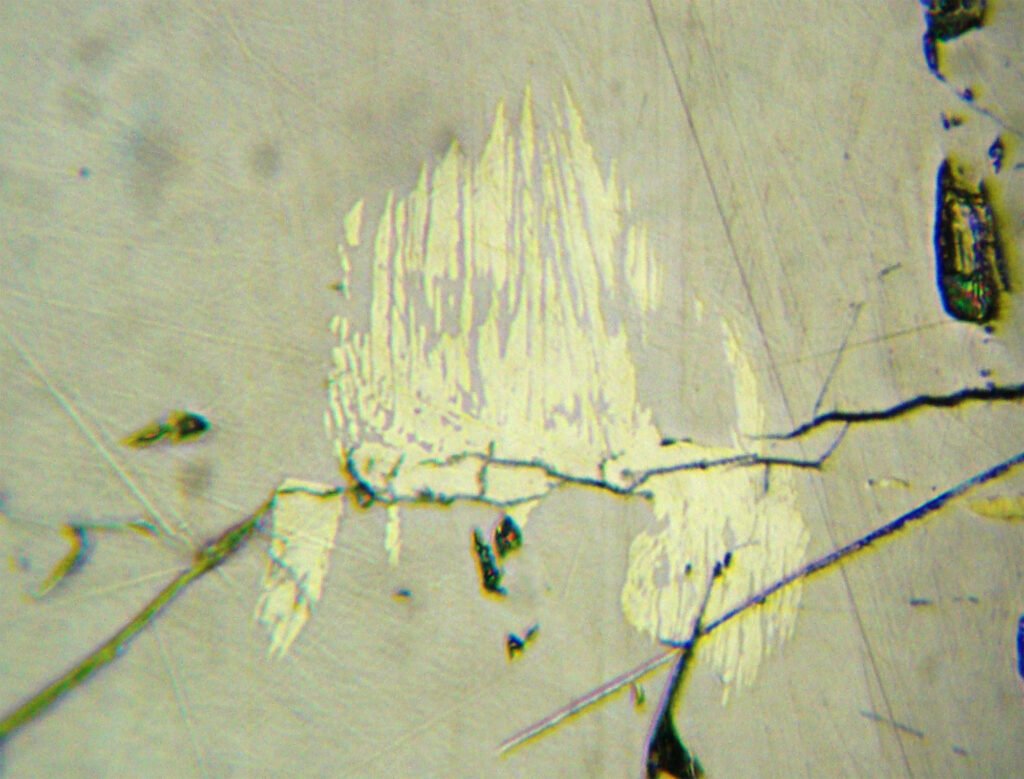
PPL: bright pale yellow color. 55% reflectivity. Weak pleochroism and bireflectance. Very typical acicular to capillary habit.It is a quite rare mineral.
XPL: strong yellowish to bluish anisotropy. It has no internal reflections. Cleavage, twins and zonation possible.
Images: in PPL, acicular crystals of millerite in complex ore.
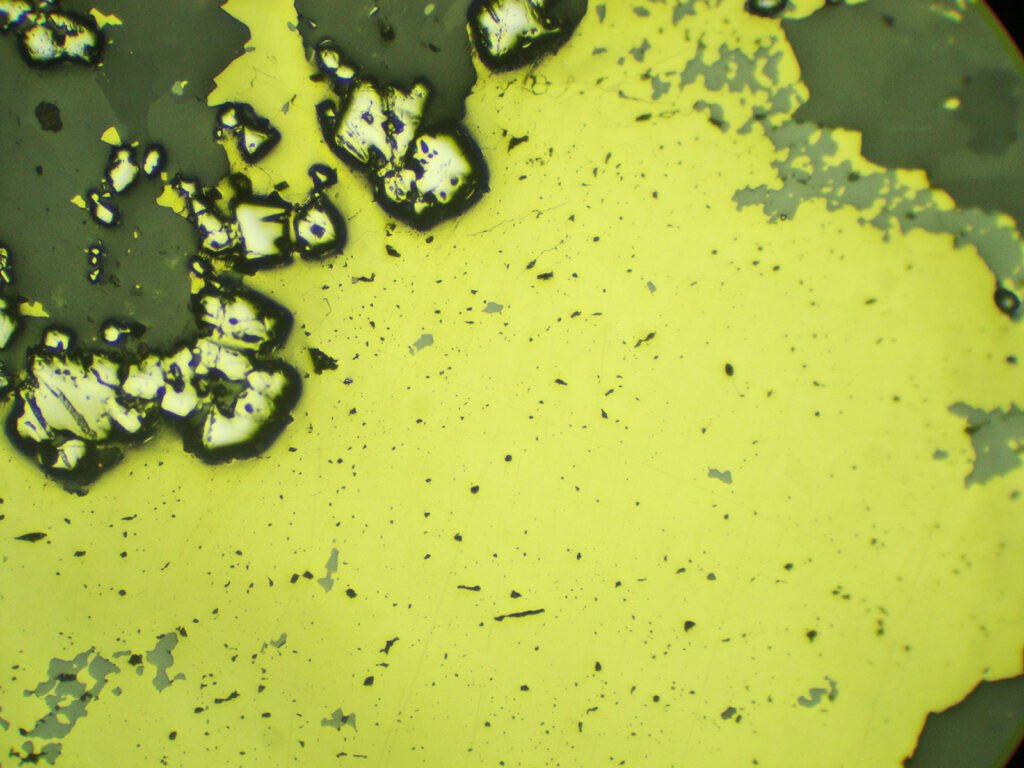
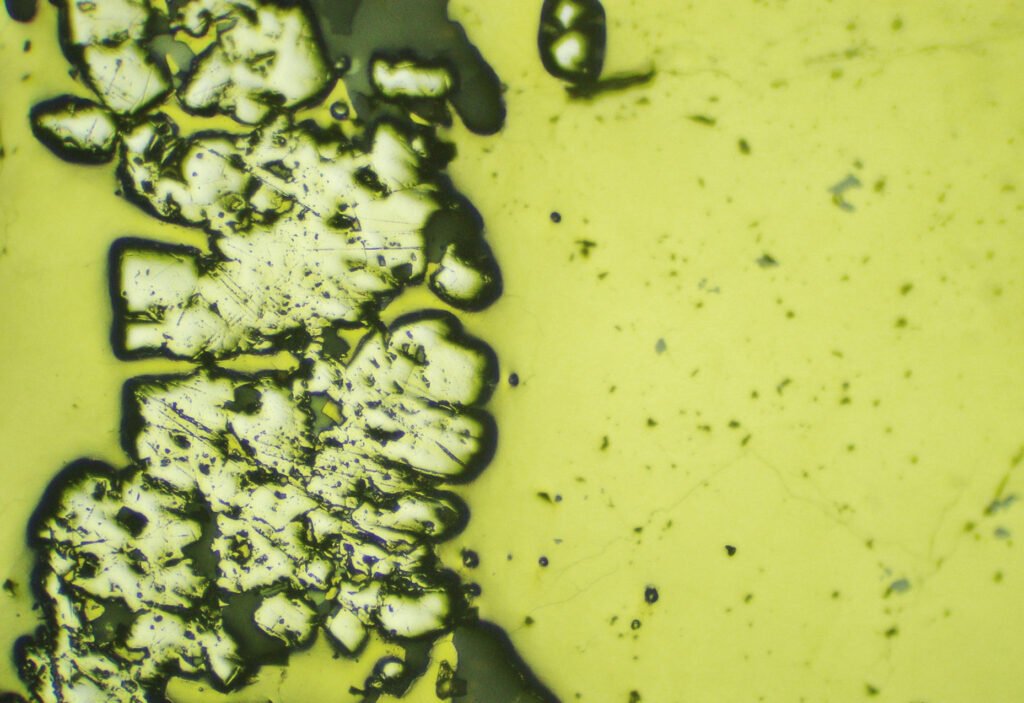
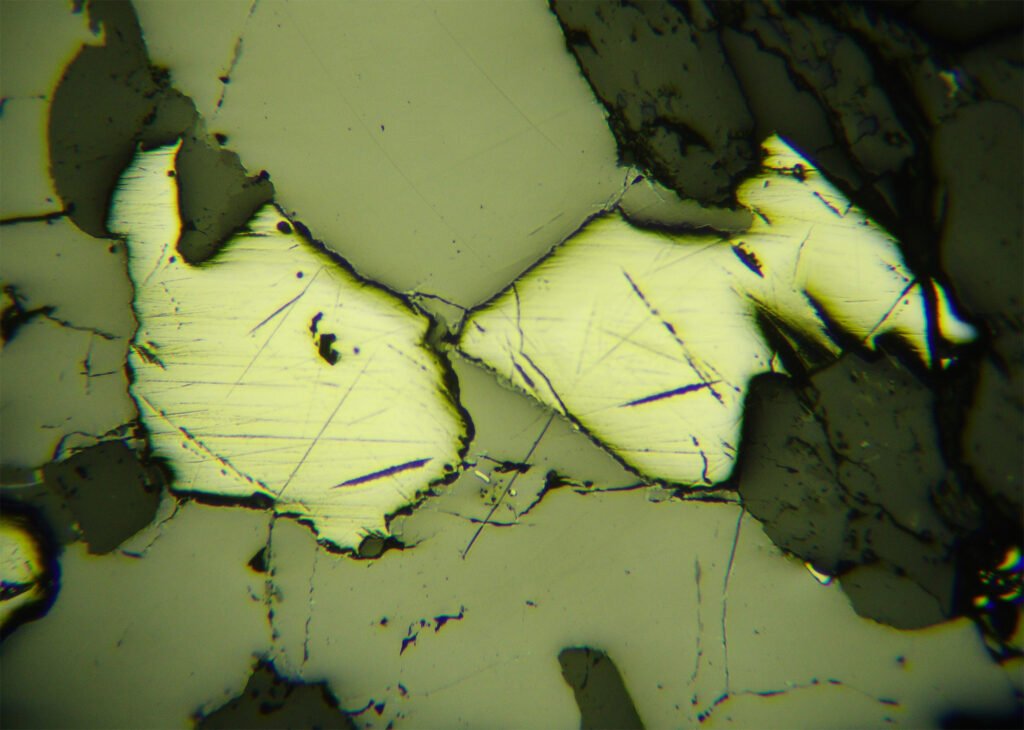
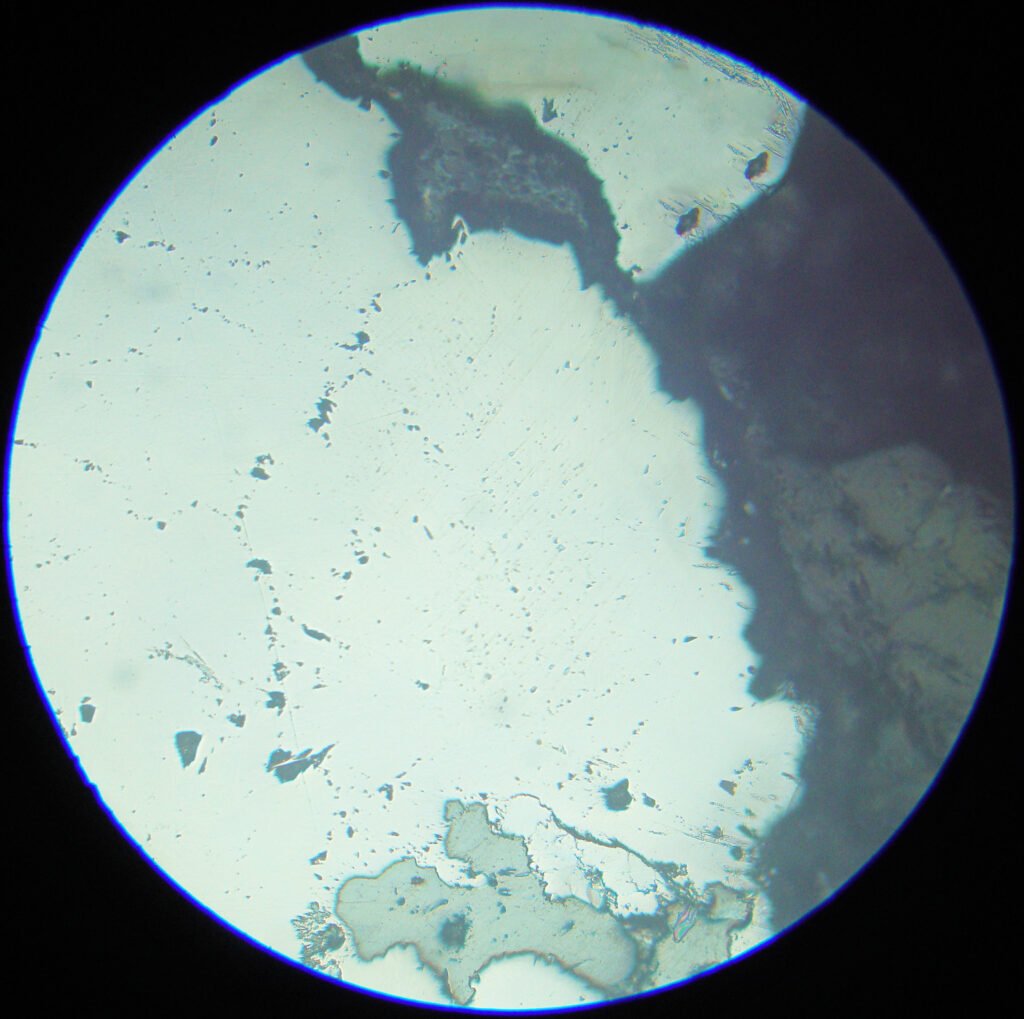
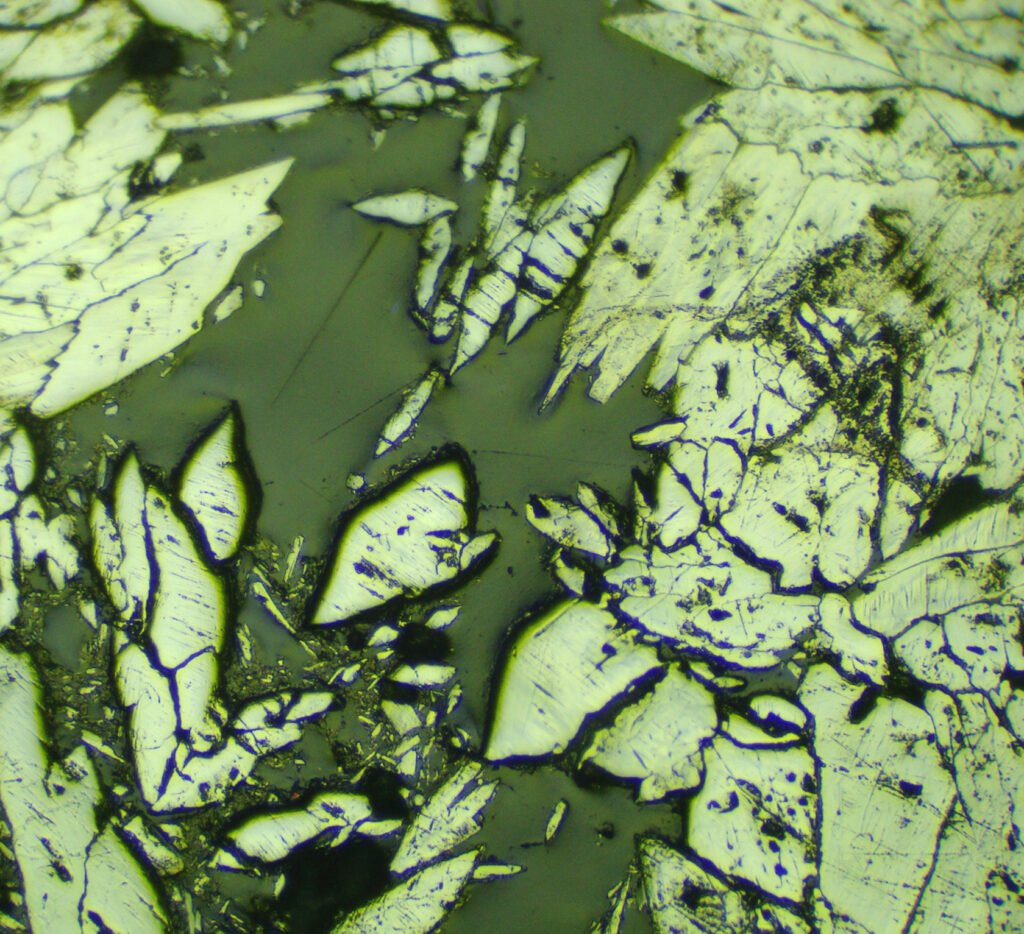
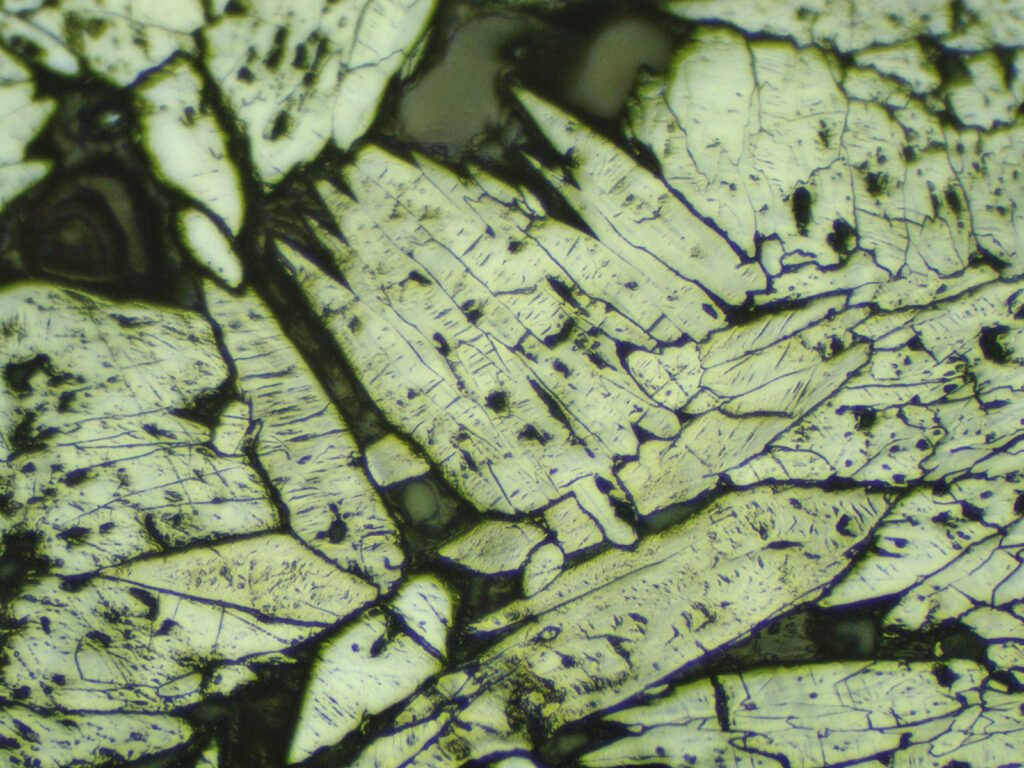
PPL: white-yellow to cream-white color. 55% reflectivity. No pleochroism and no bireflectance. Polishing usually very bad, with scratches and holes. High relief is very common (dark edges).
XPL: isotropic, can be anisotropic. No internal reflections. Idiomorphy (cubes!) possible. Zonation, cataclase and substitutions are common.
Images: in PPL, pyrite (cream, high relief, many polishing scratches), chalcopyrite (golden), galena (white), gangue (dark gray).
PPL: cream color, without pleochroism. Reflectivity of 38-42%, with very light bireflectance. Scratches occur. May have isocubanite crusts. Rare mineral.
XPL: very distinct anisotropy between light blue and dark blue. No internal reflections. Occurs as lamellae in chalcopyrite.
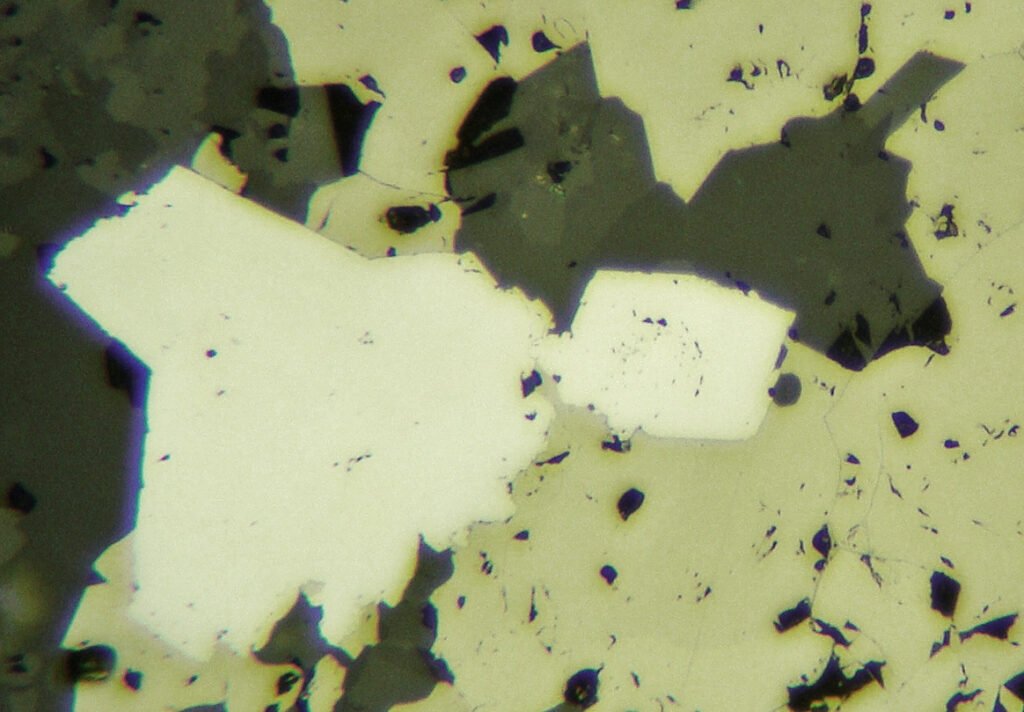
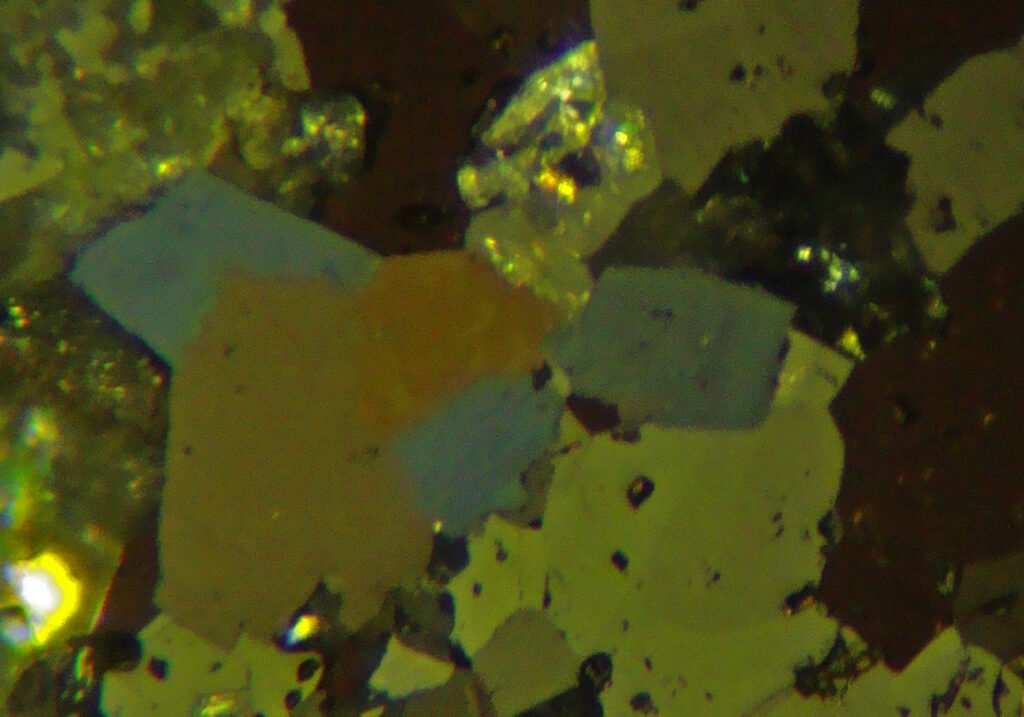
PPL: color in brown and yellow tones with pink. It tarnishes very quickly to brown. Weak to absent pleochroism. Reflectivity from 37 to 42%, no bireflectance.
XPL: strong and very diagnostic(!!) anisotropy from yellow-gray to soft green, gray to bluish. Brown color is strong, blue is more discreet. No internal reflections.
Images: in PPL, arsenopyrite (white), pyrrhotite (yellow-brown) and gangue (dark gray), and the same section in XPL with the anisotropy colors.
SAFFLORITE – CoAs2
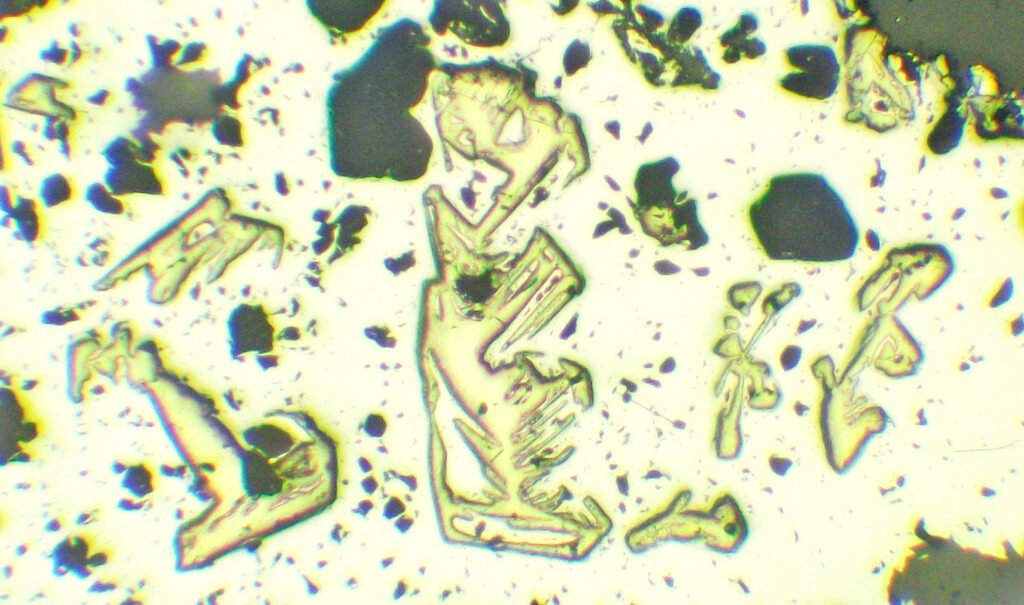
PPL: yellowish-white to bluish-white, with very weak pleochroism. Reflectivity of 52-54%, with minimal bireflectance. Crystals have a typical diamond shape, can form star-shaped twins with six points.
XPL: very strong anisotropy between dark brown and blue. Intensity of anisotropy can be variable. Zonation can occur.
Images: in PPL and XPL, the same section with safflorite and gangue.