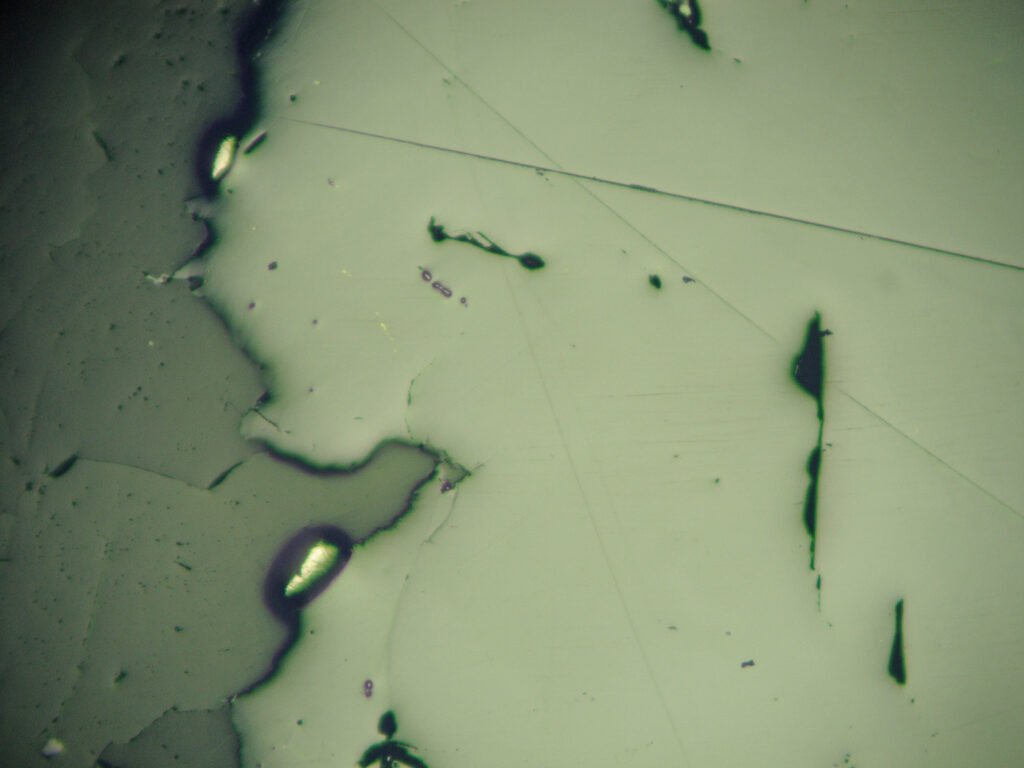
Reflected Light

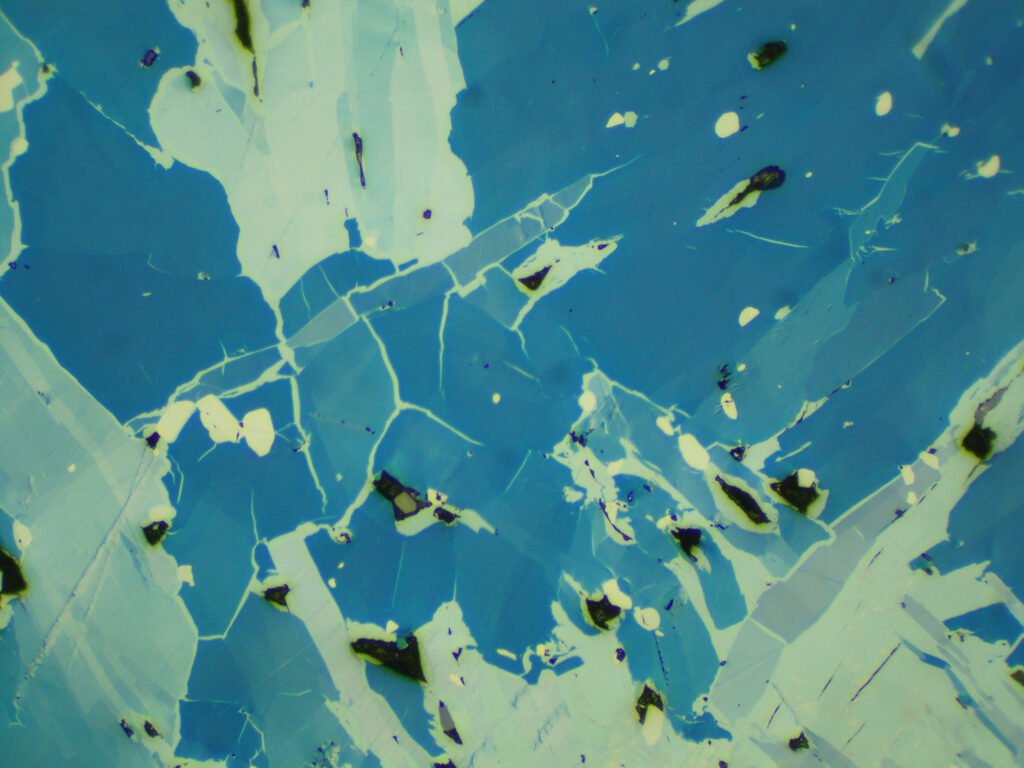
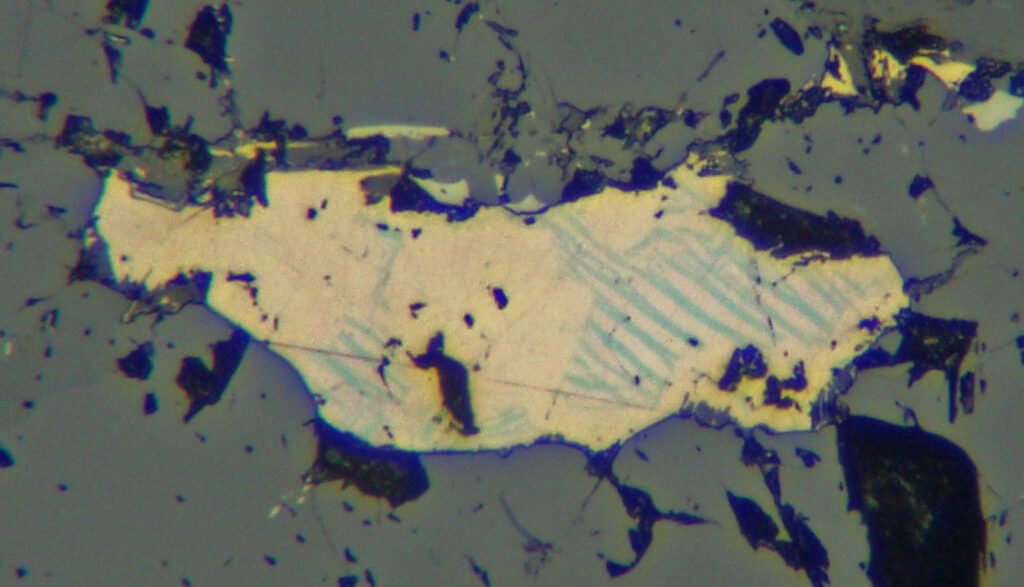
PPL: intense blue to soft violet color, with pleochroism between strong blue to almost white. Reflectivity of 3-19%, with strong bireflectance.

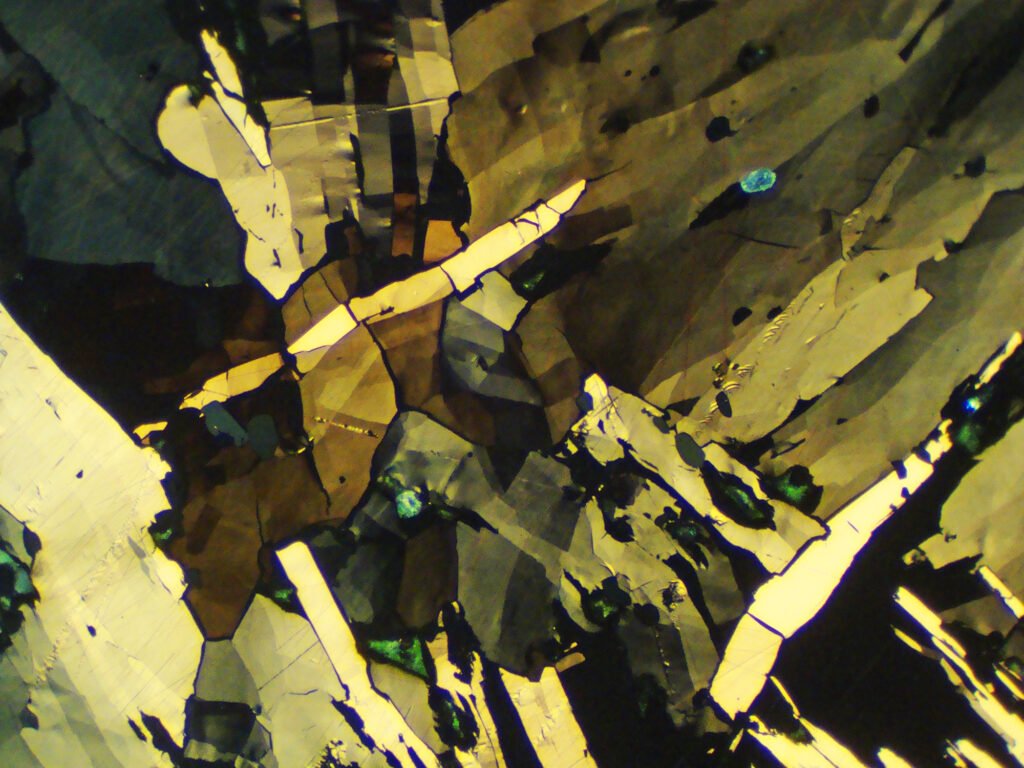
XPL: Extremely strong anisotropy in intense orange colors, also copper brown. No internal reflections. Typical lamellar forms, occurs associated with other copper minerals.

Images: Covellite in PPL (blue) and XPL (orange).

(the two minerals are virtually indistinguishable)

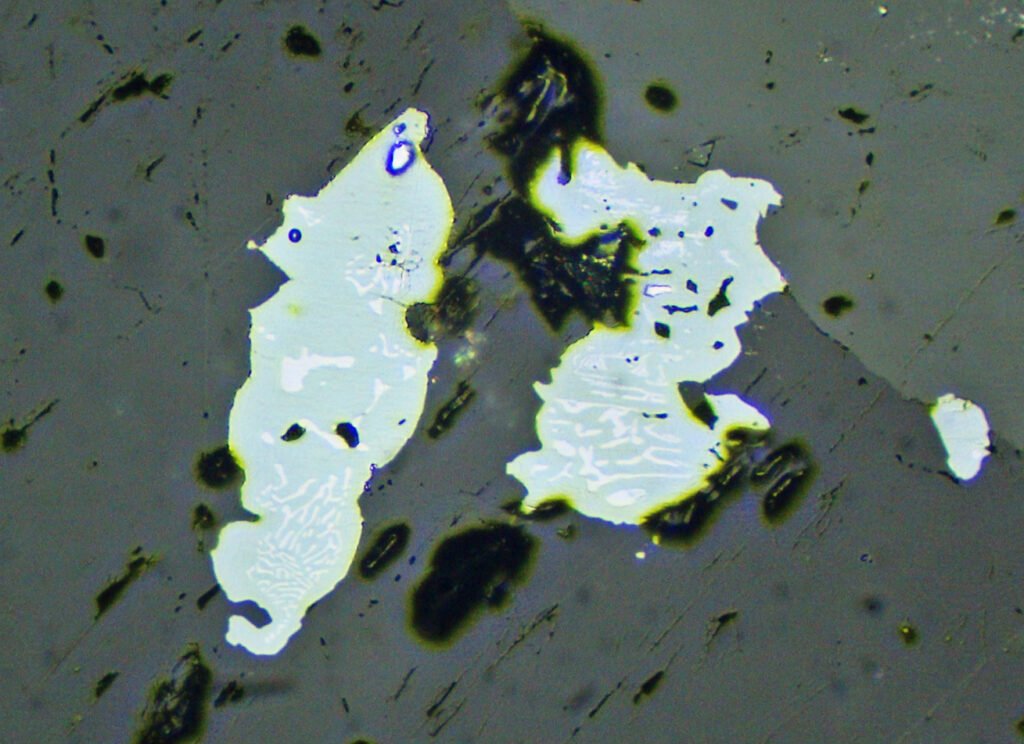
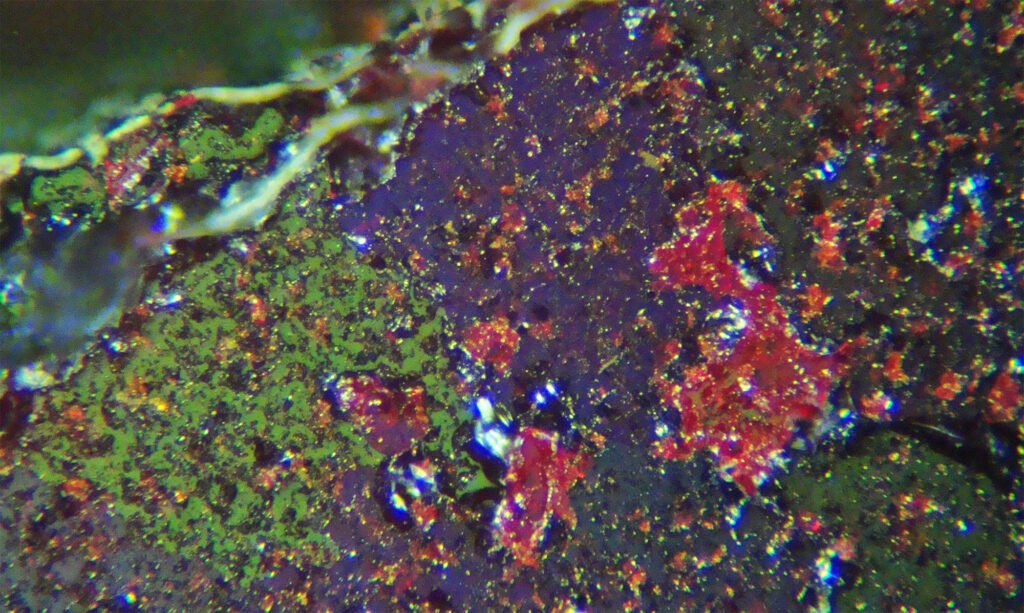
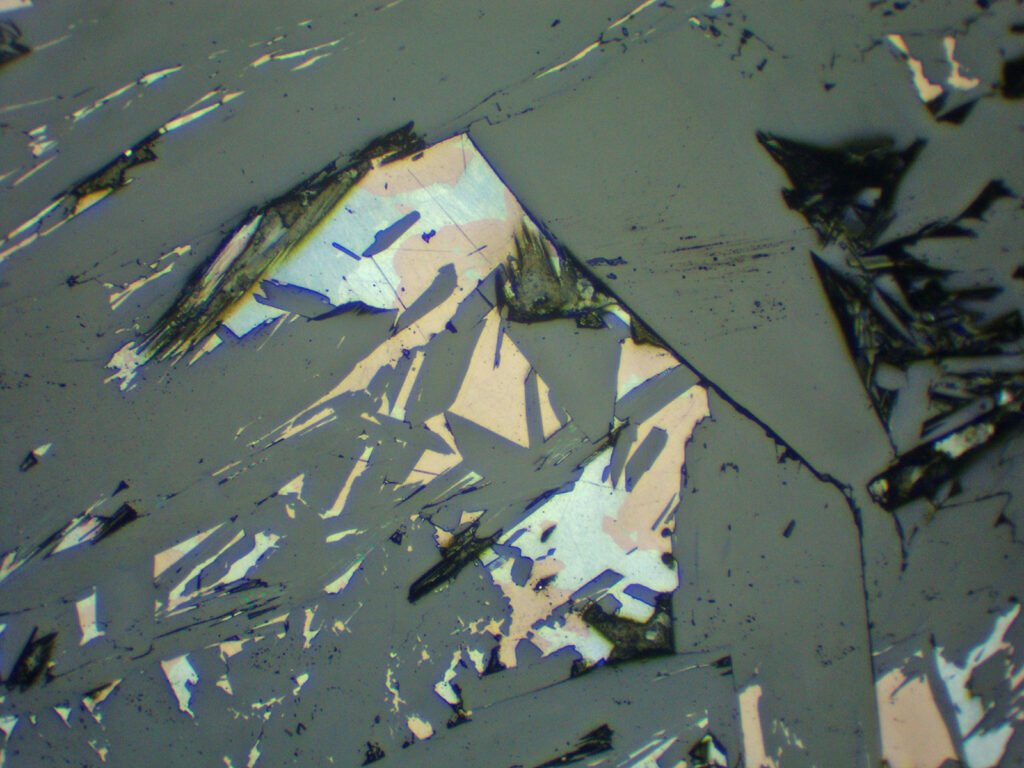
PPL: light blue to gray white, with strong pleochroism. The blue tone is very clear. 28% reflectivity, with strong bireflectance.

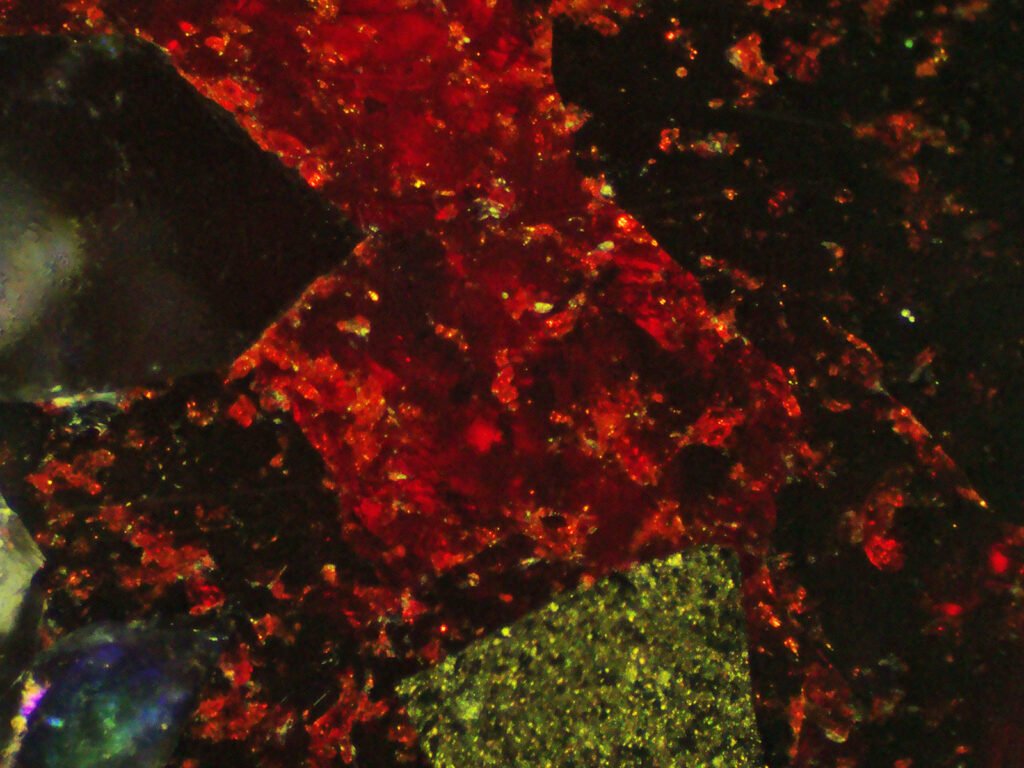
XPL: strong anisotropy between light to dark gray-blue, masked by crimson red reflections. Twins are possible.

Images: Pyrargirite in PPL (bluish) and in XPL (red internal reflections).

(associates with native copper and other secondary copper minerals)

PPL: bluish gray color, with very weak pleochroism. Reflectivity 25%. It has no bireflectance.

XPL: anomalous anisotropy in green, blue and violet colors (observe with CPL+2º), mixed with abundant blood-red reflections.

Images: Cuprite in PPL (bluish) and in XPL (colored anisotropy).

PPL: blue-gray or blue-white color, with very weak pleochroism. 30% reflectivity, no bireflectance. Many polishing scratches.

XPL: Very dark, with very weak anisotropy, almost imperceptible. No reflections. It occurs with other copper minerals such as bornite.

Images: in PPL, chalcocite (white-blue), bornite (pink) and gangue (dark).

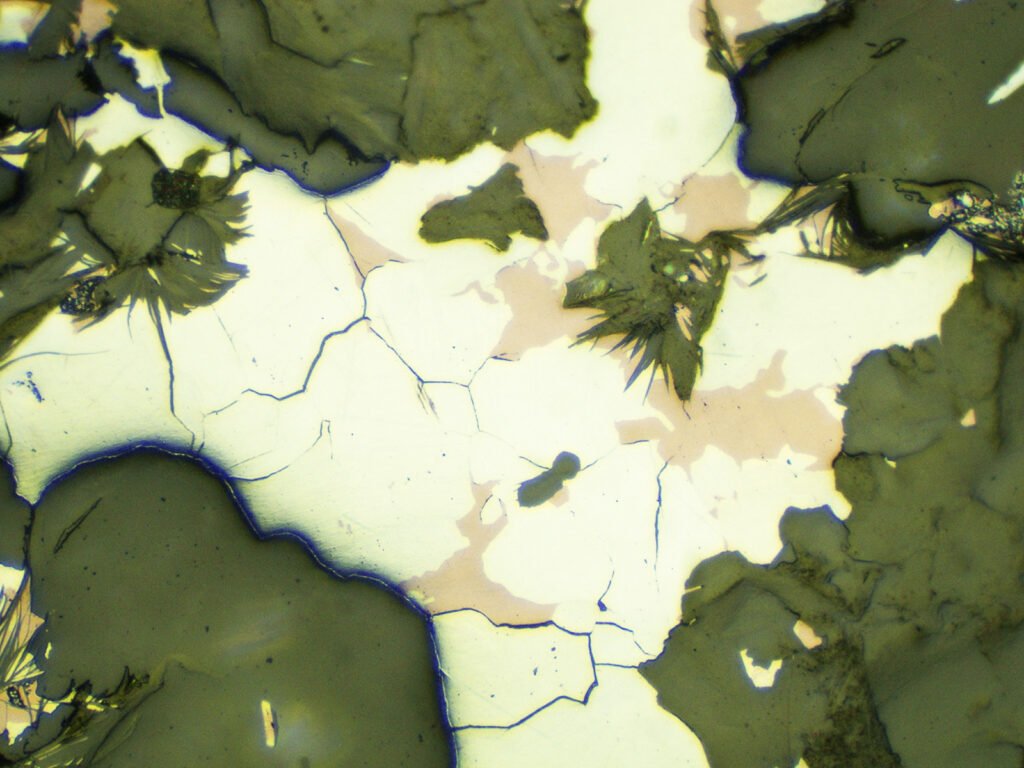
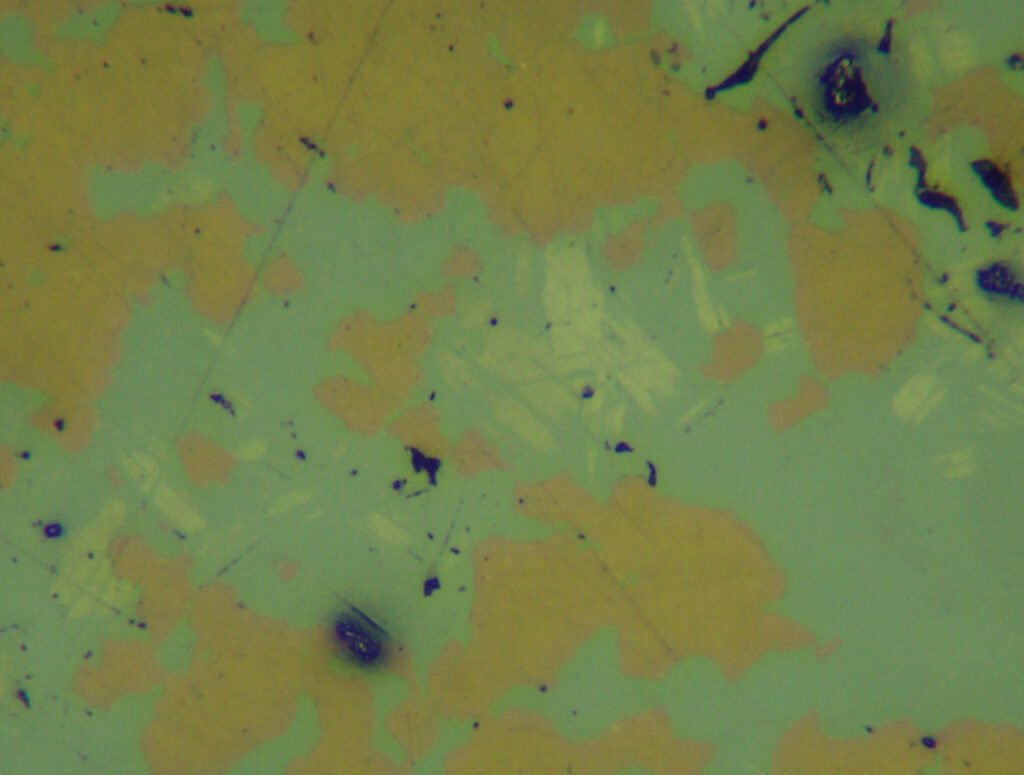
PPL: bluish color, without pleochroism. 20% reflectivity, no bireflectance. Lots of blue scratches! Quickly tarnishes to brown.

XPL: isotropic and without internal reflections. Lamellar twins possible. It associates with other Cu minerals and pyrite.

Images: in PPL, digenite (blue), bornite (pink), gangue (dark gray).

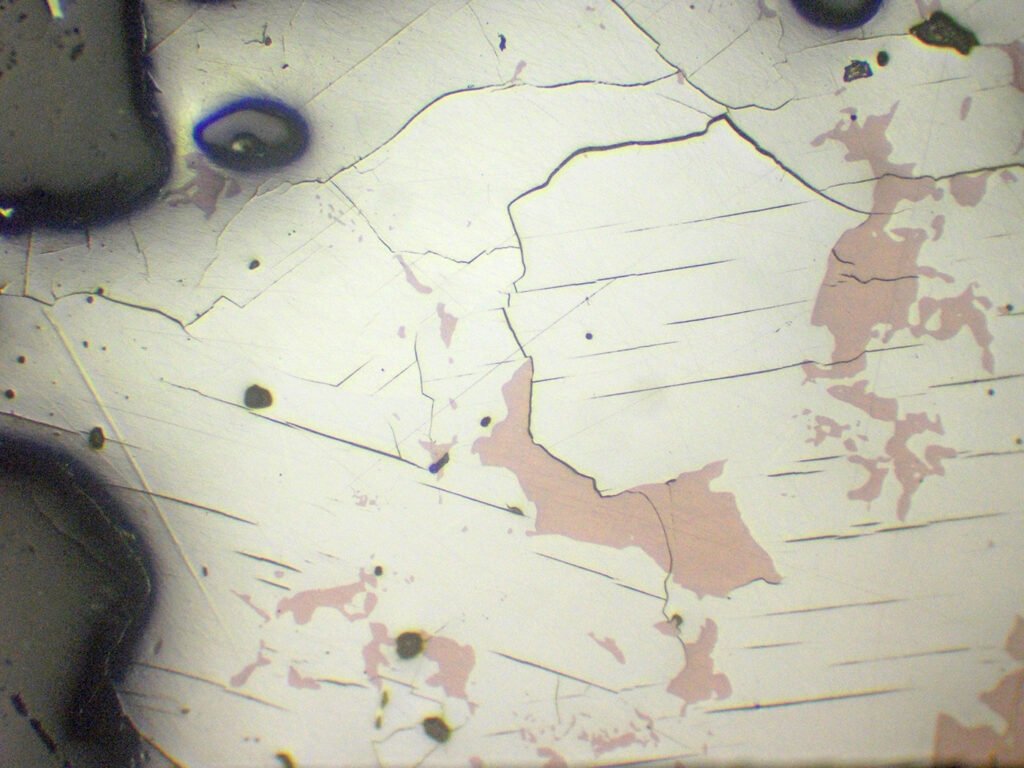
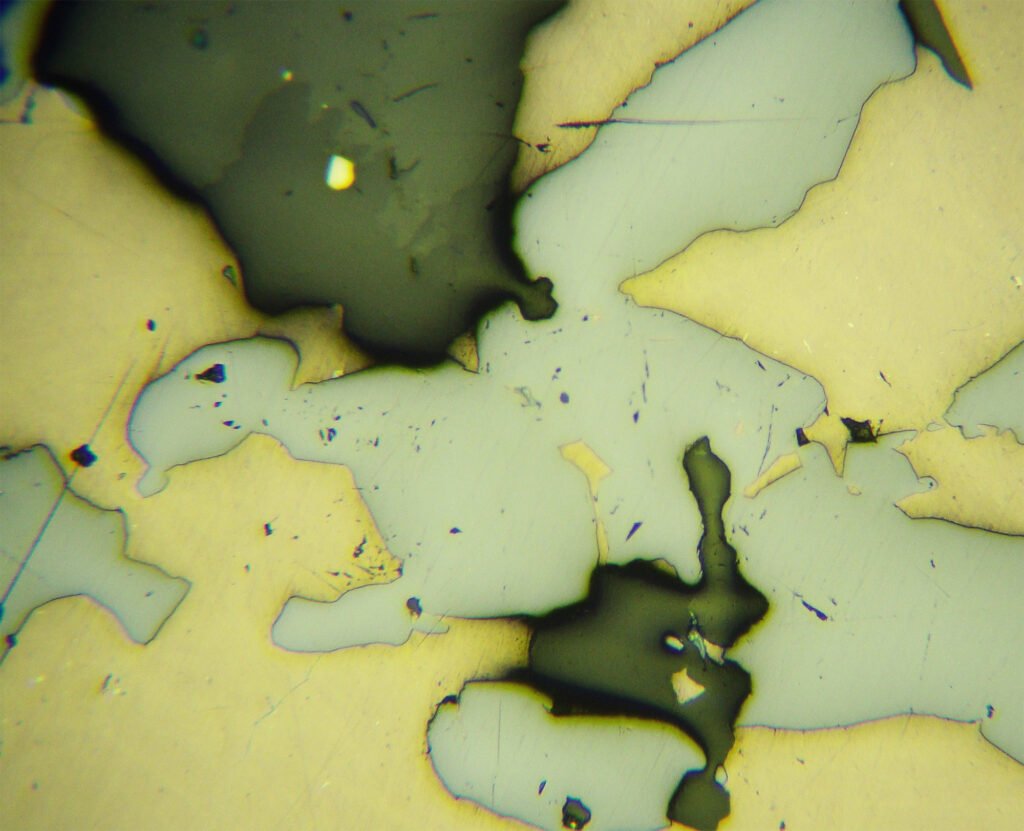
PPL: bluish gray color, without pleochroism. 28% reflectivity, no bireflectance. Many polishing scratches (Mohs = 2.5-3).

XPL: weak anisotropy, not always visible. Observe with CPL+2º. Aggregates of thin lamellae simulate isotropy. No internal reflections. Easily confused with chalcocite, use other techniques!

Images: in PPL, djurleite (blue), bornite (pink) and chalcocite (white-blue).

PPL: bluish gray color, without pleochroism. Reflectivity 20 to 24%, with slight bireflectance. High relief! (Mohs = 9). Common twins.

XPL: distinct anisotropy in shades of gray. Light to dark blue reflections. Great tendency to idiomorphy.

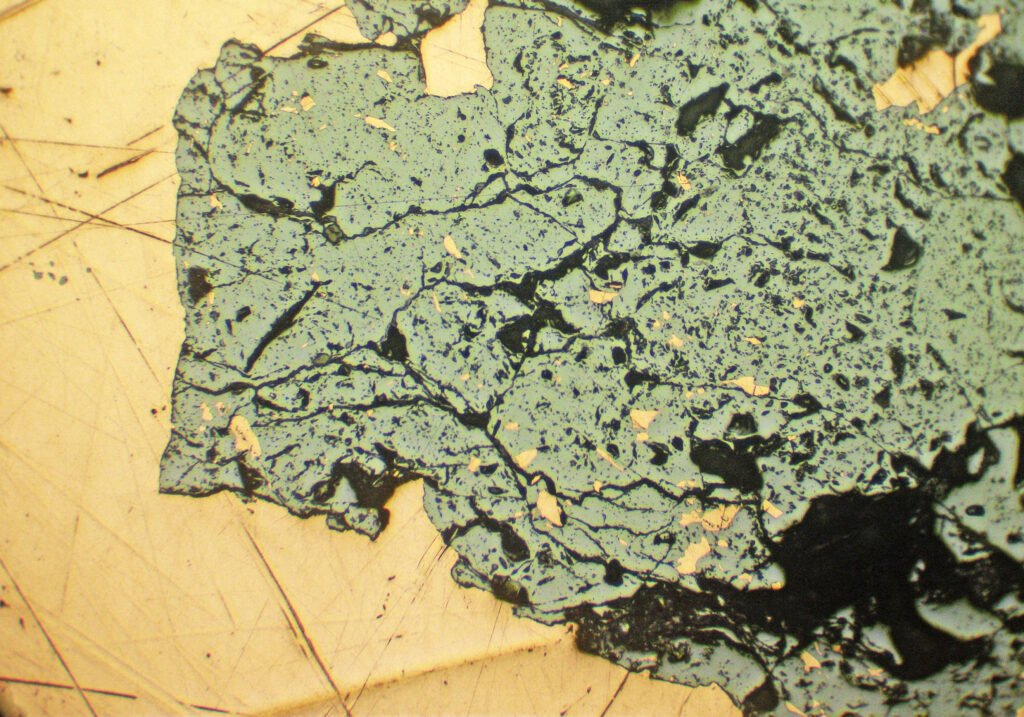
PPL: medium light gray with a slight blue tone, without pleochroism. Low reflectivity (16%), no bireflectance. It often goes unrecognized; it is easy to be mistaken.

CPL: isotropic. When lacking Fe, it has sparse colorless internal reflections and can be confused with an isotropic or low anisotropic mineral. When with Fe, generalized internal reflections in yellow to orange, can be red to deep red, black.

Images: in PPL, sphalerite (blue gray), bornite (pinkish), calcite (dark).

Minerals, in PPL, with blue, bluish, gray-blue or white-blue colors.