CHRYSOCOLLA

Chrysocolla – (Cu,Al)2H2Si2O5(OH)4·nH2O (?) – a phyllosilicate, is one of the many minerals that form from the alteration of copper sulfides in oxidation zones. Locally, it is still a minor copper ore, but historically it was very important as a copper ore. It is used as a minor gemstone due to its low hardness. It is used as an imitation of turquoise, which is much more expensive.

Chrysocolla, in reality, is a name used for copper silicates of massive, globular, glassy, ​​blue to green forms that have not been identified to the species level. Because of this, the published chemical compositions vary widely, and the mineral is designated as a mineraloid. In X-ray diffractometry analyses, chrysocolla is usually amorphous, as the crystallites are too small to generate an X-ray diffraction pattern.

New studies suggest that chrysocolla is a mixture of spertinite – Cu(OH)2 – with chalcedony and opal.

Chrysocolla is rarer among secondary copper minerals. It has very low hardness, but it can be “agatized” (with incorporated silica) and therefore harder. It can also have a quartz crust or be intergrown with quartz. Very rarely does it form crystals, in the form of tufts of acicular crystals with a maximum length of 5 mm. It frequently forms pseudomorphs according to azurite and has six varieties.

1. Characteristics

Crystal system: Orthorhombic(?)          

Color: Blue, blue-green, or green. Colors may be mixed. Brown or black if impure.     

Habit: Massive, cryptocrystalline, opaline, botryoidal, stalactitic, globular, very rare crystals.

Cleavage: No.       

Tenacity: Brittle and sectile.        

Twinning: No.       

Fracture: Conchoidal to irregular.       

Mohs Hardness: 2 – 4

Parting: No.         

Streak: If pure, white. Pale blue.         

Lustre: Vitreous, porcelain-like, earthy to dull.

Diaphaneity: Transparent.           

Density (g/cm³): 1.9 – 4


2. Geology and Deposits

Chrysocolla is one of the many secondary copper minerals that form from primary copper minerals such as chalcocite, bornite, chalcopyrite, and others. Therefore, it is generally found in the oxidized portions of copper ores, both in hydrothermal deposits and those related to igneous rocks and porphyry copper.


3. Mineral Associations

It is associated with common primary copper minerals (native copper, chalcocite, bornite, chalcopyrite, etc.) and many secondary copper minerals that can be black (e.g., tenorite), red (e.g., cuprite), green (e.g., malachite, pseudomalachite, dioptase, antlerite, atacamite, etc.) or blue (e.g., chalcanthite, azurite, etc.).

Also with quartz, calcite, and wulfenite.


4. Transmitted Light Microscopy

Refraction indices:  nα:  1.575 – 1.585     nβ: 1.597    nγ: 1.598 – 1.635

PLANE POLARIZED LIGHT – PPL

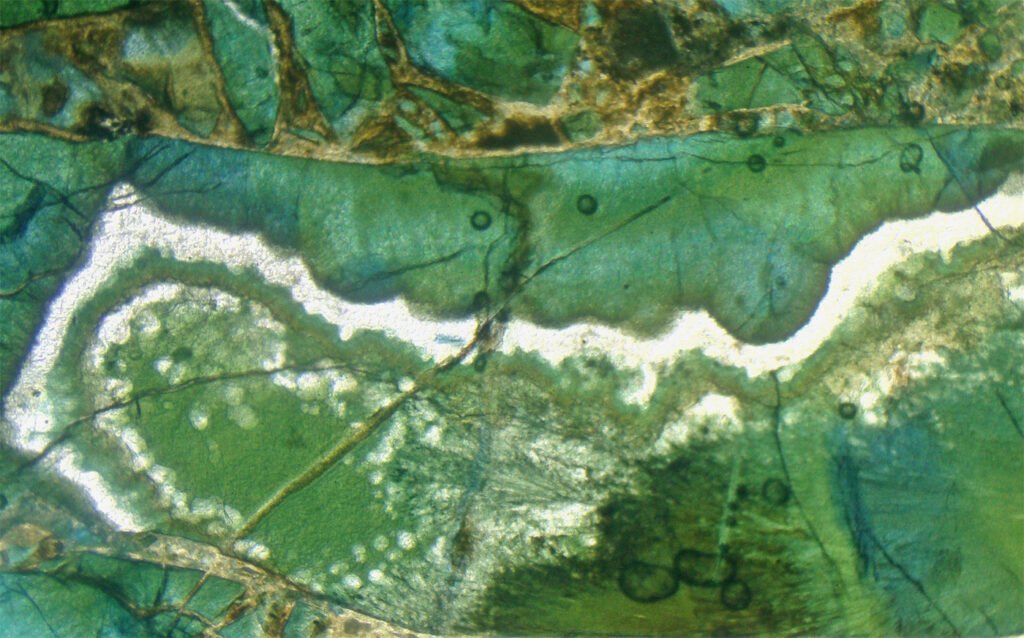
Color / Pleochroism: Green or sky blue with a green tint in most cases, but it can be bluish-black to black or, rarely, yellow.

Relief: Moderate.           

Cleavage: It does not exhibit cleavage, mainly because it is formed by submicroscopic crystals.

Habits: Massive, banded, botryoidal, globular. As it is of secondary origin, all crystals are pseudomorphoses.            

CROSSED POLARIZED LIGHT – XPL

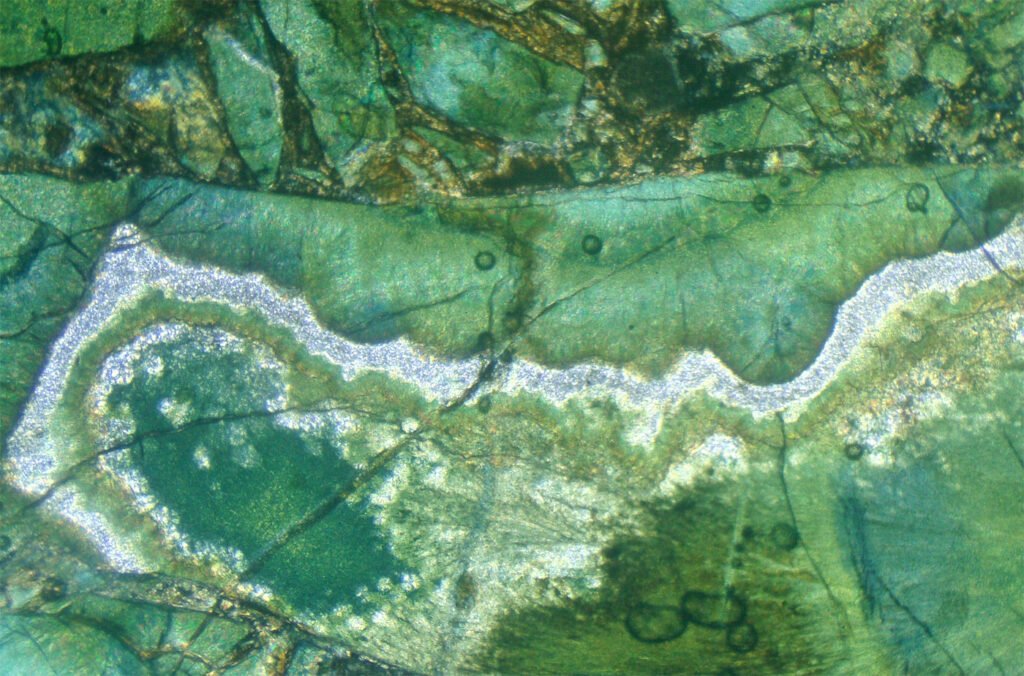
Birefringence and Interference Colors: Maximum birefringence of 0.023 to 0.05: colors up to second-order pink, but interference colors are always masked by the intense strong colors of the mineral.           

Extinction: Due to the very small size of the crystals, it is not possible to determine.           

Elongation sign:  It is not possible to determine.

Twins: No.         

Zoning: No.             

CONVERGENT LIGHT

Character: B(-)         

2V angle: It is not possible to determine.         

Alterations: Chrysocolla is an alteration product of primary copper minerals.          

May be confused with: Several other secondary copper minerals whose colors can vary between various shades of green to blue.

Turquoise is similar. 

Chrysoprase may be similar. 

5. Reflected Light Microscopy

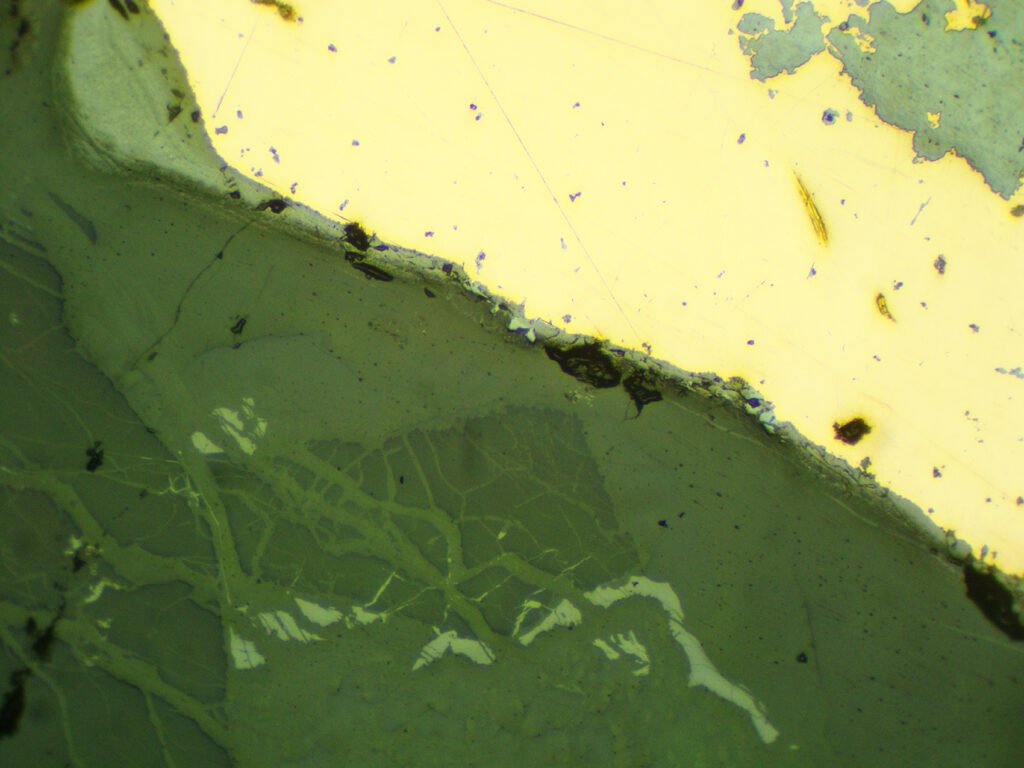
Reflected light microscopy is not the recommended analytical method for the identification of chrysocolla. However, it is important to make a polished thin section or a polished section to identify the opaque minerals that occur associated with chrysocolla.

Sample preparation: Polishing chrysocolla, as with many other associated secondary copper minerals, is relatively simple. The result isn’t of very high quality, but in XPL it’s easy to recognize the colors of the internal reflections.       

PLANE POLARIZED LIGHT – PPL

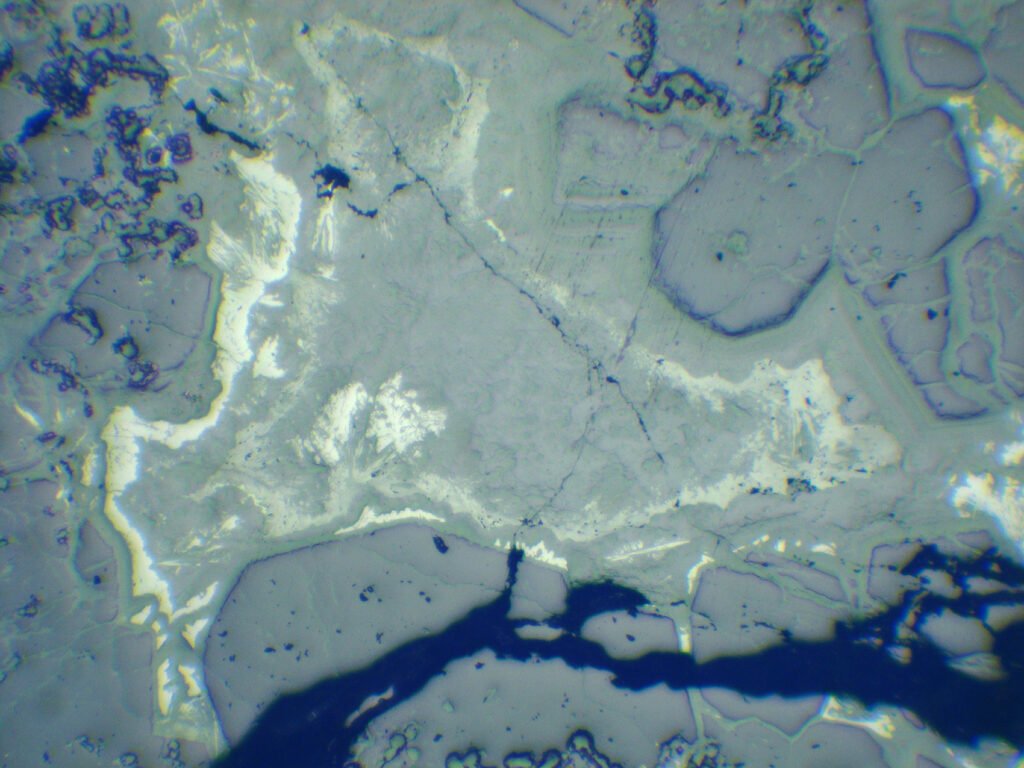
Reflection color: Dark gray.       

Pleochroism: No.      

Reflectivity: Very low (~4%)        

Bireflectance: No.       

CROSSED POLARIZED LIGHT – XPL

Isotropy / Anisotropy: No anisotropy is observed.        

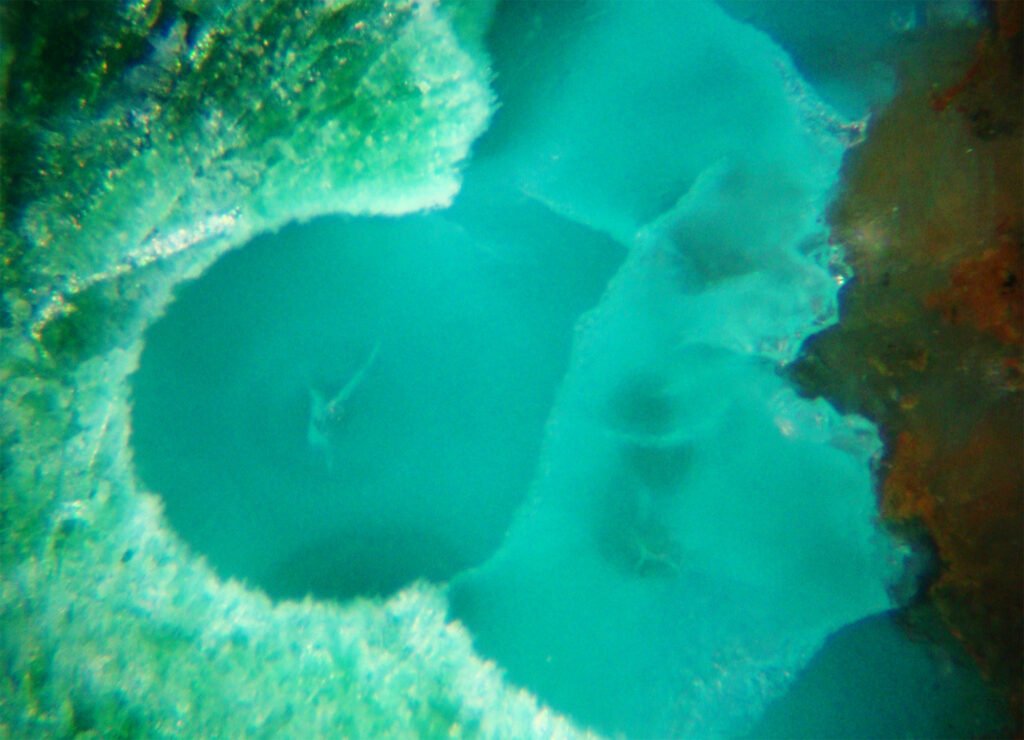
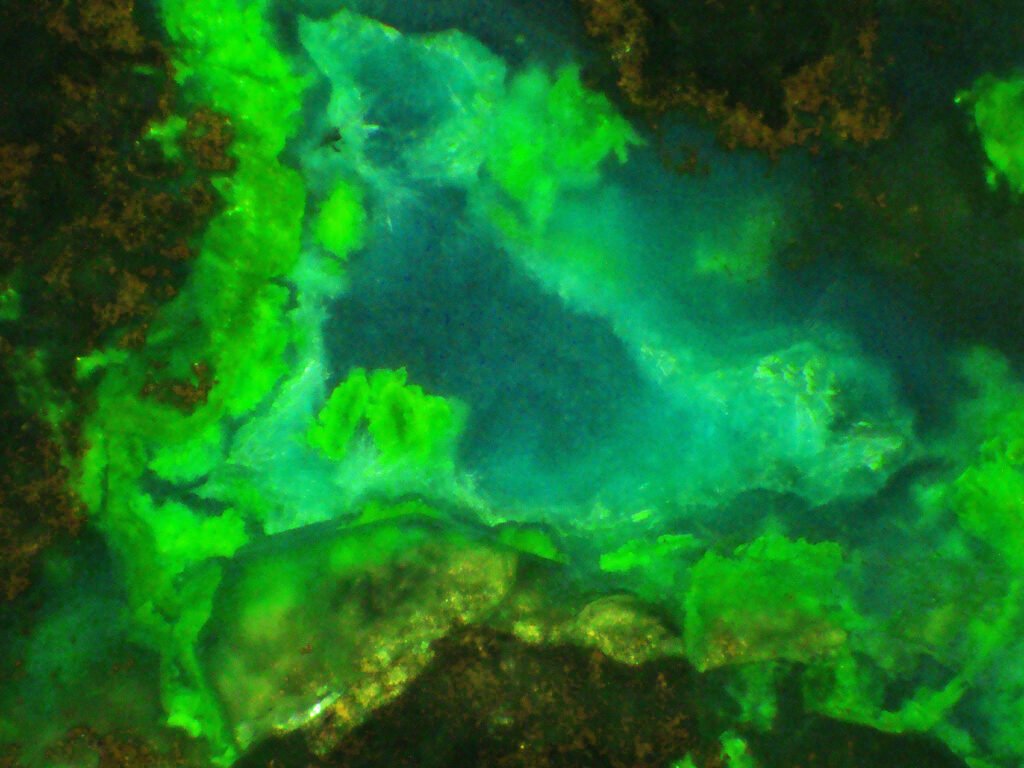
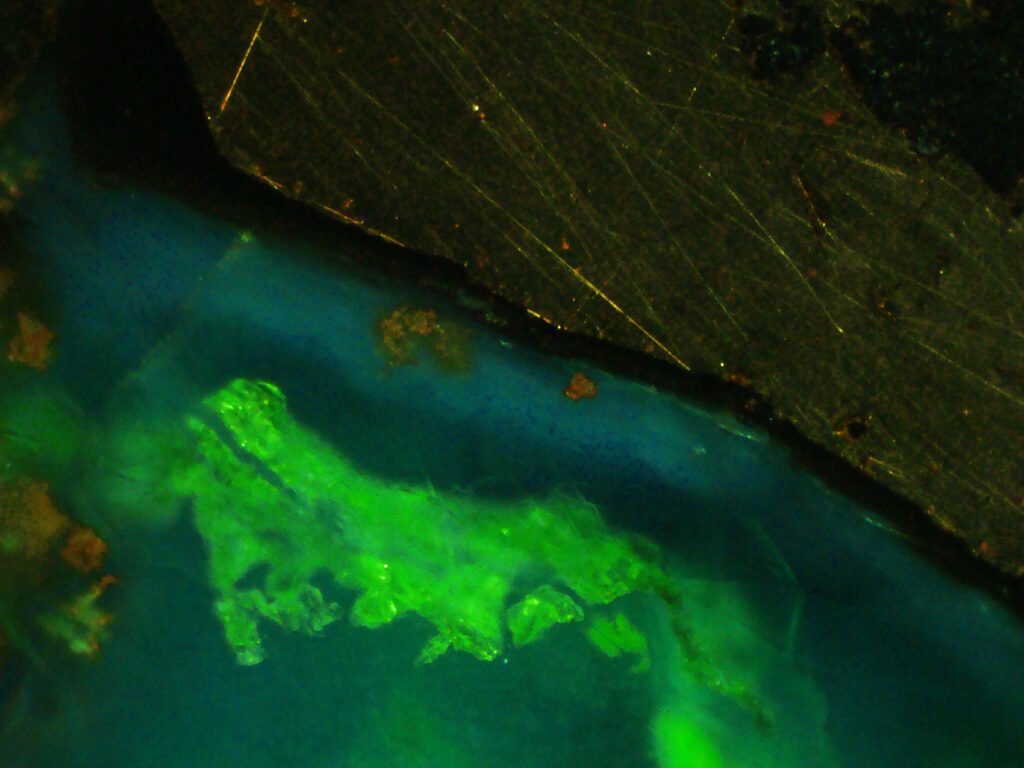
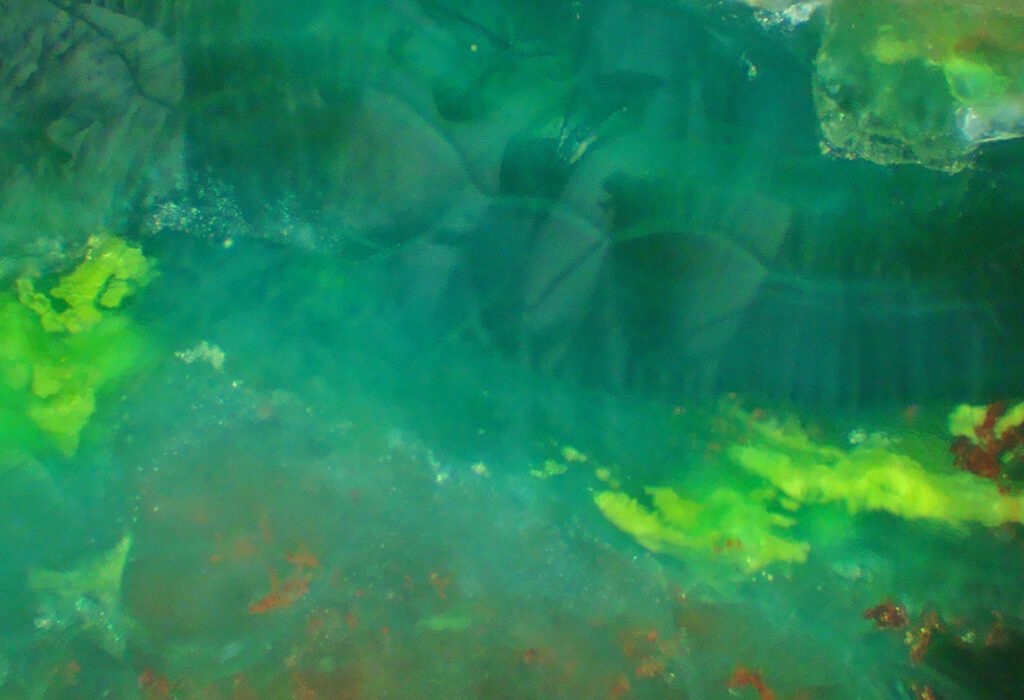
Internal reflections: Widespread between shades of light green and turquoise blue.      

May be confused with: Other secondary copper minerals whose colors range from green to blue.

Turquoise is harder.

Chalcedony is much harder and exhibits other colors.

Smithsonite shows much lighter colors,

Allophane-Cu can be very similar.

General Characteristics: