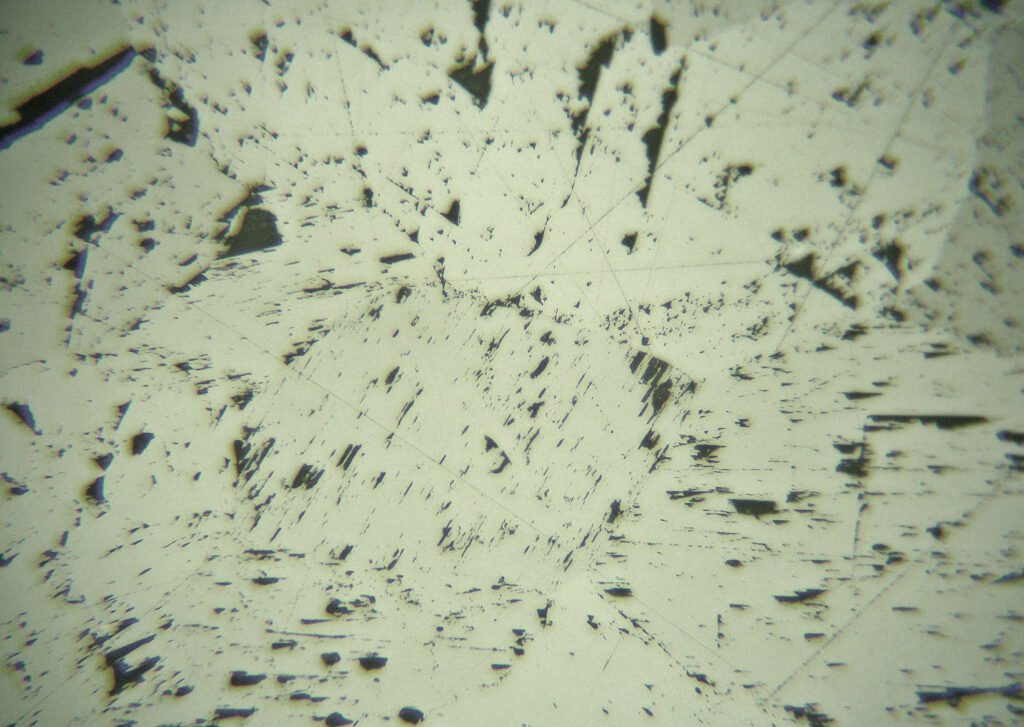
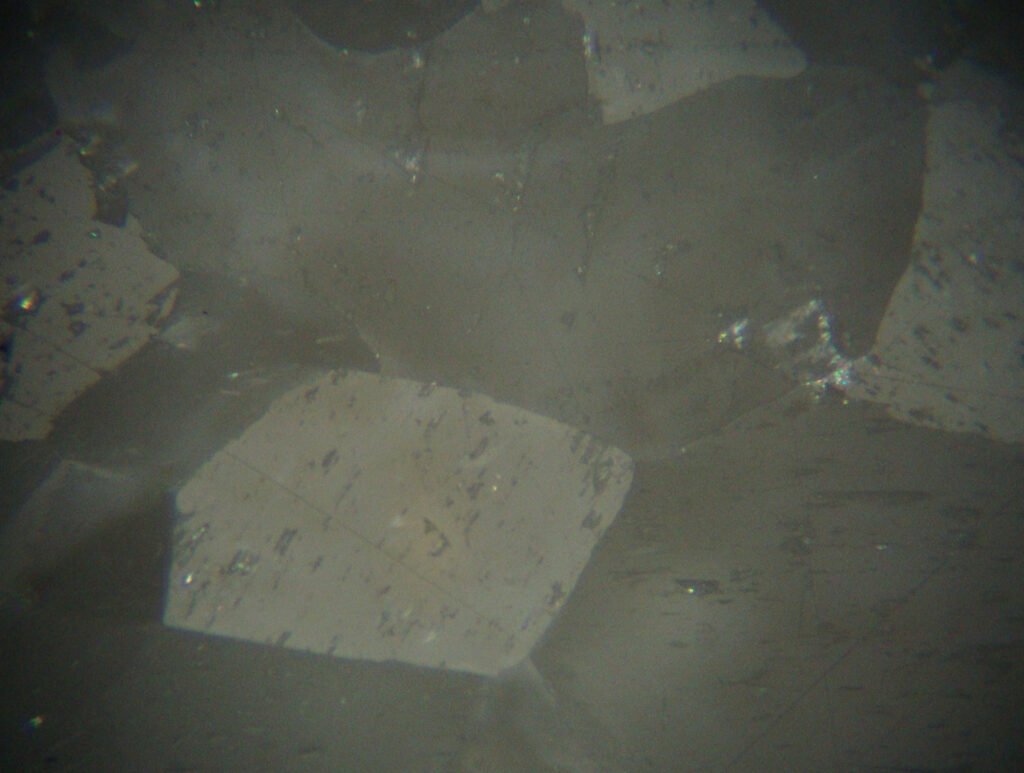
1. Characteristics
Crystal system: Trigonal scalenohedral
Color: Colorless, white, pale yellow, pale brown, somewhat pink, lilac-pink.
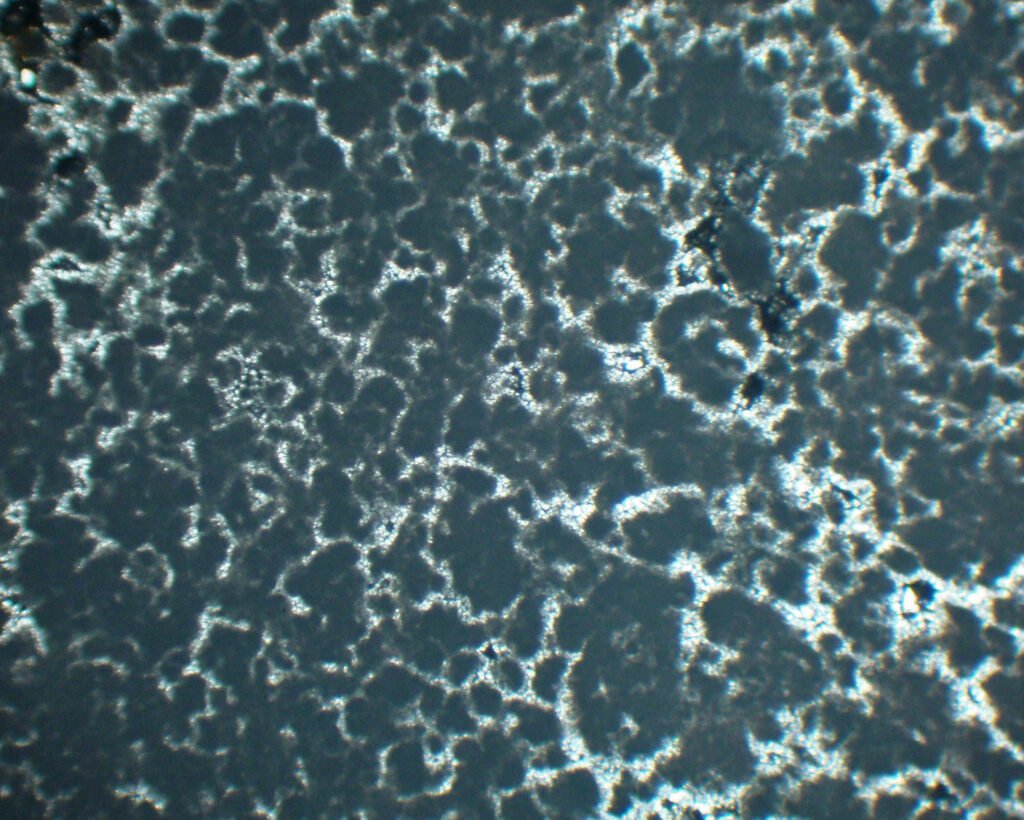
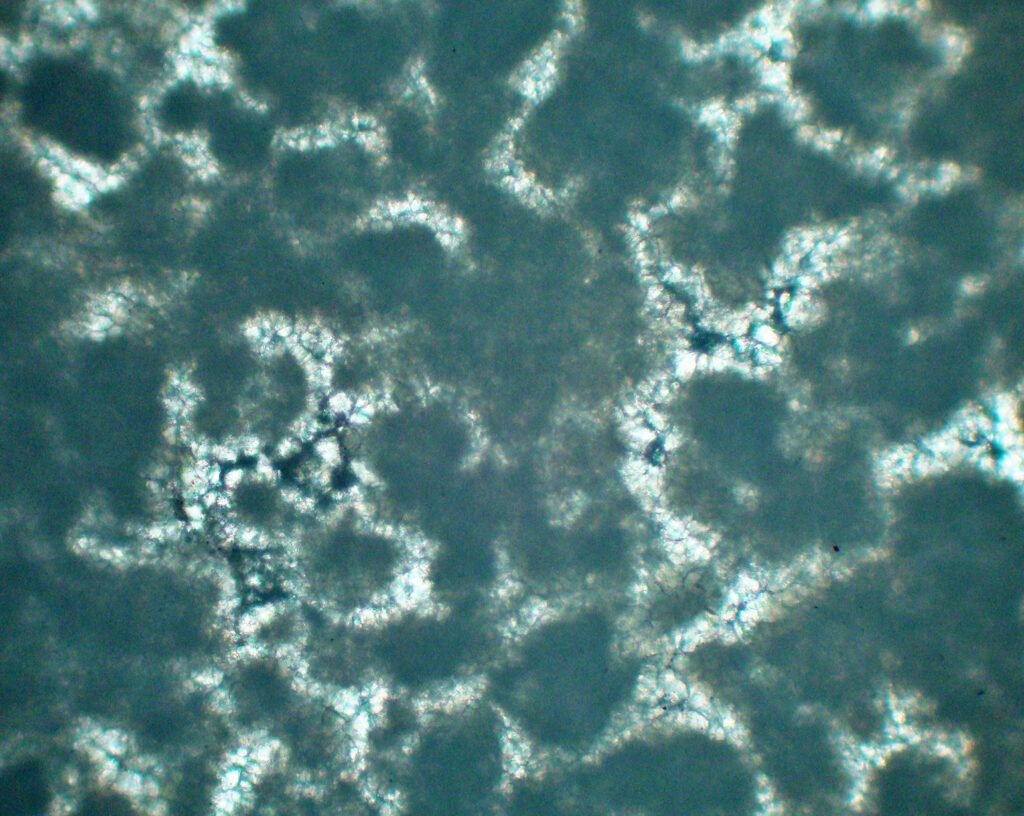
Habit: Magnesite typically occurs as an earthy to compact, chalky white, porcelain-like substance, in these cases with extremely fine granulation, formed by submicroscopic crystals. It can be fibrous, fine-grained, or coarse-grained, in the latter case resembling marble. Cryptocrystalline magnesites contain silica such as opal or chert.
Well-formed magnesite crystals are rare. They occur tabular or as rhombohedral or hexagonal prisms and can reach 30 cm in length.
Cleavage: {10-11} perfect (3 directions of cleavage forming rhombohedra, like calcite.)
Tenacity: Brittle.
Twinning: Rare, lamellar.
Fracture: Conchoidal.
Mohs Hardness: 3.5 – 4.5
Parting: No.
Streak: White.
Lustre: Vitreous.
Diaphaneity: Transparent.
Density (g/cm³): 3.0 – 3.2
2. Geology and Deposits
Magnesite occurs mainly as a product of metamorphism or alteration on magnesian igneous rocks. In contact or regional metamorphic terrains, it forms veins as a product of alteration of Mg-rich rocks such as serpentinites. It can be found in regolith formed by weathering of ultramafic rocks (pyroxenites, dunites, peridotites), where it is deposited as a consequence of the dissolution of minerals with Mn by CO2 from groundwater.
It can form as a primary mineral in igneous and sedimentary rocks. It occurs in skarns formed by metasomatism in dolomitic limestones or by metasomatism of peridotites. Occasionally it occurs in hydrothermal veins, evaporites, carbonatites and meteorites.
It is found as idiomorphic porphyroblasts in talc schists, mica schists and chlorite schists, from the alteration of calcite. It forms pseudomorphs on olivine. It occurs as gel-magnesite along with opal.
3. Mineral Associations
With quartz, uvite, florencite (Ce), hematite, svanbergite, fluorite, and serpentine. Furthermore, in metamorphic rocks, it is associated with calcite, dolomite, talc, antigorite, and chlorite. In skarns, it is associated with wollastonite, periclase, and talc.
4. Transmitted Light Microscopy
Refraction indices: nα: 1.700 nγ: 1.509
PLANE POLARIZED LIGHT – PPL
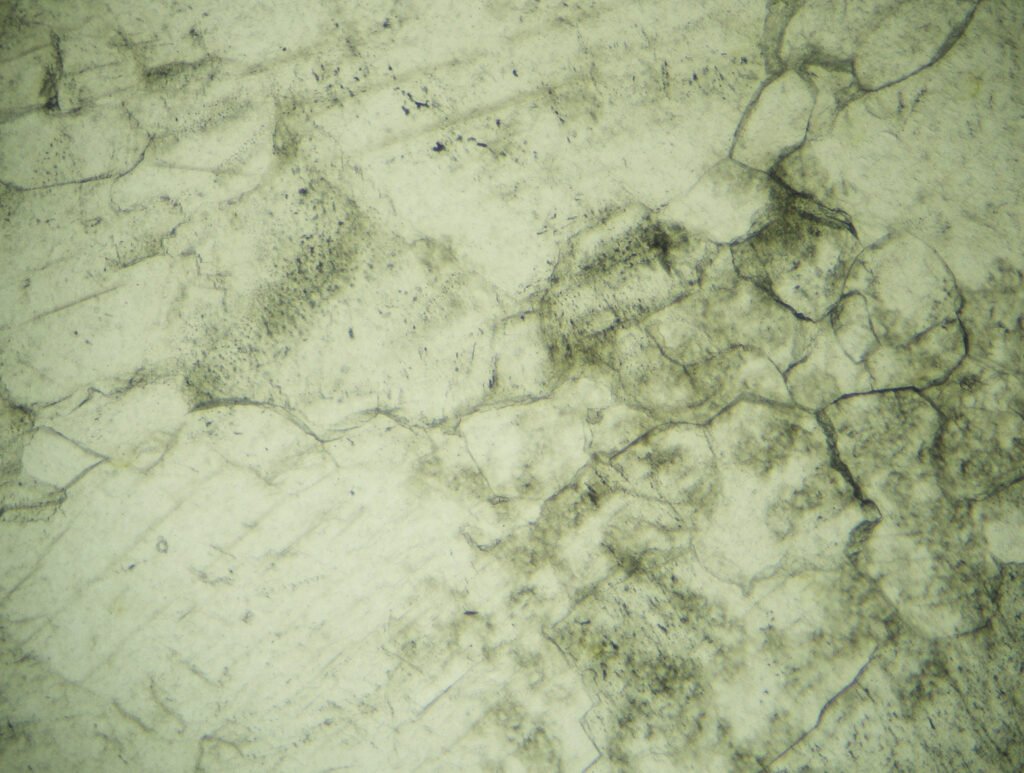
Color / Pleochroism: Colorless, gray, or pale; if Fe-rich, brownish. It does not have pleochroism.
Relief: The relief varies from low to moderate to high every 90º of rotation of the stage in crystals with well-defined cleavage. This phenomenon has been dubbed “relief pleochroism” and is typical of carbonates (calcite, dolomite, aragonite, siderite, rhodochrosite, and magnesite). When in submicroscopic crystals, these carbonates do not exhibit “relief pleochroism”.
Cleavage: Perfect rhombohedral cleavage {10-11}. Two cleavages are observed, forming angles of 60º and 120º between them.
Habits: Hypidiomorphic (subhedral) to xenomorphic (anhedral) aggregates; rarely as idiomorphic (euhedral) crystals. Also granular, fibrous, in compact porcelain masses or as gels.
CROSSED POLARIZED LIGHT – XPL
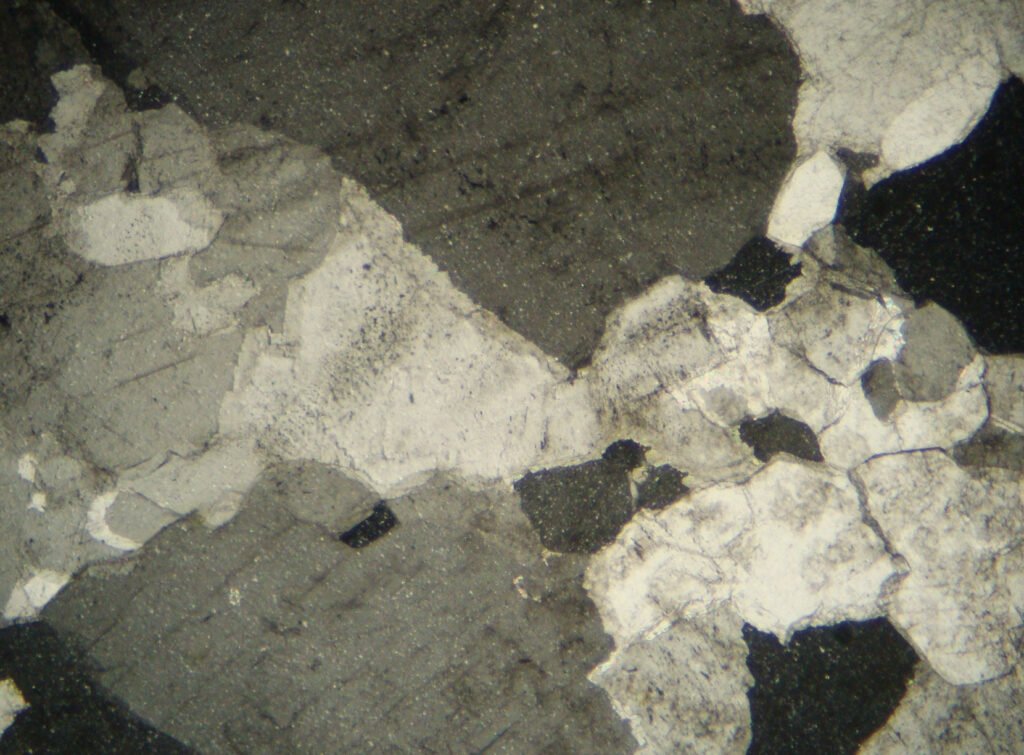
Birefringence and Interference Colors: Birefringence of 0.191 to 0.219: extremely high, resulting in pearly colors of high order (creams), difficult to classify.
Extinction: Symmetrical with respect to the cleavage planes.
Elongation sign: No information available.
Twins: rare, lamellar pressure twins, in {01-12}
Zoning: No information available.
CONVERGENT LIGHT
Character: U(-)
2V angle: No.
Alterations: A very robust mineral, difficult to alter, but it can be partially altered to brucite. When it contains iron, it may show orange to red spots along and around its cleavages and fractures.
May be confused with: It is not possible to differentiate trigonal carbonates from each other under a petrographic microscope. This is only possible with the use of a universal stage. Staining and acid solubility techniques are indicated for the identification of carbonates. The rarity or absence of twinning differentiates magnesite and dolomite from calcite (calcite generally exhibits many twins).