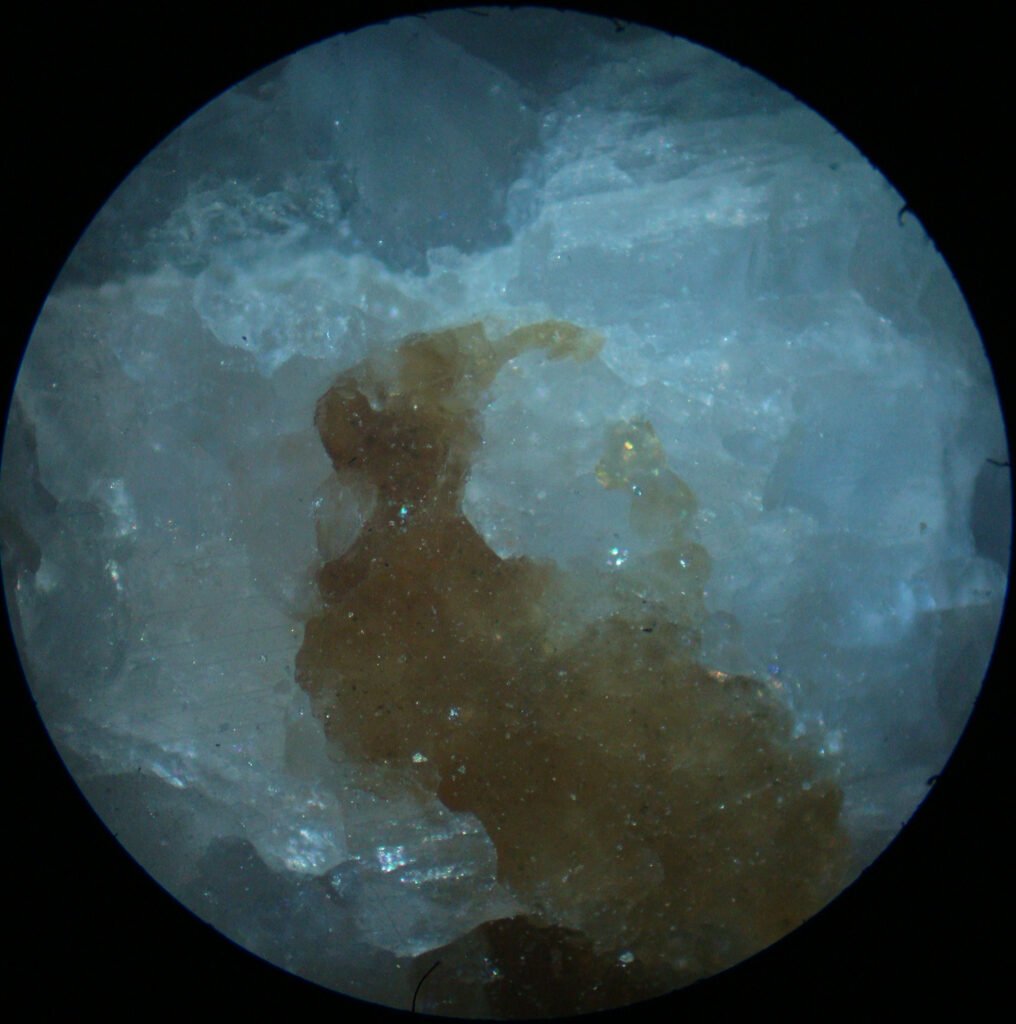
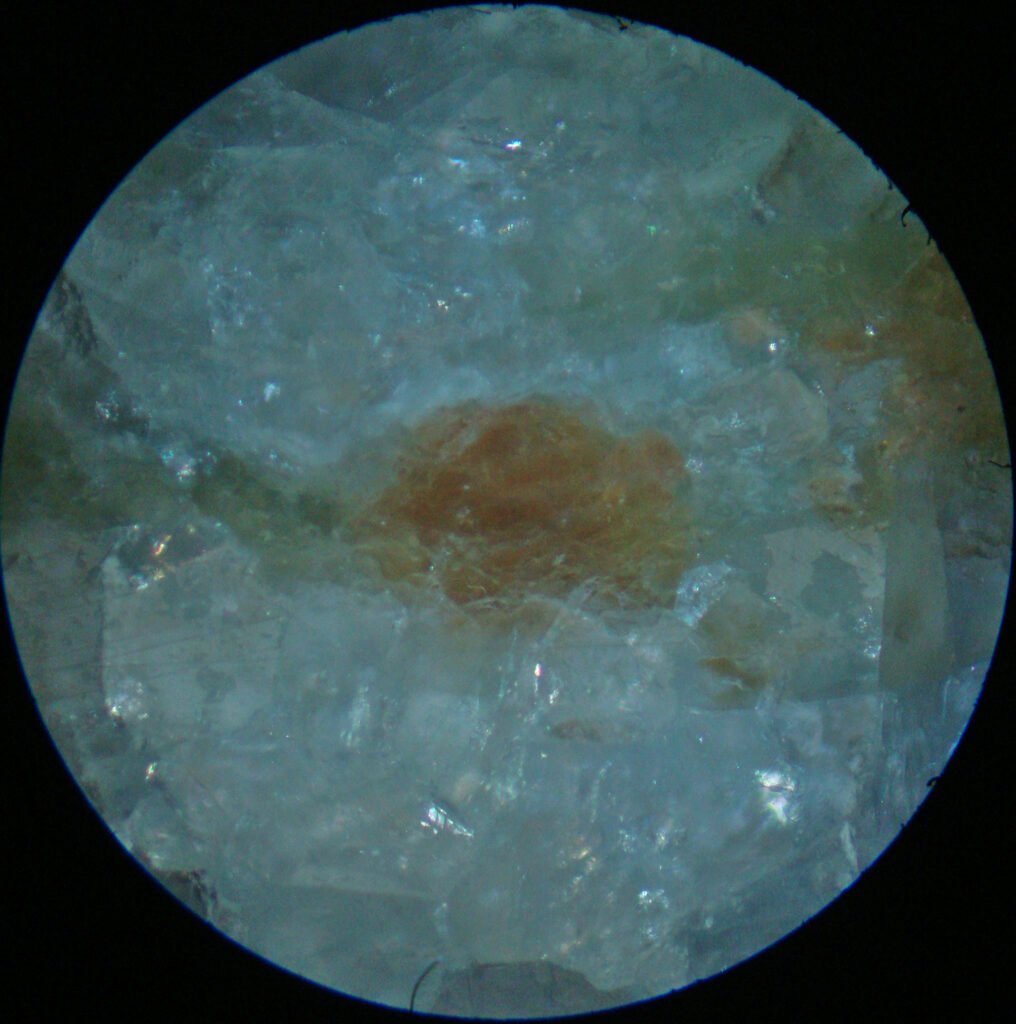
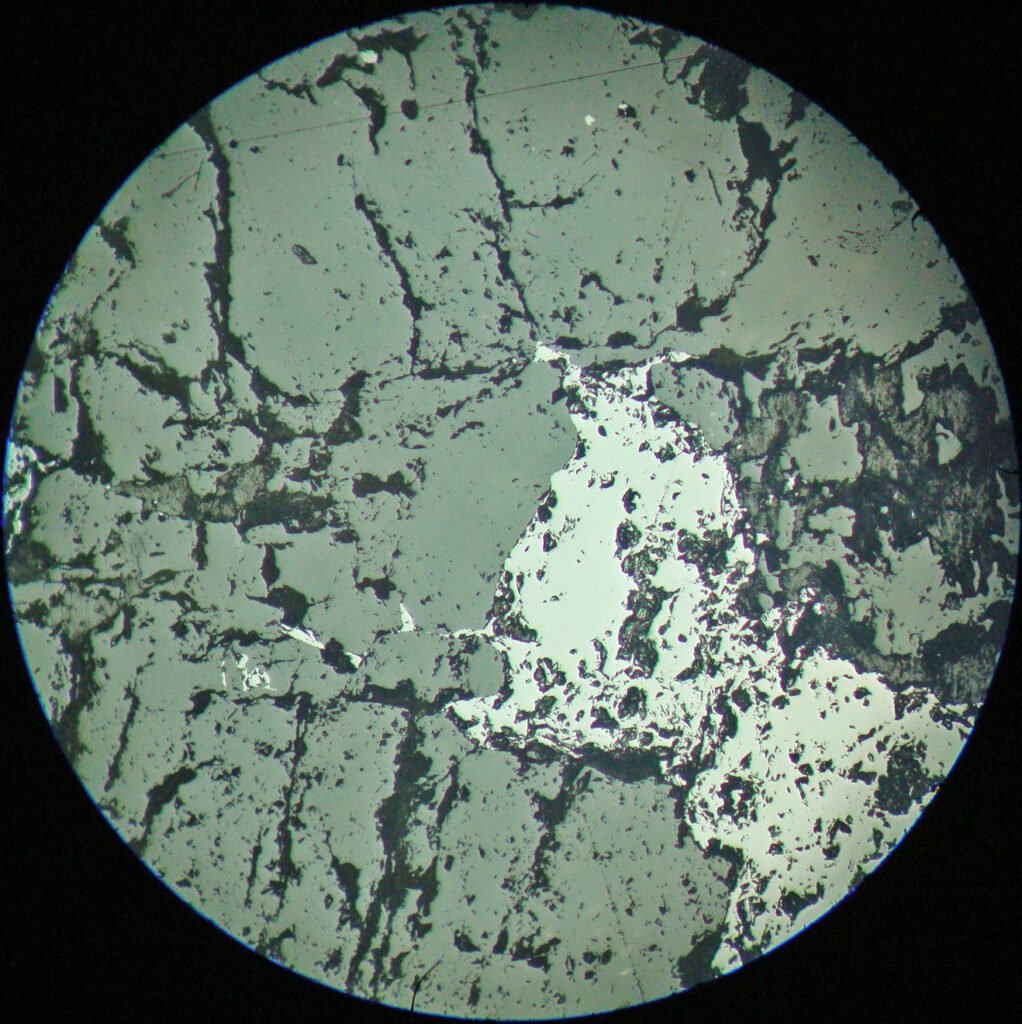
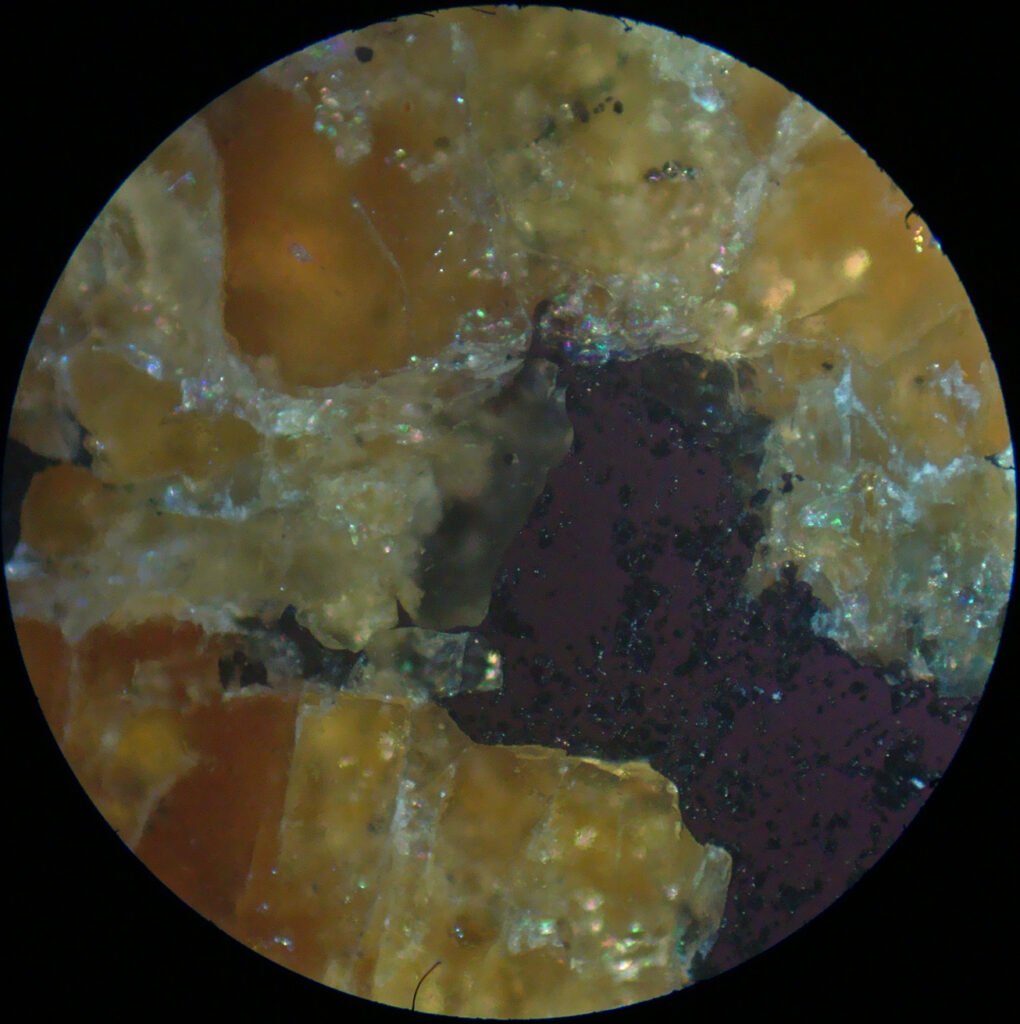
Crystal system: Monoclinic prismatic
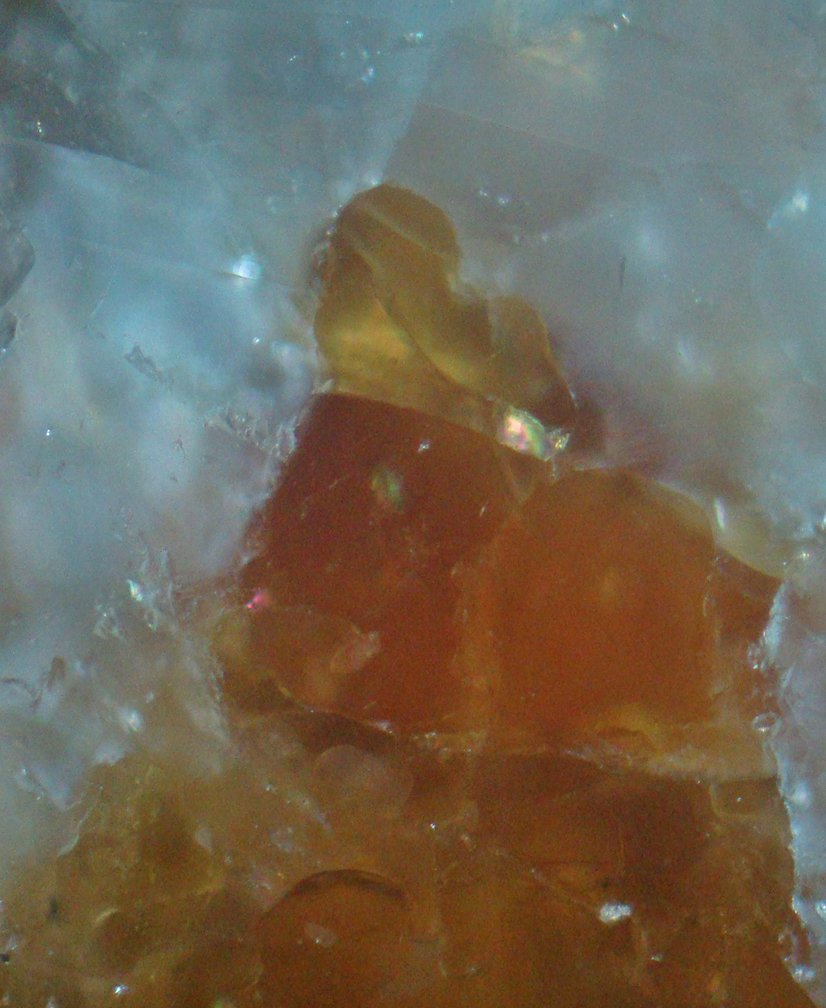
Color: Yellow, red, or brown.
Habit: Rounded grains, massive, may show somewhat flattened grains.
Cleavage: {100} poor.
Tenacity: Brittle.
Twinning: No.
Fracture: No information available.
Mohs Hardness: 6 – 6.5
Parting: On {001}.
Streak: Gray-white, yellow.
Lustre: Vitreous, resinous.
Diaphaneity: Transparent.
Density (g/cm³): 3,16 – 3,26
2. Geology and Deposits
Chondrodite is a mineral that occurs in limestones and dolomites that have undergone contact metamorphism or metasomatism from granite intrusions, especially if there is Fe-B-F metasomatism. Therefore, it can be found in skarn and marble, both calcitic and dolomitic.
It also occurs in metamorphosed ultramafic rocks (talc-schists, serpentinites, peridotites). Furthermore, in carbonatites and kimberlites.
3. Mineral Associations
It is associated with the common rock-forming minerals of these parageneses, such as calcite, diopside, olivine (forsterite), tremolite, magnetite, and phlogopite.
In this context, spinel, garnet (grossular), clinochlore, graphite, aragonite, lizardite, wollastonite, monticellite, molybdenite, and cuspidine also occur.
Carbonatites are rocks that can show a very diverse mineralogy, with around 80 different minerals. Therefore, the list of minerals that can occur associated with chondrodite can be quite extensive.
The above-cited parageneses are not exclusive to chondrodite; the other members of the Humite Group can also occur there.
4. Transmitted Light Microscopy
Refraction indices: nα: 1,592 – 1,643 nβ: 1,602 – 1,655 nγ: 1,619 – 1,675
PLANE POLARIZED LIGHT – PPL
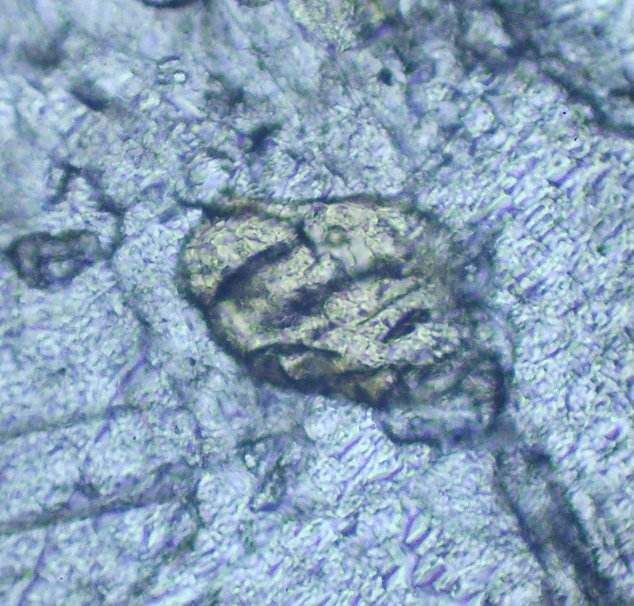
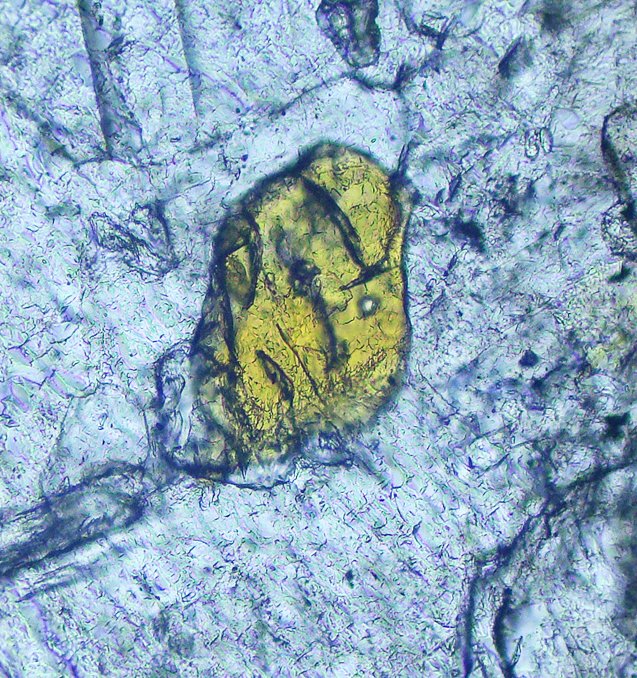
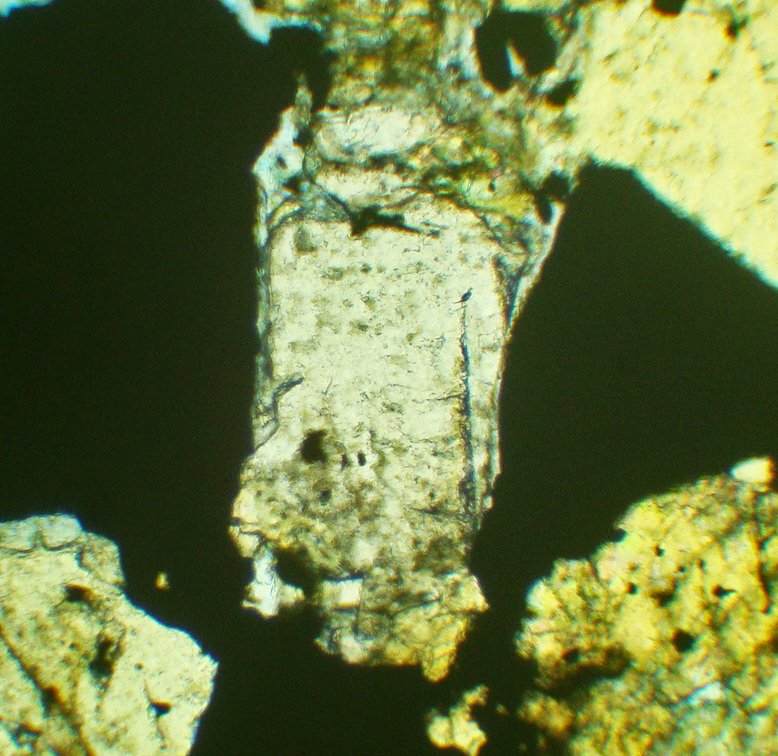
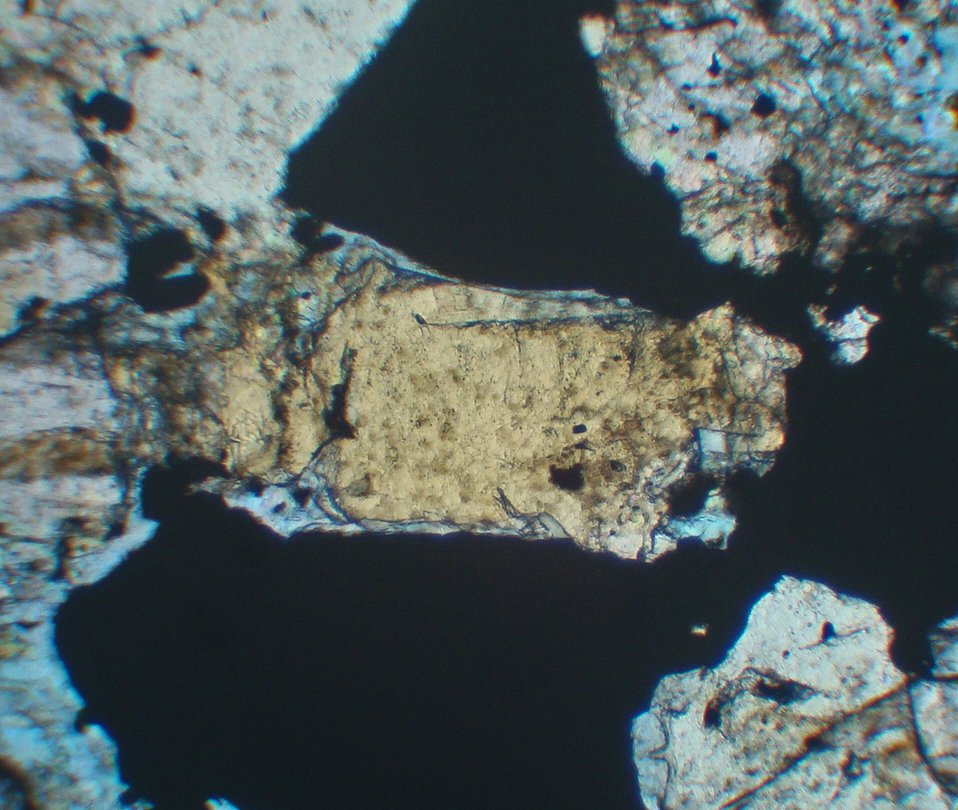
Color / Pleochroism: Pleochroic between colorless and pale yellow, greenish, or brownish tones:
X = colorless, very pale yellow, brownish yellow
Y = colorless, yellowish-green
Z = colorless, pale green
Pleochroism is sometimes very weak and may go unnoticed. In some cases, chondrodite does not exhibit pleochroism.
Relief: Moderate, similar to clinopyroxenes and carbonates that occur in the same paragenesis!
Cleavage: indistinct in {100}, not visible under a microscope. Partition in {001}.
Habits: Typically granular: isolated anhedral rounded grains or in clusters. Massive. Rare crystals, flattened parallel to {010}.
CROSSED POLARIZED LIGHT – XPL
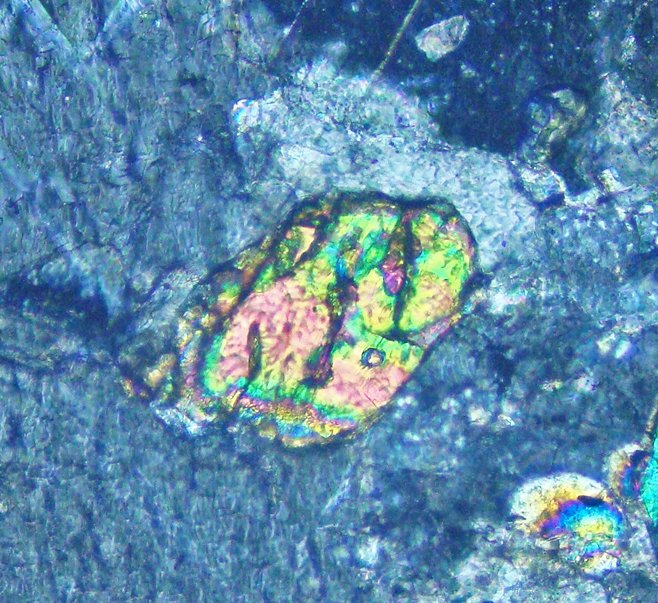
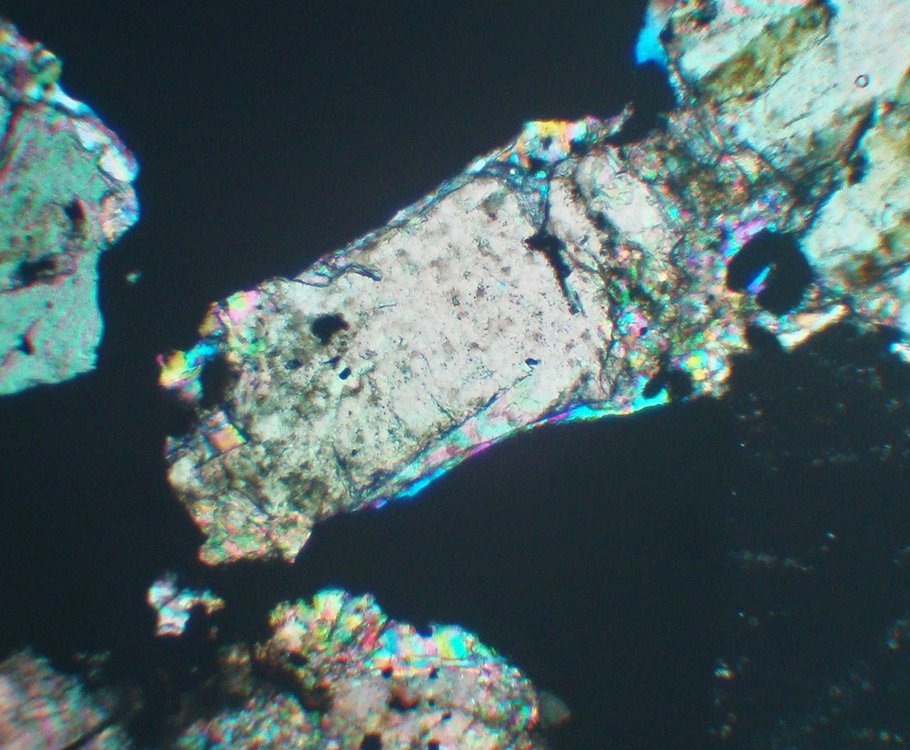
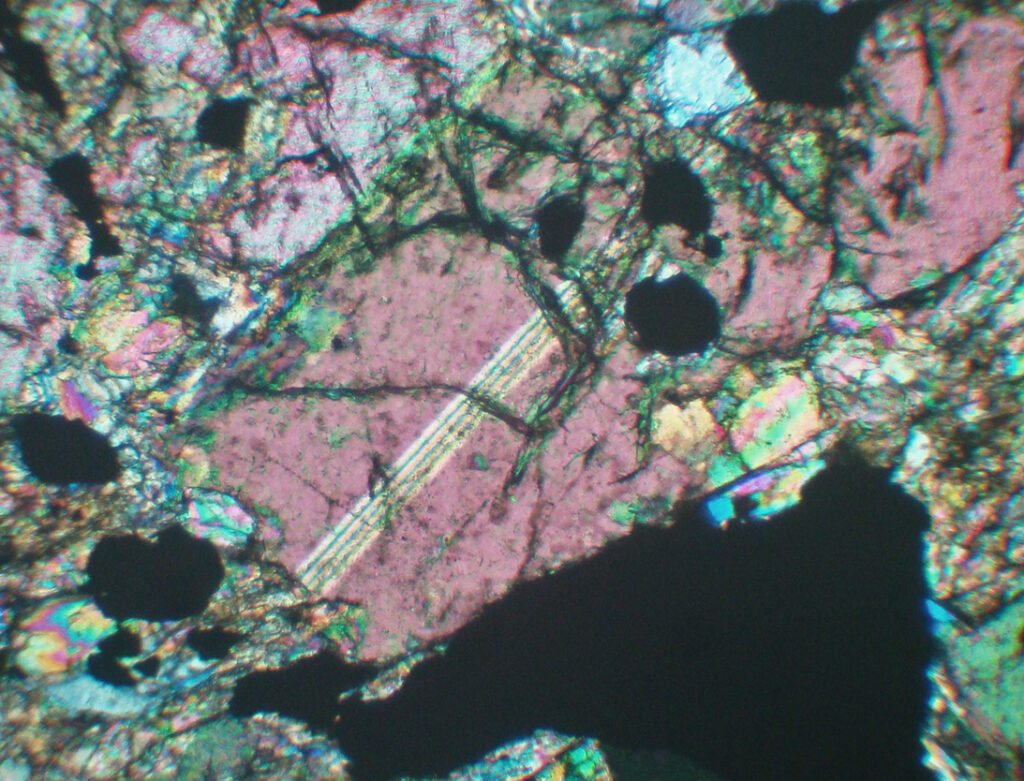
Birefringence and Interference Colors: Maximum birefringence of 0.027 – 0.032: colors ranging from first-order yellow to the middle of the second order. Strong, intense colors, combining yellow and blue.
Extinction: Oblique, 22 to 31º in relation to the cleavage. It is difficult or impossible to ascertain due to its granular habit and because it rarely shows cleavage.
Elongation sign: ES(+) or ES(-), generally difficult to determine (nor is it a diagnosic).
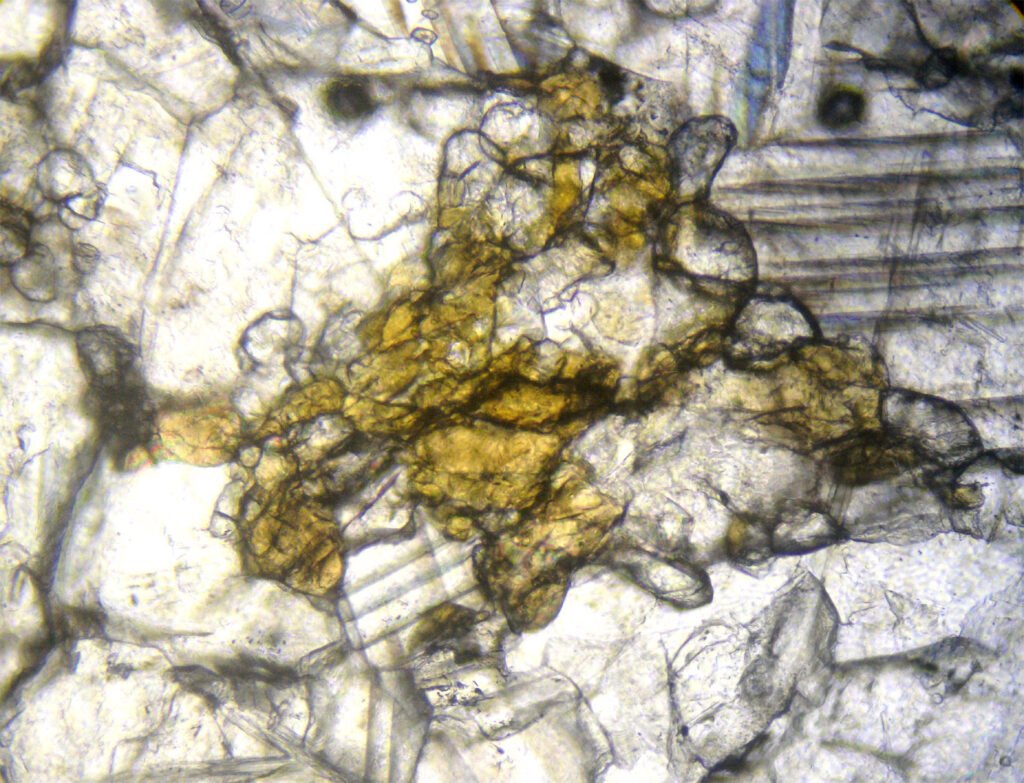
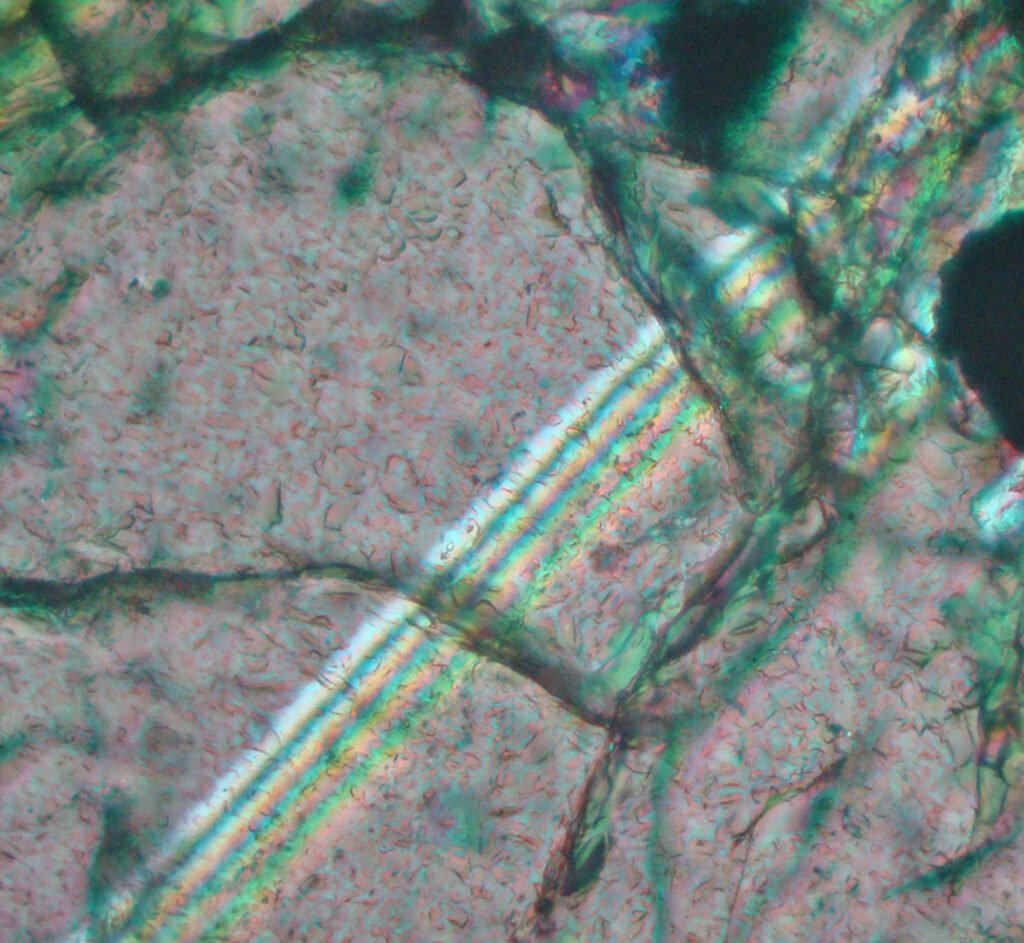
Twins: They are relatively common, simple or lamellar. They may resemble the polysynthetic twins of plagioclase.
Zoning: No information available.
CONVERGENT LIGHT
Character: B(+)
2V angle: 64 – 90º
Alterations: Chondrodite alters to chlorite or serpentine.
May be confused with: The most characteristic features are the rounded grain habit, the pale yellow to greenish colors, the twinning it frequently exhibits, and the association with marbles/carbonatites/skarns.
Diopside may be similar, but shows cleavage. When granular, it is very similar; it may be impossible to distinguish small grains of diopside from small grains of colorless chondrodite.
Olivine may be similar, but it is usually colorless, has a different alteration pattern, parallel extinction, and is usually B(-). Colorless and anhedral chondrodite grains, however, are practically indistinguishable from anhedral olivines when the olivine extinction cannot be determined.
The other members of the Humite Group exhibit similar optical characteristics: norbergite, humite, and clinohumite. The differences are:
– norbergite and humite exhibit parallel extinction,
– clinohumite shows oblique extinction, but at a smaller angle, of 9-15º.
Norbergite exhibits a smaller 2V angle, of 44-50º.
Staurolite shows similar pleochroism, but has lower interference colors and occurs in other geological contexts.