1. Characteristics
Crystal system: Tetragonal dipyramidal.
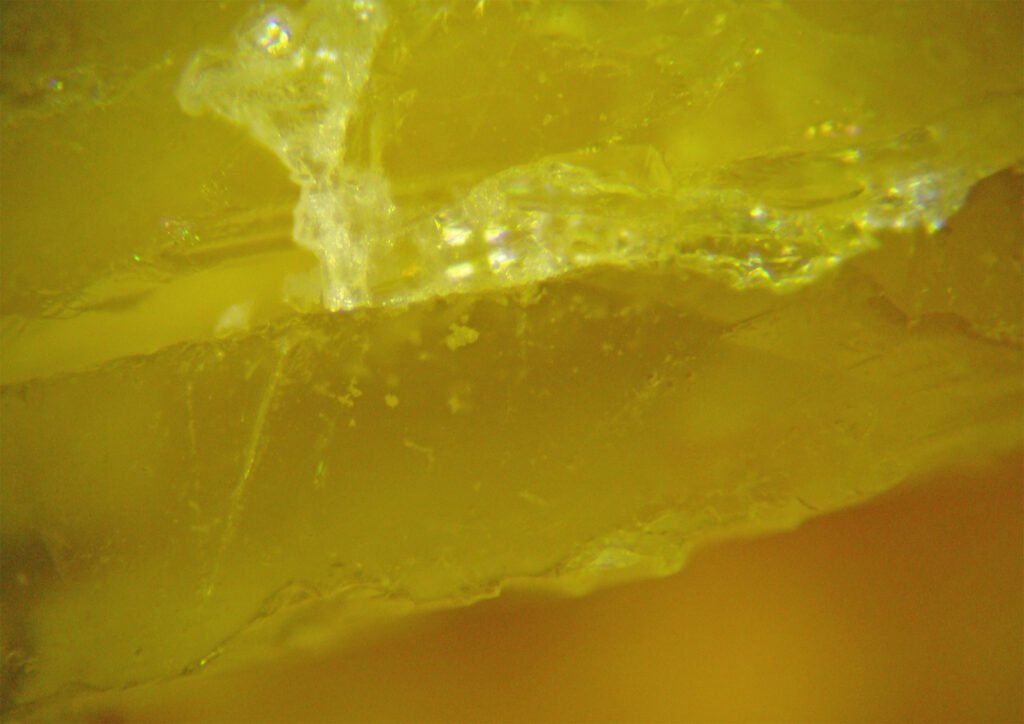
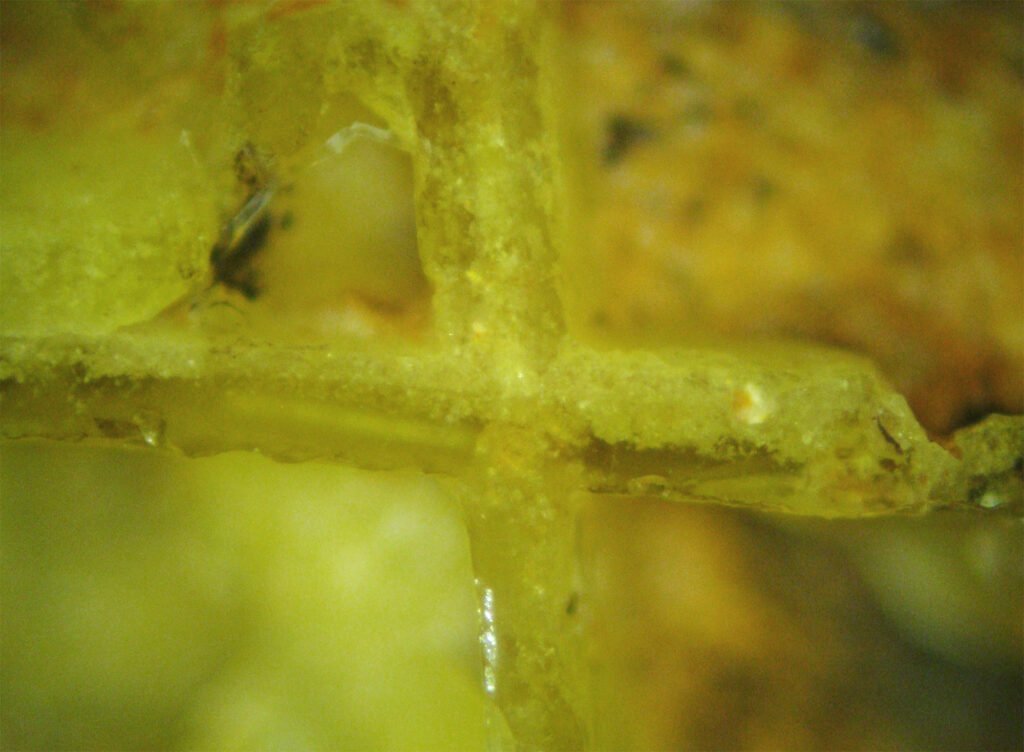
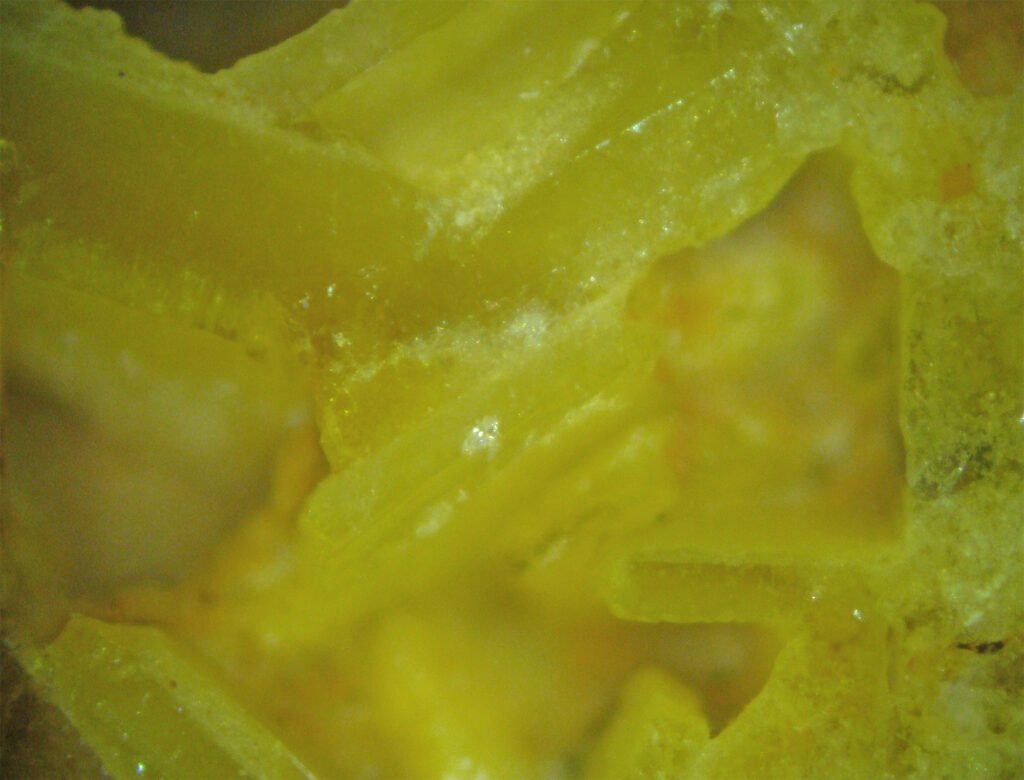
Color: Yellow-orange, yellow, honey-yellow, reddish-orange, rarely colorless, gray, brown, olive green, and even black.
Habit: Thin tabular (square) to pyramidal, can be elongated, cubic, prismatic, etc. Granular, massive.
Cleavage: {011} distinct, {001} indistinct, {013} indistinct.
Tenacity: Brittle.
Twinning: Contact twins on {001}, common.
Fracture: Irregular, subconchoidal.
Mohs Hardness: 2.5 – 3
Parting: No.
Streak: Yellowish white.
Lustre: Adamantine, resinous.
Diaphaneity: Transparent.
Density (g/cm³): 6.5 – 7.5
2. Geology and Deposits
Wulfenite is one of the many secondary minerals that form in the oxidized zones of hydrothermal Pb ores, typically where galena is associated with sphalerite. The Mo in its formula was generally introduced into the deposit from external sources.
Exceptionally, wulfenite can precipitate from volcanic gases in fumaroles at temperatures between 400 and 550°C.
3. Mineral Associations
It occurs associated with common gangue minerals such as quartz, barite, fluorite, and carbonates (calcite).
It naturally occurs with galena (from which it formed) and with other secondary Pb minerals, such as cerussite, pyromorphite, descloizite, mimetite, plattnerite, vanadinite, and anglesite.
Sphalerite is generally present in the paragenesis; consequently, secondary Zn minerals such as smithsonite and hemimorphite are found. Cu sulfides also occur, leading to the presence of secondary Cu minerals like malachite and dioptase.
It is found with molybdenite, goethite, and psilomelane.
4. Transmitted Light Microscopy
Refraction indices: nω: 2.405 nε: 2.283
PLANE POLARIZED LIGHT – PPL
Color / Pleochroism: Exhibits weak pleochroism between orange and yellow.
Relief: Very high.
Cleavage: {011} distinct, {001} e {013} indistinct.
Habits: Granular, massive; may be earthy. Crystals are generally thin and tabular; they may resemble cubes.
CROSSED POLARIZED LIGHT – XPL
Birefringence and Interference Colors: Maximum birefringence of 0.122, very high, corresponding to pearly interference colors of up to the 6th order, which are difficult to determine.
Extinction: Paralell.
Elongation sign: No information available.
Twins: Contact twins on {001}, very common.
Zoning: No information available.
CONVERGENT LIGHT
Character: U(-); it could be an anomalous B(-).
2V angle: Up to 8º.
Alterations: Alters to descloizite, ilsemannite and vanadinite.
May be confused with: Other yellow to orange transparent minerals such as orpiment and chlorargyrite, but the paragenesis is different.