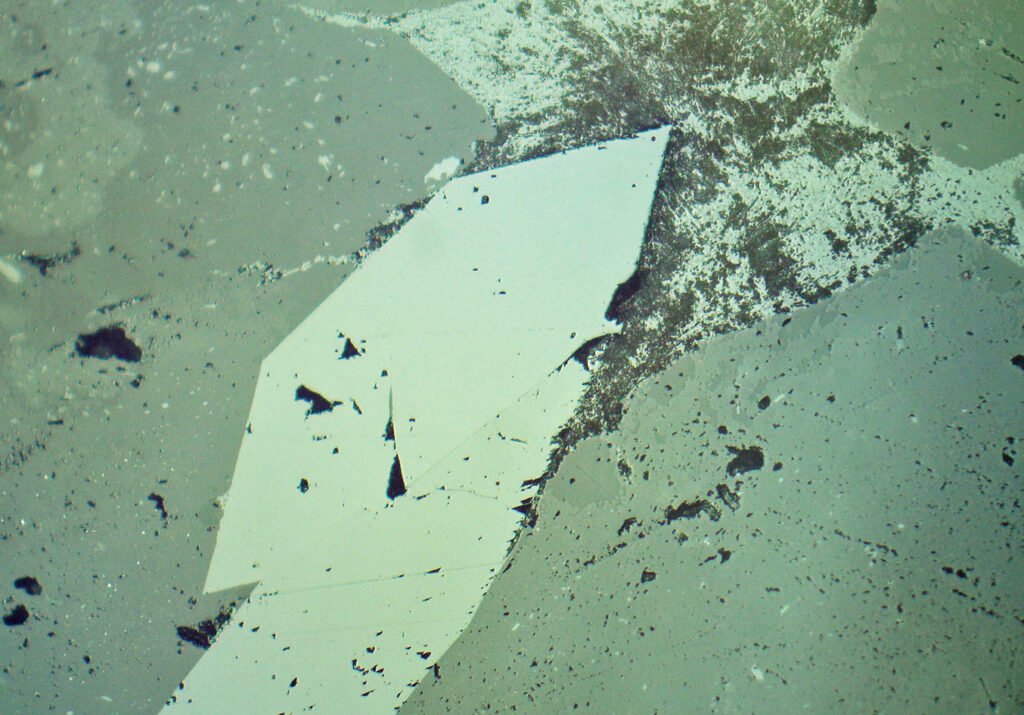
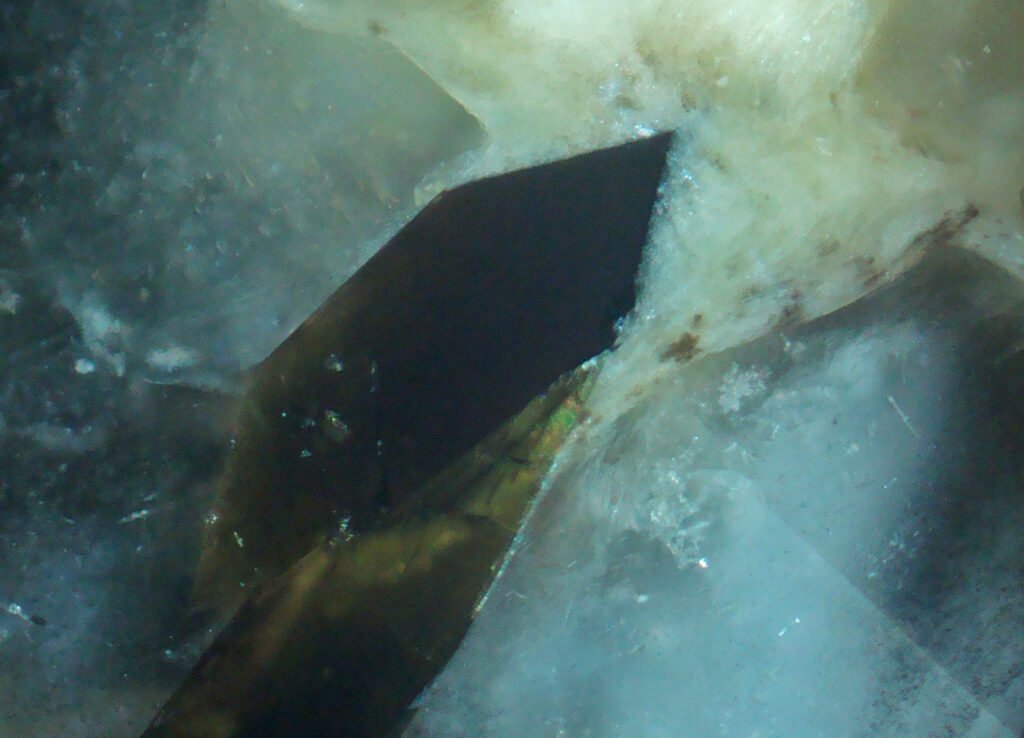
1. Characteristics
Crystal system: Monoclinic prismatic.
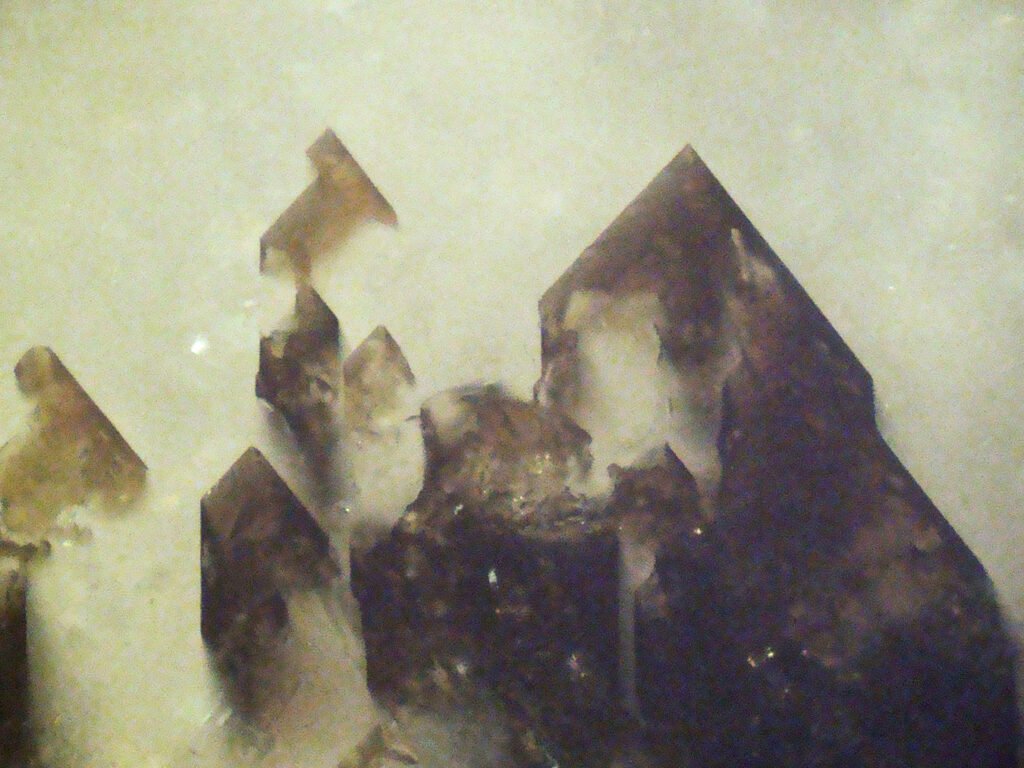
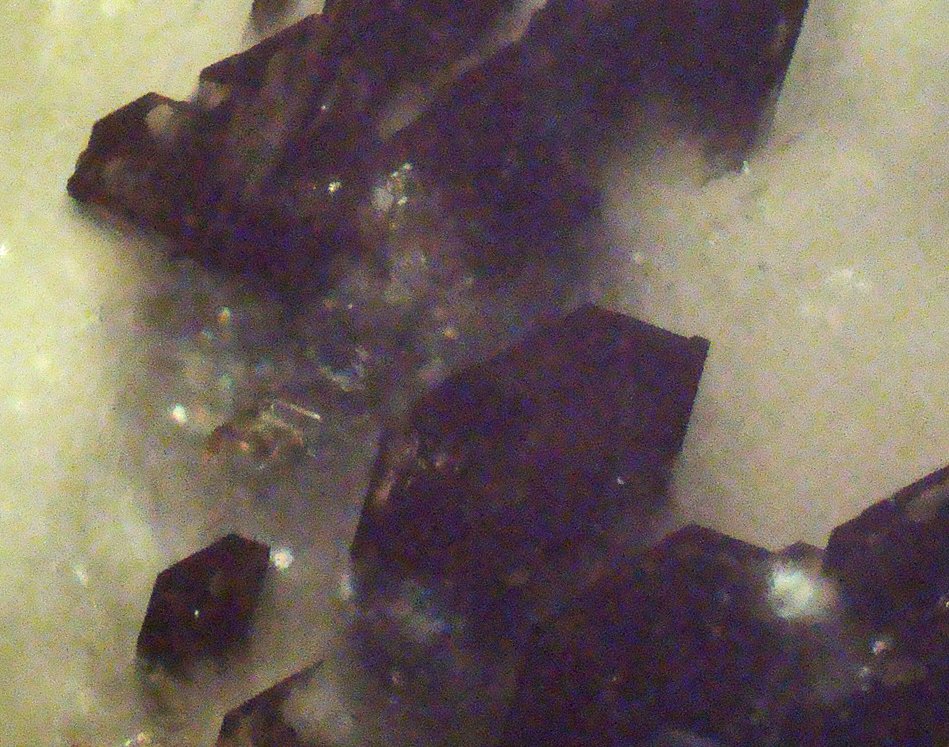
Color: Very dark green to greenish black, can be reddish brown to black.
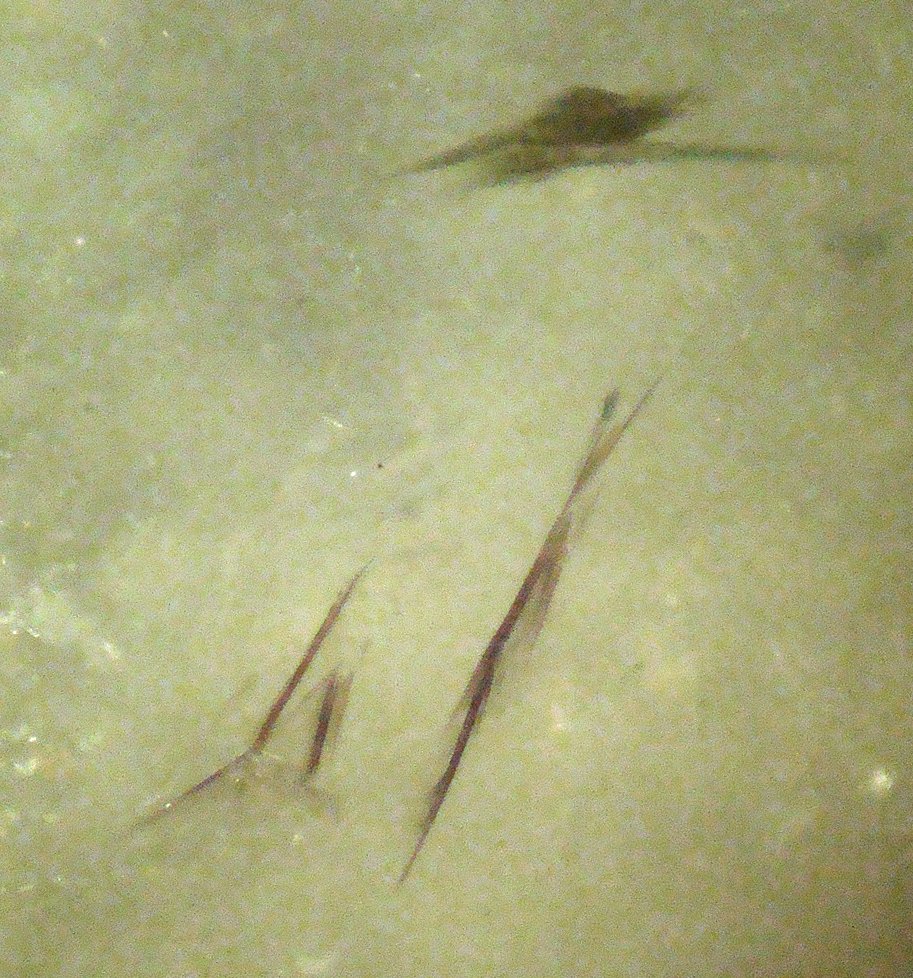
Habit: Long prismatic with pointed ends.
Cleavage: {110} good. Striations // to the c axis.
Tenacity: Brittle
Twinning: Simple and lamellar on {100}
Fracture: Irregular.
Mohs Hardness: 6
Parting: On {100}.
Streak: Yellowish white.
Lustre: Vitreous, a bit resinous.
Diaphaneity: Transparent.
Density (g/cm³): 3.5 – 3.6
2. Geology and Deposits
Aegirine is typically found in alkaline igneous rocks (rich in Na and poor in silica) such as alkali granites, syenites, phonolites, basanites, clinopyroxenites, carbonatites and pegmatites. Also in rare rocks such as apatitolites and eudialitites.
It can also occur in metamorphic rocks of the blueschist facies such as riebeckite-schists and glaucophane-schists. It occurs in rocks of regional metamorphism such as schists, gneisses and banded iron formations (BIFs). By sodium metasomatism in granulites.
It is autigenic mineral in some impure shales and limestones.
3. Mineral Associations
Occurs associated with feldspars (orthoclase, microcline, albite), feldspathoids (nepheline), amphiboles (riebeckite, arfvedsonite), astrophyllite, aenigmatite, apophyllite, serandite, analcime, eudyalite, rinkite, natrolite, quartz, rhodochrosite, zircon and catapleiite.
4. Transmitted Light Microscopy
Refraction indices: nα: 1.720 – 1.778 nβ: 1.740 – 1.819 nγ: 1.757 – 1.839
PLANE POLARIZED LIGHT – PPL
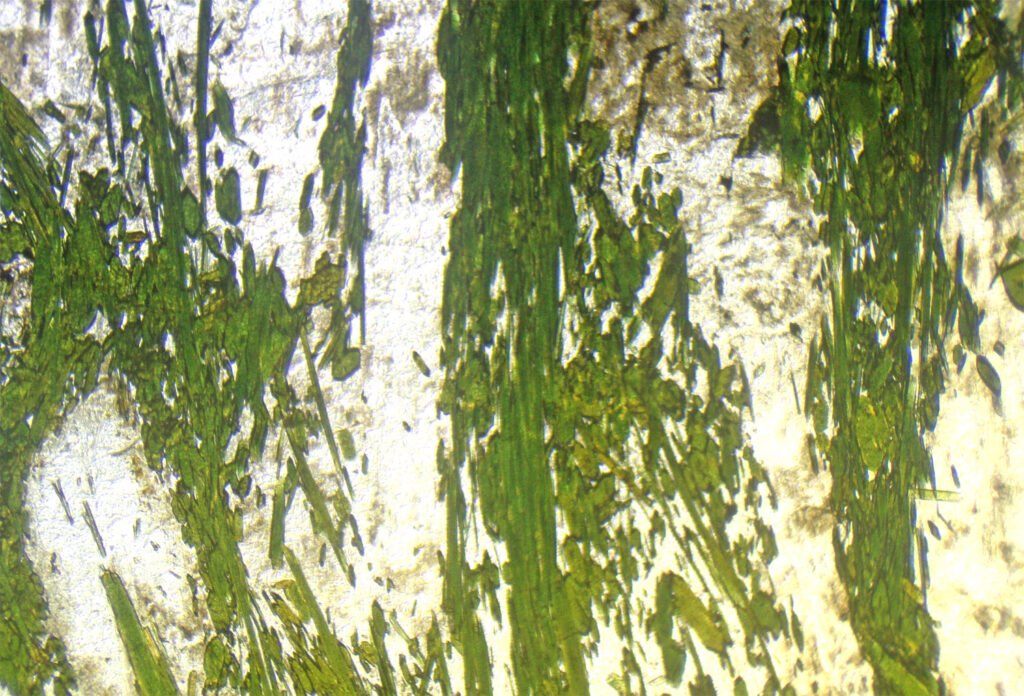
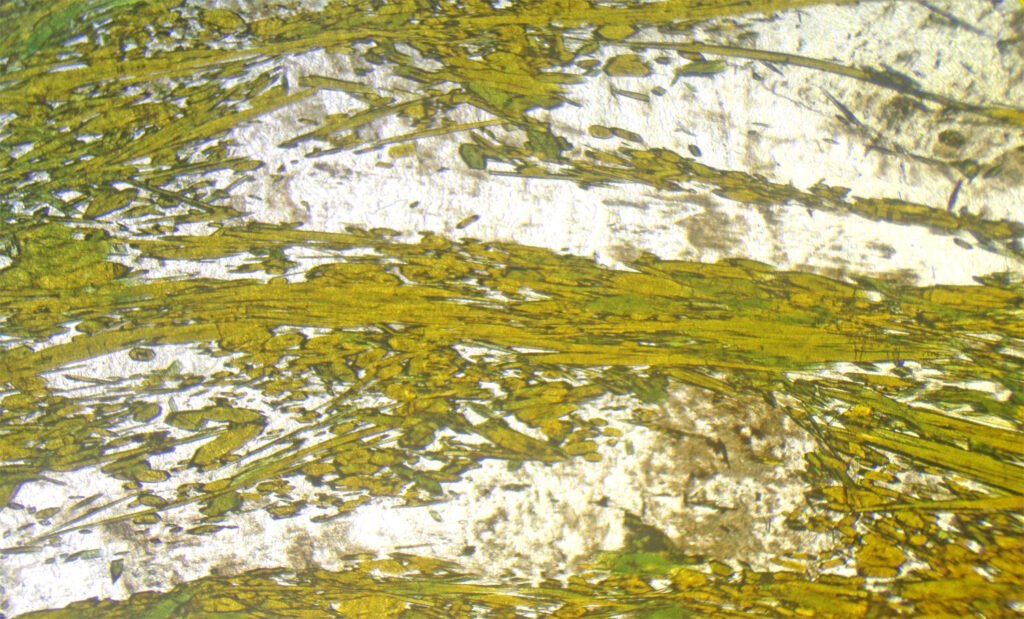
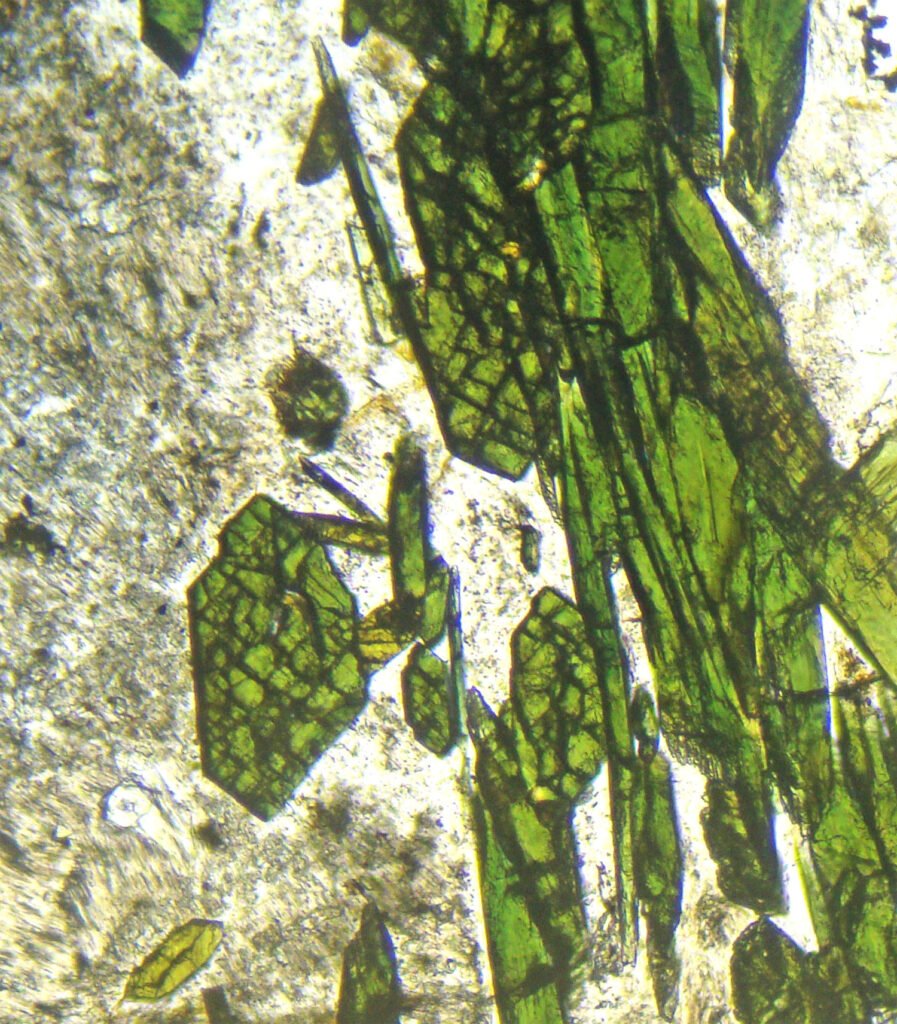
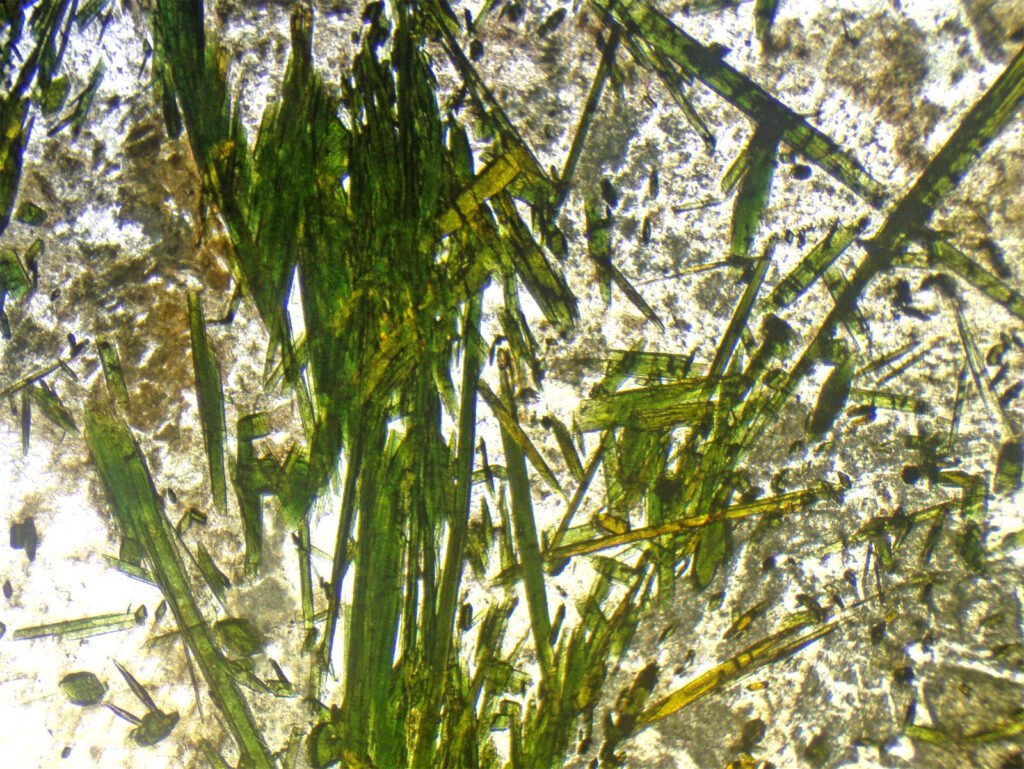
Color / Pleochroism: Moderately to strongly pleochroic:
X = deep green;
Y = green grass;
Z = yellow-brown.
Color zoning (hourglass zoning!) is common, the edges are usually darker than the crystal core.
Relief: High to very high.
Cleavage: {110} perfect: these are two cleavages that intersect at angles of 87º and 93º in the basal sections (as in all pyroxenes!).
In the longitudinal sections, only one cleavage is observed.
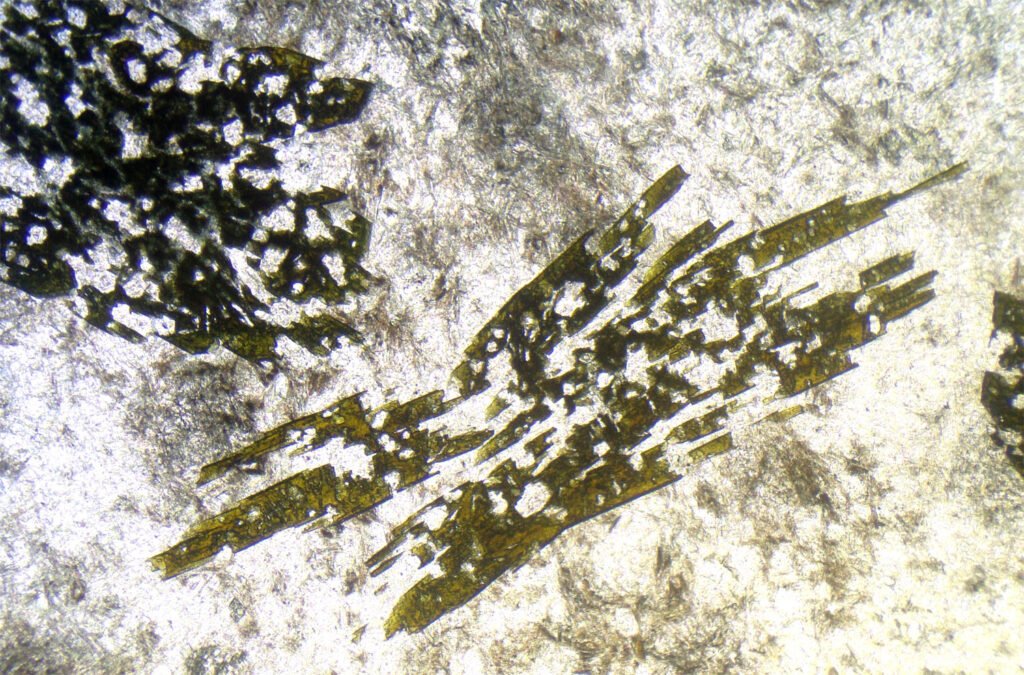
Habits: Short prismatic to acicular. Granular, skeletal and poikiloblastic habits are possible. Grains with black margins and hourglass texture are possible.
Basal sections with 8 sides are typical.
CROSSED POLARIZED LIGHT – XPL
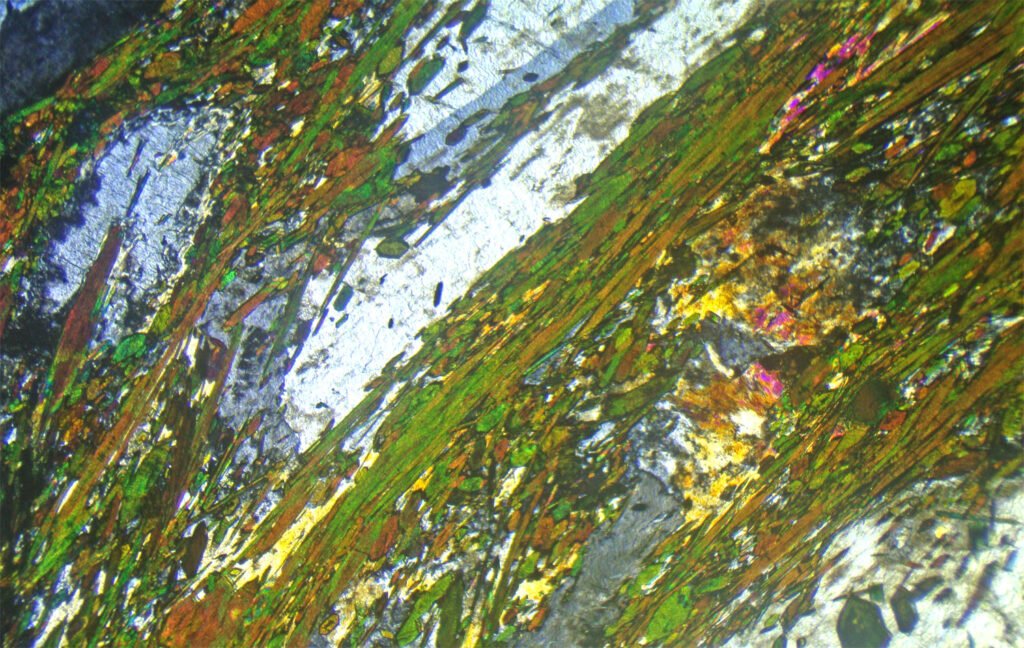
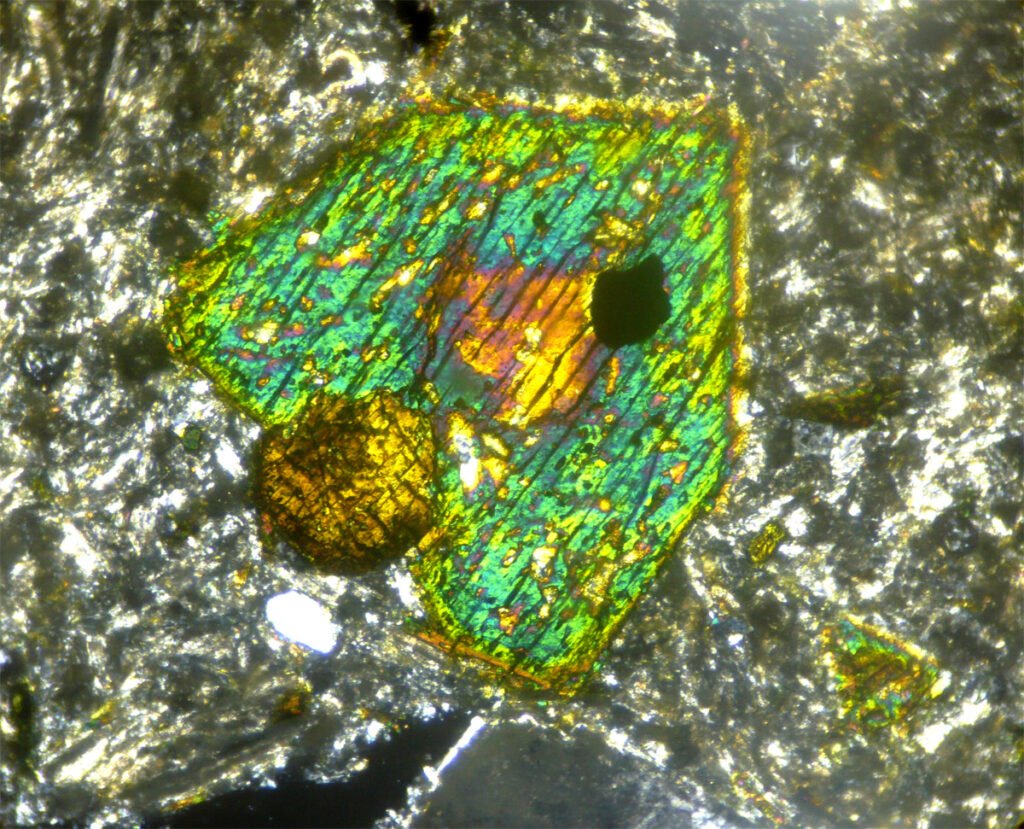
Birefringence and Interference Colors: Birefringence from 0.037 to 0.061, resulting in intense and strong colors of the 3rd and 4th order, which are often masked by the intense color of the mineral. Birefringence and extinction angle decrease with increasing iron content, until reaching aegirine-augite.
Extinction: Low-angle oblique, from 0° to maximum 12°.
Can simulate parallel extinction!
Elongation sign: ES(-)
Twins: Simple and lamellar twins in {100}, common.
Zoning: Frequently zoned, visible in PPL and in XPL.
CONVERGENT LIGHT
Character: B(+) or B(-)
2V angle: 60-70º, varies with composition.
Alterations: does not alters easily. Alteration to arfvedsonite is possible.
May be confused with: other minerals with pleochroism in green and greenish colors.
Amphiboles often are elongated too, but show angles of 124 and 56º of the cleavages in the basal sections.
Augite and diopside may be similar, but have 2V larger angles.
Orthorhombic pyroxenes exhibit straight extinction.