1. Characteristics
Crystal system: Trigonal, trapezohedral.
Color: Colorless, white, gray, it can be red, black or any other color. Multicolored is common
Habit: Massive, botryoidal, mammelon, banded.
Cleavage: No.
Tenacity: Brittle.
Twinning: No.
Fracture: Conchoidal.
Mohs Hardness: 6.5 – 7
Parting: No.
Streak: White
Lustre: Silky, resinous.
Diaphaneity: Transparent.
Density (g/cm³): 2.6
2. Geology and Deposits
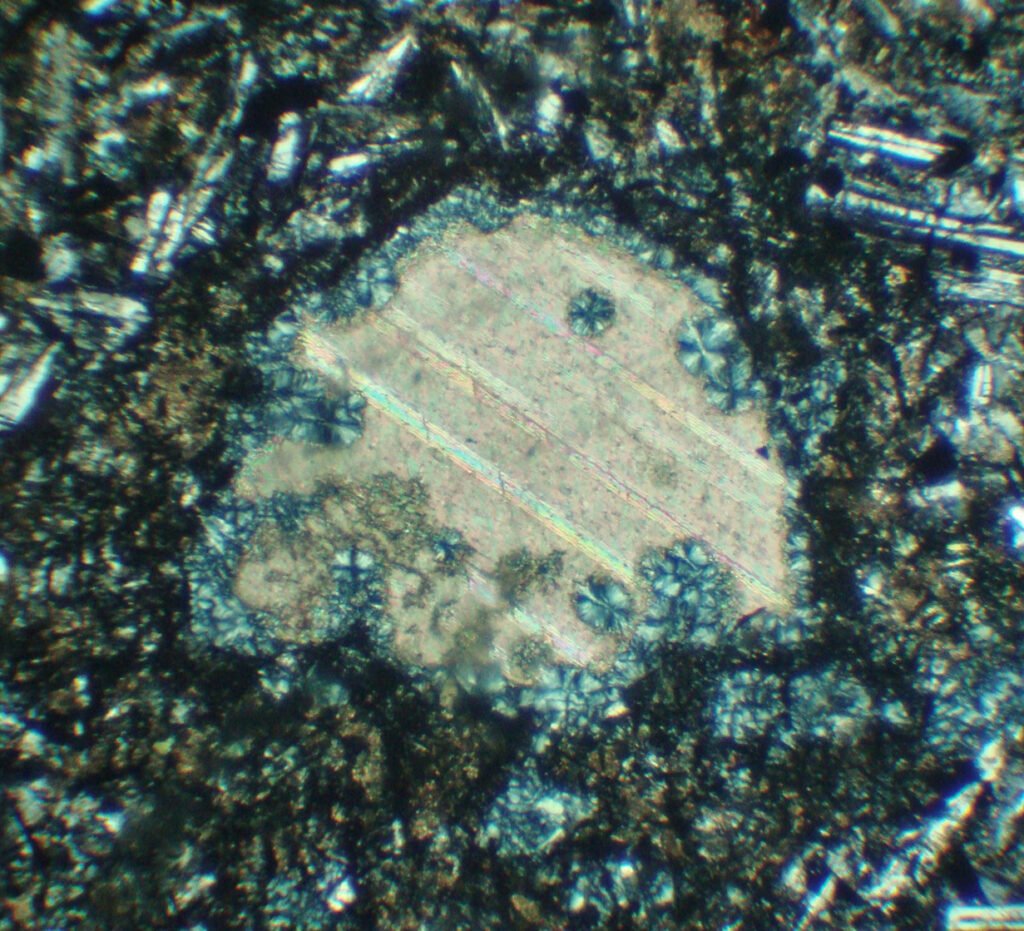
Chalcedony is very common. It is a typical filling of open spaces, which can be fractures in any type of rock, gas bubbles (vesicles) in volcanic rocks (very common!) or dissolution cavities in carbonate rocks. It is the main constituent of fossil woods, where it filled plant cells. It occurs as a filling of cavities in fossils, both in vertebrates and in invertebrates. May form crusts in low and medium temperature hydrothermal veins.
It is a major constituent in silica-rich marine rocks such as diatoms. Forms nodules (“flint”) and levels in limestone rocks. It also forms the cement of some detrital sedimentary rocks such as sandstones (silicified sandstones). It fully replaces other minerals, forming pseudomorphoses.
3. Mineral Associations
It occurs in so many geological environments that a list of associated minerals will always be incomplete.
As it often occurs in vesicles (gas bubbles) of volcanic rocks, it is associated there with other secondary minerals typical of this situation: clay minerals (celadonite), macrocrystalline quartz (rock crystal and amethyst varieties), calcite, fluorite, zeolites (many different), fluorapophyllite, gypsum, opal and many others.
In other situations, it occurs with goethite, hematite, pyrite, siderite, etc.
4. Transmitted Light Microscopy
Refraction indices: ne: 1.538 – 1.543 no: 1.530 – 1.533
PLANE POLARIZED LIGHT – PPL
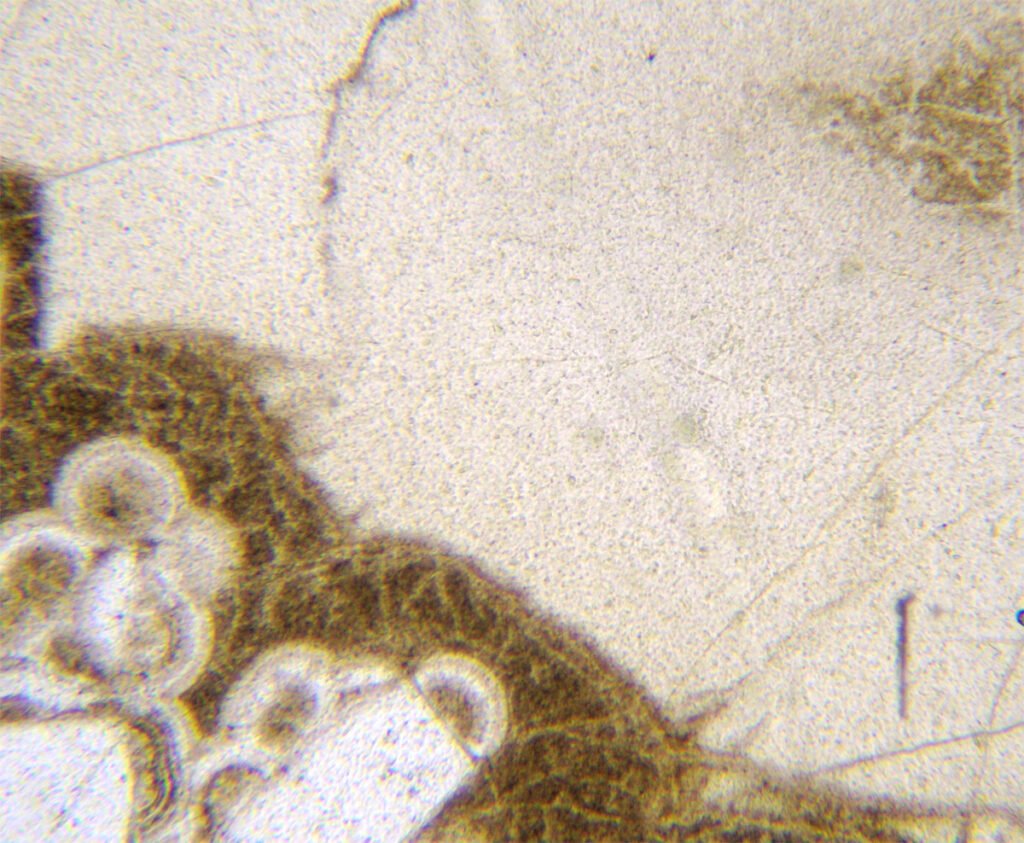
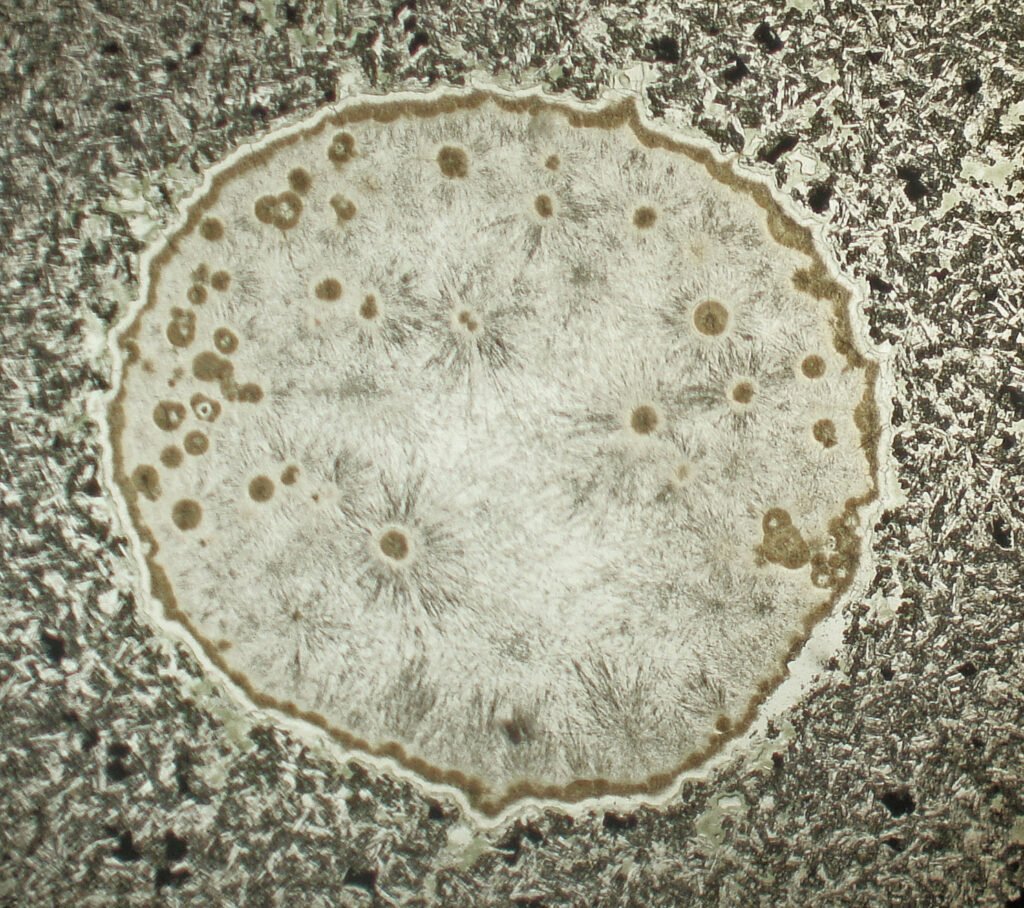
Color / Pleochroism: Colorless, sometimes pale brown.
Never shows pleochroism.
Relief: Low positive or low negative.
Cleavage: No.
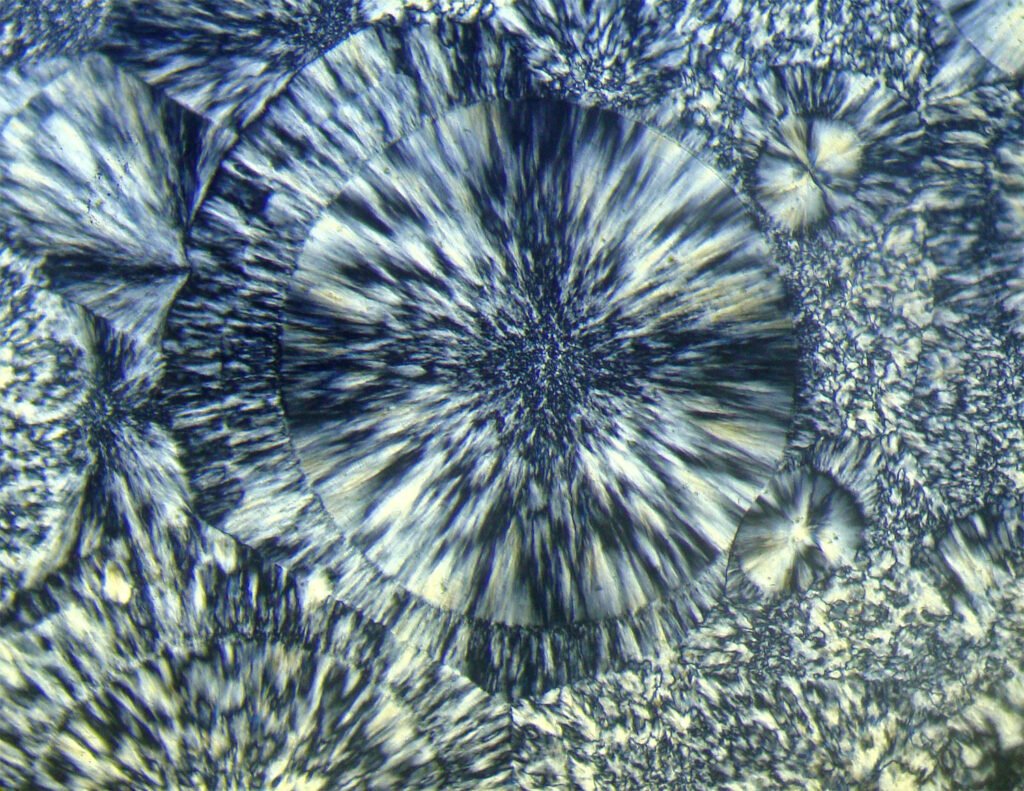
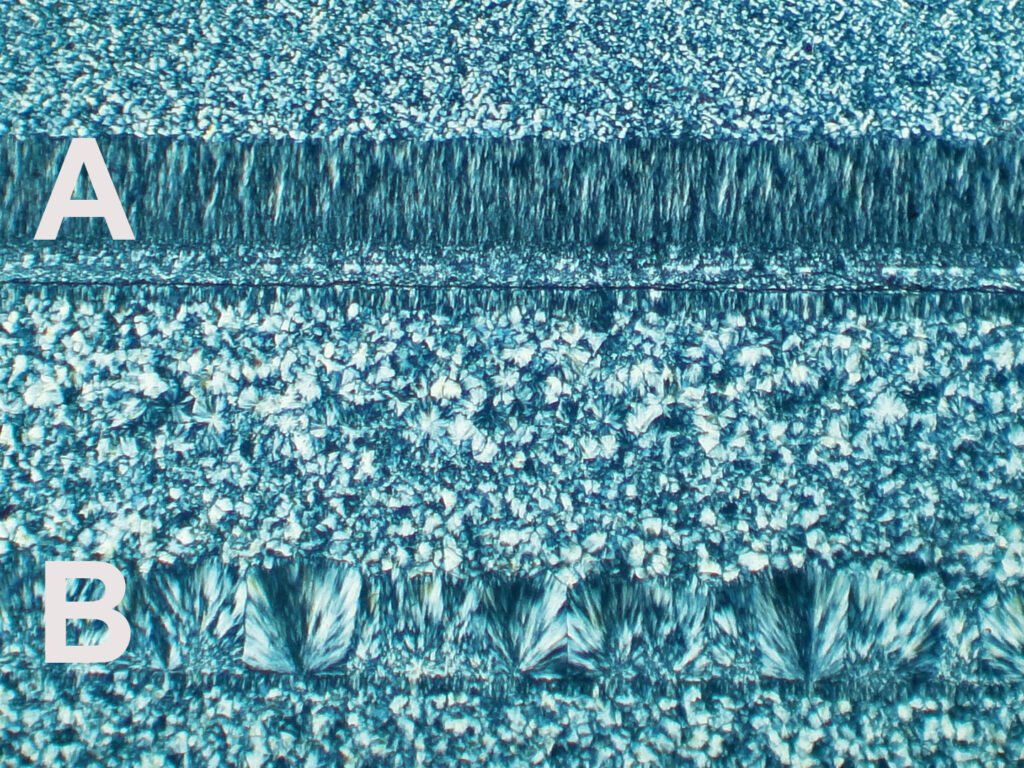
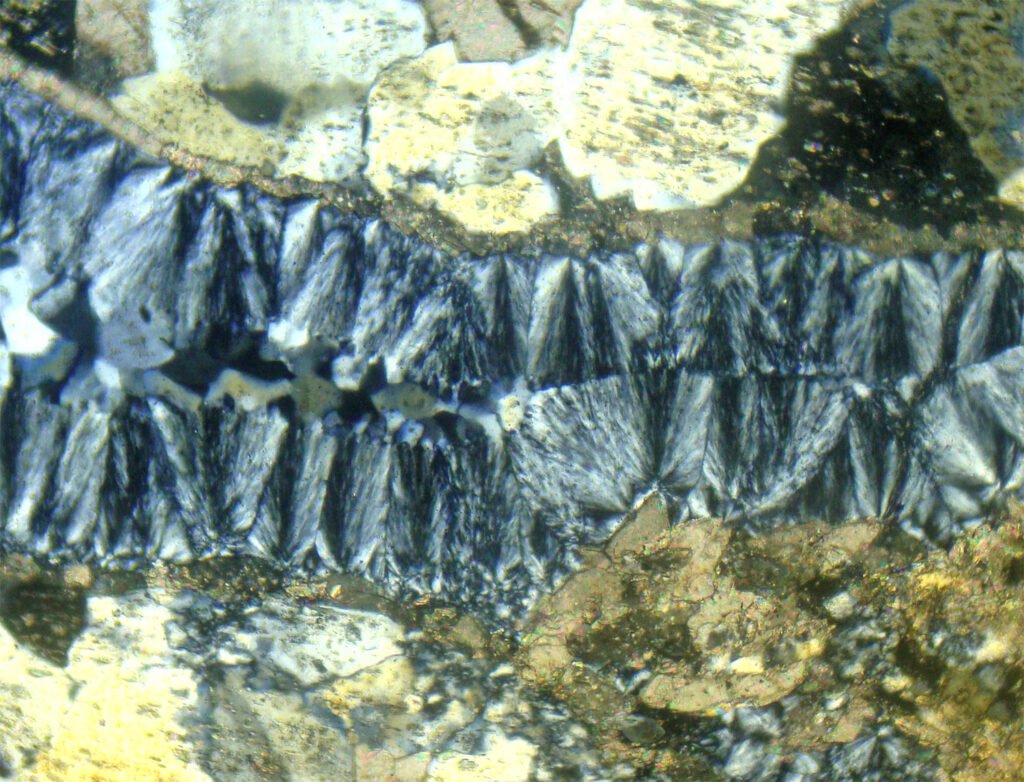
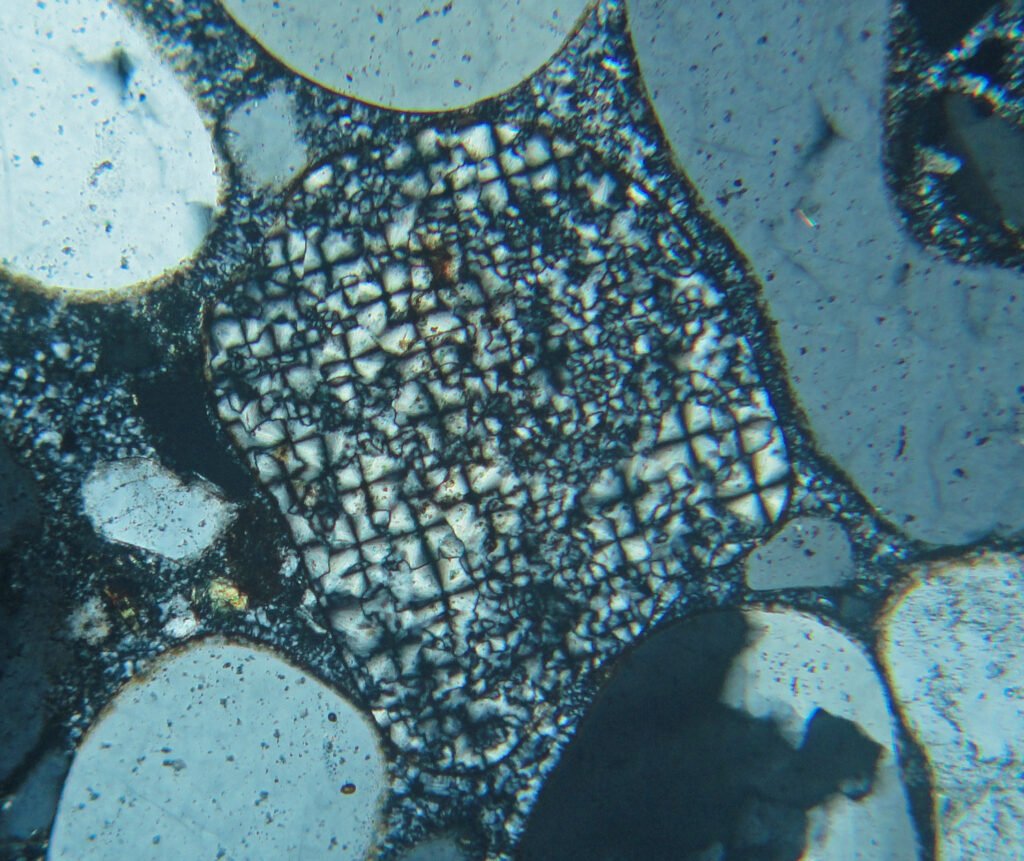
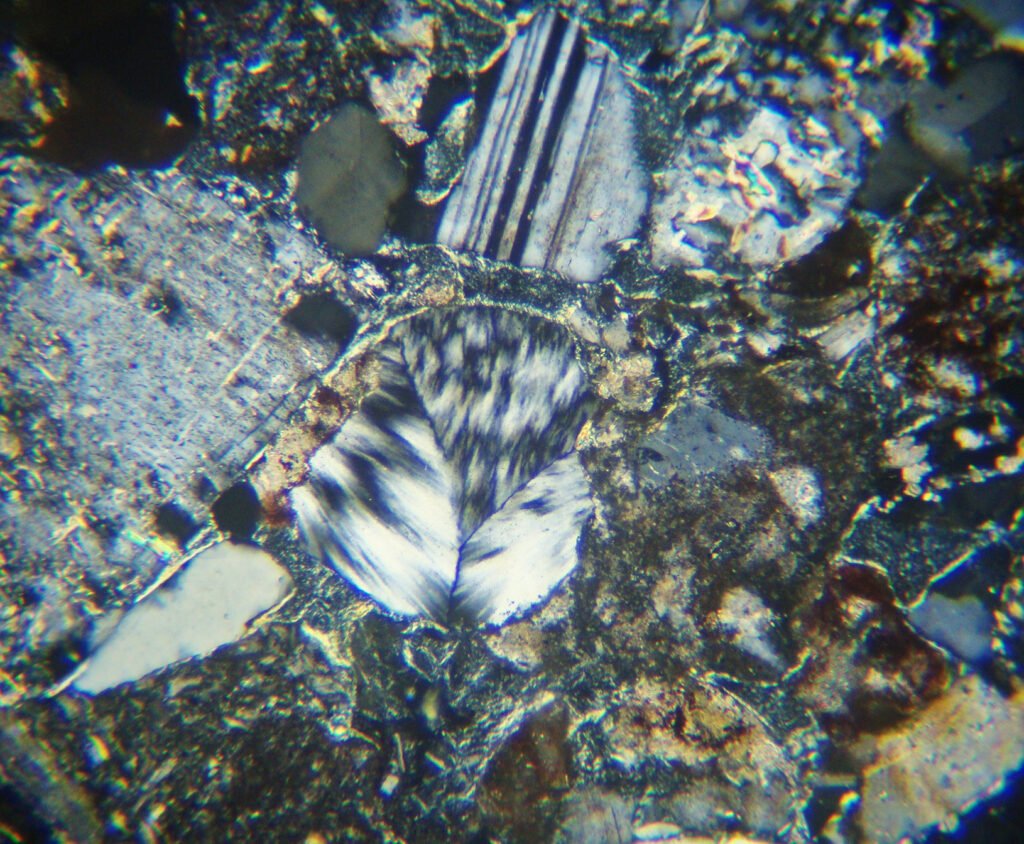
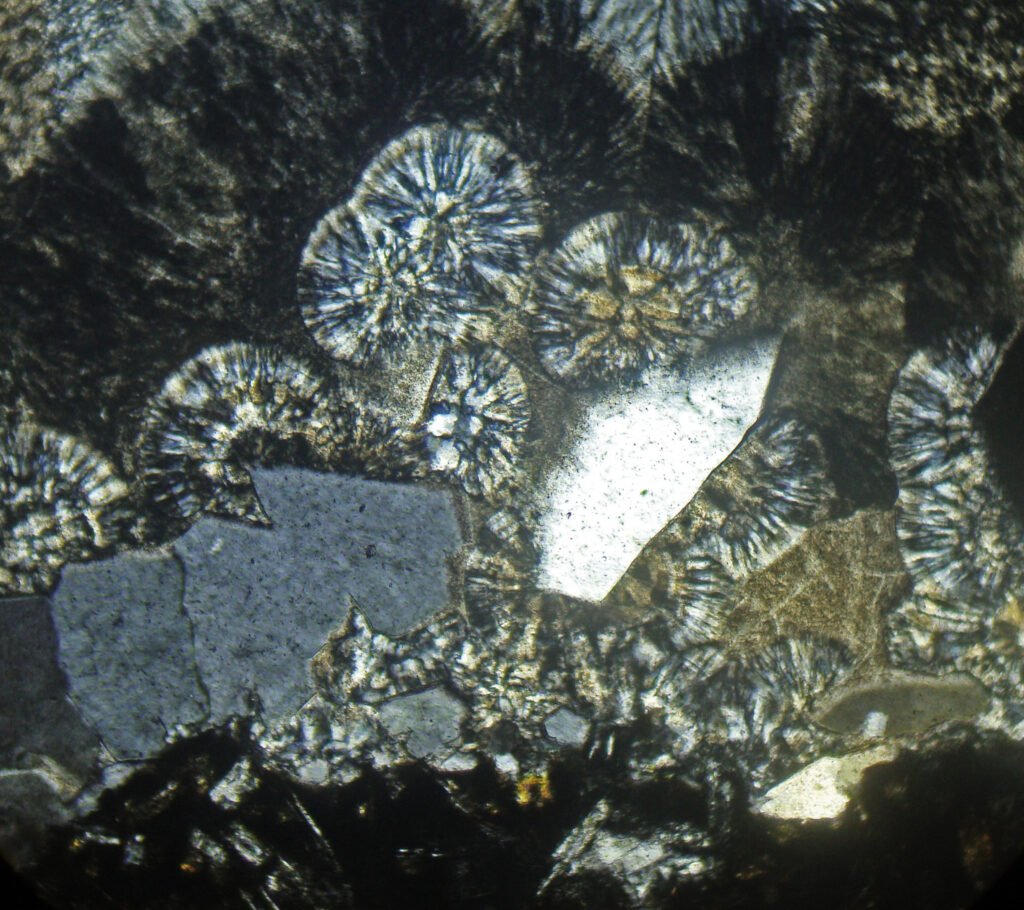
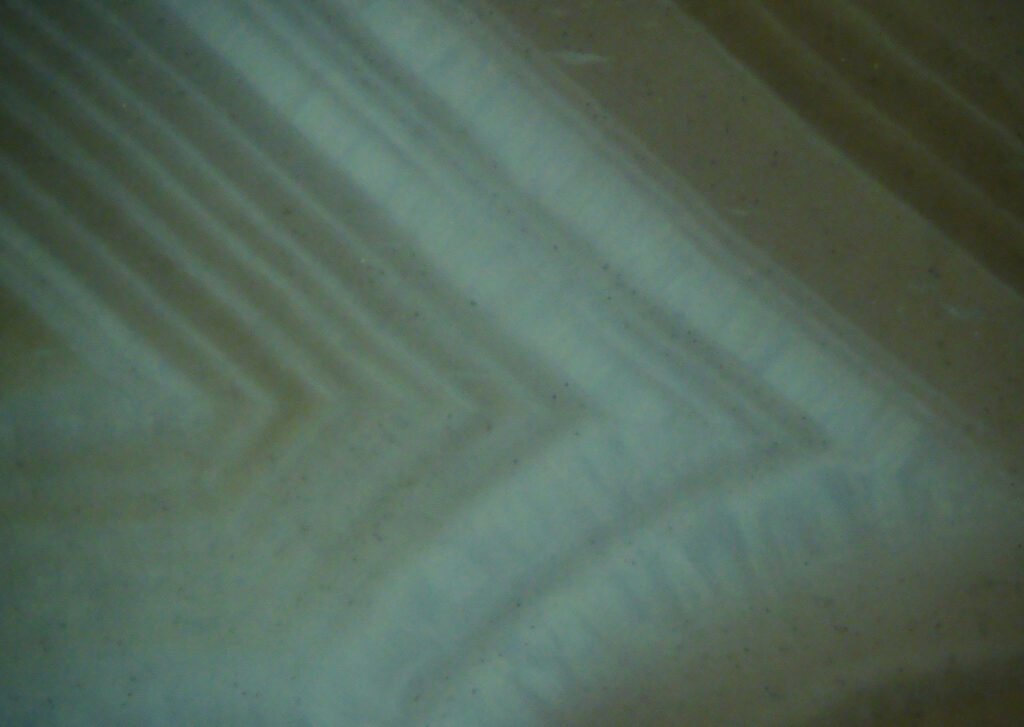
Habits: Chalcedony is composed of quartz crystals with submicroscopic sizes, which can be lined up with their z axes parallel to the base (“lying down”), with their z axes perpendicular to the base (“standing”) or with their z axes oblique to the alignment. This arrangement gives rise to a structure that resembles fibers.
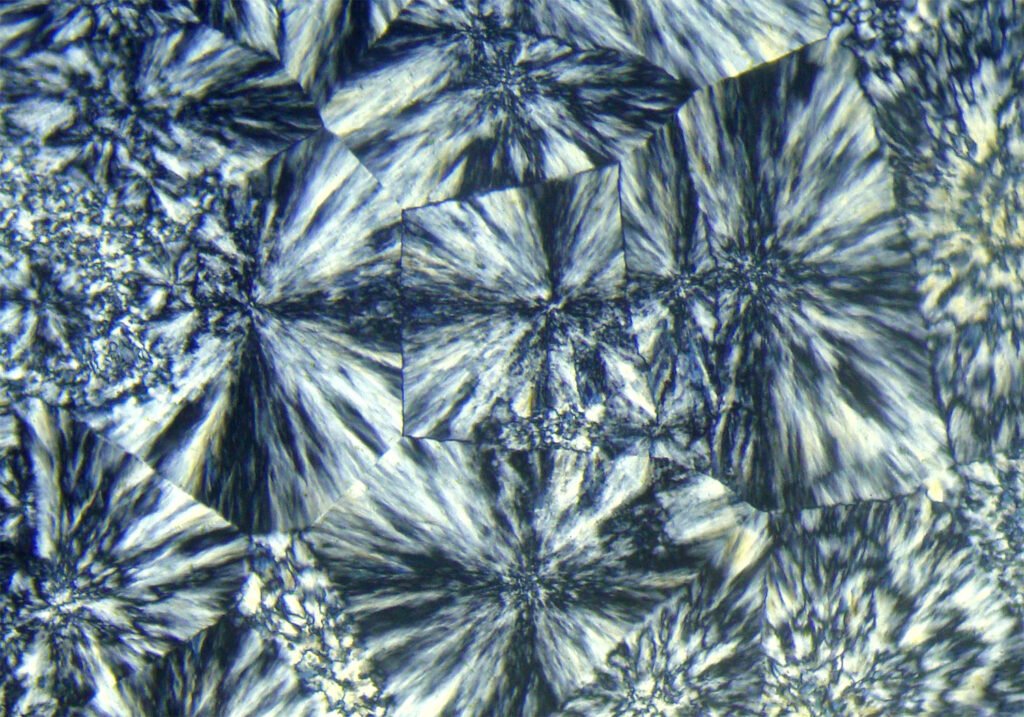
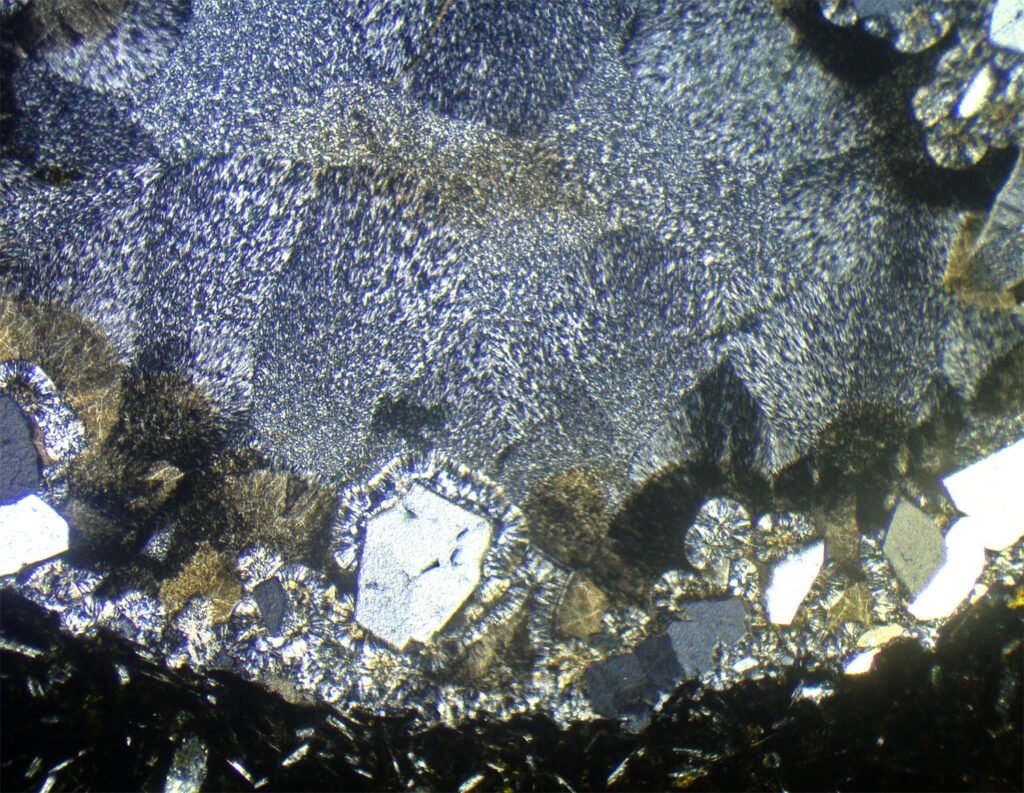
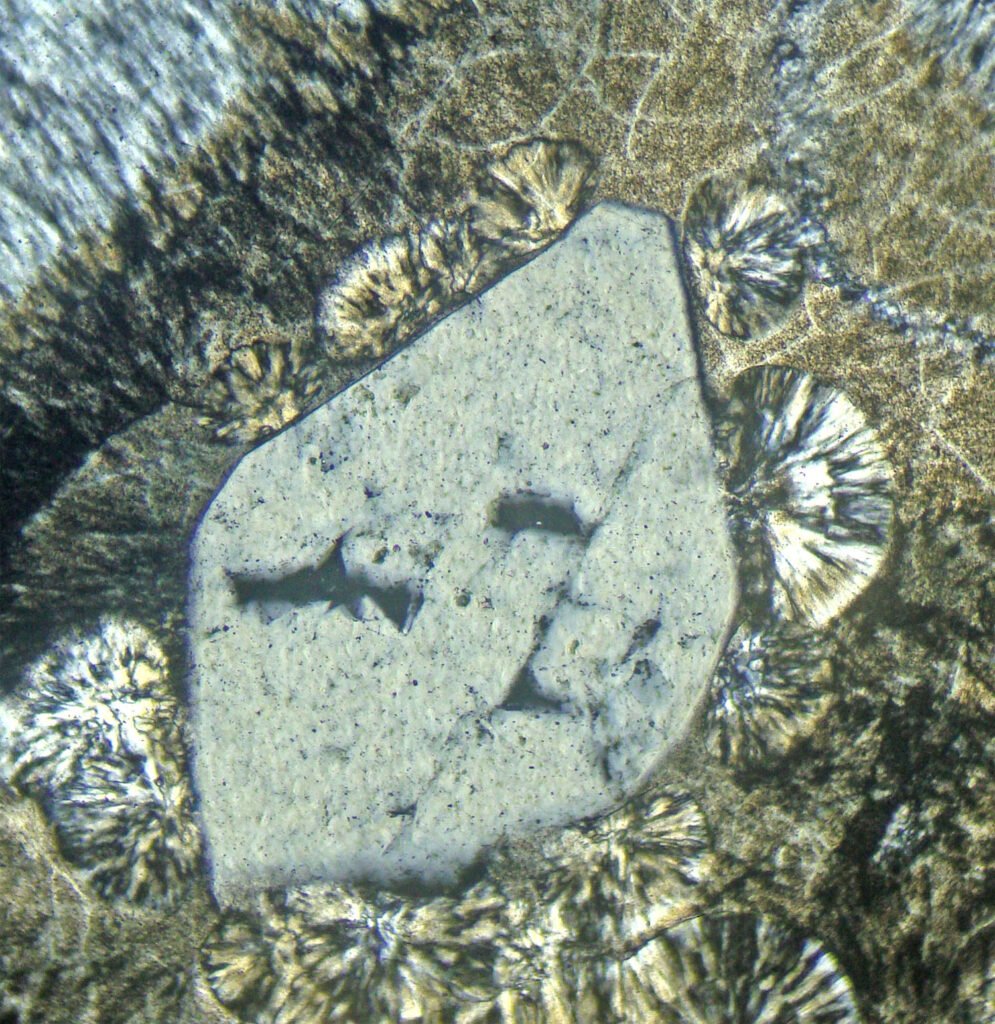
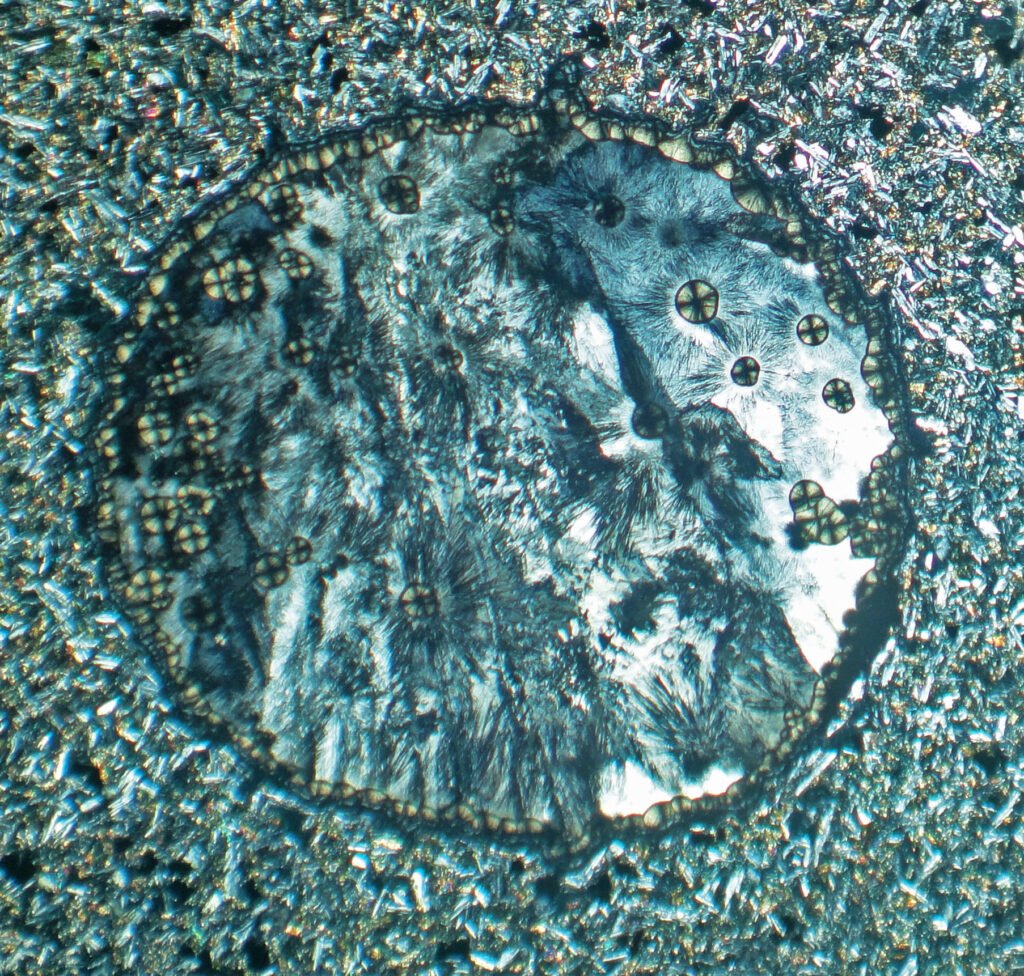
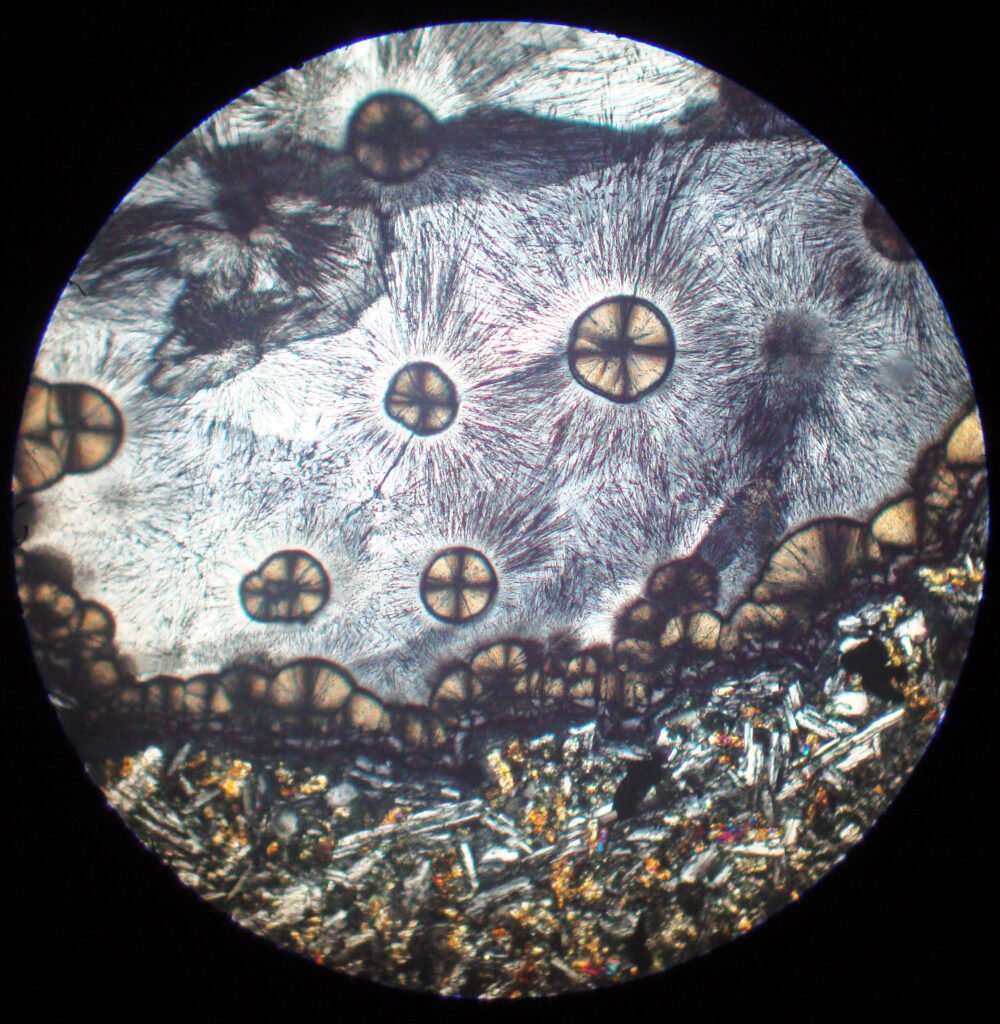
The “fibers” always tend to form spherical aggregates of radial structure. When these radial aggregates interfere with neighboring aggregates, form straight lines at the contacts.
Many aggregates that have grown parallel to each other create a layer-like structure, the typical banding of agate, for example.
CROSSED POLARIZED LIGHT – XPL
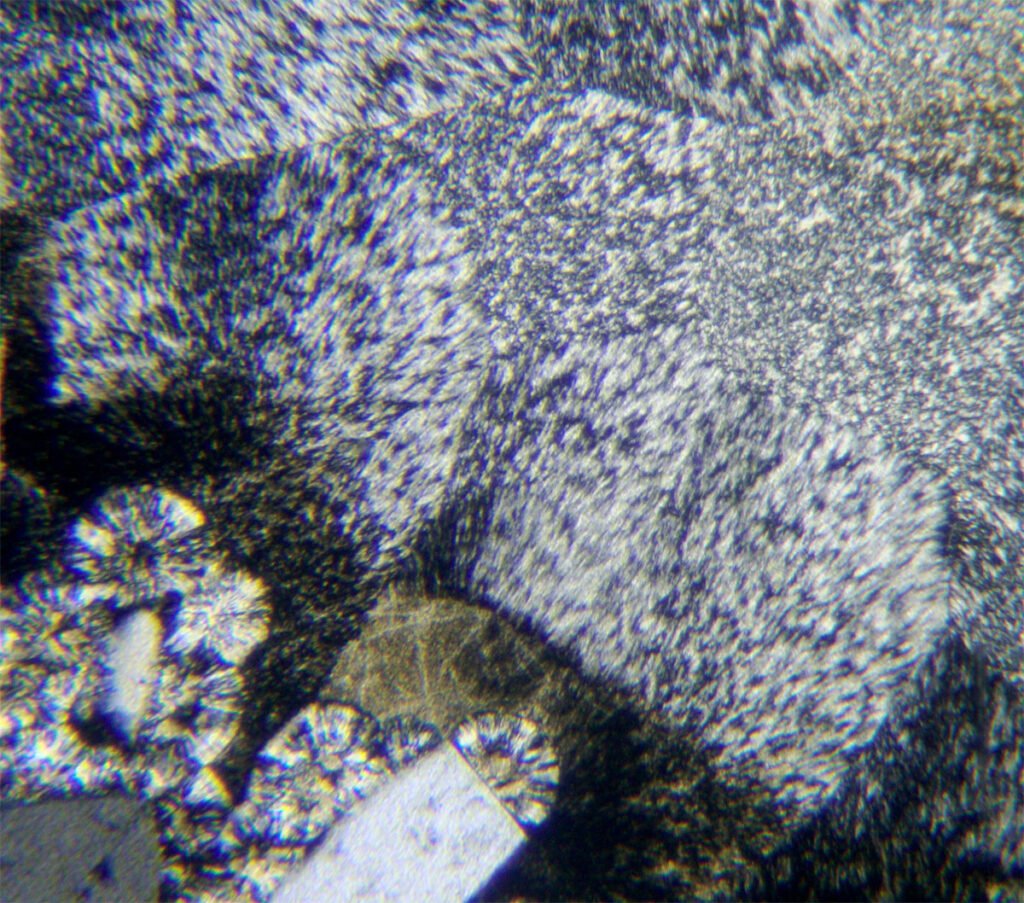
Birefringence and Interference Colors: Low birefringence, between 0.005 to 0.009, with interference colors in shades of gray to white.
Extinction: Parallel. Spherical aggregates of radially arranged chalcedony fibers show extinction similar to a uniaxial cross in Convergent Light.
Elongation sign: It can be ES(+) or ES(-), depending on the orientation of the quartz grains that are stacked. Chalcedony has ES(-), quartzine has ES(+).
Twins: No.
Zoning: No.
CONVERGENT LIGHT
Character: U(+), very difficult to verify, almost impossible. Could be anomalous biaxial.
2V angle: Often presents a 2V angle of up to 20°, but this is difficult to observe.
Alterations: does not alters, like quartz.
May be confused with: its habit is very characteristic. Crocidolite, the fibrous form (asbestos) of riebeckite (sodium amphibole), is pleochroic in blue, green, and yellow tones.