Crystal system: Monoclinic prismatic.
Color: Gray, lavender blue. Zonation is common.
Habit: Usually long prismatic, can be acicular to fibrous. Also granular or massive.
Cleavage: {110} perfect, like all amphiboles.
Tenacity: Brittle.
Twinning: Single and multiple, // to {100}.
Fracture: Conchoidal, irregular.
Mohs Hardness: 6 – 6.5
Parting: On {010} and {001}.
Streak: Bluish gray.
Lustre: Vitreous to pearly.
Diaphaneity: Transparent.
Density (g/cm³): 3.08 – 3.22
2. Geology and Deposits
Glaucophane occurs in medium-grade, low-temperature, high-pressure metamorphic rocks, originated in regional metamorphic conditions (blue-schists) from gabbros and basalts, usually in subduction zones. It can occur in metamorphic rocks of the greenschist facies.
It forms the “glaucophanite” rock and composes the glaucophane-gneisses and glaucophane-gabbro-gneisses, as well as the glaucophane-cornubianites.
Glaucophane also occurs in eclogites that have undergone retrograde metamorphism.
3. Mineral Associations
Glaucophane occurs with the typical low-grade metamorphic minerals: lawsonite, pumpellyite, chlorite, albite and members of the Epidote Group (clinozoisite, zoisite). In addition, quartz, jadeite, rutile, garnet, micas (muscovite, fuchsite, phengite), carbonates (calcite, aragonite), benitoite, natrolite, joaquinite-Ce and omphacite.
In eclogites it occurs with garnet (almandine), omphacite and hornblende.
4. Transmitted Light Microscopy
Refraction indices: nα: 1.595 nβ: 1.614 – 1.650 nγ: 1.620 – 1.652
PLANE POLARIZED LIGHT – PPL
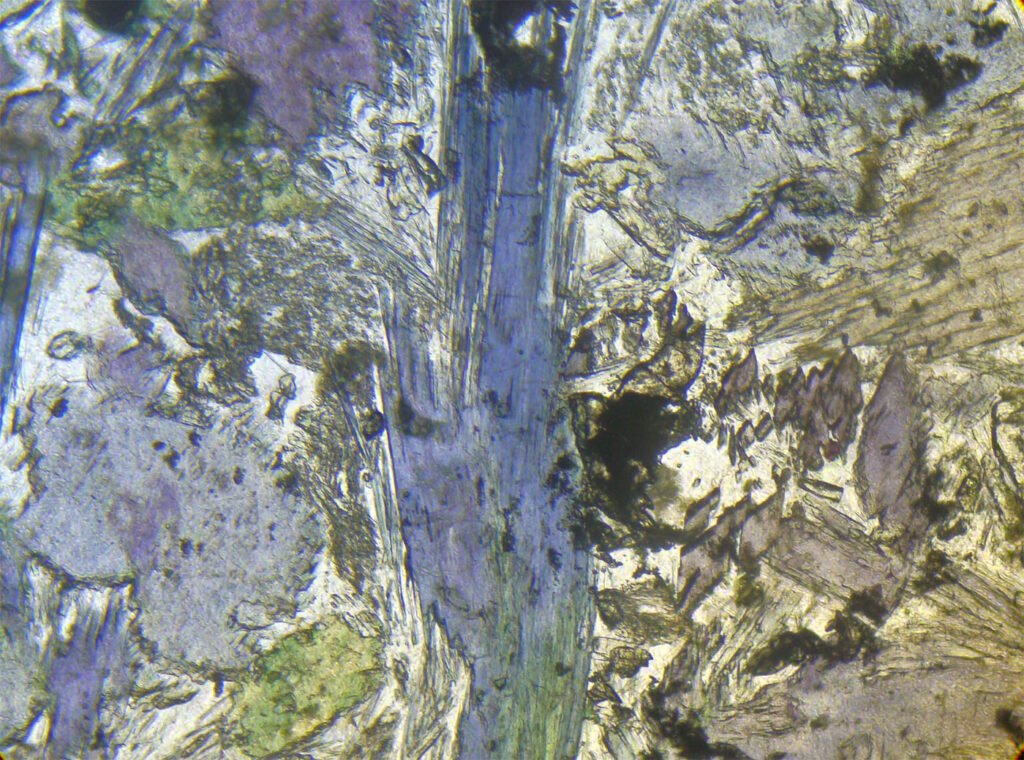
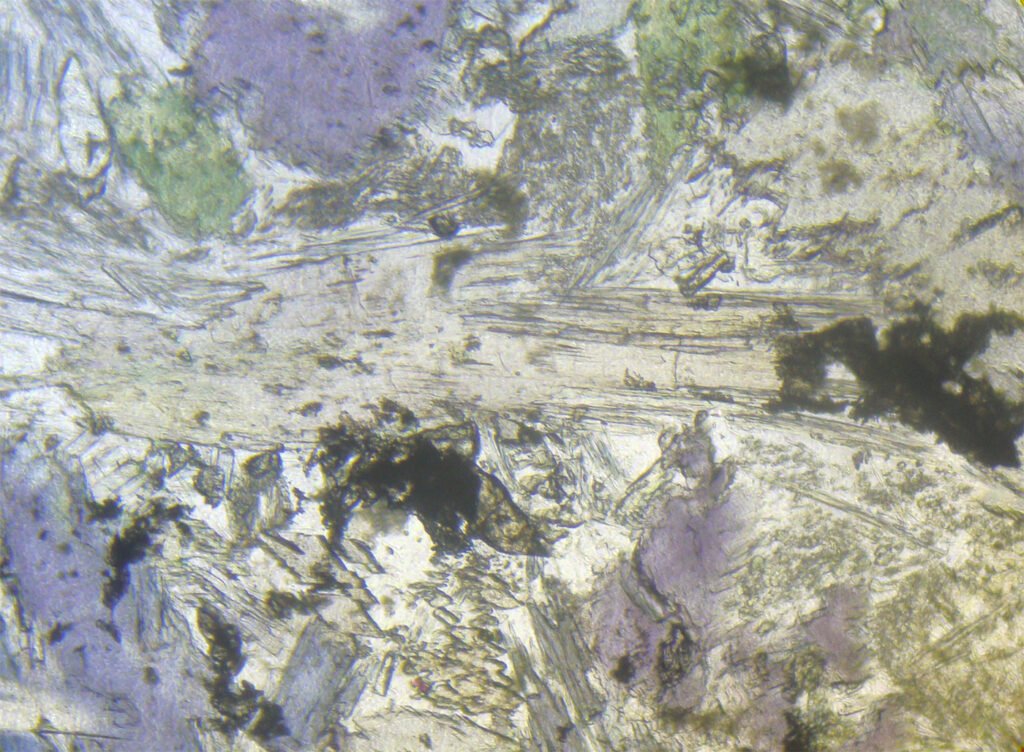
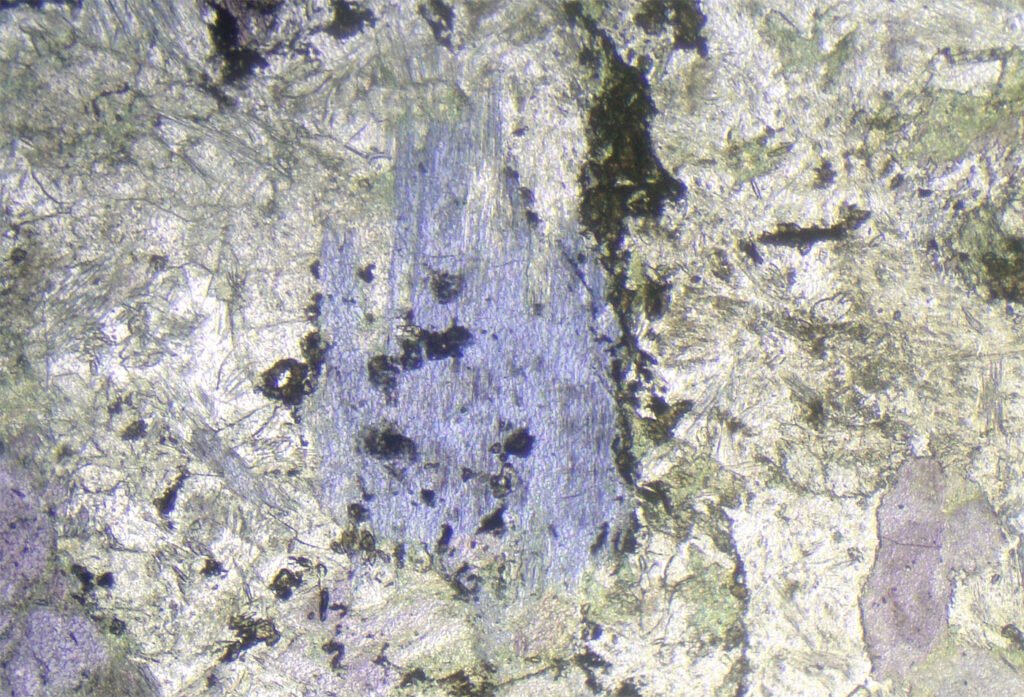
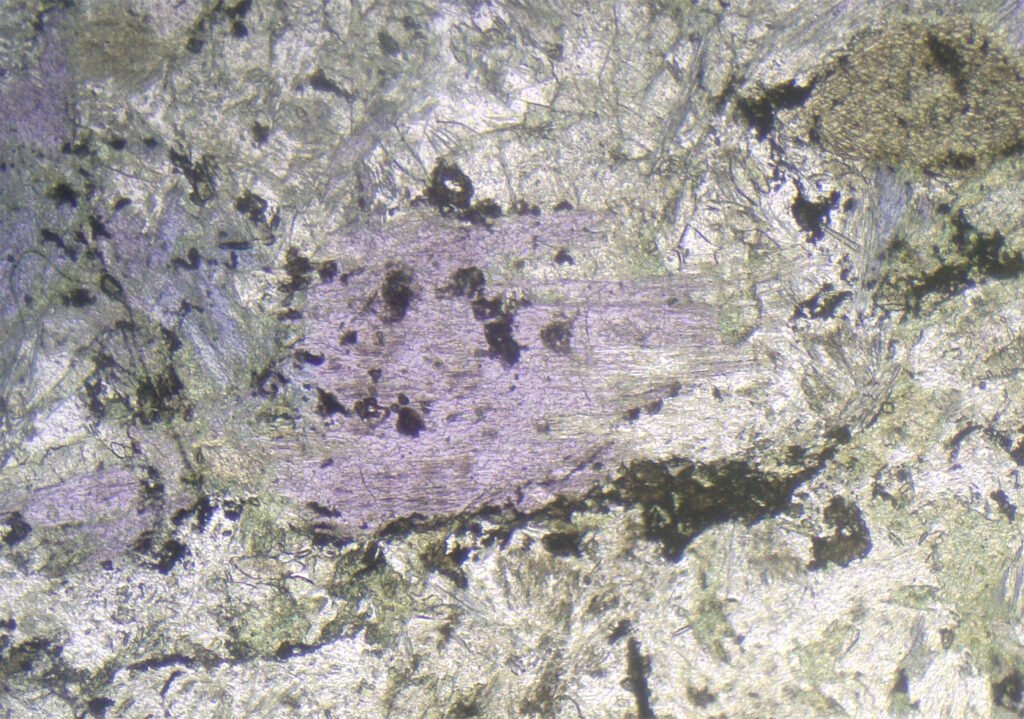
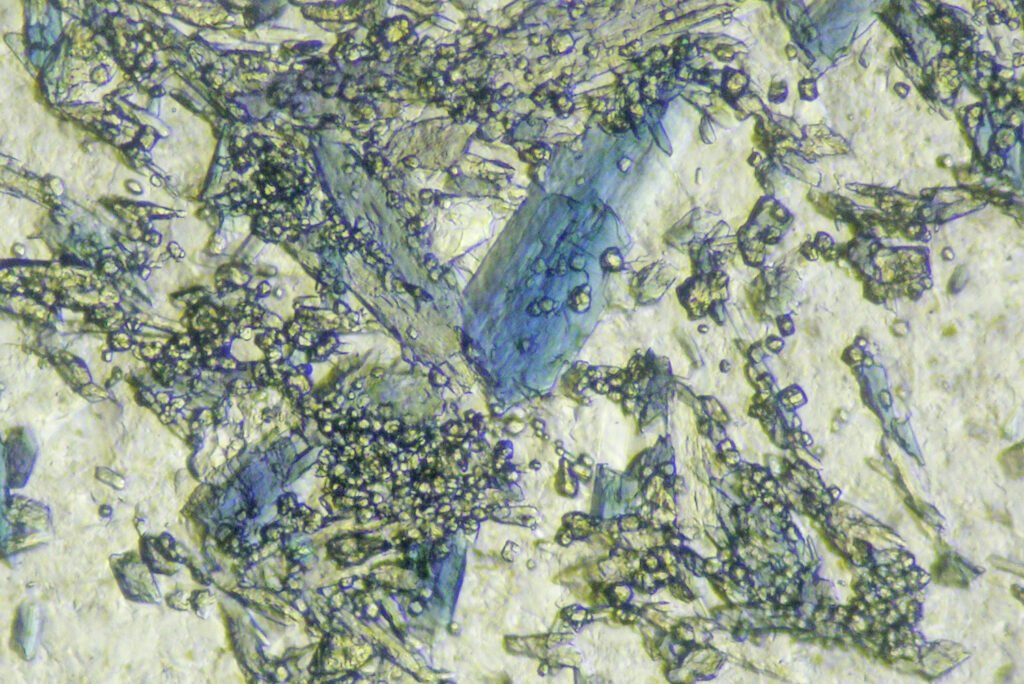
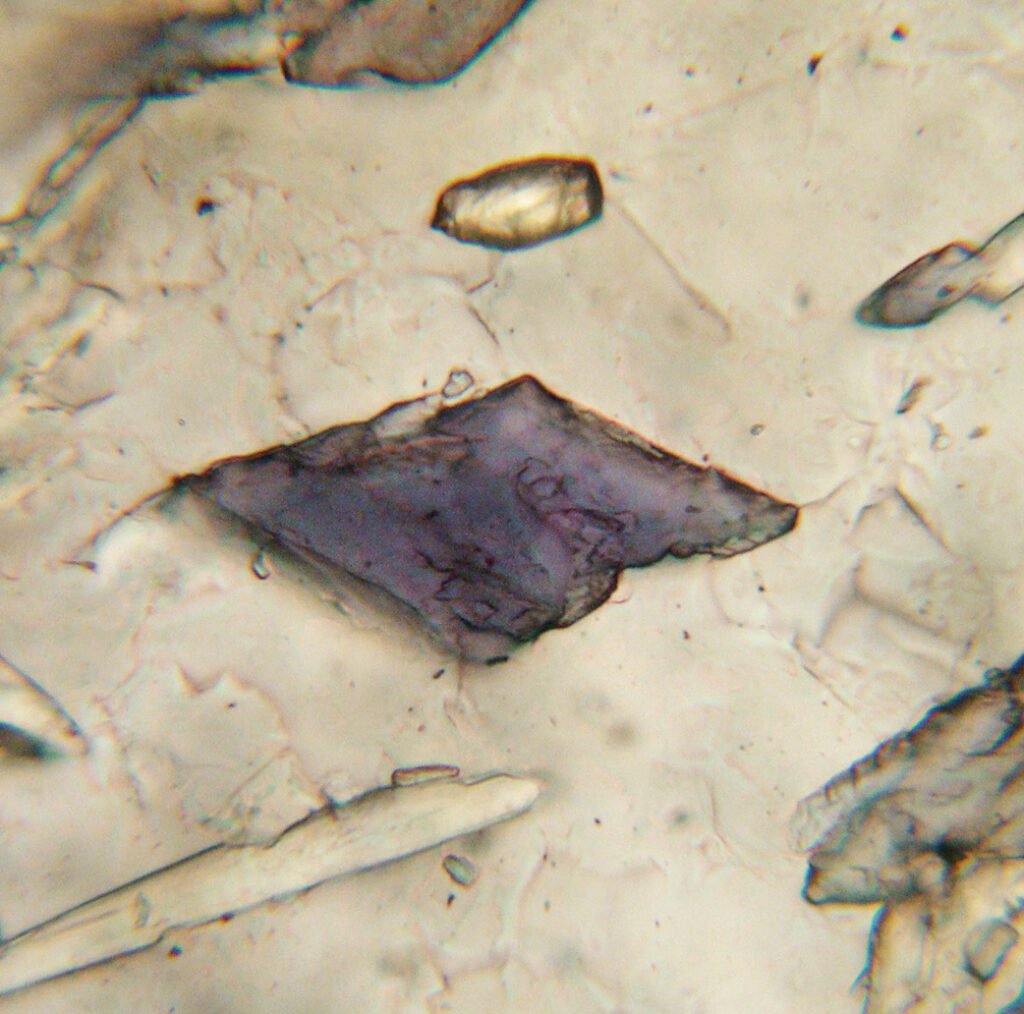
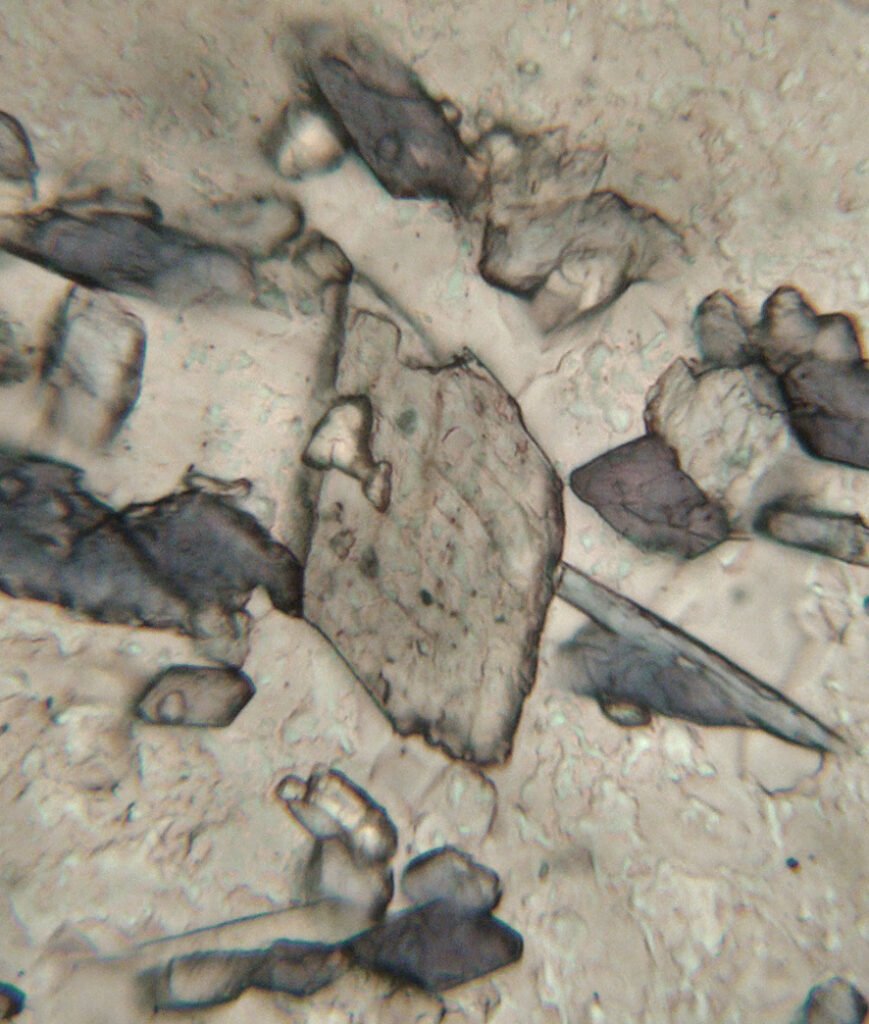
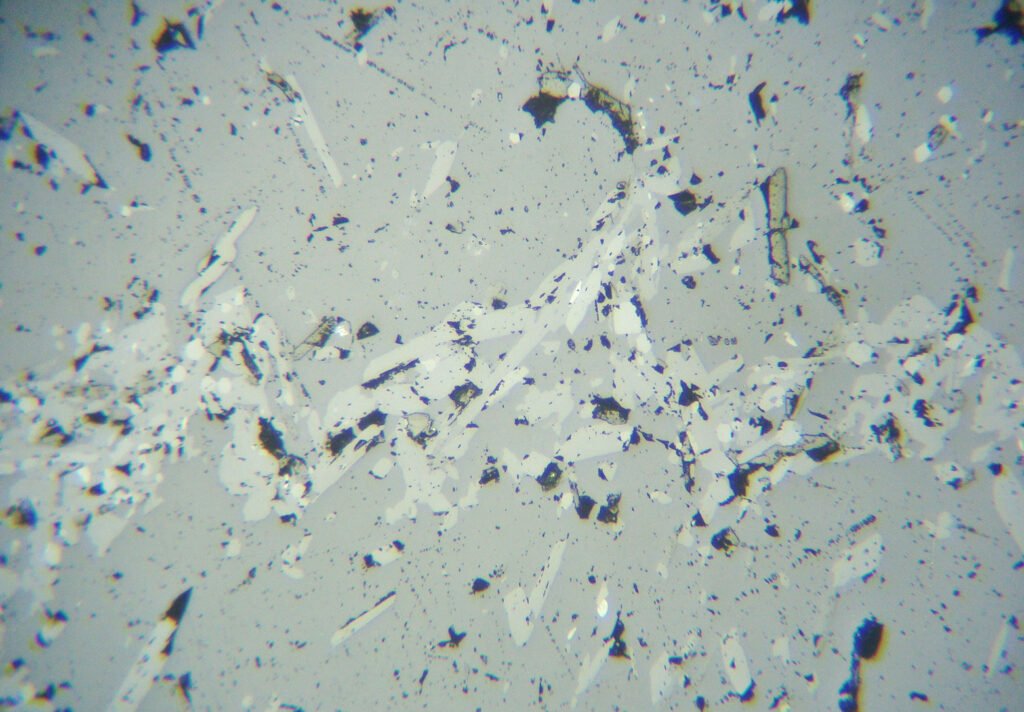
Color / Pleochroism: Lavender blue, blue, dark blue, gray to black. Very distinct pleochroism:
X = colorless, pale blue, yellow;
Y = lavender blue, bluish green,
Z = blue, greenish blue, violet.
Colors become darker with higher Fe contents.
Relief: Moderate to moderate high.
Cleavage: {110} perfect, like all amphiboles.
In the longitudinal (prismatic) sections there is only one cleavage.
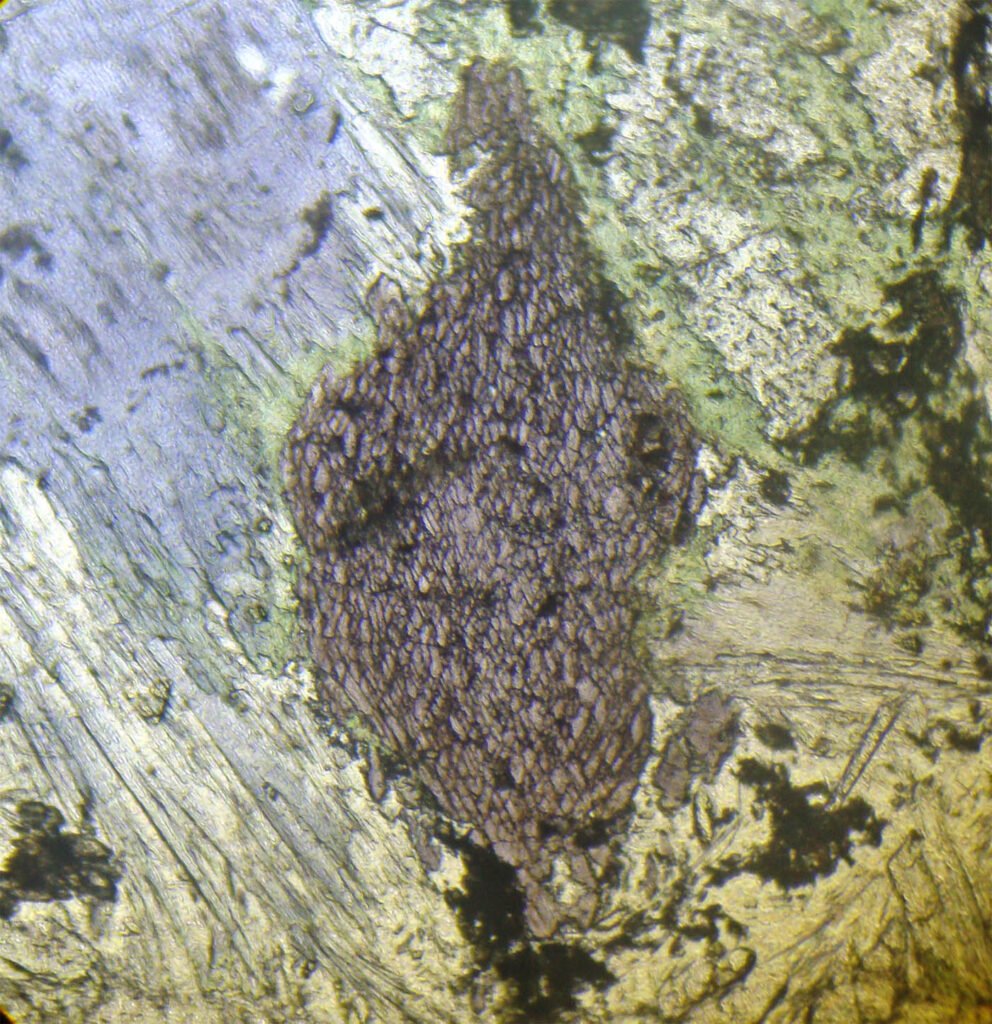
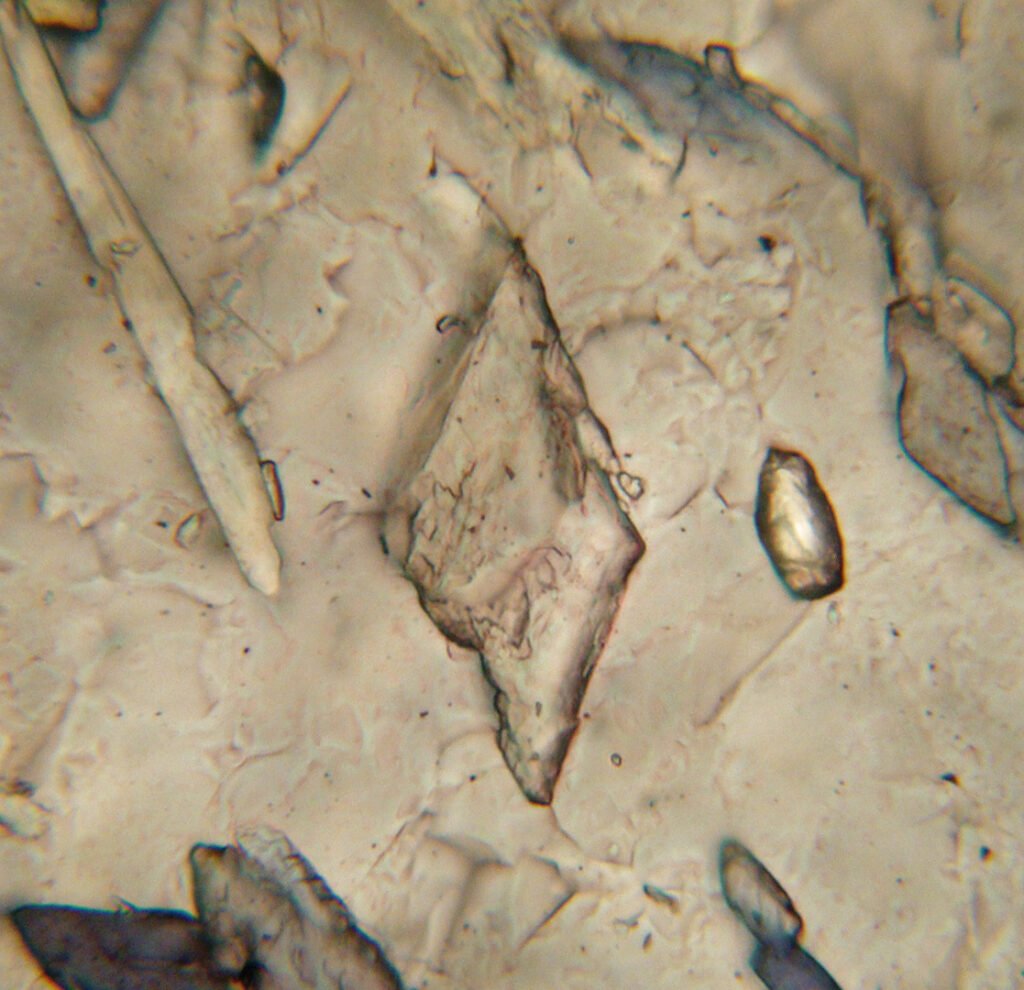
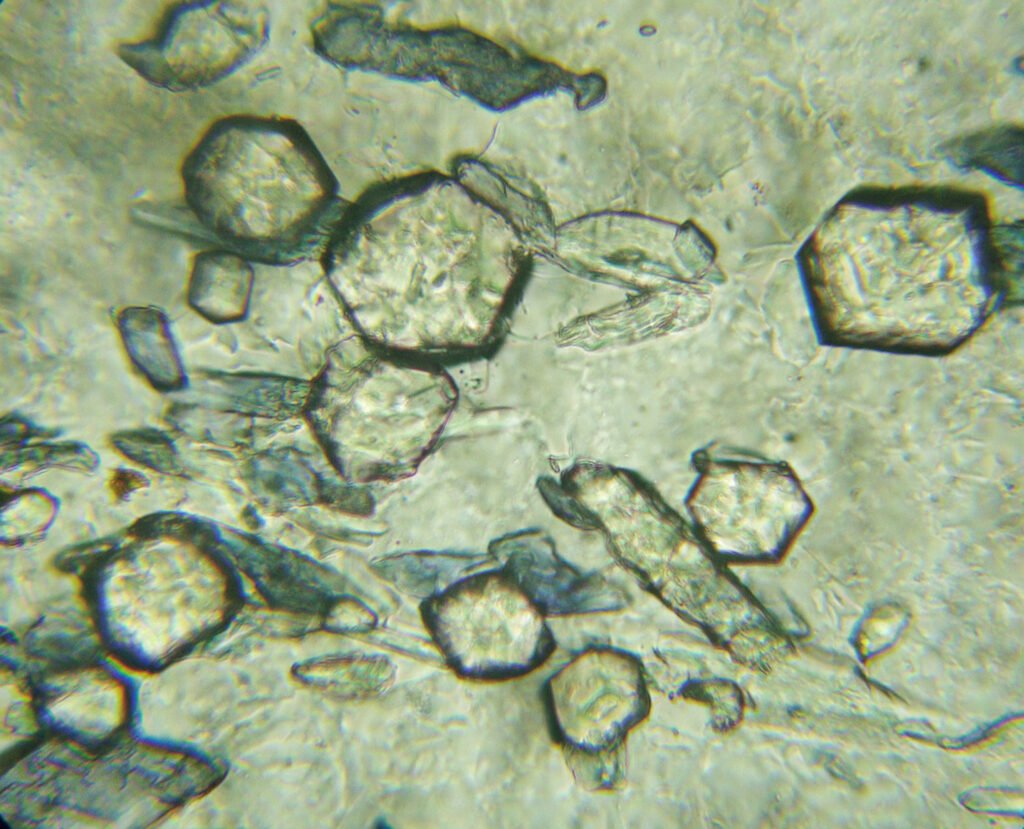
In the basal (rhombic) sections there are two cleavages that intersect at angles of 56º and 124º, which is typical of amphibole.
Habits: Usually prismatic, it can be acicular or columnar. More rarely fibrous or granular. Basal sections have a rhombic shape.
CROSSED POLARIZED LIGHT – XPL
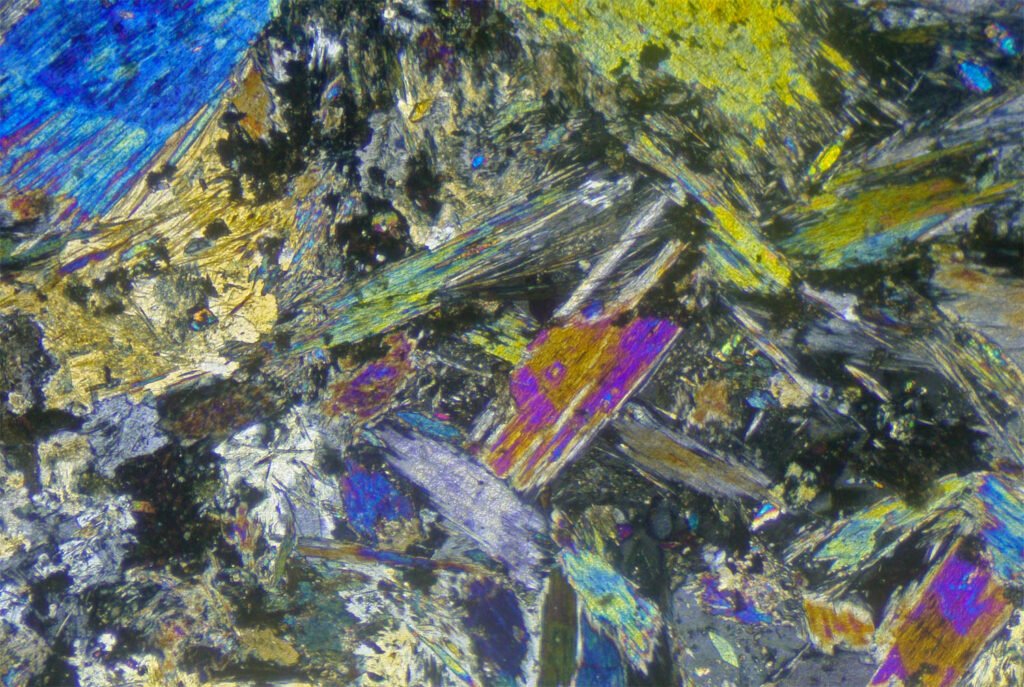
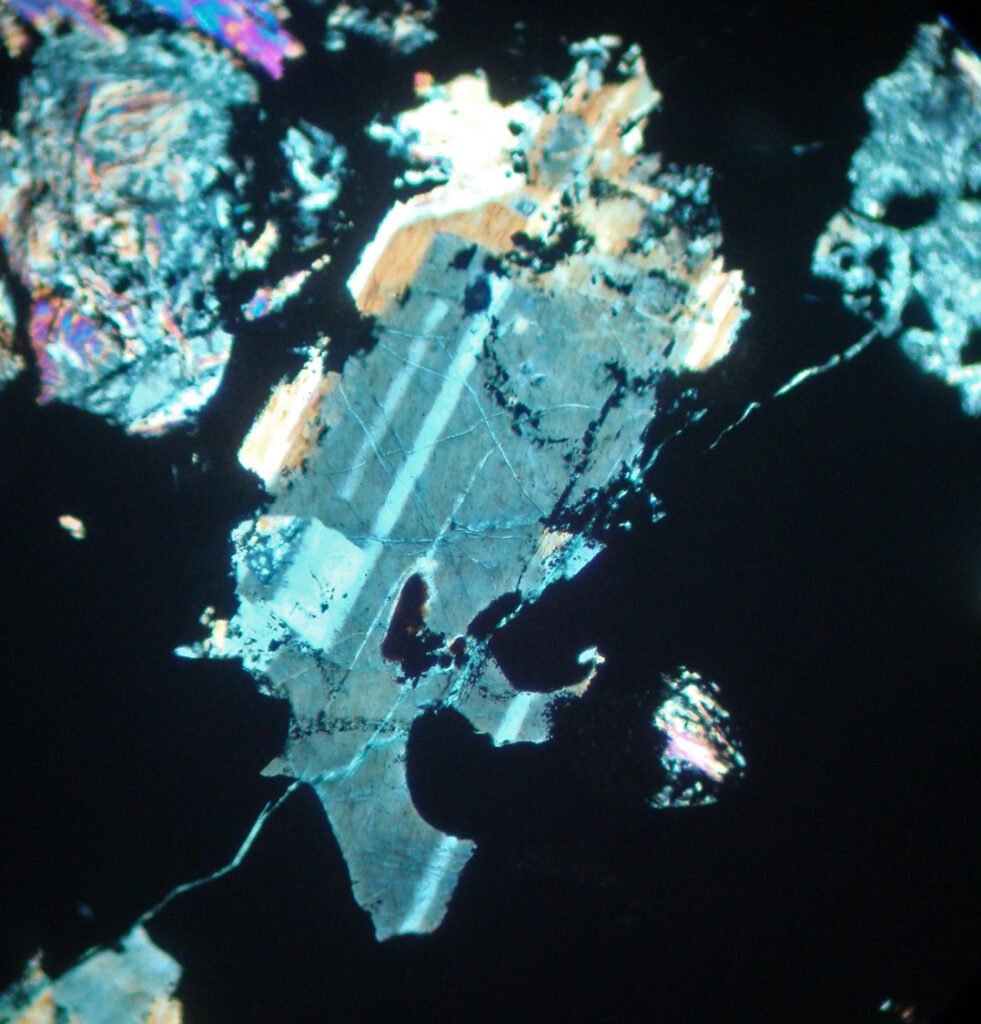
Birefringence and Interference Colors: High birefringence, ranging from 0.006 to 0.023: 1st and 2nd order colors, usually well colored. Its own blue color somewhat masks the interference colors.
Extinction: Oblique, with an angle of 0 – 22º (can simulate being parallel!).
In the basal sections the extinction is symmetric.
Elongation sign: ES(+).
Twins: Rare, on {100}.
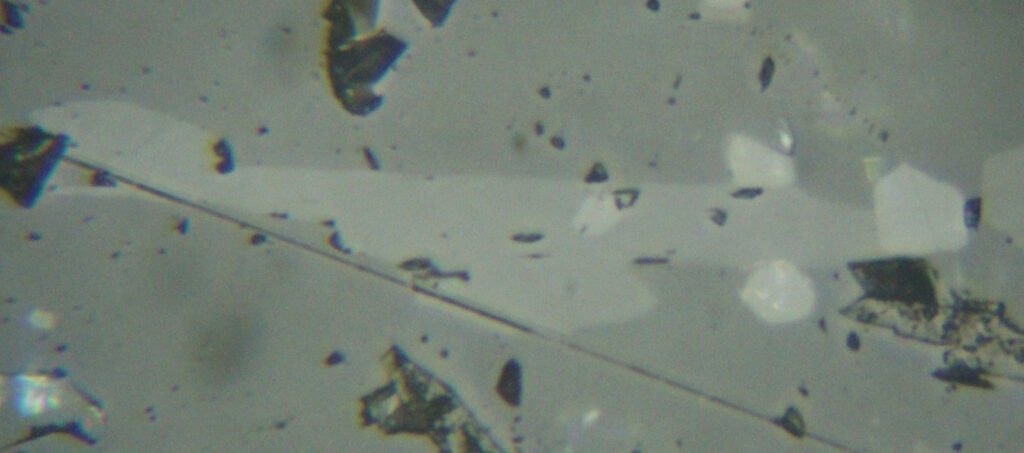
Zoning: Frequently zoned.
CONVERGENT LIGHT
Character: B(-) ou B(+), usually B(-)
2V angle: 10-80º or 0-50º or 10-45º (discrepant data in references).
Alterations: by retrometamorphism, to amphibole (actinolite), barroisite or chlorite.
May be confused with: few other minerals, as the blue color, both in hand sample and in thin section in PPL, is very diagnostic.
Riebeckite has ES(-), deeper blue color and somewhat different habits.
Arfvedsonite shows much darker blue-green colors, sometimes look like an opaque mineral.
Dumortierite show a much weaker blue, has ES(-) and occurs in another paragenesis.
Hauyne is isotropic.
Tourmaline has a parallel extinction and no cleavage.
Holmquistite, a lithiniferous orthorhombic amphibole, is extremely similar but occurs in a completely different paragenesis.