1. Characteristics
Crystal system: Hexagonal, bipiramidal dihexagonal.
Color: Colorless, grey, white, pale blue to sky blue. Blue-green to green or yellowish-green, pink, peach, deep pink, may be zoned.
Habit: Short to long prismatic crystals, may be tabular, may be pyramidal and pinacoid terminated. Granular, massive, radial.
Cleavage: {0001} poor.
Tenacity: Brittle.
Twinning: No.
Fracture: Conchoidal, irregular.
Mohs Hardness: 7,5 – 8
Parting: No.
Streak: White.
Lustre: Vitreous, resinous.
Diaphaneity: Transparent.
Density (g/cm³): 2.63 – 2.97
2. Geology and Deposits
Beryl is typical of granites and associated pegmatites.
It is rare in nepheline syenites and in metamorphic rocks such as mica-schists (emeralds) and in marble.
It can occur in high temperature hydrothermal veins, associated with Sn and W minerals. It also occurs in low temperature hydrothermal veins.
Red beryl occurs in cavities in rhyolites, with topaz.
Contact metasomatism from gneiss, shale or carbonate rocks can also crystallize beryl.
3. Mineral Associations
In granitic pegmatites, beryl is associated with quartz, feldspars (albite, potassic feldspar), micas (muscovite, lepidolite), spodumene, amblygonite, fluorite, cassiterite, tourmaline, topaz and columbite-tantalite.
When it occurs in rhyolites, beryl occurs with bixbyite, quartz, orthoclase, topaz, garnet (spessartite), pseudobrookite and hematite.
4. Transmitted Light Microscopy
Refraction indices: ne: 1.565 – 1.599 no: 1.569 – 1.610
PLANE POLARIZED LIGHT – PPL
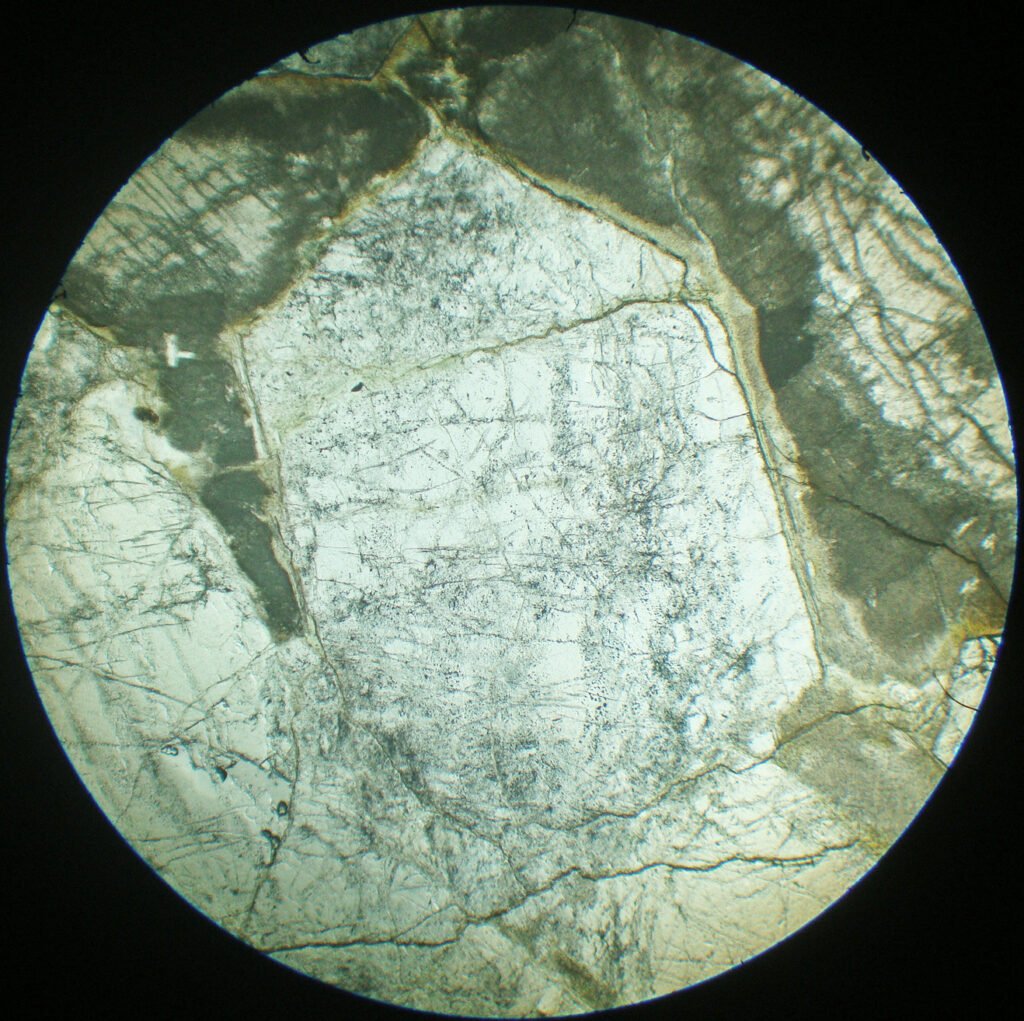
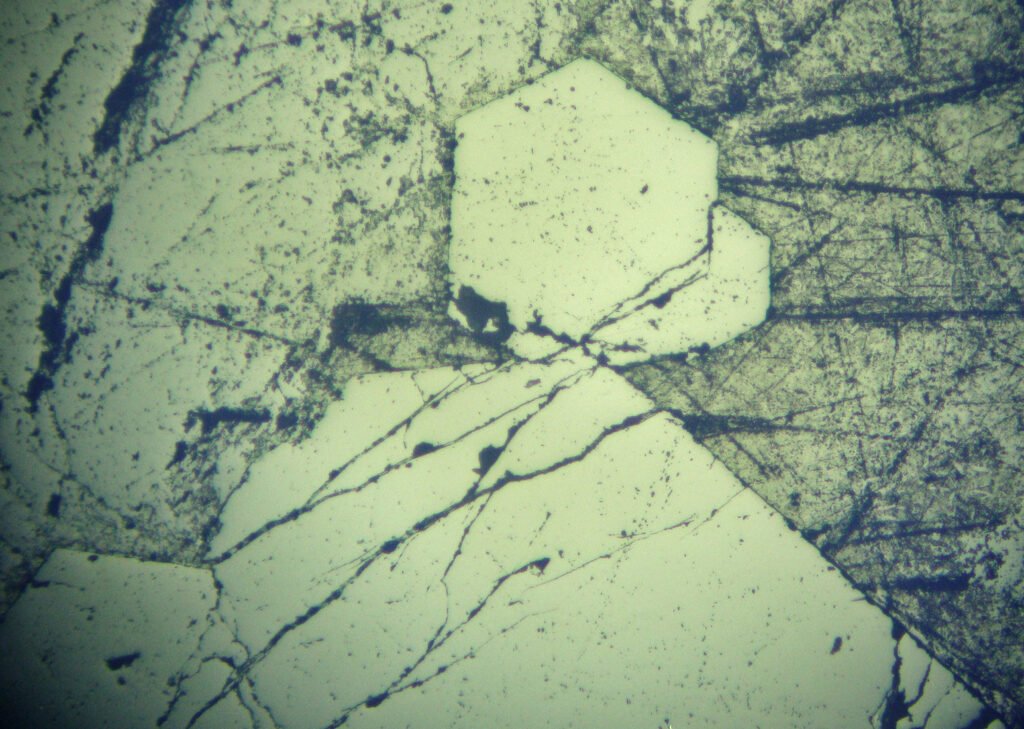
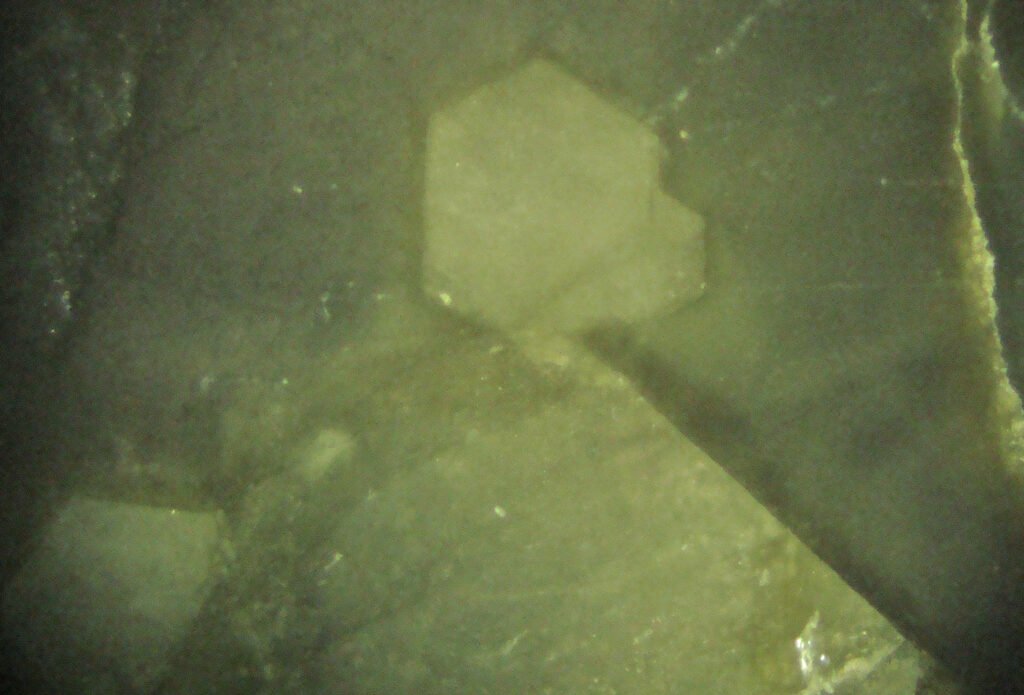
Color / Pleochroism: Colorless. It rarely presents pale blue to pale green pleochroism.
Relief: Moderate.
Cleavage: (0001) poor. It is not visible under the microscope.
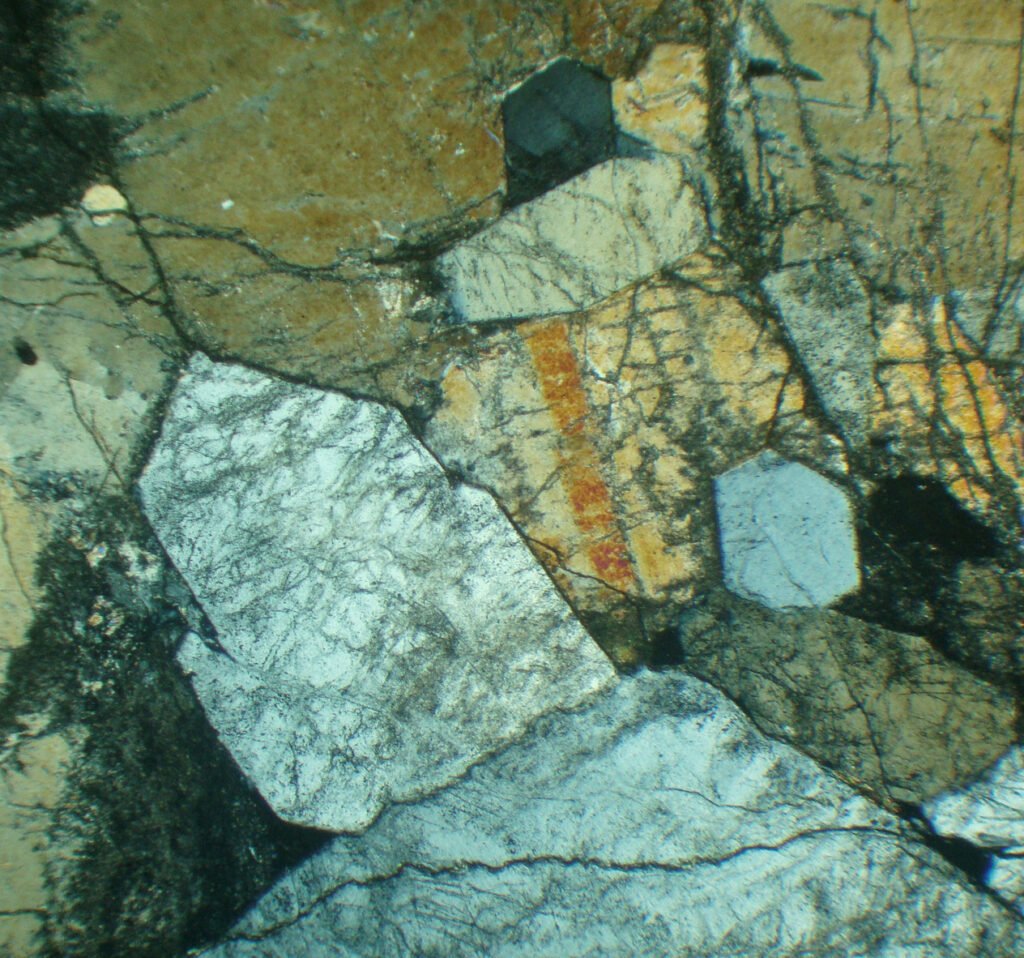
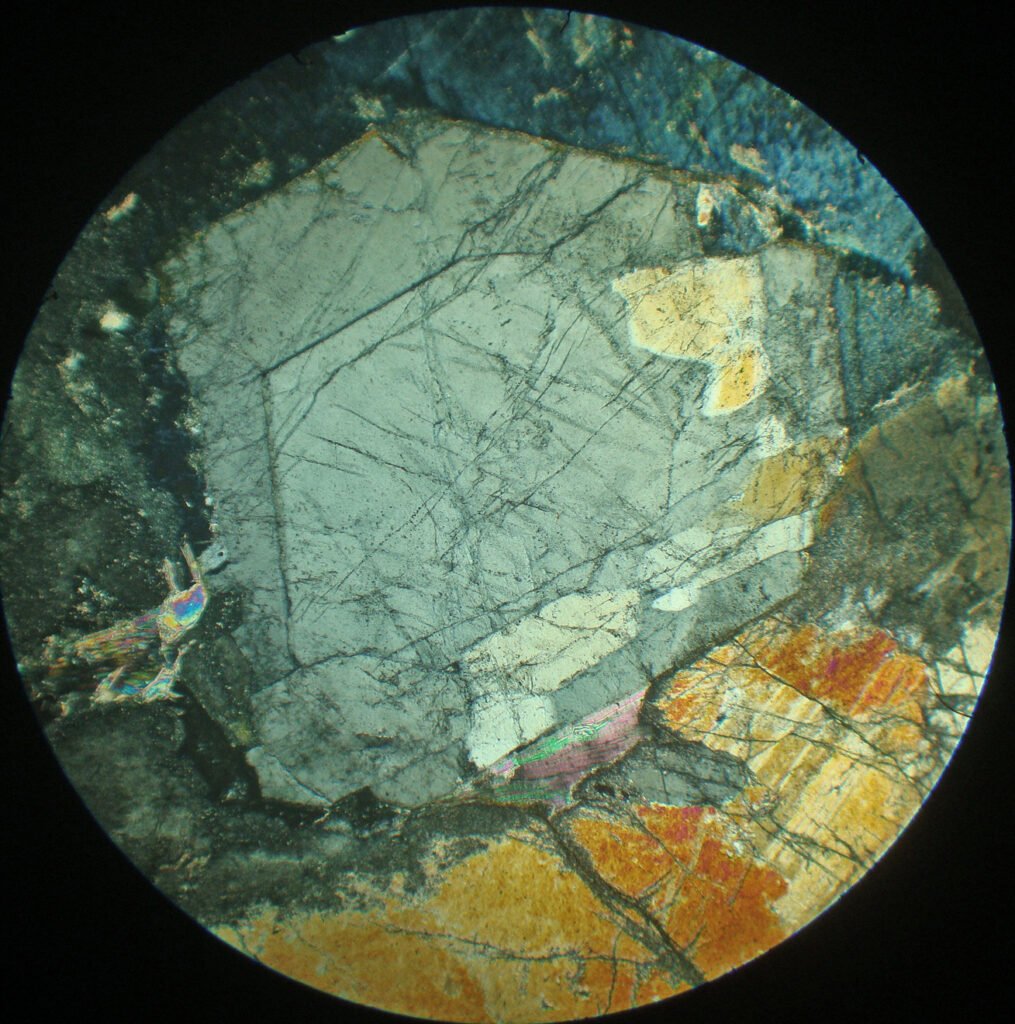
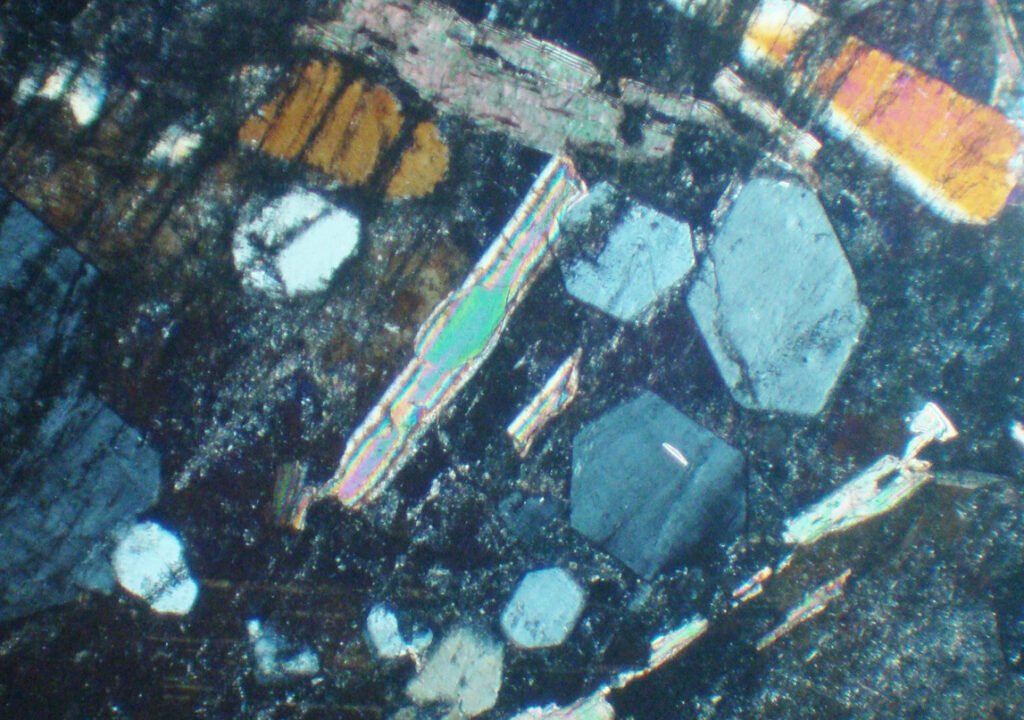
Habits: Short to long prismatic, tabular, often anhedral to euhedral, granular. It may contain a large number of inclusions or may be cataclastic (broken into several angular fragments). It can show many inclusions.
CROSSED POLARIZED LIGHT – XPL
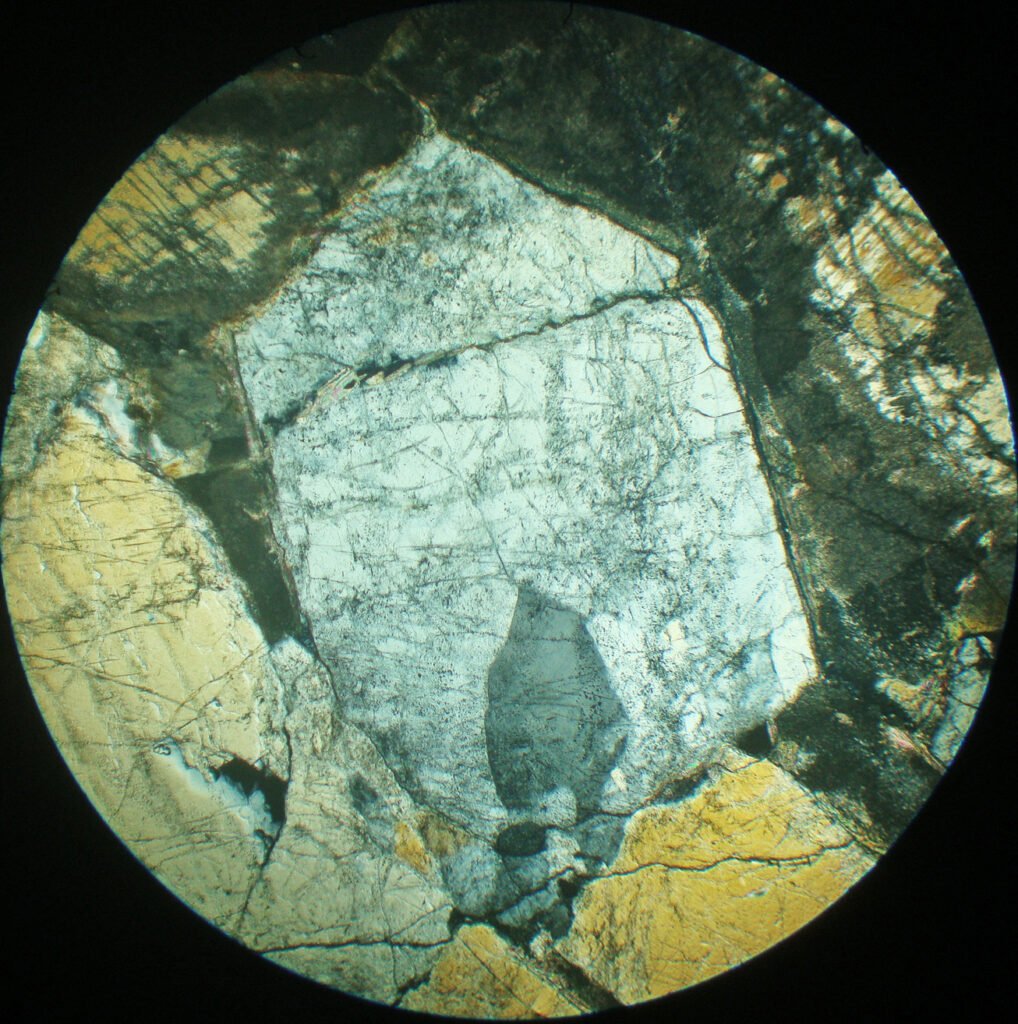
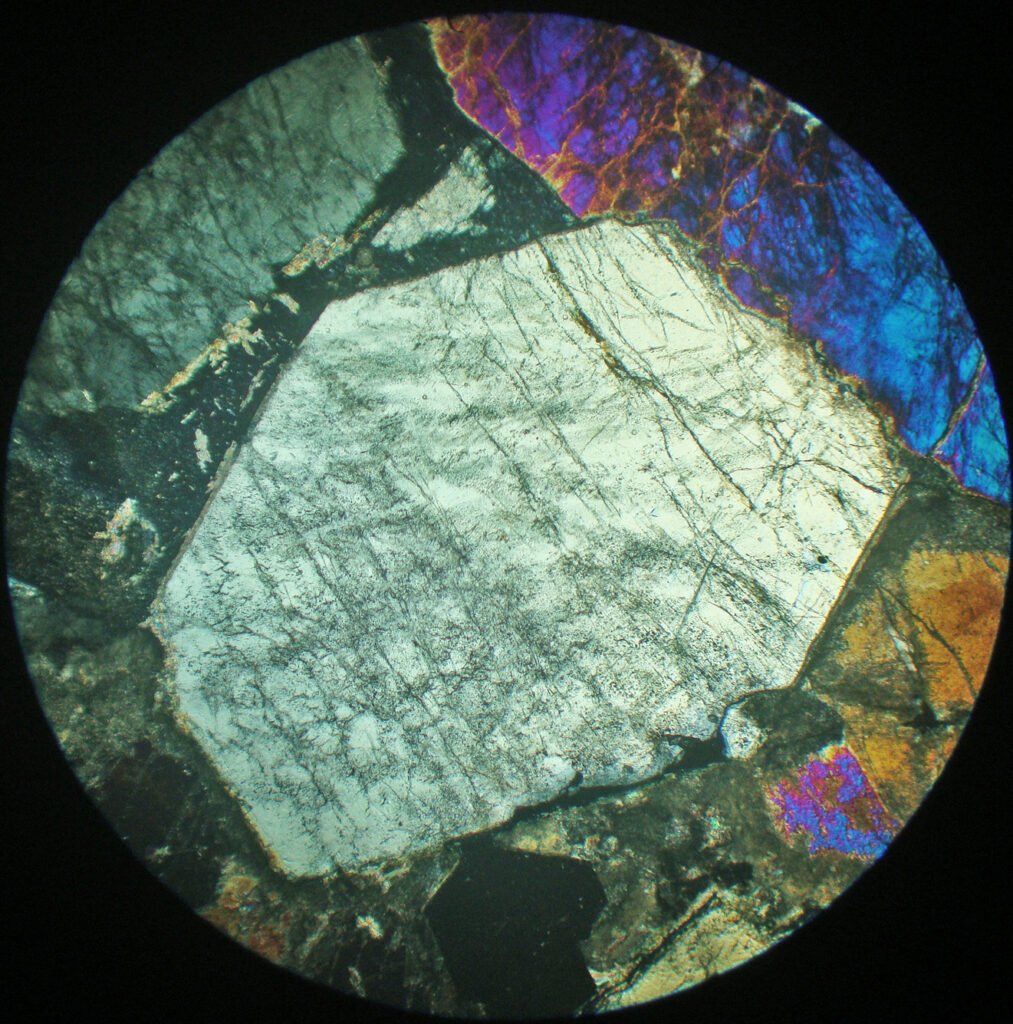
Birefringence and Interference Colors: Birefringence from 0.004 to 0.007, resulting in first-order colors: dark gray to light gray to white. It does not reach the straw yellow of the first order. Due to the high hardness of beryl, it is possible for the grains to be outside the standard thin section thickness and orange to red in color.
Extinction: Paralell in longitudinal sections.
Elongation sign: ES(-) in longitudinal sections.
Twins: No.
Zoning: May occur.
CONVERGENT LIGHT
Character: U(-), can be anomalous B(-).
2V angle: may show anomalous 2V angle of 0-6º
Alterations: rarely alters from fractures and margins, developing kaolinite or sericite (muscovite).
May be confused with: beryl is very similar to several common minerals in pegmatites and is easily overlooked. As its optical characteristics are very similar to those of quartz and feldspars, for example, special care must be taken when paragenesis suggests their presence. Idiomorphic beryl is relatively easy to identify, but interstitial beryl is difficult to recognize.
Quartz has lower relief and is U(+). Potassic feldspars and plagioclases are biaxial and show twinning.
Apatite has higher relief and corundum has much higher relief.
Topaz is B(+) and has higher relief.