1. Characteristics
Crystal system: Trigonal scalenohedral.
Color: Red in various shades (carmine, orange, cherry, brown), pink, orange, yellowish brown, brown, yellow, violet, green.
Habit: Short rhombohedrons, with dominant pinacoid.
Long prismatic. Massive or interstitial, filling veins.
Cleavage: {0001} perfect, {10-10} imperfect, {10-14} imperfect, {11-20} imperfect.
Tenacity: Brittle.
Twinning: No.
Fracture: Irregular.
Mohs Hardness: 5 – 6
Parting: No.
Streak: White to faint pink.
Lustre: Vitreous, dull.
Diaphaneity: Transparent.
Density (g/cm³): 2.74 – 3.1
2. Geology and Deposits
Eudialyte is a very rare mineral, of magmatic or late pneumatolithic origin, characteristic of relatively rare rocks such as nepheline syenites (lujavrites, etc.), foidolites, eudialytites, alkaline granites and associated pegmatites, where it can be a main constituent of the rock.
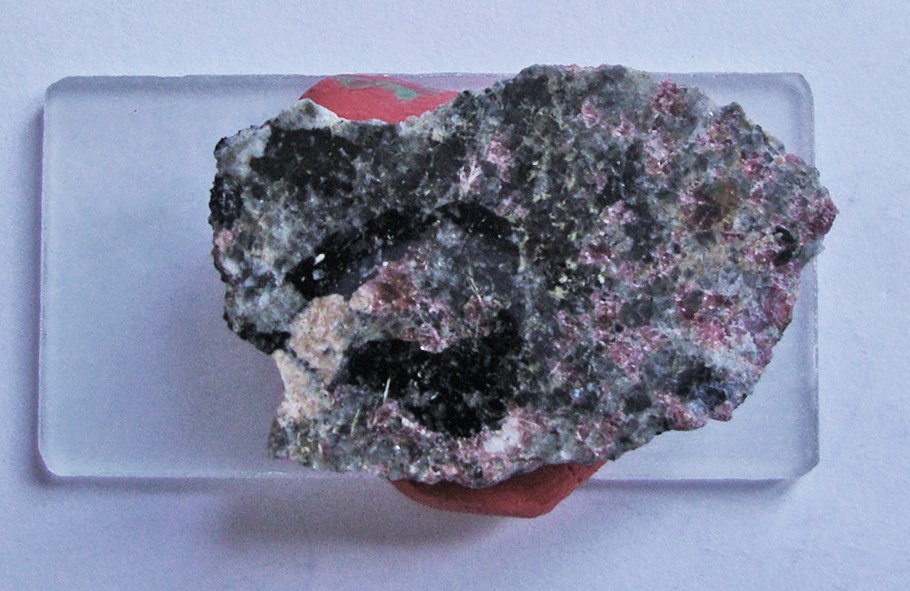
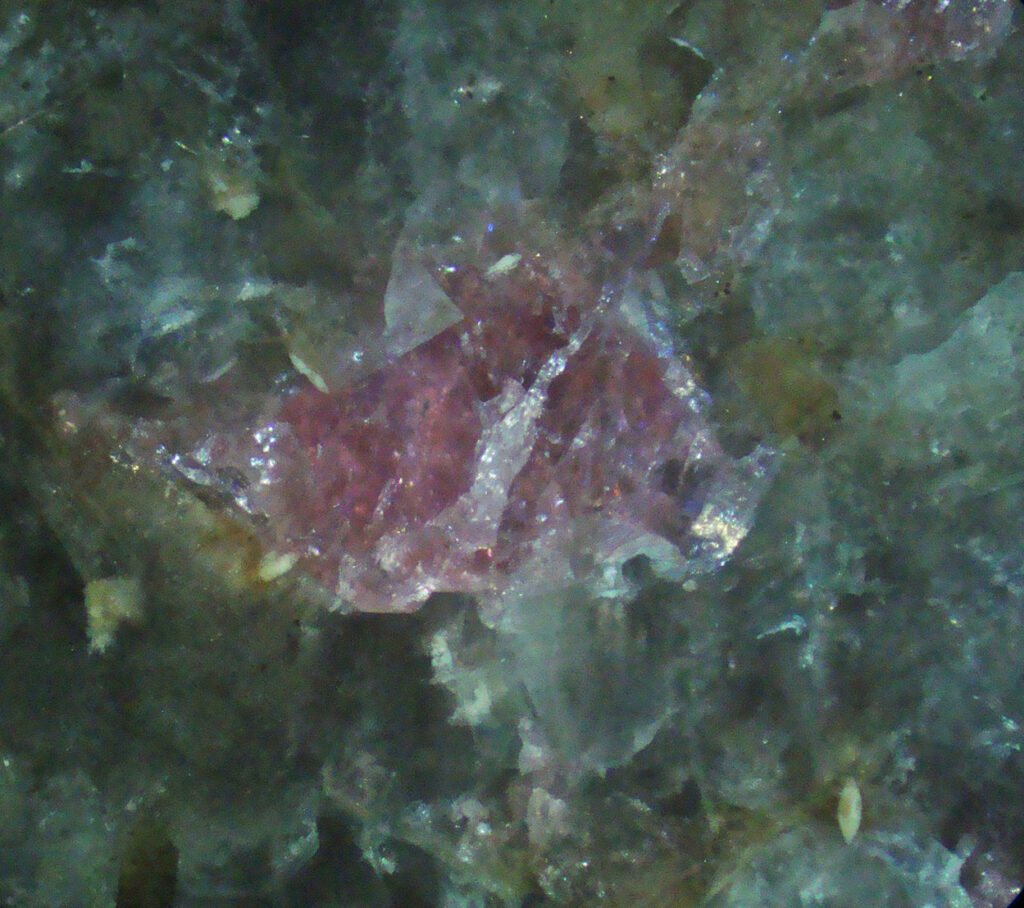
Macroscopically, it usually has an intense pink-red color (may have other colors) and can be easily confused with other minerals from the Eudialyte Group that have similar colors. It can also be confused with rhodochrosite and rhodonite.
3. Mineral Associations
It occurs with typical minerals common to these paragenesis, such as plagioclase (albite), alkali feldspars (microcline), feldspathoids (sodalite, nepheline), clinopyroxenes (aegirine), amphiboles (arfvedsonite, brown hornblende), oxides (Ti-magnetite) and titanite.
In addition, it is associated with very rare minerals such as katophorite, lamprophyllite, mosandrite (Ce) and aenigmatite and with several extremely rare minerals such as rinkite-(Ce), lorenzenite, murmanite, vlasovite, gittinsite, agrellite and lavenite.
4. Transmitted Light Microscopy
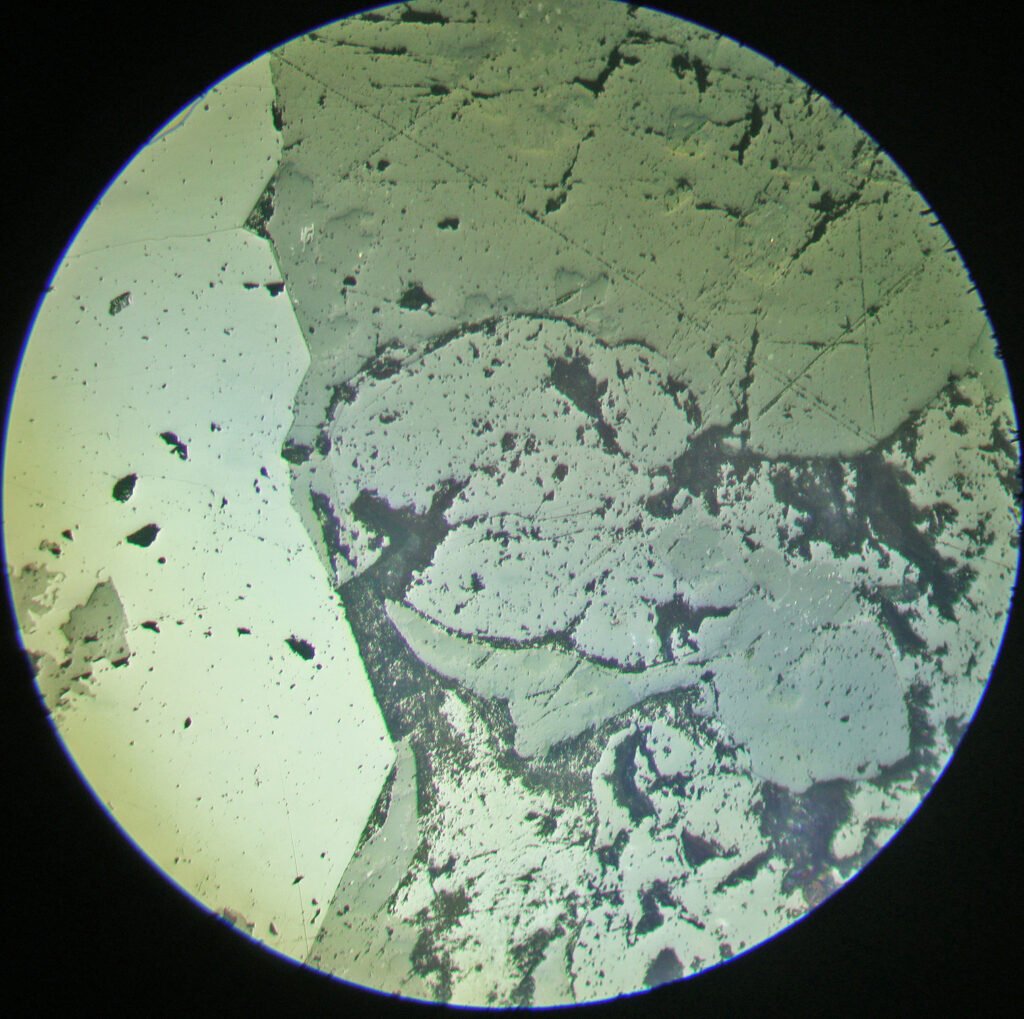
Refraction indices: nω: 1.606 – 1.610 nε: 1.610 – 1.613
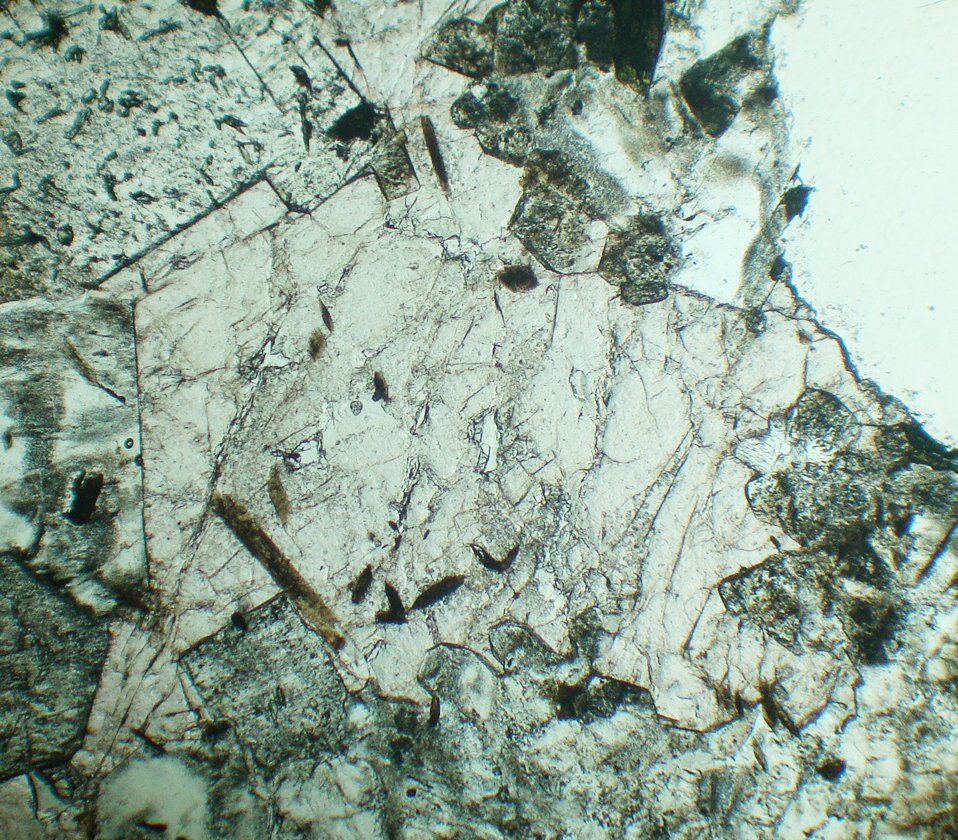
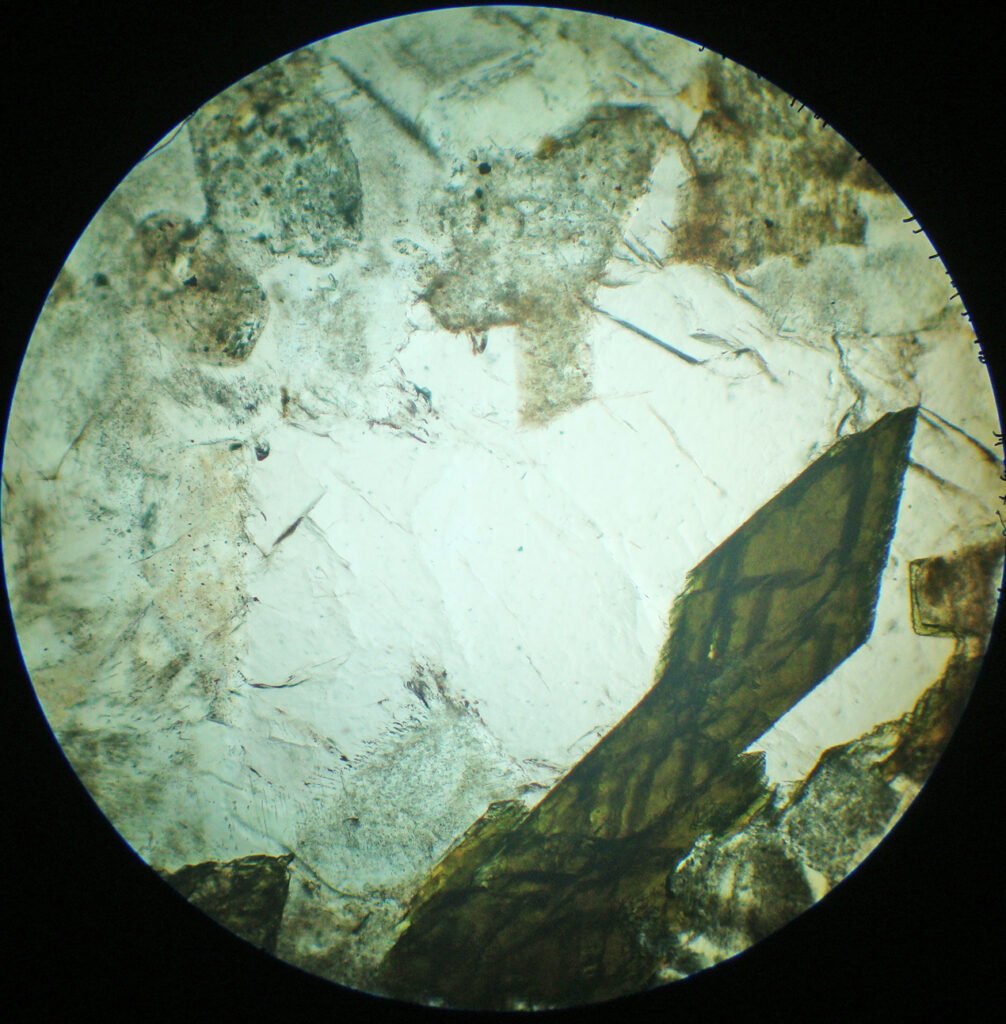
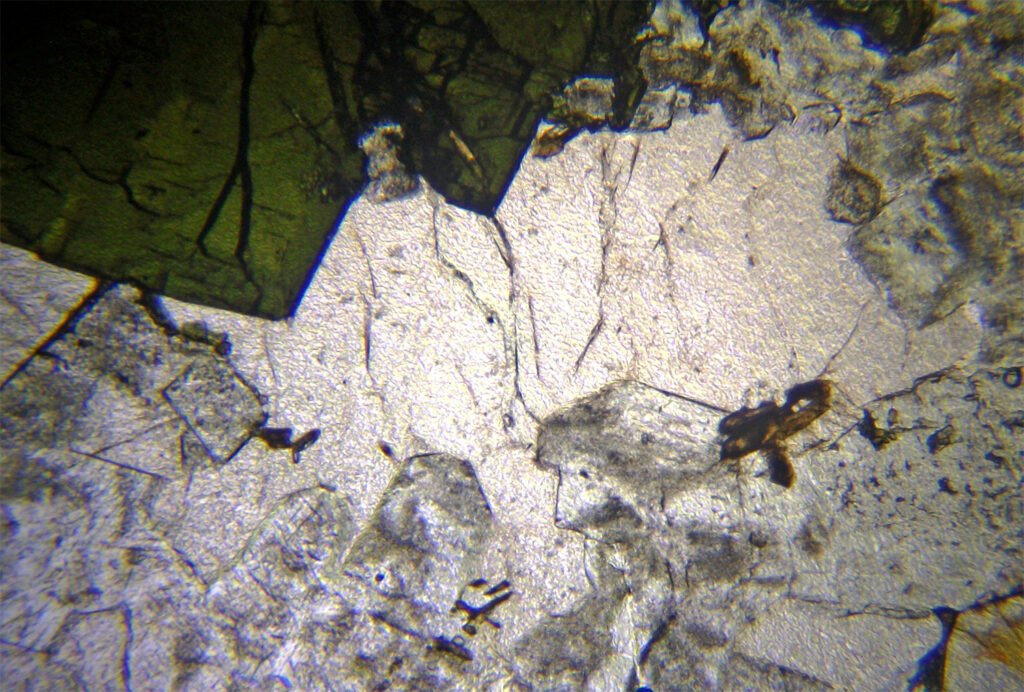
PLANE POLARIZED LIGHT – PPL
Color / Pleochroism: Weak pleochroism between
X = colorless, pink, pale yellow and
Y = pink to colorless.
This pleochroism may not be noticeable and the mineral appears colorless.
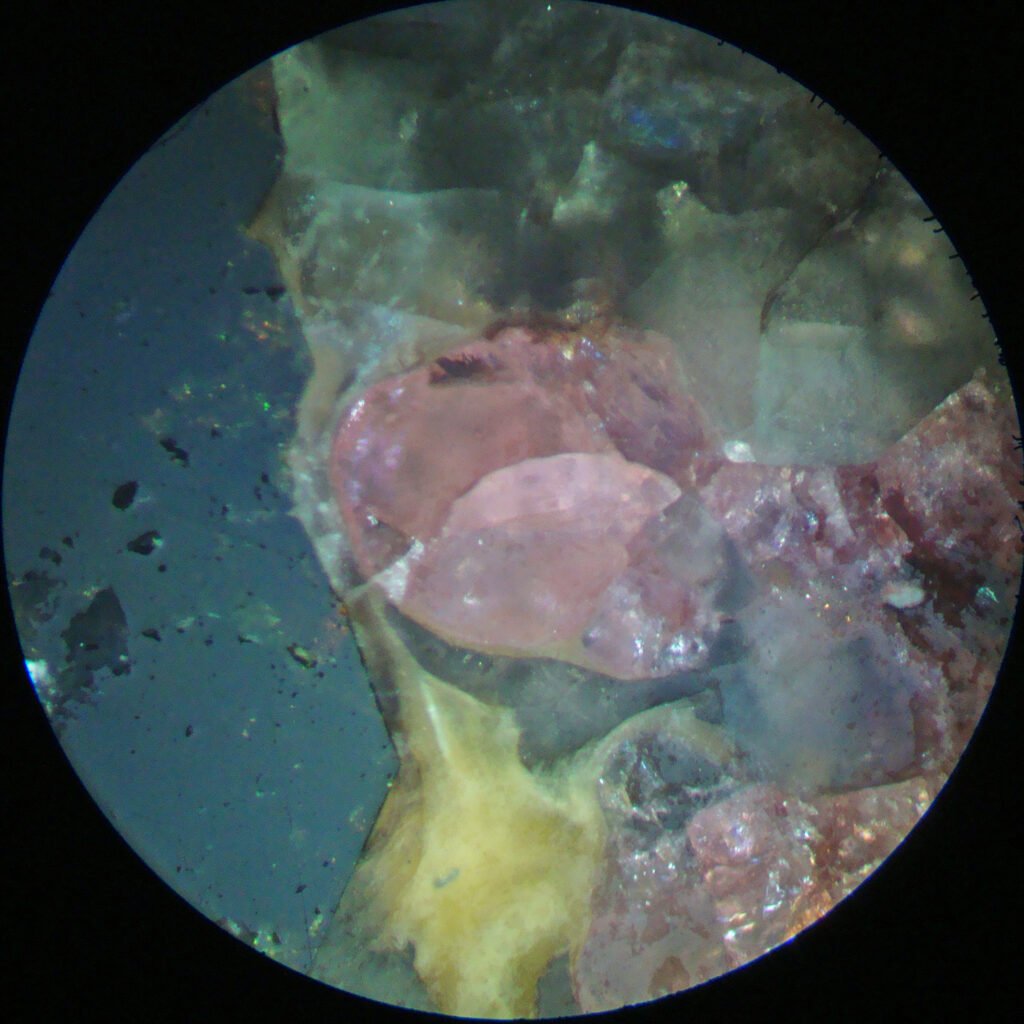
That is why it is important to observe the hand sample with a stereomicroscope (magnifying glass), because eudialyte usually has a very striking pink color (similar to the color of rhodonite) and, once its presence in the hand sample is verified, it can be safely identified in thin section.
Relief: Moderate. Important diagnostic feature!
Cleavage: {0001} perfect to indistinct; {11-20} imperfect.
Habits: Rhombohedral to long prismatic crystals. Usually as irregular masses and vein filling.
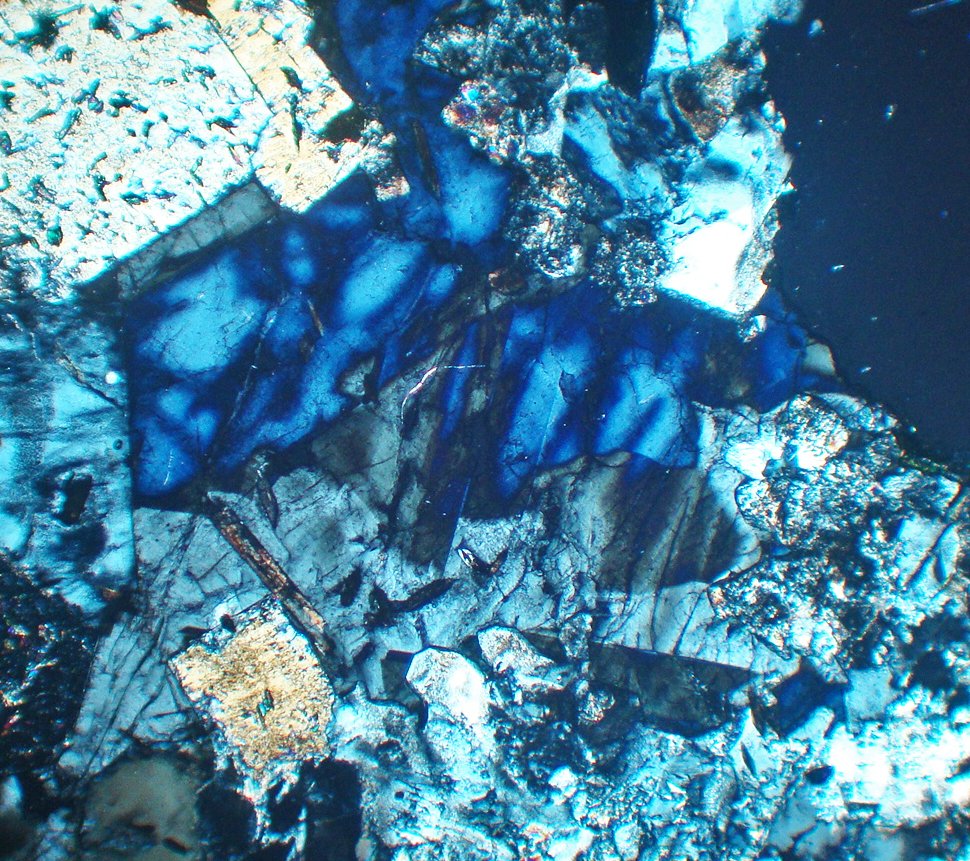
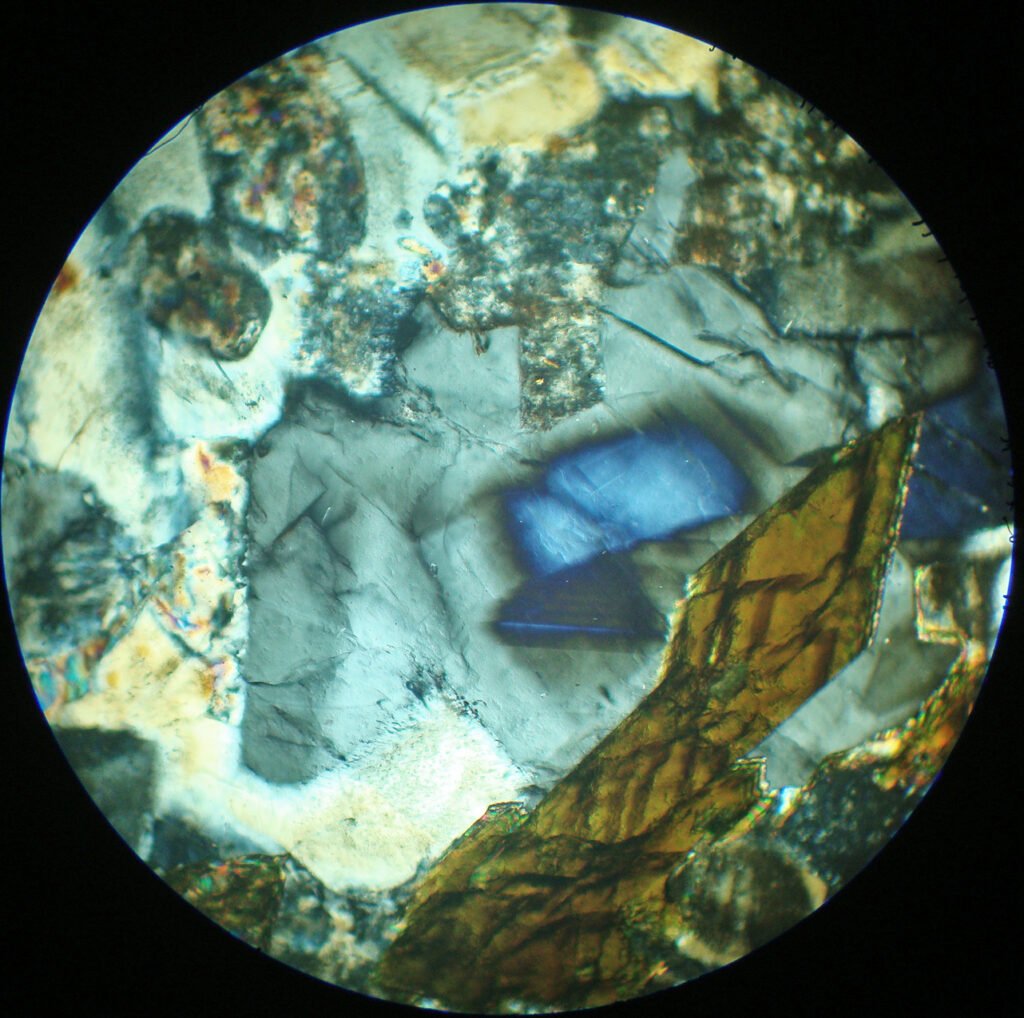
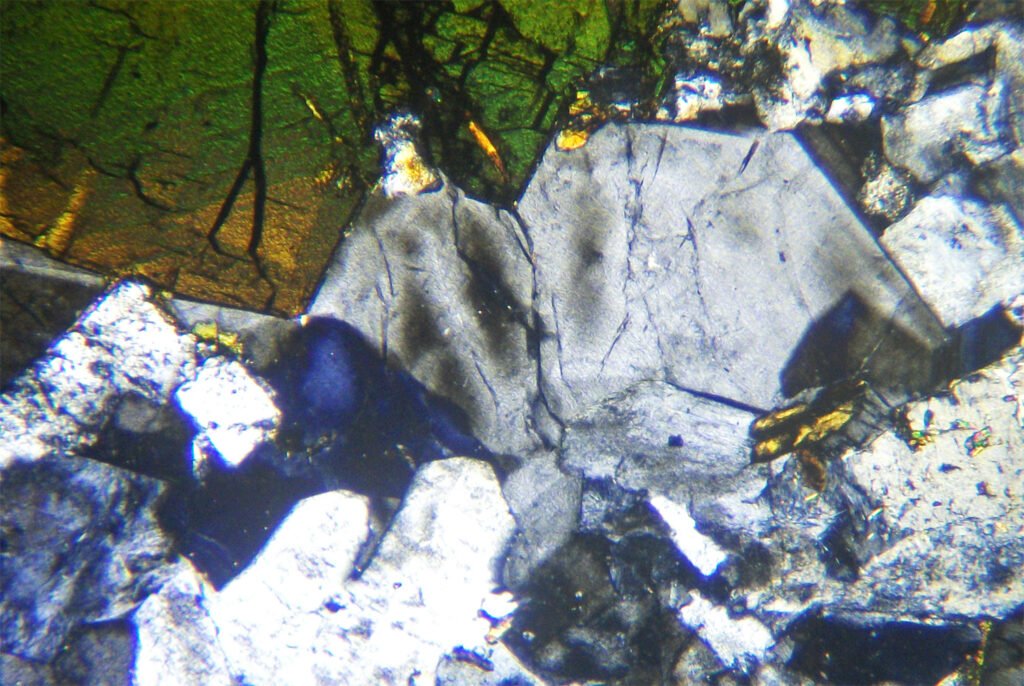
CROSSED POLARIZED LIGHT – XPL
Birefringence and Interference Colors: Maximum birefringence of 0.004, corresponding to first-order dark gray colors. They are very dark, black to bluish colors, reminiscent of one of the anomalous colors of chlorite (“Berlin blue”).
Extinction: Parallel.
Elongation sign: No information available.
Twins: No.
Zoning: No.
CONVERGENT LIGHT
Character: U(+) or U(-).
2V angle: No.
Alterations: Eudialyte is relatively unstable during low-temperature hydrothermal alteration and weathering, so it commonly breaks down into a suite of secondary minerals—especially in nepheline syenites and agpaitic complexes.
The main phases are catapleiite, zircon, lovozeroite, kentbrooksite and ferrokentbrooksite. Depending on conditions, eudialyte alter also in calcite, fluorite, aegirine, analcime and natrolite.
May be confused with: its characteristic occurrence in nepheline syenites and alkaline granites facilitates its recognition.
Nepheline can be very similar, but has lower relief.
Sodalite has even lower relief and is isotropic.