1. Characteristics
Crystal system: Hexagonal piramidal dihexagonal.
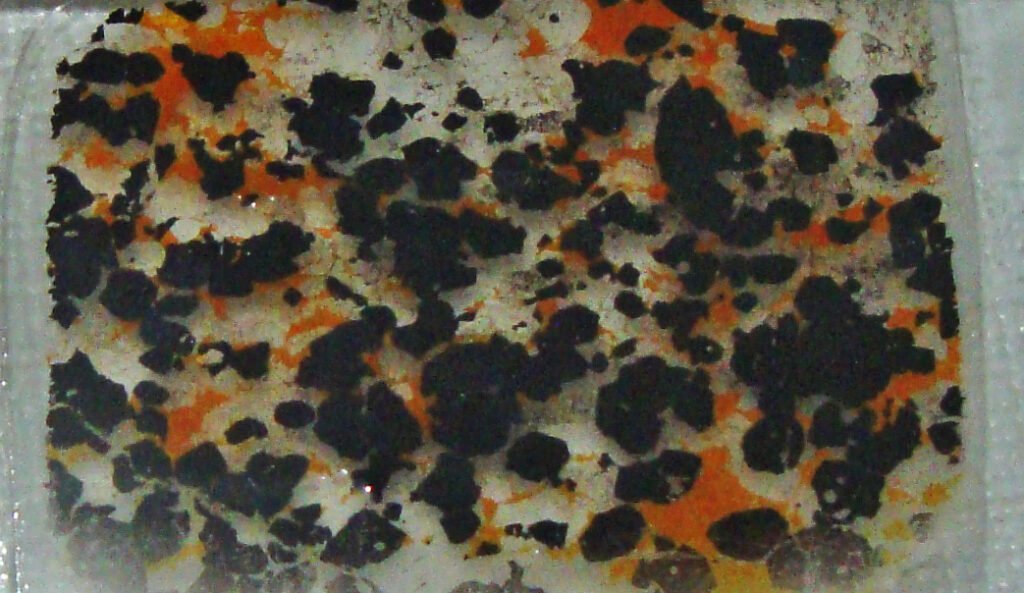
Color: Dark red to yellow-orange, rarely yellow, green or colorless. Small fragments are yellow.
Habit: Massive, compact, foliate, granular, spread throughout the matrix. Very rare hemimorphic crystals, up to 2.5 cm.
Cleavage: {10-10} perfect, but difficult.
Tenacity: Brittle.
Twinning: On {0001}
Fracture: Conchoidal, irregular.
Mohs Hardness: 4
Parting: Basal, at {000-1}, normally distinct.
Streak: Orange-yellow
Lustre: Adamantine to resinous.
Diaphaneity: Transparent.
Density (g/cm³): 5.64 – 5.68
2. Geology and Deposits
Zincite is a primary mineral in metamorphic stratiform zinc mineral deposits, such as those found in the Franklin Mining District (Sussex Co., New Jersey, USA).
It also occurs as a secondary mineral derived from other zinc minerals in the oxidation zone of Zn-rich ores deposits.
It can occur as a product of volcanism.
3. Mineral Associations
In the type locality (Franklin Mining District, Sussex Co, New Jersey, USA) it is associated with franklinite, magnetite, willemite, hausmannite and calcite.
Also with other Zn minerals such as sphalerite, hydrozincite, smithsonite, hemimorphite and chalcophanite.
With other Mn minerals such as jacobsite, sussexite, hodgkinsonite, leucophoenicite, tephroite, hetaerolite and chlorophoenicite.
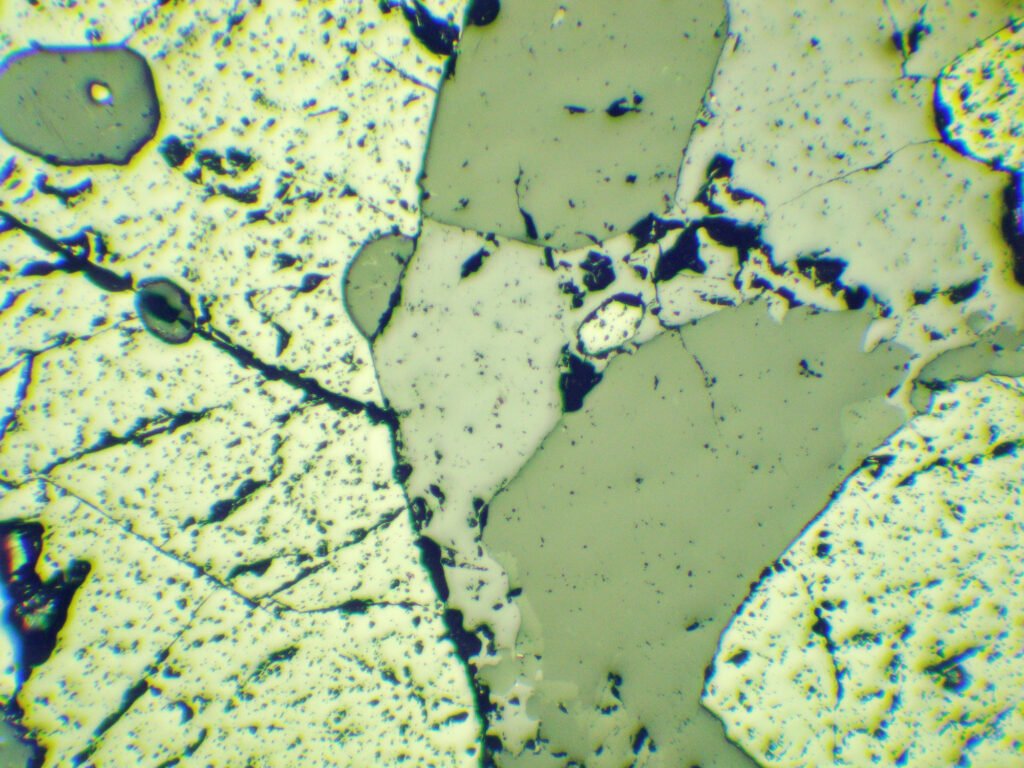
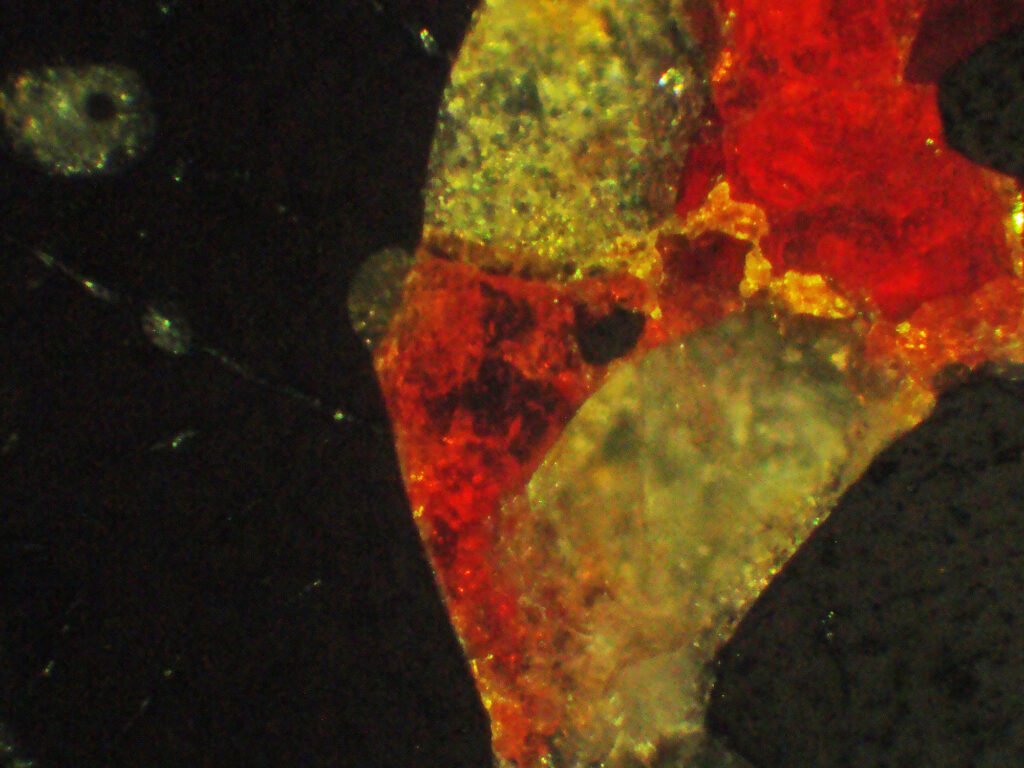
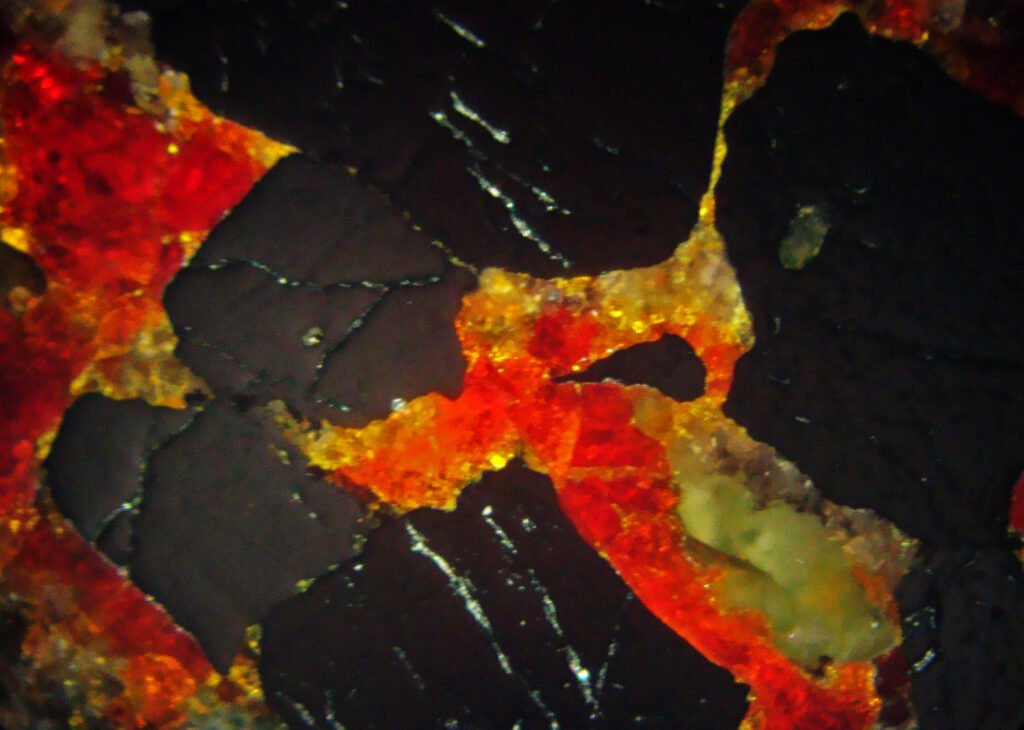
4. Transmitted Light Microscopy
Refraction indices: nω: 2.013 – 2.032 nε: 2.029 – 2.048
PLANE POLARIZED LIGHT – PPL
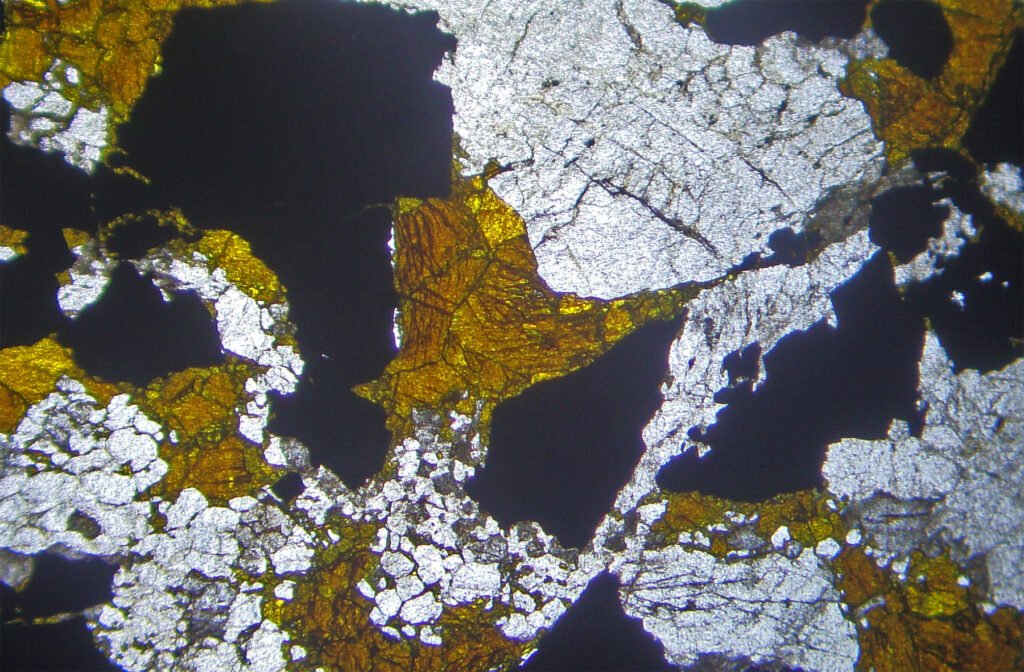
Color / Pleochroism: Deep red to yellow, without pleochroism.
Relief: Very high.
Cleavage: {10-10} perfect.
Habits: Generally rounded to anhedral grains. Massive, compact granular.
CROSSED POLARIZED LIGHT – XPL
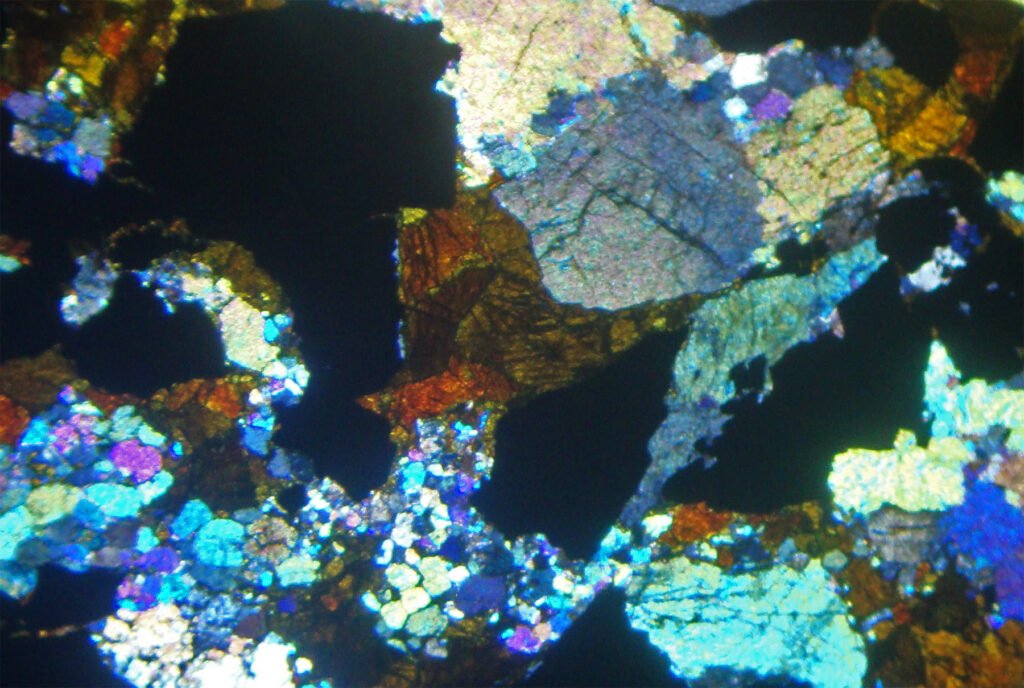
Birefringence and Interference Colors: Birefringence of 0.016, corresponding to colors from gray and white to 1st order orange.
Extinction: No information available, probably paralell.
Elongation sign: No information available.
Twins: On {0001}.
Zoning: No information available.
CONVERGENT LIGHT
Character: U(+)
2V angle: No.
Alterations: weathering or interaction with carbonated or hydrated solutions form secondary zinc minerals. The most frequent alteration products include smithsonite, hydrozincite, and goslarite.
May be confused with: other yellow minerals in a thin section, but these occur in other paragenesis.
Clinohumite is less red and more yellow.
Cuprite is a deep red color and much less orange.
Cinnabar is less orange.
Realgar can be similar.