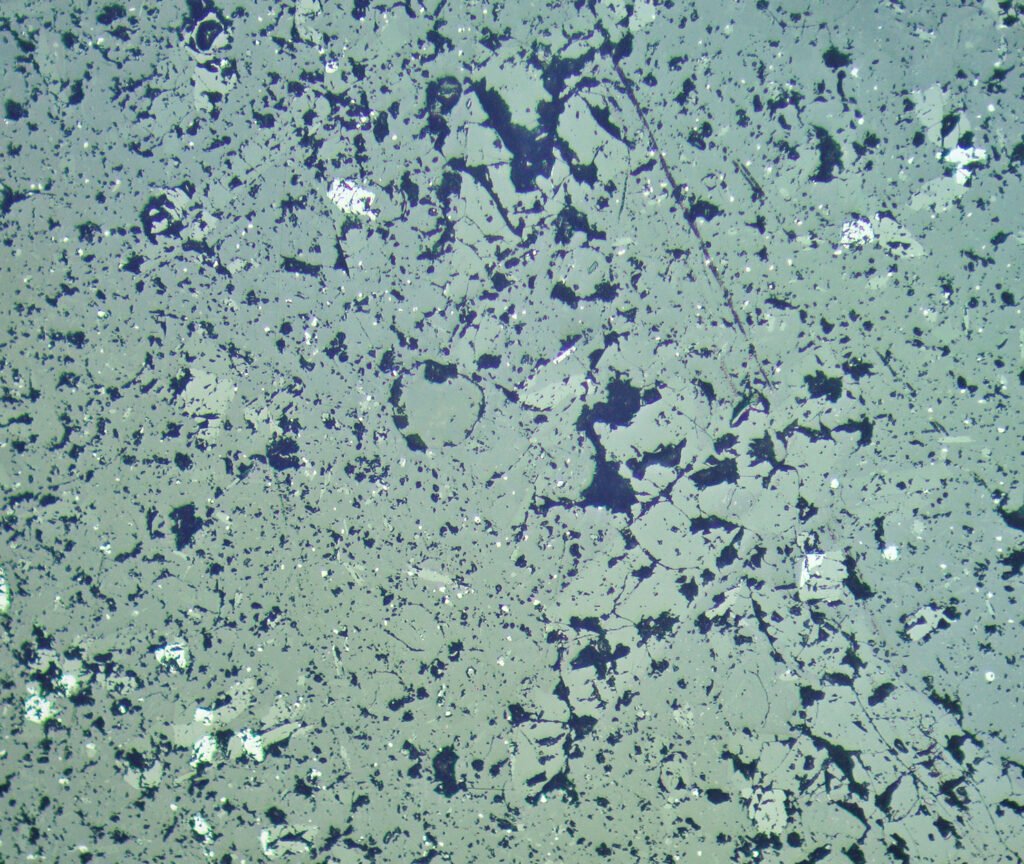
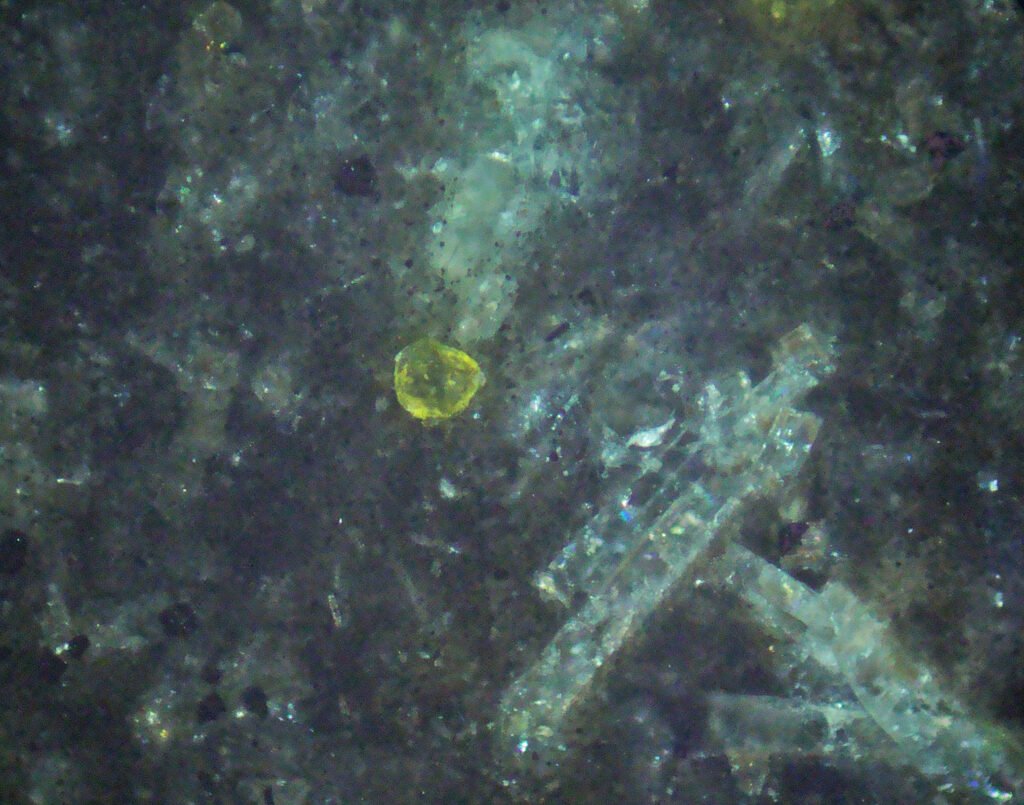
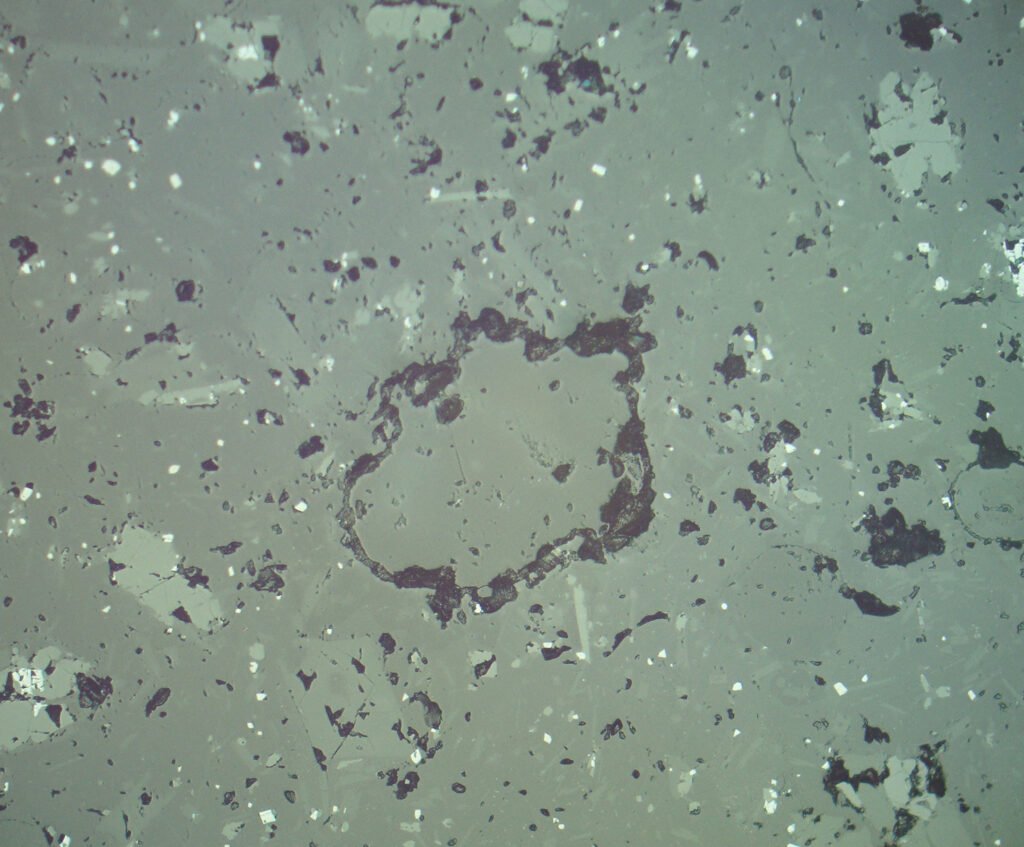
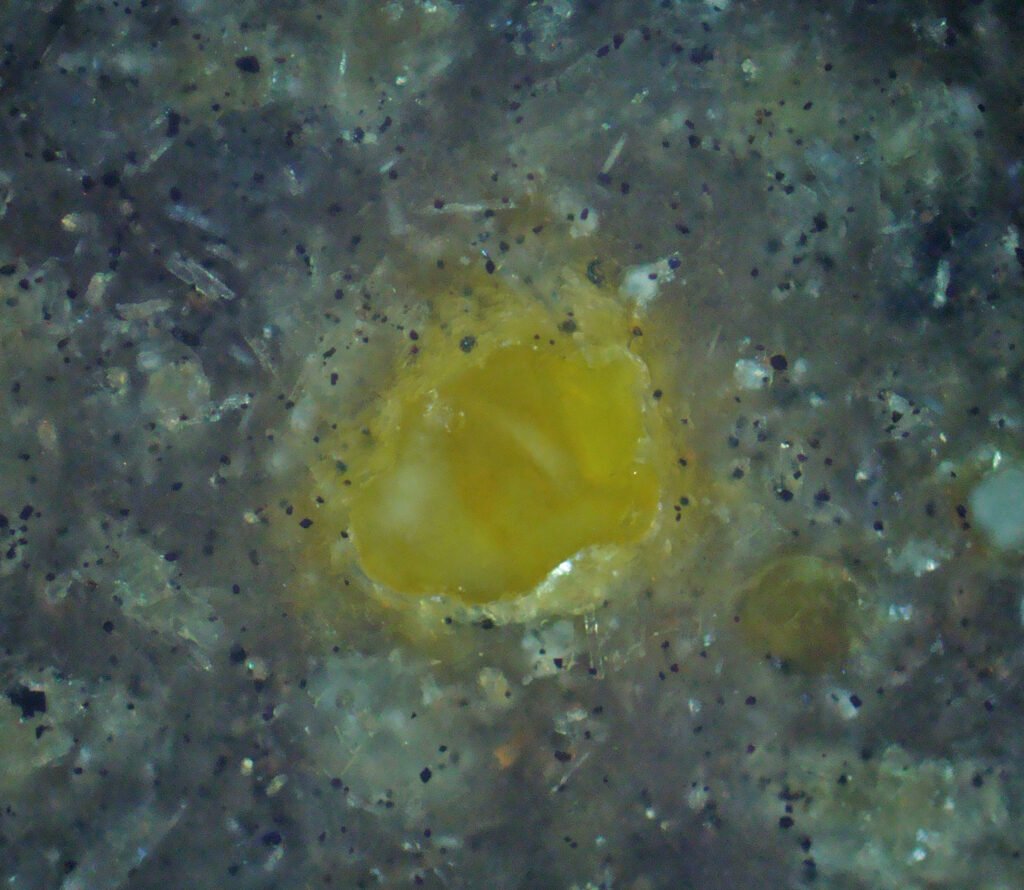
1. Characteristics
Crystal system: Monoclinic prismatic.
Color: Yellow colors (yellow, yellow-green, orange) and green colors (green, olive), can be brown.
Habit: Usually cryptocrystalline, massive, rarely small crystals in radial or spherulitic aggregates.
Cleavage: {001} perfect.
Tenacity: No information available.
Twinning: No information available.
Fracture: Conchoidal, splintery.
Mohs Hardness: 1.5 – 2
Parting: No information available.
Streak: No information available.
Lustre: Resinous, dull.
Diaphaneity: Transparent.
Density (g/cm³): 2.2 – 2.3
2. Geology and Deposits
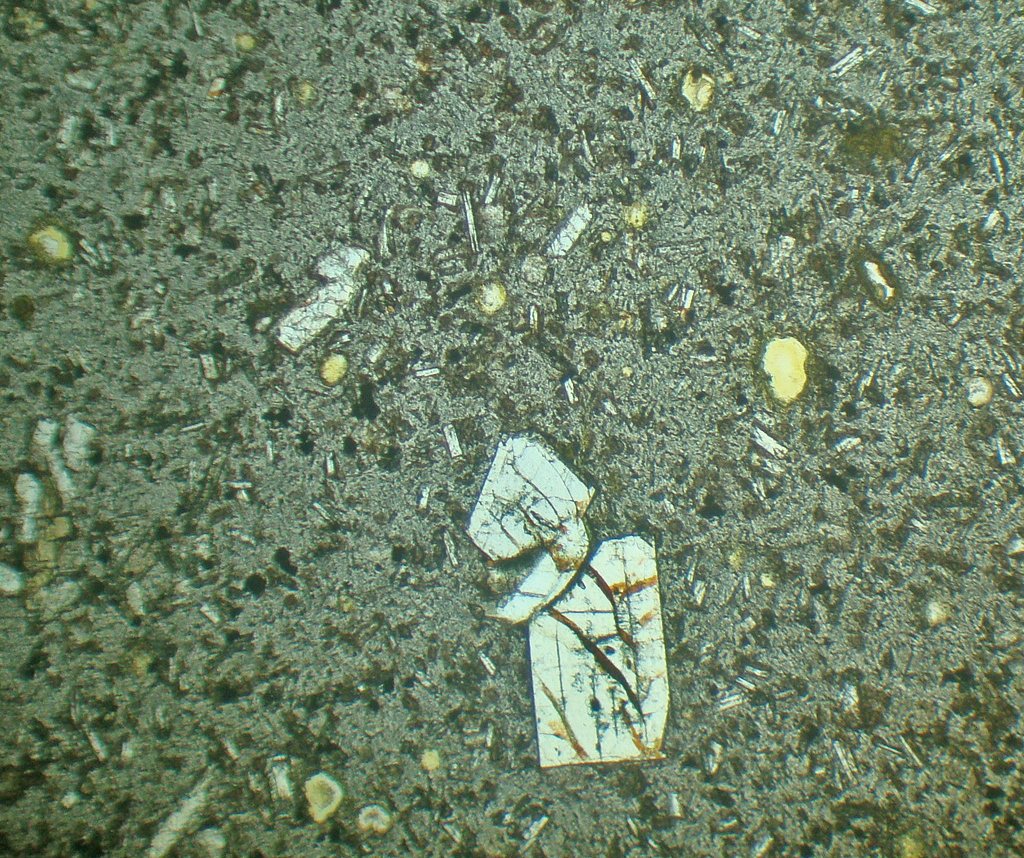
Nontronite occurs as an alteration product of basalts, kimberlites and ultramafic igneous rocks. It also develops in poorly drained volcanic soils and in some hydrothermally altered mineral deposits.
It also occurs in basalts of mid-ocean ridges and in carbonate rocks that have undergone contact metamorphism (scarnites).
In recent marine sediments it forms as an autigenic mineral.
3. Mineral Associations
It ocurrs with silica (quartz, opal, chalcedony), “hornblendes”, pyroxenes, olivines, micas and kaolinite.
In volcanic rocks, it is usually associated in cavities (vesicles), with zeolites (chabazite, analcime, thomsonite, mesolite), barite, hollandite, pyrite and calcite.
4. Transmitted Light Microscopy
Refraction indices: nα: 1.530 – 1.580 nβ: 1.555 – 1.612 nγ: 1.560 – 1.615
PLANE POLARIZED LIGHT – PPL
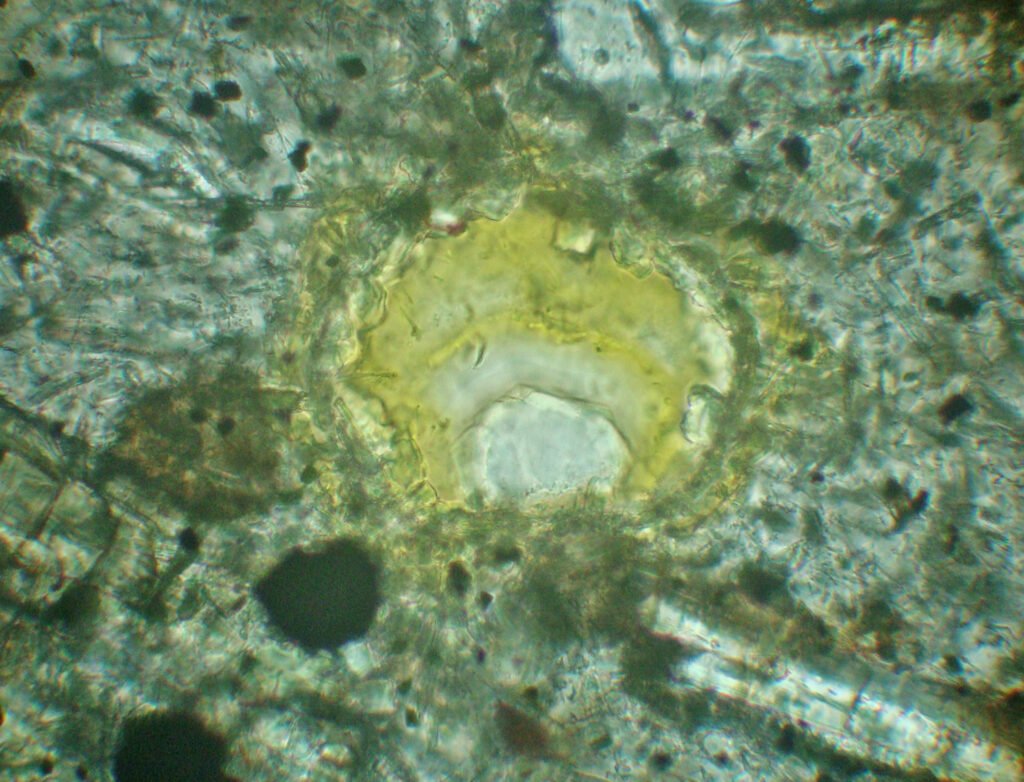
Color / Pleochroism: Yellow, without pleochroism.
Relief: Moderate.
Cleavage: Not visible due to the very small size of the crystals.
Habits: Micaceous flakes, can form radial, fan-shaped aggregates that can evolve into spherulites. Massive.
CROSSED POLARIZED LIGHT – XPL
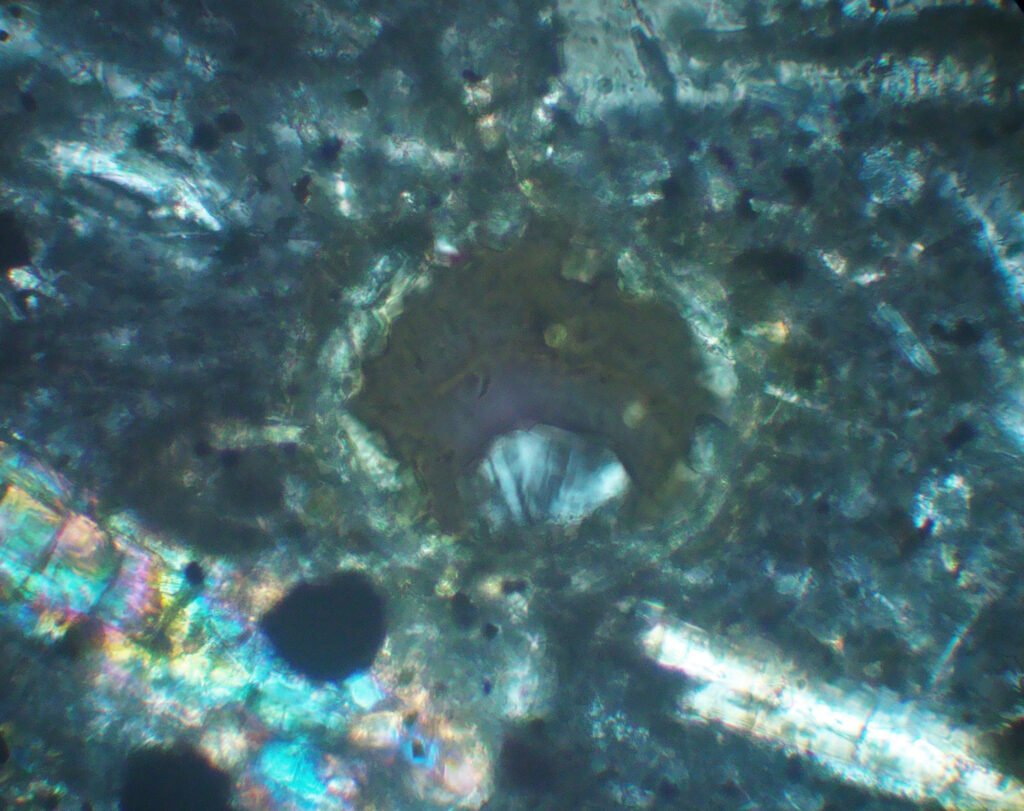
Birefringence and Interference Colors: Maximum birefringence from 0.030 to 0.035: colors up to half second order. Gray, yellow, red, blue, orange. The strong colors of nontronite, however, can completely mask these interference colors.
Extinction: No information available.
Elongation sign: It is not possible to determine.
Twins: It is not possible to determine.
Zoning: It is not possible to determine.
CONVERGENT LIGHT
Character: B(-)
2V angle: 5 – 66º
Alterations: Nontronite is an alteration product.
May be confused with: jarosite, which is also cryptocrystalline and show strong yellow color.