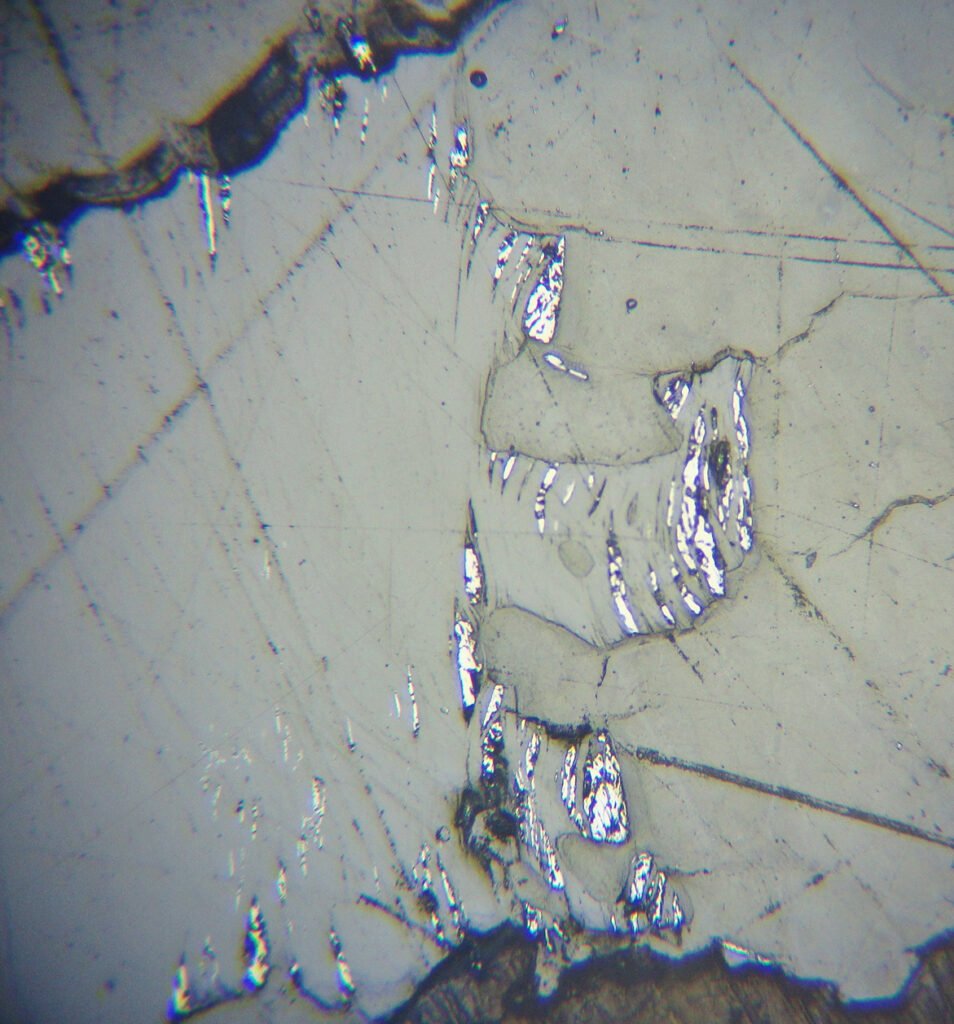
1. Characteristics
Crystal system: Monoclinic, pseudohexagonal.
Color: Green in various shades, yellowish, white, pink, reddish pink.
Habit: Scaly, foliate, fibrous, massive, earthy, granular aggregates.
Cleavage: {001} perfect.
Tenacity: Flexible.
Twinning: On {001}
Fracture: No information available.
Mohs Hardness: 2 – 2.5
Parting: No.
Streak: Colorless.
Lustre: Silky, pearly, dull.
Diaphaneity: Transparent.
Density (g/cm³): 2.6 – 3.02
2. Geology and Deposits
Chlorite is very common. In igneous rocks it occurs due to the alteration of mafic minerals such as amphiboles, pyroxenes, biotite, staurolite, cordierite, garnet and chloritoid. In altered volcanic rocks it is found in cavities and fractures.
In metamorphic rocks it is characteristic of the greenschist facies of rocks formed in contact and regional metamorphism, such as chlorite-schists, serpentinites, marbles, chalcosilicate rocks, phyllites, quartzites, amphibolites. It can occur in ultramafic rocks.
Chlorite also occurs in hydrothermal vein deposits, in sediments and in soils. It is formed by the hydrothermal alteration of any type of rock, through the recrystallization of clay minerals or the alteration of mafic minerals. Chlorite occurs in banded iron formations and forms under reducing conditions in the presence of decomposed organic material (chamosite).
3. Mineral Associations
It is associated with many different minerals, any listing will always be incomplete.
Chamosite is commonly associated with quartz (rock crystal and smoky crystal), kaolinite, pyrite, titanite, fluorite, plagioclases (albite), hematite, garnet (almandine), carbonates (calcite, siderite), magnetite, olivine and epidote.
Clinochlore is associated with quartz, garnets (grossular, uvarovite and andradite), plagioclase, talc, olivine, diopside, hessonite, titanite, chromite, vesuvianite, magnetite, serpentine, epidote and carbonates (calcite, dolomite)
Also with staurolite, andalusite, chloritoid, cordierite, actinolite, etc.
4. Transmitted Light Microscopy
Refraction indices: nα: 1.562 – 1.594 nβ: 1.565 – 1.594 nγ: 1.565 – 1.565 (clinochlore)
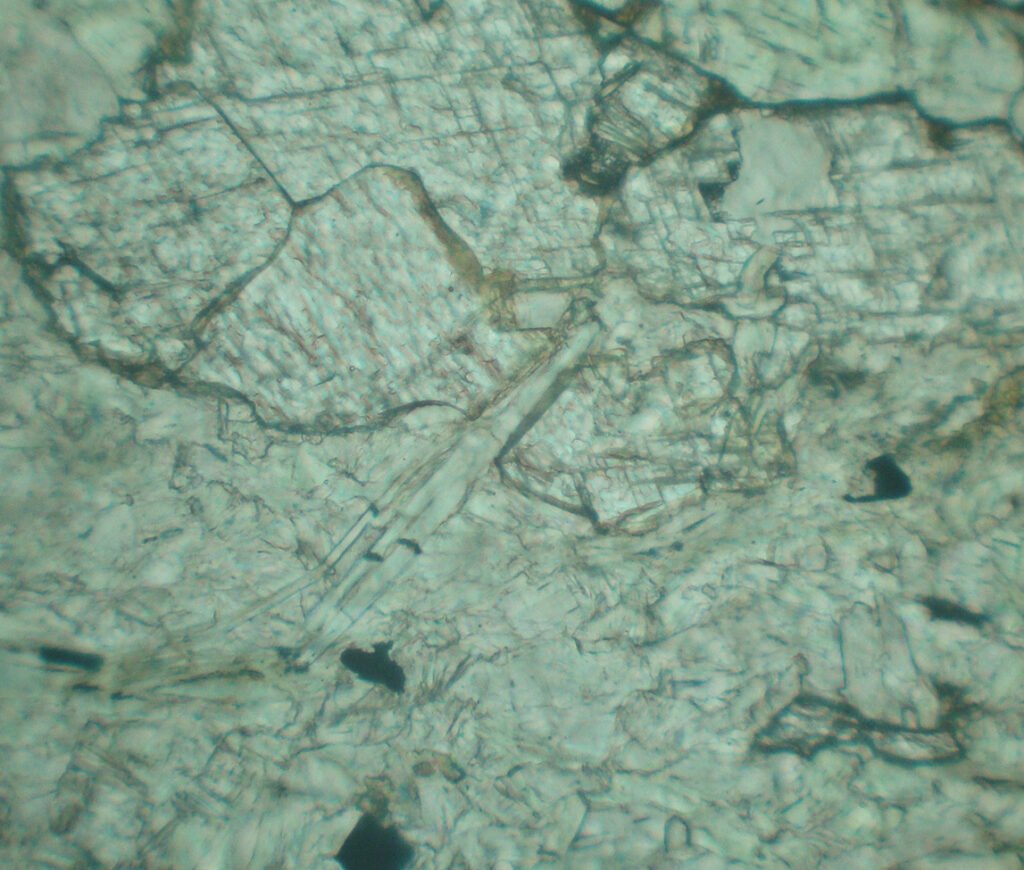
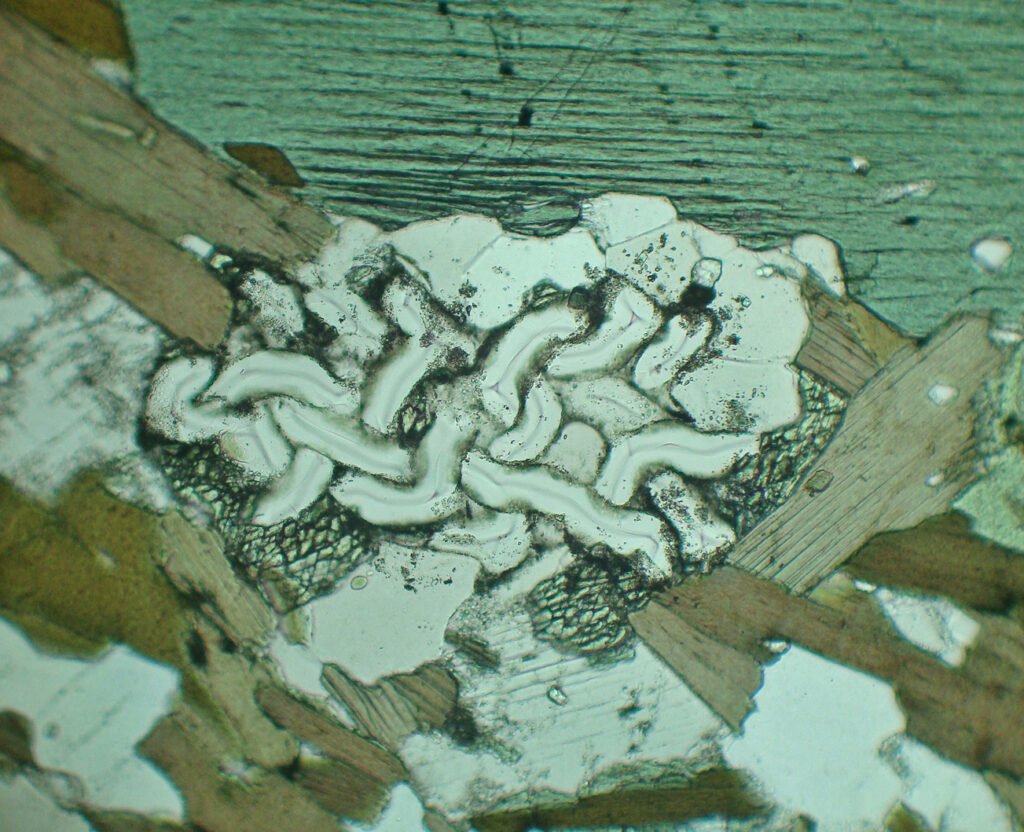
PLANE POLARIZED LIGHT – PPL
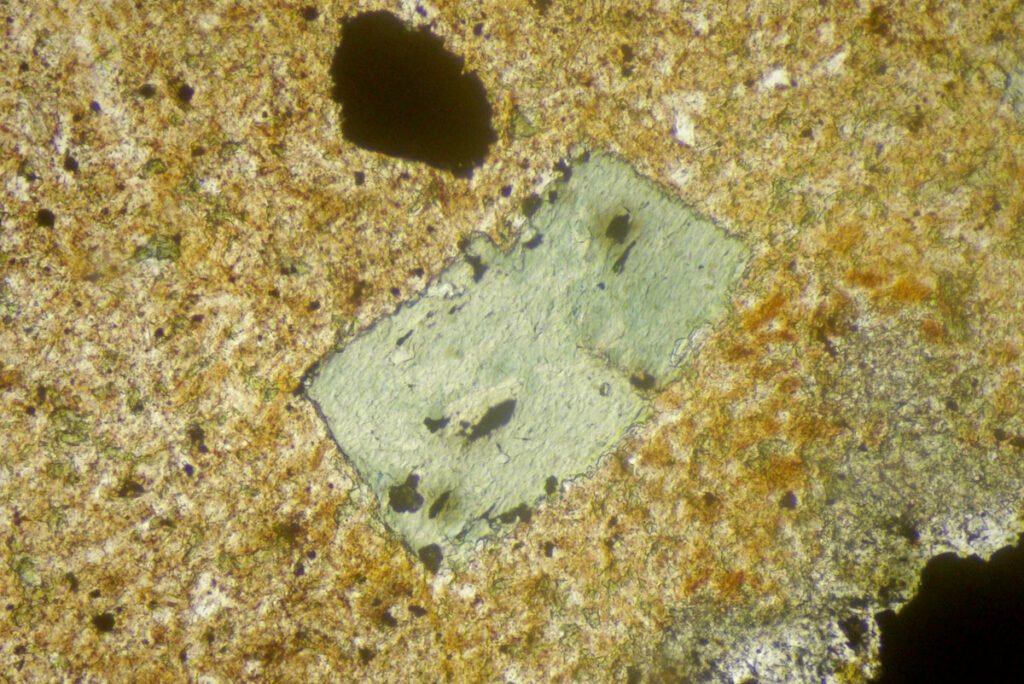
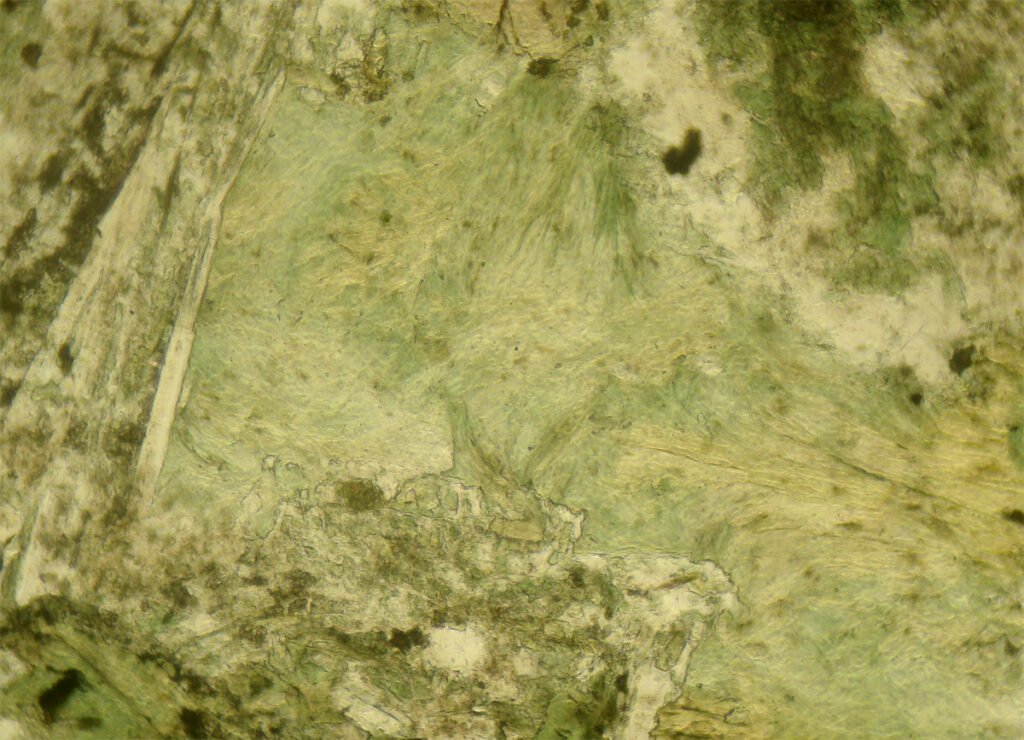
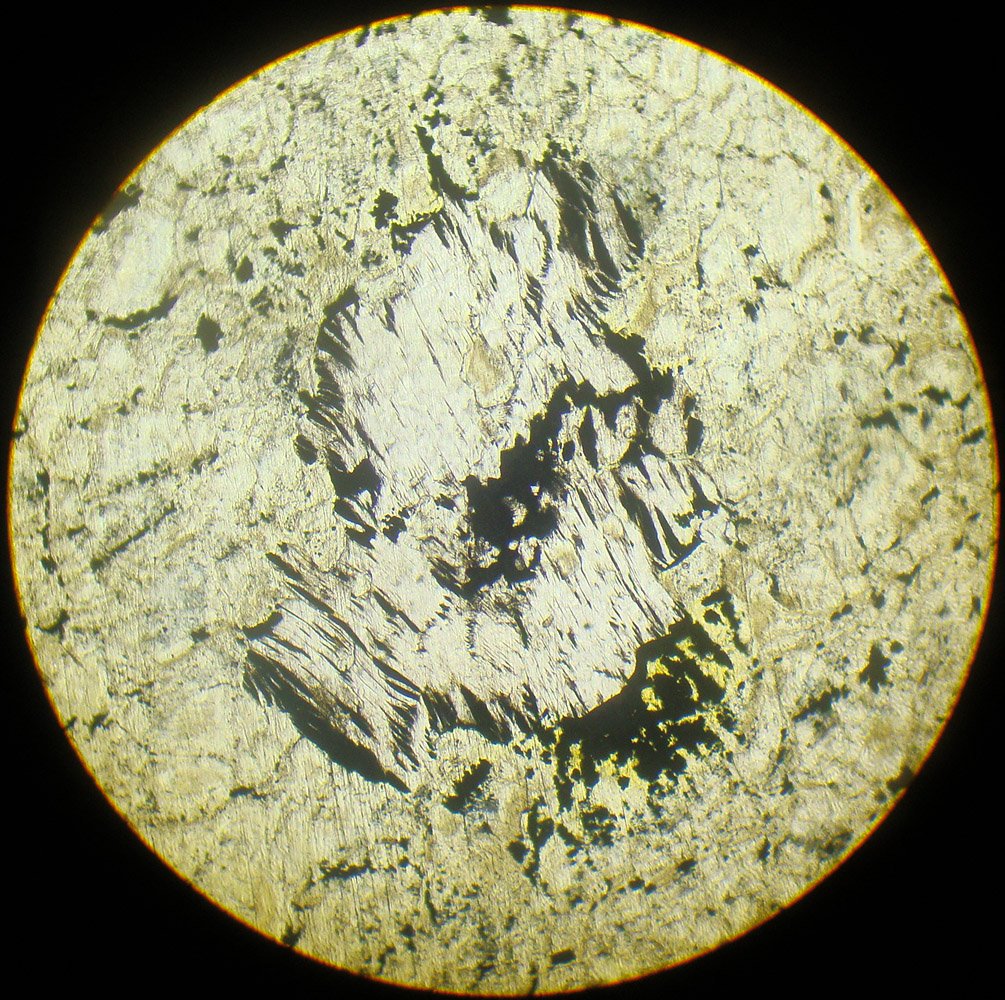
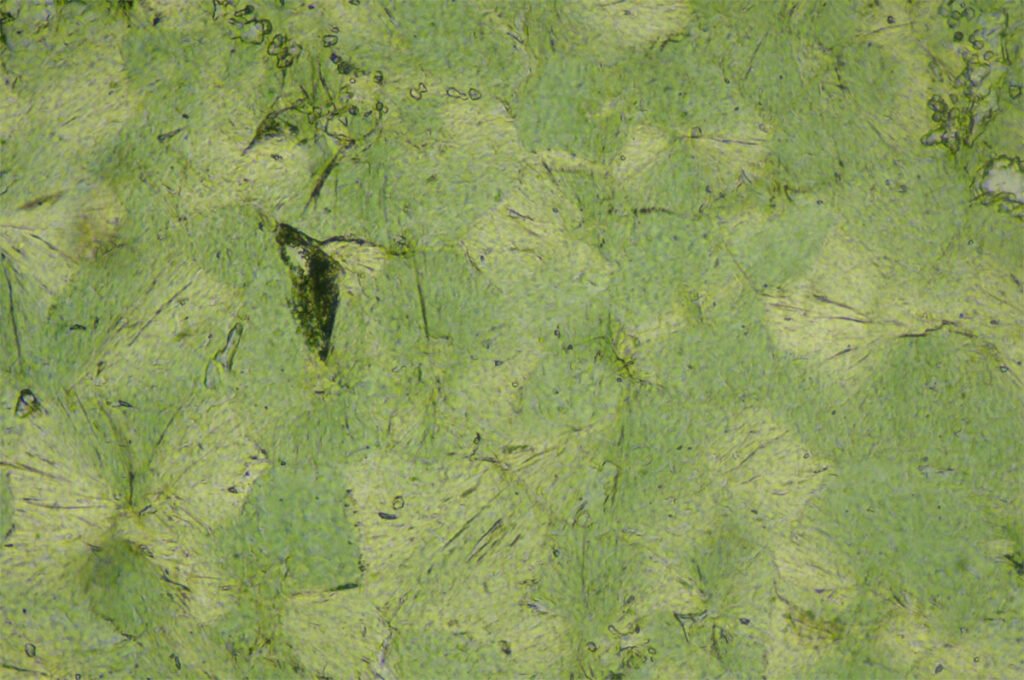
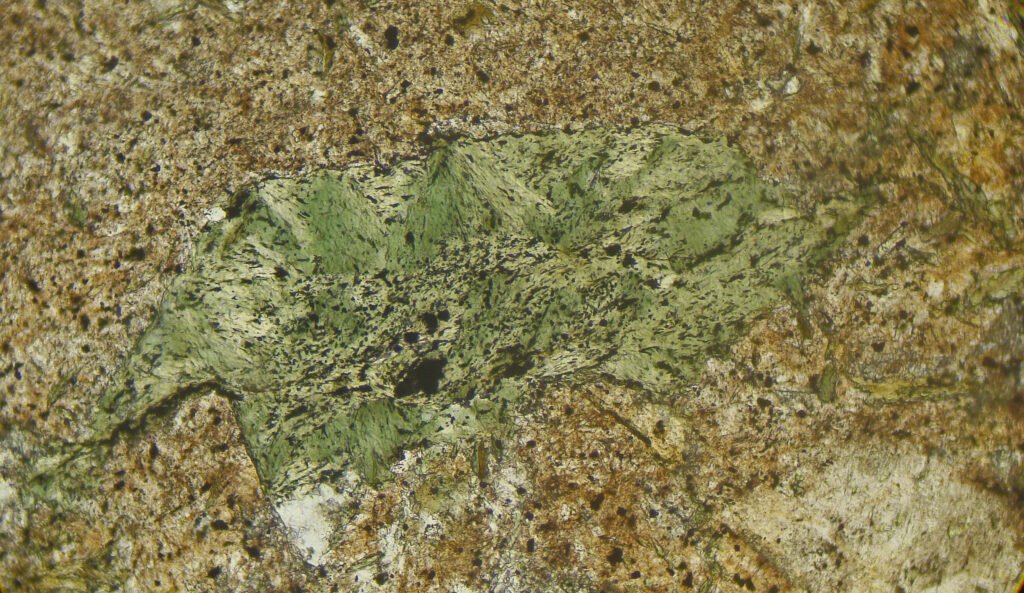
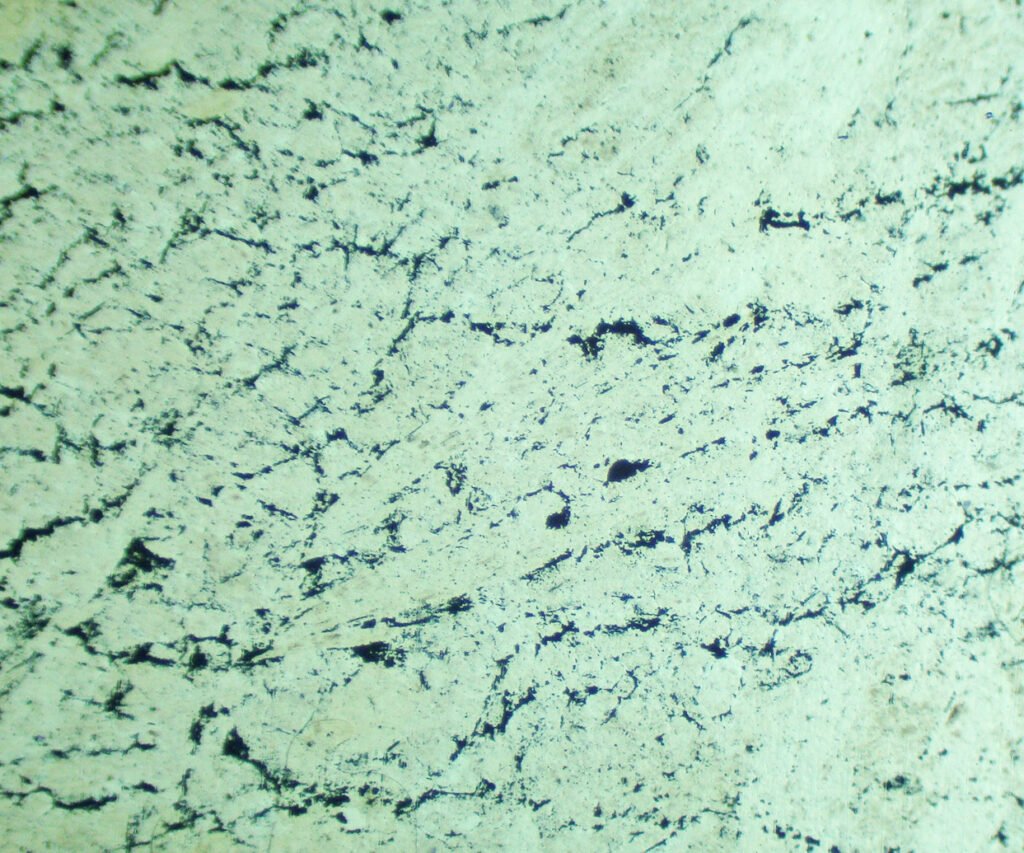
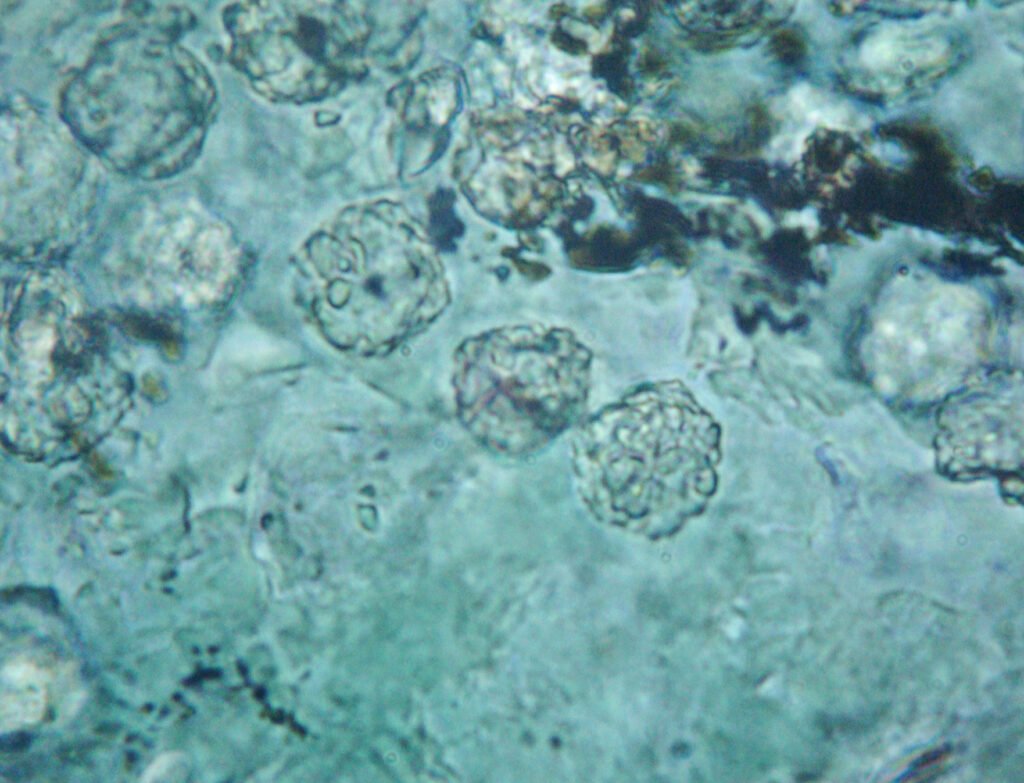
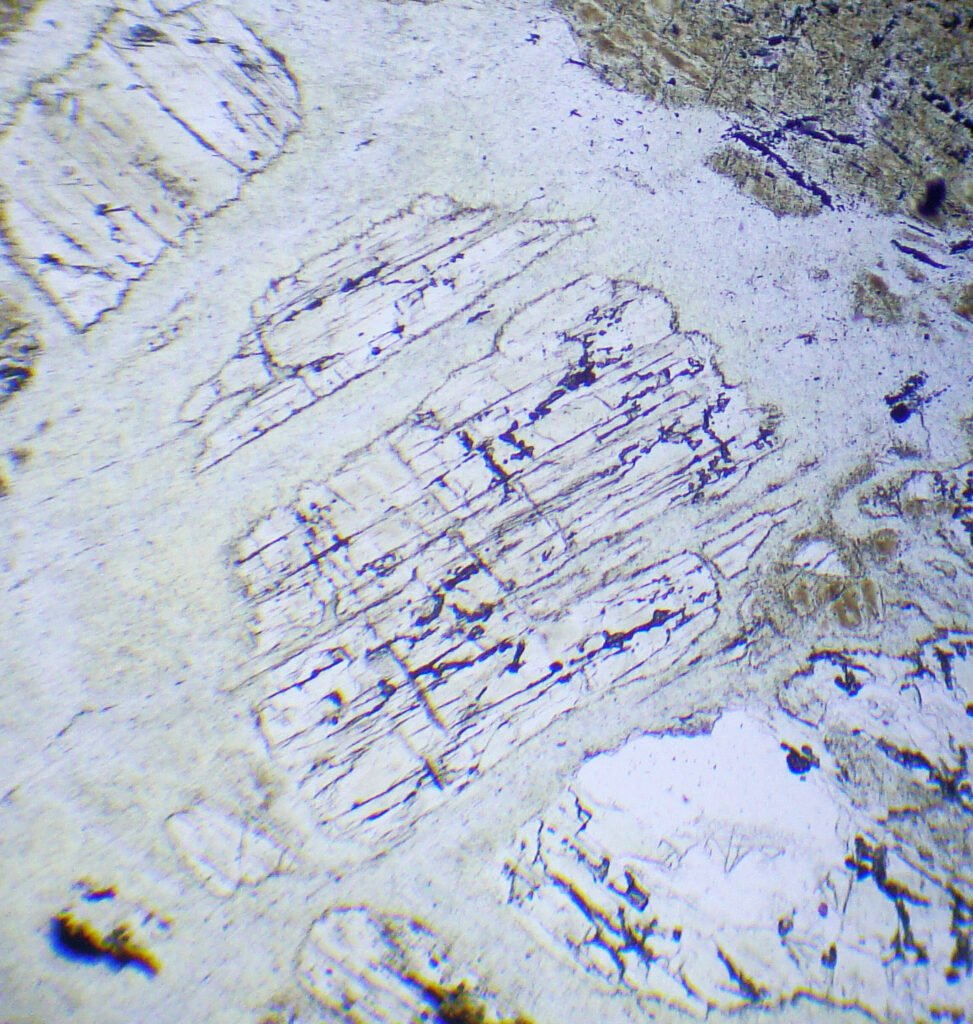
Color / Pleochroism: Colorless or with weak to moderate pleochroism in various shades of green. The green tones become more intense with higher Fe contents.
Chlorite-Cr is pinkish violet, blue. Chlorite-Mg is colorless.
Relief: Low to moderate. If with high iron content, it has high relief.
Cleavage: {001} perfect, controls the orientation of the fragments.
Often not visible because the crystals are too small.
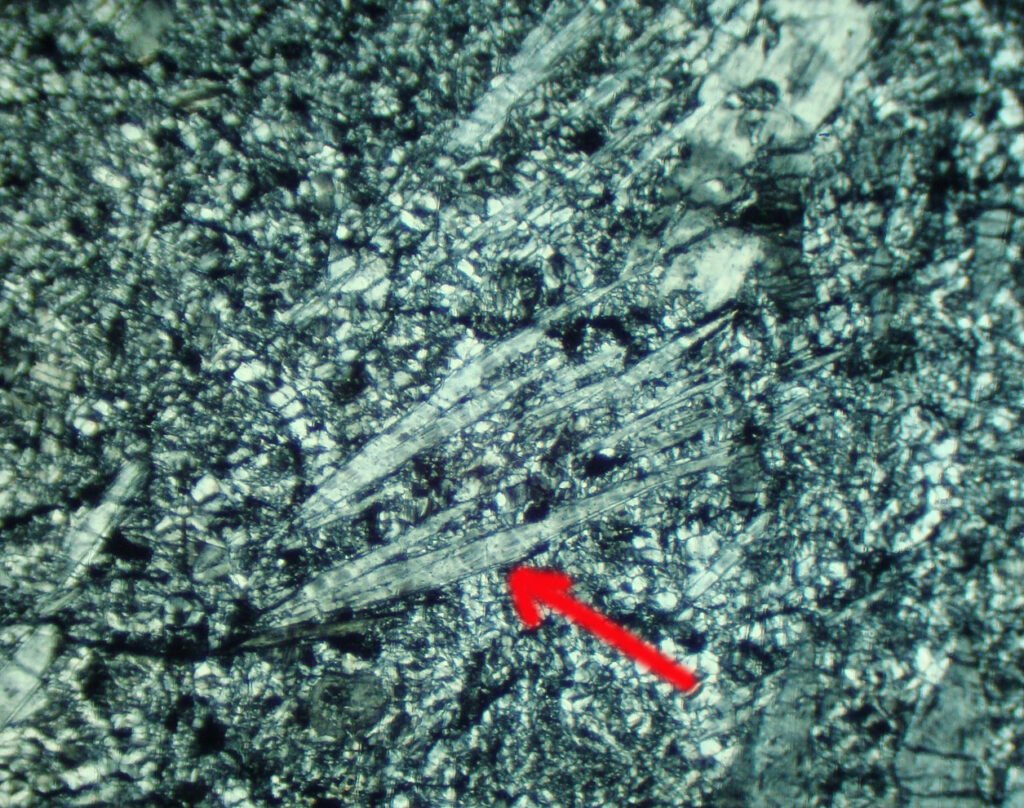
Habits: Pseudohexagonal tabular crystals, usually micaceous or foliate, forming radiating aggregates. Also fibrous, granular, earthy or massive.
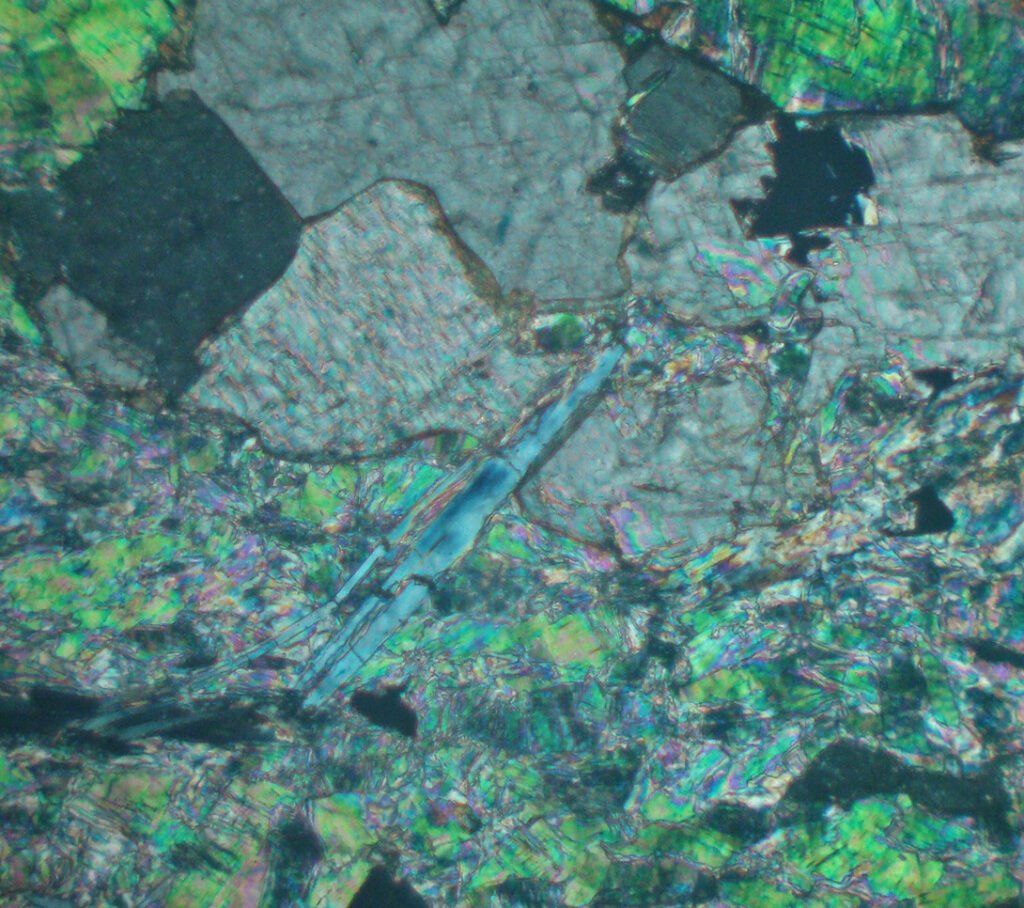
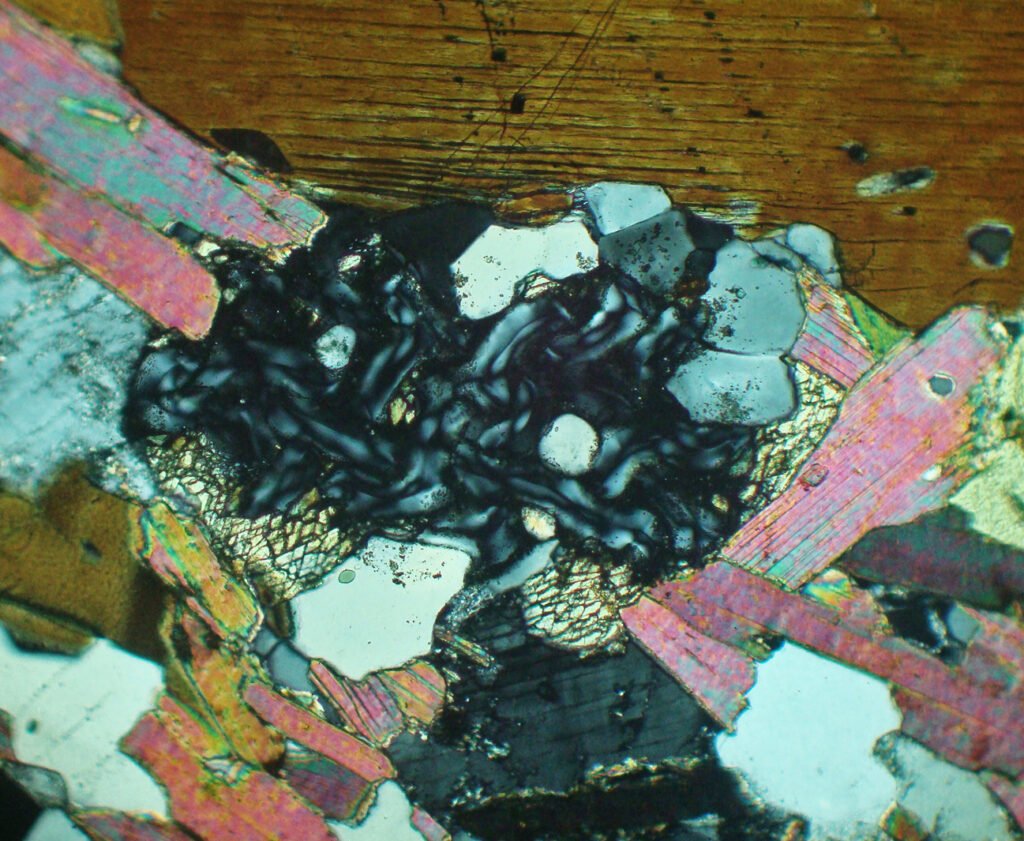
CROSSED POLARIZED LIGHT – XPL
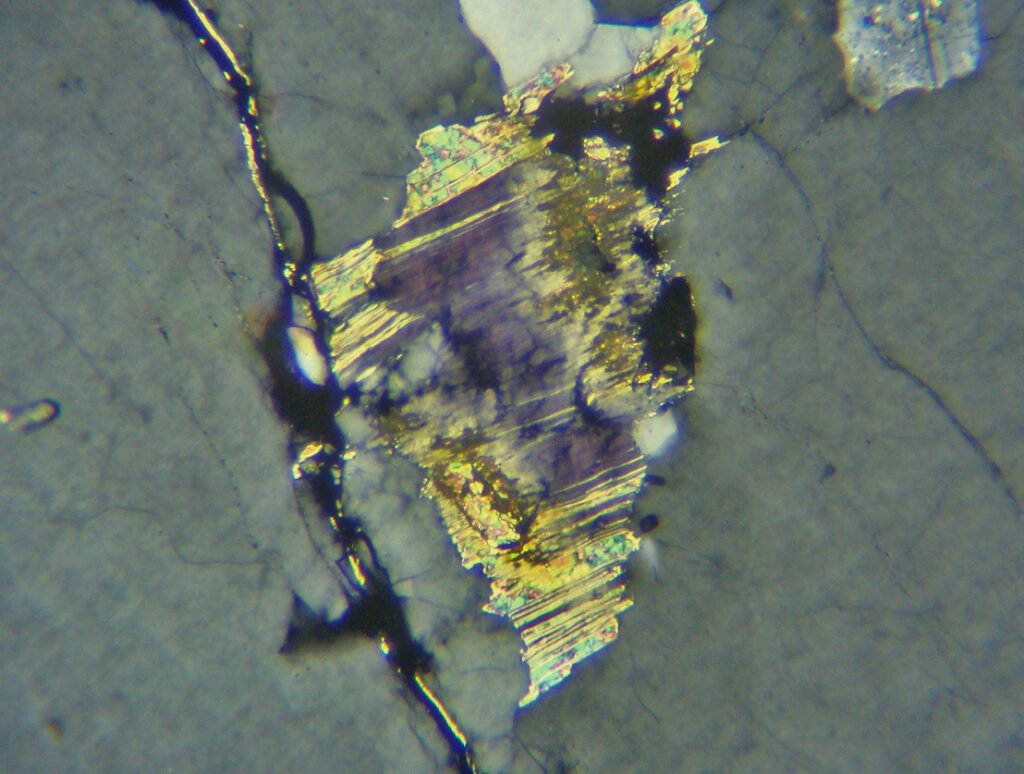
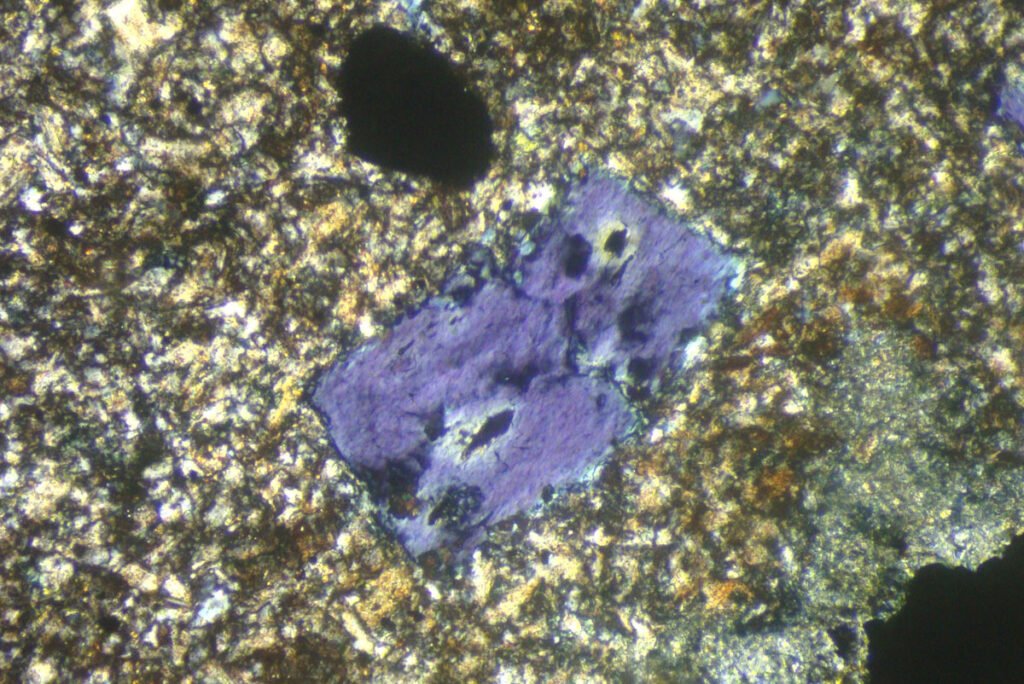
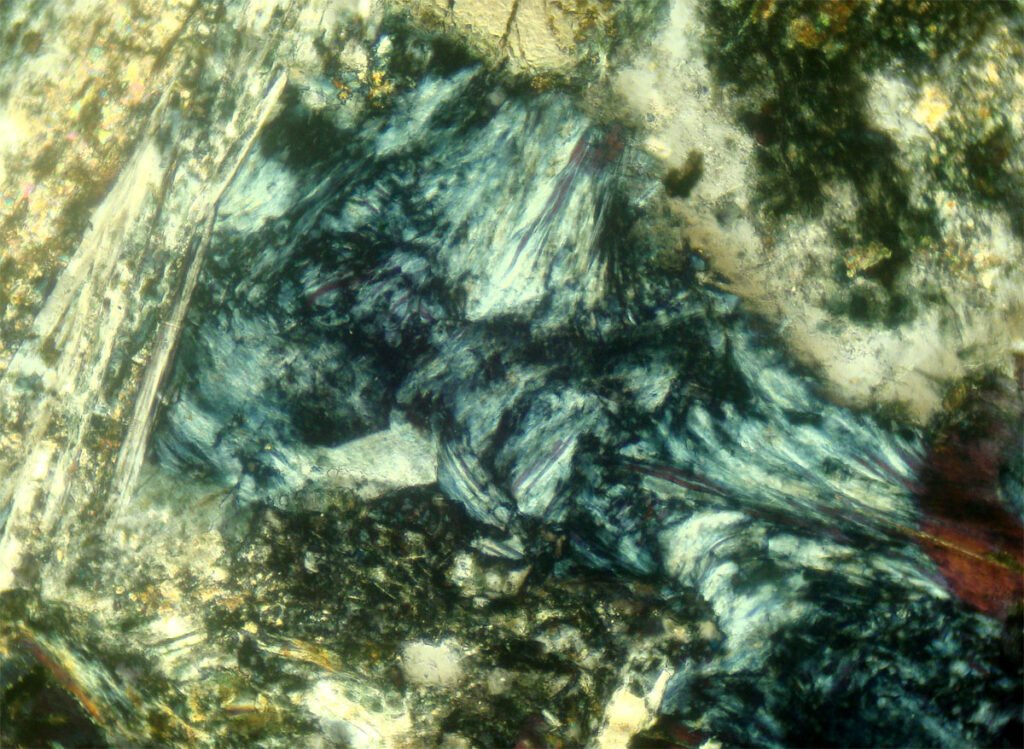
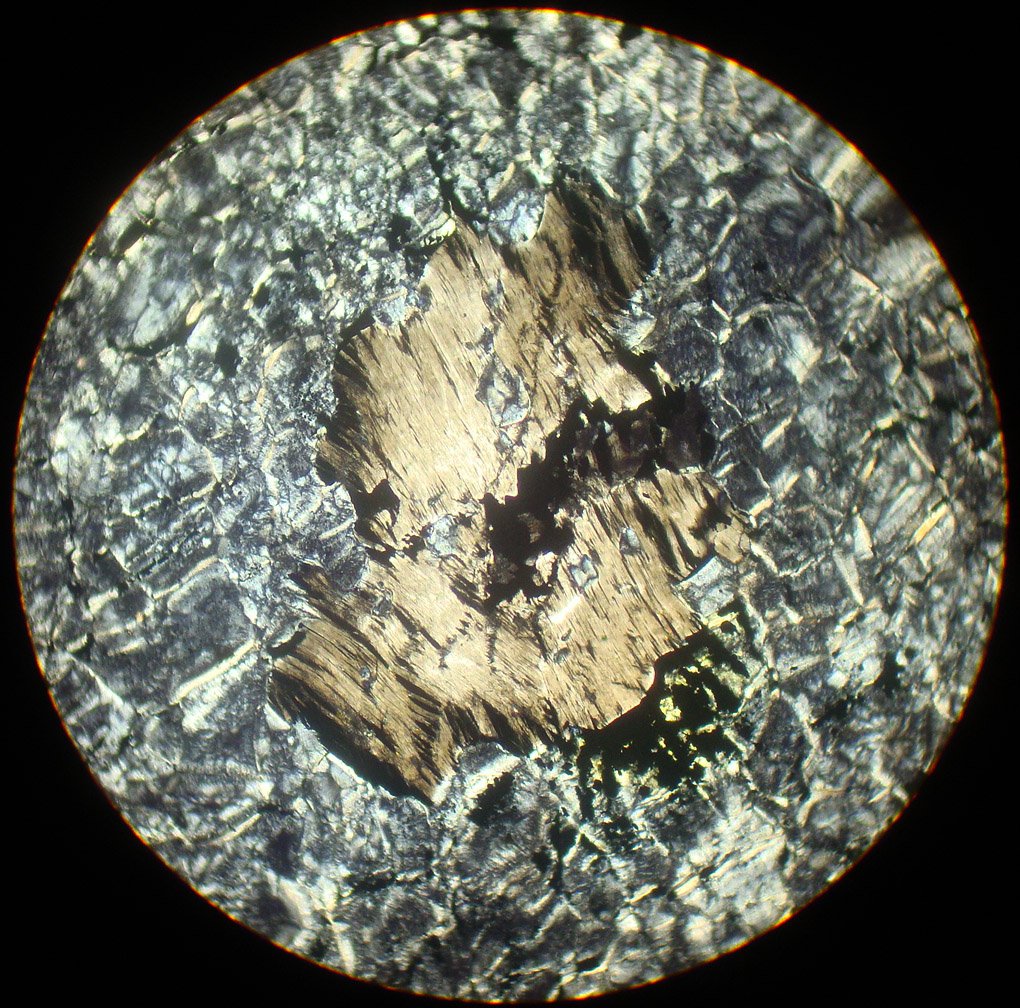
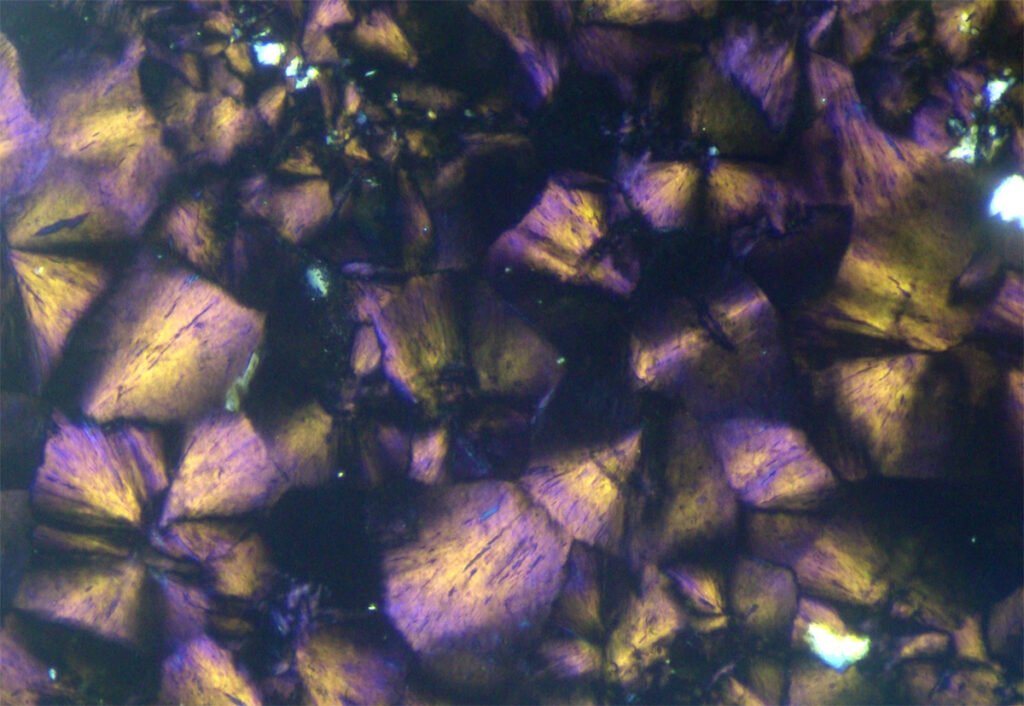
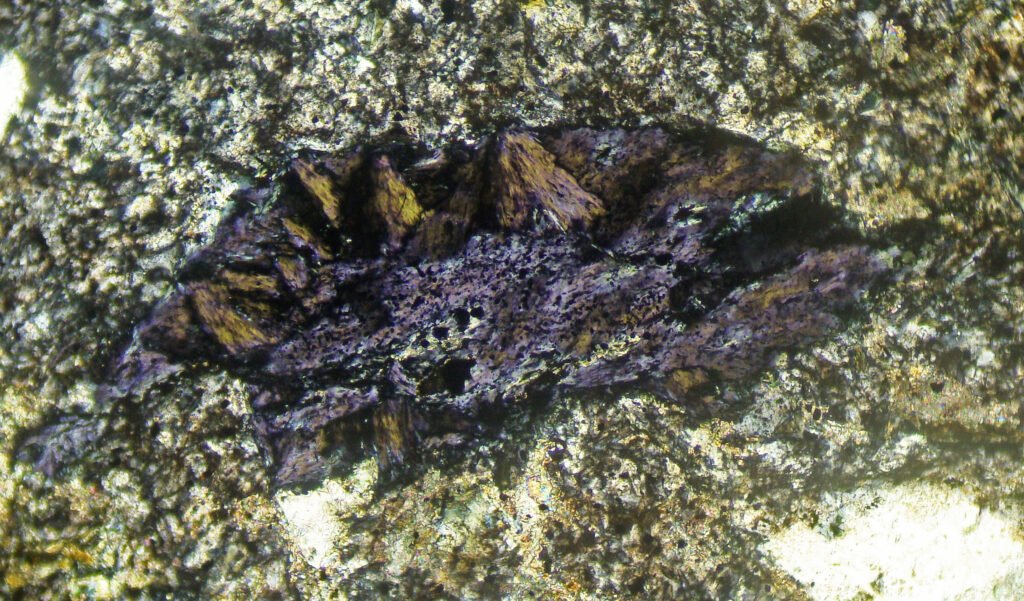
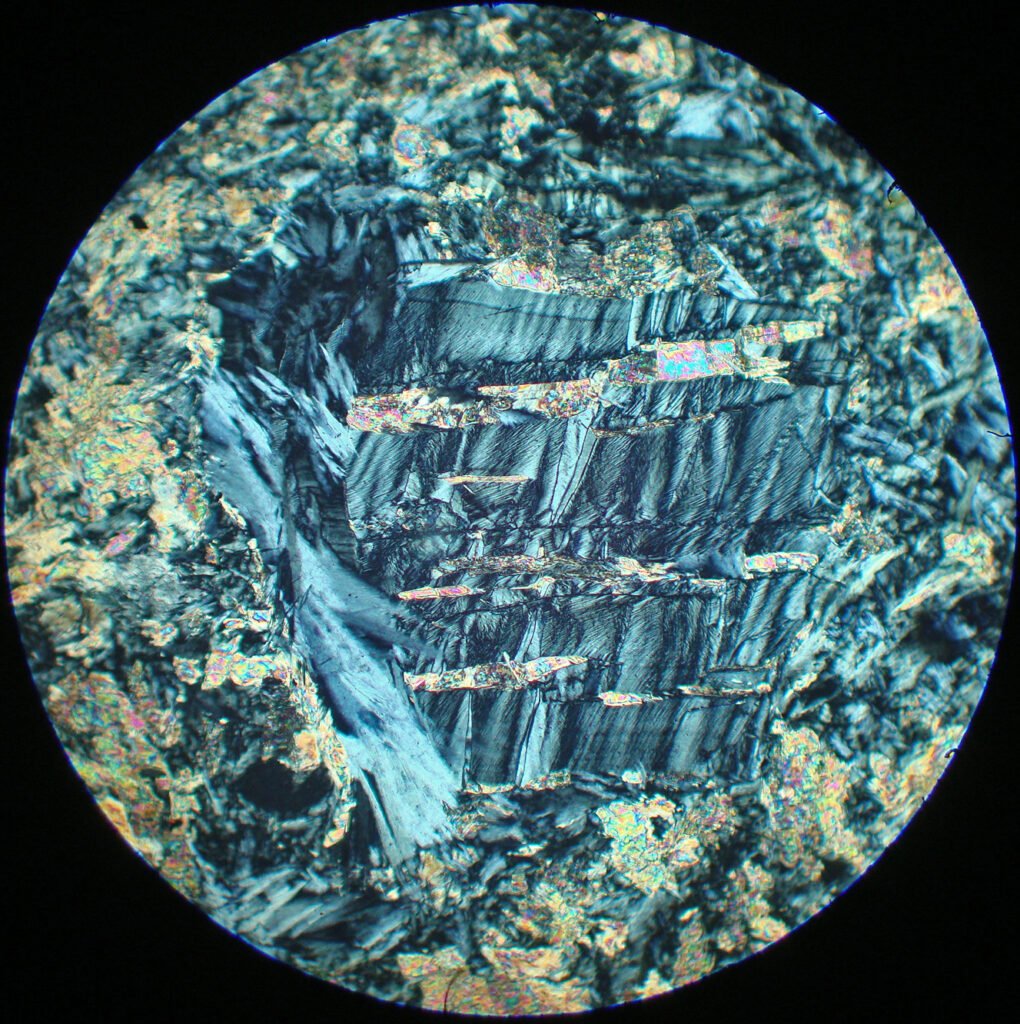
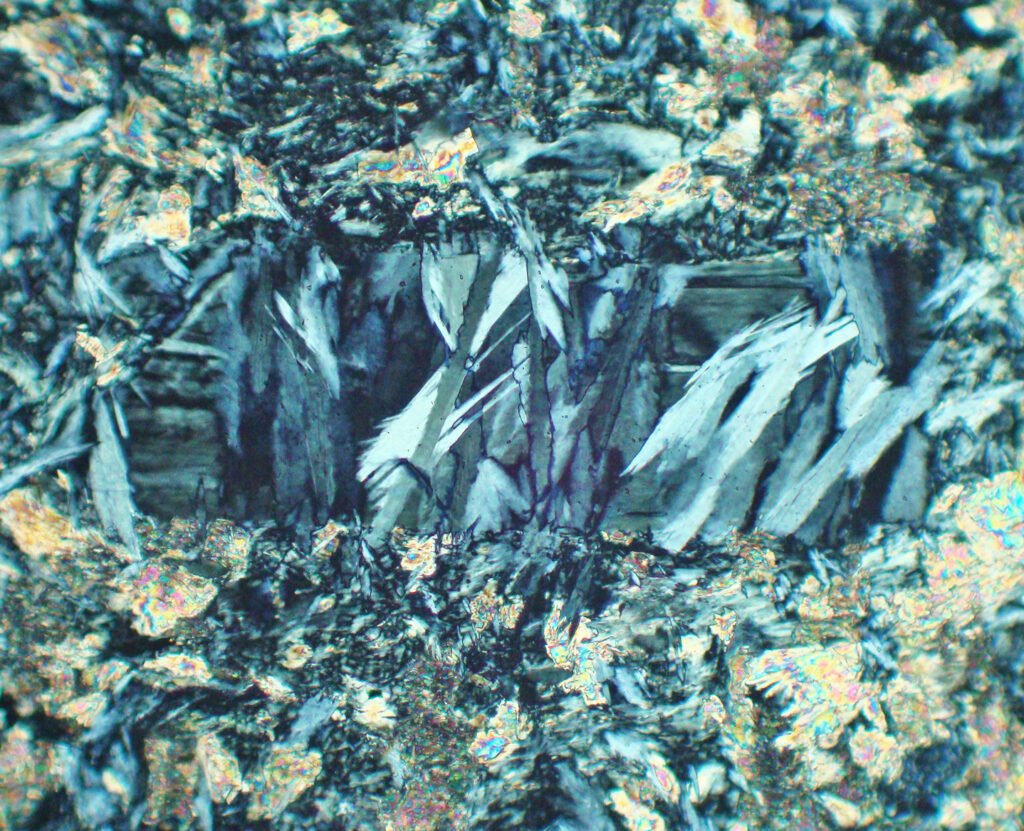
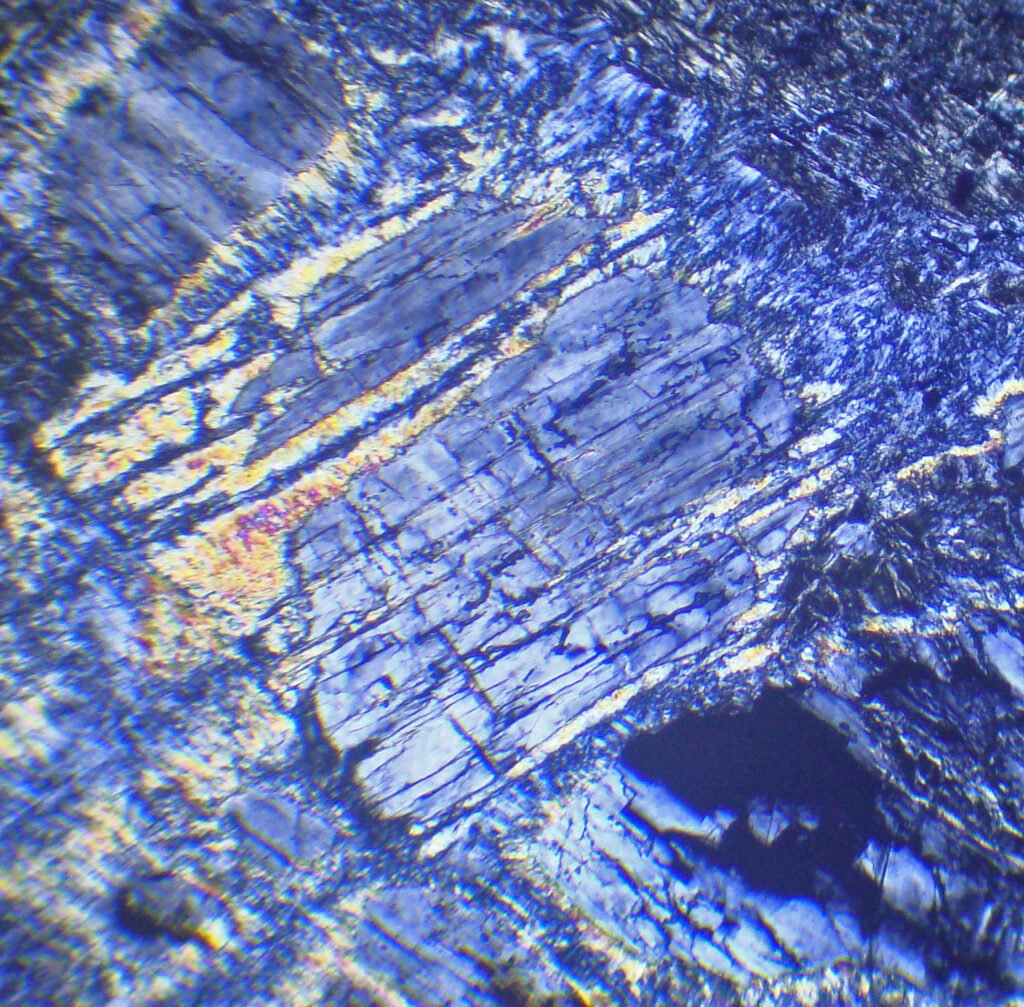
Birefringence and Interference Colors: Zero to 0.02 birefringence, very low: colors rarely go beyond first-order white or yellow. It often presents anomalous interference colors, which can be of four main types: deep blue (“Berlin blue”), bluish-gray, violet-yellow or leather-brown; more tenuous or more intense and defined.
Extinction: Oblique, angle of 0 – 9º by the cleavage. It can simulate parallel extinction but is not mottled (“birds-eye”), which is an important diagnostic feature.
Elongation sign: Clinochlore has ES(-) and chamosite has ES(+).
Twins: On {001}, common but often difficult to recognize.
Zoning: Often zoned, may exhibit pleochroic halos.
CONVERGENT LIGHT
Character: B(+) or B(-), depending on composition and mineral, can simulate being uniaxial.
2V angle: B(+): 0o-60º, B(-): 0o-40º
Alterations: chlorites are quite resistant to alteration. They can alter to clay minerals, to Fe oxides or to Mg and Fe carbonates. With progressive metamorphism, with the availability of K, they change to biotite and/or amphibole.
May be confused with: the slight green color and pleochroism are very diagnostic. When they do not show color or pleochroism, usually the shape and the interference colors (bluish/gray/dark brown) allow them to be recognized. They are similar to micas, but have no mottled extinction.
Serpentine has lower birefringence (gray to white colors).
Clintonite and chloritoid have higher birefringence.
In sediments it is practically impossible to differentiate chlorites from clay minerals.