1. Characteristics
Crystal system: Monoclinic prismatic.
Color: Usually with a greenish tinge. White, grayish, pale green, red, yellow, pink, etc.
Habit: Prismatic short, tabular, botryoidal, compact, granular, lenticular, cryptocrystalline.
Cleavage: No.
Tenacity: Brittle.
Twinning: No.
Fracture: Irregular, conchoidal.
Mohs Hardness: 5 – 5.5
Parting: No.
Streak: White.
Lustre: Vitreous, resinous.
Diaphaneity: Transparent.
Density (g/cm³): 2.96 – 3
2. Geology and Deposits
Datolite occurs as a secondary mineral in vesicles (geodes) of mafic igneous rocks.
It can also occur in skarns formed from limestone rocks.
In metamorphic rocks, occurs in serpentinites and in “hornblende” (green amphiboles) schists.
Datolite can associate with ore minerals in metalliferous mineral veins.
3. Mineral Associations
Datolite occurs associated with the typical assembly of secondary minerals in vesicles (geodes) of mafic volcanic rocks: quartz, calcite, prenhite, apophyllite, pectolite and zeolites (natrolite, heulandite, thomsonite, laumontite, stilbite and analcime).
It also occurs with sulfides (pyrite, chalcopyrite), hausmannite, native copper, danburite, garnets, tourmaline-Mg (dravite) and axinite.
4. Transmitted Light Microscopy
Refraction indices: nα: 1.626 nβ: 1.653 – 1.654 nγ: 1.670
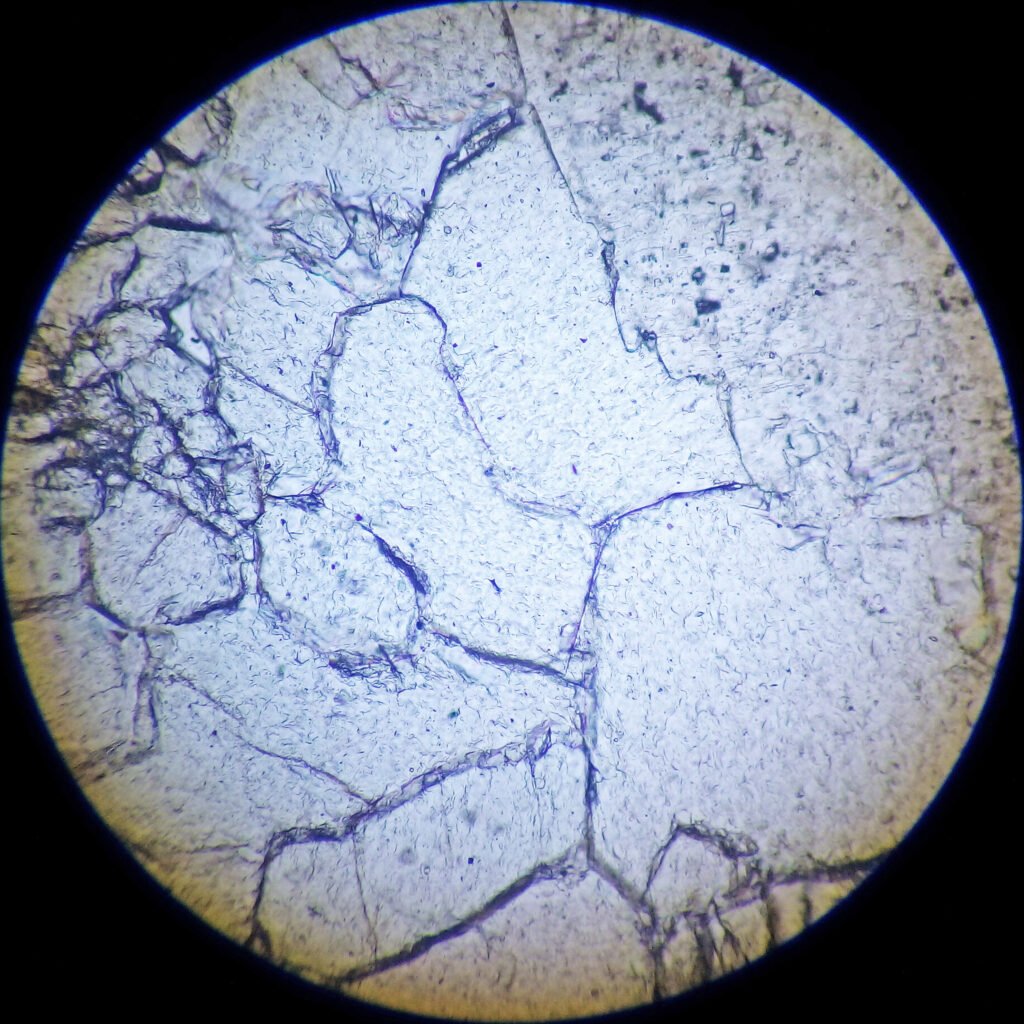
PLANE POLARIZED LIGHT – PPL
Color / Pleochroism: Colorless, without pleochroism.
Relief: Moderate.
Cleavage: No.
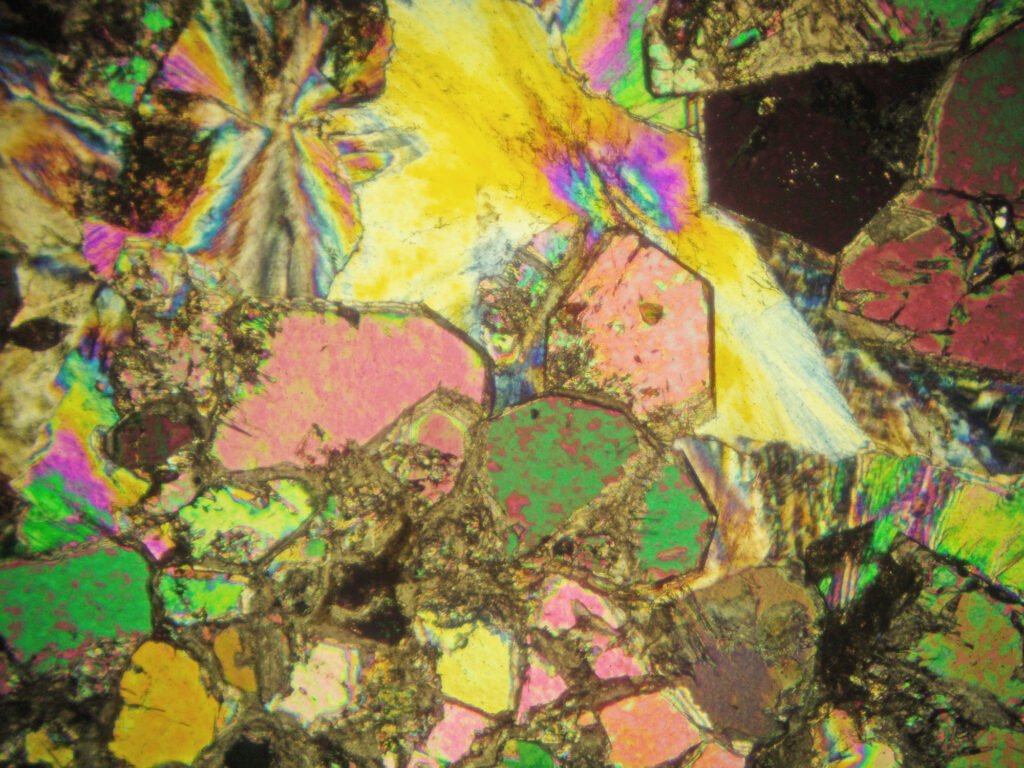
Habits: Short prismatic, massive, granular.
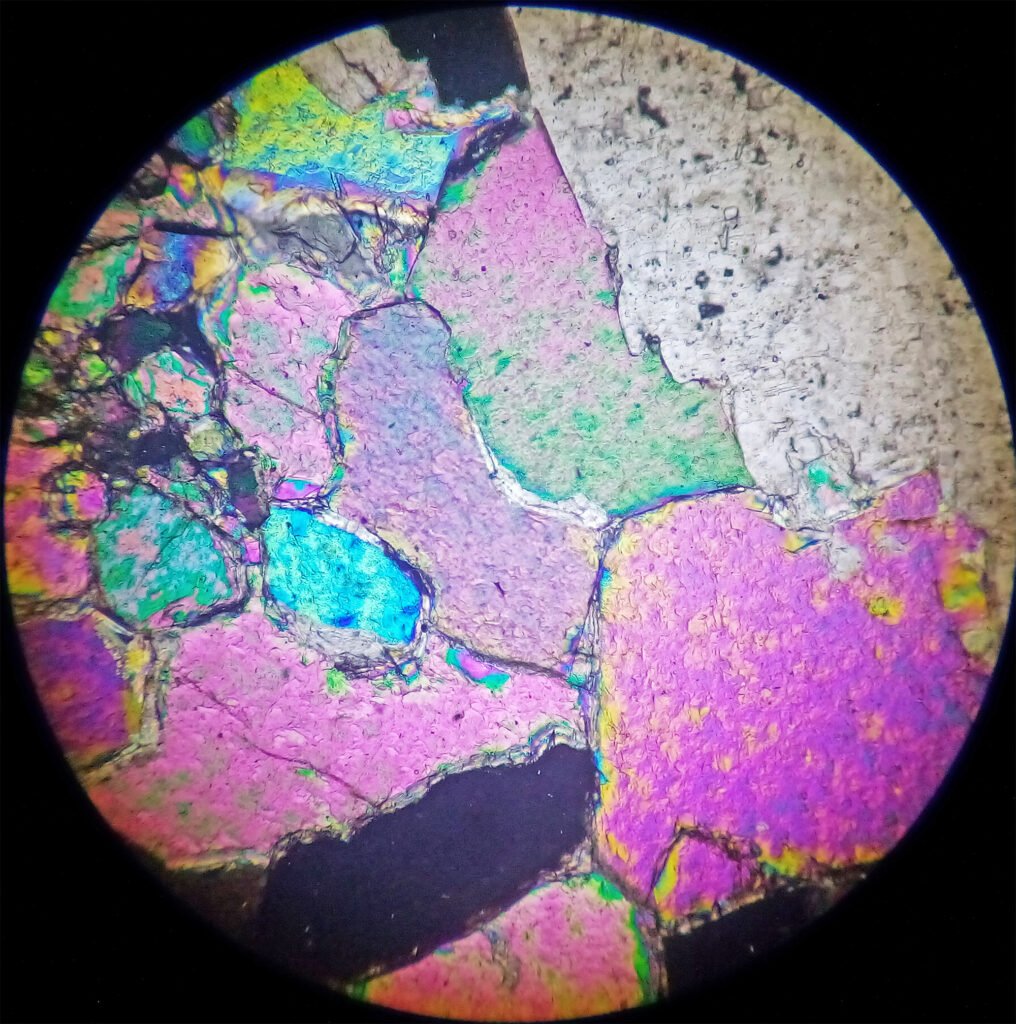
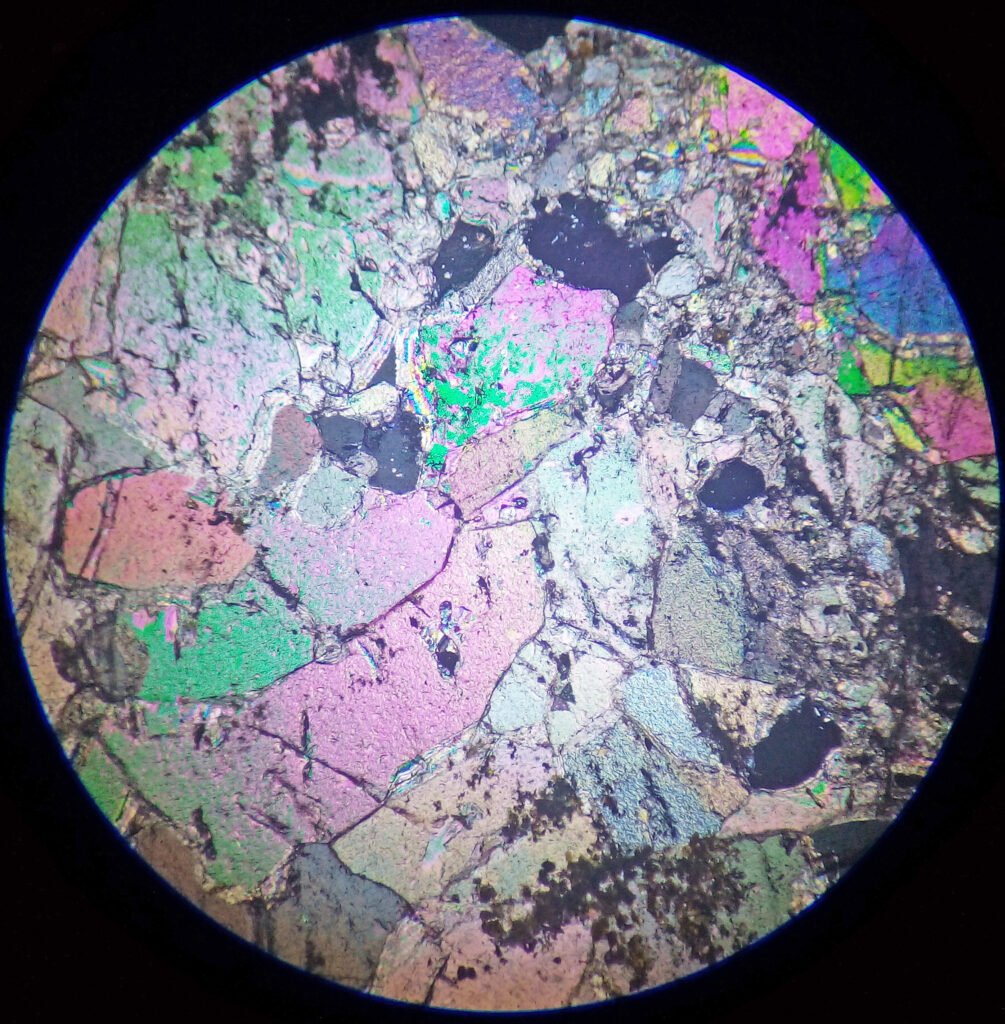
CROSSED POLARIZED LIGHT – XPL
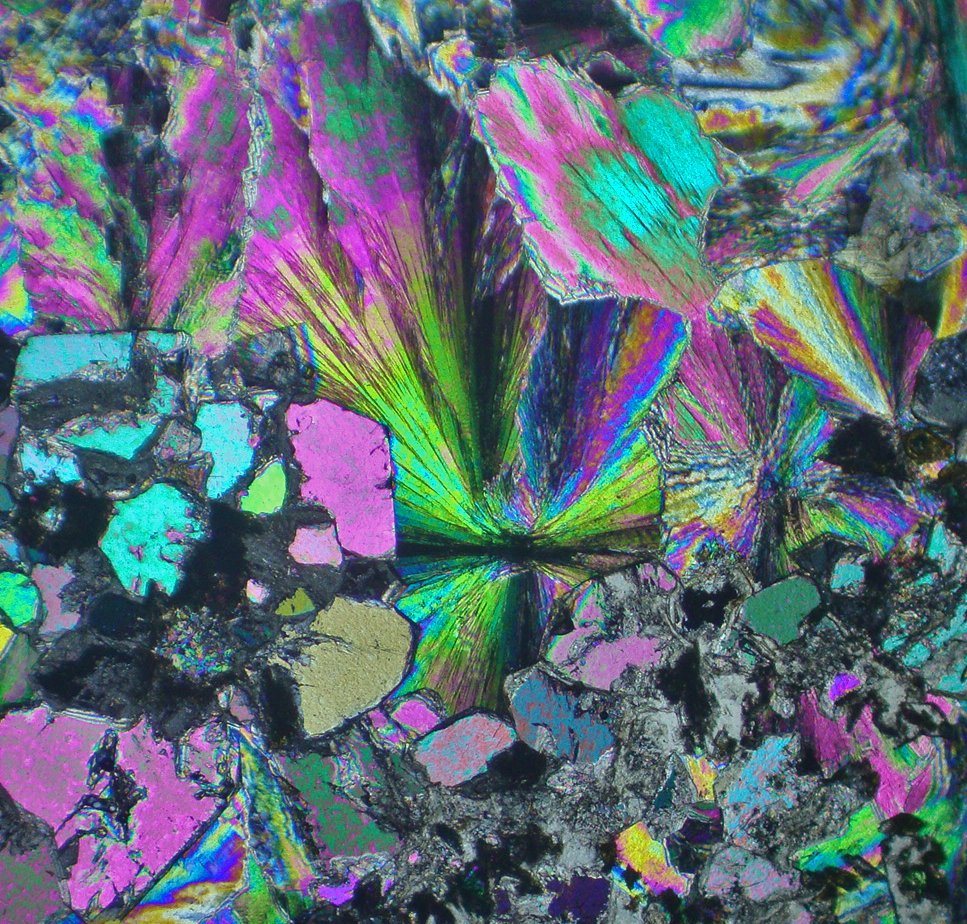
Birefringence and Interference Colors: Maximum birefringence of 0.044: colors up to half of the 3rd order, strong colors, colorful, intense.
Extinction: The generally granular habit does not allow to classify the extinction, which must be oblique, as it crystallizes in the Monoclinic System.
Elongation sign: Does not apply.
Twins: No.
Zoning: No.
CONVERGENT LIGHT
Character: B(-)
2V angle: 74º
Alterations: it is a product of alteration.
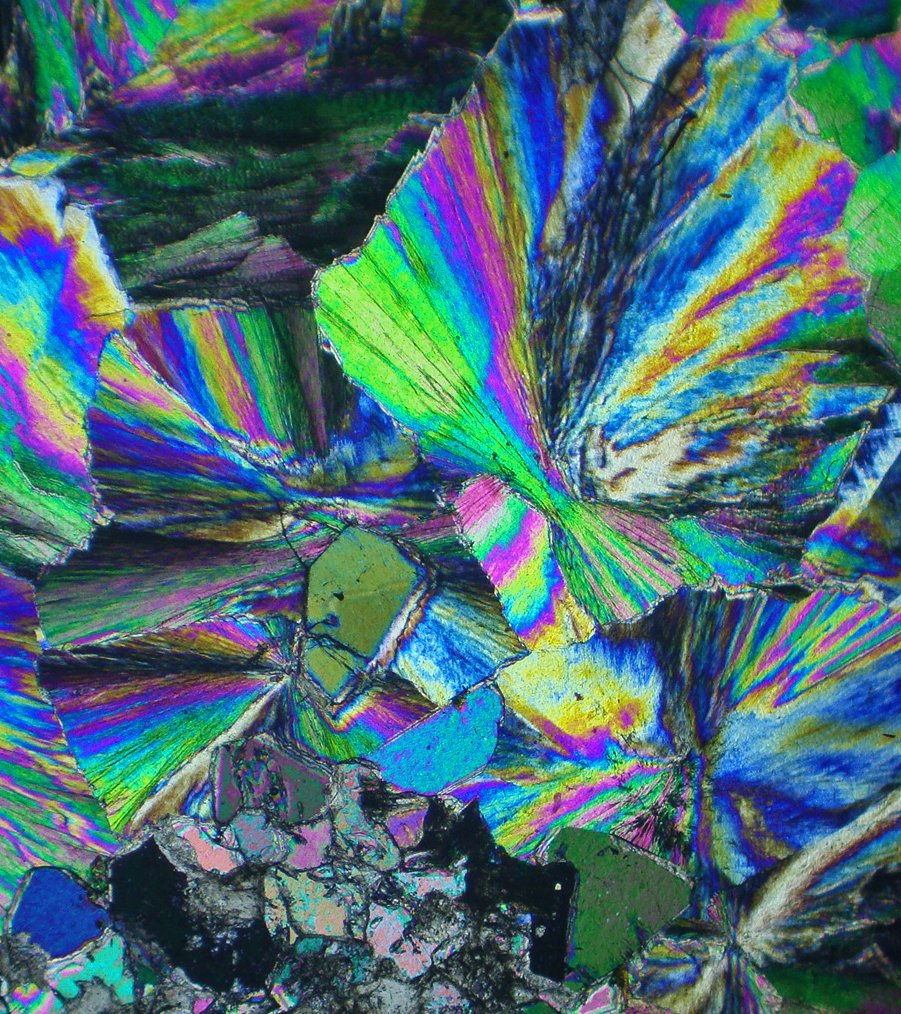
May be confused with: in the paragenesis in which it occurs, it is the only common mineral with a granular habit and strong interference colors.
Prehnite, depending on the habit, can be similar, but prehnite usually has a fan habit and some anomalous interference colors, in addition to a lower relief.