1. Characteristics
Crystal system: Monoclinic prismatic.
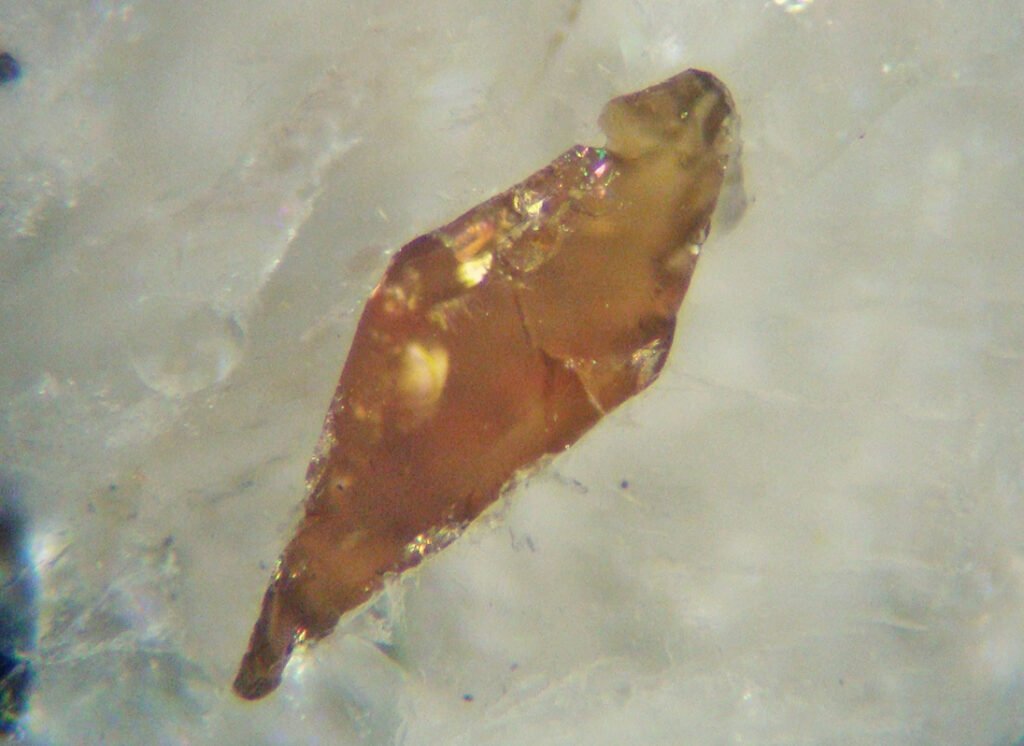
Color: Colorless, brown, black, green, yellow, pink-red.
Habit: Granular, tabular, wedge-shaped, prismatic, compact, massive.
Cleavage: {110} good.
Tenacity: Brittle.
Twinning: On {100}, penetration twins or contact twins, may be lamellar.
Fracture: Subconchoidal.
Mohs Hardness: 5 – 5.5
Parting: Due to twinning, on {221}.
Streak: Reddish white.
Lustre: Adamantine, resinous.
Diaphaneity: Transparent.
Density (g/cm³): 3.48 – 3.60
2. Geology and Deposits
Titanite is very common as an accessory mineral in many types of igneous rocks. In plutonic igneous rocks it is more common in diorites, syenites, monzonites, tonalites and granodiorites, usually associated with a greenish amphibole. Large crystals are found in pegmatites. It also occurs in Alpine Type tectonic fissures.
In volcanic rocks it is more common in phonolites; it does not occur in gabbros and basalts because the Ti in these rocks goes to titanoaugite and ilmenite, respectively. It is a common mineral in ijolites.
In metamorphic rocks, it is more frequent in rocks such as mica-schists, amphibolites, glaucophane-schists, gneisses and marbles. It can occur in metasomatic rocks such as skarns and phenites.
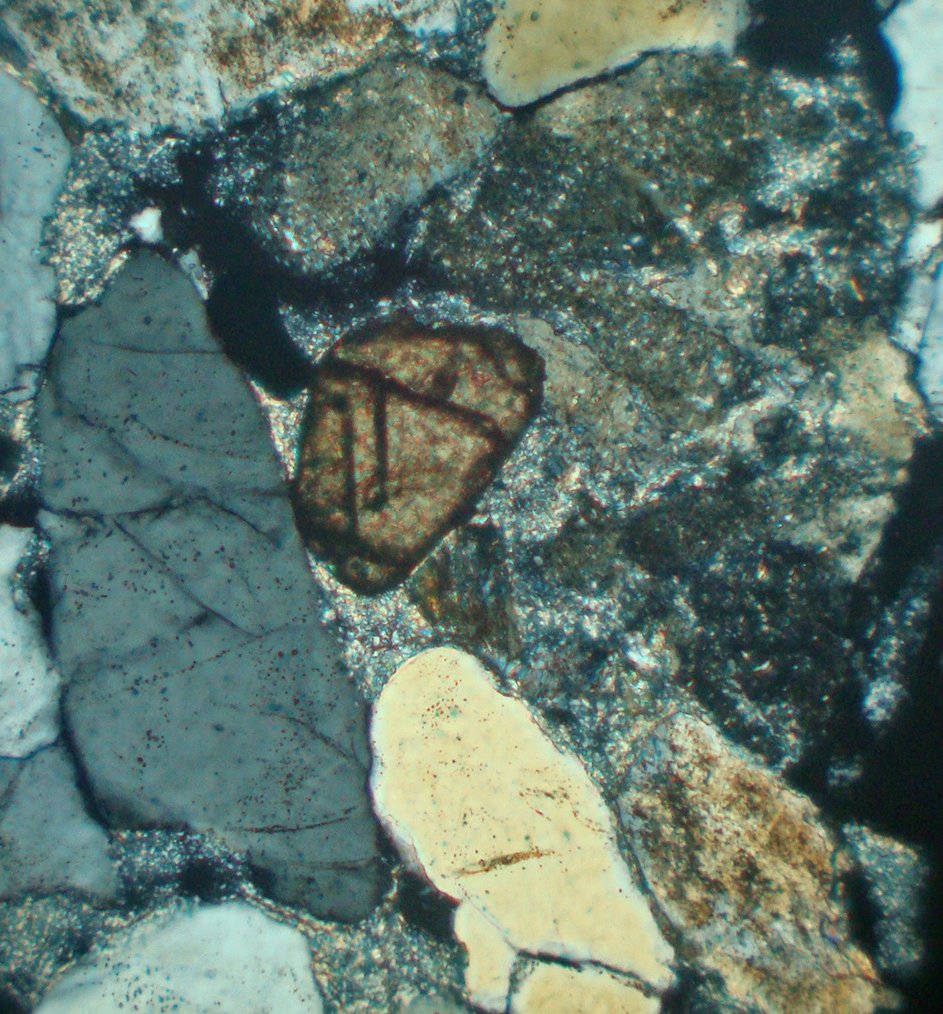
It is often found in sedimentary rocks such as sandstones (graywackes) as a heavy mineral.
3. Mineral Associations
In plutonic igneous rocks it is associated with rock-forming minerals such as quartz, plagioclase (albite), alkali feldspars (orthoclase, microcline), micas (biotite, muscovite, chlorite, sericite) and amphiboles (green and brown hornblende).
Furthermore, it is associated with accessory minerals such as epidote, zircon, apatite, allanite, monazite, magnetite, ilmenite, pyrite, chalcopyrite and pyrrhotite.
When in marbles, it is associated with diopside, calcite and clinochlore (chlorite).
In low-silica rocks occurs with nepheline and sanidine.
4. Transmitted Light Microscopy
Refraction indices: nα: 1.843 – 1.950 nβ: 1.870 – 2.034 nγ: 1.943 – 2.110
PLANE POLARIZED LIGHT – PPL
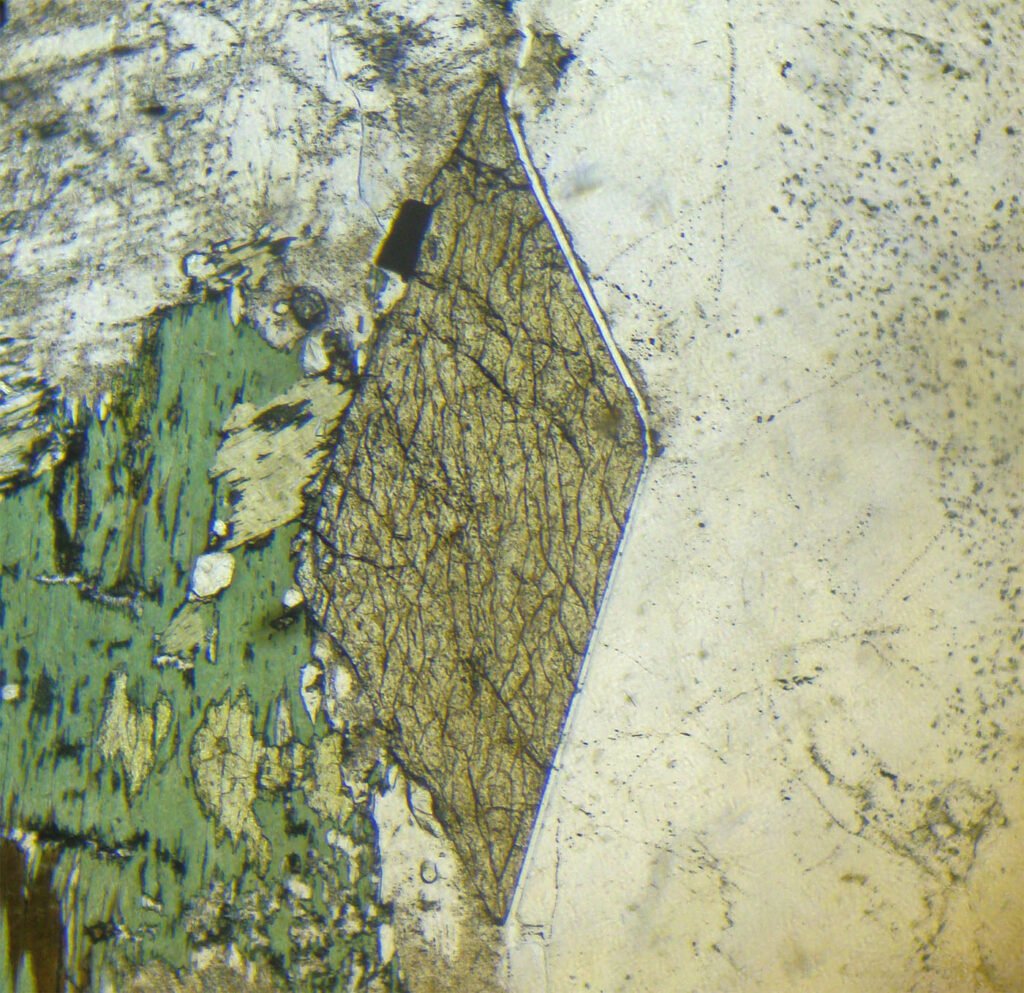
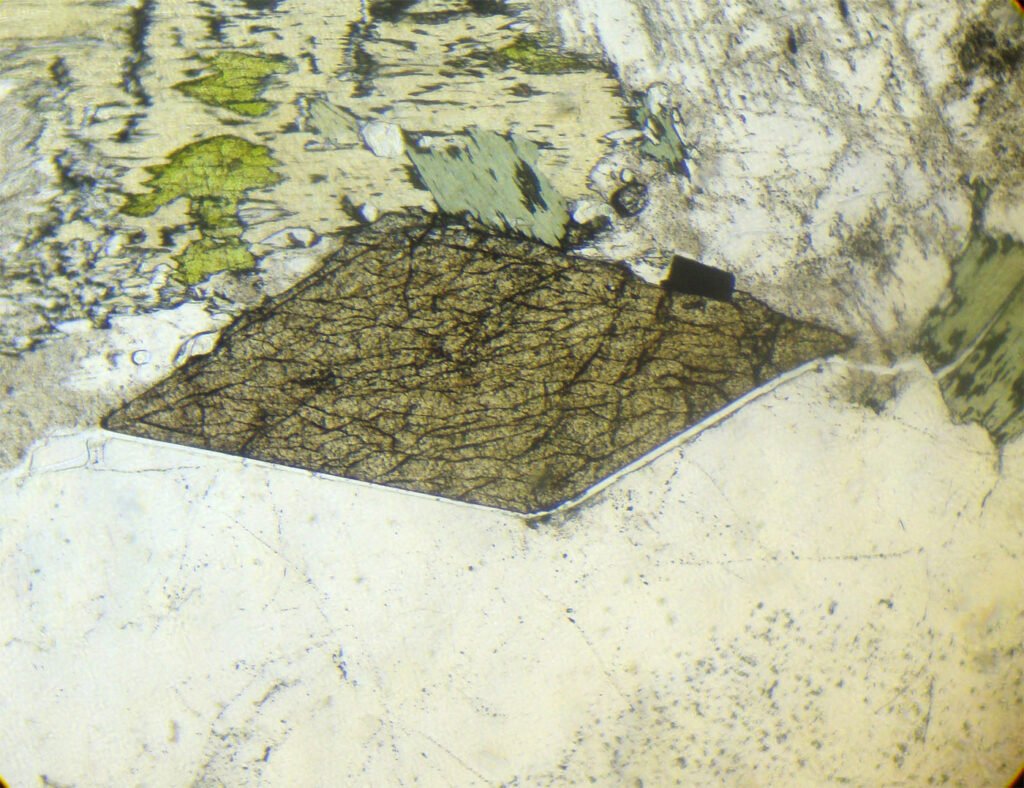
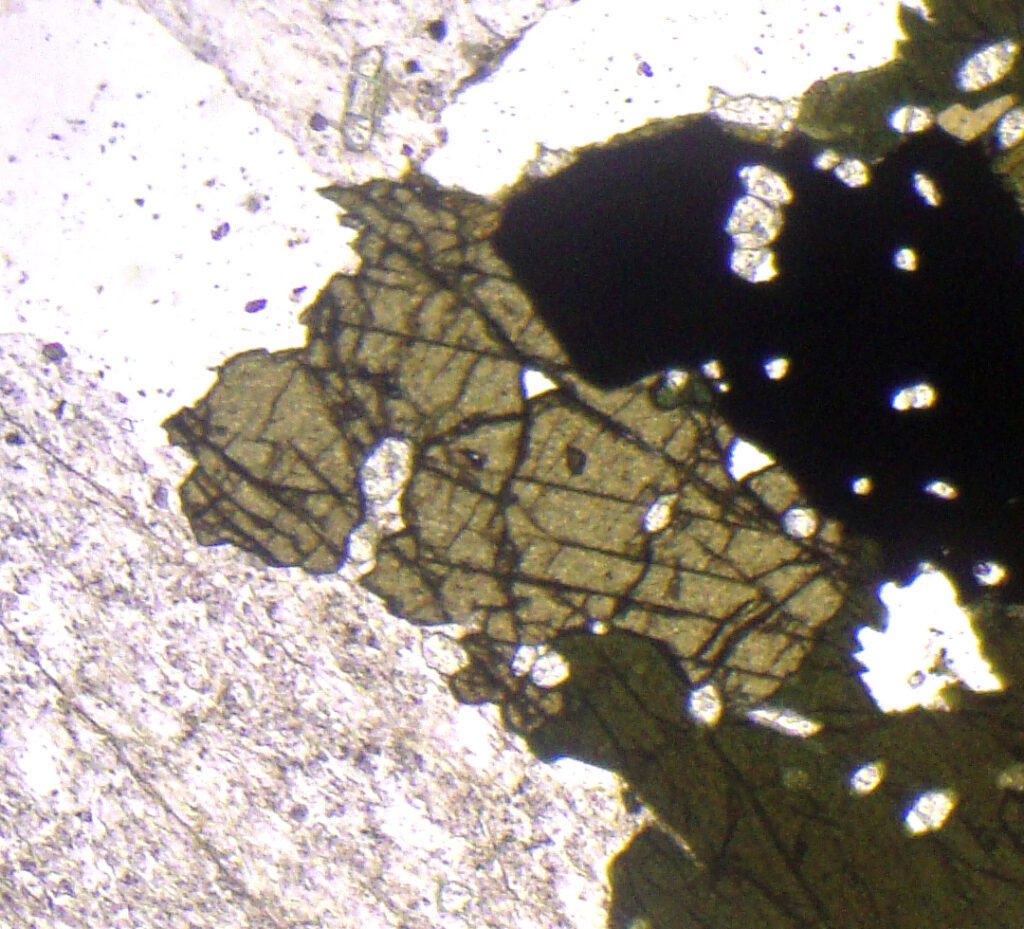
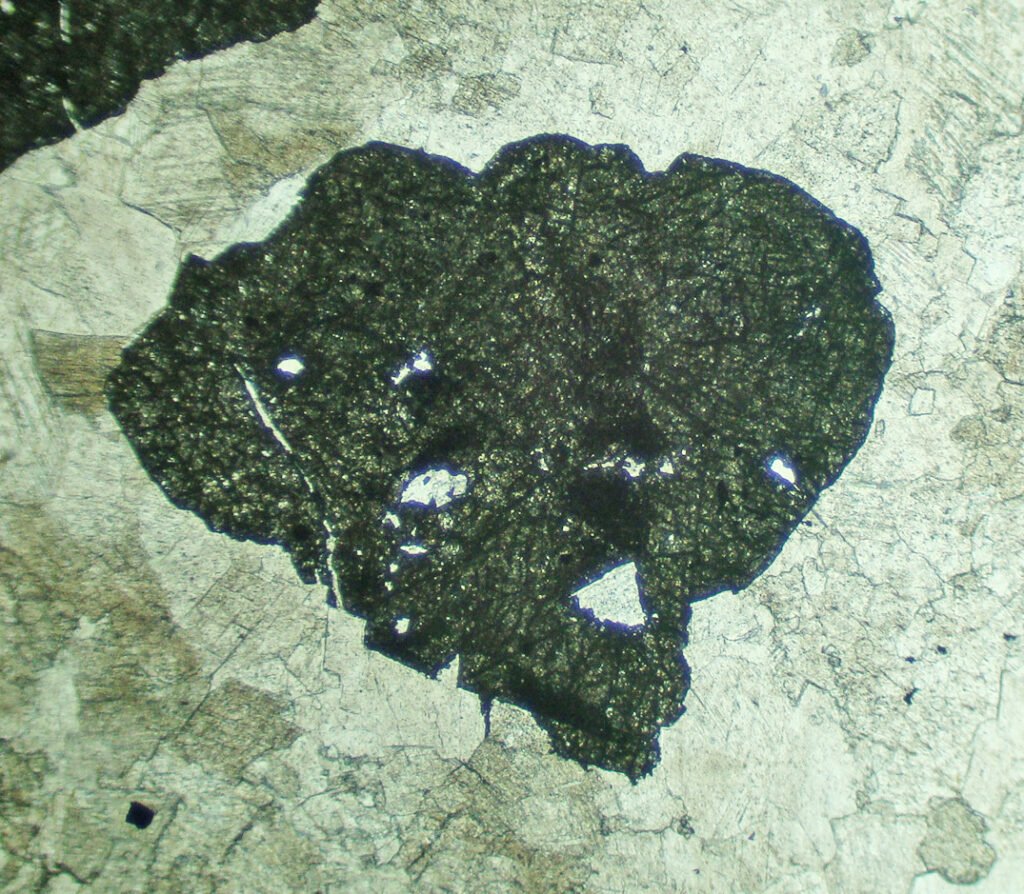
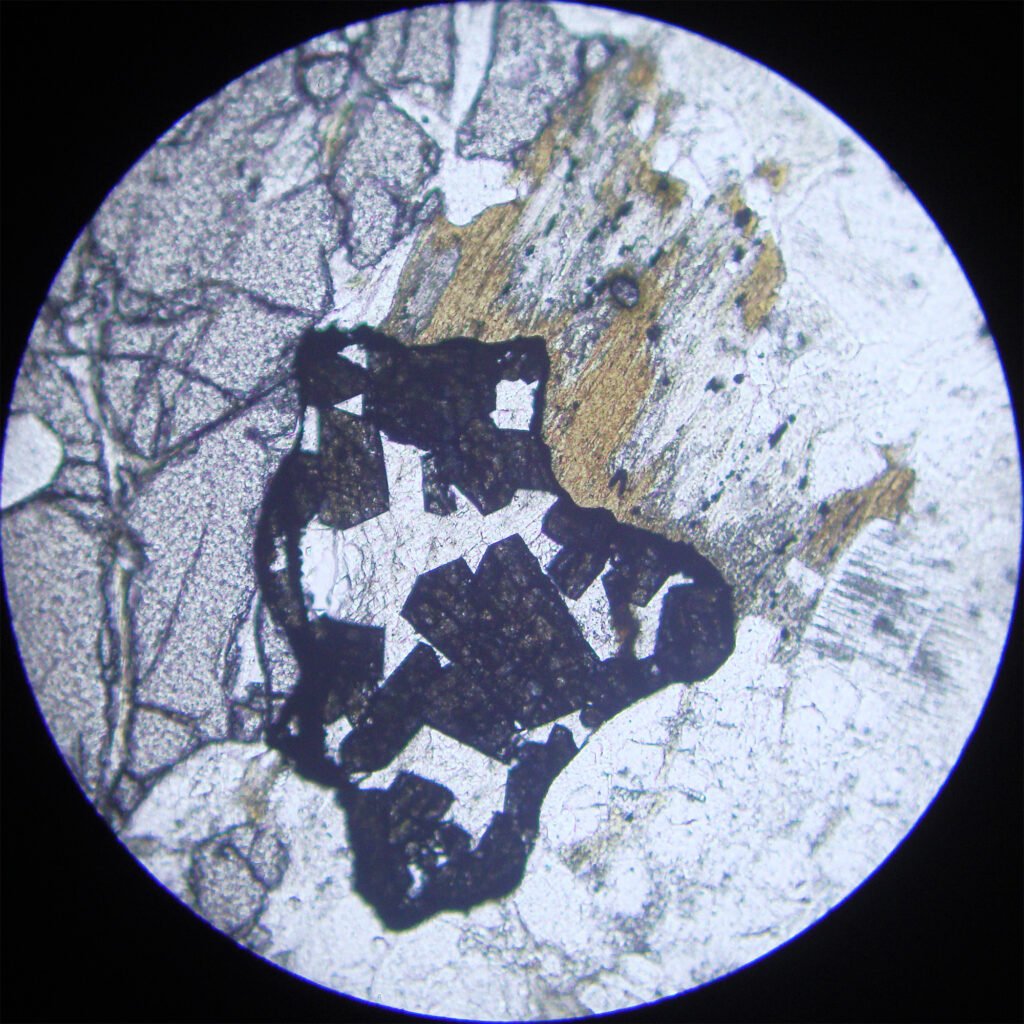
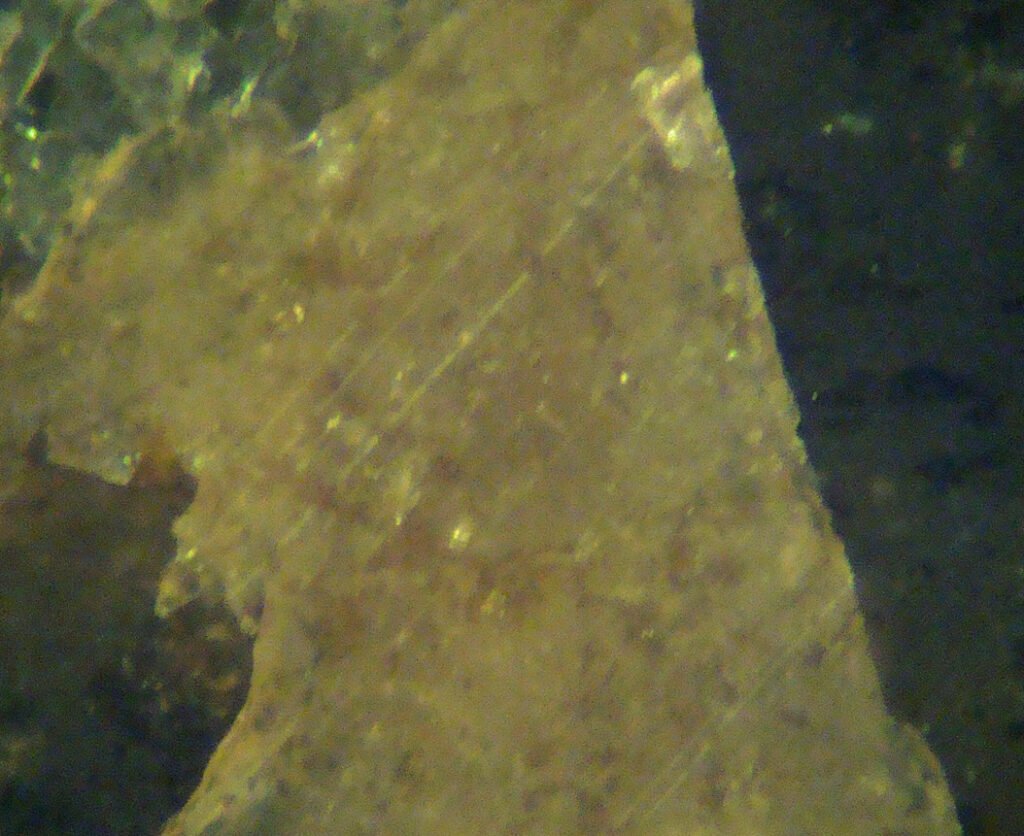
Color / Pleochroism: Brown, gray-brown to yellow-brown, with absent or weak pleochroism:
X = almost colorless,
Y = pale yellow,
Z = brownish.
It is necessary to pay close attention during the rotating of the stage to verify the pleochroism of the tianite.
Relief: Very high to extreme.
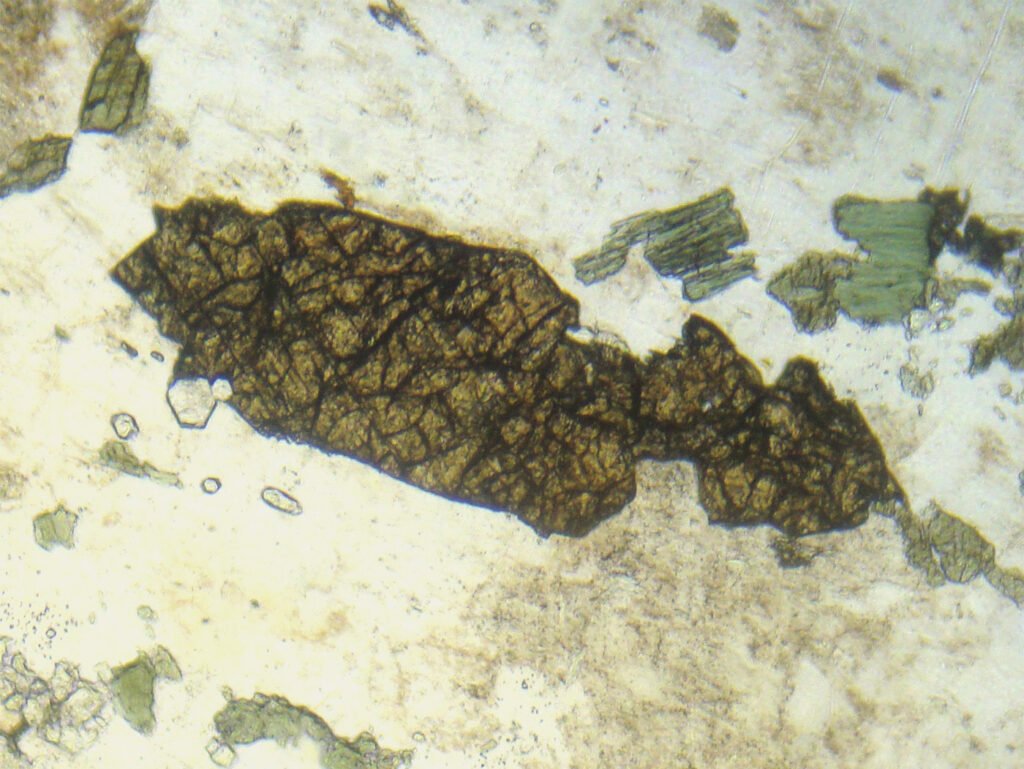
Cleavage: {110} good. It is a prismatic cleavage with two directions that, however, is generally not visible or poorly defined. Titanite normally has many fractures. It has a partition paralell to the twinning that can be more prominent than the cleavage.
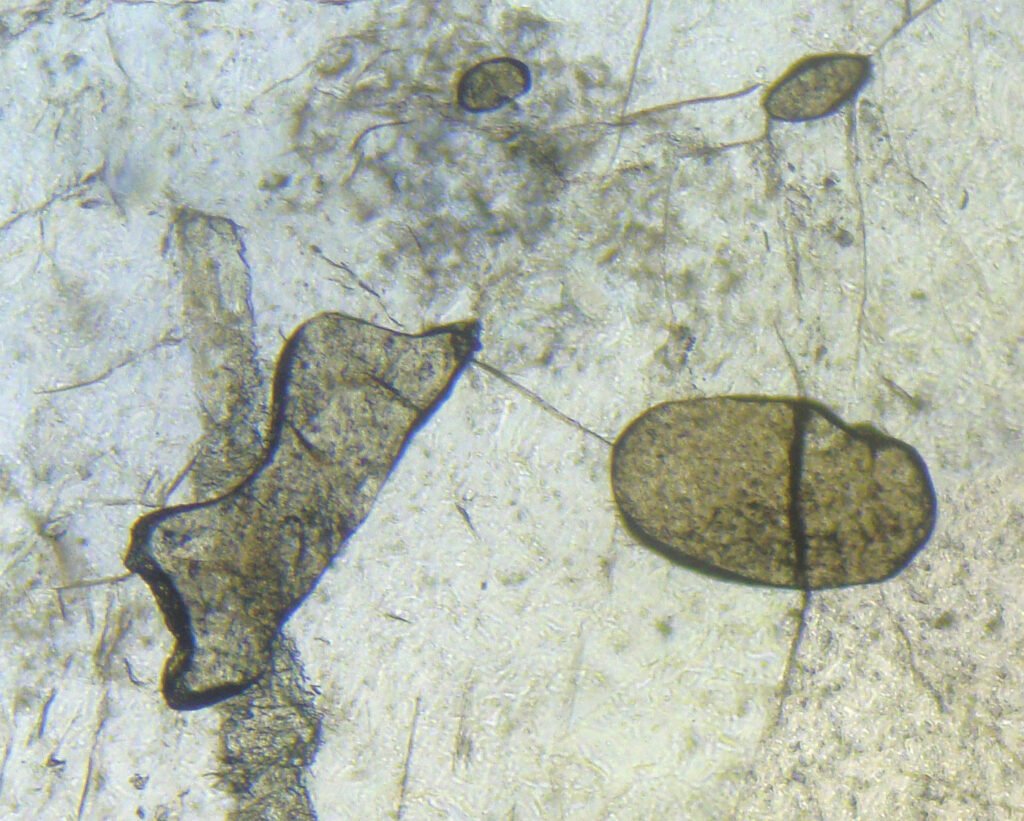
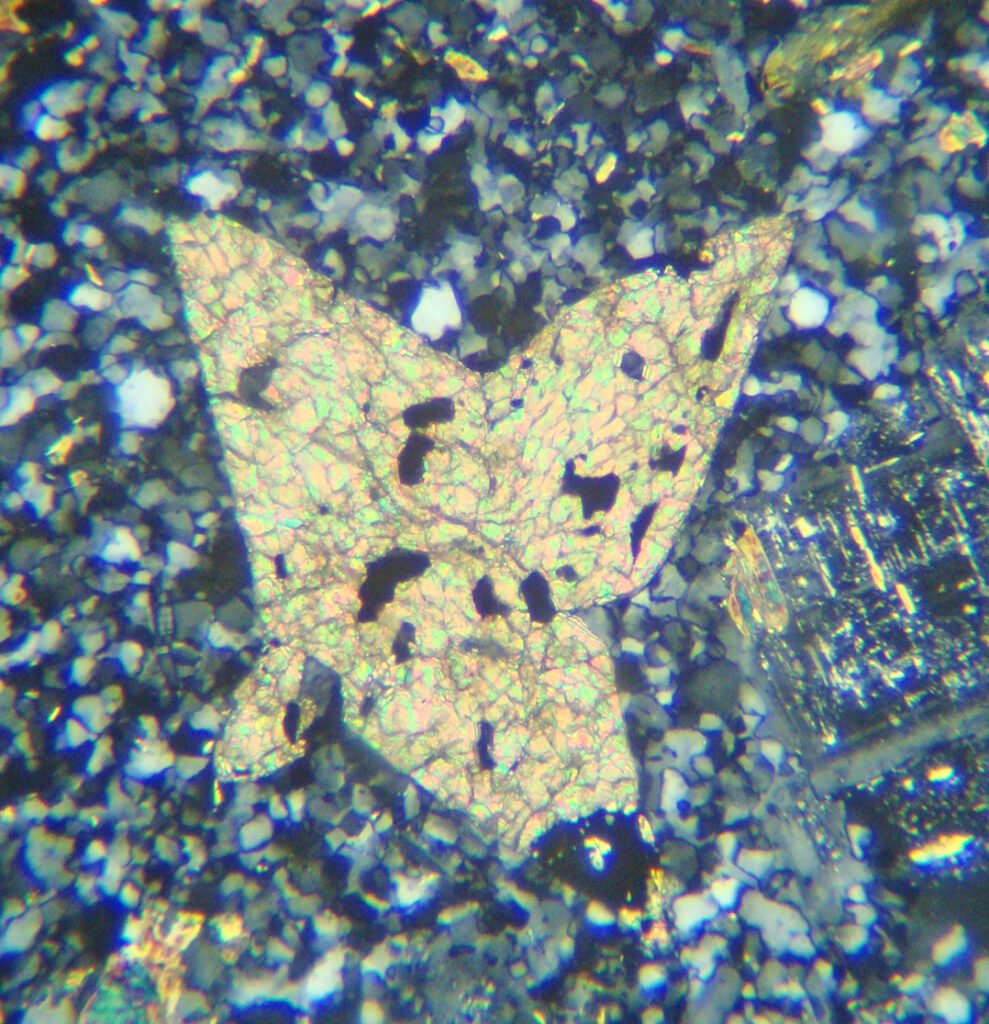
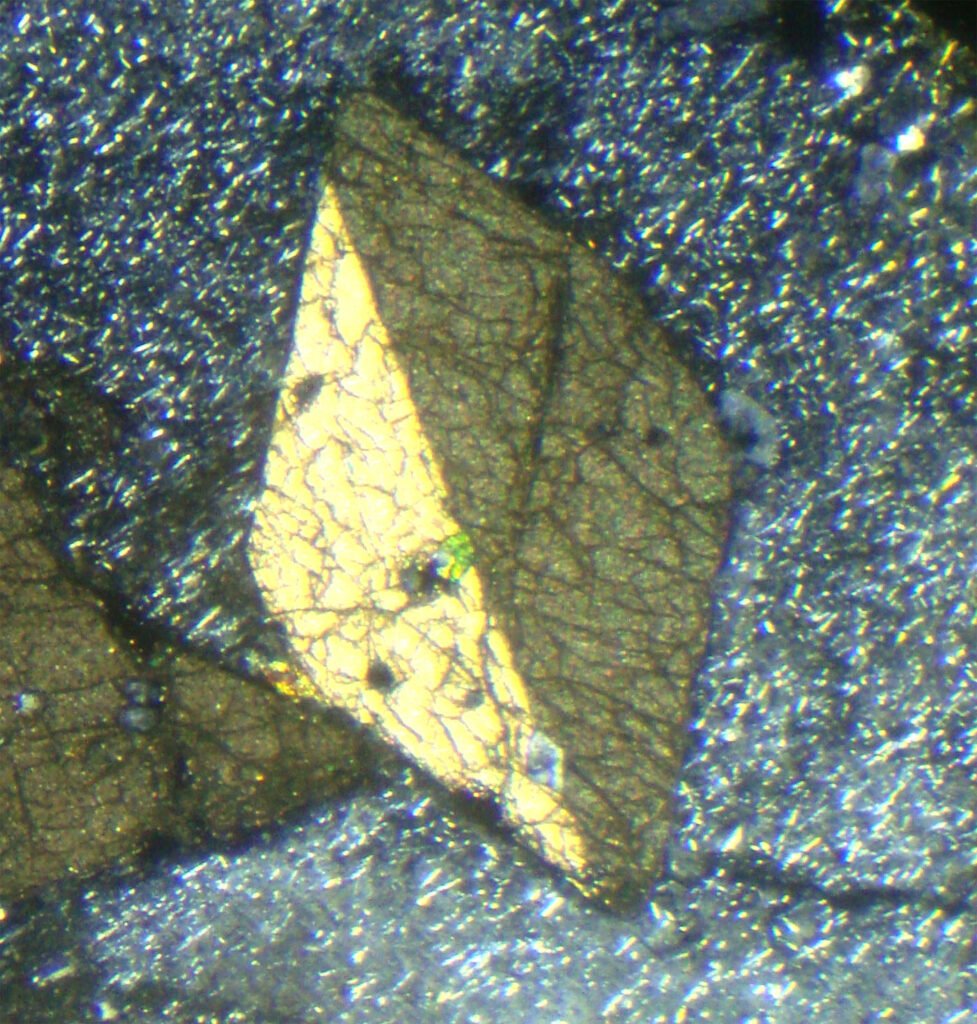
Habits: Usually anhedral, completely xenomorphic. It only occasionally shows basal sections with rhombic outlines or diamond-shaped (wedge).
In metamorphic rocks, titanite tends to form clusters of small round grains.
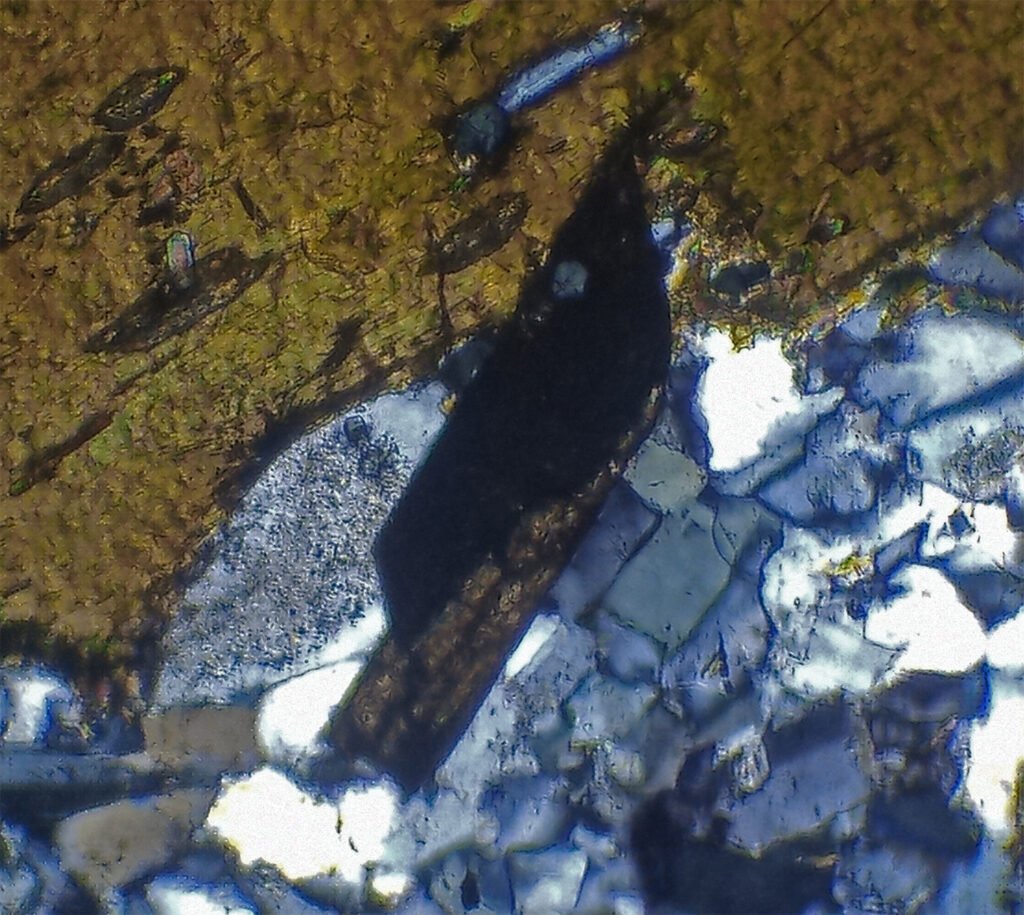
When it occurs as inclusions in biotite, chlorite or hornblende and contain higher levels of Th, it generates black halos around it.
CROSSED POLARIZED LIGHT – XPL
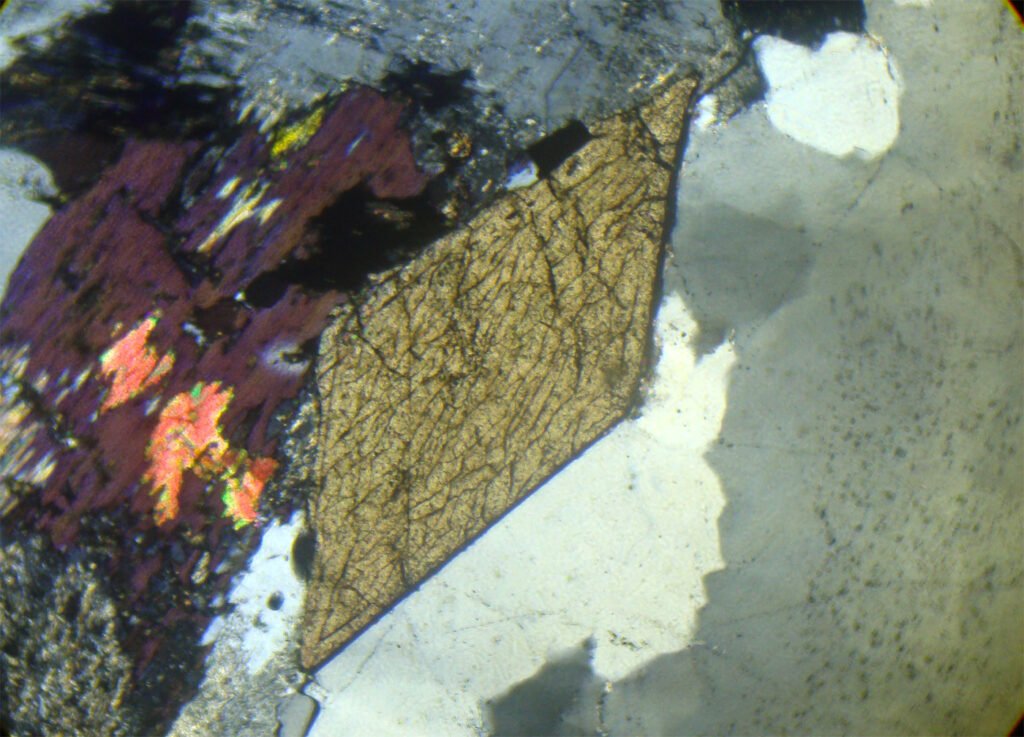
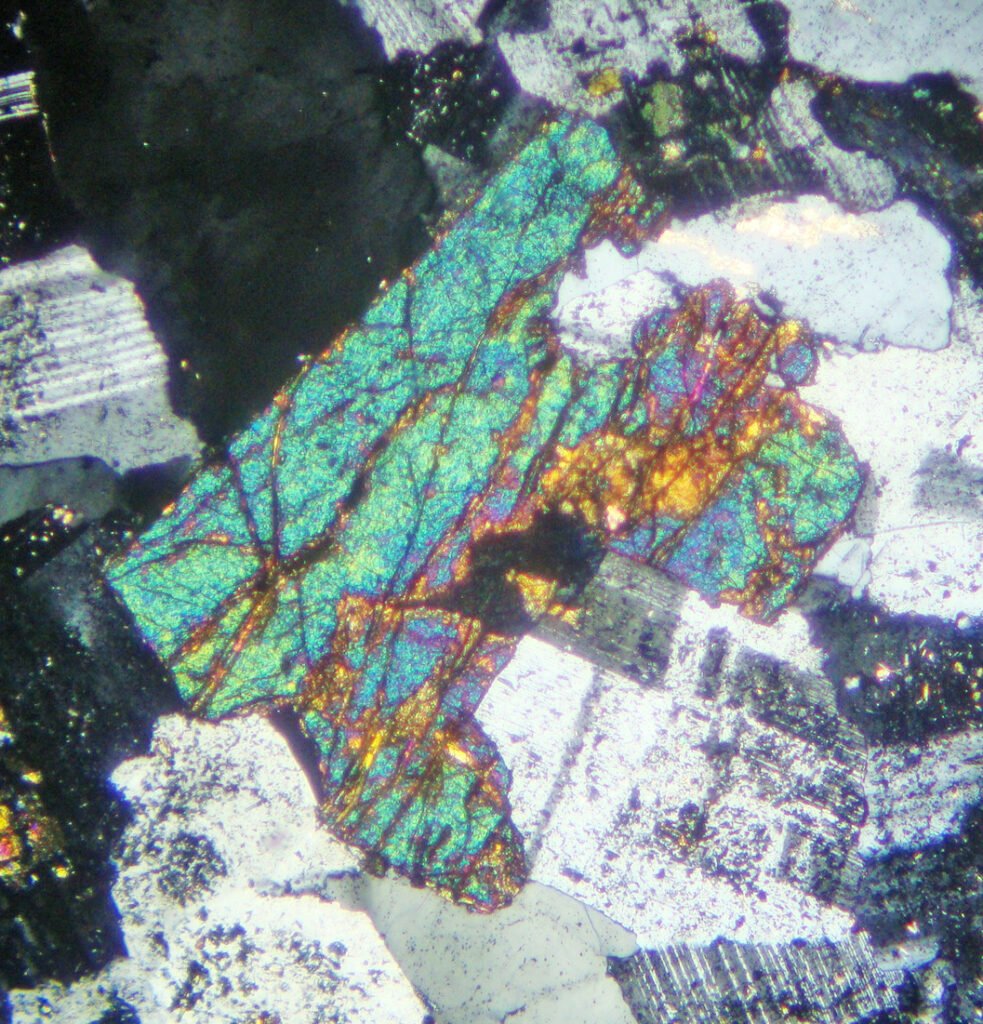
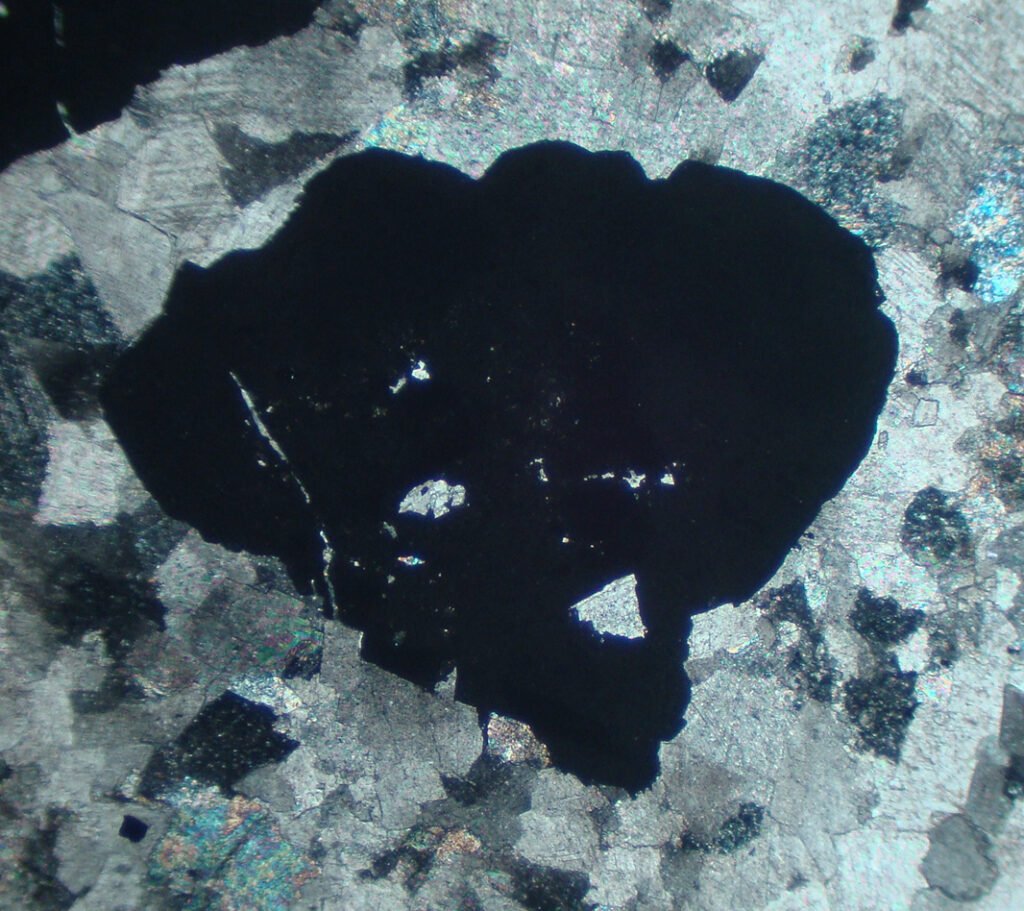
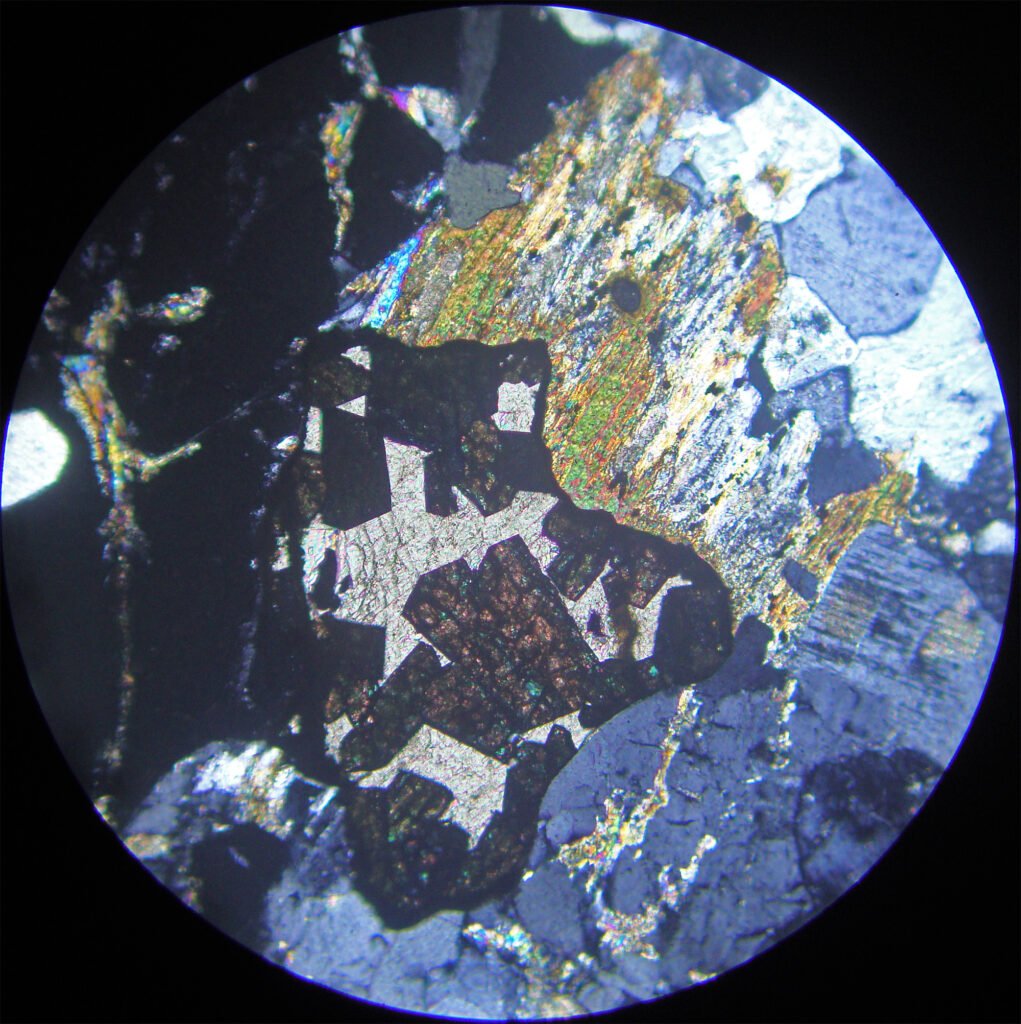
Birefringence and Interference Colors: Birefringence from 0.1 to 0.192, very high, resulting in a high order white color, a very typical cream color. But the original strong brown color of the mineral masks this high interference color.
Generally the color of titanite does not change much from PPL to CPL. Some grains are very colored in CPL. Low birefringence grains often do not extinguish properly and show anomalous dark orange to dark blue colors.
Extinction: Oblique from 36 to 45º; symmetrical in basal (rhombic) sections.
Due to the high dispersion, some grains do not completely extinguish.
Elongation sign: Does not apply as titanite may be elongated in several directions.
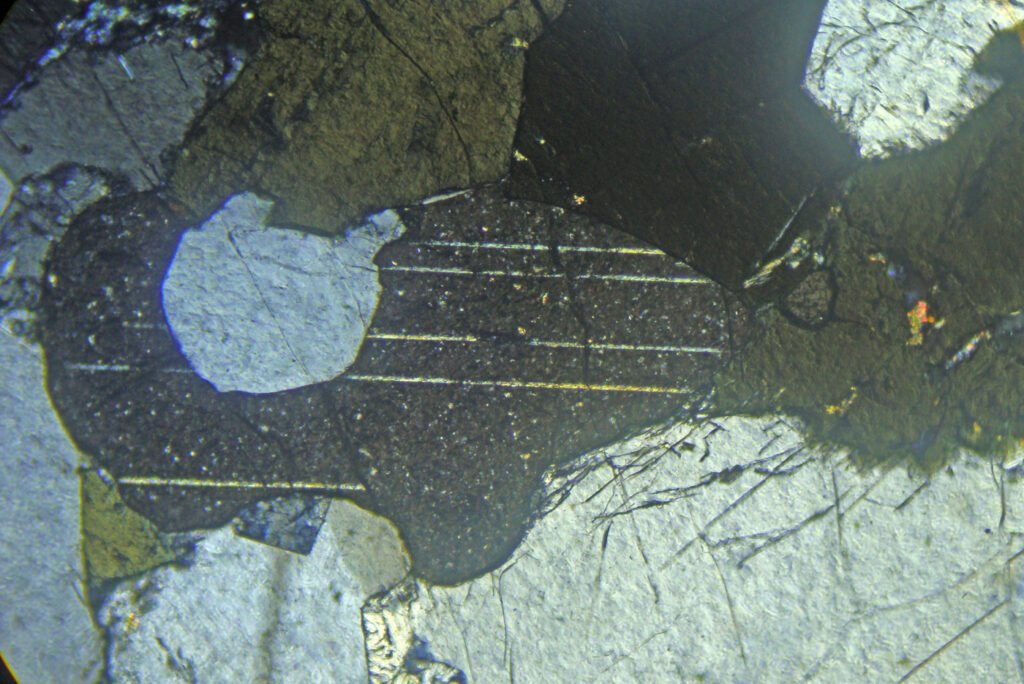
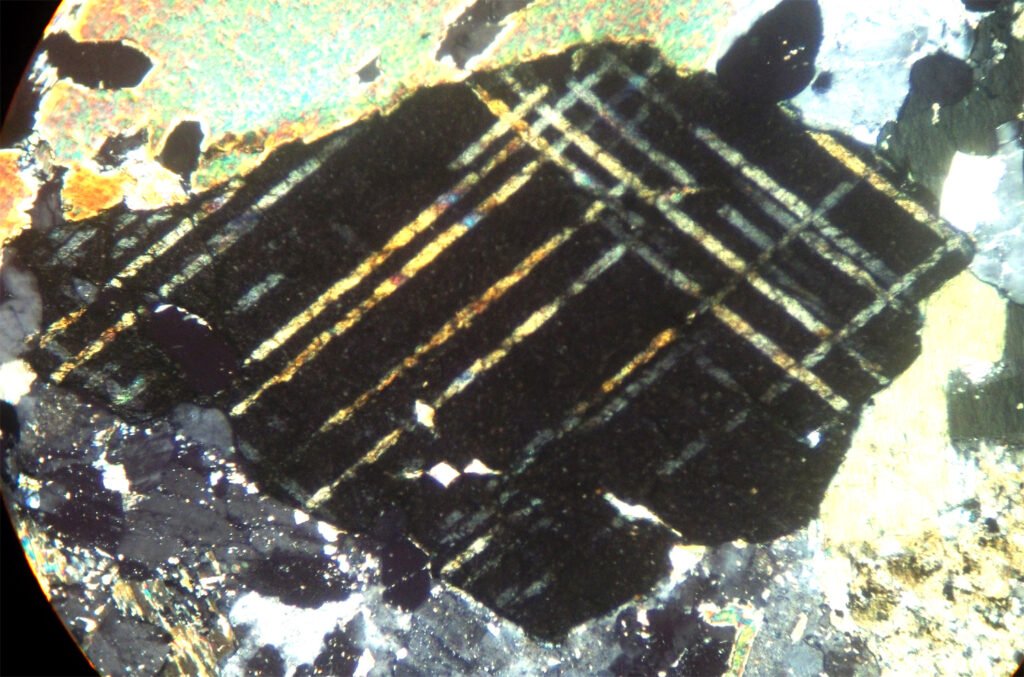
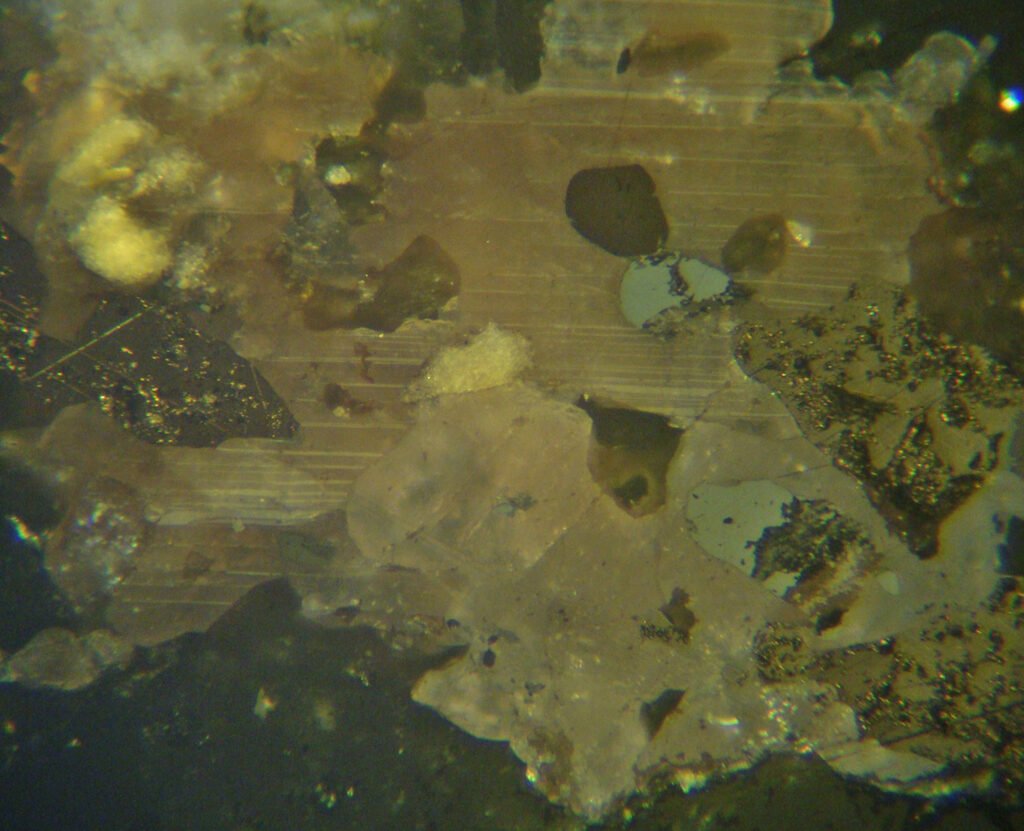
Twins: Contact and penetration twins by {110} are common. Lamellar twins according to {221} occur more rarely.
Zoning: It can be zoned, in this case the margins have a higher refractive index.
CONVERGENT LIGHT
Character: B(+), hard to get.
2V angle: 17 a 56º
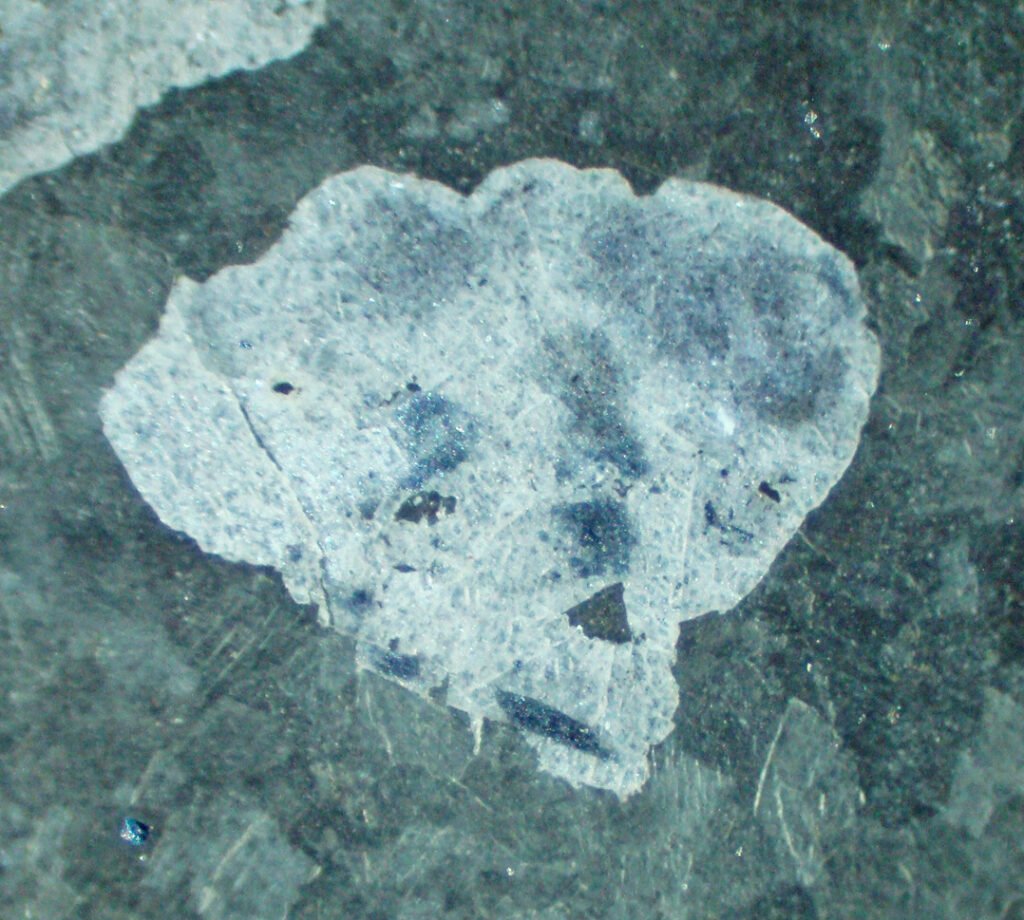
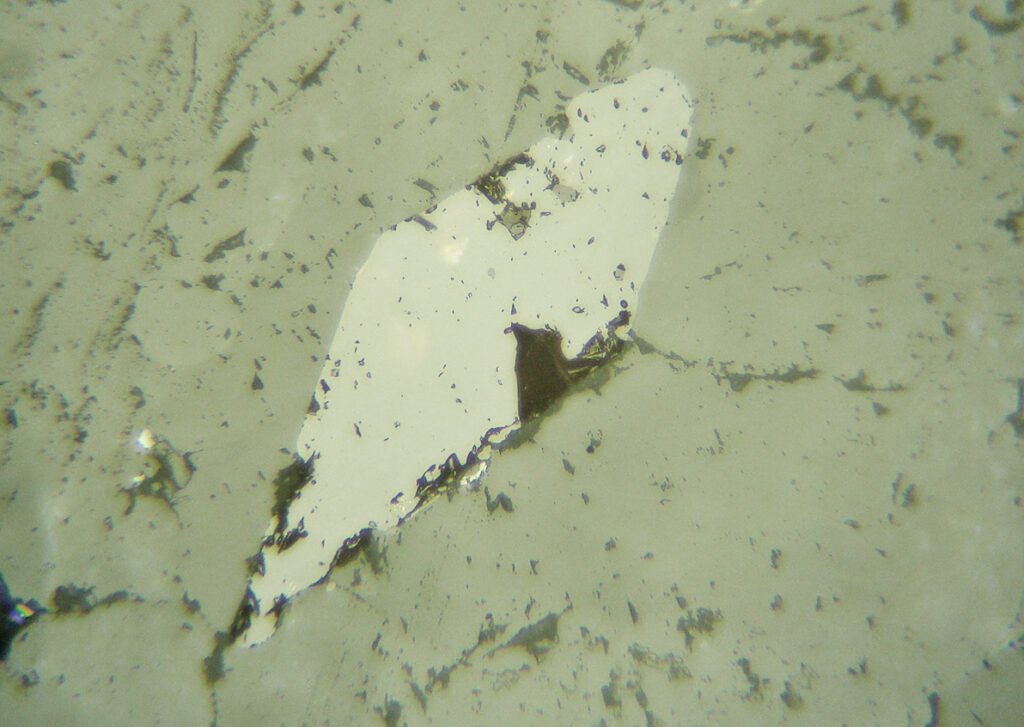
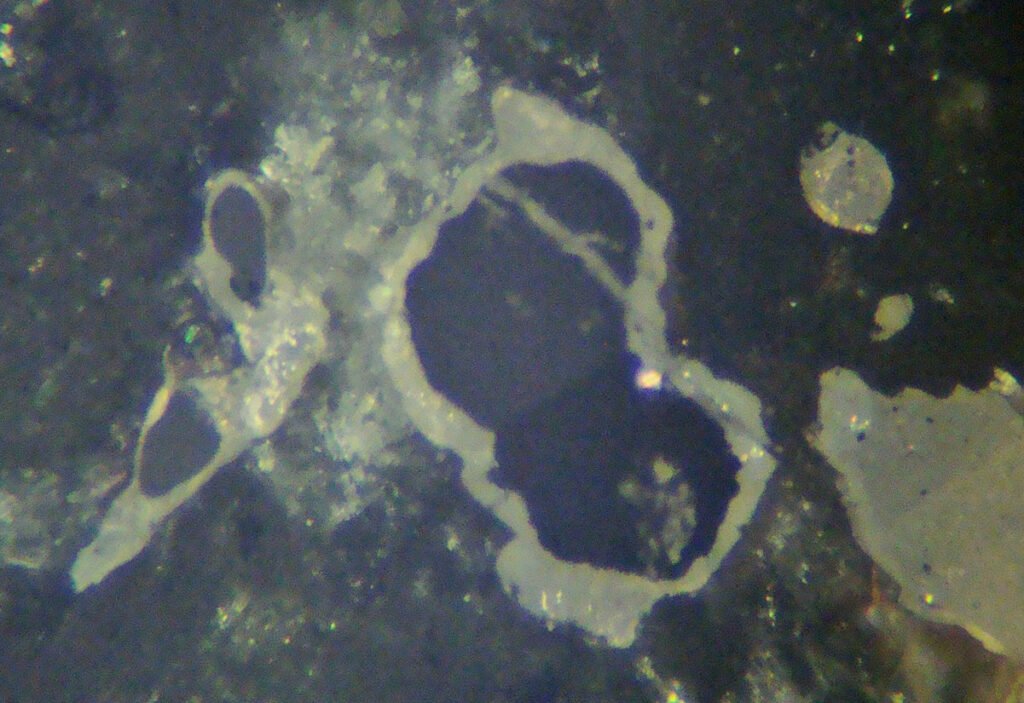
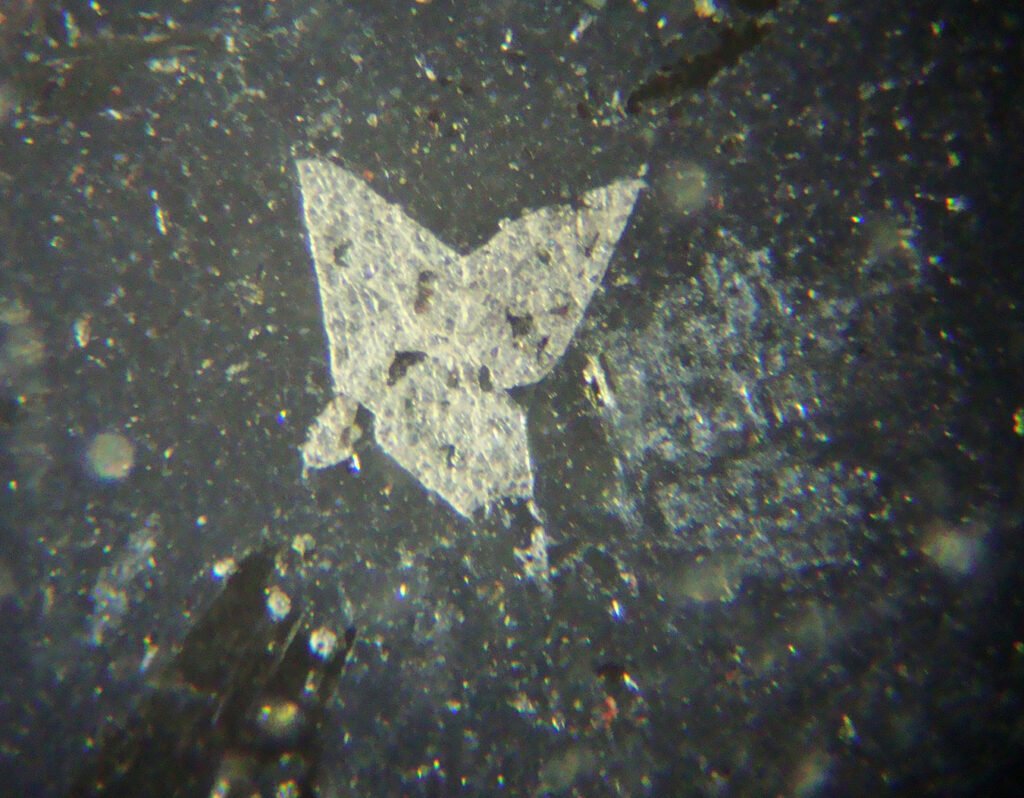
Alterations: under hydrothermal conditions it decomposes to leucoxene, a very fine-grained white to pale yellow mixture composed of rutile, quartz, calcite, apatite, ilmenite and minerals with Rare Earth Elements (allanite, monazite and bastnäsite). Leucoxene can be easily recognized using the Oblique Light technique.
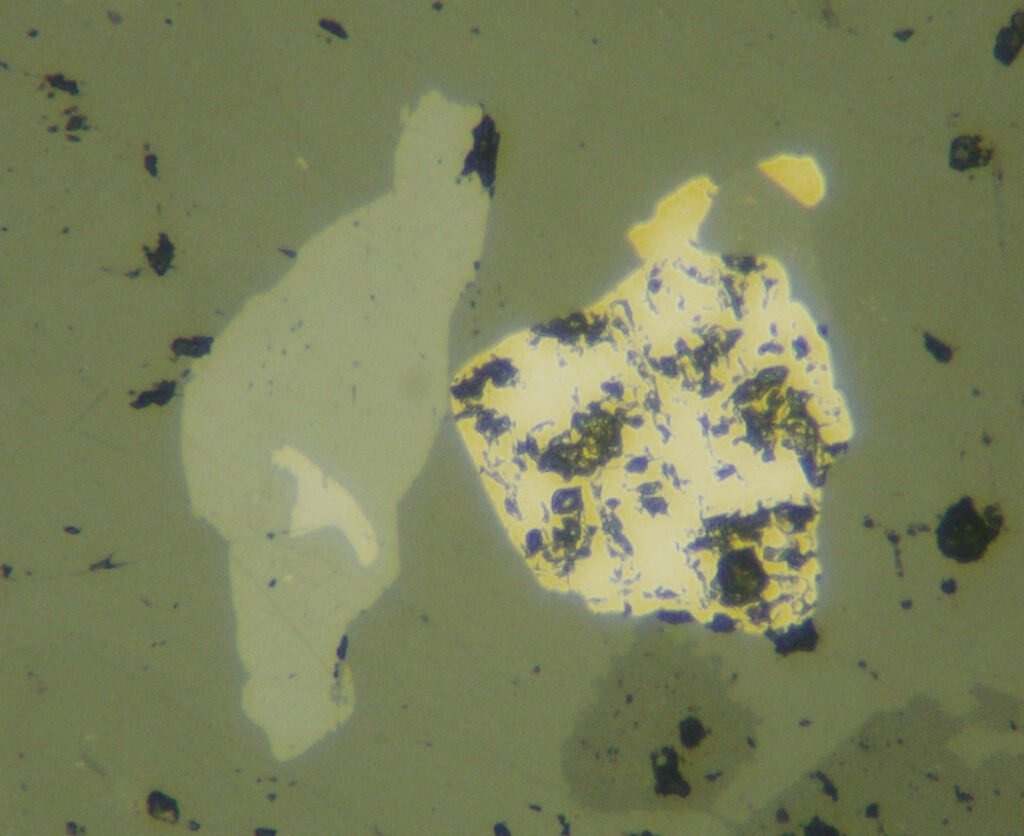
Completely altered titanite grains become opaque due to the presence of ilmenite.
May be confused with: several other minerals.
Epidote has a lower relief, only one cleavage, and a much lighter color.
Cassiterite, zircon, rutile and xenotime are uniaxial.
Anatase and carbonates are U(-).
In very fine grains, titanite can be confused with epidote and allanite.