Crystal system: Orthorhombic bipiramidal.
Color: White, yellowish green, brown, greenish white or grey, olive green.
Habit: Prismatic, lamellar, can be fibrous or massive.
Cleavage: {210} good.
Tenacity: Brittle.
Twinning: Rare, simple or lamellar.
Fracture: Irregular.
Mohs Hardness: 5 – 6
Parting: On {100} and {010}.
Streak: White to gray.
Lustre: Vitreous to pearly.
Diaphaneity: Transparent.
Density (g/cm³): 3.2 – 3.9
2. Geology and Deposits
Enstatite is very common in plutonic rocks, especially in ultramafic and basaltic rocks. In pyroxenites and peridotites, enstatite and bronzite predominate (bronzitite, lherzolite), more rarely hypersthene (harzburgites). Bronzite and hypersthene are common in gabbros and norites.
In diorites and in “dry” granites (charnokites) only hypersthene is common. There is a tendency for Fe-rich members in SiO2-rich igneous rocks.
In volcanic rocks, orthopyroxenes occur as phenocrysts, especially in andesitic to dacitic rocks – usually hypersthene. In dark andesites, Fe-rich bronzite occurs. Hypersthene is a characteristic phase of granulite facies in metamorphic rocks.
Orthopyroxenes also occur in skarnites and meteorites.
3. Mineral Associations
It is associated with hematite, olivine, phlogopite, ilmenite, zircon, pseudobrookite, tridymite, diopside, sanidine, spinel, garnet (pyrope), fluor-apatite and fluor-edenite.
4. Transmitted Light Microscopy
Refraction indices: nα: 1.650 – 1.668 nβ: 1.652 – 1.673 nγ: 1.659 – 1.679
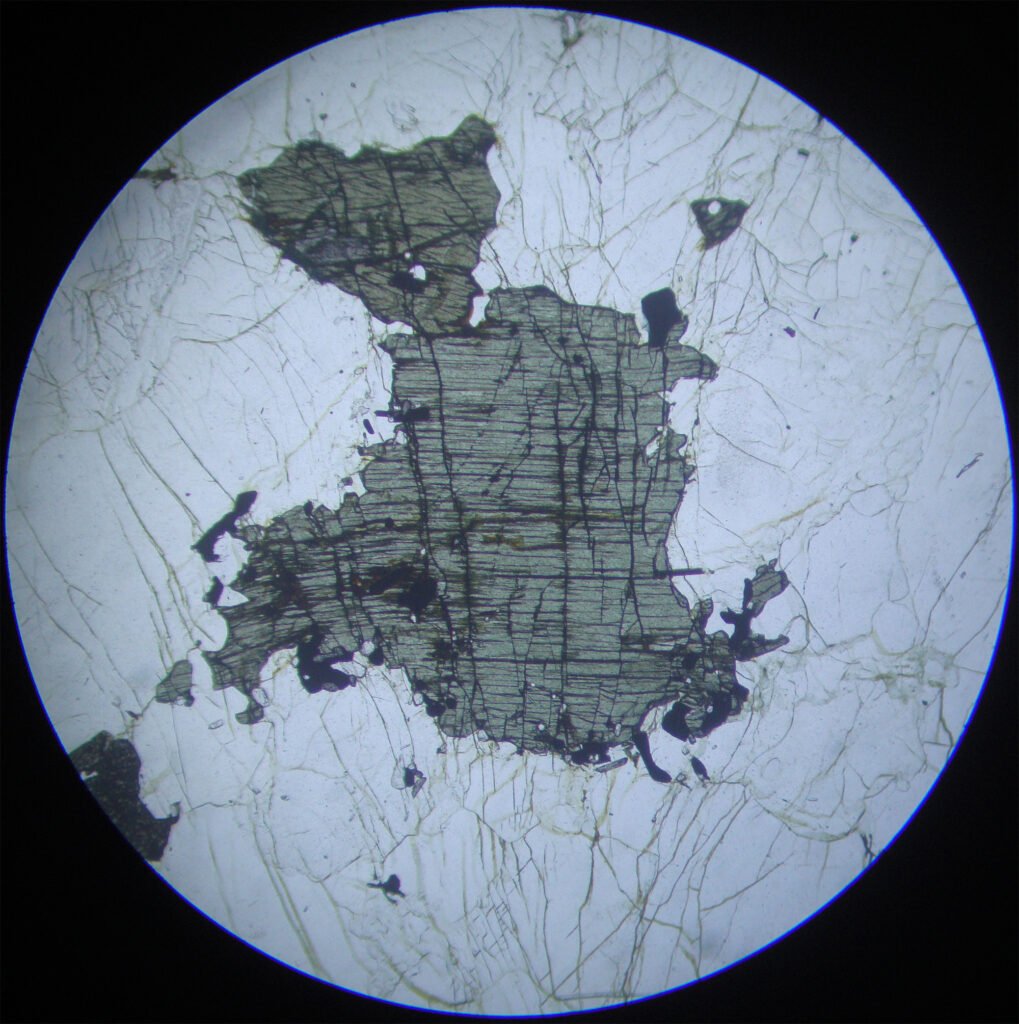
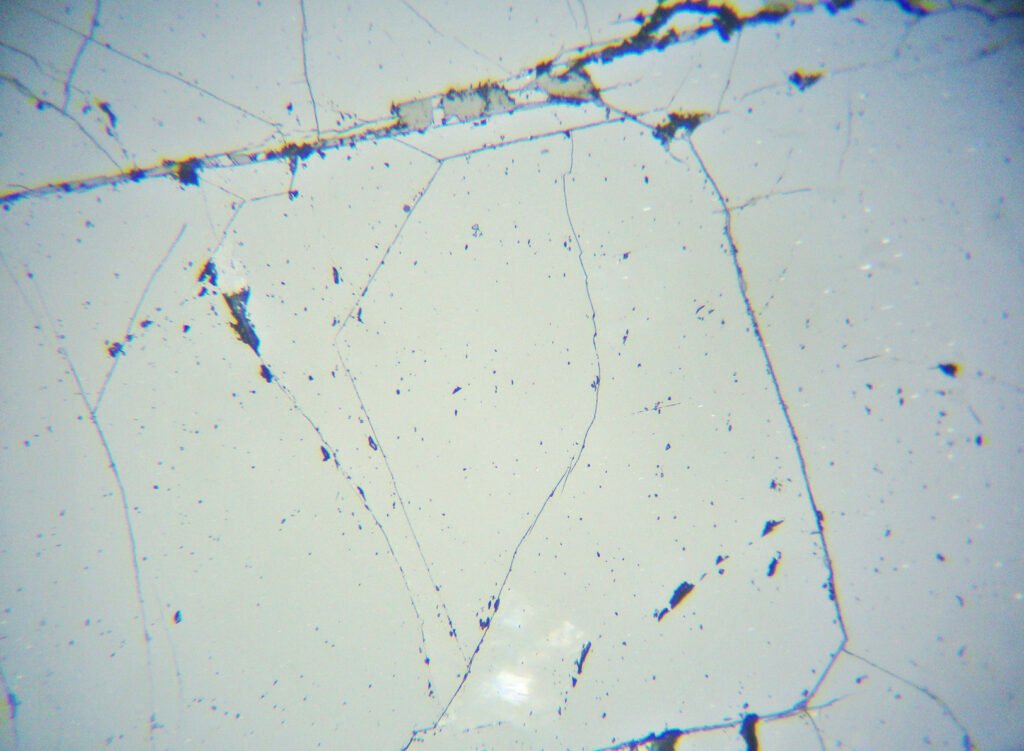
PLANE POLARIZED LIGHT – PPL
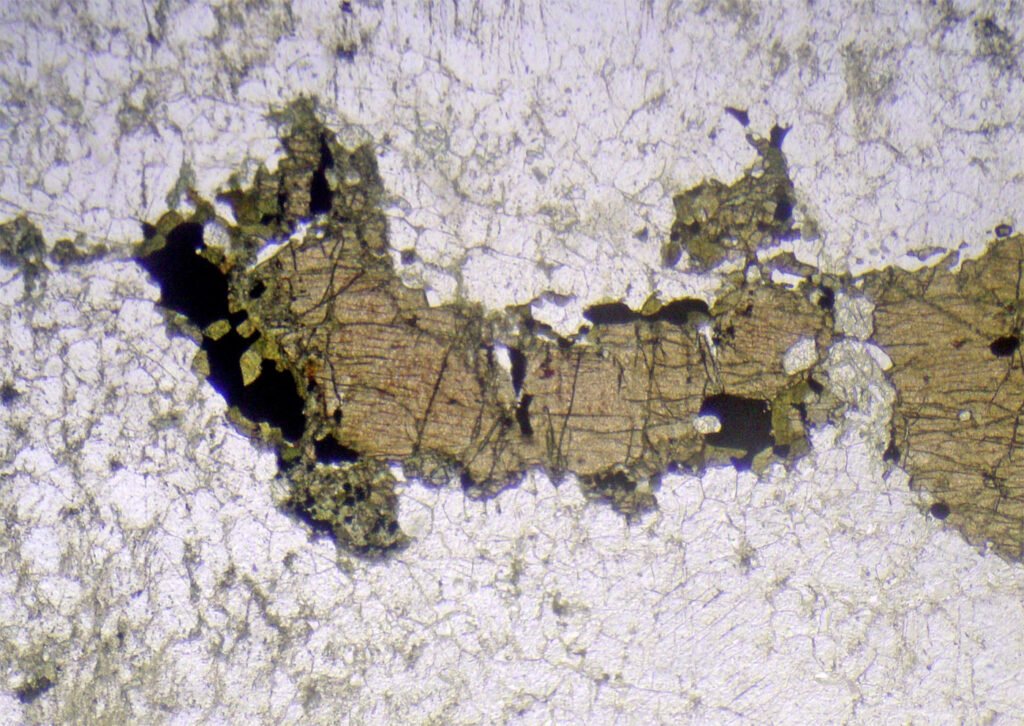
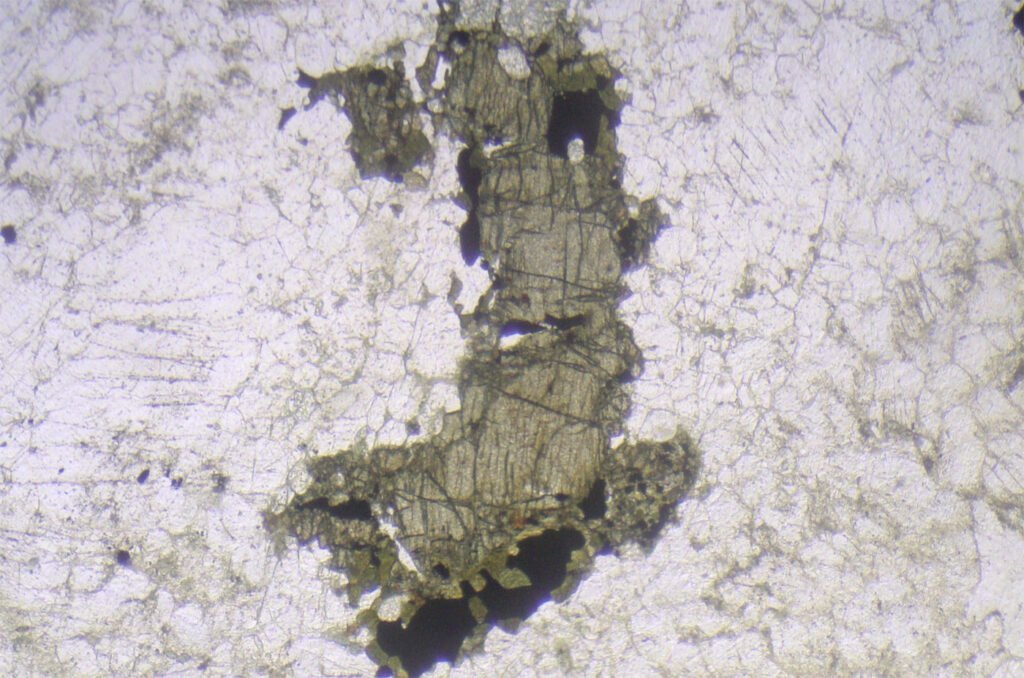
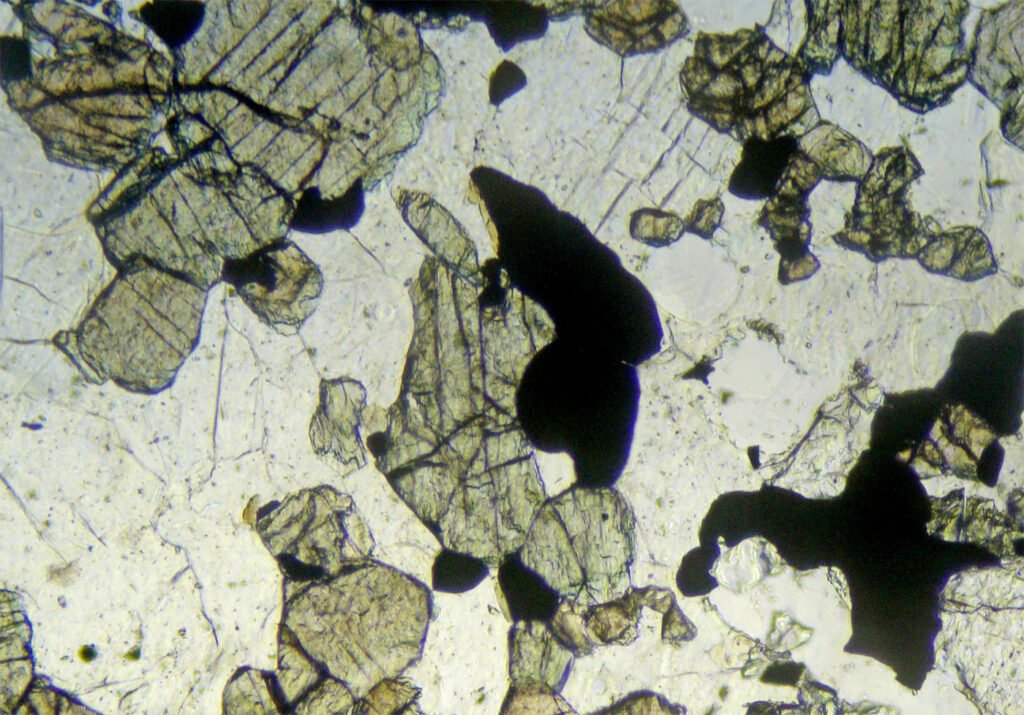
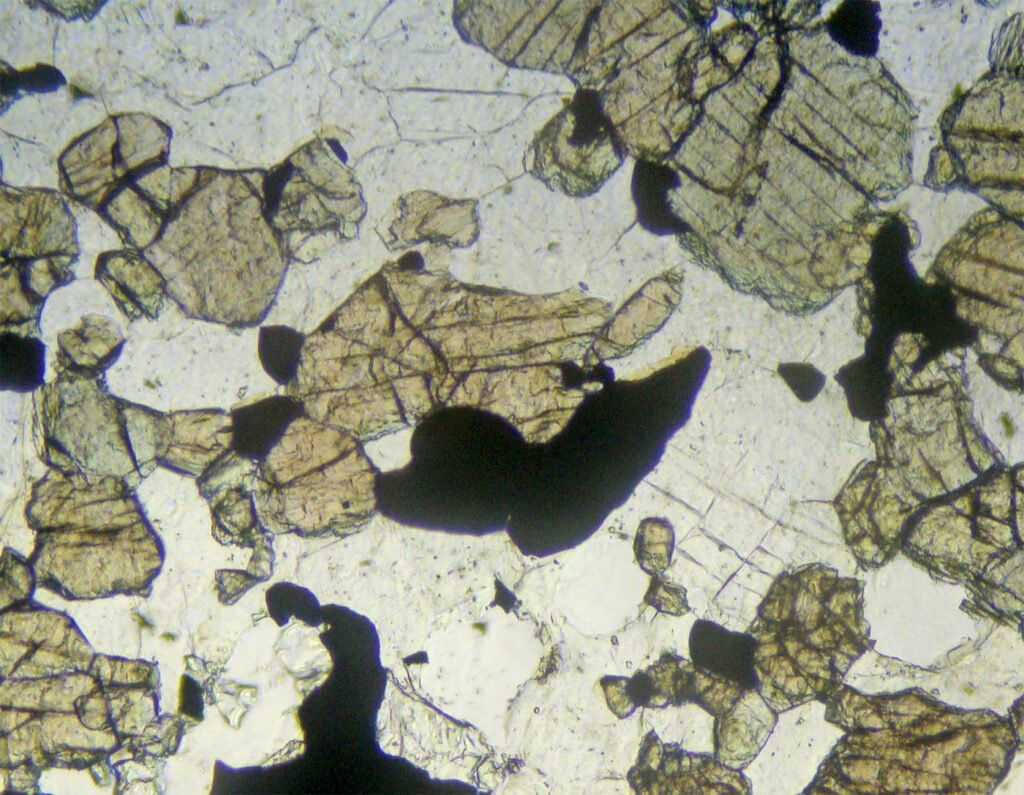
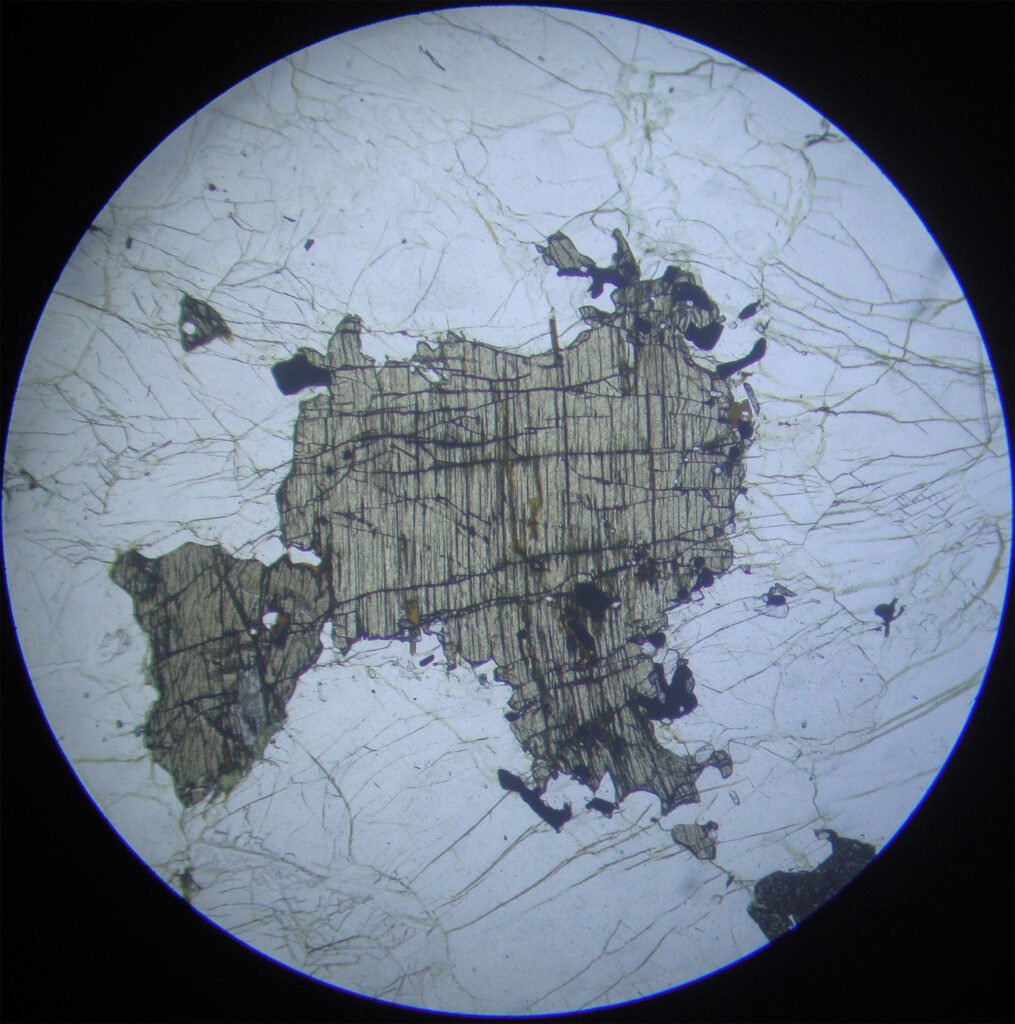
Color / Pleochroism: Colorless when with Mg alone. If with iron, it can be pale green (bronzite), or pale green to pale reddish brown, showing weak pleochroism:
X,Y = yellowish to reddish,
Z = gray-green.
Clinopyroxene exsolution blades are common on (100).
Relief: Moderate to high.
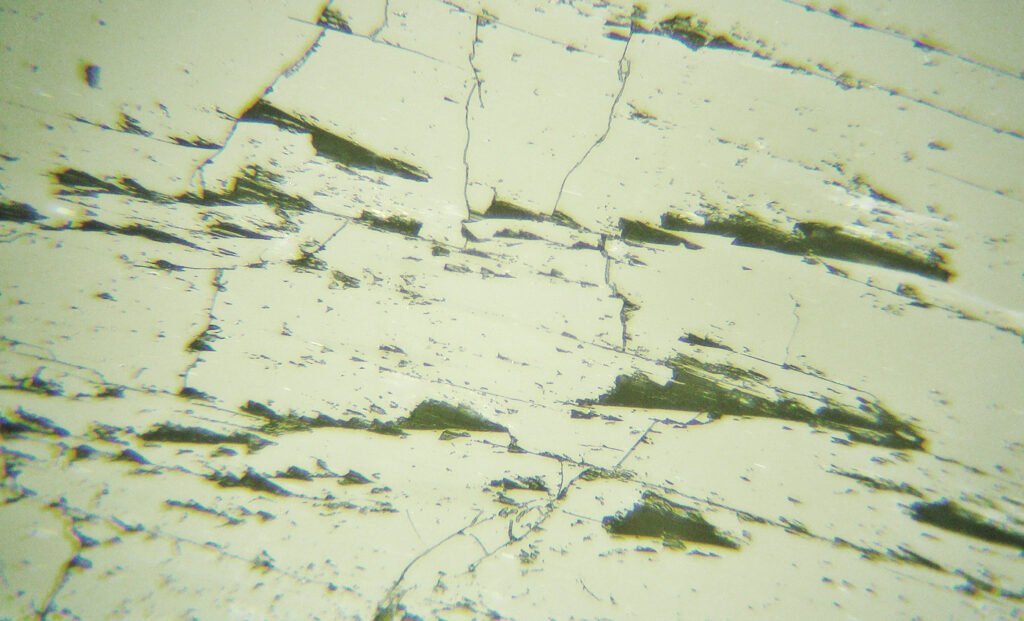
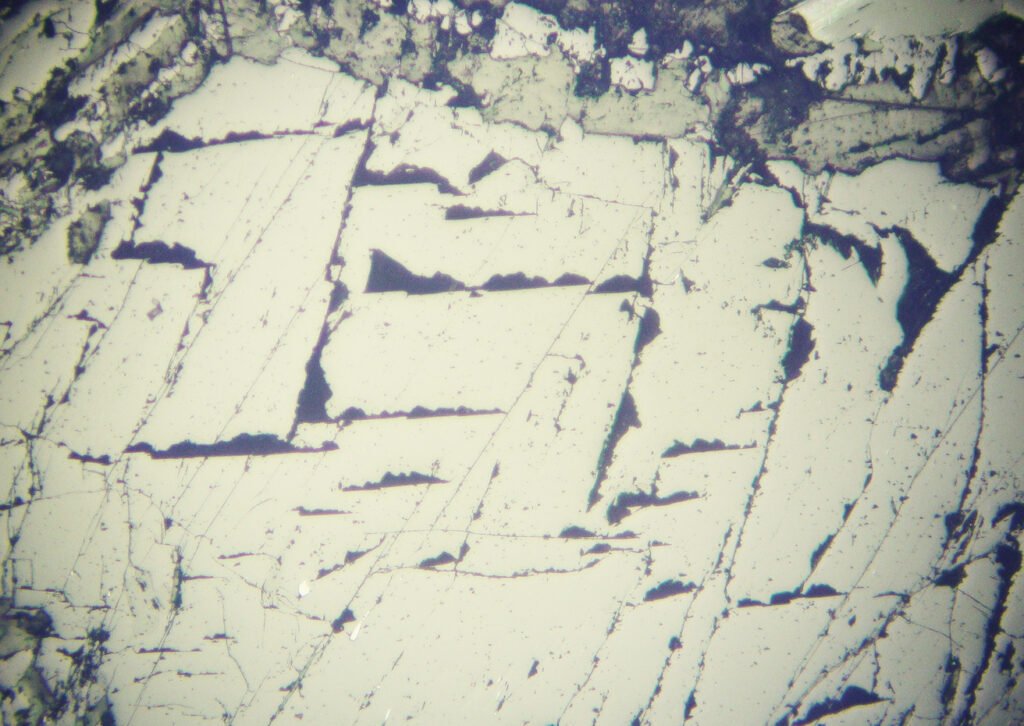
Cleavage: {210} excellent. In the prismatic sections there is only one cleavage. In the basal sections there are two cleavages intersecting at angles of 87º and 93º, typical of pyroxenes. Also partitions on {100} and {010}.
Habits: In volcanic rocks it is columnar, elongated along the c axis: short prismatic with a square or octagonal basal section. In plutonic and metamorphic rocks it occurs as subhedral to anhedral granular crystals. Qeliphytic margins (edges of reaction of the grain with the surrounding rock) may occur. Parallel inclusions (Schiller textures) may occur.
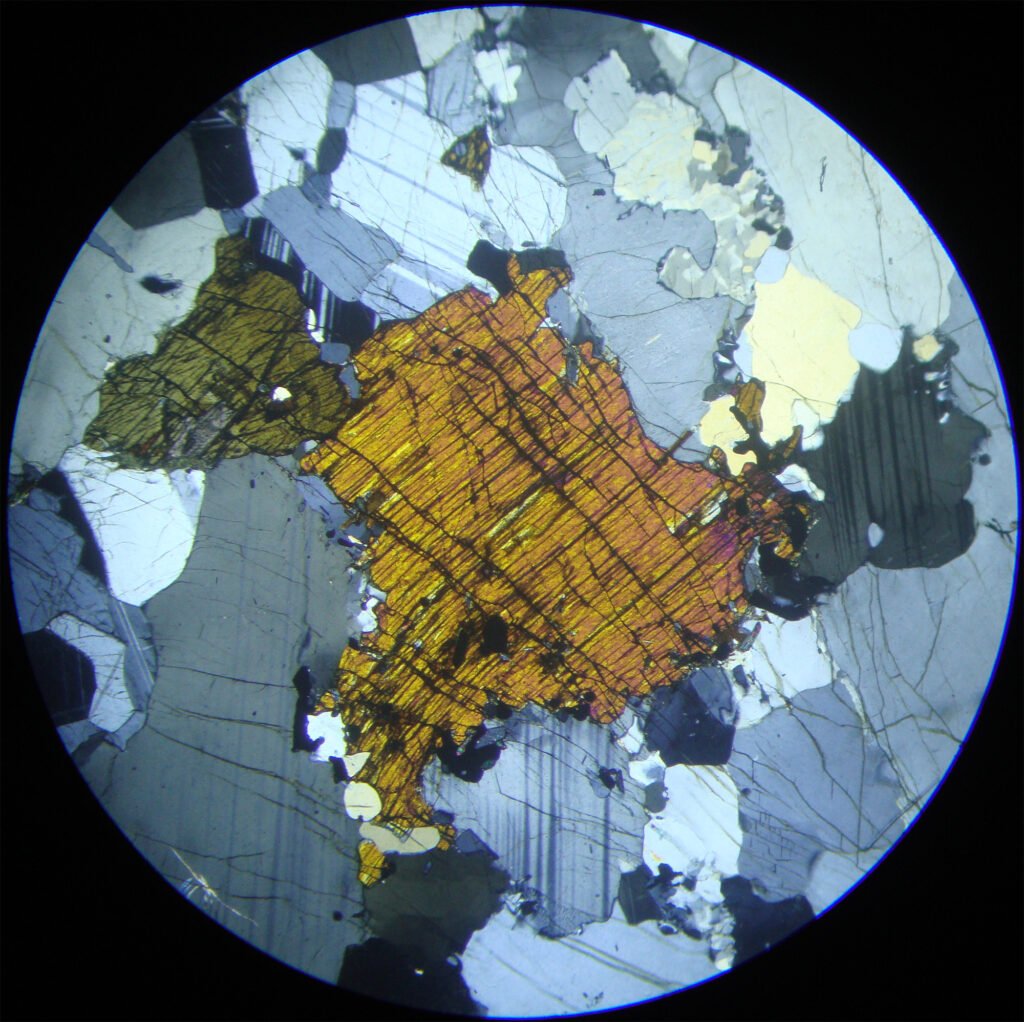
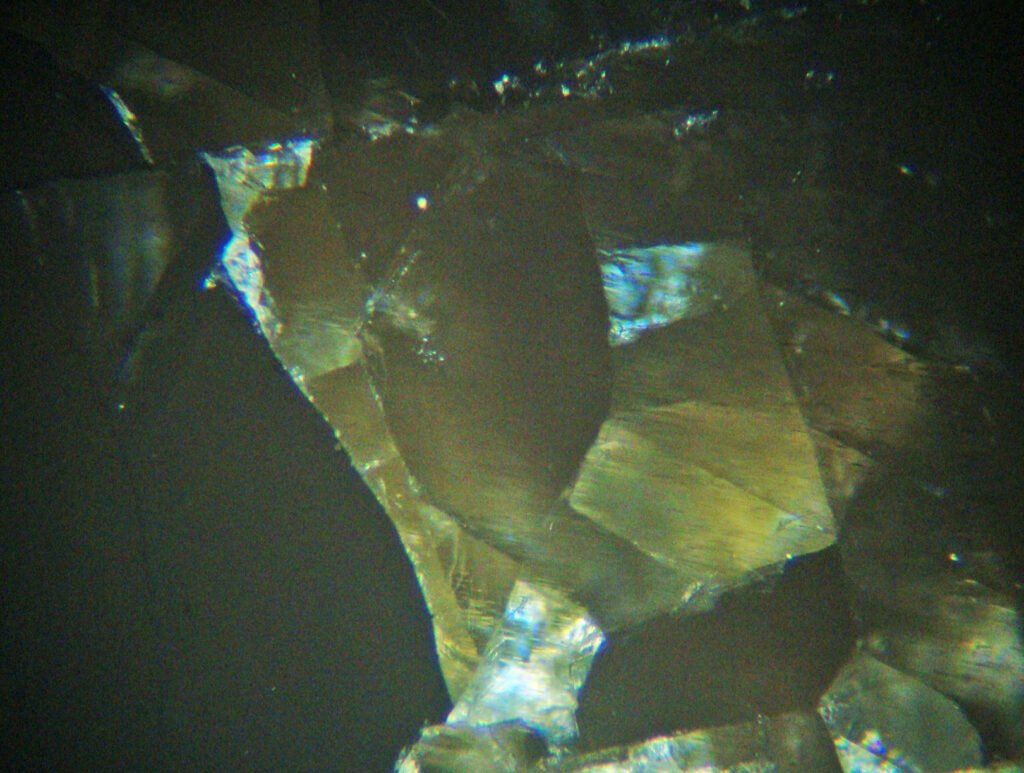
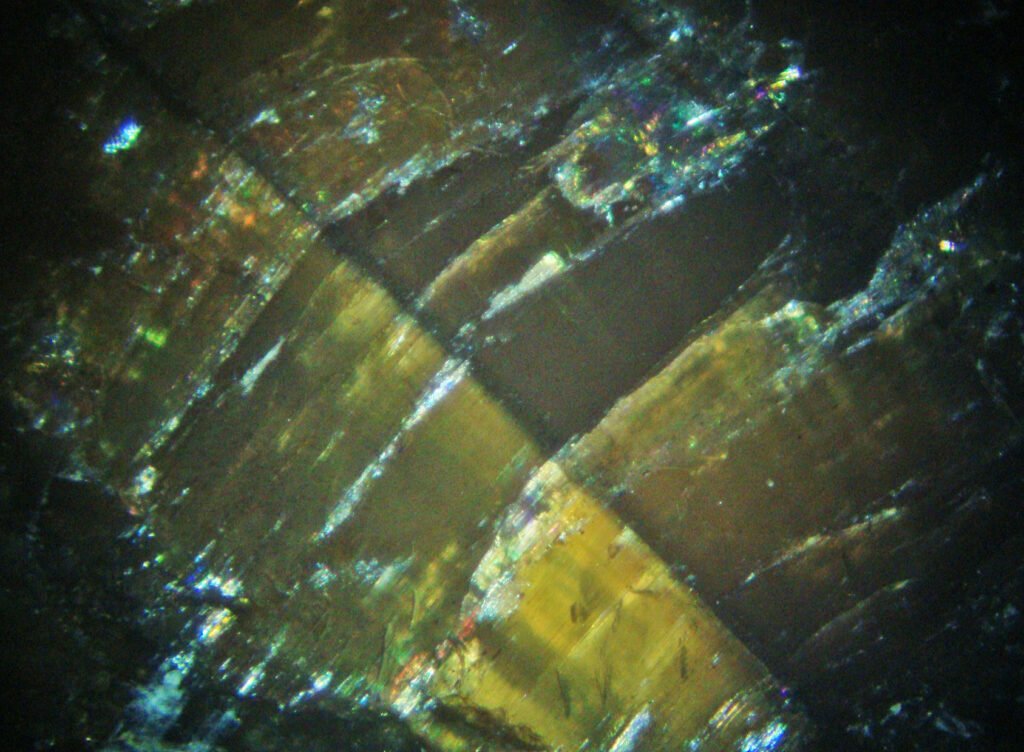
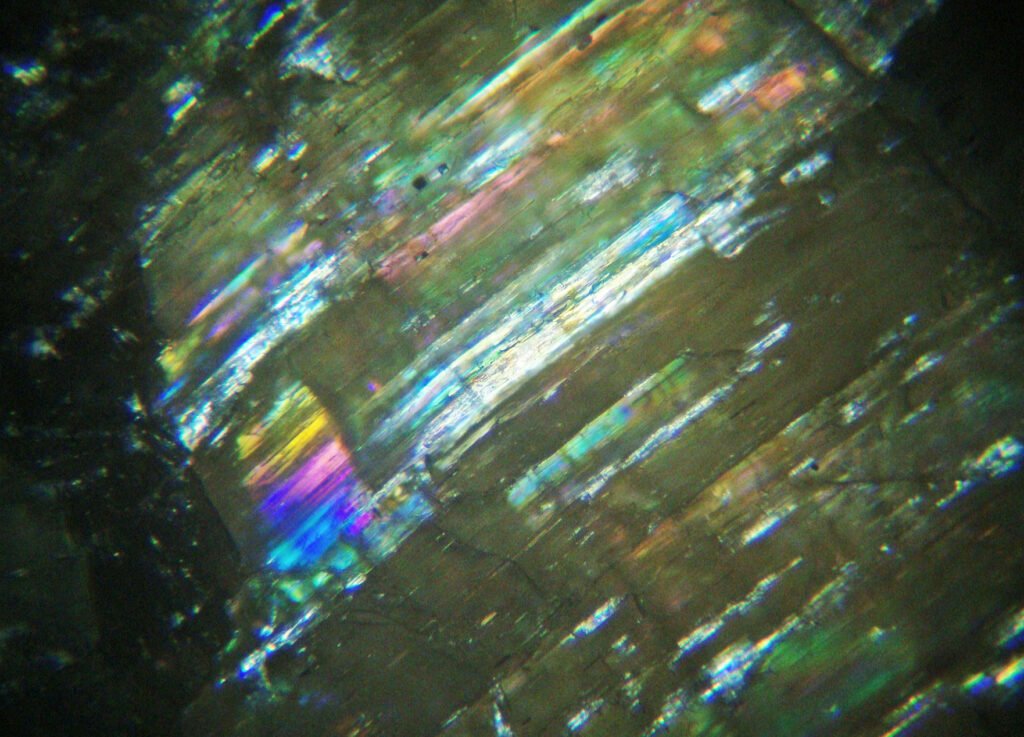
CROSSED POLARIZED LIGHT – XPL
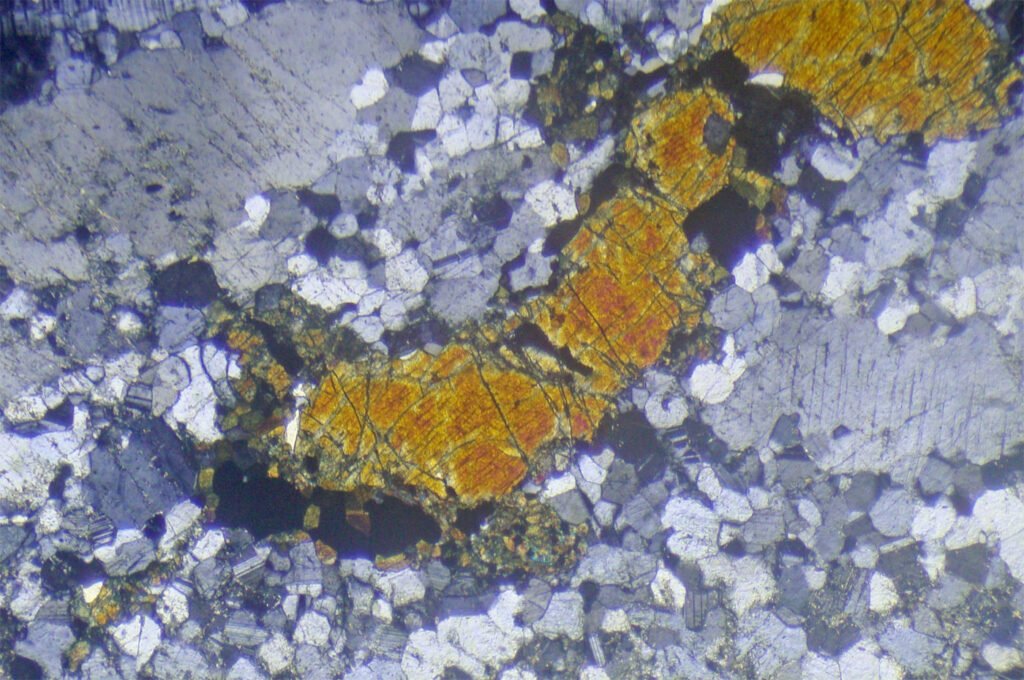
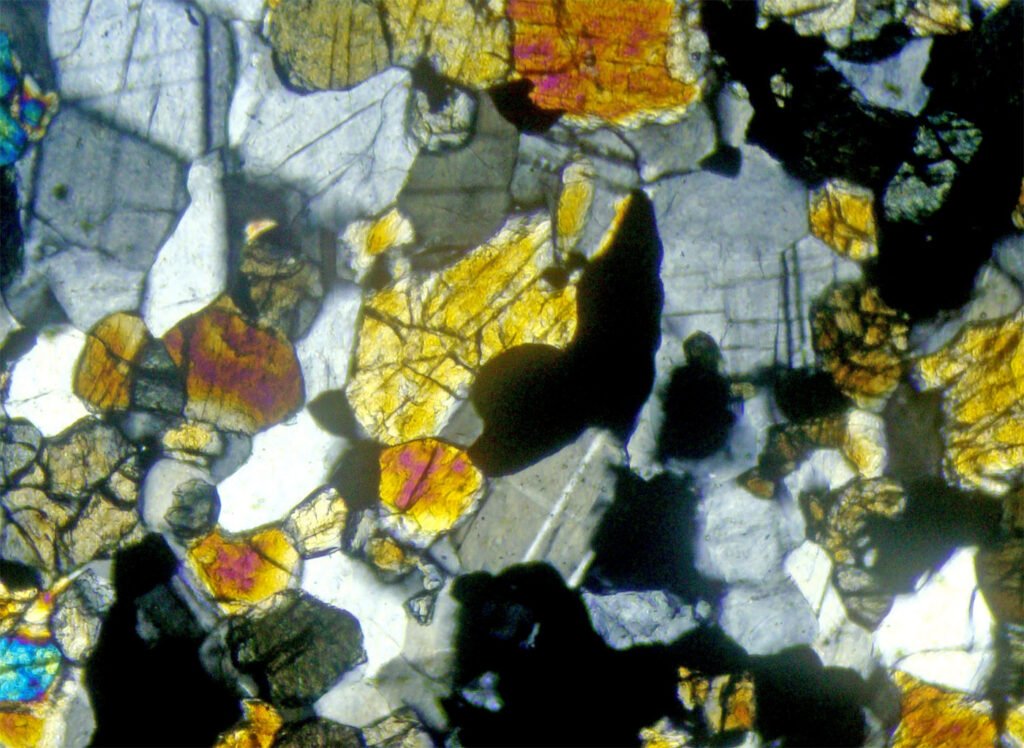
Birefringence and Interference Colors: Birefringence from 0.008 to 0.015, 1st order colors: gray to yellow and 1st order orange. Colors increase with increasing Fe content.
Extinction: Tend to be paralell.
Elongation sign: ES(+)
Twins: Not very common, by {100}, simple and lamellar. They are not diagnostic.
Zoning: Zonation is common in volcanic rocks, with Mg-rich cores.
CONVERGENT LIGHT
Character: Enstatite (B(+), Bronzite B(+) or B(-), Hyperstene (B-)
2V angle: increases with increasing Fe content. Enstatite: 54-83º, Bronzite: 97-63º, Hypersthene: 63-45º
Alterations: very tough mineral. Alters to serpentine in ultramafic rocks (harzburgites) and in volcanic rocks, usually as pseudomorphs with oriented growth (bastite; bastitization in harzburgites: serpentine (lizardite) cleavages parallel [100] of orthopyroxene). Mesh textured chrysotile can also be formed, replacing orthopyroxene. Weathering forms carbonates, iron hydroxides or hematite.
May be confused with: diagnostic are the two cleavages at almost 90º in the basal sections, the low birefringence and the moderate relief.
Clinopyroxenes have oblique extinction.
Epidote Group minerals show stronger and more anomalous interference colors.
Andalusite has SE(-) and lower refractive indices.
Kyanite has oblique extinction and perfect cleavage.
Melilite and scapolite are uniaxial.