1. Characteristics
Crystal system: Monoclinic prismatic.
Color: Green, green-black, gray-green.
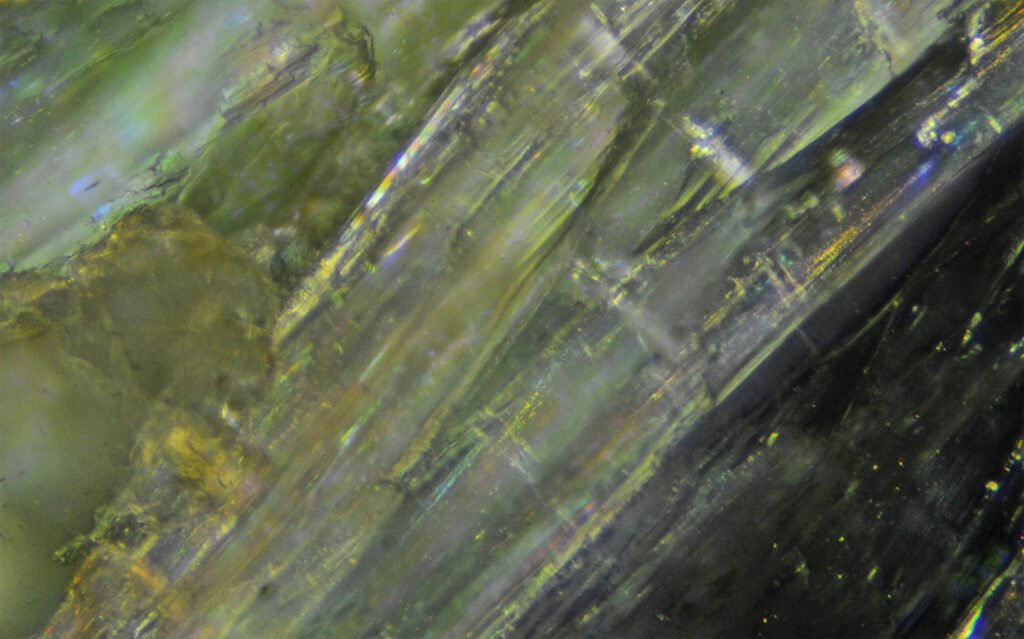
Habit: Tabular crystals, may be fibrous radiating, asbestiform. Massive, granular.
Cleavage: {110} good.
Tenacity: Brittle.
Twinning: By {100} or {001} common, simple or lamellar.
Fracture: Splintery.
Mohs Hardness: 5 – 6
Parting: By {100}.
Streak: White.
Lustre: Vitreous to pearly.
Diaphaneity: Transparent.
Density (g/cm³): 3.03 – 3.24
2. Geology and Deposits
Actinolite is a mineral restricted to low-grade metamorphic rocks. Thus, it is common in sediments rich in Ca-Mg-Fe that were regionally metamorphosed to schists, the so-called greenschists. It is found in metamorphosed mafic and ultramafic rocks such as meta-basalts, meta-gabbros and “greenstones”. May be present in contact metamorphic rocks such as adinoles.
Also occurs in metasomatic rocks such as scarnites and propylites. It rarely occurs in pegmatites.
It also occurs in blueschists as a retrograde mineral.
Tremolite and actinolite are also common alteration products of pyroxene and hornblende, in which case they are known as uralite. May occur in any rocks hosting pyroxene and/or hornblende.
3. Mineral Associations
It occurs associated with other typical minerals of low-grade metamorphic paragenesis: quartz, albite, Chlorite Group minerals, lawsonite, glaucophane, epidote, pumpellyite and talc.
It is also associated with calcite, titanite, magnetite, axinite (Fe), prehnite, plagioclase (oligoclase) and dyscrasite.
When it occurs as “nephrite”, it is associated with diopside, garnet (grossular), rutile, graphite, apatite, vesuvianite, prehnite, datolite, talc, serpentine, titanite, chromite, magnetite and pyrite.
4. Transmitted Light Microscopy
Refraction indices: nα: 1.613 – 1,646 nβ: 1.624 – 1,656 nγ: 1.636 – 1,6
PLANE POLARIZED LIGHT – PPL
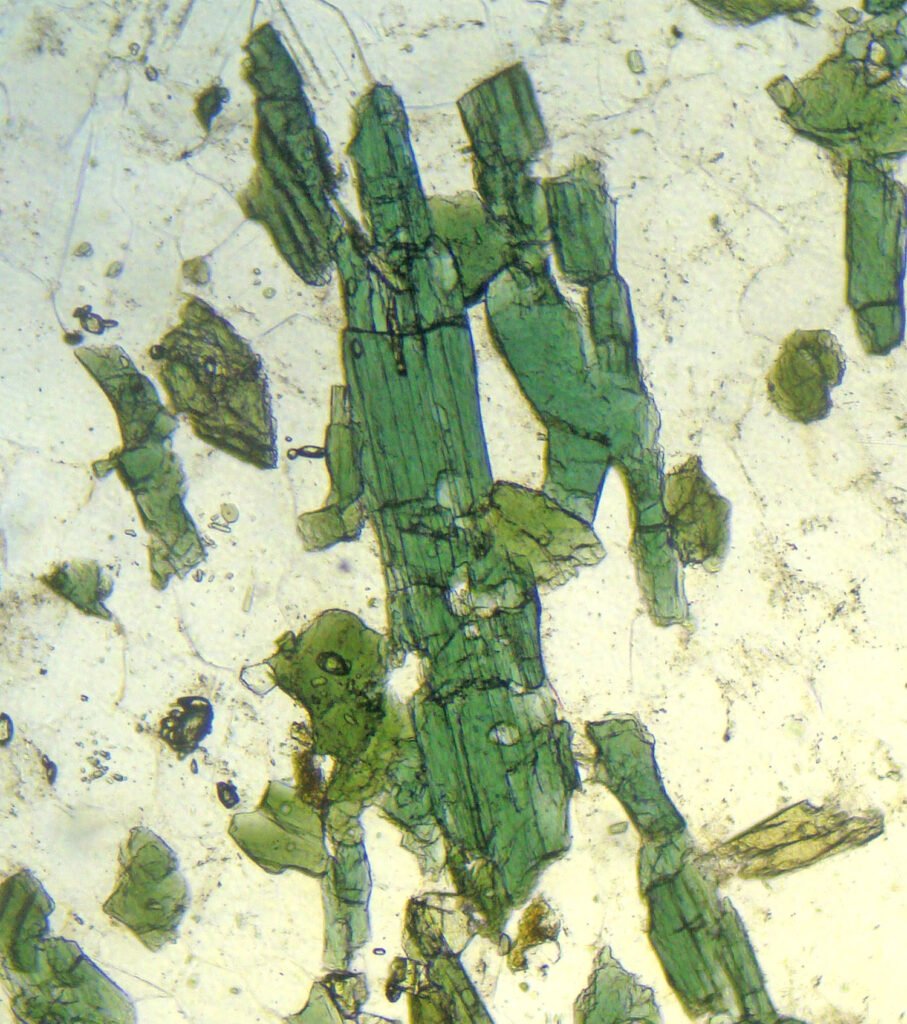
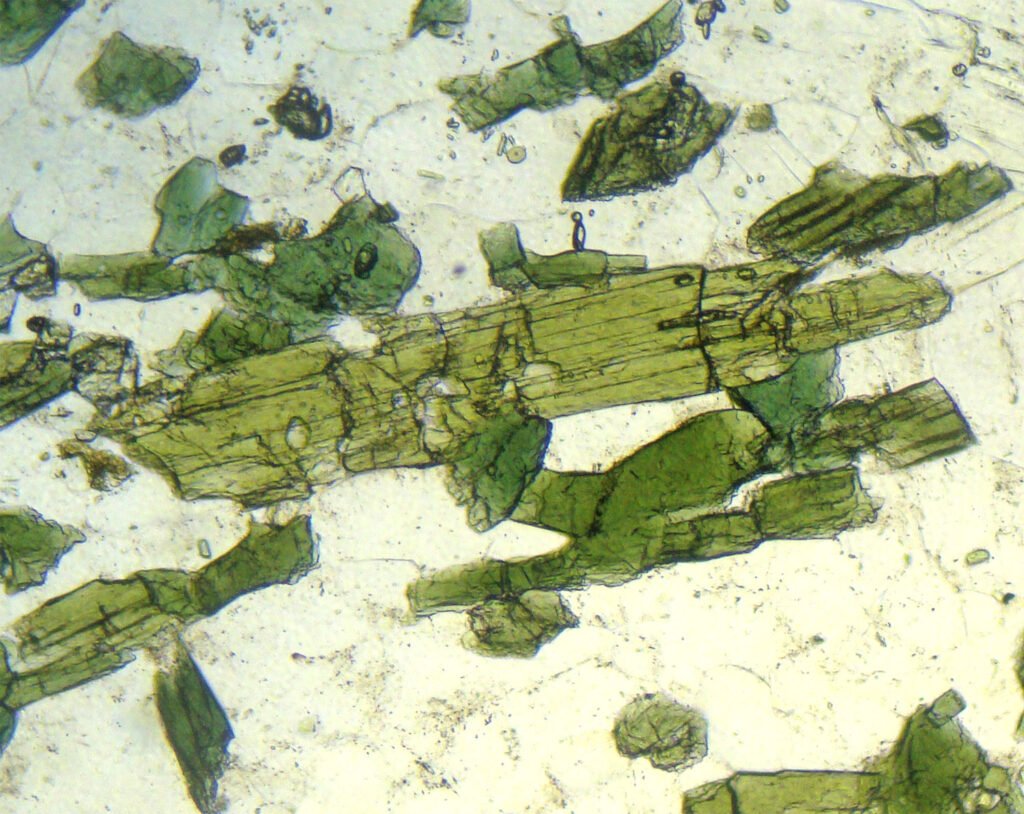
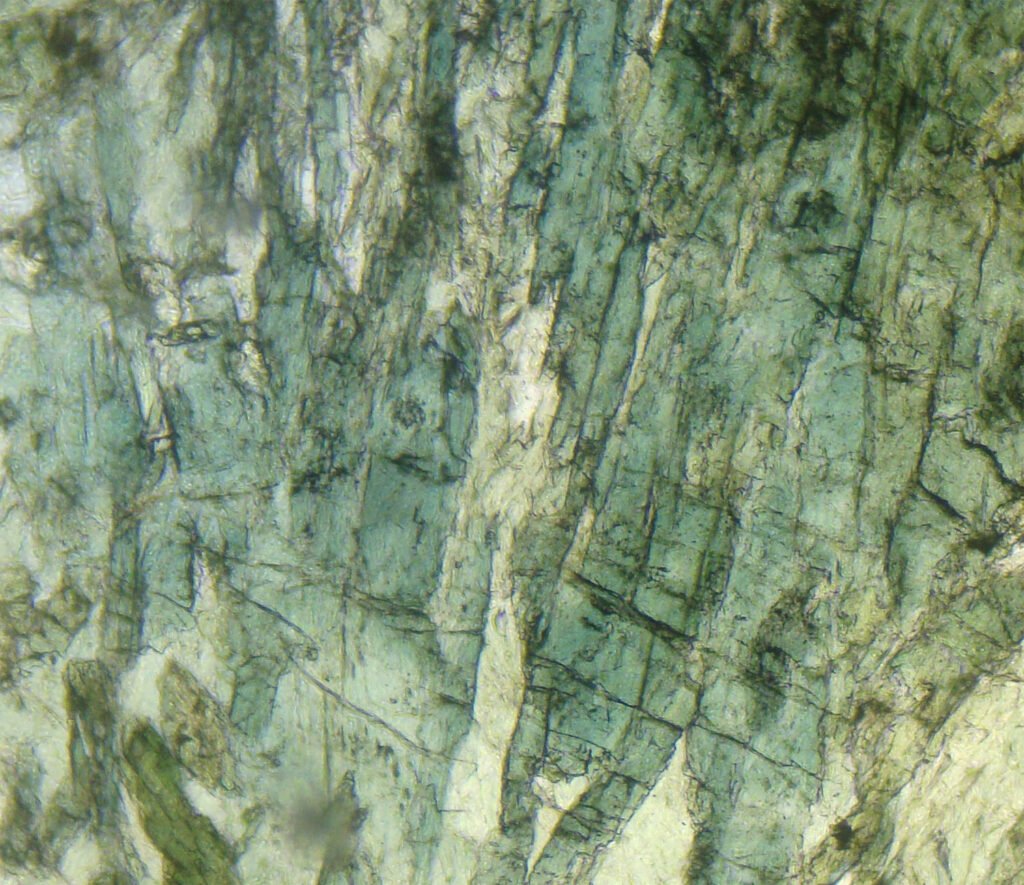
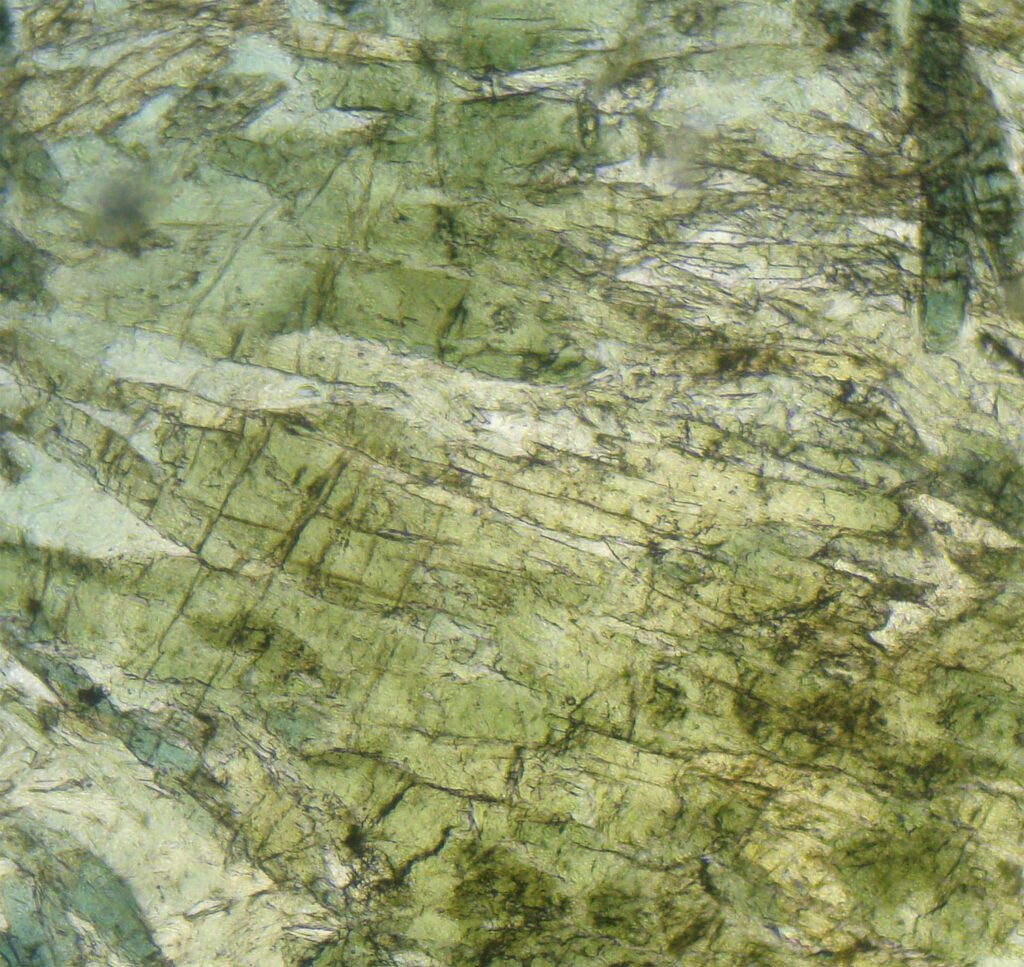
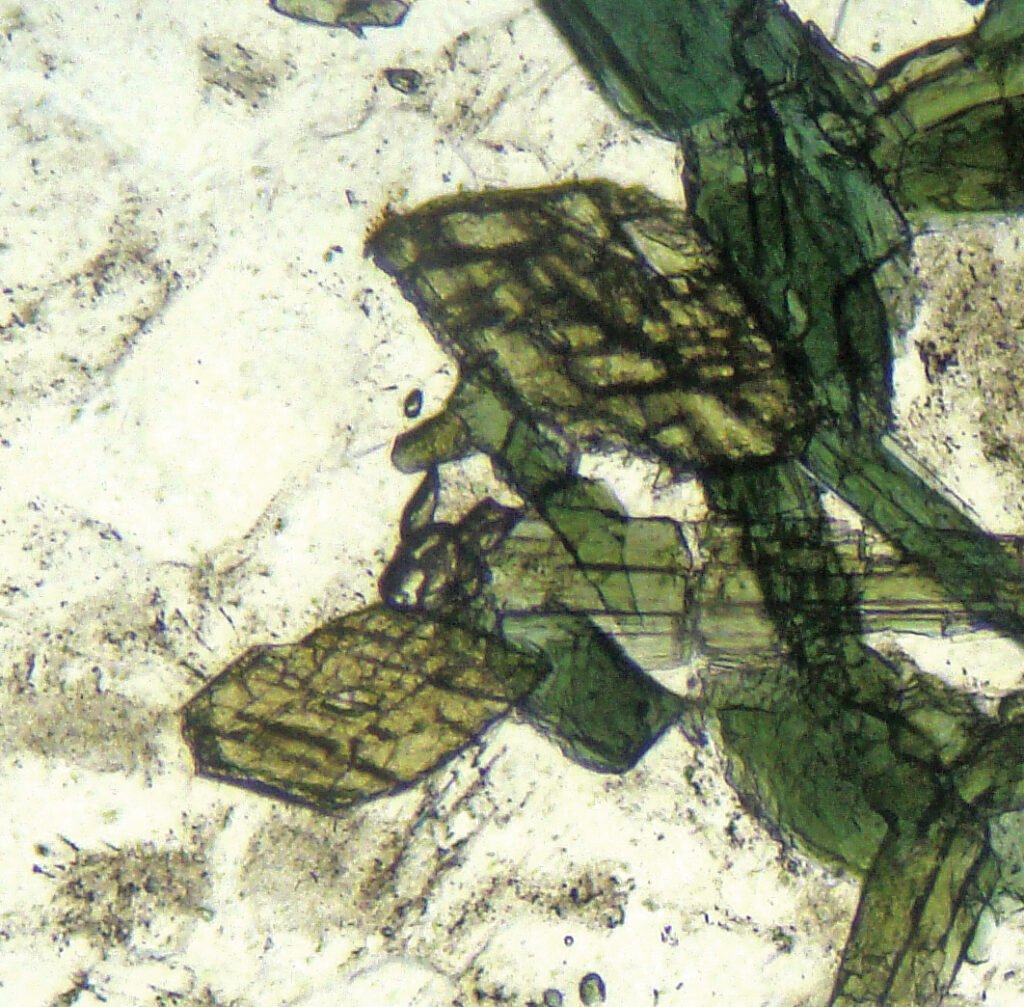
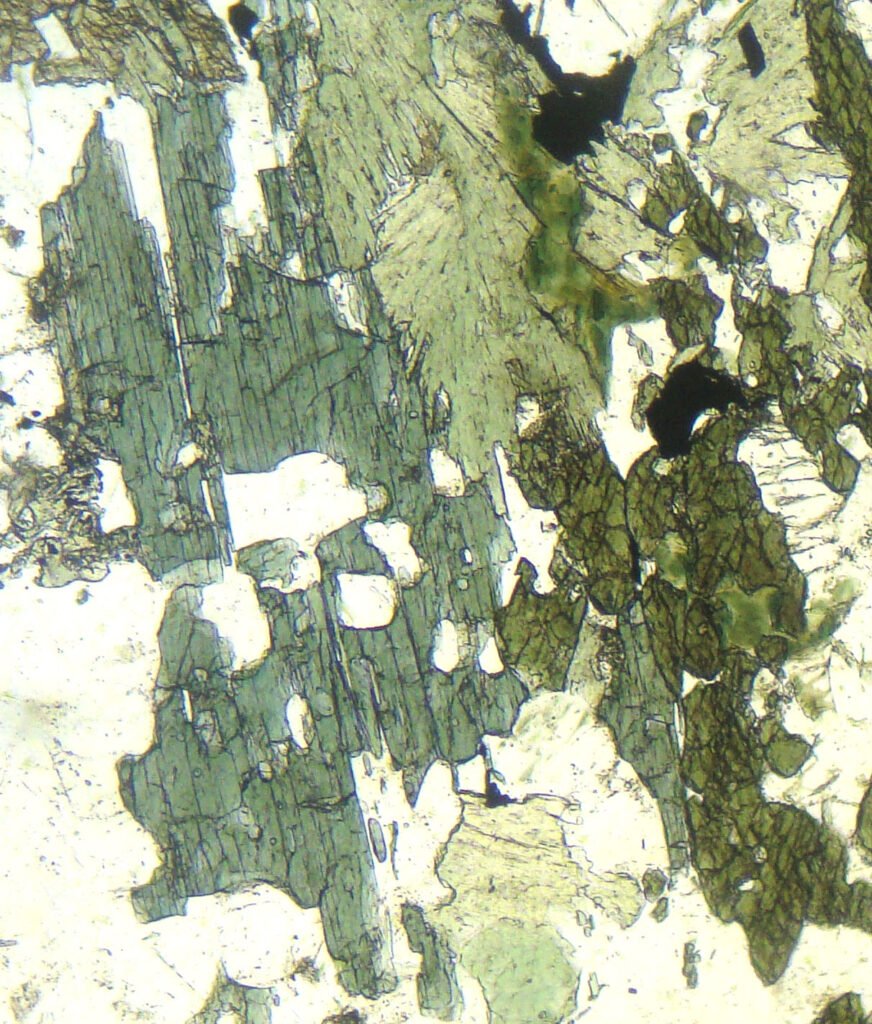
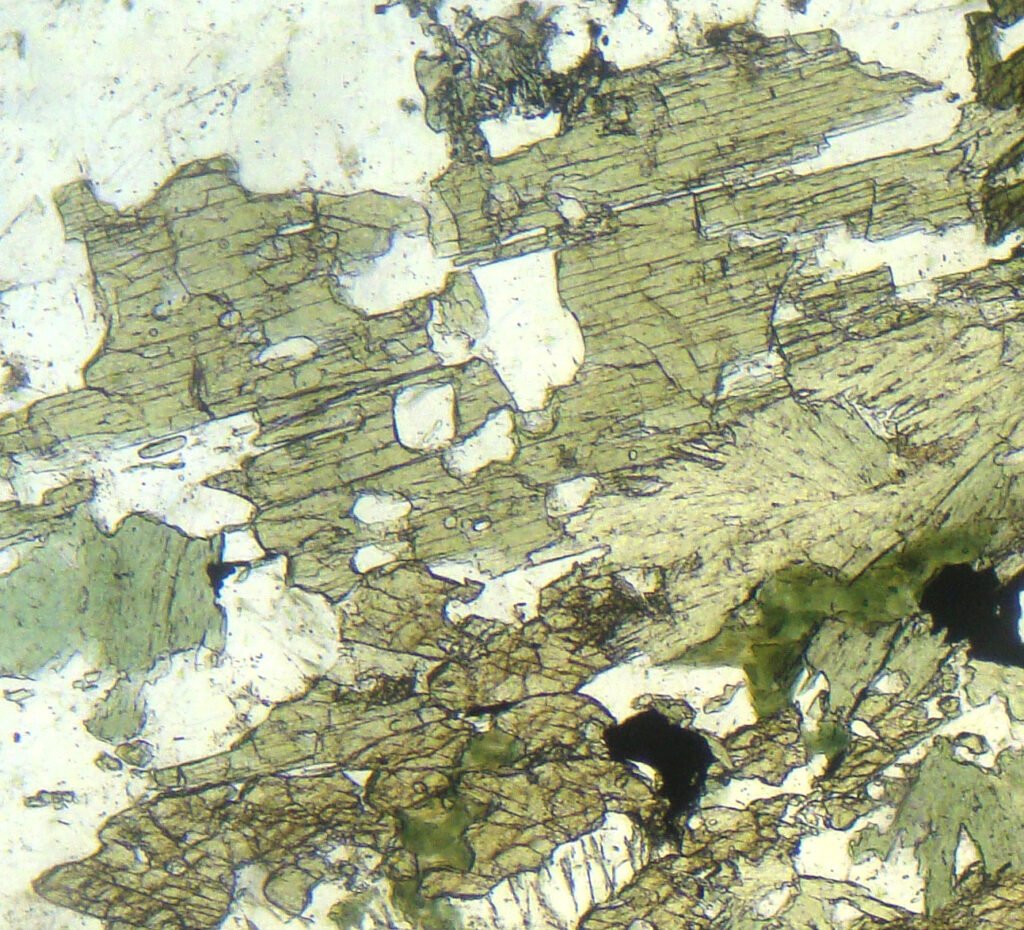
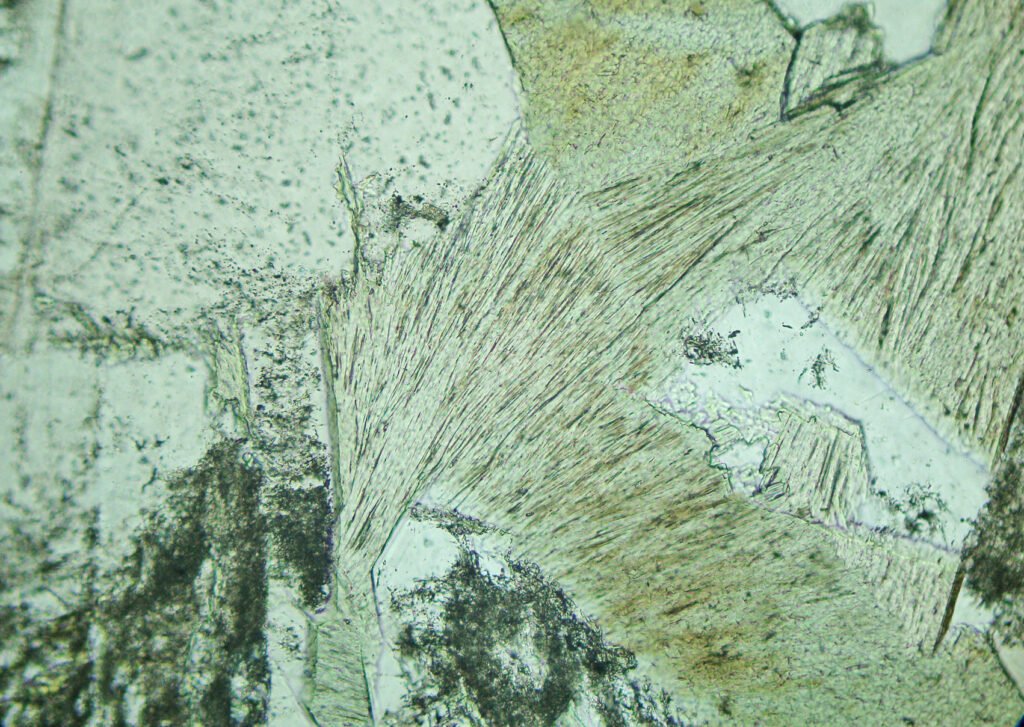
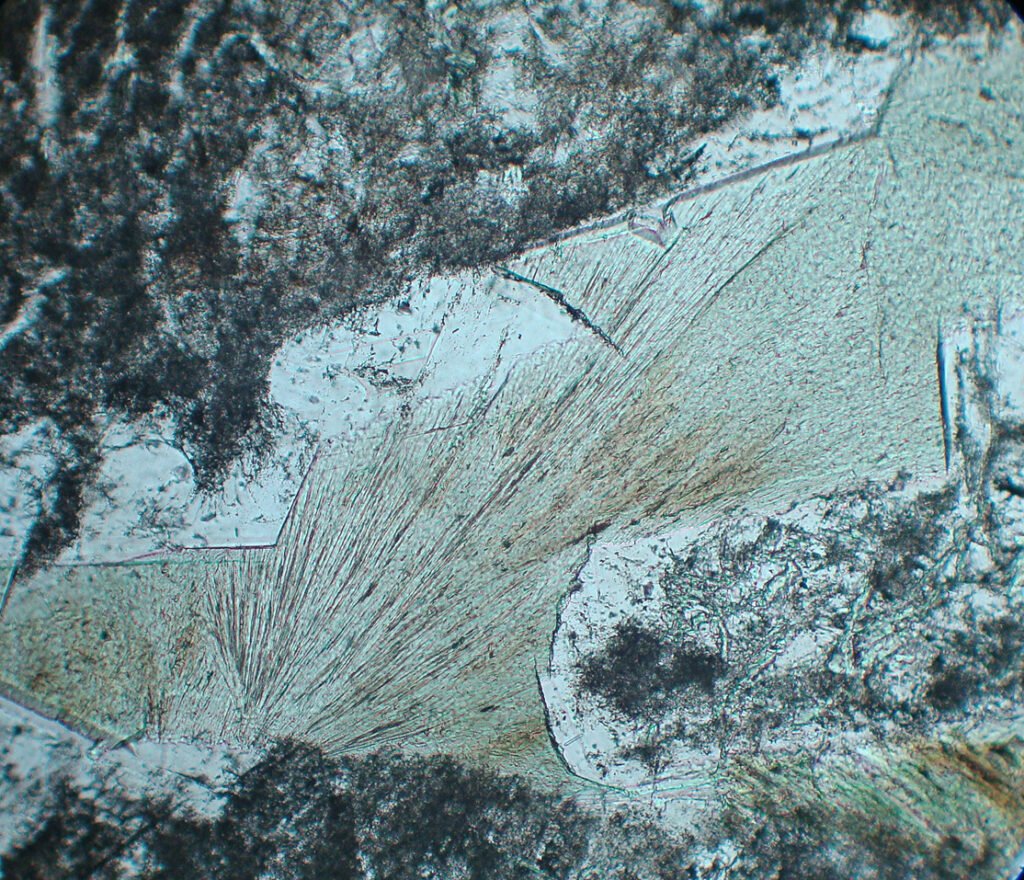
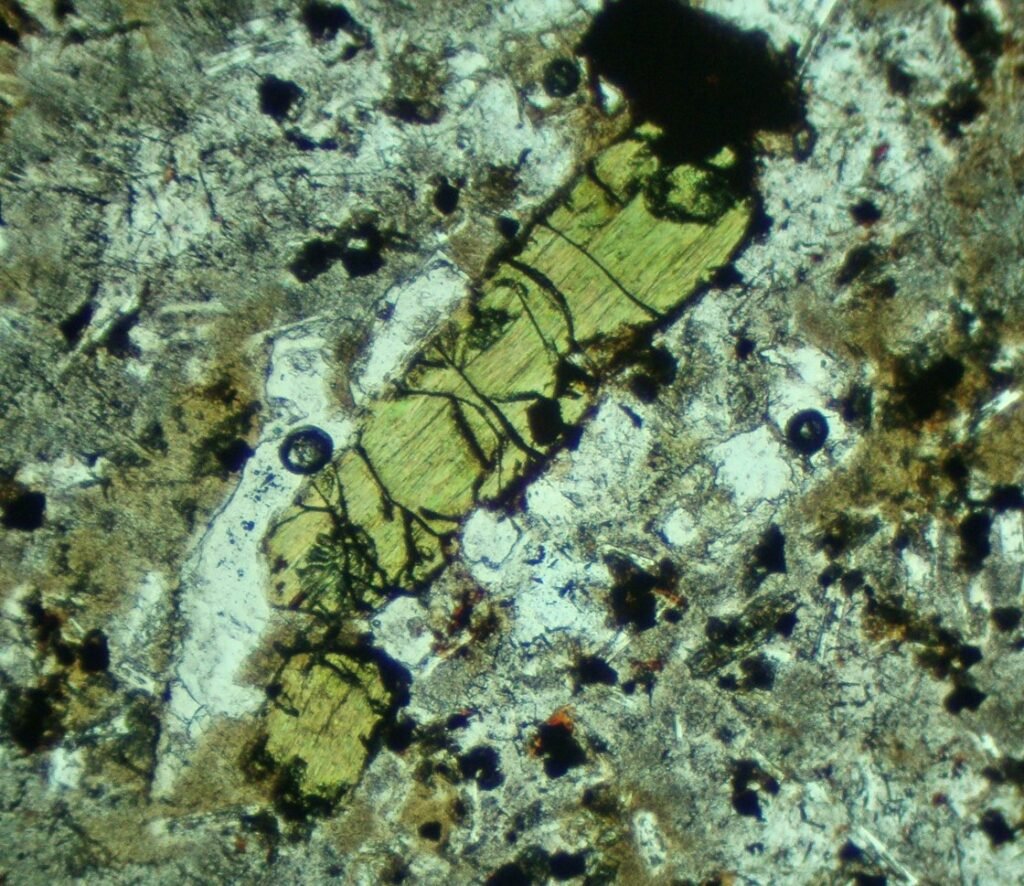
Color / Pleochroism: Colorless, pale green to darker green with shades of blue. Typical pleochroism:
X = colorless, pale yellowish green;
Y = pale yellow-green, pale blue-green,
Z = pale green, green, blue-green.
Darker colors and stronger pleochroism are associated with higher Fe content.
Relief: Moderate. Increases with increasing Fe content.
Cleavage: {110} perfect.
Longitudinal sections show only one cleavage, parallel to the crystallographic (vertical) z-axis.
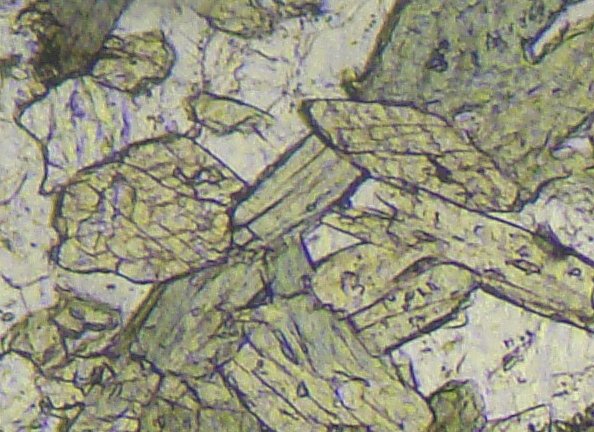
Basal sections show two cleavages that intersect at 124º and 56º angles, forming rhombs (as in all amphiboles).
Habits: Long prismatic crystals, may be fibrous. Subhedral to anhedral forms, but bladed forms can occur; basal sections may form rhombs. As a typical mineral of low-grade metamorphic rocks, crystals are often very small.
CROSSED POLARIZED LIGHT – XPL
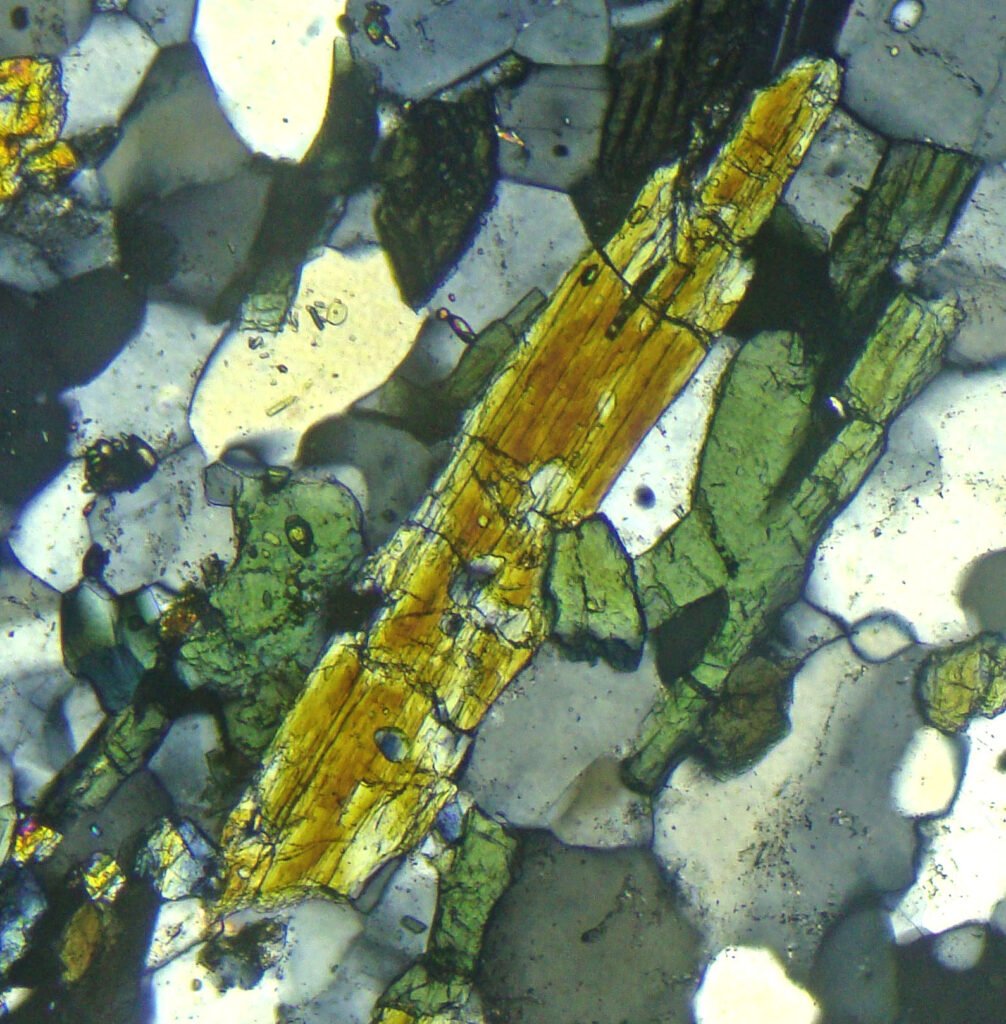
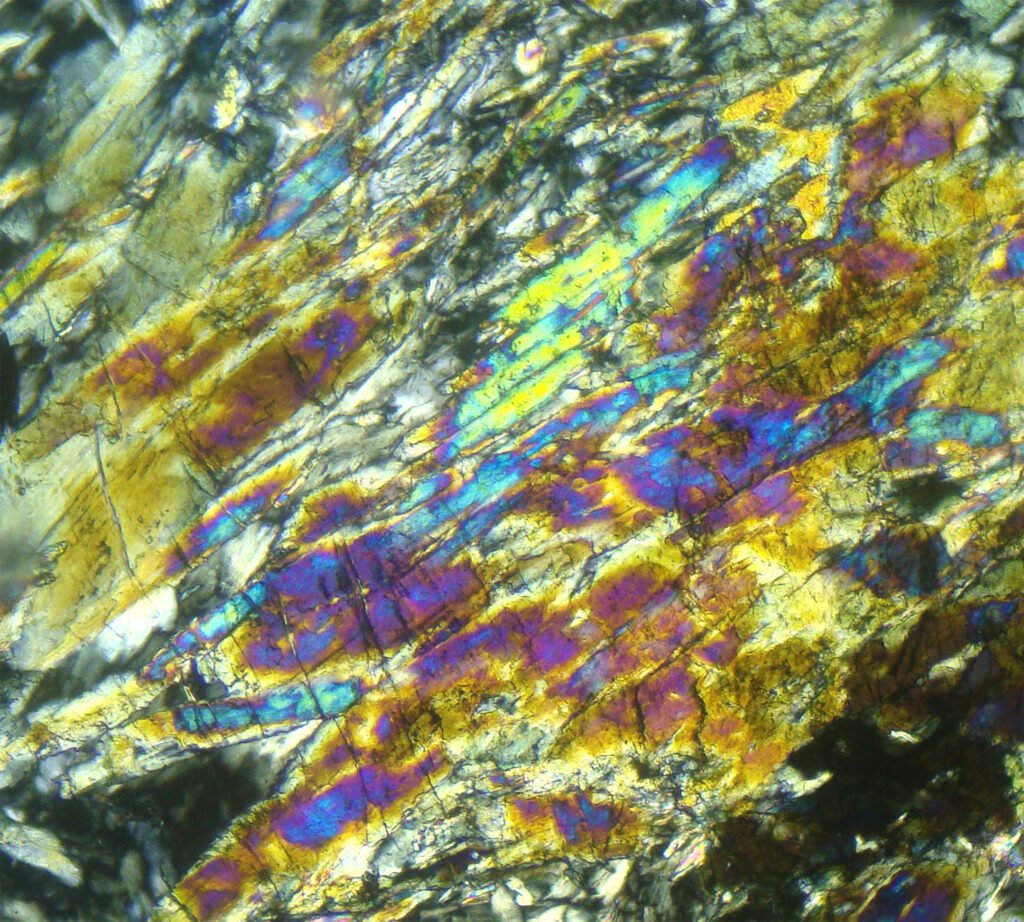
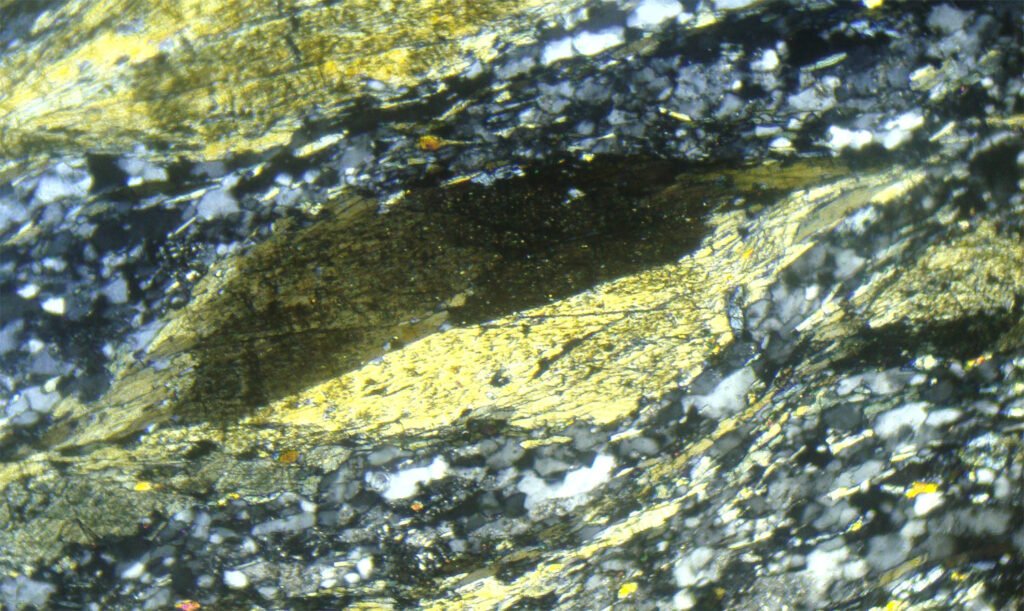
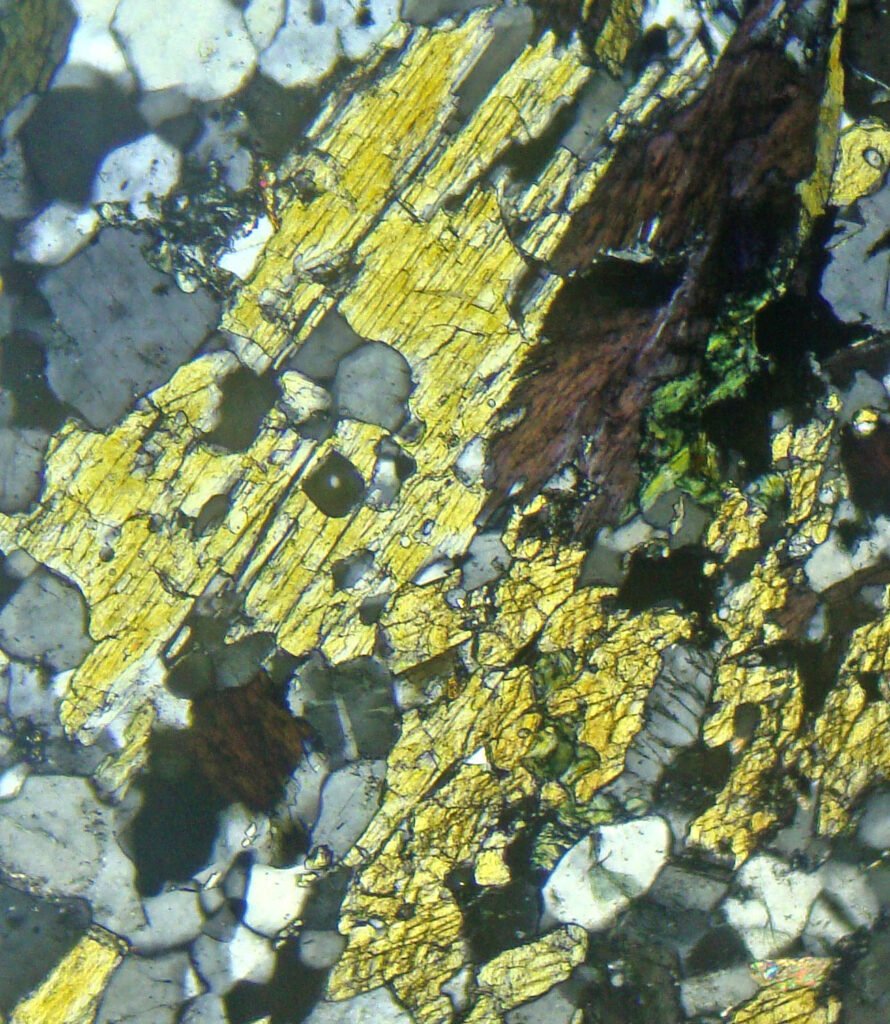
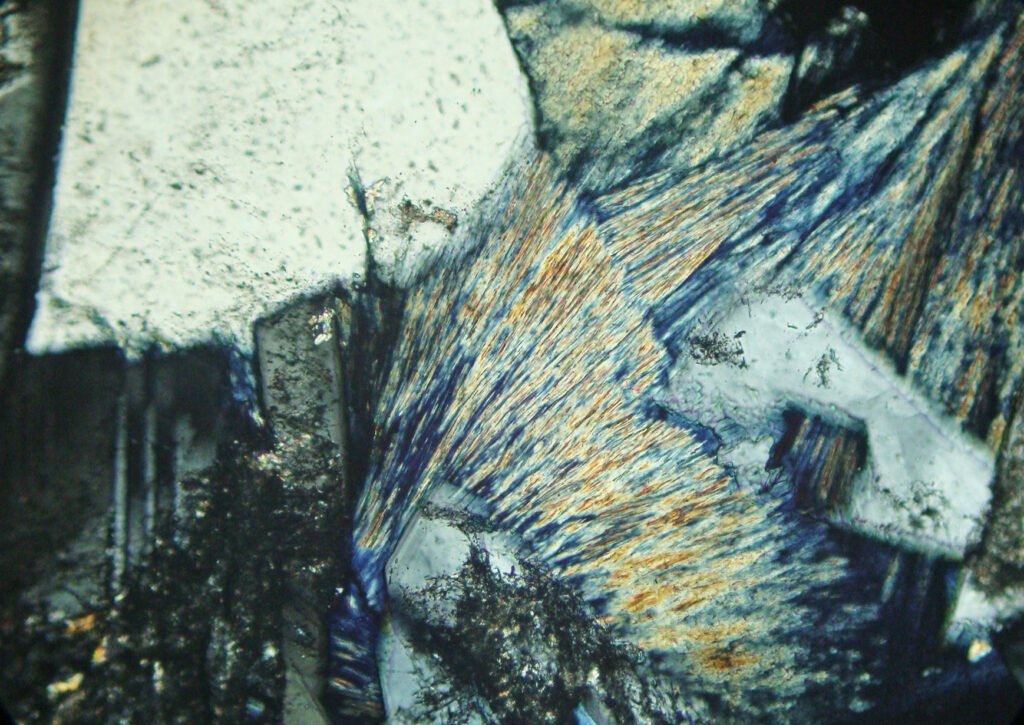
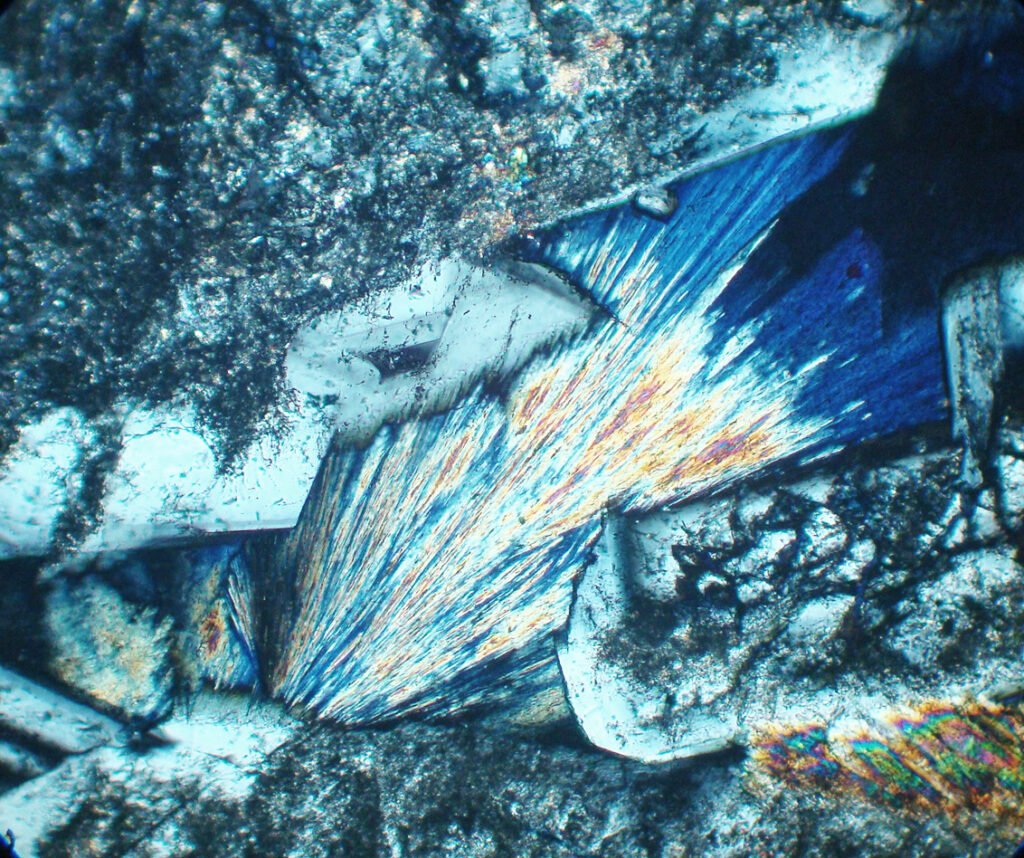
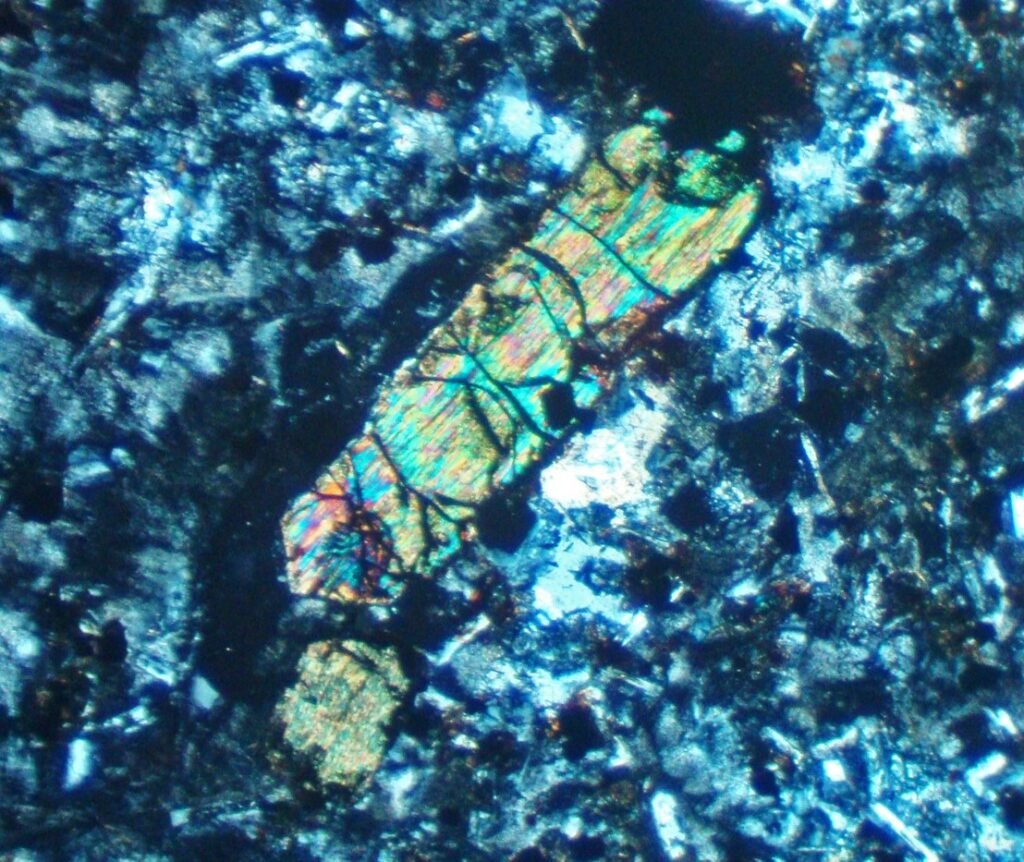
Birefringence and Interference Colors: Birefringence of 0.017 – 0.027: 1st order colors to colors of low 2nd order: grey, yellow, orange, red. They may be masked by the mineral’s own color. Color intensity decrease with increasing Fe content.
Extinction: Oblique, with an angle of 10 – 17º.
Elongation sign: ES(+).
Twins: They are relatively common, both simple and lamellar.
Zoning: Often zoned.
CONVERGENT LIGHT
Character: B(-)
2V angle: 65 – 86º
Alterations: actinolite alters to talc, chlorite and calcite.
May be confused with: some other minerals, but the pleochroism and the cleavage are very diagnostic.
Tremolite is very similar, but it is colorless and does not show pleochroism.
Green hornblende is very similar, but have a stronger colors and stronger pleochroism. Actinolite never shows brown colors like hornblende.
Arfvedsonite have much stronger (darker) colors in PPL and always with blue tones.
Orthorhombic amphiboles (antophyllite, holmquistite, ferrogedrite, etc.) show parallel extinction.
Cummingtonite is very similar but tends to have a positive optical signal and has a higher refractive index. In addition, cummingtonite often has very fine lamellar twins.
Wollastonite is similar but has nearly parallel extinction, a smaller 2V angle and occur in other paragenesis.