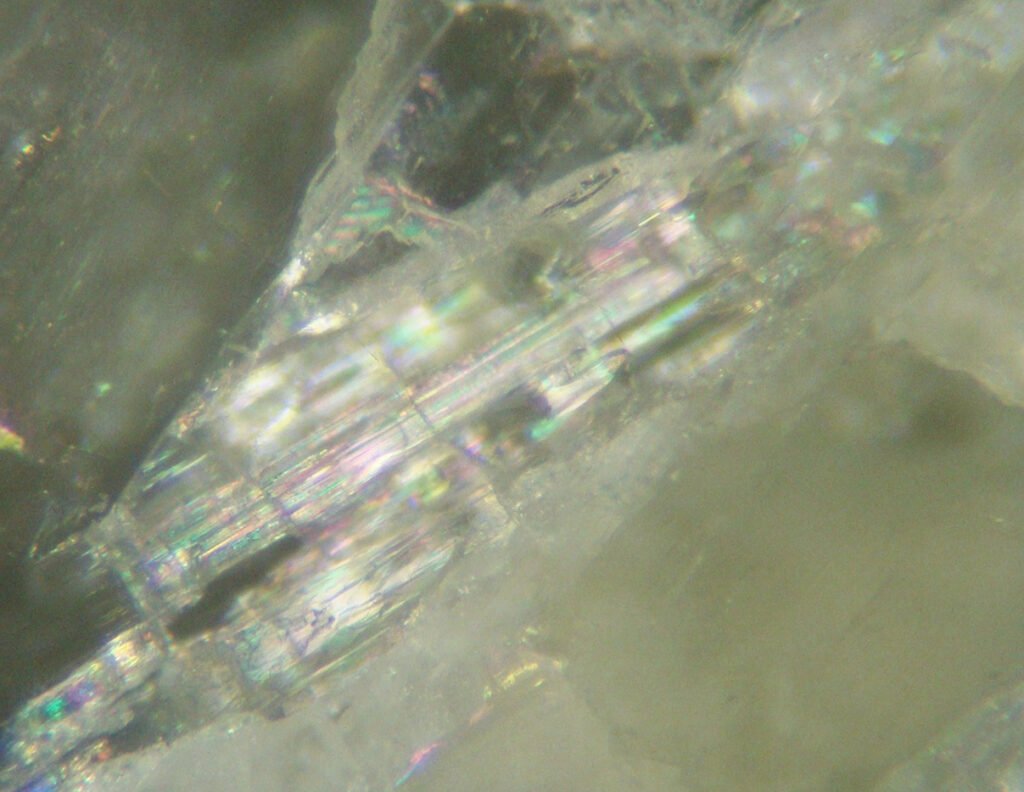
1. Characteristics
Crystal system: Monoclinic prismatic.
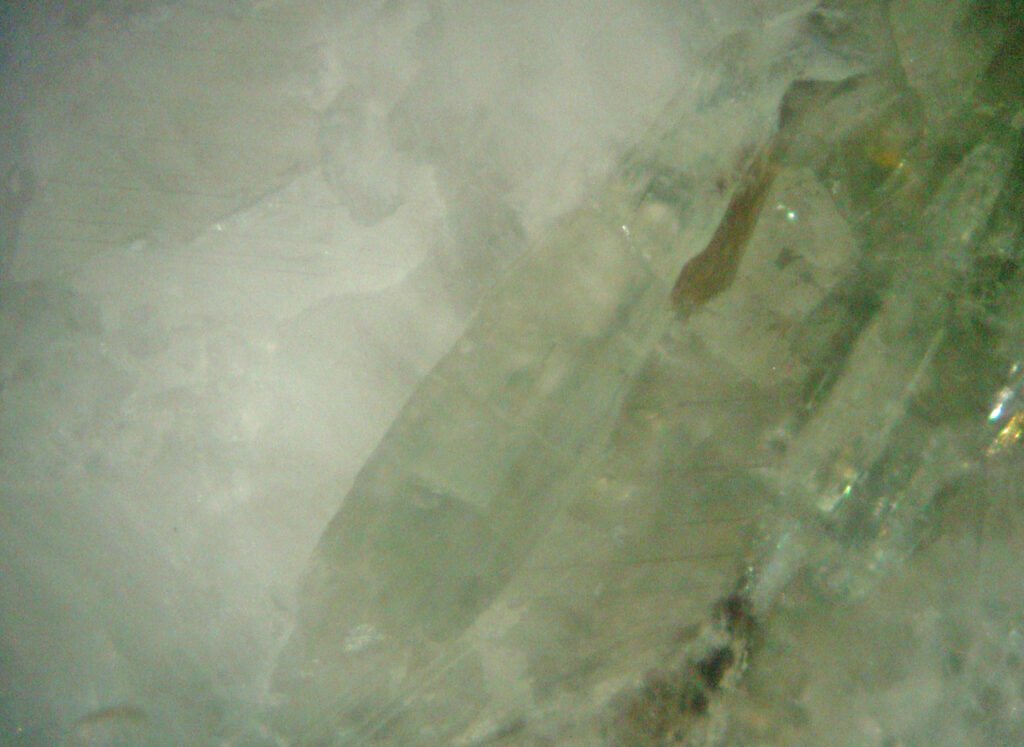
Color: Usually colorless, white or with pale colors (green, yellow). It can be brown, grey, green, pink-violet.
Habit: Long to short prismatic, acicular, fibrous, capillary, granular.
Cleavage: {110} perfect, as other amphiboles.
Tenacity: Splintery.
Twinning: Common, // to {100}, single or multiple.
Fracture: Fibrous.
Mohs Hardness: 5 – 6
Parting: On {010} and {100}.
Streak: White.
Lustre: Vitreous, silky.
Diaphaneity: Transparent.
Density (g/cm³): 2.99 – 3.03
2. Geology and Deposits
Members of the Actinolite Group are restricted to low- and medium-grade metamorphic rocks. Tremolite is very common in limestones that have undergone contact metamorphism or regional metamorphism, such as marbles and skarns, where it can form large crystals. Any light colored amphibole in marbles is usually tremolite. In these cases it can be primary or, more frequently, a pseudomorph over diopside.
Tremolite also occurs in mafic and ultramafic rocks metamorphosed to greenschist facies, such as amphibolites and metabasalts, but in these rocks the dominant amphiboles are actinolite and other Fe-rich amphibole.
Tremolite and actinolite are common alteration products of pyroxene and amphibole, in this case known as uralite (uralitization).
3. Mineral Associations
Tremolite occurs with carbonates (calcite, dolomite) and diopside.
Also with quartz, serpentine, garnet, wollastonite, talc, olivine (forsterite), cummingtonite, scapolite, riebeckite, pyrite, epidote, winchite and magnetite.
4. Transmitted Light Microscopy
Refraction indices: nα: 1.599 – 1.688 nβ: 1.610 – 1.697 nγ: 1.620 – 1.705
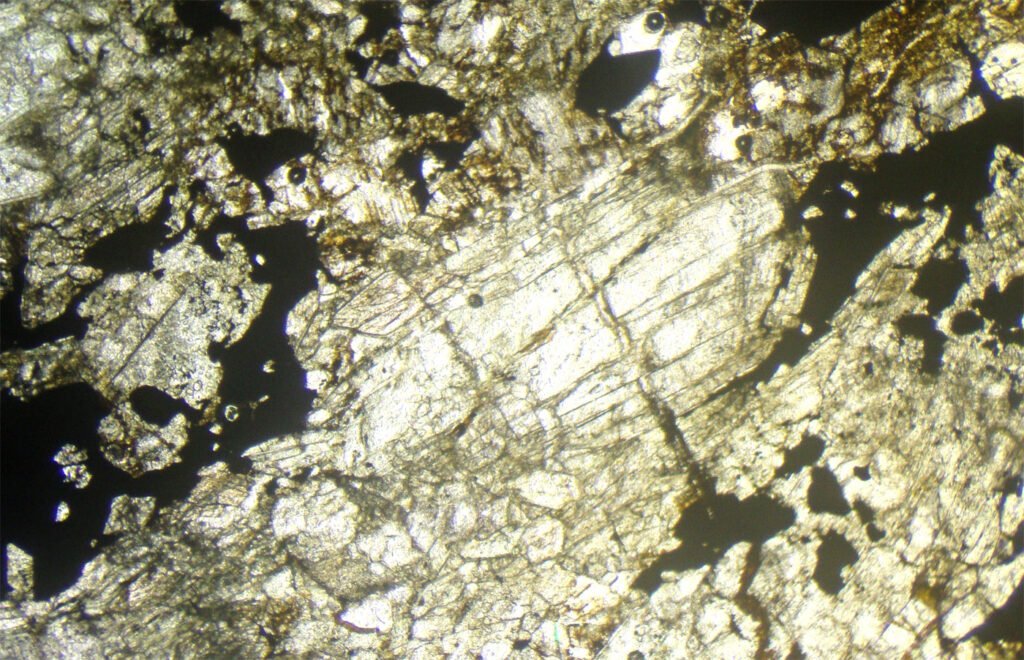
PLANE POLARIZED LIGHT – PPL
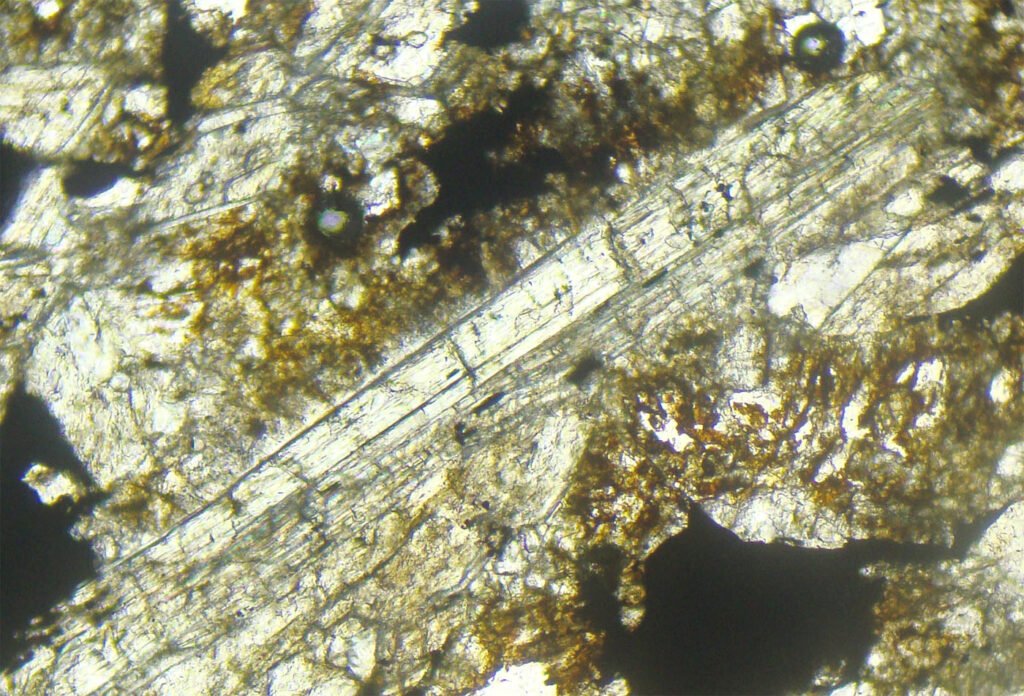
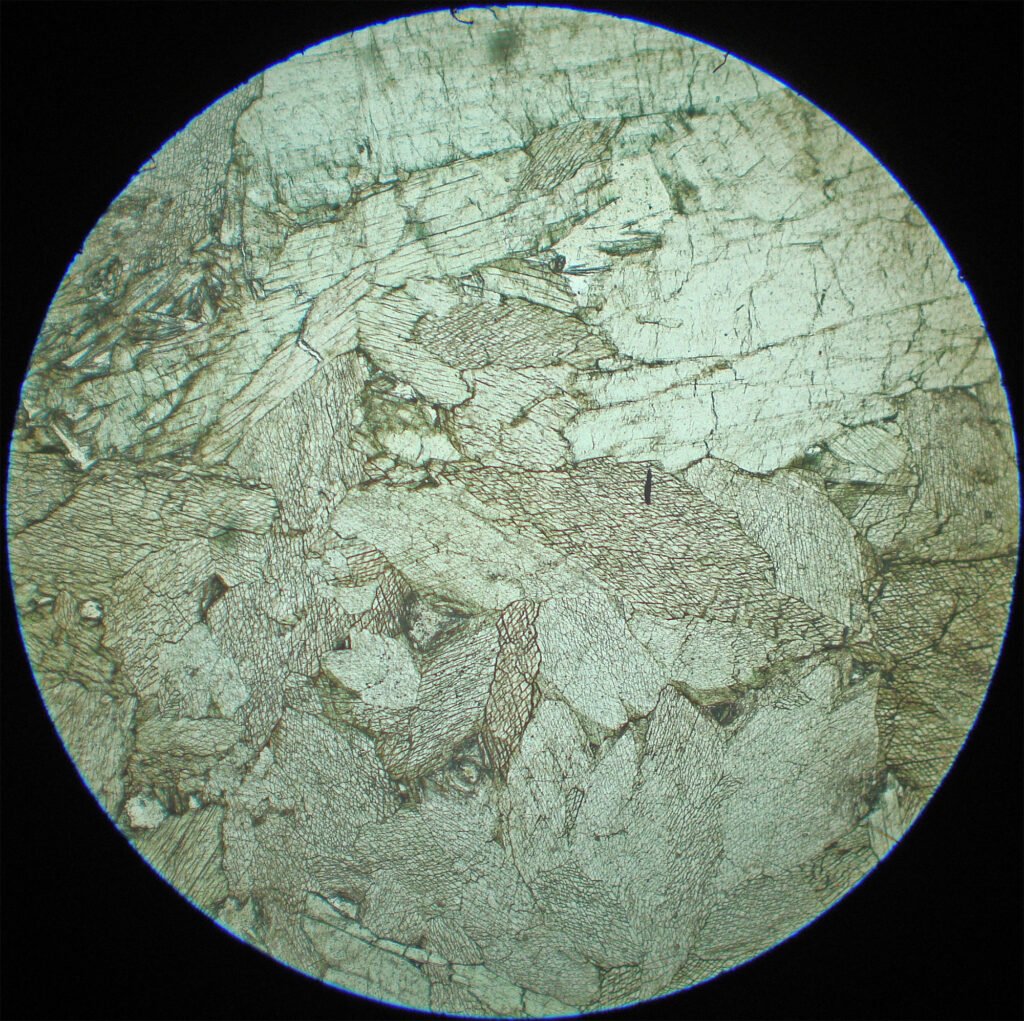
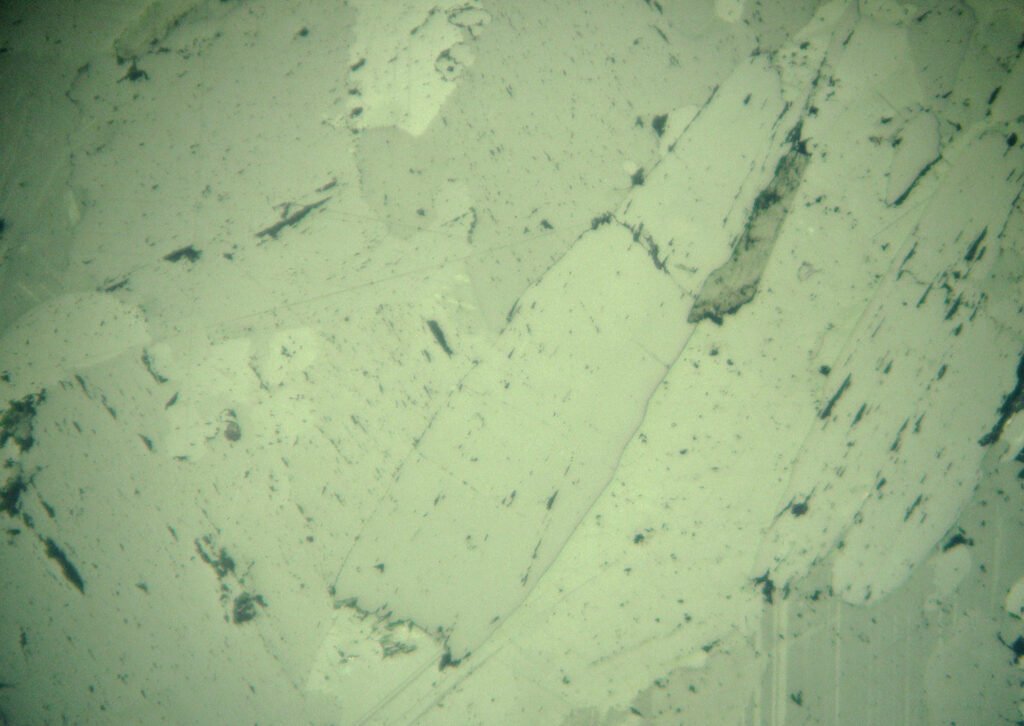
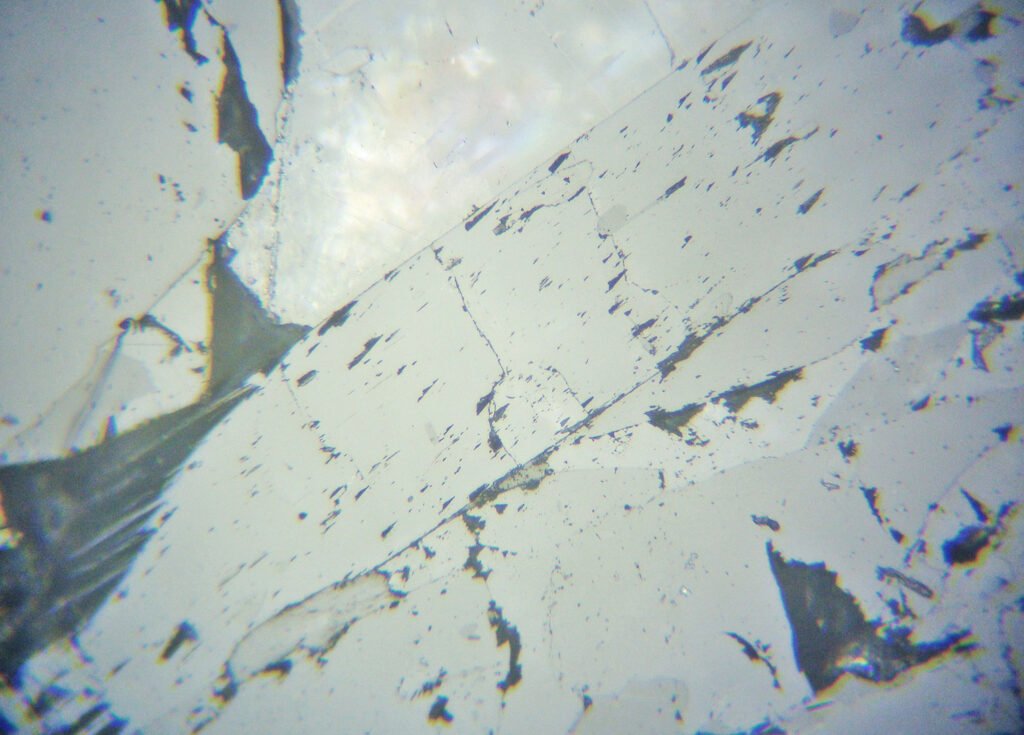
Color / Pleochroism: Colorless. Low Fe tremolite is the only colorless monoclinic amphibole.
As Fe contents increase, the color changes to light green and then to dark green, whereupon it exhibits weak pleochroism.
Relief: Moderate to high.
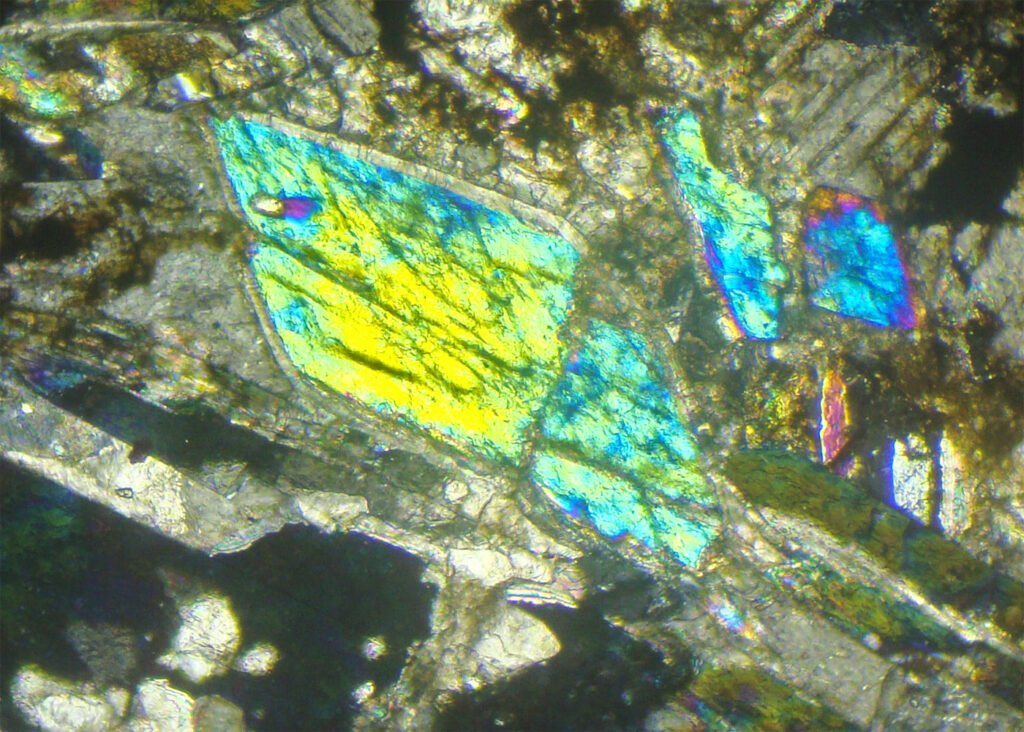
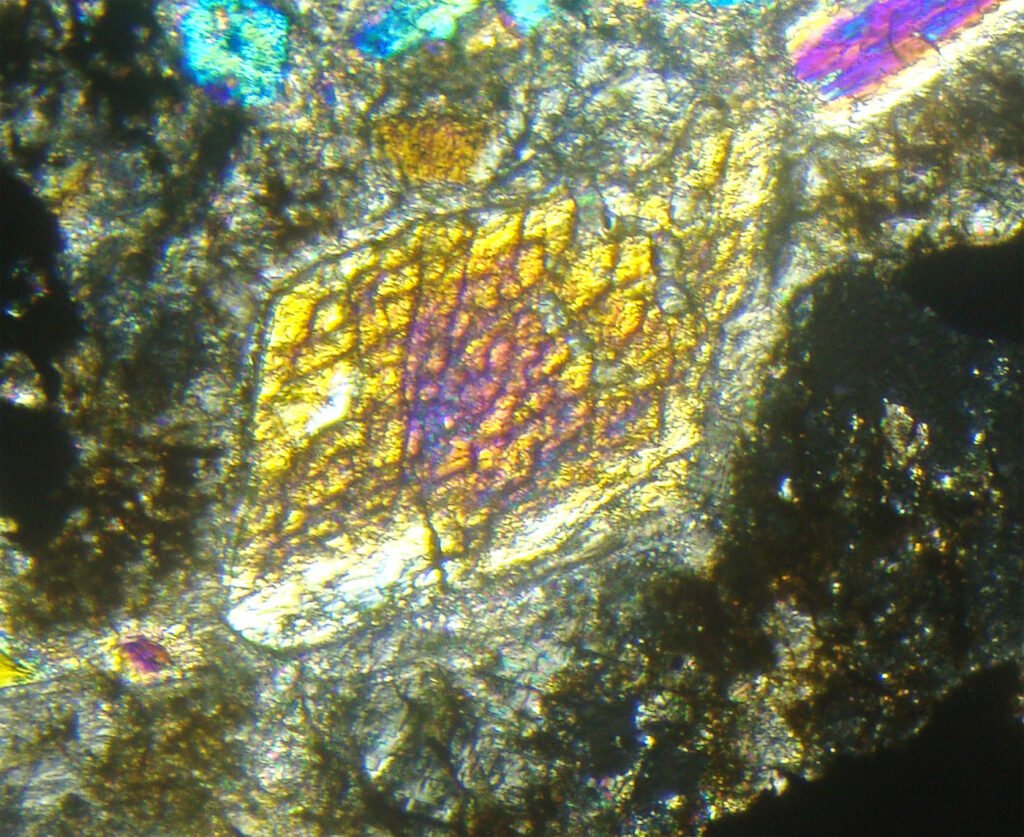
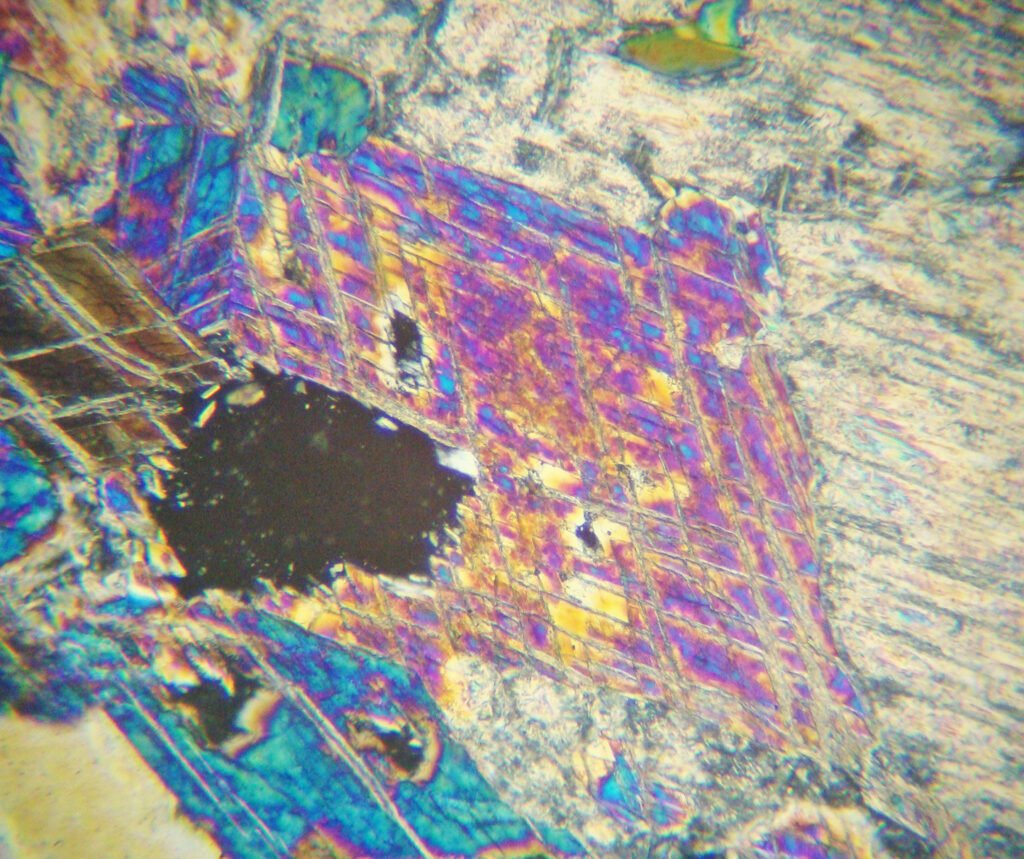
Cleavage: {110} perfect: in the basal sections, usually rhomb-shaped, there are two cleavages that intersect at 124º and 56º, typical of amphibole. In the longitudinal sections there is only one cleavage, parallel to the Z axis.
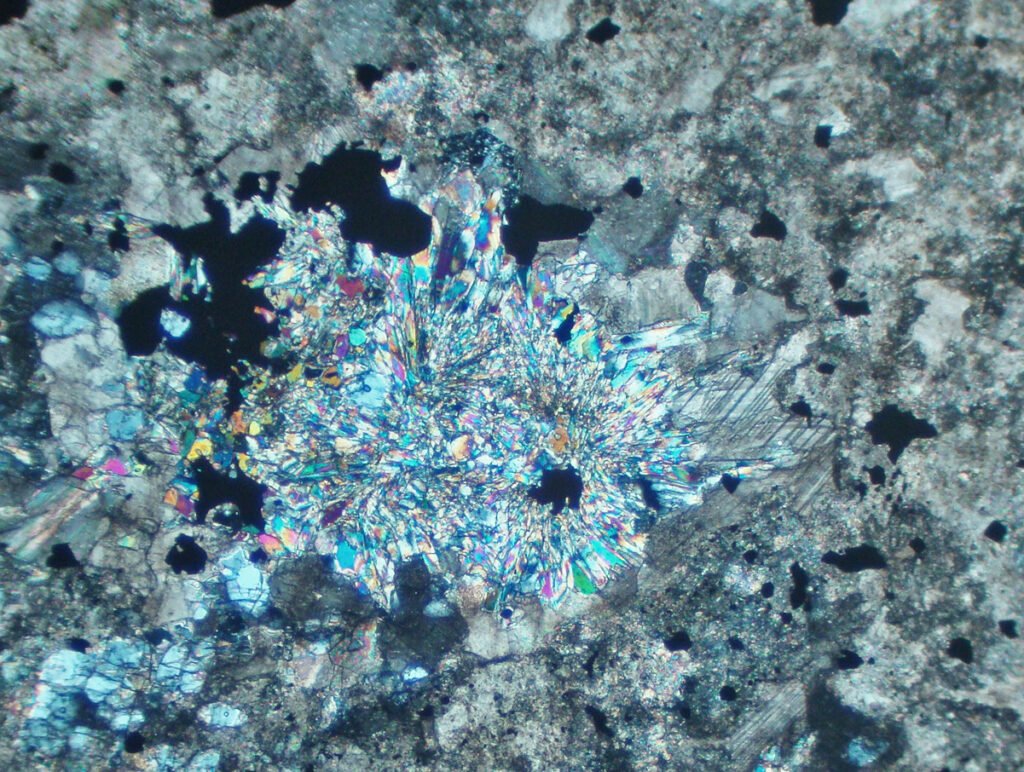
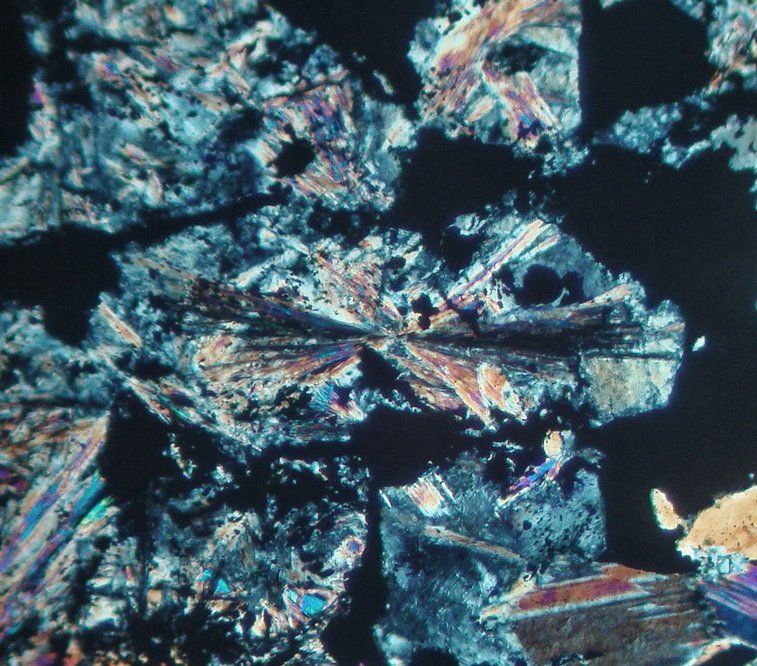
Habits: Long prismatic. They can be fibrous, tabular or acicular forming fibrous aggregates. Longitudinal sections tend to show rhombic outlines.
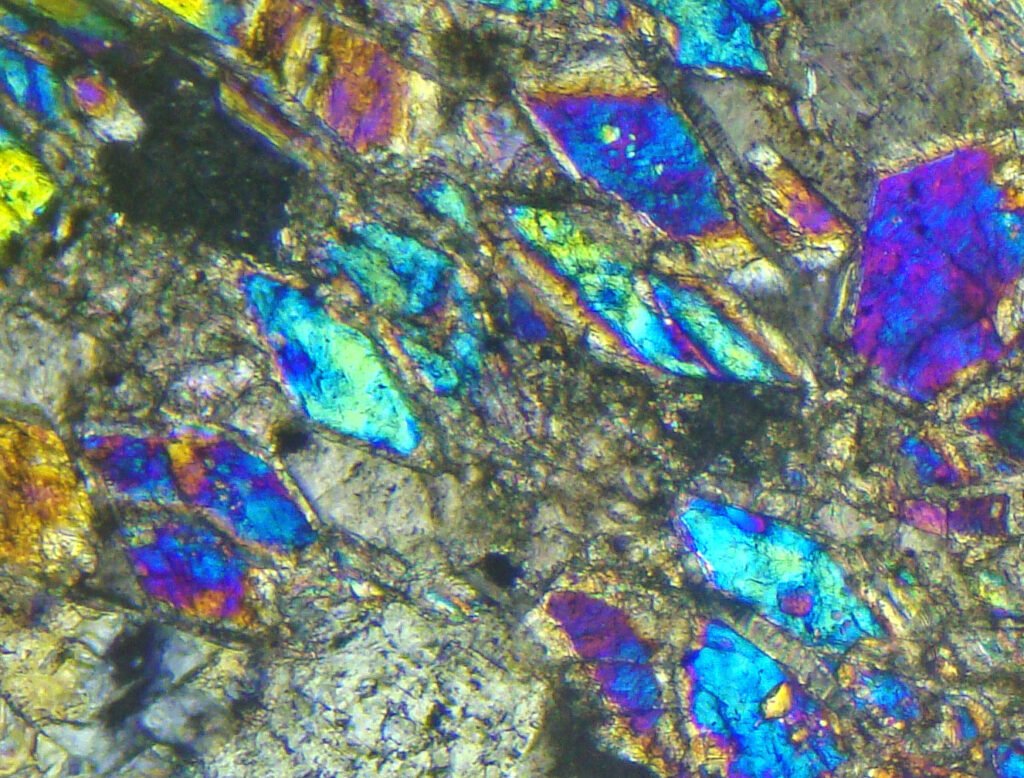
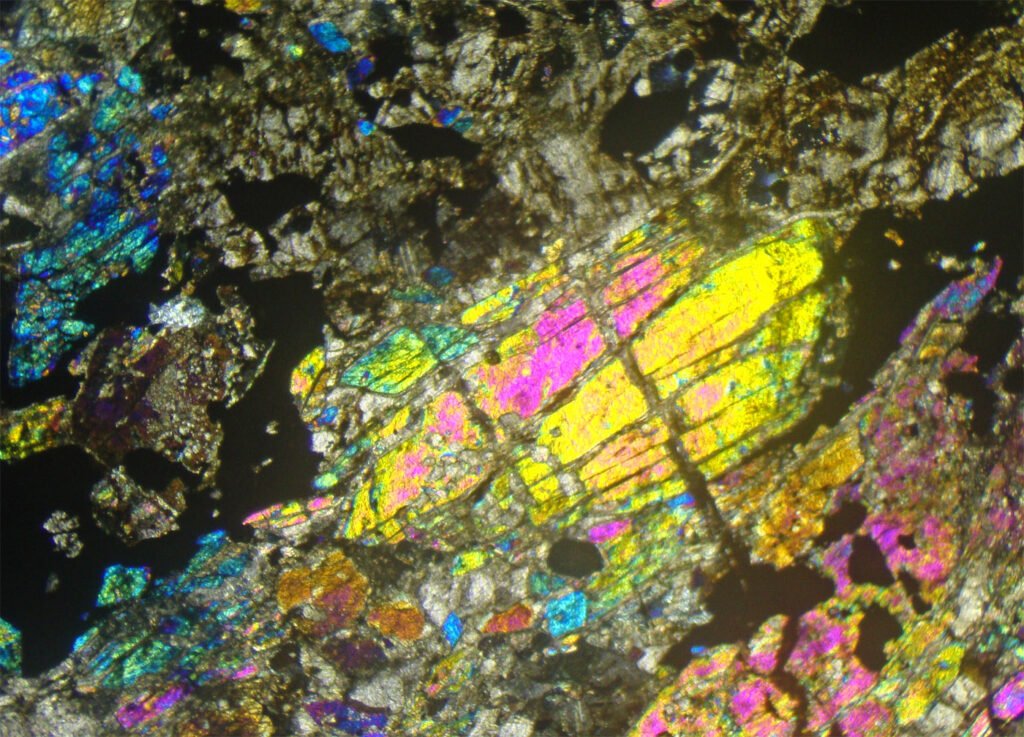
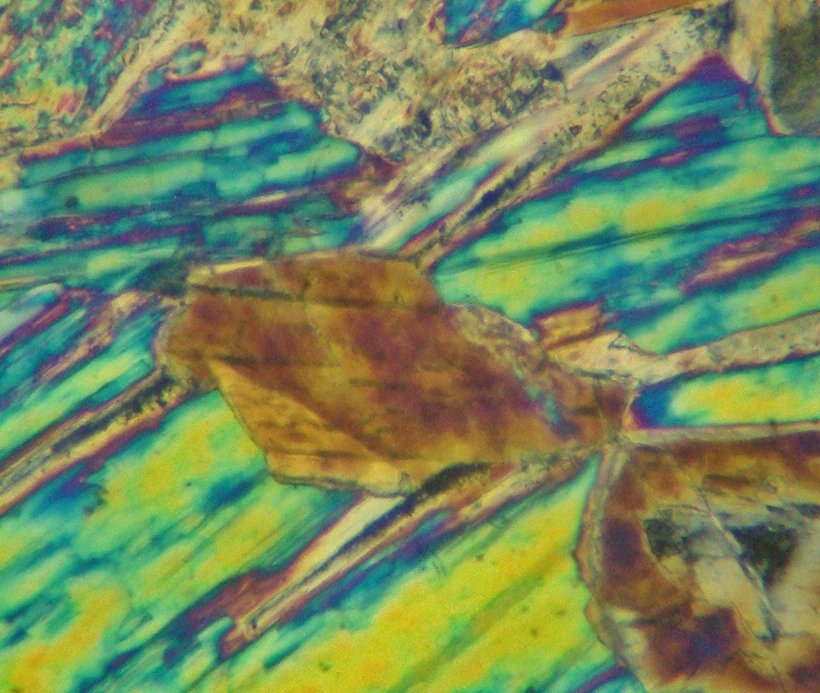
CROSSED POLARIZED LIGHT – XPL
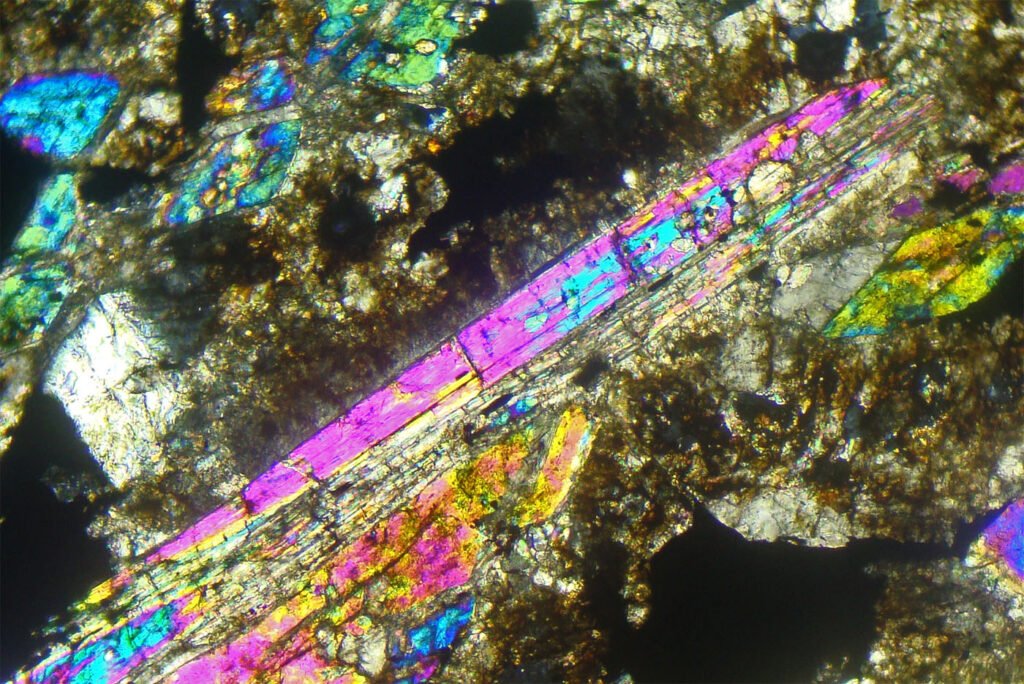
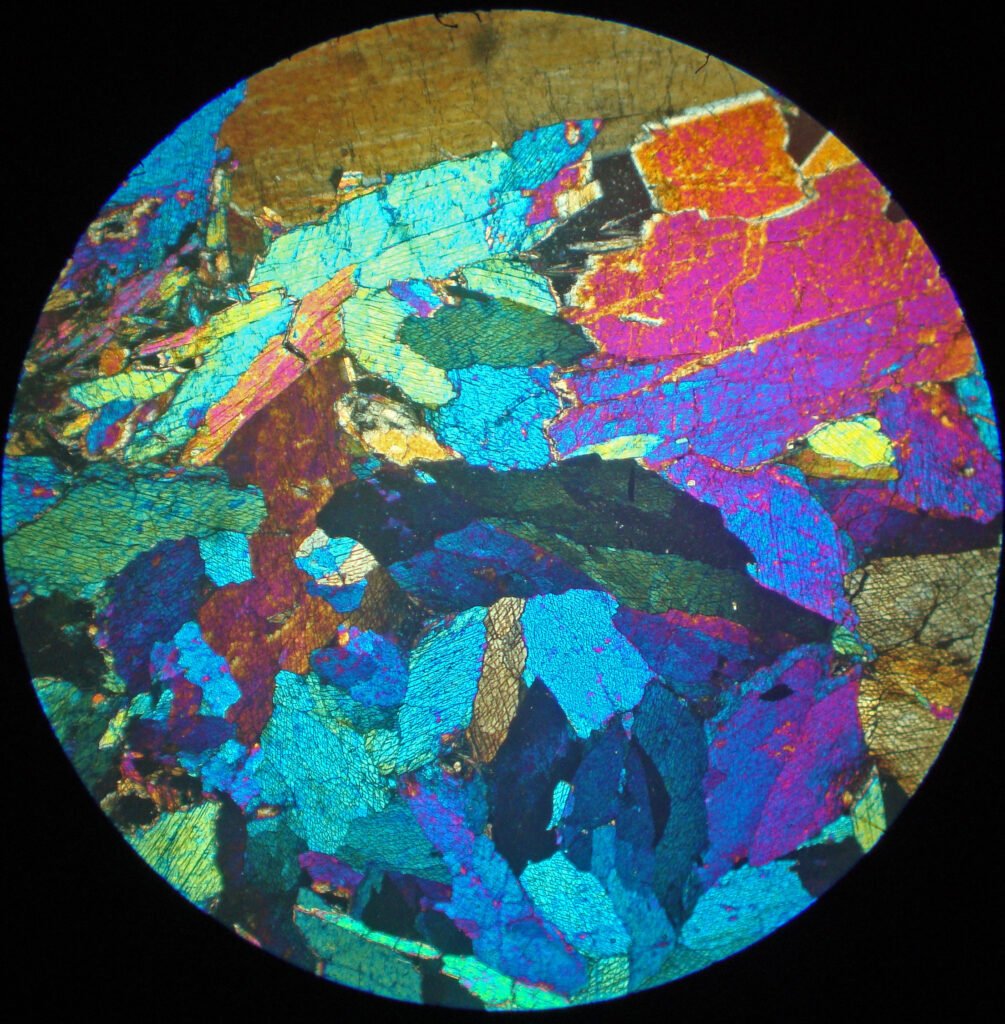
Birefringence and Interference Colors: Maximum birefringence of 0.026, corresponding to 2nd order interference colors: strong and intense colors in yellow, red, orange, blue.
Extinction: Longitudinal sections have oblique extinction with an angle of 10 to 15º. Basal sections have symmetric extinction.
Elongation sign: ES(+) (diagnostic!).
Twins: Simple and lamellar twins are common.
Zoning: No.
CONVERGENT LIGHT
Character: B(-).
2V angle: 80 – 88o
Alterations: Tremolite alters to talc, chlorite and calcite. Can be replaced with hornblende.
May be confused with: Tremolite differs from other monoclinic amphibole in being colorless.
Arfvedsonite and other sodic amphiboles show well-defined bluish colors.
Actinolite is very similar, but has pale green colors and pleochroism in PPL.
Cummingtonite in meta-igneous rocks may be very similar, but often has thin lamellar twins and is B(+).
Anthophyllite in serpentinites also may be very similar, but shows parallel extinction in the longitudinal sections and does not present twins.
Wollastonite is similar, but has different habits, almost parallel extinction in the longitudinal sections and a smaller 2V angle.