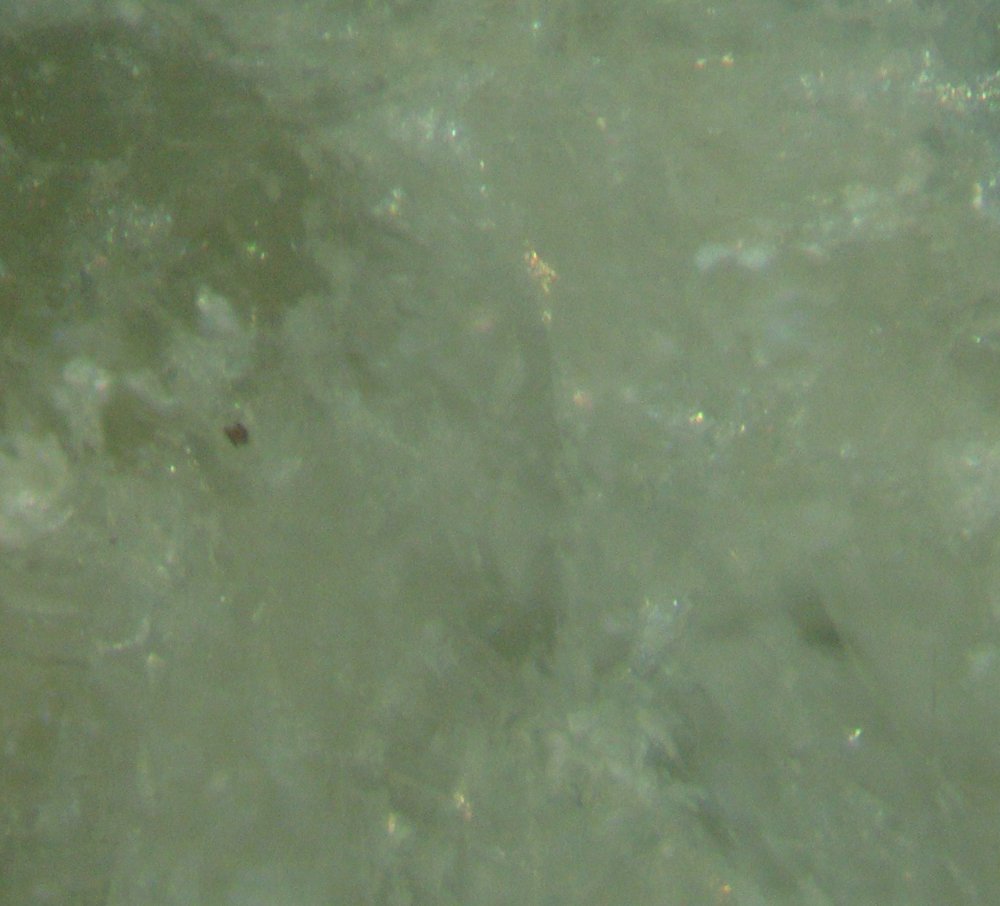
1. Characteristics
Crystal system: Tetragonal bipiramidal.
Color: Colorless, white, greenish, less commonly bluish, brownish, violet or yellowish.
Habit: Prismatic, acicular, granular, massive, poikilitic.
Cleavage: {100} distinct, {110} distinct.
Tenacity: Very brittle.
Twinning: No.
Fracture: Irregular, conchoidal.
Mohs Hardness: 5.5 – 6
Parting: On {001}
Streak: White.
Lustre: Vitreous, resinous.
Diaphaneity: Transparent.
Density (g/cm³): 2.5 – 2.62
2. Geology and Deposits
1) Very often scapolite occurs in limestone and contact metamorphic rocks (skarns), formed by the interaction between magmas and impure limestone rocks.
2) Also in mafic igneous rocks (gabbros, diabases, diorites) that have undergone metasomatism or secondary processes, forming scapolite from plagioclases (labradorite to anorthite).
3) It can occur in rocks of the scapolite-hornblende type formed from gabbros that have undergone pneumatolitic processes.
4) It occurs in metamorphic rocks such as gneisses, granulites, amphibolites and schists, which can be derived from igneous rocks or sedimentary rocks.
5) Occasionally occurs in pyroclastic rocks (tephra), in blocks ejected by volcanoes, as a contact pneumatolytic mineral.
6) It rarely occurs in granites, pegmatites and nepheline-syenites.
3. Mineral Associations
1) In skarns and related contact metamorphism rocks (rodingites) it is associated with calcite, diopside, epidote, vesuvianite, phlogopite, garnet, tremolite, wollastonite, graphite, scheelite and pyrite.
2) In mafic igneous rocks it is associated with plagioclases, clinopyroxenes, magnetite and ilmenite.
3) In rocks of the scapolite-hornblende type, it is associated with green and brown (or zoned) hornblendes and fluorapatites, leaving no relics of the original plagioclases and clinopyroxenes.
4) In metamorphic rocks derived from igneous rocks, it is associated with pyroxenes, feldspars, titanite, Fe oxides, quartz, rutile, green hornblende, biotite and sometimes garnet. In rocks derived from sedimentary rocks, it is associated with calcite, wollastonite, diopside, biotite, quartz and alkali feldspar.
5) In pyroclastic rocks occurs with anorthite, nepheline, garnet (melanite) and wollastonite.
4. Transmitted Light Microscopy
Refraction indices: nω: 1,539 – 1,550 nε: 1,532 – 1,541
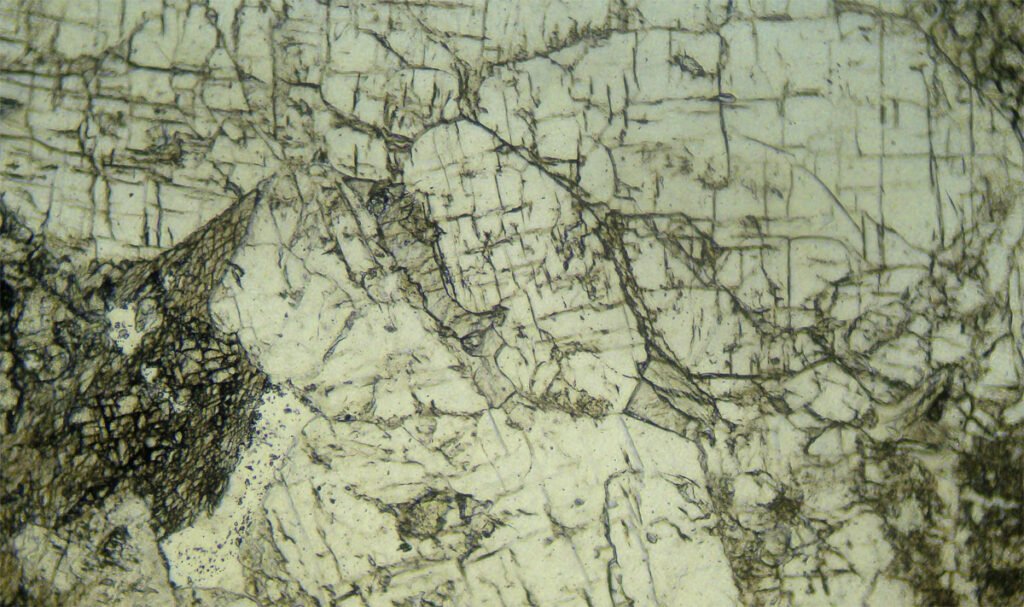
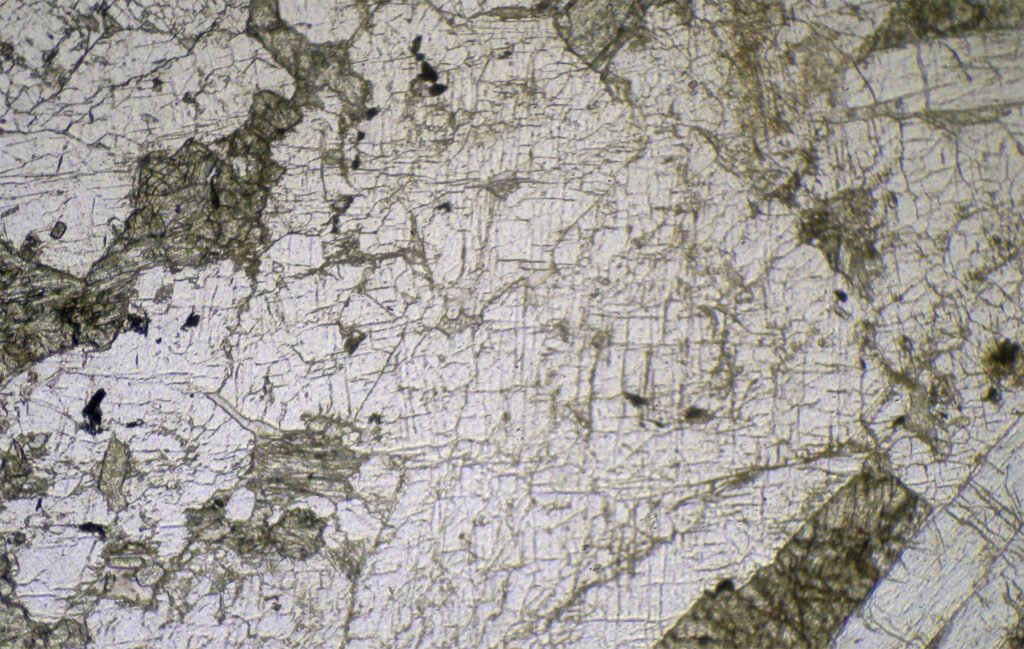
PLANE POLARIZED LIGHT – PPL
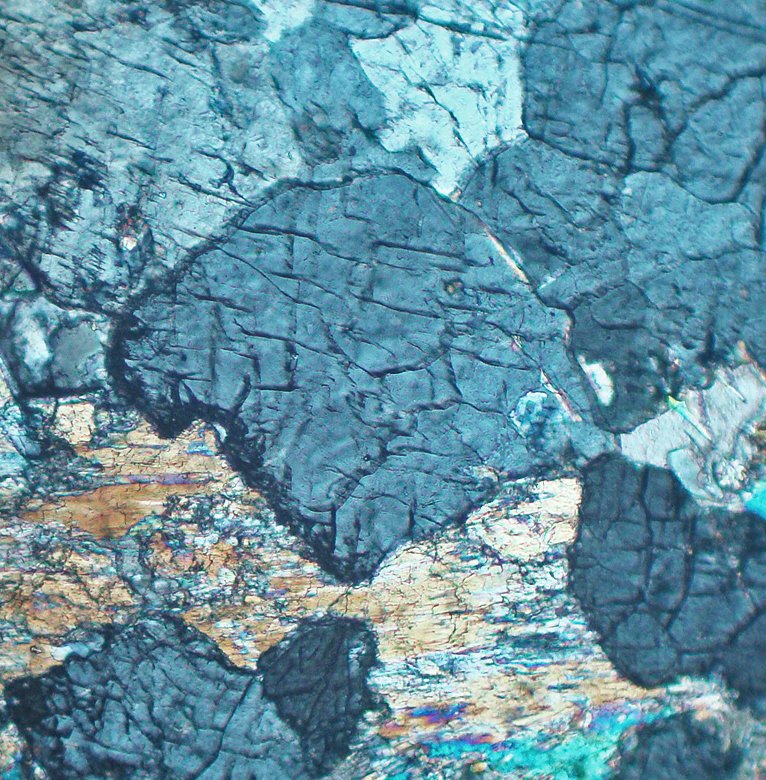
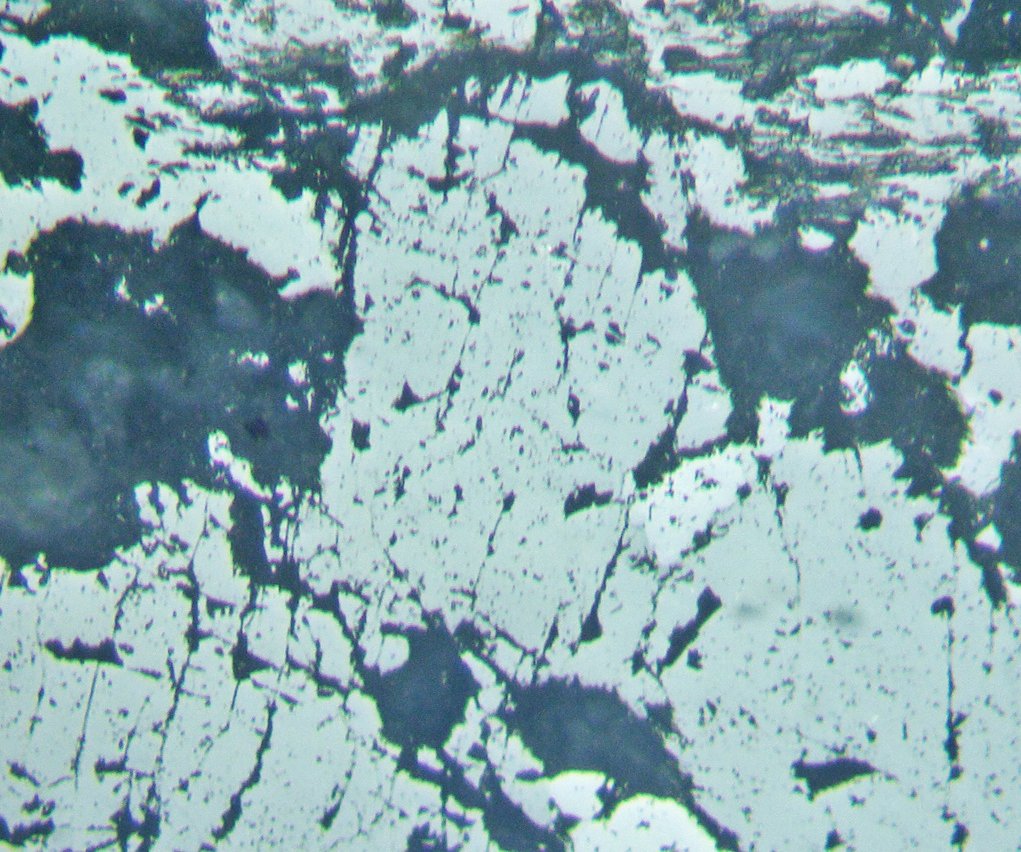
Color / Pleochroism: Colorless, very rarely pale yellow or violet, with weak pleochroism. Inclusions often turn the crystal cloudy.
Relief: Low to moderate.
Cleavage: {100} good and {110} distinct. In basal sections the cleavages intersect at 90º. Columnar crystals are partitioned at {001}.
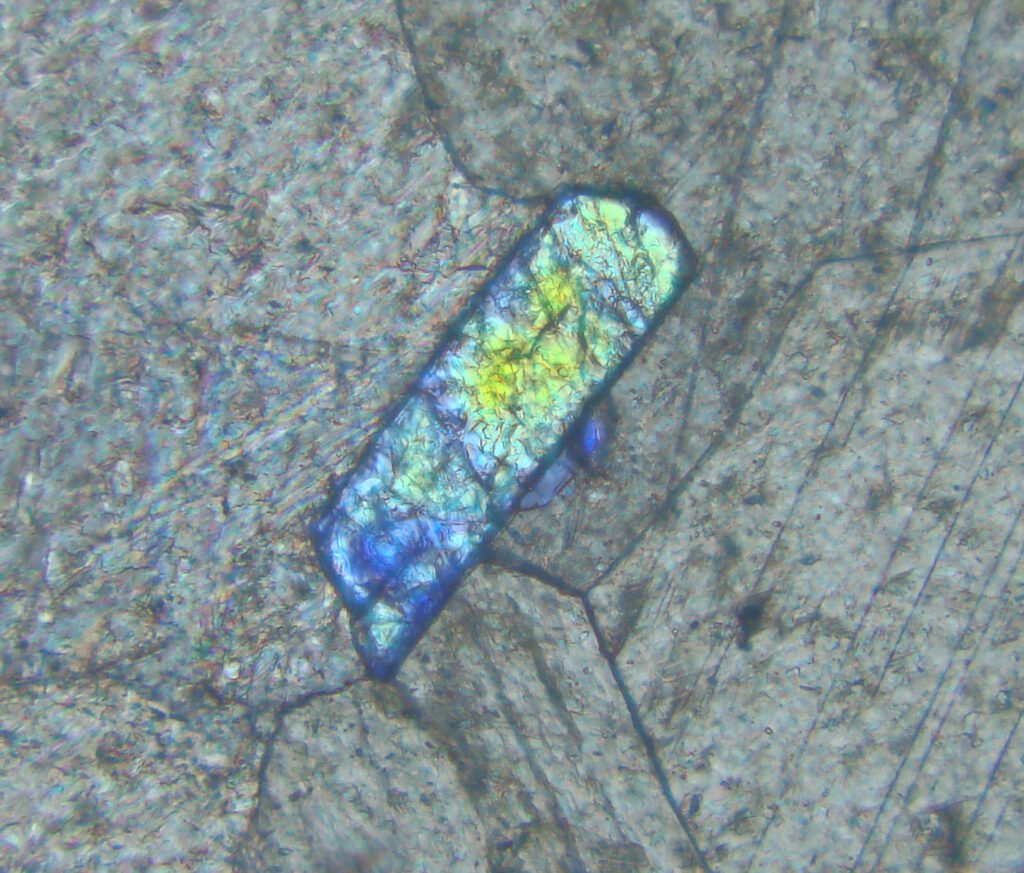
Habits: Prismatic according to z, more rarely acicular, columnar, may form granular aggregates, may be poikilitic.
Typically contains poikiloblastic inclusions such as quartz, calcite and feldspar; fluid inclusions may occur.
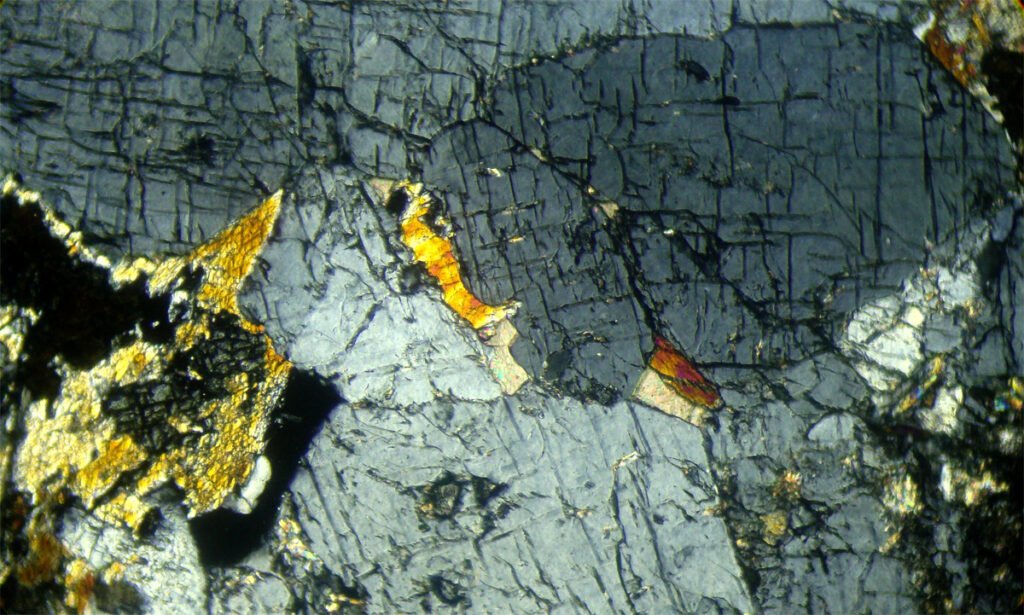
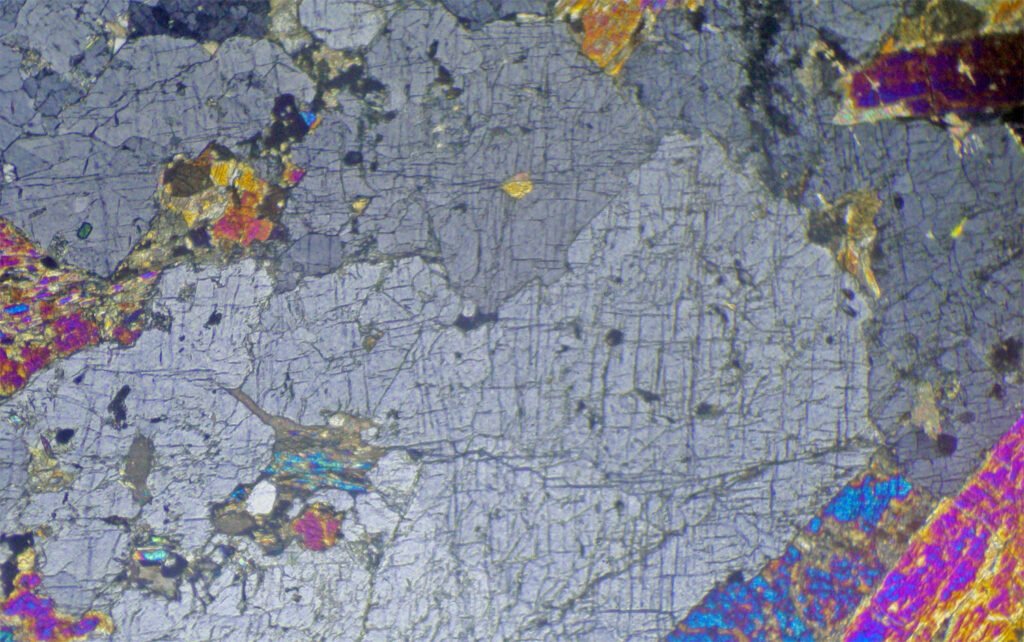
CROSSED POLARIZED LIGHT – XPL
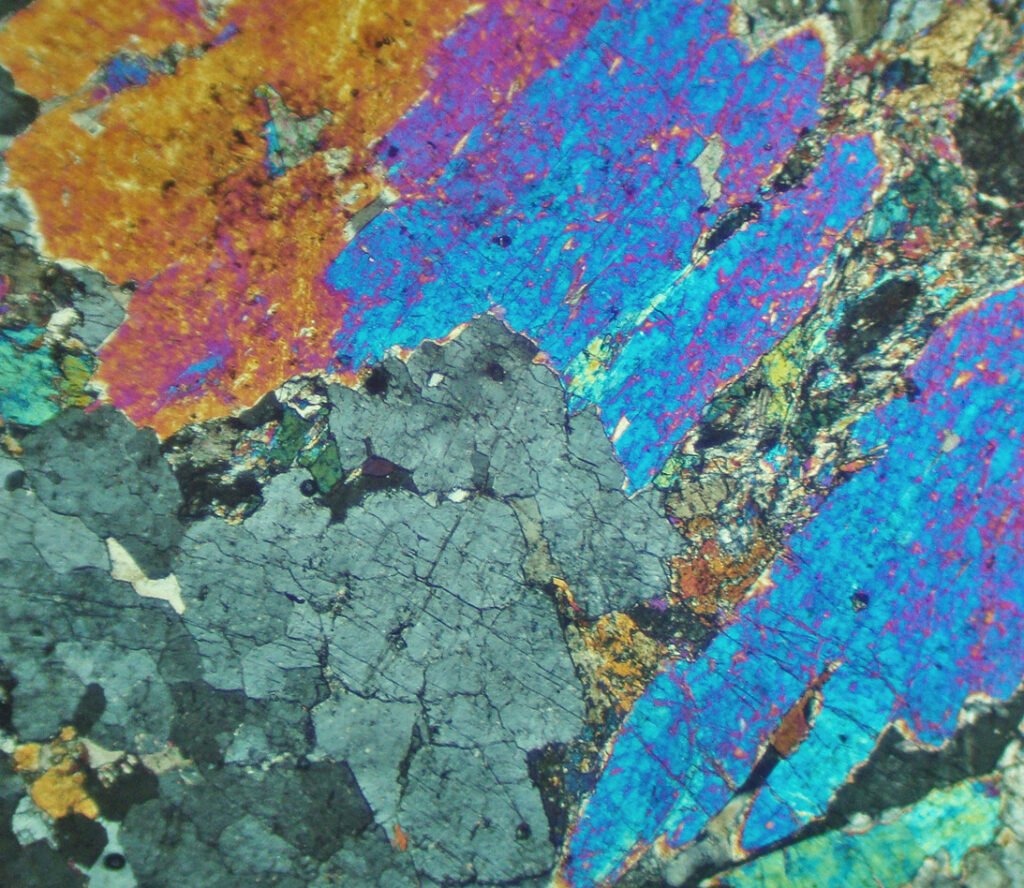
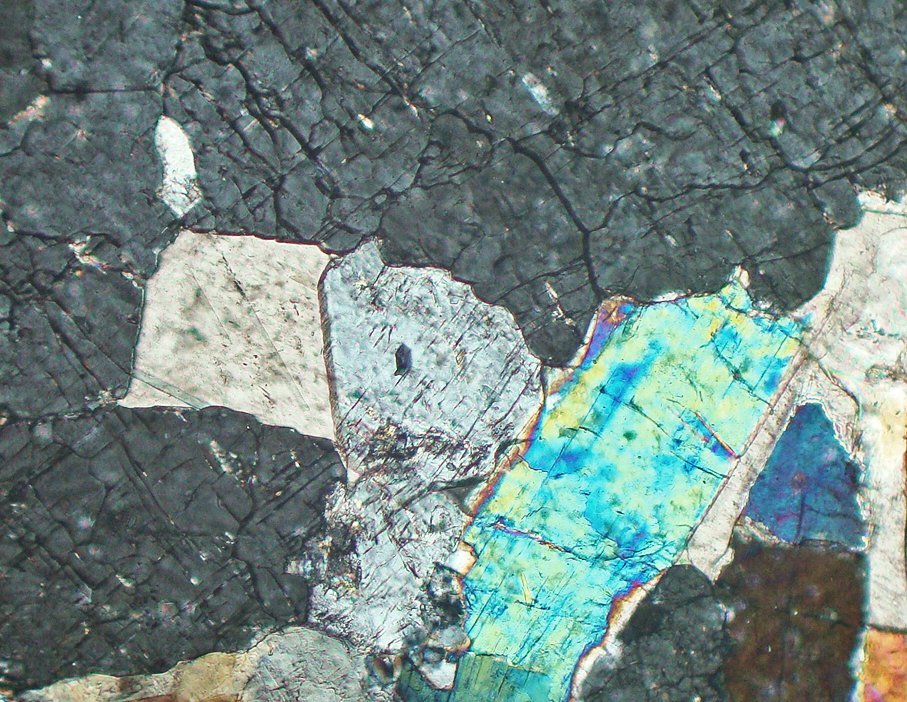
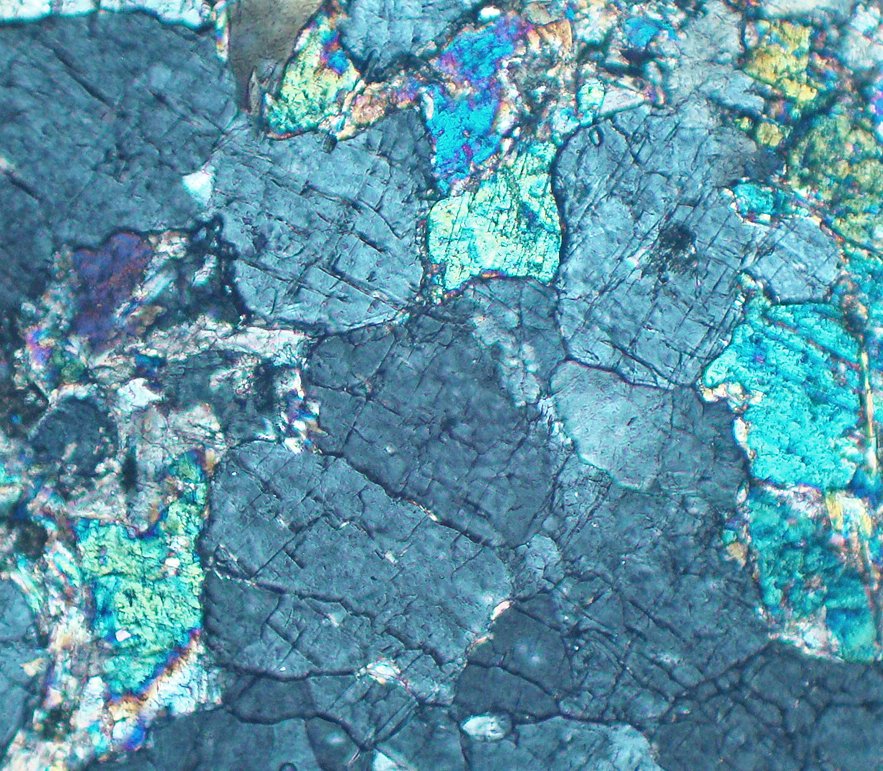
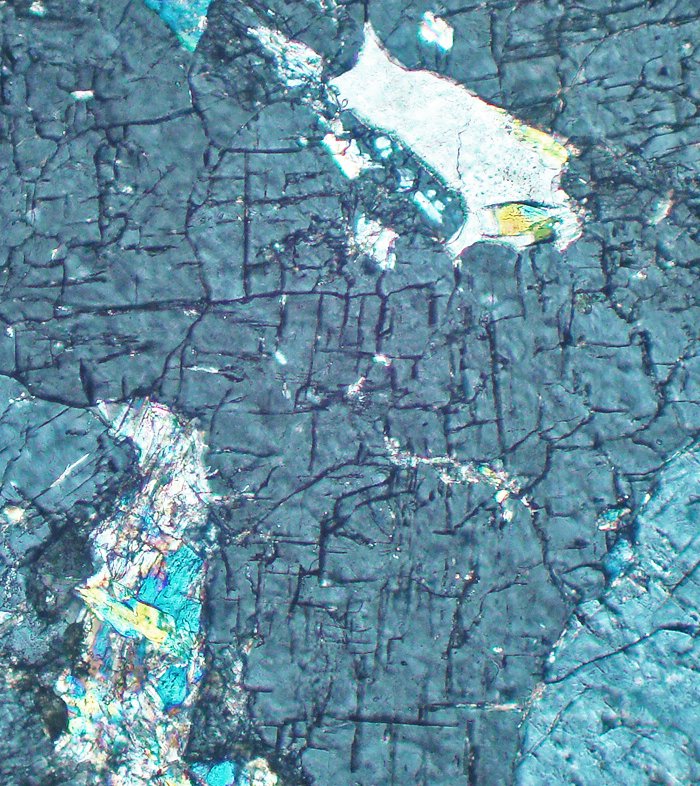
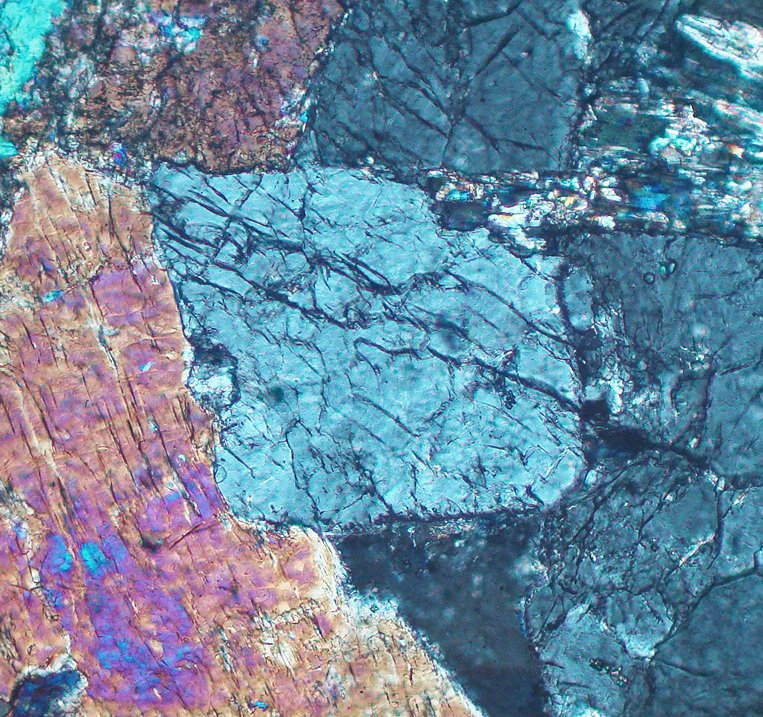
Birefringence and Interference Colors: Marialite 0.004 – 0.005; meionite 0.034 – 0.038: 1st and 2nd order interference colors up to light violet at most.
The sodic terms (marialite) have colors between dark gray and white (first order), while the calcic terms (meionite) have stronger colors, up to the 2nd order.
Extinction: Parallel, in granular aggregates it is not possible to determine.
Elongation sign: ES(-).
Twins: No.
Zoning: May be zoned.
CONVERGENT LIGHT
Character: U(-)
2V angle: May have anomalous 2V angle from 0 to 10º.
Alterations: scapolite can undergo several types of alteration.
1) Hydrothermal alteration generates different zeolites (chabazite, stilbite, analcime, etc).
2) Can also change to calcite, prehnite and epidote.
3) Another possible change is to pinnite, a mixture of micas (usually muscovite) and clays.
4) Weathering leads to alteration to kaolinite.
May be confused with: several other minerals with low relief and low interference colors.
Feldspars have twins, oblique extinction and are biaxial.
Apatite can be very similar, but show lower interference colors.
Quartz has no cleavage, does not change, has lower birefringence, and is U(+).
Feldspathoids have lower relief and other habits.
Nepheline and cancrinite occur in other paragenesis and have different habits.
Cordierite, andalusite and wollastonite are biaxial.