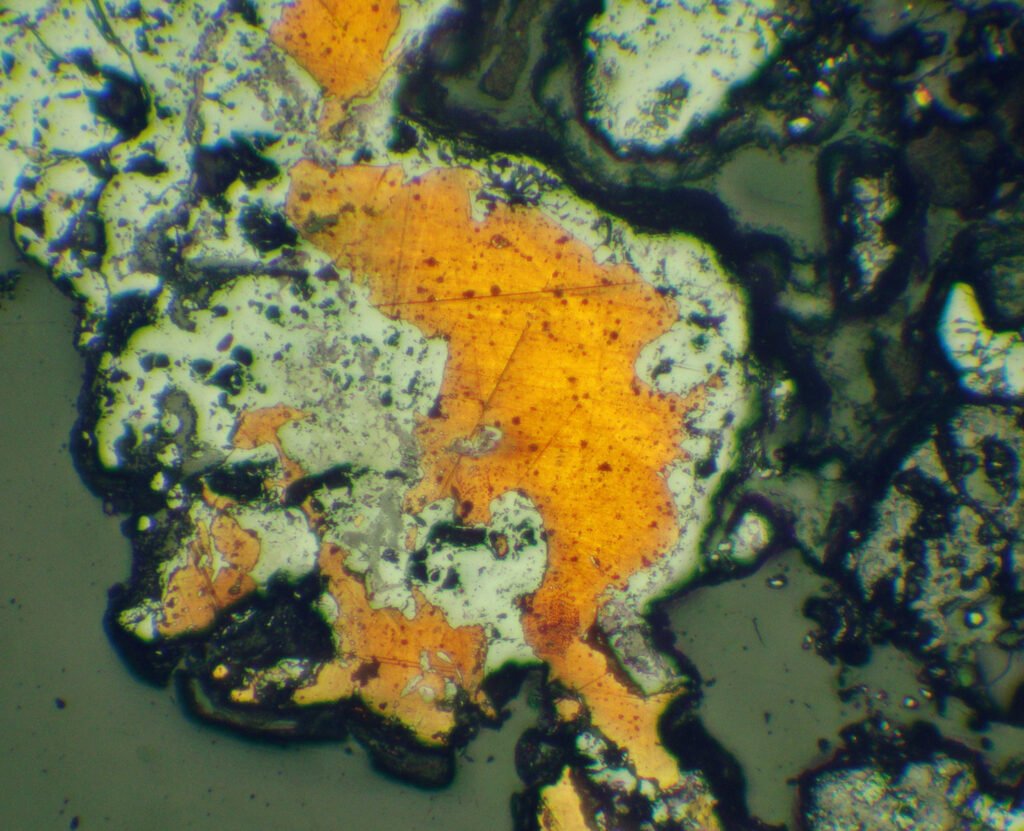
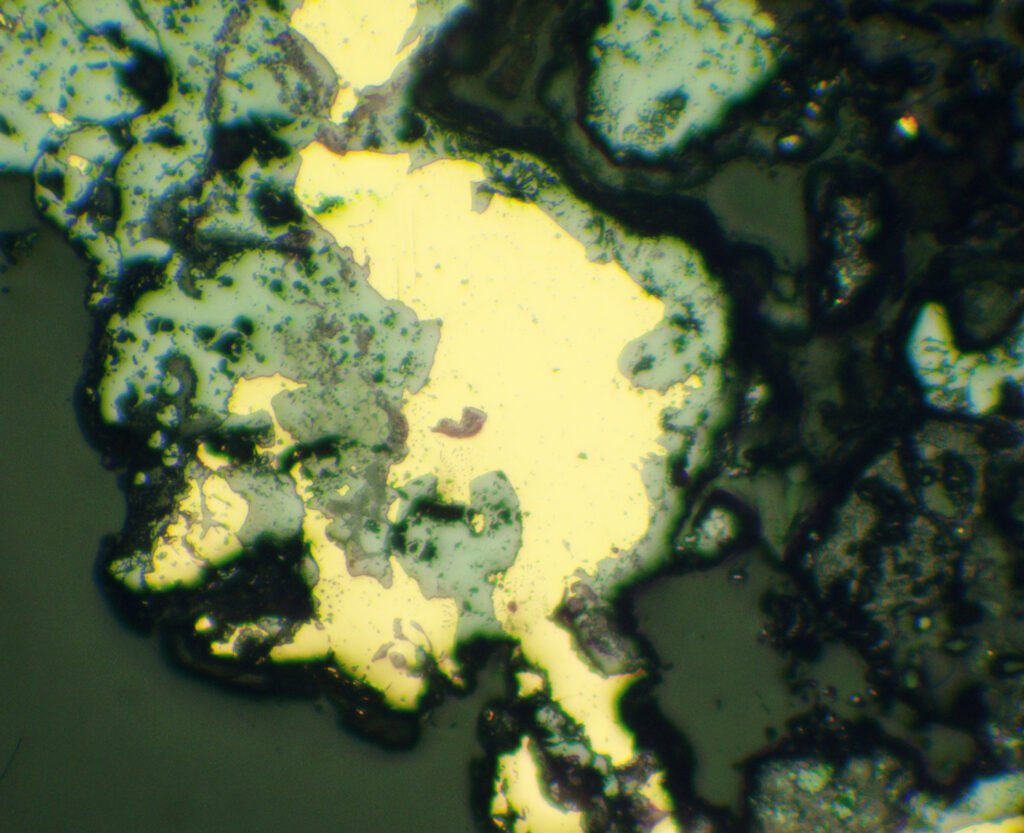
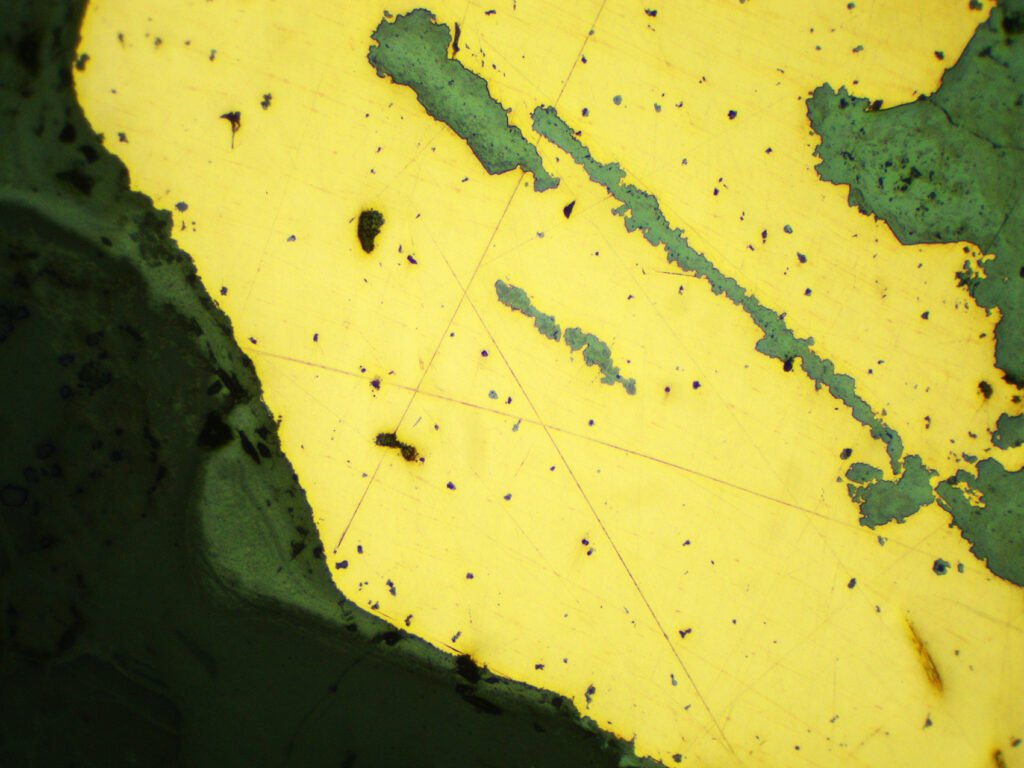
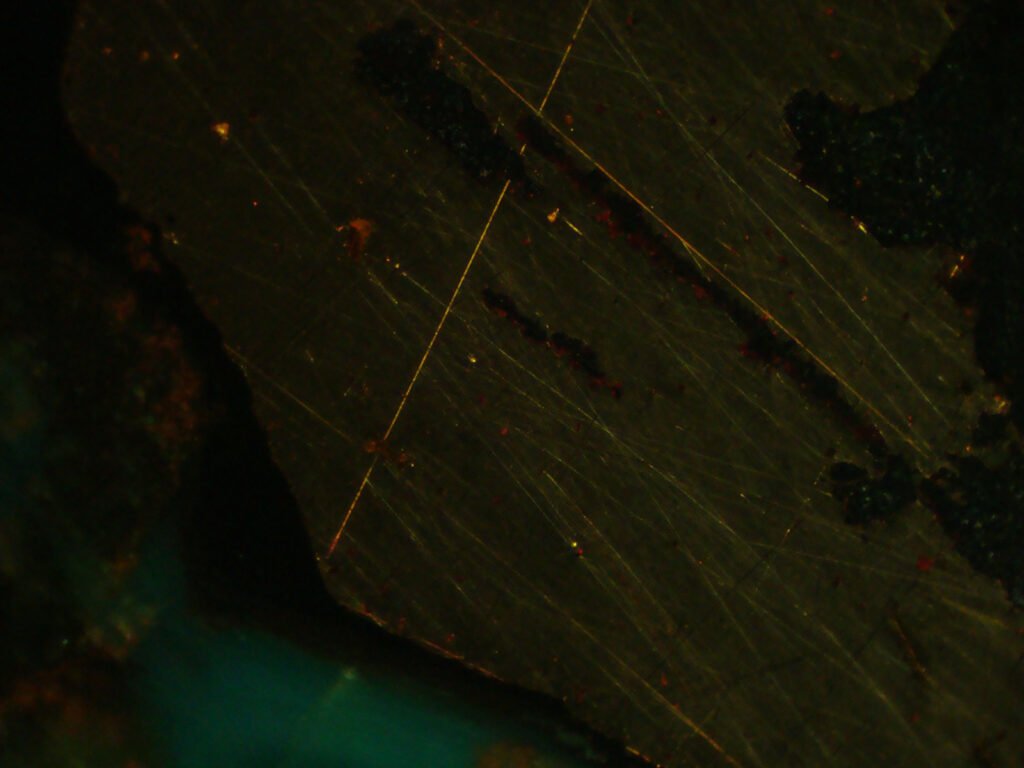
Copper – Cu – is a relatively common native element, which was locally a very important copper ore, as in Keeweenaw (Michigan, USA). Aggregates with crystalline forms reach prices in the market of collect minerals much higher than the price of the contained metal.
Copper typically forms dendritic aggregates, lamellae, plates, vanes, wires and nuggets. Crystals are rare and present much distorted forms, difficult to interpret: cubes, dodecahedrons and tetrahexahedrons, more rarely octahedrons. The largest crystal ever found was just 4.4 x 3.2 x 3.2 cm, but copper can form masses hundreds of tons in weight. The color in fresh fracture or cut is a soft pink, which fades very quickly to typical “copper red”, later to dull and dark brown. Weathered surfaces turn green due to the formation of secondary minerals.
Copper normally contains traces of Ag in solid solution. There are five varieties: with Au, with Ni (up to 10% or more), with Pd (2-5%), with Sn (up to 35%, can have Pb) and with As (up to 6.6%). It can form twins by the Spinel Law on {111}, contact twins or interpenetration twins and cyclic groups.
5. Reflected Light Microscopy
Sample preparation: Due to its low hardness, polishing is quite simple, but polishing scratches are inevitable. It is slightly more difficult to polish than chalcopyrite and chalcocite. As it tarnishes in a matter of a few hours, the sections need to be repolished before re-observing.
PLANE POLARIZED LIGHT – PPL
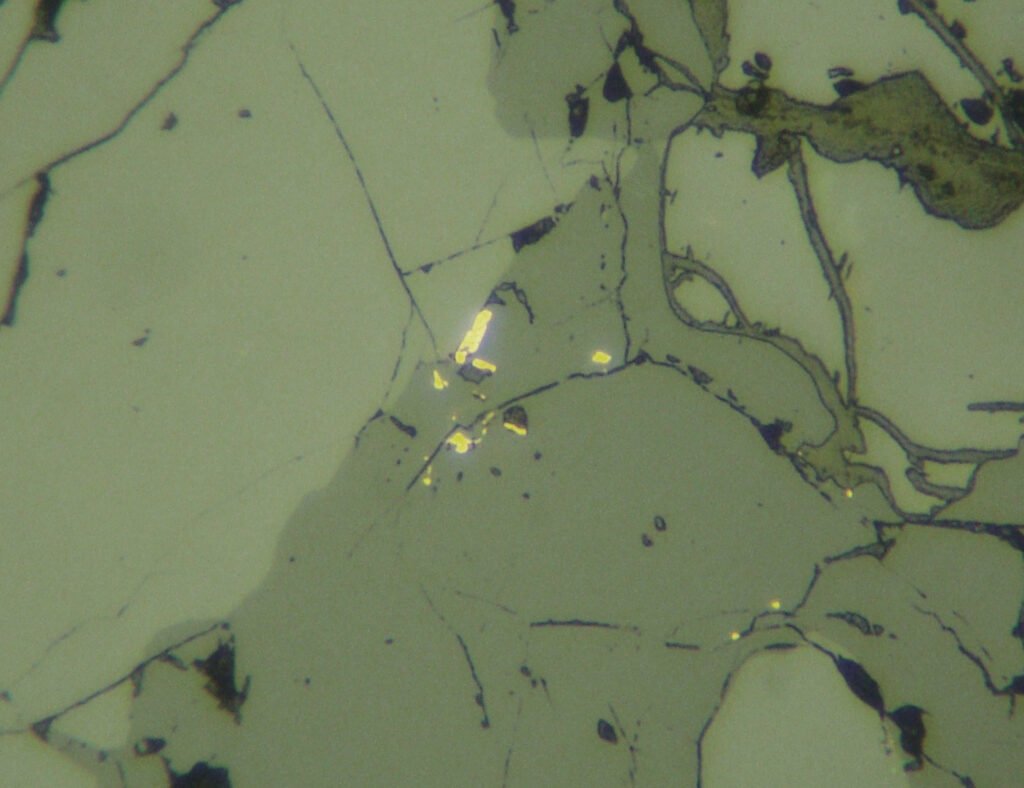
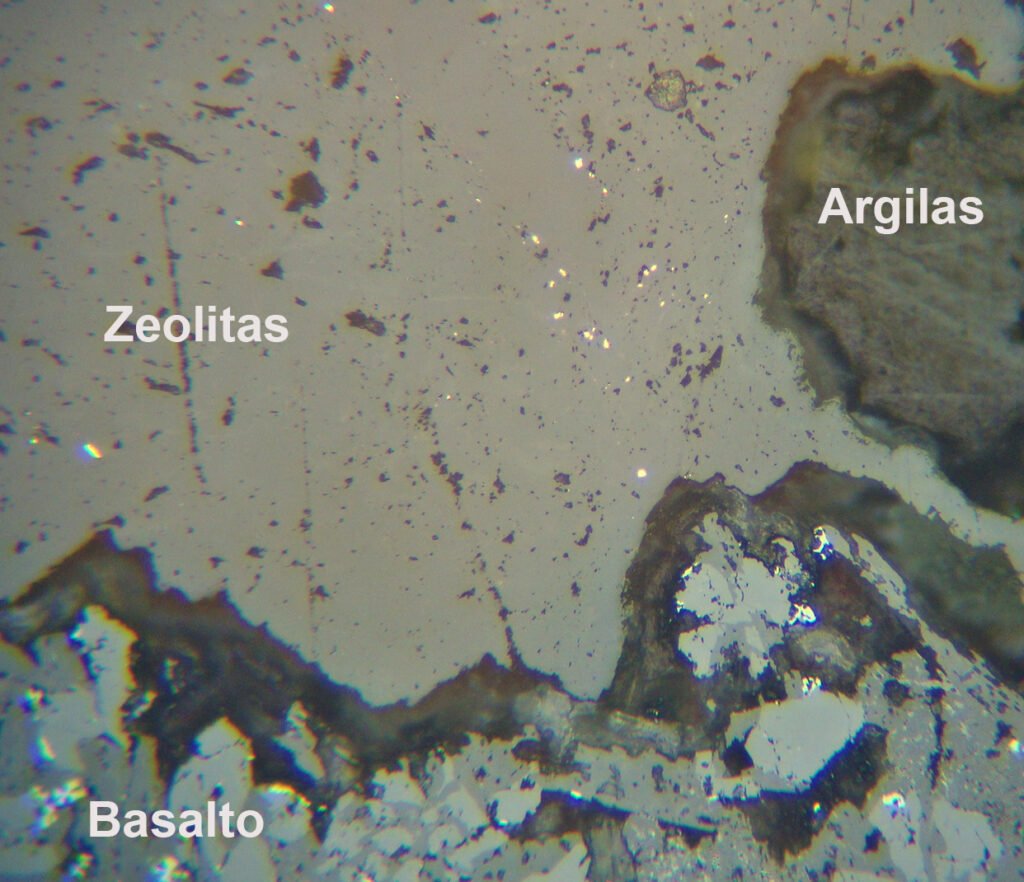
Reflection color: Bright full pink that fades after a few hours to violet and red-brown. This blurring rarely reveals structures.
Pleochroism: No.
Reflectivity: 92.2% (very high, blinds the eye and is very diagnostic. Reminds of the reflectivity of silver.)
Bireflectance: No.
CROSSED POLARIZED LIGHT – XPL
Isotropy / Anisotropy: Isotropic, but always simulates anisotropy due to the polishing grooves, which are more visible in XPL.
Internal reflections: No.
May be confused with: few other minerals. Even with a low quality polish it is easy to recognize native copper due to the high reflectivity and typical color.
Very small grains of chalcopyrite and native gold are more yellow and less red.
Small, tarnished copper grains can be confused with native bismuth and tarnished native silver, but the paragenesis of these is different.
General Characteristics:
Unmixing and zoning are not uncommon, but observed only after appropriate chemical attack.
Lamellar twins are always visible after chemical attack.
Replacement of cuprite and chalcocite by native copper can occur, as well as native copper can be replaced by cuprite in oxidation zones.
Inclusions of copper, very small, can occur in enargite, bornite, cuprite, chalcocite, pyrrhotite and pentlandite.
Rhythmic structures of copper with limonite (goethite) may occur in some cases, but are visible only after chemical attack.