1. Characteristics
Crystal system: Monoclinic prismatic.
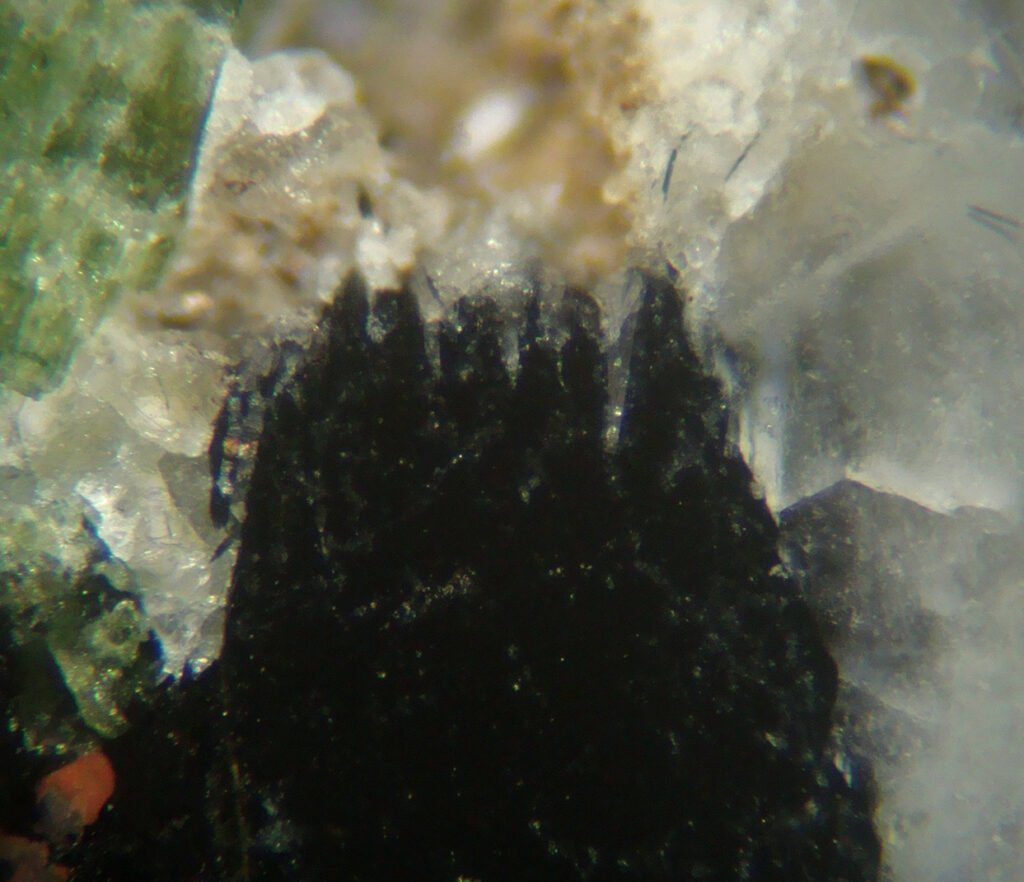
Color: Bluish black to black.
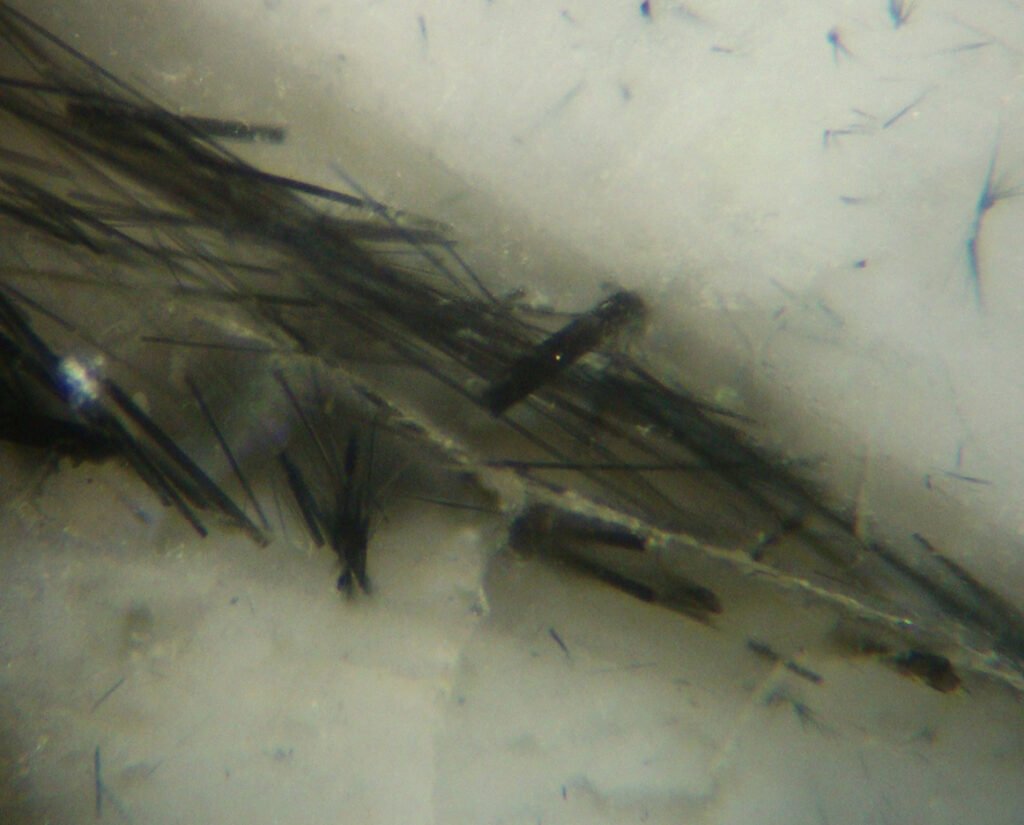
Habit: Generally elongated prisms, may be in radial aggregates. Tabular, granular.
Cleavage: {110} perfect, typical of amphiboles. Striations paralell to the z axis.
Tenacity: Brittle.
Twinning: Simple and lamellar parallel to{100}.
Fracture: Irregular.
Mohs Hardness: 5 – 6
Parting: On {010}.
Streak: Dark bluish gray, gray-green.
Lustre: Vitreous.
Diaphaneity: Transparent.
Density (g/cm³): 3.3 – 3.5
2. Geology and Deposits
Arfvedsonite occurs in rare alkaline igneous rocks such as alkaline granites (brandbergites and ekerites), pegmatitic peralkaline syenites (bowralites), nepheline-syenites (lakarpite, kakortokite and lujavrite), sodic syenites (naujaites) and associated pegmatites, phonoliths, and trachytes.
It also occurs in eudyalithites. In volcanic rocks it occurs in pantellerites.
3. Mineral Associations
Arfvedsonite is generally associated with riebeckite, aegirine, aegirine-augite, hastingsite, kataphorite, alkali feldspar (microcline, orthoclase, in volcanic rocks to anortoclase), albite, biotite, sodalite and nepheline. Also with quartz, aegirine, zircon, zektzerite and calcite.
In brandbergites, it is associated with potassic feldspar and biotite.
In ekerites, it occurs with anorthoclase, micropertites and aegirin.
In bowralites, it occurs with potassic feldspar and aegirine-augite.
In larkarpites, it is associated with potassium feldspar, nepheline, aegirine and pectolite.
In kakortokites, it occurs with potassium feldspar, nepheline and eudyalite.
In lujavrites with alkali feldspars (orthoclase or microcline), nepheline, eudyalite, aegirine and albite.
In naujaites with alkali feldspar, sodalite and nepheline.
In pantellerites with anortoclase (or sanidin), aegirin, fayalite, ilmenite, aenigmatite and ferrorichterite.
4. Transmitted Light Microscopy
Refraction indices: nα: 1.652 – 1.699 nβ: 1.660 – 1.705 nγ: 1.666 – 1.708
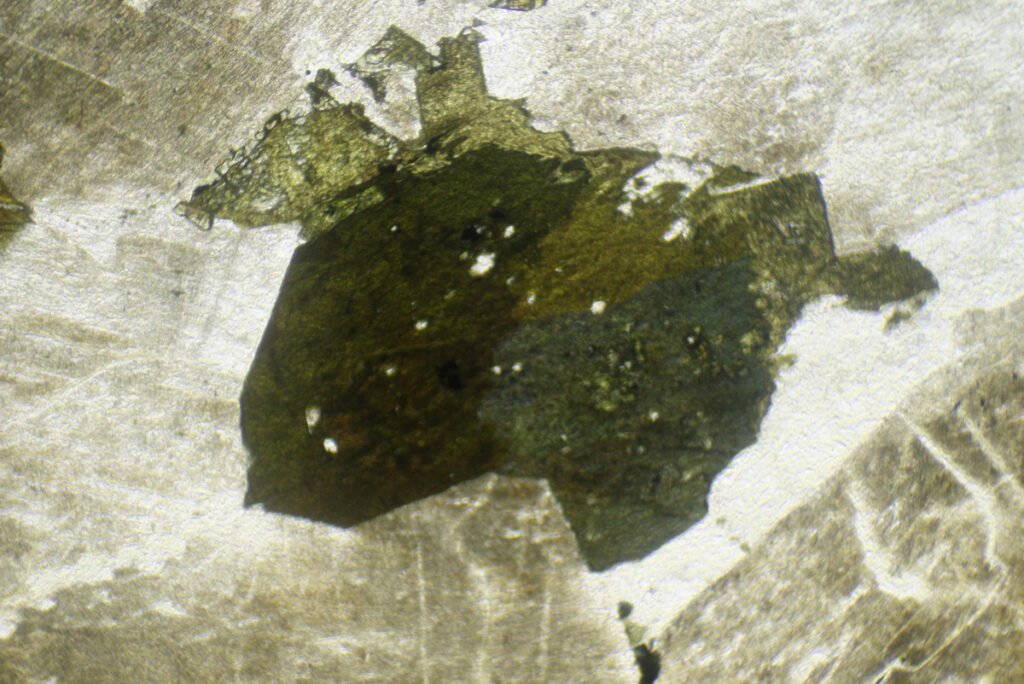
PLANE POLARIZED LIGHT – PPL
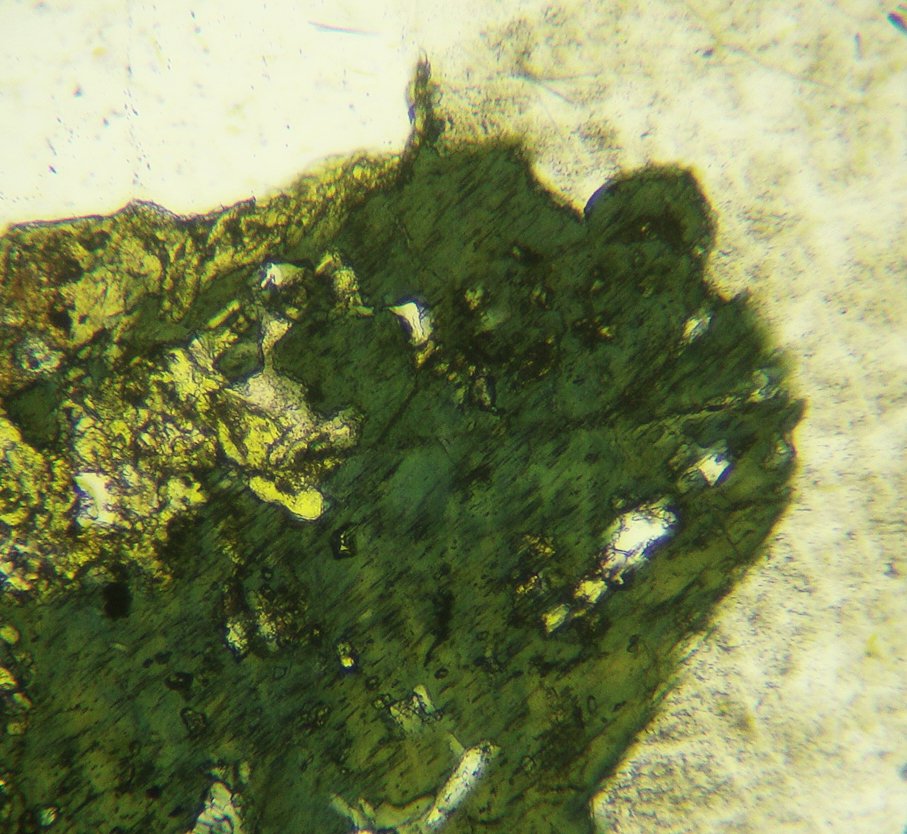
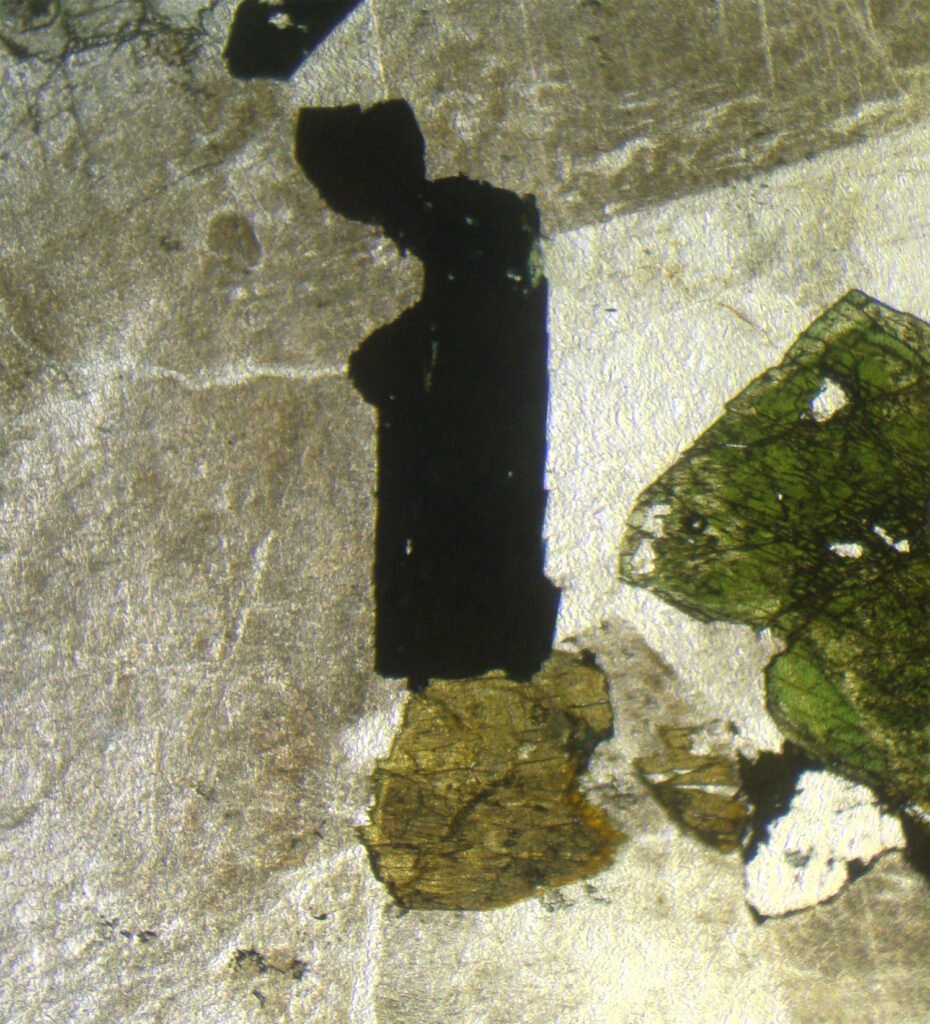
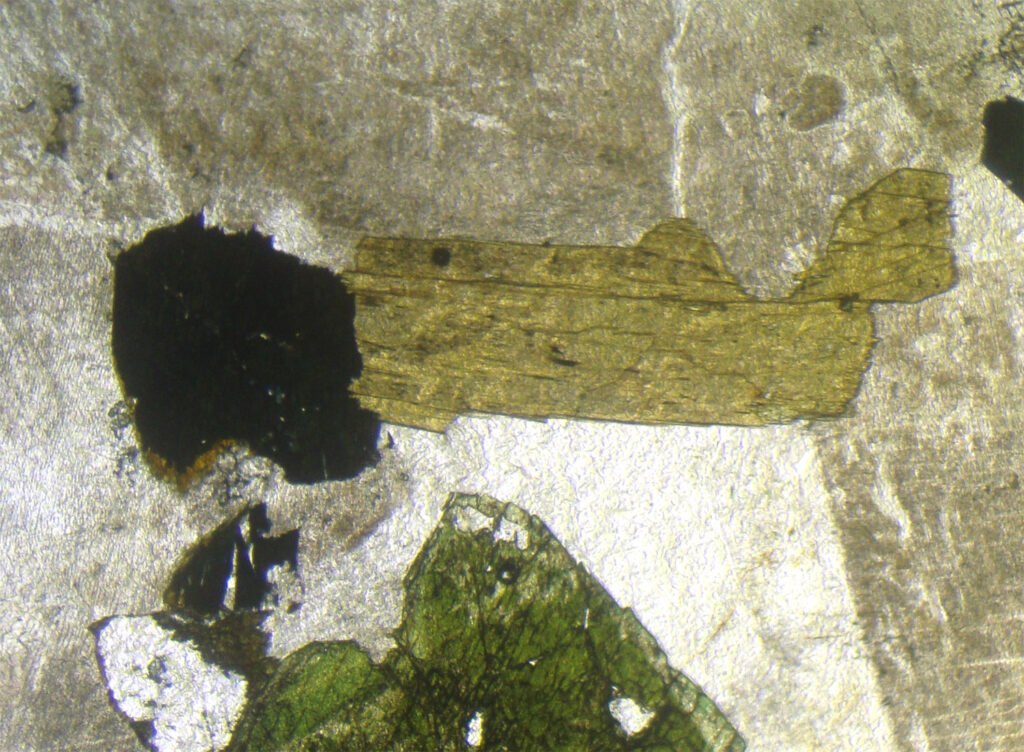
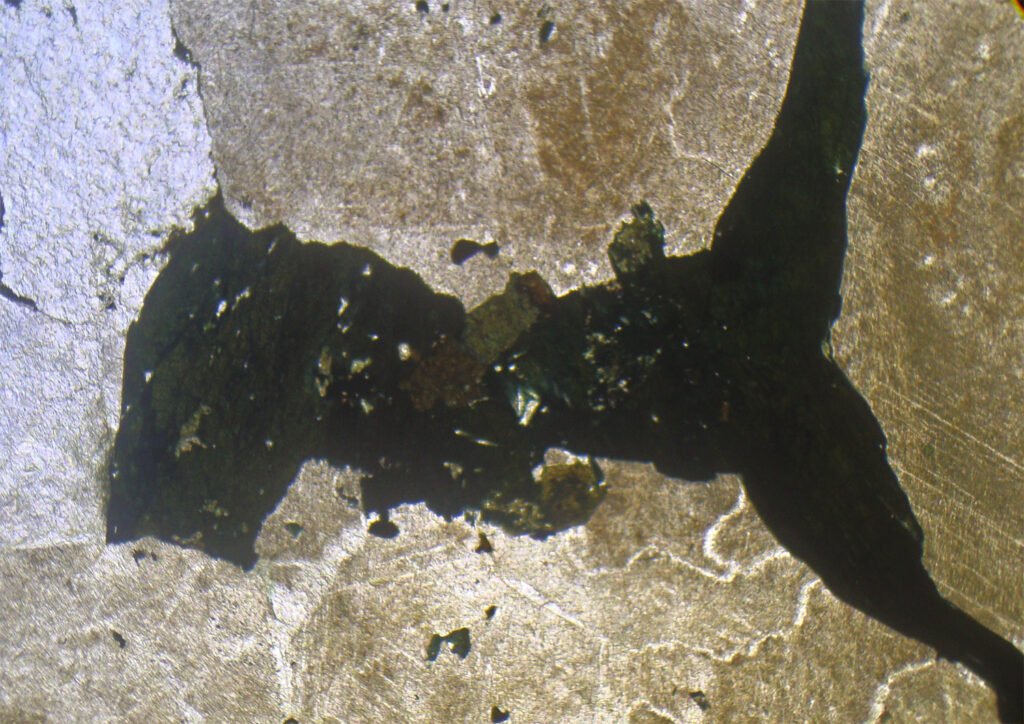
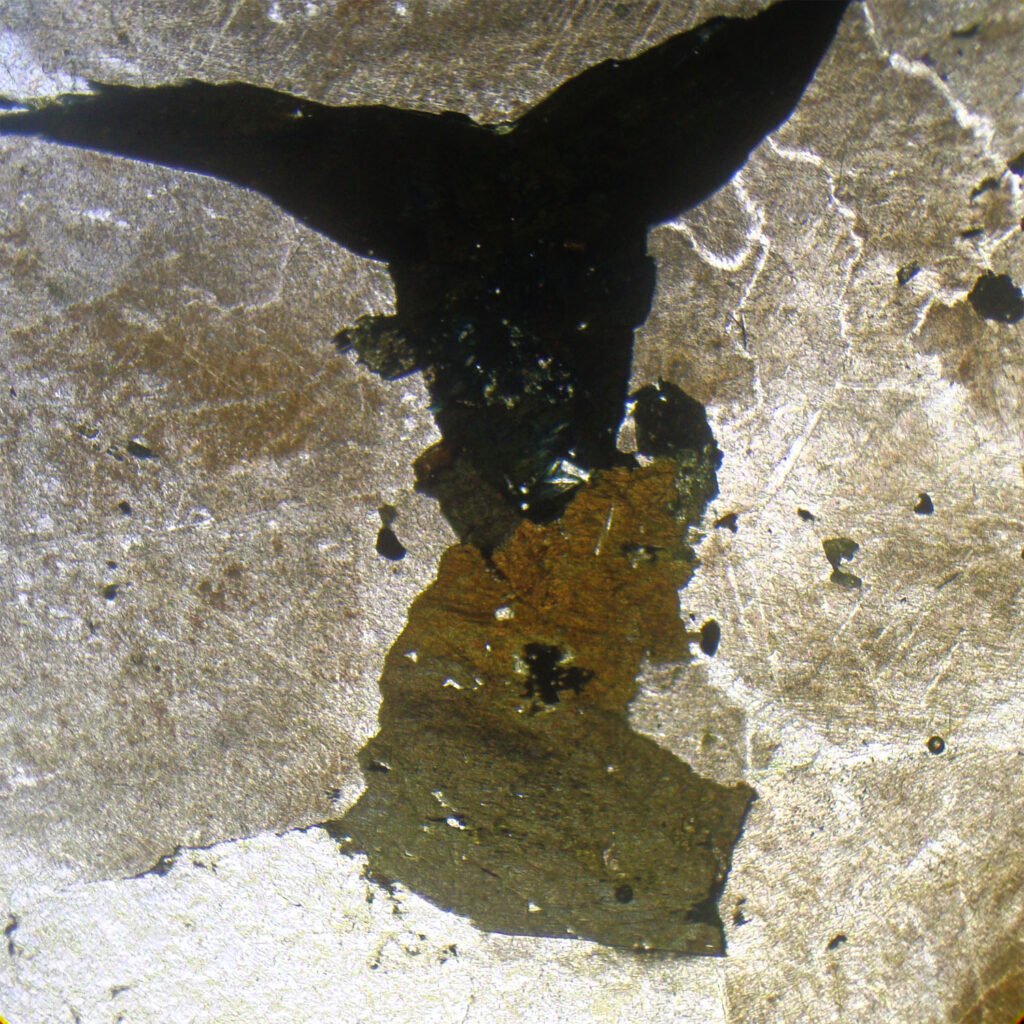
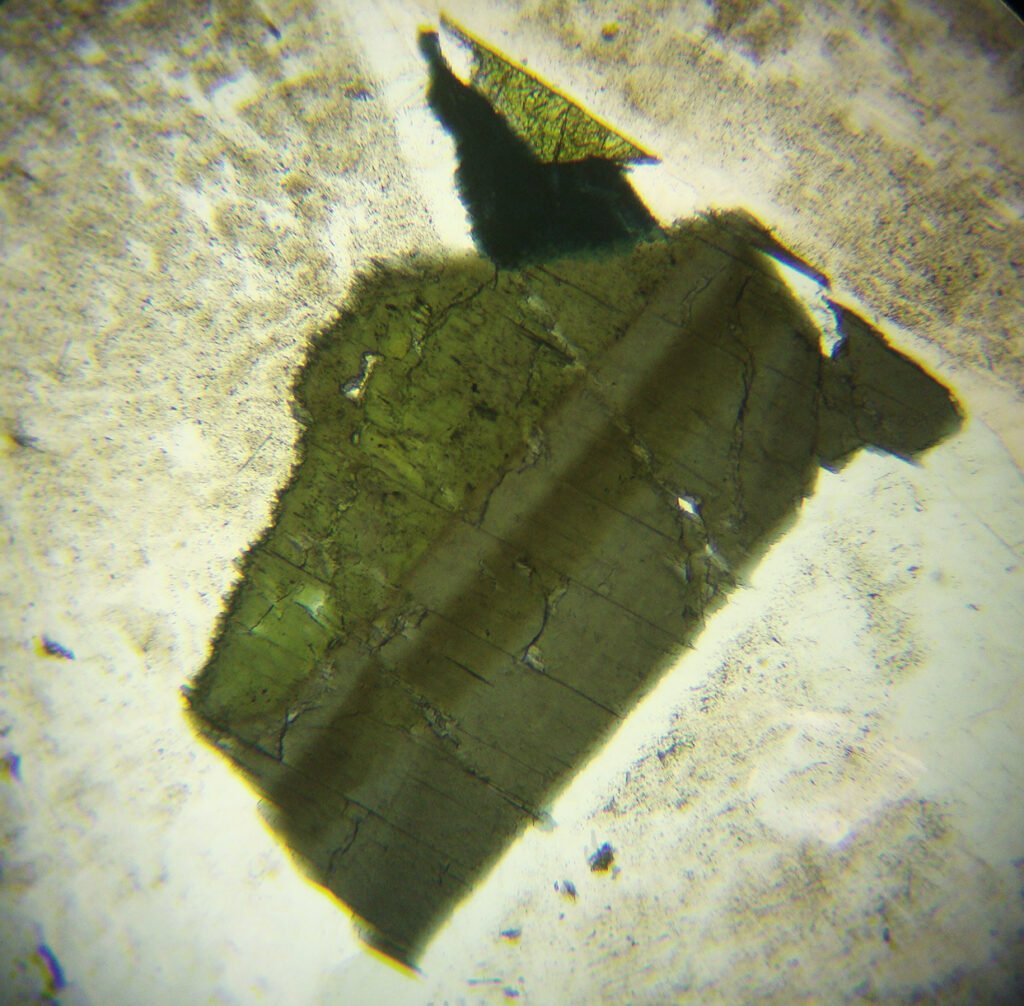
Color / Pleochroism: Strong, deep colors dominating the green: bluish green, yellowish-green, brownish-green, grayish-green, violet tones are possible.
Moderate to strong pleochroism in these colors:
X = blue-green to deep blue-green;
Y = pale bluish-green to blue-gray;
Z = pale yellowish-green, dark green, greenish-blue grey.
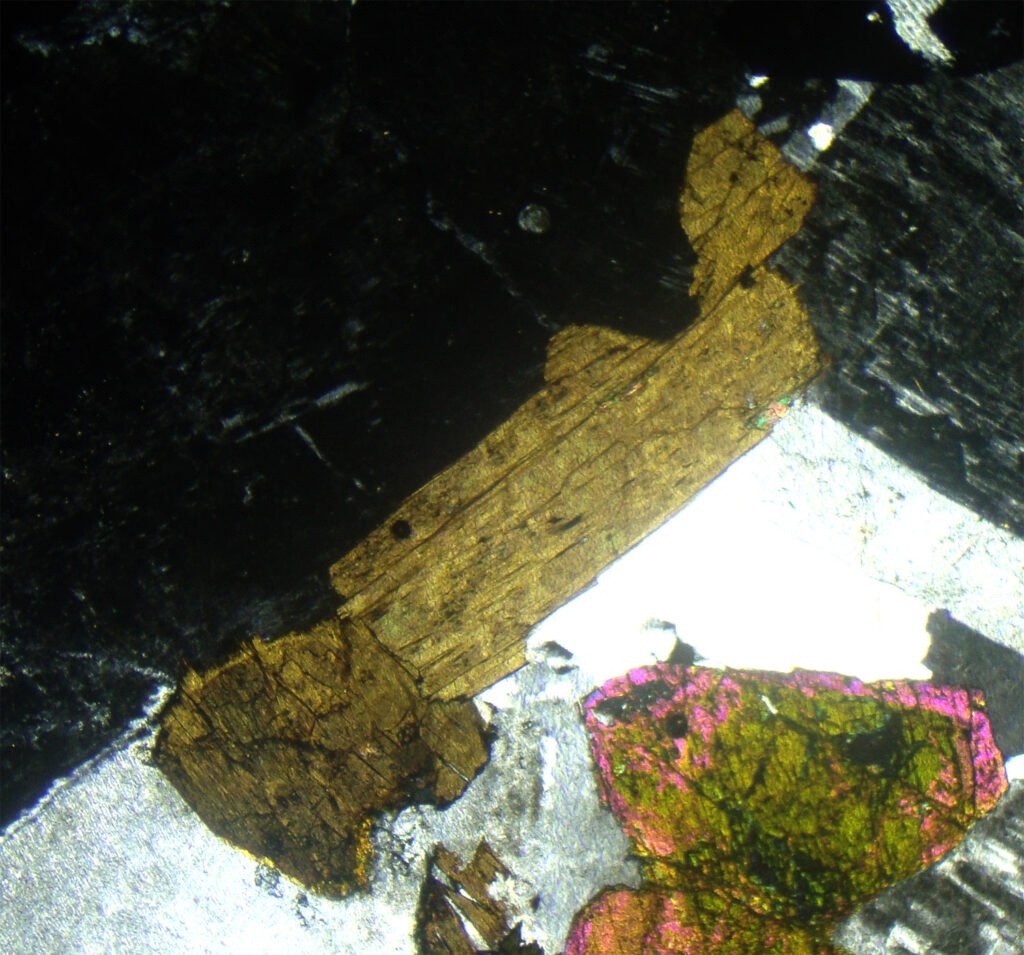
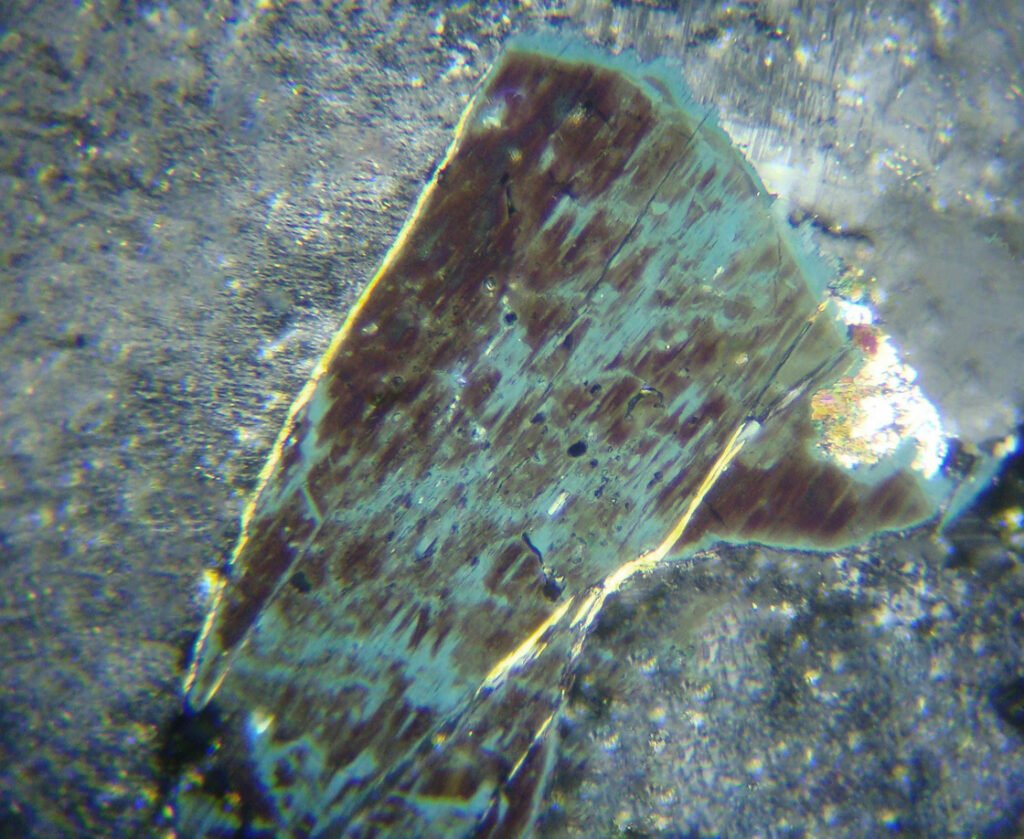
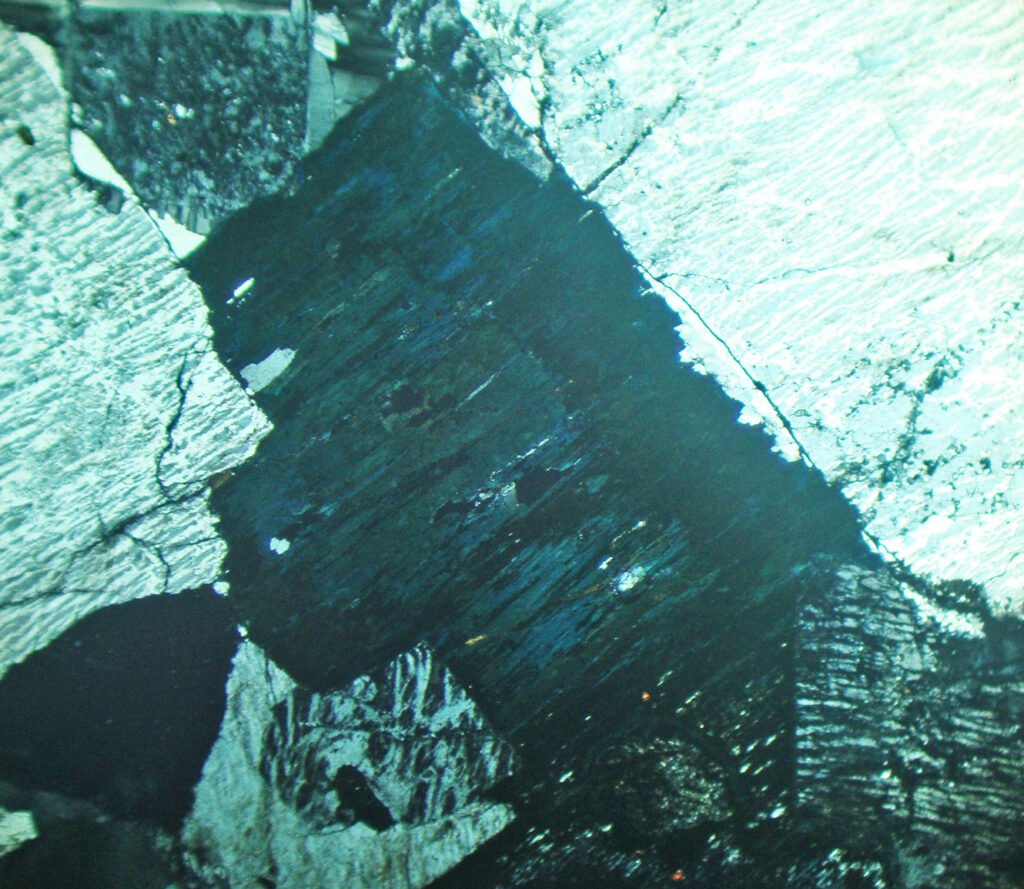
The color can be so dark that arfvedsonite can even be mistaken for an opaque mineral. It is possible to identify it by crossing the nicols, inserting the compensator and rotating the stage: Opaque minerals remain completely black; transparent isotropic minerals turn uniform pink in color and arfvedsonite shows luminosity variations in dark colors.
Relief: High.
Cleavage: {110} perfect, as in all amphiboles: in the basal sections two perfect cleavages forming an angle of 124 and 56º between each other, in the longitudinal sections only one cleavage. Partition on {010}.
Habits: Thick prismatic crystals elongated along the z axis, without perfect terminations. Tabular according to {010}, acicular, granular, also poikilitic (“sieve texture”).
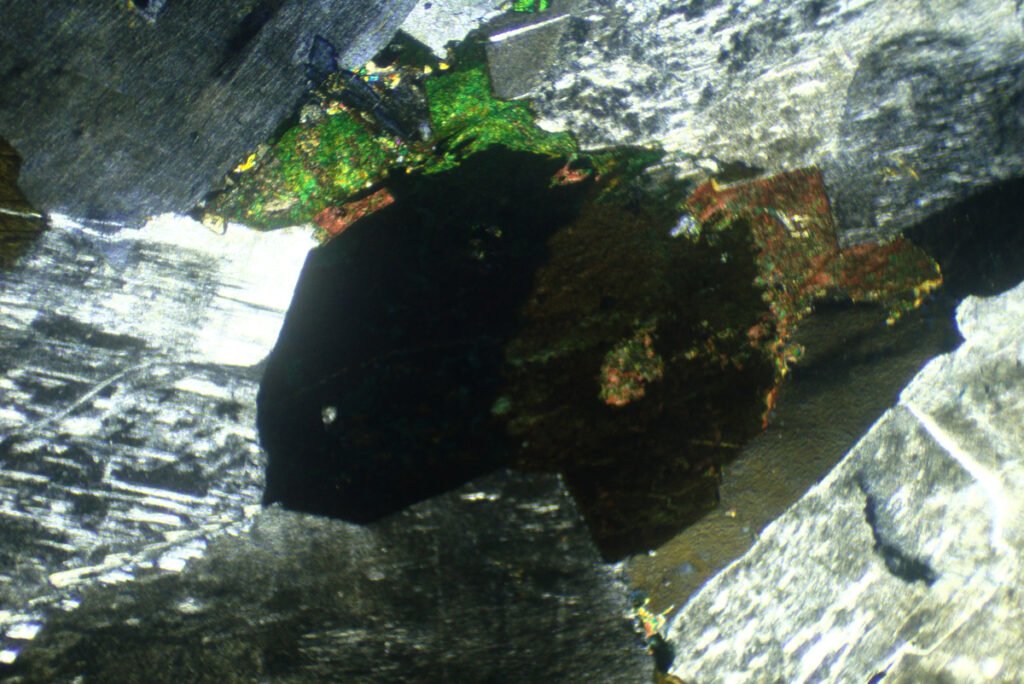
CROSSED POLARIZED LIGHT – XPL
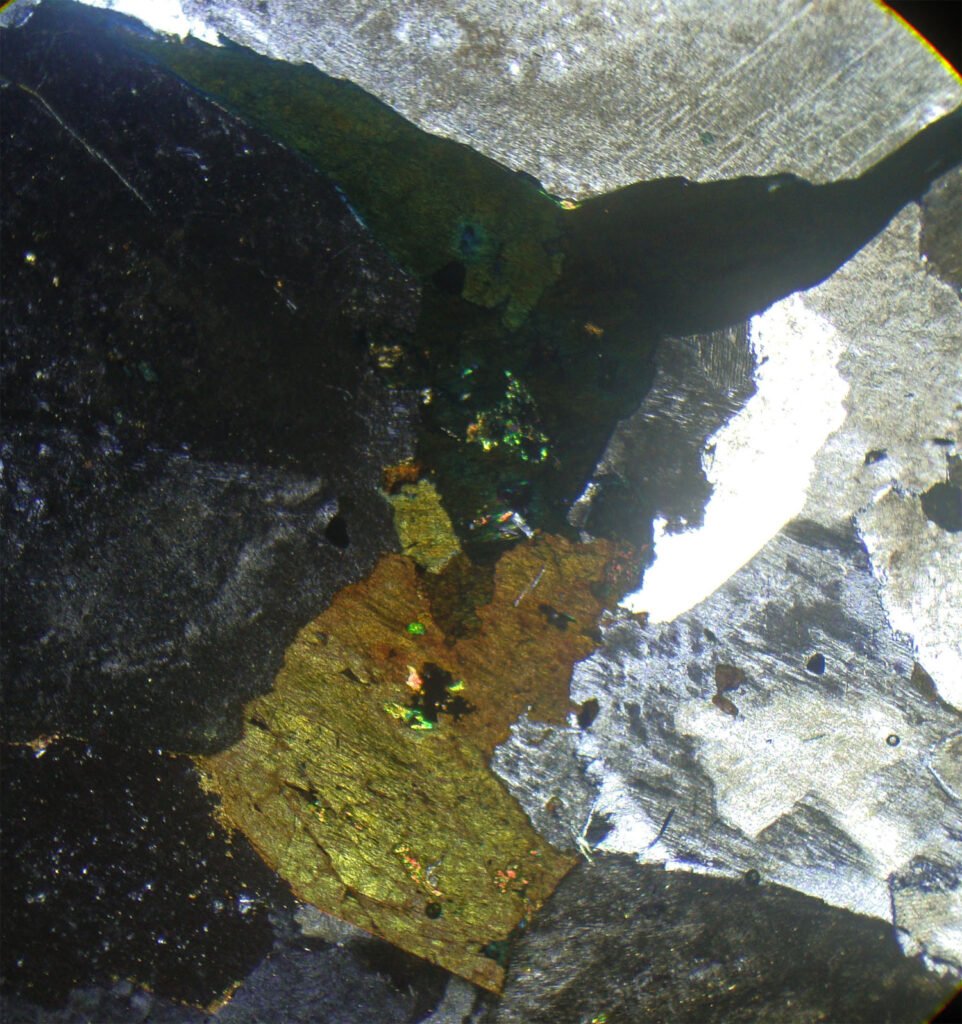
Birefringence and Interference Colors: Birefringence from 0.010 to 0.014, colors from gray to yellow of superior 1st order, strongly anomalous, often masked by the intense colors of the mineral.
With increasing Fe content, refraction increases and interference colors decrease.
Extinction: Tends to oblique, from 0 to 30º.
Elongation sign: ES(-). The strong colors of arfvedsonite make it extremely difficult to determine the Elongation Sign.
Twins: Simple on (100) and lamellar.
Zoning: Frequently zoned.
CONVERGENT LIGHT
Character: B(-) or B(+), very difficult to determine due to the own strong colors of the mineral.
2V angle: normally 70-80° (may range from 0 to 100° depending on chemical composition).
Alterations: through uralitization it alters to pyroxenes (tremolite, actinolite).
May be confused with: few other minerals.
Glaucophane is bluer, less green, lighter and occurs in different paragenesis.
Tourmaline may be similar, but has color in patches and zones and is uniaxial.
Aegirine also has strong colors, but is lighter and its pleochroism is much more intense (between green and yellow). Furthermore, it is a pyroxene and has basal sections with two cleavages crossing at angles of almost 90º.