1. Characteristics
Crystal system: Orthorhombic bipiramidal.
Color: White, colorless, light shades of blue, yellow, green, gray, brown. May be zoned or multicolored.
Habit: Tabular, massive, nodular, fibrous, banded, fibrous, etc.
Cleavage: {001} perfect, {210} less perfect, {010} imperfect.
Tenacity: Brittle.
Twinning: No.
Fracture: Irregular.
Mohs Hardness: 3
Parting: No.
Streak: White.
Lustre: Vitreous to resinous, may be pearly.
Diaphaneity: Transparent.
Density (g/cm³): 4.5
2. Geology and Deposits
Baryte occurs in a wide variety of geological environments.
It is a late gangue mineral from low to medium temperature (epi– and mesothermal) hydrothermal veins of Pb and Zn ores hosted in limestone. It also occurs as tufa in hot springs, in iron ores, and in sedimentary deposits derived from weathered baryte limestones.
Baryte is an accessory mineral of igneous rocks such as carbonatites. It occurs as a primary component of massive volcanogenic submarine sulphide deposits and ocean floor smokestacks (fumarolas – “black smokers”). It can be deposited by biogenic, hydrothermal, evaporation and other processes. It replaces wood, shells and fossils, forms concretions and “desert roses”. It is found in well-formed crystals in geodes (from basaltic rocks, for example) and in miarolitic cavities (from other igneous rocks). It is one of many minerals that can form speleothems in caves.
3. Mineral Associations
It occurs with quartz, carbonates (calcite, aragonite, dolomite, rhodochrosite, siderite, cerussite), sulfides (pyrite, chalcopyrite, stibnite, sphalerite, galena), sulfates (anglesite, celestine, gypsum), fluorite, apatite, native sulphur, vanadinite and manganite.
4. Transmitted Light Microscopy
Refraction indices: nα: 1.636 nβ: 1.637 nγ: 1.648
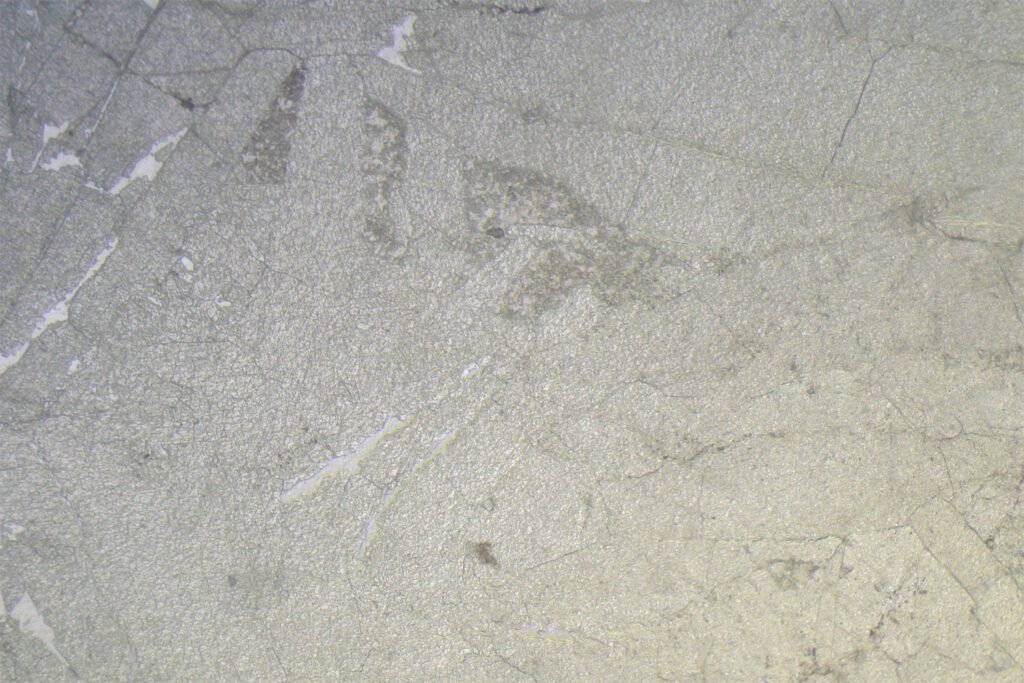
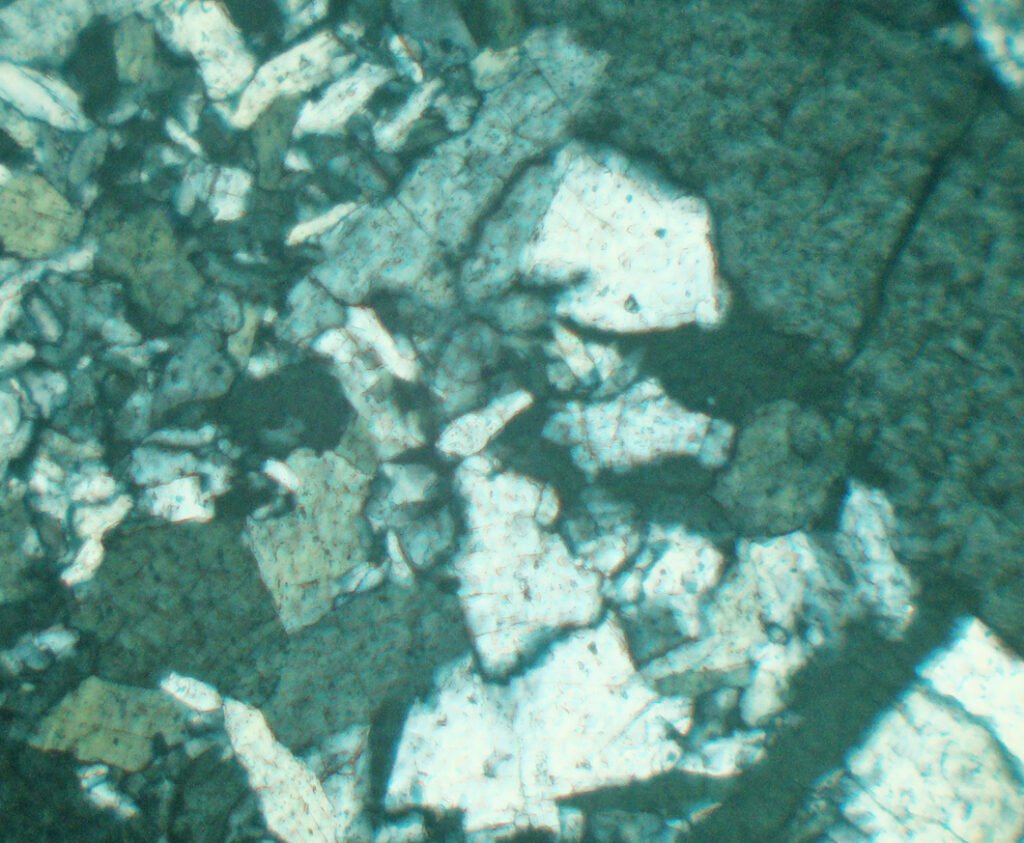
PLANE POLARIZED LIGHT – PPL
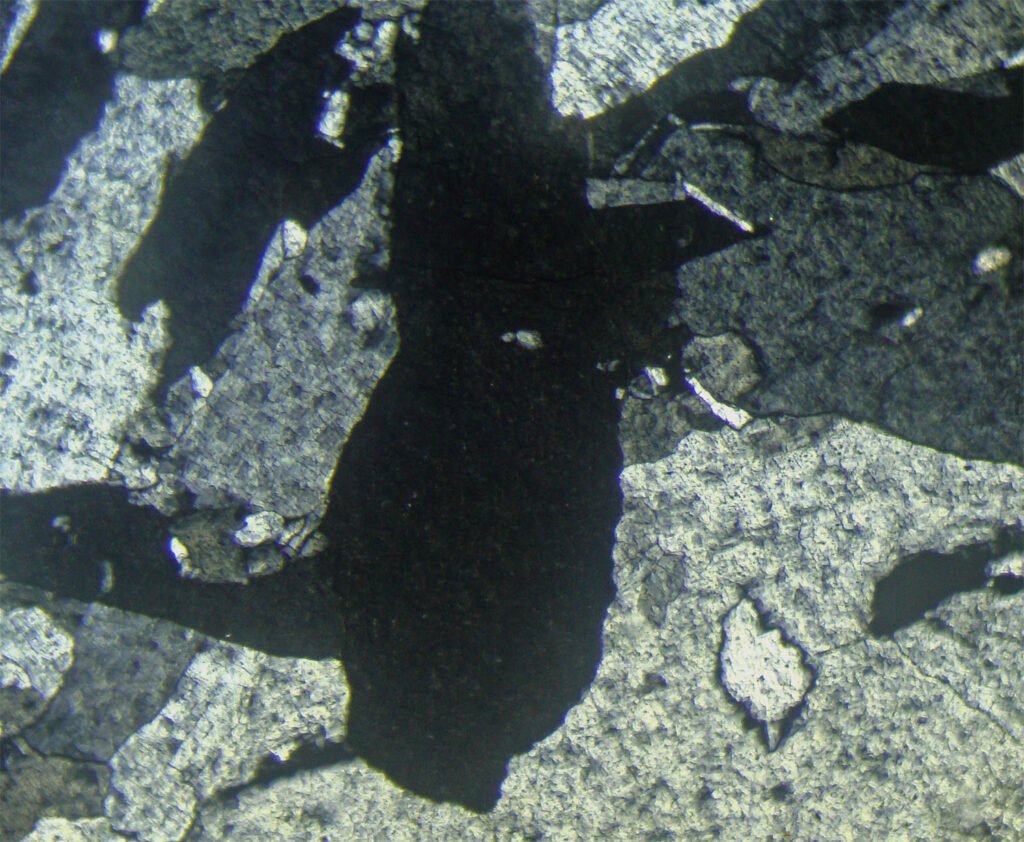
Color / Pleochroism: Usually colorless, without pleochroism.
It can be pleochroic in soft tones in the following colors (X,Y,Z): brown: straw yellow, wine yellow, violet; yellow: pale yellow brown, yellow brown, brown; green: almost colorless, pale green, amethyst; blue-green: blue-violet, blue-green, violet.
Relief: Moderate.
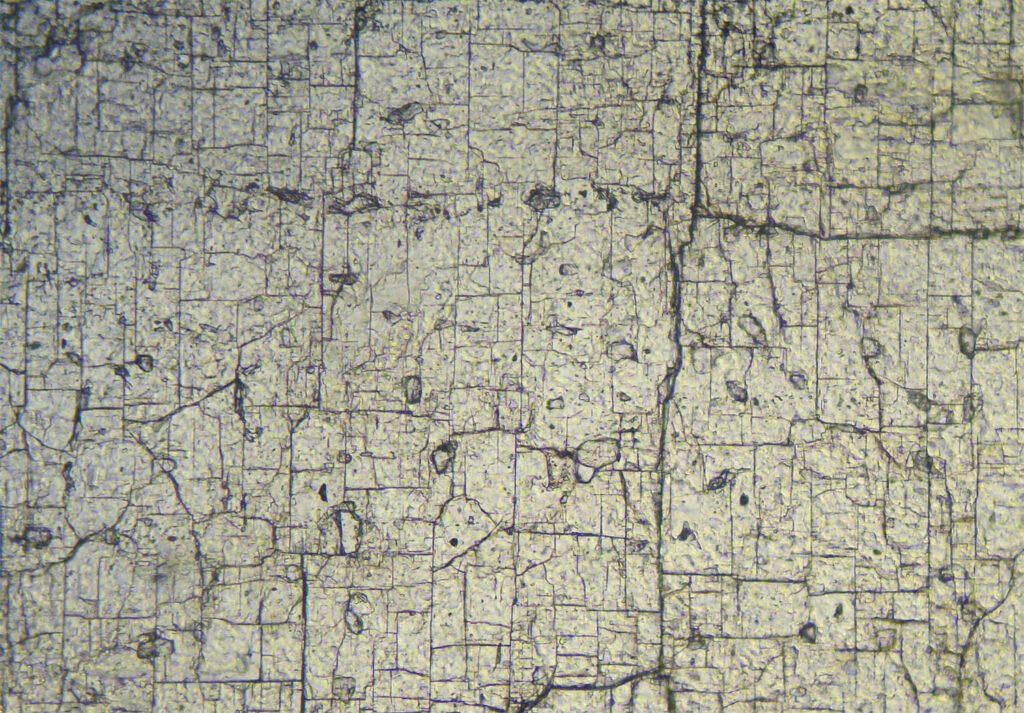
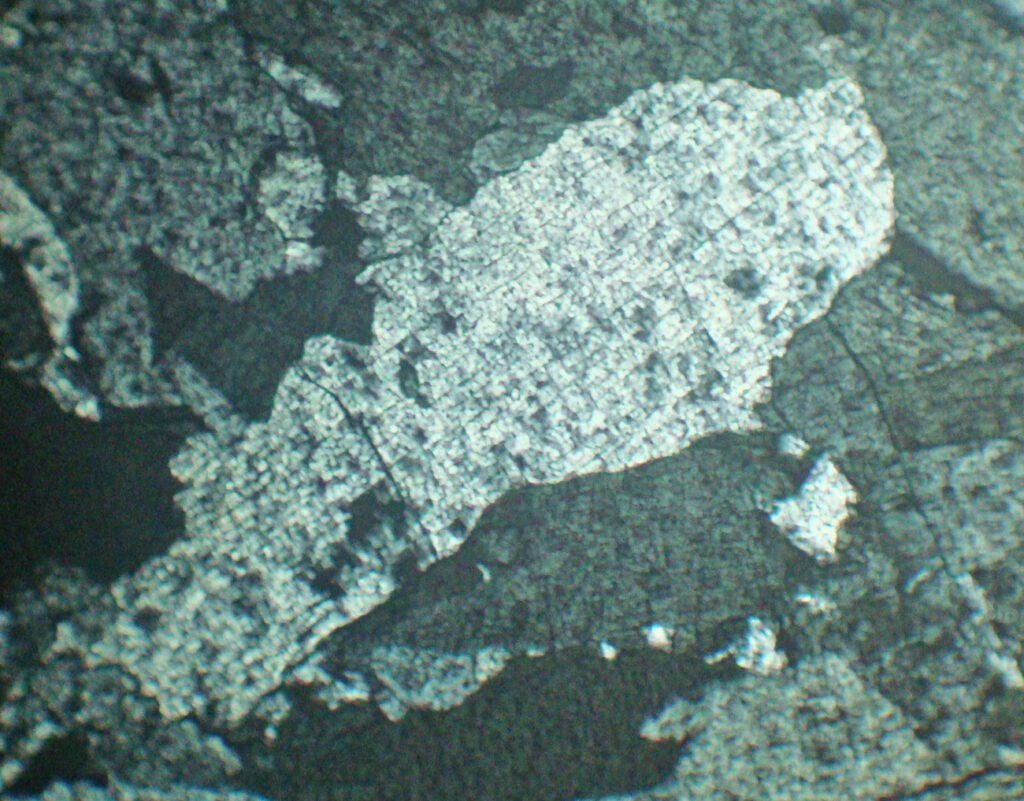
Cleavage: {001} perfect, {210} less perfect, {010} imperfect. Cleavage is visible only in the larger crystals, parallel to the elongation. It can be pseudo-cubic, a finding that needs to be made very carefully.
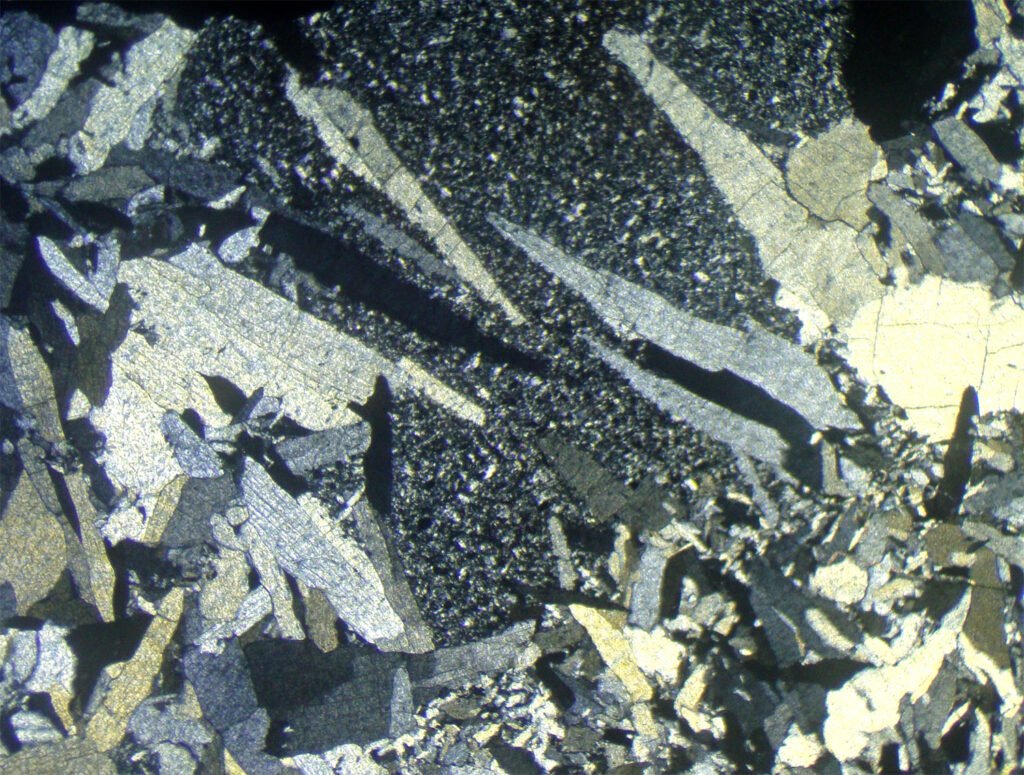
Habits: Usually thin to thick tabular crystals that may form rosette aggregates with radial habit. Baryte can have many different habits: elongated, prismatic, equidimensional, concretionary, fibrous, nodular, stalagtitic, banded, earthy or massive. Granular Barytes are common and difficult to identify.
CROSSED POLARIZED LIGHT – XPL
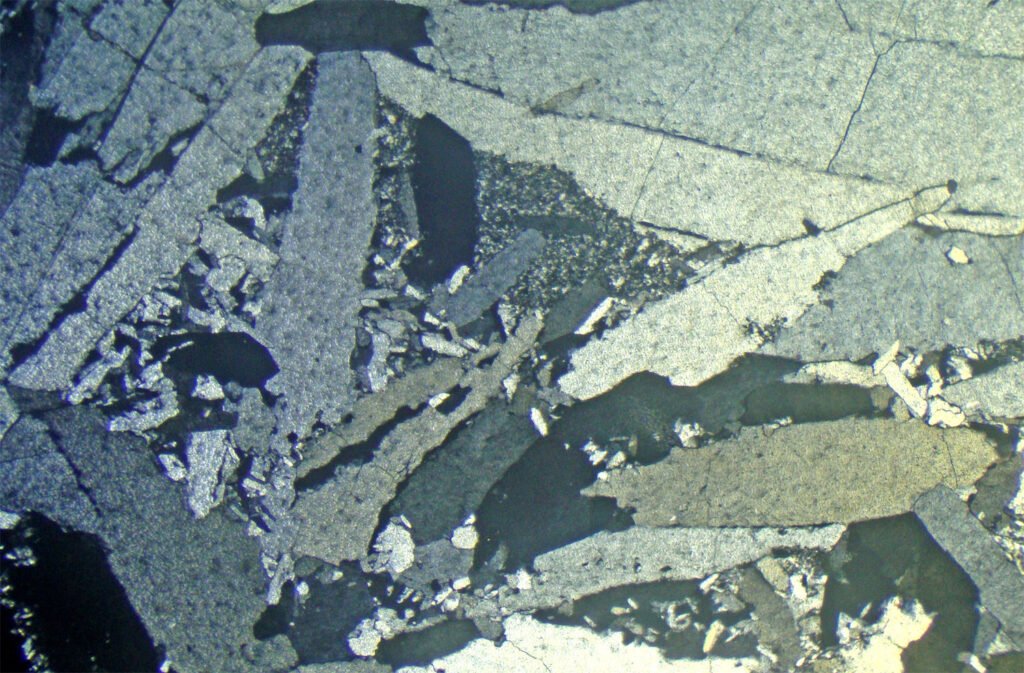
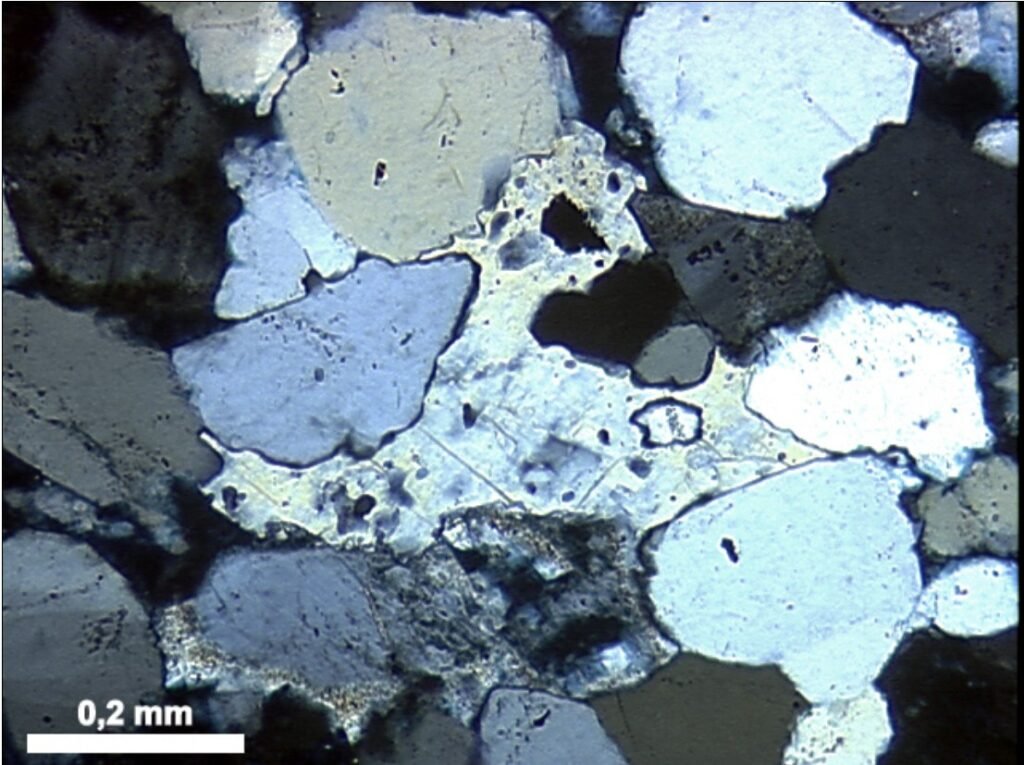
Birefringence and Interference Colors: Low birefringence, from 0.011 to 0.012: gray to 1st order yellow-orange colors.
Extinction: Parallel in the direction of the cleavage (001), symmetrical in {001} (basal sections), oblique in sections with another orientation.
Elongation sign: ES(+)
Twins: Rare, lamellar, polysynthetic by {110}.
Zoning: No.
CONVERGENT LIGHT
Character: B(+)
2V angle: 36 – 40º
Alterations: Can be replaced by SiO2 and carbonates. Chalcedony forms pseudomorphs on Baryte.
May be confused with: baryte is a mineral that easily goes unnoticed due to the multitude of different habits it can present.
Celestine forms a series with baryte and is very similar, but has lower refractive indices.
Gypsum is very similar, but has low relief.