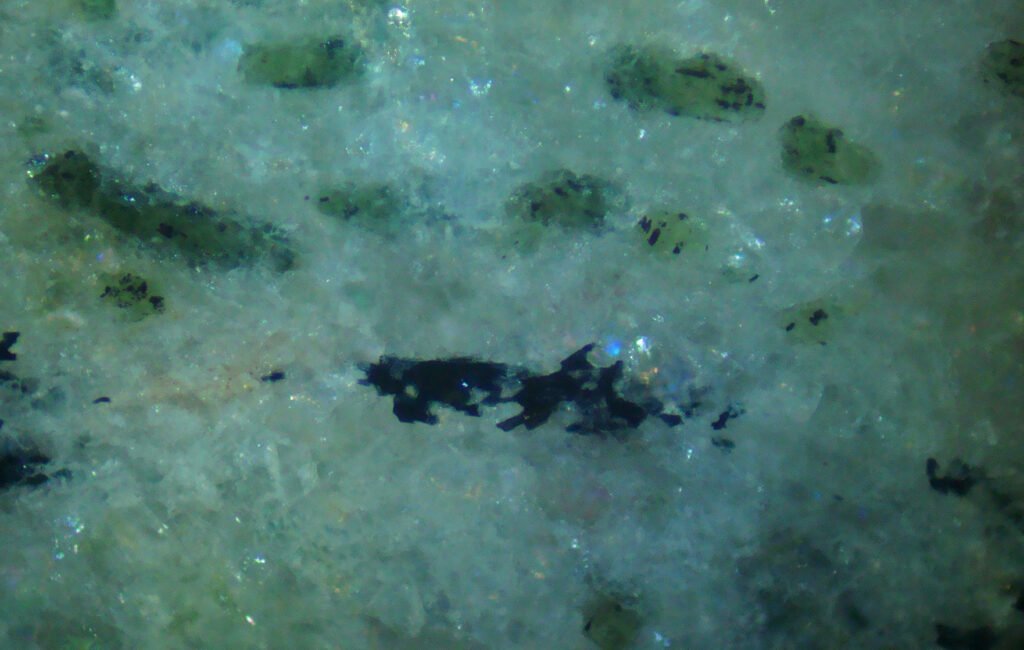
1. Characteristics
Crystal system: Monoclinic prismatic.
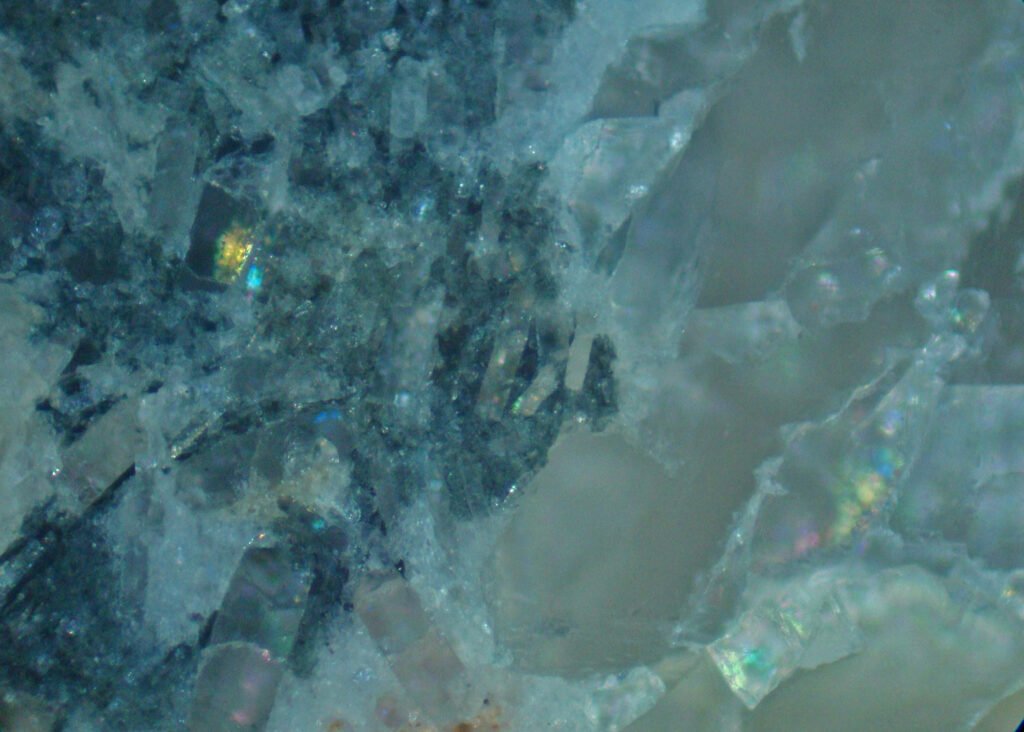
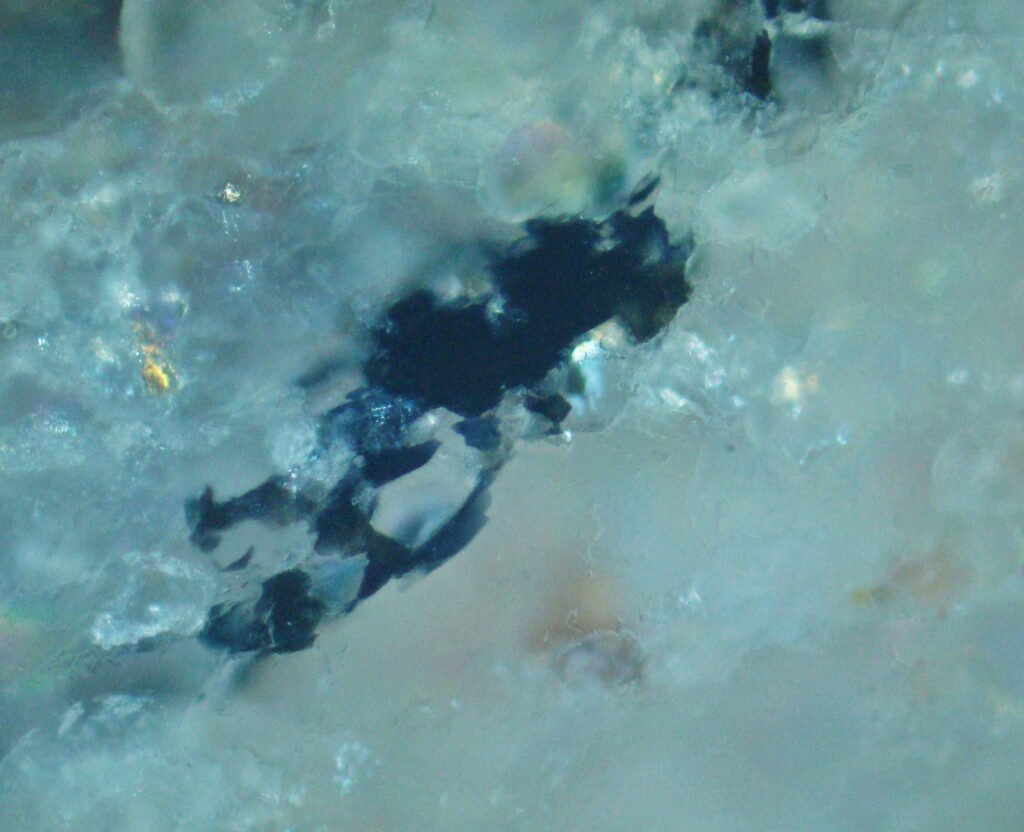
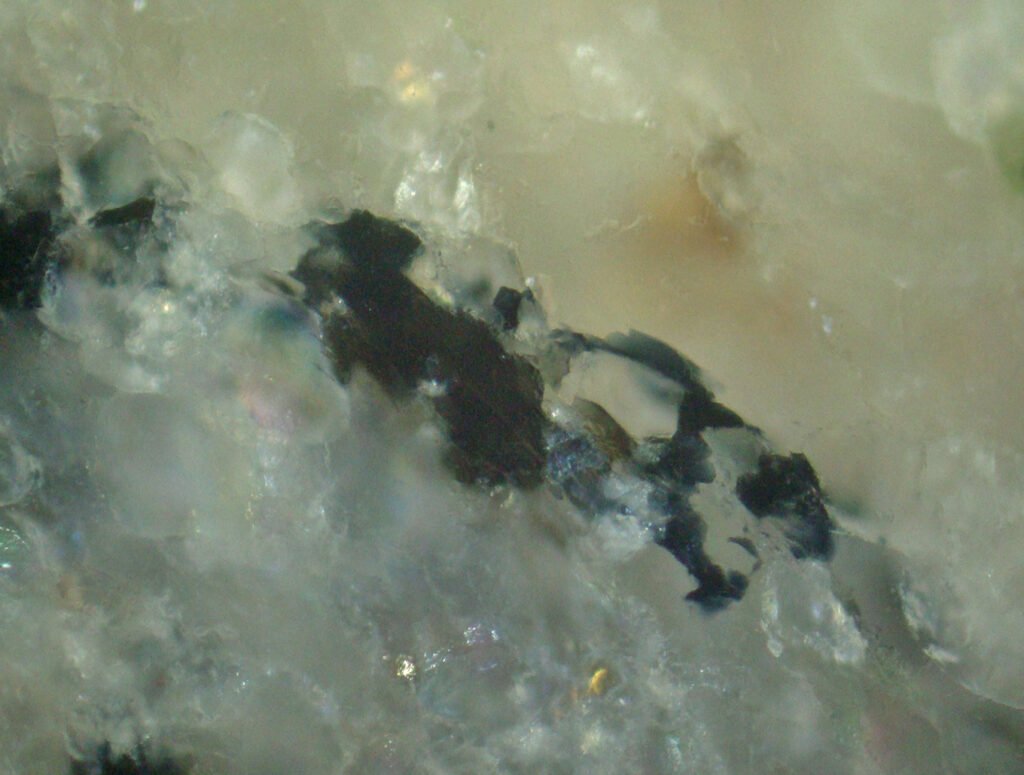
Color: Black, can be light blue to dark blue, gray blue, gray, brown.
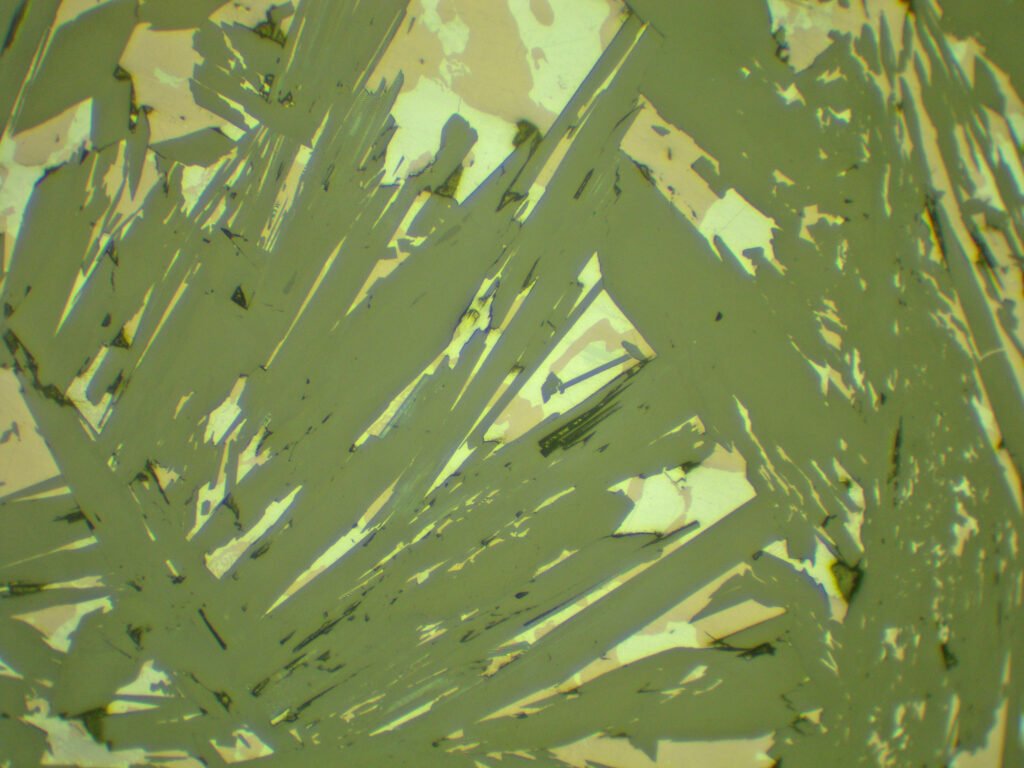
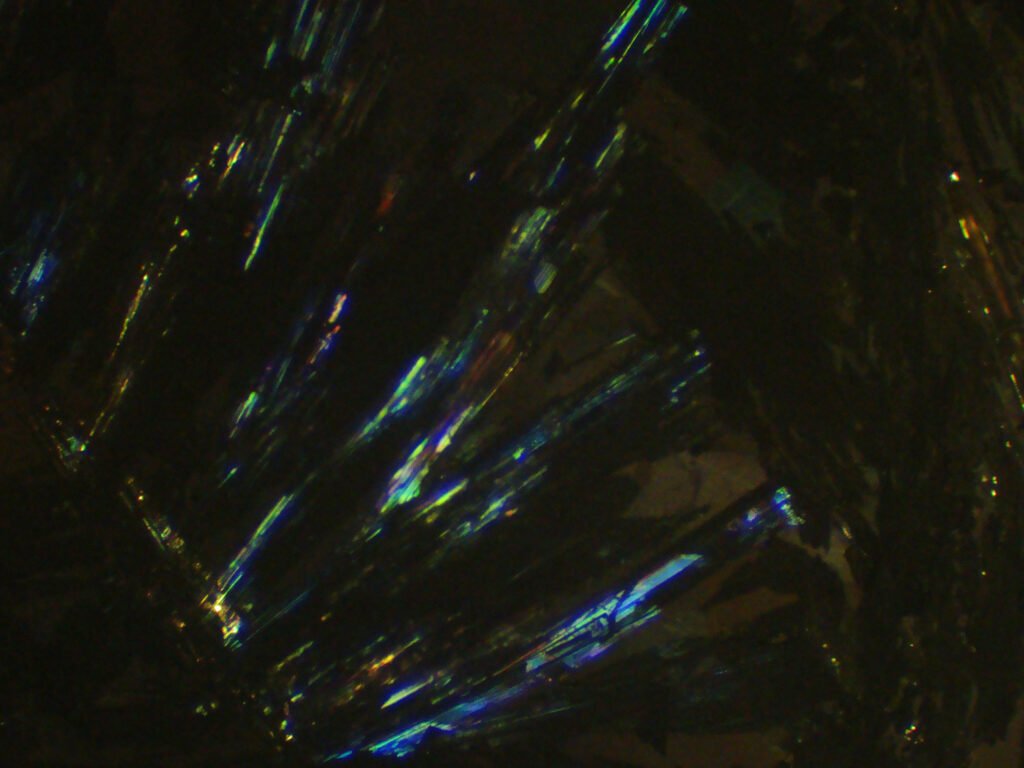
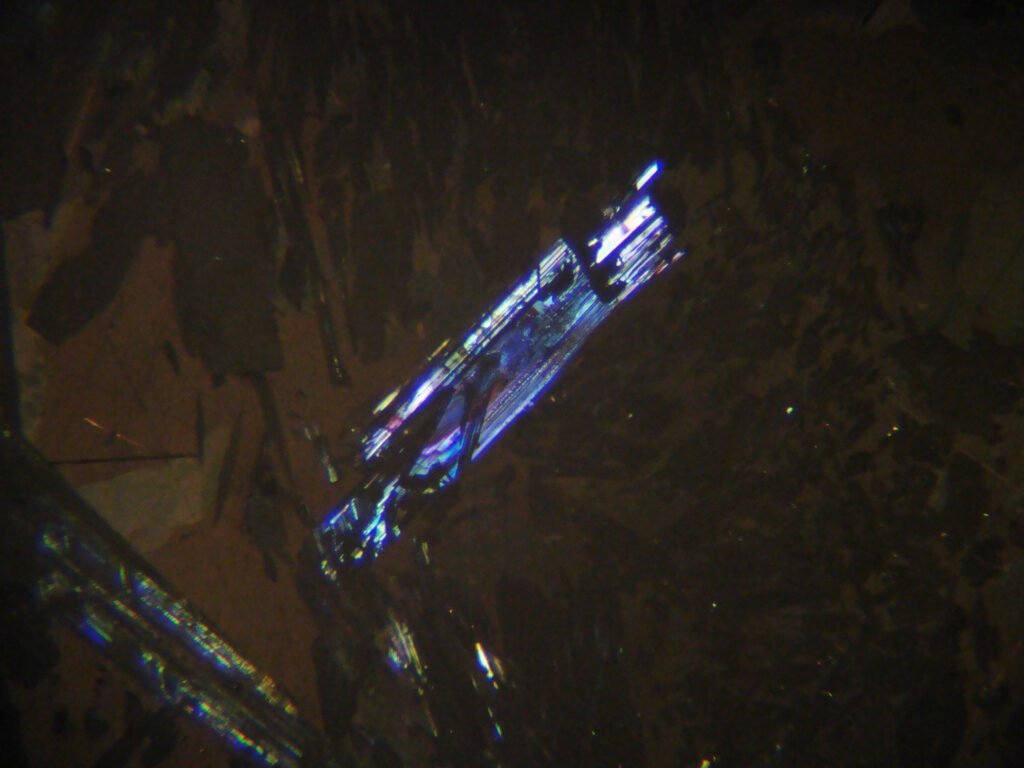
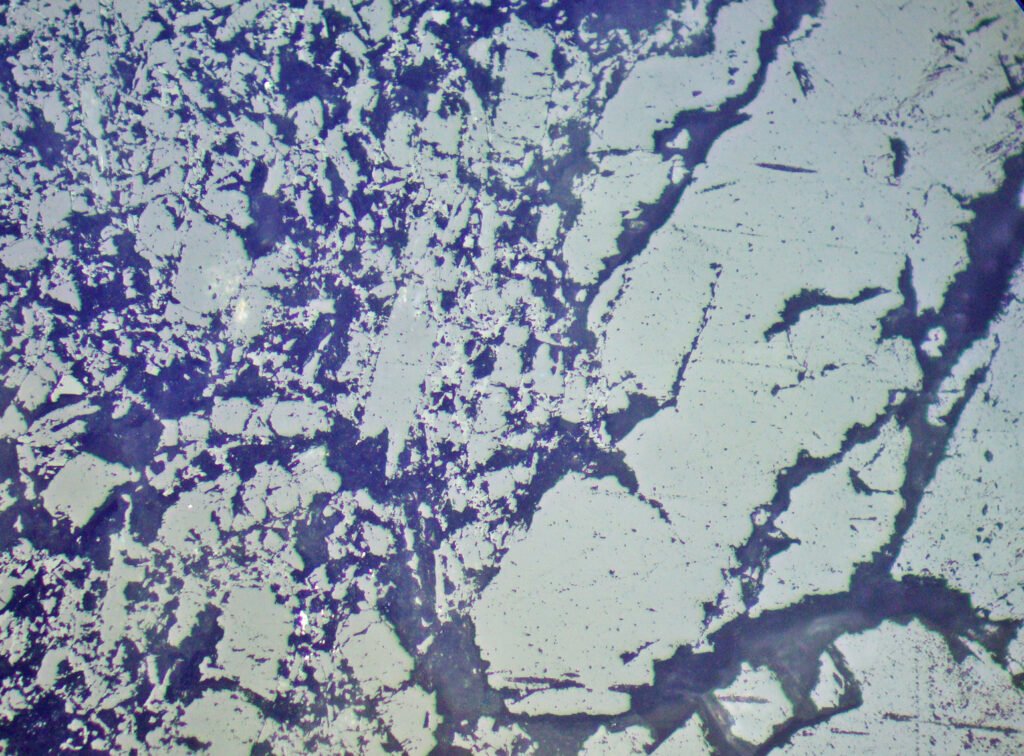
Habit: Long prismatic (typical of amphiboles), up to 20 cm. Acicular, columnar, radiated, tabular, massive, may be earthy.
Cleavage: {110} perfect, as all amphiboles.
Tenacity: Brittle.
Twinning: Simple or multiple, paralell to {100}.
Fracture: Splintery.
Mohs Hardness: 5 – 5.5
Parting: No.
Streak: Pale gray to bluish gray.
Lustre: Vitreous.
Diaphaneity: Transparent.
Density (g/cm³): 3.28 – 3.44
2. Geology and Deposits
Riebeckite is not a common mineral. It is found primarily in alkaline igneous rocks, rich in Na, such as syenites (with aegirine), trachytes and alkaline granites. “Ailsite” is a riebeckite-granite.
It can occur in pantellerites and volcanic comendites (alkaline rhyolites to alkaline trachytes).
In metamorphic rocks, riebeckite can occur in schists, gneisses and granulites and is common, with an asbestiform habit, in banded iron formations (BIFs), in the variety known as crocidolite.
It can occur in alkaline metasomatic rocks related to faults.
“Crossite” is a term now discredited, which designated intermediate compositions between glaucophane and riebeckite.
3. Mineral Associations
Usually riebeckite is associated with quartz (rock crystal, smoky quartz), feldspars (albite, microcline, “anorthoclase”), feldspathoids (nepheline), arfvedsonite, aegirine, zircon, bastnäsite-(Ce), danalite, astrophyllite, hydroastrophyllite and TiO2 polymorphs (anatase, rutile).
In igneous rocks it occurs with feldspars (sanidine), feldspathoids (nepheline), pyroxenes (aegirine) and amphiboles (arfevdsonite).
In metamorphic rocks it is associated with amphiboles such as iron-actinolite and tremolite.
In banded iron formations, it occurs with Fe oxides (magnetite, hematite), goethite, carbonates (calcite, siderite, ankerite), silica (quartz, chalcedony), grunerite and stilpnomelane.
4. Transmitted Light Microscopy
Refraction indices: nα: 1.680 – 1.698 nβ: 1.683 – 1.700 nγ: 1.685 – 1.706
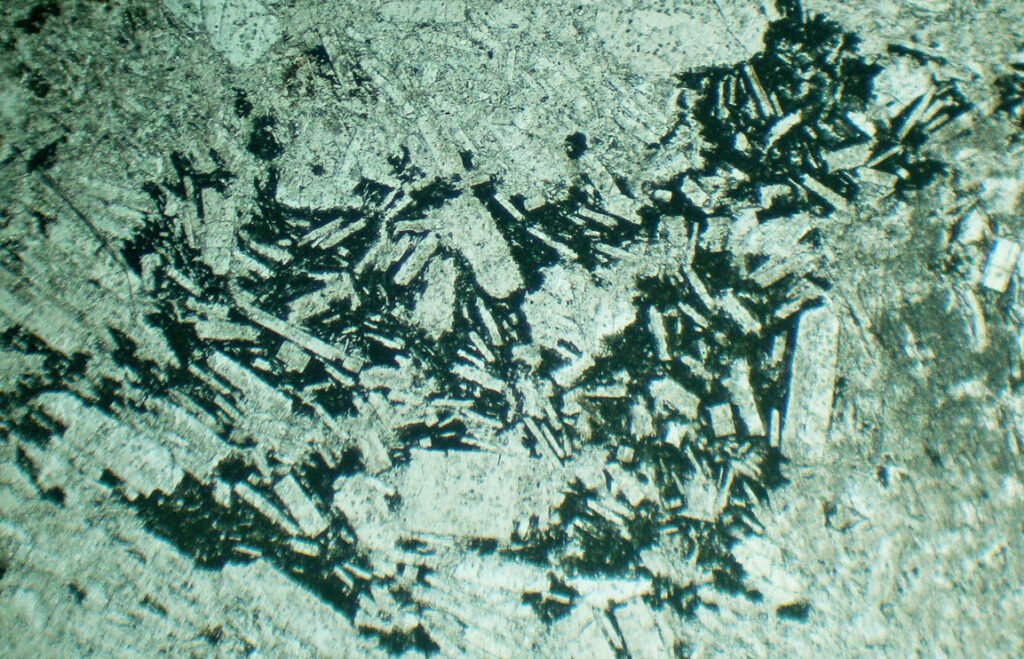
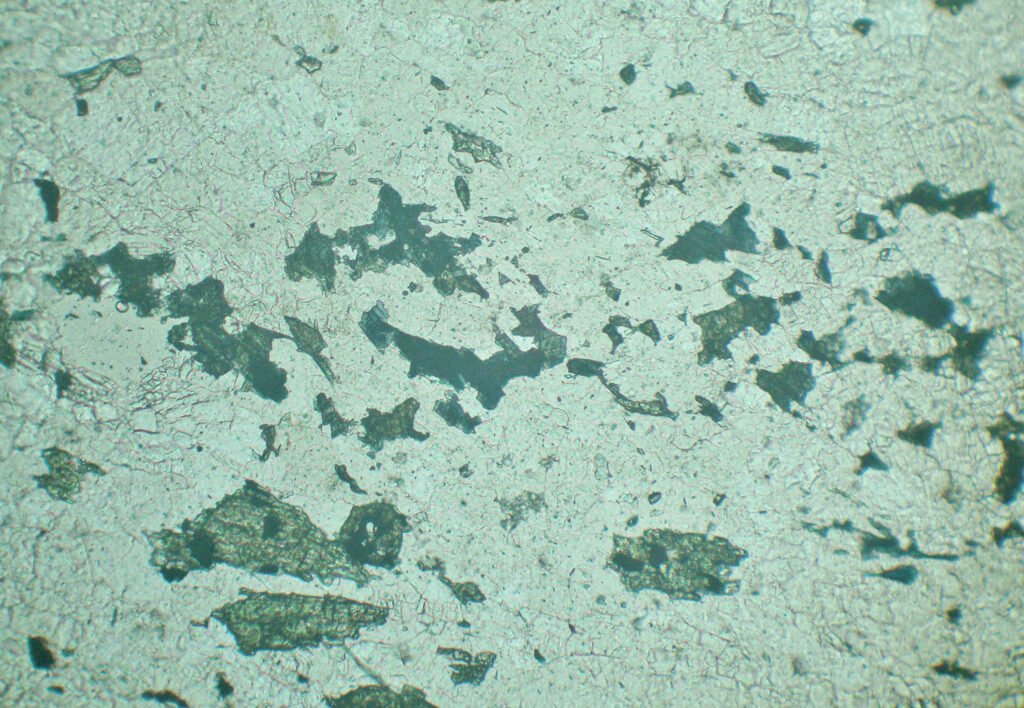
PLANE POLARIZED LIGHT – PPL
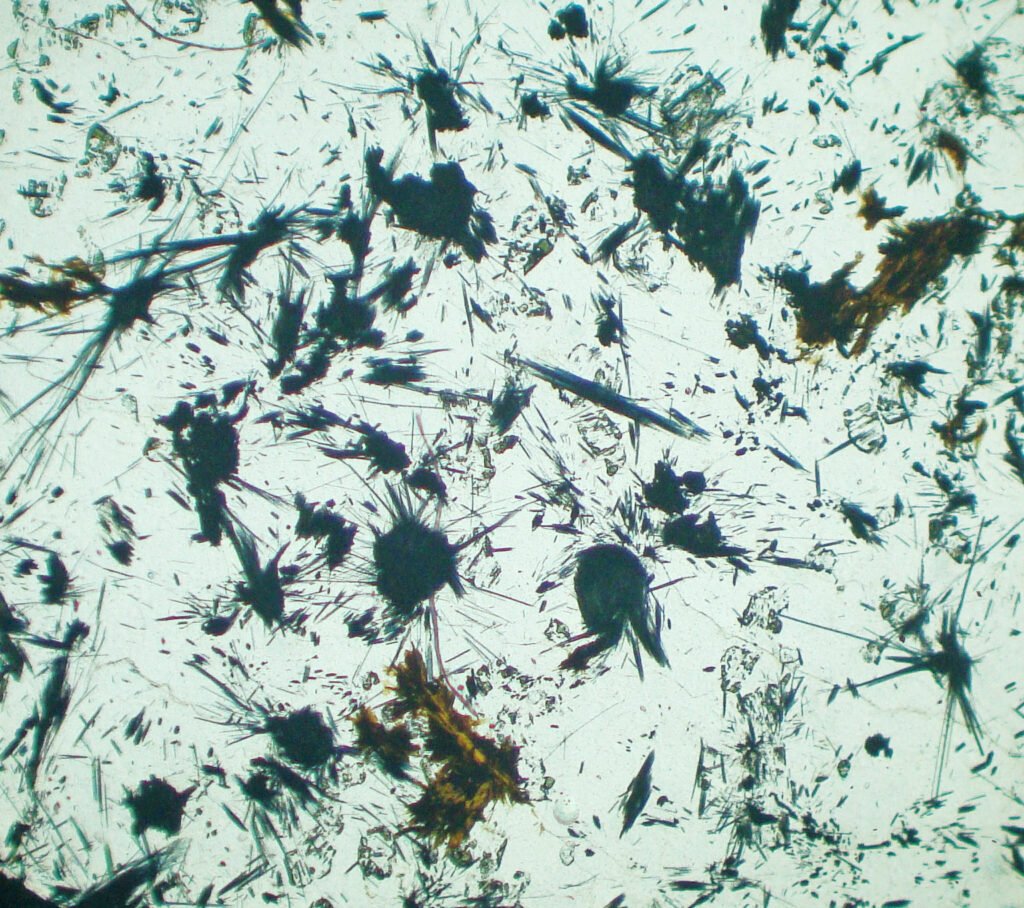
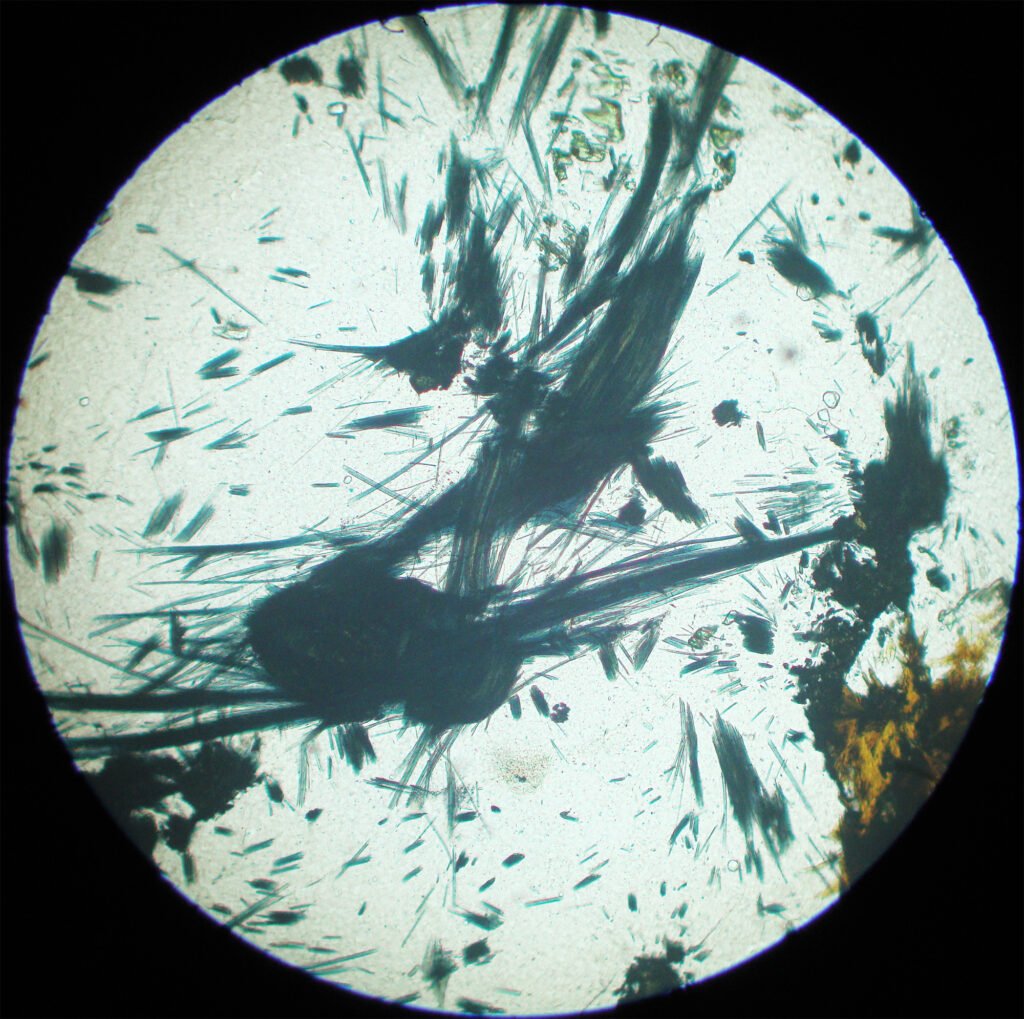
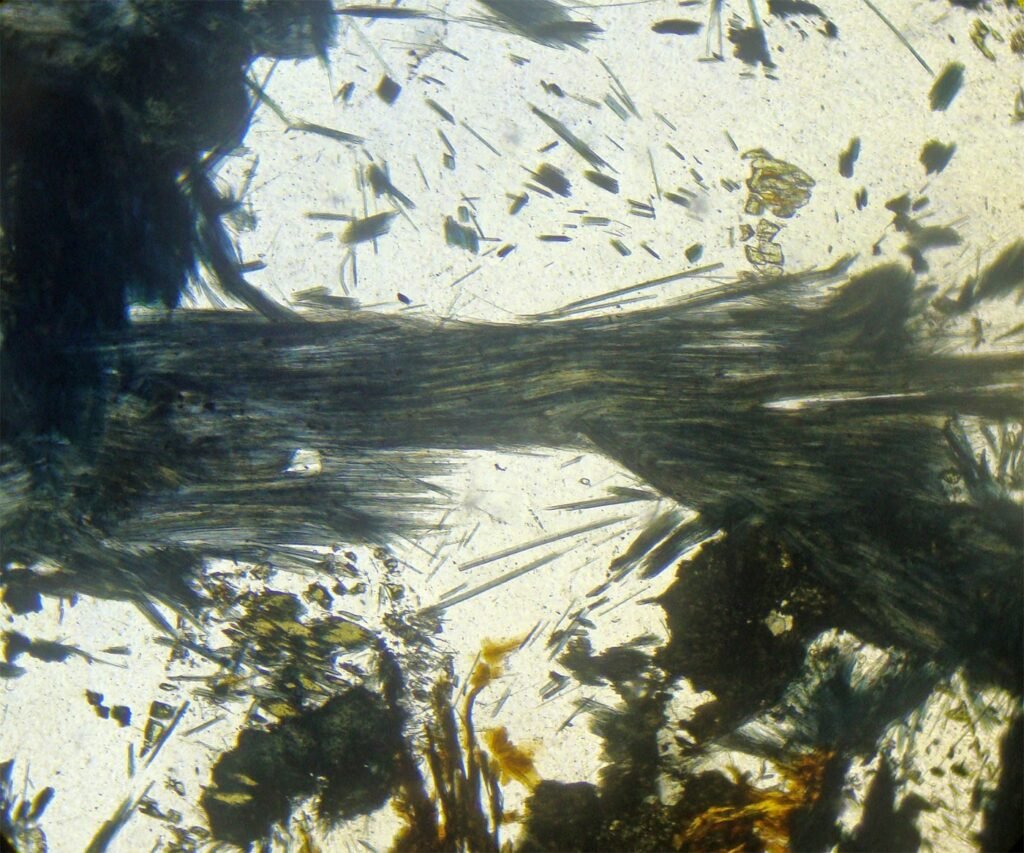
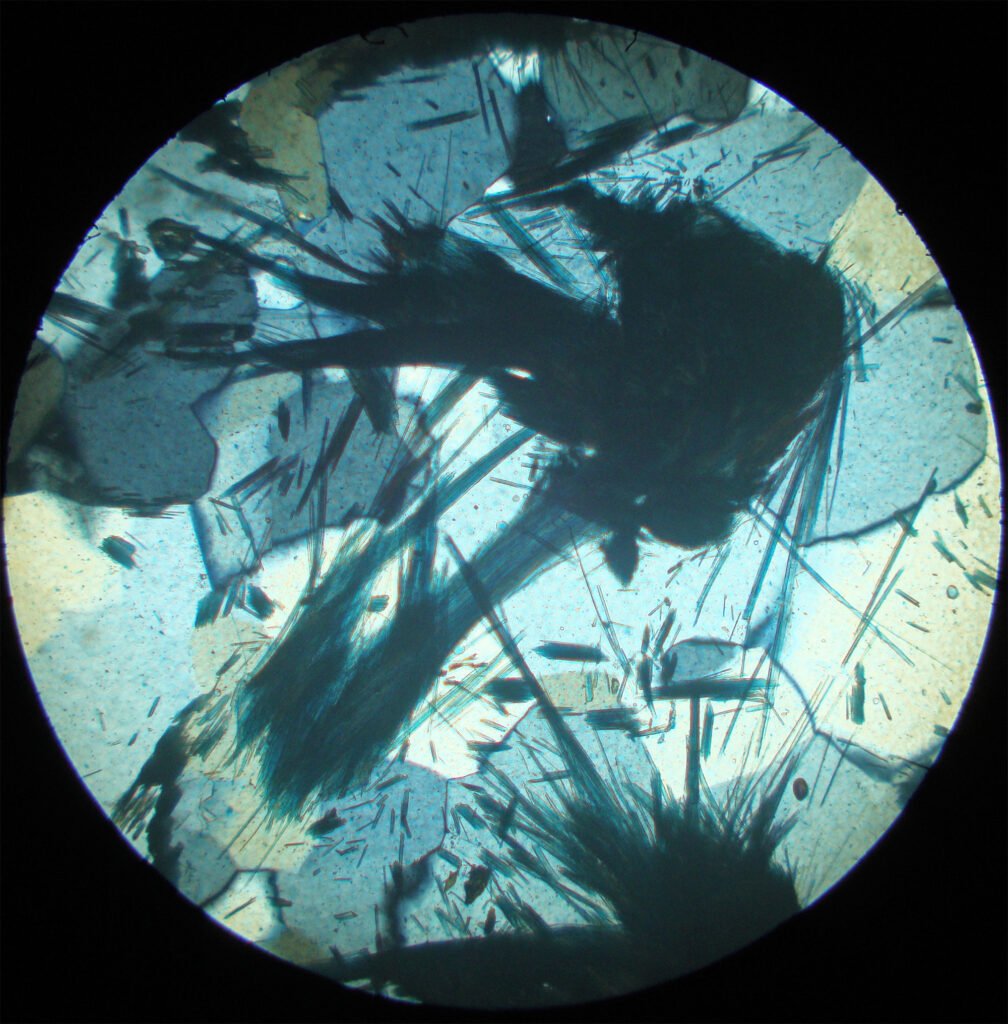
Color / Pleochroism: Strong pleochroism between:
X = Y = dark blue to blue-green to black and
Z = dark yellow-green to pale yellow-green to brown.
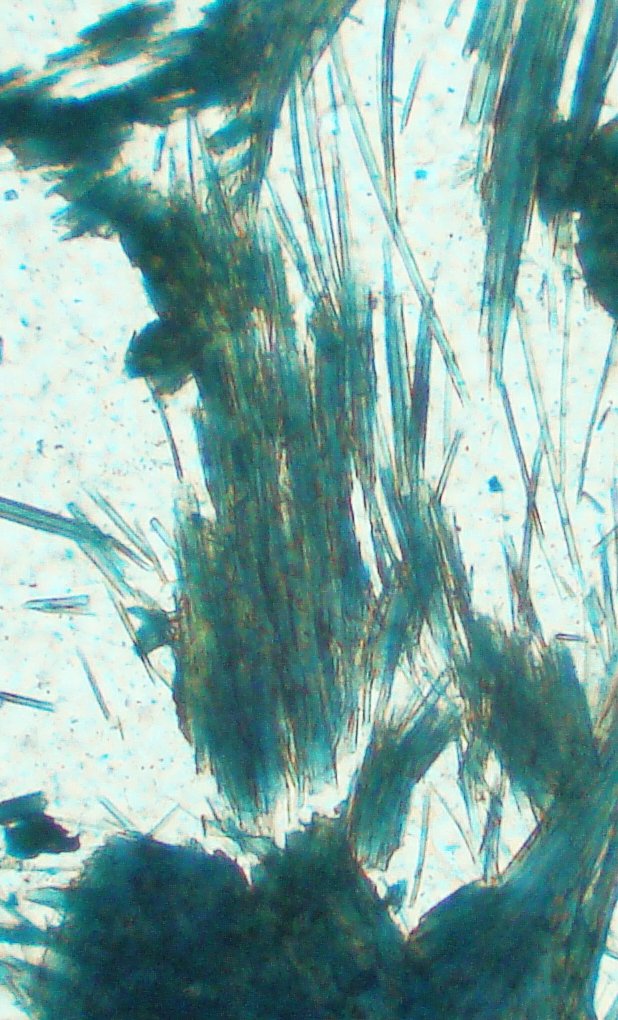
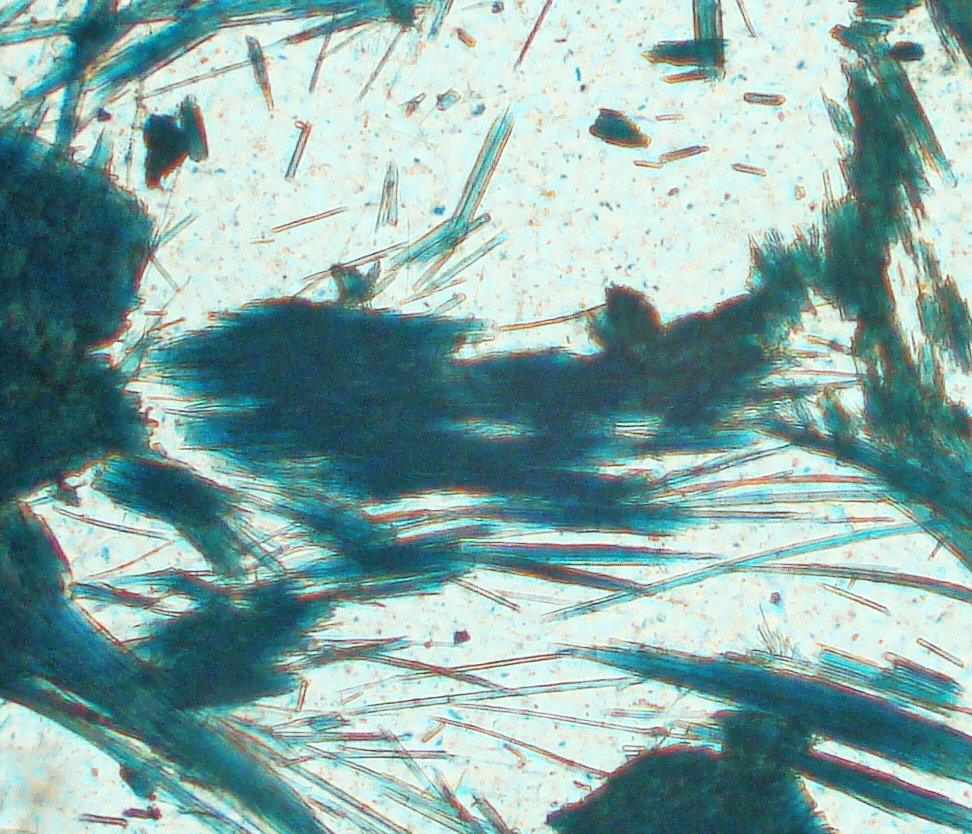
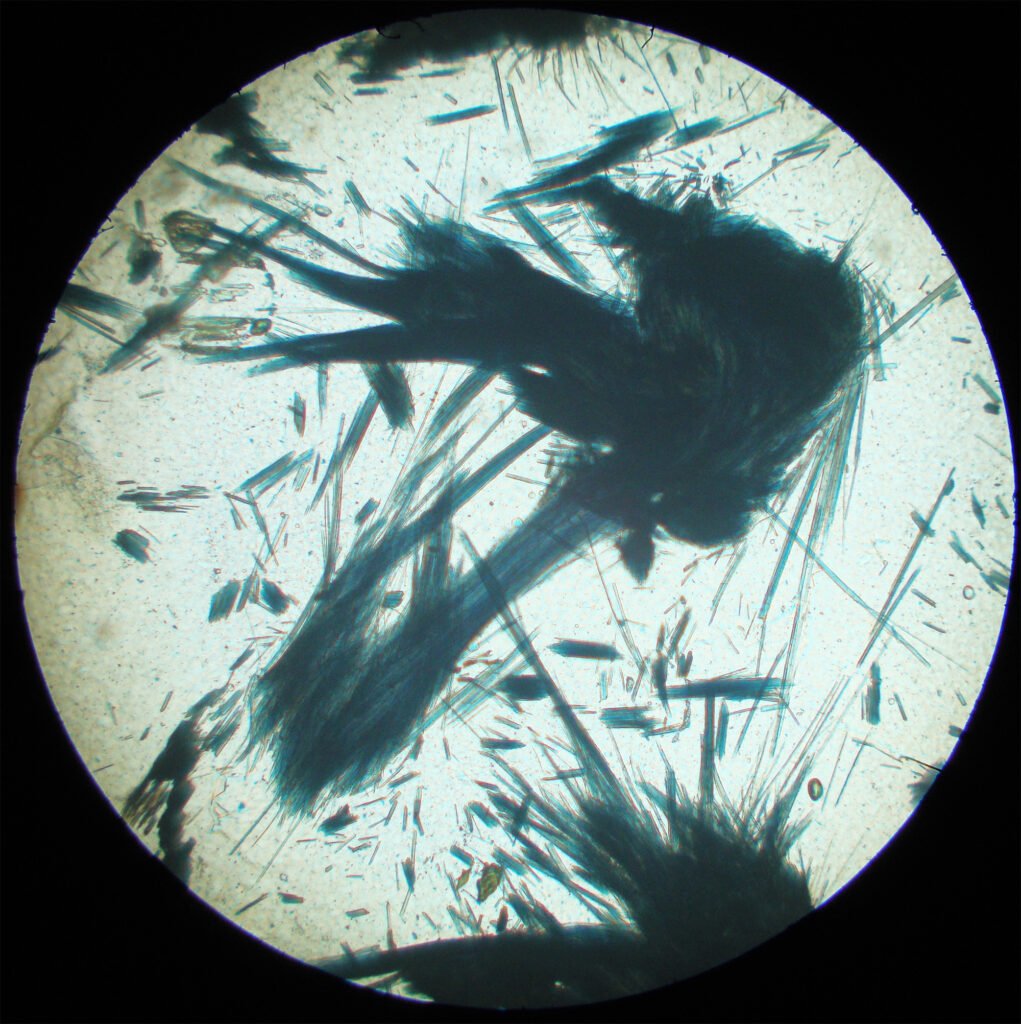
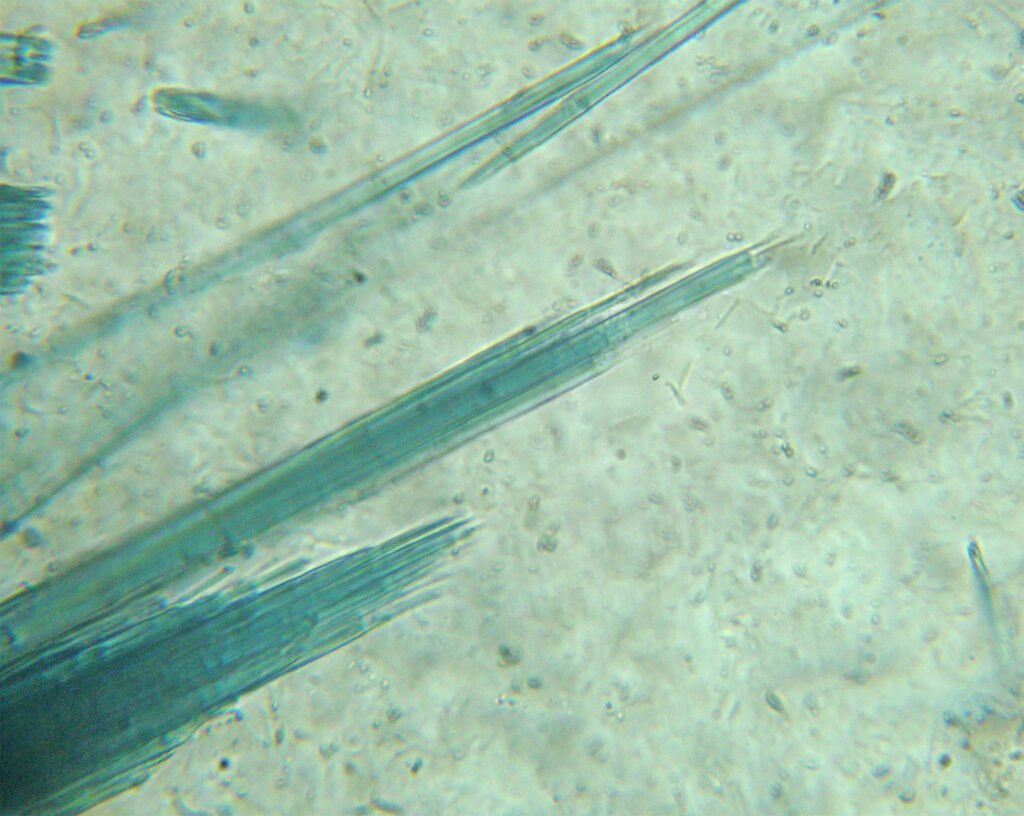
The smaller the crystals and the denser the fiber aggregate, when applicable, the more difficult it is to perceive these pleochroism colors.
Relief: Moderate to high.
Cleavage: Perfect {110} cleavage.
In the longitudinal sections, there is only one cleavage. In the basal, rhombic sections, there are two cleavages that intersect at 56º and 124º, as in all amphiboles.
But when riebeckite shows a fibrous or acicular habit, this cleavage is no longer visible.
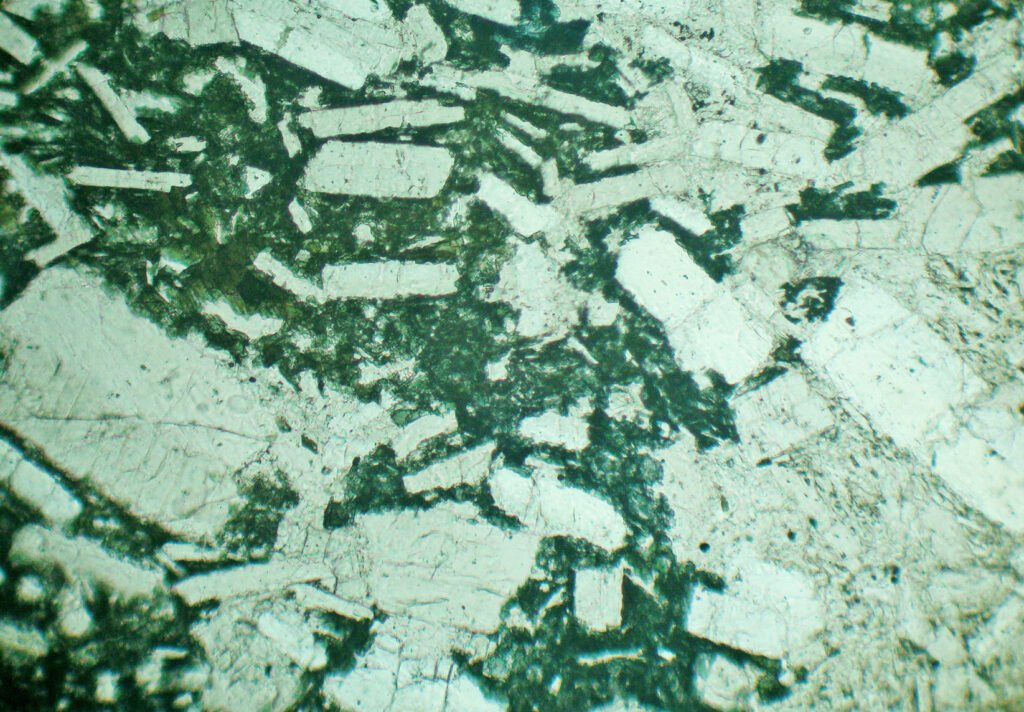
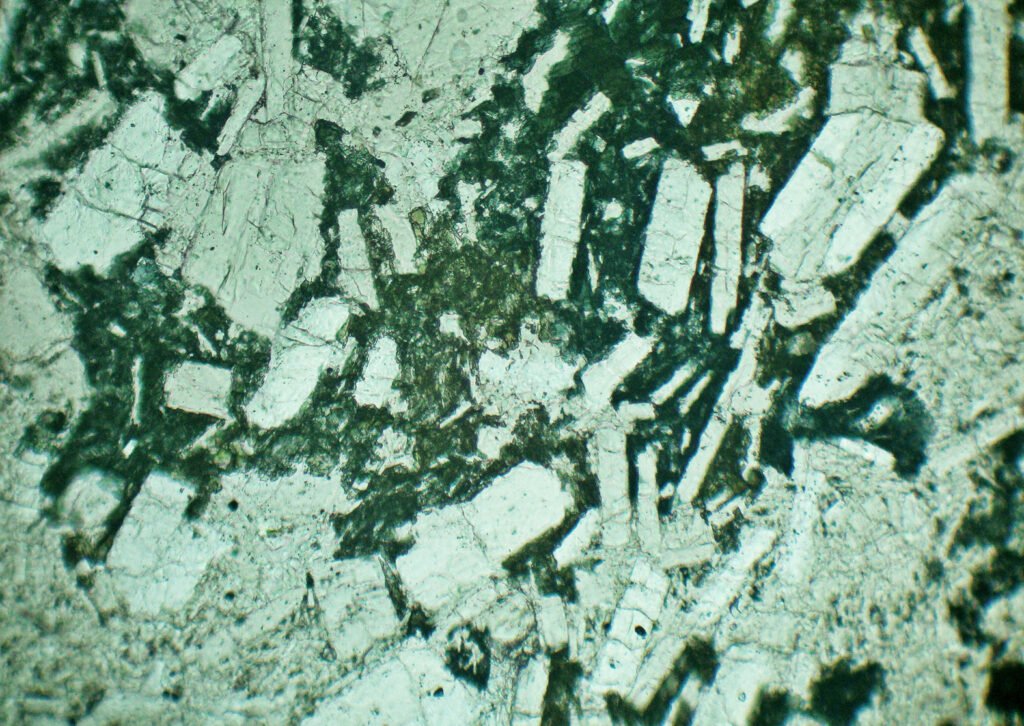
Habits: Prismatic wide, short or long. Acicular or fibrous.
Basal sections, when it is possible to observe, have a rhombic shape.
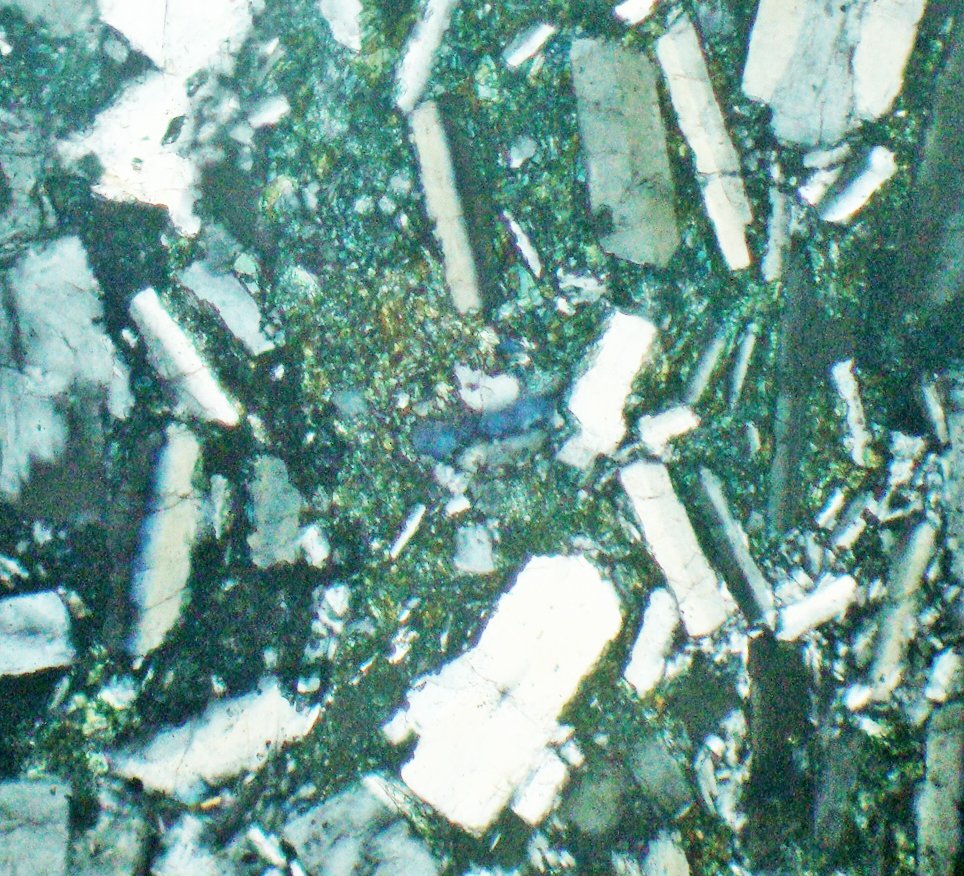
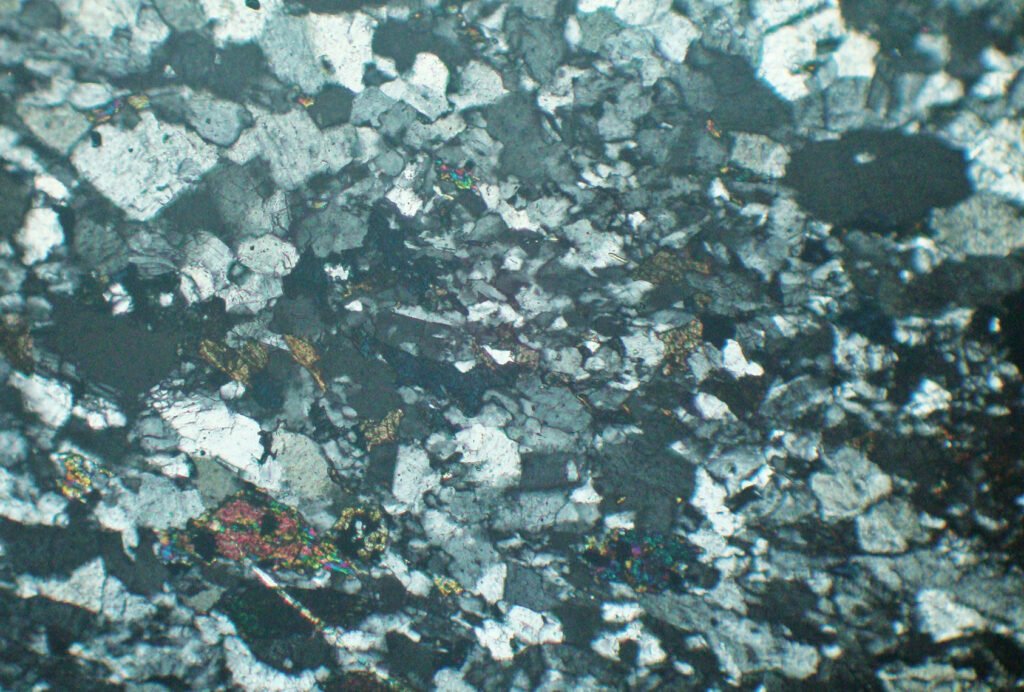
CROSSED POLARIZED LIGHT – XPL
Birefringence and Interference Colors:
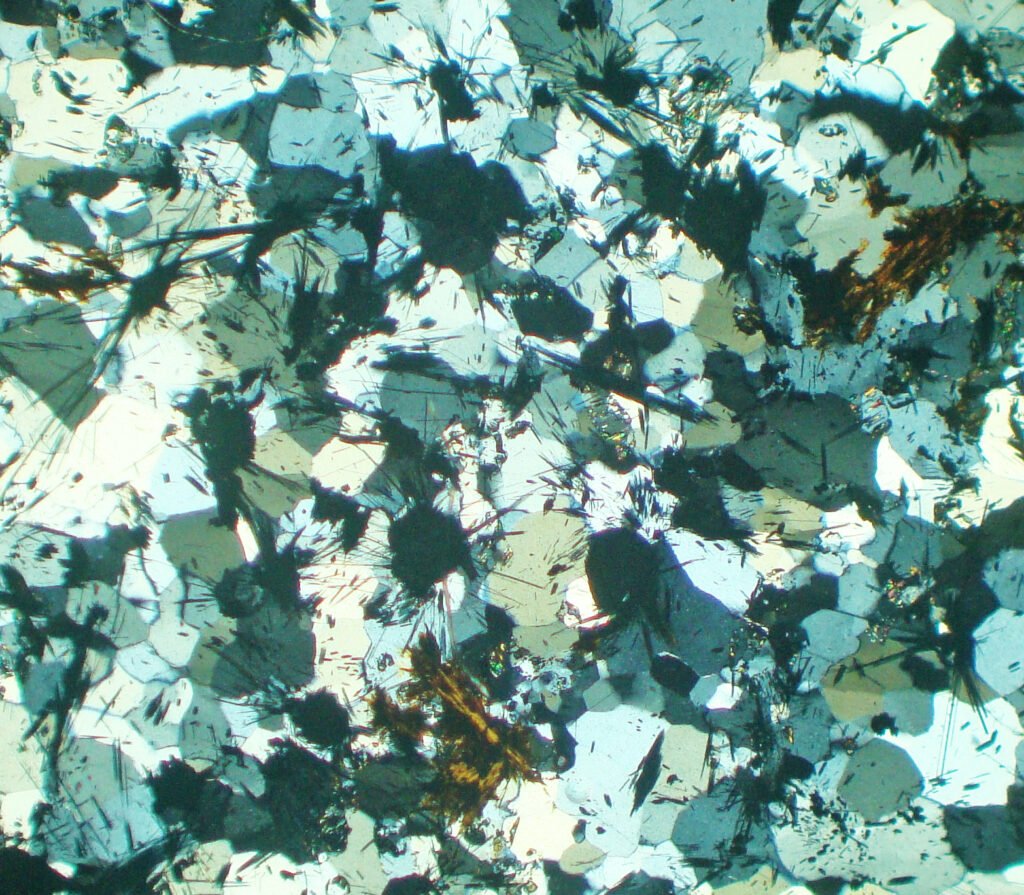
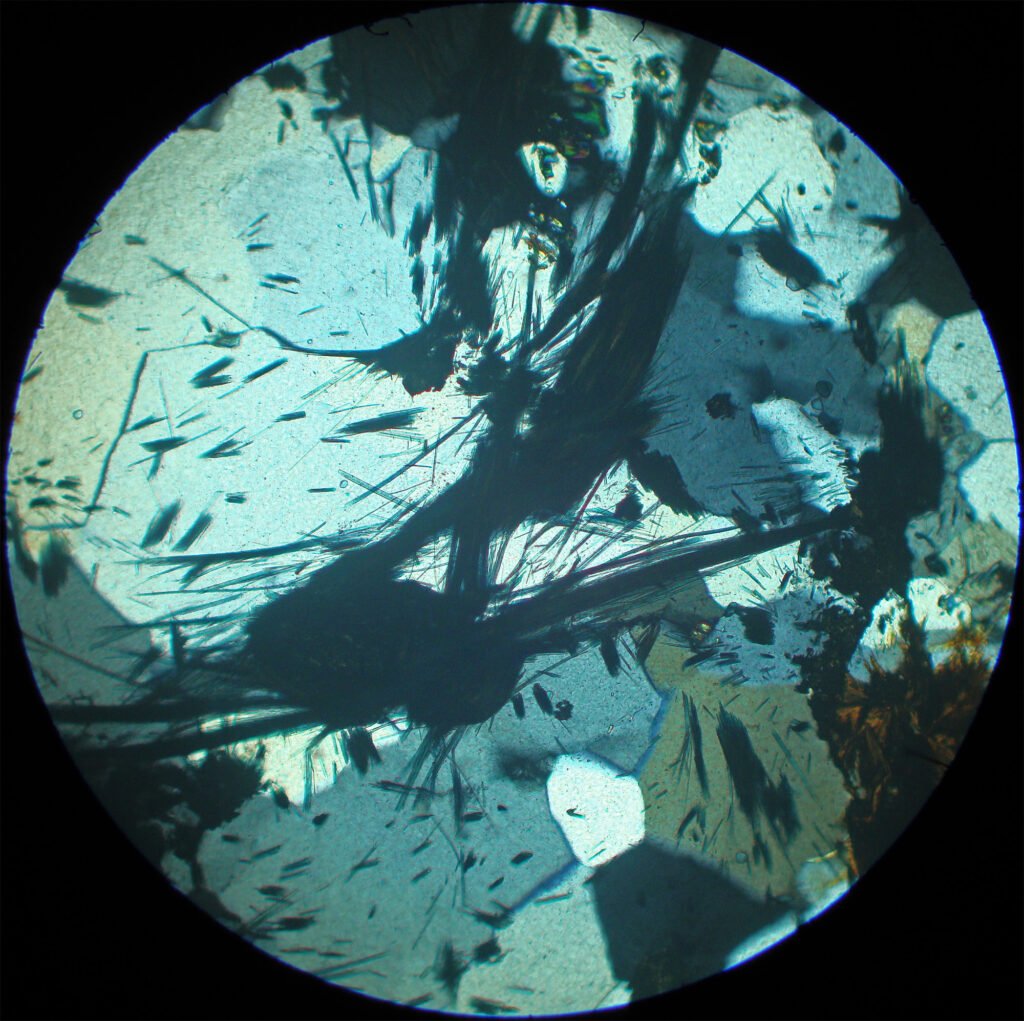
Birefringence from 0.006 to 0.008, corresponding to first-order interference colors, ranging from dark to light gray and white, such as quartz.
But the strong own colors of the mineral mask these interference colors in such a way that the color of riebeckite practically does not change between PPL and XPL.
Extinction: Tends to oblique with an angle between 0 and 30º.
Therefore, it can simulate being parallel!
Elongation sign: ES(-), sometimes ES(+), difficult to verify due to the intense own color of the mineral.
Twins: Simple and lamellar on (100), only visible in larger crystals.
Zoning: Often zoned, usually zonation can be seen only in wider/larger crystals; in fibers is impossible.
CONVERGENT LIGHT
Character: B(+) or B(-), can simulate being uniaxial.
2V angle: 40 – 100º, very variable.
Alterations: to iron oxides and carbonates.
May be confused with: few other minerals. Its cleavage, colors and pleochroism are very diagnostic. When fibrous, the habit is diagnostic, as other blue minerals do not have it.
Glaucophane occurs in other paragenesis and has different pleochroism colors (violet, etc.) and much more intense interference colors.
Dumortierite usually has a much lighter blue color, pleochroism varies between colorless and blue.
Tourmaline is more rarely blue, it usually has another habit and its colors usually have spots (zoning).
Arfvedsonite is much darker, some of its colors have greenish hues and it has the maximum absorption colors along the z axis.