1. Characteristics
Crystal system: Cubic hexaoctahedral.
Color: Blue, white, gray, yellow, green or pink.
Habit: Typically dodecahedrons or pseudo-octahedrons. Rounded grains.
Cleavage: {110} distinct.
Tenacity: Brittle.
Twinning: On {111}, common.
Fracture: Irregular.
Mohs Hardness: 5.5 – 6
Parting: No.
Streak: White to very pale blue.
Lustre: Vitreous, resinous.
Diaphaneity: Transparent.
Density (g/cm³): 2.44 – 2.5
2. Geology and Deposits
Haüyne occurs in silica-subsaturated and Na-rich volcanic rocks, which are part of alkaline igneous complexes. These are rocks such as phonolites, trachytoids, trachyandesites, tephrites, basanite-foidites, foidites, foiditoids, tephritoids, tephrites, and phonolite-foidites, rocks containing leucite and nepheline.
It is found in some rare igneous rocks such as okaites (melilitolites) and melilitites.
Also in limestones that underwent contact metamorphism (skarns) and in rocks of regional metamorphism. It is the main component of lapis lazuli, in the form of the sulfur-rich variety known as lazurite.
3. Mineral Associations
Haüyne occurs with other feldspathoids (leucite, nepheline), feldspars (sanidine), pyroxenes (augite), micas (biotite, phlogopite), garnet (Ti-andradite), zeolites (natrolite, gonnardite), melilite, calcite, pyrite, titanite, pargasite, fluor-apatite and magnetite.
4. Transmitted Light Microscopy
Refraction indices: n: 1.494 – 1.509
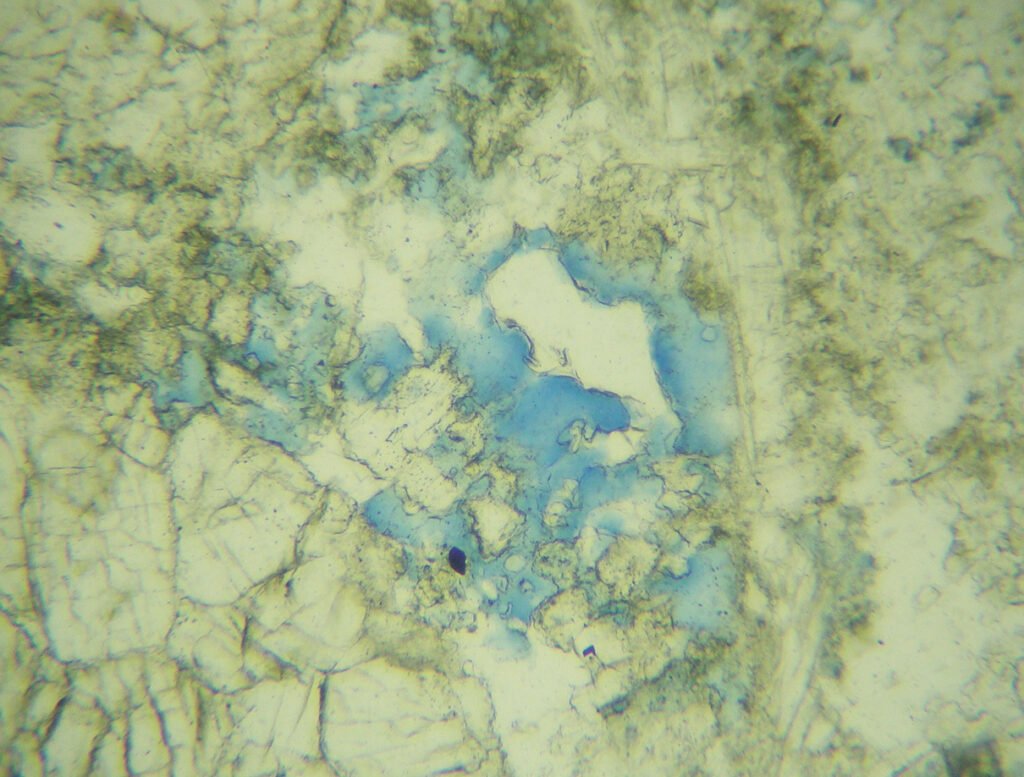
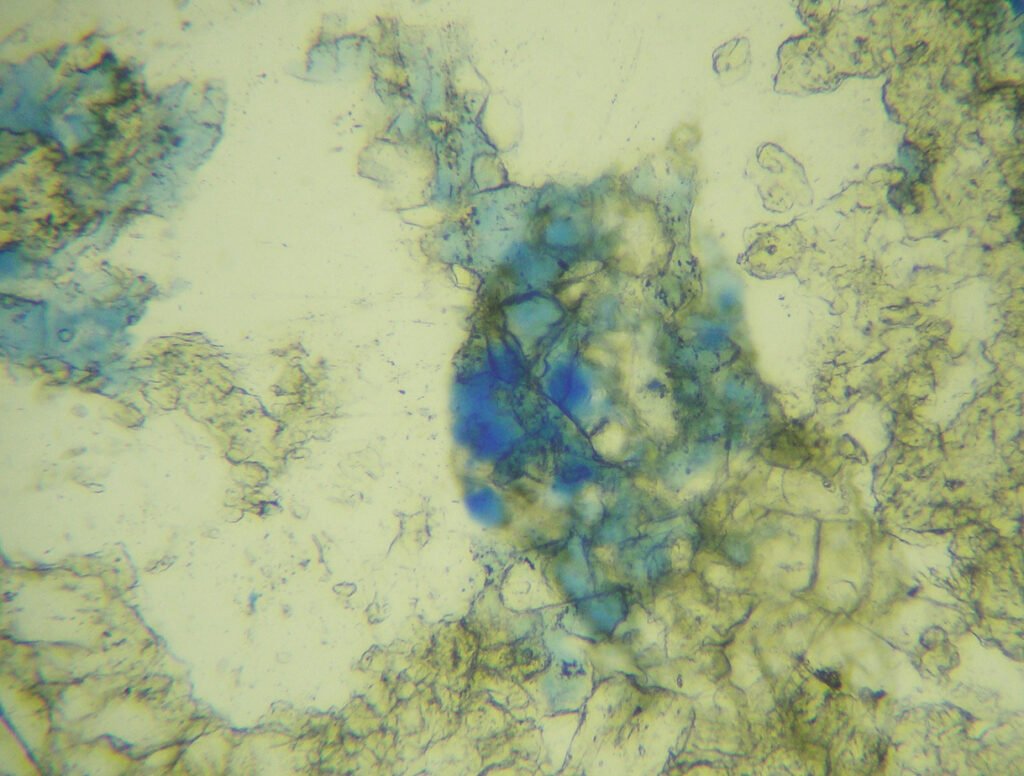
PLANE POLARIZED LIGHT – PPL
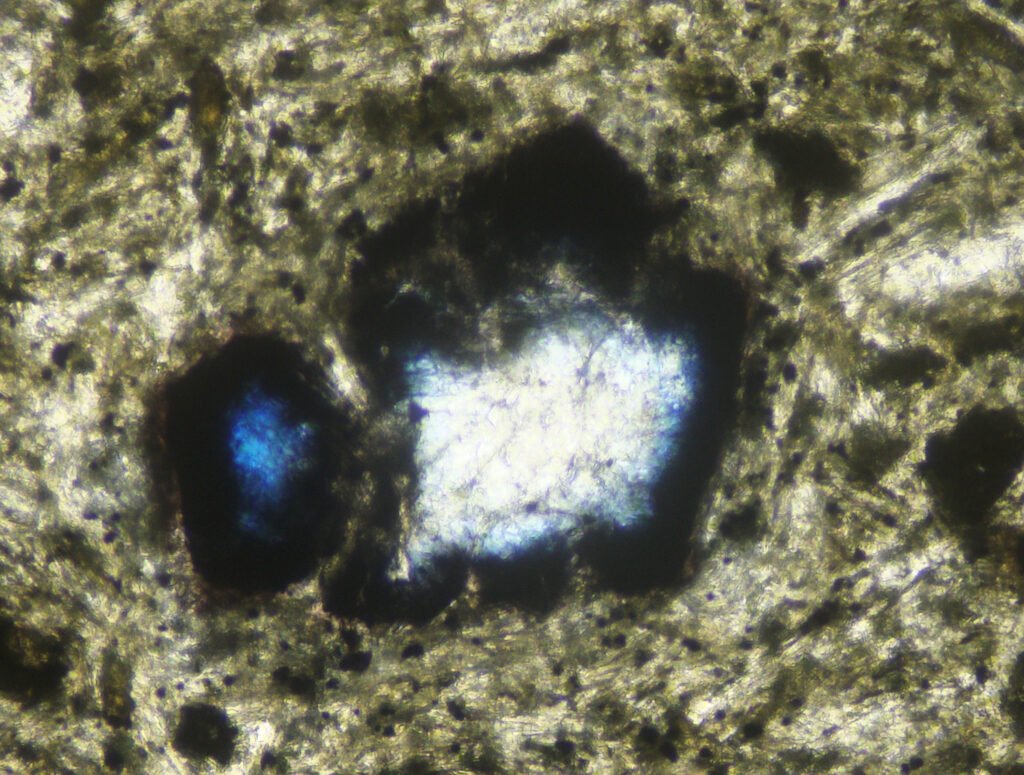
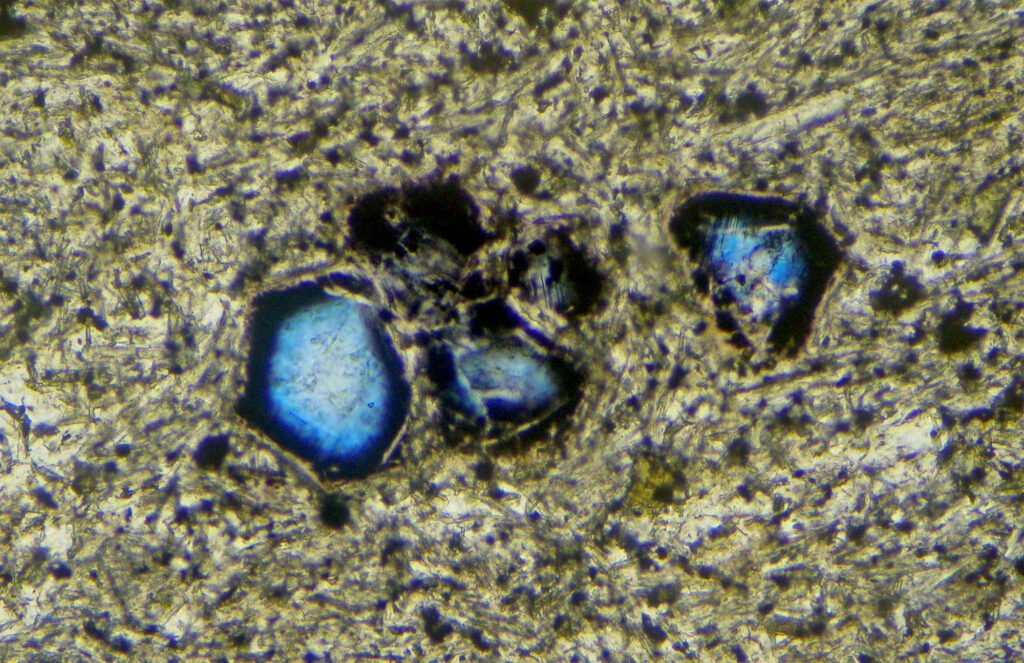
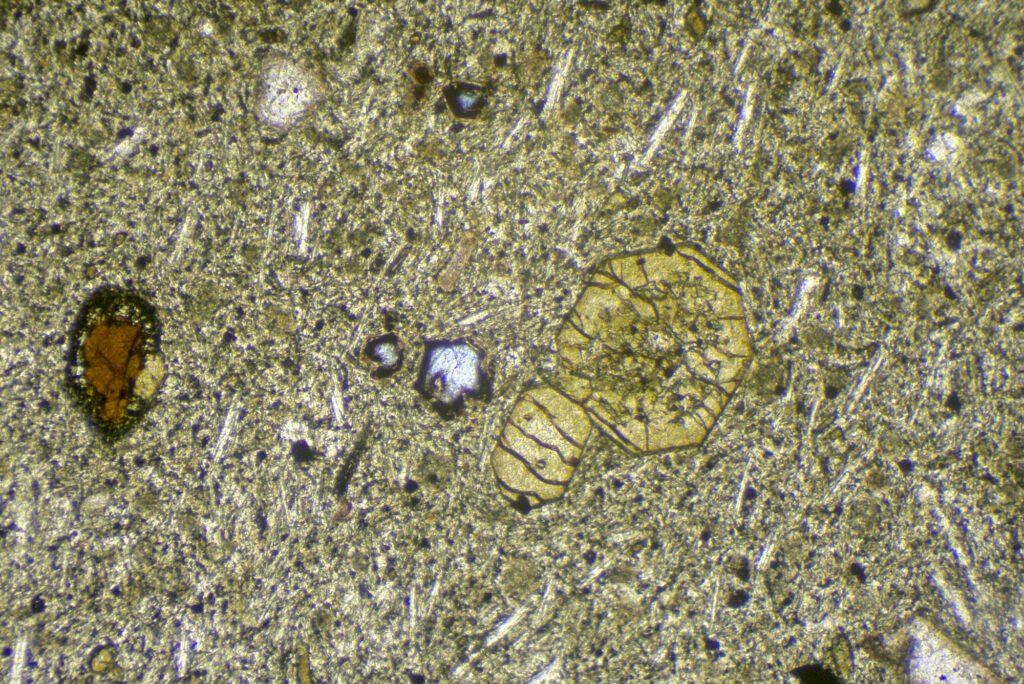
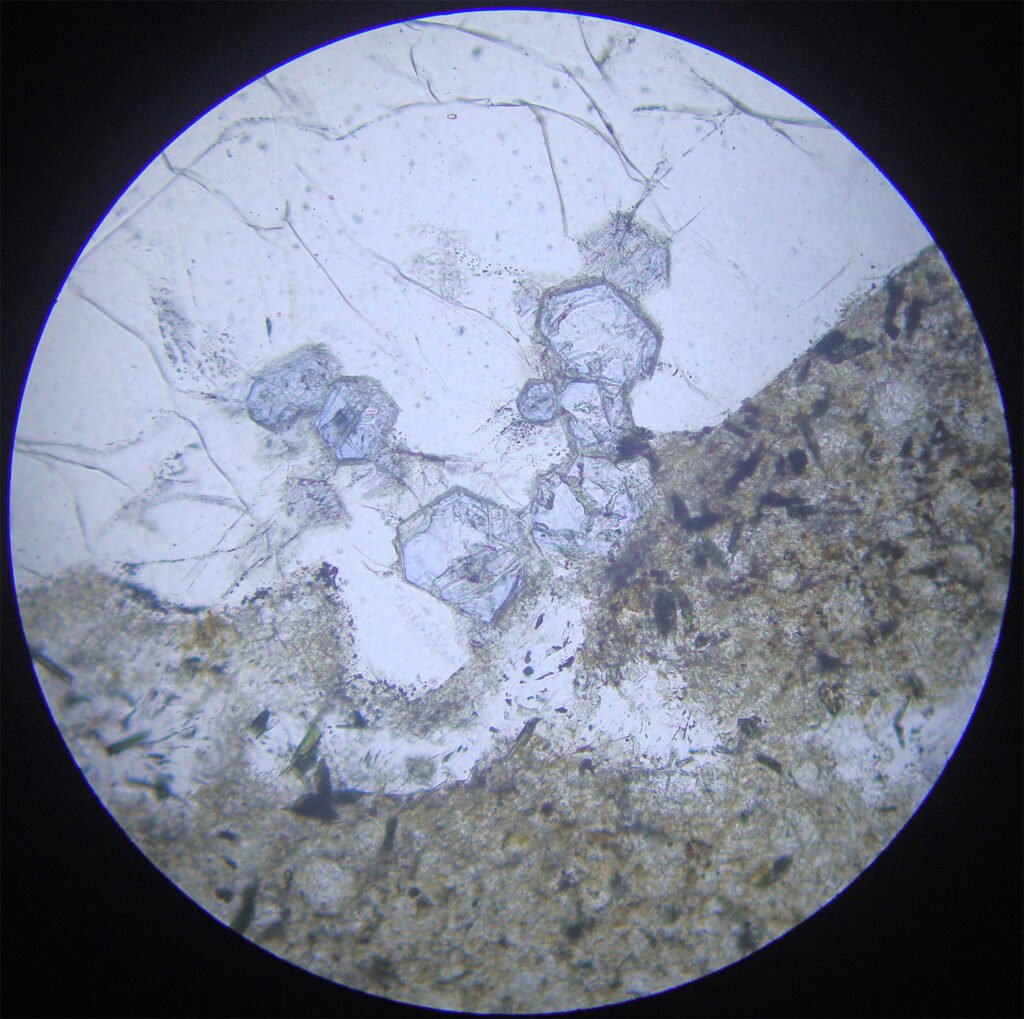
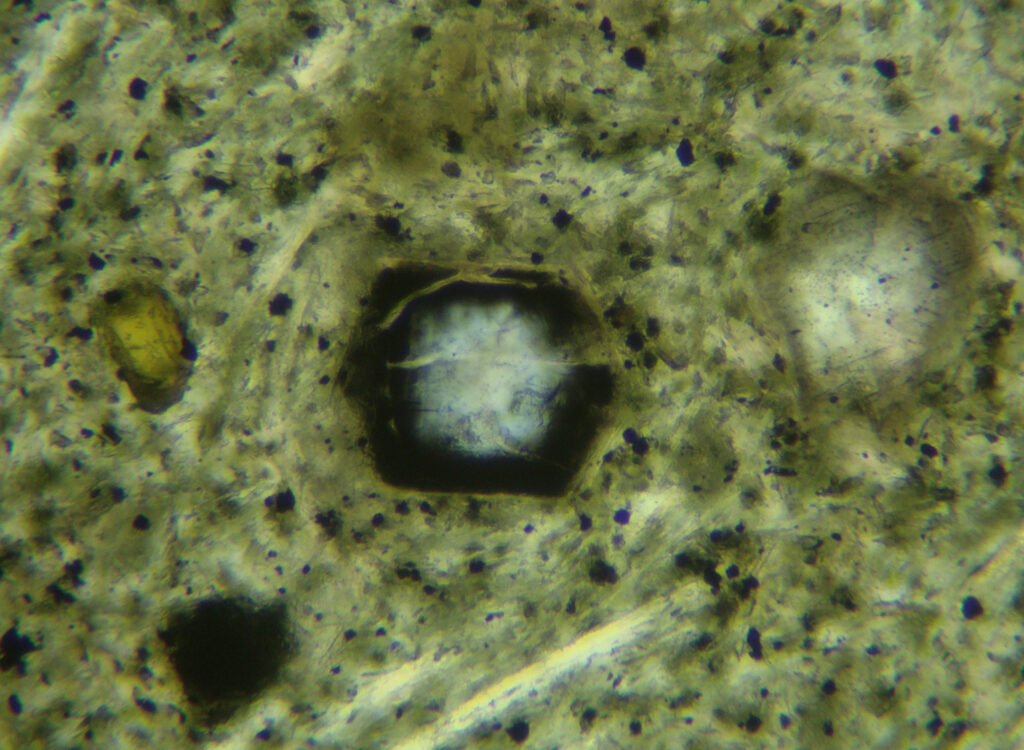
Color / Pleochroism: Colorless to blue, may occur in patches or irregular bands. More rarely green, red, yellow; does not have pleochroism.
Lazurite is the designation for the ultramarine, midnight blue, teal, and green colored varieties that make up lapis lazuli rock.
Relief: Very low, negative.
Cleavage: {110} distinct. May be visible on a thin section.
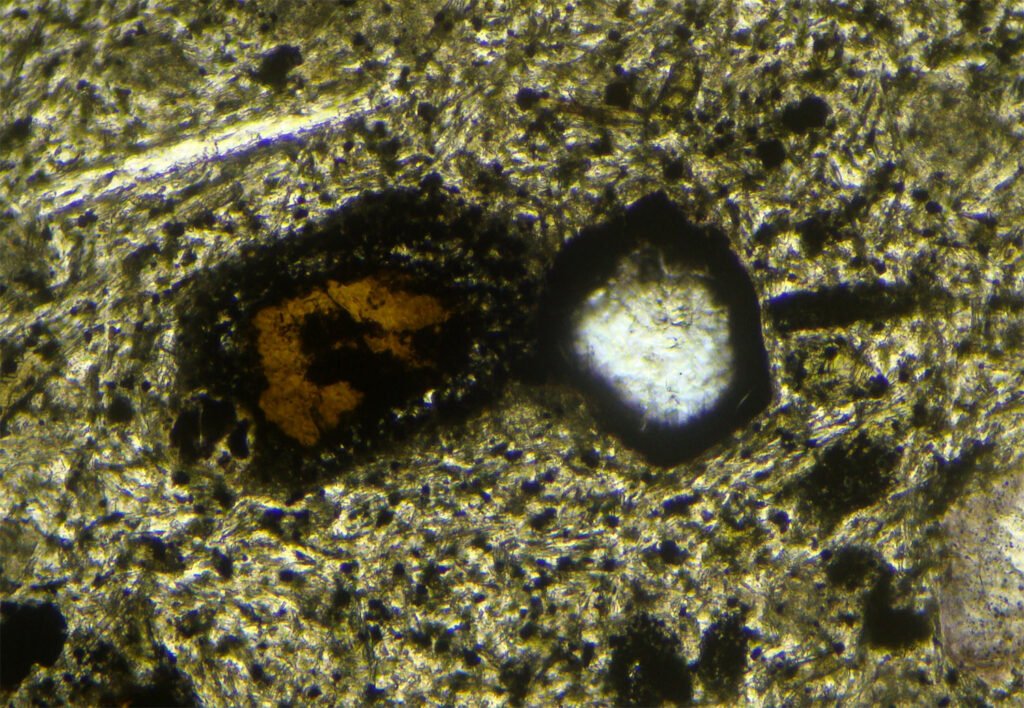
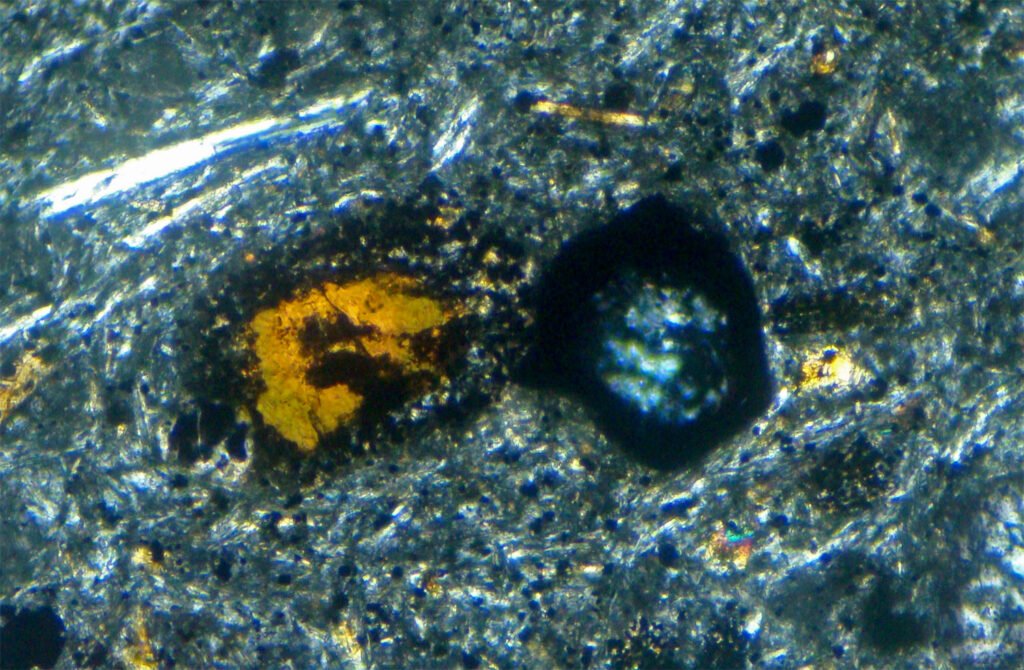
Habits: Equidimensional, granular, euhedral grains, which can have 6, 8 or 10 sides. More rarely octahedrons. There may be a zonation of inclusions; black margins (sulfides and iron oxides) are also frequent. Rounded vertices, corroded faces, and curves are common. If the grains are very small and occur as microliths in the matrix, they are easily overlooked.
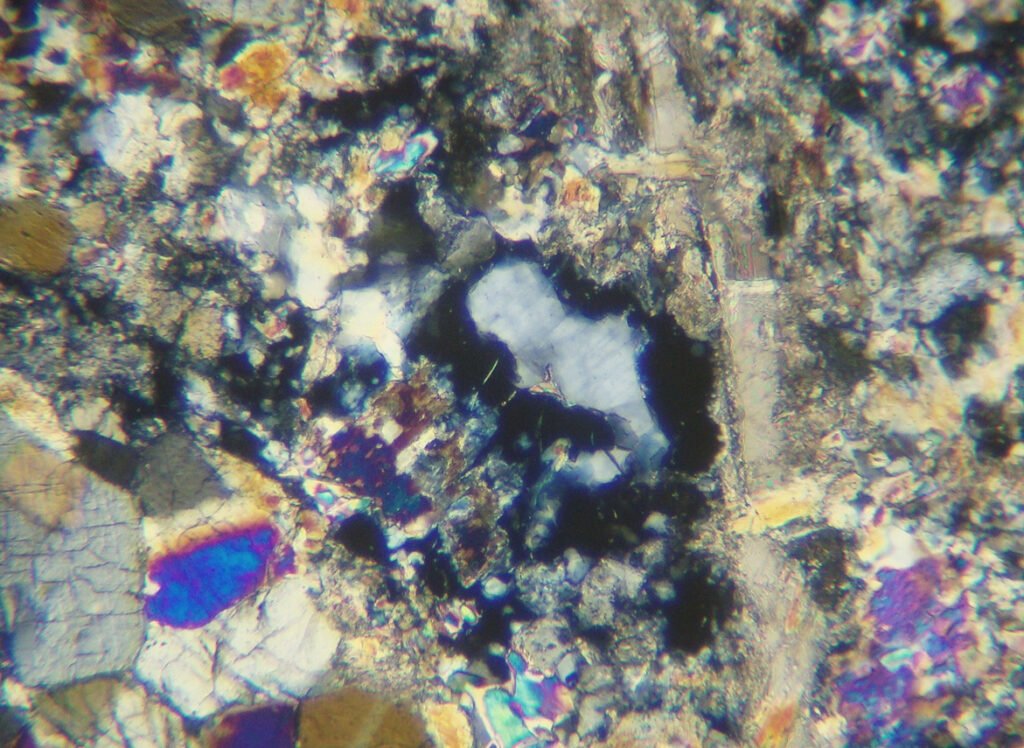
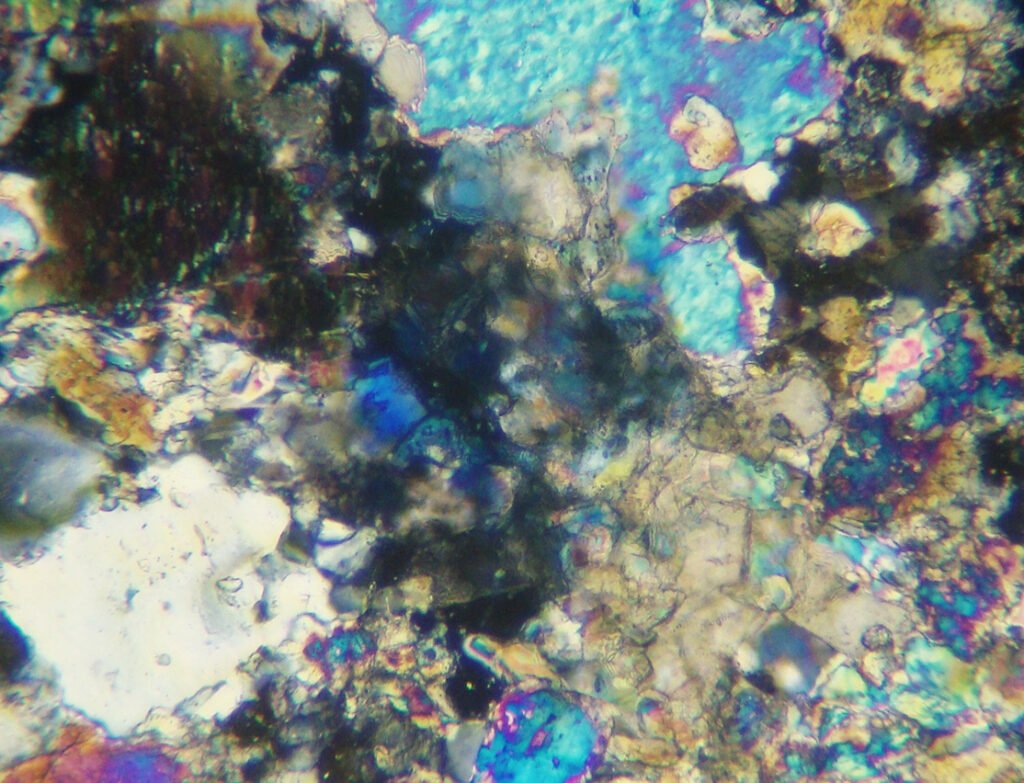
CROSSED POLARIZED LIGHT – XPL
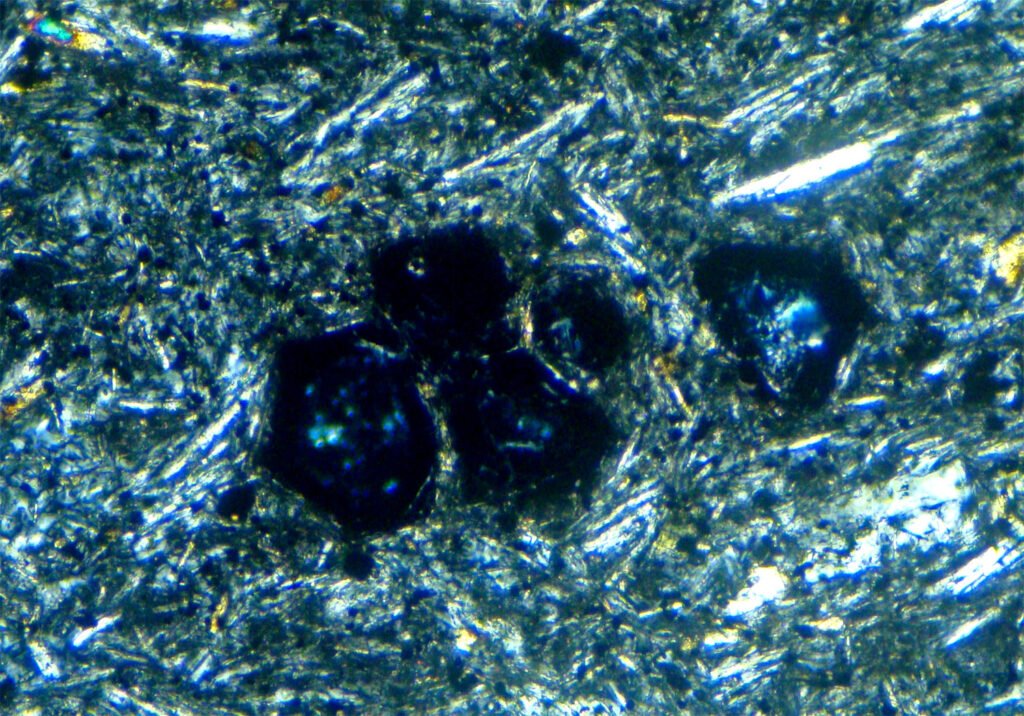
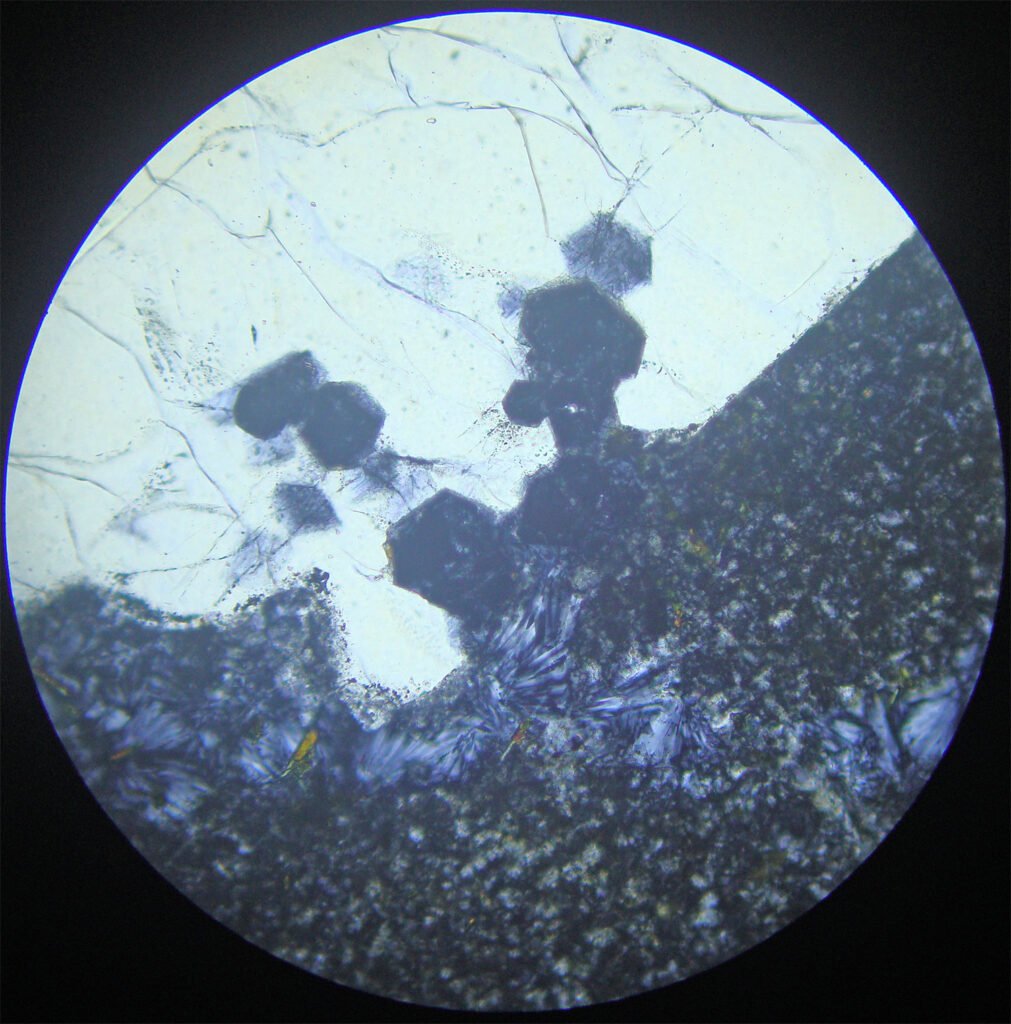
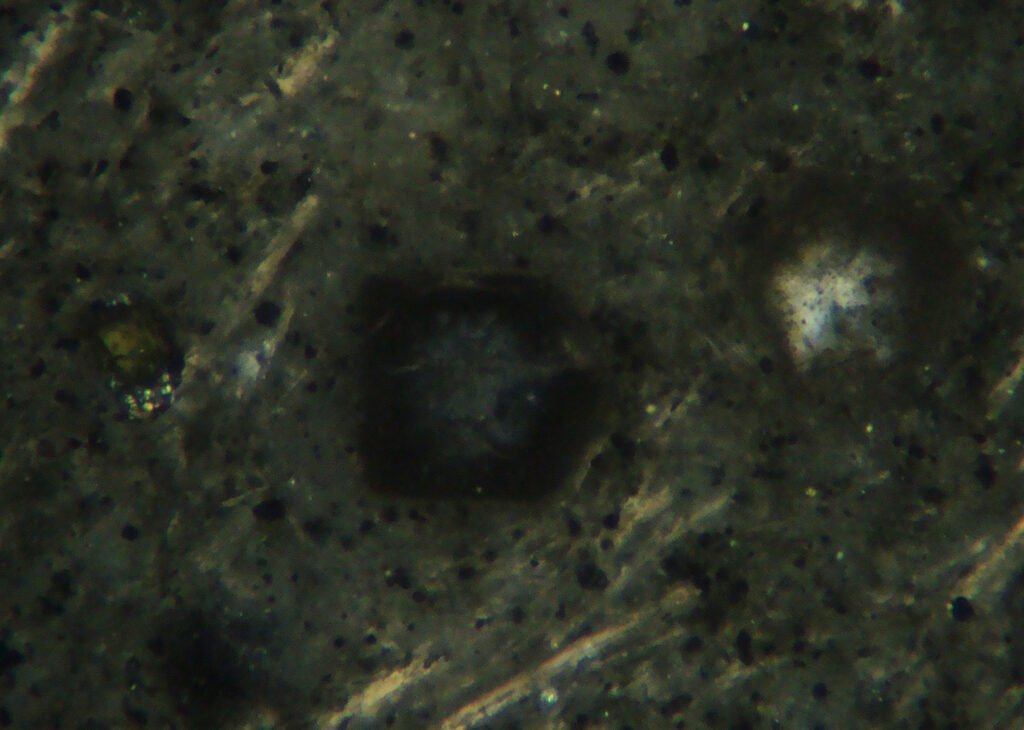
Birefringence and Interference Colors: Isotropic. A very low, anomalous birefringence is possible. In this case the blue color is still visible.
Extinction: Isotropic.
Elongation sign: Isotropic.
Twins: No.
Zoning: No information available.
CONVERGENT LIGHT
Character: Isotropic.
2V angle: Isotropic.
Alterations: several types are possible.
Late-magmatic hydrothermalism alters haüyne to fibrous aggregates of zeolites (similar to serpentine).
Weathering leads to the formation of sericite.
Alteration forms kaolinite.
In the early stages of alteration, the rock may have a red color due to extremely fine-grained, disseminated limonite.
May be confused with: several other minerals.
Sodalite, haüyne and nosean can be difficult to differentiate from each other on thin section.
Analcime is similar, but tends to occur only in cavities and shows irregular domains (zones) in CPL.
Leucite tends to show polysynthetic twins that vaguely resemble those of microcline, but are less sharp and the mineral is much darker.