1. Characteristics
Crystal system: Triclinic or monoclinic.
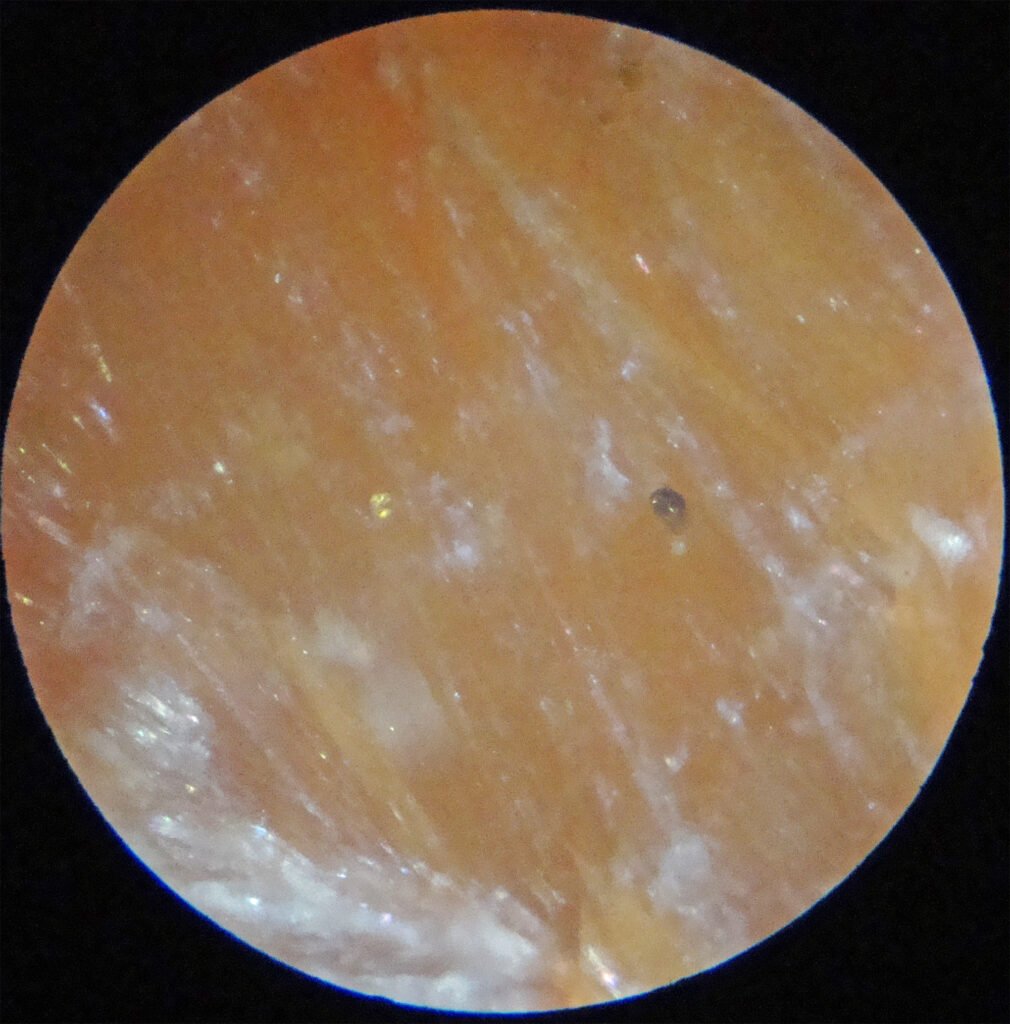
Color: White, gray, pale colors (green, yellow, blue), pink, brownish green.
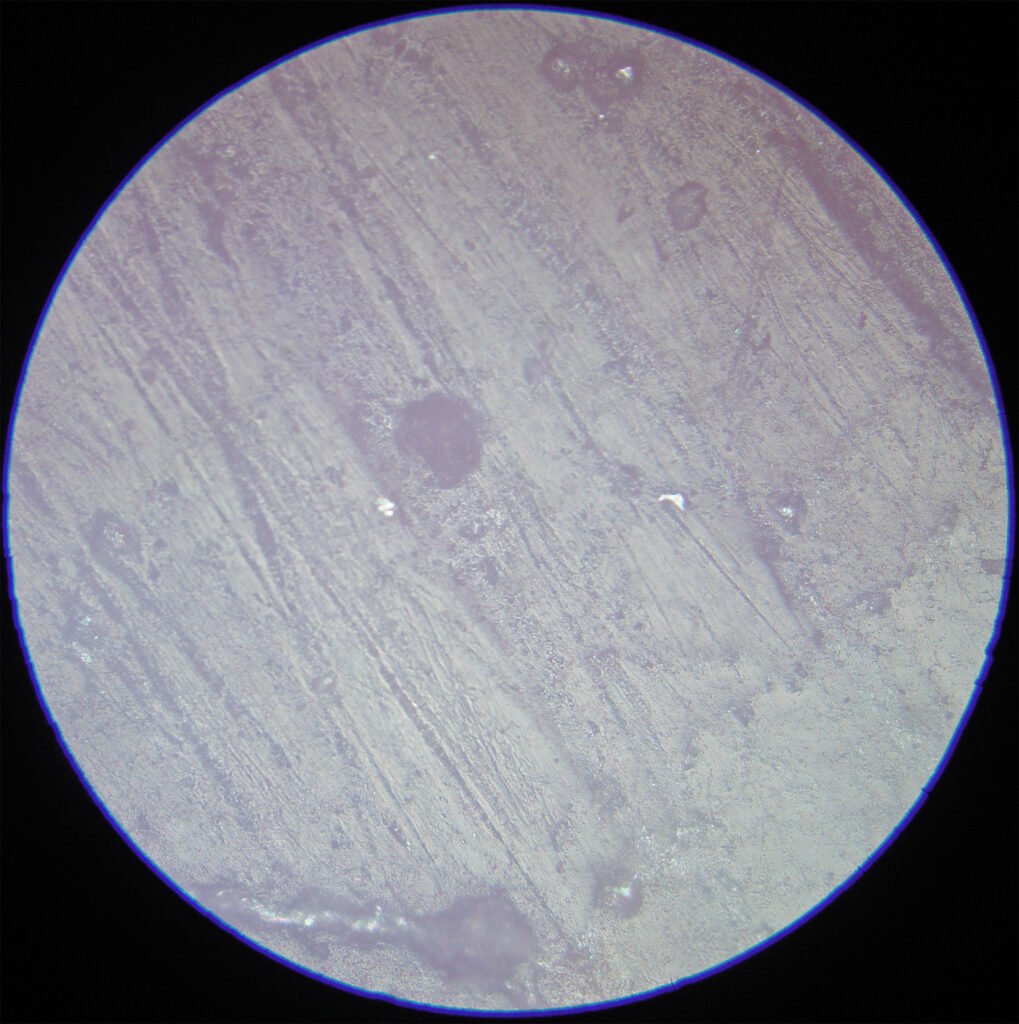
Habit: Lamellar, micaceous, forming fan-like aggregates, tending to spherulitic. massive. Crystals up to 8 cm.
Cleavage: {001} perfect, like the micas.
Tenacity: Flexible, but not elastic, like talc.
Twinning: No.
Fracture: No information available.
Mohs Hardness: 1 – 2
Parting: No.
Streak: No information available.
Lustre: Pearly, dull.
Diaphaneity: Transparent.
Density (g/cm³): 2.65 – 2.9
2. Geology and Deposits
Pyrophyllite occurs in aluminous metamorphic rocks such as metapelites (phyllites and schists), metabauxites and quartzites up to greenschist facies. It can also occur in blueschist facies rocks, formed under high pressure and low temperature metamorphism conditions. It always originates from the alteration of Al-rich minerals such as kyanite and corundum. May occupy irregular veins that traverse altered rocks.
In volcanic rocks with moderate to high silica content, it originates from the hydrothermal alteration of feldspars, presenting a very fine grain and associating with quartz, clay minerals, sericite, zoisite and other aluminous minerals. Pyrophyllite is one of the minerals that form the rock known as “agalmatolite” or “pagodite”, a metamorphic rock formed by the hydrothermal alteration of rhyolites and aluminous metamorphites.
It also occurs in quartz veins and can be formed diagenetically in sandstones.
3. Mineral Associations
It occurs with some very common minerals such as quartz, calcite and pyrite.
In its specific paragenesis, it is associated with talc, kyanite, chloritoid, andalusite, zoisite, corundum, topaz, mica (sericite) and hematite;
Pyrophyllite ore may contain goethite, quartz, orthoclase, kaolinite, muscovite, rutile, chloritoid, tourmaline, gorceixite and zircon.
It also occurs with some rare minerals such as svanbergite, yttrocrasite-(Y), lazulite, variscite, karpolitha-Mg and gormanite.
4. Transmitted Light Microscopy
Refraction indices: nα: 1.534 – 1.556 nβ: 1.586 – 1,589 nγ: 1.596 – 1.601
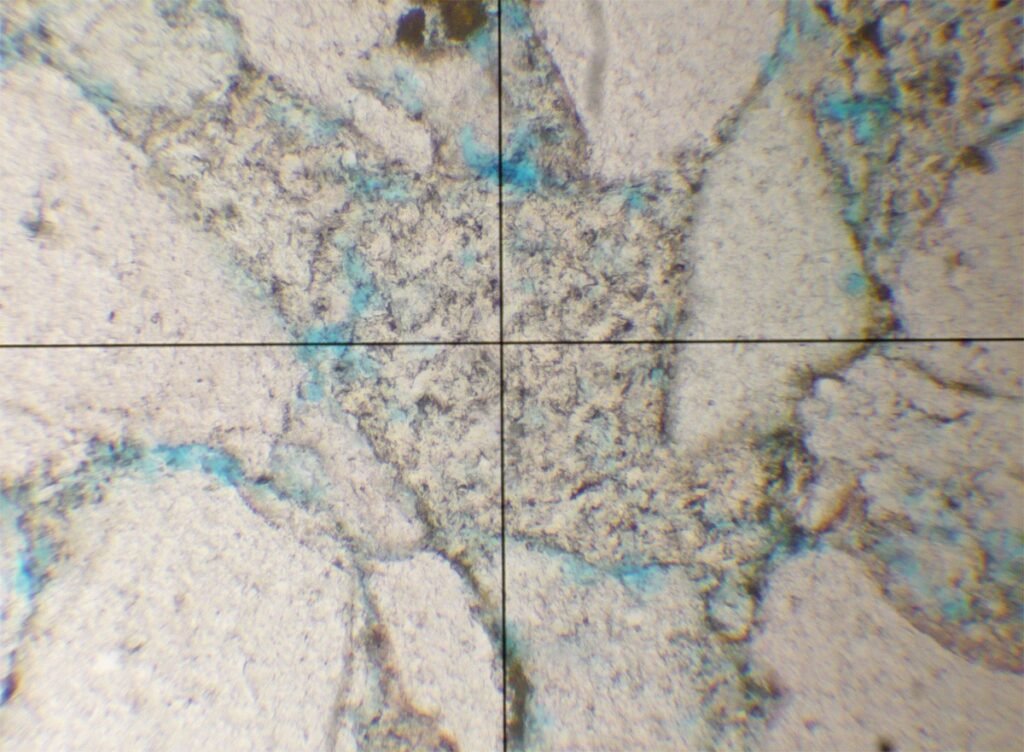
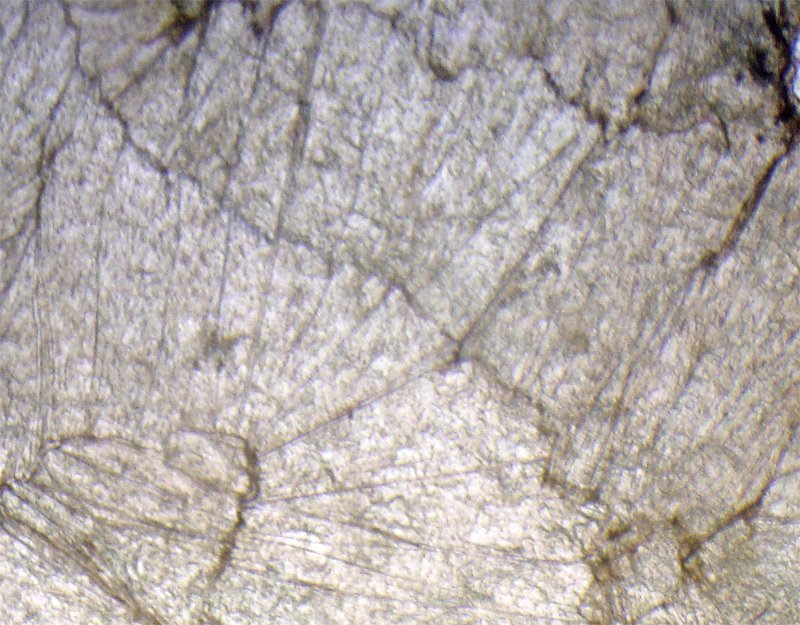
PLANE POLARIZED LIGHT – PPL
Color / Pleochroism: Colorless, never shows color or pleochroism.
Relief: Low to moderate.
Cleavage: {001} perfect, like the micas.
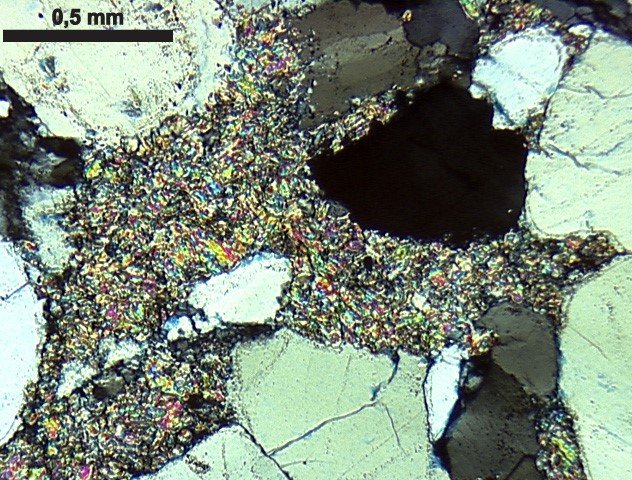
Habits: Subhedral tabular flakes, compact spherulitic aggregates of radiated acicular crystals, fine-grained, granular, massive foliate laminae.
Individual crystals may be heavily twisted.
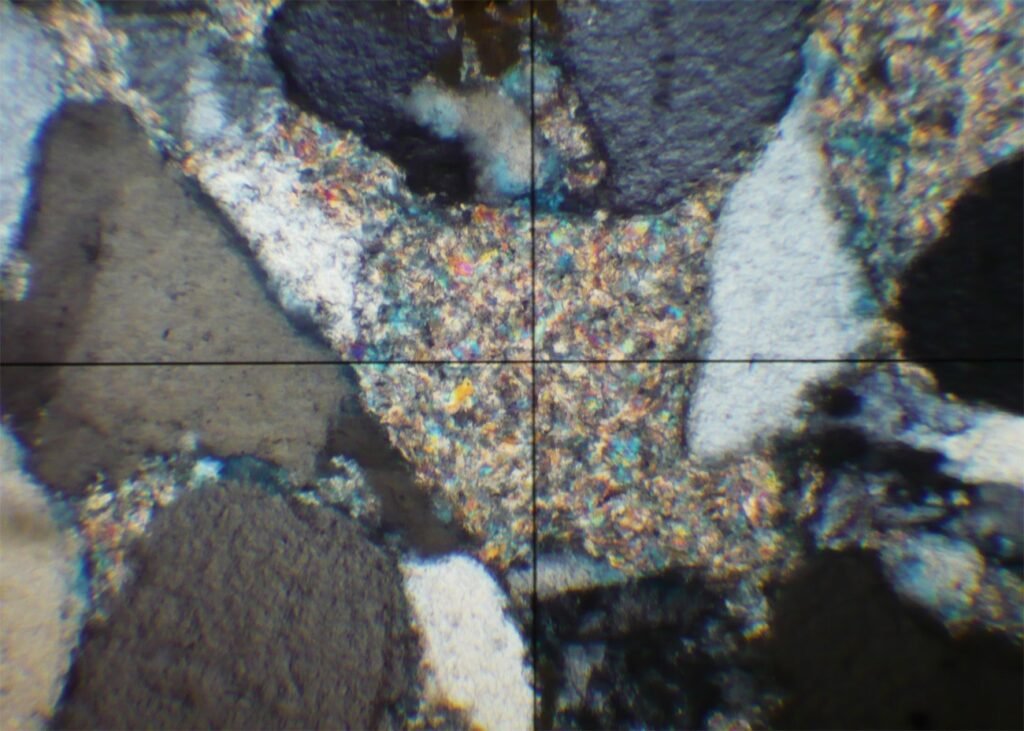
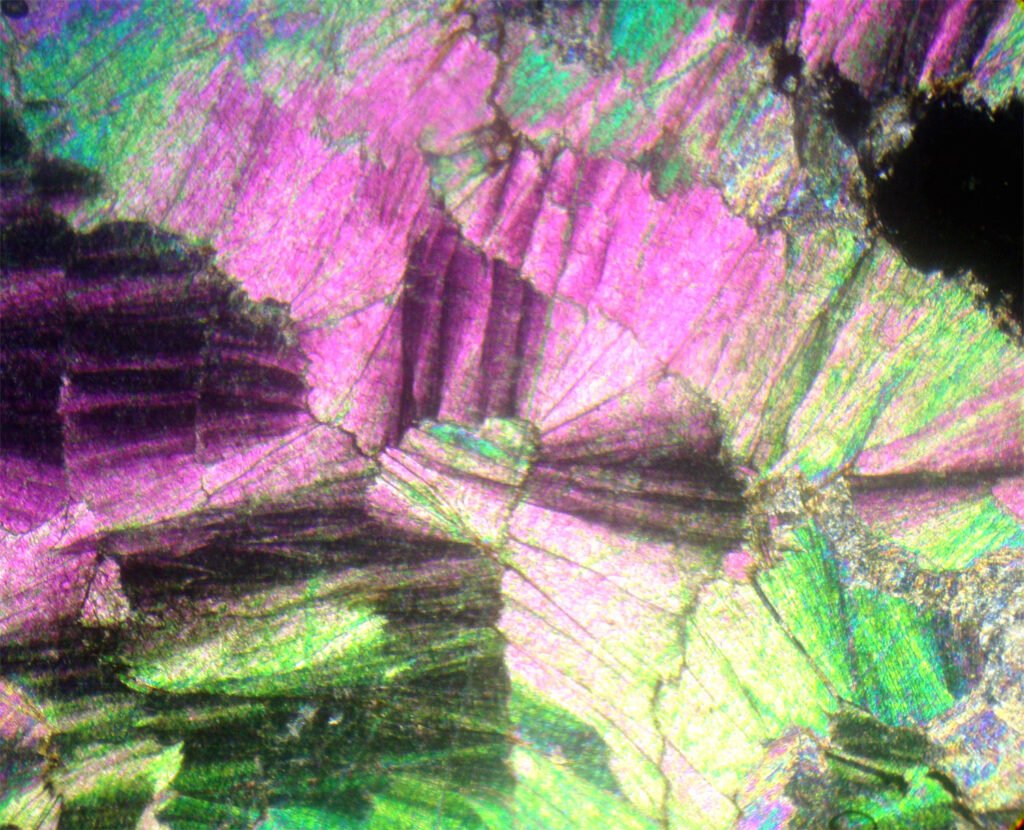
CROSSED POLARIZED LIGHT – XPL
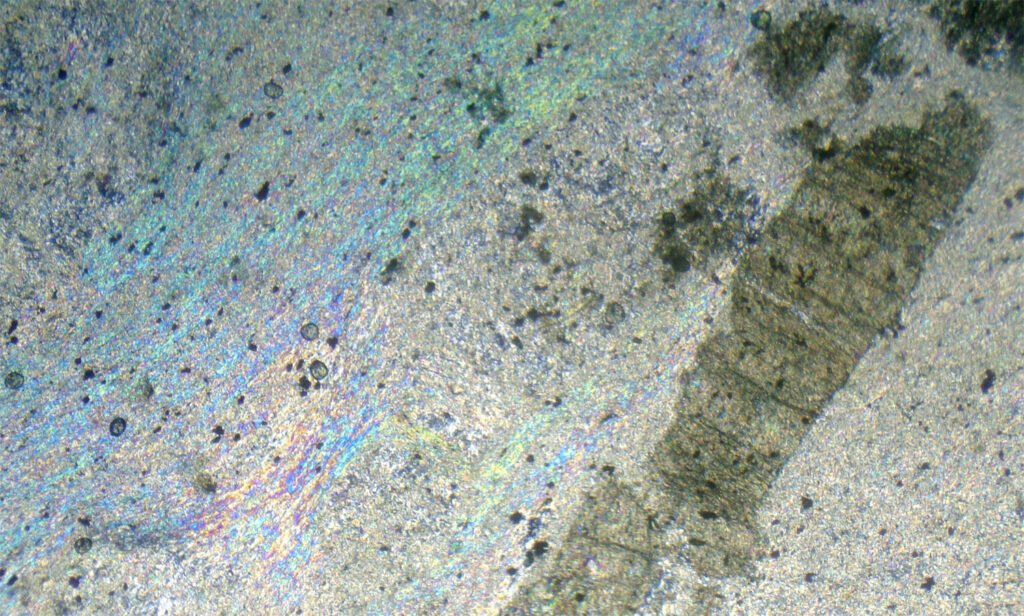
Birefringence and Interference Colors: Birefringence of 0.044 to 0.062, very high, resulting in intense colors of up to 3rd to 4th orders.
Extinction: Parallel to the cleavage. Always mottled like micas!
Elongation sign: ES(-) or ES(+), it is not diagnostic.
Twins: No.
Zoning: No.
CONVERGENT LIGHT
Character: B(-)
2V angle: 53 – 62º
Alterations: pyrophyllite hardly alteres.
May be confused with: talc and muscovite, mainly. When in very small grains, identification under the microscope is impossible and it is necessary to use other analytical techniques, such as X-Ray Diffractometry.
Talc and muscovite are very similar, but pyrophyllite has a smaller 2V angle than these. As the determination of the interference figure is very difficult due to the intense interference colors, chemical analyzes or X-Ray Diffractometry are necessary to obtain a conclusive identification of the pyrophyllite.
Gibbsite and brucite are B(+) and have lower birefringences.
Clay minerals have lower birefringence.