1. Characteristics
Crystal system: Monoclinic prismatic.
Color: Black, can be brown to violet-brown.
Habit: Tabular, prismatic, acicular, granular, massive, usually metamictic.
Cleavage: {001} imperfect, {100} poor, {110} poor.
Tenacity: Brittle.
Twinning: Polysynthetic on {100}, common.
Fracture: Conchoidal, irregular.
Mohs Hardness: 5.5 – 6
Parting: No.
Streak: Gray.
Lustre: Vitreous, greasy, submetallic.
Diaphaneity: Transparent.
Density (g/cm³): 3.5 – 4.2
2. Geology and Deposits
Allanite is an accessory mineral of many types of igneous and metamorphic rocks.
In igneous rocks it is present in granites, granodiorites, diorites, syenites and pegmatites and equivalent volcanic rocks. It rarely occurs in gabbroic pegmatites.
In metamorphic rocks it is found more rarely, in schists, amphibolites, gneisses, skarns and marbles. It also occurs as a clastic component of sediments.
3. Mineral Associations
Allanite-(Ce) occurs associated with common silicates such as quartz, feldspars (albite, microcline), micas (biotite, muscovite), epidote, titanite, zircon, amphiboles (green hornblende, riebeckite), pyroxenes (diopside), tourmaline and chlorite (clinochlor).
It also occurs with carbonates (calcite, dolomite), pyrite, hematite, talc, monazite, fluorite, pyrochlore, bastnäsite (Ce), yttrofluorite and fluorbritholite (Ce).
The other allanites occur associated with a series of rare and very rare minerals. See specific bibliography.
4. Transmitted Light Microscopy
Refraction indices: nα: 1.690 – 1.813 nβ: 1.700 – 1.857 nγ: 1.706 – 1.891
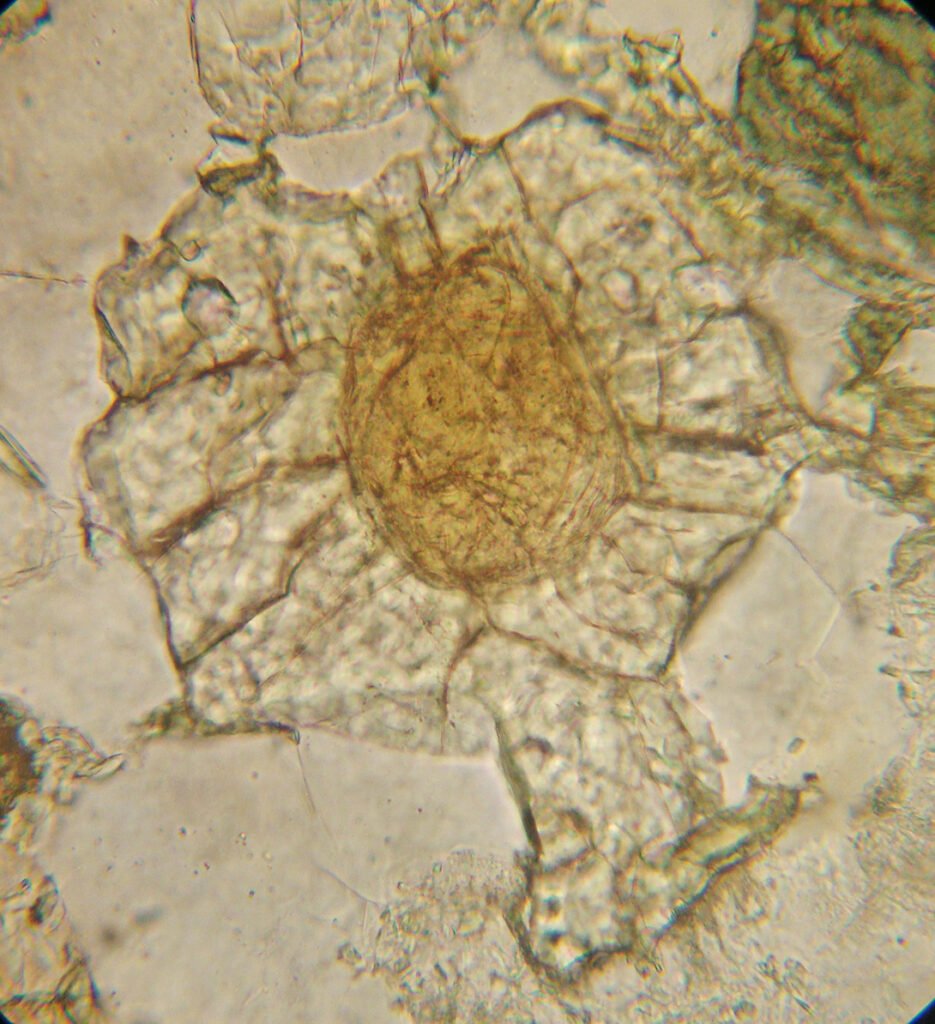
PLANE POLARIZED LIGHT – PPL
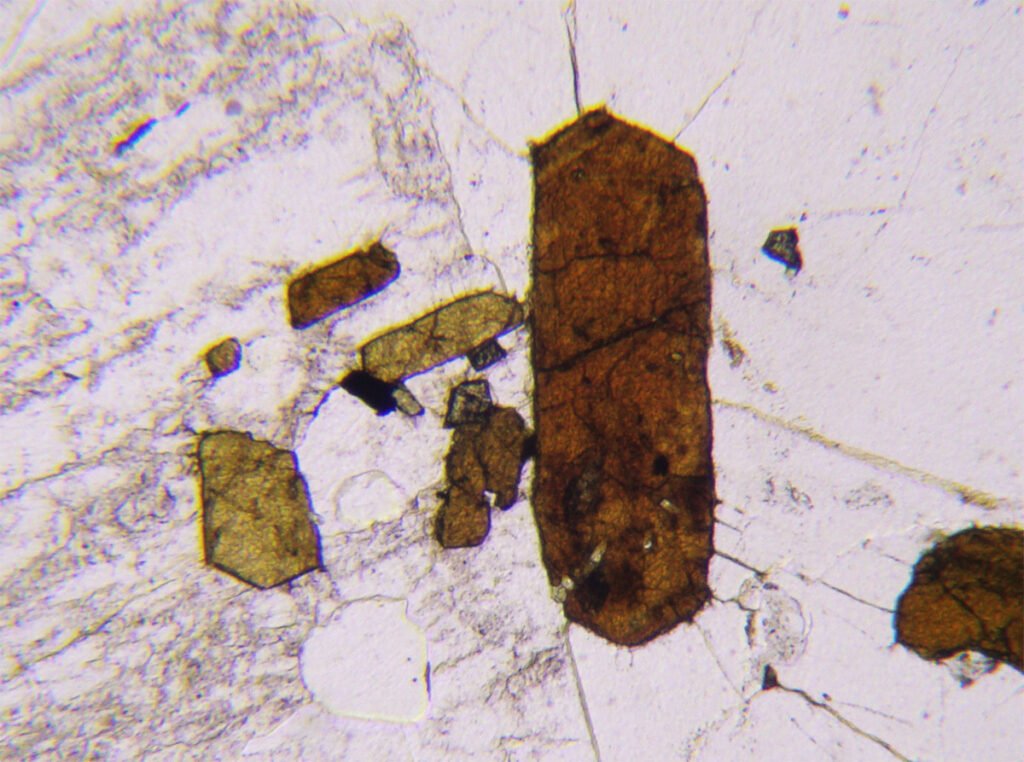
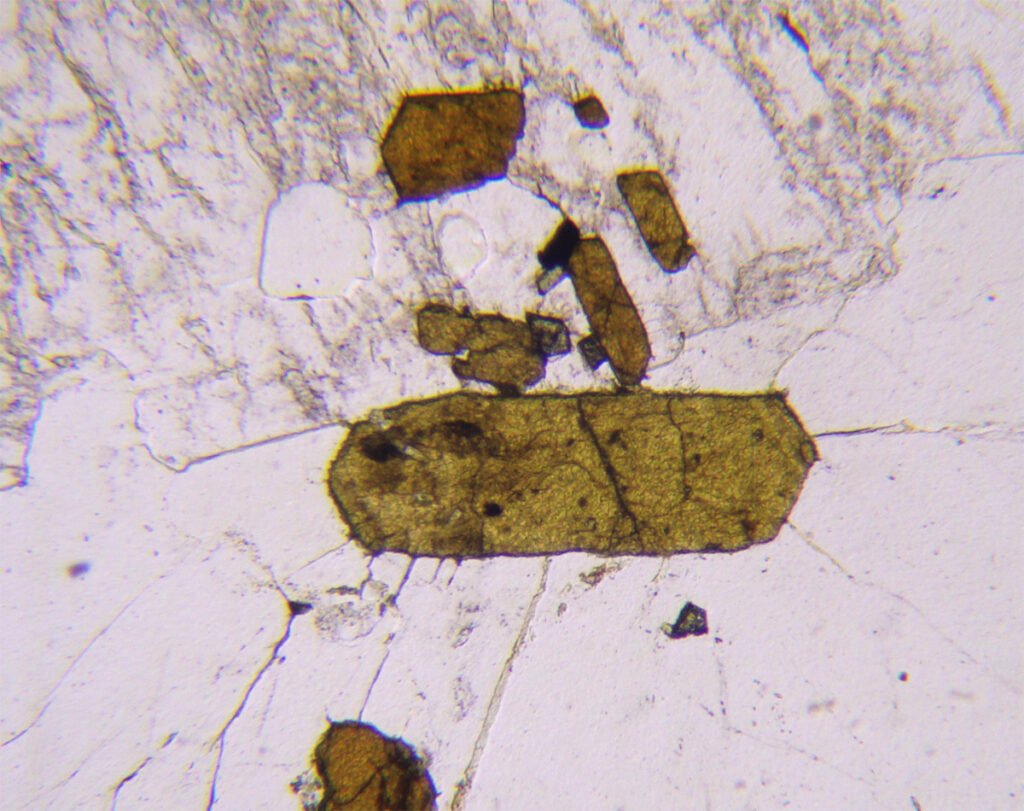
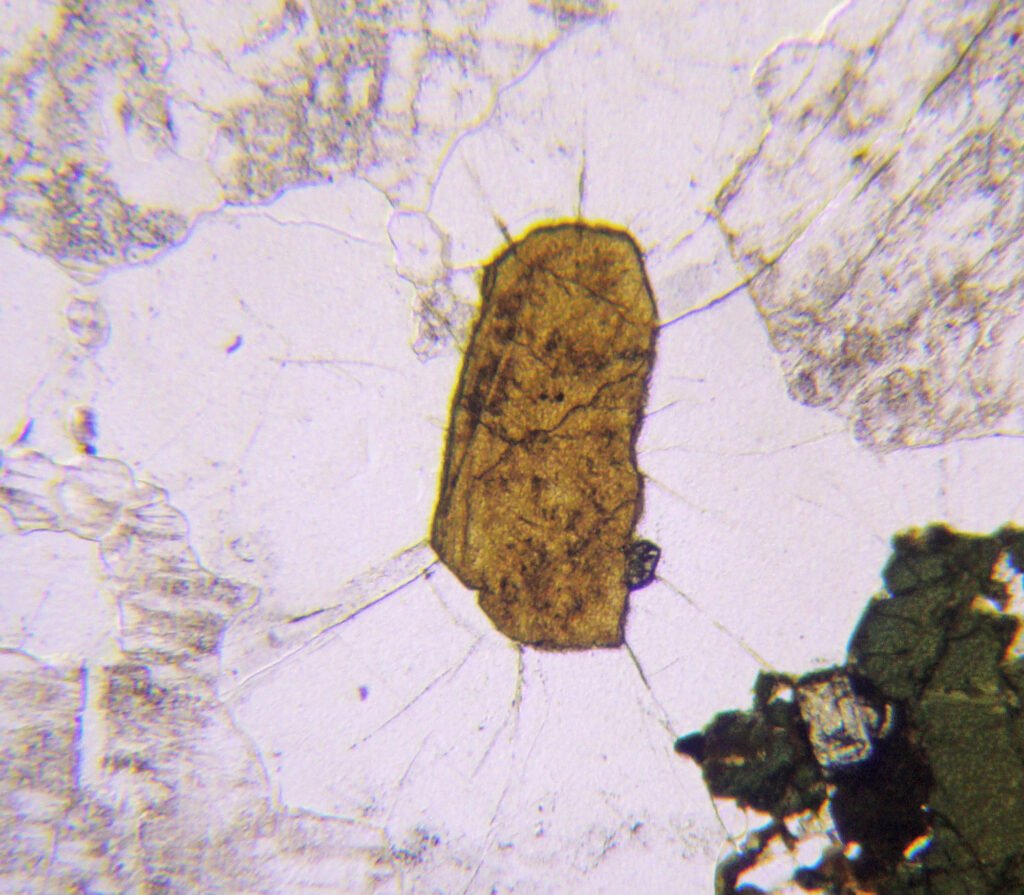
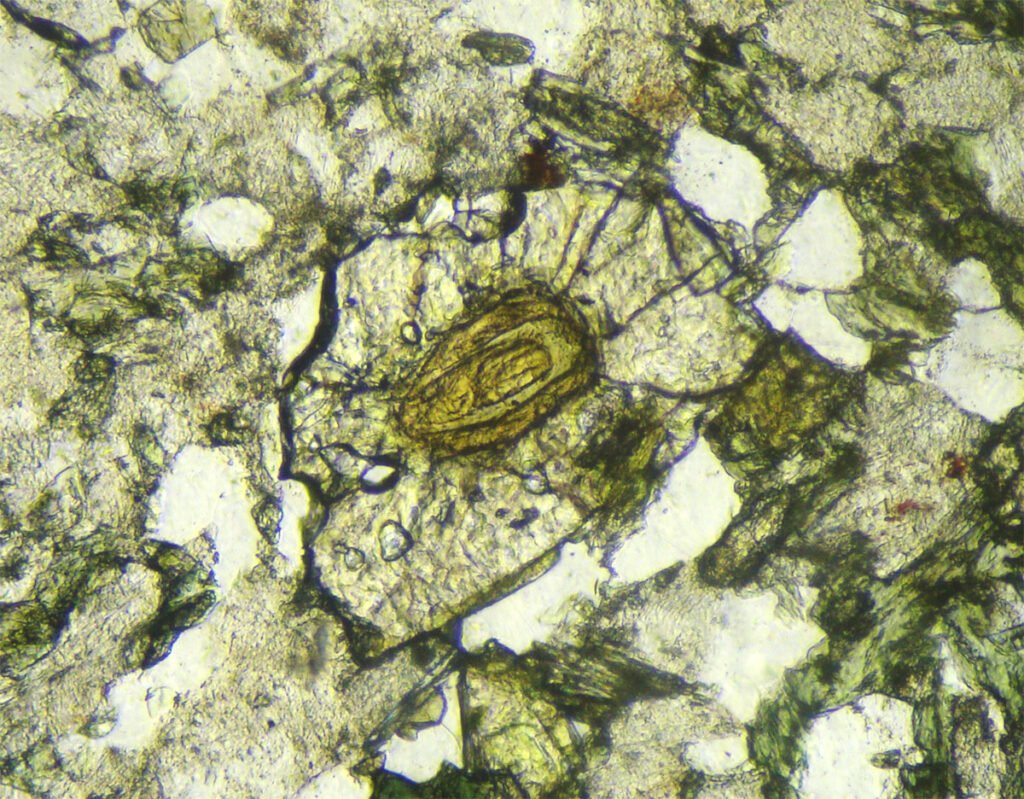
Color / Pleochroism: When unaltered (non-metamict), weak gray-yellow to orange-brown, with red-brown pleochroism, also with green colors.
Moderate to strong pleochroism:
X = pale olive green, reddish brown;
Y = dark brown, yellow-brown;
Z = dark reddish brown, greenish brown.
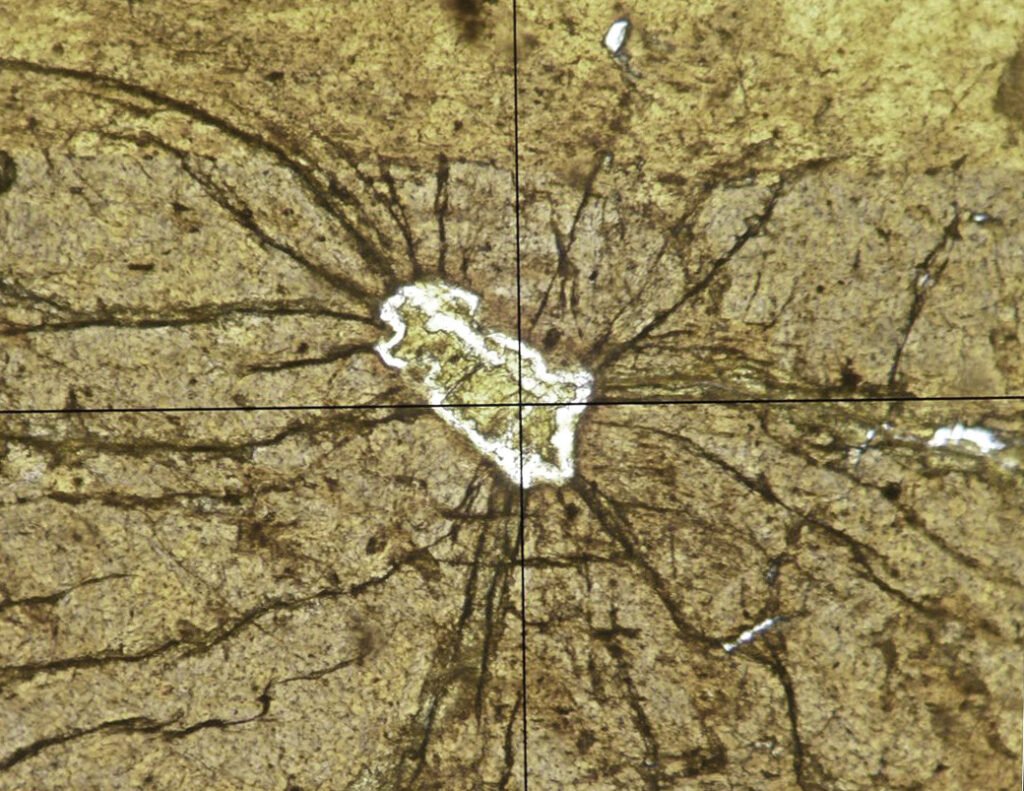
If metamict, pleochroism in brown, brown-red, yellow-brown, brown-green or green. It can form pleochroic halos around it.
Relief: High (low relief in strongly metamict varieties).
Cleavage: {001} good, {100} poor and {110} poor. They are normally not visible.
Habits:
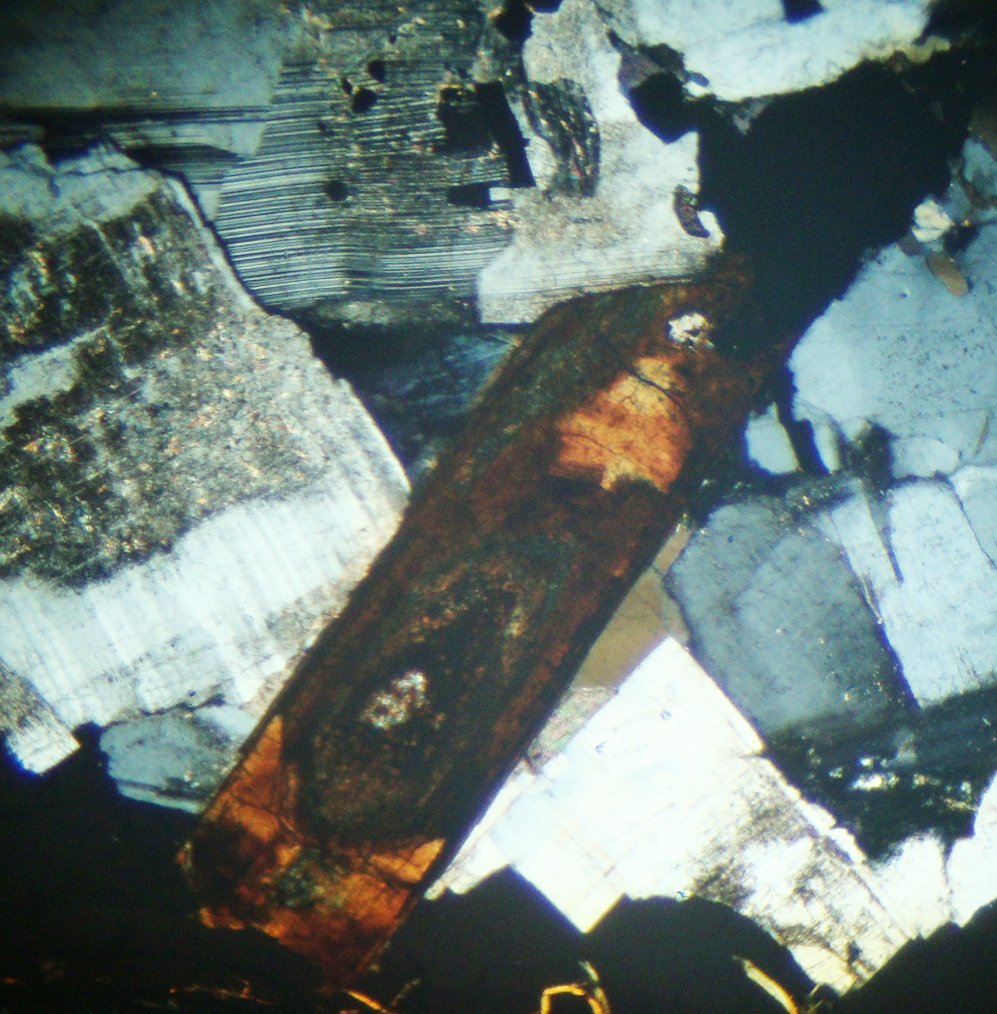
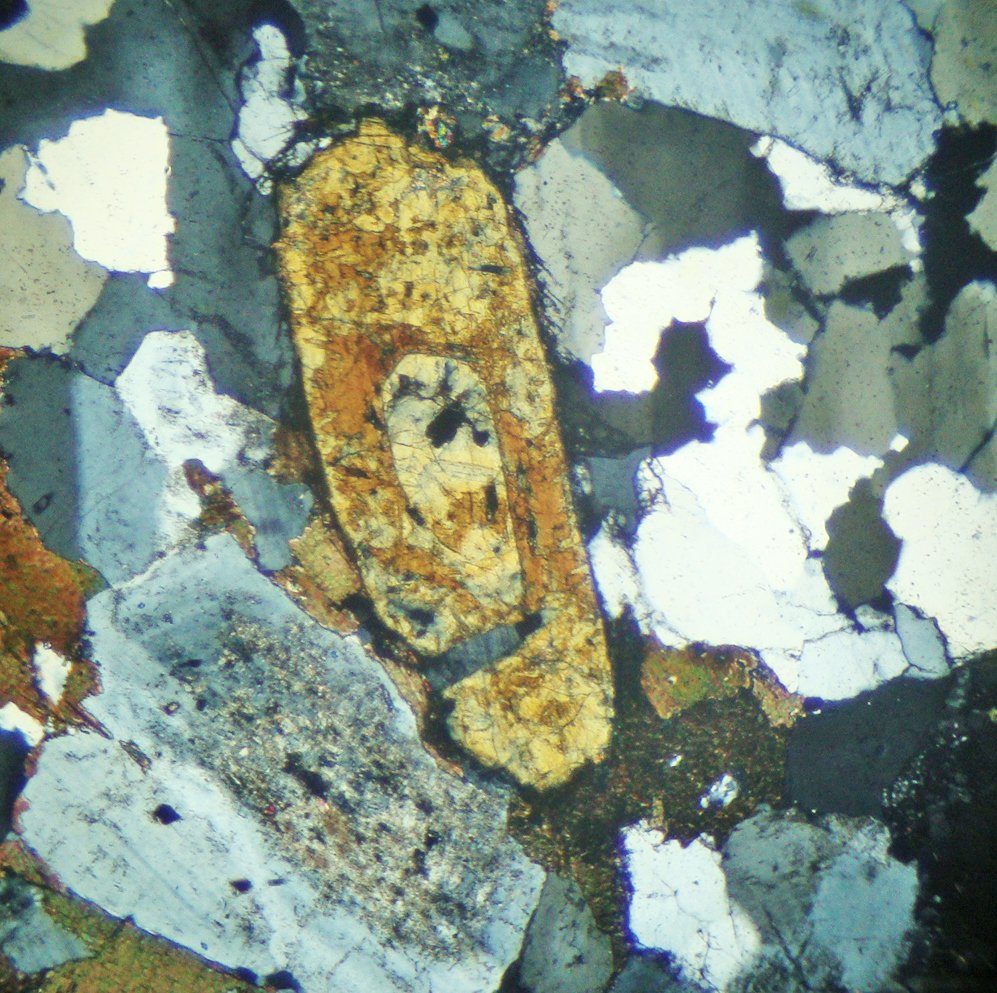
Tends to be subhedral to anhedral granular, similar to epidote. Columnar, tabular, acicular, prismatic, massive. It can form pleochroic halos around it. It may be encased in epidote and clinozoisite.
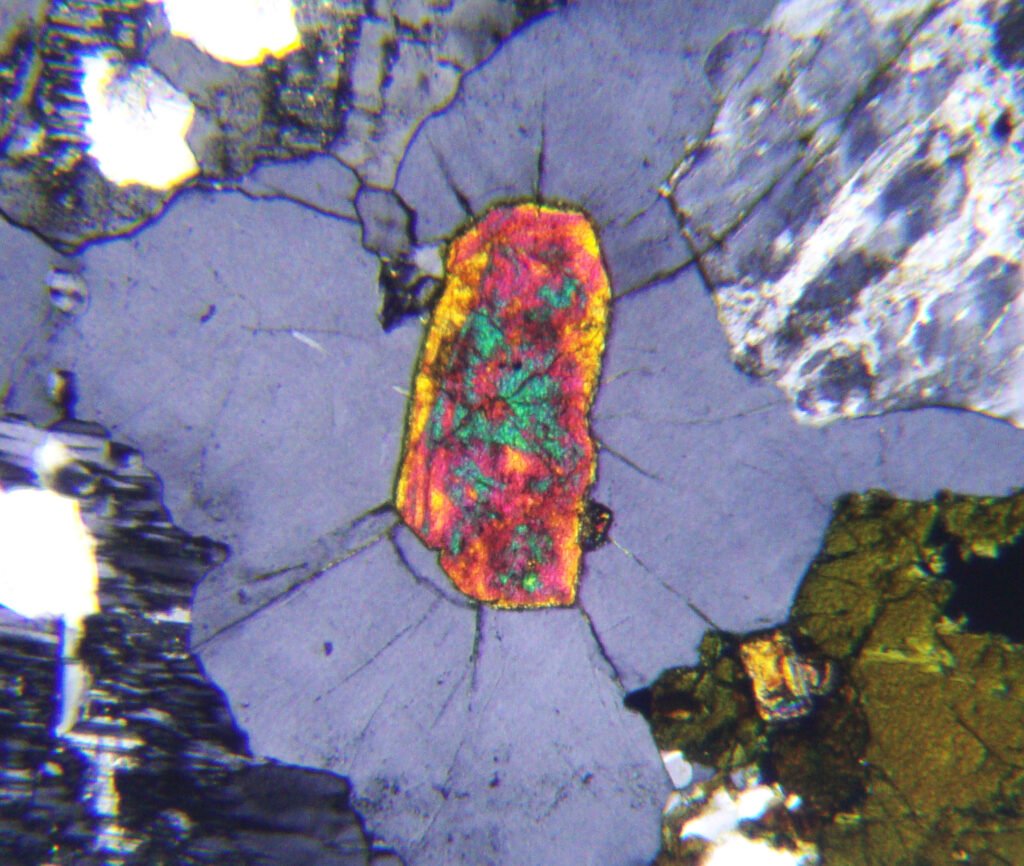
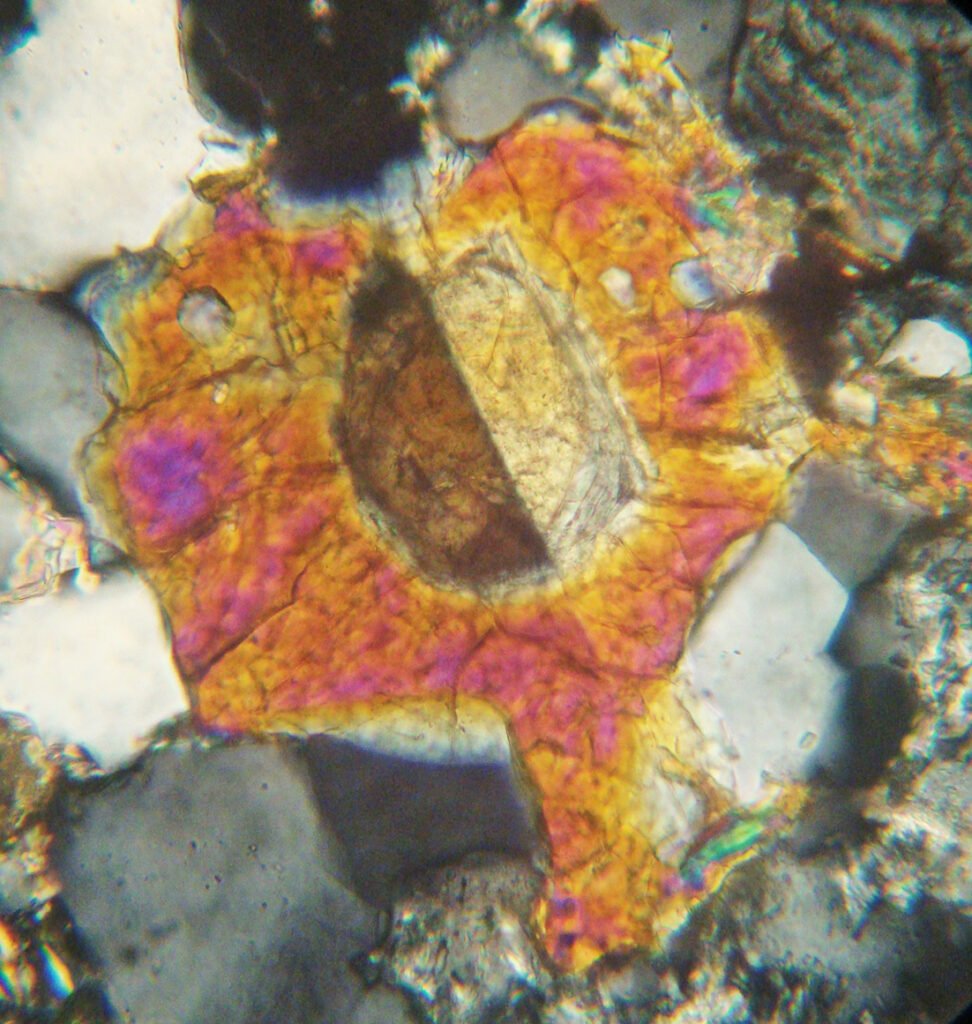
As it contains Th and U, the crystal is destroyed and absorbs water, causing the grain to swell, creating radial fractures into neighboring minerals.
When allanite occurs as an inclusion in biotite, chlorite and hornblende, dark halos form around the allanite grains.
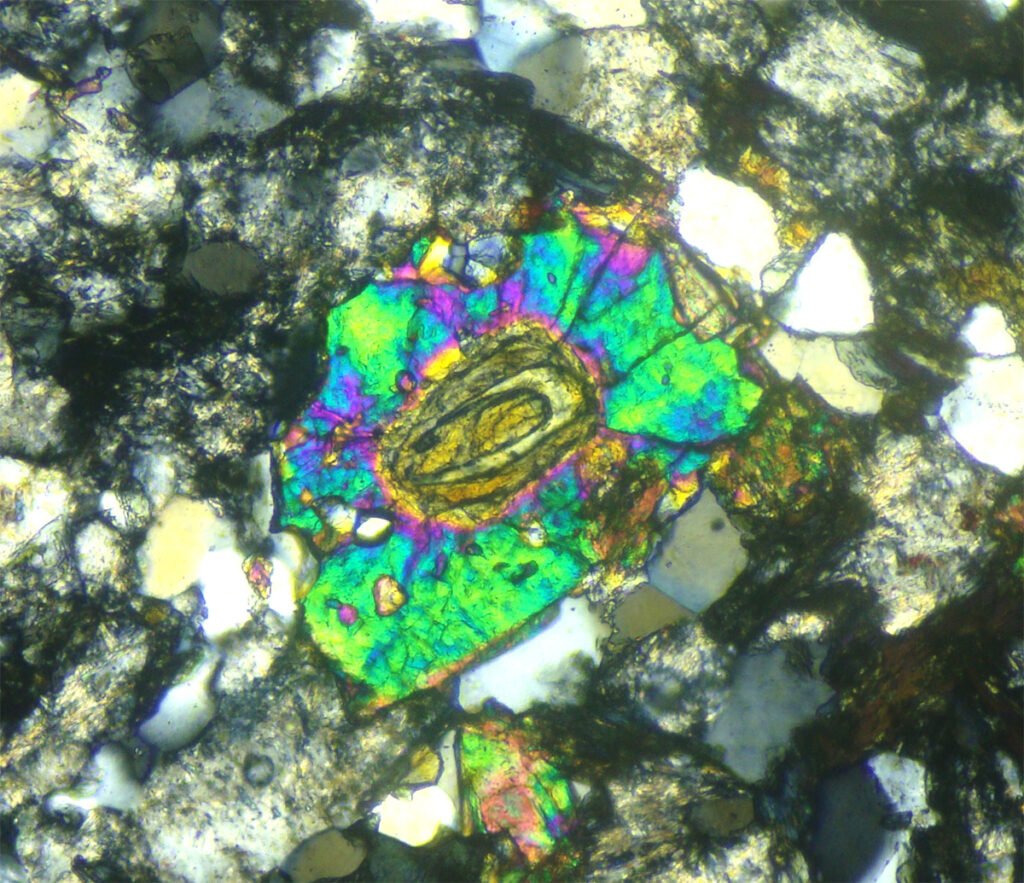
Altered allanite (metamict) can form a reaction rim of epidote and/or clinozoisite around it; this rim can be partial or complete.
CROSSED POLARIZED LIGHT – XPL
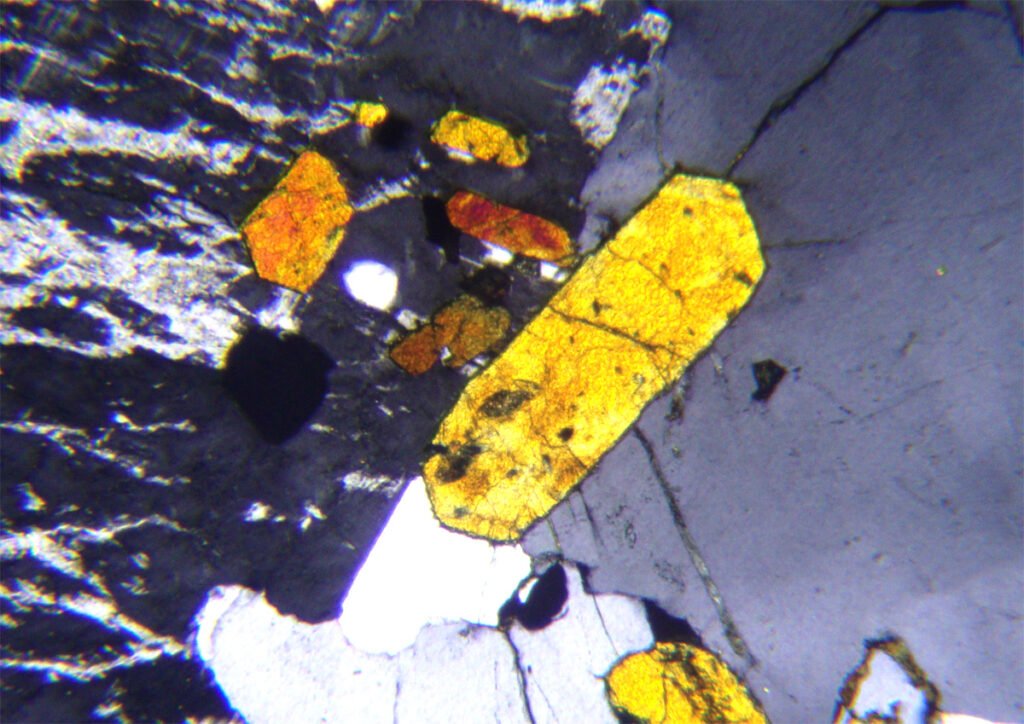
Birefringence and Interference Colors: Birefringence from 0.018 to 0.031, resulting in strong 1st, 2nd and 3rd order final colors, which are usually masked by the intense color of the mineral.
Isotropic if metamict.
Extinction:
Parallel in the longitudinal sections. Oblique with an angle of 26 – 72º in the other sections.
The mineral’s strong colors can make it difficult to determine the extinction type.
Elongation sign: Cannot be identified due to high birefringence.
Twins: Eventual, polysynthetic, according to {100}.
Zoning: Almost always zoned; the core is darker than the edges.
CONVERGENT LIGHT
Character: B(+) and B(-), isotropic if metamictic. Usually B(-), varieties are B(+).
2V angle: 40 – 90º, B(+): 90-57º
Alterations: alters to glass, due to the radiation emitted by its radioactive components (metamictization). It can change the epidote, forming a corona texture. Due to weathering, it is replaced by carbonate and limonite. Can alter to minerals of the Ancylite Group.
May be confused with: some minerals of dark brown color and with pleochroism.
Brown hornblende has good cleavage in two directions in the basal sections (amphibole cleavage!), different habit and occurs in other paragenesis.
Anatase can be very similar.