1. Characteristics
Crystal system: See above.
Color: White, colorless, grey, rarely pink, red, greenish or yellowish.
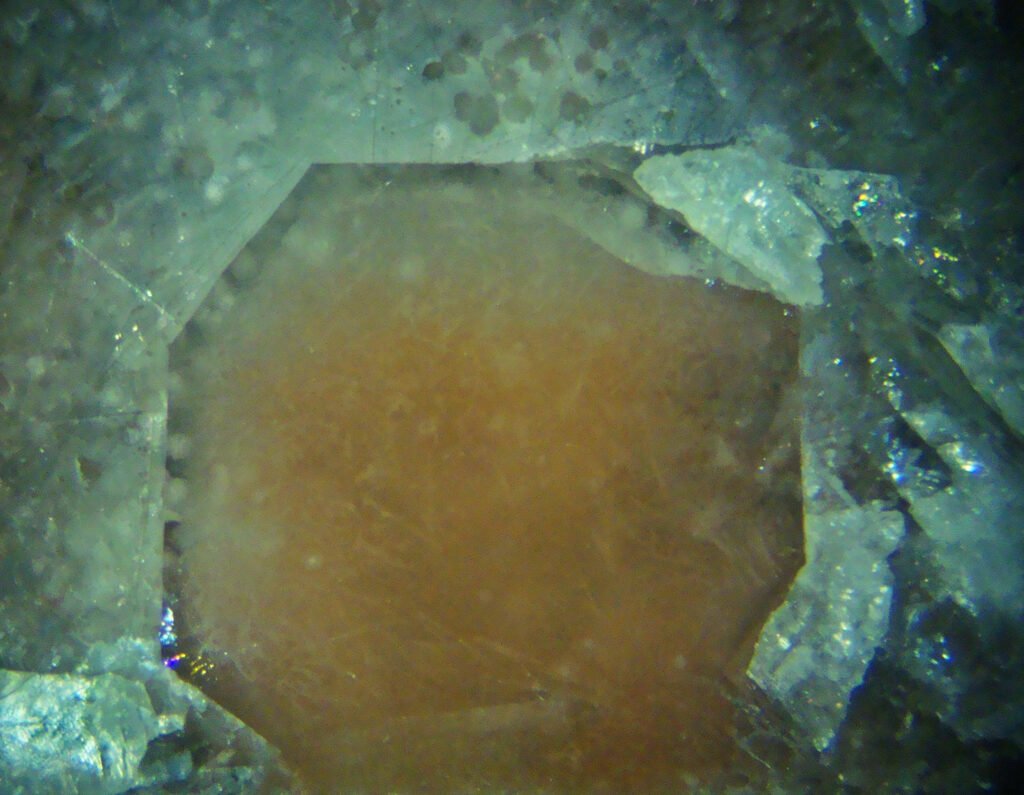
Habit: It usually forms trapezoids. Granular, compact, massive.
Cleavage: {100} poor.
Tenacity: Brittle.
Twinning: Polysynthetic in {001} and {110}.
Fracture: Sub-conchoidal.
Mohs Hardness: 5 – 5.5
Parting: No.
Streak: White.
Lustre: Vitreous.
Diaphaneity: Transparent.
Density (g/cm³): 2.24 – 2.29
2. Geology and Deposits
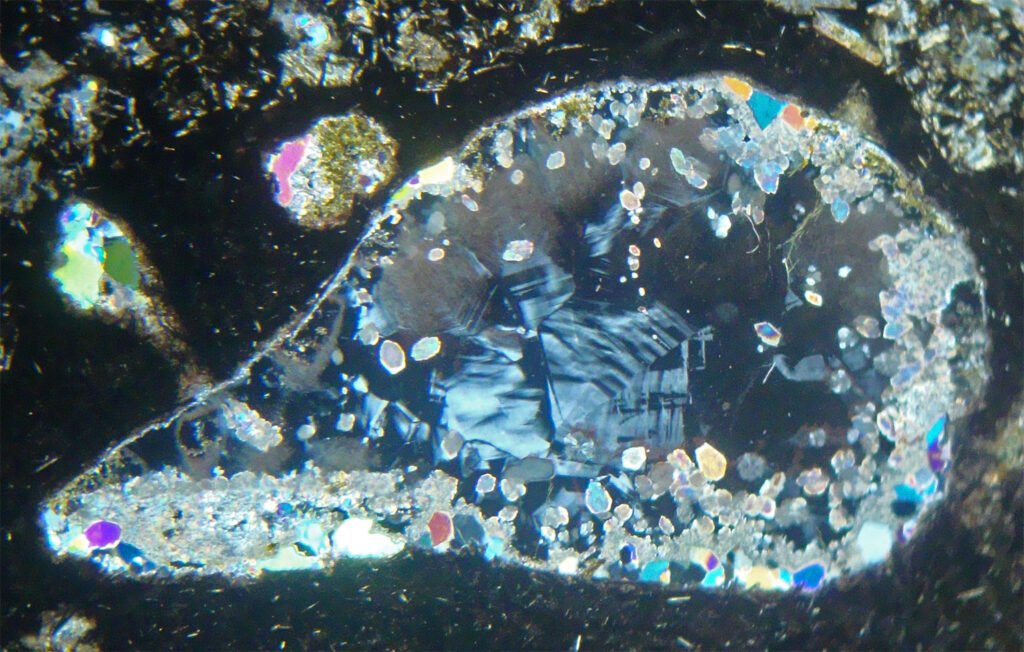
Analcime occurs in the matrix or in vesicles of low silica, intermediate and mafic igneous rocks, typically basalts and phonolites, formed from late hydrothermal solutions or disseminated due to deuteric alteration.
It also occurs in lake sediments, by alteration of pyroclastics or clays, or as a primary, autigenic precipitate, in sandstones and siltstones.
3. Mineral Associations
In volcanic rocks it is associated with quartz, prehnite, calcite, aegirine, serandite, native copper, apophyllite and zeolites (natrolite, thomsonite-Ca, gmelinite).
In other paragenesis it is associated with rhodochrosite, microcline and quartz.
In sedimentary rocks occurs with glauconite.
4. Transmitted Light Microscopy
Refraction indices: nα: 1.479 nβ: 1.493 nγ: 1.494
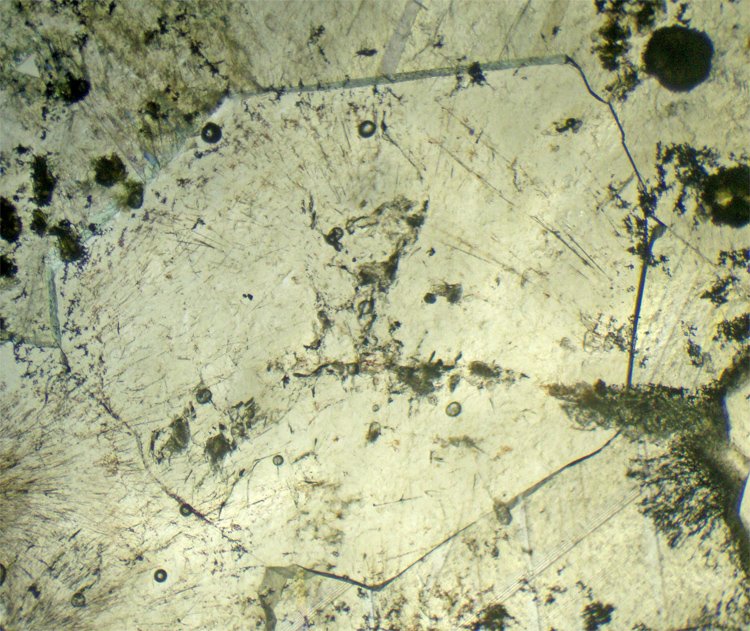
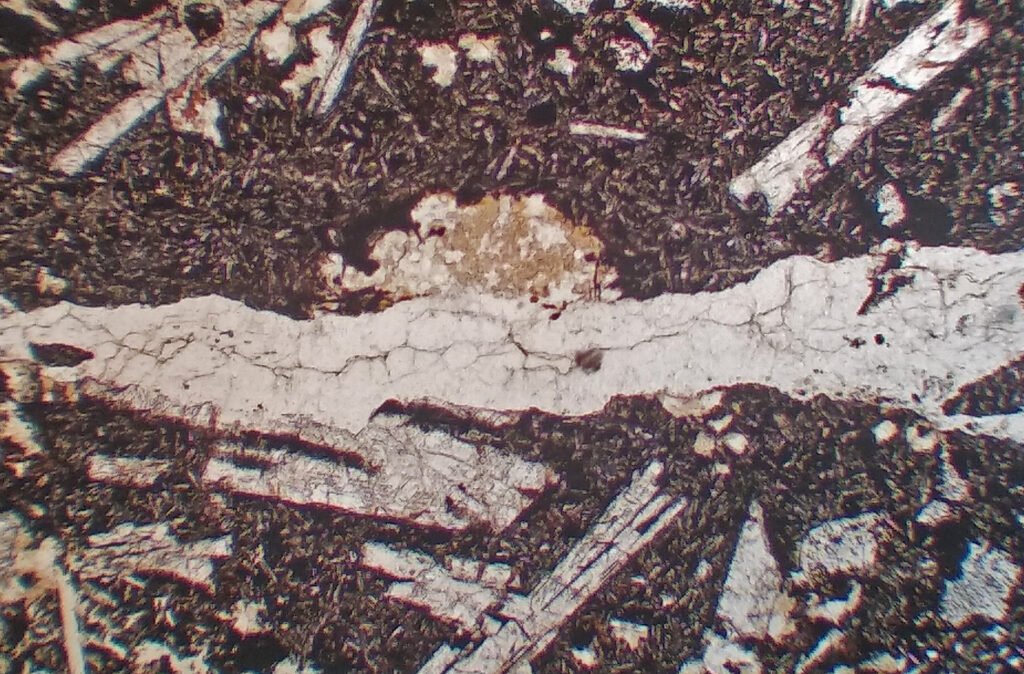
PLANE POLARIZED LIGHT – PPL
Color / Pleochroism: Colorless.
Relief: Moderate.
Cleavage: {001} poor, usually not visible under a microscope.
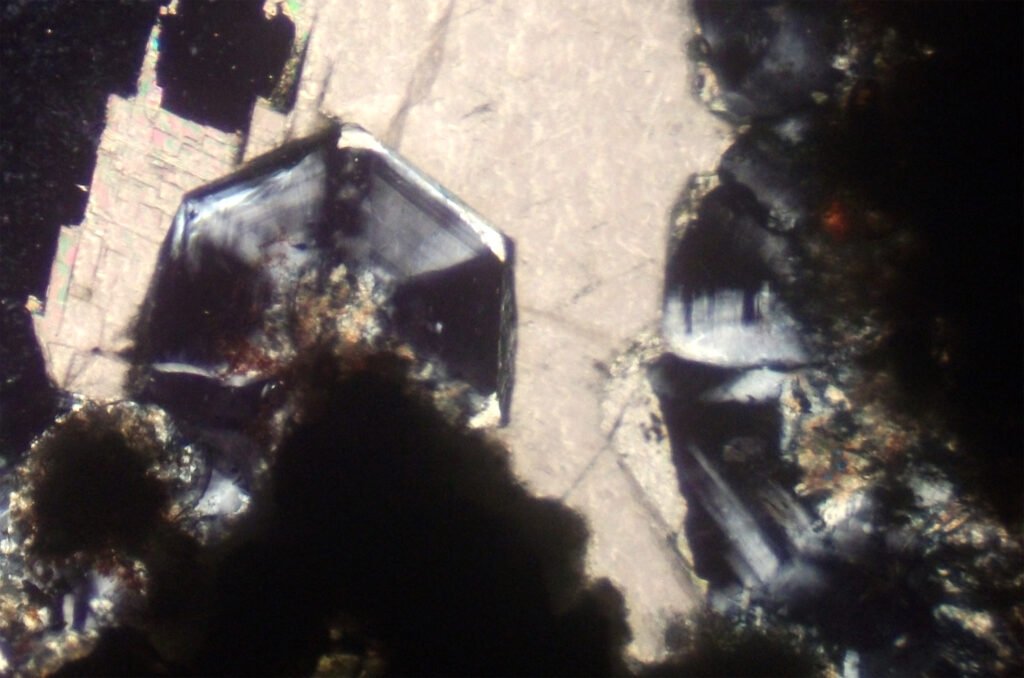
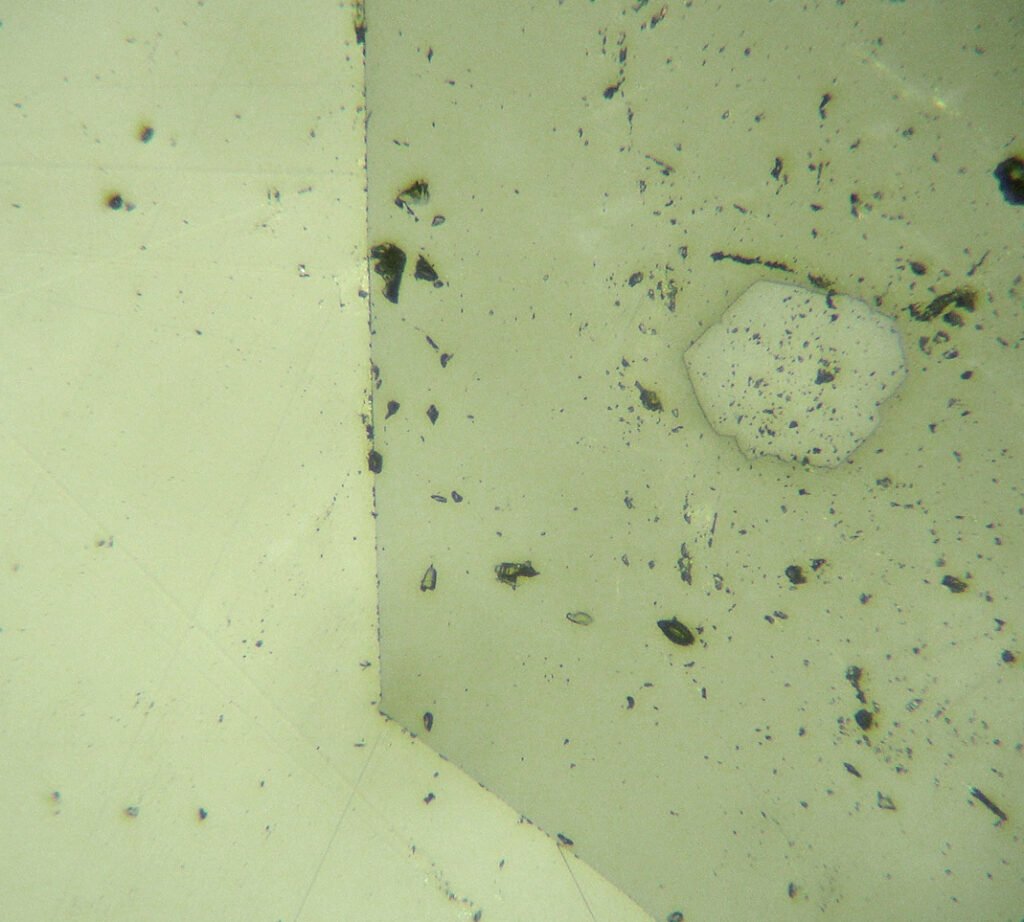
Habits: Anhedral, rounded grains, radiated groups. Rarely has inclusions, never shows oriented inclusions. May show concentric structure.
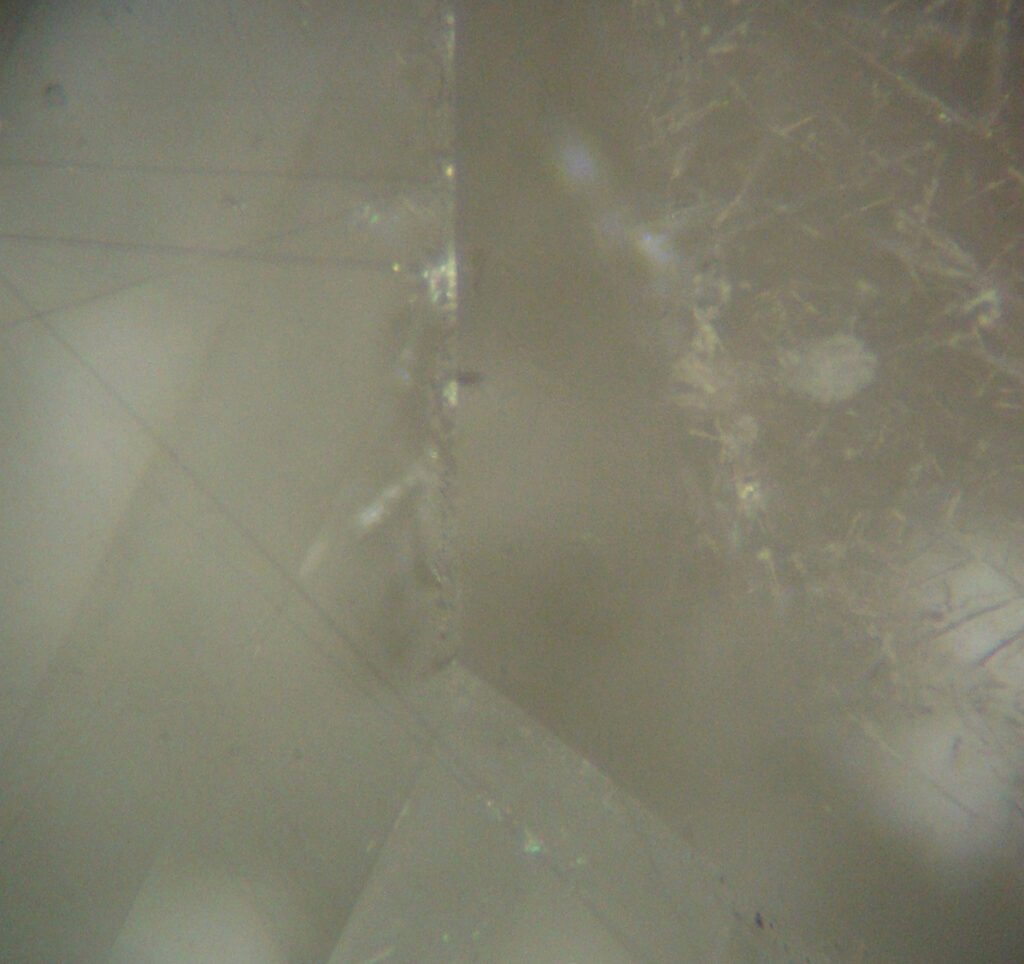
Analcime usually occurs as trapezoidal icositetrahedrons of the Cubic System, which under the microscope appear as rounded grains or, when idiomorphic, as sections with 6 or 8 sides.
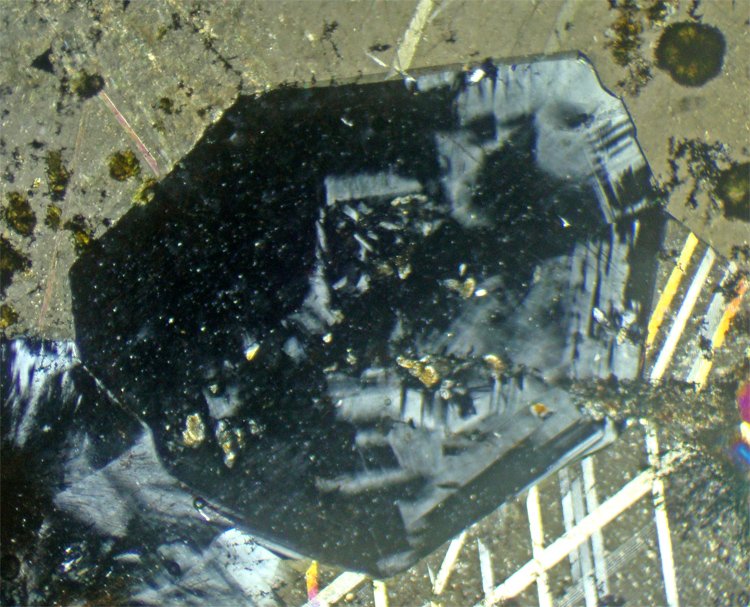
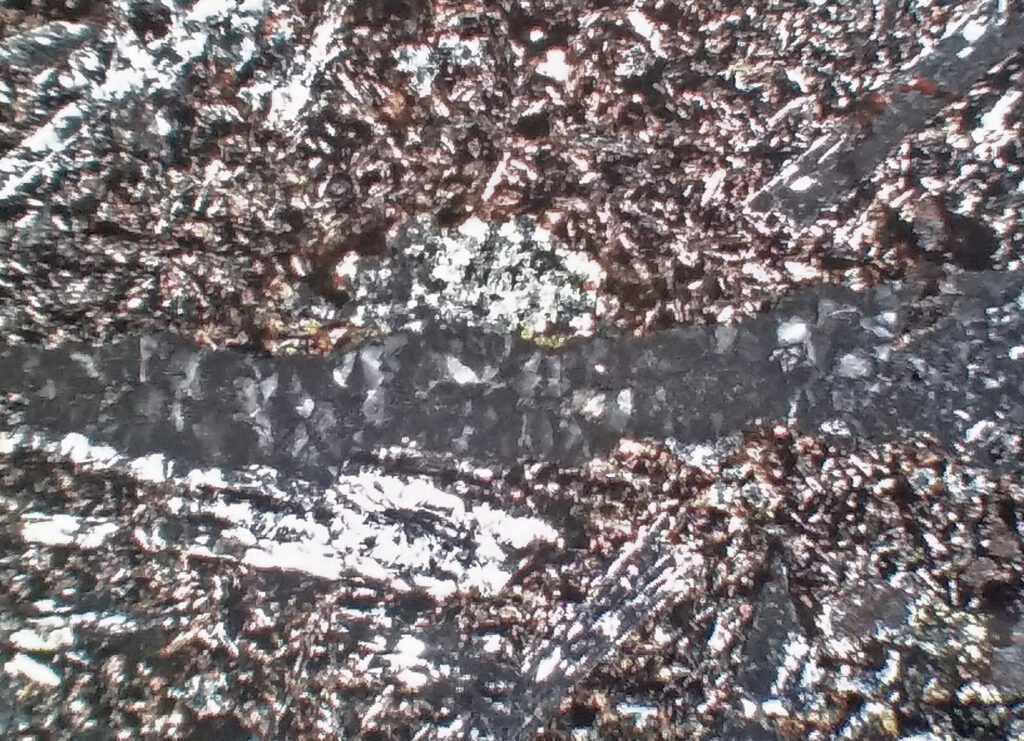
CROSSED POLARIZED LIGHT – XPL
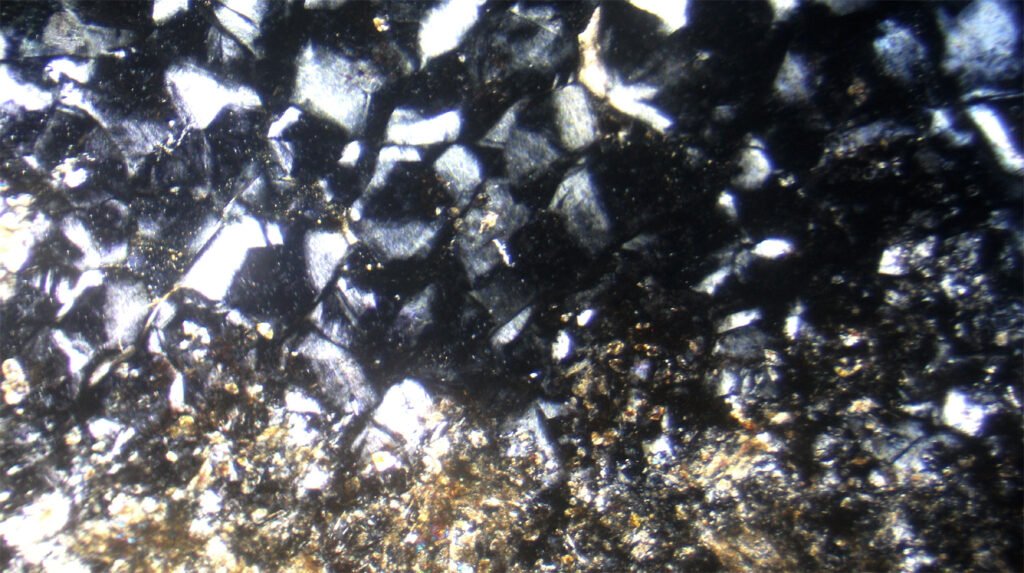
Birefringence and Interference Colors: When it occurs interstitial it is isotropic.
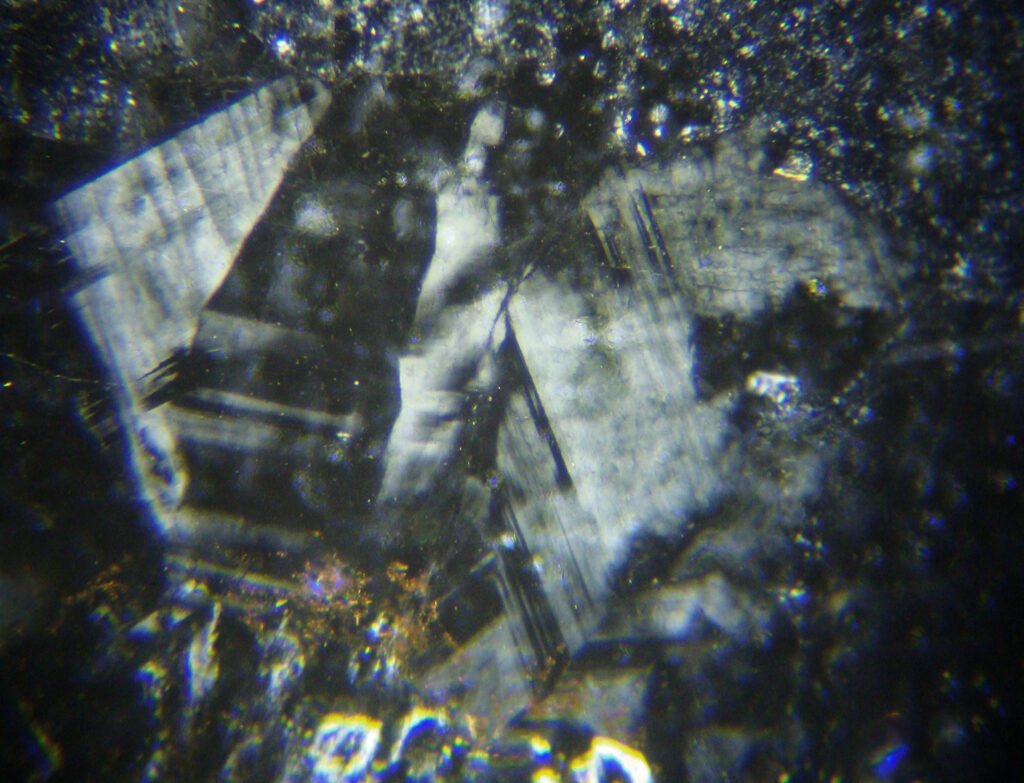
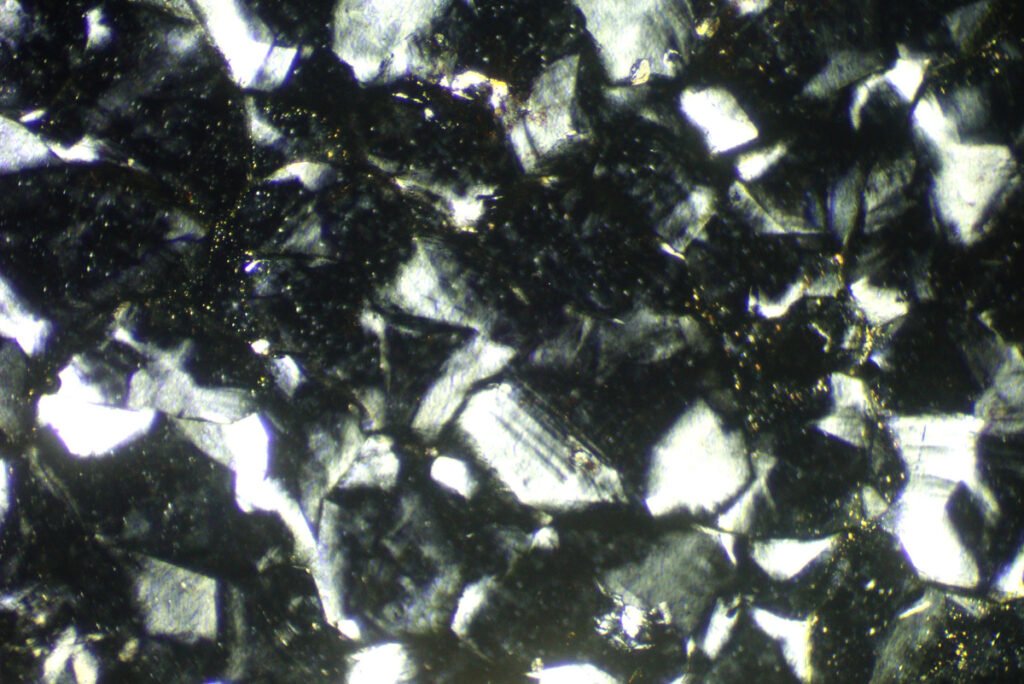
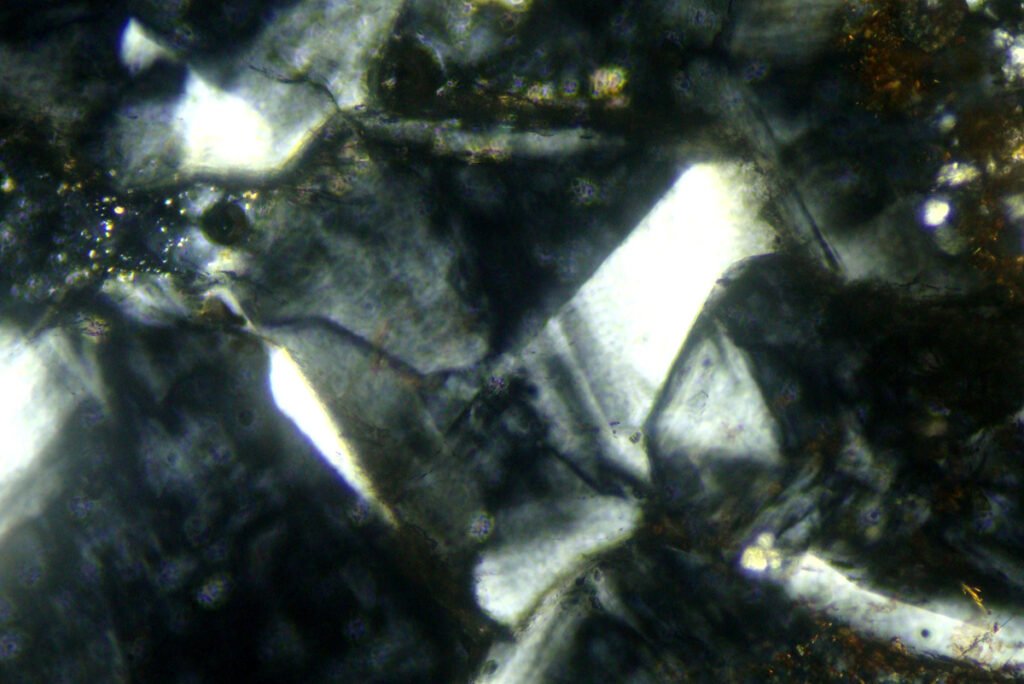
In large grains, it has anomalous birefringence with colors up to 1st order: black to very light gray to white. The crystals are sectored, with portions with different colors (black/gray/white), somewhat reminiscent of leucite, but the pattern of these sectors is different.
Extinction: Isotropic or does not apply.
Elongation sign: Isotropic or does not apply.
Twins: Interpenetrating (polysynthetic) lamellae, but without the generalized complex twins of leucite.
Zoning: No.
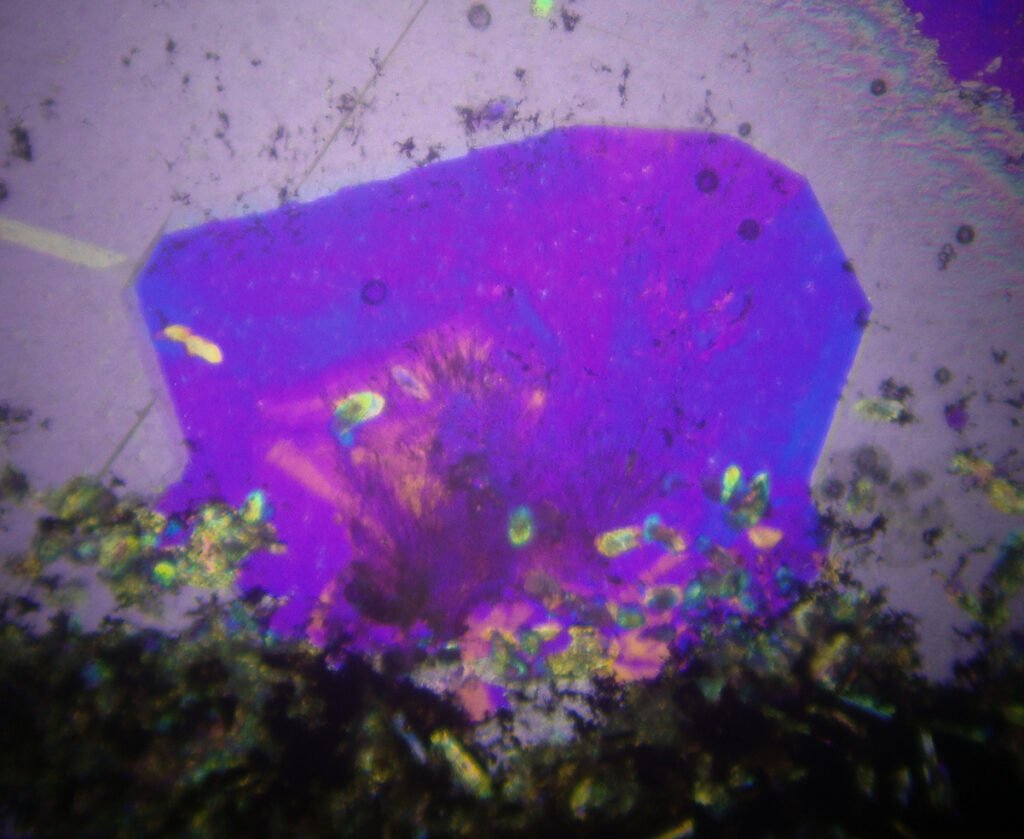
CONVERGENT LIGHT
Character: isotropic, but may be anomalous B(-). Usually subdivided into irregular sectors.
2V angle: 0o a 85º
Alterations: analcime alters to natrolite.
May be confused with: very low birefringence and rounded contours are typical.
Leucite also shows round grains, but has twins that are different, reminiscent of microcline.
Chabazite also has very low interference colors, but the relief is lower and usually shows pseudo-cubic contours.
Fluorite has higher relief, usually shows colored spots and bands (blue, violet), may show cubic contours, does not show twins and occurs in other paragenesis, associated with granitic rocks.