1. Characteristics
Crystal system: Hexagonal bipiramidal.
Color: Colorless, white, yellow, brown, gray, pink, violet, blue, green, sea green, bluish green. May be zoned.
Habit: Tabular or prismatic hexagonal crystals. Massive, granular, acicular, stalagtitic, earthy, botrioidal.
Cleavage: {0001} poor, {10-10} poor.
Tenacity: Brittle
Twinning: Uncommon, contact twins.
Fracture: Conchoidal, irregular.
Mohs Hardness: 5
Parting: No.
Streak: White.
Lustre: Vitreous, subresinous.
Diaphaneity: Transparent.
Density (g/cm³): 3.1 – 3.25
2. Geology and Deposits
Apatite is the only rock-forming phosphate. It occurs as an early crystallization accessory mineral, in very small grains, in almost all igneous rocks (granites, monzonites, monzodiorites, syenites, alkaline rocks, carbonatites, lamprophyres, granitic pegmatites, etc.). Apatites with Rare Earth Elements (La, Ce and Nd) are mined to obtain these. Apatite occur as gangue in hydrothermal Sn veins. It occurs in Alpine-Type fissures and in some meteorites.
In metamorphic rocks it is stable over a wide range of pressure and temperature, occurring in marbles, skarns and cornubianites (hornfels), usually in very small grains, it can be like colophane.
In sedimentary rocks, apatite is common as a detrital or diagenetic grain and can form layers. Displays oolitic, spherulitic and botryoidal forms. The botryoidal cryptocrystalline variety, called colophane, originated from skeletal material (bones), forms the phosphorites, which contain 18–40% PO4 and are classified into 14 different types. In laterites, apatite is residual. It also occurs in clays, shales and conglomerates.
3. Mineral Associations
Apatite occurs with many other minerals; there is no diagnostic paragenesis. They can be:
silicates (quartz, orthoclase, microcline, albite, nepheline, titanite, diopside, vesuvianite, zircon, amphibole (hornblende),
micas (biotite, muscovite, phlogopite), tourmaline, scapolite, chondrodite),
carbonates (calcite, siderite),
oxides (magnetite, spinel),
sulfides (pyrite, arsenopyrite)
and fluorite, among others.
4. Transmitted Light Microscopy
Refraction indices: ne: 1.624 – 1.666 no: 1.629 – 1.667
PLANE POLARIZED LIGHT – PPL
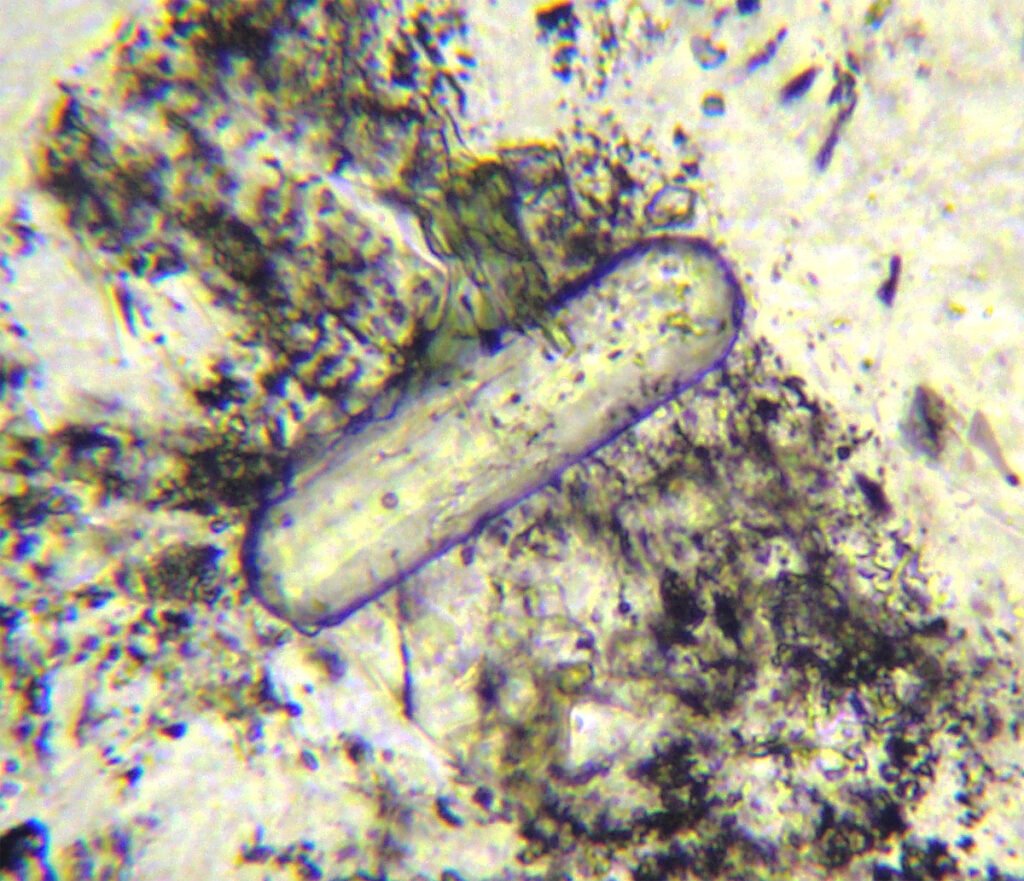
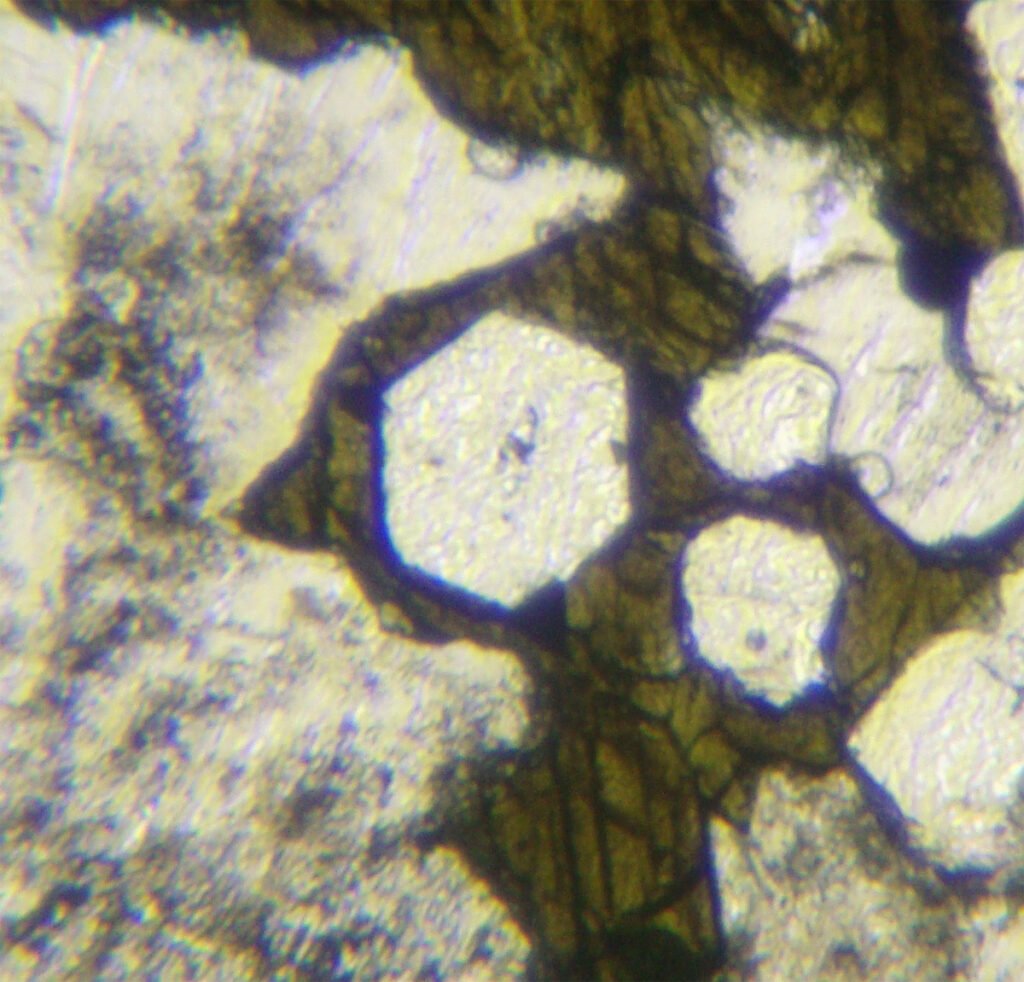
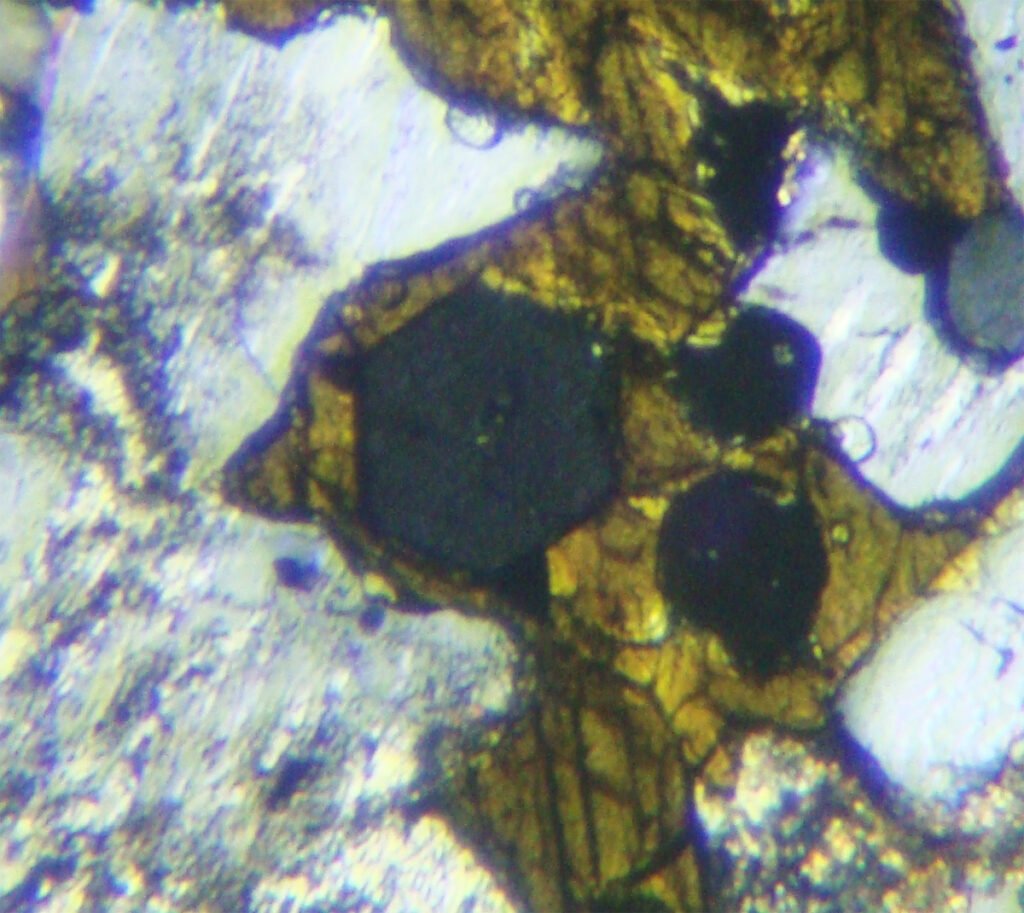
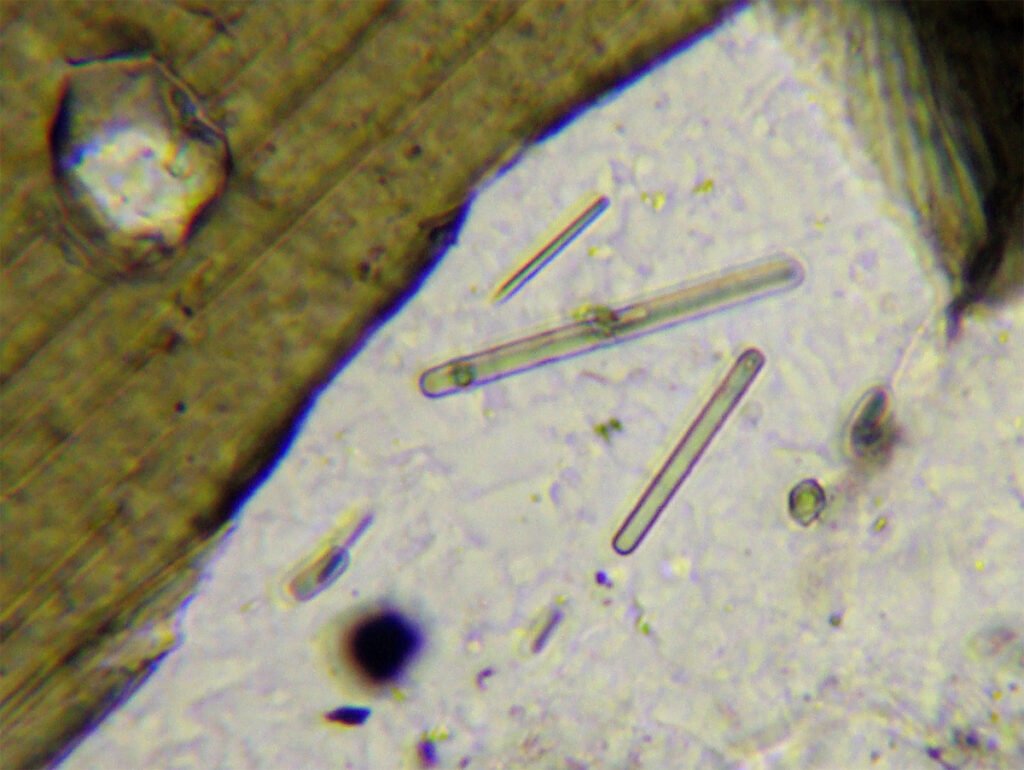
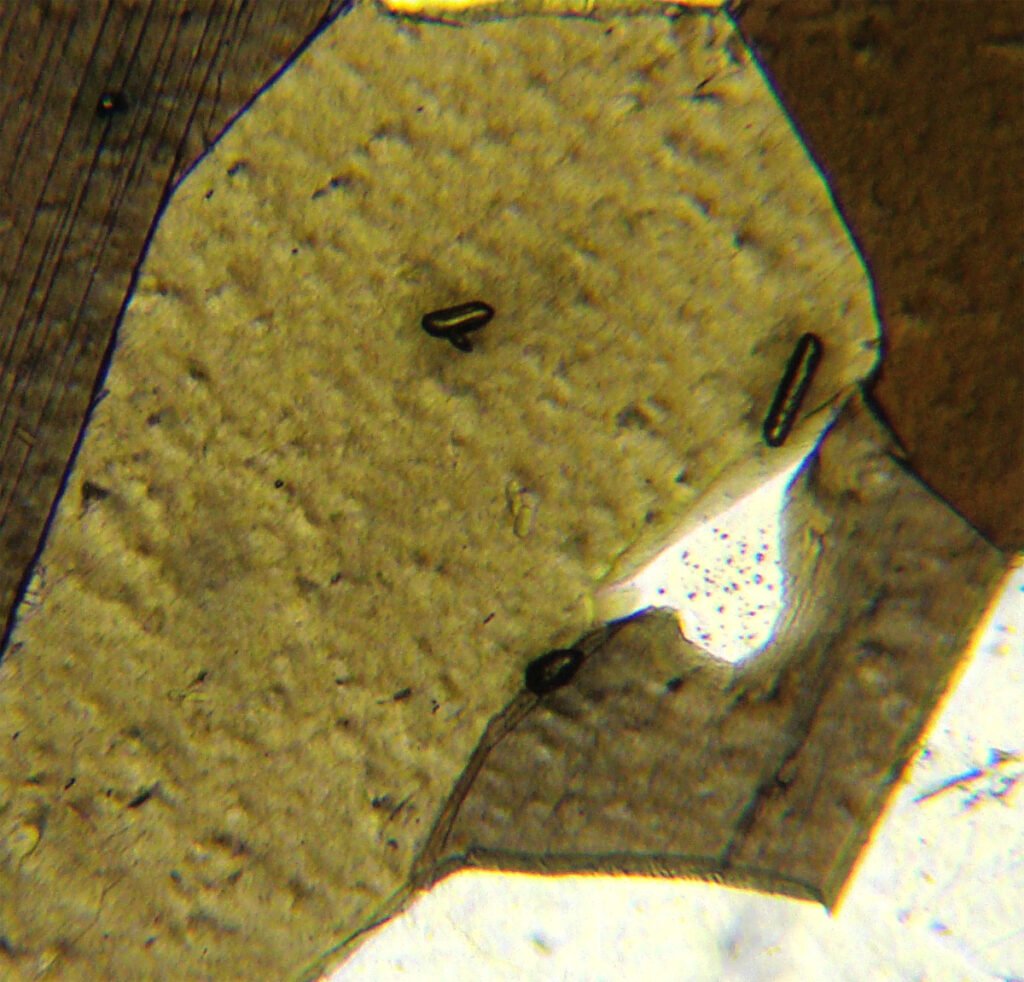
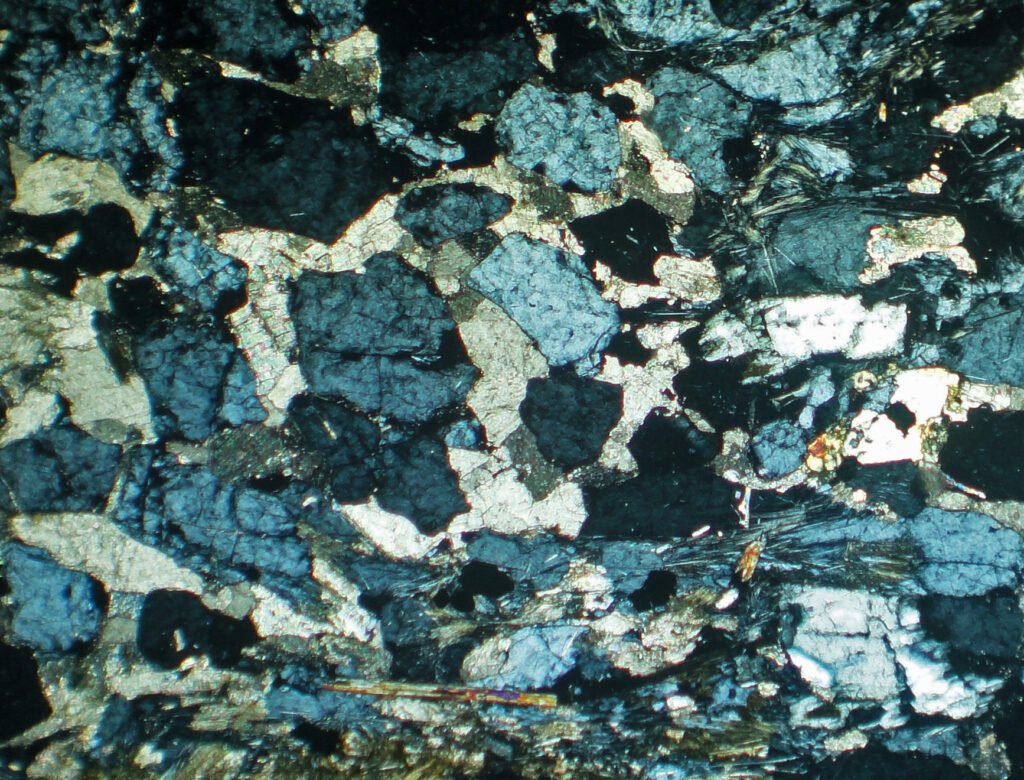
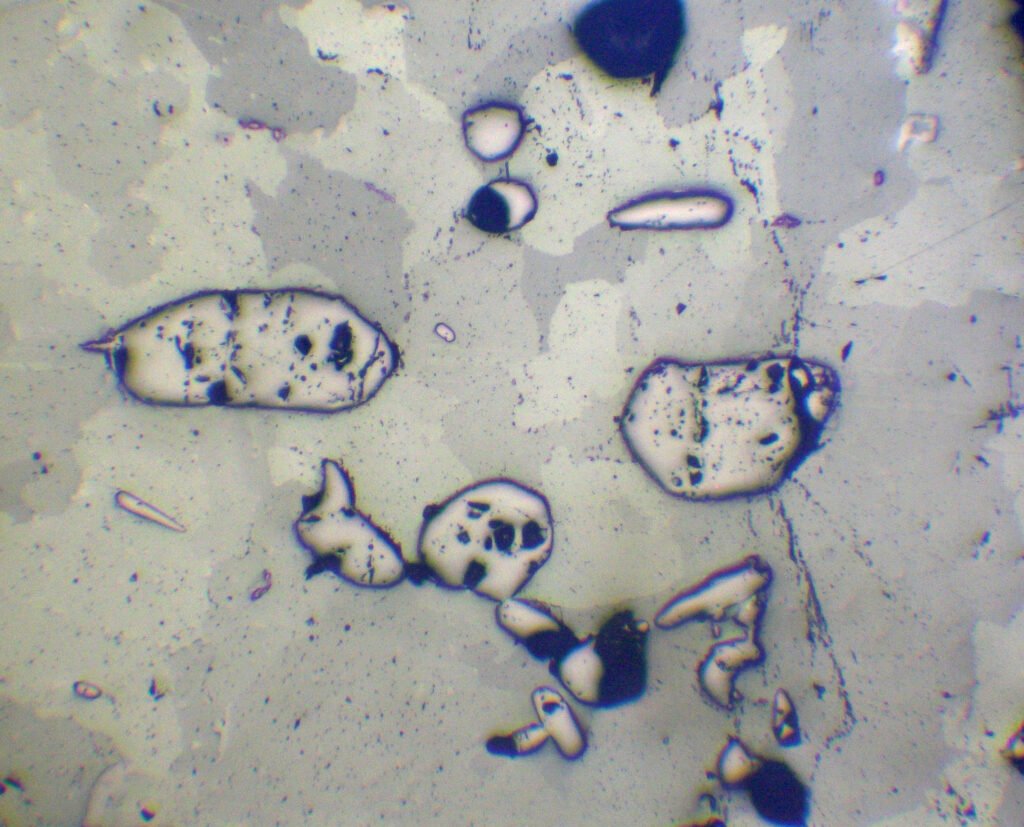
Color / Pleochroism: Colorless. Very rarely it is pale blue or pale gray with weak pleochroism. Apatites with higher U or Th contents, when included in biotite or hornblende, generate dark (black) halos (zones, coronas) around them.
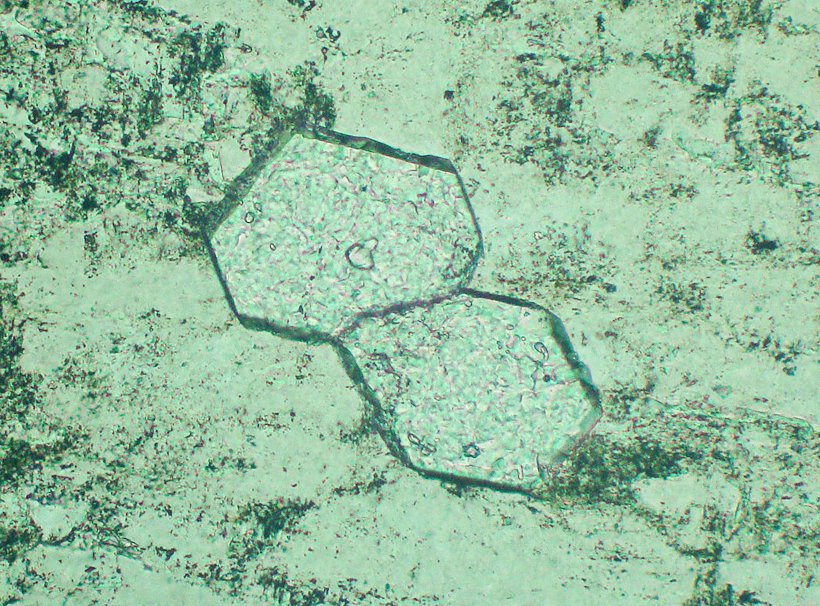
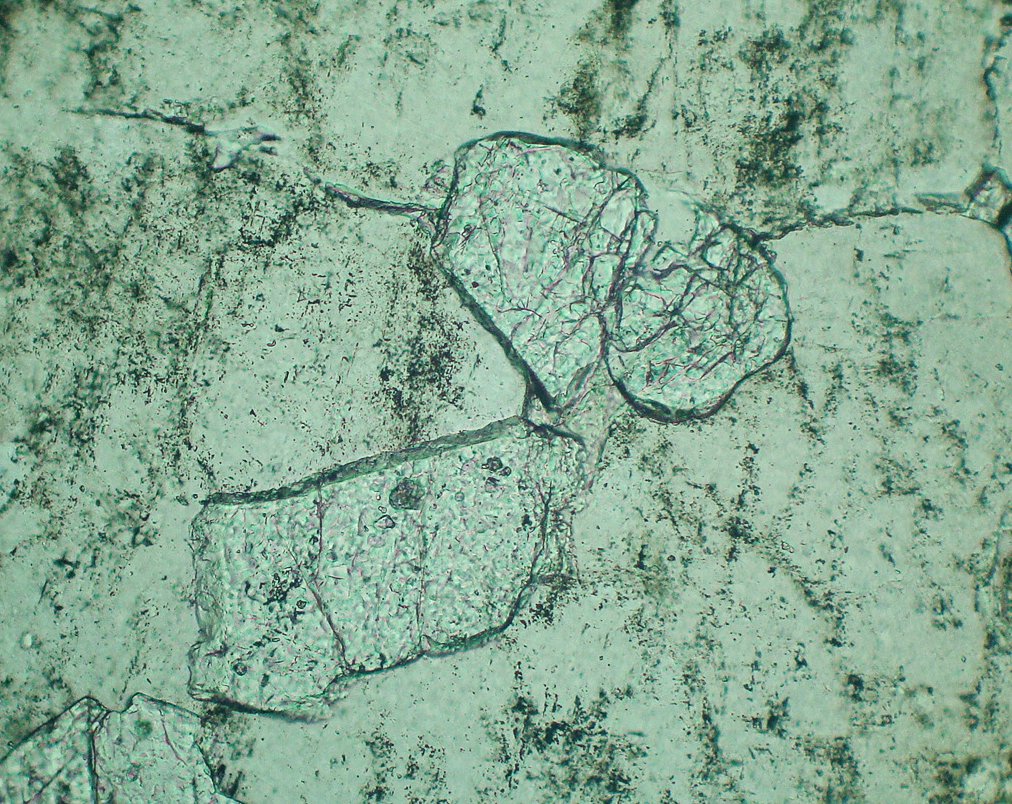
Relief: Moderate.
Cleavage: {0001} poor, {10-10} poor. They are not normally visible on a thin section. Prisms may exhibit spaced fractures.
Habits: Euhedral, long prismatic (“rods”) with rounded tips and hexagonal sections, fibrous aggregates, radiated. If it occurs as inclusions in biotite and hornblende it has dark pleochroic halos.
In mafic igneous rocks apatite forms short hexagonal prisms;
In felsic igneous rocks it forms long, thin prisms.
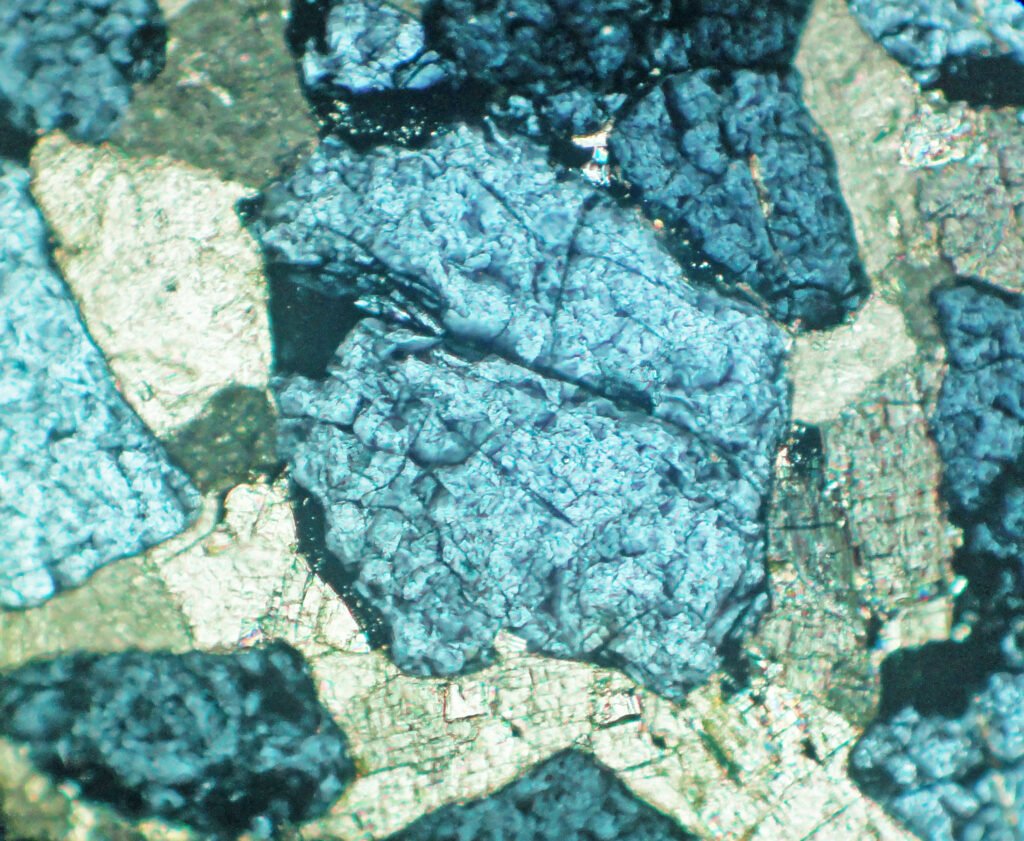
In metamorphic rocks (marbles!) it forms long prismatic to large anhedral grains.
In plutonic rocks (carbonatites!) they form large anhedral grains.
CROSSED POLARIZED LIGHT – XPL
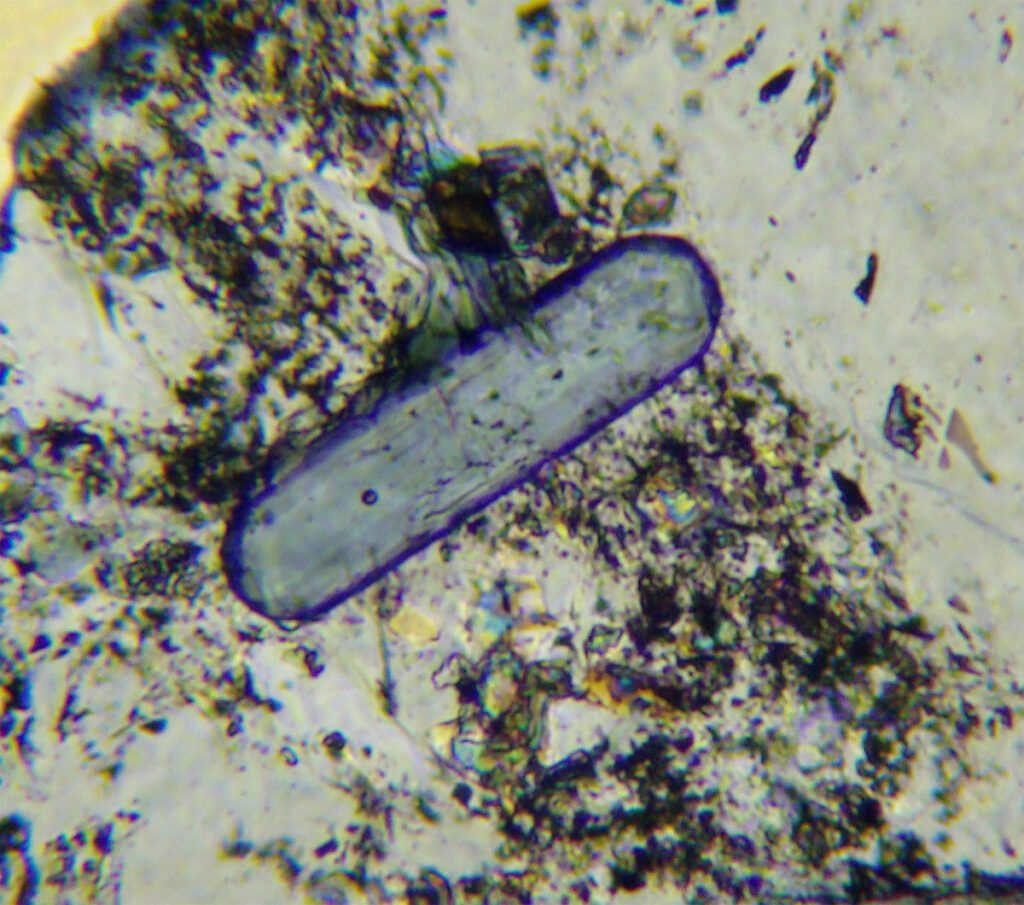
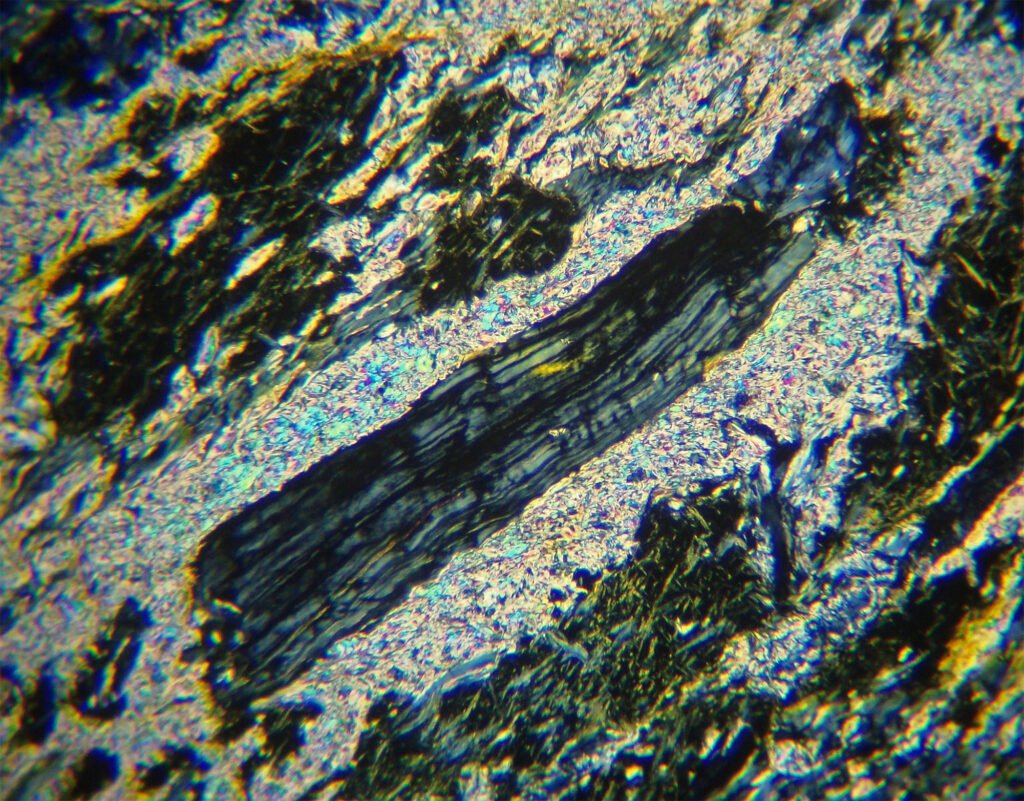
Birefringence and Interference Colors: Birefringence from 0.001 to 0.007: first-order interference colors, always grayscale, do not reach straw yellow. Hexagonal basal sections are always extinct (isotropic) in CPL and, as a rule, do not provide interference figures.
Extinction: Parallel in the longitudinal sections of the prismatic crystals (important!).
Elongation sign: ES(-) in prismatic crystals.
Twins: Rarely has twins.
Zoning: Never is zoned.
CONVERGENT LIGHT
Character: U(-), hard to get in hexagonal sections. Carbonatite apatite is biaxial with a 2V angle of up to 20º.
2V angle: Up to 20º in carbonatite apatite.
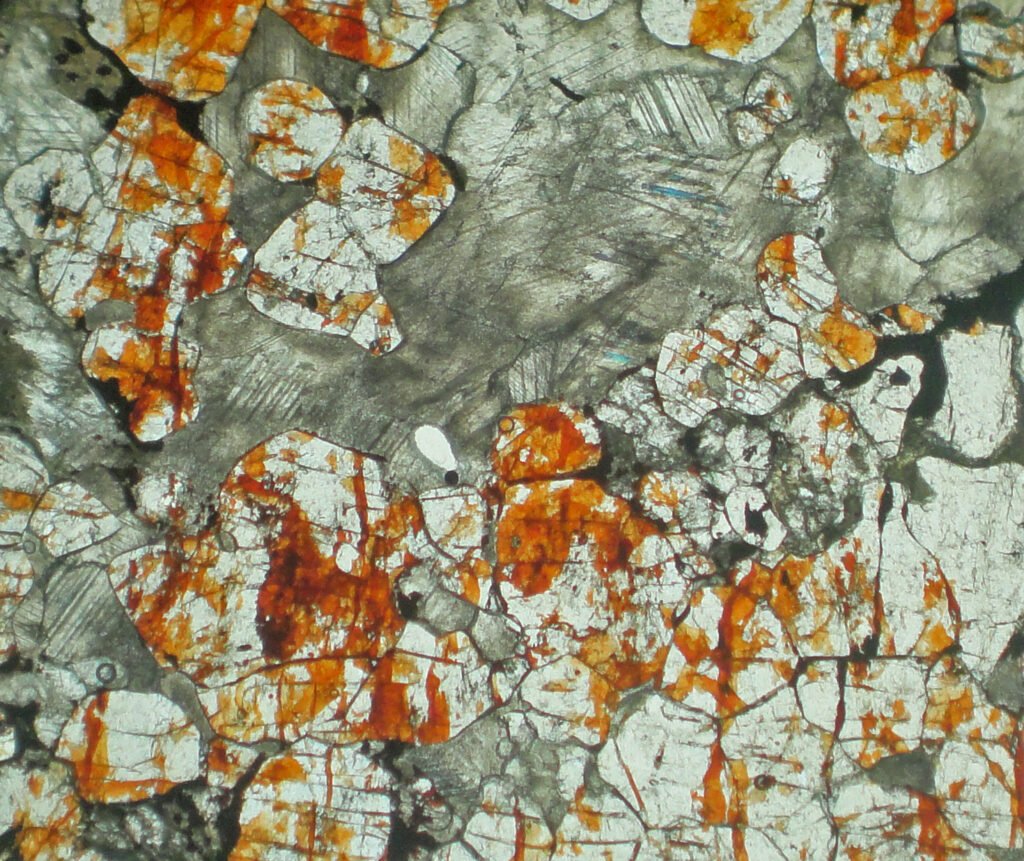
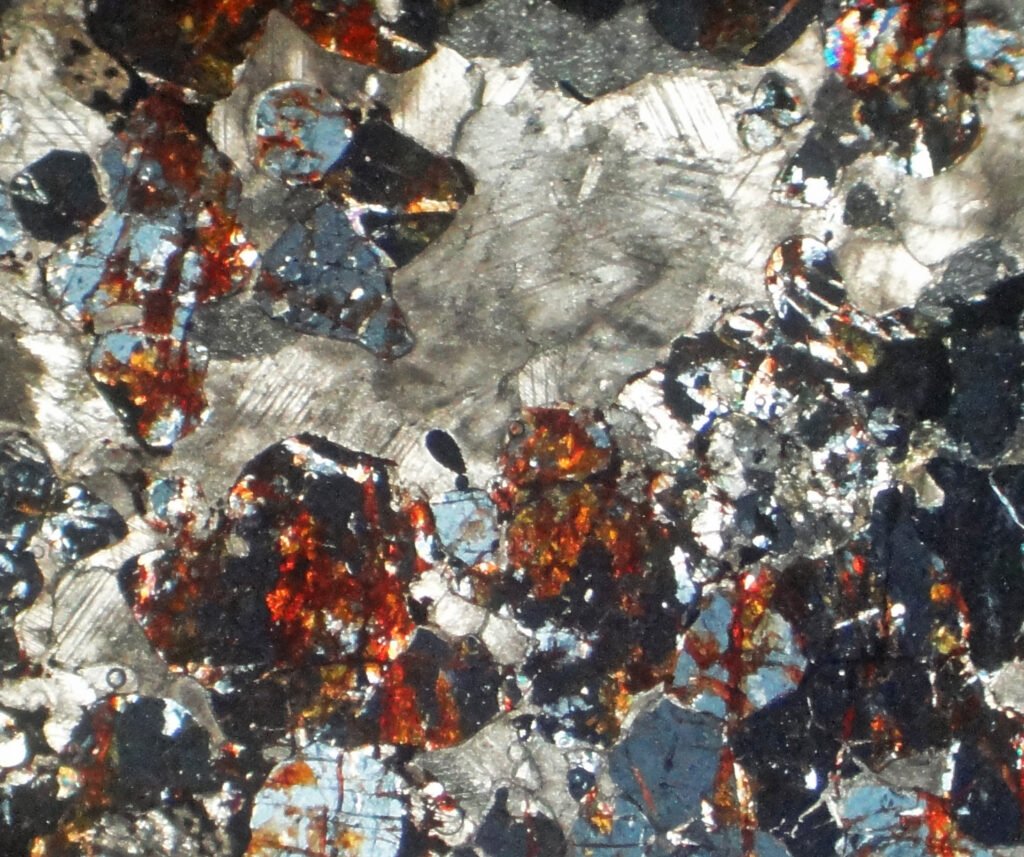
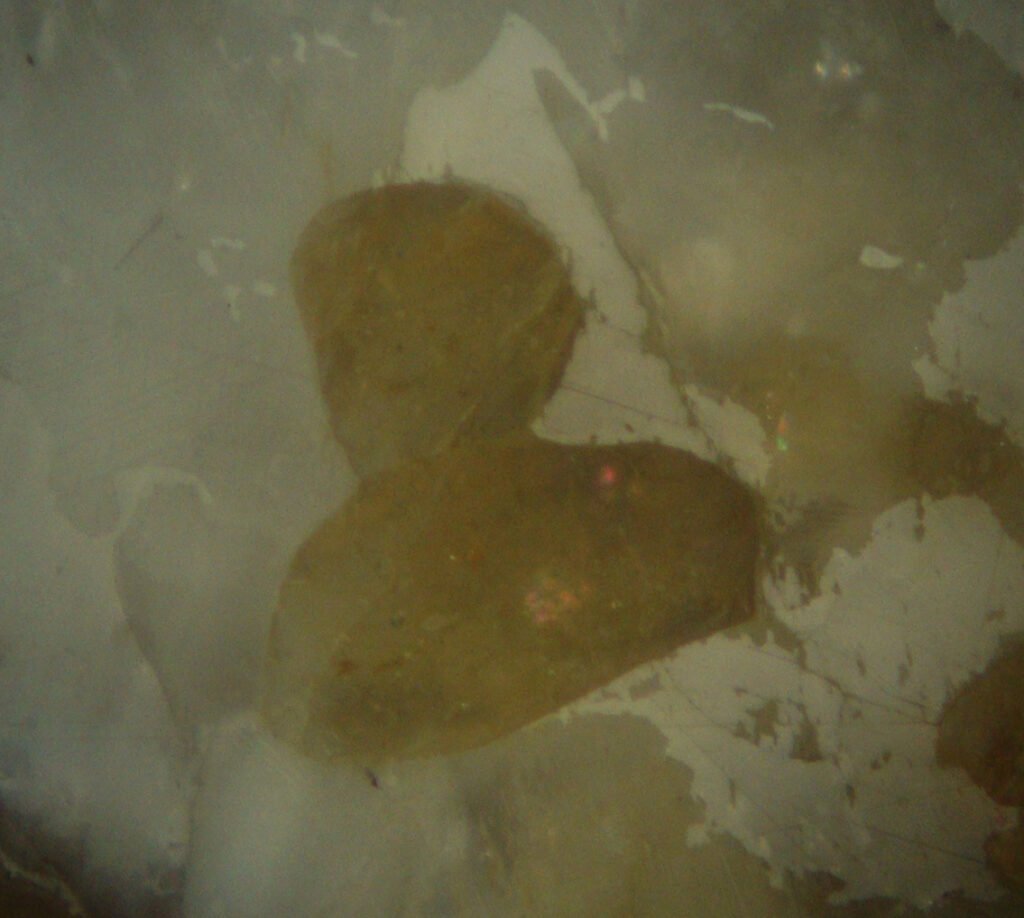
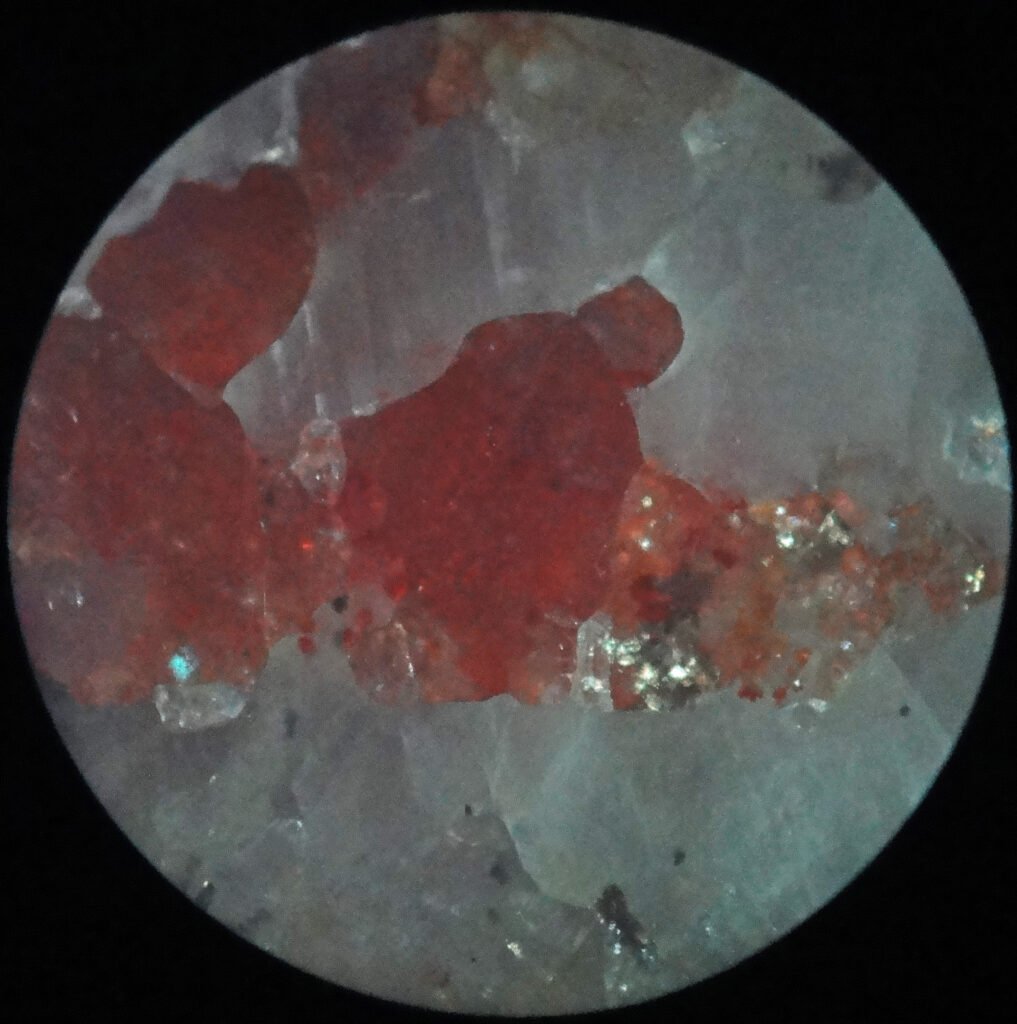
Alterations: generally unaltered. In carbonatites, apatites can develop an alteration that makes them very red due to a film of Fe (hydroxy)oxides that develops around the grains. Macroscopically, these “red” crystals can be confused with chondrodite, clinohumite, garnets and vesuvianite. Under the microscope, the color is very red, with an irregular distribution and the grains do not show pleochroism.
May be confused with: diagnostic are the low birefringence, hexagonal sections, moderate relief and uniaxial character. Colored apatite can be confused with tourmaline.
Nepheline has lower relief, tends to anhedral, and is generally somewhat altered.
Beryl (U-) (very rare) and quartz (U+) (very common) have lower reliefs.
Colophane is cryptocrystalline or isotrope, very dark, may be bluish.
Sillimanite has a similar habit and relief, but is biaxial and has intense interference colors.
Vesuvianite has higher relief and anomalous interference colors.
Zoisite has cleavage, is often zoned, and is B(+).
Melilite has similar habits, but usually has anomalous interference colors in blue.