1. Characteristics
The characteristics below refer to fluorapophyllite-(K), which is the most common.
Crystal system: Tetragonal, bipiramidal ditetragonal.
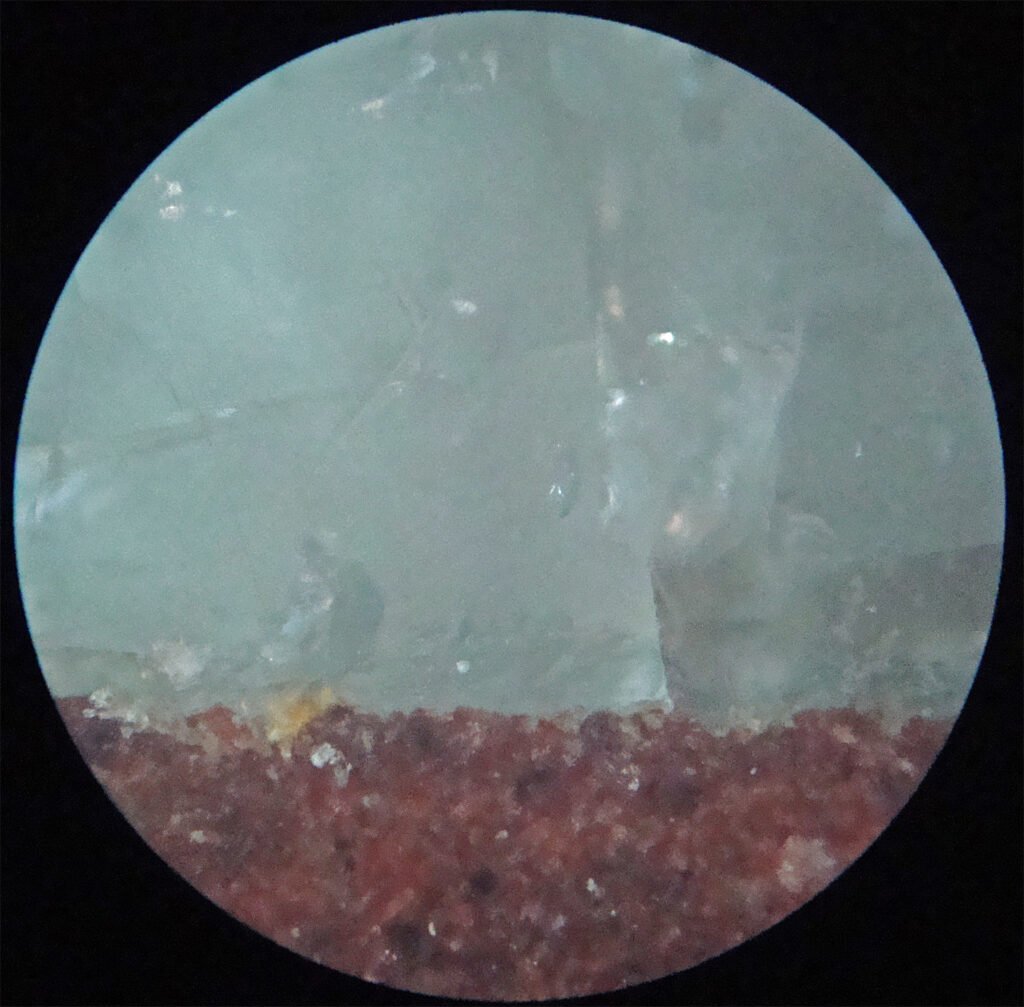
Color: Colorless, white, green, blue, pink, yellow and red.
Habit: Short to long prismatic. Tabular thick to narrow, pseudocubic, massive, drusic. Crystals up to 20 cm.
Cleavage: {001} perfect, {110} imperfect. Striations paralell to [001]
Tenacity: Brittle.
Twinning: On {111}, rare.
Fracture: Irregular
Mohs Hardness: 4.5 – 5
Parting: No.
Streak: White.
Lustre: Vitreous.
Diaphaneity: Transparent.
Density (g/cm³): 2,33 – 2,37
2. Geology and Deposits
Apophyllite is of hydrothermal origin and usually occurs in cavities and fractures of basaltic volcanic rocks (basalts, diabases) as a secondary mineral. The limited published data on the genesis of apophyllite place temperatures between 150 and 440 degrees Celsius.
It rarely occurs associated with skarns and amphibolites, forming as a product of hydrothermal alteration along fractures. In skarns may occur as a product of alteration of wollastonite.
It is found in cavities in granites and pegmatites.
Apophyllite can occur in low temperature hydrothermal veins in gneisses.
3. Mineral Associations
In general, apophyllites are associated with common secondary minerals found in basaltic rocks, such as varieties of silica (quartz, amethyst quartz, chalcedony, opal (hyalite)), calcite, prehnite, datolite, pectolite, clay minerals (including chlorite (chamosite)) and zeolites such as stilbite-(Ca), heulandite-(Ca), scolecite, laumontite, analcime and natrolite.
In amphibolites and skarns it occurs with wollastonite, prehnite, pectolite and datolite.
Also with vesuvianite in alkaline complexes.
4. Transmitted Light Microscopy
Refraction indices: nω: 1.530 – 1.536 nε: 1.532 – 1.538
PLANE POLARIZED LIGHT – PPL
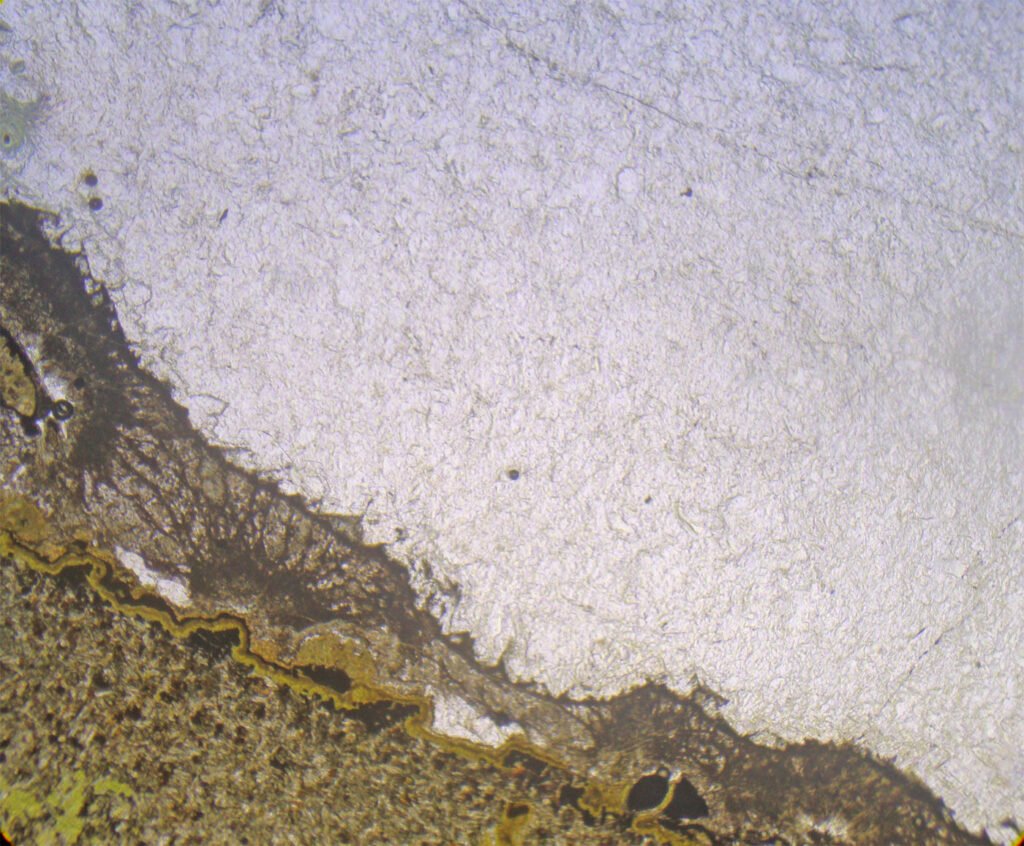
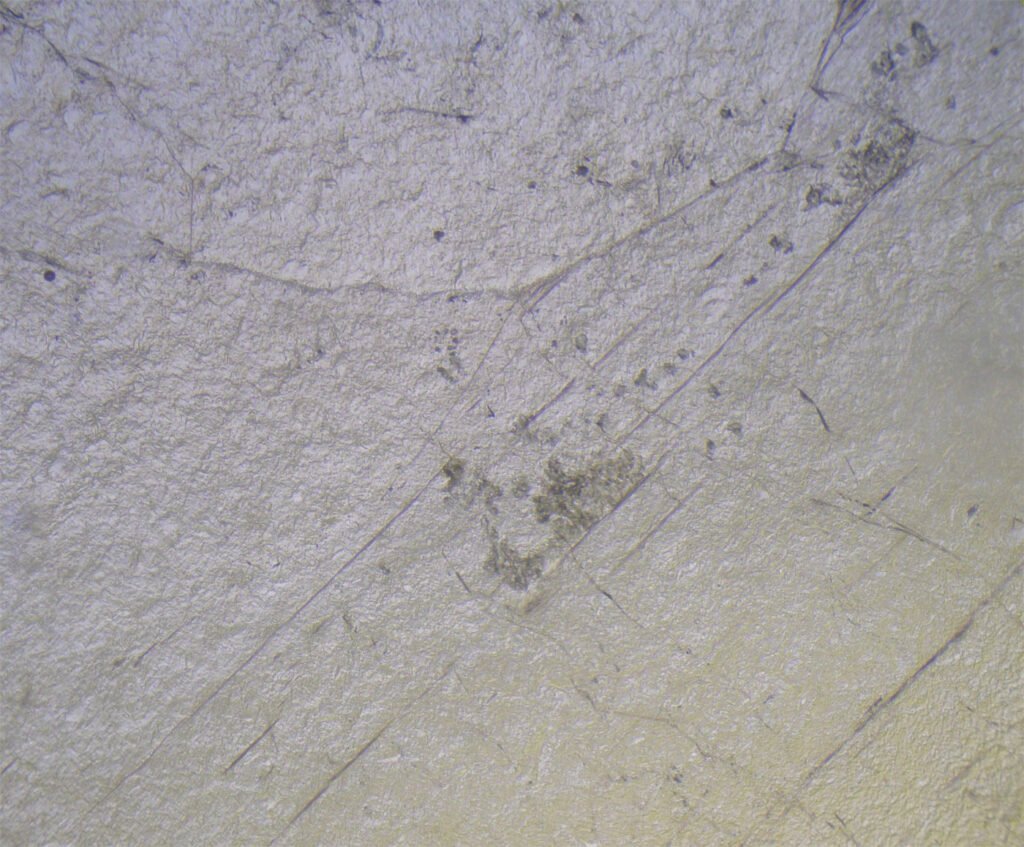
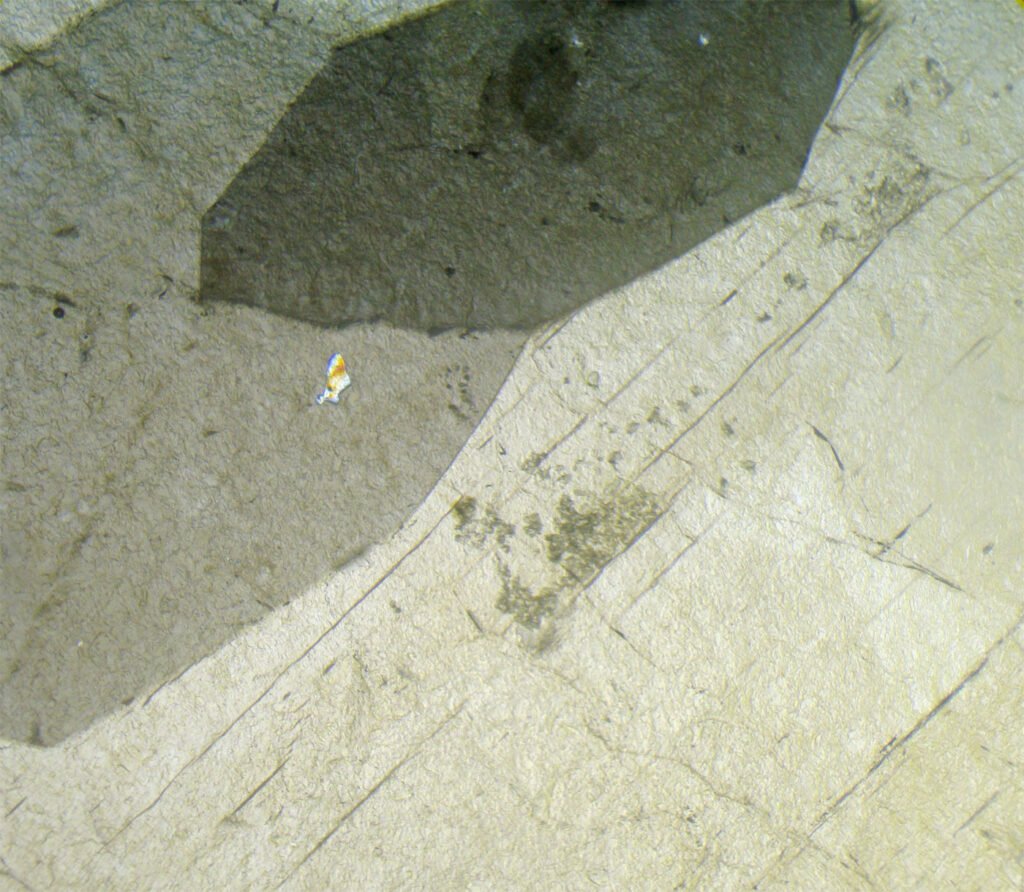
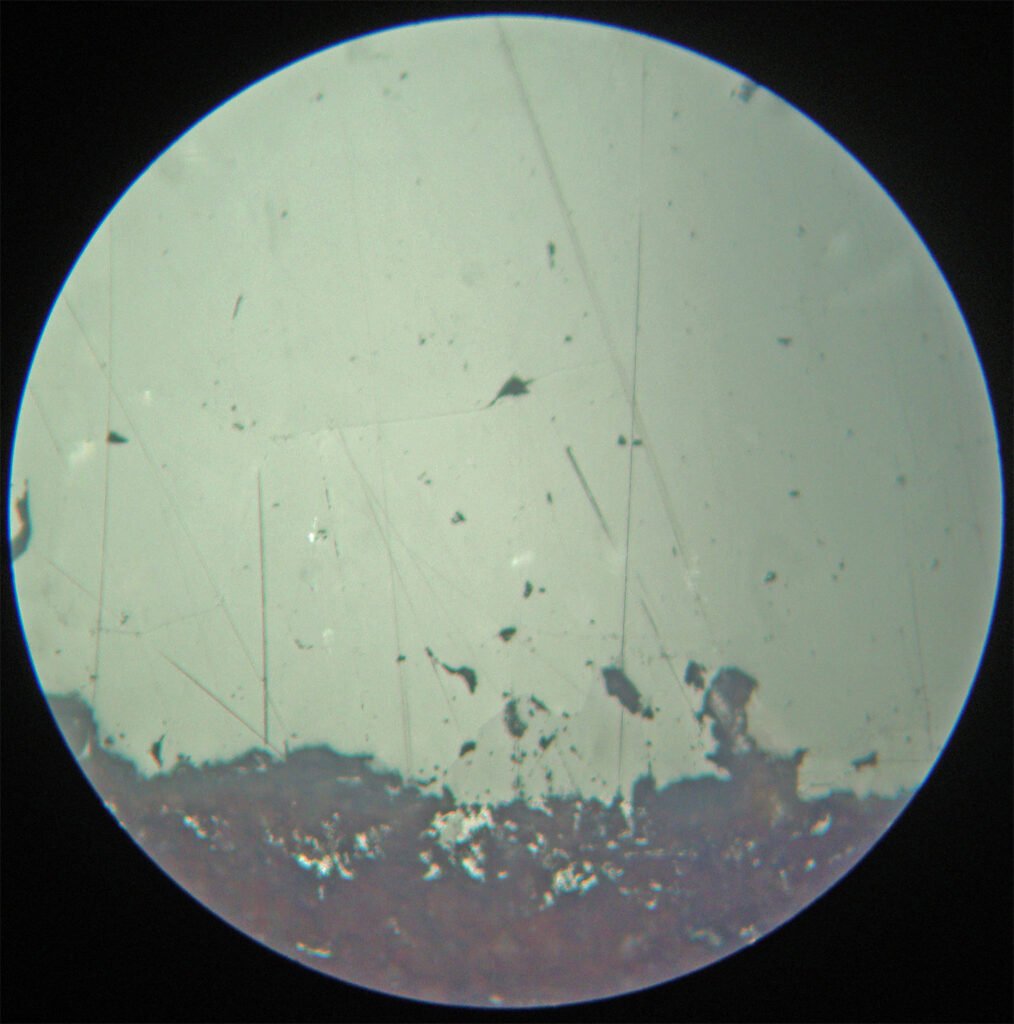
Color / Pleochroism: Colorless.
Relief: Low to moderate
Cleavage: {001} perfect and {110} imperfect.
Habits: Prismatic crystals formed by prism, bipyramid and pinacoid. It can form pseudocubic crystals. The pinacoid can dominate, generating tabular crystals of variable width; can be thin tabular. Massive, granular, equidimensional.
CROSSED POLARIZED LIGHT – XPL
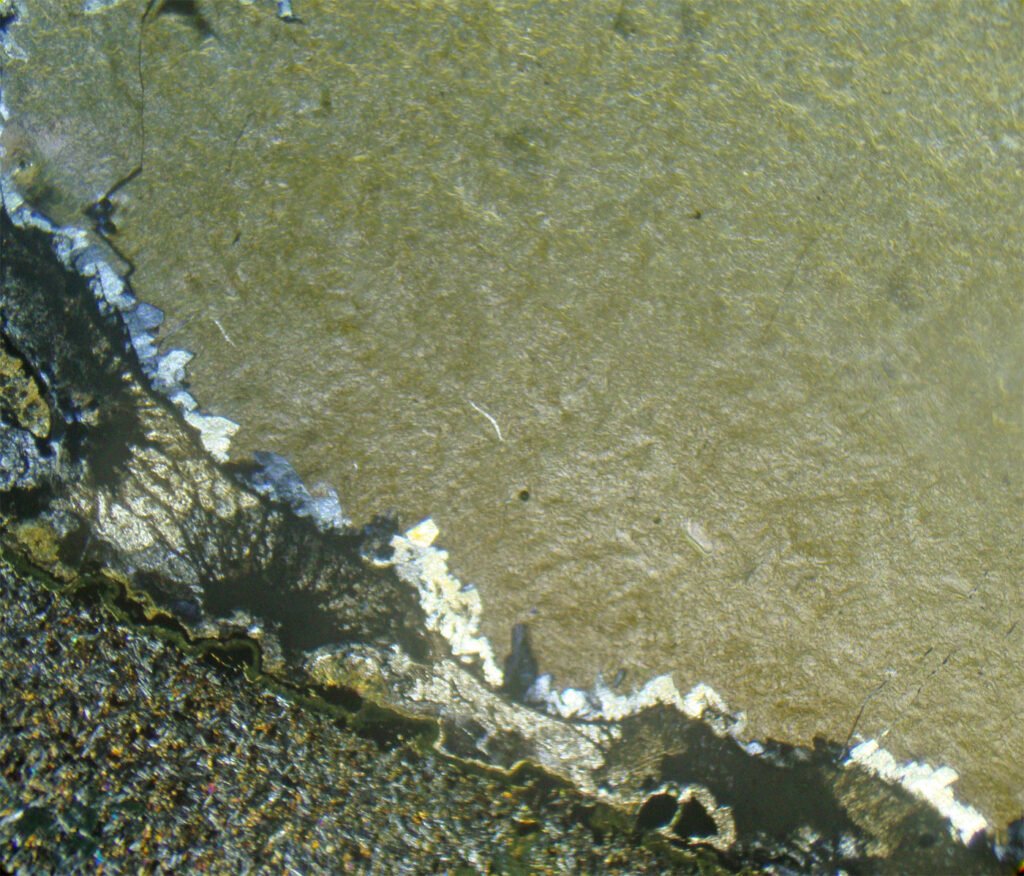
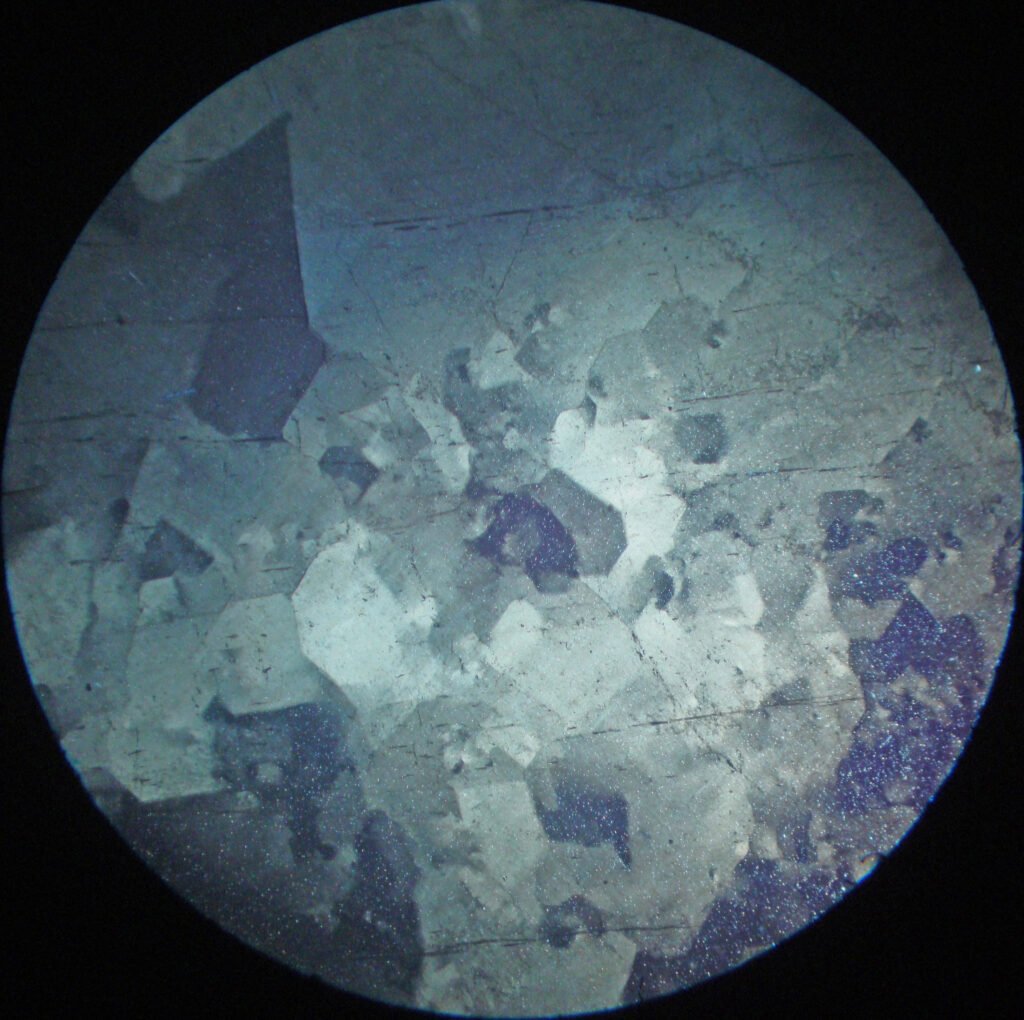
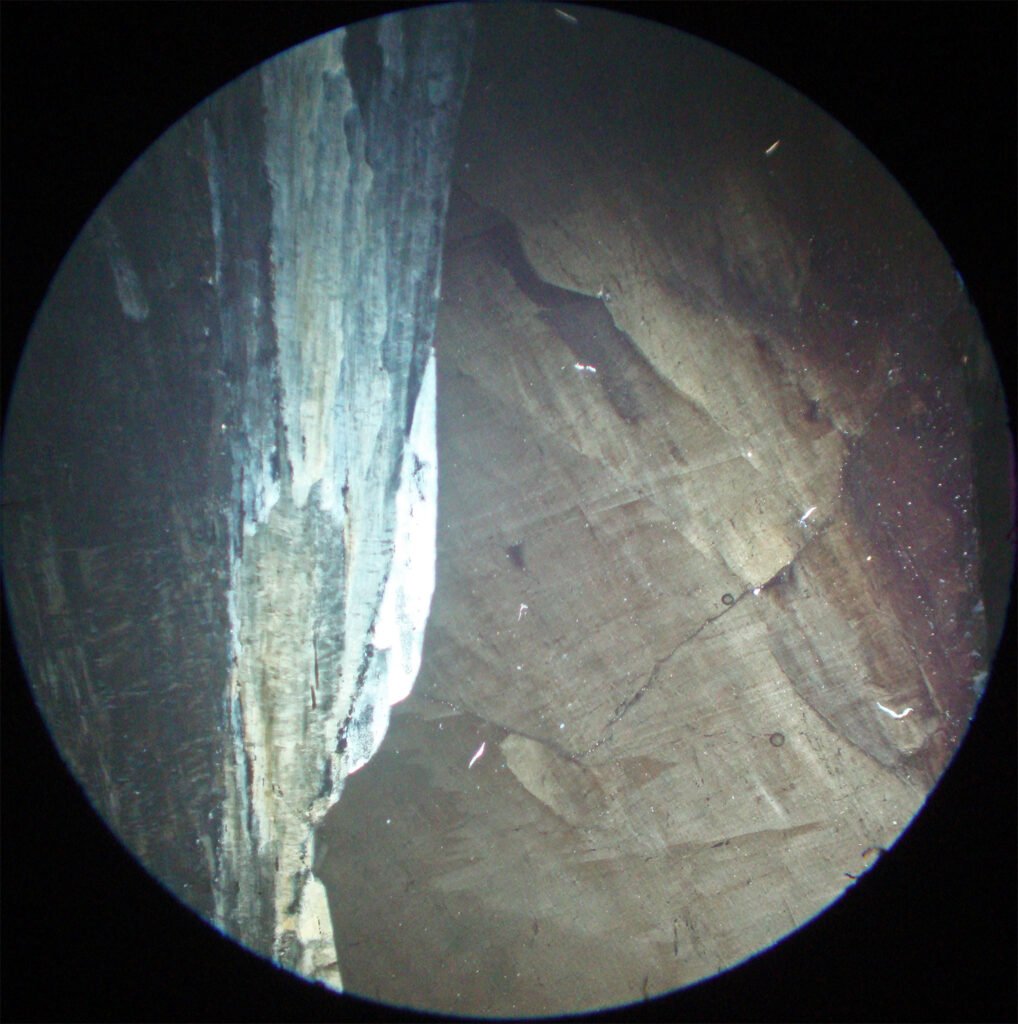
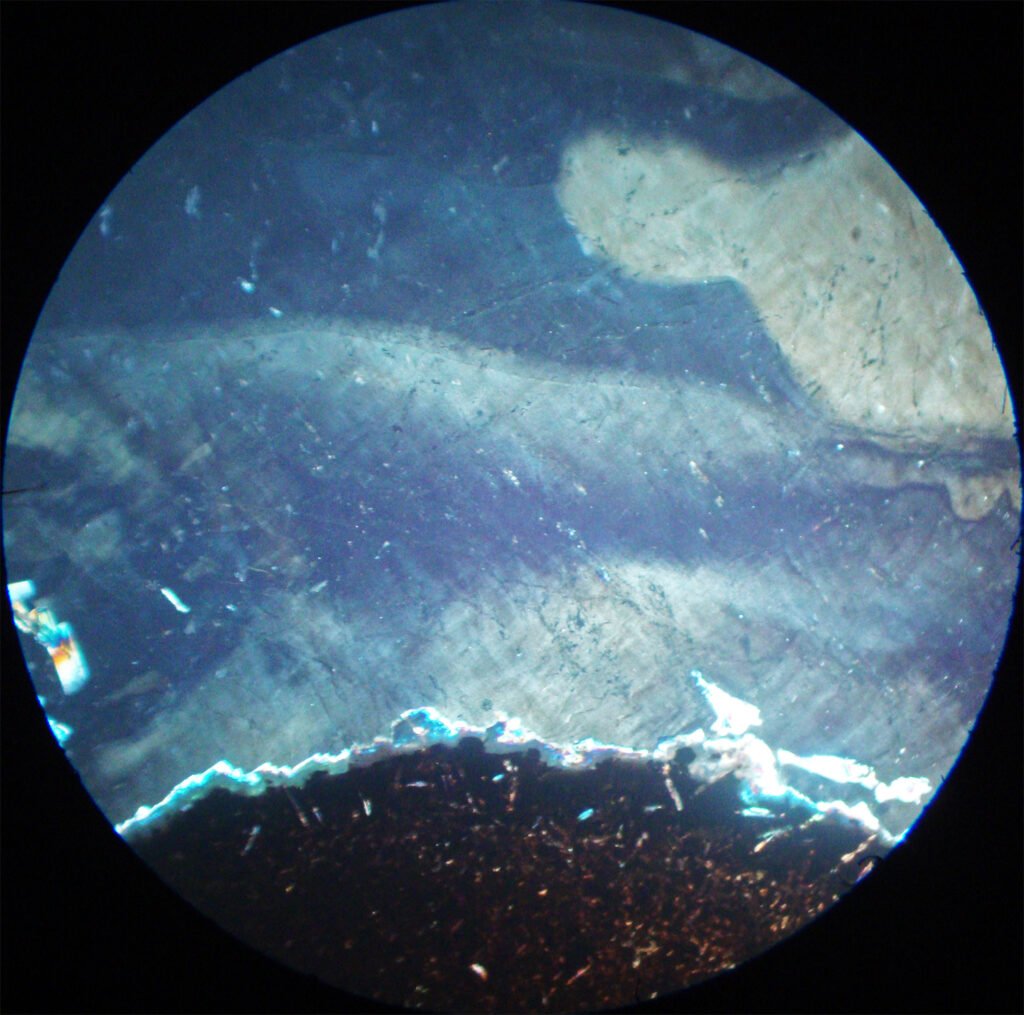
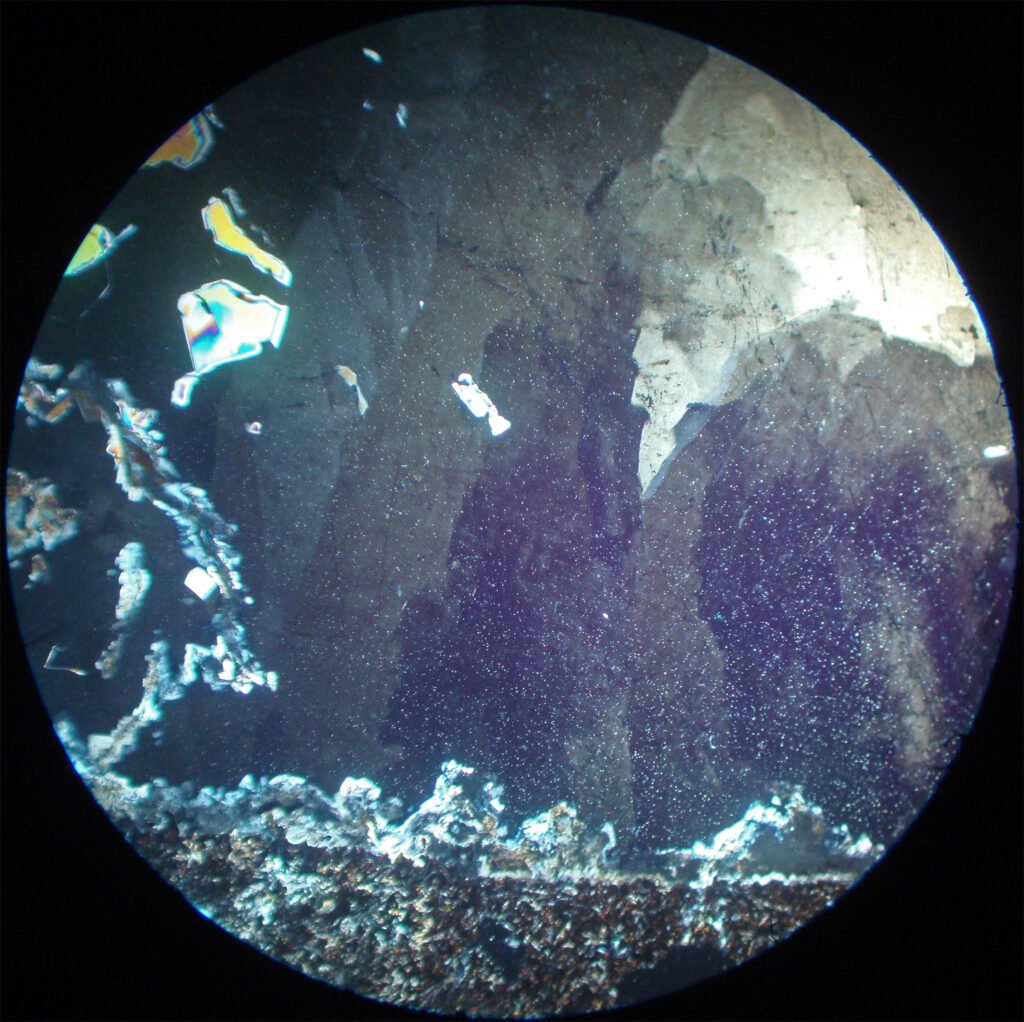
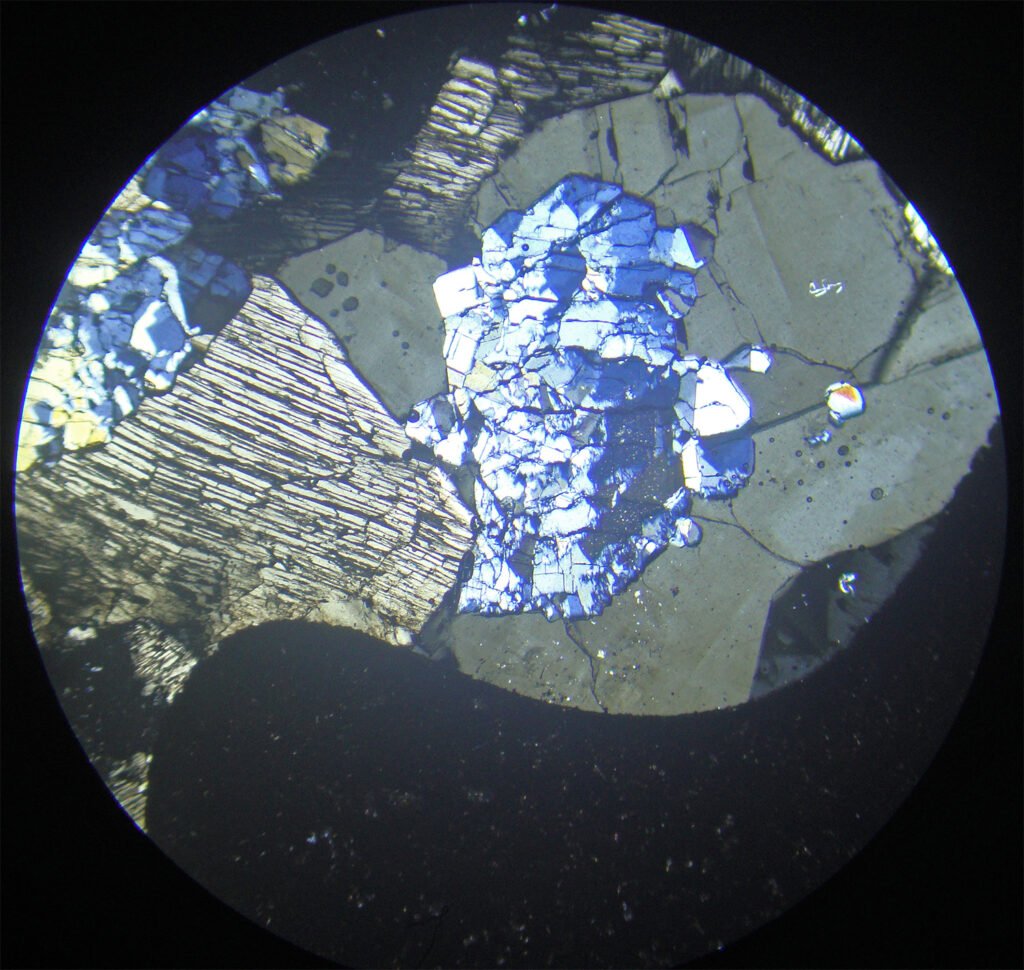
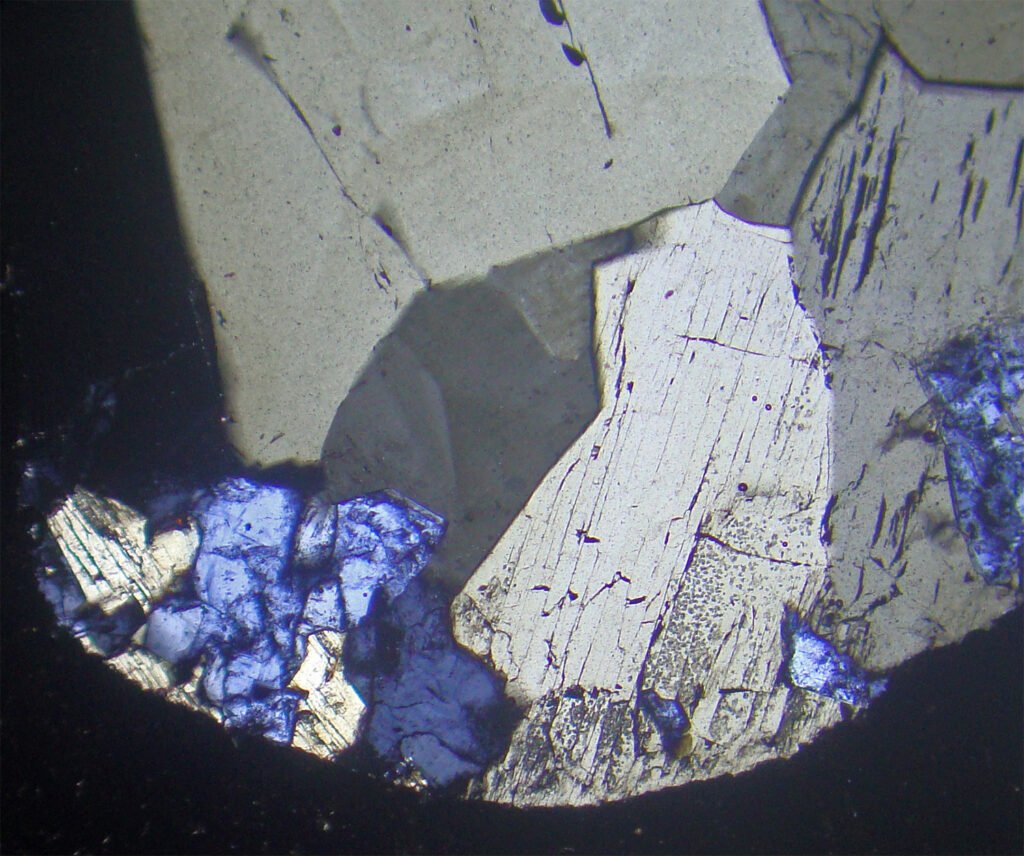
Birefringence and Interference Colors: maximum birefringence of 0.003: very dark, almost black interference colors.
Very strong anomalous interference colors can occur, giving cream to brown colors similar to the interference colors of titanite and carbonates.
Extinction: Tends to be parallel to the cleavage and the shape (important!). It is usually undulating and by sectors.
Elongation sign: SE(+), rarely SE(-). It’s not diagnostic.
Twins: Rare, on {111}.
Zoning: No, but sectorizing is very common.
CONVERGENT LIGHT
Character: U(+) or U(-), can be anomalous biaxial.
2V angle: Small if it is anomalous biaxial.
Alterations: Apophyllite can alter or be replaced by clay minerals, calcite, opal or quartz.
May be confused with: few other minerals, considering the paragenesis and the very low or anomalous, pearly, interference colors.
Zeolites have lower relief, slightly higher interference colors (light gray, white), other habits and are biaxial.
Nepheline and scapolite (marialite) occur in other paragenesis.
Gypsum may be similar, but has gray interference colors (not dark nor anomalous) and oblique extinction with the exception of sections parallel to the b-axis, when the extinction is parallel.