1. Characteristics
Crystal system: Monoclinic prismatic.
Color: Black, black-green, brown, brown-green, brown-violet.
Habit: Short prismatic with square or 8-sided basal sections. Acicular, skeletal, tabular, dendritic.
Cleavage: {110} good, typical for pyroxenes.
Tenacity: Brittle.
Twinning: Common on {100}, simple or multiple.
Fracture: Irregular to conchoidal.
Mohs Hardness: 5.5 – 6
Parting: On {100} and {010}.
Streak: Greenish gray, light/dark brown.
Lustre: Vitreous.
Diaphaneity: Transparent.
Density (g/cm³): 3.19 – 3.56
2. Geology and Deposits
Augite is an essential mineral in mafic and ultramafic igneous rocks (gabbros, basalts, olivine-gabbros, lamburgites and peridotites) and in their metamorphic equivalents. It occurs in syenites, monzonites, diorites, pyroxenites, hornblendites, dacites, rhyodacites, trachytoids, andesites, basalts, phonolites, tephrites, foidites, dolerites, porphyries and lamprophyres.
It sometimes occurs in high-grade metamorphic rocks such as gneisses and granulites. Also in metamorphic iron formations, cornubianites and impactites. Titanoaugite is restricted to basic to intermediate igneous rocks.
Augite is also found in meteorites (acondrites) and occasionally occurs in immature sandstones such as graywackes.
3. Mineral Associations
In mafic rocks, it is associated with plagioclase (labradorite), olivine, sanidine, leucite, amphibole (hornblende), other pyroxenes (pigeonite, etc.), garnet (melanite), titanite, fluor-apatite, oxides (magnetite, ilmenite, hematite), sulfides (pyrite, chalcopyrite), native copper and a huge variety of secondary minerals, both from alteration and those formed by other processes after the formation of the host rock.
Among these secondary minerals are calcite, epidote, prehnite, many different zeolites and clay minerals.
Also associated with scapolite.
4. Transmitted Light Microscopy
Refraction indices: nα: 1.671 – 1.735 nβ: 1.672 – 1.741 nγ: 1.703 – 1.774
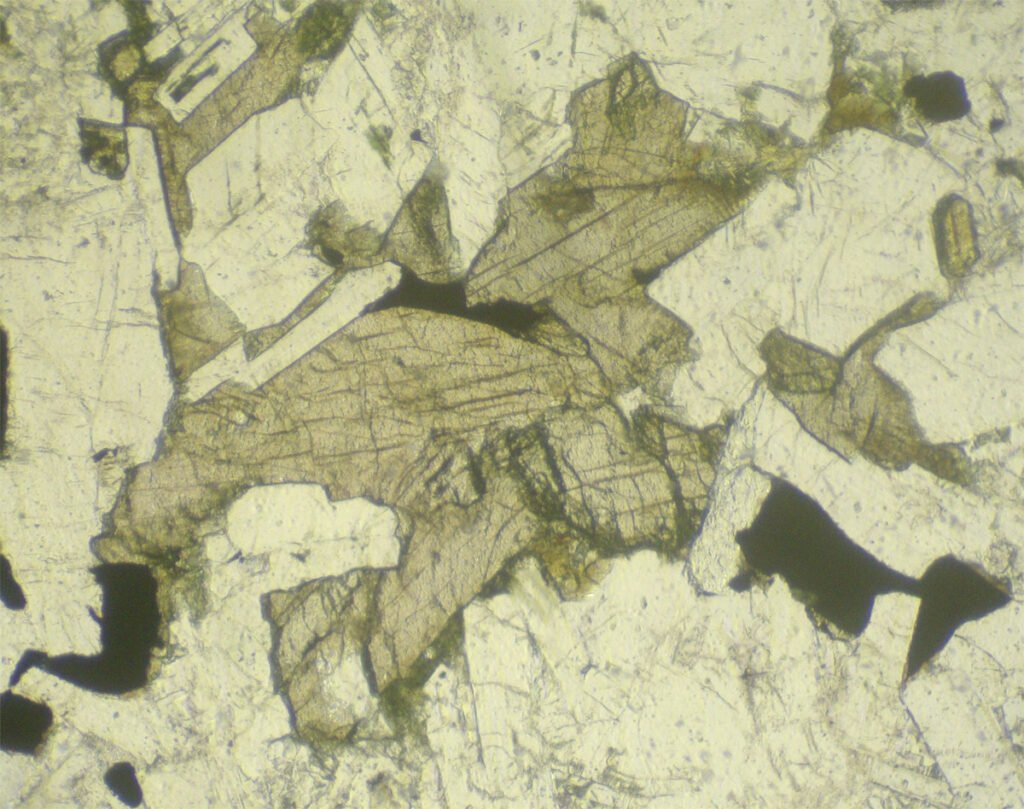
PLANE POLARIZED LIGHT – PPL
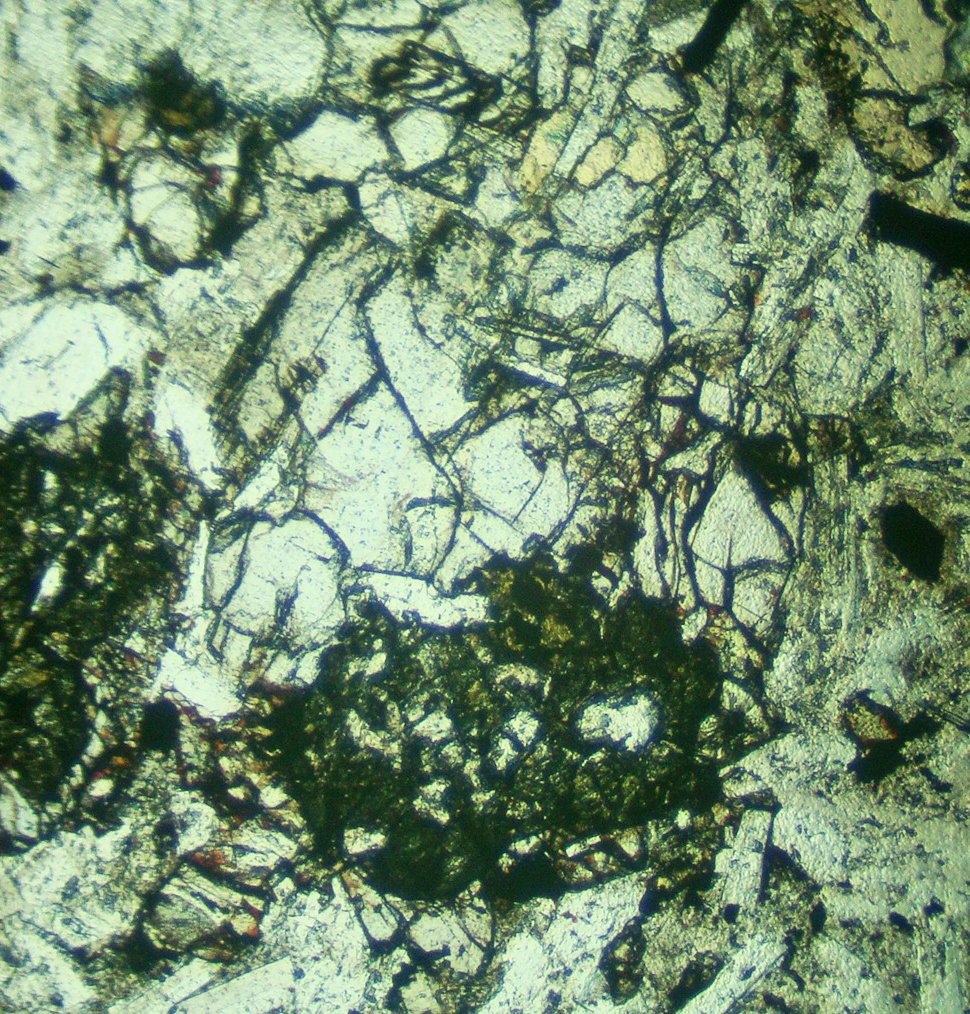
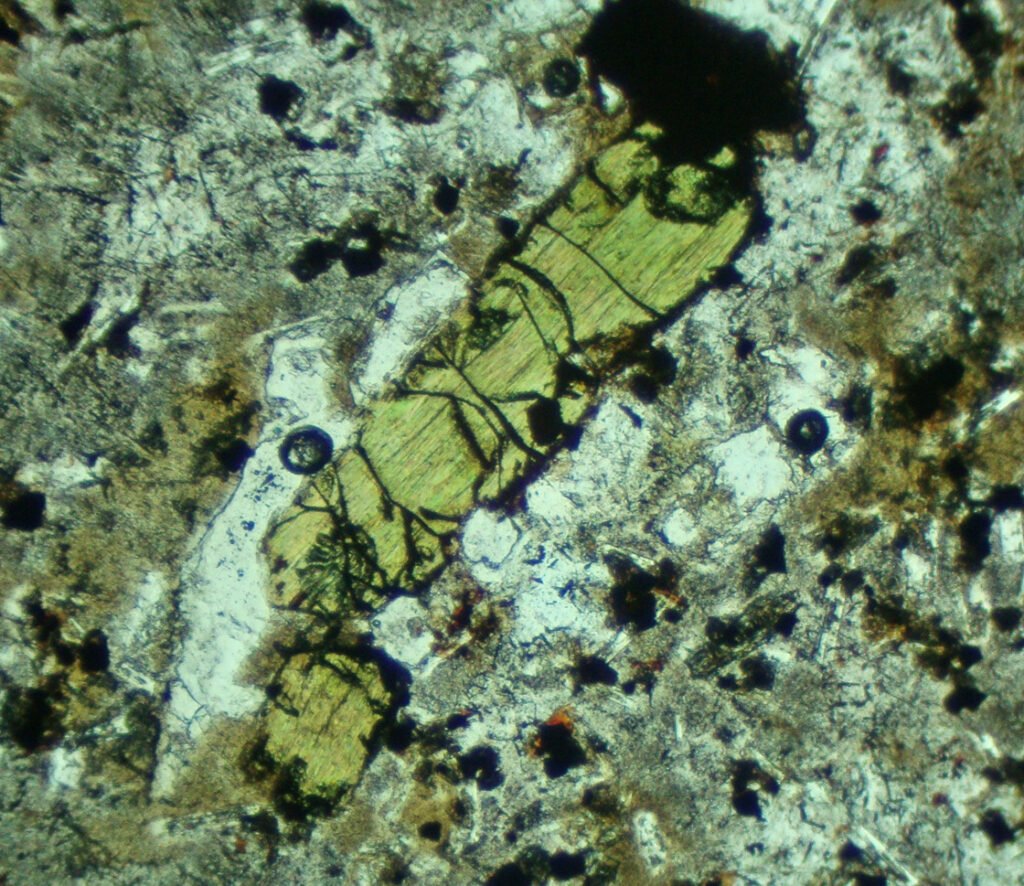
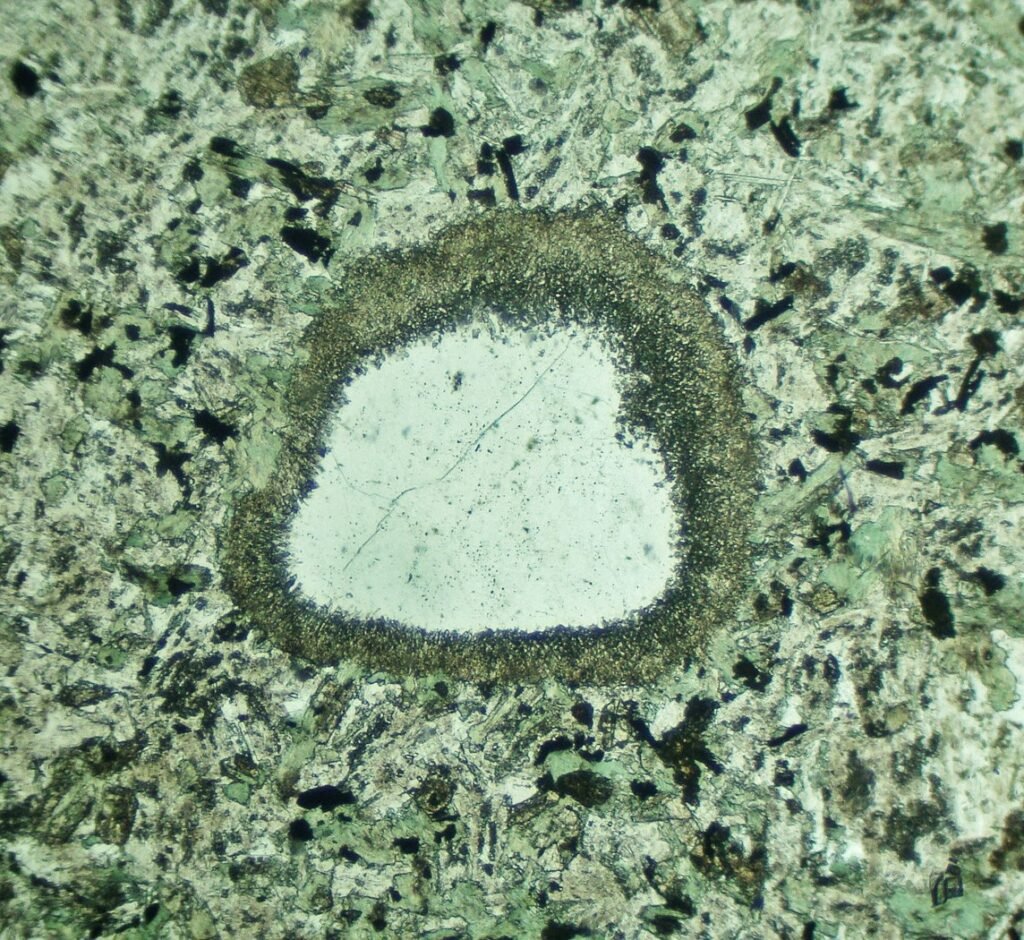
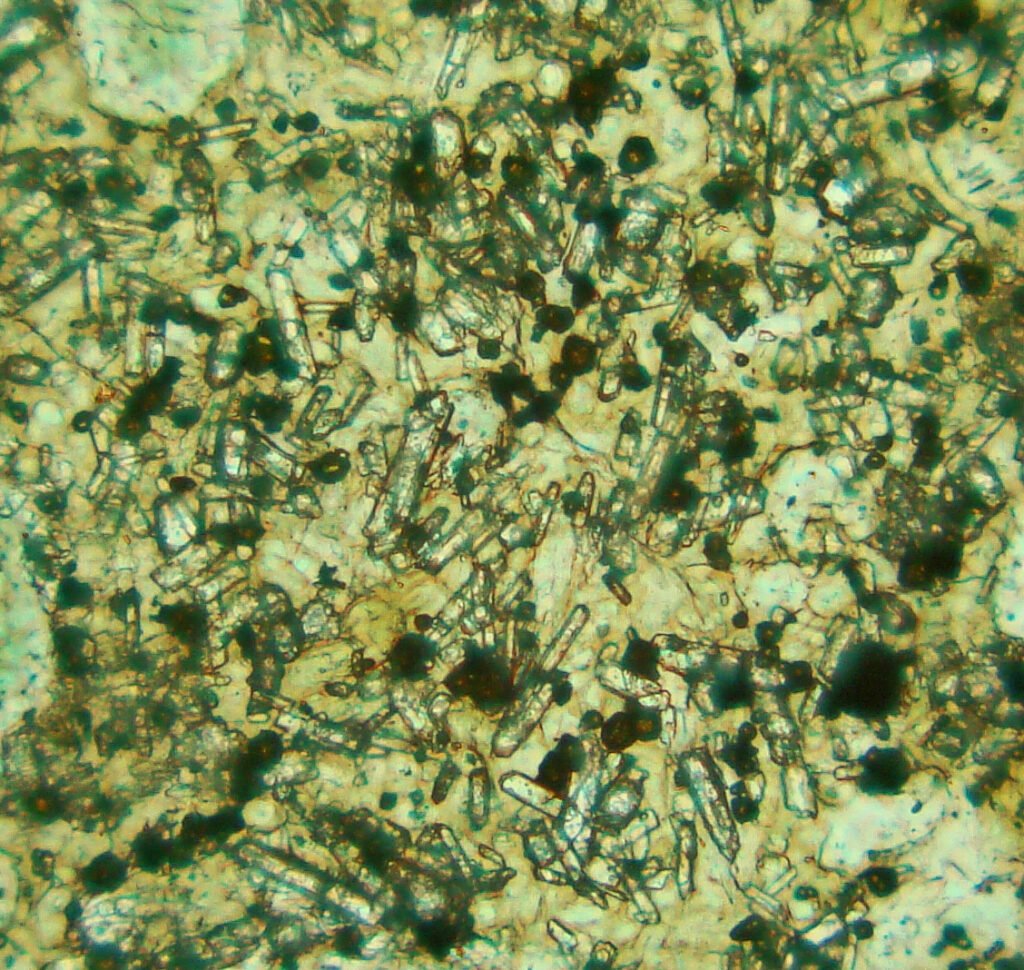
Color / Pleochroism: Normally colorless, tending to gray due to the higher relief. It can be very pale green, gray, pale brown or brownish green.
Pleochroism is usually non-existent or weak. Stronger colors may mask pleochroism (x = faint green or bluish green; y = pale green, brown, green, or bluish green; z = pale brownish green, green, or yellow-green).
If with Ti (>3% TiO2 = titanoaugite) it has distinct to strong pleochroism from pale brown, brownish violet or violet.
If with Fe, it is darker, with weak pleochroism.
Relief: Medium to high.
Cleavage: {110} good to distinct. Basal sections show two cleavages that form 87º and 93º angles to each other. Prismatic sections has only one cleavage.
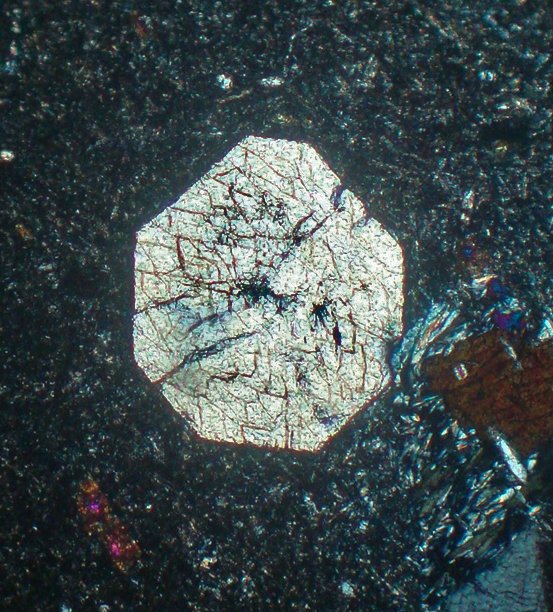
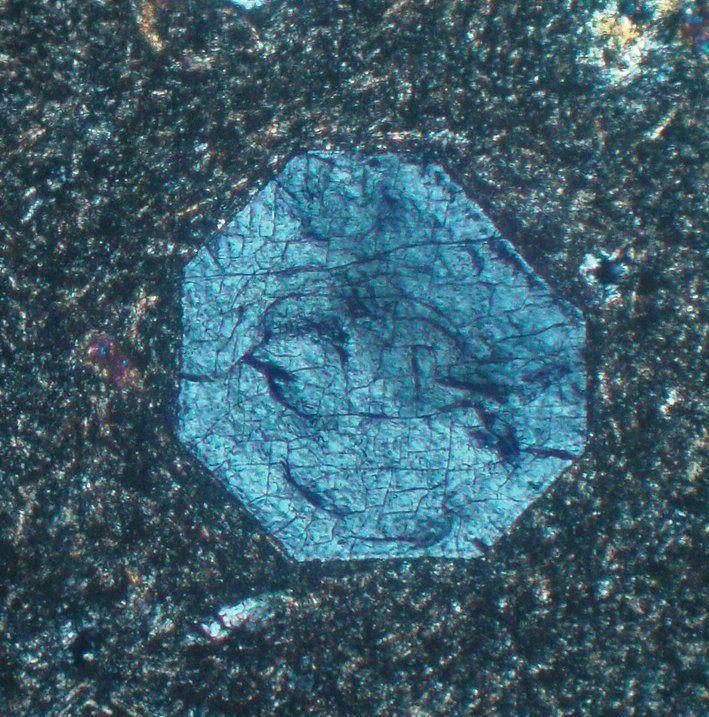
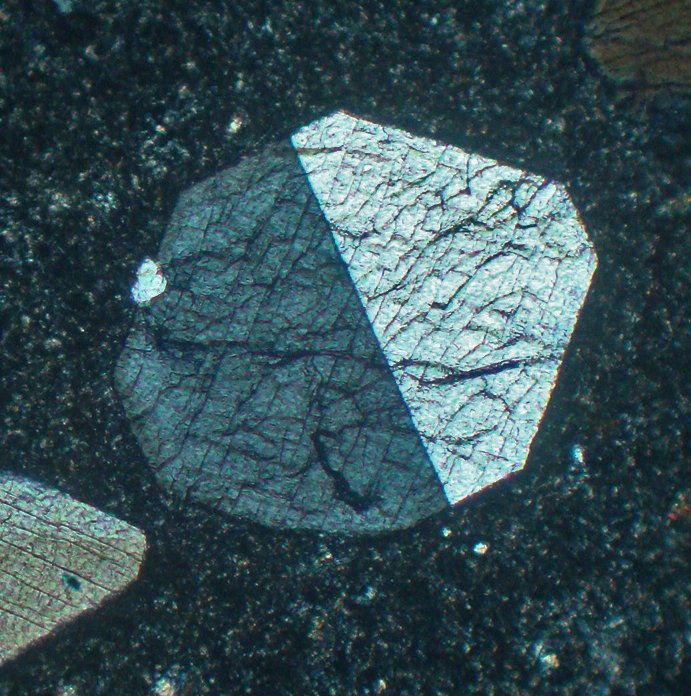
Habits: Prismatic, equidimensional, columnar shapes. Anhedral crystals and masses are common. Idiomorphic basal sections show 4 or 8 sides.
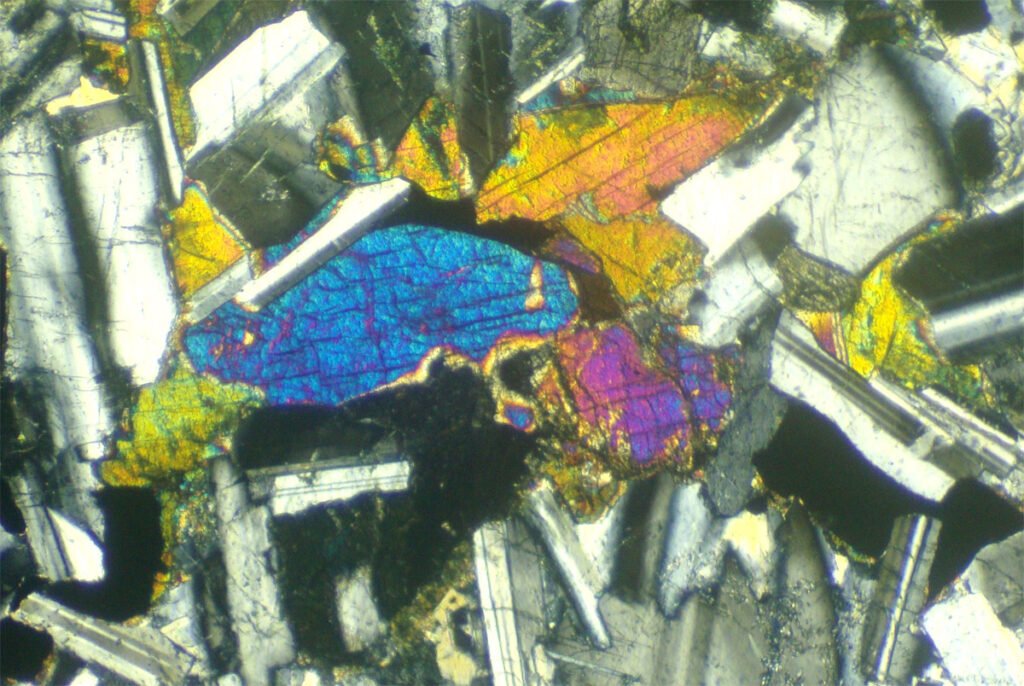
CROSSED POLARIZED LIGHT – XPL
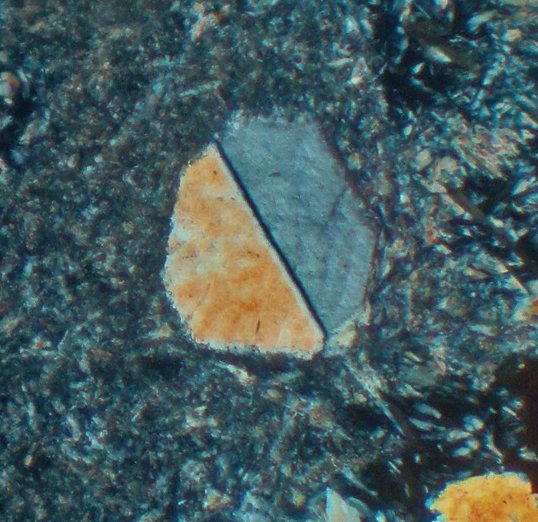
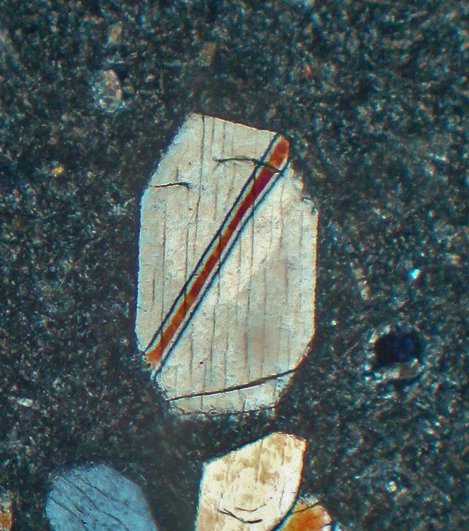
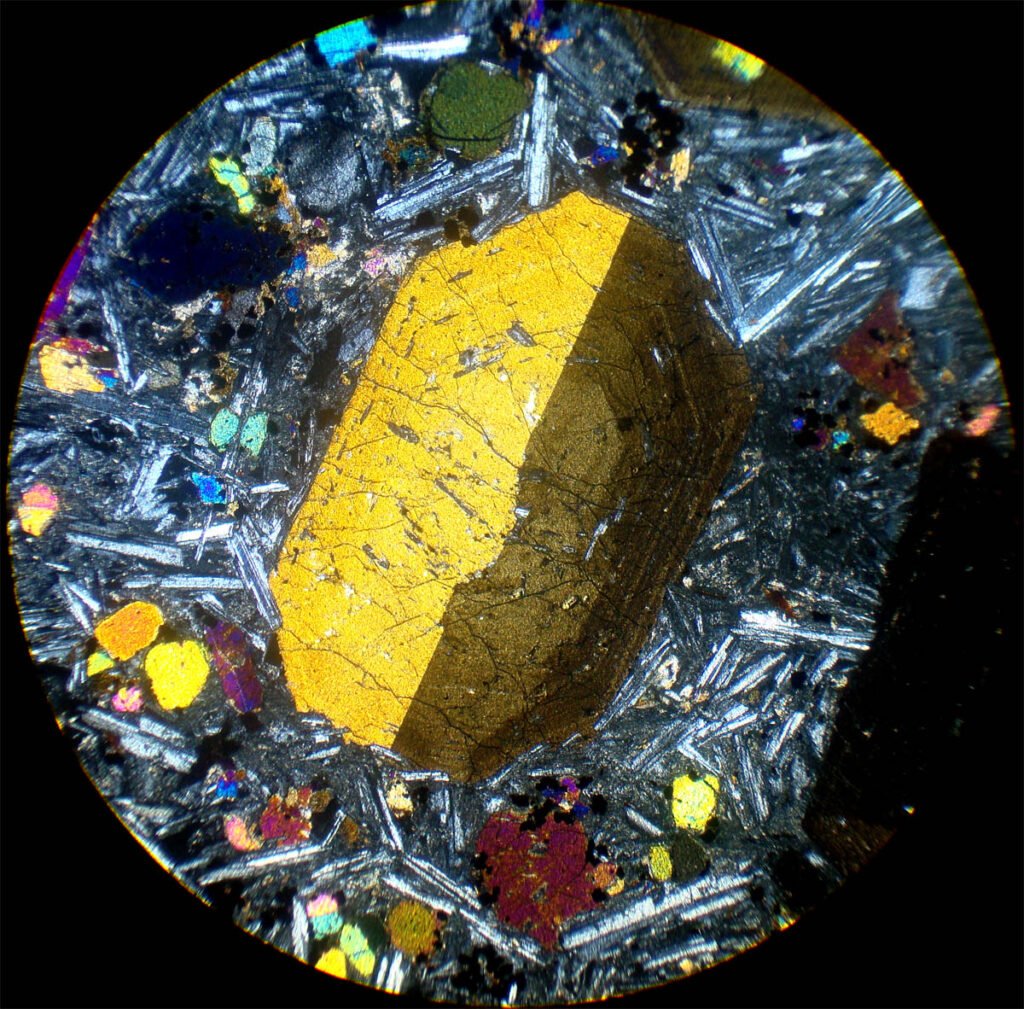
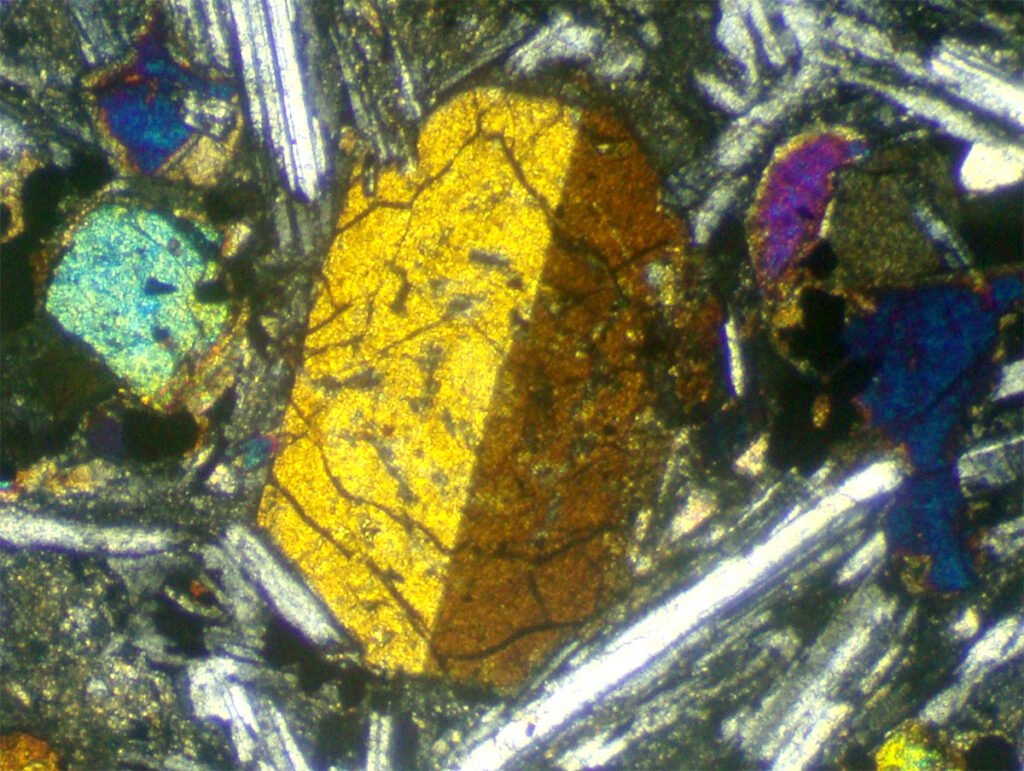
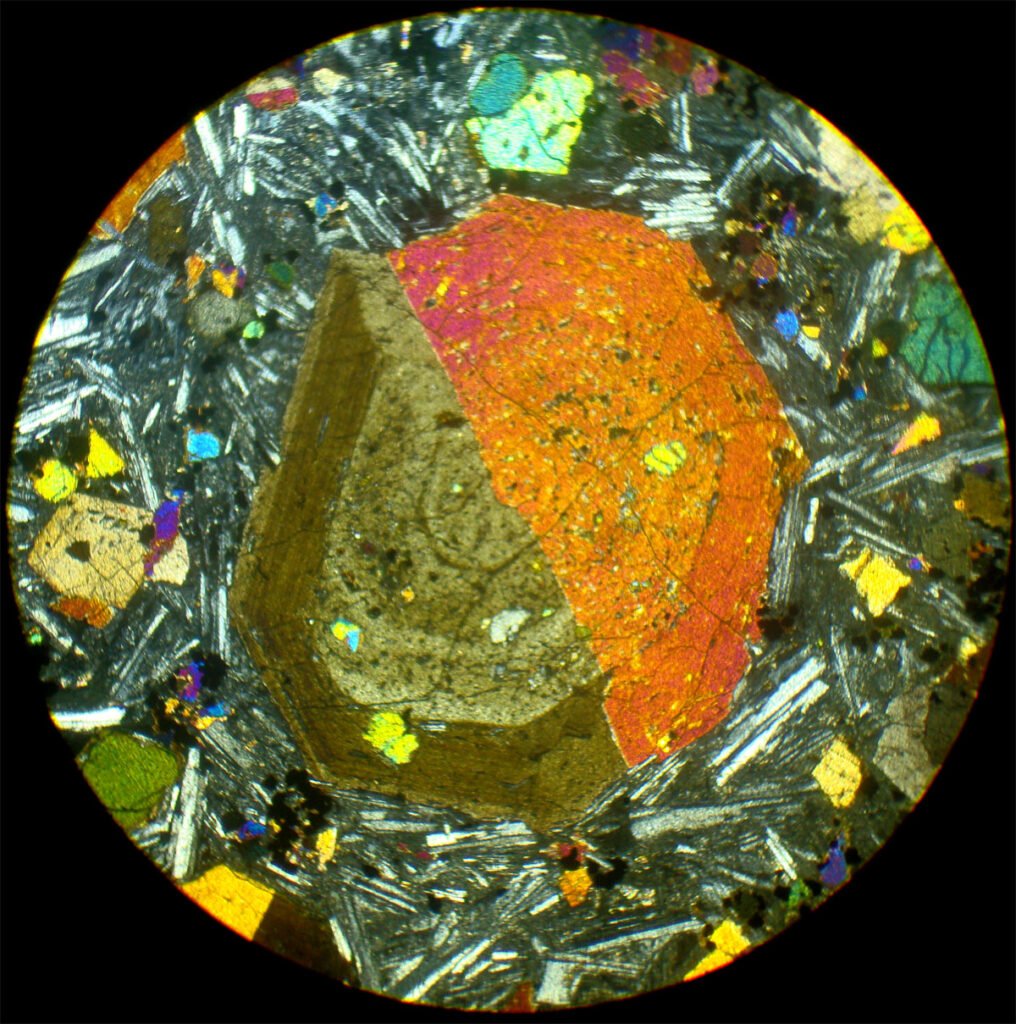
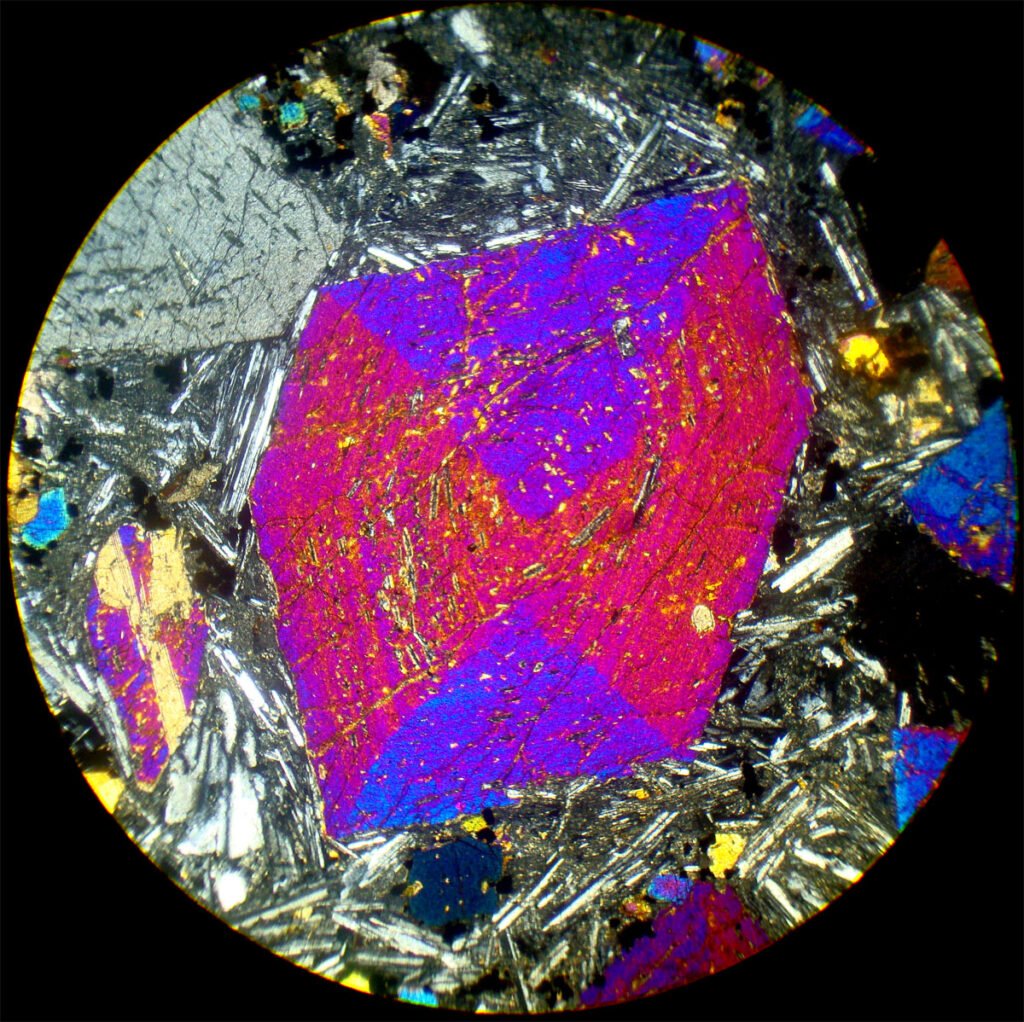
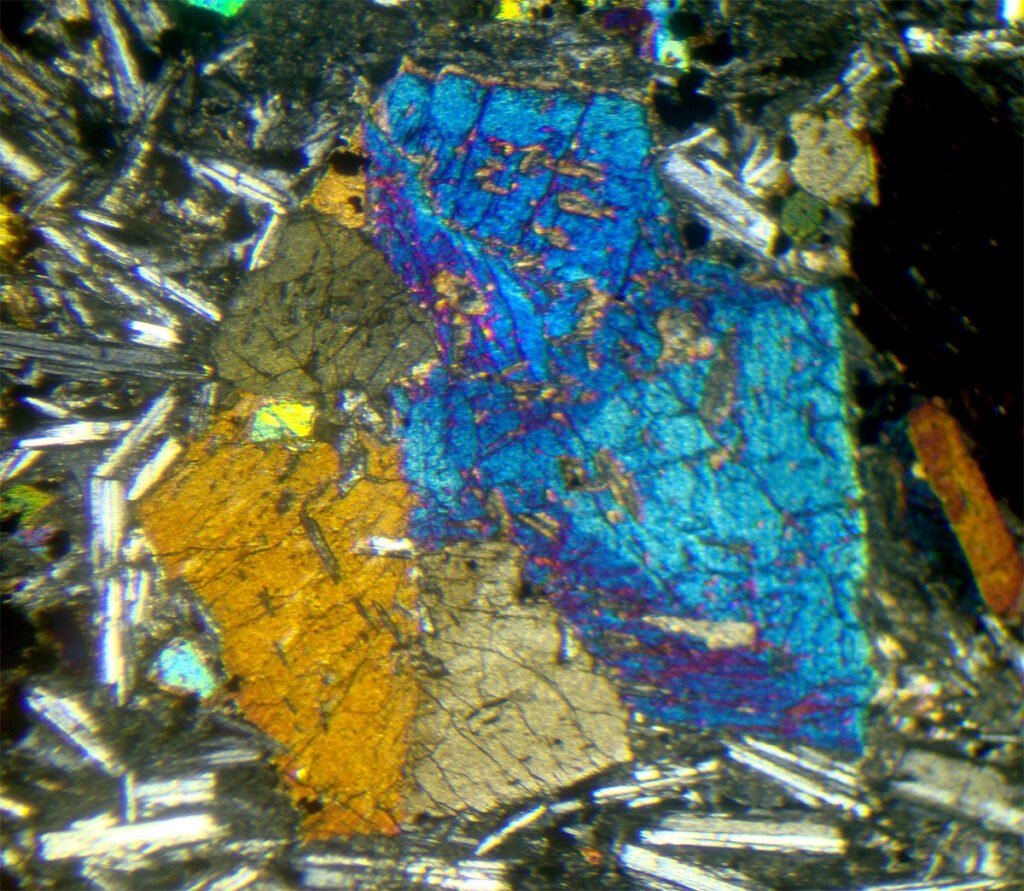
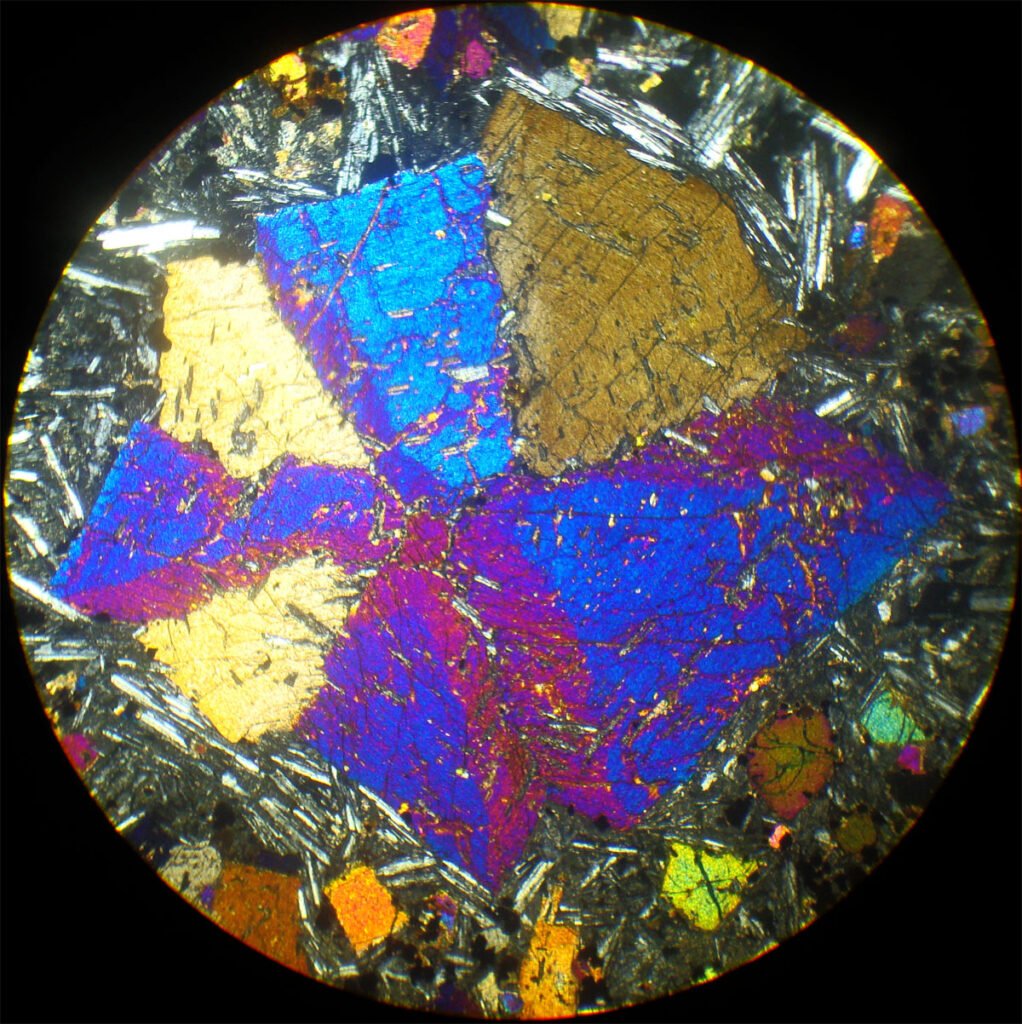
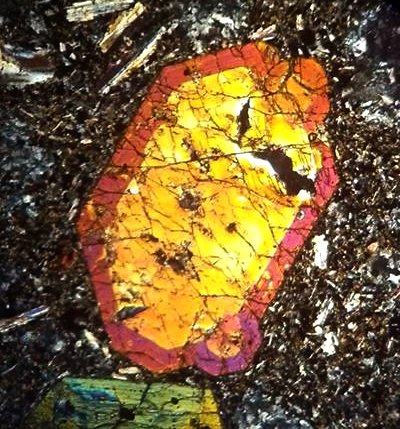
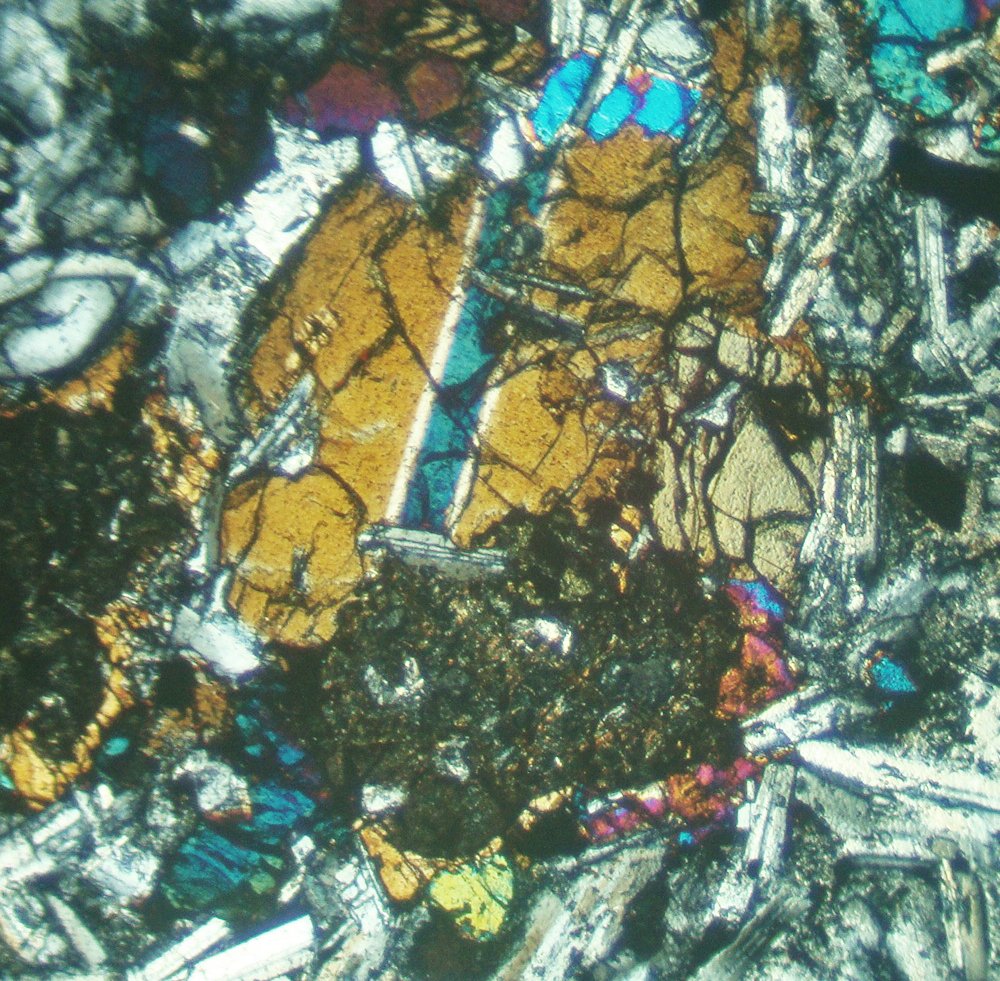
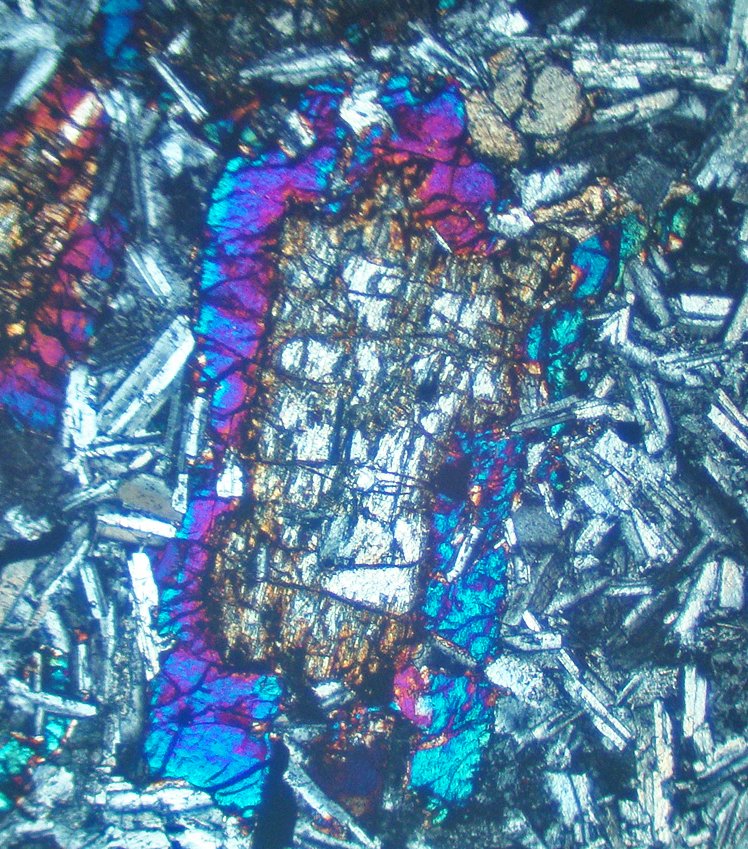
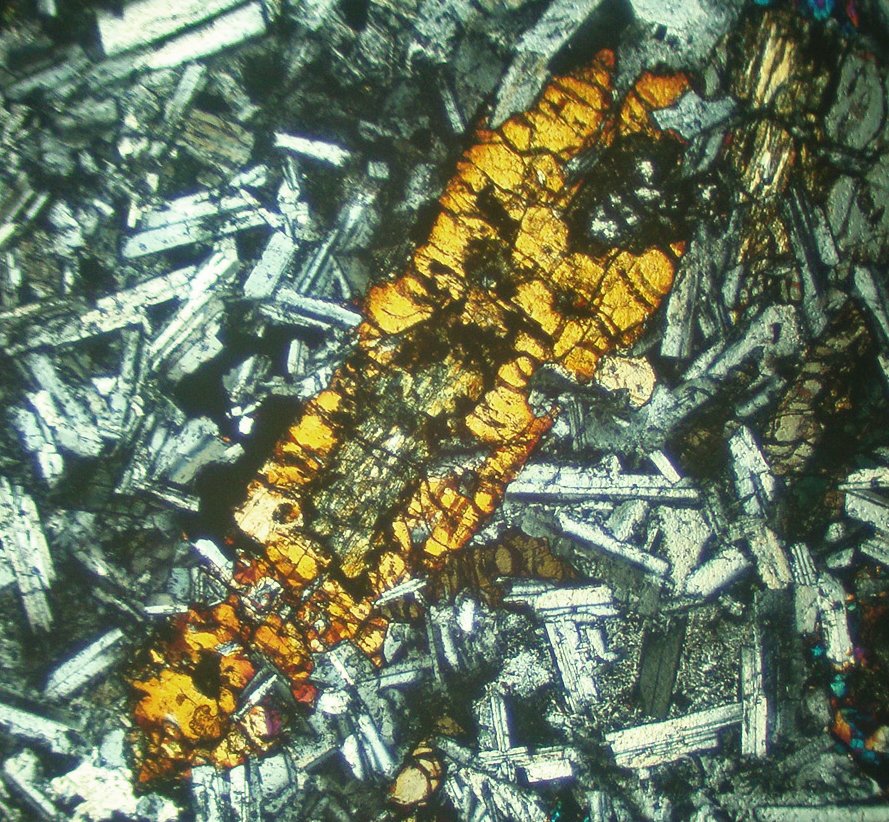
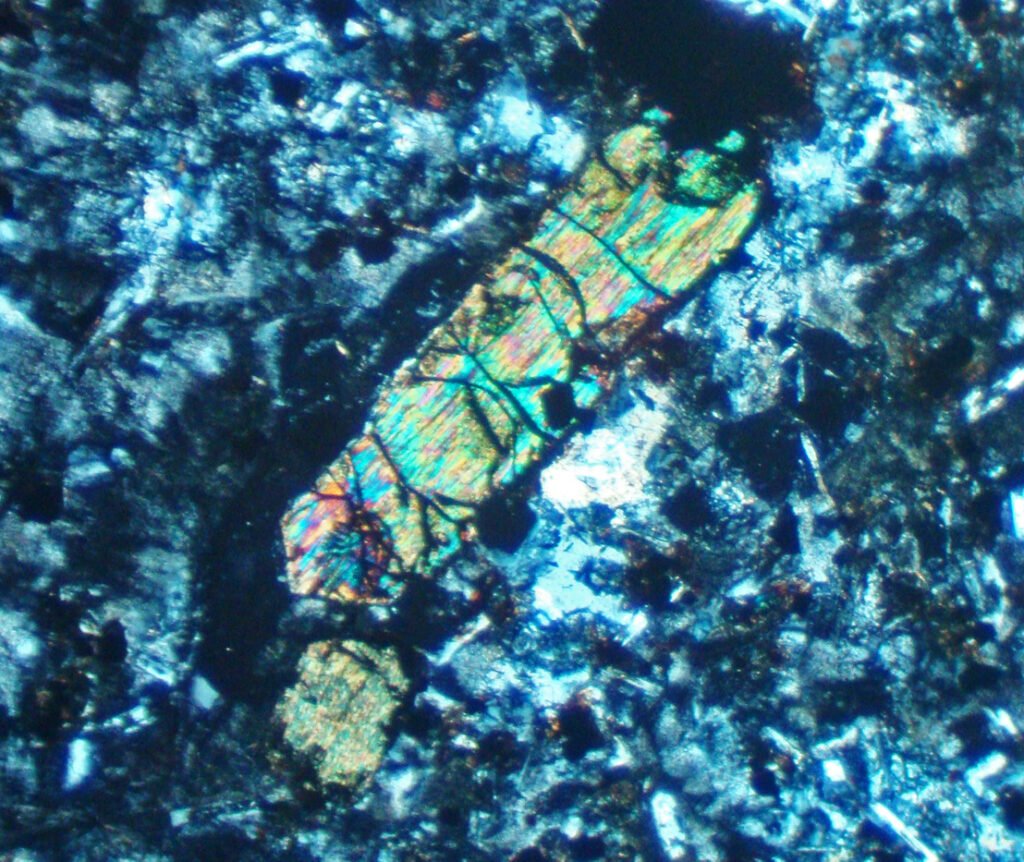
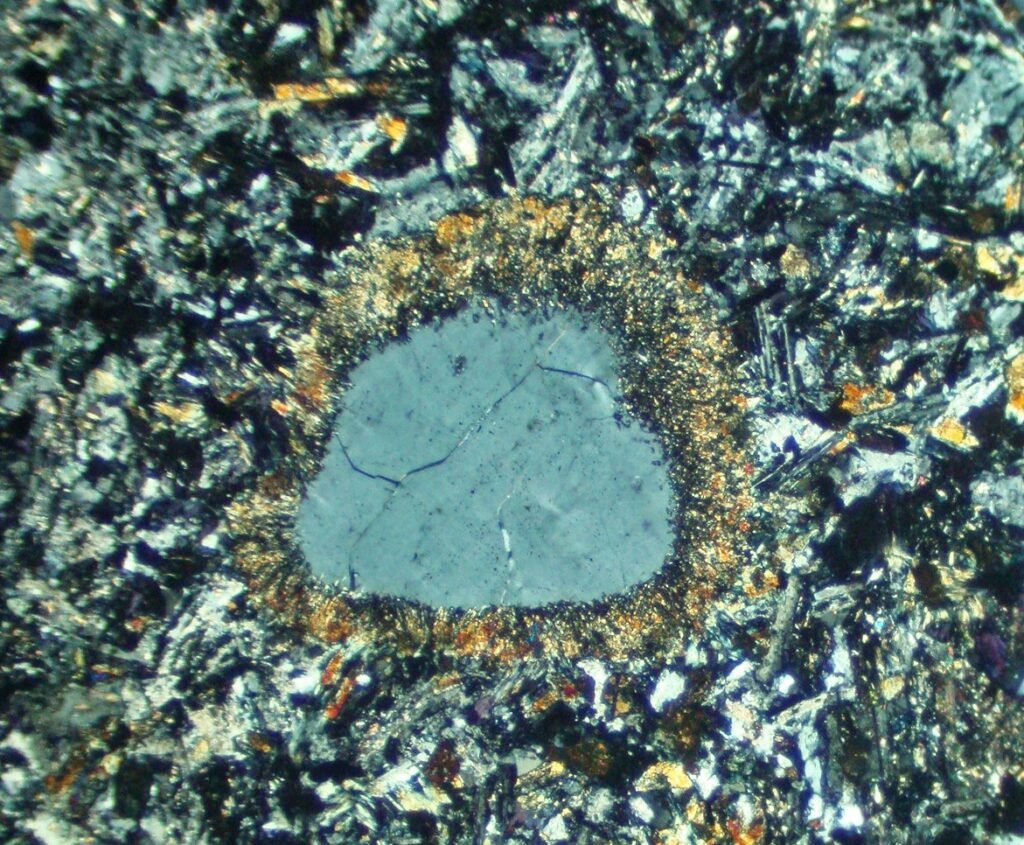
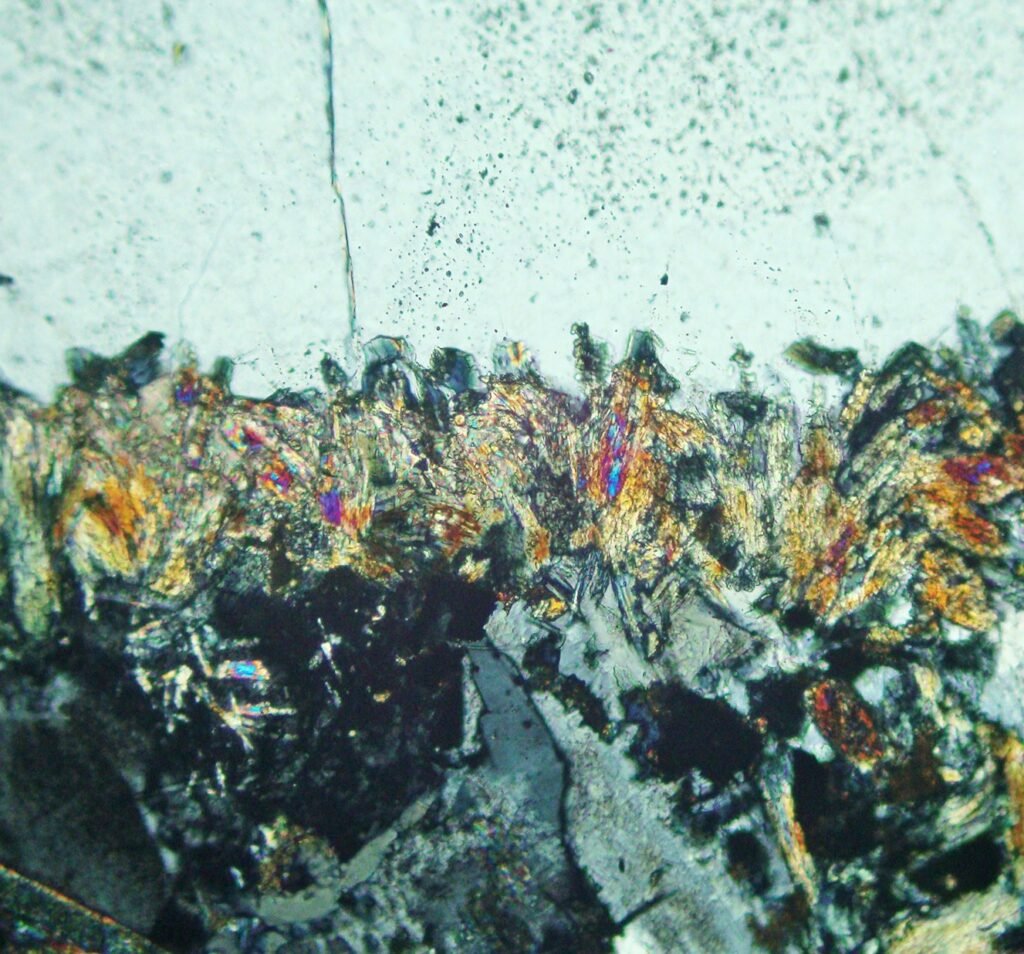
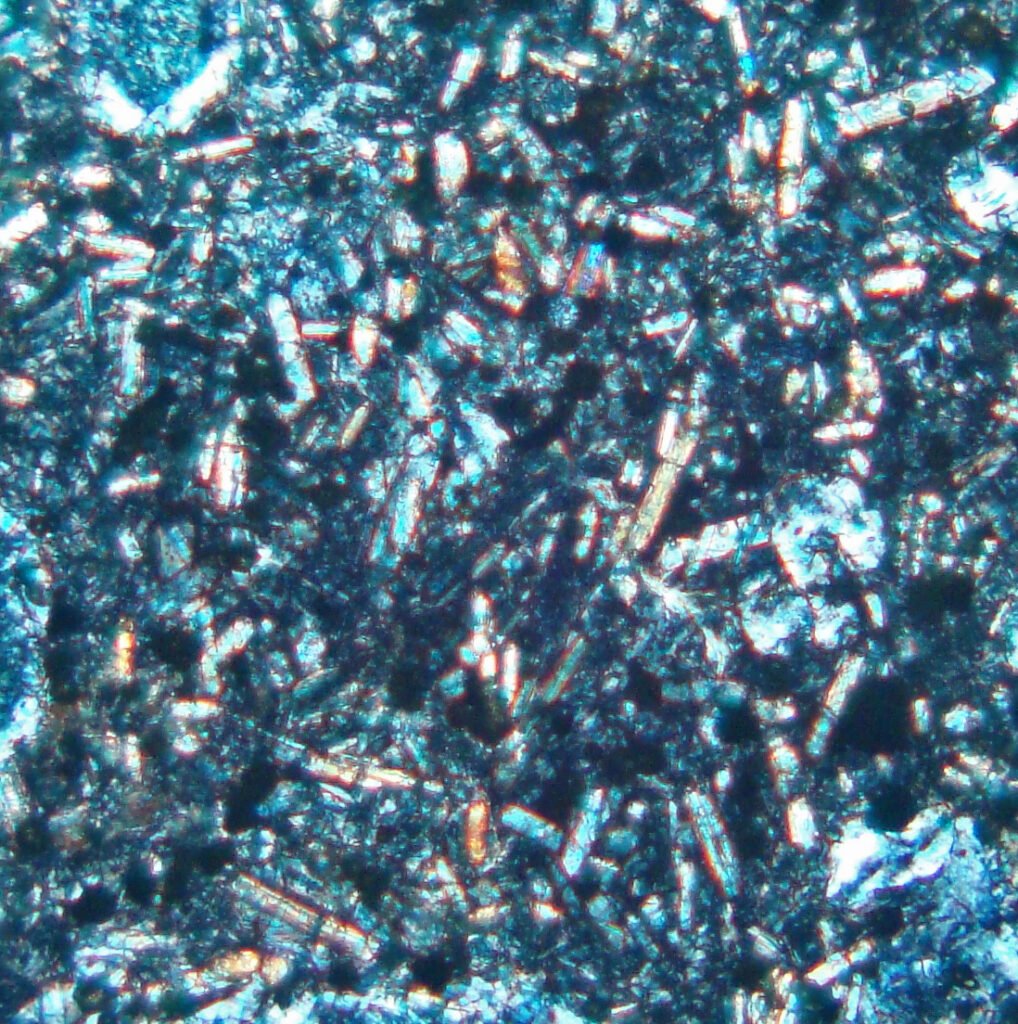
Birefringence and Interference Colors: Birefringence of 0.018 – 0.034: high 1st order to high 2nd order colors: intense colors, yellow, red, etc., gray only in sections perpendicular to one of the optical axes (isotropy sections).
Extinction: Oblique, with an angle between 35 and 48º.
Parallel in sections (010); may present hourglass extinction.
Elongation sign: Does not apply; the crystals may be elongated in several directions.
Twins: Frequent, simple to lamellar on {100} and {001}. Can occur combined to form a herringbone pattern. Orthopyroxene exsolution lamellae may occur.
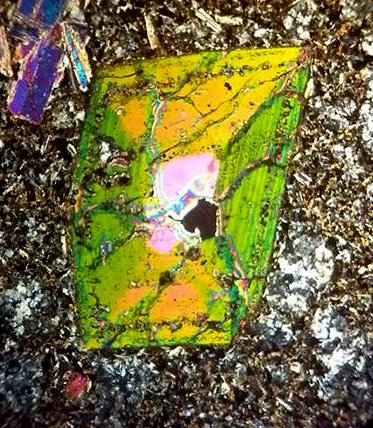
Zoning: Often zoned, it can be sectorized or oscillatory.
Titanoaugite may show hourglass zoning.
CONVERGENT LIGHT
Character: B(+)
2V angle: 25o to 61o.
Alterations: due to uralitization, augite alters during crystallization of the magma to green, sometimes brown, amphiboles (hornblende, actinolite). This may occur too in low- to medium grade metamorphic rocks and in contact-metamorphosed aureoles. In magmatic rocks, augite can change to chlorite and, in some cases, with the addition of K, into celadonite, forming pseudomorphs. Under low-temperature metamorphism, augite suffers chloritization, forming to chlorite, epidote and talc. Weathering forms carbonate (calcite), hematite and quartz.
May be confused with:some authors consider it impossible to distinguish the various clinopyroxenes (augite, diopside, pigeonite) from each other under a petrographic microscope. They state that the identification under the microscope is only possible with the aid of an universal stage. The identity of these minerals is usually confirmed with other analytical techniques such as microprobe. What may facilitate the identification is the knowledge of the paragenesis (type of rock, associated minerals).
Diopside is extremely similar and can be recognized only with the aid of an universal stage.
Pigeonite is also extremely similar; has a 2V angle < 30°. Hedenbergite has a slightly higher relief.
Titanoaugite has much stronger pleochroism.
Orthopyroxenes (enstatite, etc.) have parallel extinction and lower birefringence.
Omphacite and jadeite occur in other paragenesis.
Olivine shows no cleavage, higher relief, higher birefringence and parallel extinction.
Epidotes rich in Fe of the Epidote Group show anomalous interference colors and a differente cleavage.