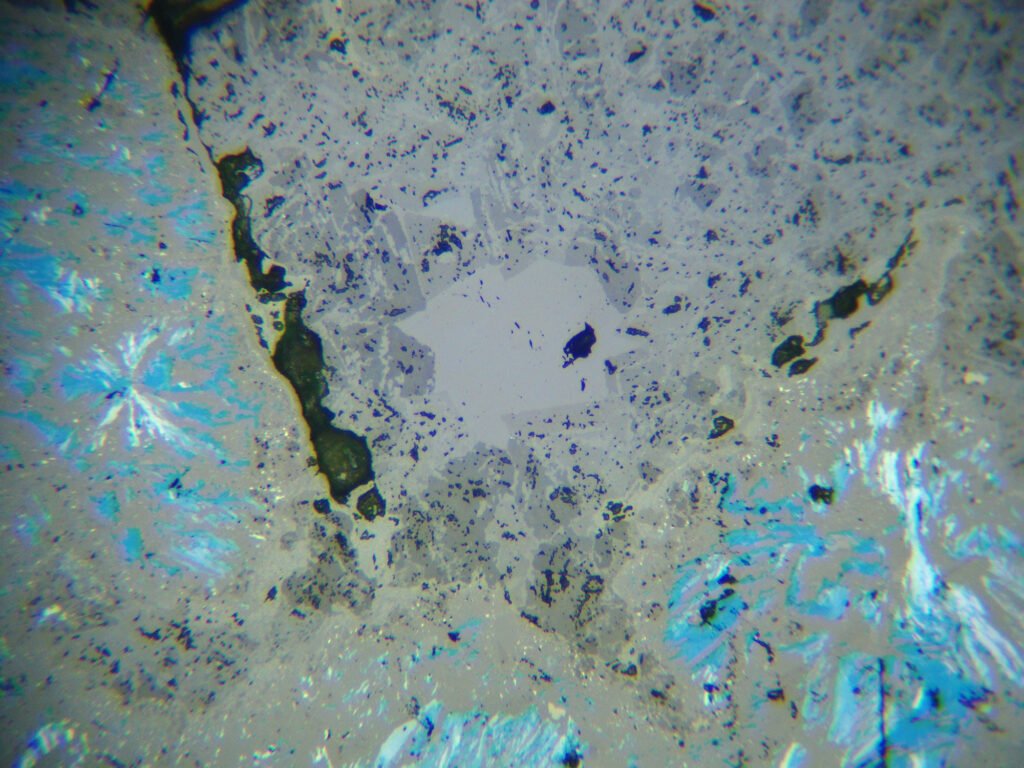
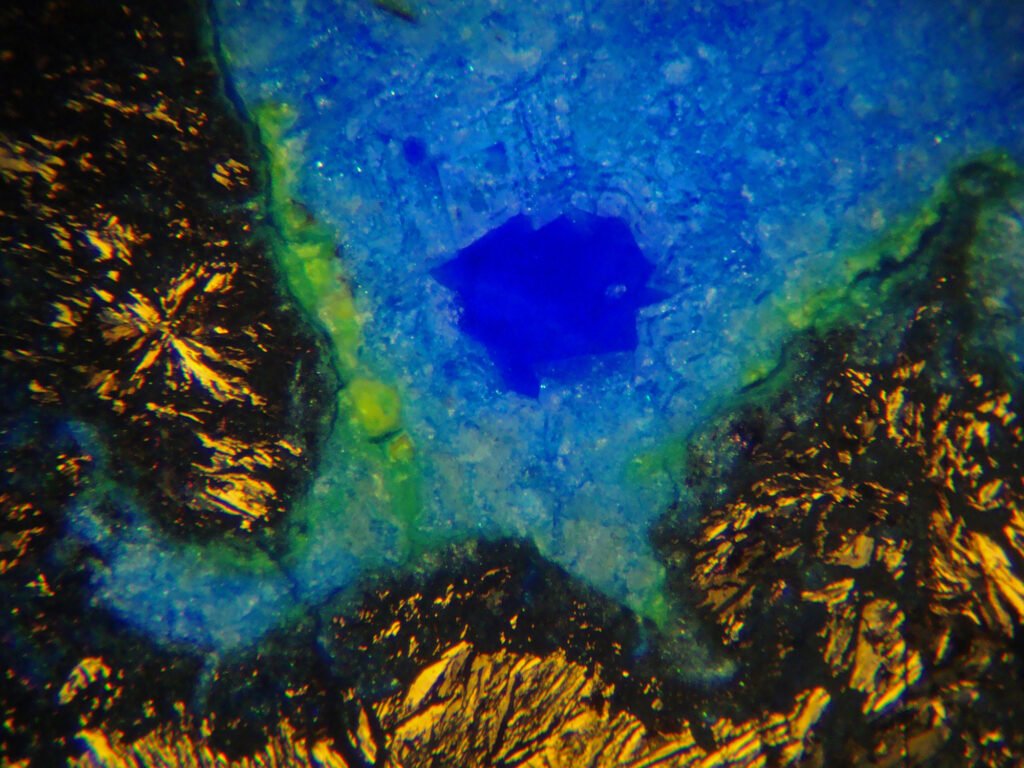
1. Characteristics
Crystal system: Monoclinic prismatic.
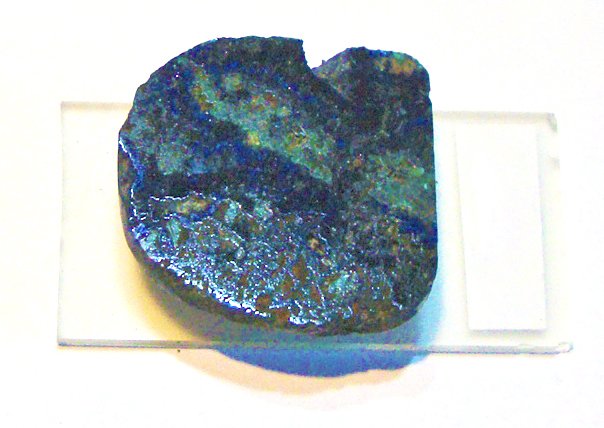
Color: Azure blue, Berlin-blue, blue, very dark to pale blue.
Habit: Prismatic tabular, stalagtite, massive, equidimensional, earthy, acicular, crusts.
Cleavage: {011} perfect, but interrupted. {100} fair, {110} poor. Striations // to z, rare.
Tenacity: Brittle.
Twinning: Rare on {-101}, {-102} or {001}.
Fracture: Very fragile, producing conchoidal fragments.
Mohs Hardness: 3.5 – 4
Parting: No.
Streak: Light blue.
Lustre: Vitreous, subadamantine, dull.
Diaphaneity: Transparent.
Density (g/cm³): 3.8
2. Geology and Deposits
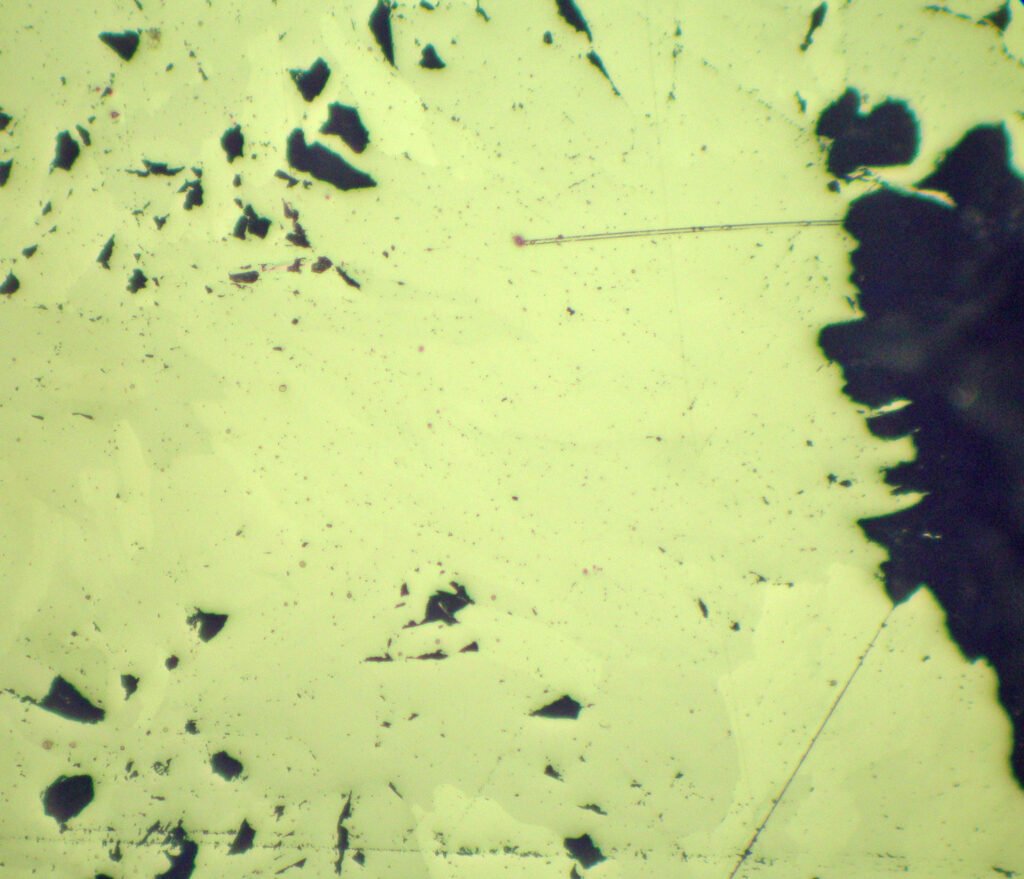
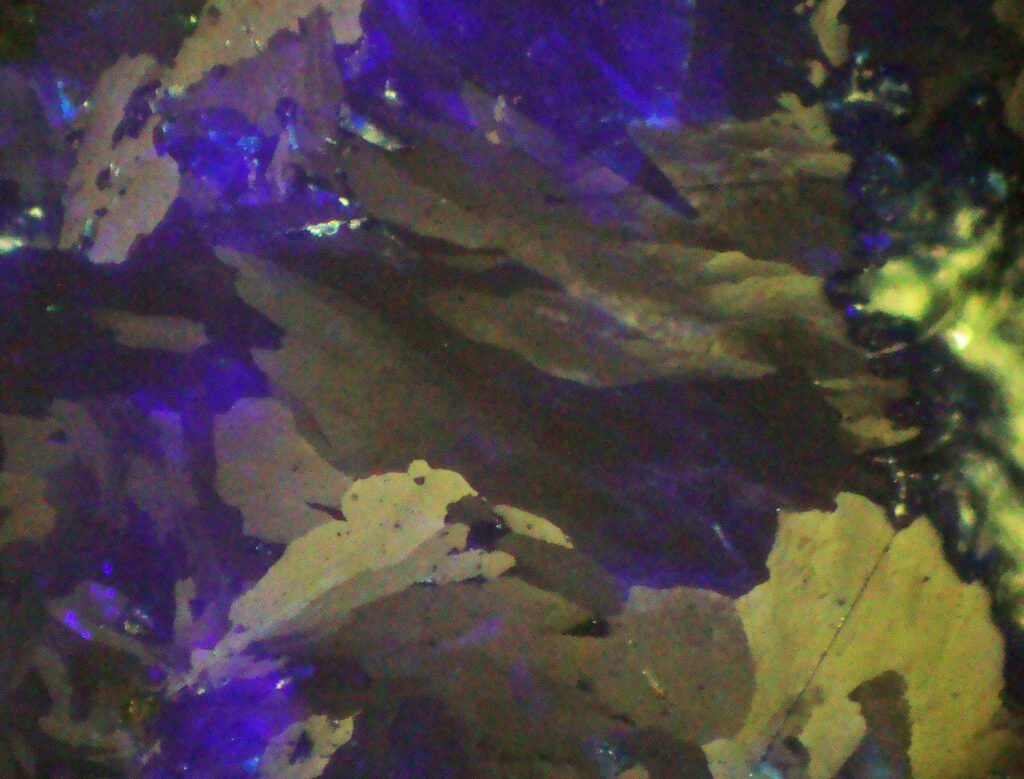
Azurite forms in the oxidation zone of copper sulphide ores, associated with carbonate rocks, almost always from enargite, famatinite or tennantite-tetrahedrite. The reaction involves CO2 + H2O + copper sulfides. It can also form by copper-containing solutions reacting with carbonates.
Among the secondary copper minerals, azurite is much rarer than malachite.
3. Mineral Associations
Azurite associates with primary and secondary copper minerals and with typical secondary minerals from oxidation zones.
Among the primary copper minerals are native copper, chalcocite, bornite, chalcopyrite, famatinite, enargite, and tennantite-tetrahedrite.
Among the secondary copper minerals are a black mineral (tenorite), a red mineral (cuprite), the green minerals (malachite, pseudomalachite, brochantite, antlerite, atacamite, dioptase, botallackite, libethenite, olivenite, duftite and natrochalcite) and the blue minerals (chrysocolla, cyanotrichite, plancheite, sampleite, linarite, caledonite, chalcanite, shattuckite, liroconite, mrázekite, connellite and kröhnkite). Several of the blue minerals can appear green and vice versa.
Other typical oxidation zone minerals are quartz, secondary Fe minerals (“limonite”), secondary lead minerals (cerussite), secondary zinc minerals (smithsonite), manganese minerals (wad), barite and carbonates (calcite, dolomite), forming a very colorful set of minerals.
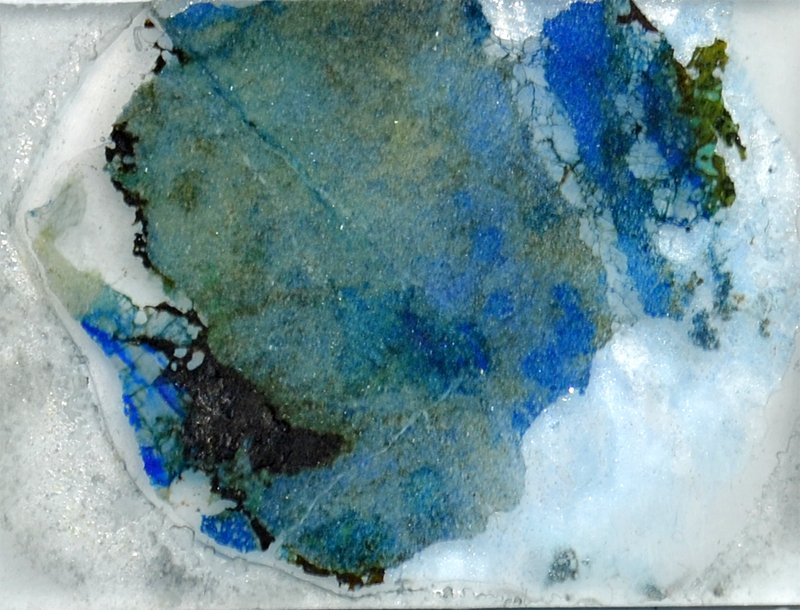
4. Transmitted Light Microscopy
Refraction indices: nα: 1.730 nβ: 1.758 nγ: 1.838:
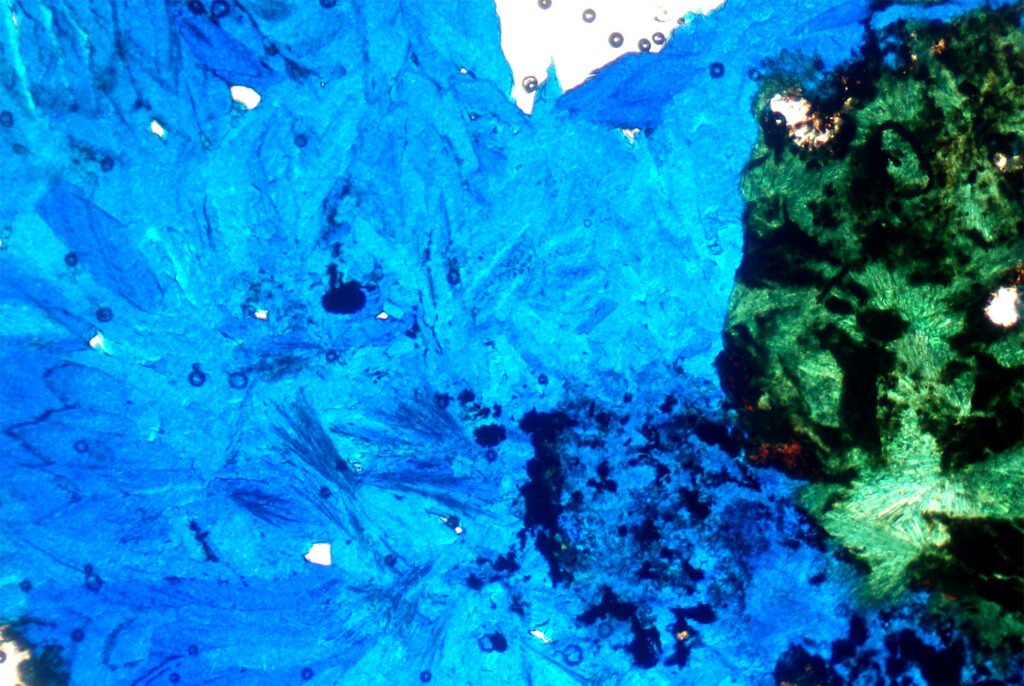
PLANE POLARIZED LIGHT – PPL
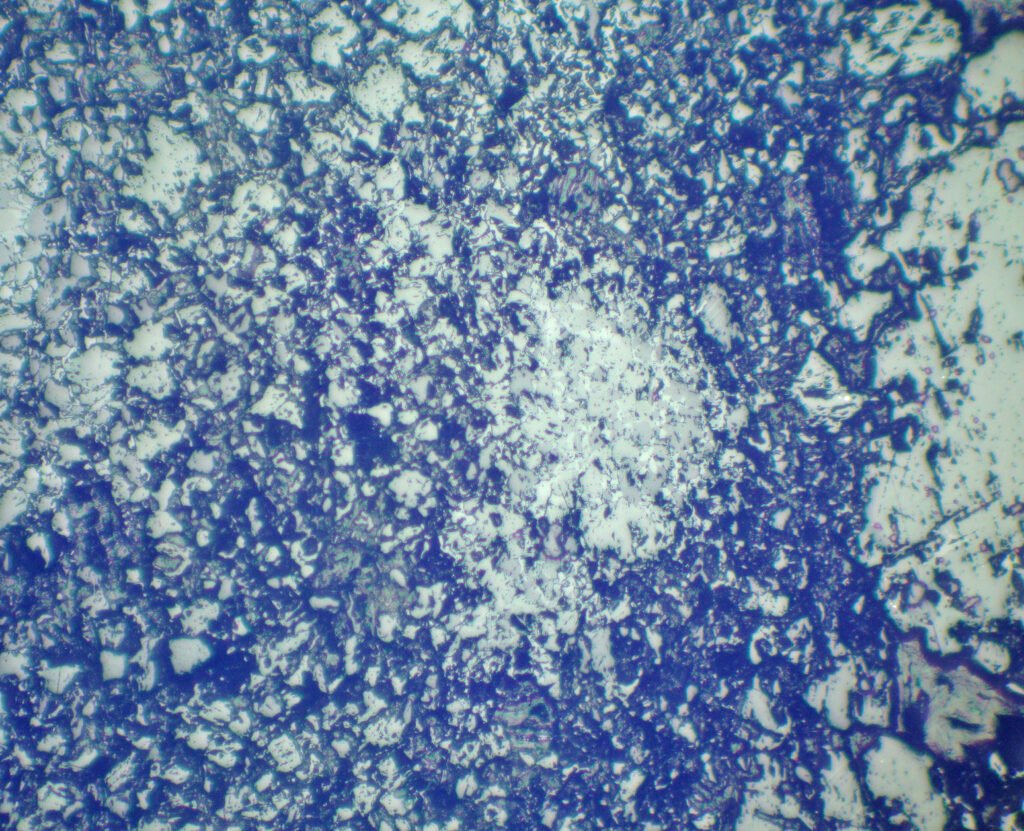
Color / Pleochroism: Blue with strong pleochroism.
Relief: High.
Cleavage: Perfect cleavage on {011}, a good cleavage on {100} and a cleavage in traces on {110}. Cleavage is usually difficult to impossible to observe.
Habits: Tends to prismatic and tabular.
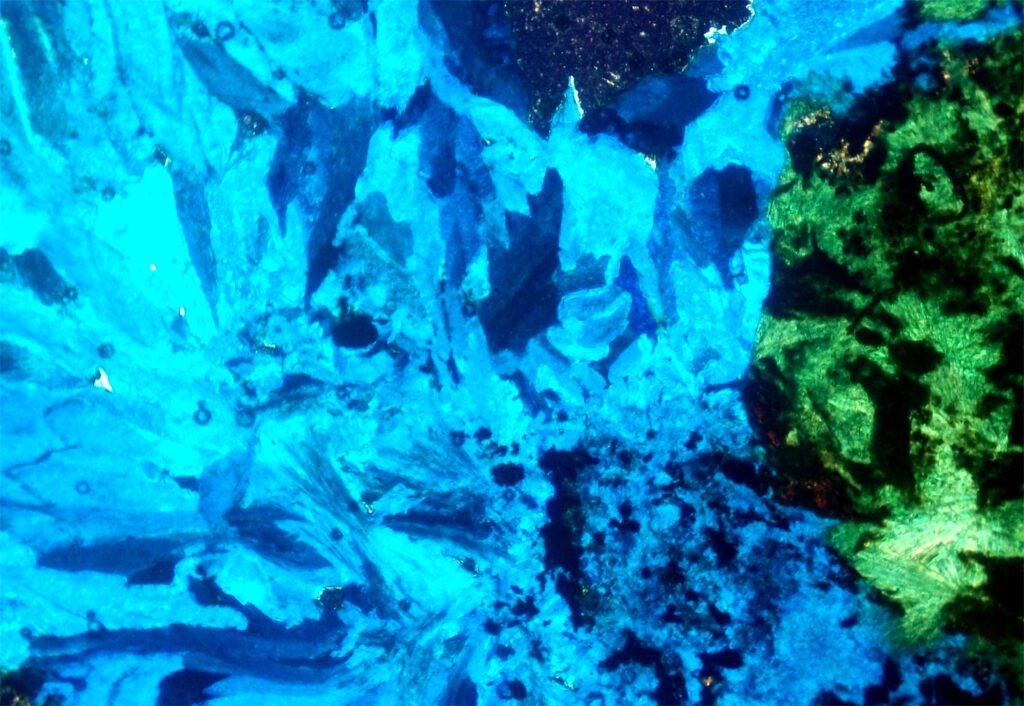
CROSSED POLARIZED LIGHT – XPL
Birefringence and Interference Colors: Maximum birefringence is 0.108, extremely high, but the interference colors are masked by the intense blue color. It is almost the same color in PPL and CPL.
Extinction: Oblique.
Elongation sign: No information available.
Twins: No.
Zoning: No.
CONVERGENT LIGHT
Character: B(+). The intense blue color makes it difficult or impossible to obtain the figure.
2V angle: 68o
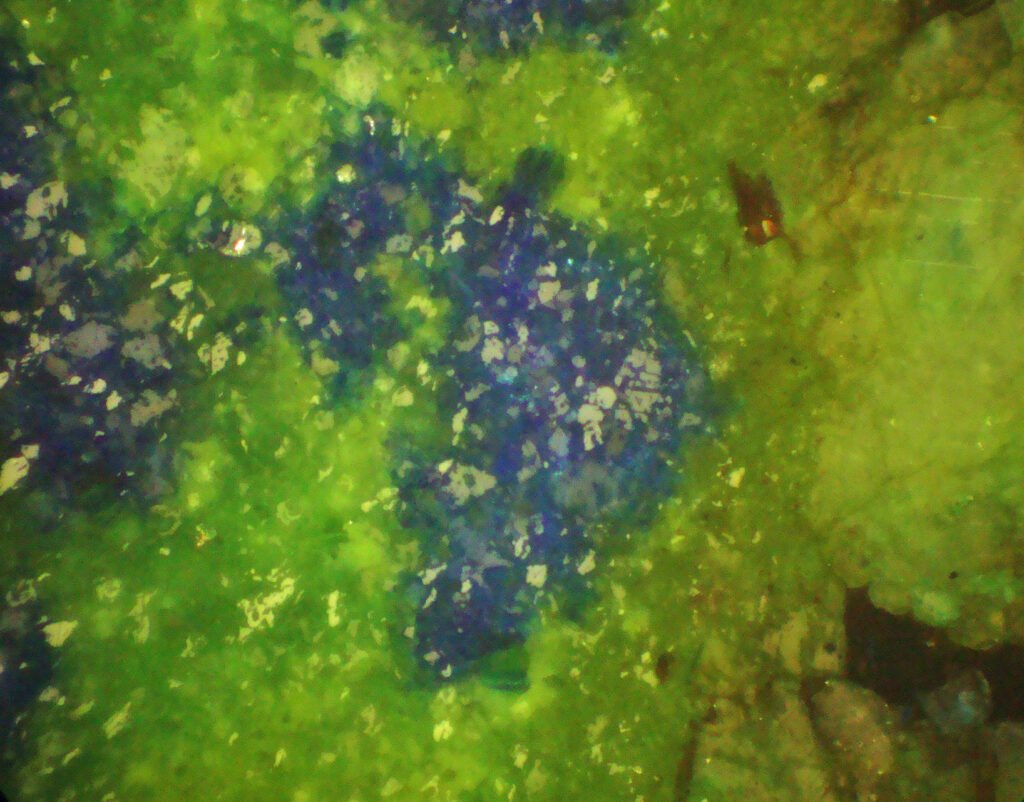
Alterations: can alterate to malachite, a green secondary carbonate of Cu.
May be confused with: other blue copper secondary minerals. Check the list of associated minerals to see the possibilities.