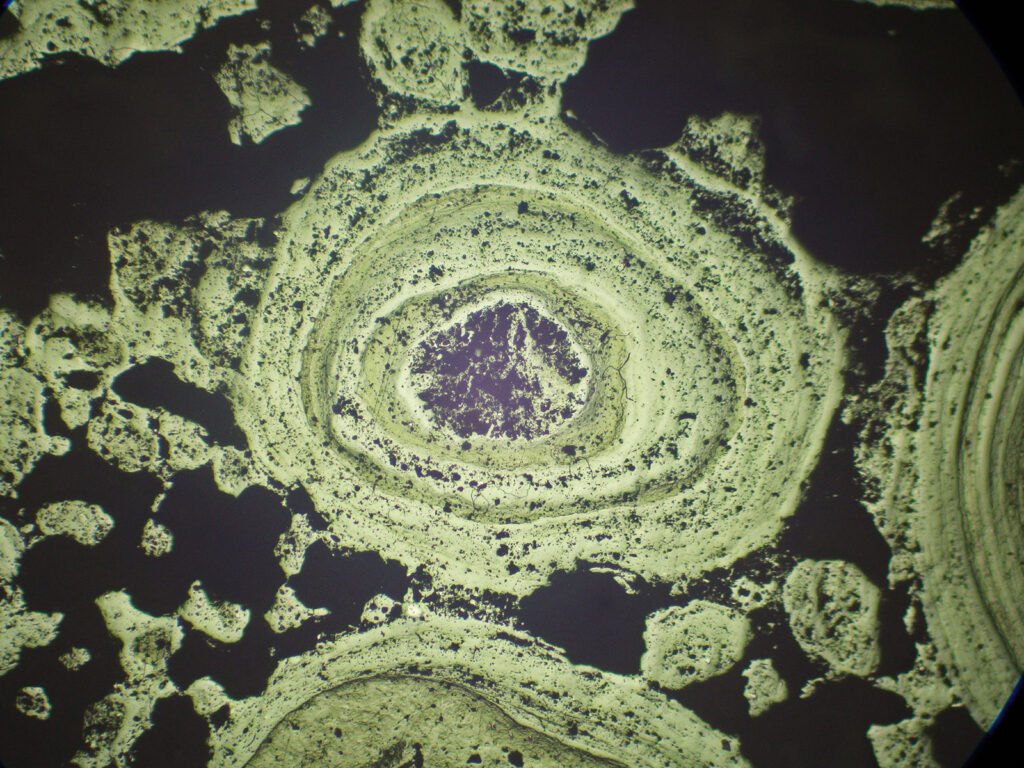
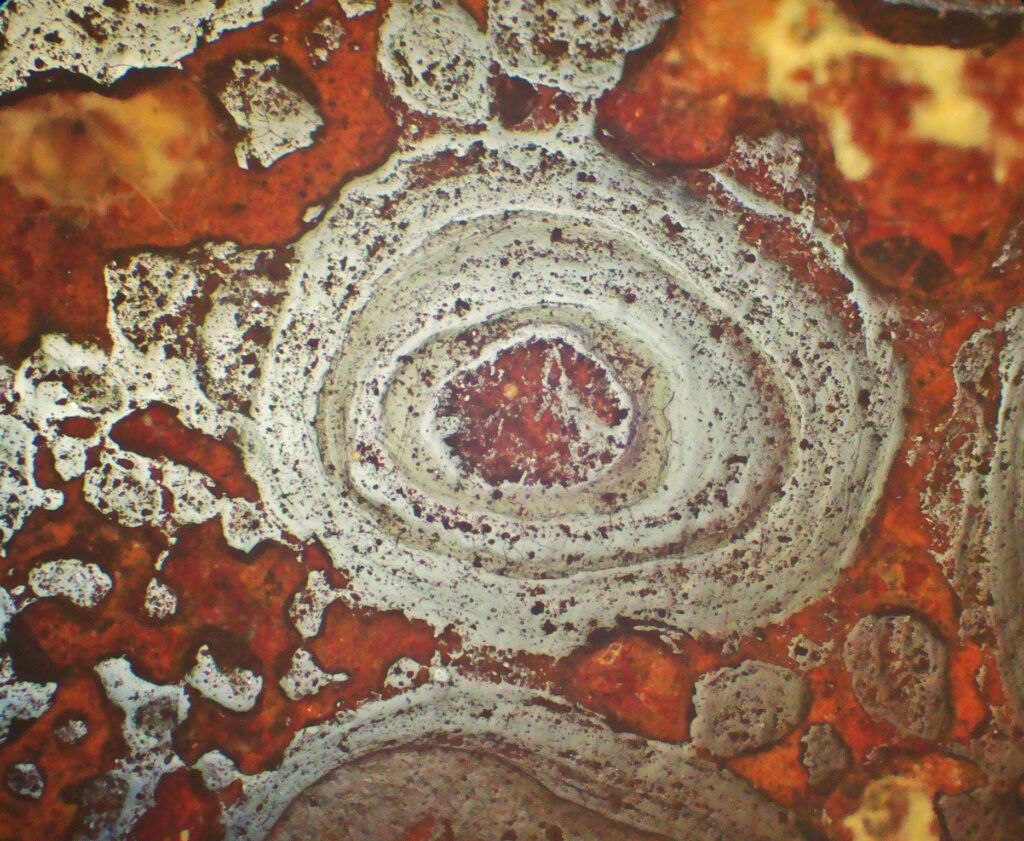
Bauxite is a rock composed of the minerals diaspore – α-AlO(OH), boehmite – γ-AlO(OH) and gibbsite – Al(OH)3, mixed with the iron oxides goethite and hematite, with the clay mineral kaolinite and, in small amounts, anatase – TiO2 and other minerals.
Bauxite is the main aluminum ore and lateritic bauxites (siliceous bauxites) are distinguished from karst bauxites.
Karst bauxites are formed on carbonate rocks (limestones and dolomites) by lateritic weathering and residual accumulation of intercalated clays or by residues from the dissolution of clays contained in limestones; occur predominantly in Europe and Jamaica.
Lateritic bauxites are found in the tropics. They are formed by the lateritization of various types of silicate rocks such as granite, gneiss, basalt, syenite and shale.
Bauxites are only formed with intense weathering in very humid climates, with excellent drainage conditions, which allow the dissolution of kaolinite and the precipitation of gibbsite. The zones with the highest aluminum contents are often located below a surface ferruginous layer. The aluminum hydroxide in lateritic bauxite deposits is almost exclusively gibbsite. Mining is usually done in the open. 90% of the ore extracted is used to obtain aluminum; 5 tons of bauxite yields 1 ton of aluminum. The commercial classification of bauxites follows their uses: metallurgical, abrasive, cement, chemical and refractory.
The appearance of bauxite is an earthy, powdery material, in shades of brown, red and yellow. It may be pisolitic, formed by rounded globules of varying sizes. The determination of its constituents needs to be performed with X-Ray Diffractometry.
The making of thin sections and their analysis under Transmitted Light is hampered by the powdery habit of the material and by the fact that some constituents are opaque. When the material has a compatible hardness, it is possible to easily make polished sections of good quality and proceed to their analysis under Reflected Light, as they show very well the structure of the ore, information that other analytical methods do not provide.