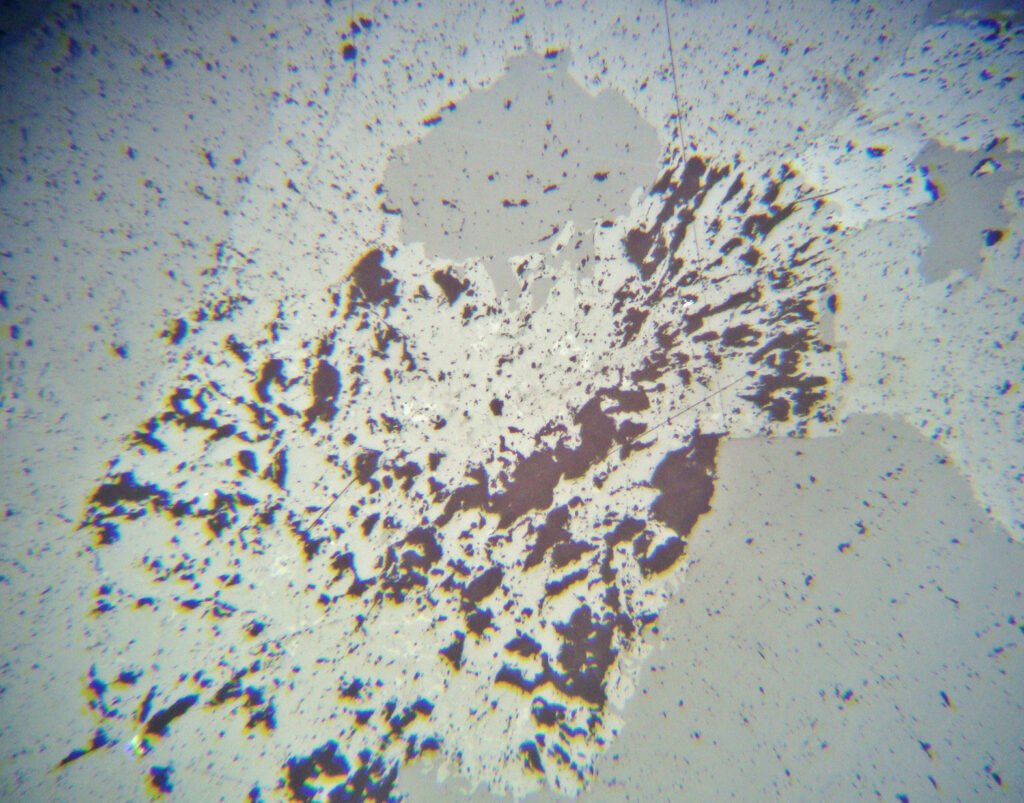
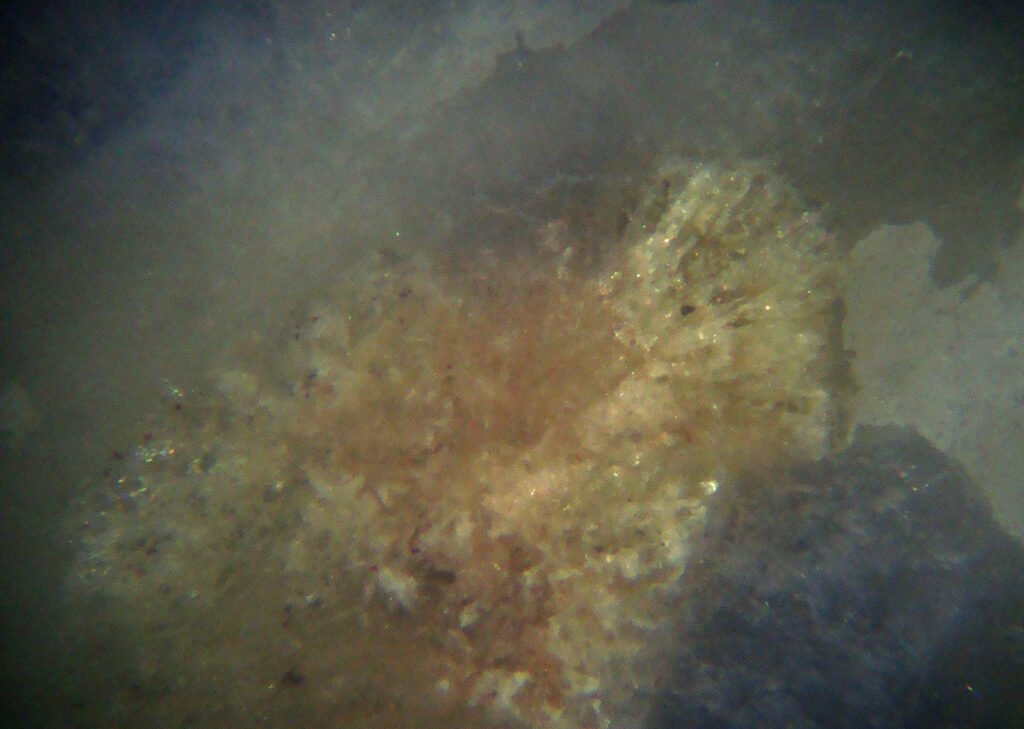
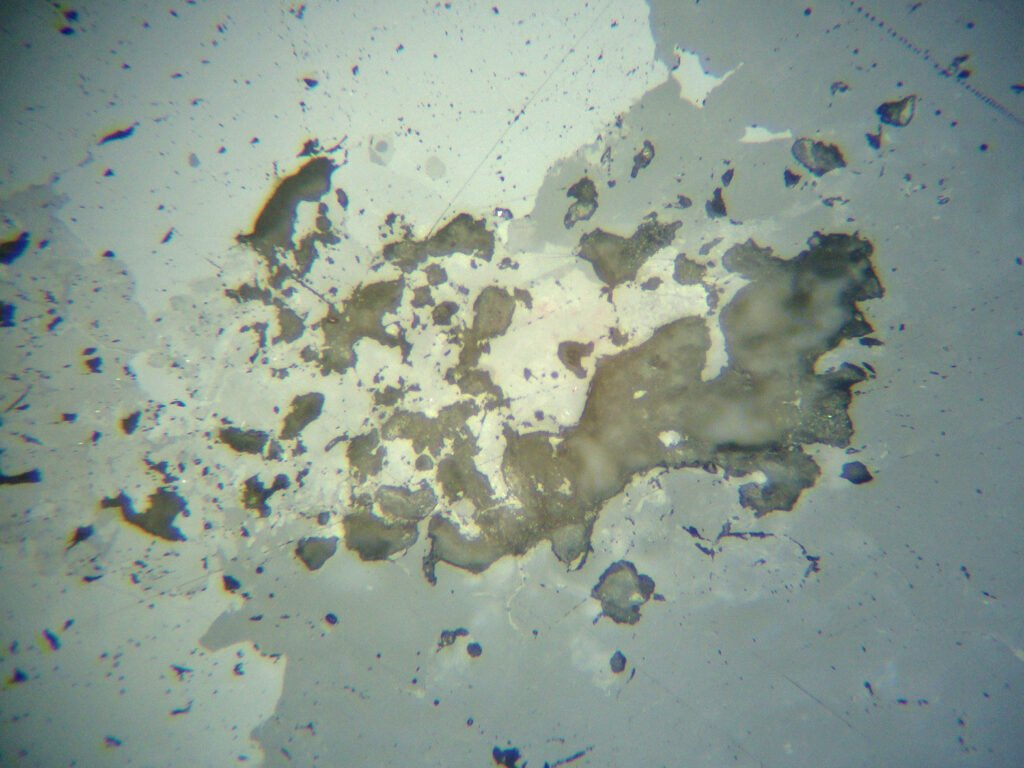
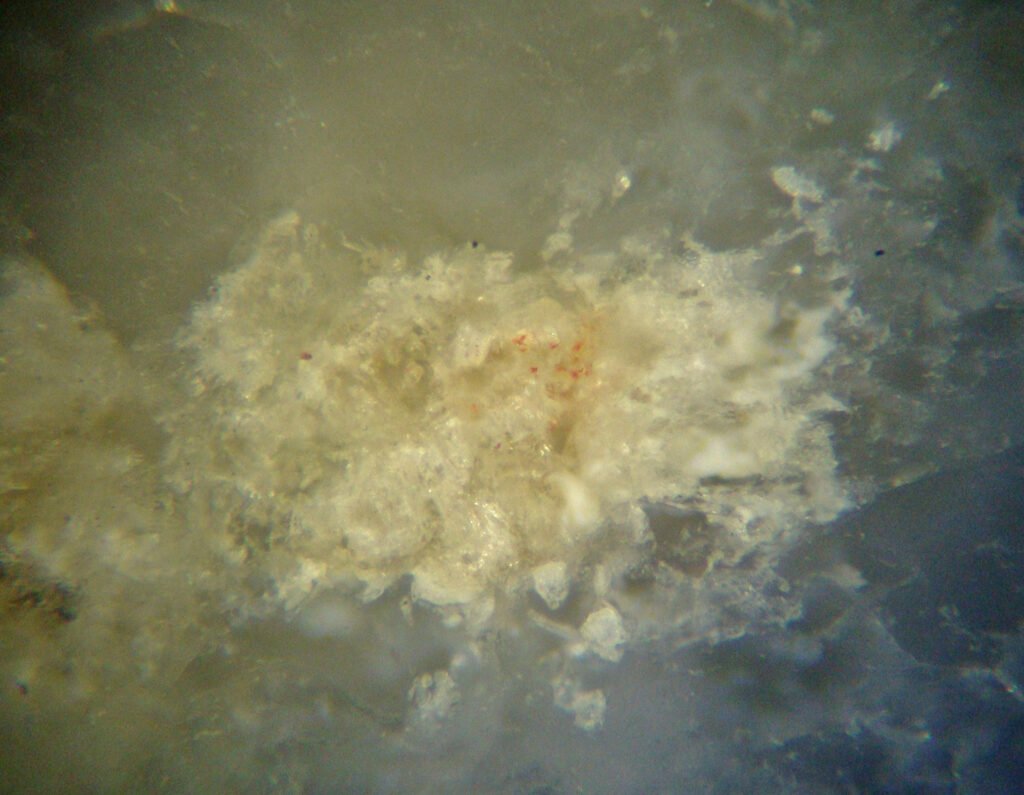
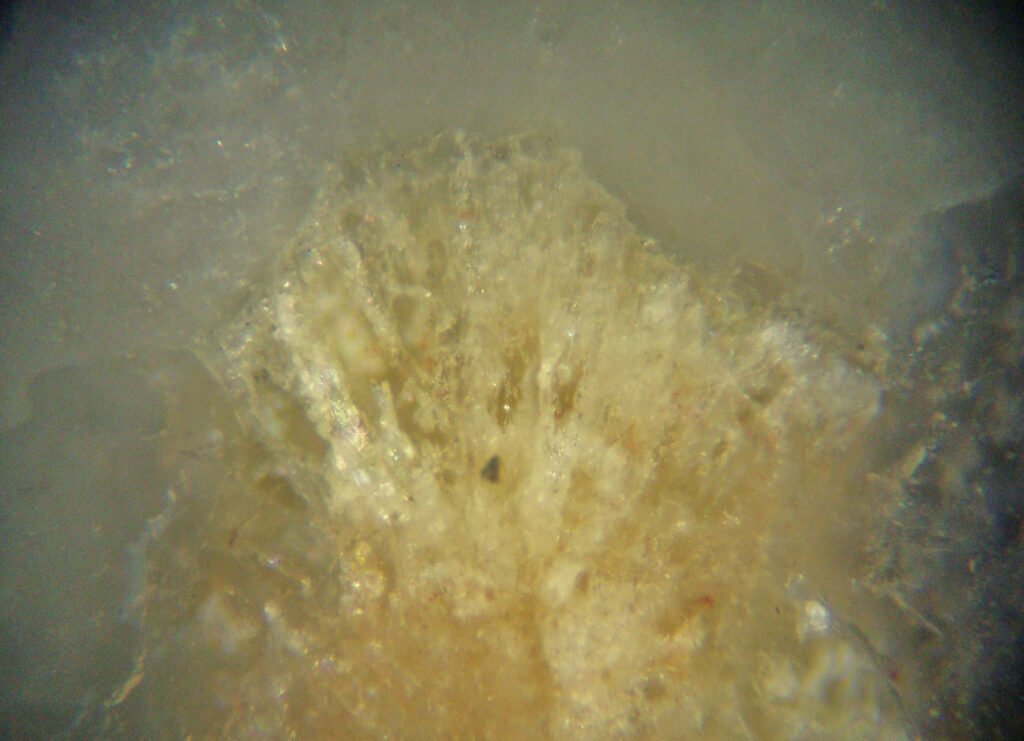
1. Characteristics
Crystal system: Hexagonal piramidal.
Color: Colorless, white, pink, yellow, blue, orange, red or gray-green.
Habit: Usually as interstitial xenomorphic grains. Rare hexagonal prismatic crystals.
Cleavage: {10-10} perfect, {0001} poor.
Tenacity: Brittle.
Twinning: Lamellar, rare.
Fracture: Irregular.
Mohs Hardness: 5 – 6
Parting: No.
Streak: White.
Lustre: Vitreous, resinous, pearly.
Diaphaneity: Transparent.
Density (g/cm³): 2.42 – 2.51
2. Geology and Deposits
Cancrinite is a rare feldspathoid that occurs in alkaline igneous rocks, including pegmatites and nepheline syenites. It also occurs as an alteration product of nepheline. With high partial pressures of CO2 cancrinite can form pseudomorphs on nepheline in alkaline rocks such as nepheline-syenites.
In volcanic rocks, cancrinite can form idiomorphic crystals – hexagonal prisms or acicular crystals – in cavities.
3. Mineral Associations
Cancrinite occurs with feldspars (albite, sanidine), feldspathoids (nepheline), minerals from the Sodalite Group, clinopyroxenes (aegirine, aegirine-augite), garnets (andradite, melanite), annite, zircon, biotite, natrolite, hackmanite and calcite.
4. Transmitted Light Microscopy
Refraction indices: nω: 1.507 – 1.528 nε: 1.495 – 1.503
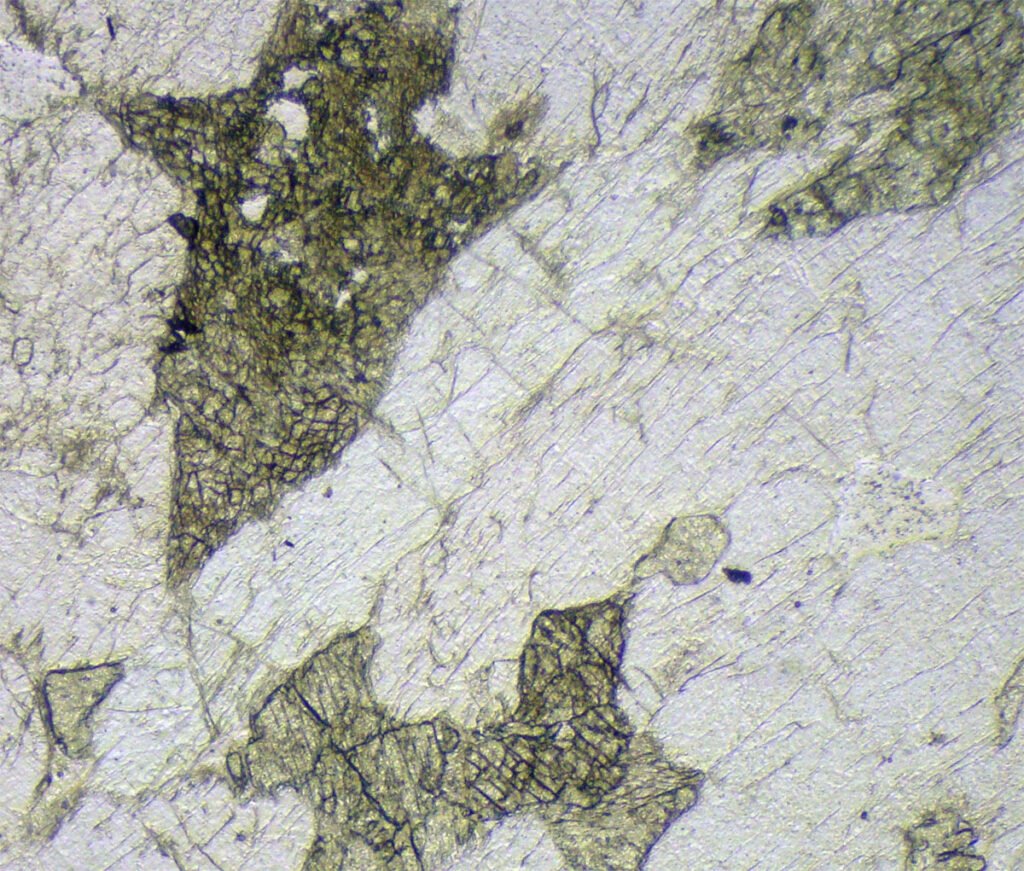
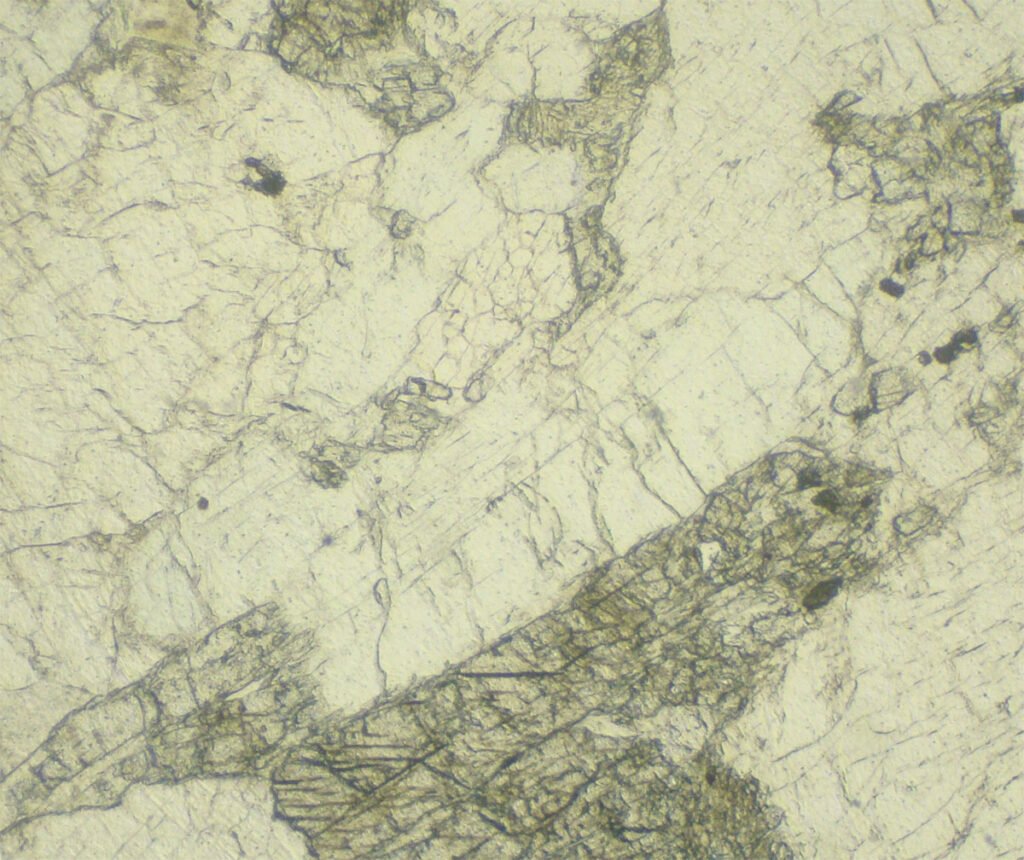
PLANE POLARIZED LIGHT – PPL
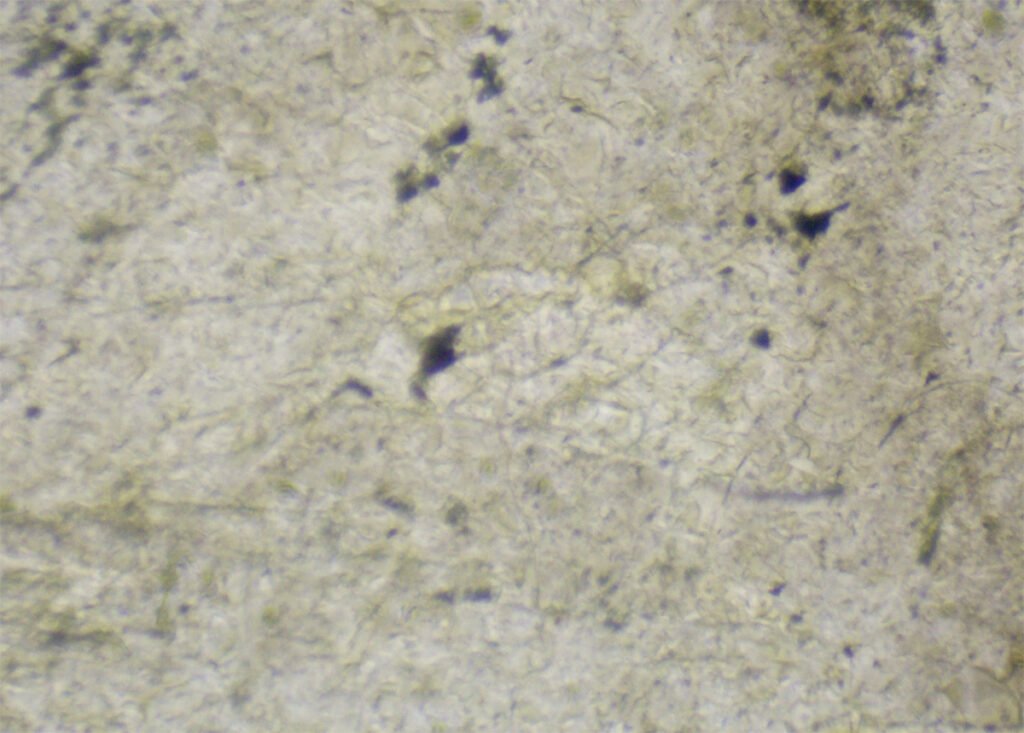
Color / Pleochroism: Colorless, never shows color much less pleochroism.
Relief: Very low, negative.
Cleavage: [10-10] perfect, only visible in larger crystals.
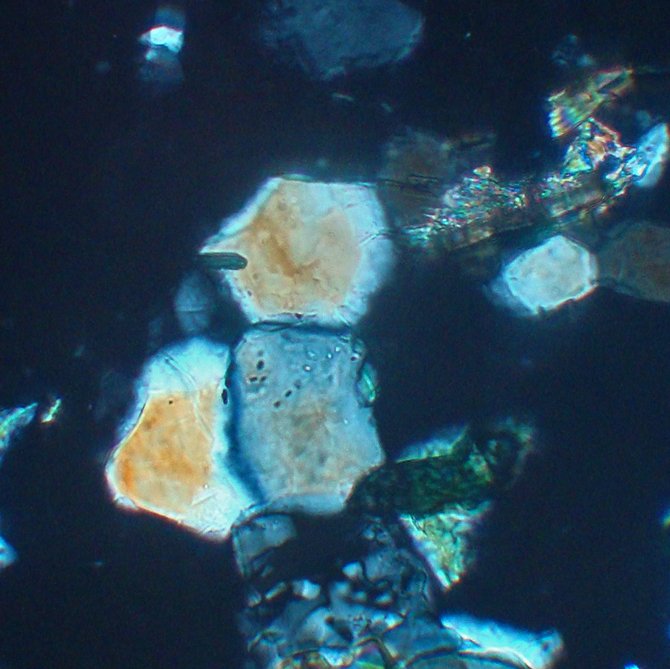
Habits: Typically granular, forming anhedral grains in the interstitial matrix of the rock. Also massive, columnar short to acicular. In veins tends to be fibrous. Rarely like hexagonal sections.
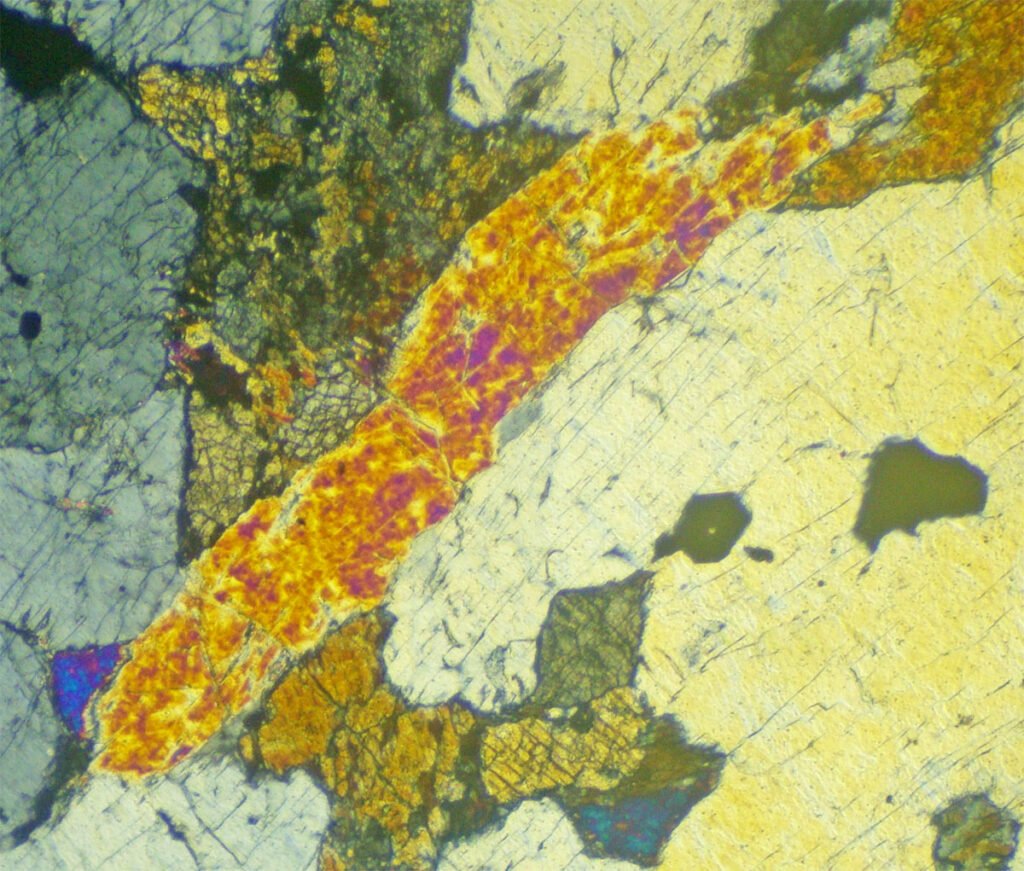
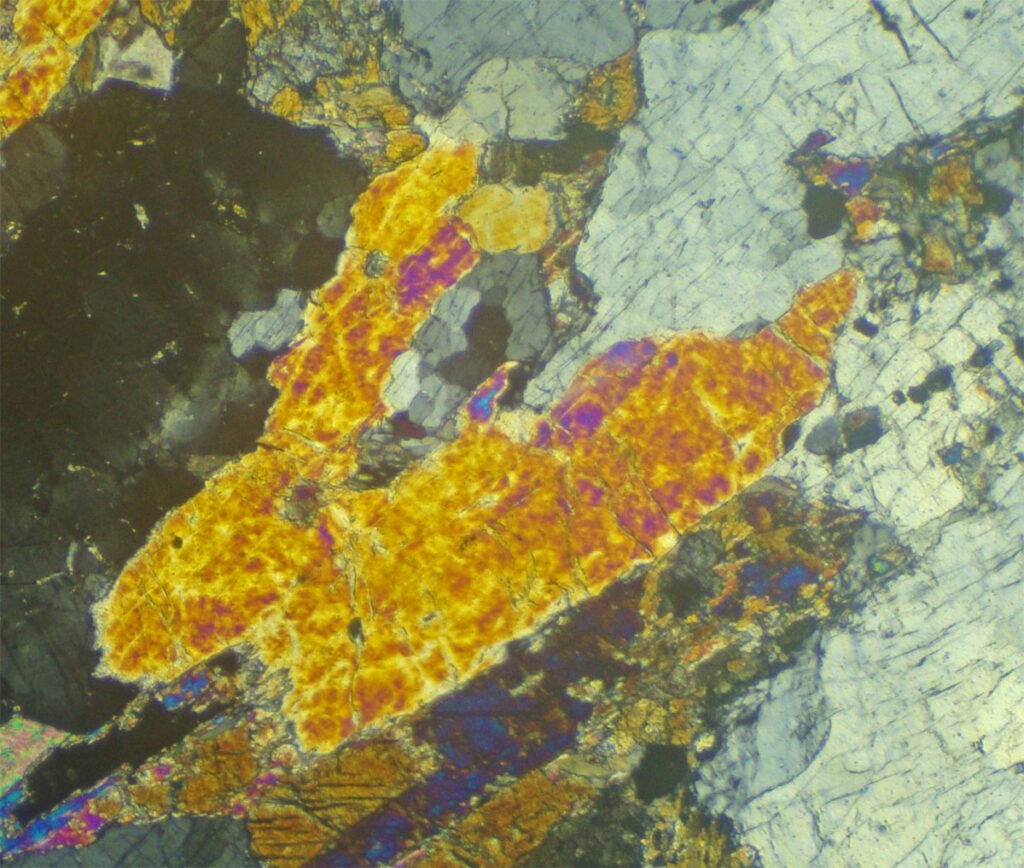
CROSSED POLARIZED LIGHT – XPL
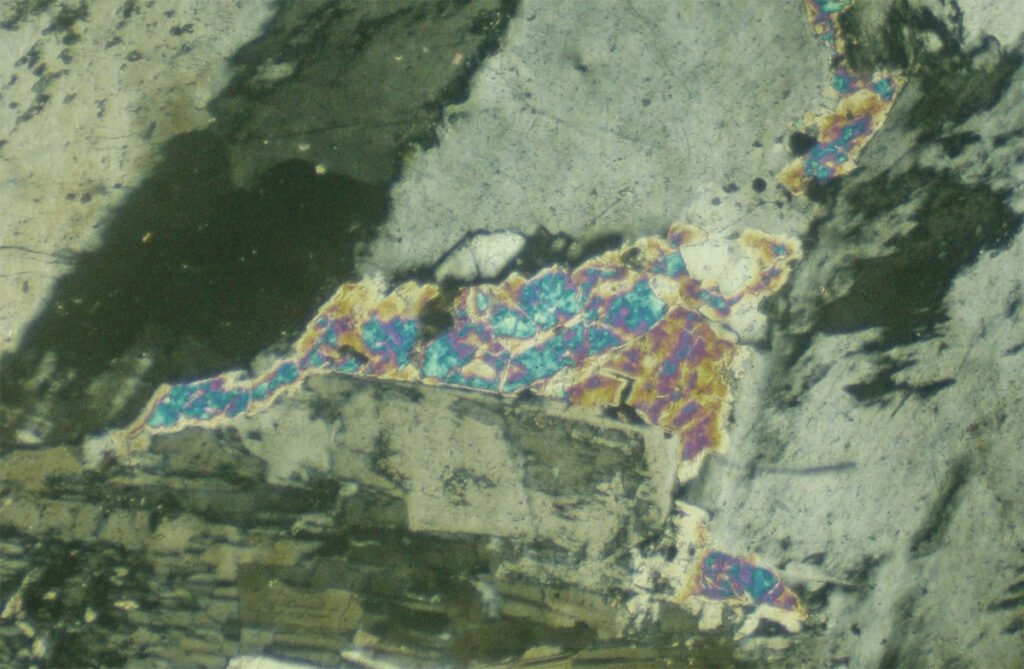
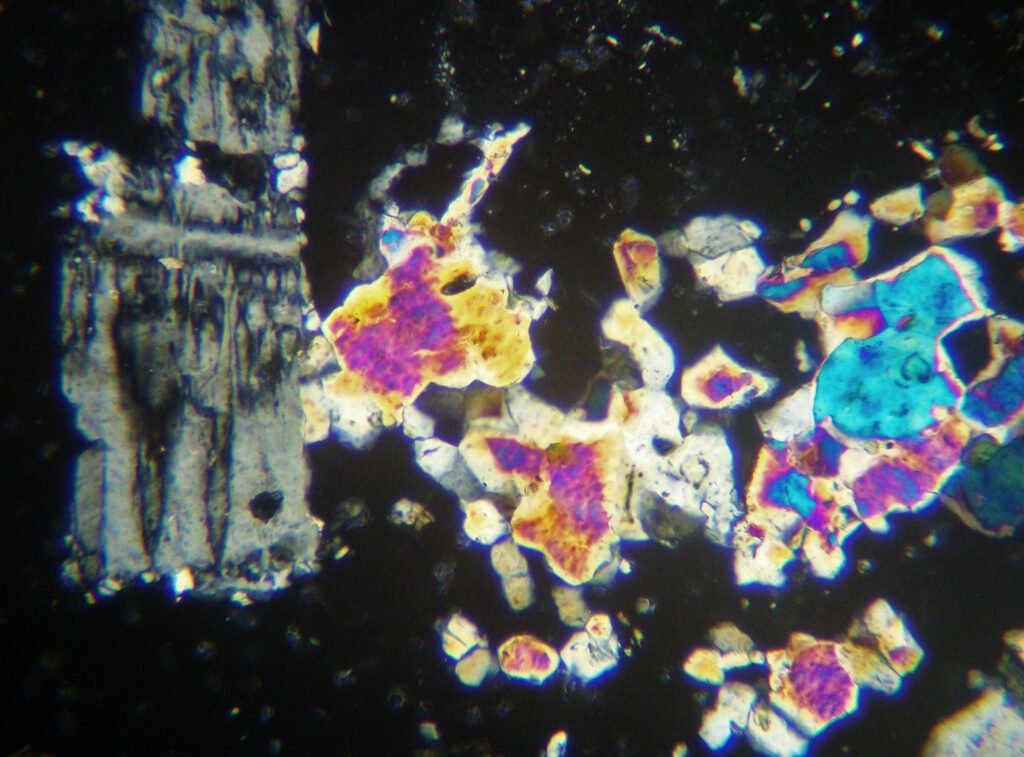
Birefringence and Interference Colors: Birefringence from 0.002 to 0.025: colors up to early 2nd order, ranging from pale yellow, yellow and orange 1st order to medium 2nd order colors.
Extinction: Parallel to cleavage and crystal form. In anhedral and small grains (the most common form of occurrence), classification of extinction is difficult or impossible.
Elongation sign: ES(-) by cleavage (diagnostic!).
Twins: Rare lamellar, usually not visible under the microscope.
Zoning: No.
CONVERGENT LIGHT
Character: U(-), may be anomalous biaxial (see angle 2V at right).
2V angle: May have a small anomalous 2V angle (only a few degrees).
Alterations: Cancrinite alters to zeolites and calcite.
May be confused with: Diagnostic are low birefringence, negative relief and paragenesis: a colorless mineral of very low relief, but with strong interference colors, up to late 1st order, orange to bluish-red, in syenitic rocks.
Nepheline has normally lower birefringence.
Vishnevite differs from cancrinite by still lower birefringence, it is almost isotropic.