5. Reflected Light Microscopy
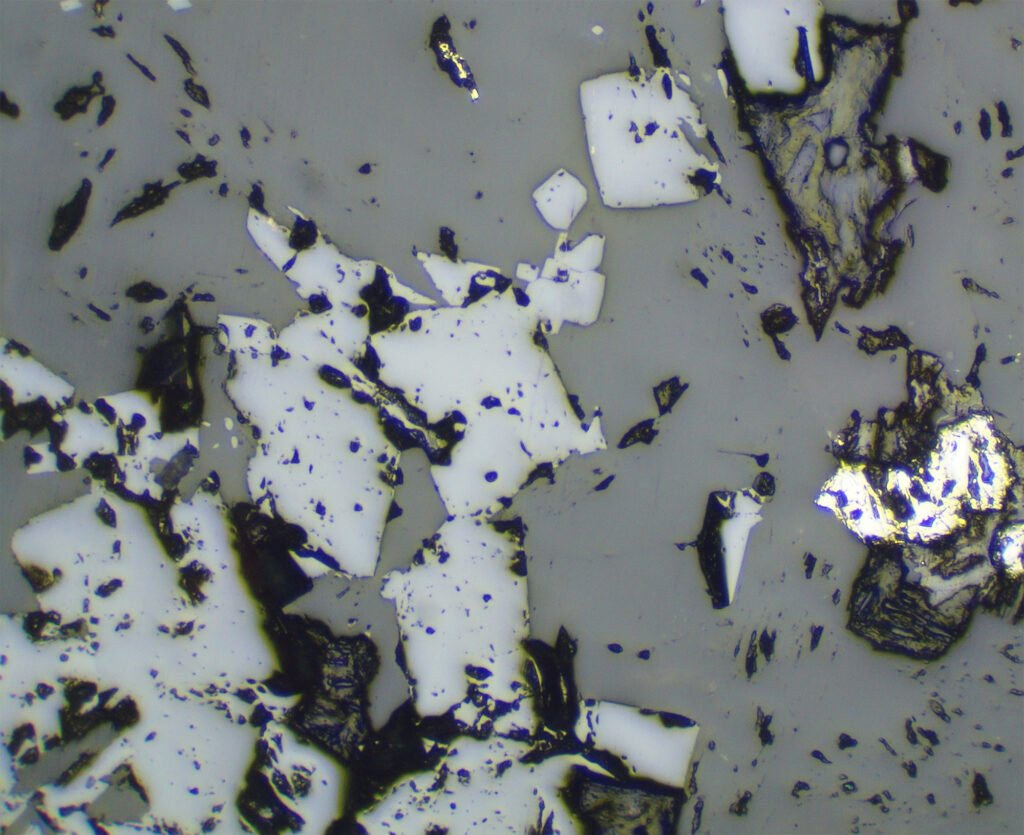
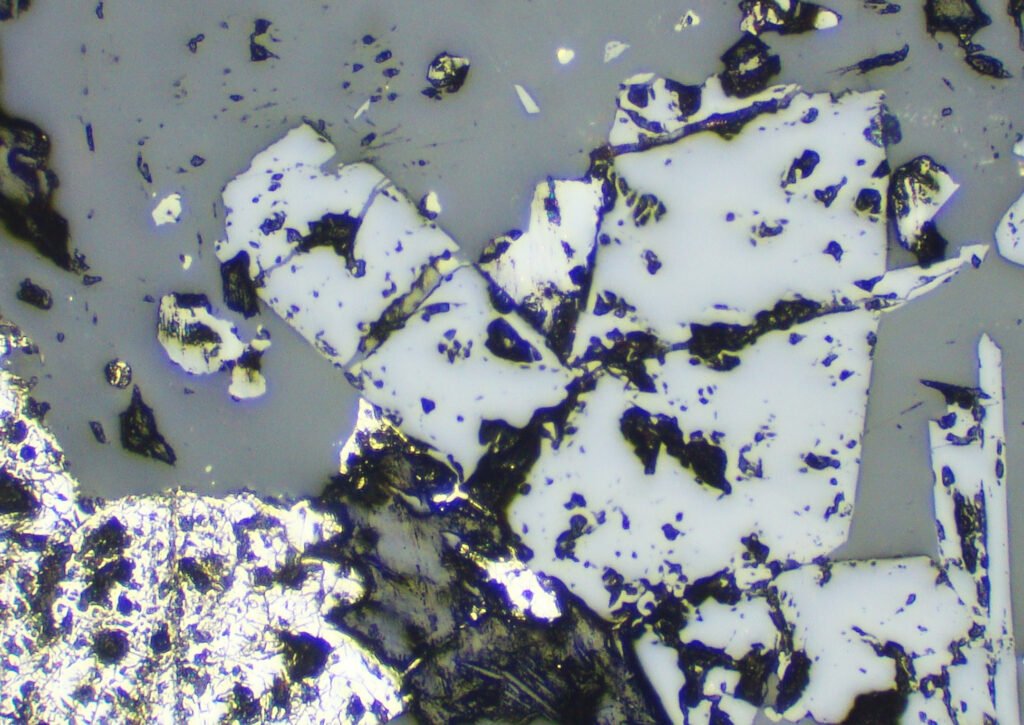
Sample preparation: cassiterite is one of the worst minerals for polishing due to its high hardness associated with great fragility, as it is very brittle. Grinding should only be done with fine abrasive; good quality polished sections require much more time than usual. Impregnation may be necessary. There will always be a high and uncomfortable relief in relation to other neighboring minerals. Sections with different orientations have very contrasting hardness to polish.
Cassiterite grains leave the abrasive whitish during grinding, because the trace (the color of the powder) of the cassiterite is very light, between white and yellowish.
PLANE POLARIZED LIGHT – PPL
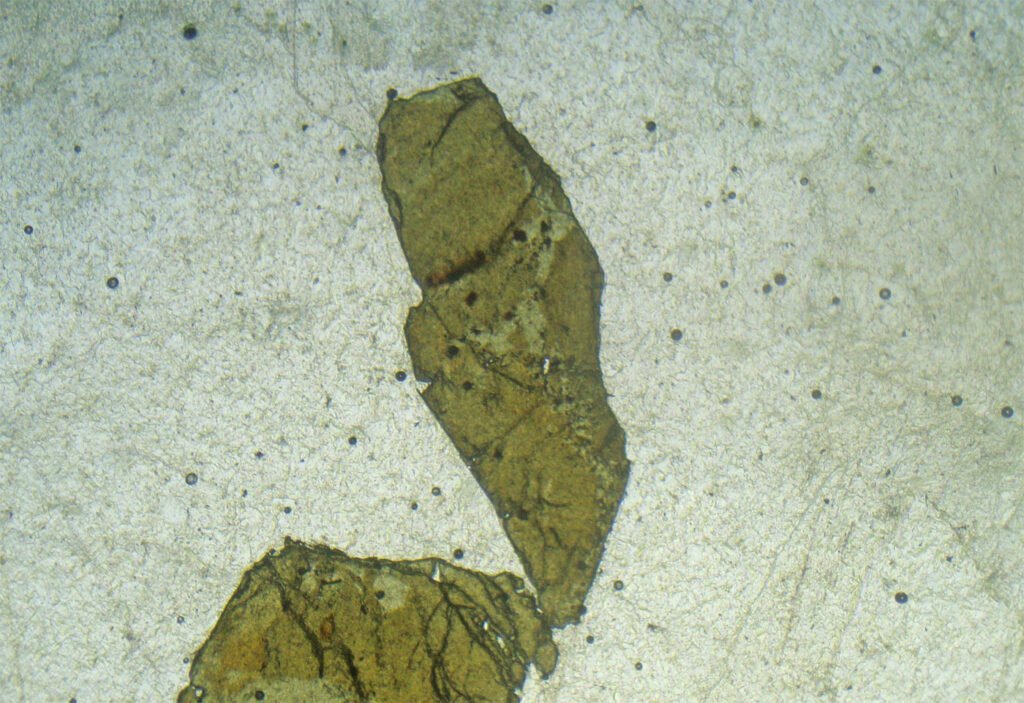
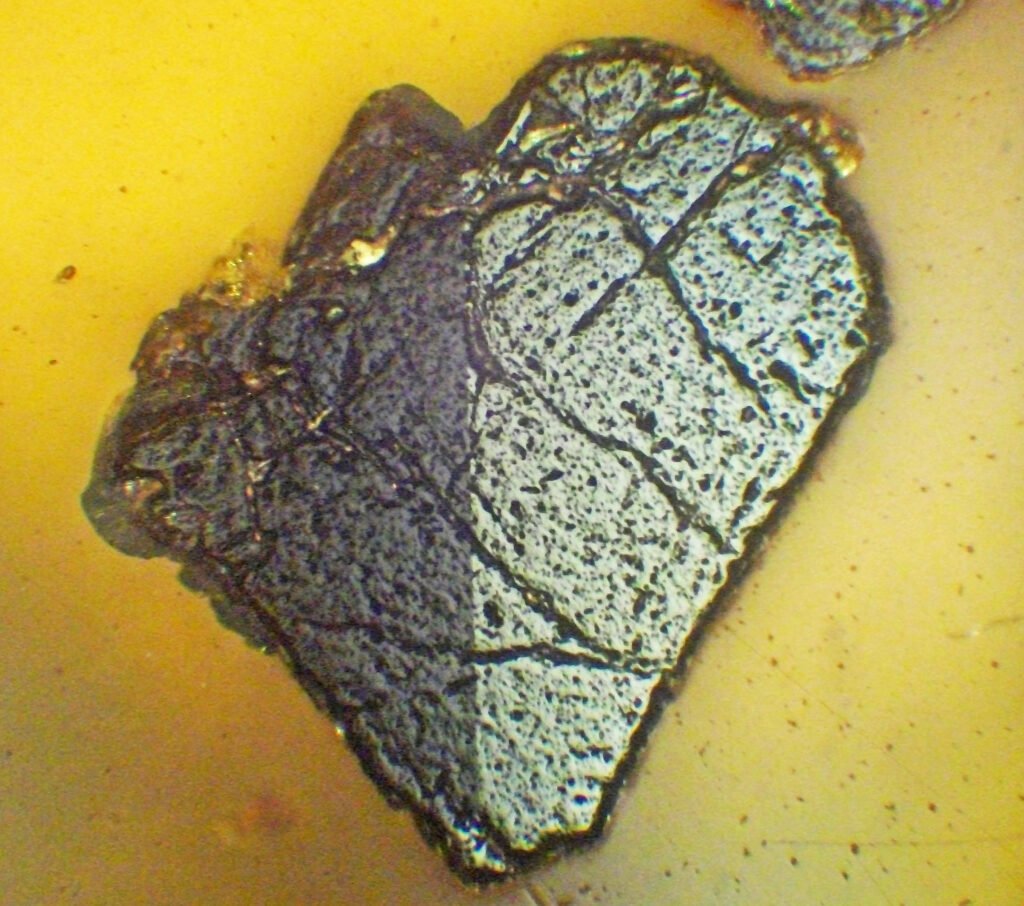
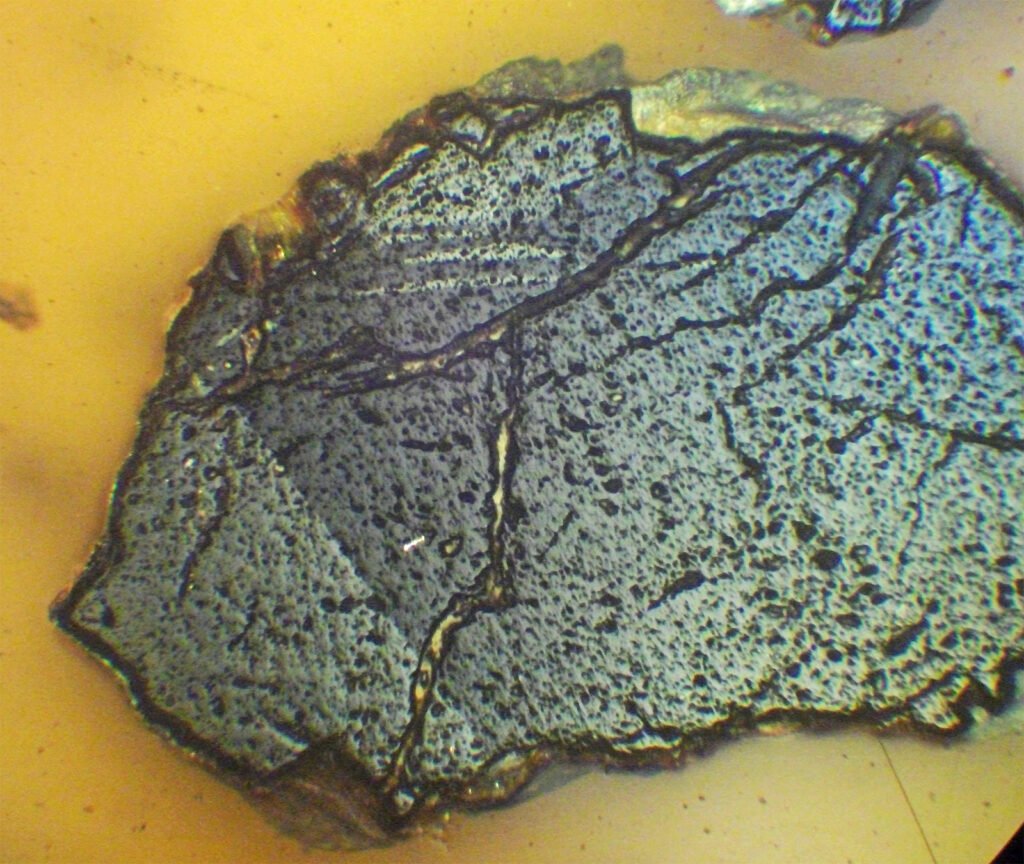
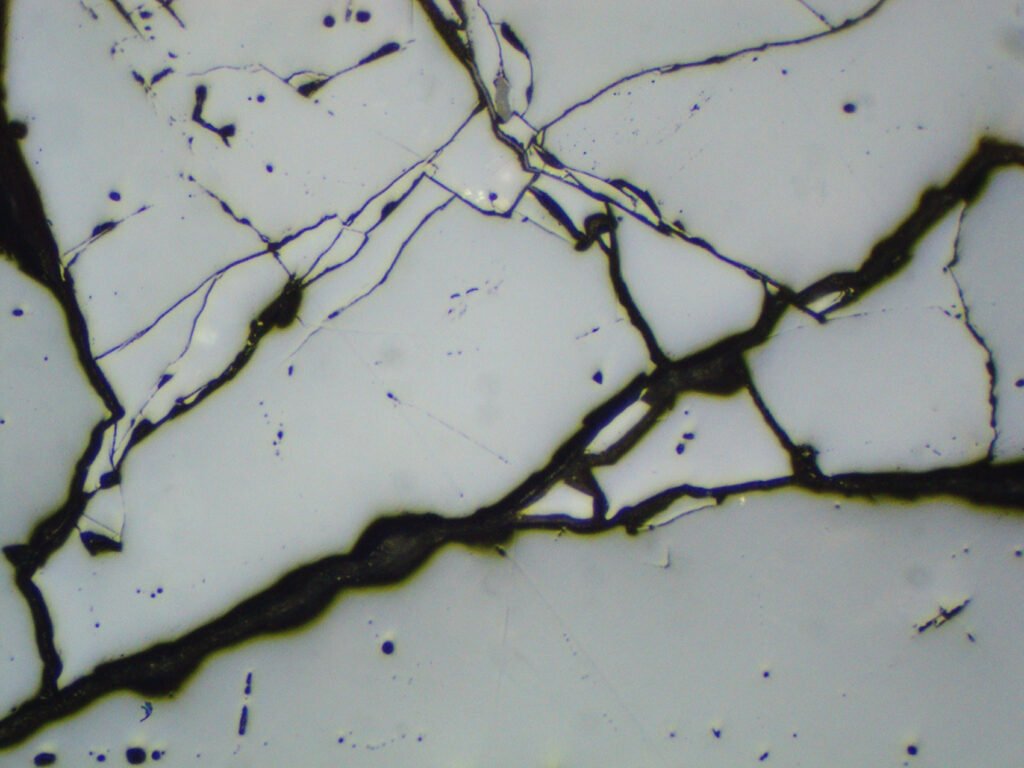
Reflection color: Medium gray, much lighter than quartz and feldspars.
Pleochroism: Very weak, only visible in intergranular contacts and twins.
Reflectivity: 10.86 – 12%
Bireflectance: Weak to strong.
CROSSED POLARIZED LIGHT – XPL
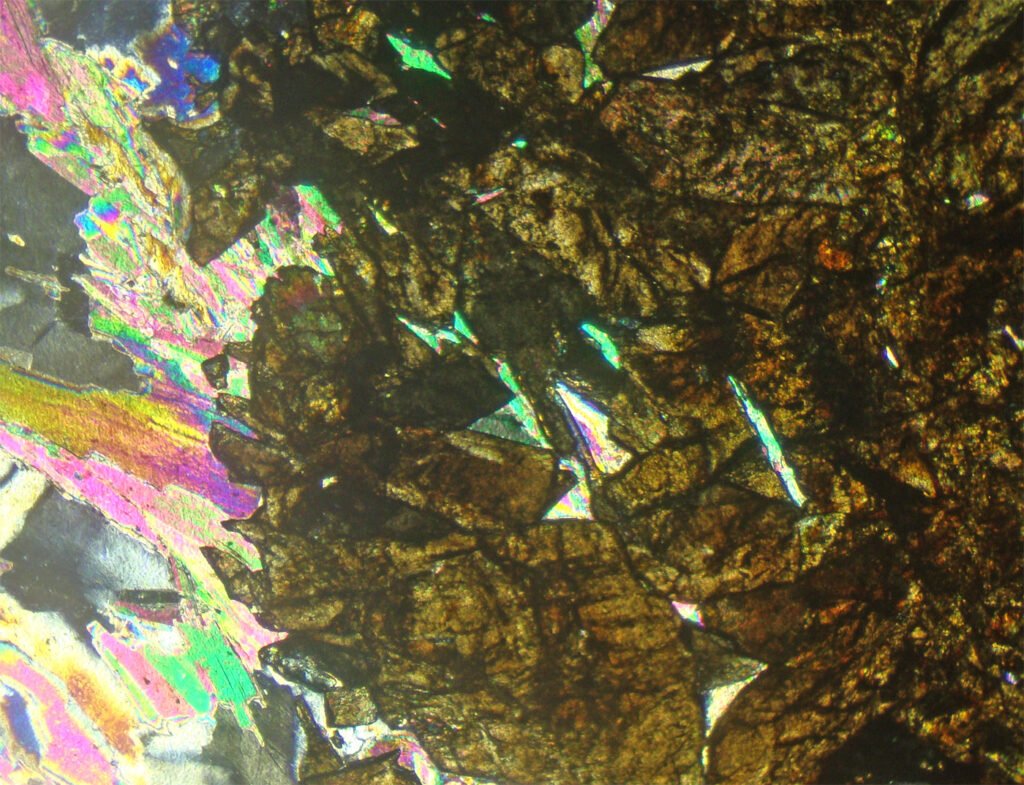
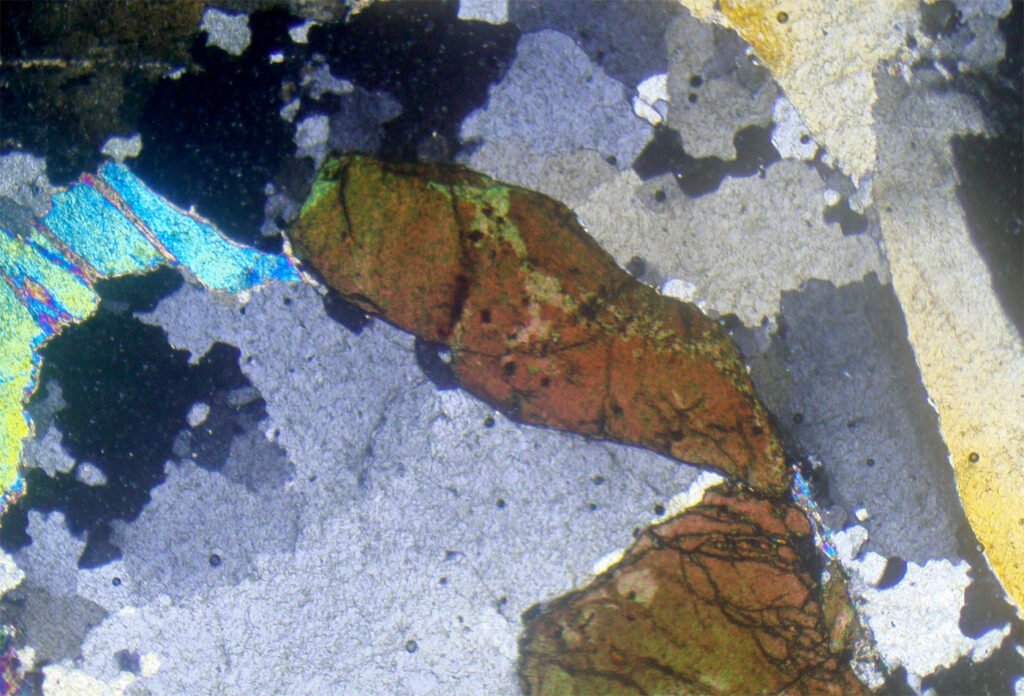
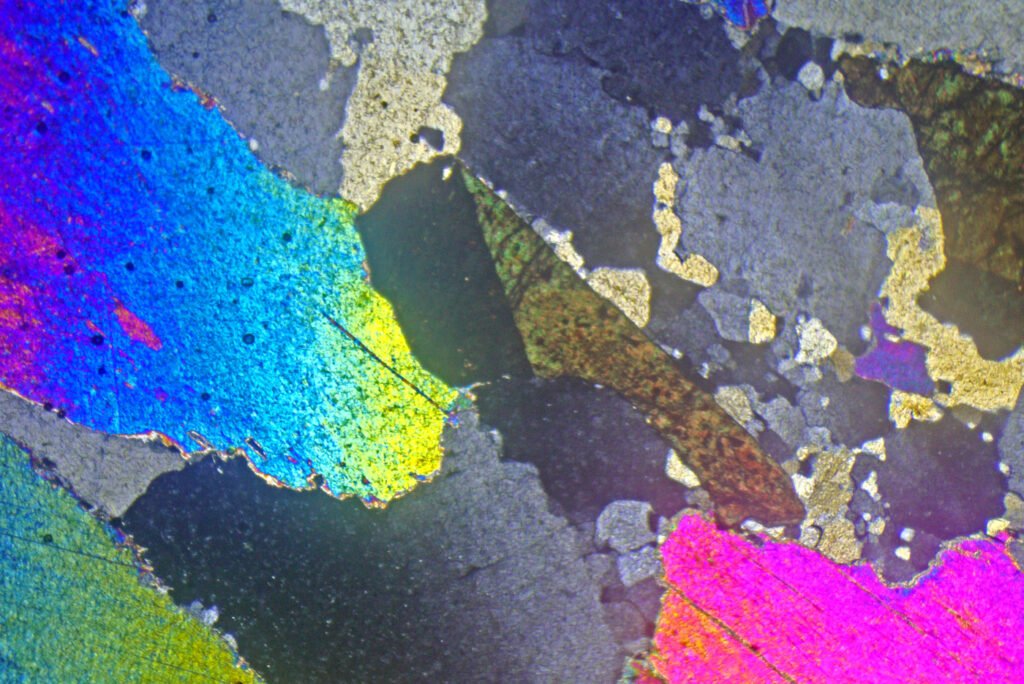
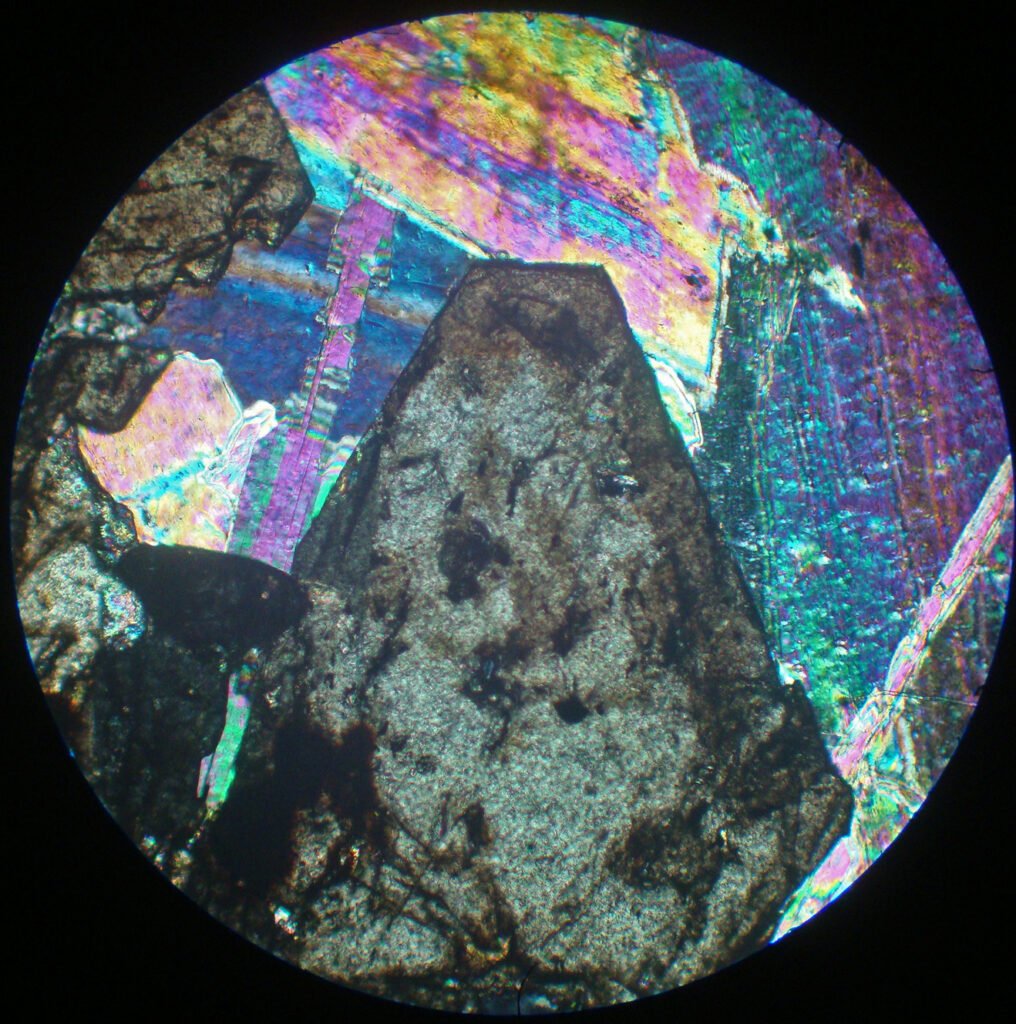
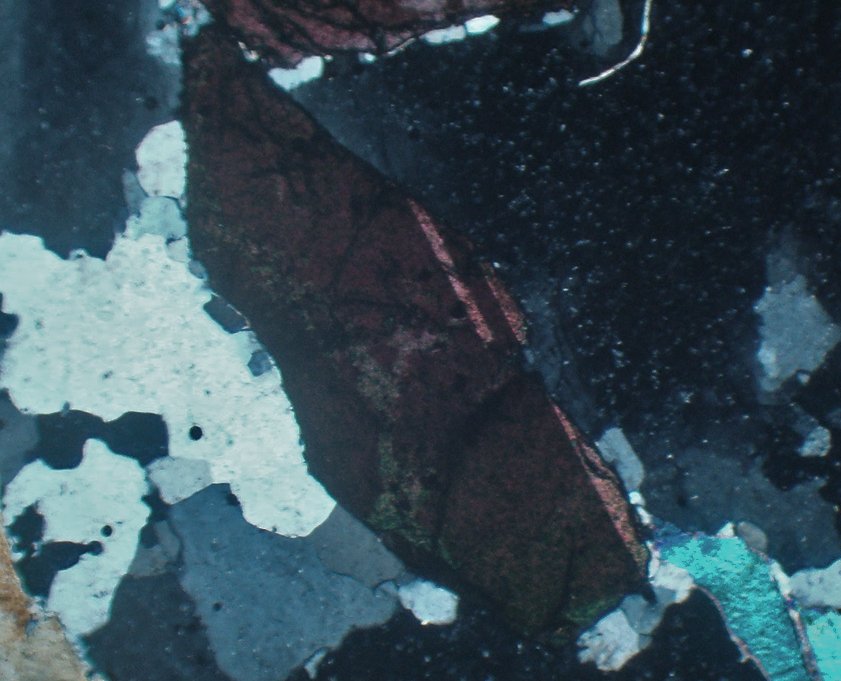
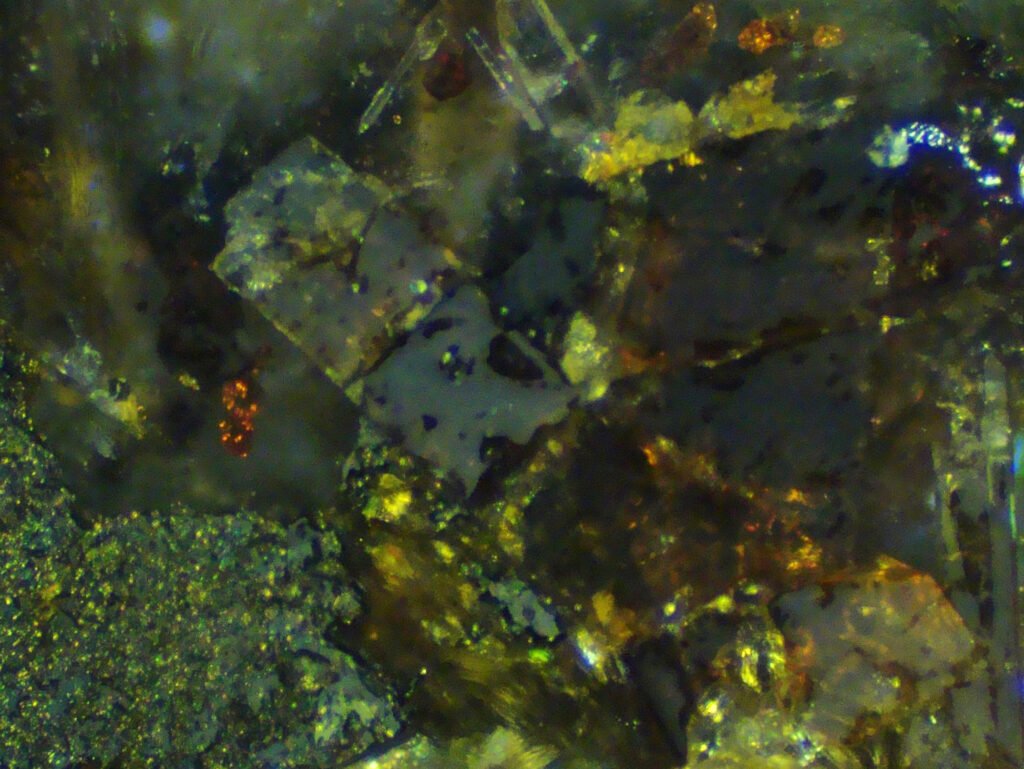
Isotropy / Anisotropy: Strong grayscale anisotropy, which can be observed even with typical internal reflections.
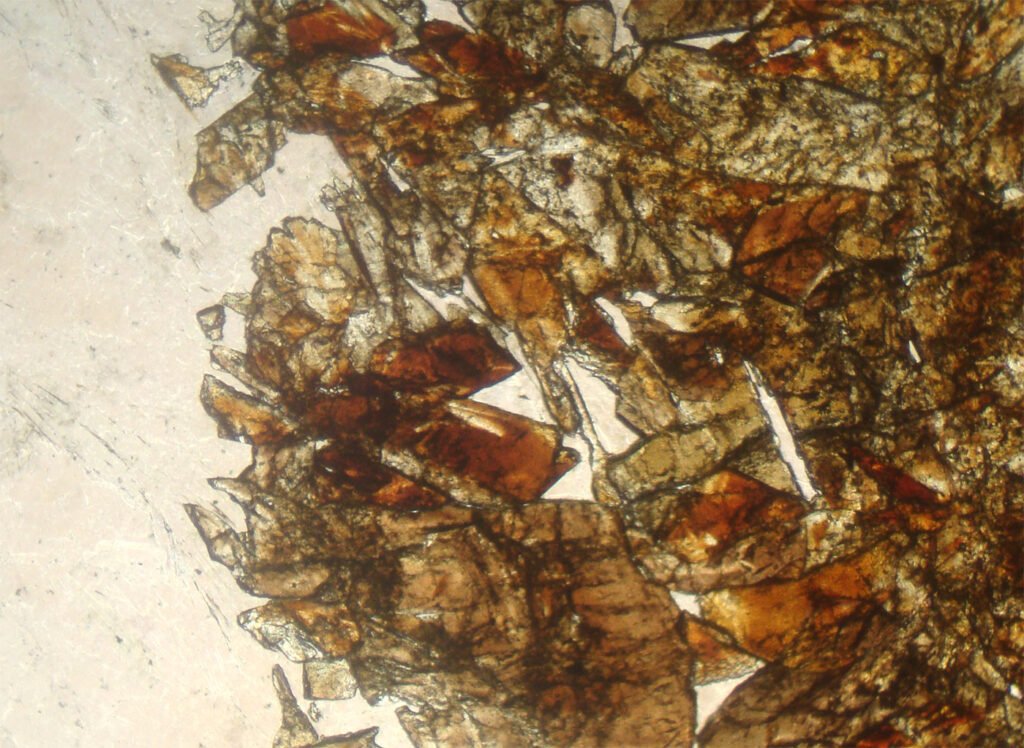
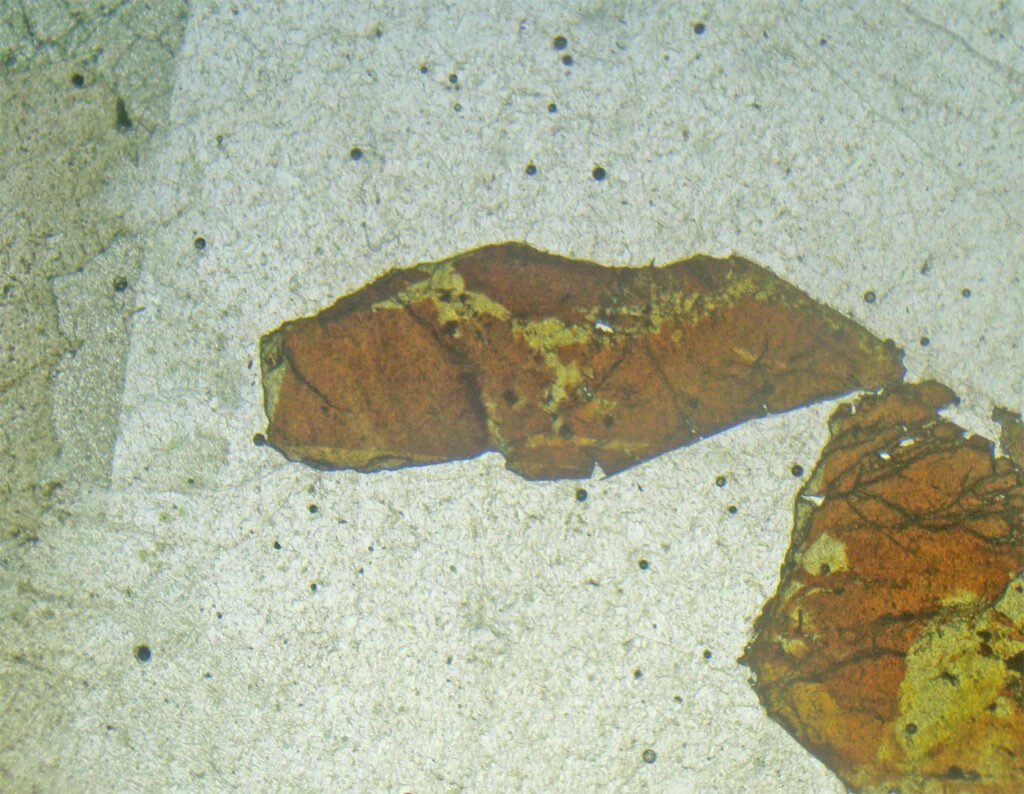
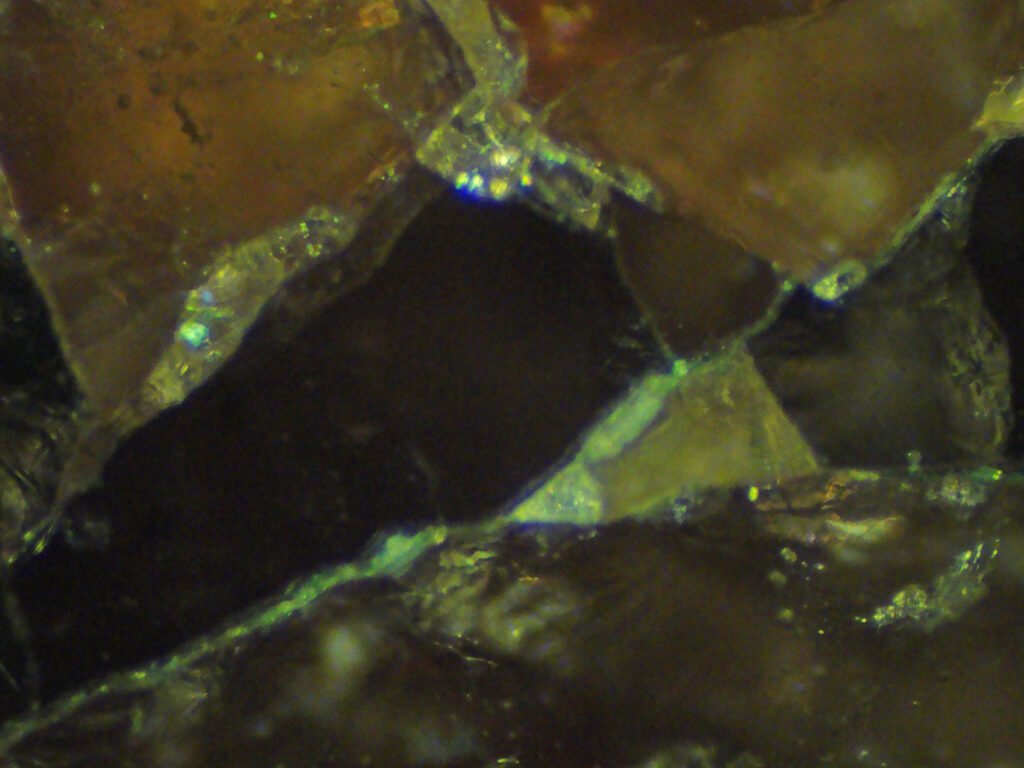
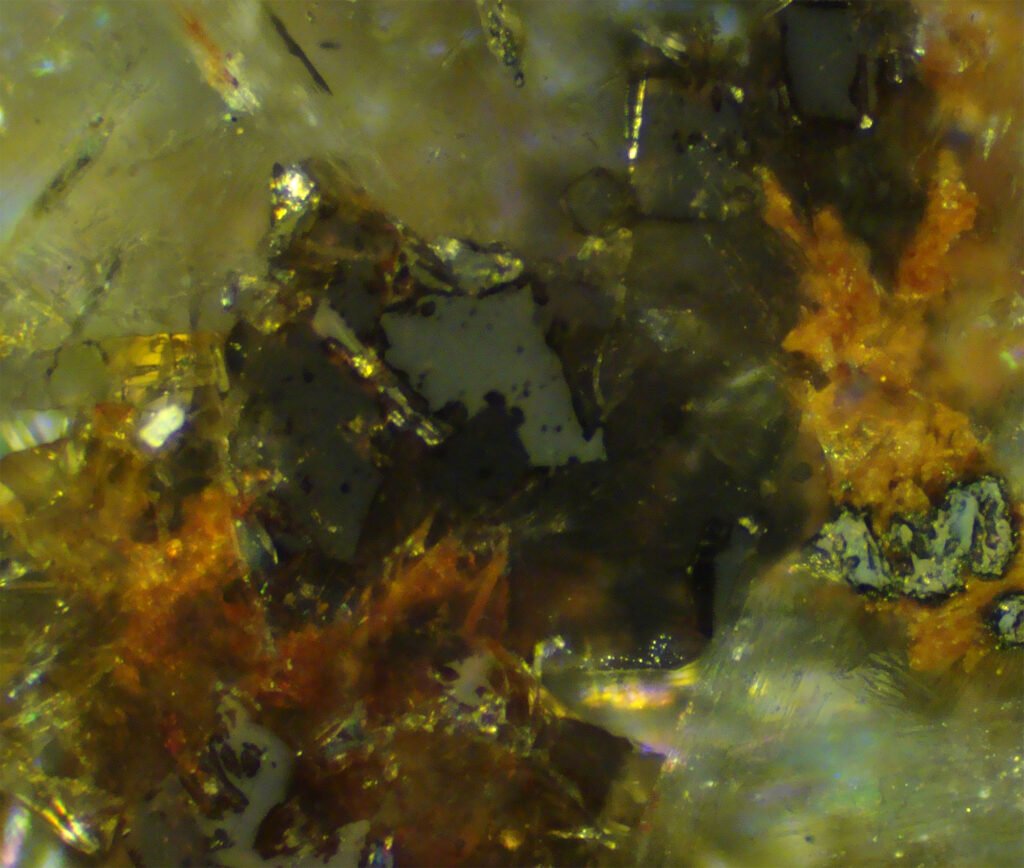
Internal reflections: White, yellow and yellow-brown, very common. Even in the almost black cassiterites, reflections are abundant.
May be confused with: Typical for cassiterite are poor polishing, strong anisotropy, yellow to brown internal reflections, and large numbers of single twins.
Sphalerite can look very similar, especially if the polish is of good quality.
Rutile is lighter and usually has lamellar twins, which in cassiterite are rarer.
Titanite and zircon may be similar, but they occur in other paragenesis.
General Characteristics:
Grain shape: cassiterite has a strong tendency to idiomorphy. Shapes often reflect their formation environment – pegmatites, high- or low-temperature pneumatolytic ores, or deposits formed at very low temperatures. The union between adjacent grains is very weak.
Grain sizes are very varied, roughly corresponding to the formation temperature: high temperatures generate large crystals; low temperatures generate small crystals. The alteration of cassiterite and teallite – (Pb,Sn)SnS2 – forms massive aggregates
The variety “wood tin” (botrioidal stalagtite cassiterite) shows banding with successive layers formed by cryptocrystalline acicular crystals oriented perpendicularly to the bands; very reminiscent of the structure of chalcedony.
Twins are very common and easy to recognize in most cases. They are only absent in the “wood tin” variety and in some occurrences of acicular tin. The twins are usually single growth twins. Relatively rare are pressure twins, which are very thin lamellar.
Cleavage is observed only rarely.
Zonation, often very well developed, can be recognized in many cases through the distribution of pores or unmixing bodies. Also the internal reflections allow in many cases to visualize the zones.
Unmixing bodies of tapiolite (Fe, Mn)(Ta,Nb)2O6 occur in some deep-colored cassiterites or in some areas thereof. They can form extremely fine needles, oriented or not. In granites, cassiterite can unmix columbite or tantalite in the form of small rounded grains.
Rhythmic precipitation occurred in the “wood tin”, forming very well developed structures. In high temperature hydrothermal occurrences, cassiterite may show textures with gradational grain sizes or banded structures, alternating bands with cassiterite, pyrite or quartz.
Cataclasis is very frequent, as cassiterite is one of the first minerals to form, suffering all the tectonic stresses that the ore later went through. Cataclase is especially common in ores where cassiterite is associated with sulphide ores. Even in some pegmatites the cassiterite is so cataclased that it causes processing problems.
Radial structures, dark red with rhythmic colors, may occur in some deposits.
Cassiterite myrmekites are rare, but can occur with quartz, calcite and pyrite. Stannite alteration produces myrmekites between cassiterite and chalcopyrite.
Exsolution intergrowths can occur with columbite and tantalite. Intergrowths that resemble the graphic texture can be formed with galena, boulangerite and franckeite.
Inclusions 1: Cassiterite inclusions can occur in sphalerite, arsenopyrite and galena.
Inclusions 2: Inclusions in cassiterite can be of magnetite, hematite, ilmenite, columbite, tantalite, rutile, tapiolite, wolframite, native bismuth, oxystannomicrolite and wodginite.
Magnetism in cassiterite occurs as a function of intergrowth or inclusions of magnetite or the presence of exsolutions of columbite and tapiolite, which may be dispersed or agglutinated.
Substitutions 1: Cassiterite is replaced by sulfides in some cases, such as pyrite, arsenopyrite, pyrrhotite, stannite, sphalerite and chalcopyrite.
Substitutions 2: Cassiterite replaces various minerals such as quartz, feldspar, topaz, tourmaline, stannite, pyrite, arsenopyrite, sphalerite, frankeite, teallite, cylindrite and bismuthinite