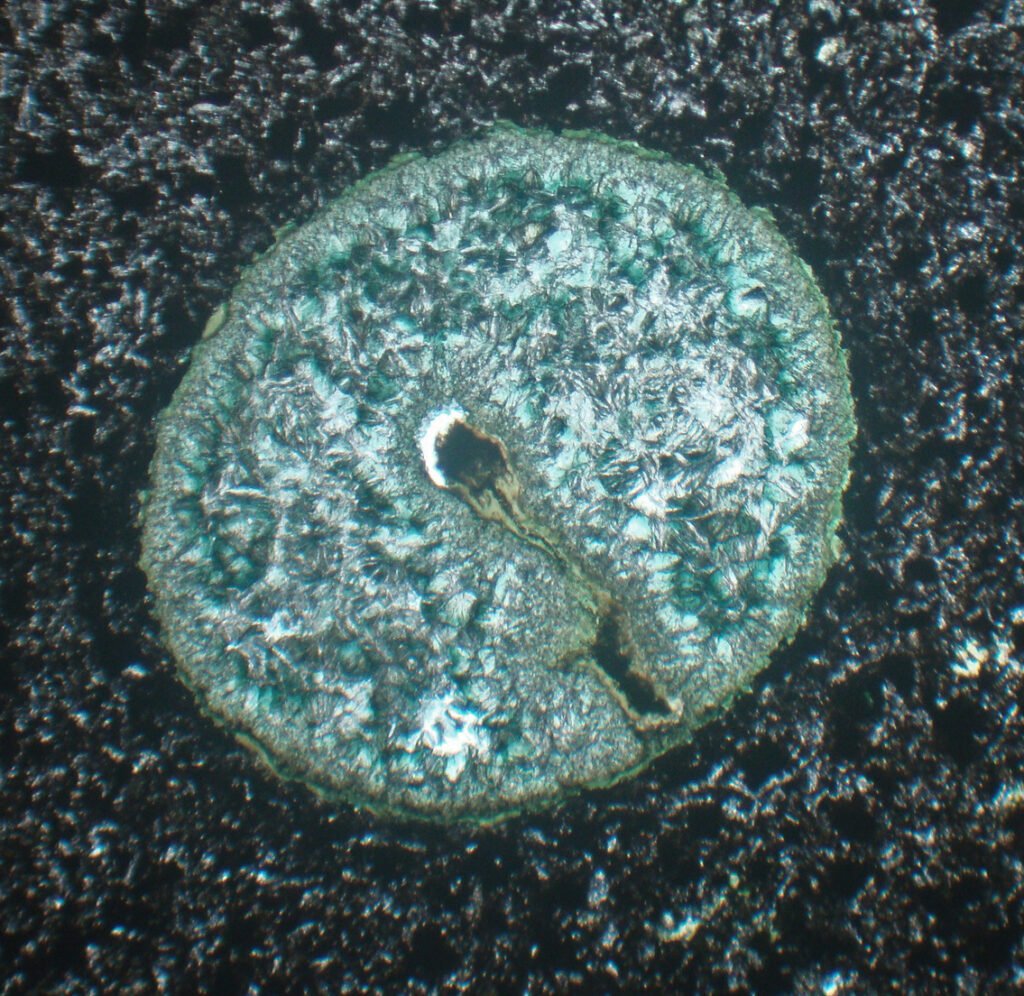
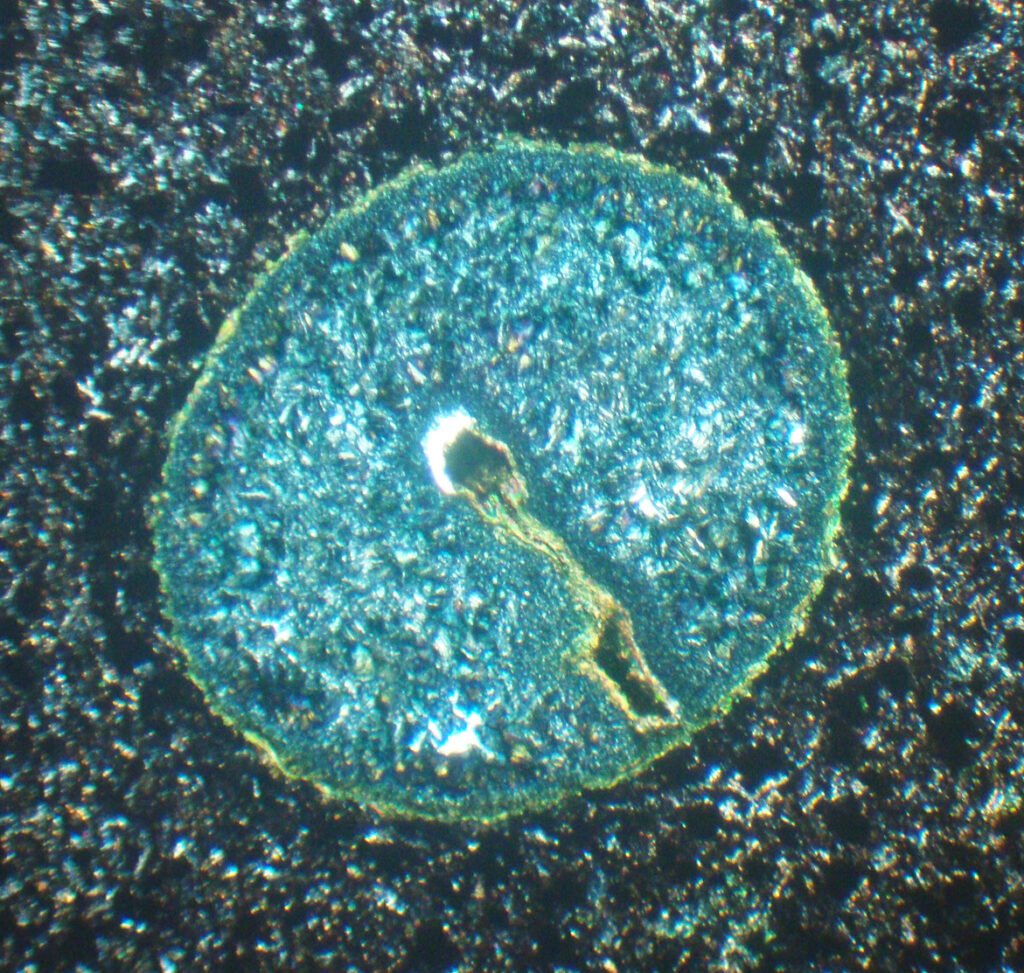
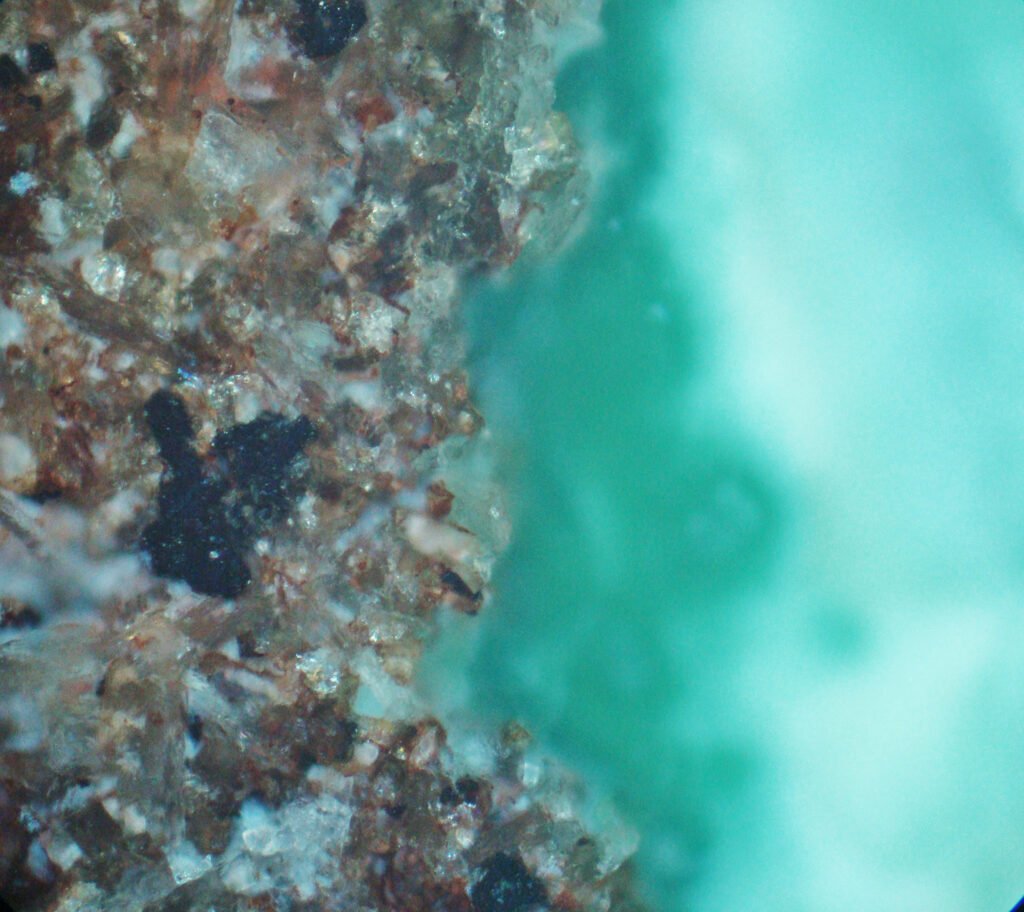
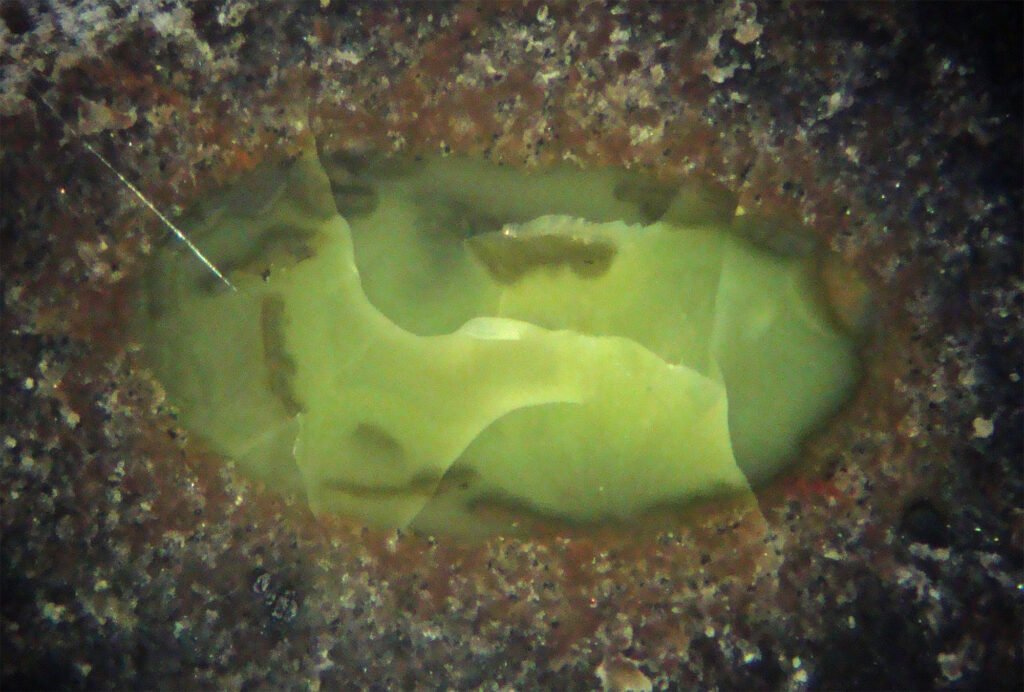
1. Characteristics
Crystal system: Monoclinic prismatic.
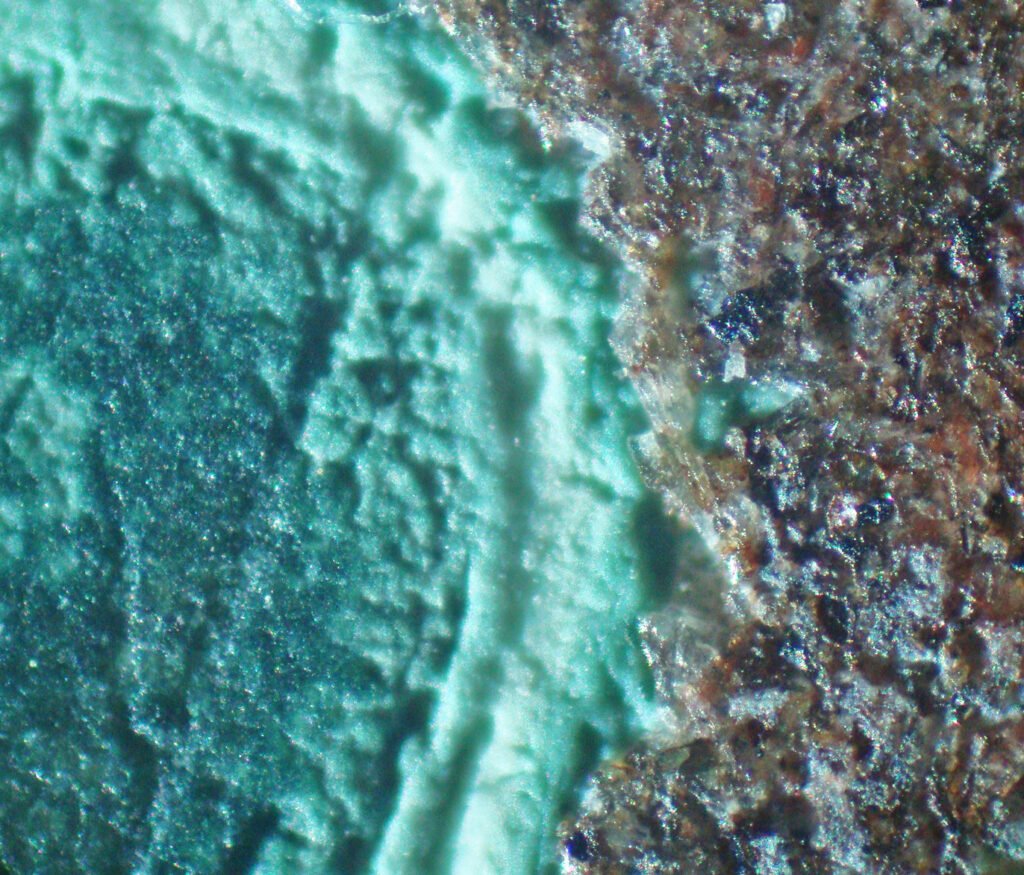
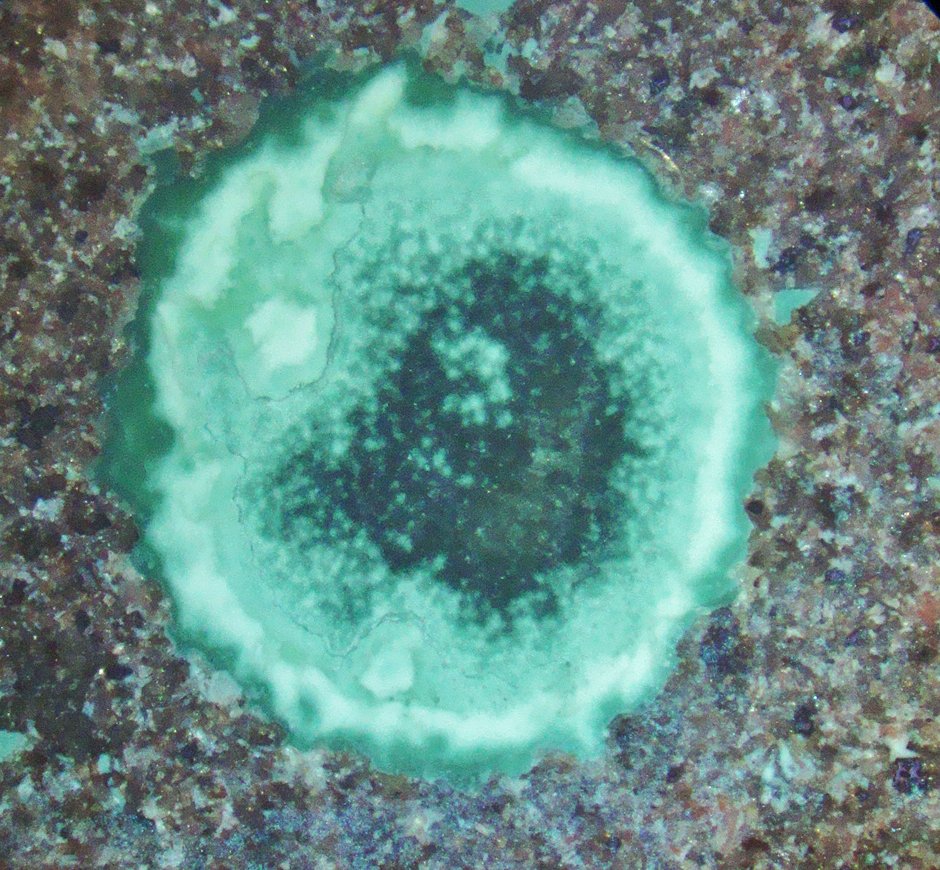
Color: Blue-green, olive green, apple green.
Habit: Very small micaceous lamellae, also in earthy aggregates.
Cleavage: {001} perfect.
Tenacity: Fragile.
Twinning: No.
Fracture: No.
Mohs Hardness: 2
Parting: No.
Streak: No information available.
Lustre: Resinous, greasy.
Diaphaneity: Transparent.
Density (g/cm³): 2.95 – 3.05
2. Geology and Deposits
Celadonite occurs almost exclusively in cavities (vesicles) and fractures of basic and intermediate volcanic rocks, such as basalts, diabases, and andesites.
It replaces ferromagnesian minerals such as olivine and pyroxenes when these rocks alter, and can form complete pseudomorphs.
It can occur in metamorphic rocks of the zeolite facies.
3. Mineral Associations
It occurs with primary minerals of igneous, volcanic, or hypabyssal rocks, of intermediate to basic composition: plagioclase, clinopyroxenes (augite, pigeonite), olivine, magnetite, ilmenite, apatite, and others.
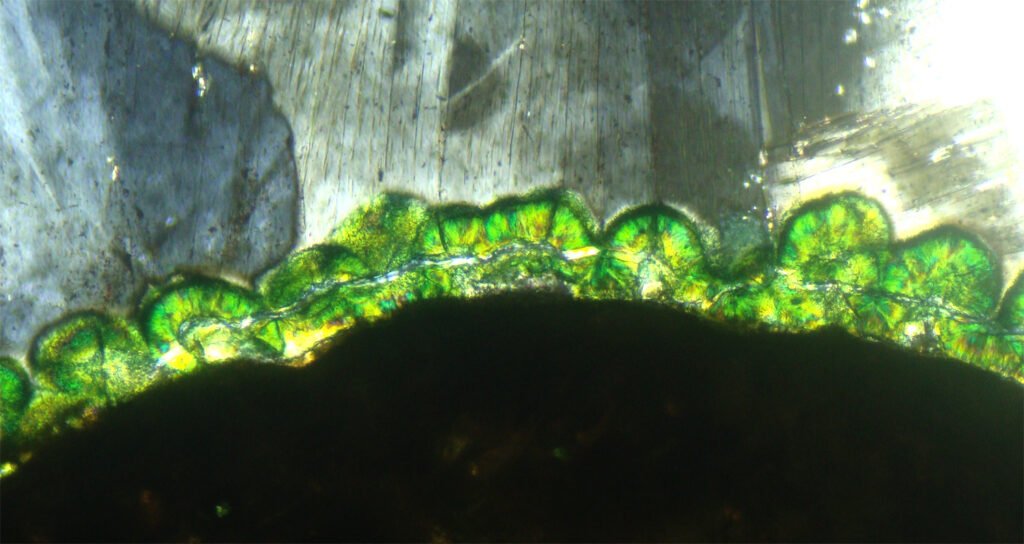
In the vesicles of rocks, it is associated with the secondary minerals that filled these vesicles. It frequently forms the first mineral layer next to the vesicle wall or is intergrown with the minerals that filled the vesicle, which include silica minerals (quartz, amethyst quartz, rose quartz, chalcedony, opal), calcite, fluor-apophyllite, zeolites (heulandite, laumontite, stilbite), prehnite, chlorite and clinoptilolite, clay minerals, and others.
It can also occur associated with hematite.
4. Transmitted Light Microscopy
Refraction indices: nα: 1.606 – 1.625 nβ: 1.630 – 1.662 nγ: 1.579 – 1.661
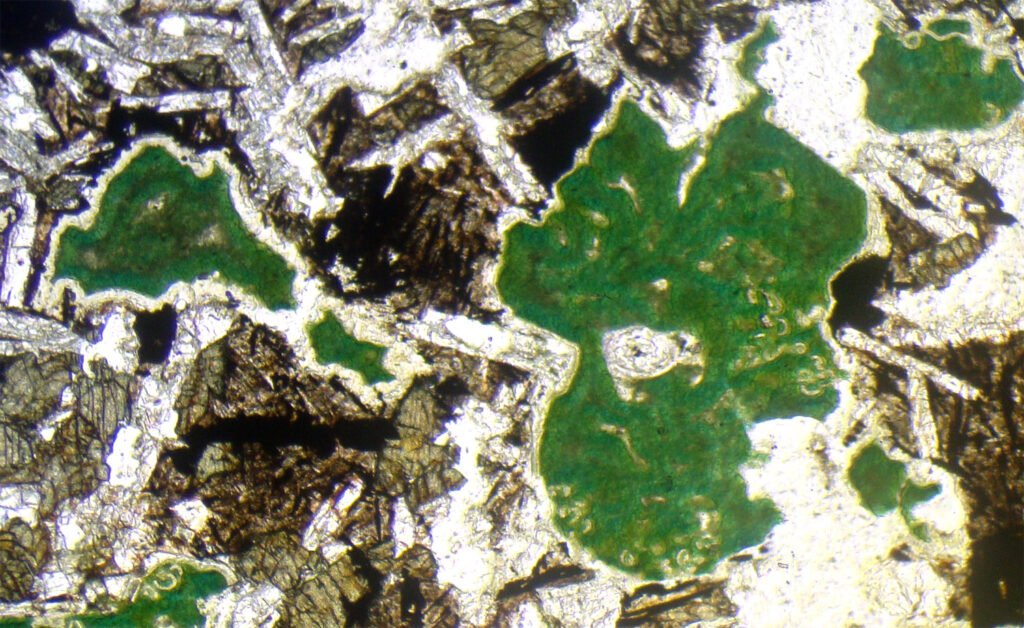
PLANE POLARIZED LIGHT – PPL
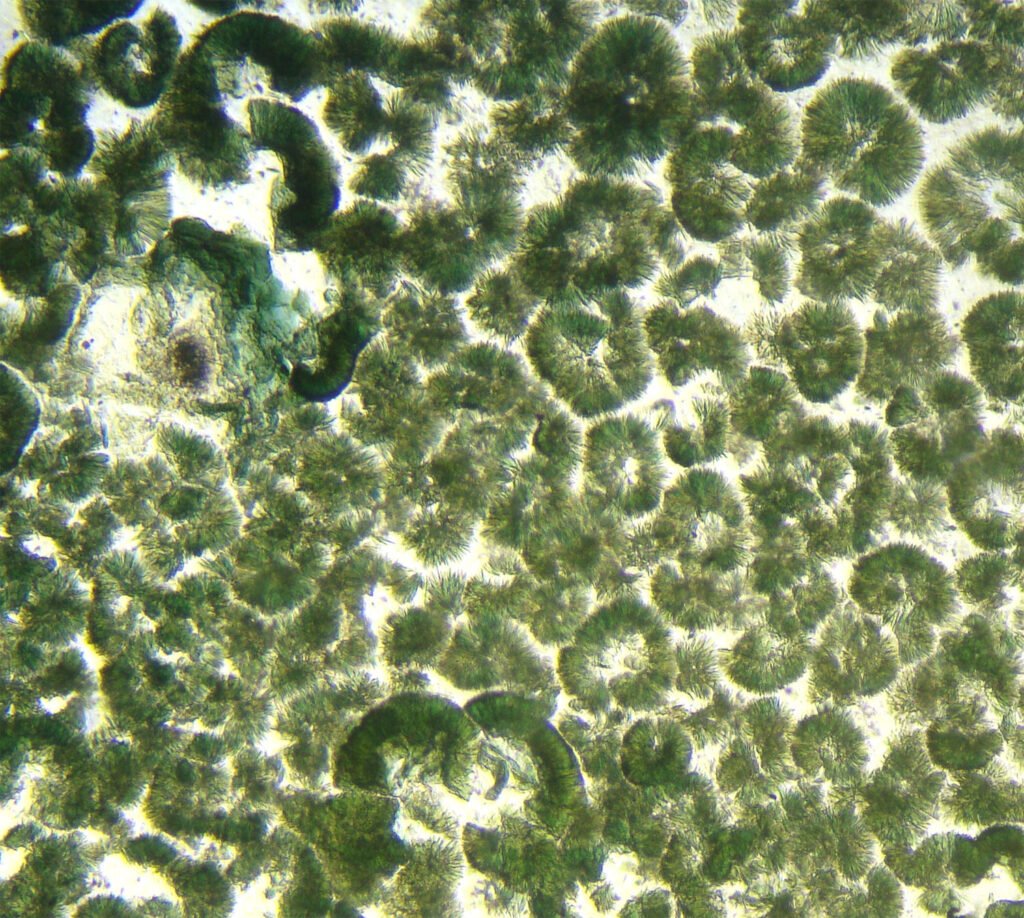
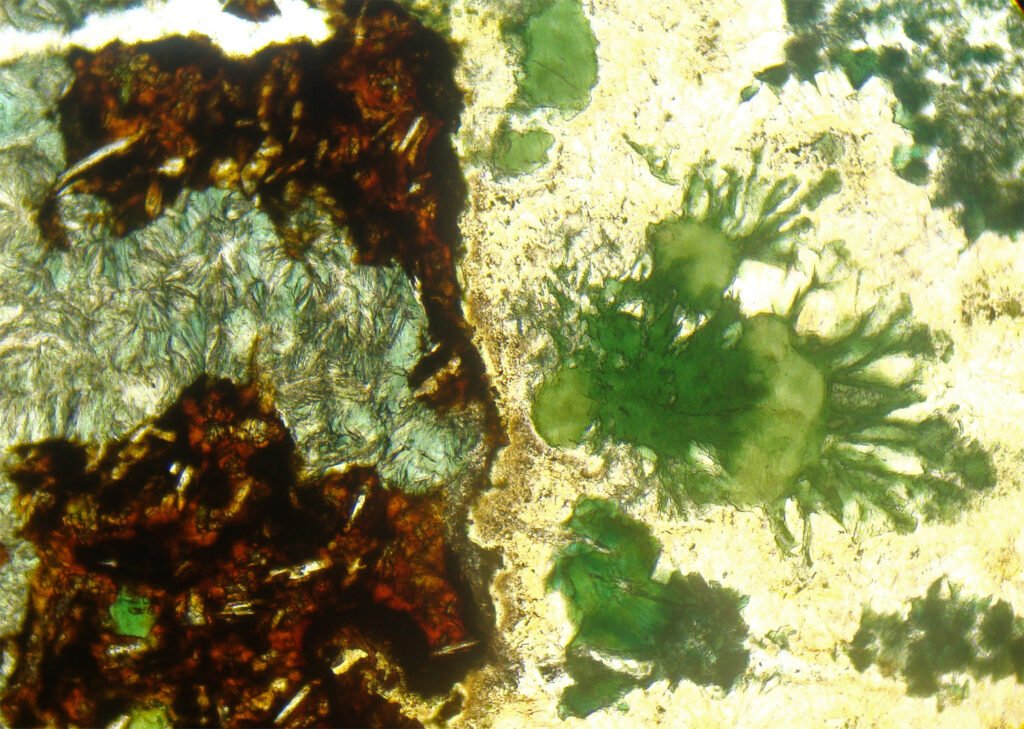
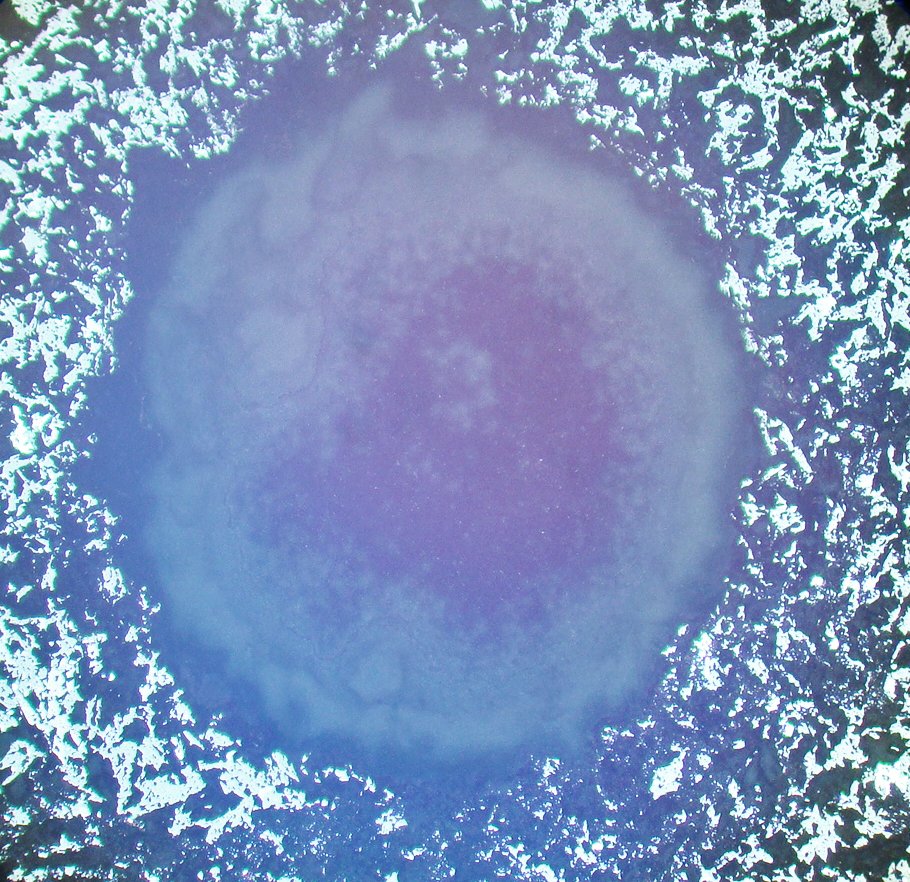
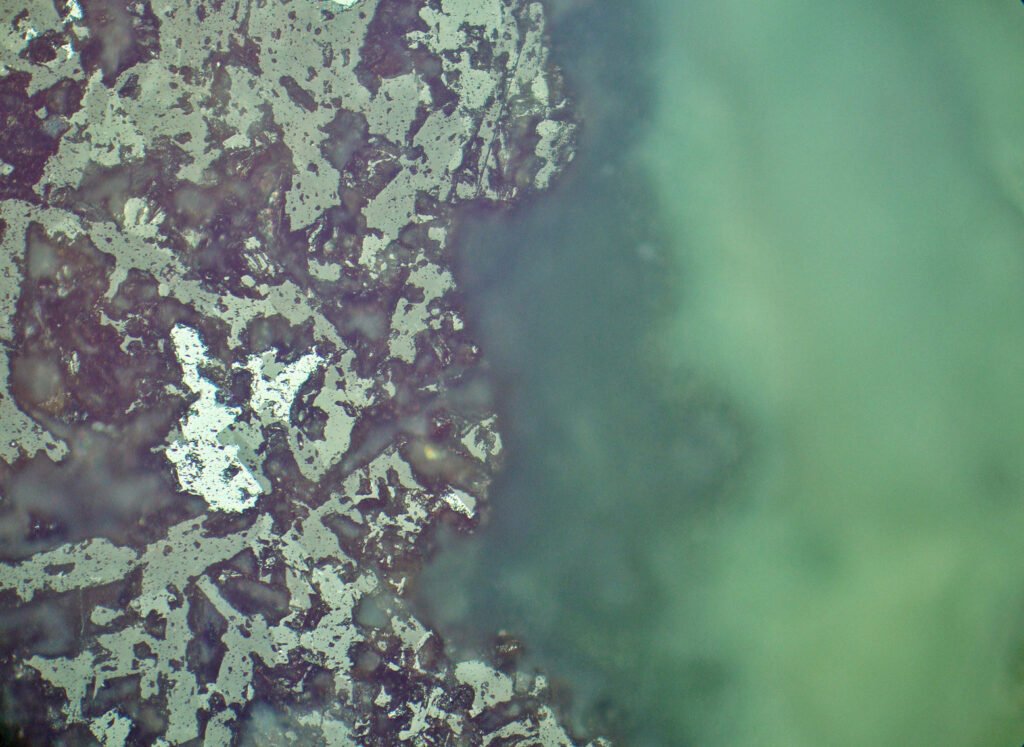
Color / Pleochroism: Light green with defined pleochroism between yellow-green and blue-green, difficult to see because the crystals are usually very small.
Relief: Moderate.
Cleavage: {001} perfect, characteristic of micas. Due to the submicroscopic size of the crystals, this cleavage is difficult or impossible to observe.
Habits: It always occurs in the form of aggregates formed by submicroscopic crystals with a micaceous habit. It can be earthy. It tends to form rounded aggregates.
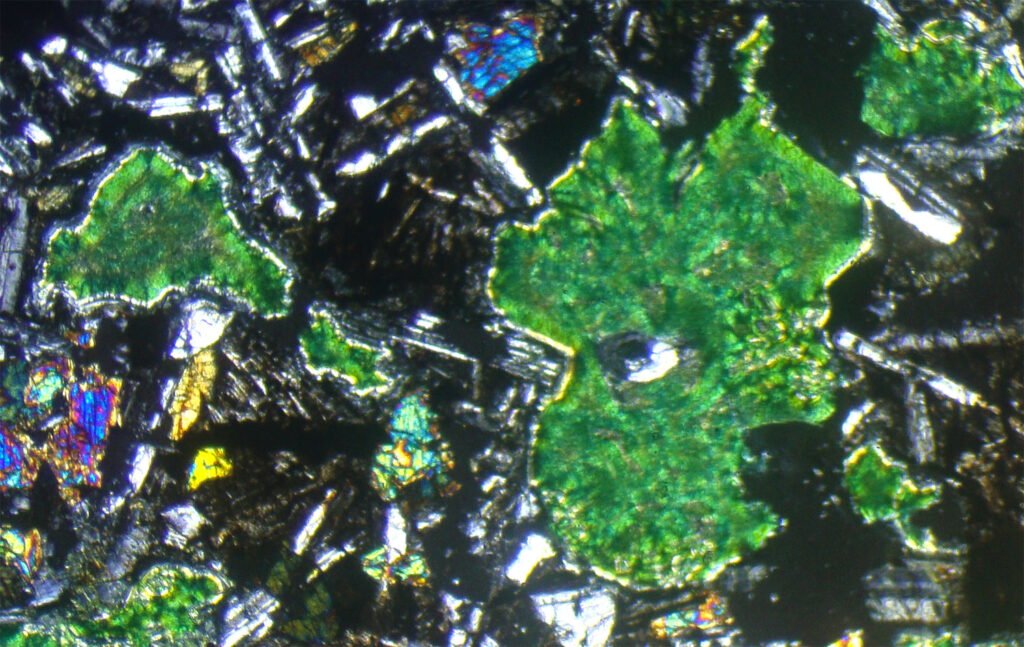
CROSSED POLARIZED LIGHT – XPL
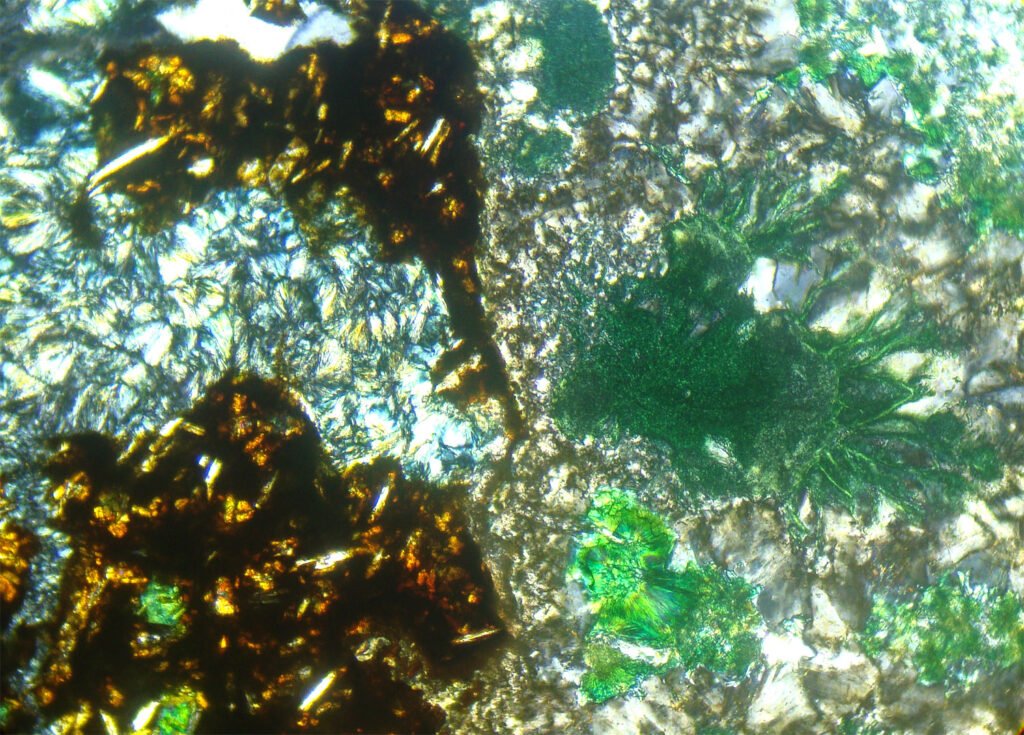
Birefringence and Interference Colors: maximum birefringence of 0.027, corresponding to strong, intense colors of up to 2nd order. However, the strong color of the celadonite and the very small size of the crystals mask the observation of these colors, so that the color in XPL is almost the same, just a little more intense, than the color in PPL.
Extinction: Oblique with an angle of 2-3º, it simulates to be paralell.
Elongation sign: ES(+)
Twins: No.
Zoning: No.
CONVERGENT LIGHT
Character: B(-) simulates being uniaxial, but the minute size of the crystals makes it impossible to obtain the interference figure.
2V angle: 5 – 8º
Alterations: It easily alters to “limonite,” a generic term for iron hydroxides, often containing goethite. They are masses of yellow to orange color in PPL.
May be confused with: few other minerals.
Chlorite also exhibits green colors, but has a lower relief and shows anomalous interference colors in XPL, which celadonite does not.
Chalcedony has similar structures, but does not have a green color.
Green biotite develops large crystals, has other interference colors, and occurs in other parageneses.
Glauconite occurs in other parageneses.