1. Characteristics
The informations below refer to chabazite-(Ca), which is the most common.
Crystal system: Triclinic pinacoidal.
Color: Colorless, white, more rarely yellow, orange, pink or red.
Habit: Pseudo-rhombohedrons, pseudo-hexagons, pseudo-cubes. Tabular, massive. See twinning!
Cleavage: {10-11} distinct.
Tenacity: Brittle.
Twinning: Twins are widespread. They can be on [0001], of interpenetration, simple or repeated. There are also contact twins by [10-11]. Depending on the twins, the crystals look like rhombohedrons, they can simulate cubes. Complex twins produce pseudo-hexagonal crystals, a variety called “phacolite”. Another variety, the “haydenite”, has scalenohedral modifications and orange colors.
Fracture: Irregular.
Mohs Hardness: 4 – 5
Parting: No.
Streak: White.
Lustre: Vitreous.
Diaphaneity: Transparent.
Density (g/cm³): 2.05 – 2.2
2. Geology and Deposits
Chabazite typically occurs in volcanic rocks such as basalts and andesites, filling cavities (vesicles) or fractures. It also occurs in cavities of granites, granodiorites and other plutonic rocks. It can occur in limestones and shales. It is associated with hydrothermal ore veins, where it crystallizes in cavities and fractures. Cryptocrystalline it forms in layered tuffs deposited in water bodies, from the alteration of volcanic ash.
A detailed account of the occurrence, forms and other details of chabazite can be found in the book “Zeolites of the World” by Rudy Tschernich, available for download on the internet. Detailed information on the various ways in which chabazite occurs can be found on the website of the Commission on Natural Zeolites: http://www.iza-online.org/
3. Mineral Associations
It occurs with the minerals that form the host rocks: olivine, nepheline, plagioclases, melilite, amphiboles, pyroxenes, magnetite, ilmenite, pyrite, native copper, axinite, clinochlore, epidote and tridymite.
Among the secondary minerals with which it occurs are calcite, prehnite, datolite, apophyllite, clay minerals (smectites), chlorite, chalcedony, macrocrystalline quartz and albite.
Finally, among these secondary minerals there are several other zeolites such as natrolite, mesolite, scholecite, stilbite, phillipsite, chabazite, heulandite and analcime.
4. Transmitted Light Microscopy
Refraction indices: nα: 1.478 – 1.487 nβ: 1.480 – 1.490 nγ: 1.480 – 1.493
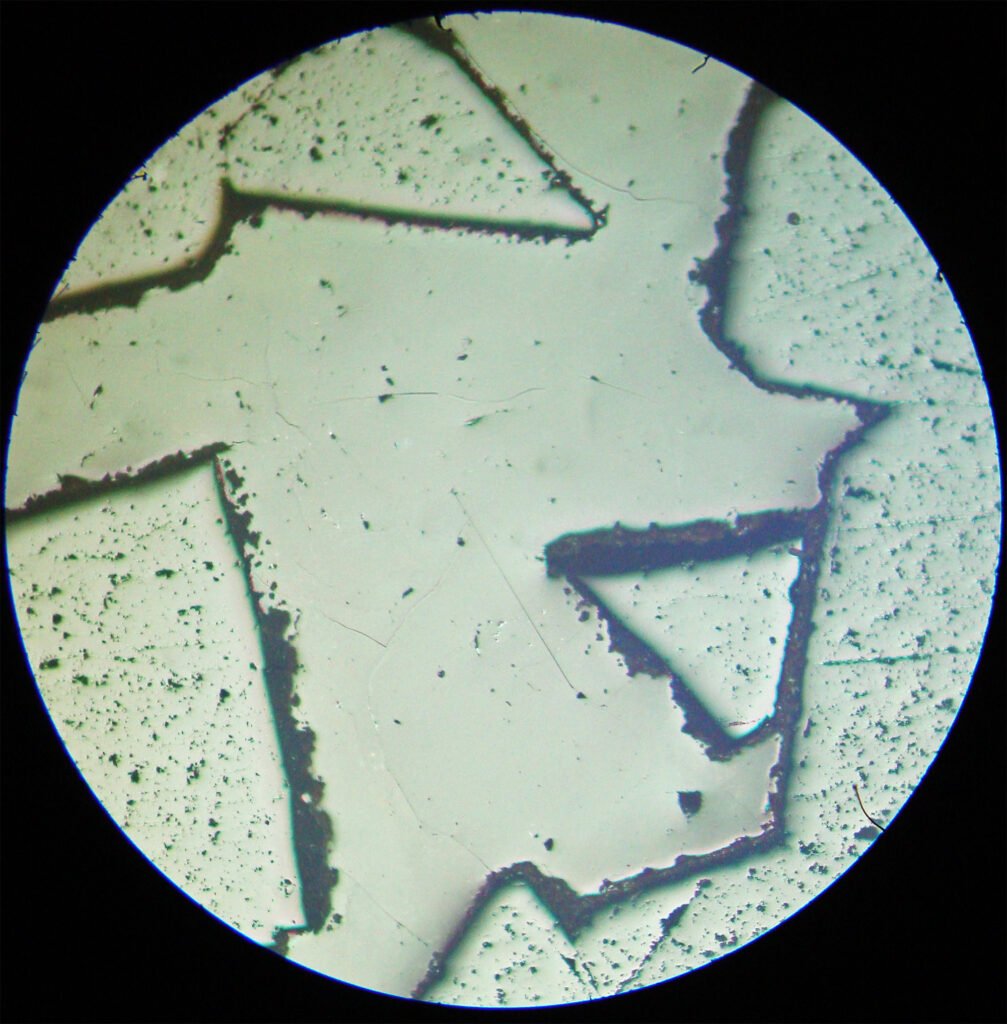
PLANE POLARIZED LIGHT – PPL
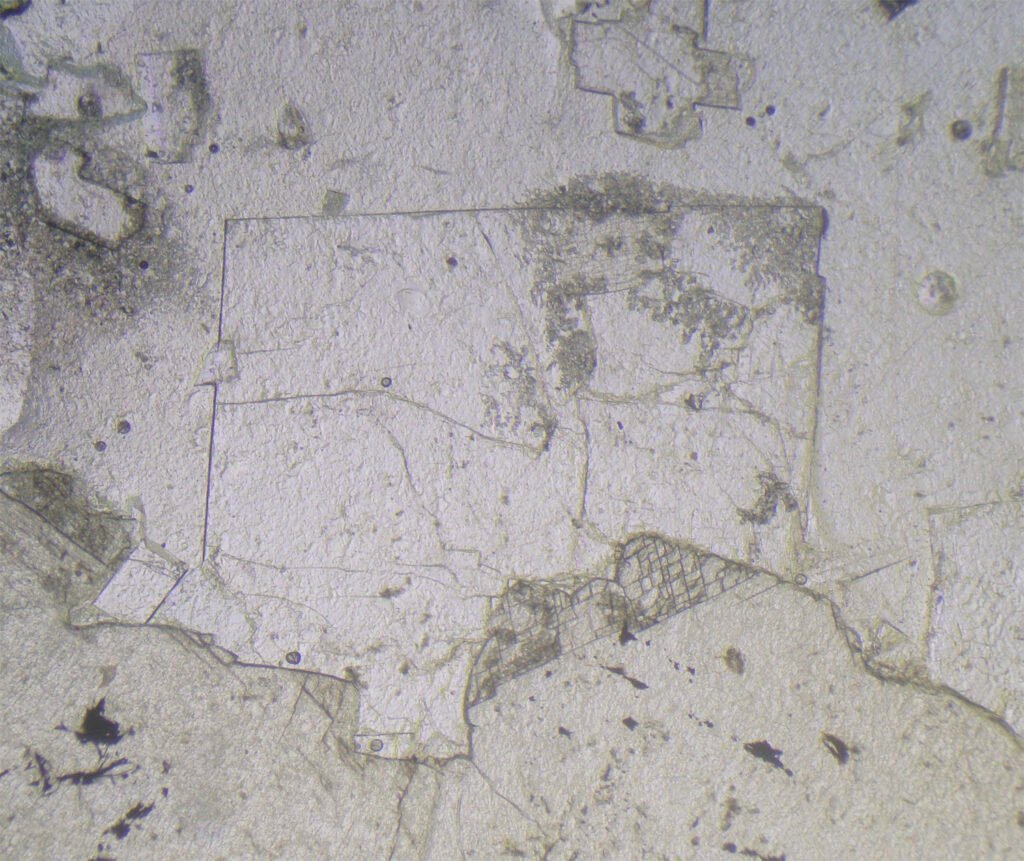
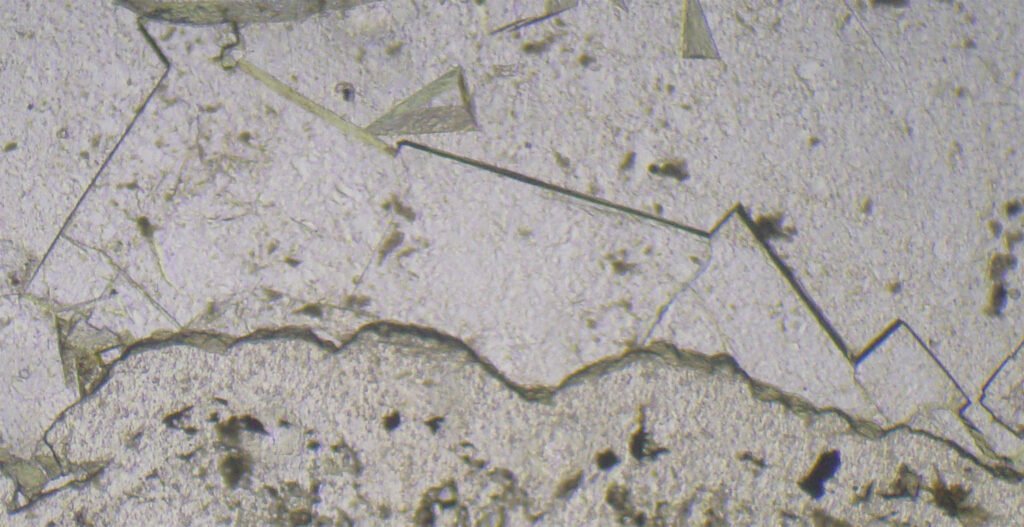
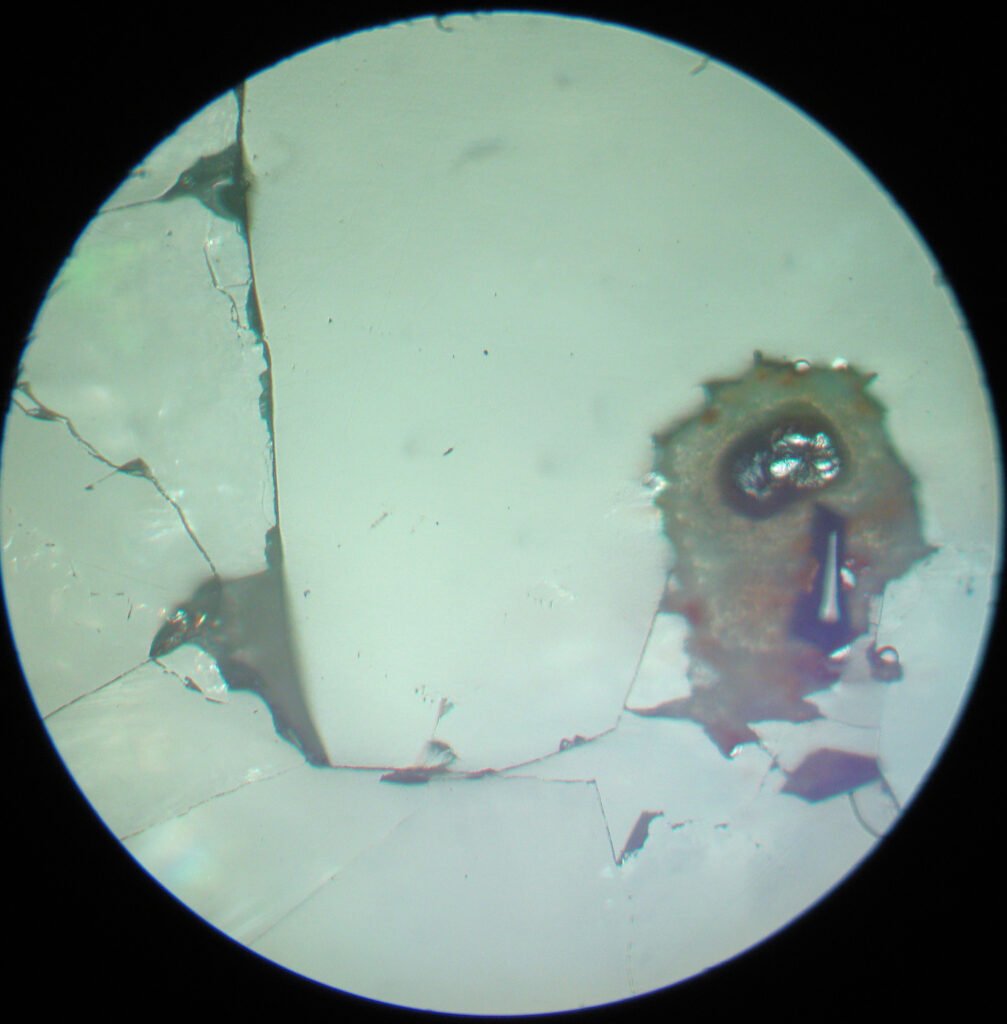
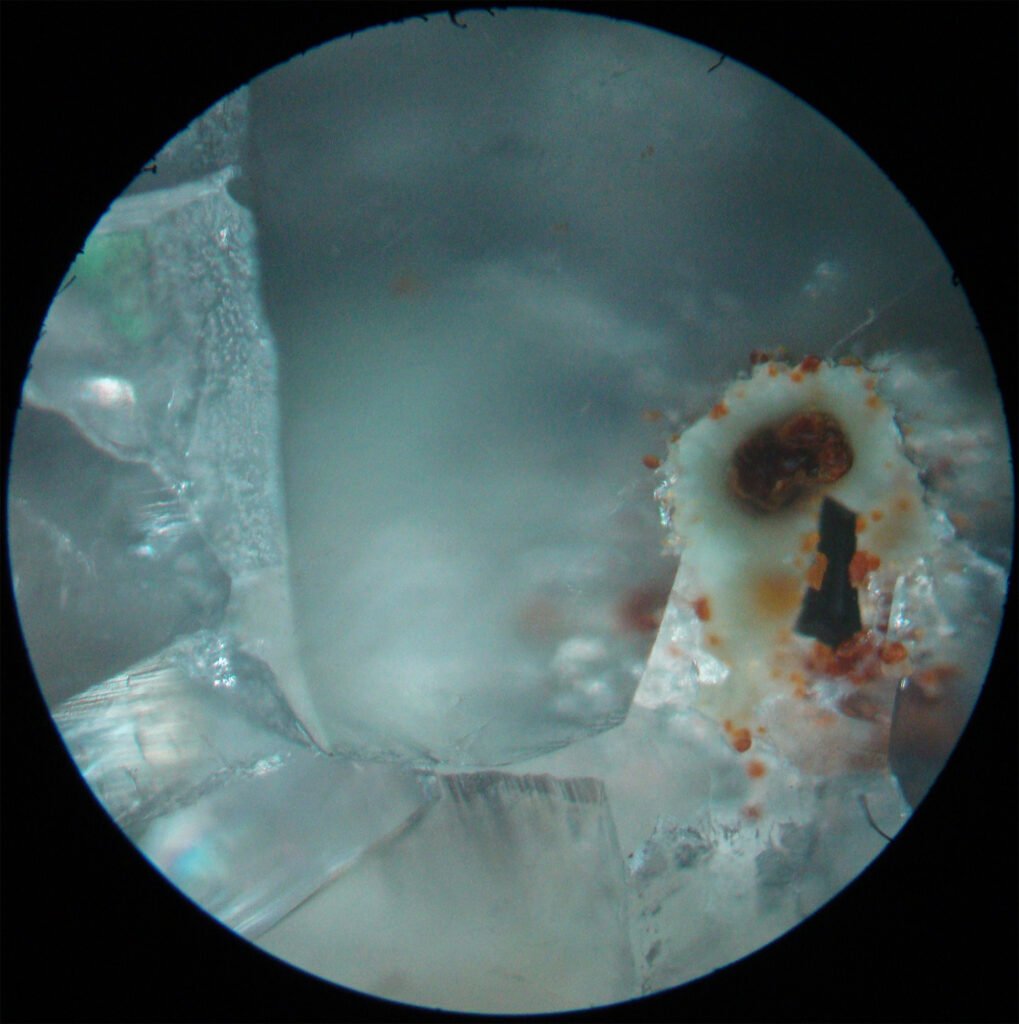
Color / Pleochroism: Colorless.
Relief: Low or moderate (literature diverges).
Cleavage: {10-11} distinct, which may or may not be visible under the microscope, following the rhombohedron.
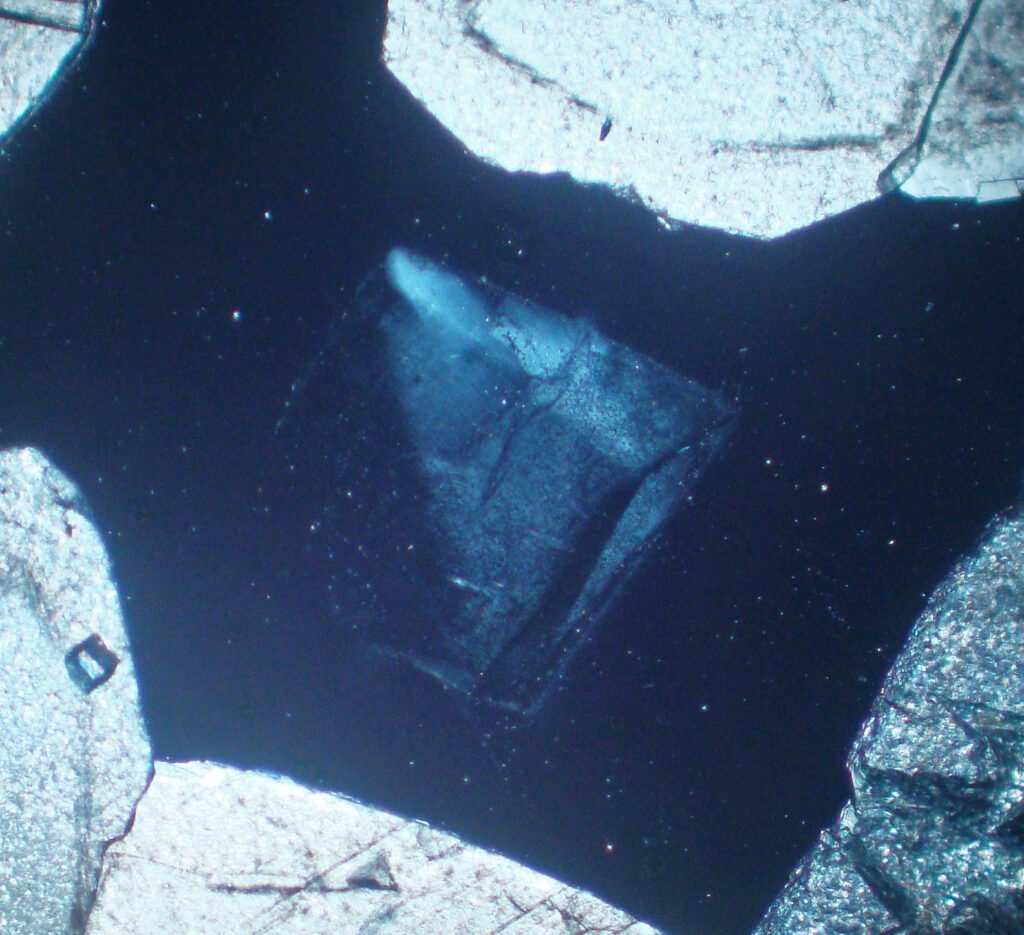
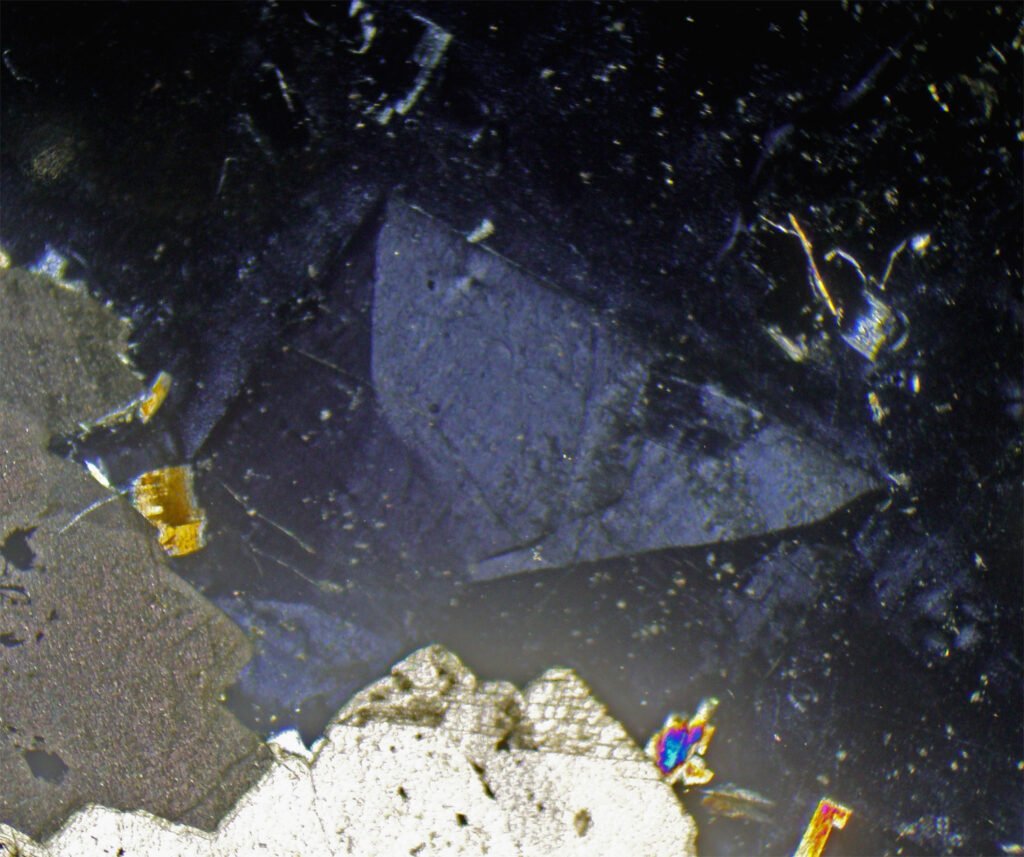
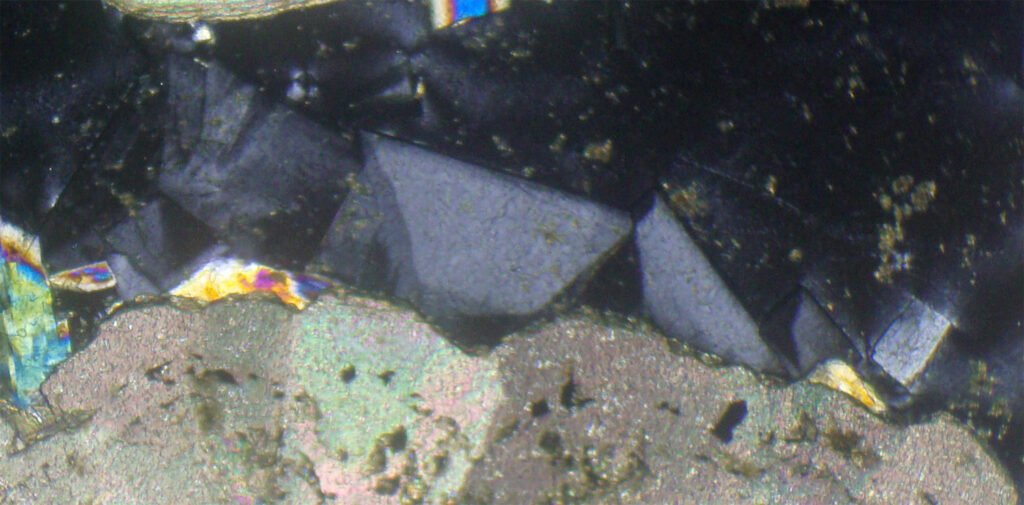
Habits: Usually idiomorphic (euhedral), forming complex twins that generate pseudo-rhombohedral crystals (rhombohedrons like calcite) with angles of almost 90º between edges (they look like cubes!).
It can occur in tabular or in rounded and complex twinning shapes.
More rarely anhedral (xenomorphic), massive or in polygonal clusters.
It also forms crystals with complex twins that resemble hexagonal bipyramids (the phacolite variety), always with reentrant angles.
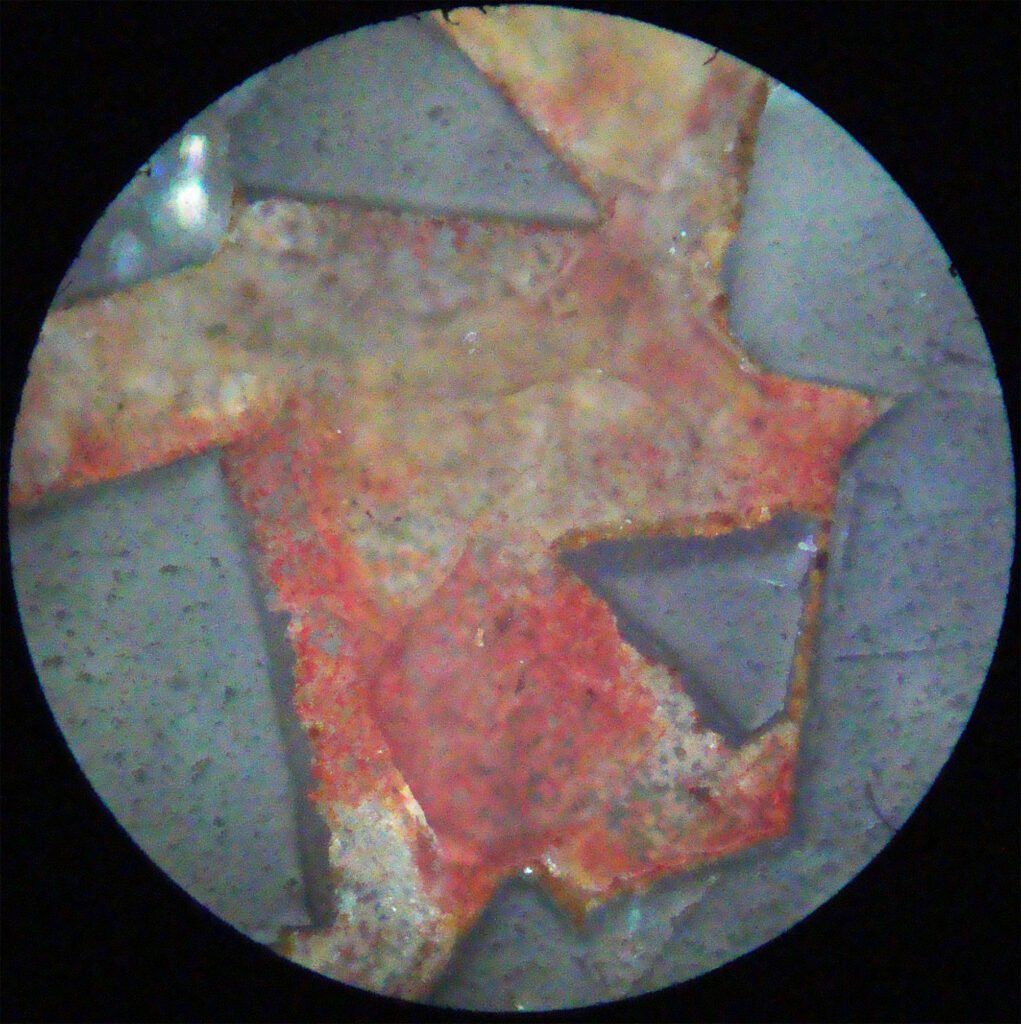
CROSSED POLARIZED LIGHT – XPL
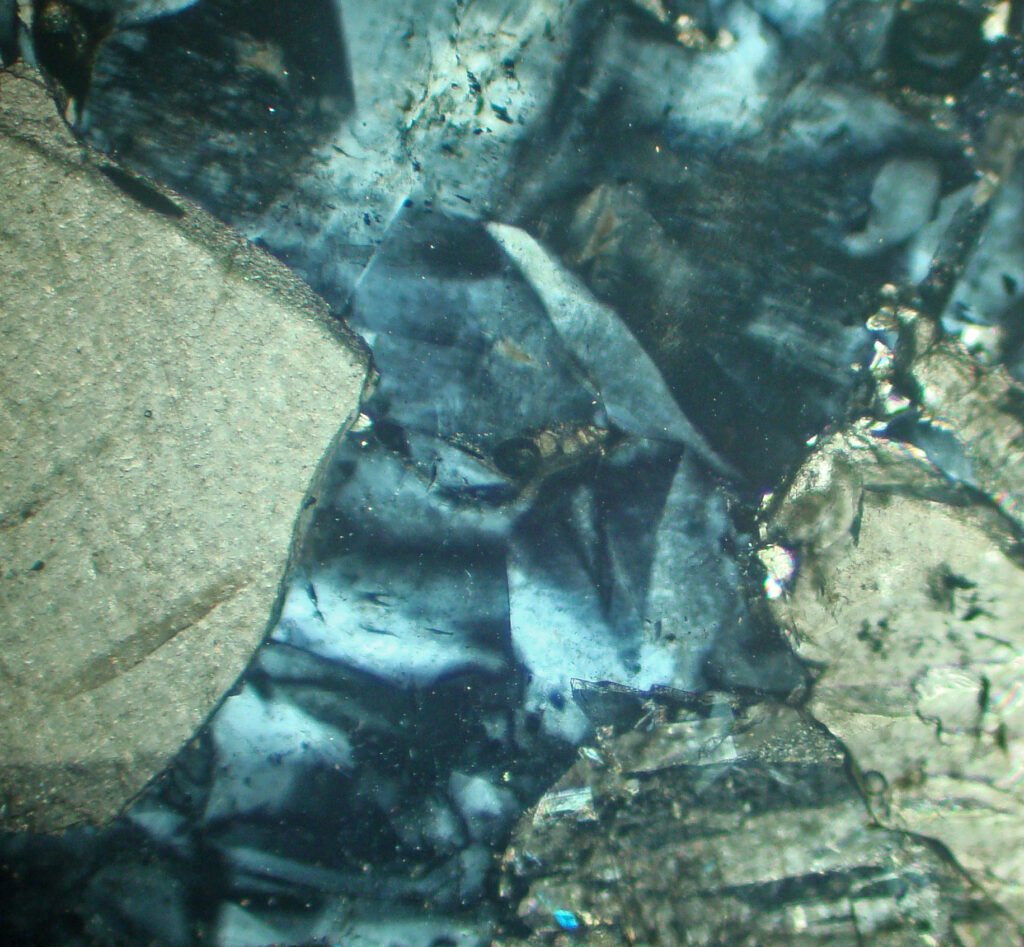
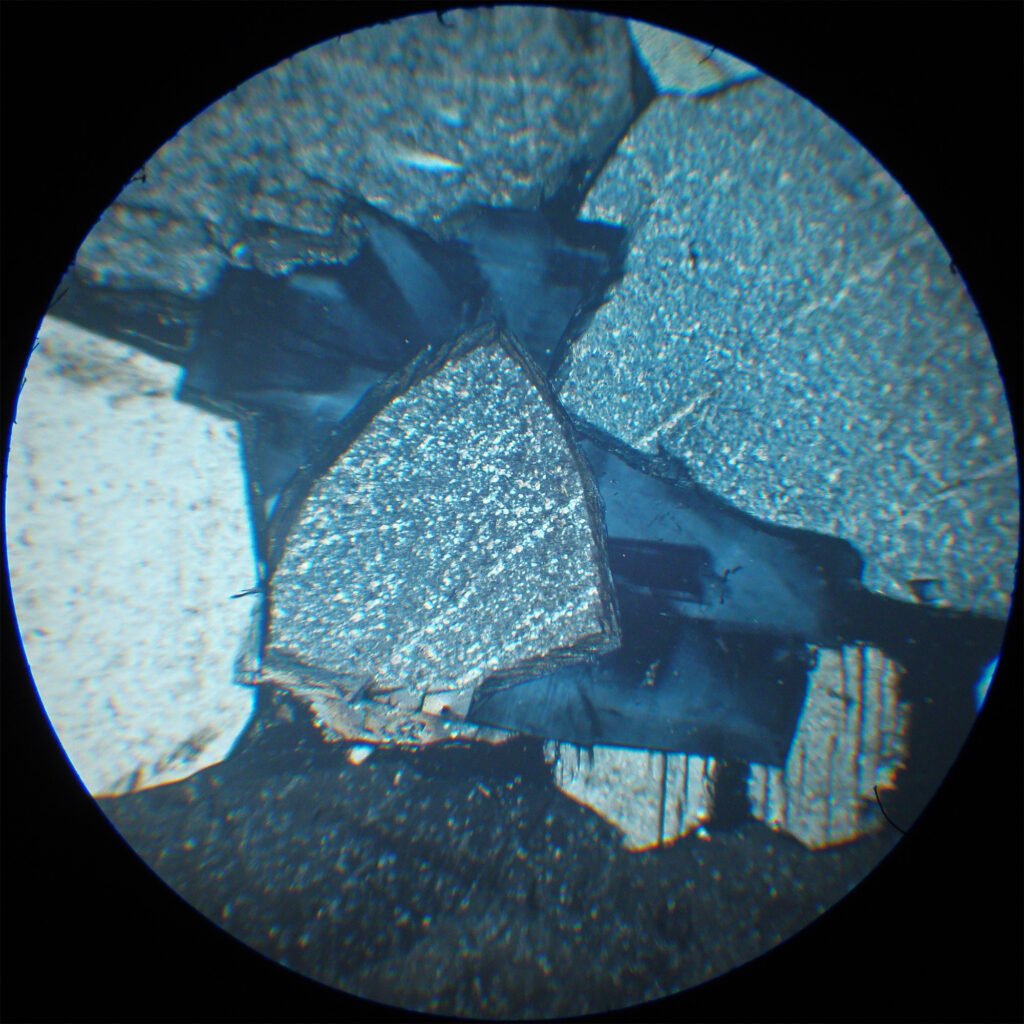
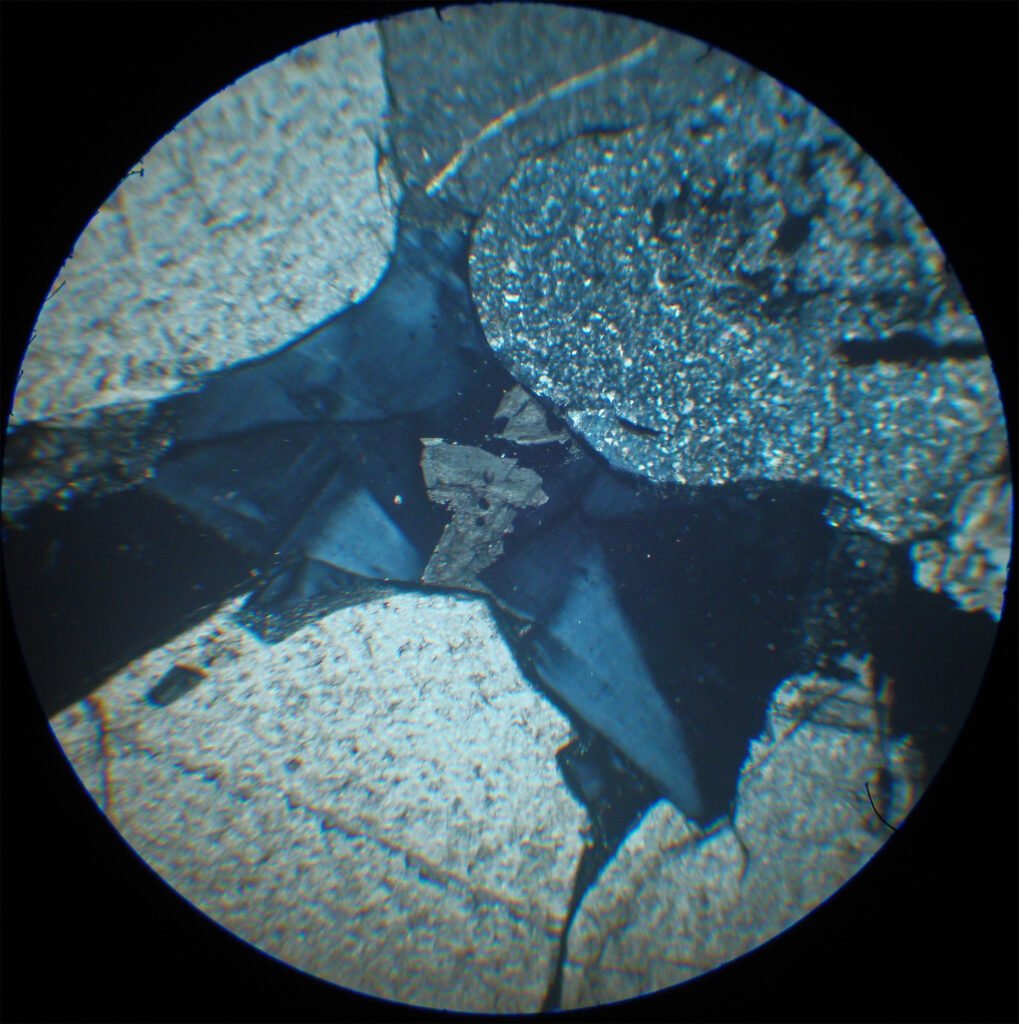
Birefringence and Interference Colors: 0.002 to 0.006: dark gray to light gray colors.
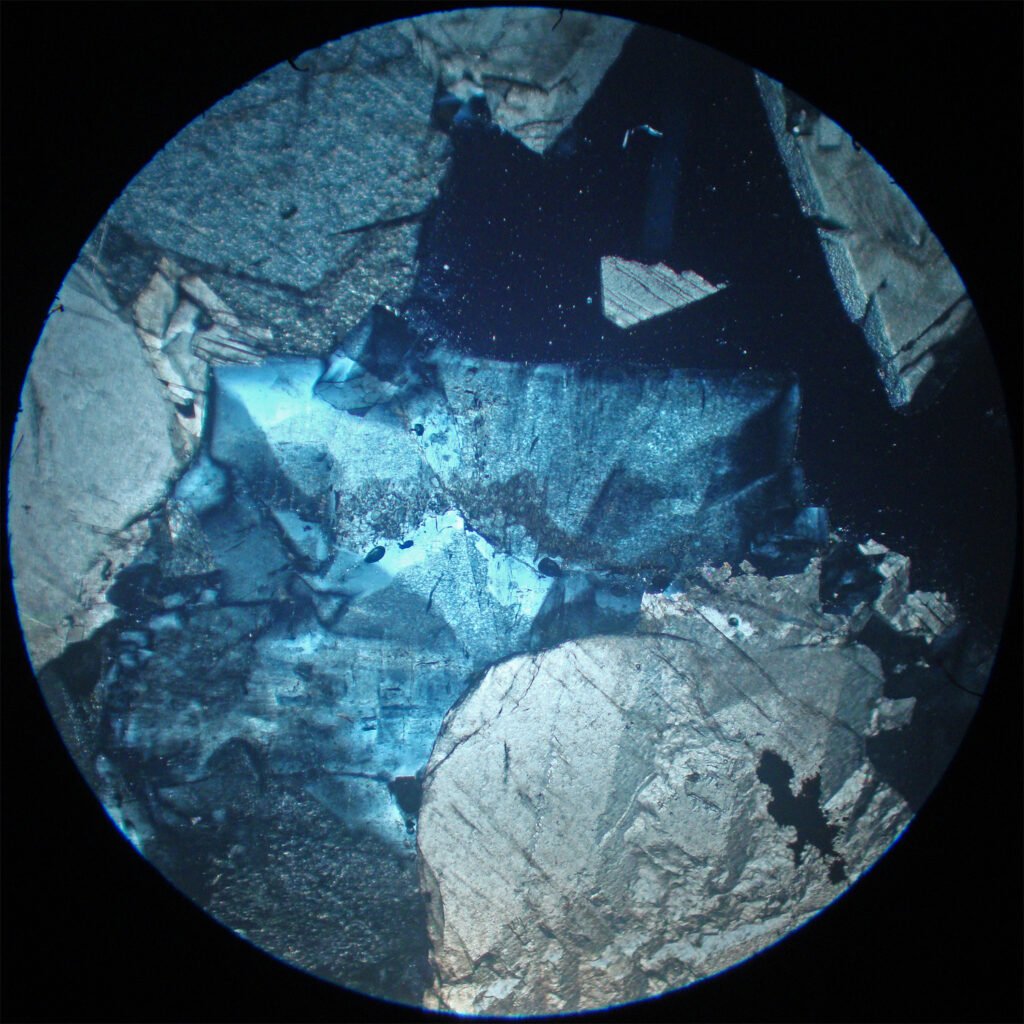
Generally, the grains are subdivided into subgrains with distinct extinction positions and straight boundaries between them.
Extinction: Symmetrical to grain edges and cleavage. Subgrains may occur, in this case the extinction is by sectors.
Elongation sign: Does not apply.
Twins: Common, interpenetrating, simple and repeated. Contact twins by {10-11}. Basal sections can show six zones with different optical orientations.
Zoning: Does not have, but can be divided into subgrains.
CONVERGENT LIGHT
Character: B(+/-) or U(+/-), usually B(+).
2V angle: from 0 to 32º
Alterations: No information available.
May be confused with: its pseudo-cubic habit facilitates its recognition in relation to long prismatic (scolecite), fibrous (mordenite) and cubic (analcime) zeolites.
Analcime is similar, but has rounded shapes (trapezohedrons!) and tends to be isotropic.
Cristobalite also contains subgrains, but is extremely rare in thin section.
Gmelinite and levyn are similar and care is needed in the differentiation.
Apophyllite, nosean and haüyne have, among other differences, different habits and higher reliefs.